



Header: Suzhou MoCA
The 60,000 m² Suzhou Museum of Contemporary Art is a new venue for art, design and public life at the shores of Jinji Lake in Suzhou. Designed jointly by BIG – Bjarke Ingels Group, SHUISHI, ARTS Group, and VIA.inc. The museum is conceived as a village of 12 pavilions placed beneath a ribbon-like roof.
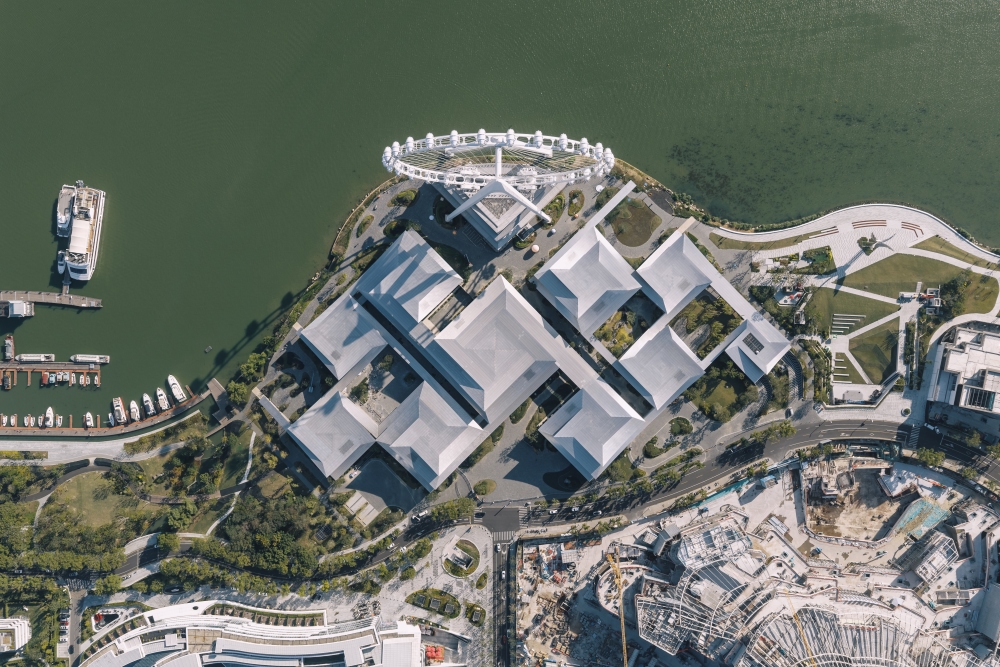
The museum consists of a connected sequence of spaces
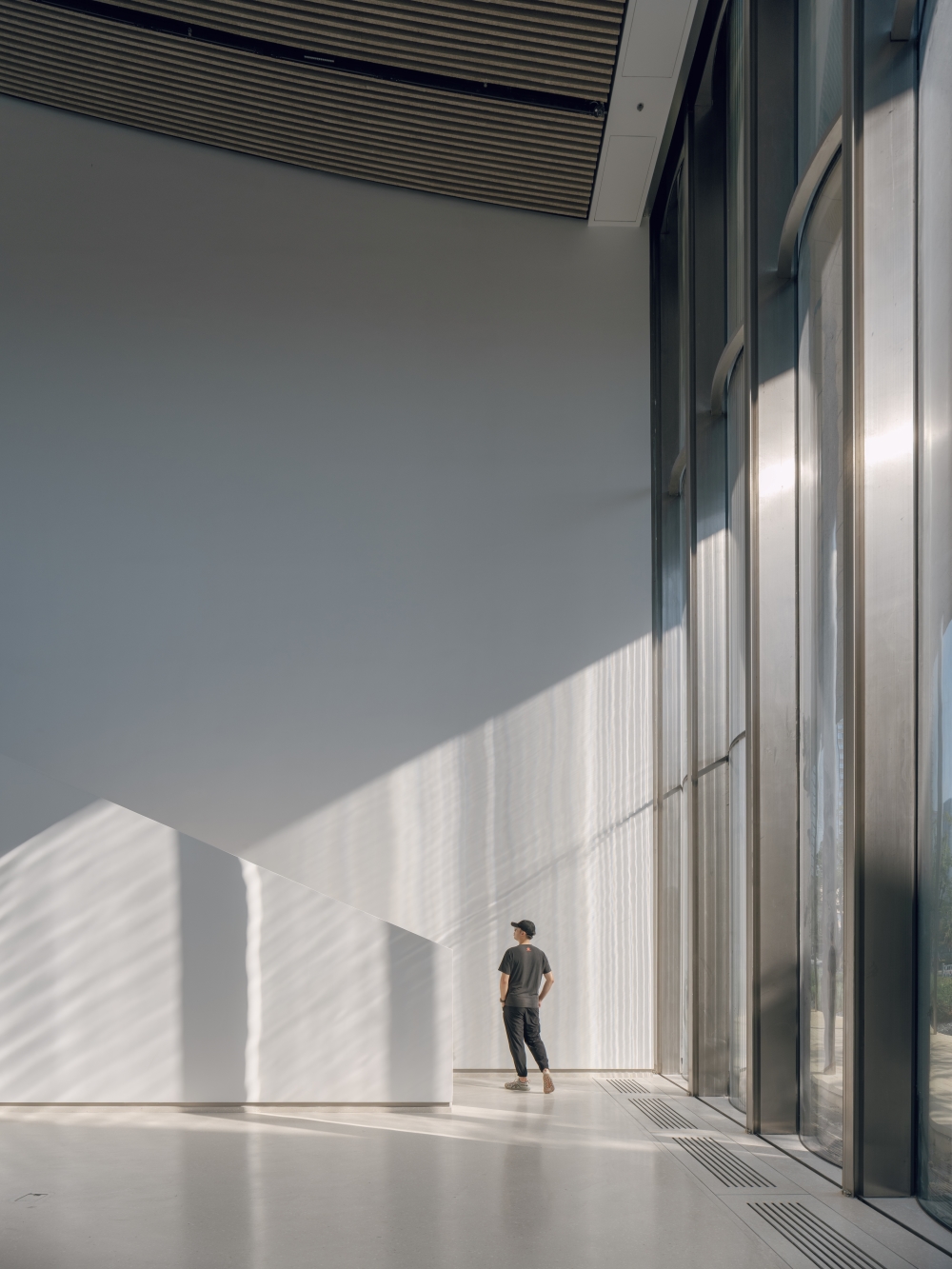
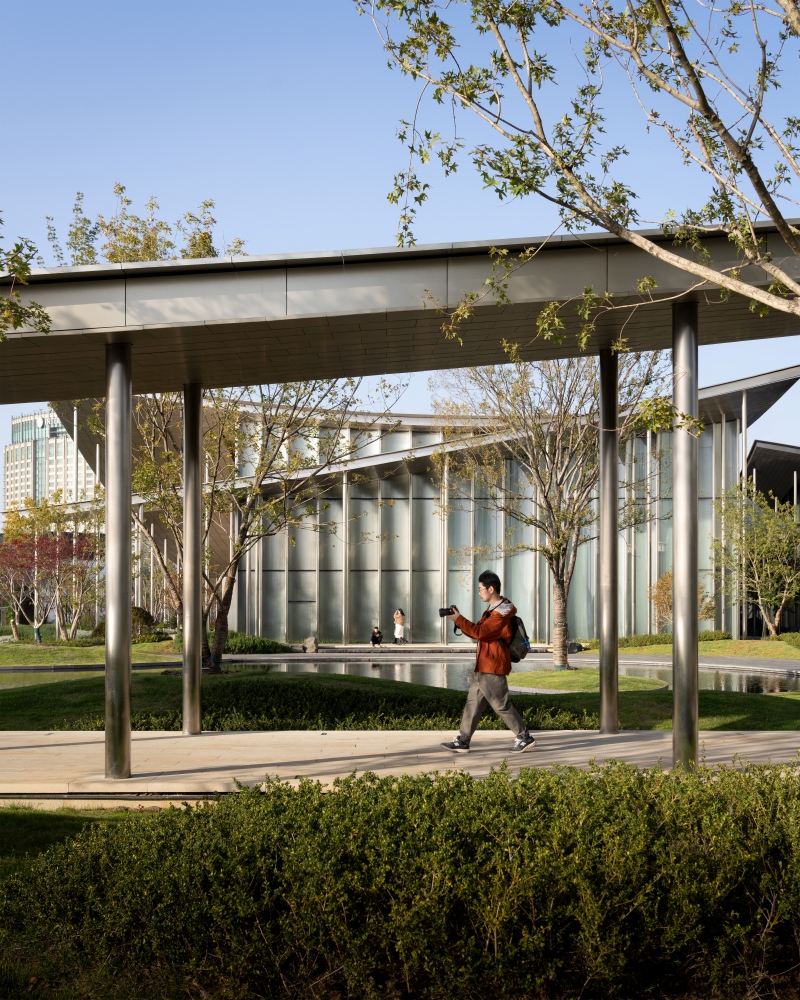
The lake district in the historic centre of the city hosts the museum positioned between the city and the large water mass. Inspired by traditional Suzhou gardens, the museum reimagines the covered corridor that leads through a landscape, aka the lang, as a connected network of galleries. The route guides visitors through numerous pavilions, gathering spaces, gallery rooms and cultural venues while allowing them to follow smaller paths between exhibitions. A flexible sequence of art spaces is linked by bridges above and tunnels below ground.
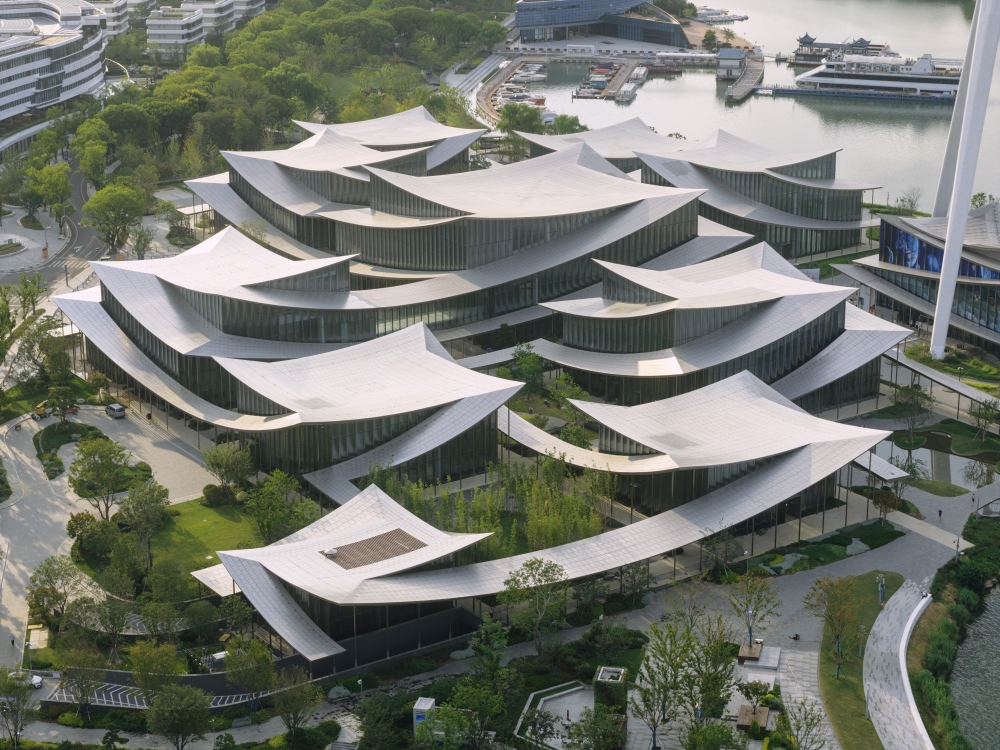
Between the lake and the Ferris wheel
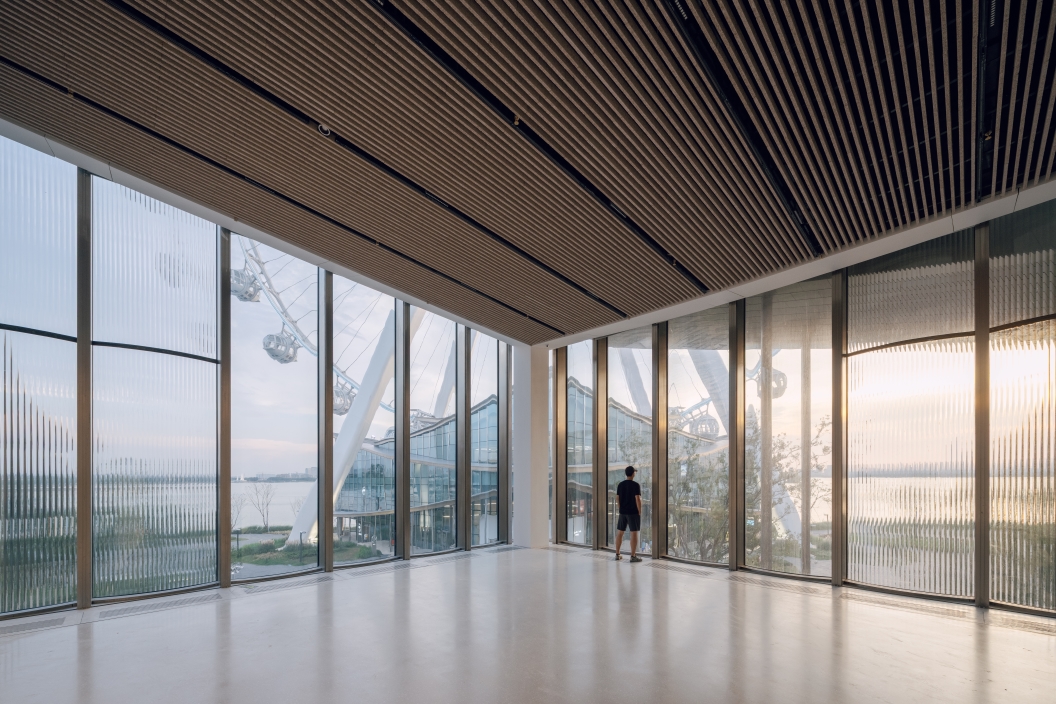
The newly constructed Ferris wheel stands between the museum and the water, but the network of interconnected galleries reminiscent of pavilions in the park strengthens the relationship between the city and the lake. The users of the Ferris wheel can enjoy the view of the ribbon-like roof, turning it into a fifth facade of the building. Museum visitors can take paths that lead from the sculpture gardens to the lakefront, enjoying both natural scenery and human works of art.
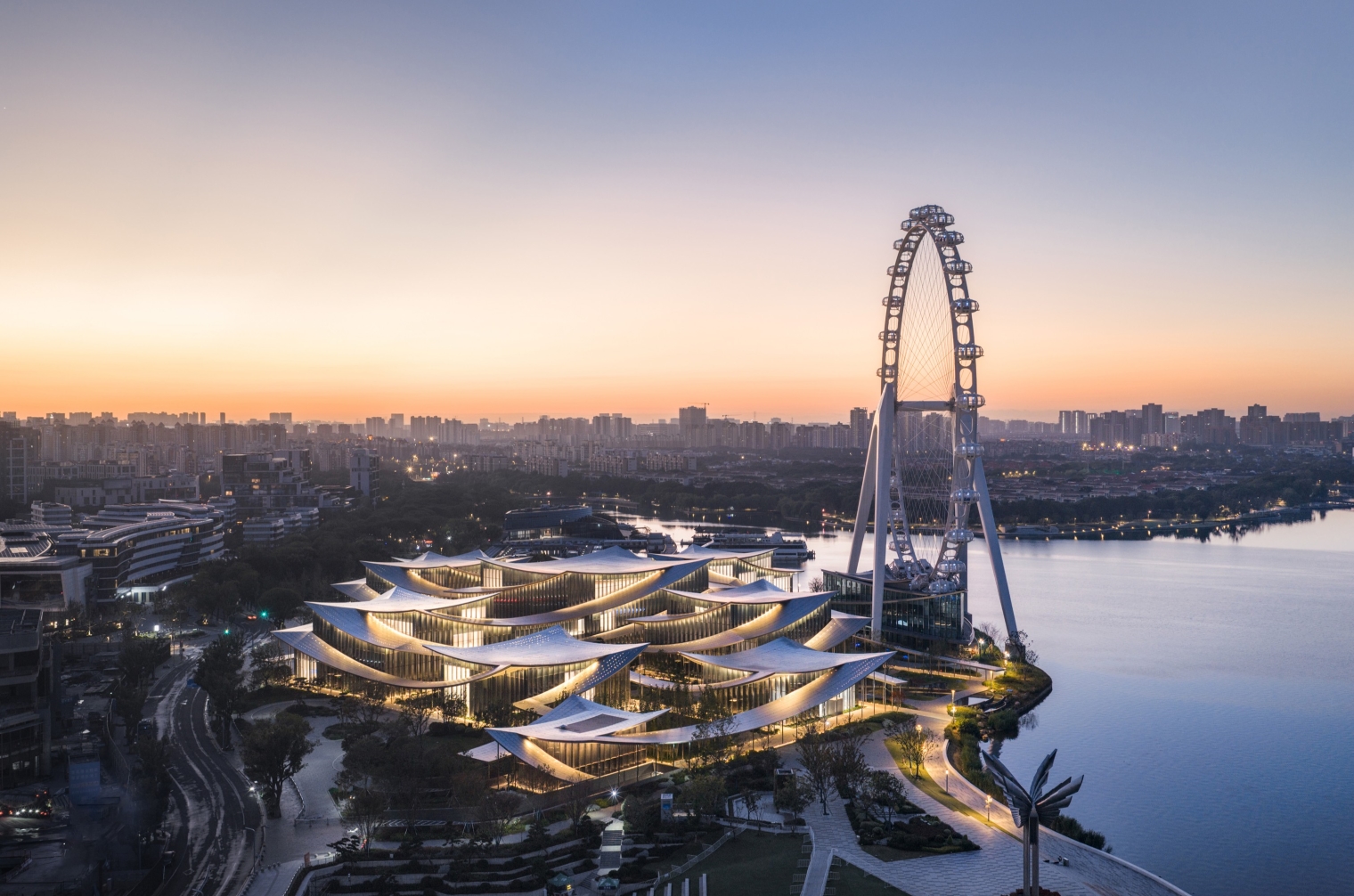
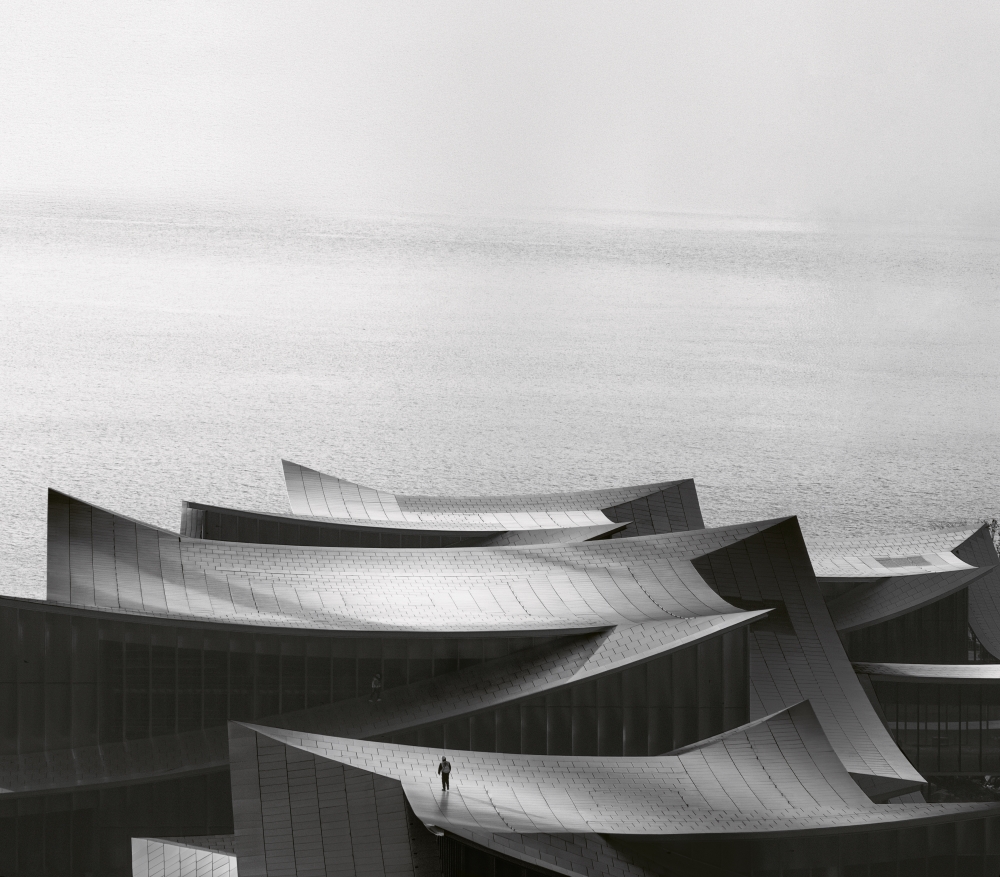
“The museum reconciles Western and Eastern spatial traditions through a deliberate duality. From the sky, the museum reads like traditional craftwork: a series of paper-cut knots framing the gardens below, turning the heritage of Suzhou into artwork. But as one descends and enters the museum, the clarity of the figure-ground dissolves. The gardens begin to flow into one another, unfolding as sequences of spaces, views, art, and nature – transforming a composition that appears precise from above into an experience of exploration and discovery on the ground.”
Catherine Huang, Partner, BIG
Inaugural exhibitions at Suzhou Museum of Contemporary Art
Suzhou MoCA opened on August 30, 2026, but was in use even before the official opening. A series of preview exhibitions was organised at the space, including BIG’s Materialsm that’s currently on view. The show explores the role of ten different materials that shaped the group’s architectural work.
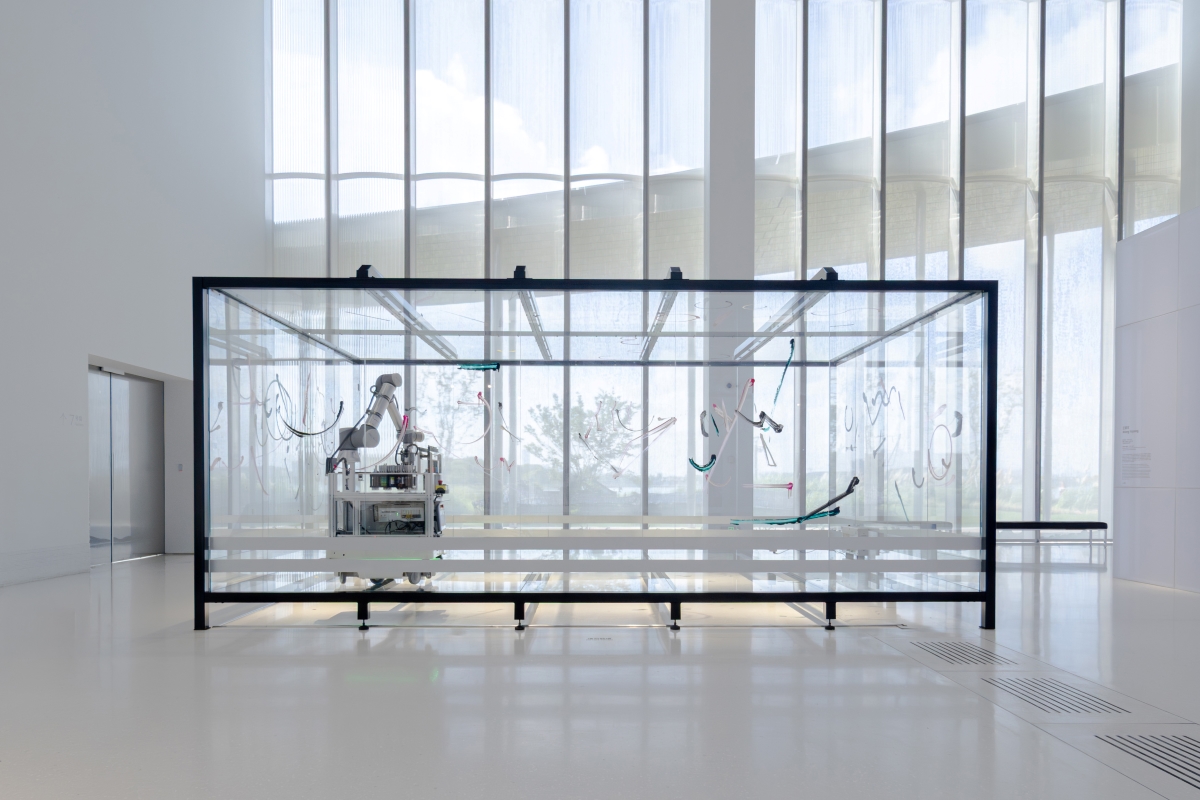
Presented through large-scale mock-ups and models, the show takes you on a material journey from ancient natural materials such as stone to recycled materials. Displays of Picasso’s work and contemporary Chinese art are also on view, while other exhibitions showcase dialogues between Eastern and Western traditions, technology-driven practices and modern and contemporary art.
“After many years of work and collaboration, it is a pleasure to finally welcome visitors to Suzhou Museum of Contemporary Art. We envision the museum as a place for discovery and exchange, where people can experience art in new ways and engage with ideas from across cultures and generations. Through its exhibitions and public programs, we hope to make the museum a lasting part of Suzhou’s cultural landscape and a destination for visitors from near and far.”
Wang Xiaosong, Executive Director, Suzhou MoCA
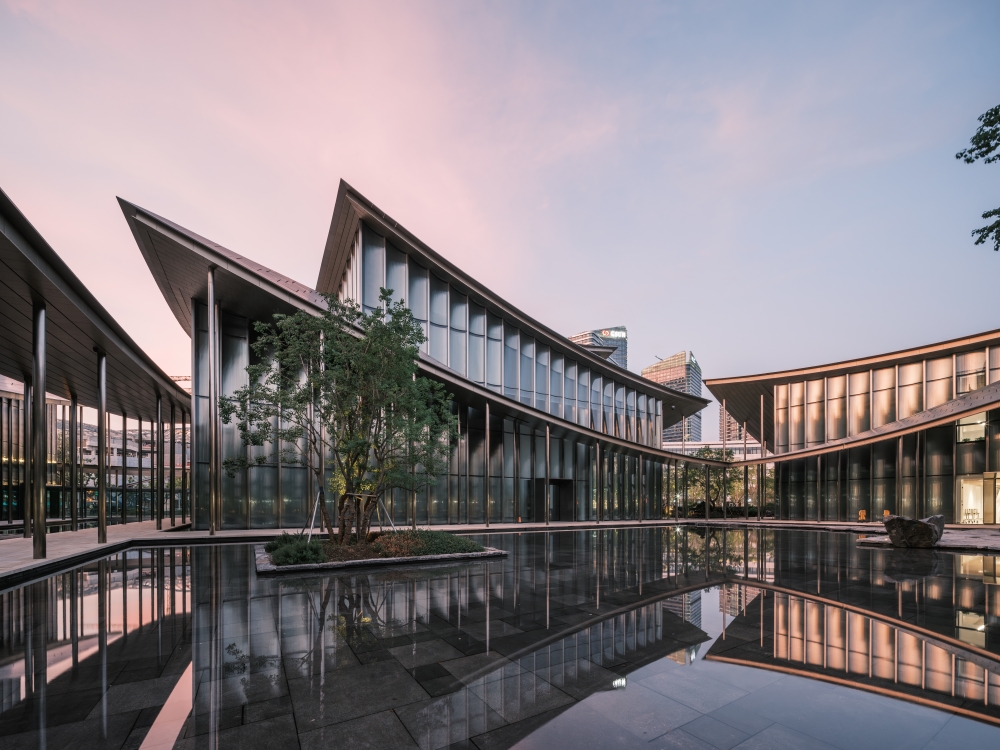
The Suzhou Museum of Contemporary Art brings contemporary art into dialogue with the region’s traditional gardens. Conceived as an interconnected network of exhibition spaces, the museum offers visitors the freedom to choose their own path through the galleries and further toward the Ferris wheel and the lake.
Technical sheet
Name: Suzhou Museum of Contemporary Art
Owner: Suzhou Industrial Park Culture, Sports and Tourism Bureau
Client: Suzhou Harmony Development Group Co. Ltd
Collaborators: ARTS Group Co., Ltd, Shanghai Shuishi Landscape Design Co., Ltd, Rdesign International Lighting
Partners-in-Charge: Bjarke Ingels, Catherine Huang
Project Manager: Molly Hsiao Rou Huang
Project Architect: Tyrone Cobcroft, Kekoa Charlot, Tseng-Hsuan Wei
Design Lead: Matteo Pavanello
BIG Engineering: Andrea Hektor, Adele Scampoli, Alexander Gale Heiede, Andreas Bak, Bjarke Koch-Ørvad, Cristina Minguela, Ingrid Albina Oliva Lampa, Janis Bronka, Jens Max Jensen, Jesús Fernández, Lindqvist, Jonathan Russell, Kannan Selvaraj, Konstantinos Koutsoupakis, Maria Capuozzo, Miles Treacy, Thomas Lejeune, Tim Christensen


