

Header: Courtesy of Dorchester Collection
The image of the vibrant life in the streets of late-19th-century Paris, with its dances, colours, art and new ideas, is still something widely searched for today, and one of the best ways to be transported back to this period is with hospitality. Hotels in this register bring the aesthetic and feel of this golden Parisian age into the Paris of the 21st century, making guests feel like the dames and monsieurs of grand society that just came back home for a private soirée after a night at the opera or theatre.
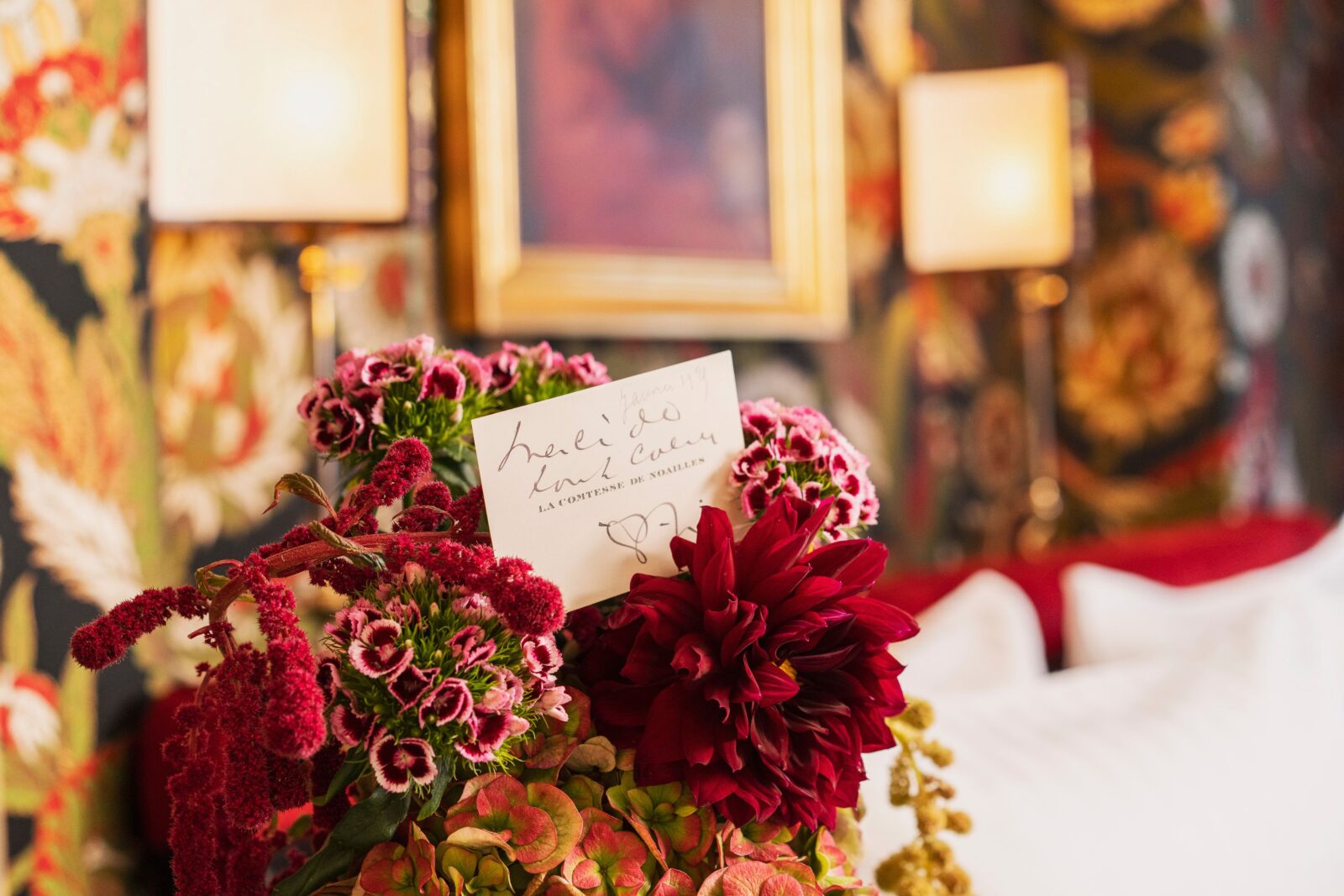
Some hotels that became the perfect portals are the Maison Souquet, Hotel & Spa in the 18th Arrondissement, Maison Proust, Hotel & Spa La Mer in the 3rd, Le Meurice in the 1st, Hôtel Plaza Athénée in the 8th and Hôtel Raphael in the 16th Arrondissement. They all bring the décor of this period into the Paris of today, adding their own vision in the meantime and creating some of the most interesting hospitality offers in the French capital of our days.
Maison Souquet, Hotel & Spa, 18th Arrondissement
Maison Souquet, Hotel & Spa is located in the history-rich 10 rue de Bruxelles, close to Pigalle, Montmartre and the Moulin Rouge. The street is quiet, but closely linked to Belle Époque nightlife after the Moulin Rouge opened in 1889. The hotel looks discreet at first glance, using only two red lanterns and a matching canopy to mark its presence.
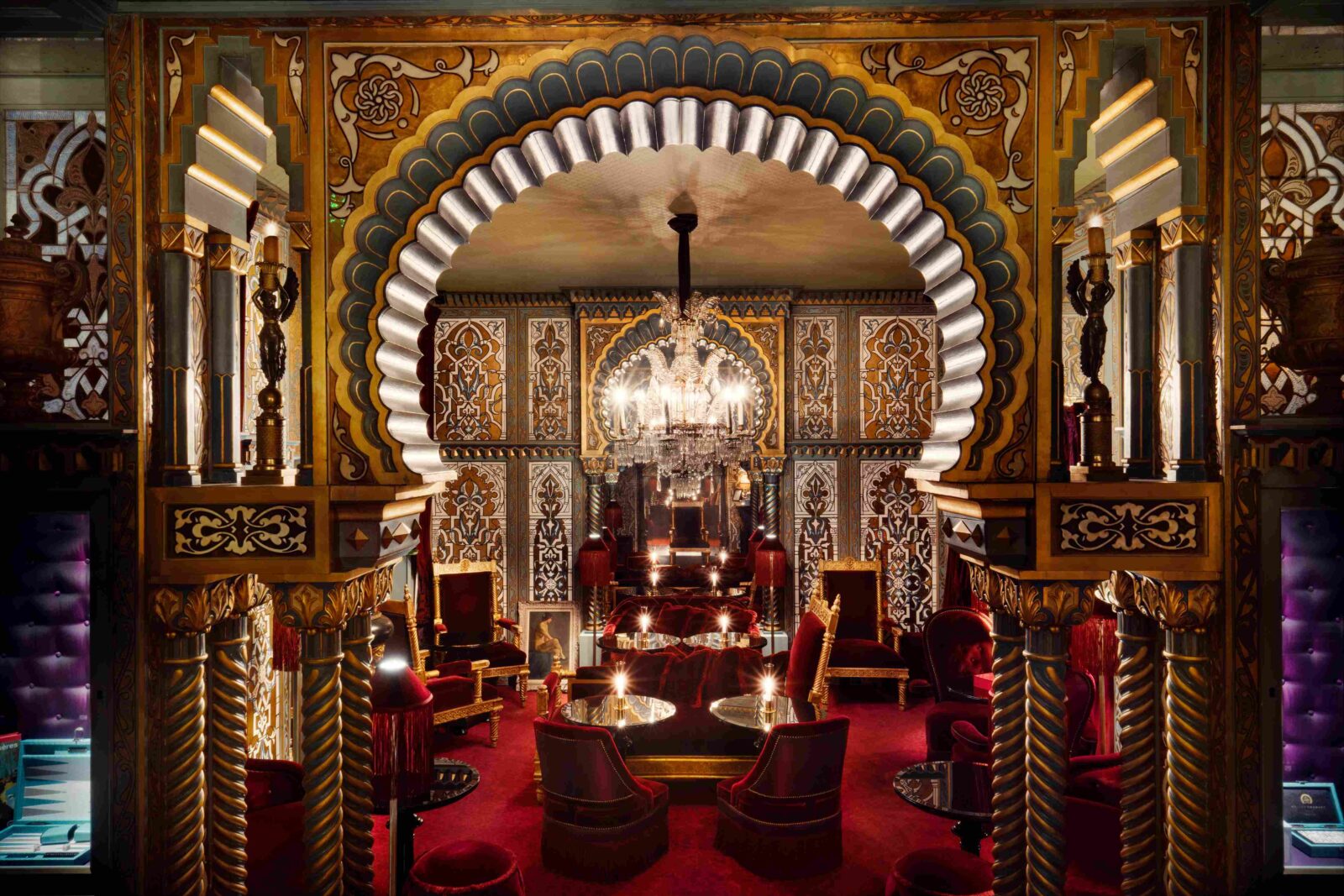
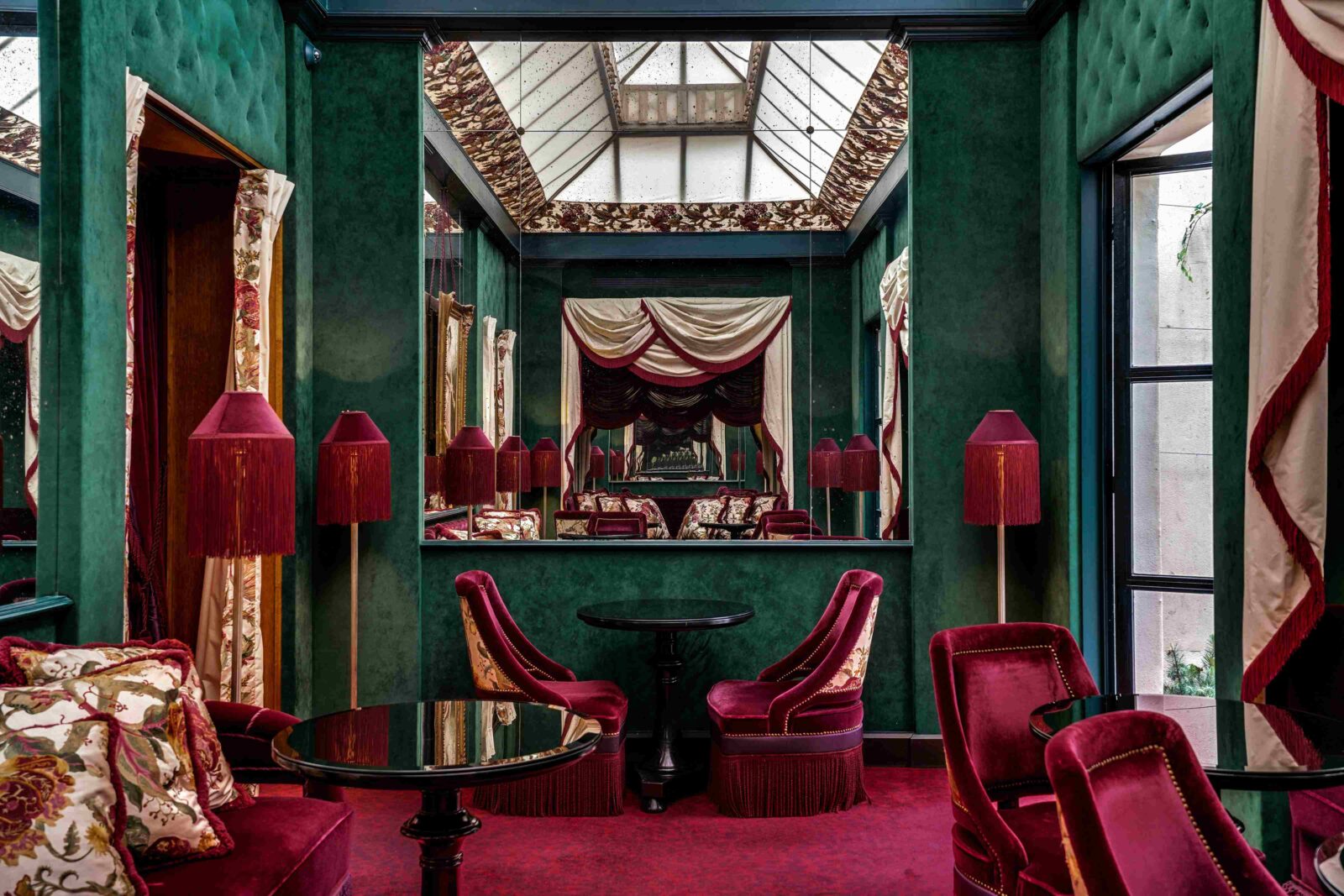
The building was a girls’ school from 1871 to 1880, Madame Souquet’s pleasure house in 1905 and, later, a hotel in 1907. Collection Maisons Particulières acquired it after some time and created the five-star hotel we know today. Jacques Garcia designed the interior around the aesthetics and functionality of a Belle Époque pleasure house, having created a sequence of salons on the ground floor leading from conversation to presentation, then to drinks and private time.
The first room is the Salon des Mille et Une Nuits, also called the Arabian Nights Salon. It combines Belle Époque exoticism with Napoleon III decoration, using quatrefoil columns, sculpted carpentry, stamped Cordovan leather, red marble flooring, gilding, porcelain, blue-green enamel and stained glass. Next, the Salon des Petits Bonheurs (Salon of Little Happinesses) acts as the main social room, decorated with a large fireplace, piano, books and several games. The Jardin d’Hiver, or Winter Garden, is used for breakfast and quieter moments, as its sofas, floral and chintz fabrics and small leafy patio give it a lighter character than the first salons.
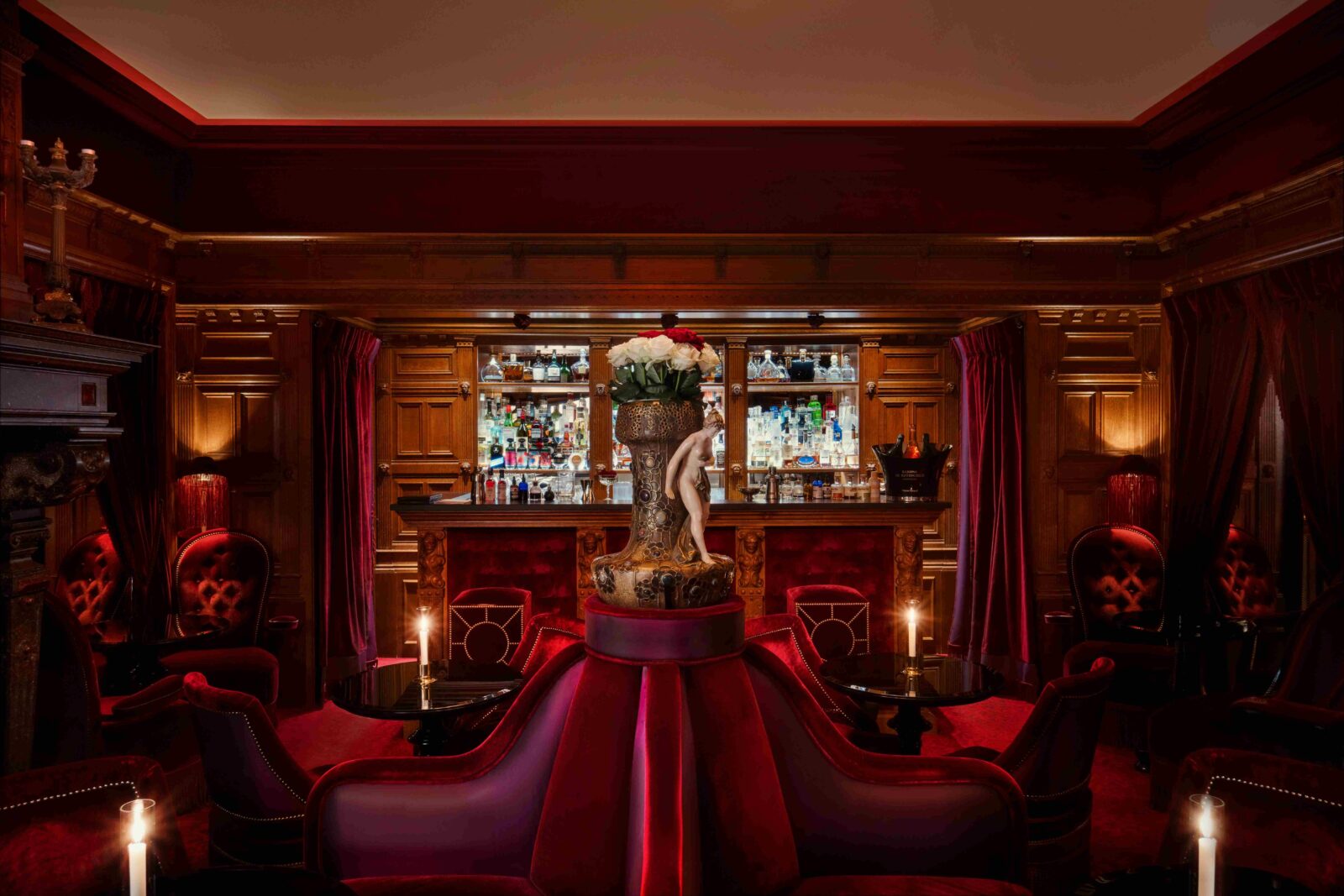
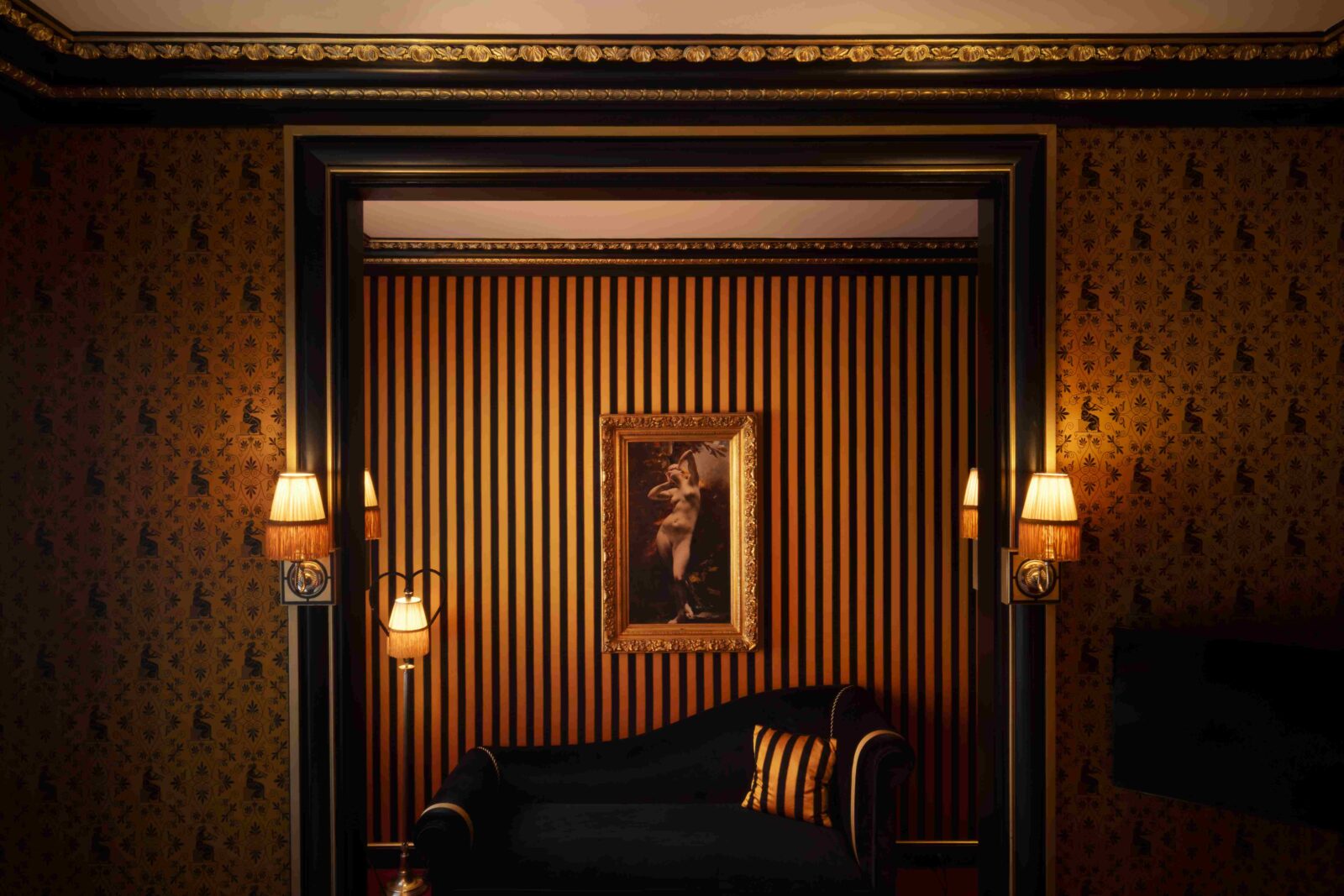
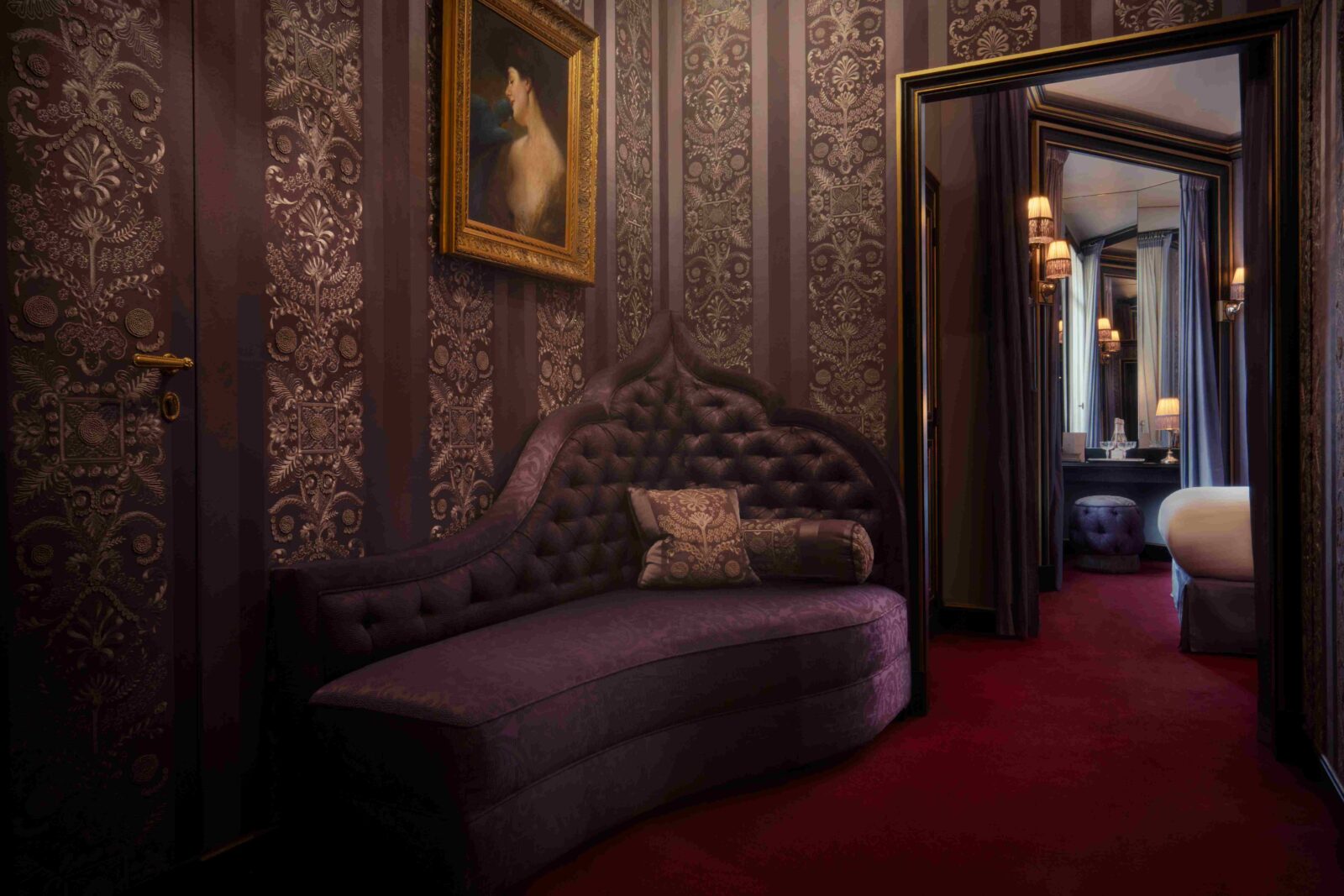
Maison Souquet has 20 rooms and suites, including six suites, spread across four floors, each named after a Belle Époque courtesan: La Belle Otero, La Païva, Liane de Pougy, La Castiglione, Cléo de Mérode and Carmen. The interiors are individually designed and move between Chinese, Indian, Japanese, Napoleon III, Empire, Art Deco and 18th-century-inspired styles. The rooms are compact and heavily dressed, with fabric-covered headboards, flock wallpapers, satin drapes, velvet chairs, large upholstered beds, full-height Parisian windows, silks, mirrors, paintings and objects.
Around 2,000 square metres of silk and 120 different fabrics were used across the hotel. Carmen has a crimson print, Rita is decorated with thousands of peacock feathers, Marguerite uses Chinese pagodas and foliage, La Païva works with yellow-and-black Empire tones, and Liane de Pougy has floral scrolls linked to Jeanne Lanvin’s apartment by Armand-Albert Rateau.
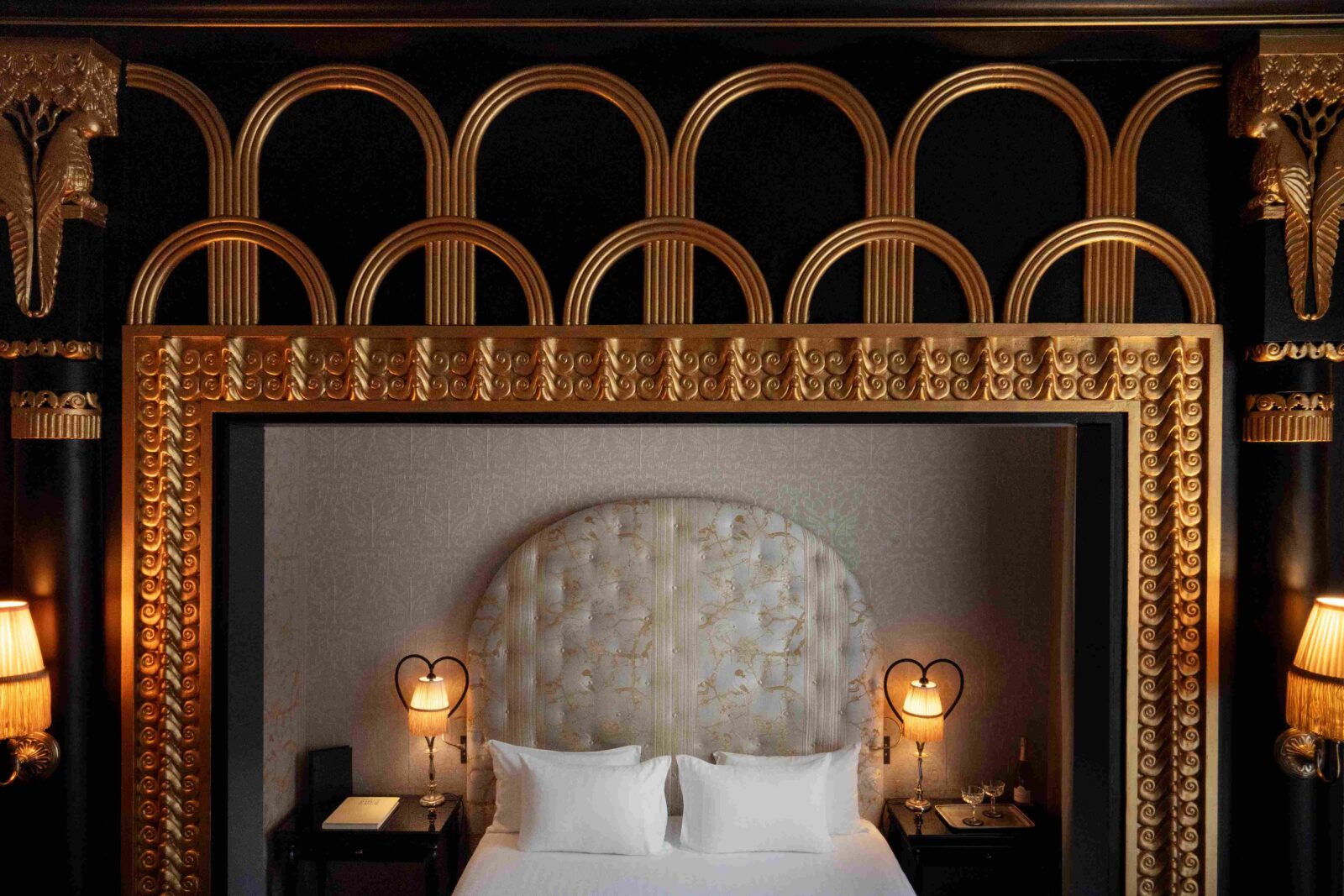
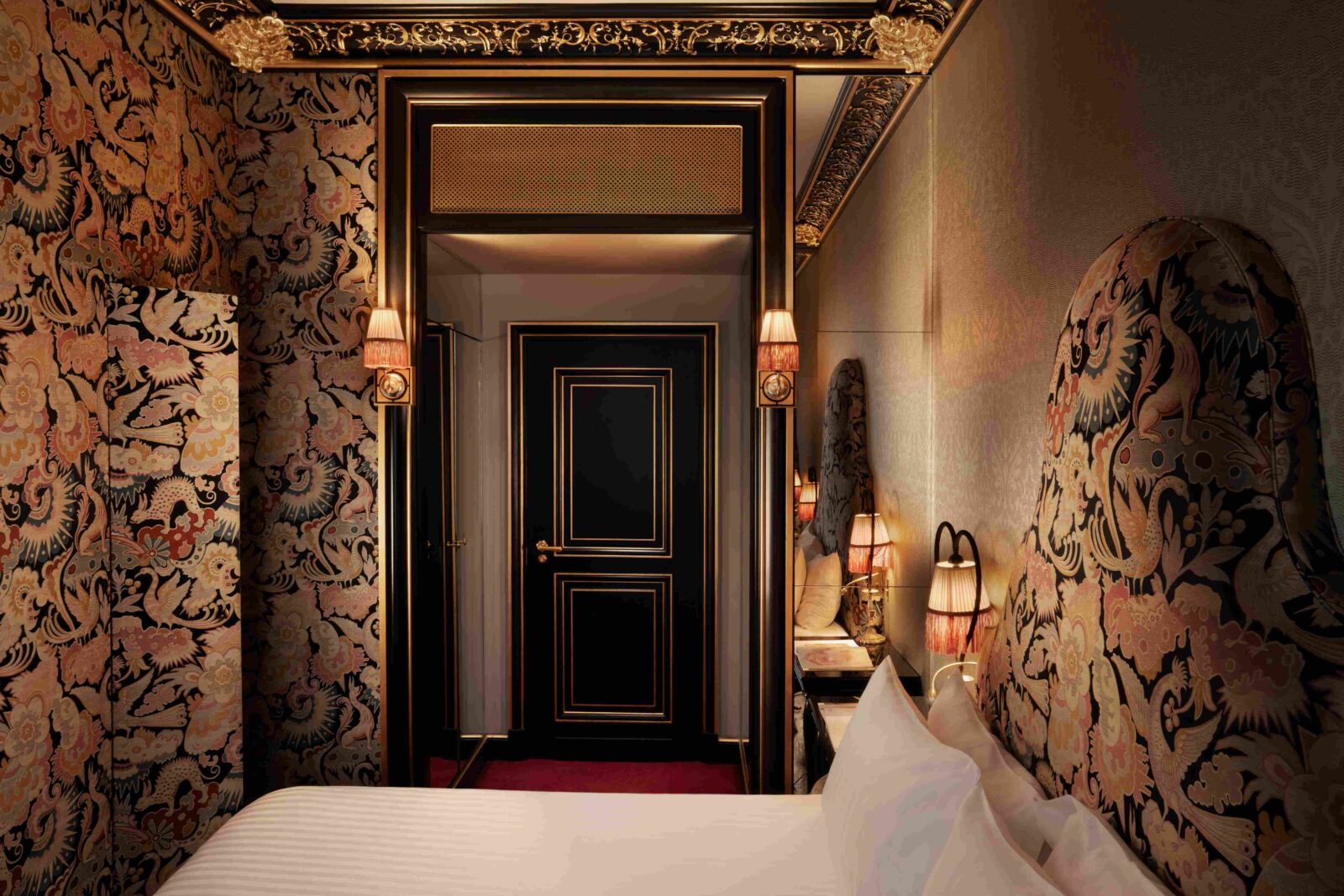
Garcia designed a different headboard shape and fabric pattern for each room, as well as custom furniture and heart-shaped lamps with varied bases. The craft work involved joiners from Sema, upholsterers from Atelier des Carmes, and gilders and metalworkers from Rémy Garnier. Lighting was used to create an intimate atmosphere, with the designer having added candles, crystal chandeliers, candelabras, fringed lampshades, red-shaded lamps, wall sconces and indirect light. Mirrors, stained glass, crystal, enamel, gilding and polished surfaces reflect that glow and make it look alive.
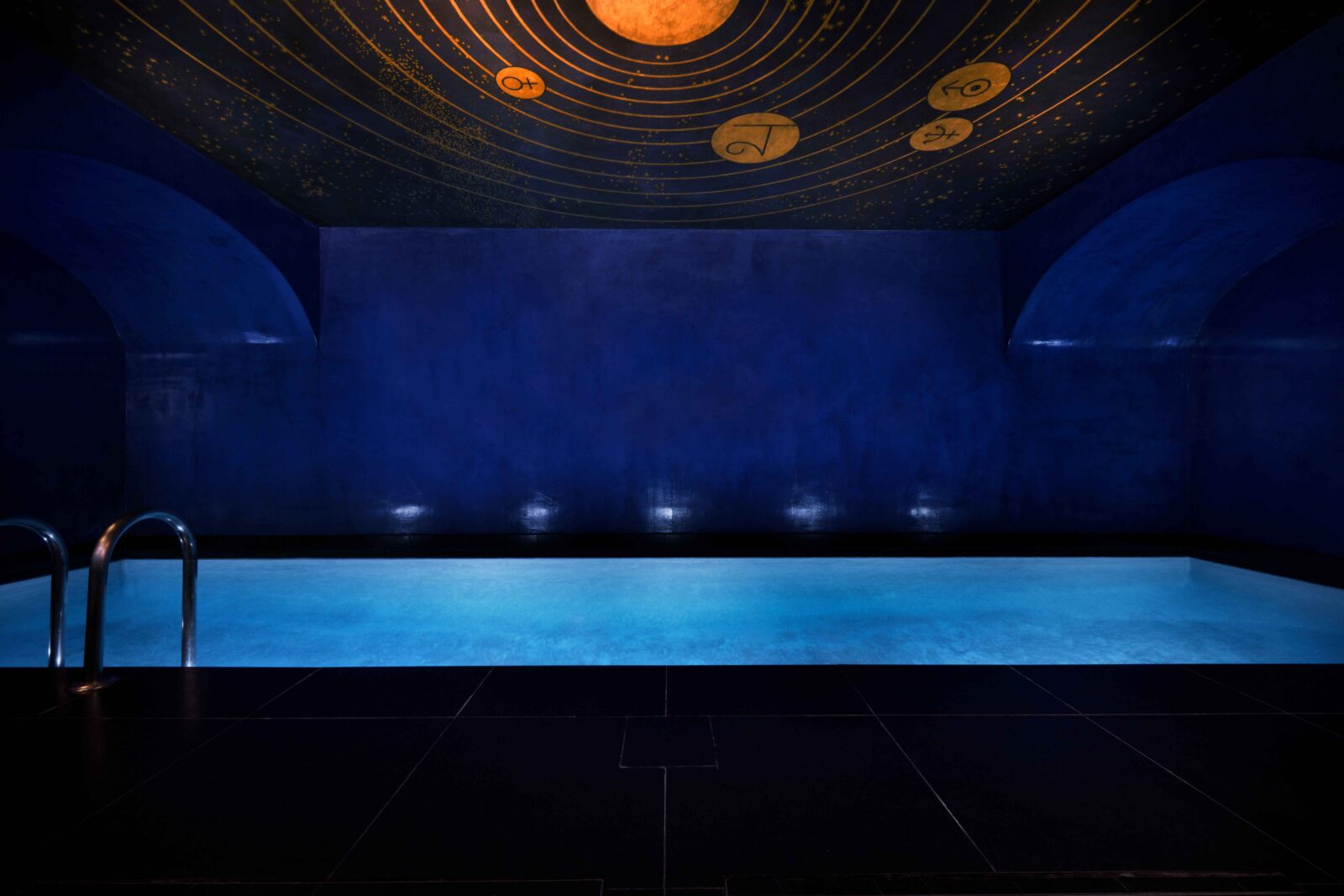
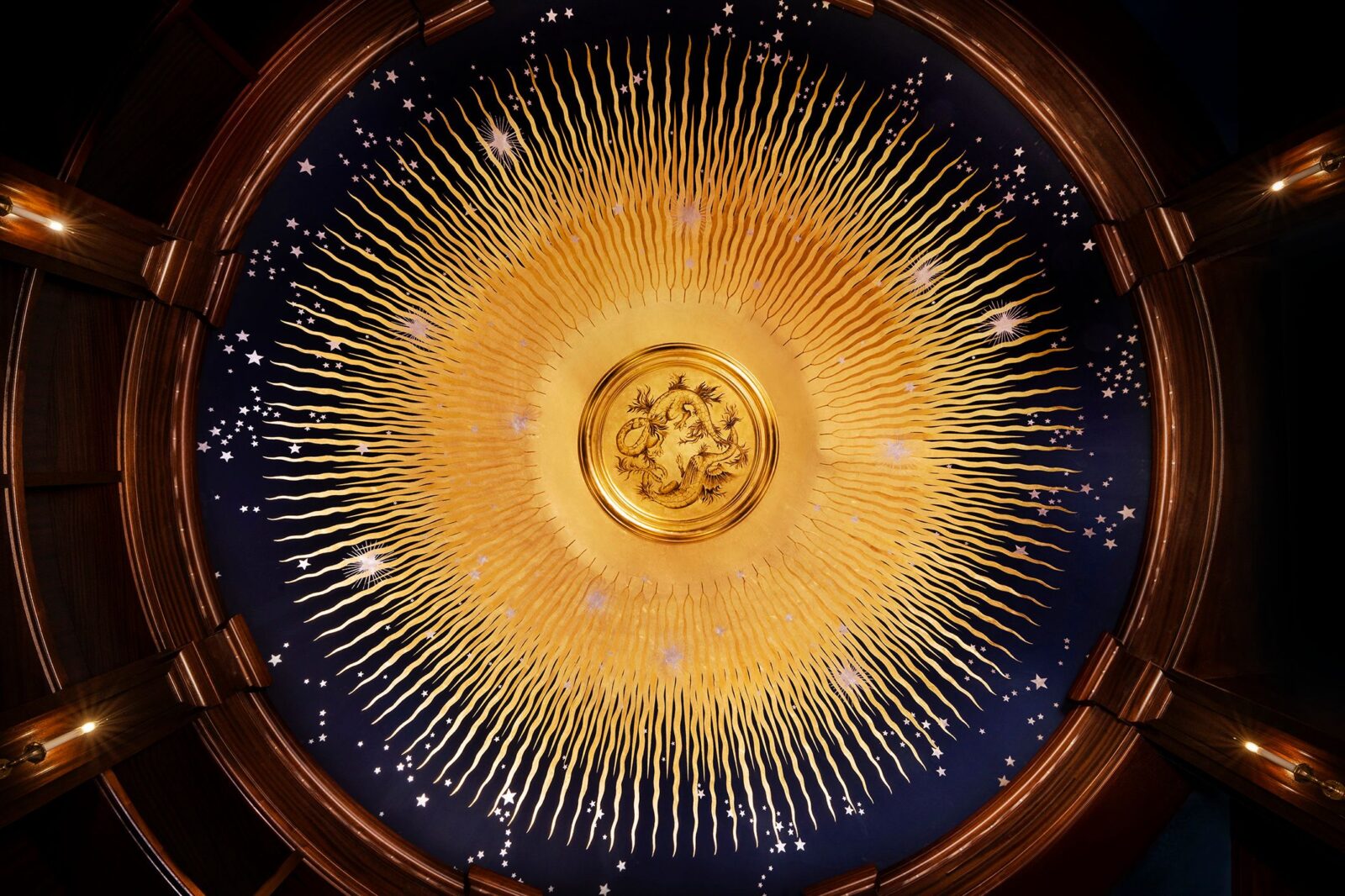
Below the hotel, the Salon d’Eau includes a heated swimming pool of about 10 metres, a hammam and a treatment room. Deep cobalt and midnight blue walls surround the pool, with a ceiling painted as a celestial vault with gold-leaf stars.
Maison Proust, Hotel & Spa La Mer, 3rd Arrondissement
Maison Proust, Hotel & Spa La Mer is located at the quiet, tree-lined 26 rue de Picardie in the Marais, one of Paris’ most in-vogue neighbourhoods, behind a plain grey façade. The hotel, part of Collection Maisons Particulières, opened in November 2022, around the centenary of Marcel Proust’s death, and is home to 23 rooms and suites, lounges, a bar, a library, a winter garden and the Spa La Mer.
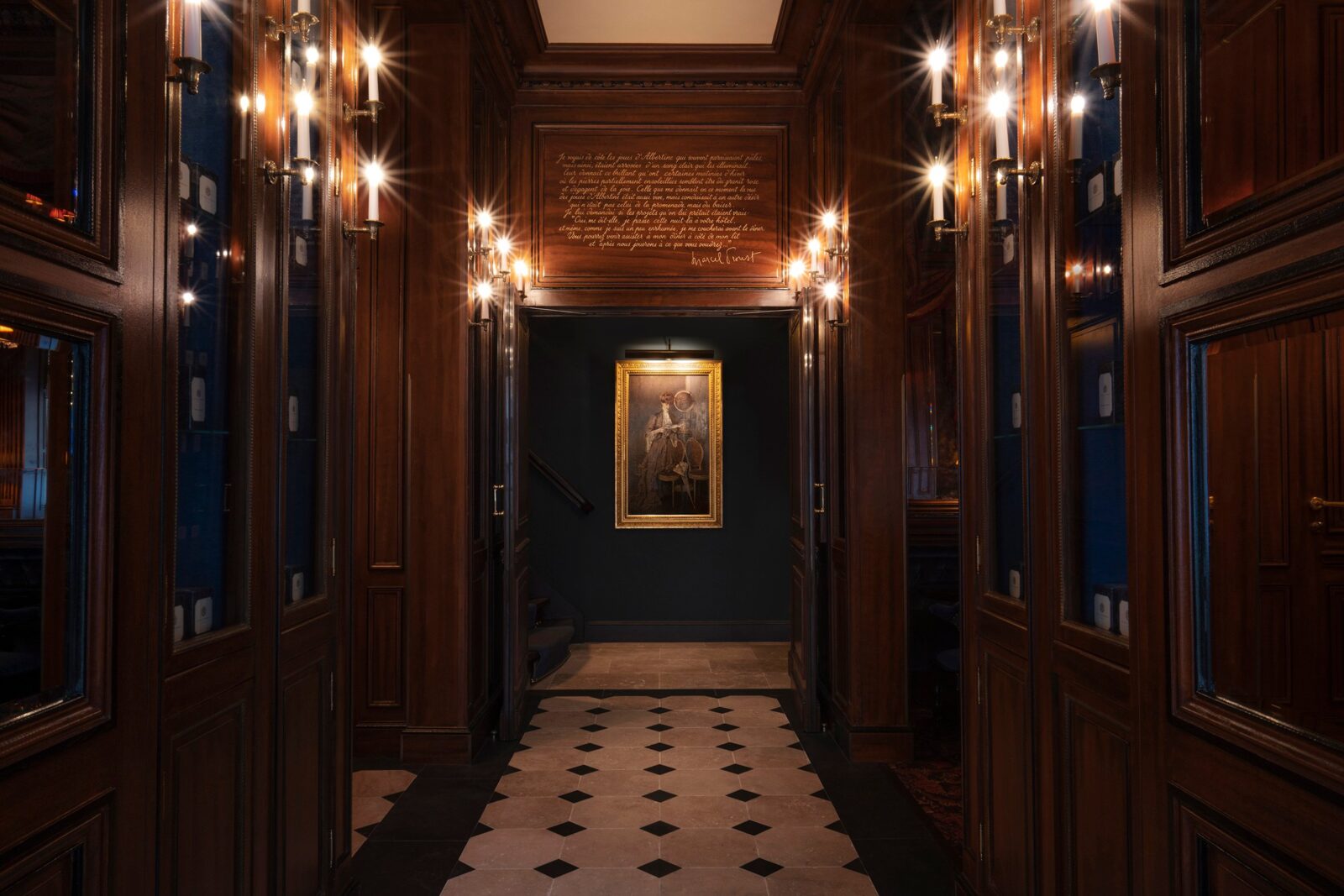
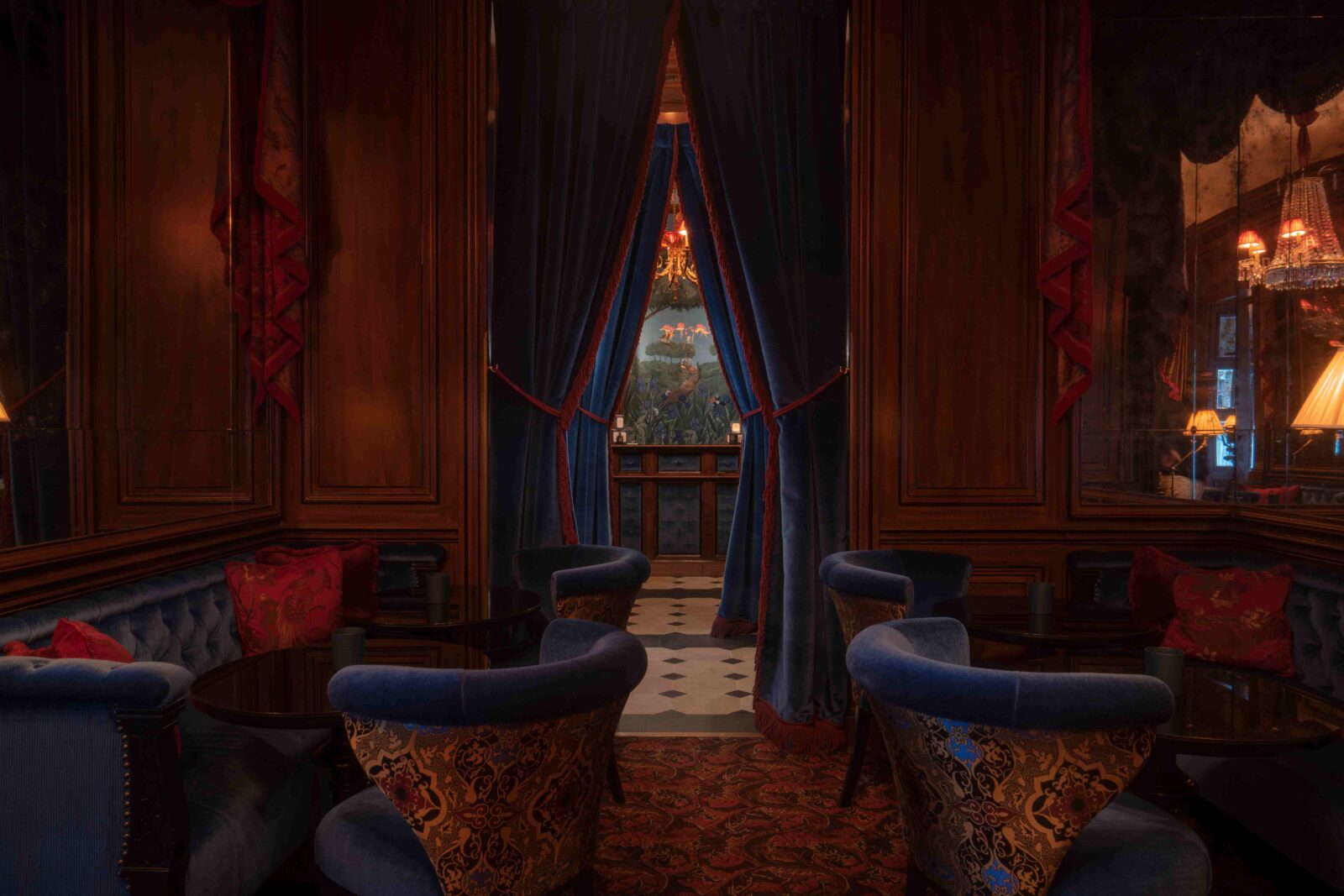
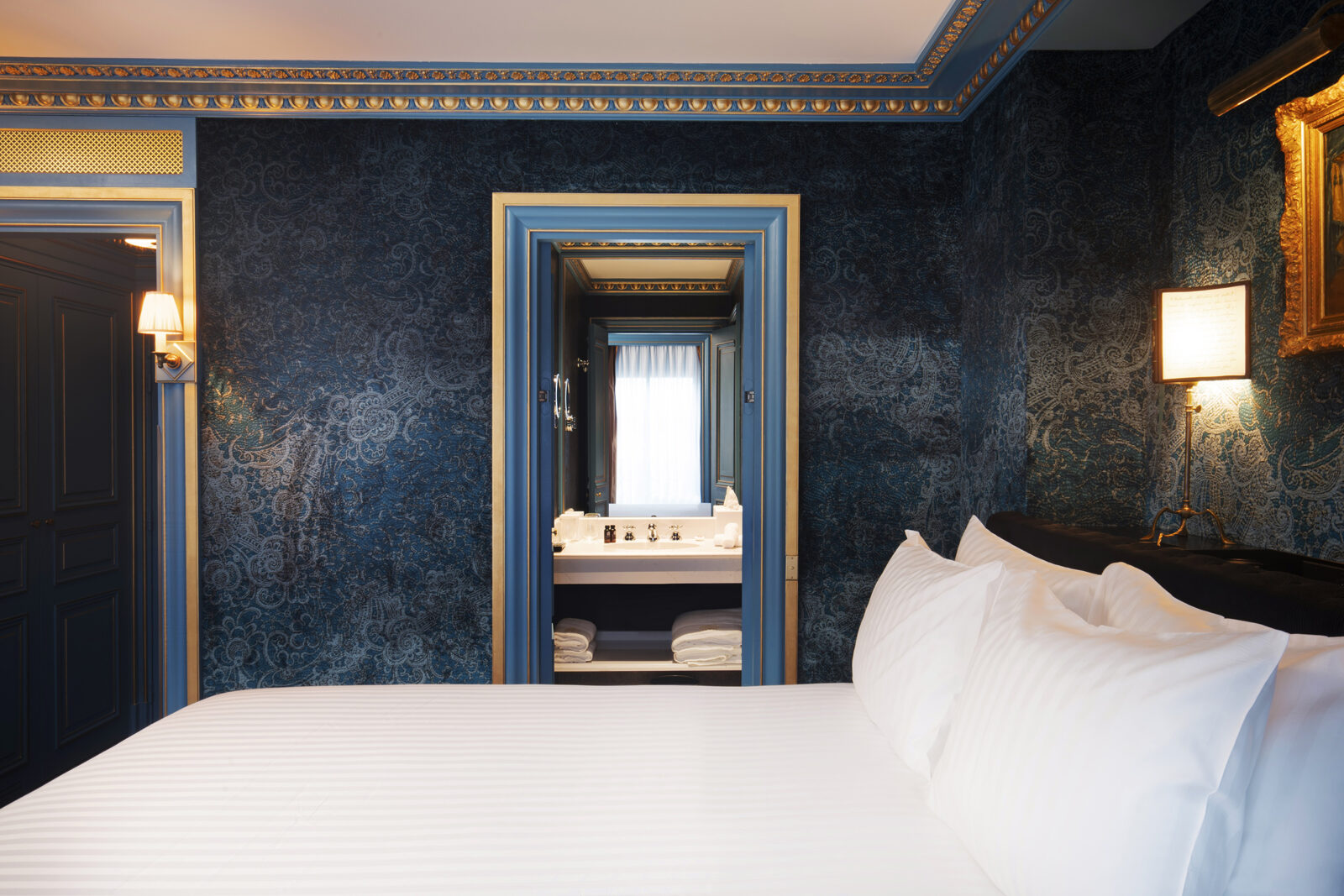
Jacques Garcia’s interior uses period paintings, antique furniture, tapestries, rare books, gilding, velvet, mirrors, leather and low light. While the design style is historical, the rooms resemble more luxurious Parisian private residences than a Belle Époque museum. Maison Proust took 3.5 years to make and used 2,000 metres of fabric from prestigious houses such as Pierre Frey, Rubelli, Lelièvre and Edmond Petit.
The colours used throughout are dark and warm, with deep blue, red, gold, brown, black, ivory, dusty rose and jewel tones painting the interior. The main materials include Cordoba leather, patterned silk, embroidered fabrics, taffeta, velvet, mohair, timber panelling, antique mirror, onyx, crystal, gold leaf, verre églomisé, zellige and marble. Lighting is used here to create an intimate atmosphere, using, for that, chandeliers, mirrors and candlelight.
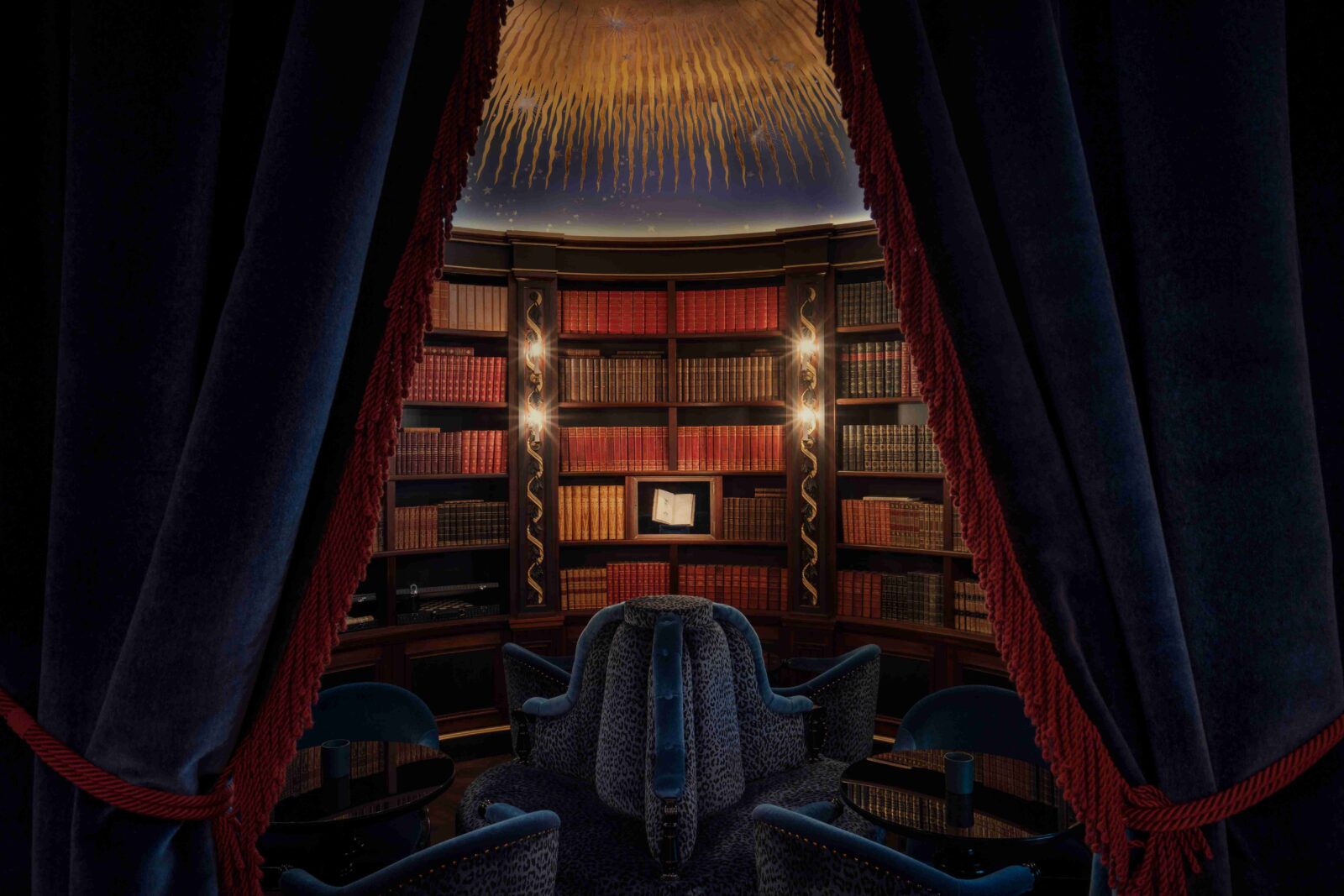
The bar is one of the most detailed rooms of the hotel. A large fireplace with atlantes is surrounded by warm woodwork, heavy curtains and deep-blue mohair seating. Onyx tables, crystal chandeliers, gilded mirrors, velvet curtains, timber panels and antique mirrors complete the interior design. The main décor piece is “Spring”, a watercolour after Édouard Manet by Madeleine Lemaire, Proust’s own godmother.
Breakfast is served in the Winter Garden, the brightest room in the hotel, with windows facing rue de Picardie. Plush armchairs line the windows and the walls are covered with Cordoba leather panels. A gold-woven ceiling velum softens the room, while fringed lights, paintings and generous seating allow the space to be used throughout the day, either for playing chess or having tea accompanied by a nice conversation.
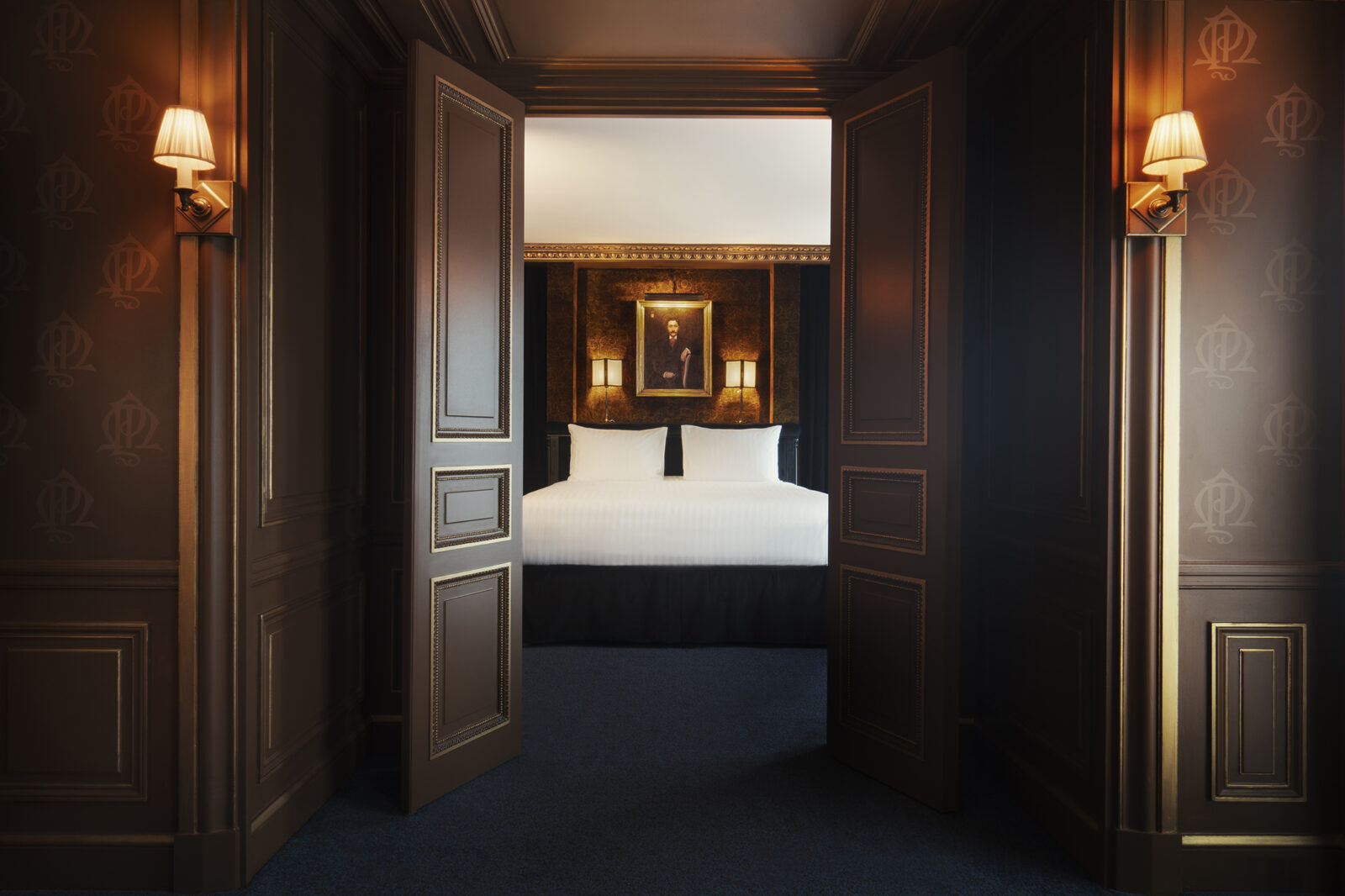
The library is crowned by a rotunda ceiling inspired by the Rotonde du Soleil at the Opéra Garnier. The dome has gold leaf and star motifs above Cordoba leather, wood panelling, comfy seating and a hidden alcove. The room holds hundreds of books, all predating 1922, including works by Proust himself.
The 23 rooms and suites are spread across six floors, all with their own unique themes. The first three floors refer to Parisian figures, the fourth to painters, the fifth to authors and the sixth to Marcel Proust’s apartments. Categories include Deluxe Rooms, Junior Suites, Executive Suites, two-bedroom suites and a three-bedroom Executive Suite.
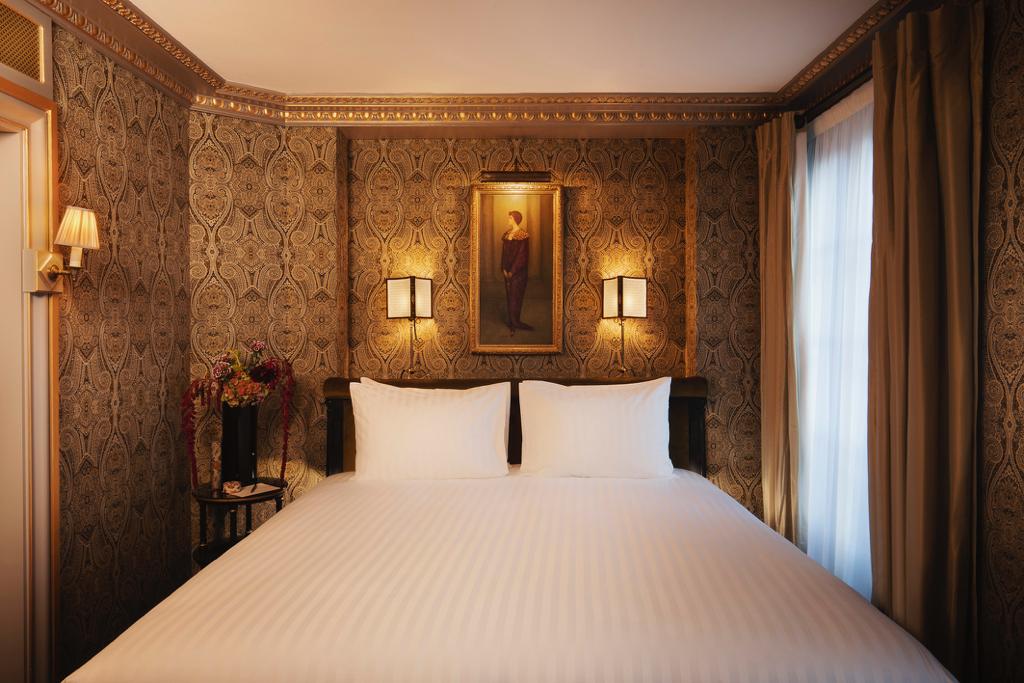
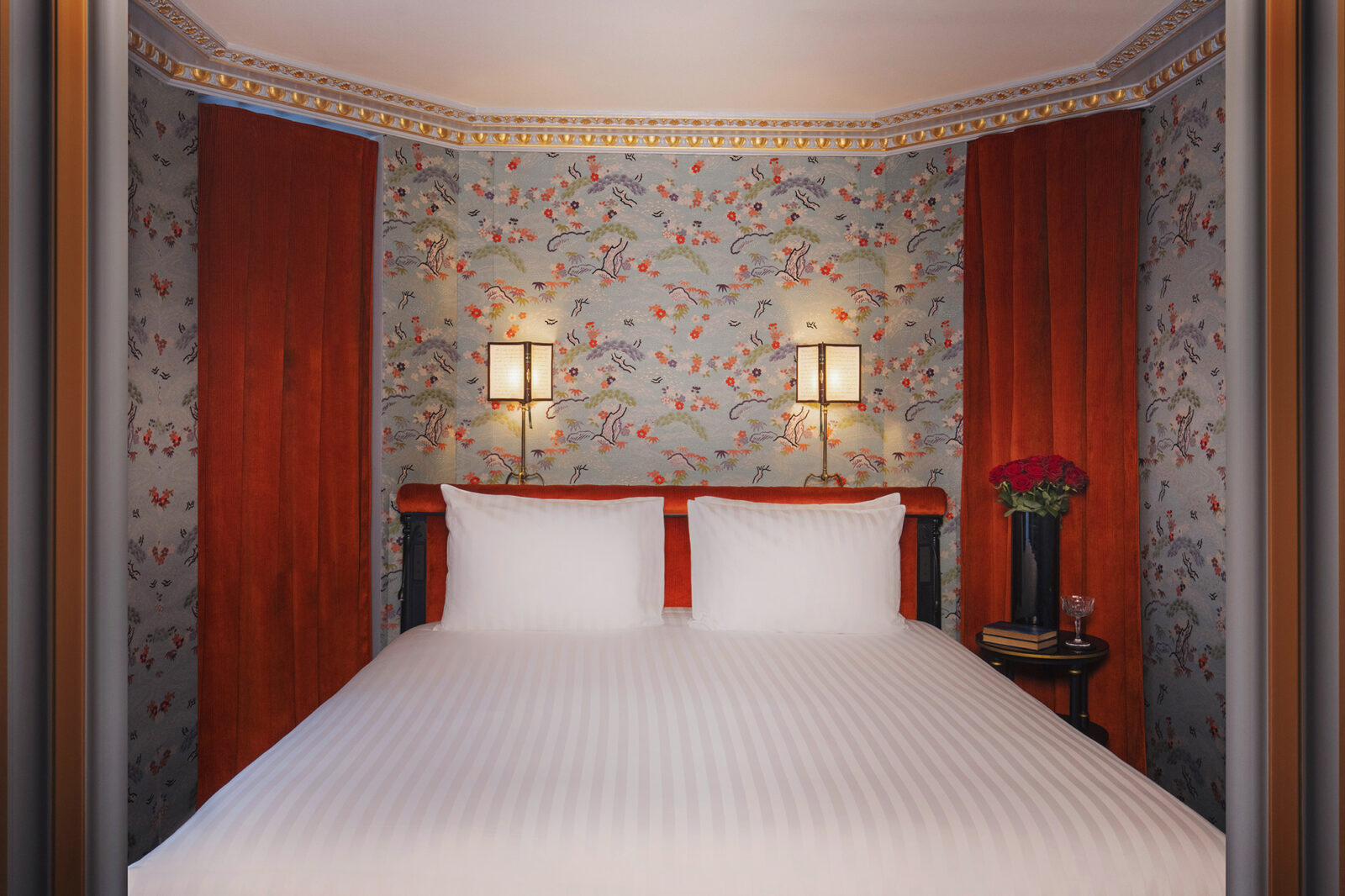
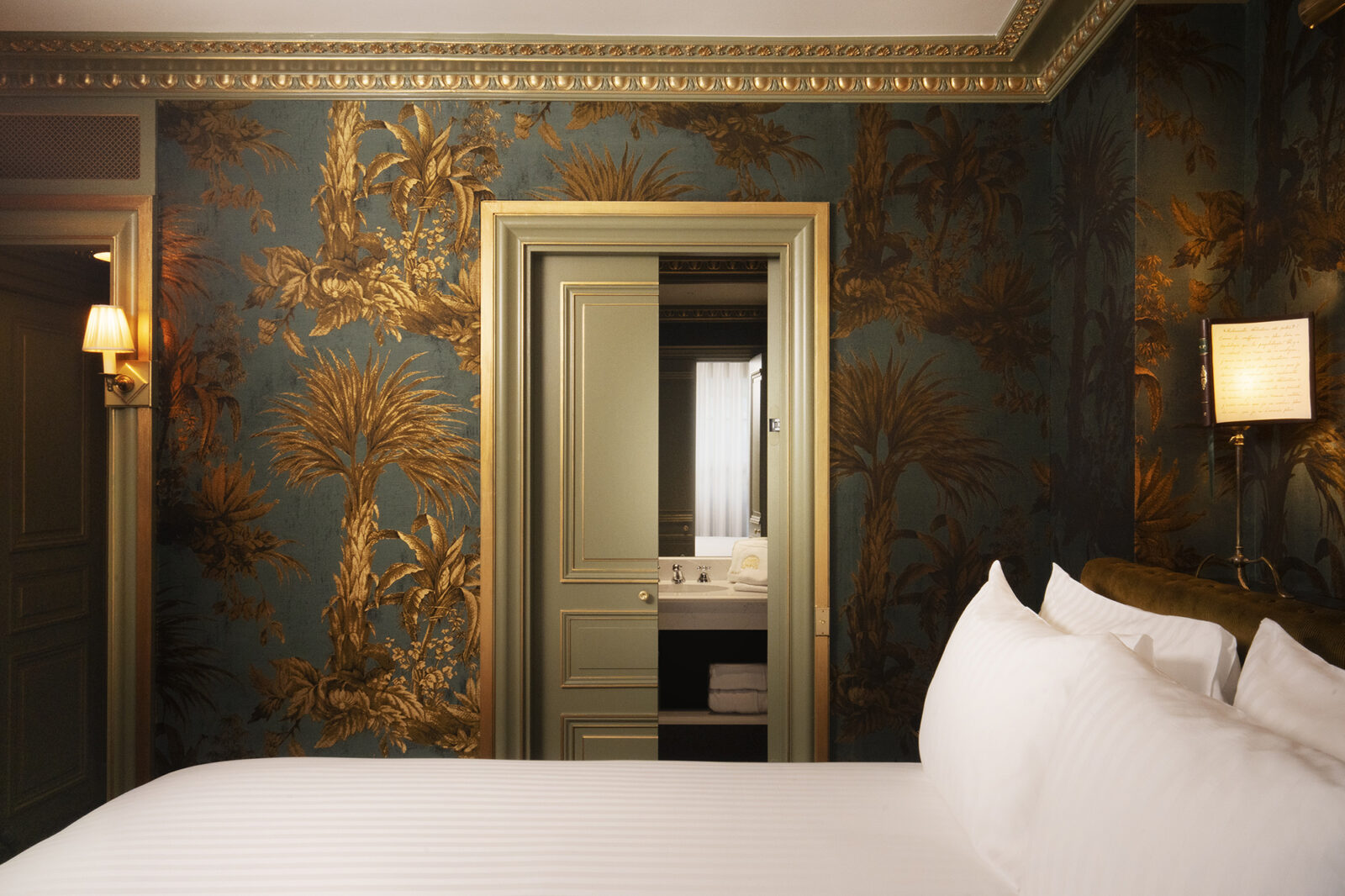
Each room is based on a figure from Proust’s world, with its own painting, fabrics, colours, objects and antique books. The rooms use silk wall coverings, embroidered fabrics, taffeta curtains, plush carpets, moulded ceilings, gilded details and marble bathrooms. Other details include deep tubs, writing desks or alcoves, bespoke lampshades printed with passages from Proust and late-19th-century portraits.
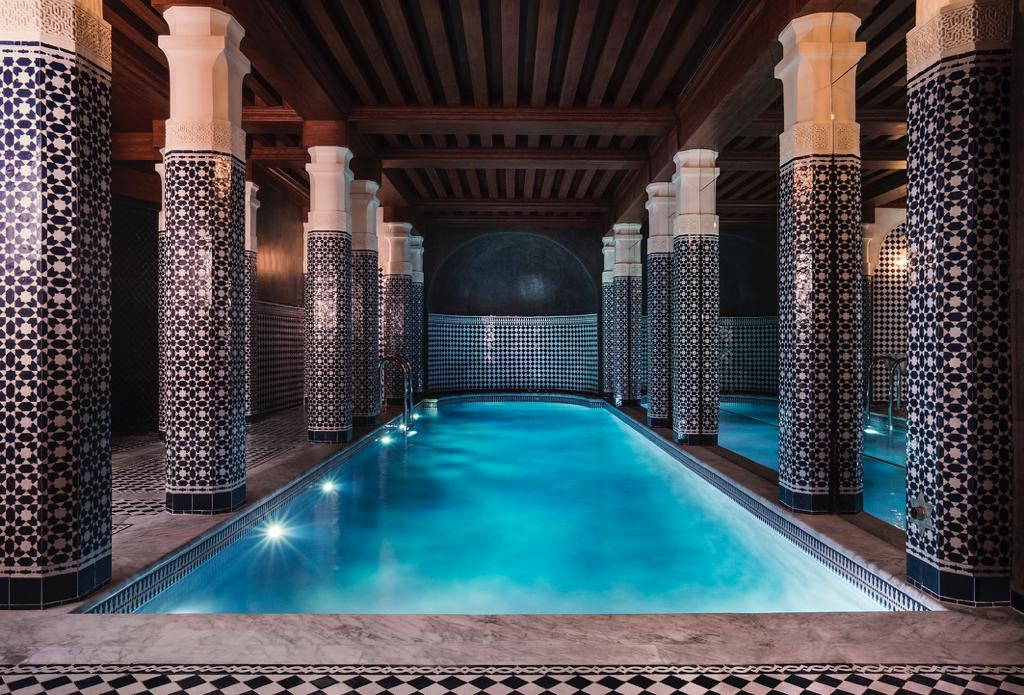
Below the hotel, Spa La Mer introduces a different style. The private wellness space contains a 10-metre pool, hammam and La Mer treatment rooms. Hand-laid zellige, blue-and-white mosaic columns, black-and-white geometric tiling, marble flooring, dark timber beams, carved capitals and underwater lighting form a Moorish-like atmosphere, inviting guests to enter a brand-new world.
Le Meurice, 1st Arrondissement
Le Meurice is located on one of the most pristine streets of Paris, at 228 rue de Rivoli, facing the Tuileries Garden and other Parisian landmarks, with the Louvre nearby. The hotel, open since 1835, has had an interesting history when it comes to its name: while the official name comes from Charles-Augustin Meurice, its history with royal guests gave it the nickname “Hotel des Rois” (Hotel of Kings). In 2011, it received official French “Palace” status.
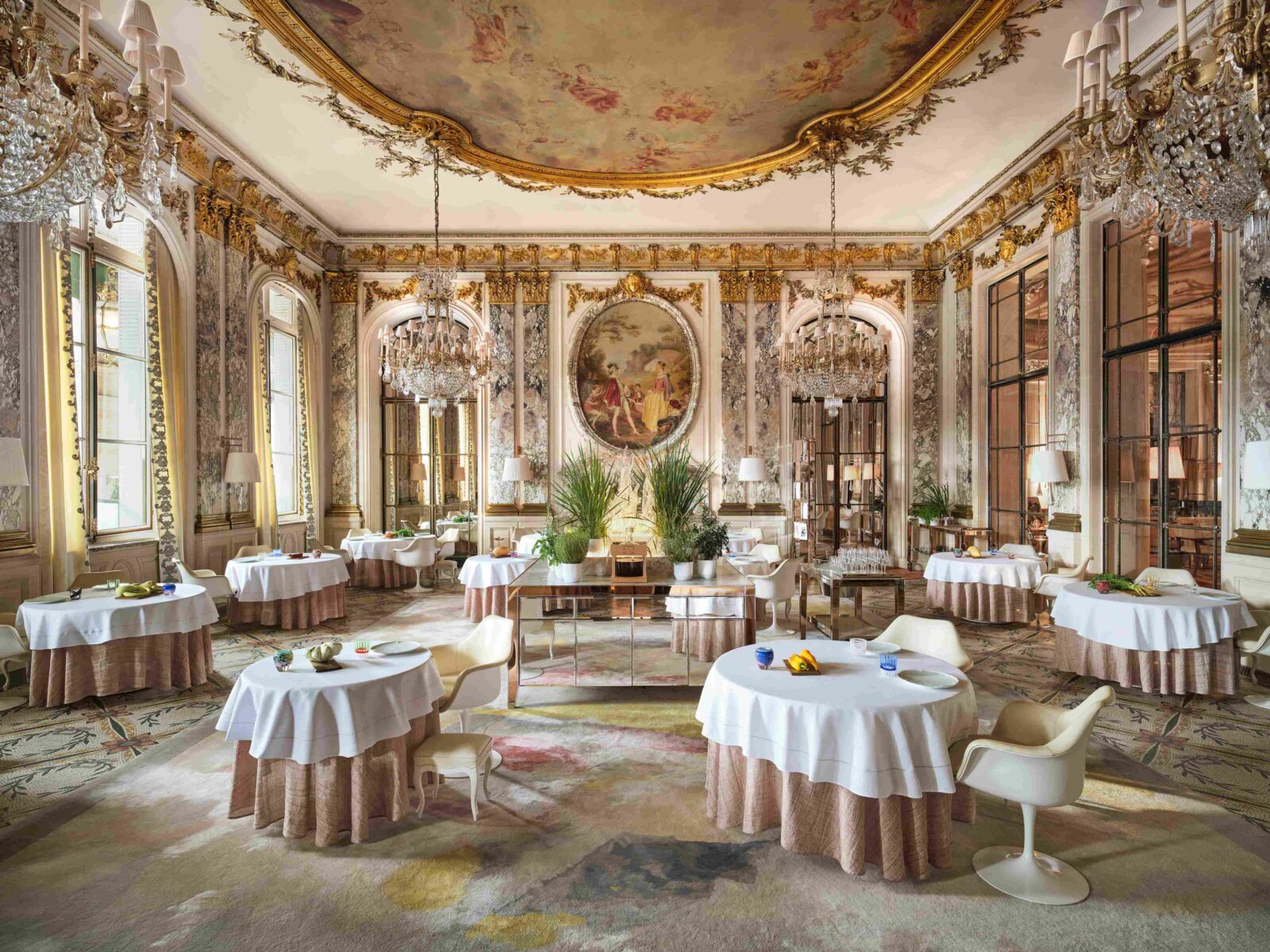
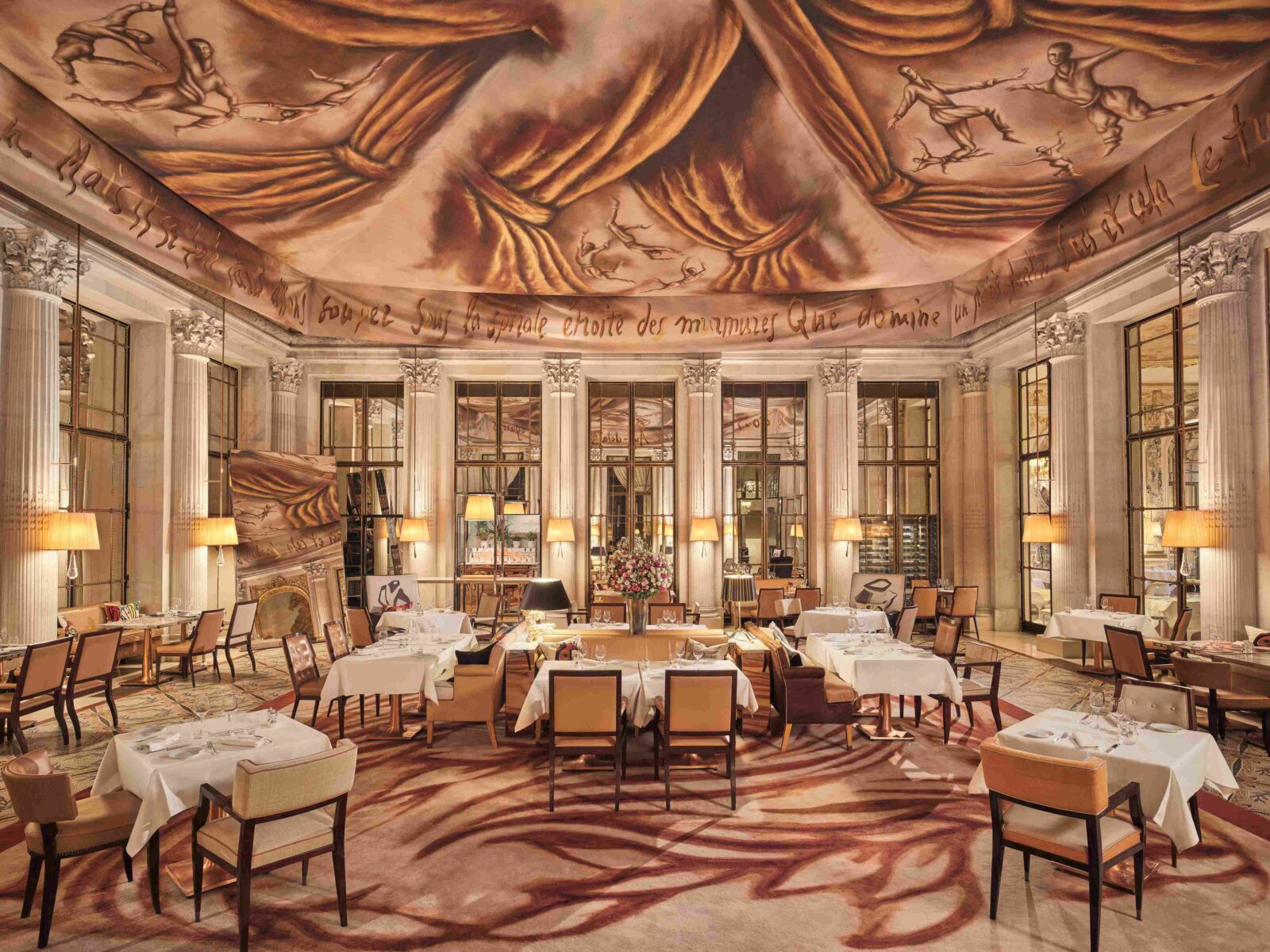
The hotel is part of the Dorchester Collection, and its interiors bring together Parisian palace architecture, 18th-century French decoration, contemporary art and references to Salvador Dalí, who stayed at the hotel over many years. Several designers have shaped its current form: Philippe Starck redesigned major public spaces in 2007 and 2016, with Dalí references; Charles Jouffre worked on the rooms and suites through French classical décor, upholstery and drapery; and Lally & Berger later restored some suites.
The restaurant Le Meurice Alain Ducasse is the hotel’s ode to the Château de Versailles, with its gilding, chandeliers, painted ceiling panels, large mirrors and formal proportions inspired by the Salon de la Paix. Designed by Starckt, it is overseen by Alain Ducasse, with Amaury Bouhours as executive chef, and currently holds two Michelin stars.
Le Dalí, also designed by Starck, was directly inspired by Dalí’s long connection with the hotel. It has a glass dome, patterned floors, colourful surrealist motifs and soft seating, plus a large canvas by Ara Starck suspended beneath the dome. Bar 228, on the other hand, is darker and more enclosed. Its design is built around wood panelling, gilded details, red curtains, leather seating, table lamps, a piano, a mirrored bar and a ceiling painted with clouds. Starck’s refresh added a Carrara marble counter with pink copper, brass and stainless steel details, while the older parts remained to enjoy the live jazz that is held there each night.
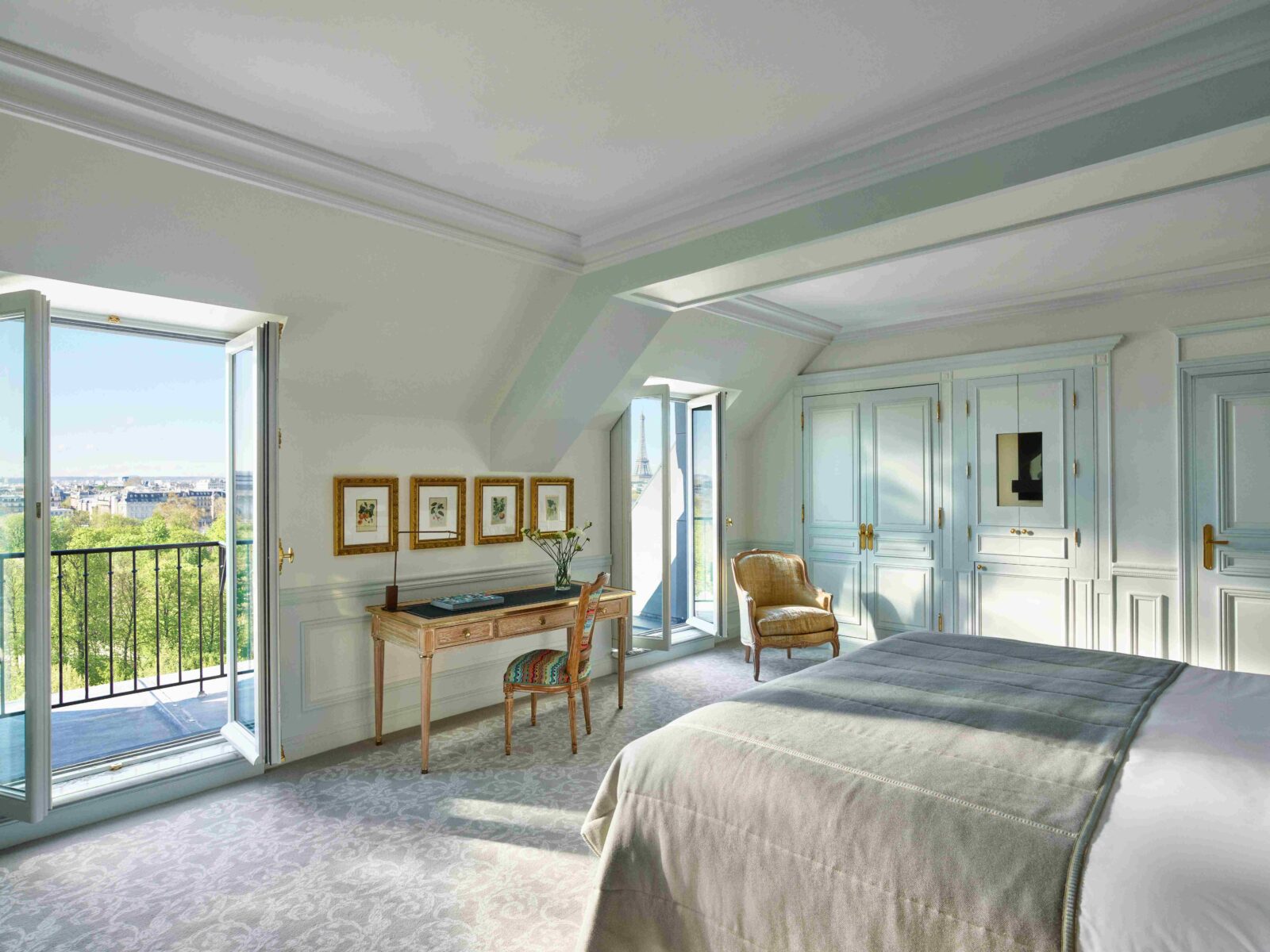
The rooms and suites were restored by Charles Jouffre to keep the palace’s rich character while adding current comfort and technology, or, as the designer put it, to “change everything and change nothing”. In 2019, 29 rooms and suites from the third to sixth floors were restored, including a penthouse suite, with Lally & Berger developing the new style.
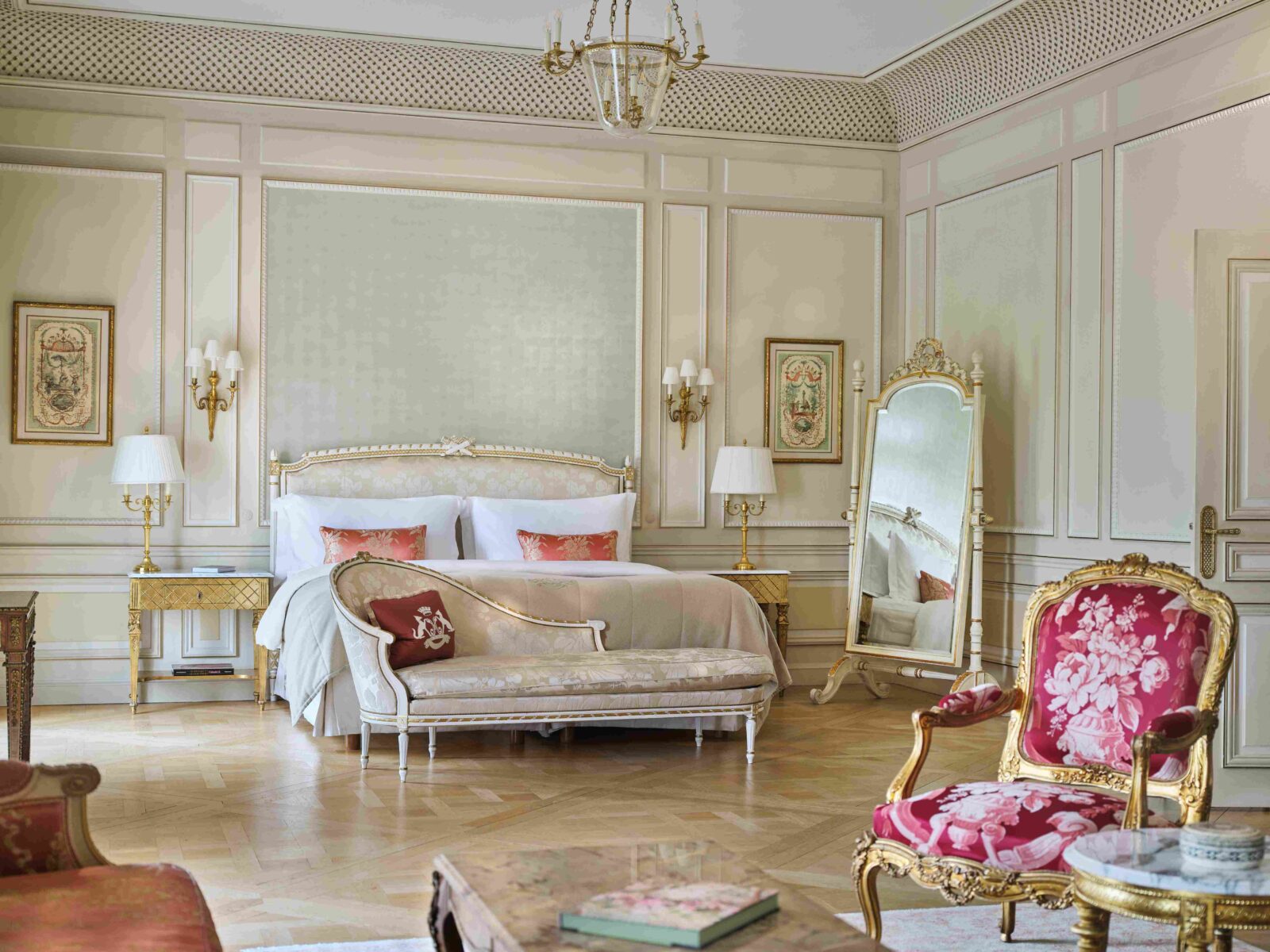
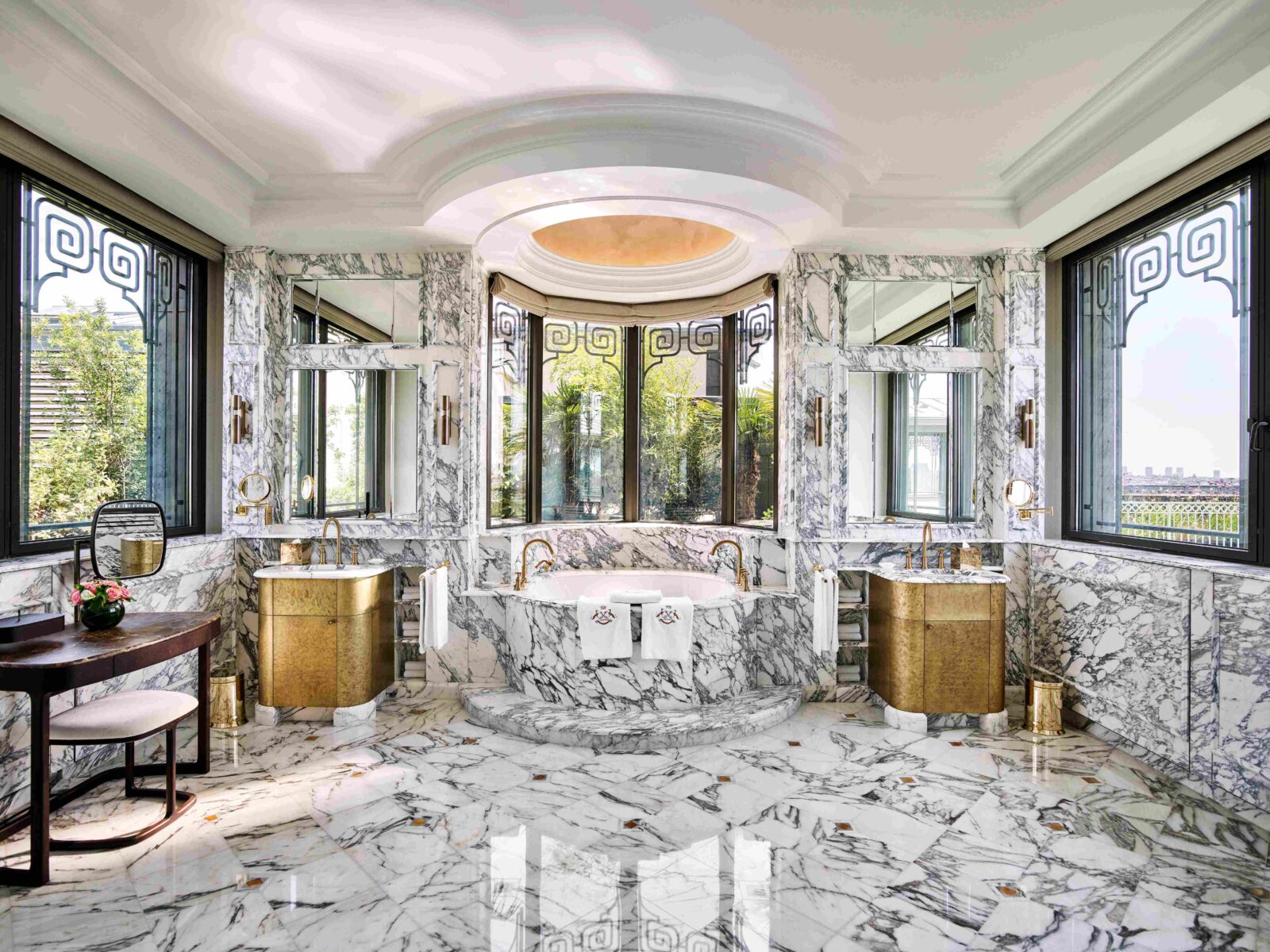
The rooms are dressed in French fabrics, silk, damask, velvet, custom furniture and artworks linked to Paris and the hotel’s history. Earlier presidential-suite work included Versailles parquet, wool-and-silk rugs from Galerie Saint-Simon, marble fireplaces, crystal chandeliers, 19th-century paintings and period furniture. Restored pieces included Louis XVI cabinets and re-gilded cabriolet chairs.
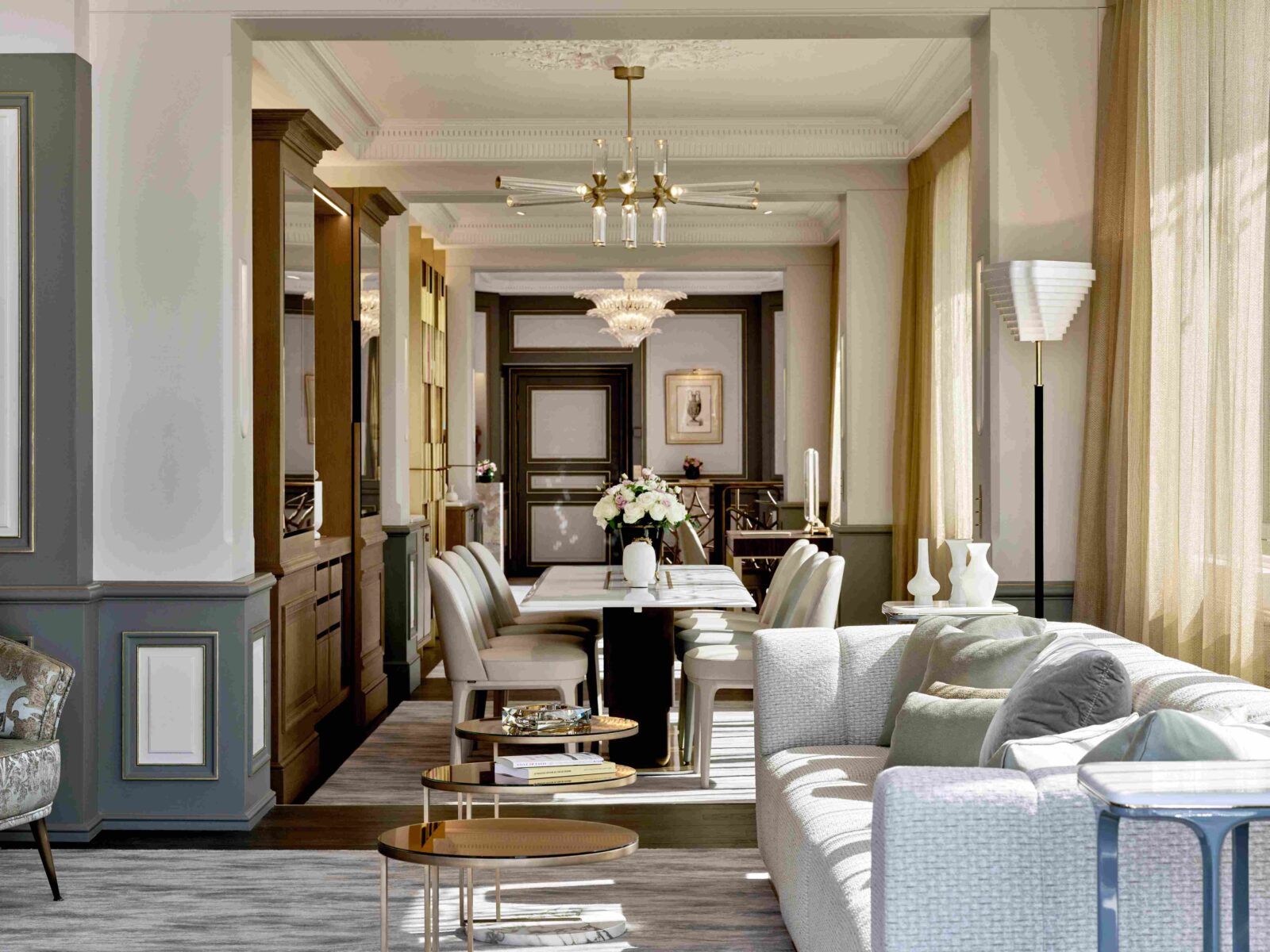
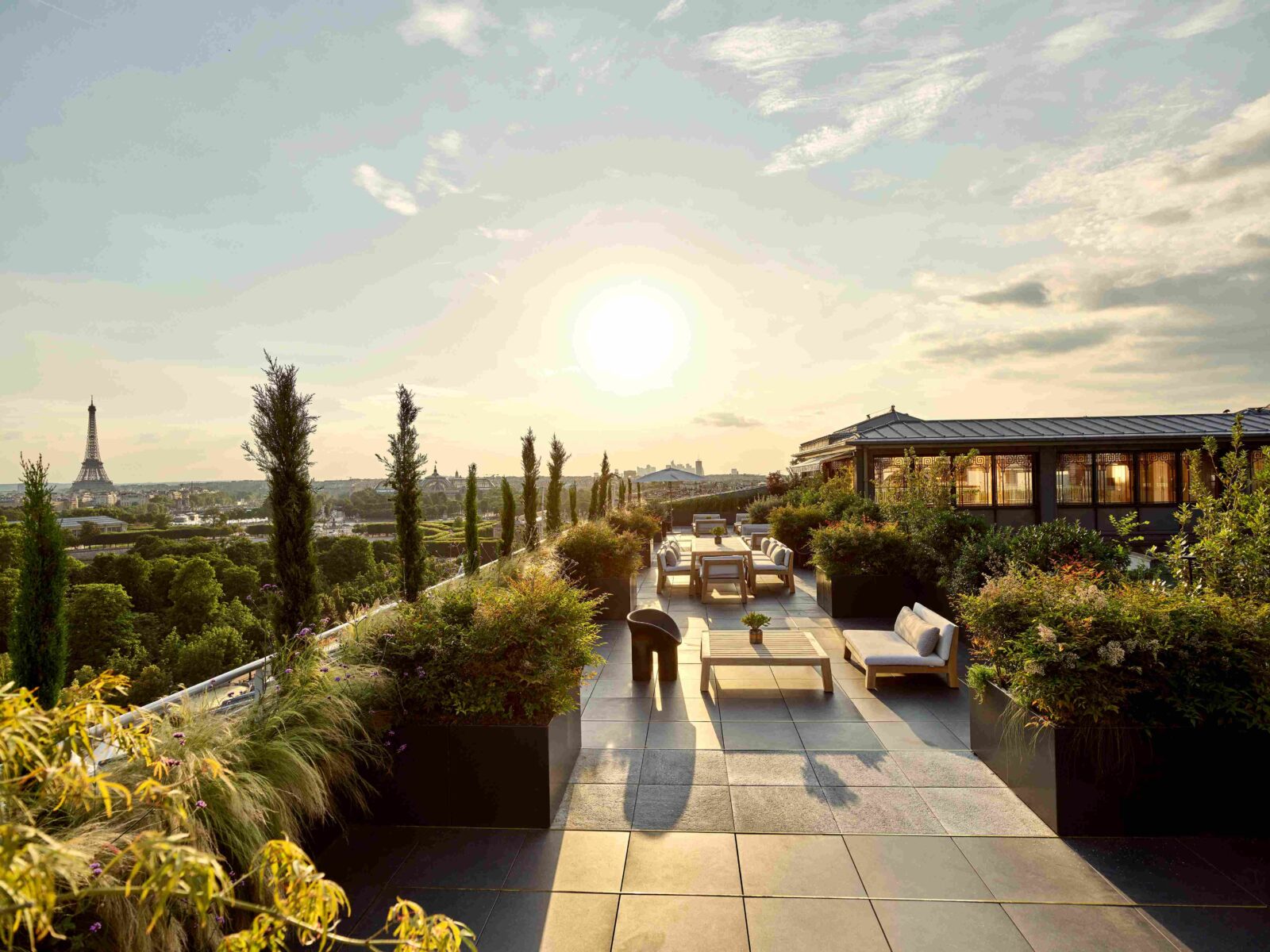
The Pompadour Suite reminds one of a royal residence, with Charles Jouffre having designed it with silk by Prelle, trimmings by Declercq and chandeliers by Lucien Gau. Coral and beige tones are used with Regency-style wood panelling, armchairs and bergères by Moissonnier, detailed passementerie and concealed modern technology. The Belle Étoile Penthouse Suite, redesigned by Lally & Berger with Charles Jouffre, includes modern French furniture, sofas by Ateliers Jouffre, furniture by Laval, light oak pieces by Ateliers Perrault and custom chandeliers by Lucien Gau. Its large terrace was redesigned by landscape designer Pierre-Alexandre Risser and looks across the beautiful Parisian cityscape.
Hôtel Plaza Athénée, 8th Arrondissement
The Hôtel Plaza Athénée has been open since April 1913 on Avenue Montaigne, making it a contemporary of the chic Théâtre des Champs-Élysées. Designed by Charles Lefebvre and Louis Duhayon, the building’s eight-storey façade is the perfect example of the eclectic Parisian architecture, shaped by pale stone, wrought-iron balconies, red awnings and flower boxes.
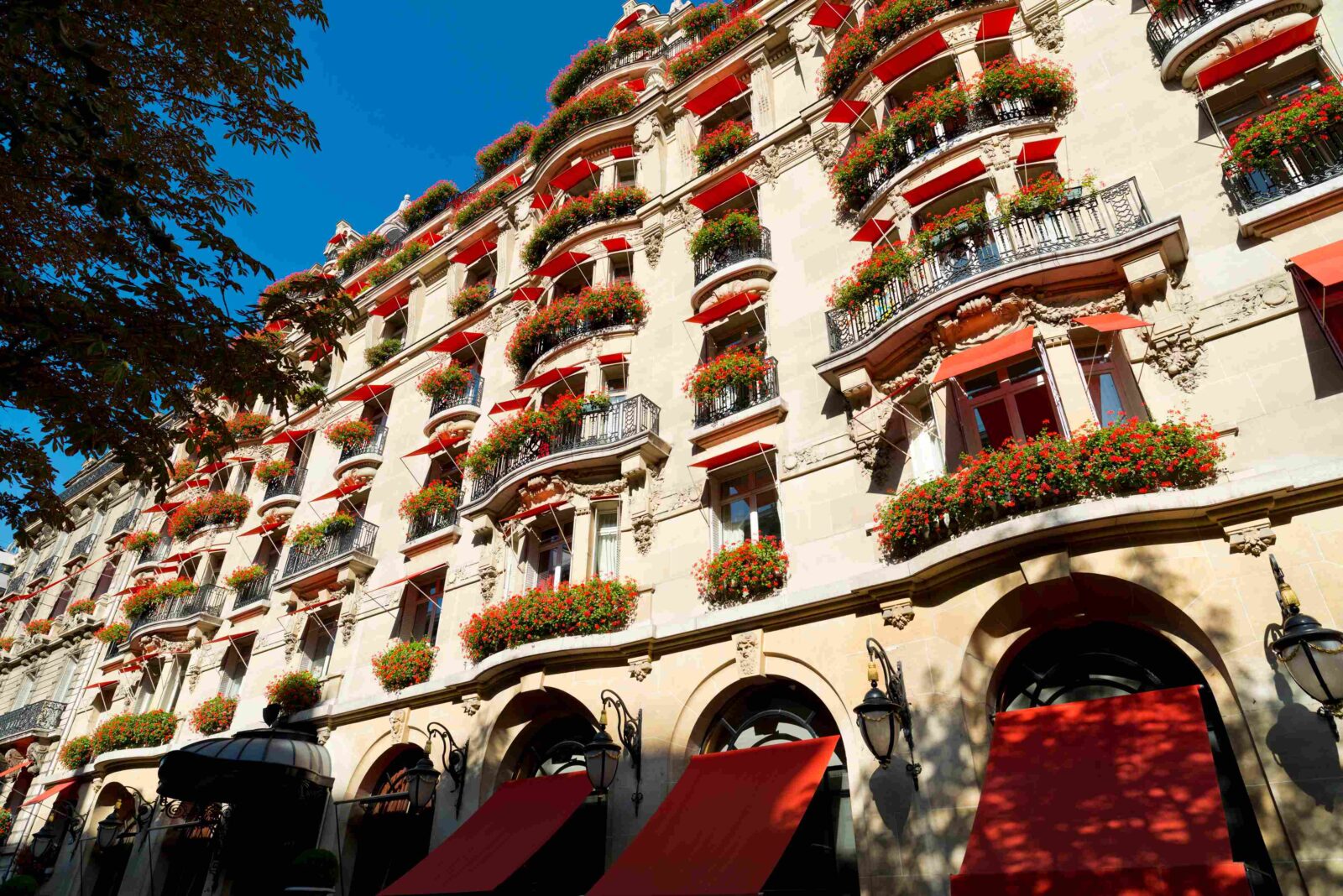
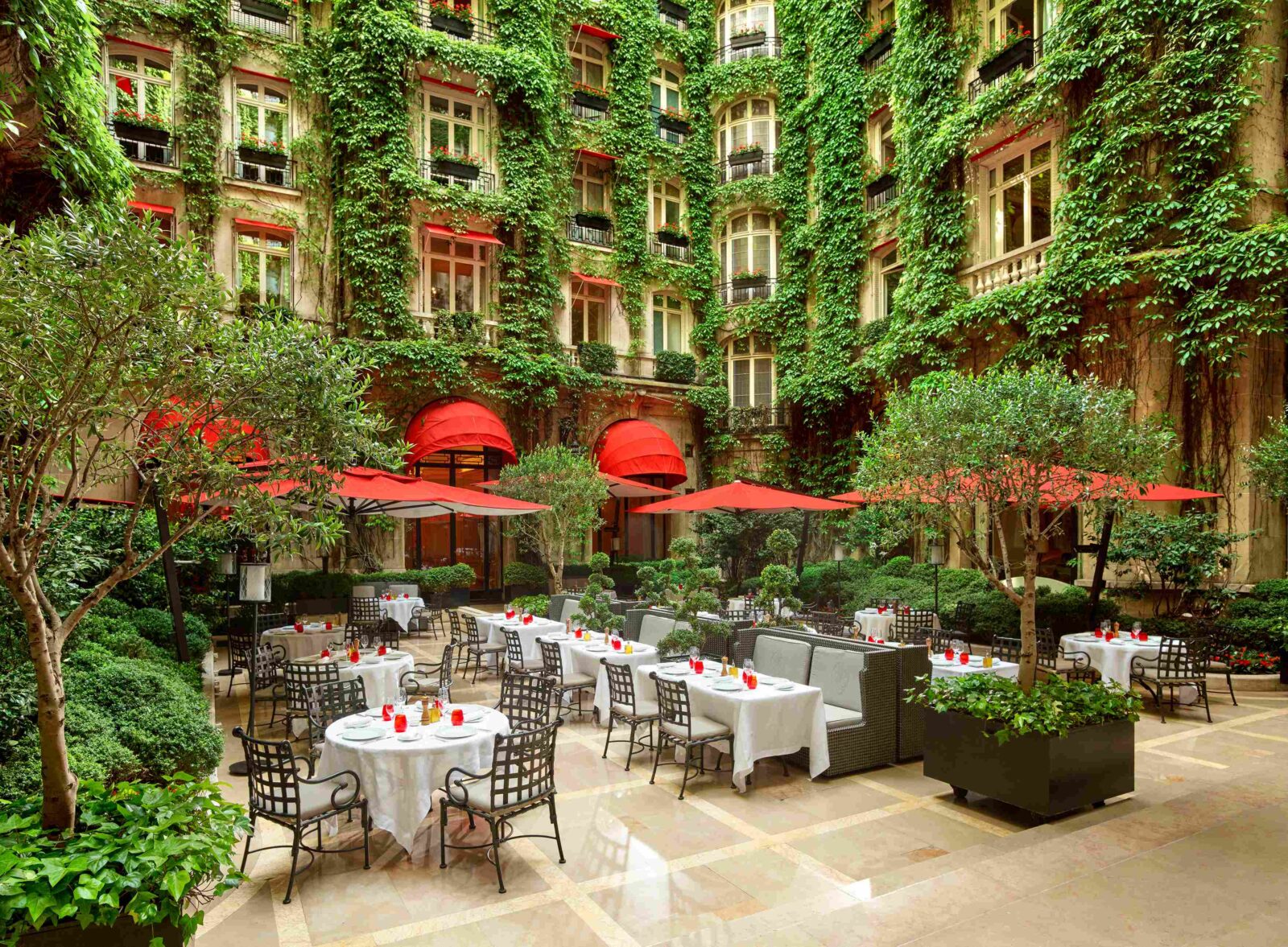
The exterior immediately sets the tone for the stay: long rows of windows, red fabric awnings and red geraniums adorning the balconies. After crossing the lobby, a courtyard with the same flowers, red parasols, ivy-covered walls, white tablecloths and black metal garden chairs, known as La Cour Jardin, helps bring the fashionable street into the heart of the hotel.
Once inside, a mix of styles becomes immediately apparent, as the hotel merges the best of 18th-century Parisian décor, Belle Époque grand hotel interiors and Art Deco. Several designers are linked to different parts of the building, including Bruno Moinard, Claire Bétaille, Patrick Jouin, Sanjit Manku, Marie-José Pommereau and Bettina Mortemard.
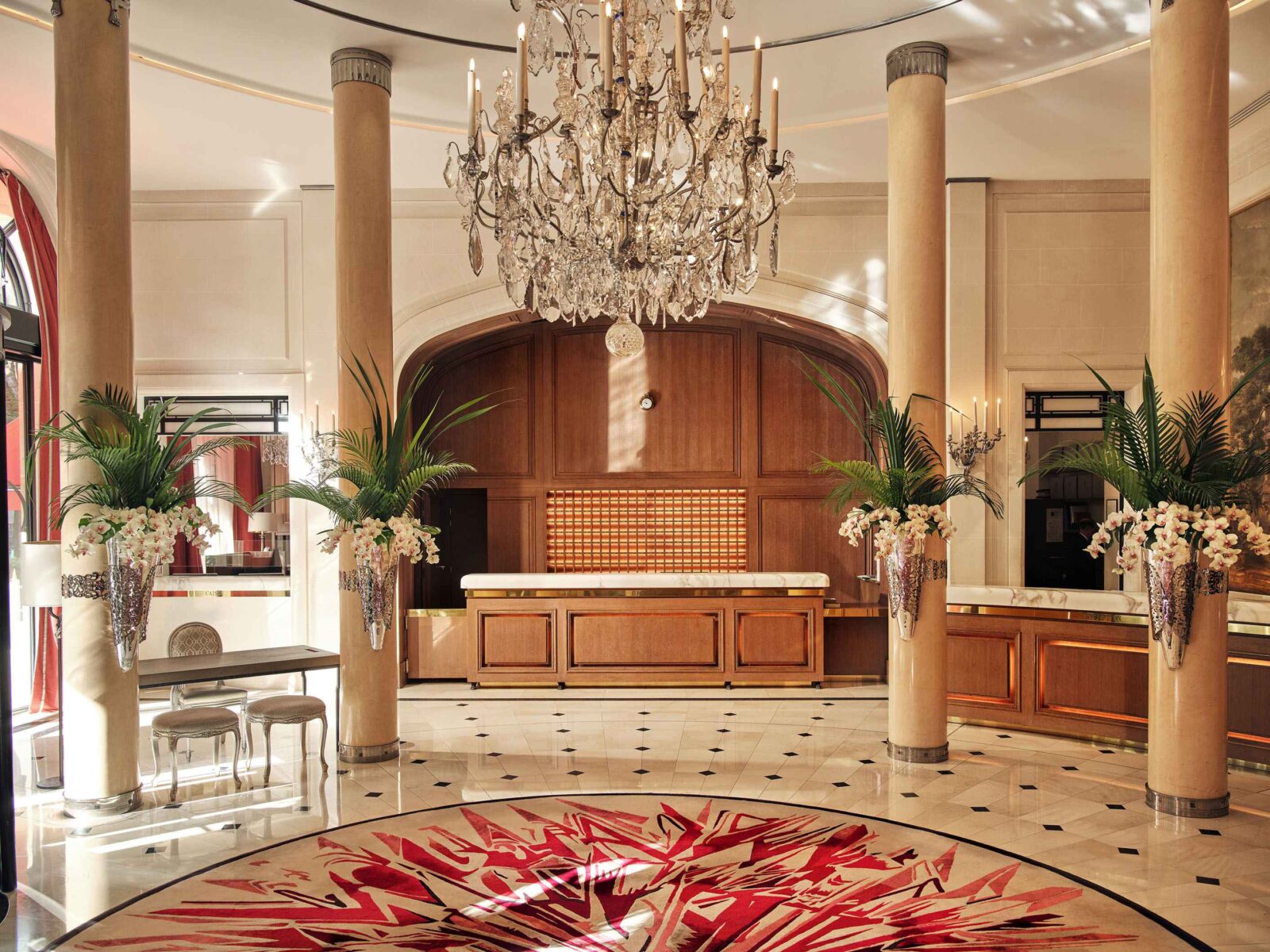
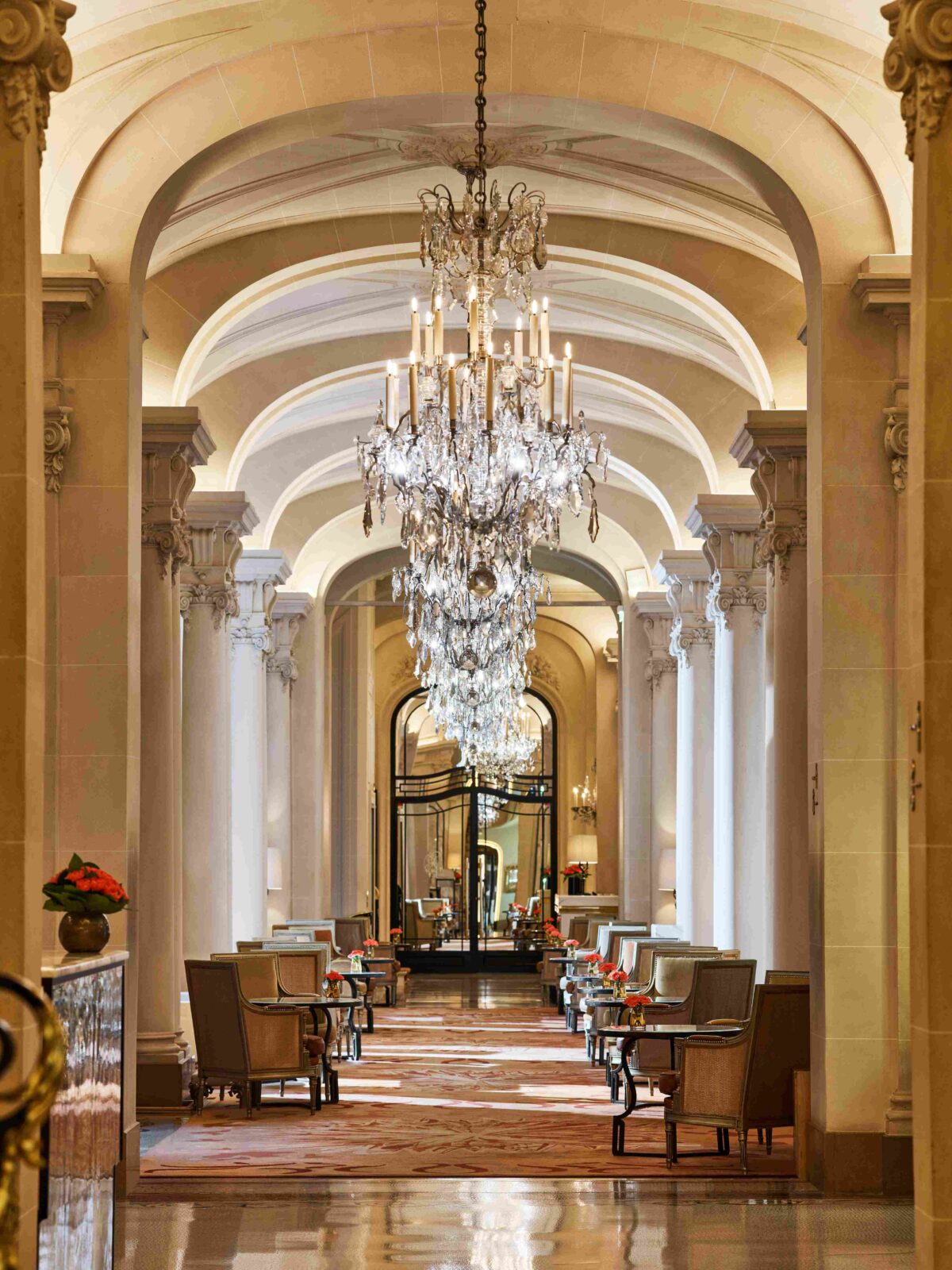
During an early 2000s renovation, which saw the expansion of the hotel, the lobby was refreshed with bronze, marble, brushed oak furnishings, wall panelling and a mosaic floor. Two large paintings were kept, plus the vaulted ceilings, classical columns and crystal chandeliers.
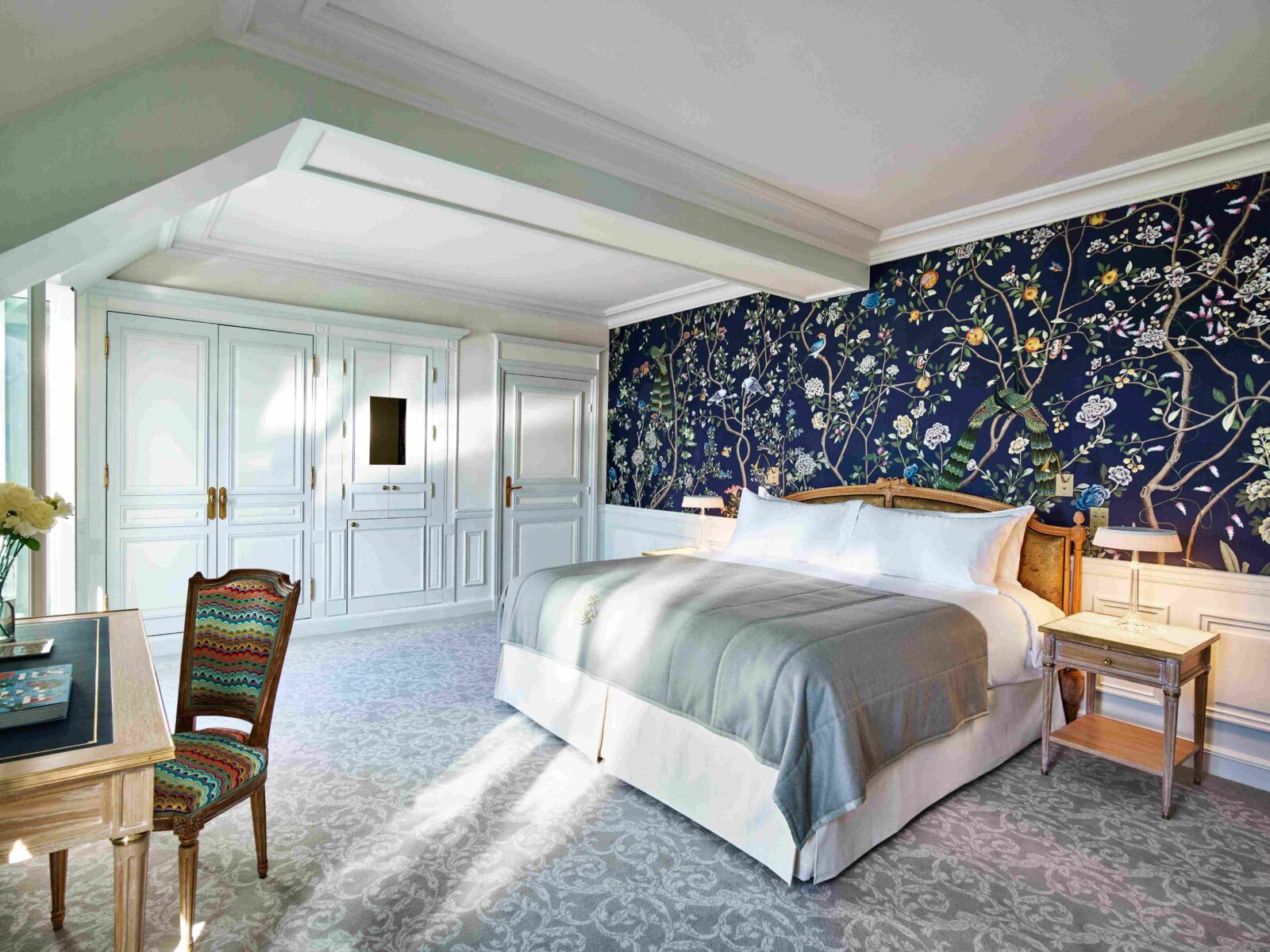
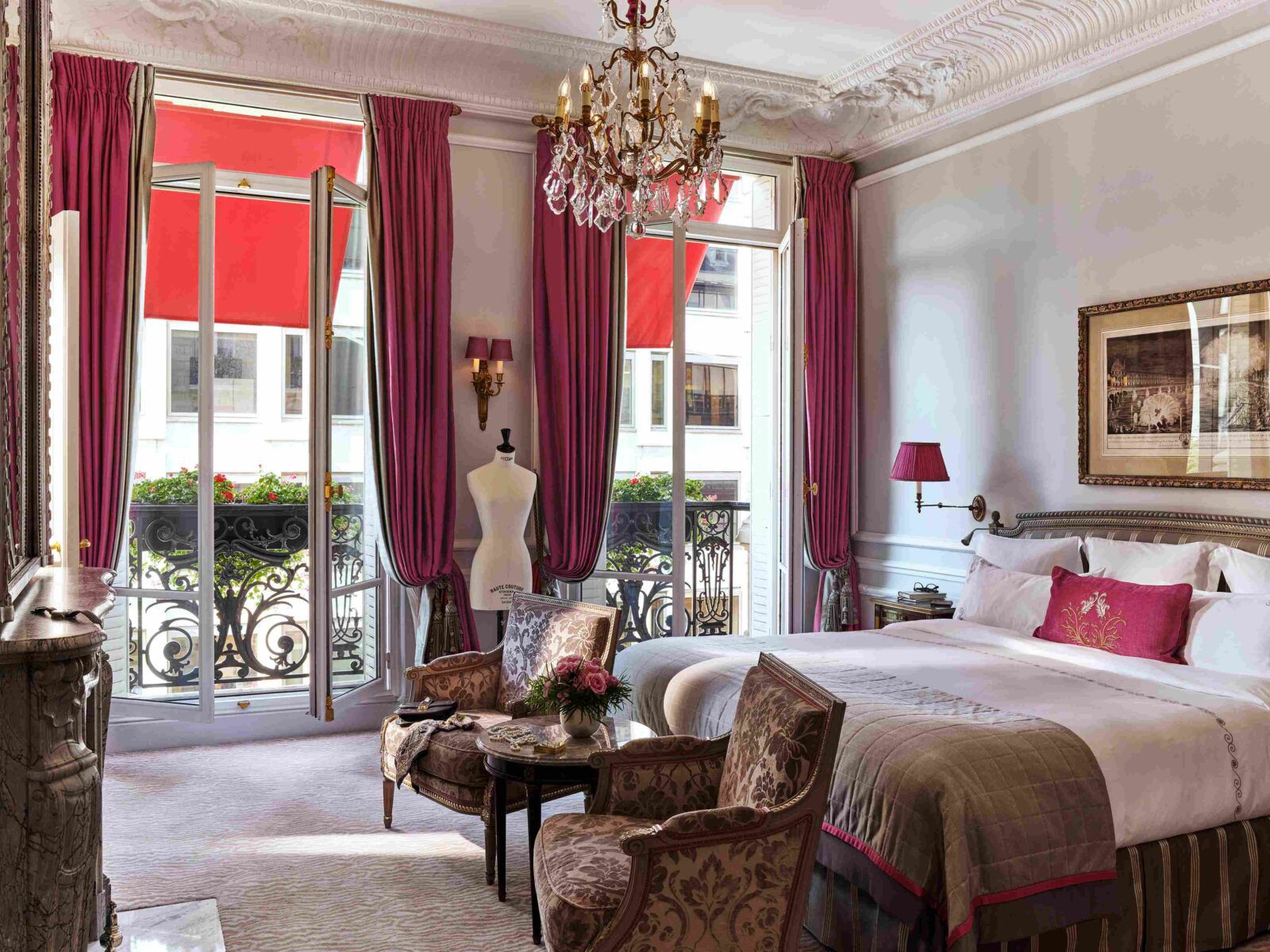
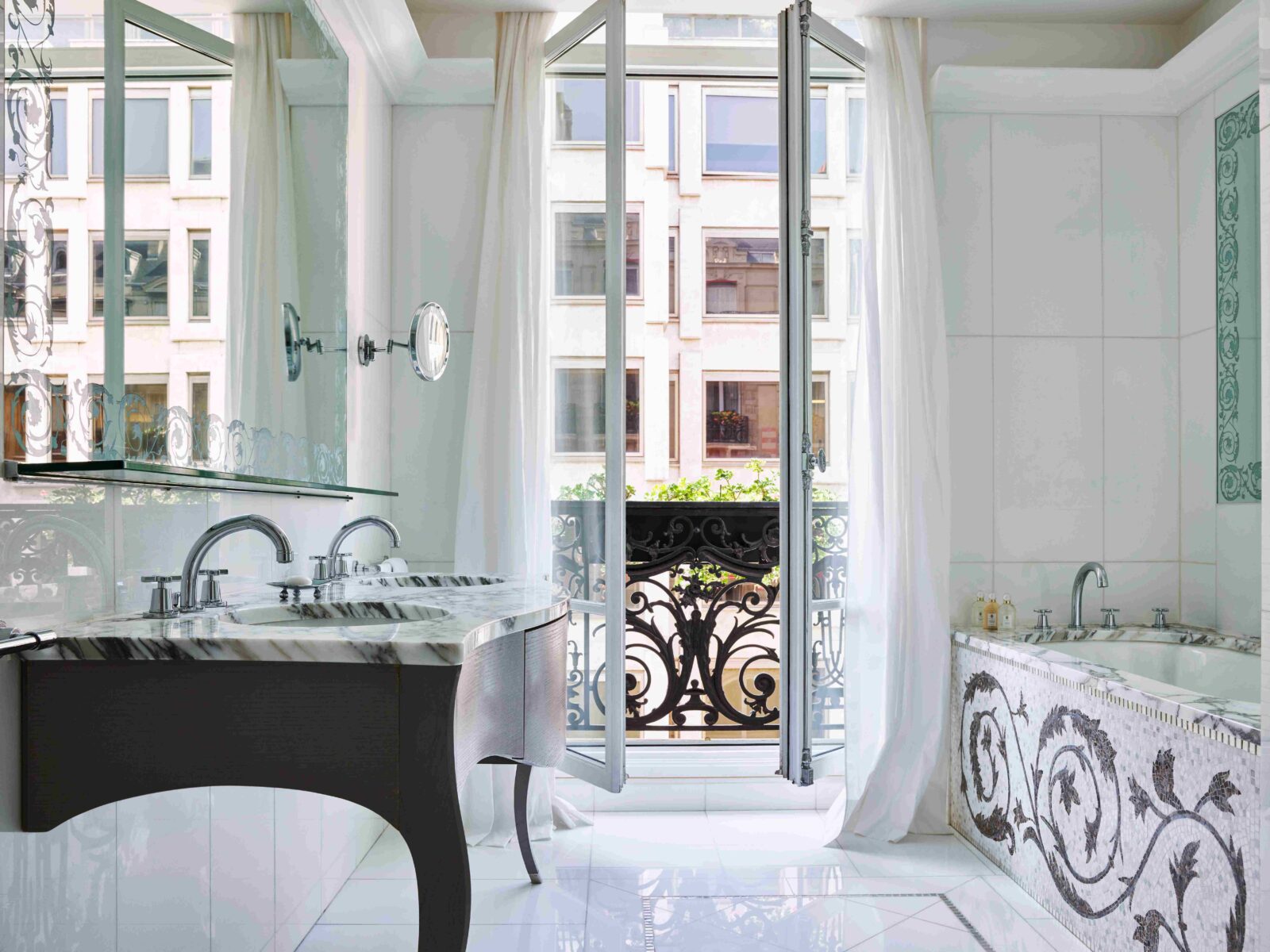
The bedrooms and suites are divided into two main groups: floors one to six follow a classical Parisian style, with rich fabrics, painted furniture, marble bathrooms, bronze details, Louis XVI-style bedside tables, marble tops, restored period pieces and specially designed chests of drawers; the upper floors move into Art Deco, reworked by Bruno Moinard and Claire Bétaille with sharper lines, natural light, softer fabrics, a more linear structure and touches of Plaza red.
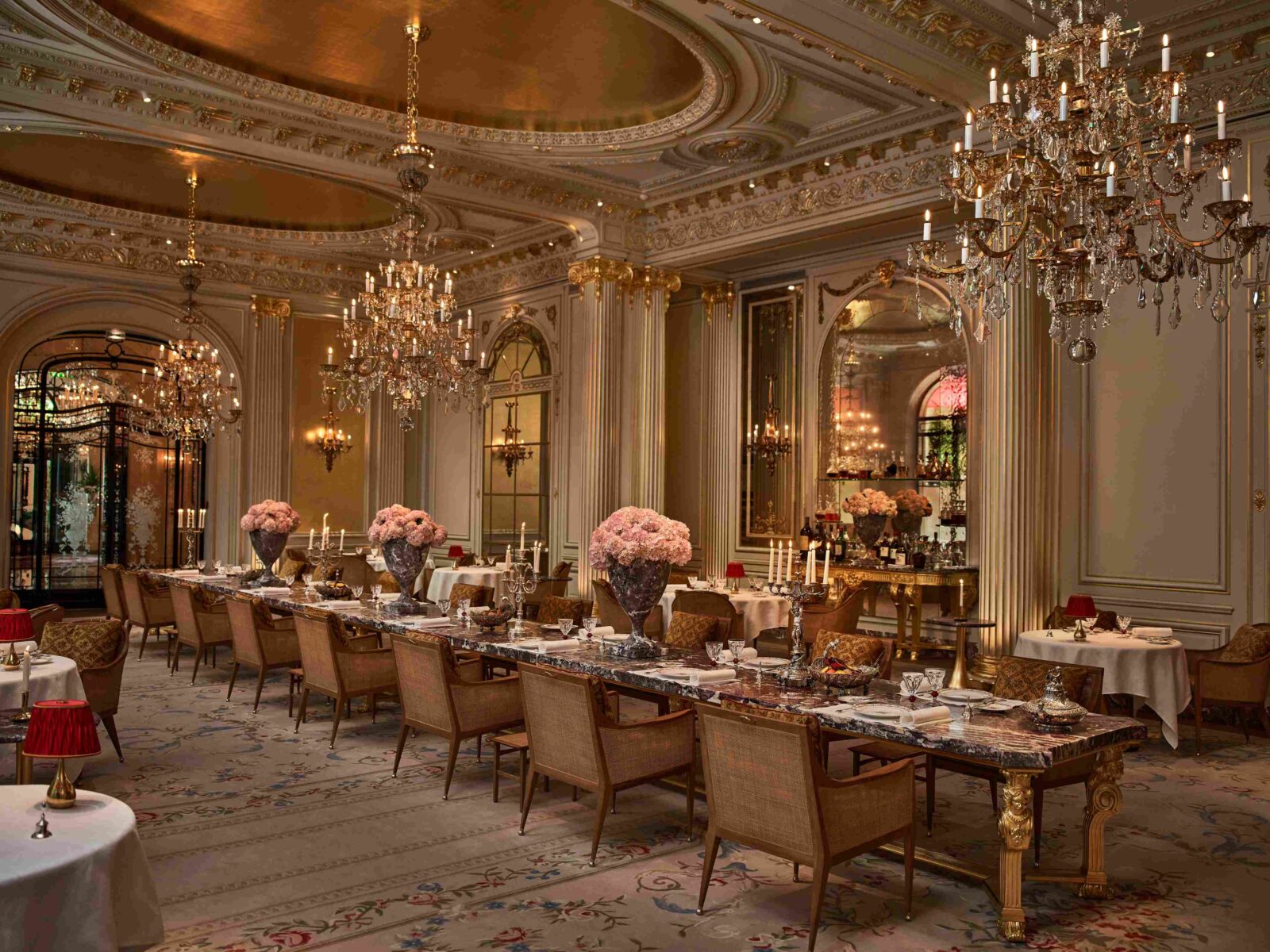
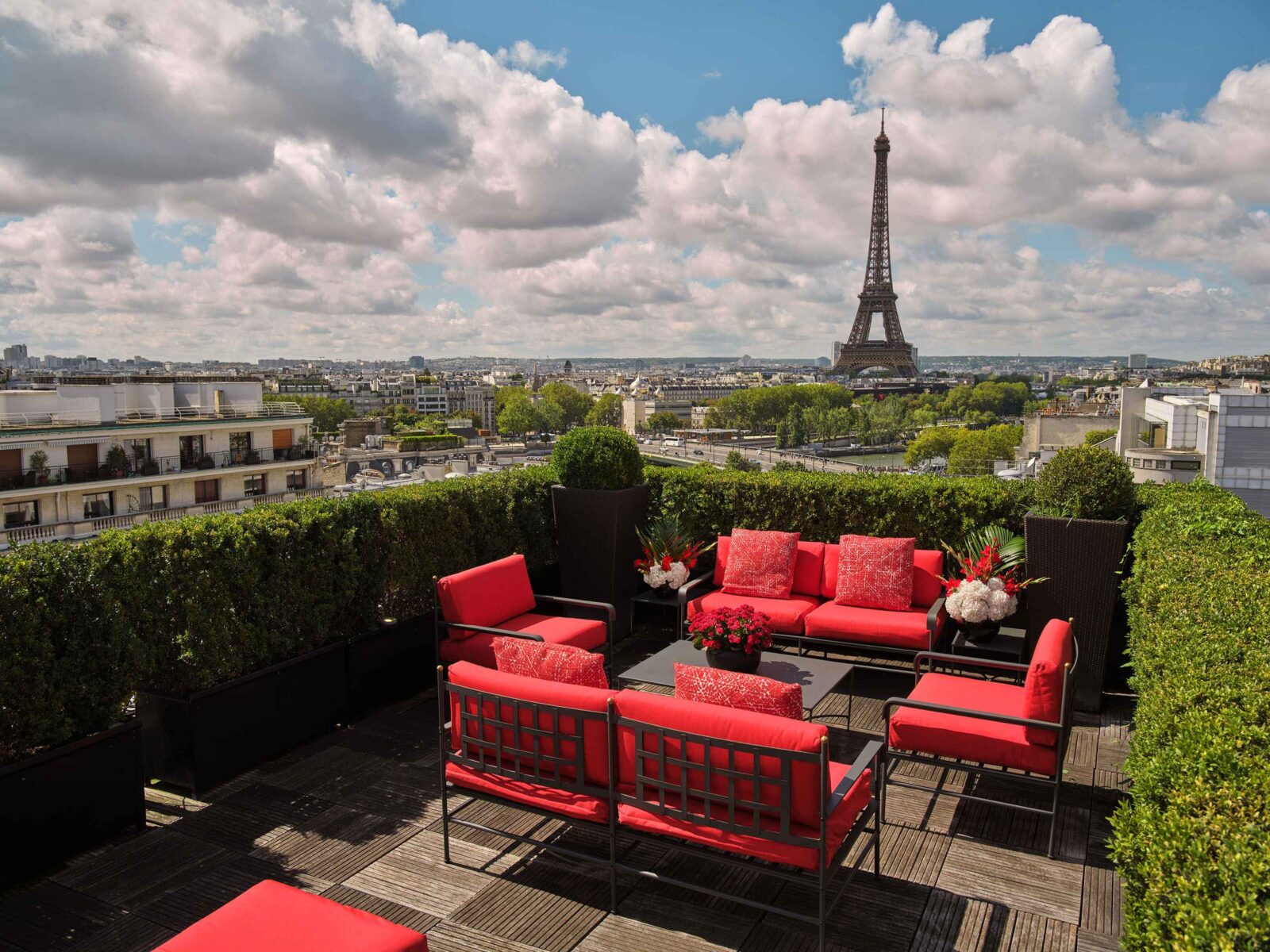
The Terrace Duplex Suite belongs to the Art Deco side of the hotel, having been designed by Bruno Moinard and Claire Bétaille with soft fabrics and a calm palette of colours. The Eiffel Suite has two versions: one Art Deco and one combining 18th-century decoration with Parisian haute couture. Finally, the Haute Couture Eiffel Suite, designed by Marie-José Pommereau, refers to Christian Dior through its grey- and pink-coloured furnishings.
The dining rooms continue the mix of periods. Le Relais Plaza opened in 1936 and is the image of an Art Deco brasserie, having retained its original frescoes, engraved stained glass and large chandelier after a refreshment in 2014 by Bruno Moinard and Claire Bétaille. Similarly, the Art Deco-inspired Jean Imbert au Plaza Athénée, designed by Patrick Jouin and Sanjit Manku, has polished stainless-steel domes, pod-like banquettes, suspended crystals and an old chandelier from a former restaurant. The domes, made by Matinox and Le Floc’h, are inspired by the traditional silver cloche.
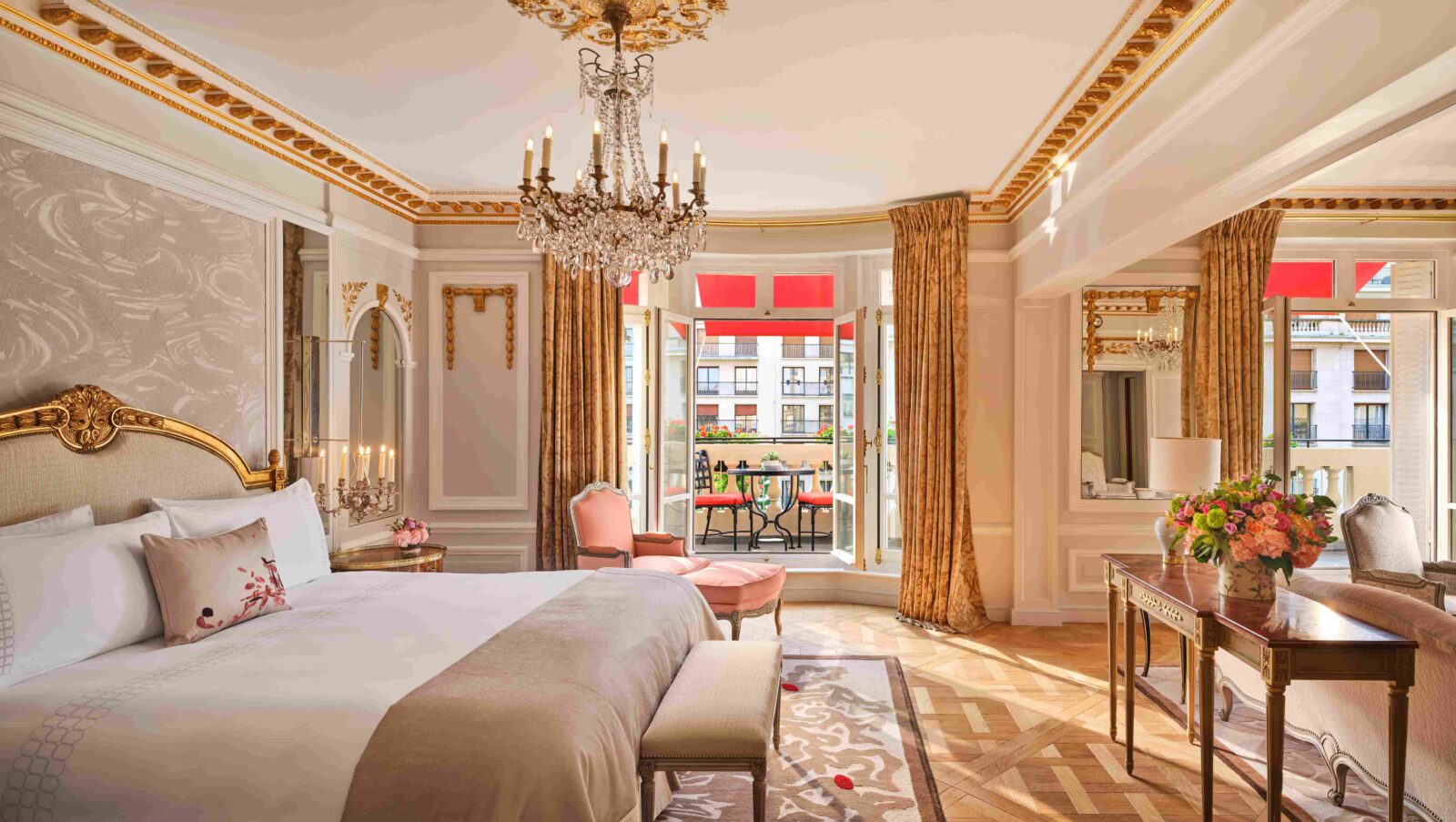
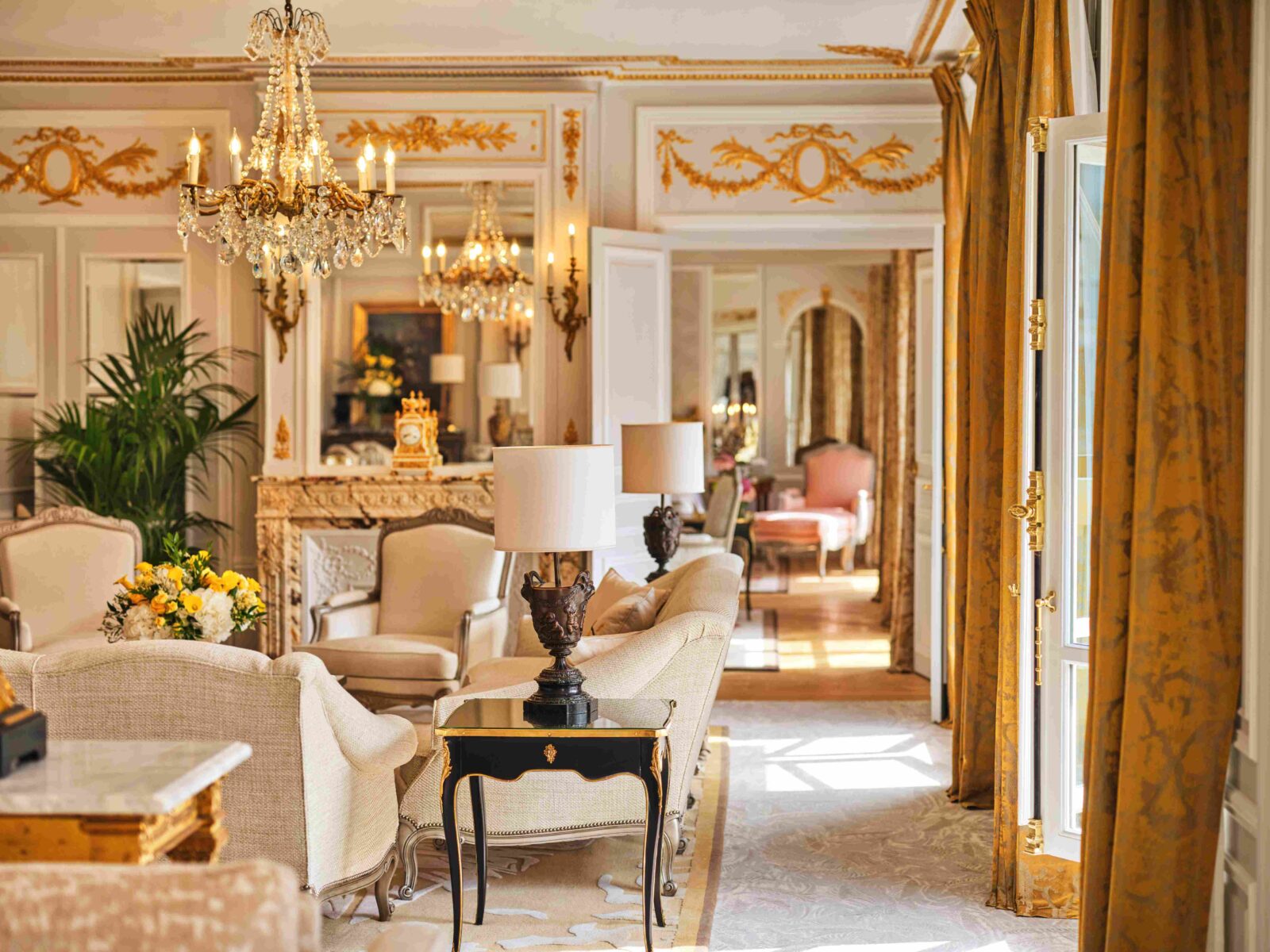
Le Bar du Plaza Athénée, redesigned by Jouin Manku, is the most moody room of the hotel, boasting a blue fabric falling from the ceiling vault and a bar made entirely of resin. La Galerie, on the other hand, is the hotel’s default social room, as it is used from breakfast to evening cocktails, with lunch and afternoon tea between. Bruno Moinard’s design connected the gallery to La Cour Jardin through the choice of light, decoration and the addition of a mosaic floor.
The Dior Spa Plaza Athénée brings the fashion energy of the hotel’s surroundings into wellness, housing six treatment rooms, a hammam, a sauna, a relaxation room, a manicure and pedicure suite and a fitness centre. Furthermore, it is also home to the Dior Light Suite, where an LED ceiling that mimics natural sunlight is used for treatments linked to circadian rhythm, sleep, energy and skin health.
Hôtel Raphaël, 16th Arrondissement
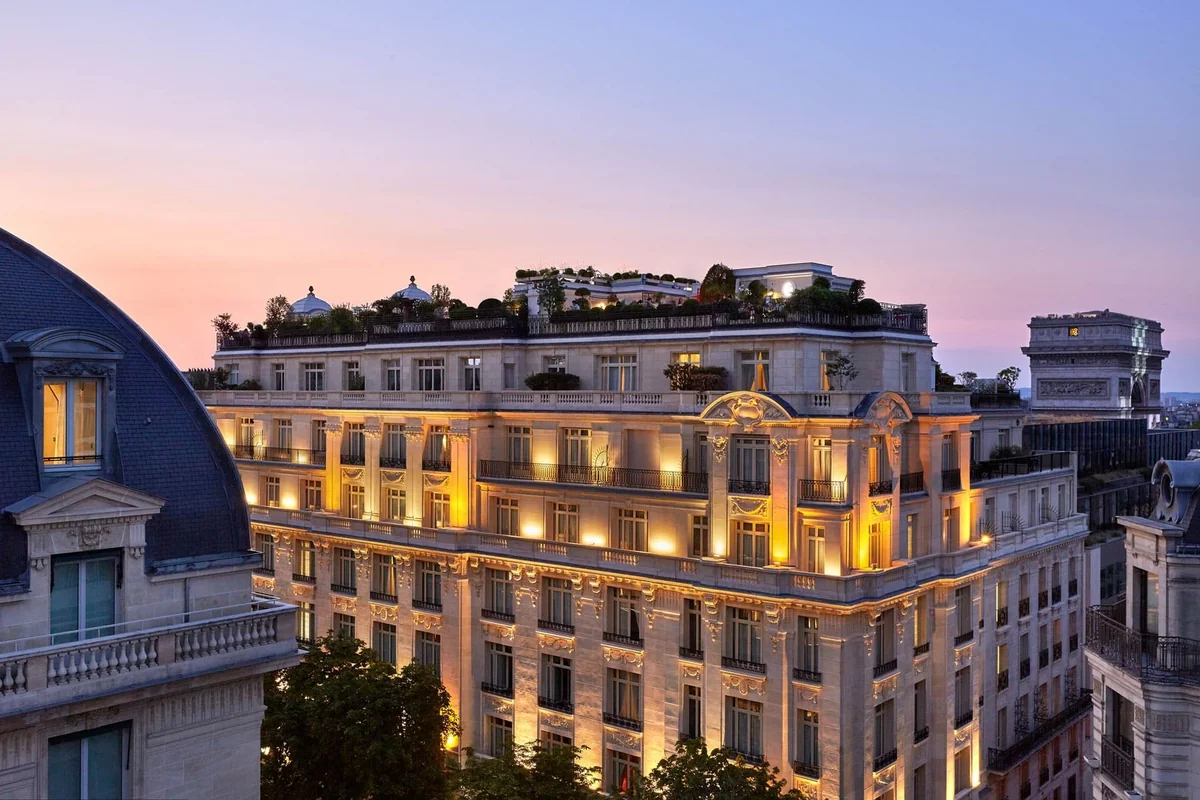
Hôtel Raphaël is a neighbour of the famous tree-lined Champs-Élysées and monumental Arc de Triomphe, sitting at 17 Avenue Kléber. It was built in 1925 and is currently under renovation, with an expected reopening scheduled for 2026. It looks like the typical Parisian palace hotel, with carved stone, antique furniture, wood panelling, chandeliers, murals, velvet, classical mouldings and chic salons.
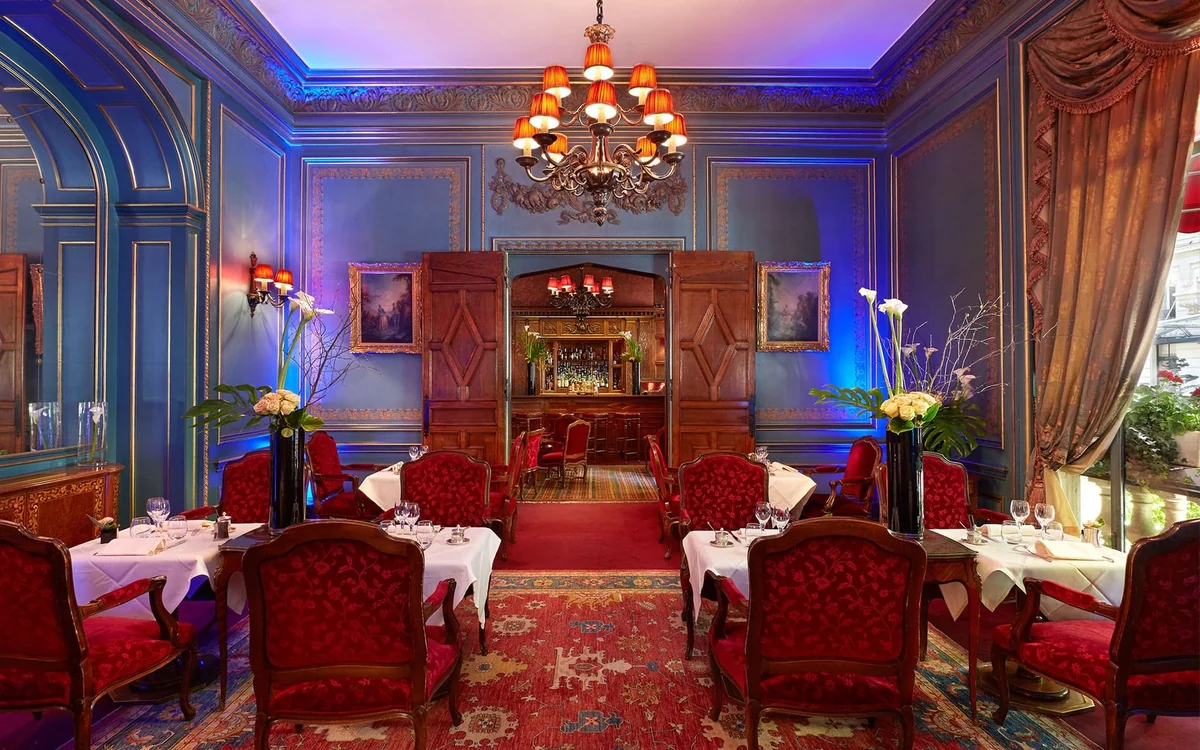
Arrival begins in a long, gallery-like lobby with dark, polished wood panelling and carved pilasters and columns. A black-and-white marble floor runs through the entrance, complemented by a rich array of decoration: wall sconces, upholstered seating, framed mirrors and artworks, palms and floral arrangements.
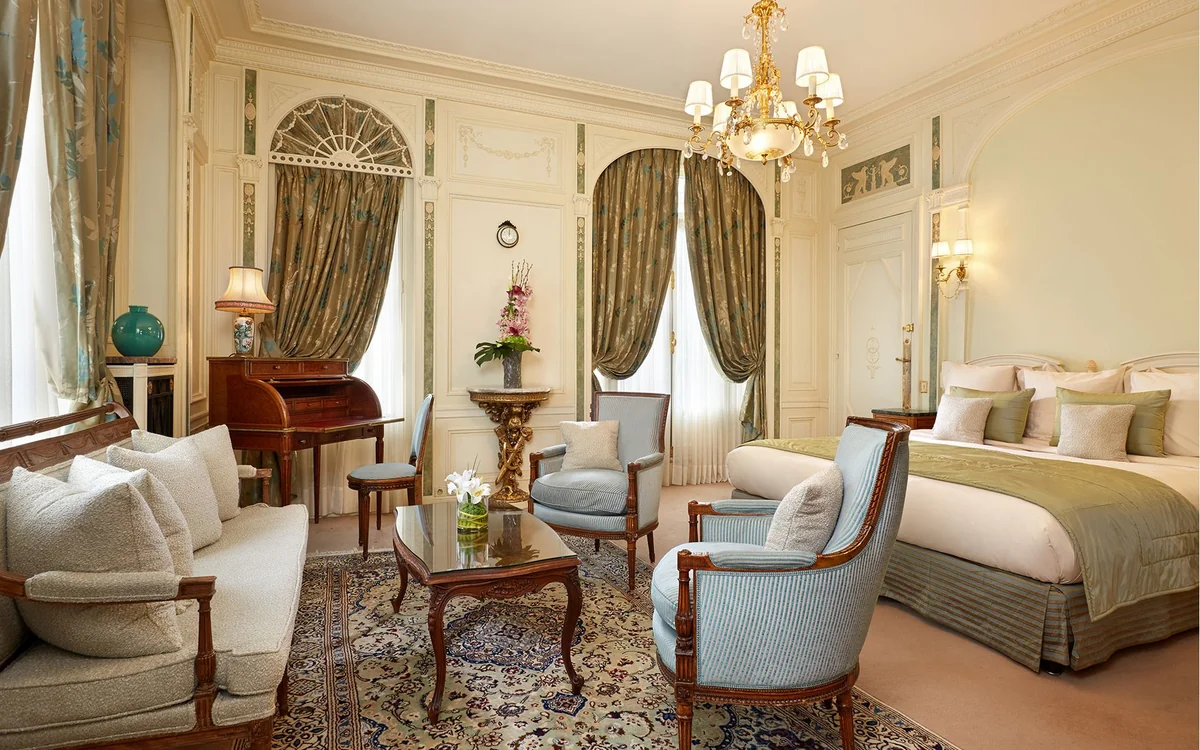
The rooms and suites were designed in the hotel’s traditional decorative style, with antique furniture, hand-carved wood panelling and hand-painted wall murals. Classic Rooms include Louis XV and Louis XVI furniture, mirrors, chandeliers, wooden wardrobes and writing desks. Superior Rooms add a sitting corner, handmade fabric furniture and traditional tapestries.
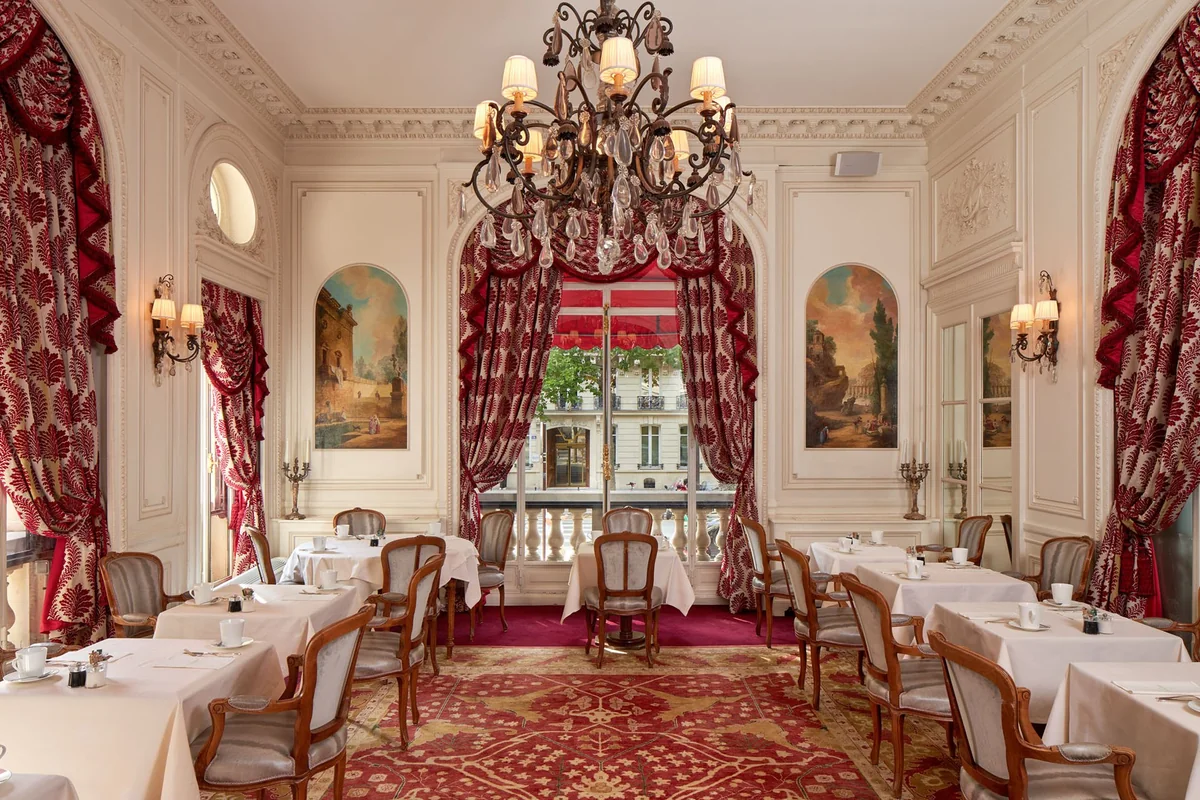
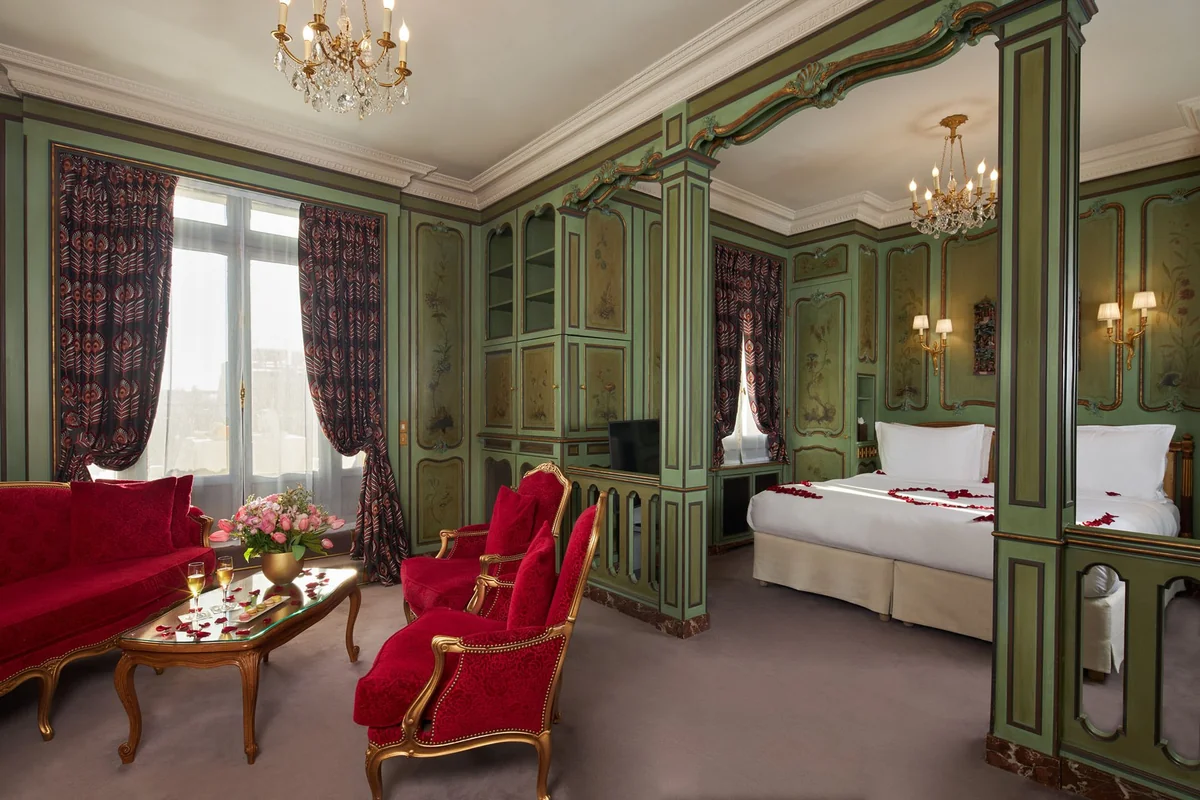
The suites are grouped under “La Vie de Château” (Life in a Castle), with restored antiques placed alongside the best of modern comfort. Categories range from Junior Suite and Signature Suite to the Parisian, Eiffel Tower Terrace, Arc de Triomphe Terrace and Presidential suites. Across them, furniture from Louis XV, Louis XVI and Directoire styles is complemented with mirrors, crystal chandeliers, antique fireplaces, daybeds, sofas, armchairs, velvet chairs and writing desks. The Parisian Suite is set over two floors, with a bronze staircase, a reading room and a terrace facing the Eiffel Tower and Arc de Triomphe. The Presidential Suite includes two bedrooms, an Eiffel Tower view, a large living room, a walk-in closet and three bathrooms.
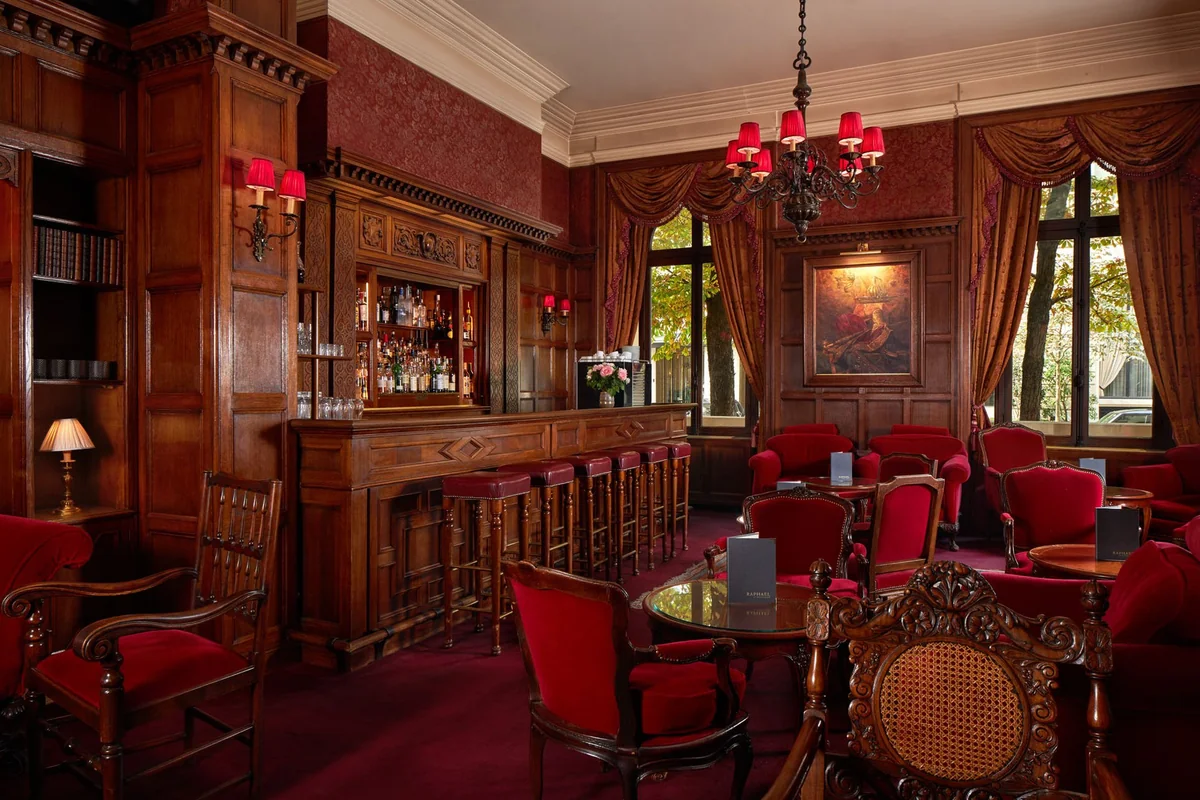
The English Bar is dark and enclosed, having been designed in the spirit of London clubs, with their panelled walls, low lighting, red velvet sofas and armchairs, dark timber and warm amber light. The restaurant, on the other hand, is brighter and more formal. High ceilings, mouldings and large windows form a lively ambience, only made better by the golden chandeliers, velvet chairs and elaborate centrepieces.
On the seventh floor, the panoramic roof garden Jardin du Raphaël offers views of the Eiffel Tower, the Arc de Triomphe and the white Sacré-Cœur. Alexis Mabille gave the rooftop a Mediterranean feel, with golden fabrics, wrought-iron furniture, dense greenery, potted shrubs, pale table linens, small round tables, ochre cushions and woven outdoor furniture.
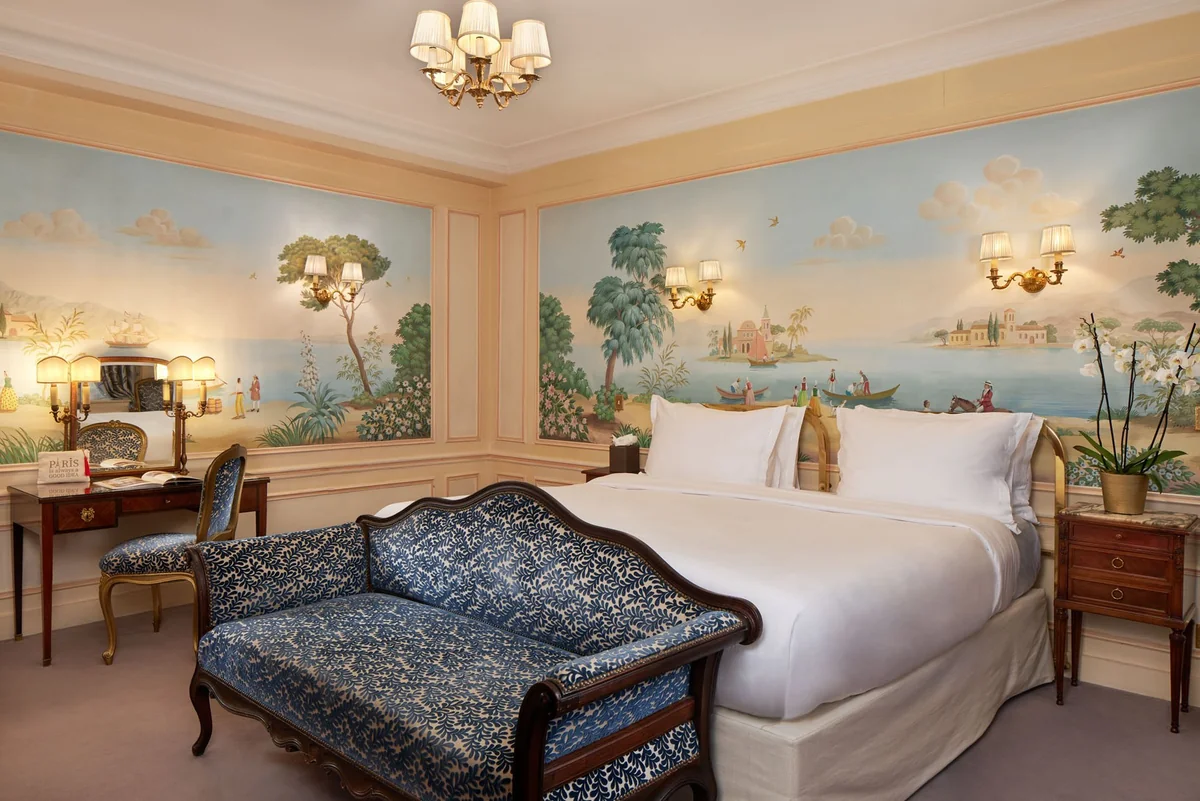
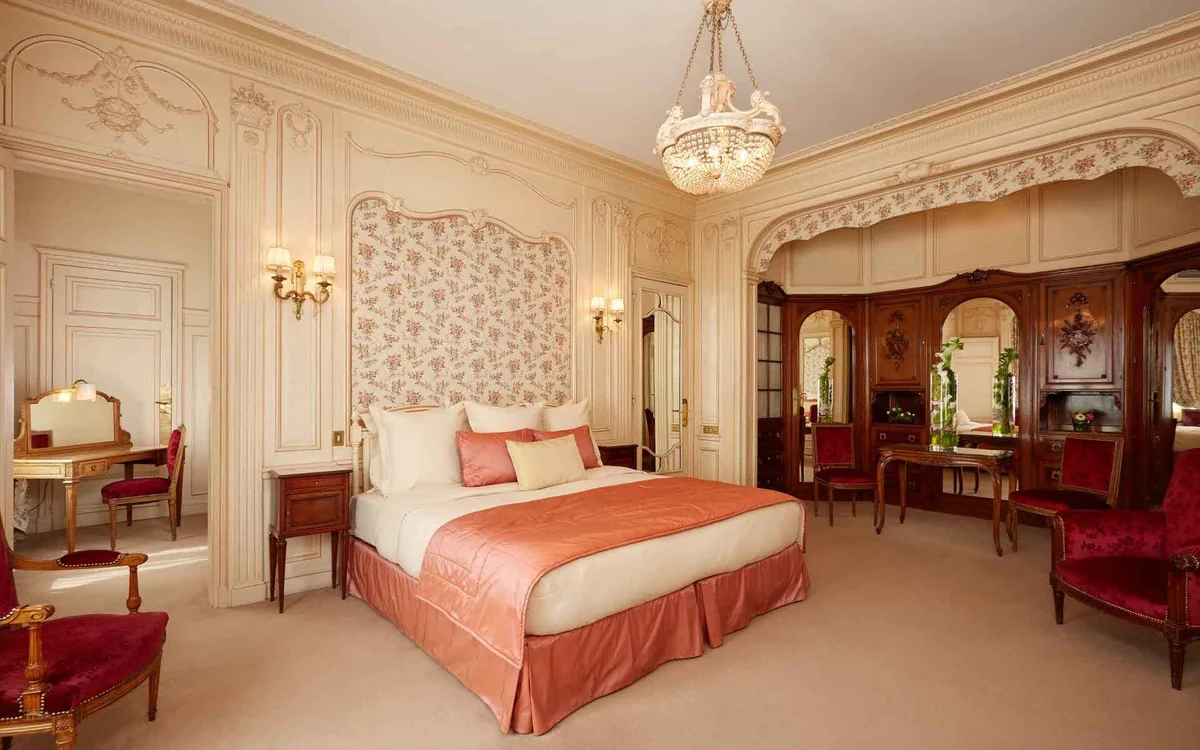
Across the five hotels, Belle Époque style appears through many of the same elements: rich fabrics, dark wood, gilding, mirrors, chandeliers, patterned surfaces and antique furniture. Each hotel uses these details in a different way, from the private salons of Maison Souquet and Maison Proust to the palace rooms of Le Meurice, Plaza Athénée and Hôtel Raphael. Together, they show how the Parisian style is still relevant today, satiating an allure that for years has brought visitors to the City of Light: discovering what it means to live in an upper echelon of society, marked by beauty, mystery and just a dab of innocent pretentiousness.