



Header: Roger Frei
The Retirement Home Du Lac in St. Moritz, Switzerland, serves residents who need daily care, people living more independently, staff, visitors and even restaurant guests, which meant that any lighting design would need to cater to a wide range of uses. Spektrum, with Eva Trösch as lead designer and Paul Ehlert and Stefan Buerkli as part of the team, developed a system in which all individuals feel supported, having, for that, won the “Healthcare Lighting Design“ category at the LIT Lighting Design Awards.
A Swiss retirement home
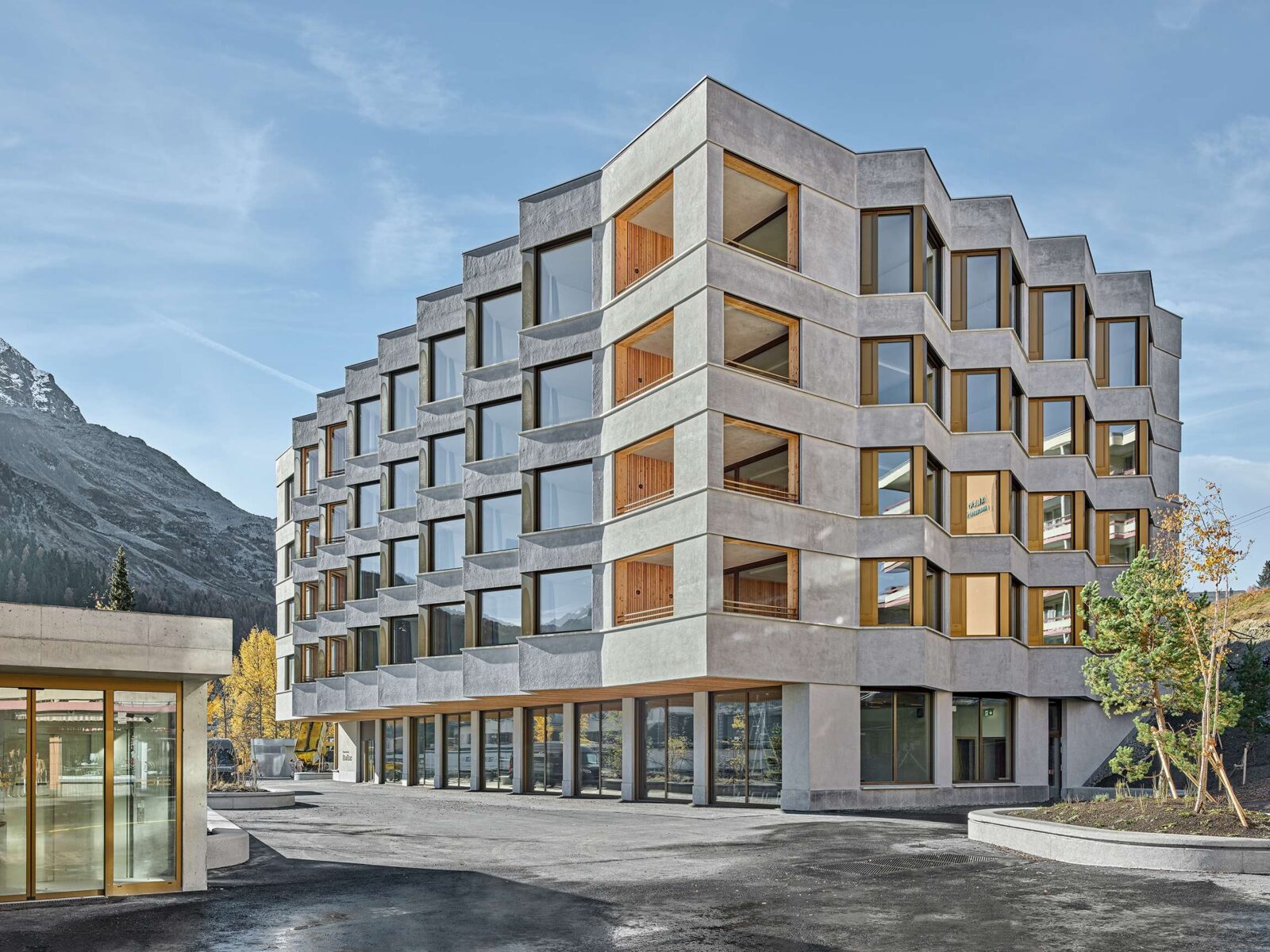
With architecture by BGP Architekten Zürich and Mierta & Kurt Lazzarini Architekten, the complex brings together 60 care rooms, 17 age-appropriate apartments, communal areas, a library, therapy rooms, offices and a public restaurant with an outdoor area. The lighting changed depending on the location, from quiet rooms and circulation spaces to more public parts of the building.
The retirement home is located by a lake and takes advantage of the traditional Engadine bay window to give each room a bay window and views in two directions. Daylight was thoroughly accounted for in the lighting design, with Spektrum having added artificial lighting where needed during the day.
Adapting light to the project at hand
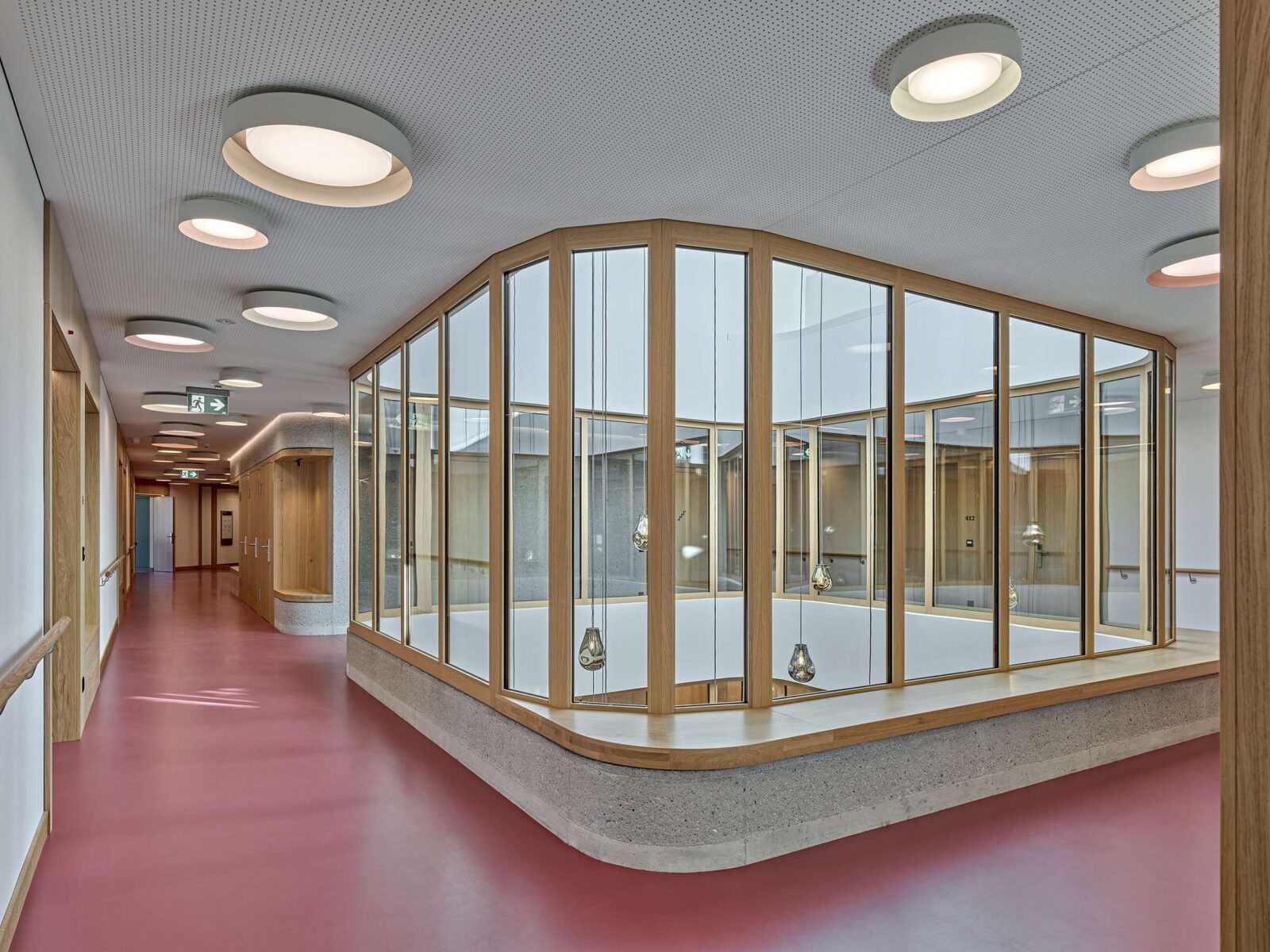
The lighting was used to make the building easier to perceive and move through, a very important objective when it comes to dealing with the elderly. In the main shared areas, light is directed towards walls, edges, shelving and other boundaries, making it harder for residents to get hurt by mistakenly bumping into something. In corridors, on the other hand, large circular ceiling lights provide soft, diffused light, while coloured rims and warmer accents appear at intervals along the route.
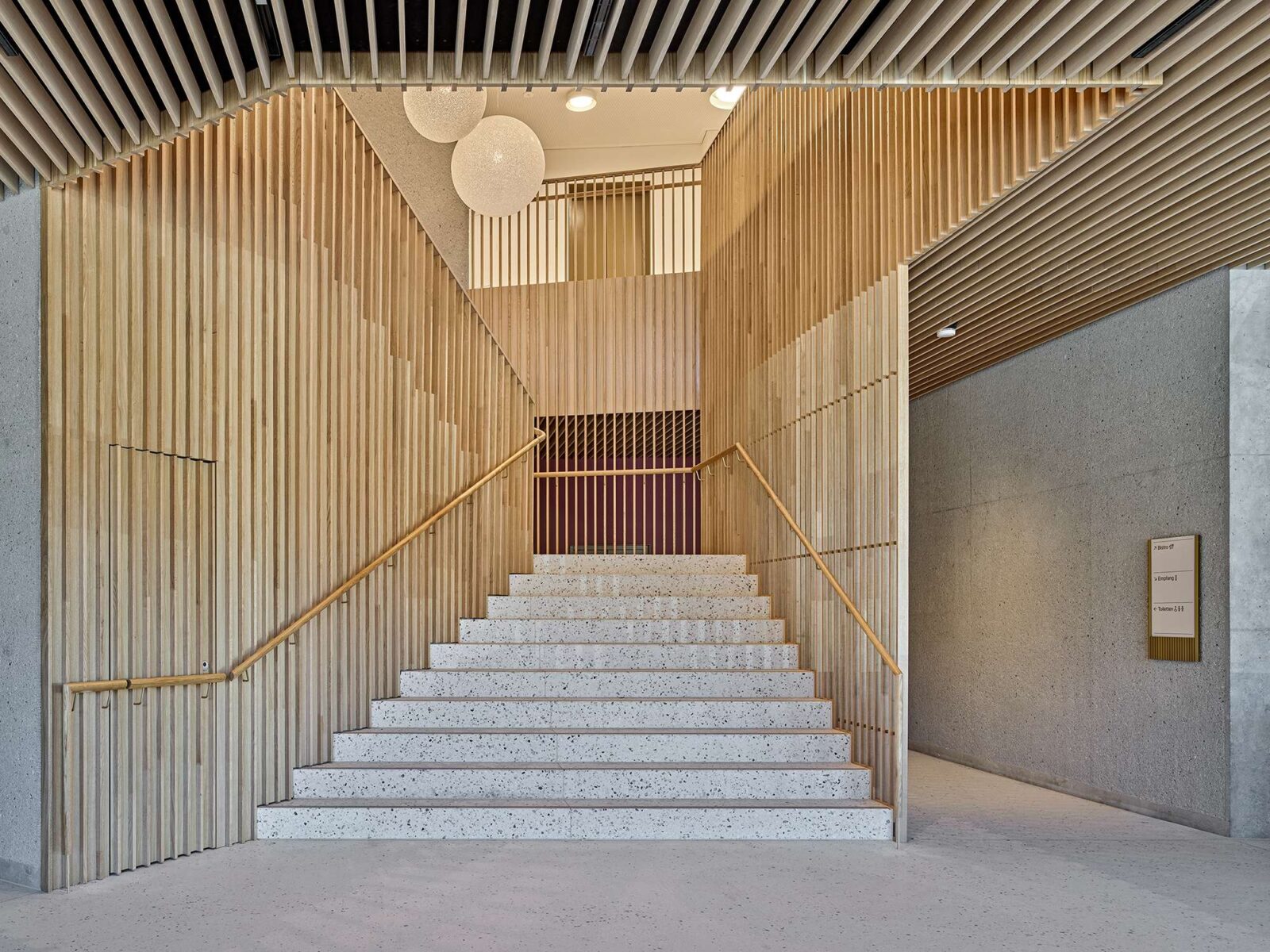
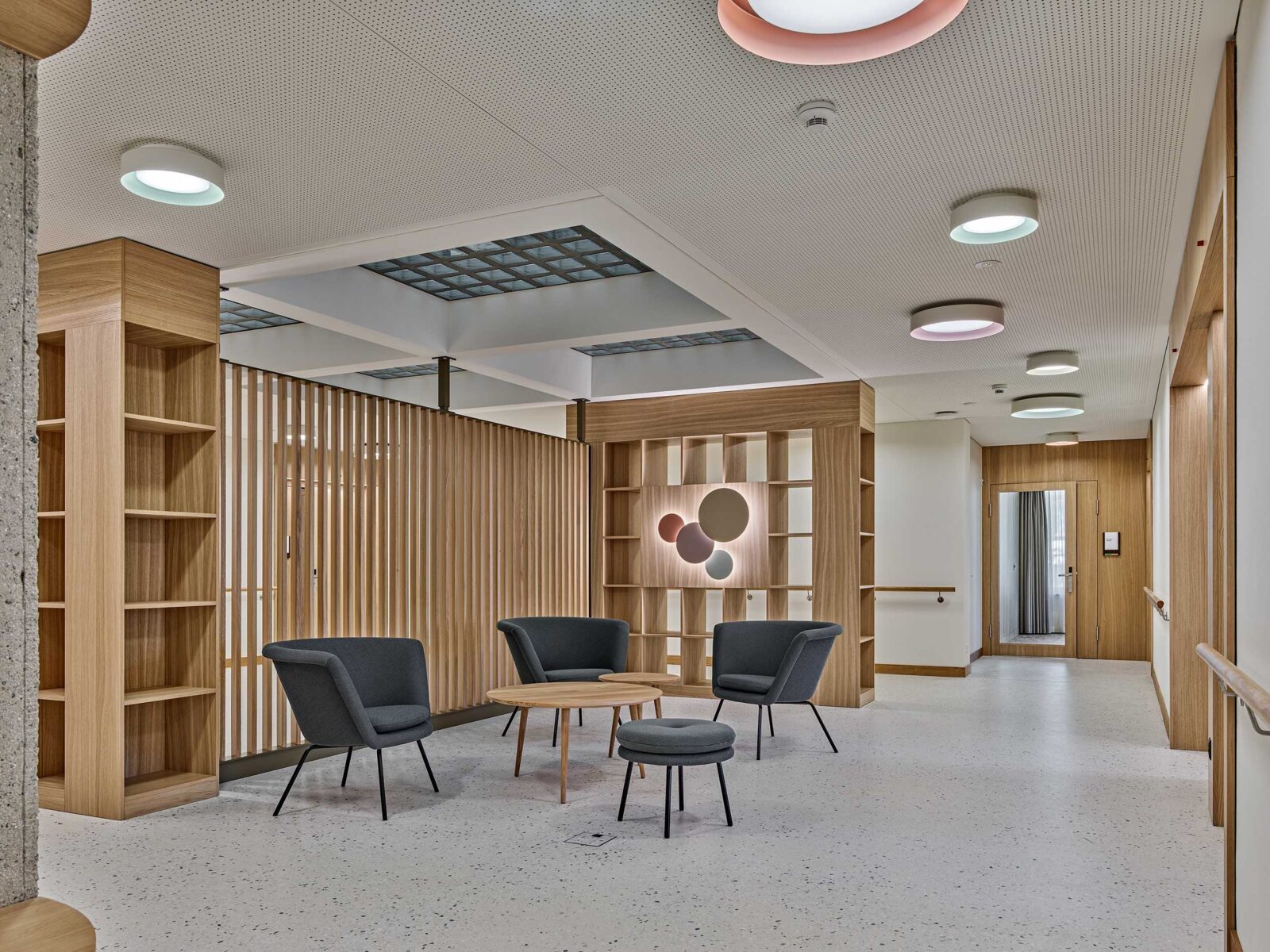
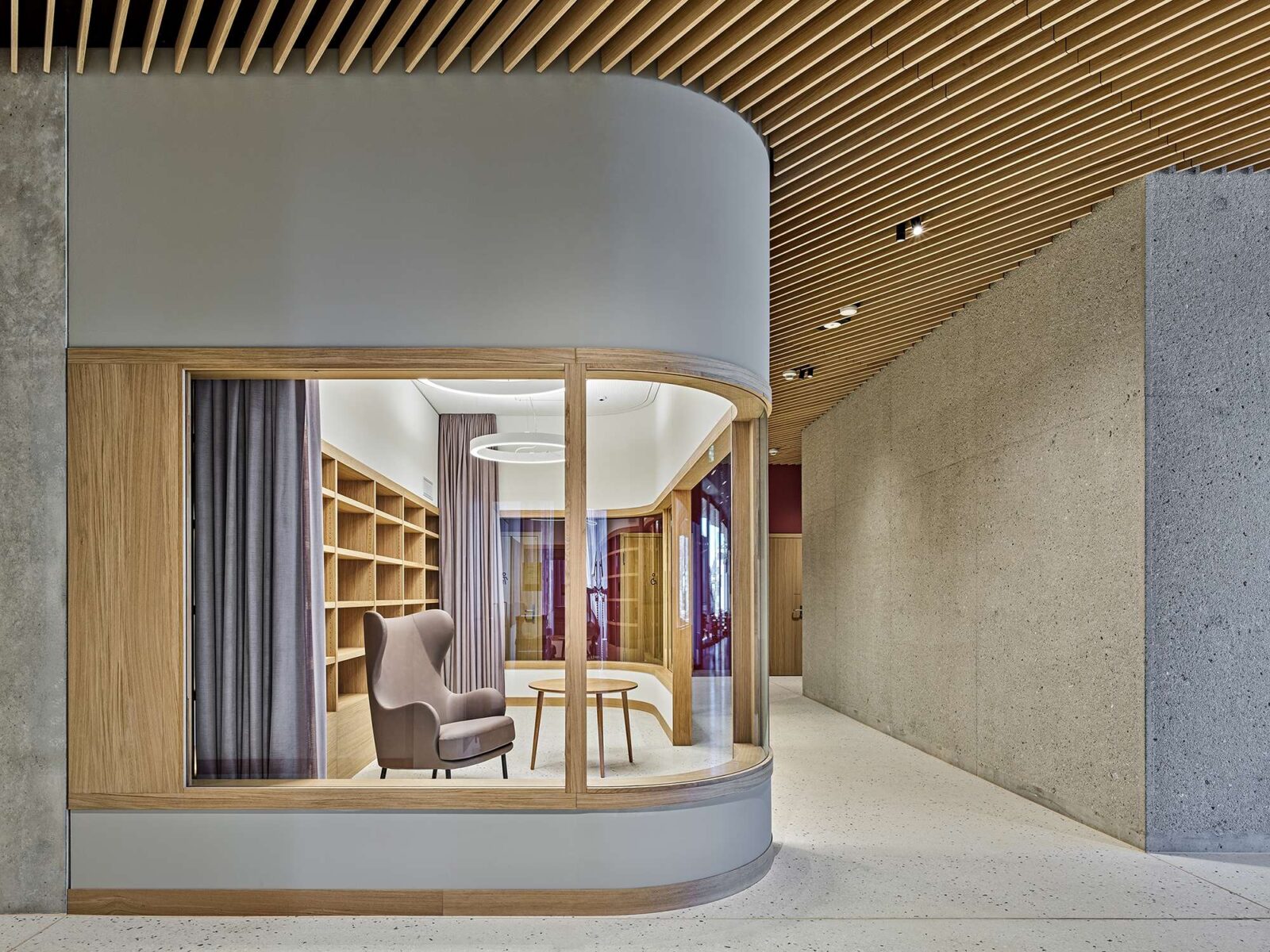
In the atrium, suspended glass pendants hang at different heights, which, against pale walls, timber framing and daylight from above, become a main focal point in the space. Shared rooms have a more domestic, understated character: timber-slat ceilings contain recessed spotlights, linear lights and even custom acoustic treatments, while in lounges and reading rooms, smaller sitting areas are created using circular pendants and ceiling lights.
The restaurant seems to separate itself from the rest of the complex, attempting to bring a more modern and fun atmosphere to an otherwise calm and collected complex. Warm timber ceilings, light timber furniture and magenta fabric pendant lamps bring some character to the dining area. These coloured pendants, which hang above the tables, act as both zone separators and as the main visual elements of the space, giving residents and outside guests the chance to engage in social interaction in an environment so much unlike other retirement homes.
The influence of materials and other technical details
The lighting designers had to work with two different materials, which, of course, influenced the types of fixtures and light chosen. Outside, the washed-plaster façade has a mineral finish that refers to alpine stone, so the exterior light has to work with a cooler, harder surface and bring out its texture. Inside, wood is more prominent, with oiled oak furnishings, wood-metal Midi windows and large Maxi lift-and-slide doors. Here, the artificial light needed to bring out the warmth of the surfaces, complementing, at the same time, the daylight and Engadine views coming from the large windows.
Spektrum was responsible for the lighting process from the early design stage through to the final testing and adjustment of the installed fittings, covering both the interior and exterior areas. Suppliers included 2F Leuchten and Monolicht, with Monolicht providing the full luminaire package in coordination with Spektrum and the architects. Because many fittings were integrated into timber ceilings and acoustic systems, their positions, dimensions and installation details had to be coordinated with the ceiling build-up, decorative pendants and exterior lighting.
Sustainable lighting design
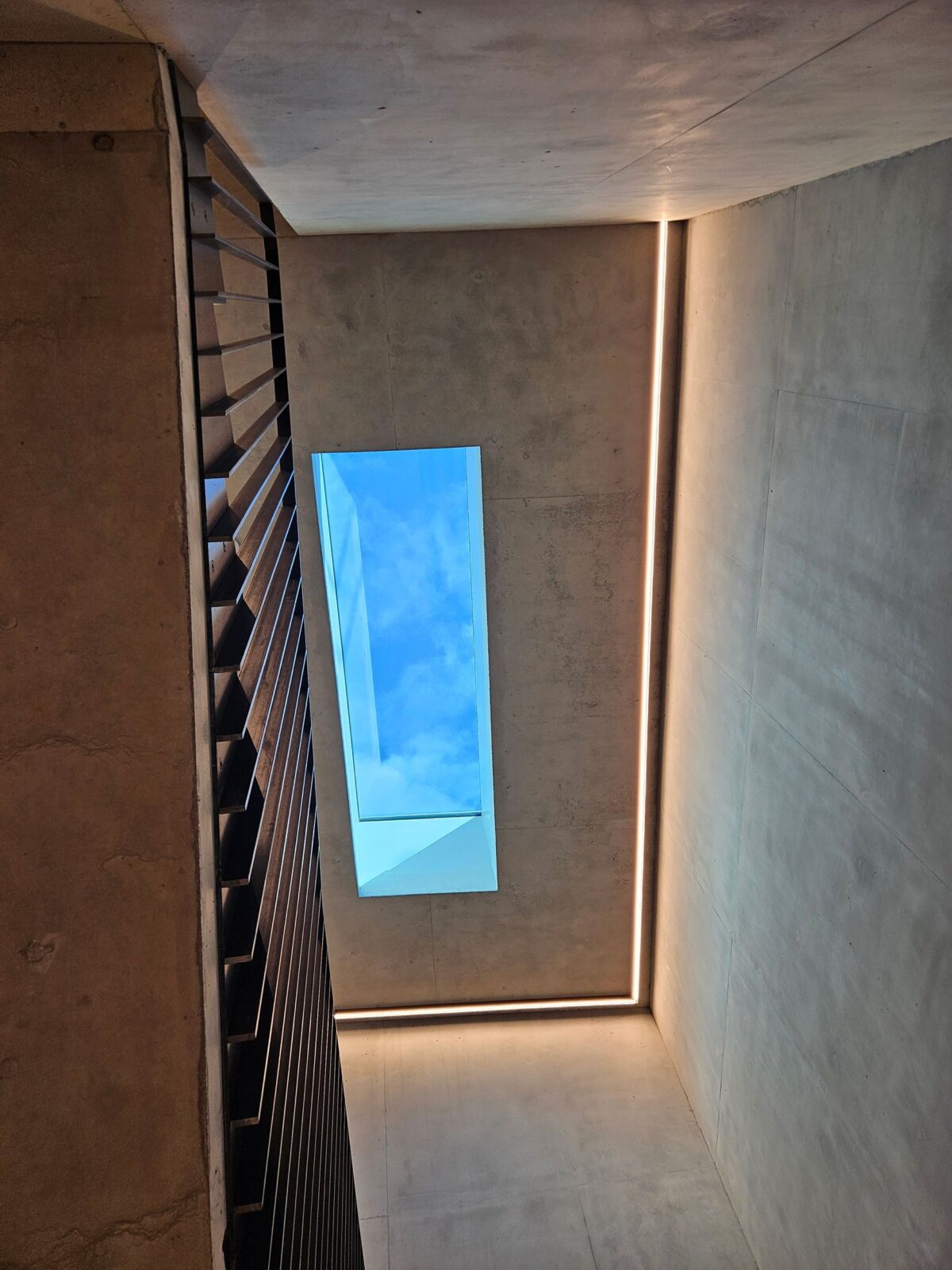
The lighting scheme uses energy-saving LED lighting throughout, with zoning and dimming so each area can be lit as needed at different times of day. As daylight is also part of the lighting approach, as we’ve seen, it reduced the need for artificial light where it is available, keeping the lighting controlled and giving each part of the building the level of light it needs.
Project information
Lighting Design Company: Spektrum
Lead Designer: Eva Trösch
Other Designers’ Names: Paul Ehlert, Stefan Buerkli
Architecture Company: BGP Architekten Zürich
Client: Communities of St.Moritz, Silvaplana & Sils i.E./Segl
Photo Credits: Roger Frei
Location: St. Moritz, Switzerland
Date: November 2024


