






Header: Michael Moran
The building at Sunset Park in Brooklyn has gone a long way from being a Boys and Girls Club in the 1950s, a Byzantine church in the 1960s, and the junk storage for a local sausage factory in the 2000s. Now under the guidance of O’Neill Rose Architects, the building has recently been transformed into a tranquil and multifunctional space.
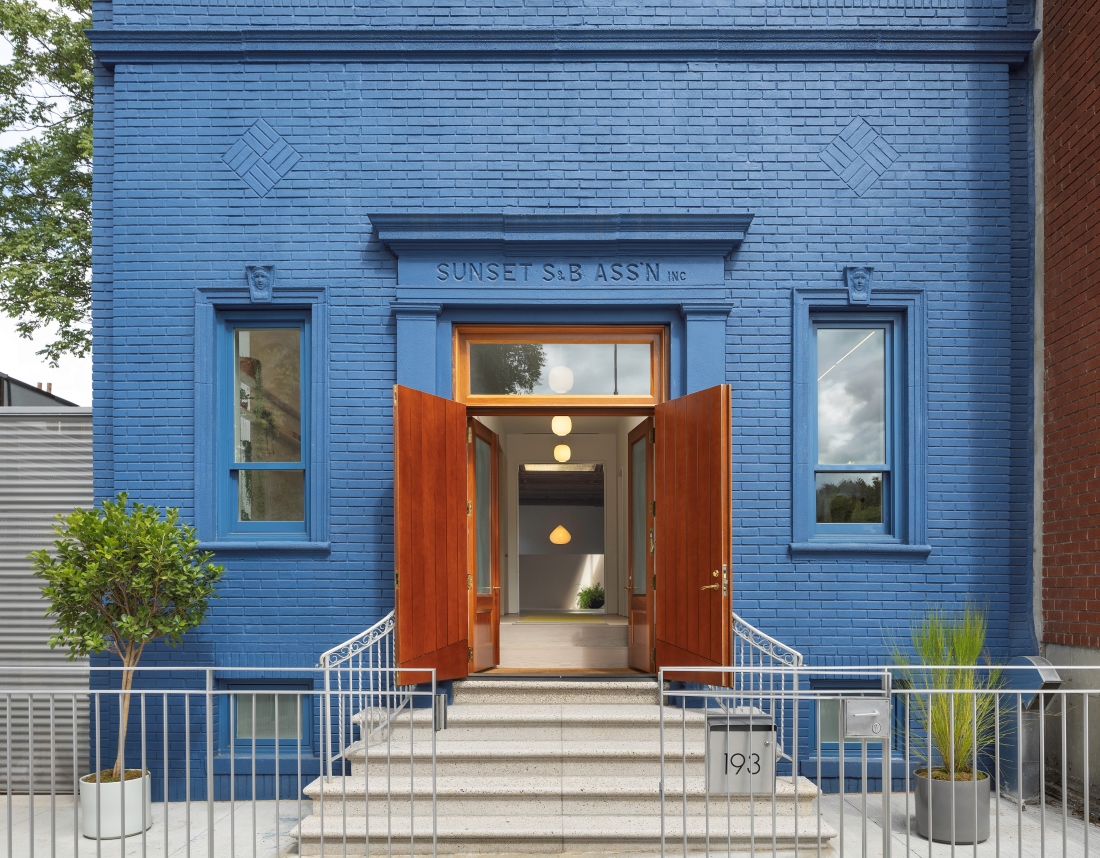
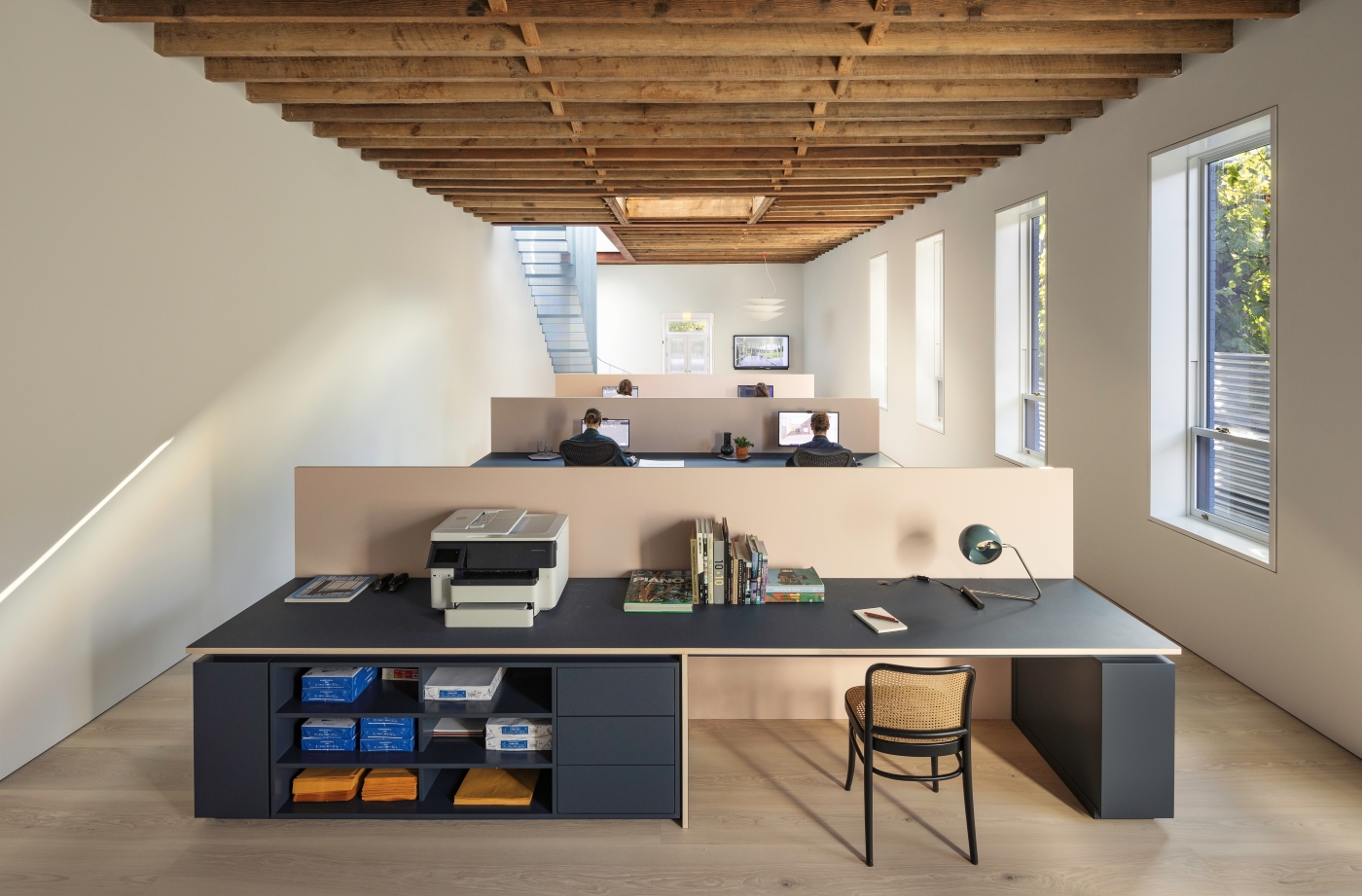
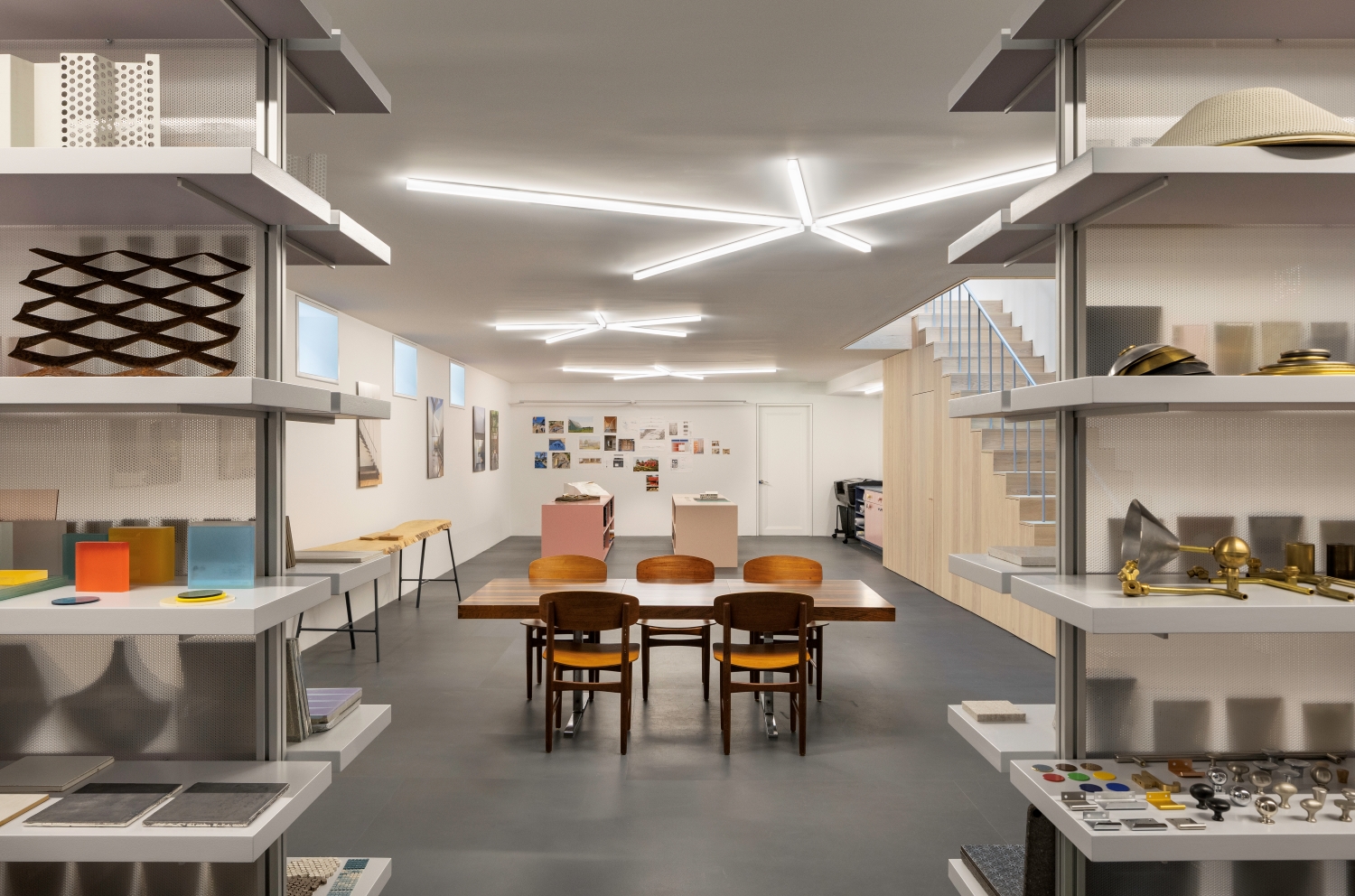
The space that has been taken over by The Design Studies Collaborative, a non-profit, spreads over two floors. The first floor houses a workspace, a lounge, and an open space for meetings and gatherings. A gallery and a pin-up space are located at a lower level alongside a resource library and a maker’s space, a community-driven workspace.
Community centered desing
They are committed to using design to strengthen community identity, honour local culture, and organise collaborative projects. Therefore, the reconstruction of their home would have to follow the guiding principles they use, alongside Design Studies Collaborative’s future projects. The non-profit design organisation and company, Design Studies Collaborative, relies on material resourcefulness and inventive construction techniques to meet the needs of those who struggle to afford design services.
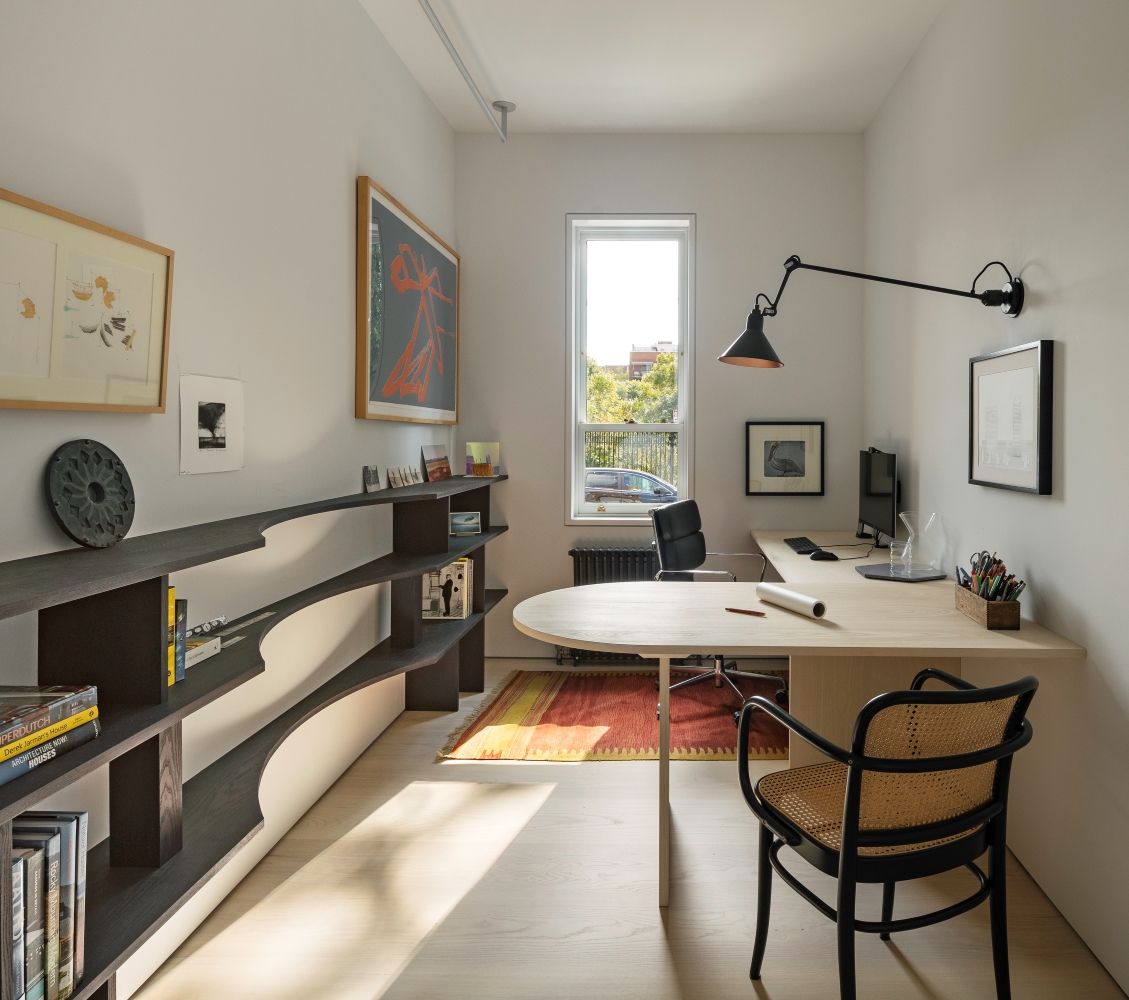
Rebuilding and reuse
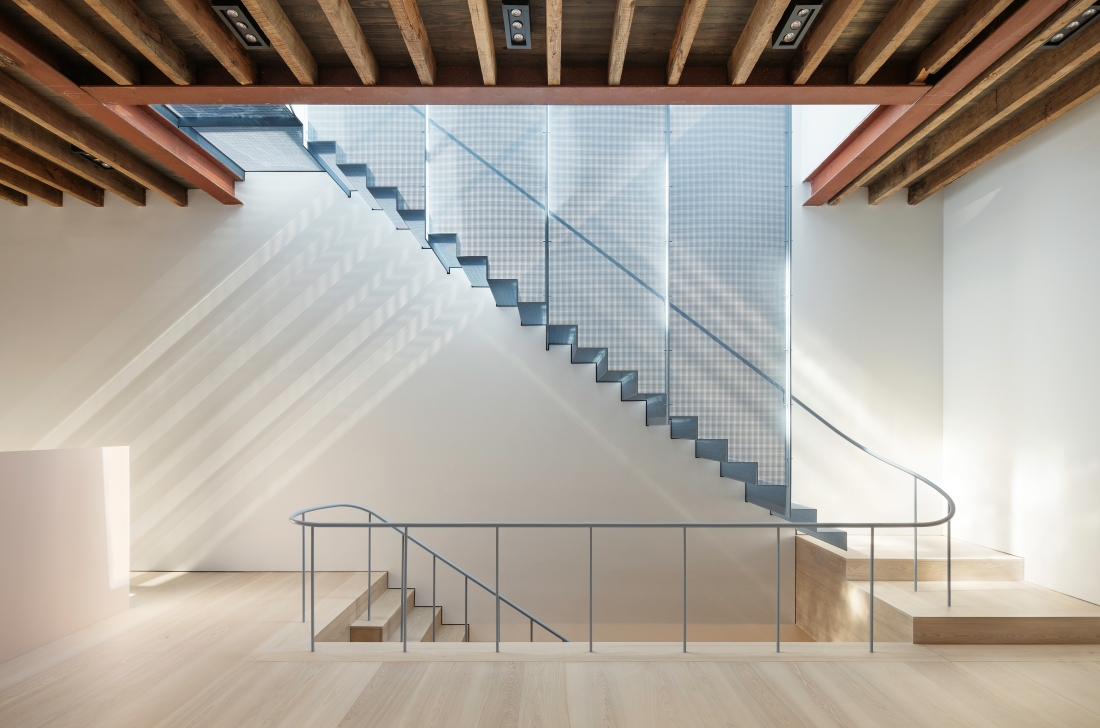
Architects reused the wood joist ceiling and the unique blue façade, and other elements of the building. The collaboration with staff defined the design, which boasts generous daylight, high personal workspace control, and connection to the outdoors alongside numerous dedicated creative spaces. The design employed all-natural materials, and eco-friendly no-VOC finishes were used to ensure the well-being of its users.
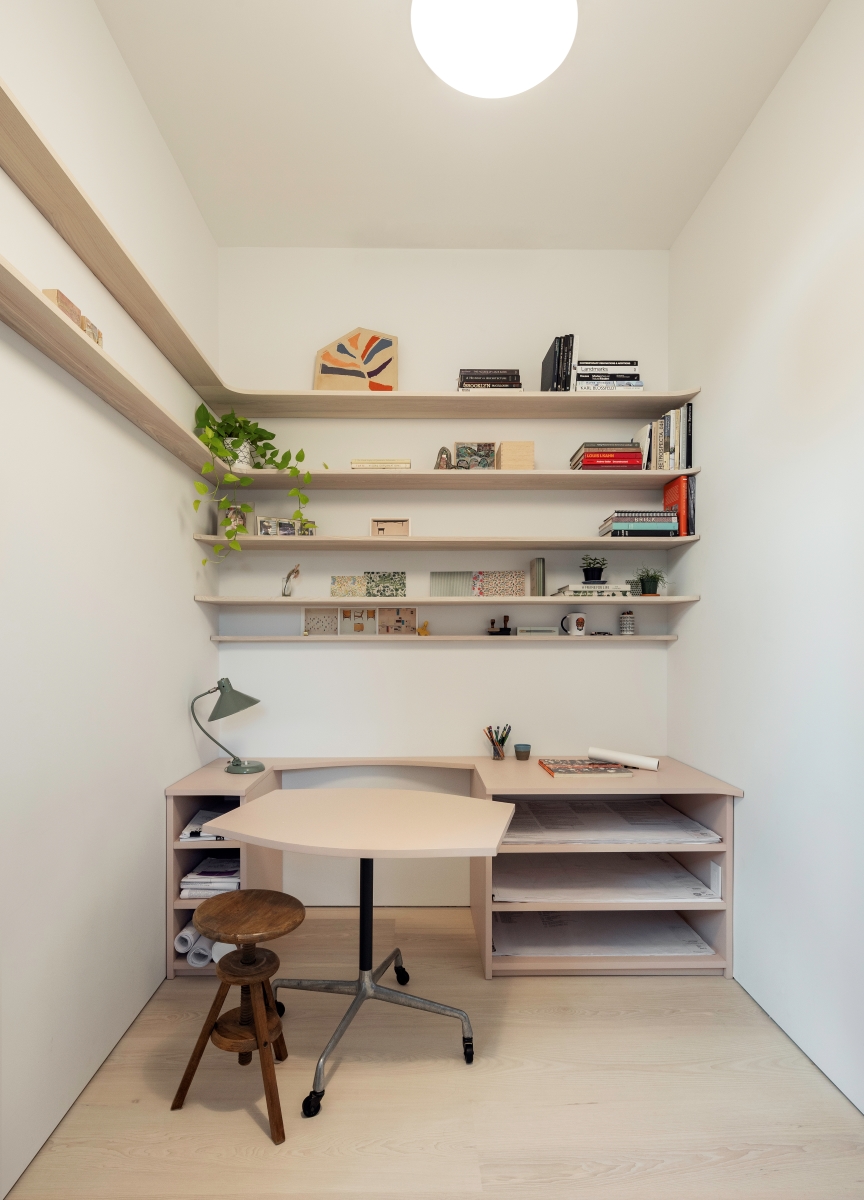
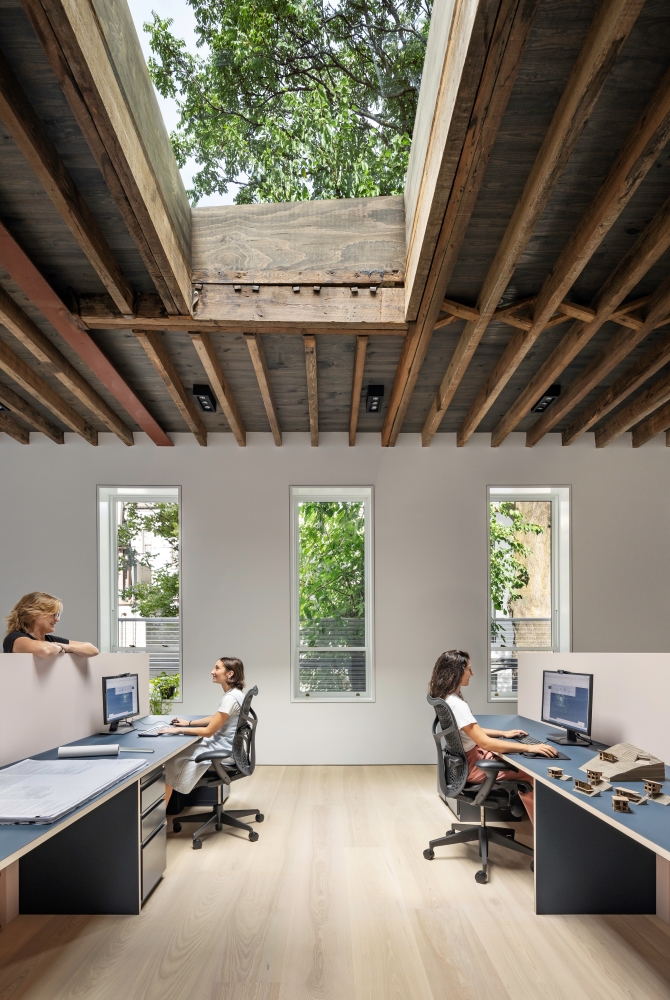
Apart from reusing original parts of the building, the architects also incorporated rain-damaged solid ash planking discarded by another contractor, for shelving, flooring, and wall panelling. The salvaged stone material, derived from a closing stone yard, was used for counters, tables, and floors. The ship’s kitchen has been embellished with 15 eye-grabbing green surplus tiles.
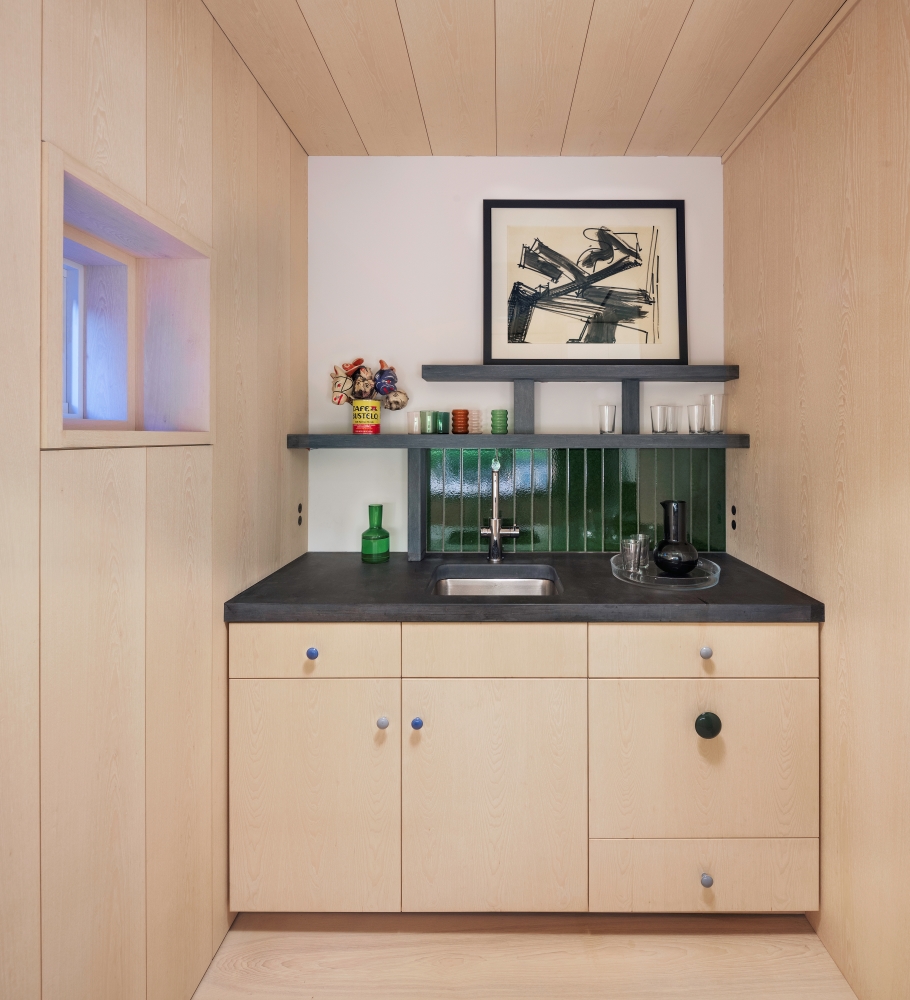
Contemplative oases in the heart of Brooklyn
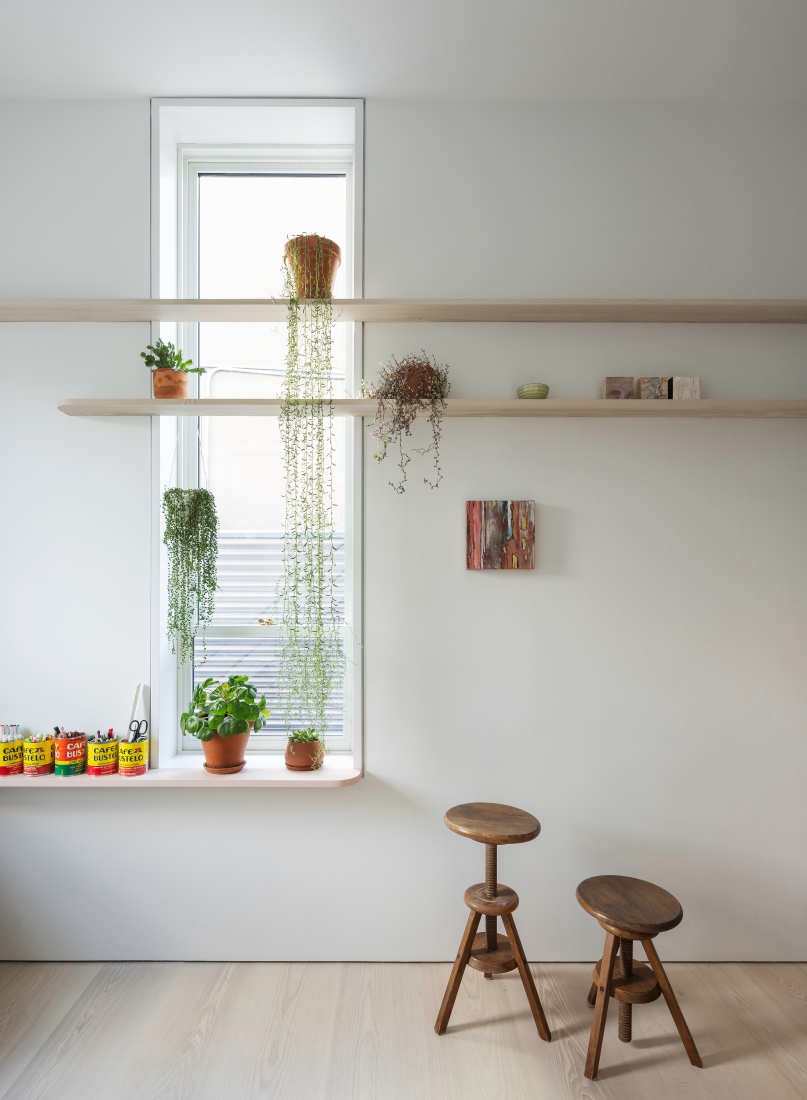
The building is located just a few steps away from one of the busiest commercial streets in Brooklyn, New York – Fourth Avenue. Nested in such a fast-paced environment, the building is conceived as a calming and contemplative workspace, a stark contrast to one of the busiest cities in the world. Simple forms and a muted colour palette are intentionally chosen to contribute to the user’s well-being, while the abundance of natural light contributes to the soothing effect.
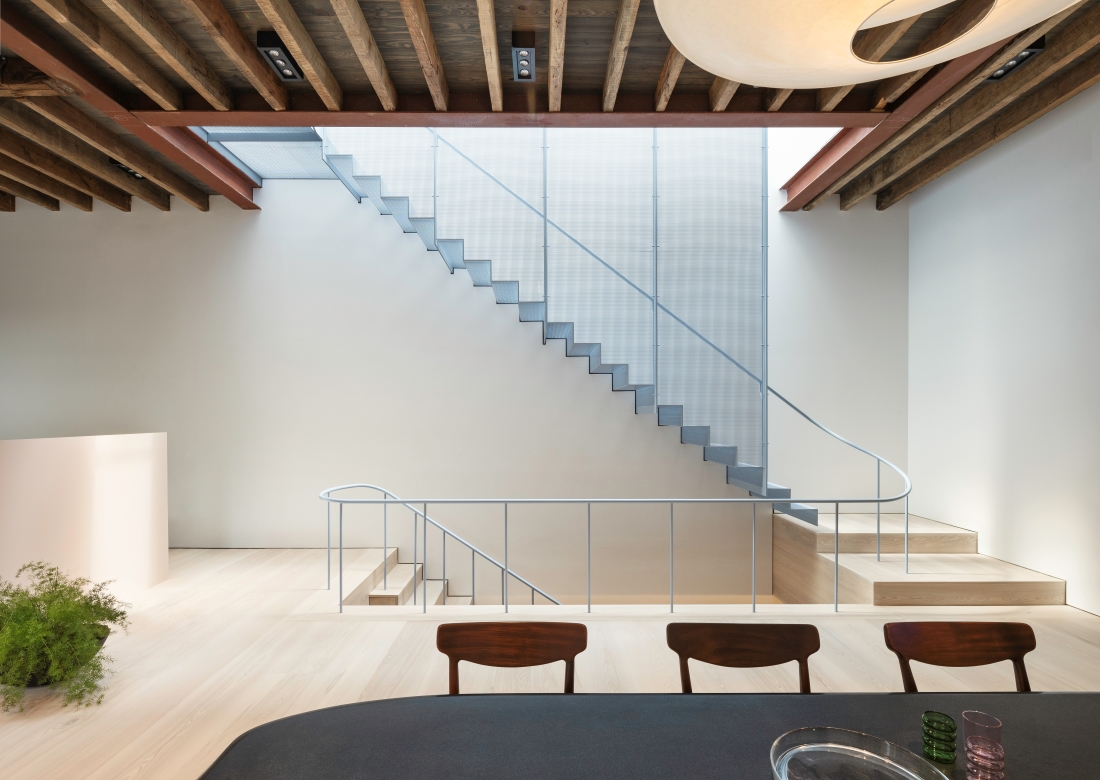
The 1950 building in Brooklyn begins a new chapter of its history, this time as a design non-profit. However, the volume continues to carry its rich heritage into the new era. Preserving original features and materials for the building reduces environmental impact while keeping the features familiar to the community.


