






Heading: ATRIUM
Educational Complex Sirius redefines the school architecture by dividing it into four main functional clusters. These clusters are connected with a network of public spaces that serve the needs of the entire neighbourhood.
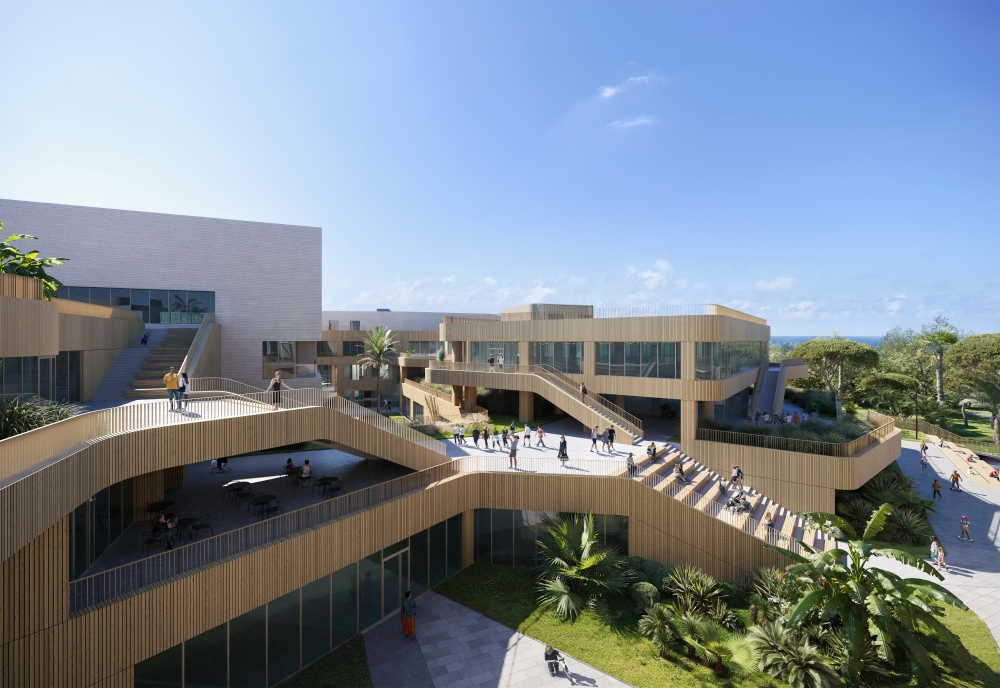
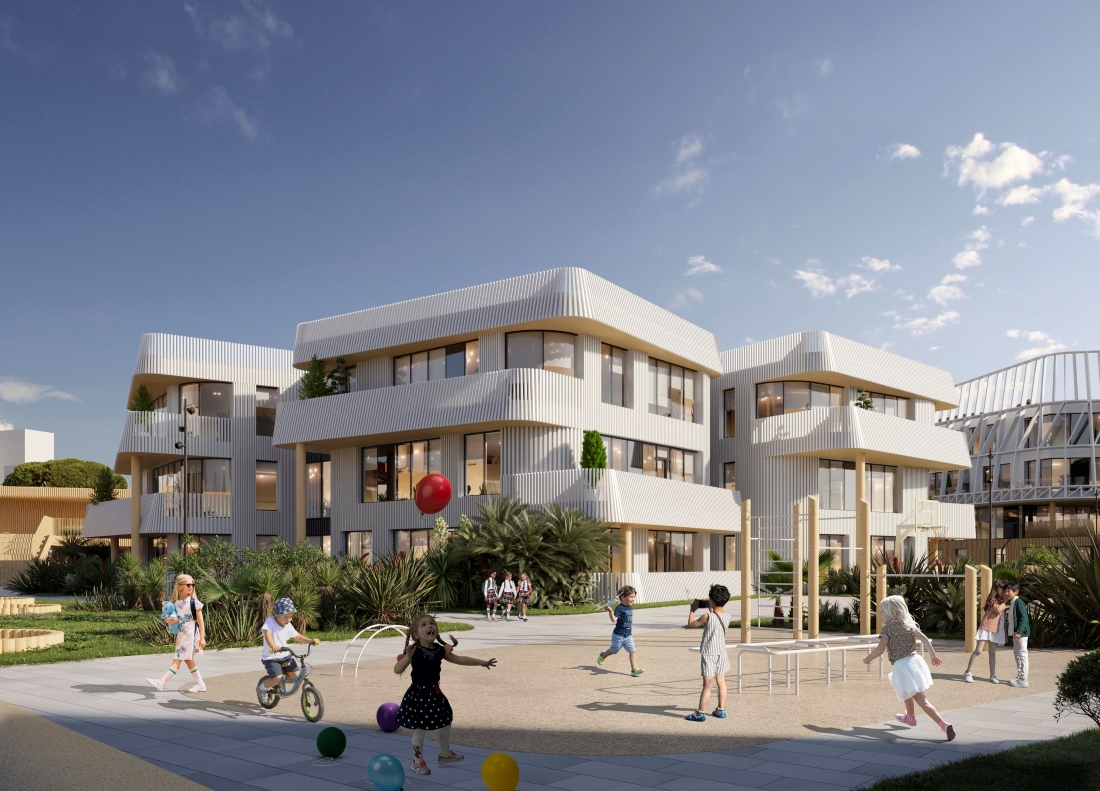
Educational complex made of clusters
Instead of a monolithic building, the architecture company ATRIUM divided an educational complex into a congress centre, sports cluster, and a primary and secondary school cluster. These clusters are interconnected with open boulevards, atriums, plazas, and landscape terraces. The spatial typologies not commonly found in other schools turn the educational complex into a miniature city that supports not just learning but also social life.
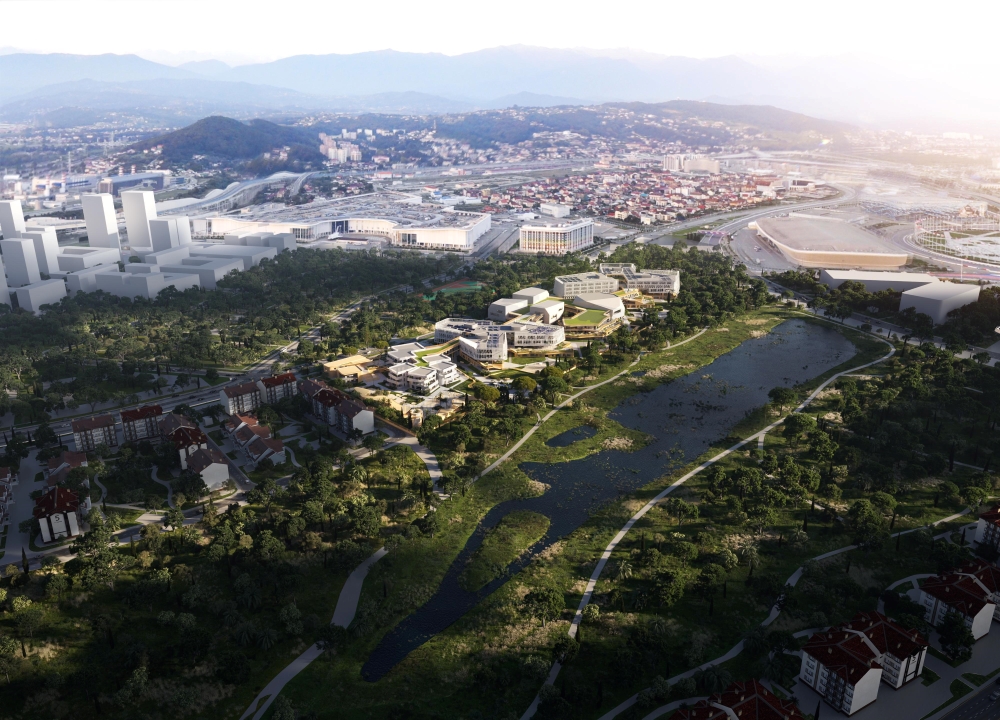
Second-floor educational hubs and open space facilities
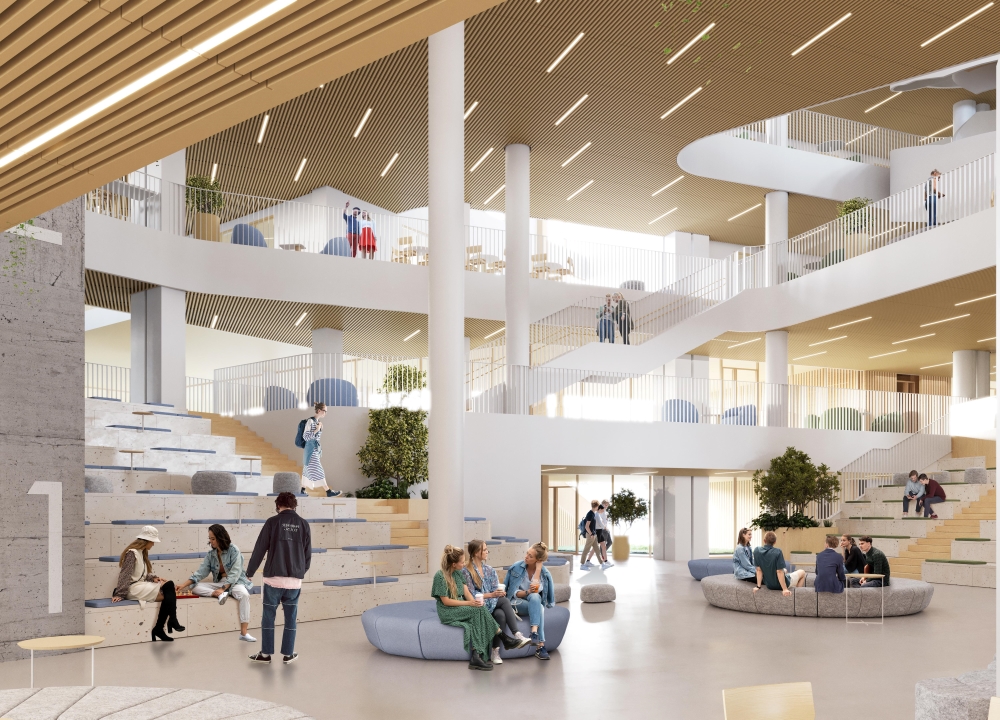
Enclosed pedestrian bridges provide waterproof passage to all second-floor facilities organised in blocks. Every block centres around an atrium, which can be used for exhibition learning, meetings, and community events. The program, tailored to a specific age group, takes place in workshops, laboratories, study pods, libraries, dining areas, and natural science, technology, and art hubs, alongside administrative units.
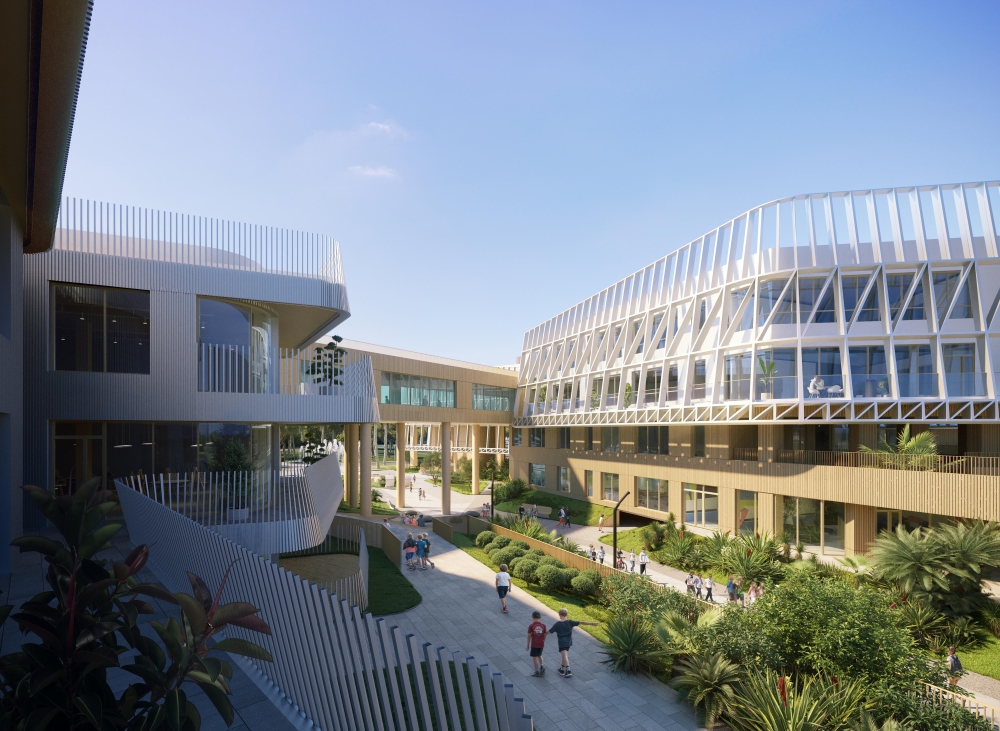
Customisable classroom design
Classrooms are designed for ultimate adaptability with movable partitions. The partitions can shape space into venues for lectures, traditional lessons, double-period sessions, public presentations, and academic competitions. The model can be adapted to changing educational models and after-hours community programming. A system of libraries serves for peer mentoring, interdisciplinary collaboration, and cross-age team projects.
Terraces for birdwatching
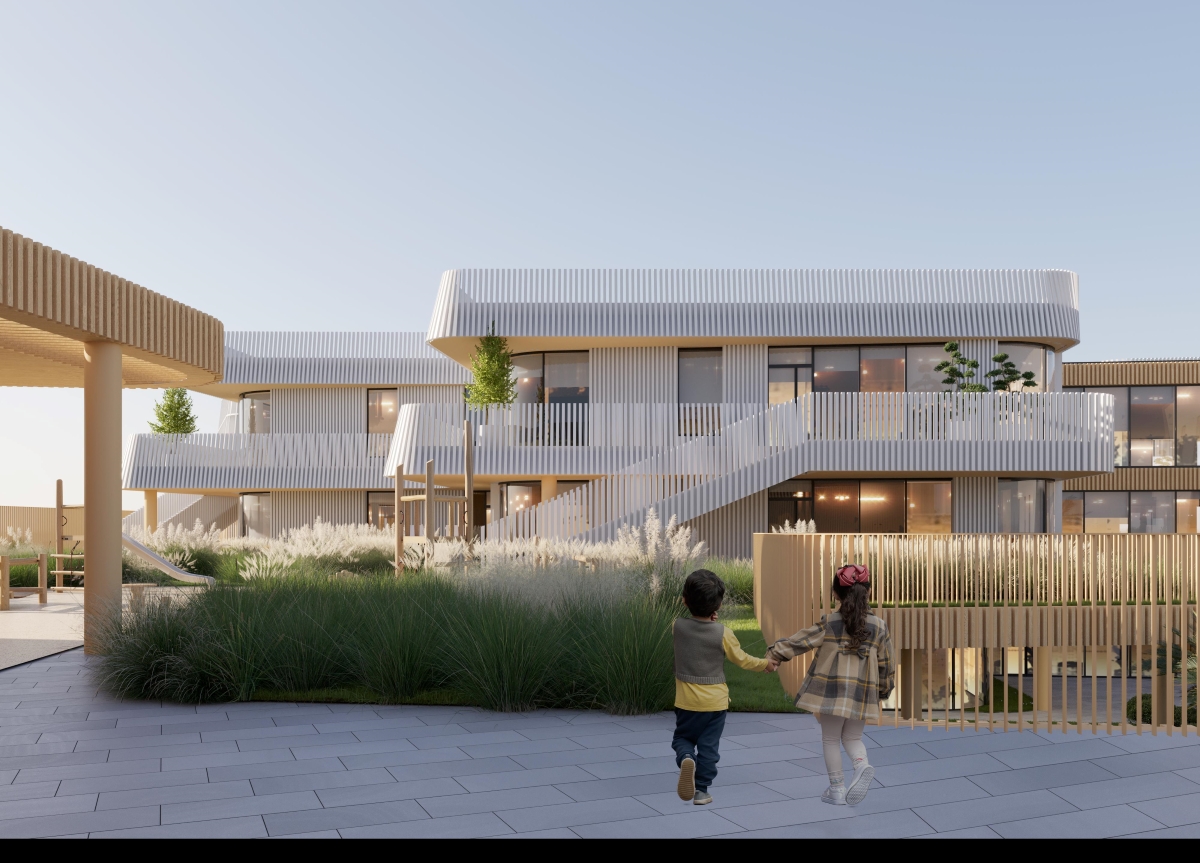
Due to the warm climate in the area, ATRIUM added shaded terraces, extensive green roofs, and outdoor dining areas with a view of the ornithological park. The elevated dining areas that also serve as observation decks open the building toward nature to foster wildlife observation and environmental education.
Sustainability
Photovoltaic panels produce renewable energy, while CO₂ sensors monitor indoor air quality. Natural daylight reduces energy use, while optimised cross-ventilation and rainwater management systems complete the environmental framework. The structure is designed to withstand earthquakes up to 9 in magnitude, while the elevation reduces the risk of floods.
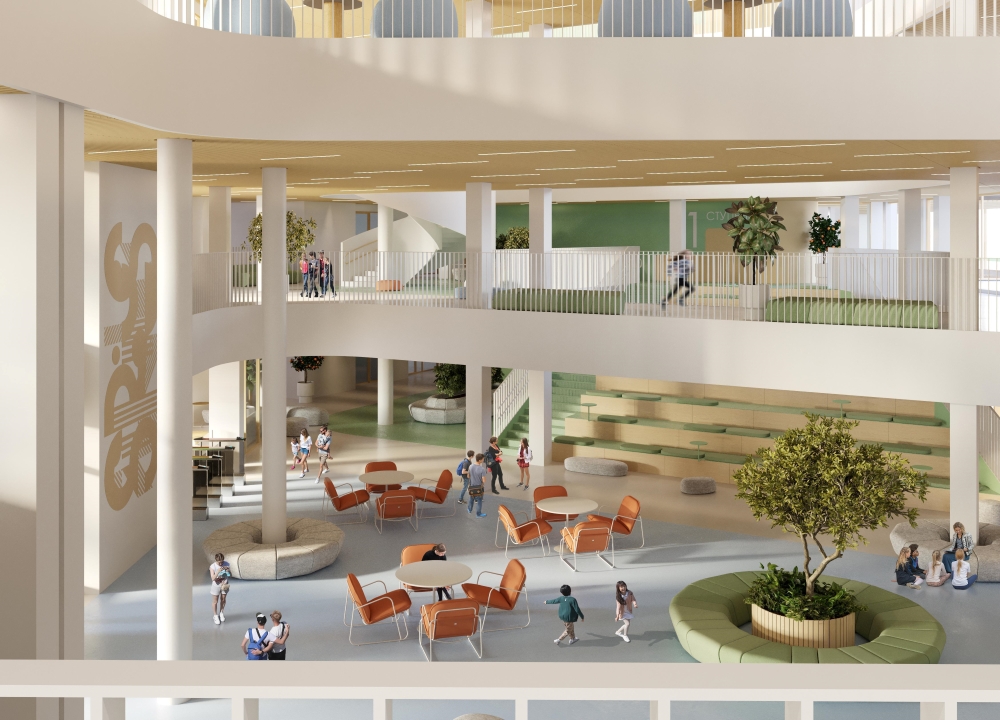
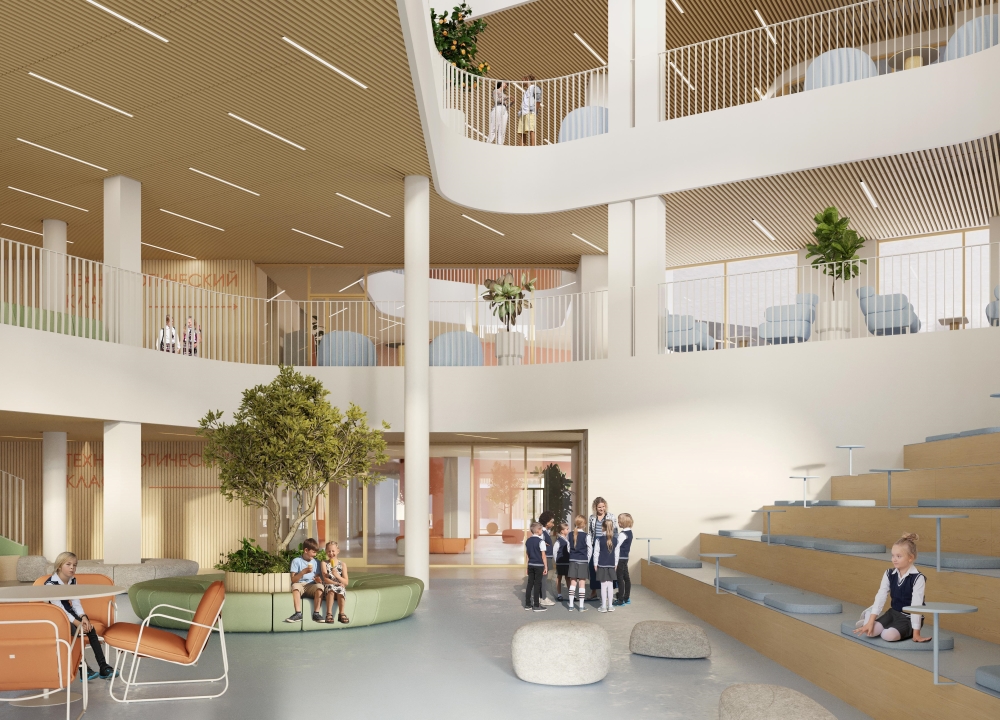
The Sirius Educational Complex reimagines the traditional school environment through contemporary architecture focused on openness, flexibility, and community. Designed as an integrated campus with educational, recreational, and social functions, the project surpasses its original function to become a district-wide attraction and gathering centre.
Technical sheet
Location: Sochi, Russia
Project: 2024
Site area: 5.8 Ha
Total area: 73,800 m2
Number of students: 2.500
Project team: Anton Nadtochiy, Vera Butko, Petr Alimov, Anna Vorobyova, Anastasia Galutkina, Artem Karpets, Ekaterina Kotlova, Olga Yefimova, Olga Kozak, Diana Mingazova, Yana Oshkina, Ivan Khripkov, Nikita Rybin, Yuri Uymanov, Yulia Mazurova, Almira Shagiakhmetova


