



Header: Mariaines Monroy Tapia, Fátima James Orozco, Mariajose Álvarez Aguilar
Winning a major global prize while still finishing your degree is the stuff of dreams for most students. For Mariaines Monroy Tapia, Fátima James Orozco, and Mariajose Álvarez Aguilar, it became a reality when their project, La Nopaleña, was named Emerging Interior Designer of the Year at the LIV Awards. Based in the culturally rich landscape of Oaxaca, the project moves away from typical tourist setups to offer something much deeper: a space that feels like a person welcoming you into their home.
In this interview, the trio explains how they moved away from the typical “tourist look” to focus on something far more tactile. They talk about the gutsy decision to make visitors walk through a dark tunnel before seeing the main room, and why they believe good design is about the story you tell rather than just how many expensive materials you can fit in a room. From their days as first-year students focused on looks to their current status as award-winning creators, they share what it’s really like to work as a team and why they aren’t done shaking up the design world just yet.

“La Nopaleña” is such a striking name. Can you tell us the story behind it and how that name guided your design choices?
“La Nopaleña” comes from something very Mexican, very ours. The name is inspired by the nopal, which is a strong symbol of identity, but we turned it into something more personal by adding “-eña,” almost like giving it a personality, like a woman. It’s not just a restaurant, it feels like someone who welcomes you—warm, rooted in tradition, but with a contemporary touch.
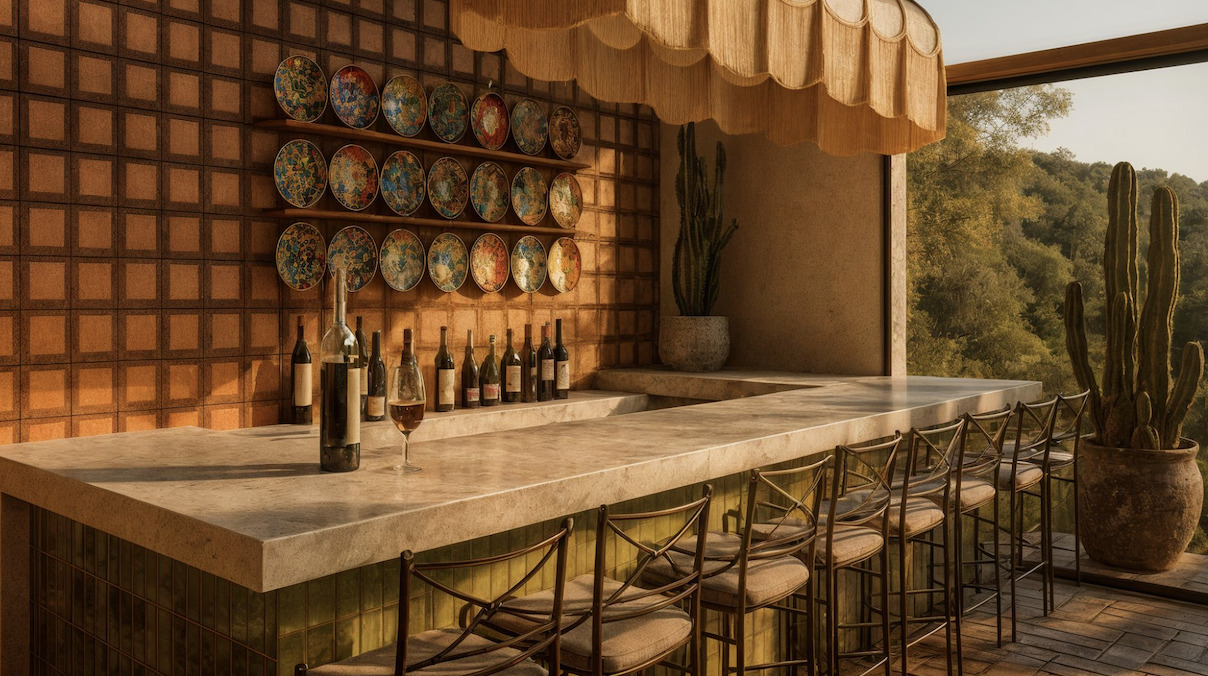
That name really guided our design decisions because we wanted everything to feel the same: authentic, but not cliché. We used natural materials, textures that connect to the earth, green tones inspired by the nopal mixed with more neutral colours, and details that feel handcrafted but with a modern twist. The whole space is about that balance between traditional Mexican elements and a more current aesthetic, just like the name.
Your project starts with a “tunnel” that leads visitors into the heart of Oaxaca. Why did you choose this gradual entry rather than letting people see everything at once?
We chose to start with a tunnel because we wanted the experience to feel like a transition, not just an entrance. Instead of showing everything at once, we liked the idea of slowly taking people out of their everyday context and bringing them into the world of Oaxaca. The tunnel builds curiosity and creates a moment of pause, so by the time you arrive at the main space, it feels more impactful. It’s more about the journey and the feeling of discovery. We wanted people to feel like they’re entering somewhere special, not just walking into a typical restaurant.
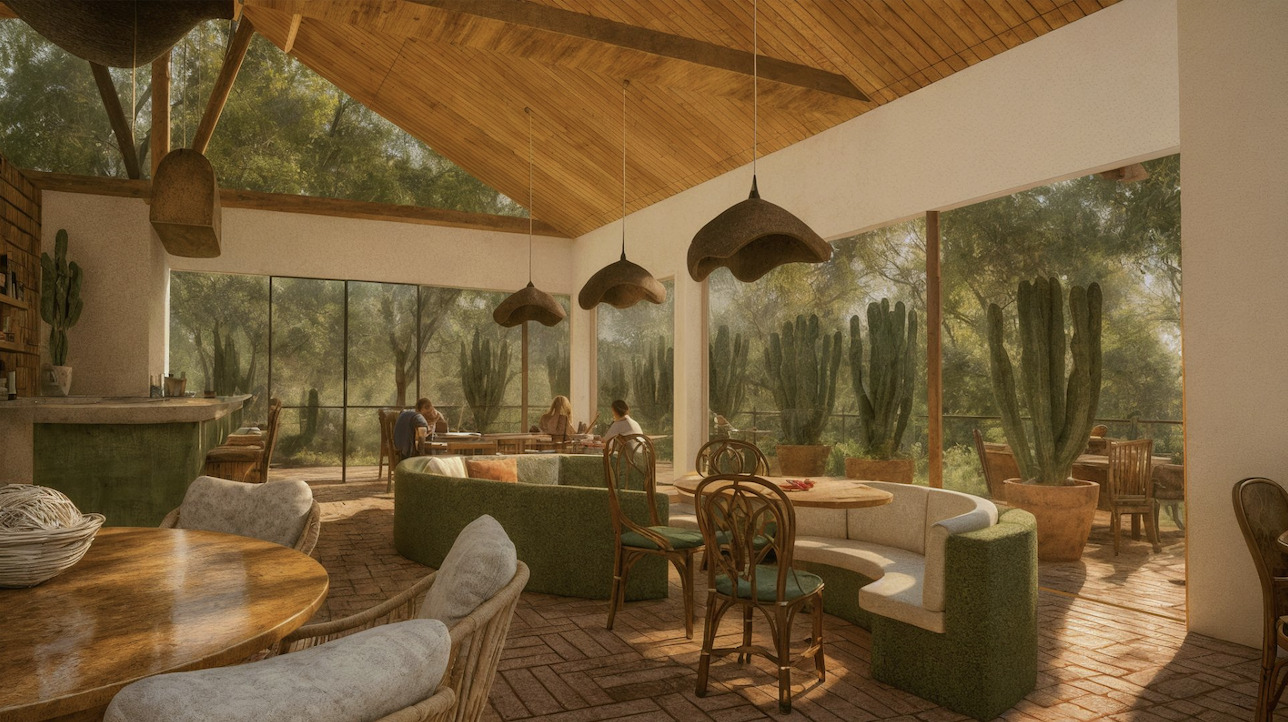
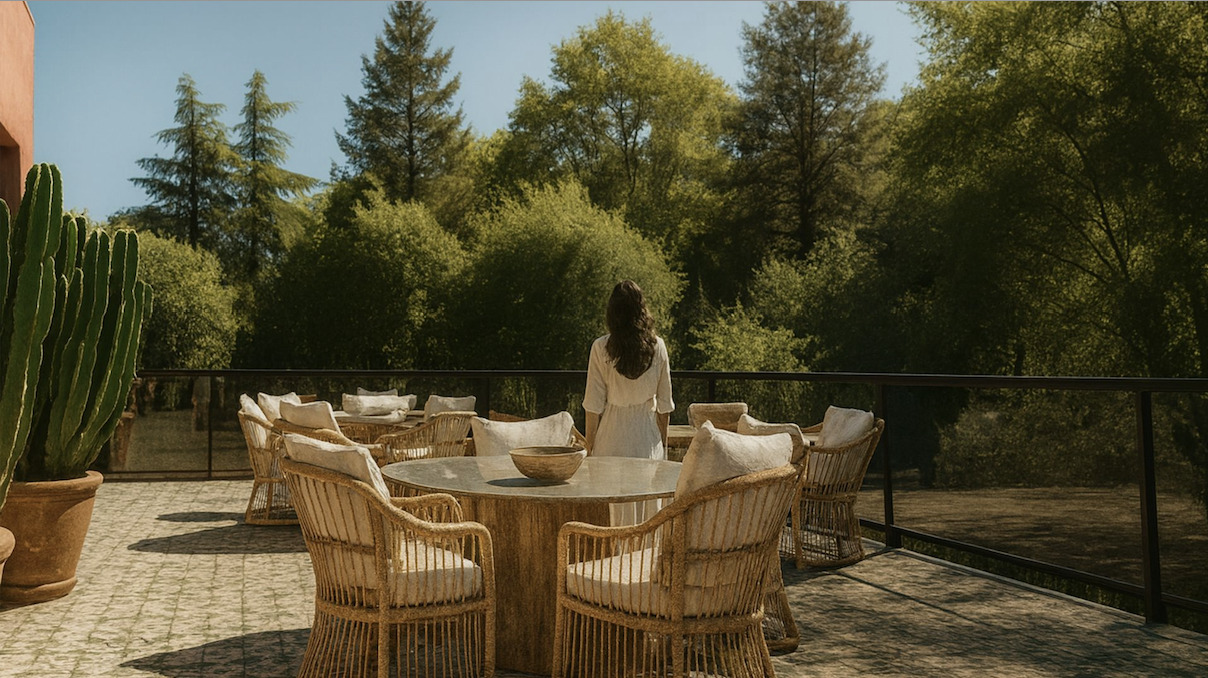
You used traditional materials like clay lattices, lime stucco, and local tiles. How did you make these ancient textures feel modern and fresh for an international audience?
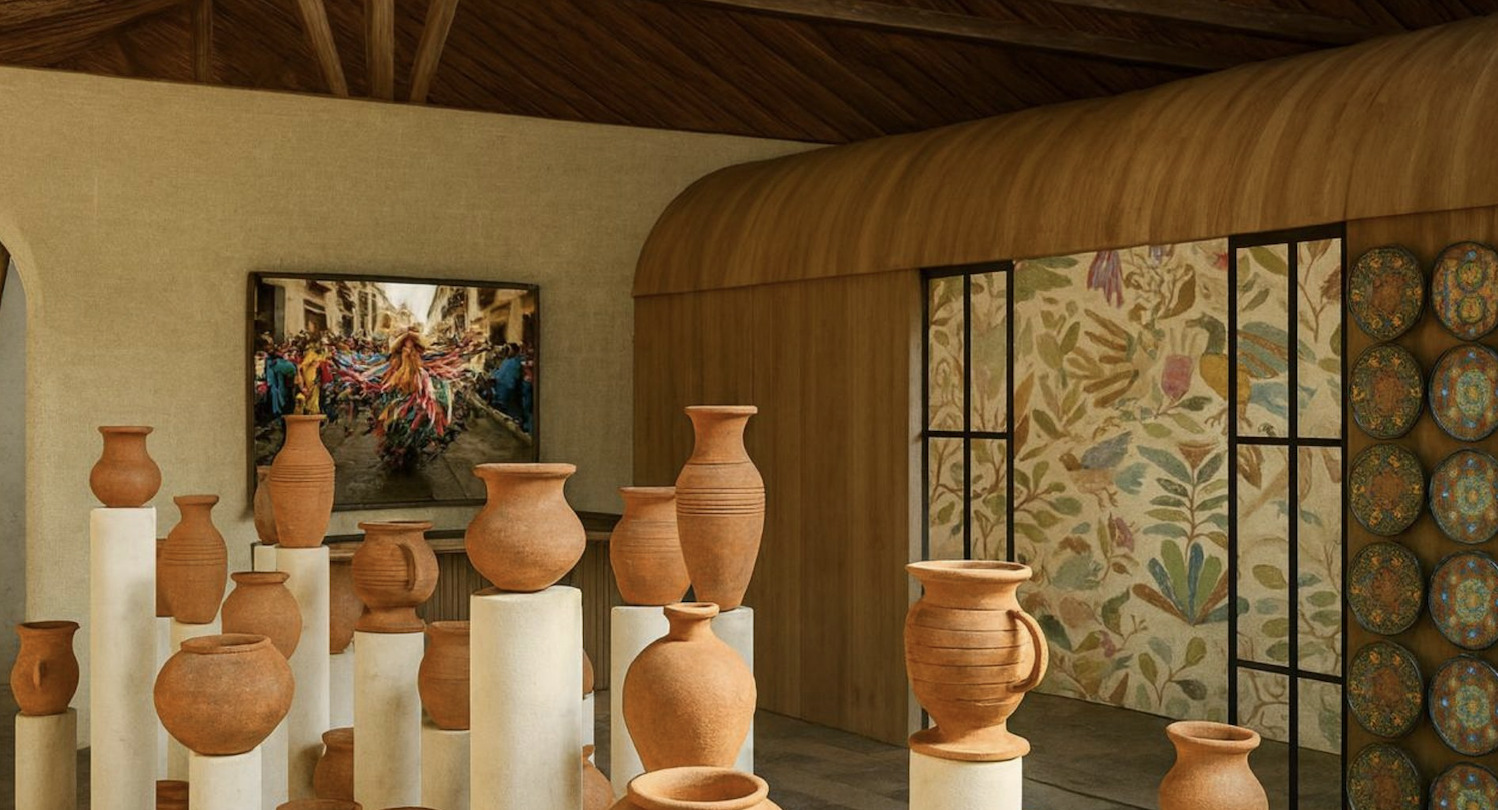
We used traditional materials like clay, lime stucco, and local tiles, but we applied them in a more contemporary way. For example, the clay pieces and celosías create texture and identity, while the stucco gives a soft and continuous finish. We also played with matte and glossy tiles to create contrast. The key was keeping the design clean and balanced, so the materials stand out without feeling heavy or overloaded.
Oaxaca is famous for its “sensory” richness—the smells, the vibrant colours, the heat. How did you translate those non-visual feelings into a physical interior design?
For us, it was about not designing only for what you see, but for how you feel the space. Oaxaca has a really strong sensory identity, so we tried to translate that through materials, temperature, lighting, and even how you move through the space.
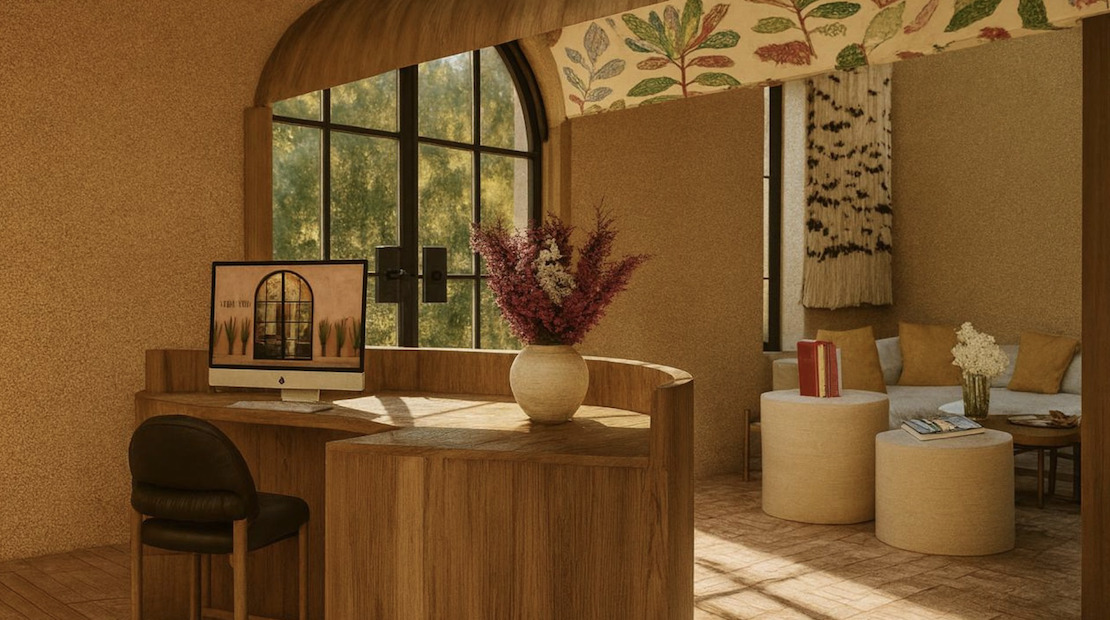
We worked with textures a lot—rough finishes, natural materials, handmade elements—so you can actually feel that richness, not just see it. With lighting, we avoided something too uniform and instead created warmer, more intimate atmospheres, almost like the glow you get in traditional spaces.
We also thought about temperature and air, making the space feel slightly warm and enclosed in some areas and more open in others so there’s contrast. And the layout itself helps, with moments that feel tighter and others that open up, so it’s not static. In the end, it’s about layering all these elements so the space feels alive and immersive, not just visually inspired by Oaxaca, but emotionally connected to it.
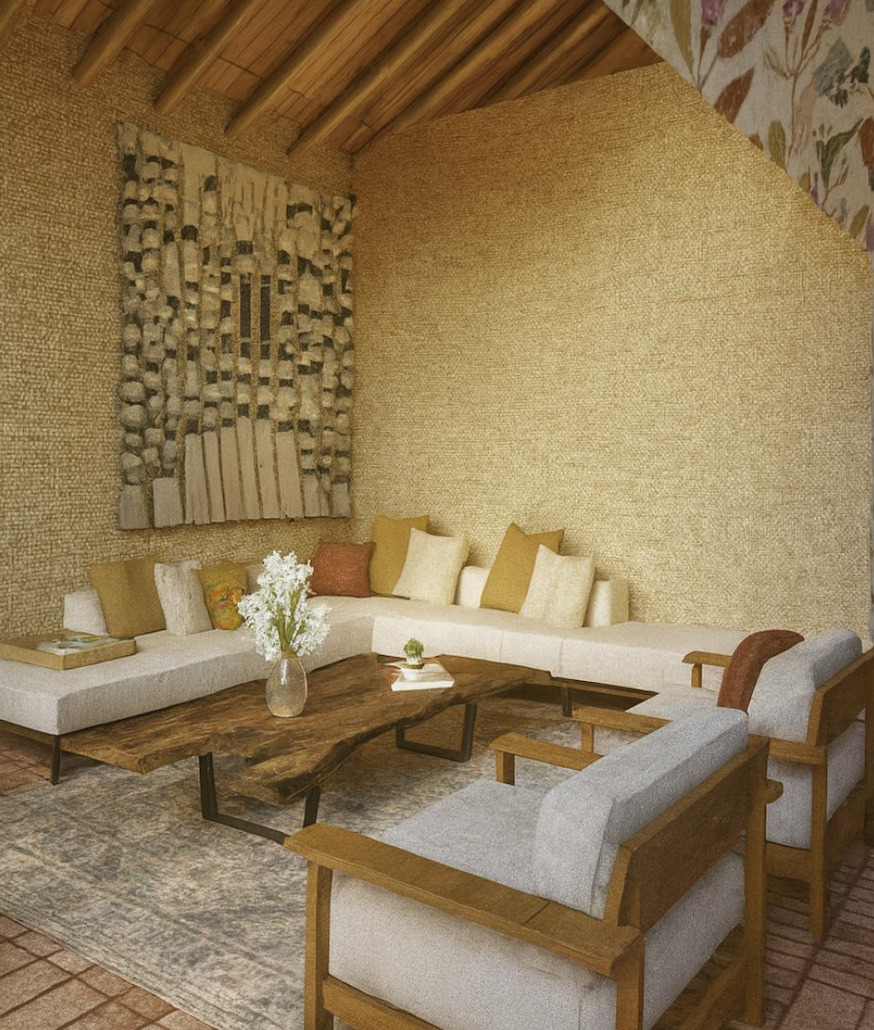
You included a shop for local handicrafts and regional foods like grasshoppers and Oaxaca cheese. Why was it important for you to mix “commerce” with “fine dining”?
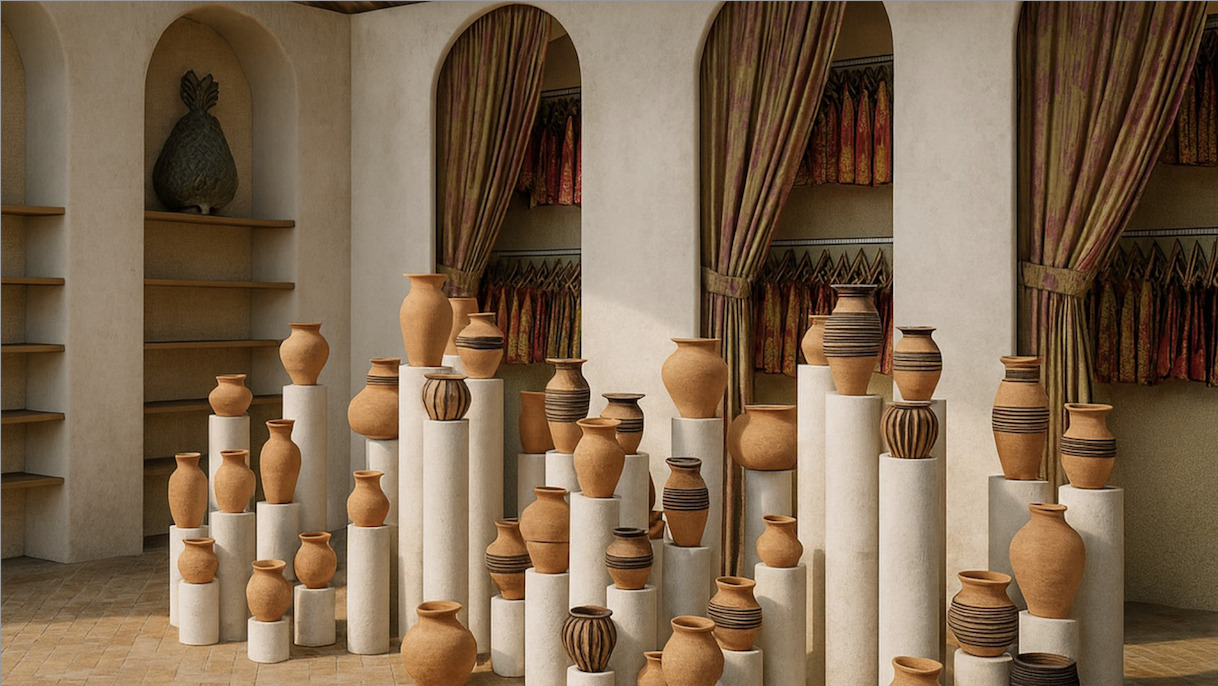
For us, it was important because we didn’t want it to feel like just a restaurant, but more like a full experience of Oaxaca. Mixing commerce with fine dining makes the project feel more real and connected to its roots, not something isolated or staged.
By including local handicrafts and regional products like grasshoppers and Oaxaca cheese, we’re giving visibility to local culture and traditions beyond the plate. It also lets people take a piece of that experience with them, making the visit more memorable and personal. In the end, it’s about blurring that line between eating, exploring, and discovering—so the space feels alive, not just like a place where you sit down to eat.
As a trio of designers, how did you divide the creative work? Who was the “dreamer,” who was the “technical expert,” and who kept the team on track?
As a trio, we didn’t divide the work in a super rigid way, but we naturally fell into roles based on how each of us thinks and works.
María Inés leaned more into the conceptual side—the “dreamer”—bringing strong ideas, narrative, and pushing the overall vision. María José focused more on the technical side, making sure everything actually made sense in terms of layout, materials, and how it would be built. And Fátima took on the role of keeping everything aligned—organising, making decisions, and making sure we stayed on track with deadlines.
Even though we each had those strengths, we were constantly overlapping and giving feedback to each other, so everything stayed cohesive and felt like one vision, not three separate ideas.
You are currently in your 8th semester at UDEM. How has your perspective on what “good design” means changed from your first year to winning this global award?
Being in our 8th semester at UDEM, our idea of what “good design” means has changed a lot since first year. At the beginning, we focused more on how things looked—something aesthetic, clean, and visually appealing. Now, for us, good design is much more about the experience and the intention behind every decision. It’s about telling a story, creating emotions, and making sure everything has a reason—materials, layout, lighting, everything.
Winning this global award made us realise that good design is not about doing more, but about doing things with purpose and coherence. It’s about creating something that connects with people on a deeper level, not just something that looks good.
Winning “Emerging Interior Designer of the Year” at the LIV Awards is a big achievement. Can you describe the moment you found out you won? What does this international validation mean to you?
When we found out we won, it honestly felt unreal. At first we didn’t fully believe it—we had to read it a couple of times to actually process it. It was one of those moments where everything just pauses, and then it hits you all at once. We were really excited, but also proud of everything that led up to that point.
For us, this international validation means a lot because it shows that what we’re doing can go beyond our local context and still connect with people. It gave us confidence in our way of thinking and designing, and reassured us that our ideas, our narrative, and our approach actually have value on a larger scale. It also feels like a starting point more than an end—like motivation to keep pushing, keep refining our voice, and keep creating projects with intention.
Now that the world is watching, what is next for the three of you? Are there any upcoming projects or specific areas of design you are itching to explore after graduation?
Now that the world is watching, we see this more as a starting point than a final achievement. After graduation, we want to keep building projects that have a strong concept and a clear identity, not just aesthetically, but in the experience they create.
We’re really interested in continuing to explore hospitality design, especially spaces that tell a story and feel immersive, like La Nopaleña. But we also want to experiment with other scales—maybe retail or even residential—while keeping that same narrative-driven approach.
At the same time, we’re excited to collaborate with artisans and work more closely with local materials and processes, pushing that connection between design, culture, and production. Right now, the three of us are still working together as the same team for our thesis project, trazzo, where we’re exploring furniture design using recycled concrete. It’s a continuation of our way of thinking—designing with intention, material exploration, and a strong conceptual base. In the end, we want to keep evolving our style, but always staying true to designing with intention and meaning.


