Header: Gregori Civera
The Université Mohammed VI Polytechnique (UM6P) is a fresh face in the academic world, but it is quickly carving out a clear visual identity. With the autumn 2024 opening of its second campus in Rabat, Morocco, the institution has pinned its character to a bold new structure: the Centre de Congrès. Designed by the renowned firm Bofill Taller de Arquitectura, it is a building intended to act as the heartbeat of the campus, improving the daily lives of everyone who walks through its doors.
A hinge between two worlds
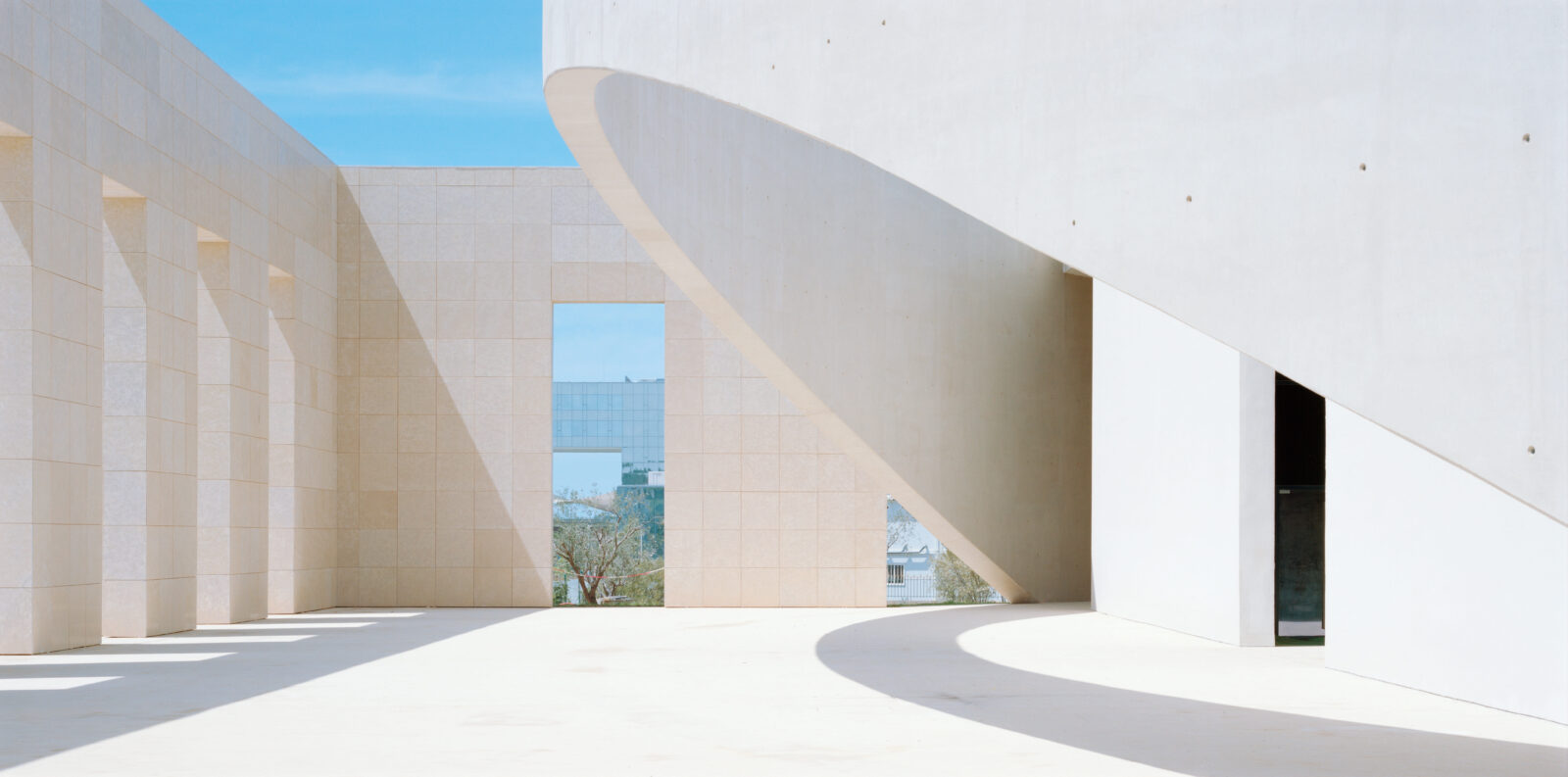
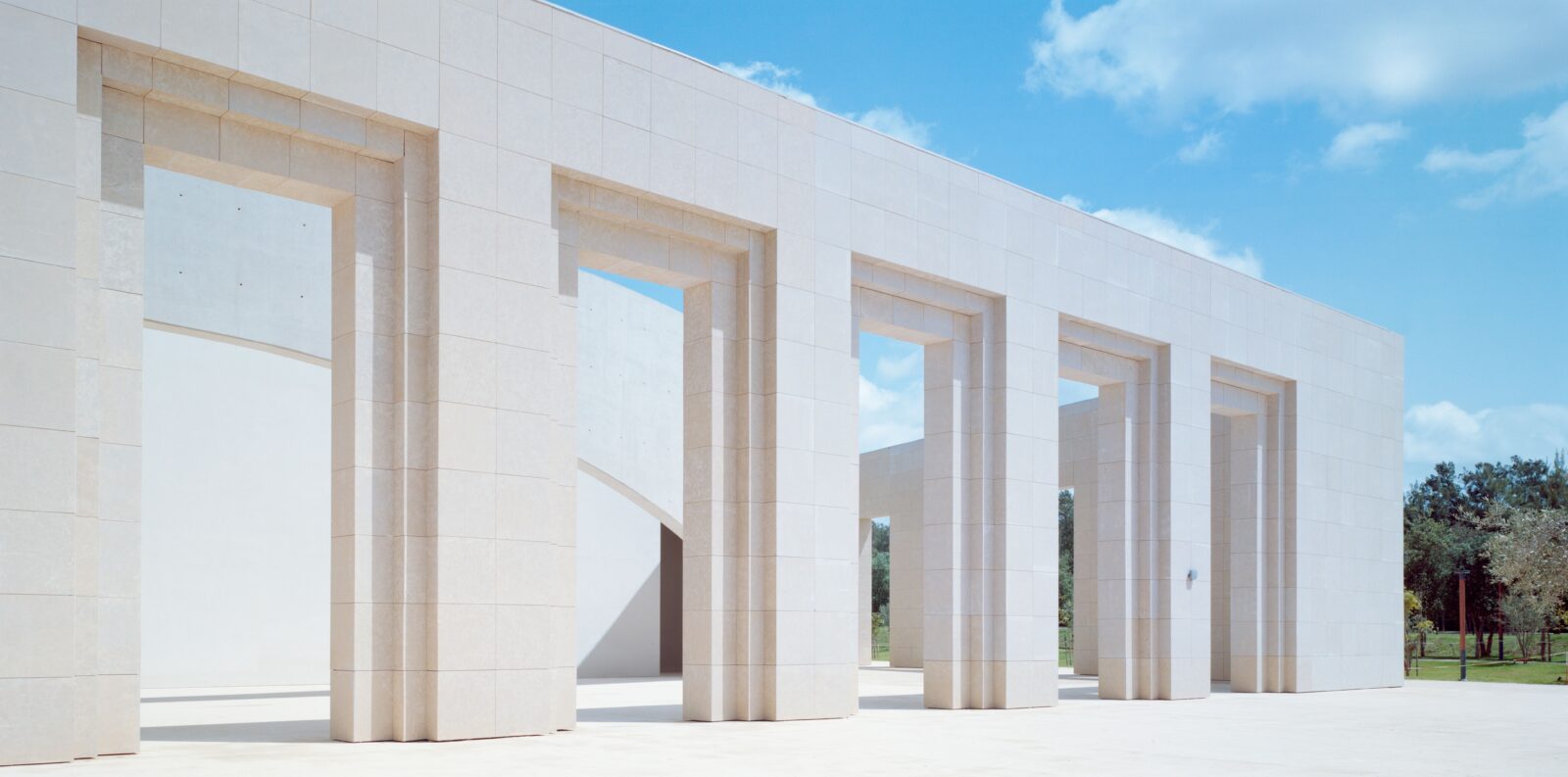
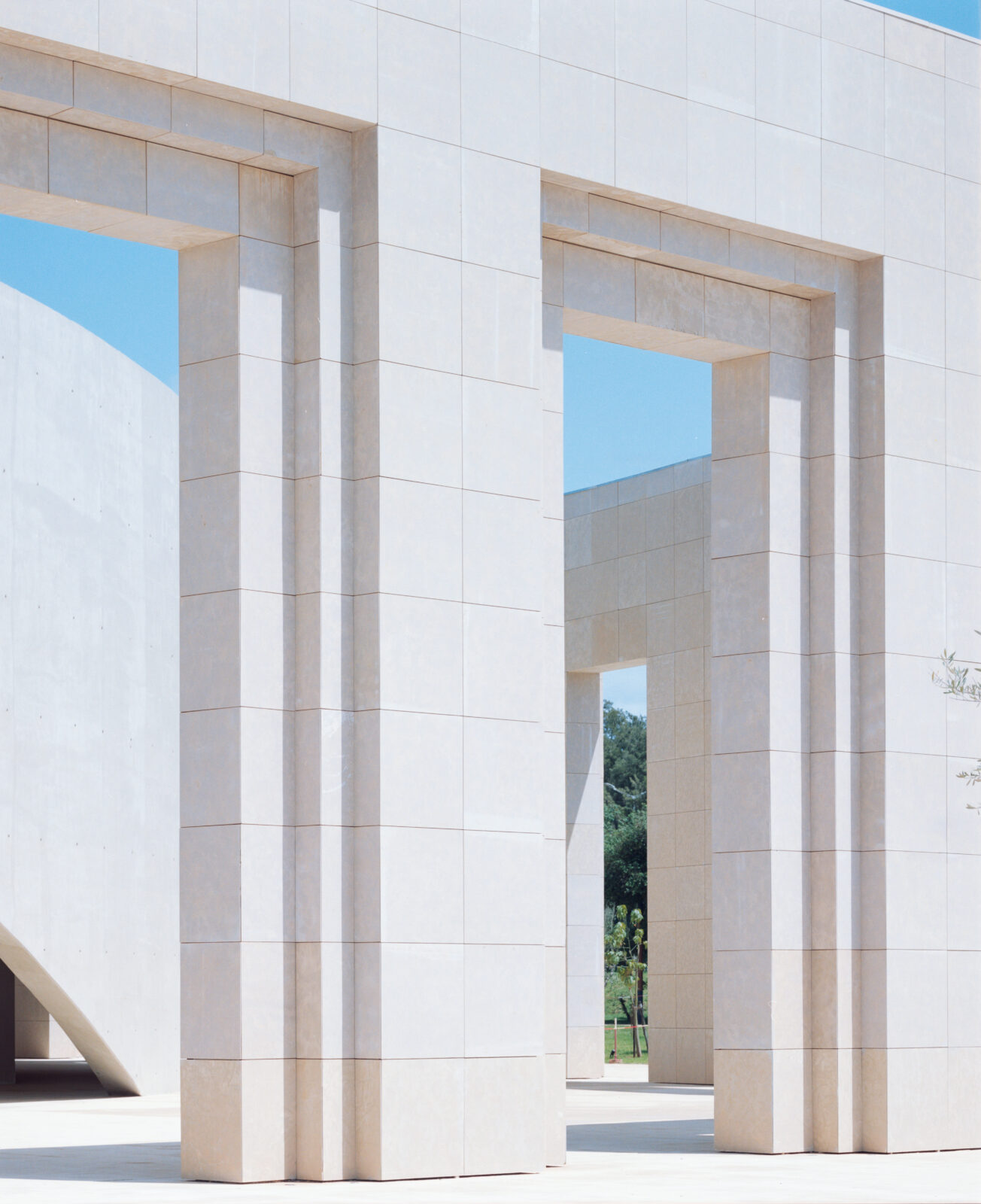
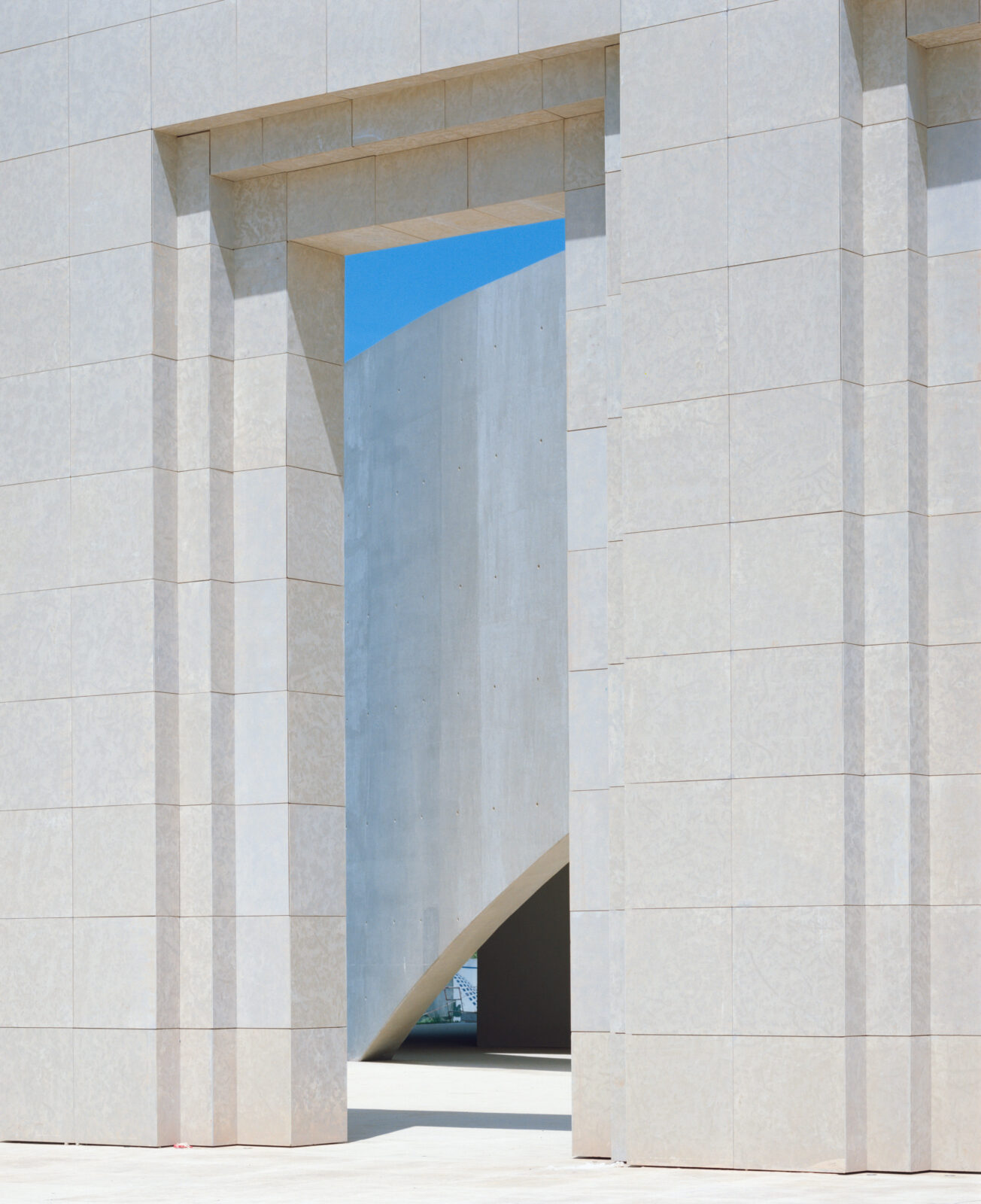
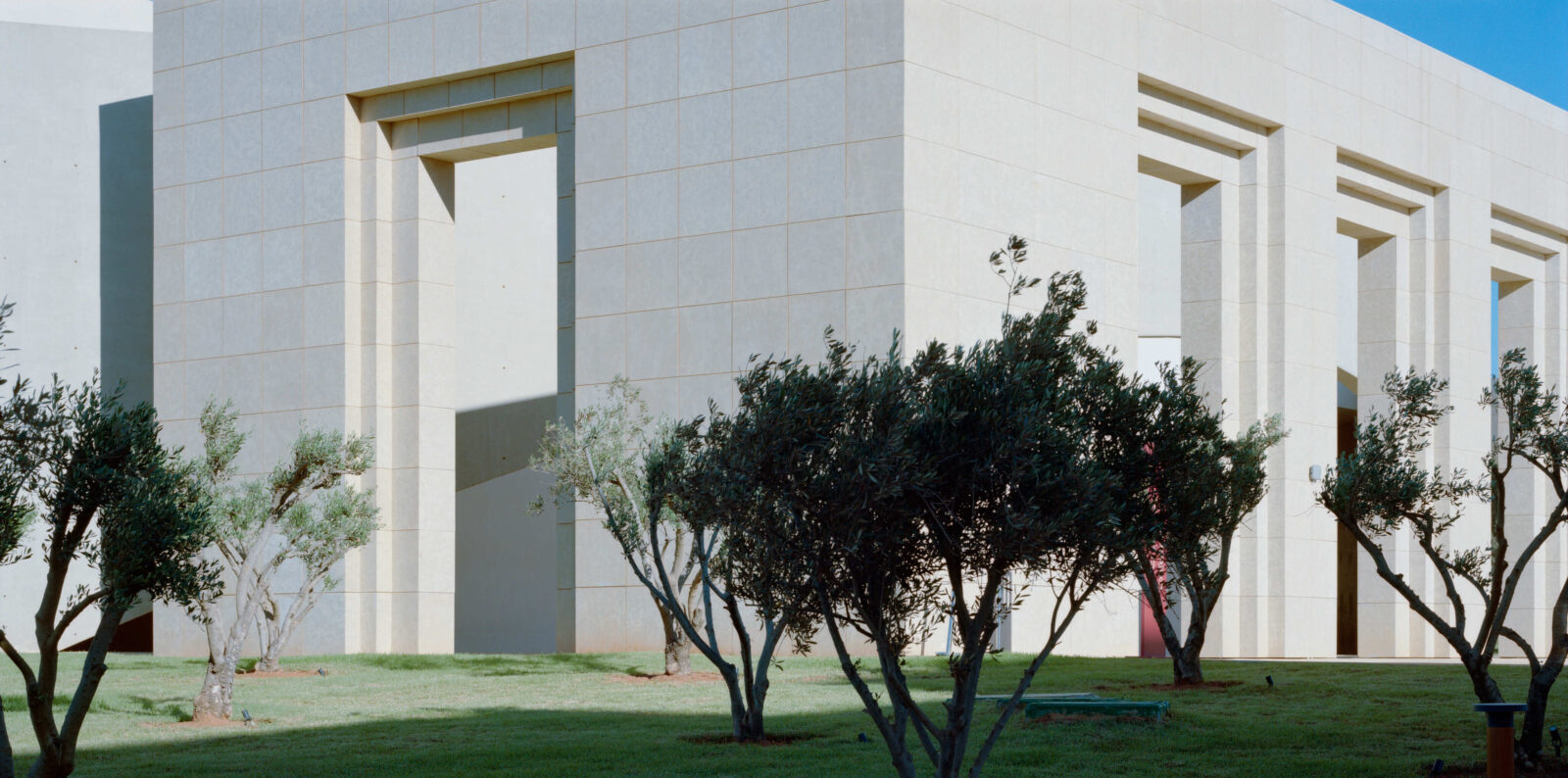
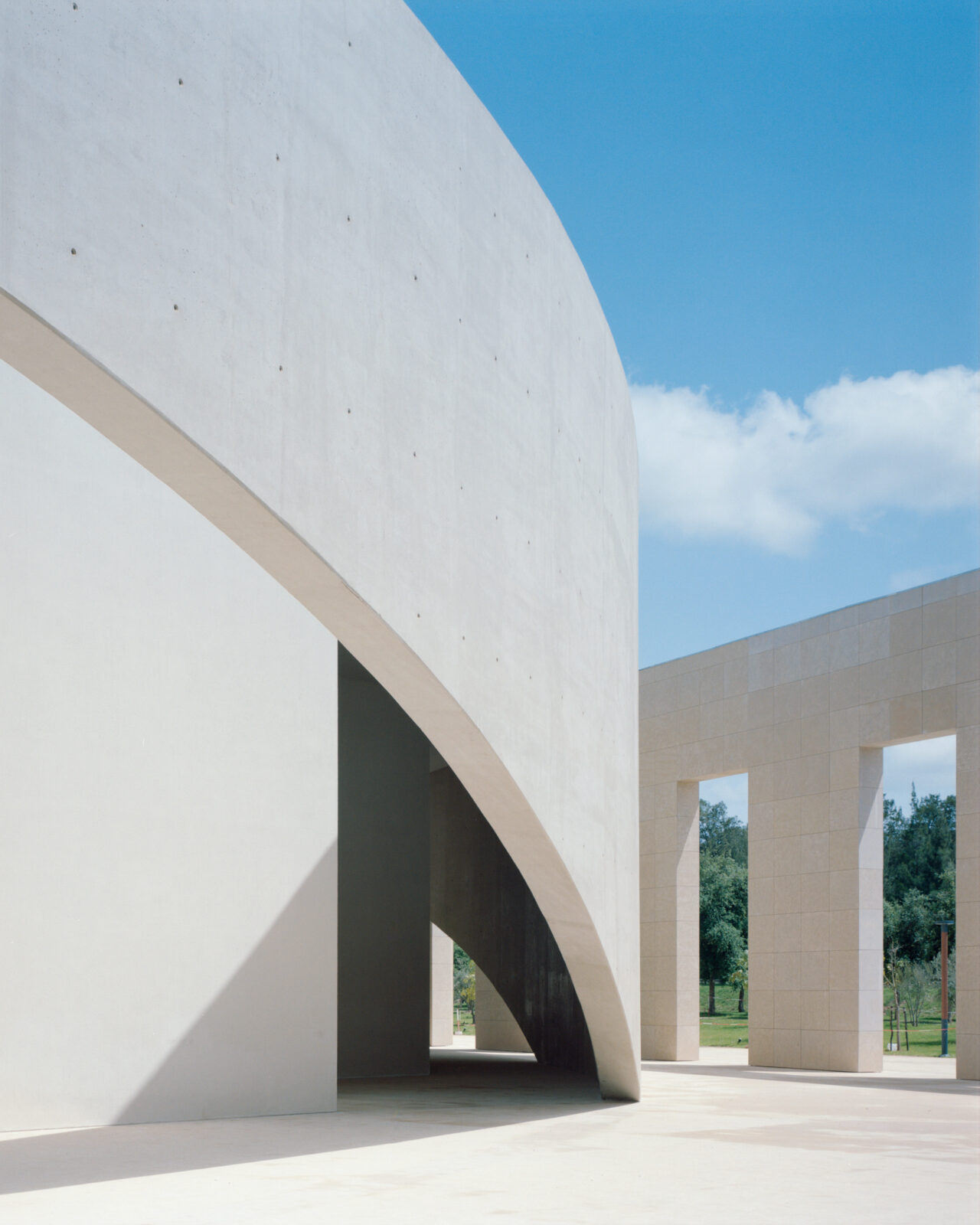
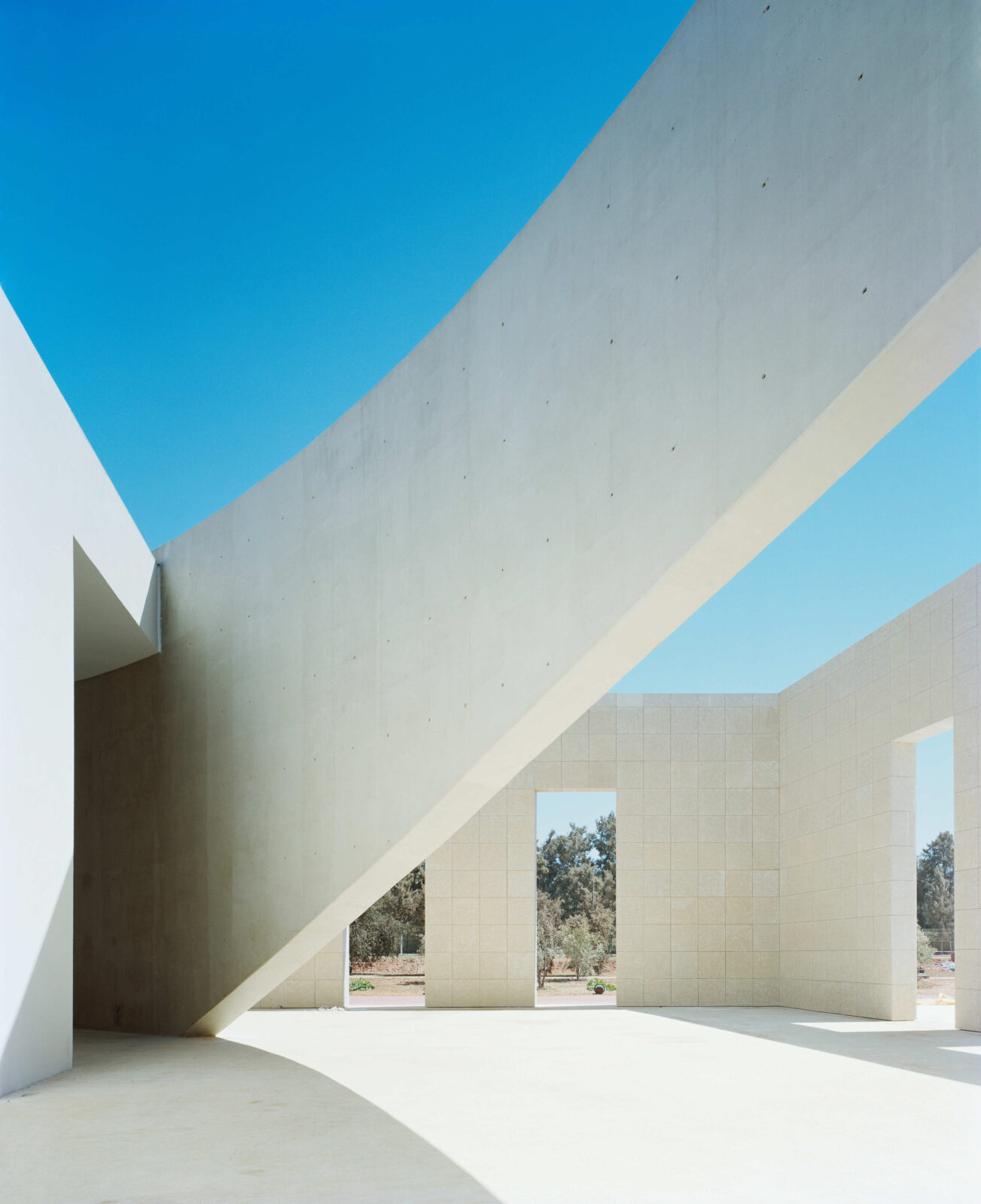
The building sits in a clever spot, acting like a hinge joint between the first and second stages of the university’s masterplan. The team at Bofill Taller de Arquitectura created the project to link two different styles of layout: the university’s main axis on one side and a tight-knit cluster of academic buildings on the other. To help people move from one area to the next, the architects used a series of tiled porticos that line the edge of the site. This creates a clear sense of passage, reinforcing the idea of a building you can walk through.
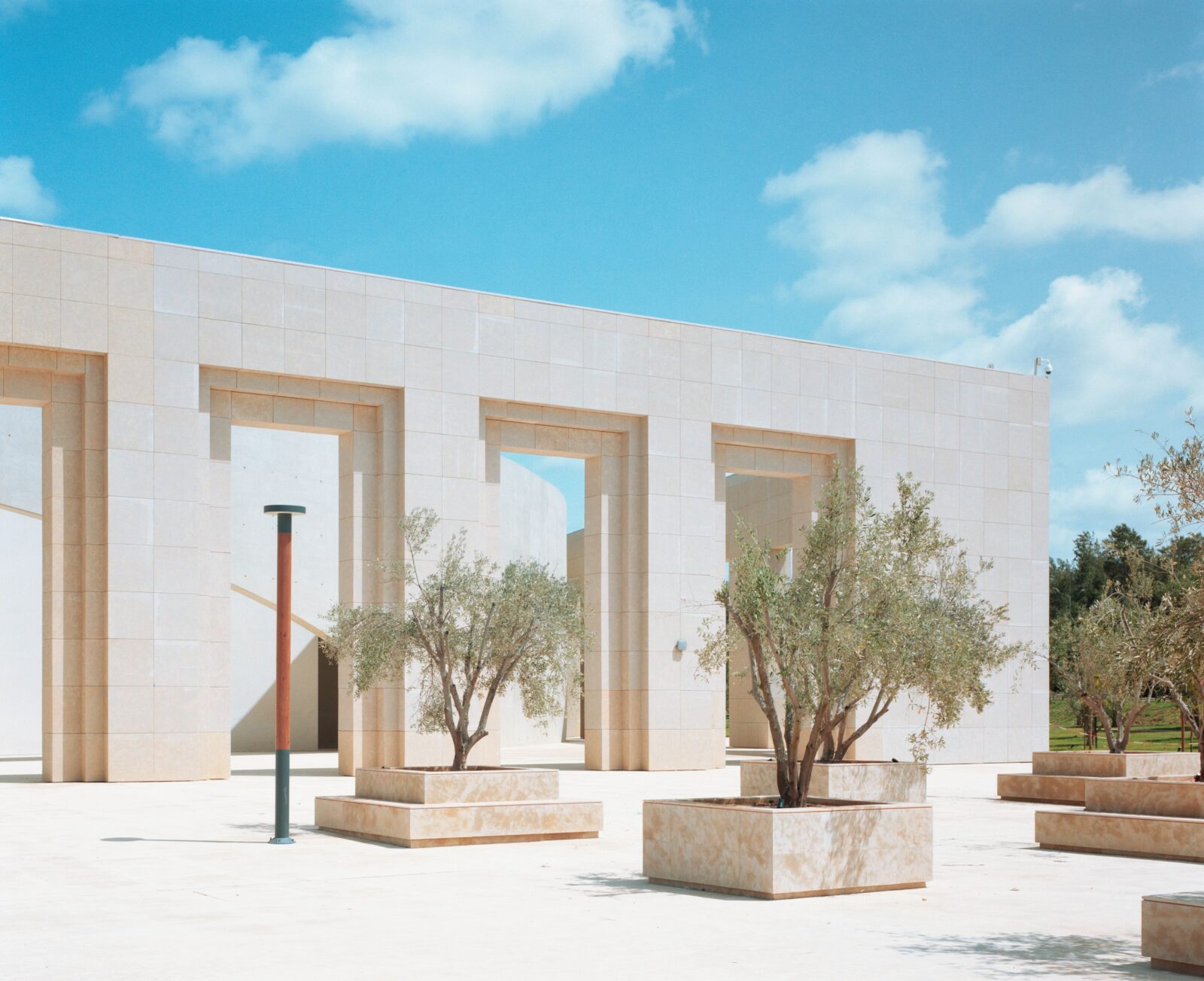
To keep the look consistent, the design team chose bright ceramic tiles that cover both the floor and the walls. These same tiles start outside on the paving and carry right through into the lobby and gathering areas. This deliberate use of materials blurs the line between the street and the interior. This “total design” approach means that every small detail, from the custom furniture to the wall finishes, was given just as much care as the layout of the entire campus.
The power of the circle and the square
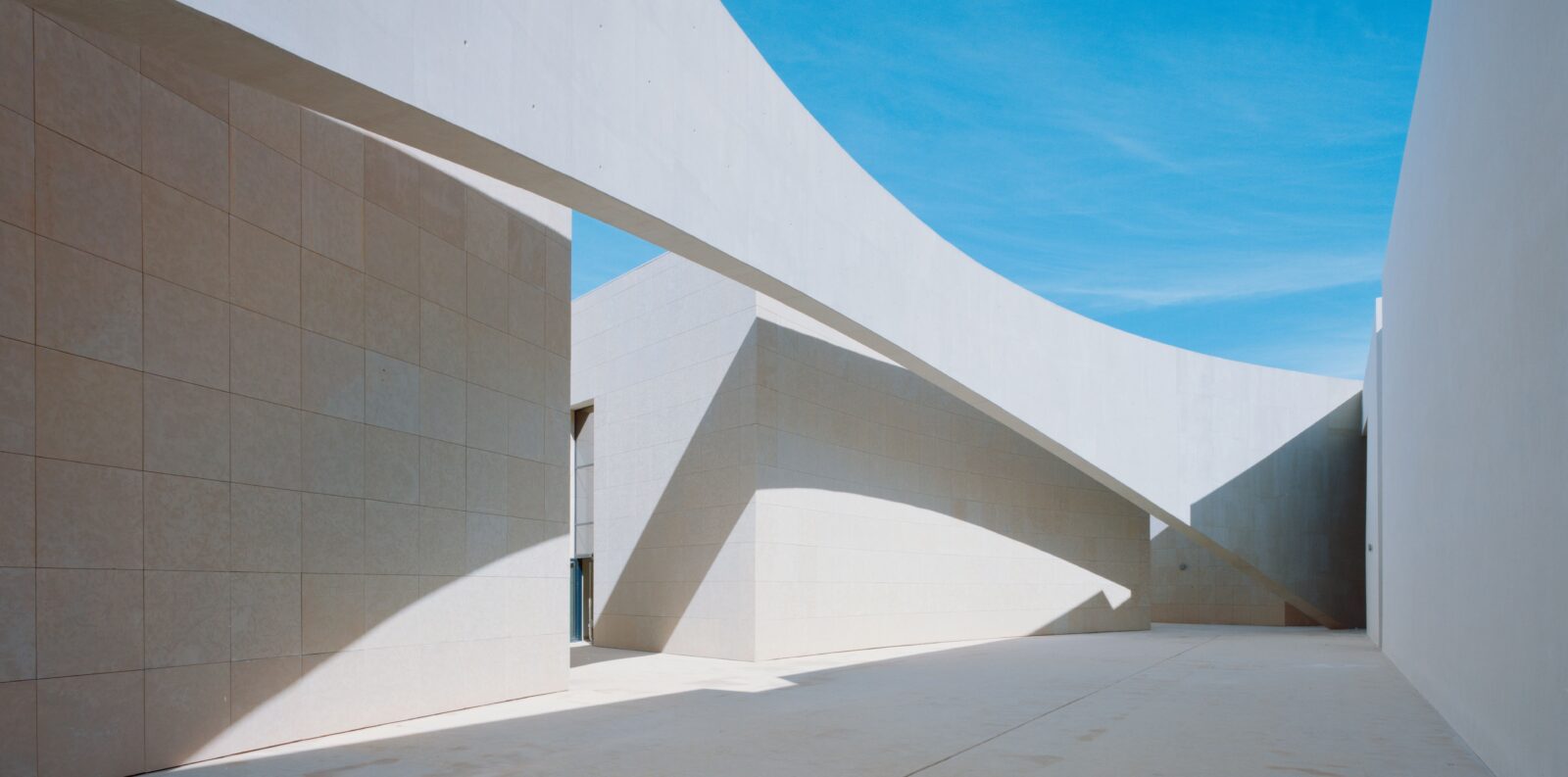
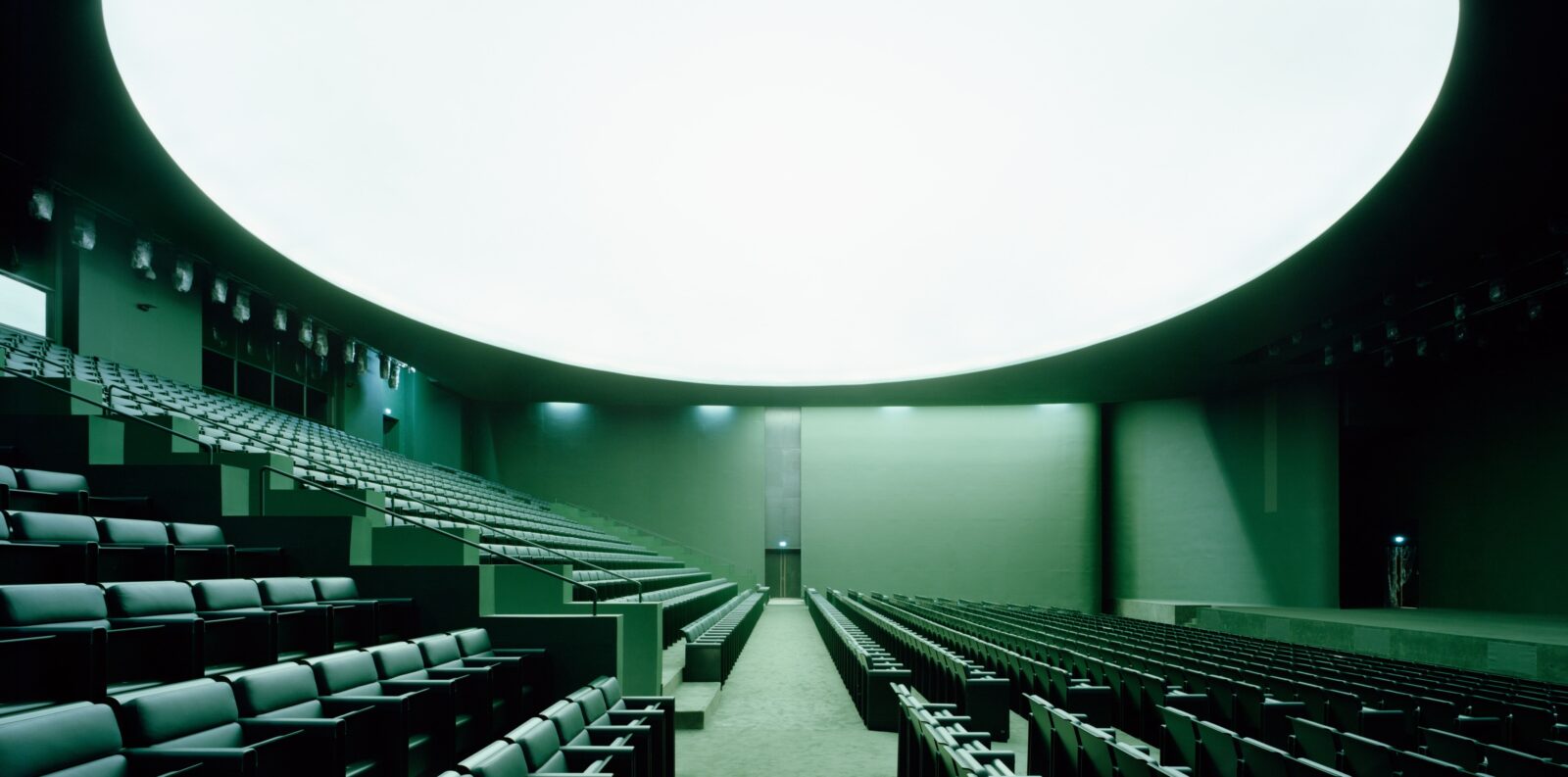
The architects approached the program using two primary shapes: a circle and a square. A cubic auditorium sits in the middle to serve as the main performance space. Wrapped around this central square is a massive, sweeping circular wall.
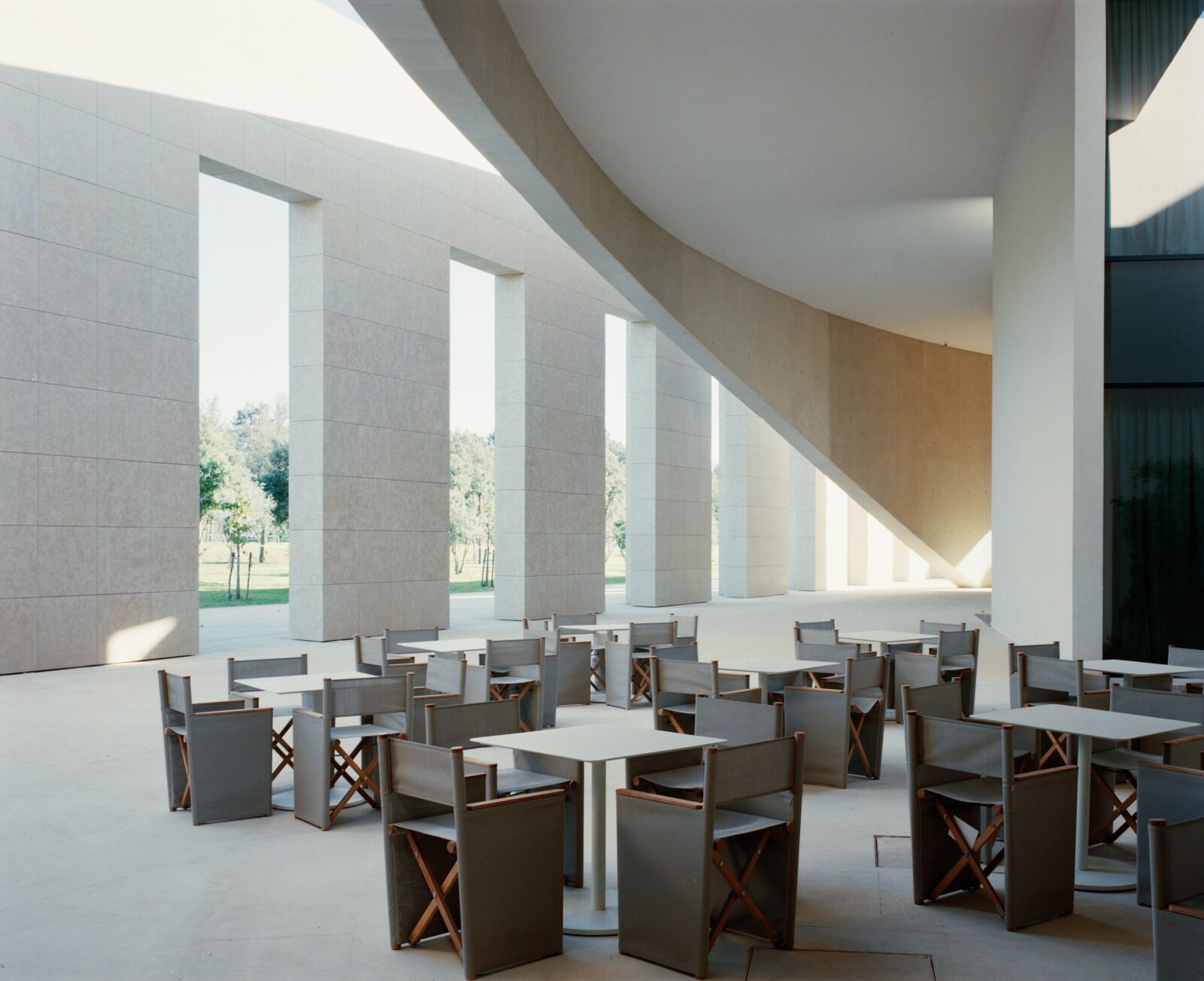
The gap between the square core and the round outer wall isn’t wasted. It is filled with smaller rooms for meetings, extra auditoriums, bars, and cafes, all interwoven with shaded walkways and open patios. Because the circular wall features huge arches that only touch the ground at the very corners of the building, the rest of the ground floor remains open. This porous strategy makes the centre feel welcoming and airy, while also allowing for cross-ventilation and changing light conditions throughout the day.
An immersive interior experience
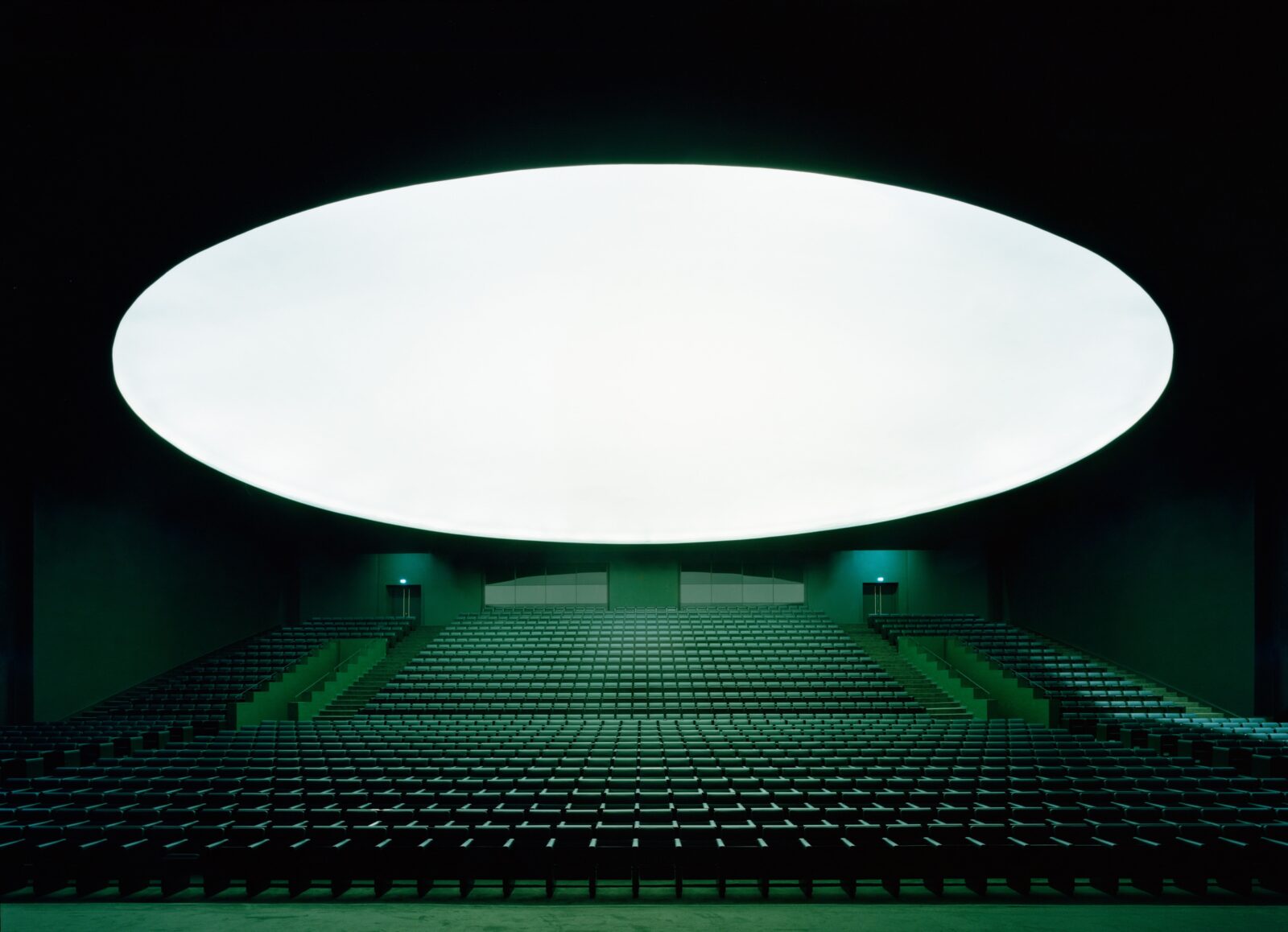
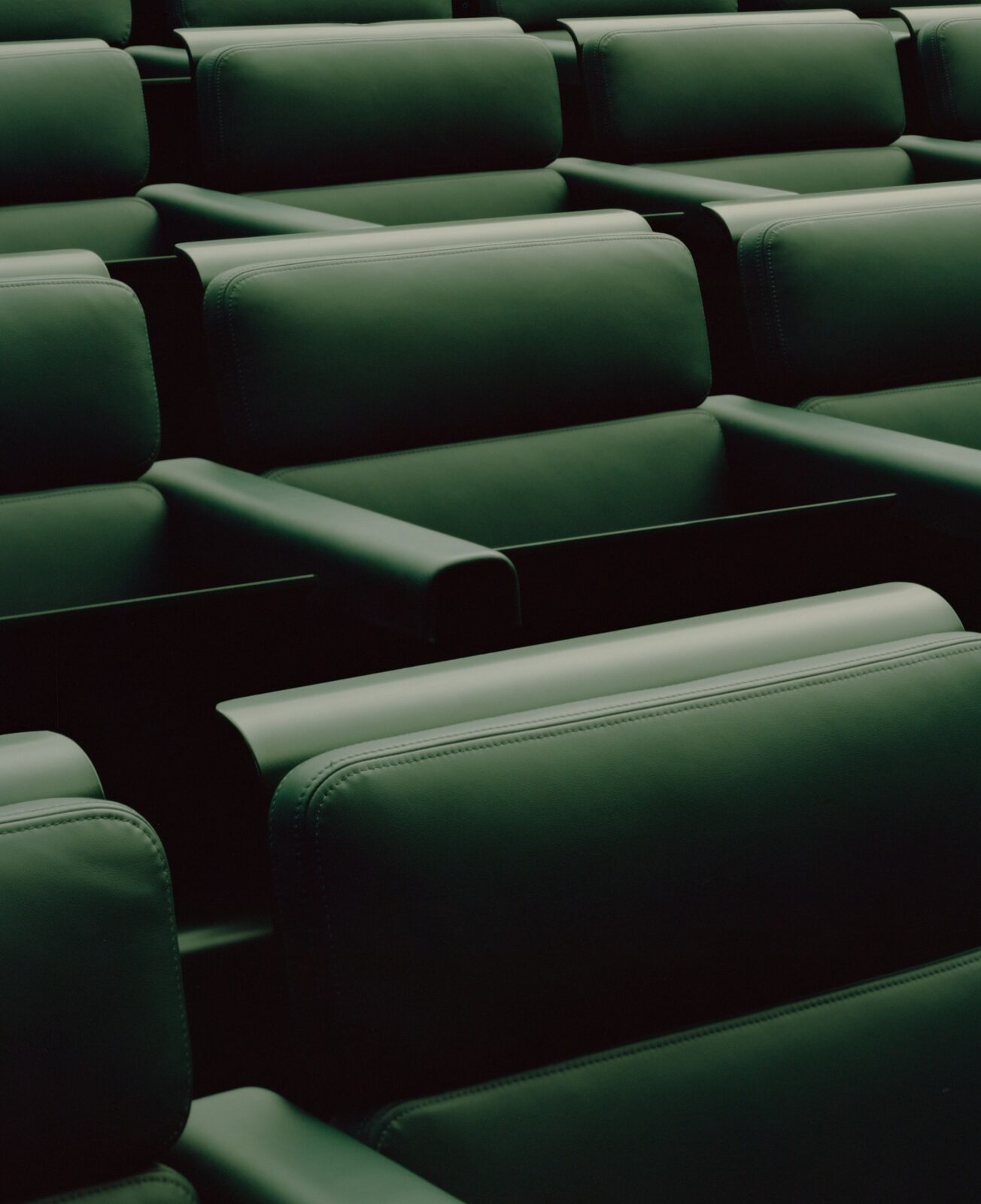
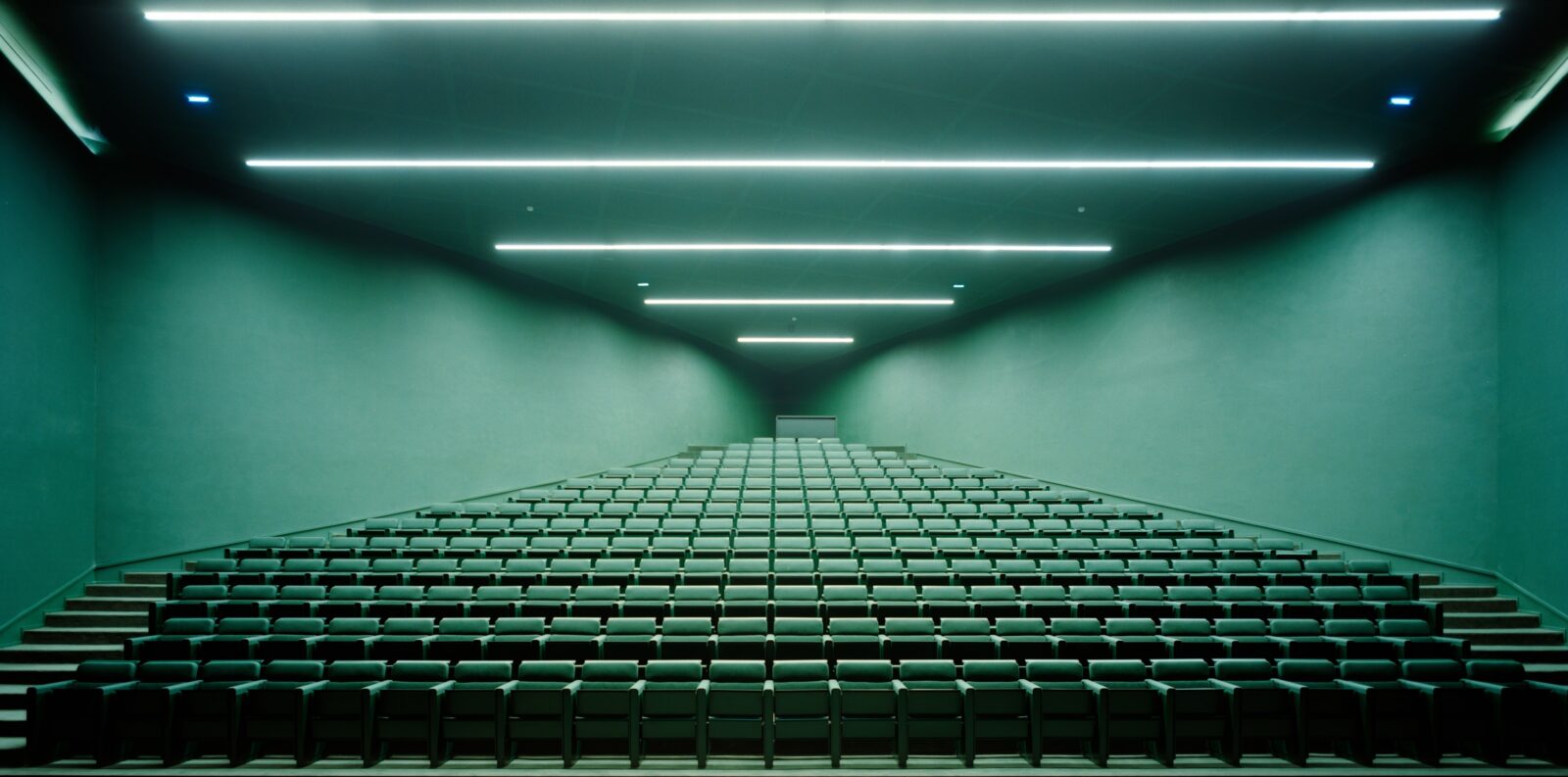
Inside the main auditorium, the atmosphere changes to one of “controlled monumentality.” The seating is arranged in a sharp fan shape around a central stage, but the most striking feature is above. A vast circular opening in the ceiling, known as an oculus, sheds a soft, even glow over the entire room. To make the space feel hushed and immersive, the walls and the upholstered chairs are all finished in a deep green tone.
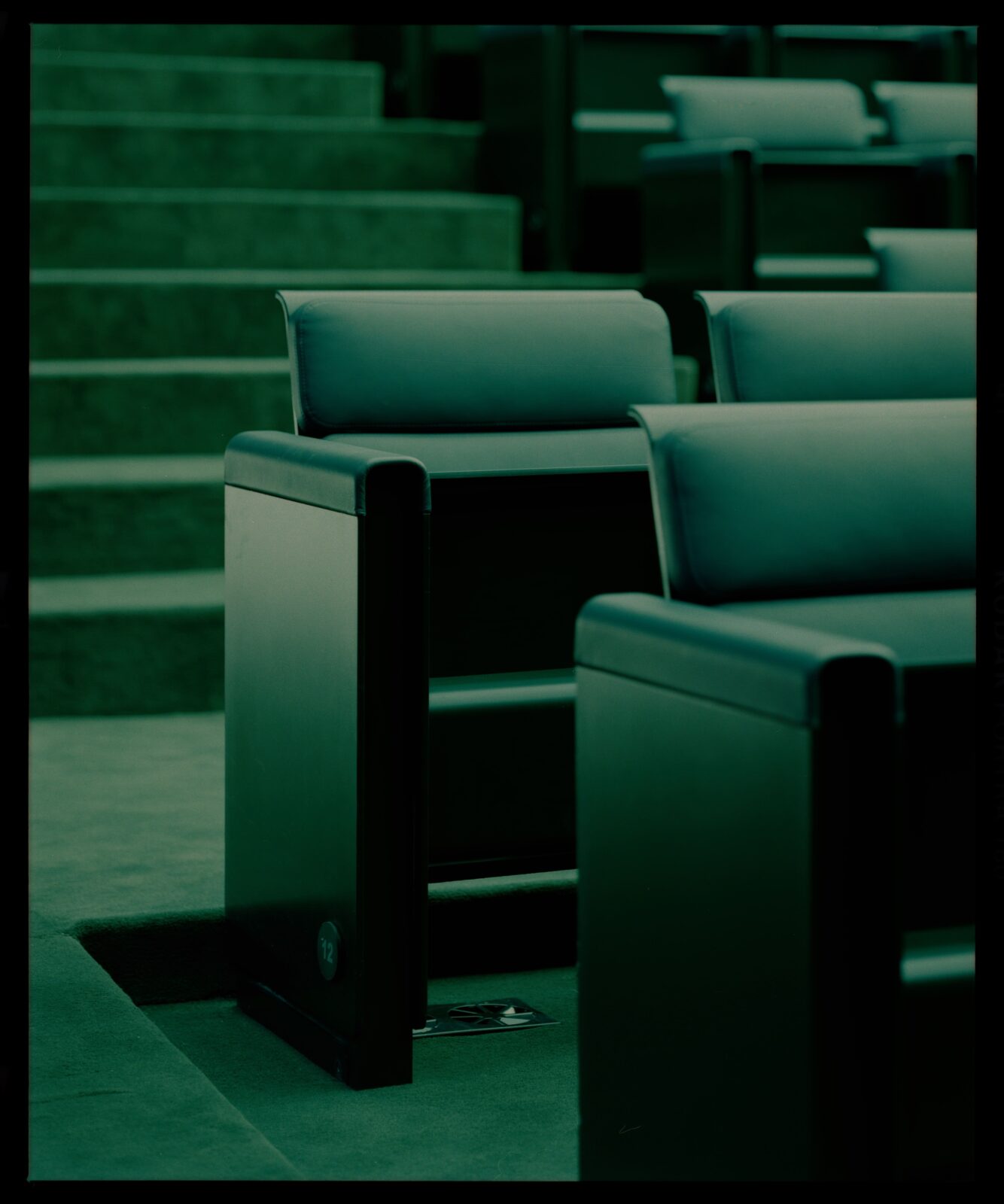
The furniture itself is a major part of the design. Bofill Taller de Arquitectura created custom armchairs specifically for this project. Made from tough aluminium and full-grain leather, the chairs are described by the studio as a “seat-sculpture.” They are designed to look light and sleek with subtle curves, but they are also highly practical. Each chair features an automatic folding mechanism to save space, along with hidden desks and power points for students and guests.
Courtyards and open views
While the interior is packed with activity, the building constantly looks outward. The outdoor courtyards offer plenty of room for people to gather and sit, with clear views of the nearby woods and playing fields. By keeping the base of the building open and using those grand carved arches, the architects have made a space that feels generous. It is a place where different groups of people, from local performers to international speakers, can mix in a setting that feels both massive and approachable.
With this project, Bofill Taller de Arquitectura has created a landmark that helps the UM6P campus feel like a single, unified place. It manages to be a grand architectural statement while remaining a practical thoroughfare for students. In Rabat, this new hub proves that when you get the basic geometries right, you don’t need over-the-top flourishes to make a lasting impression.
Project info
Name: Centre de Congrès Rabat
Architect: Bofill Taller de Arquitectura
Location: Université Mohammed VI Polytechnique, Rabat, Morocco
Photography: © Gregori Civera