



Header: Red Sea Global 2025
Some holidays are about seeing a place, others are about getting far enough away from daily life that the usual systems disappear for a while. For that kind of trip, a resort needs more than a good view: it needs privacy and enough luxury to make isolation feel easy. With that in mind, we have selected LIV Hospitality Design Awards winners made for the “away from society” traveller. The awards, launched in 2020, celebrate hospitality and design across hotels, resorts, restaurants and other spaces worldwide.
The list begins in Greece, where Mandarin Oriental Costa Navarino spreads across a hillside above the Bay of Navarino. In Saudi Arabia, Shebara Resort takes the idea further, with access only by seaplane or private boat and overwater villas placed among reefs. In China, Hermit Resort builds the idea of “retreat” through small courtyard buildings near the Xing Kiln Ruins, while the Dangkou Ancient Town Hotel Wuxi works with canals, bridges and Jiangnan traditions.
The selection also brings us to Bali, the Dominican Republic and Costa Rica. Tampak Siring Resort is planned around openness and gardens, while Karma Candi Dasa uses Bali’s volcanic terrain to arrange rooms, villas and terraces towards the sea. The St. Regis Cap Cana Resort follows the line of the coast and golf course with staggered volumes, while Punta Gorda offers a small retreat for 12 guests along a steep mountain-coast area in Malpais. Each project handles escape differently, but all of them promise a luxurious place where the outside world feels very, very far away.
Europe
Mandarin Oriental Costa Navarino
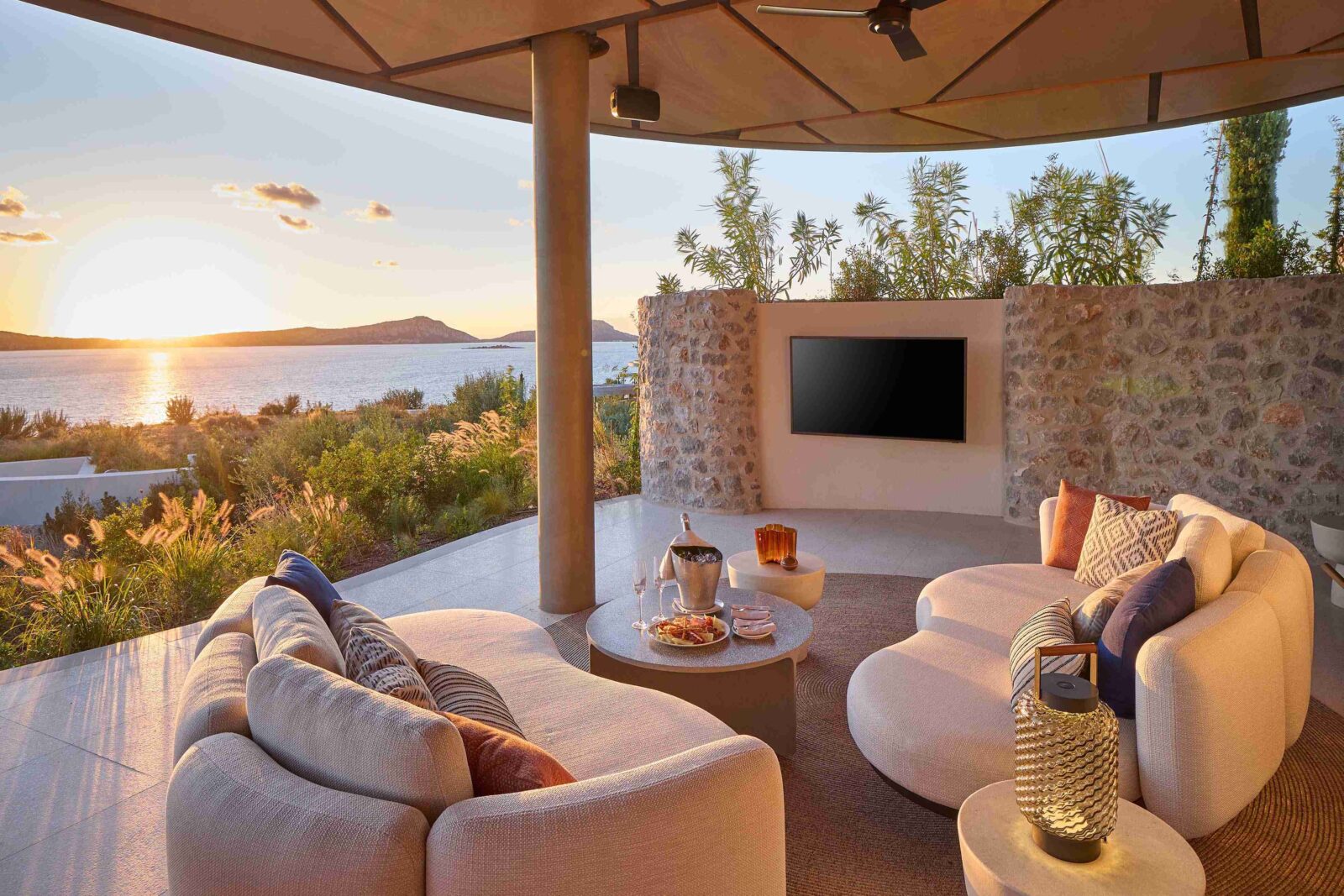
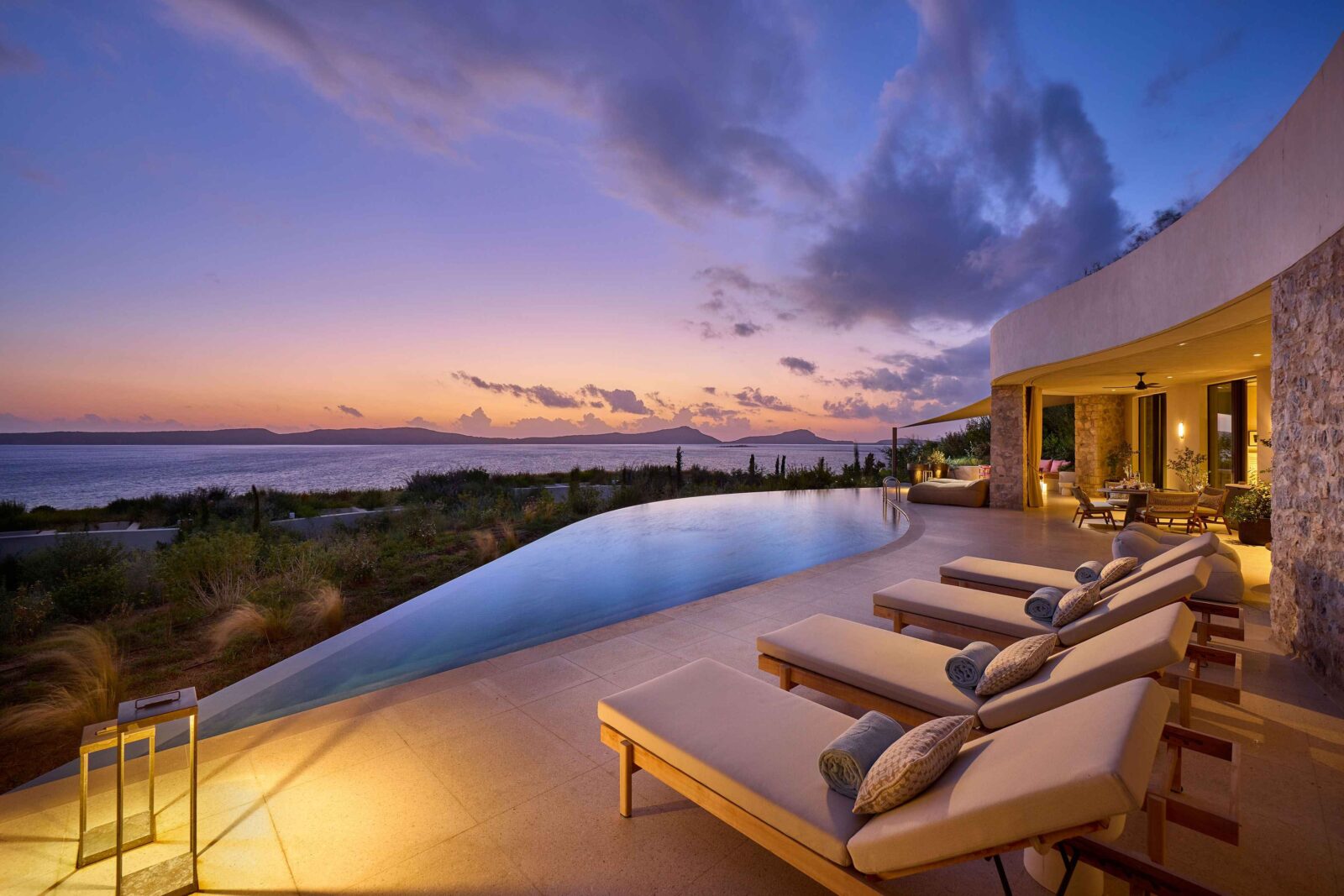
Set above the Bay of Navarino in Messinia, the Mandarin Oriental Costa Navarino opened in 2023, having won the “Architectural Design and Landscape Design” category. Designed by Tombazis & Associates Architects and K-Studio, with schematic landscape design by Coopers Hill Limited, the resort sits on a sloping coastal site of historical and ecological weight, overlooking strikingly blue waters. Olive trees, cypress and native Mediterranean vegetation help set the mood, allowing guests to completely immerse themselves in the character of this part of Greece.
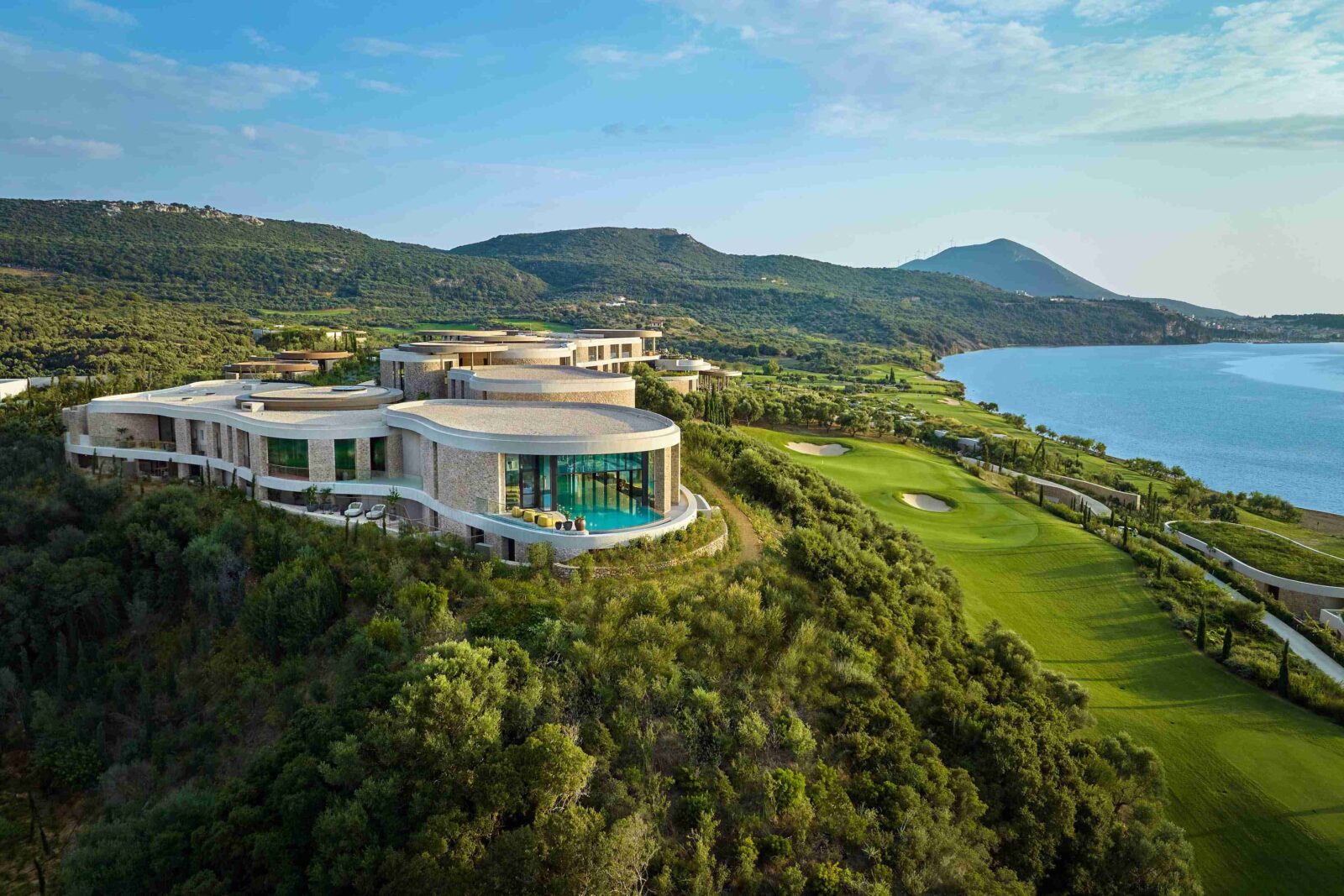
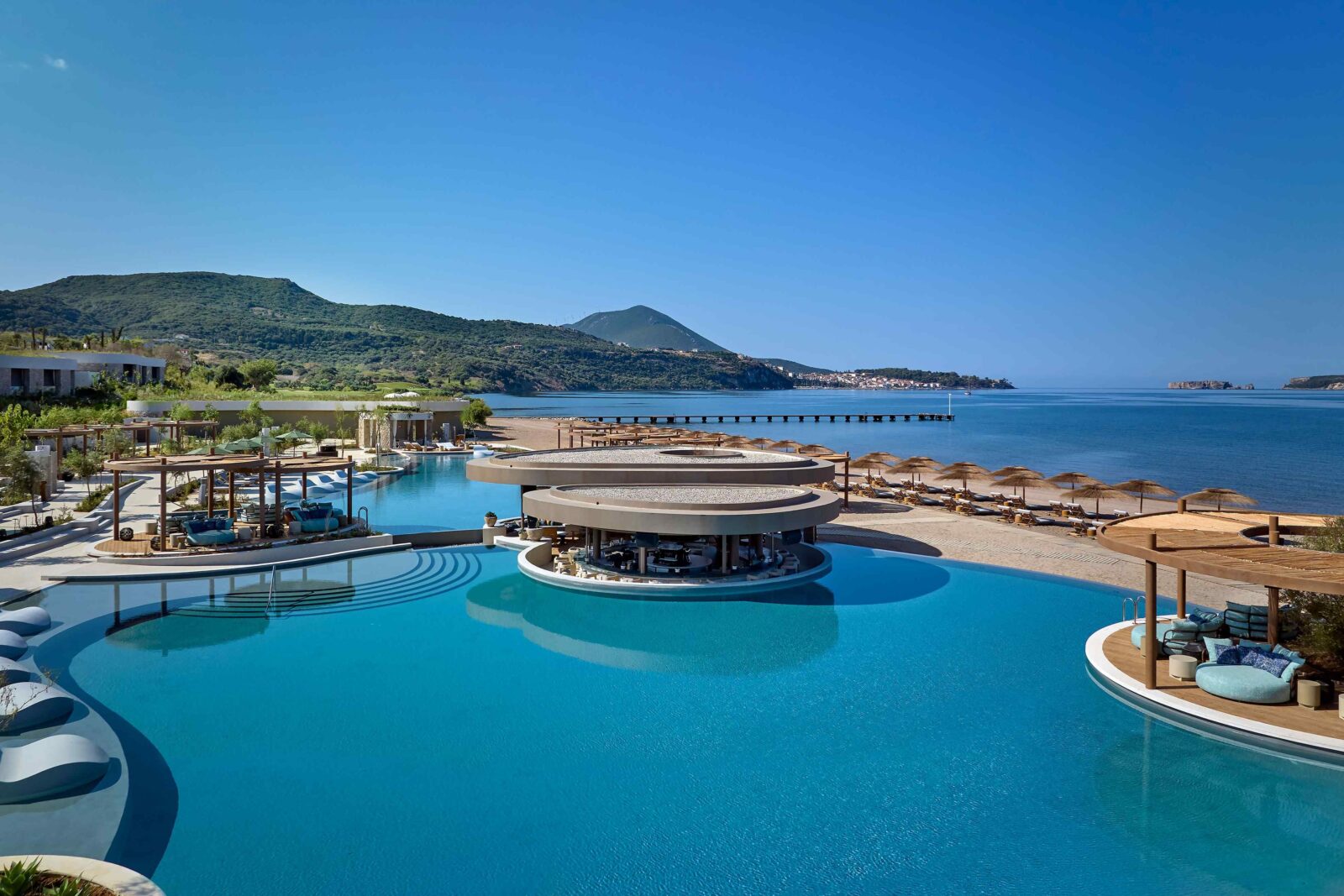
The main characteristic of the design is a decentralised layout based on the Greek rural mandria, which effectively means that 48 bedrooms are scattered across the hillside. Privacy, then, is achieved through the distance between the bedrooms and the connection to the hillside, where they are not embedded into the earth itself. Due to this layout, paths are open to the air and guide guests through lush terraces, shaded areas and outdoor rooms with striking views. Inside, stone and terrazzo are complemented by Mediterranean tones and a minimalist aesthetic. The interiors open onto shaded outdoor spaces, with verandas, poolside areas and covered seating extending the rooms past their walls.
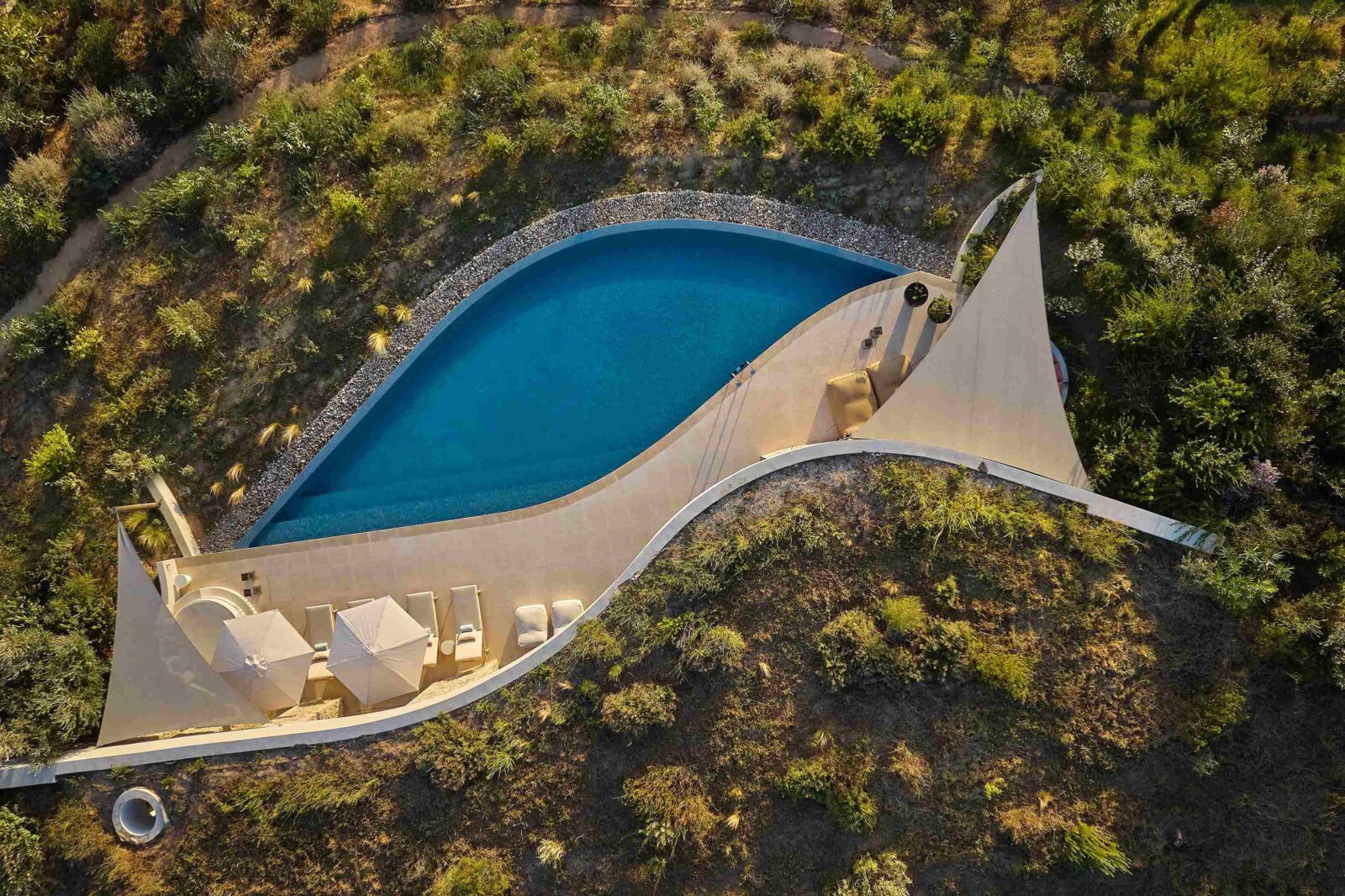
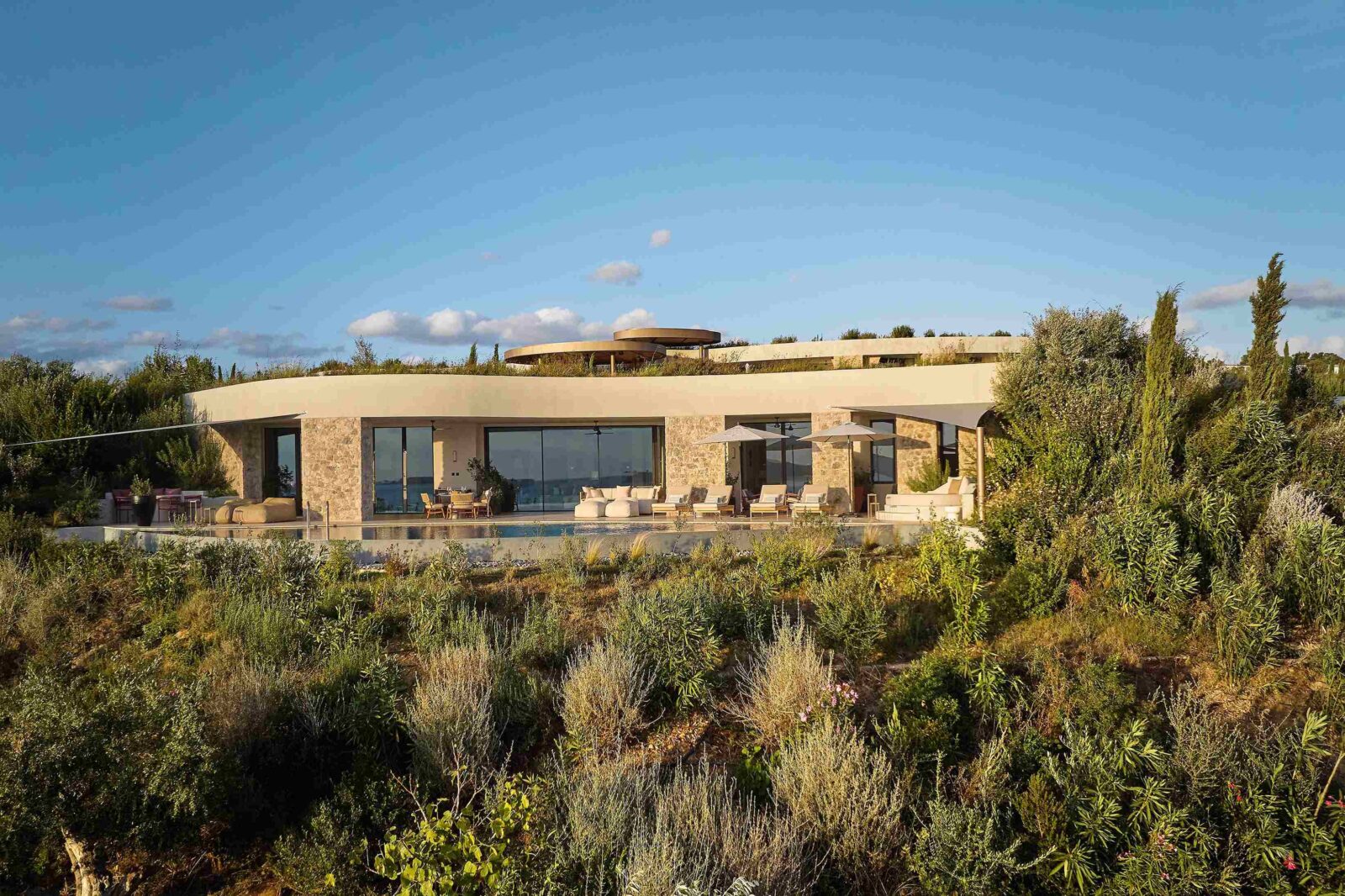
The environmental strategy is centred around the open layout (which allows for an efficient use of energy due to the coolness brought in by the breeze), the use of local materials and the choice of planting, which, as it is local, needs less water. With the advantage of looking incredibly beautiful, olive and cypress trees were combined with lavender, rosemary, thyme and other native species already familiar to the area, covering the resort with amazing smells that make for the perfect wellness experience once inside the pool.
Asia
Shebara Resort
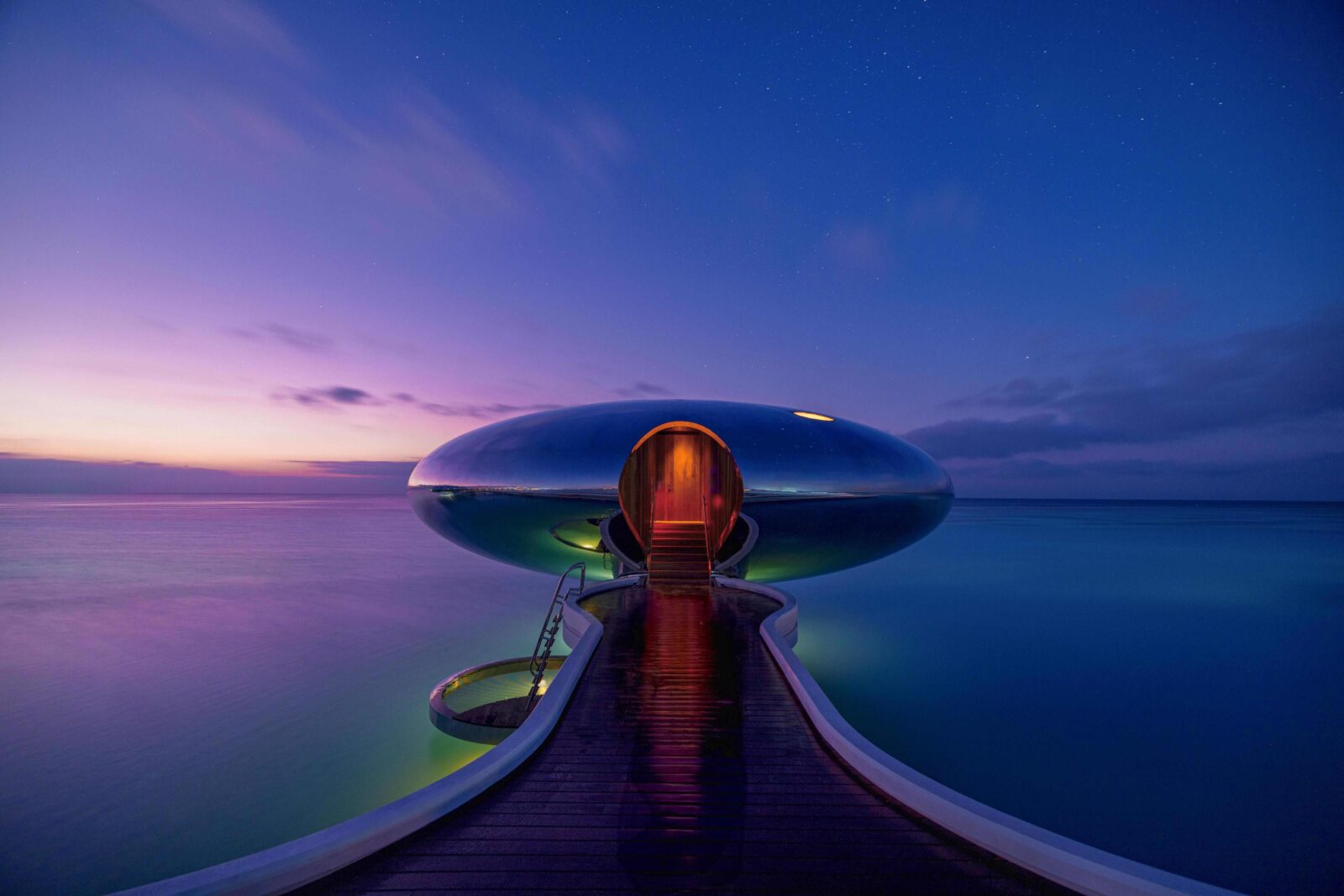
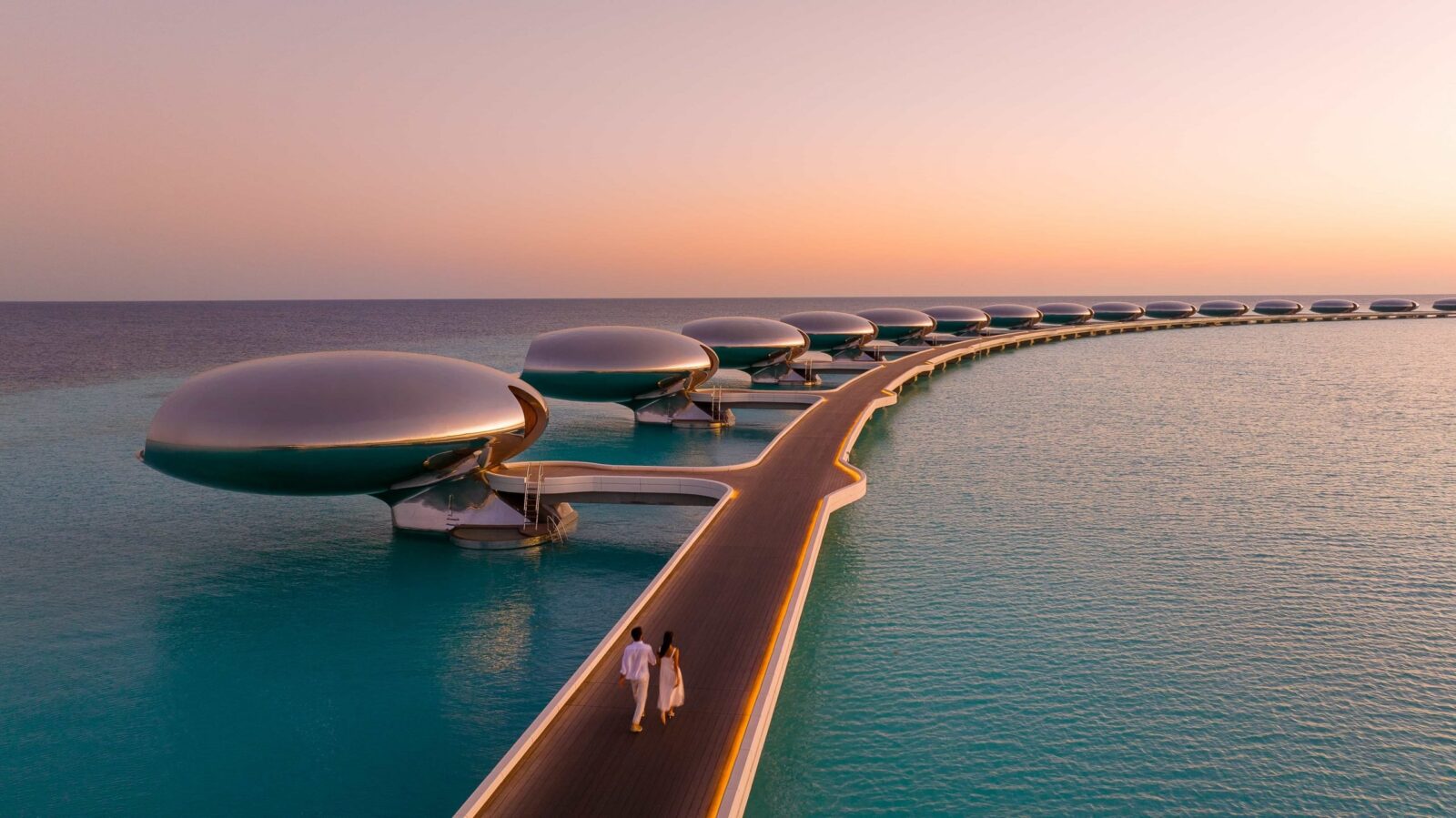
On Sheybarah Island in Saudi Arabia’s Red Sea archipelago, Shebara Resort is a 73-room resort surrounded by turquoise water, coral reefs, turtle nests, mangroves and desert plants. Designed by Killa Design for Red Sea Global, access to the resort can only be made by seaplane or private boat, which makes this one of the most private resorts on the list. The resort includes villas that seem to float above the water, beach accommodation, a spa, dining spaces and several pools, having won the “Architectural Design Resort – Luxury” category.
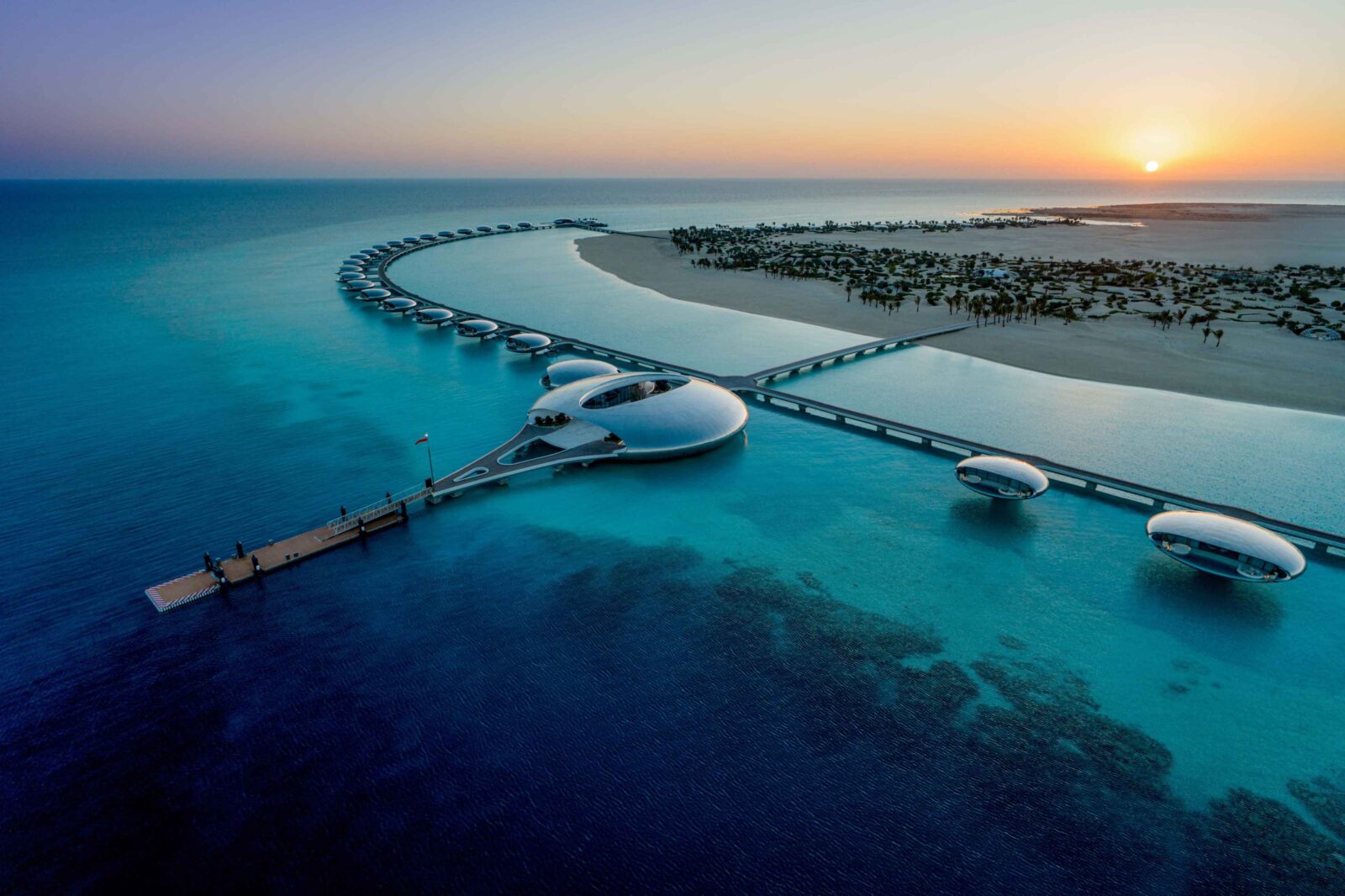
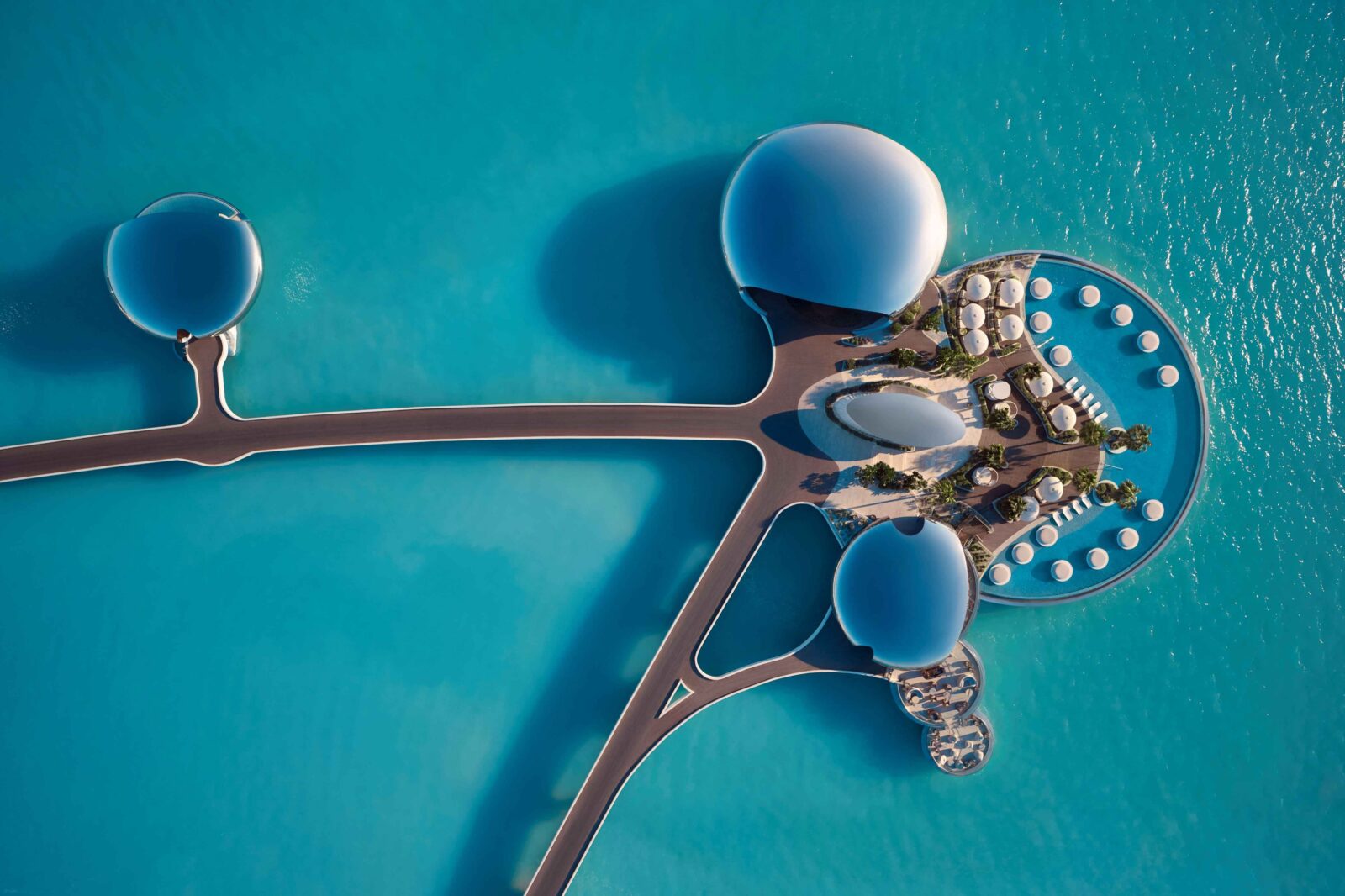
The architecture was inspired by the form and finish of pearls, an idea that can clearly be found in the stainless-steel overwater villas. Their curved, reflective surfaces catch the light and stand out against the sea, but the buildings are spaced carefully so they do not crowd the shoreline or disturb the water below. The beach villas bring the architectural style onto the island, with Studio Paolo Ferrari’s interiors following the same direction.
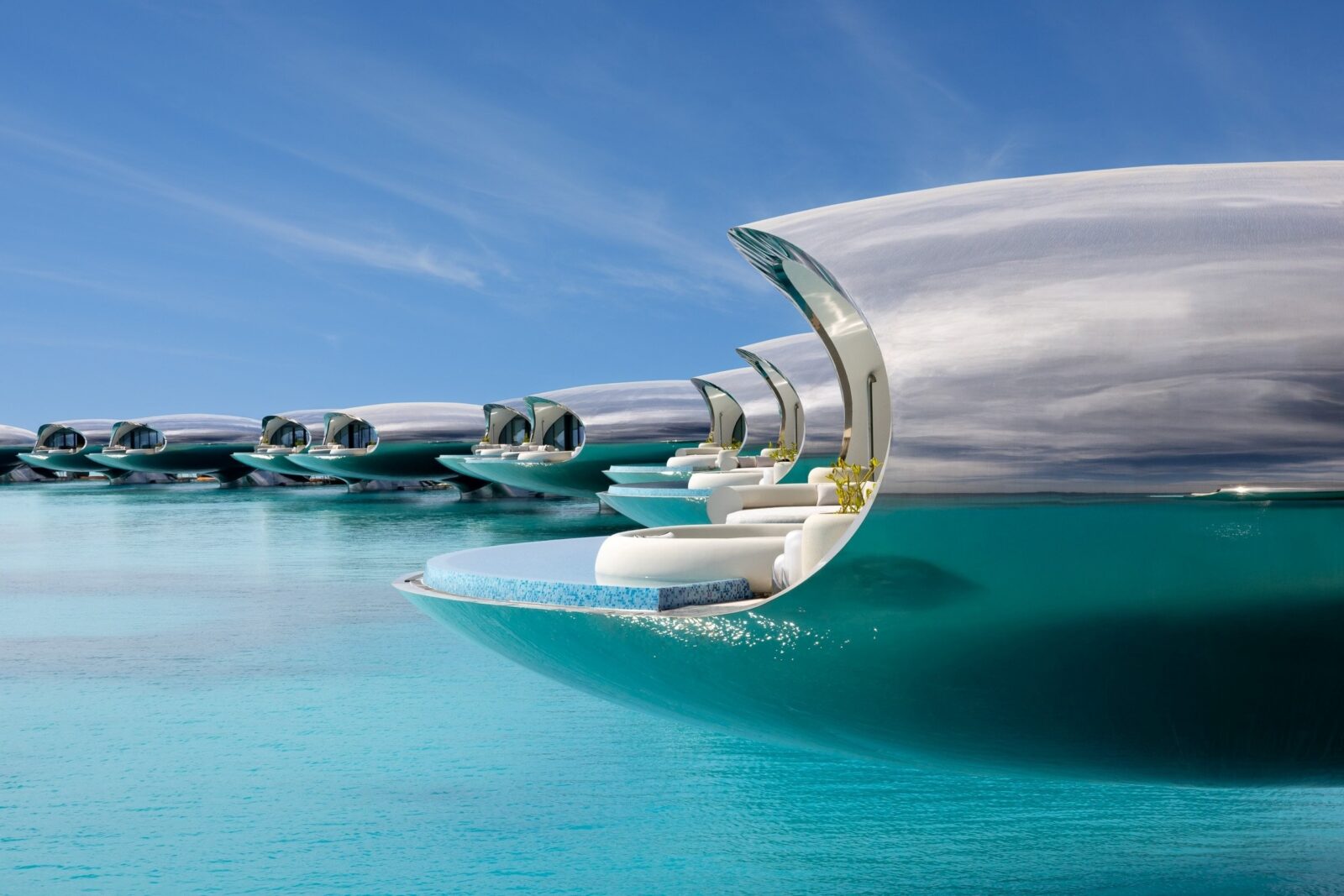
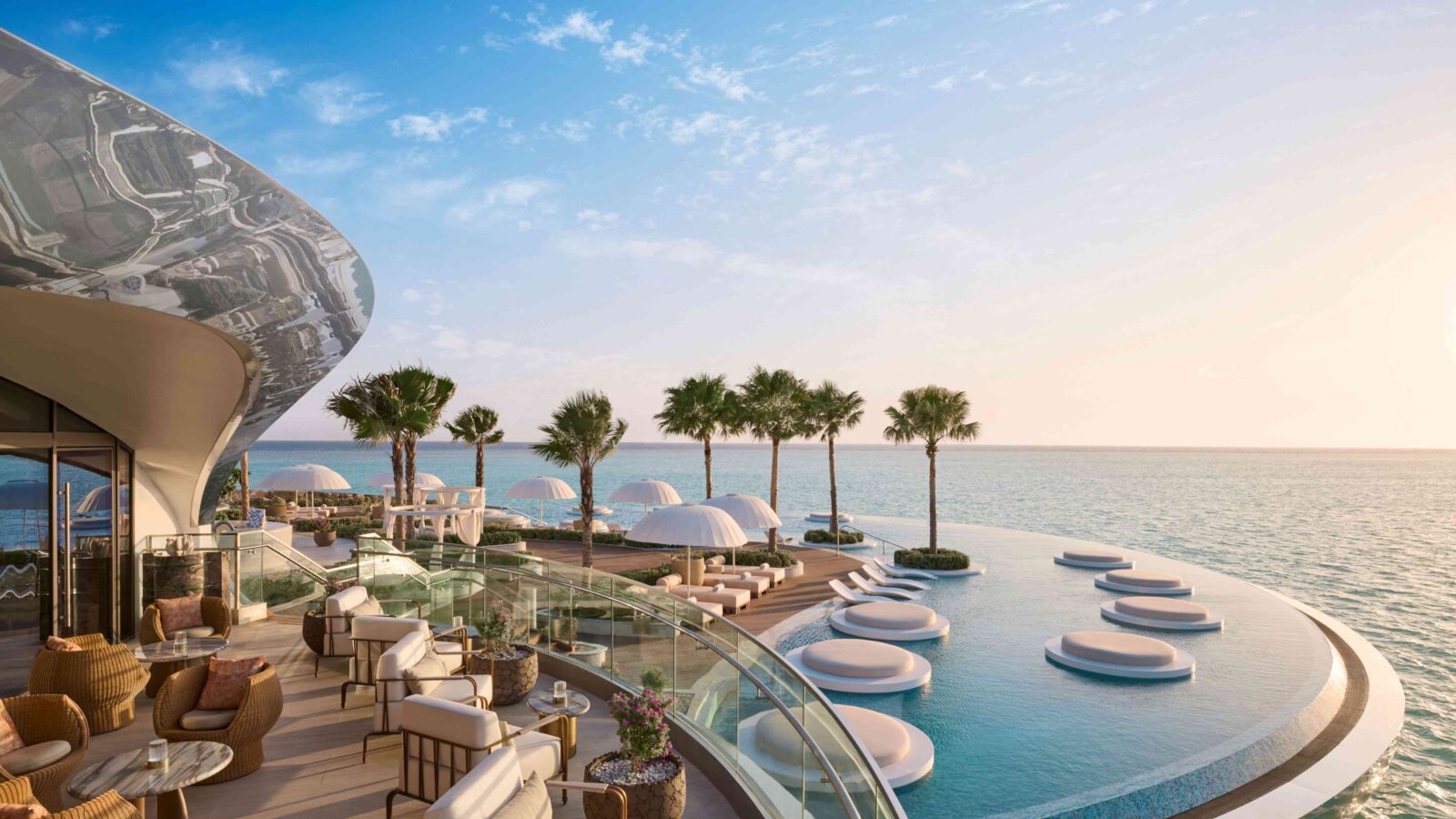
The resort runs off-grid through a solar microgrid, makes its own water through solar-powered desalination and recycles waste on site. Electric vehicles are used across the property for transportation, and the overwater villas are positioned carefully to avoid damaging the reef and other sensitive marine areas. The project is also connected to coral gardening as part of a wider reef restoration programme.
Hermit Resort
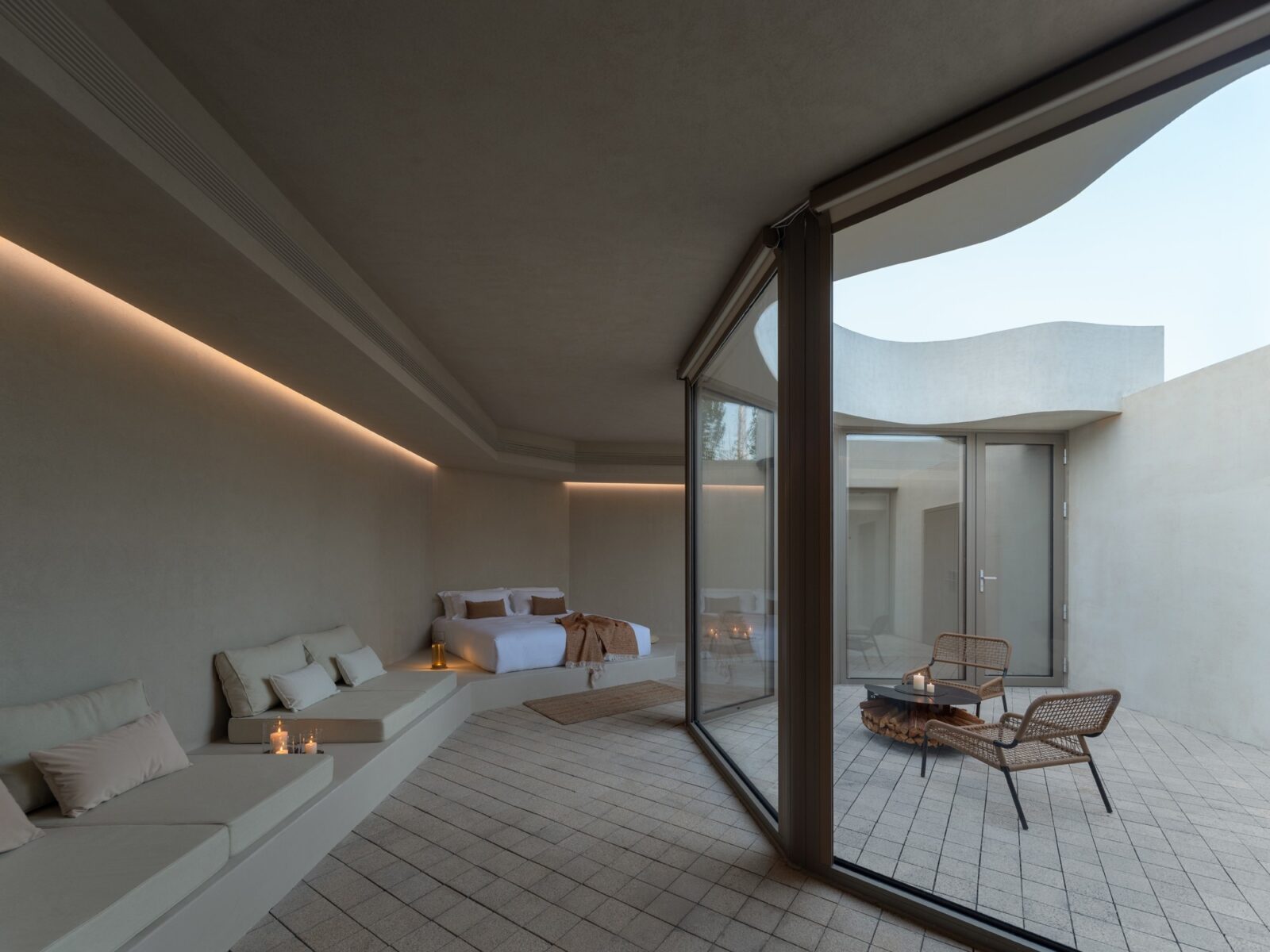
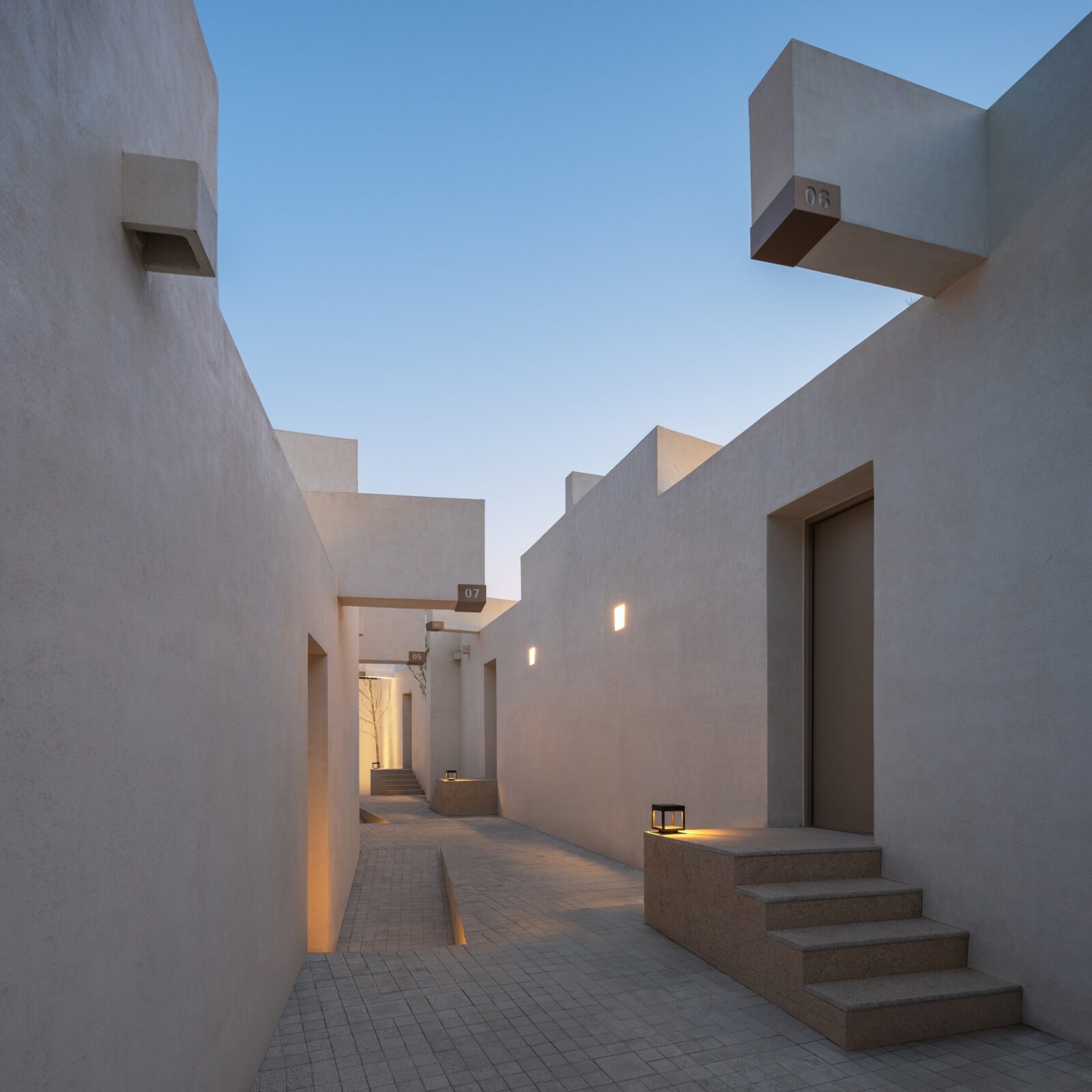
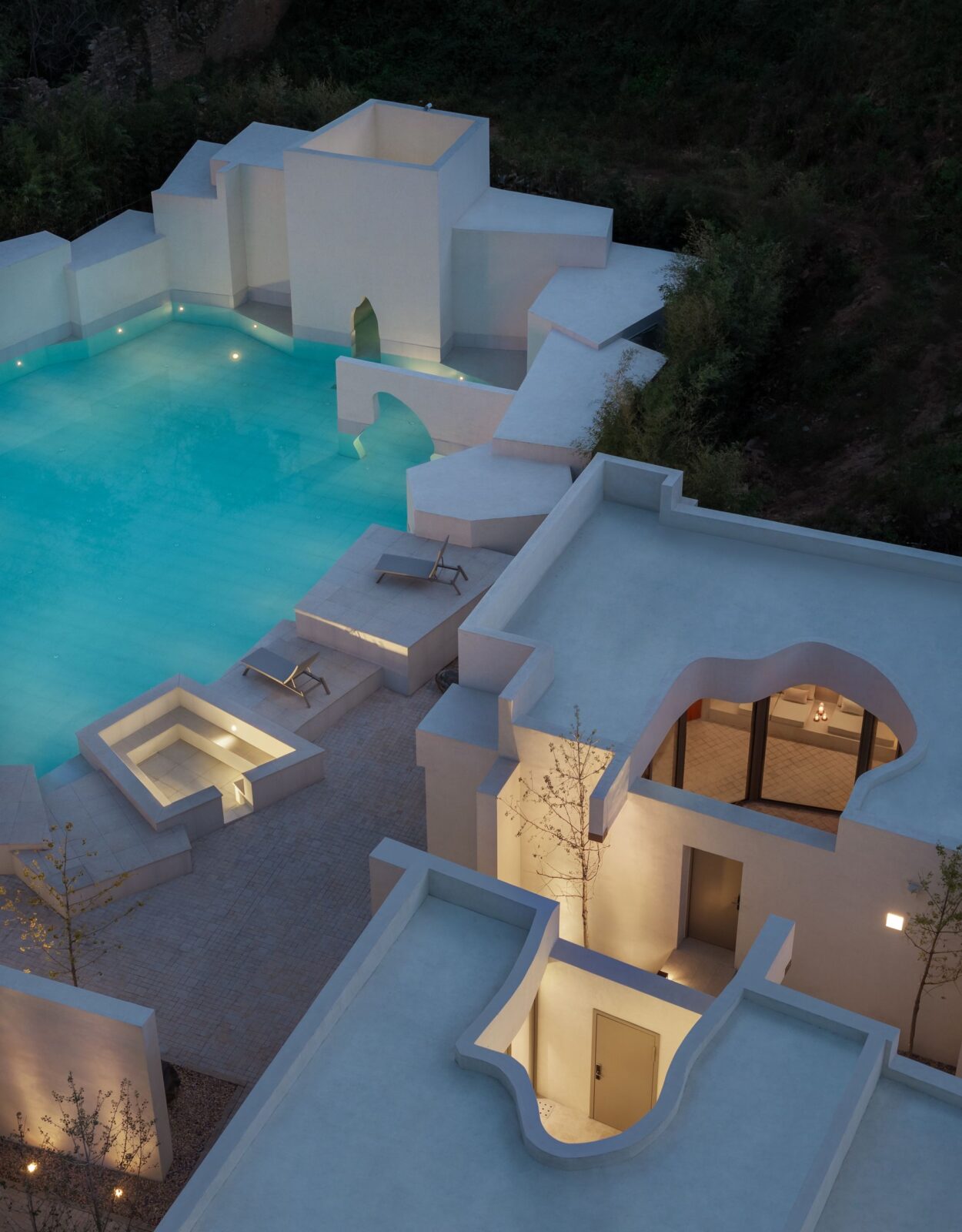
In Hebei, China, near the Xing Kiln Ruins and on the remains of a relocated village, Hermit Resort was completed in its first phase in 2025 and is the winner of the “Architectural Design Asia” category. Designed by Domain Architects under Xu Xiaomeng, alongside Hannah Wang, the project pays homage to a landscape where elements of earlier settlements and archaeological traces dominate. Rather than pursuing a polished or highly finished appearance, the designers used broken forms, enclosed spaces and a rough architectural style to give the place its character.
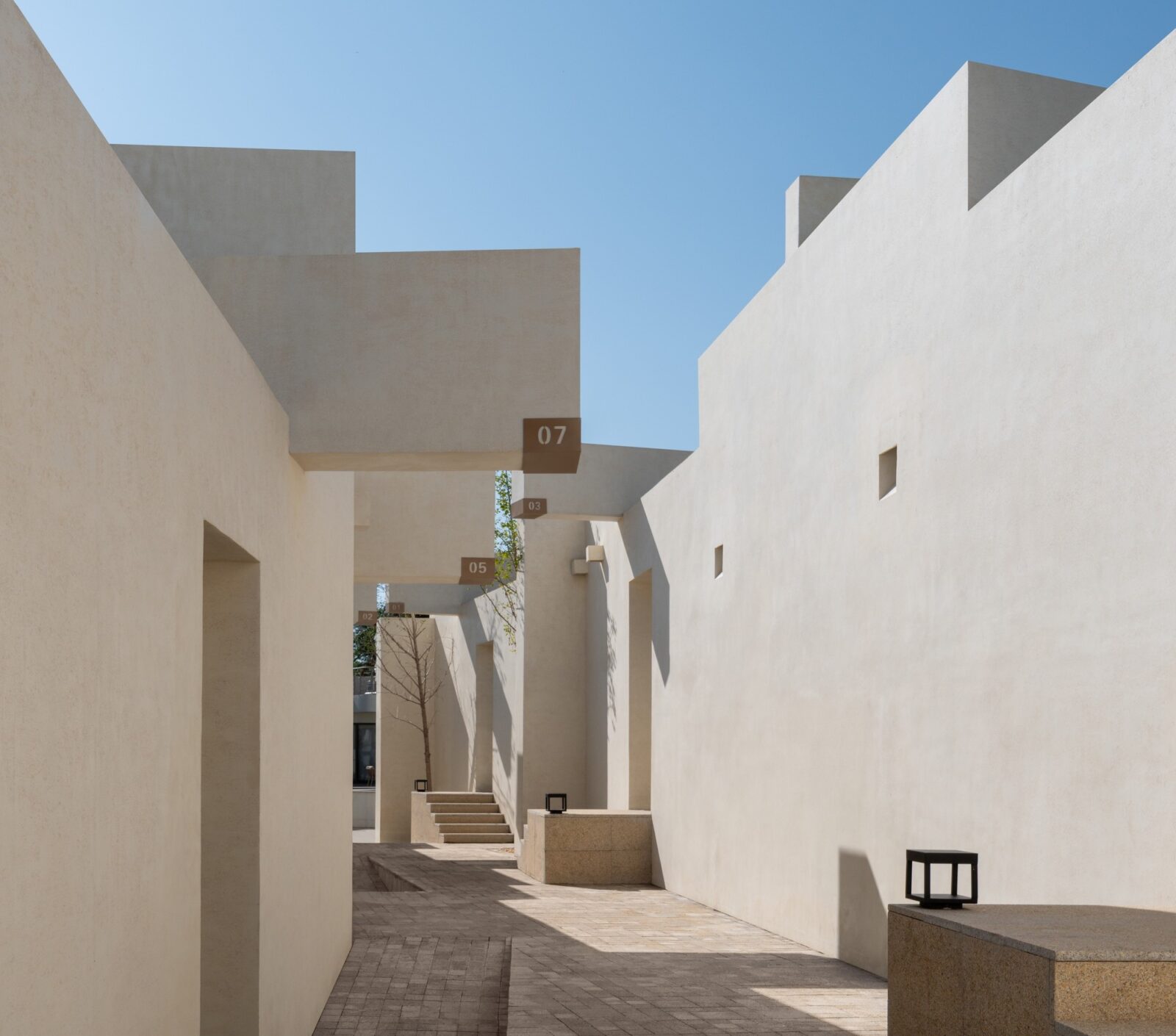
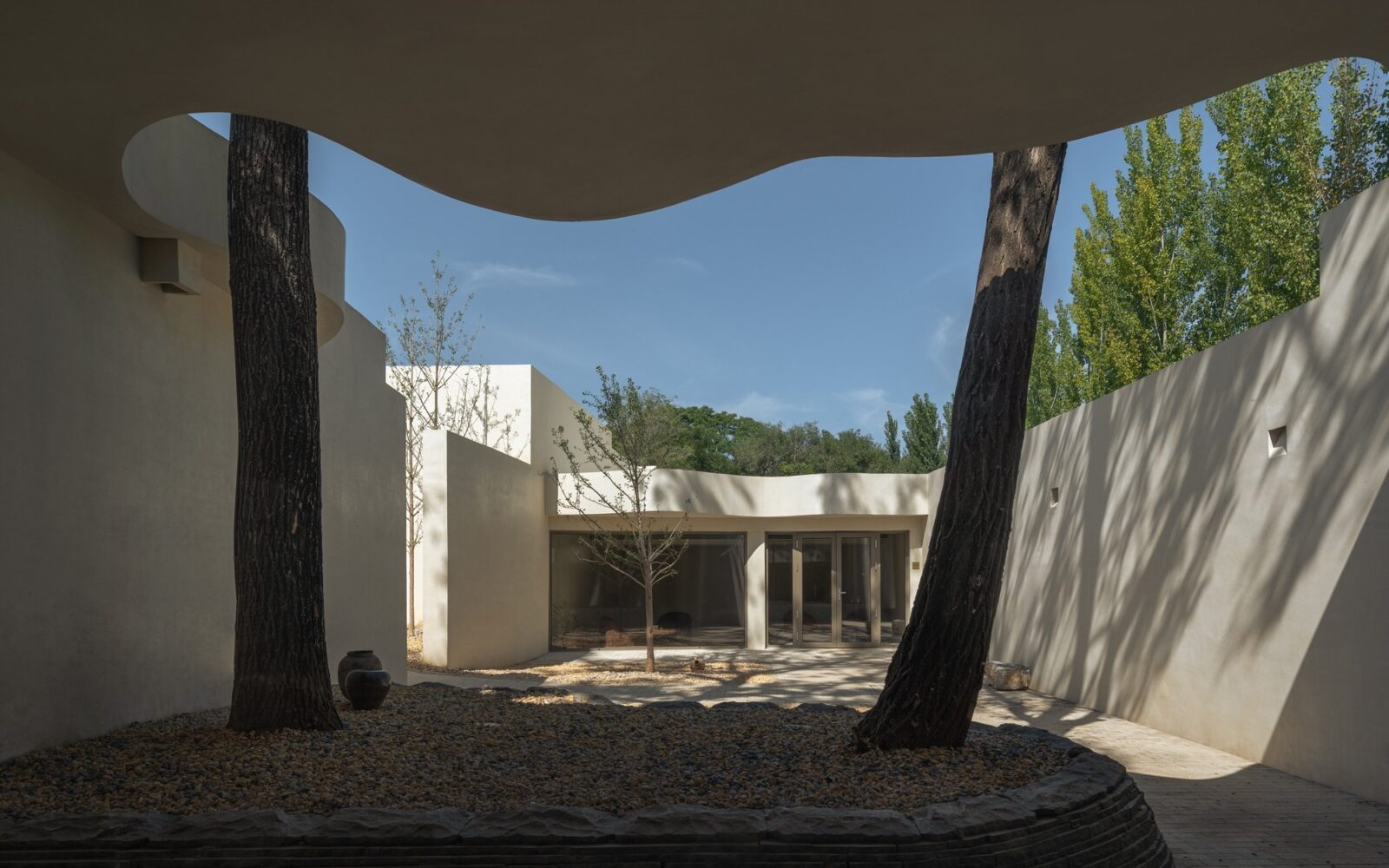
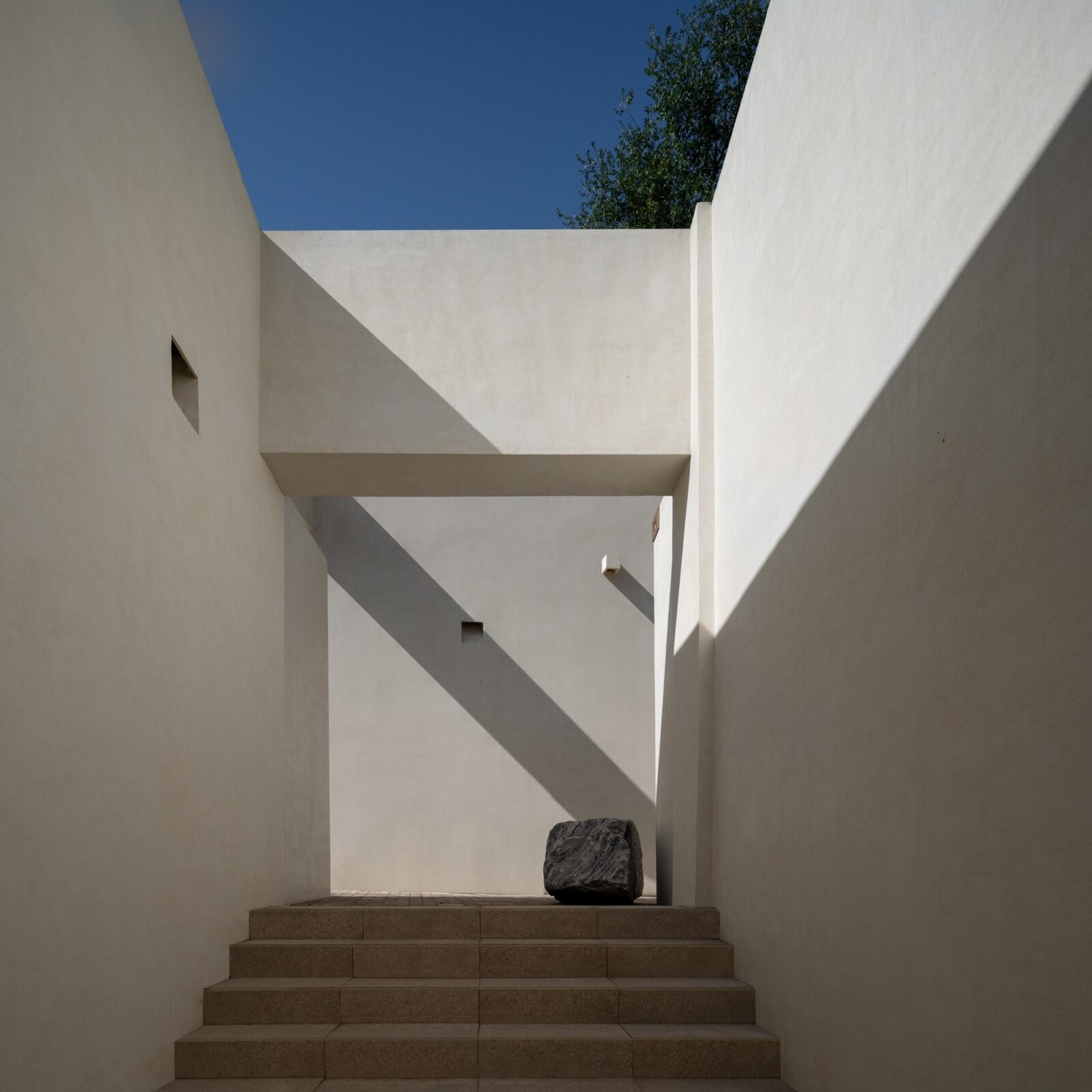
The resort is made up of small, single-storey buildings arranged like a loose mountain settlement. Their layout is also inspired by the Xing Kiln Ruins, where chambers are shaped like a horseshoe and circle a small courtyard. That same idea appears in the guest rooms, which partly wrap around outdoor courts. Walls, beams, alleys and courtyards slip into each other as paths widen into open areas, enclosed rooms open straight onto the courts and the whole layout feels connected. With the first phase now built and in use, the resort brings together the memory of the kilns, the remains of the nearby village and the practical needs of a luxury hotel.
Tampak Siring Resort
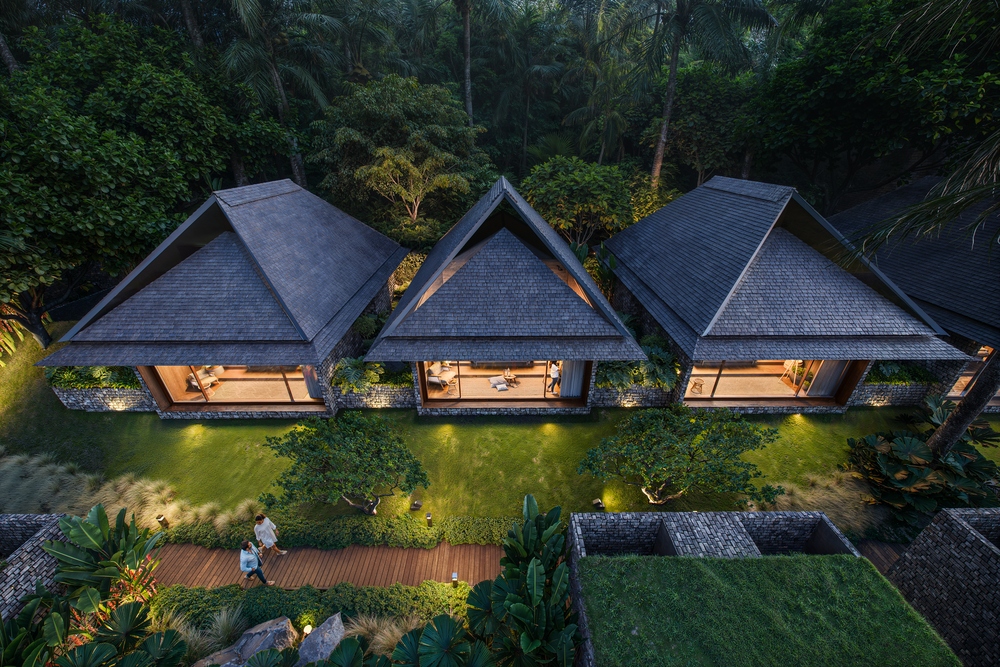
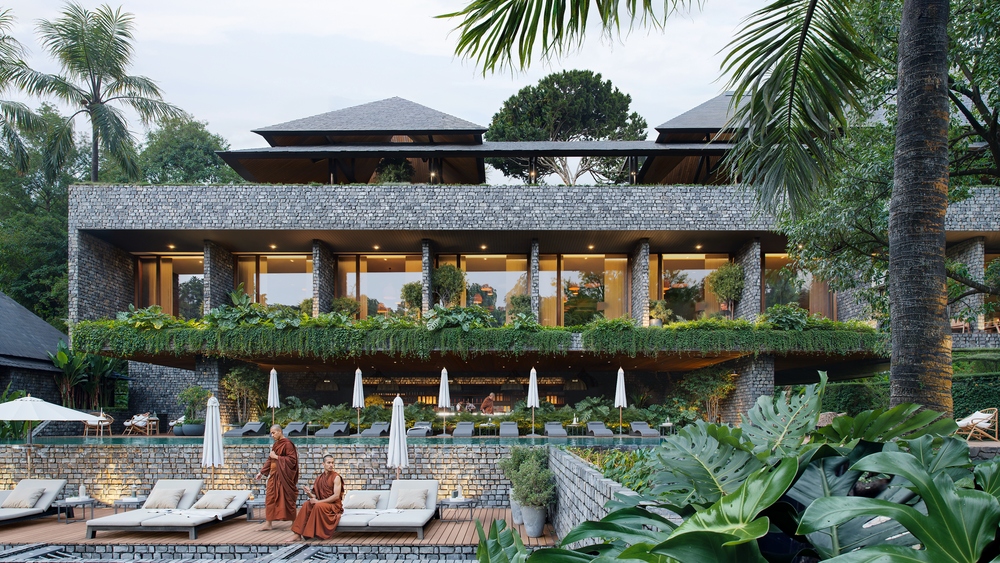
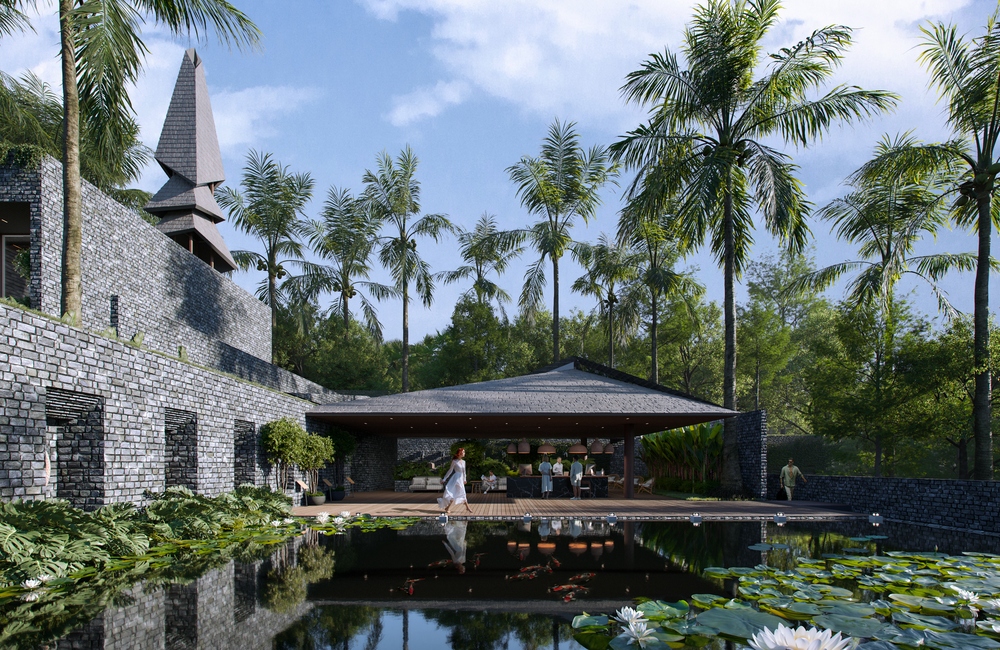
In Gianyar, Tampak Siring Resort is the winner of the “Architectural Design Resort – Luxury” category, having been developed by Nexa and designed by Andra Matin for Aumana. The resort is set to open its doors in 2028 and will include private villas, hotel suites, restaurants, wellness areas and shared spaces. Throughout the design process, the designers have carefully attempted to connect each detail with the natural setting: buildings open towards gardens, take in wide views and offer a sense of retreat across the property.
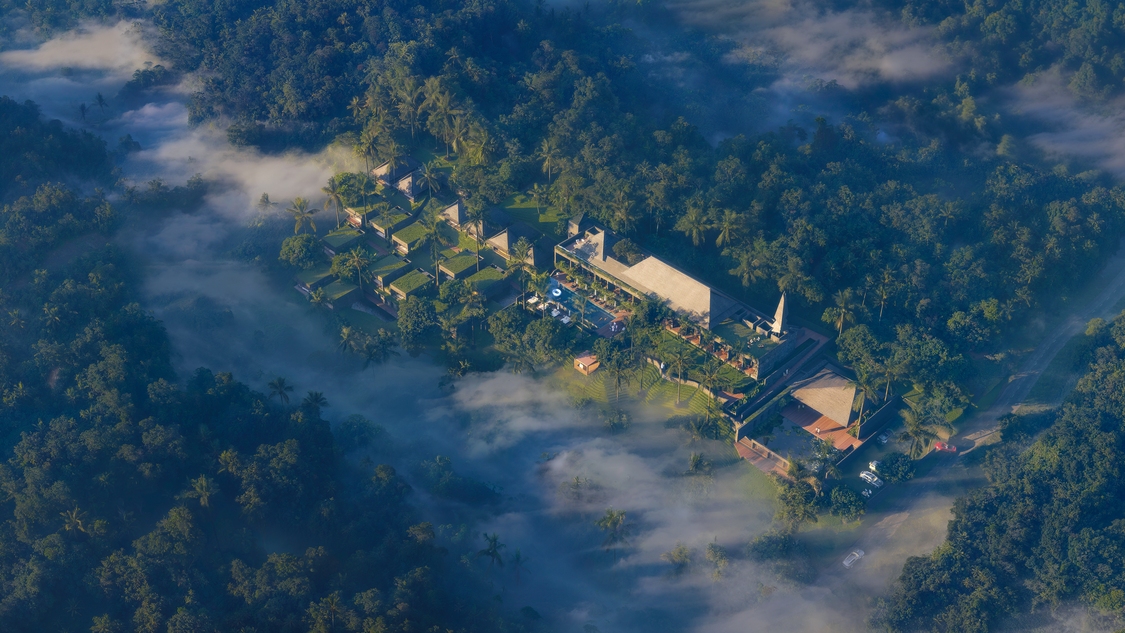
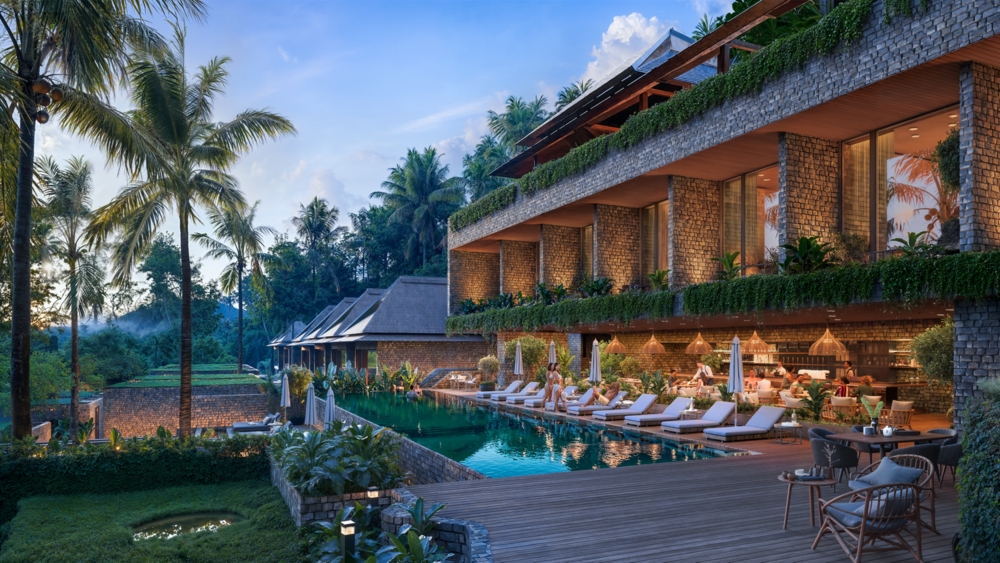
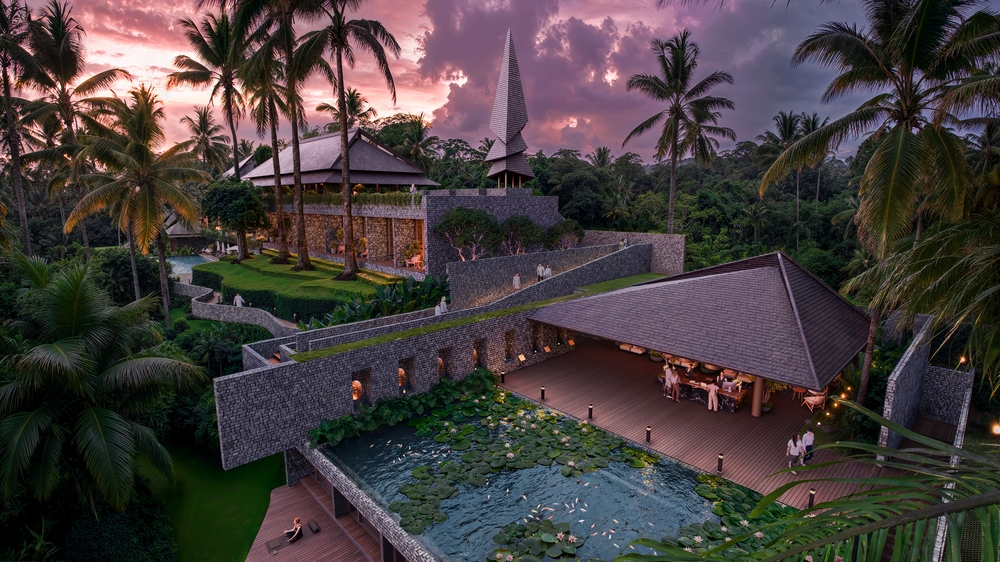
The architecture follows Andra Matin’s usual interest in openness, climate and local setting. Here, that appears in buildings designed for airflow and direct contact with the surrounding landscape, which fosters a comfortable dichotomy between privacy and openness.
Dangkou Ancient Town Hotel Wuxi, MGallery Collection
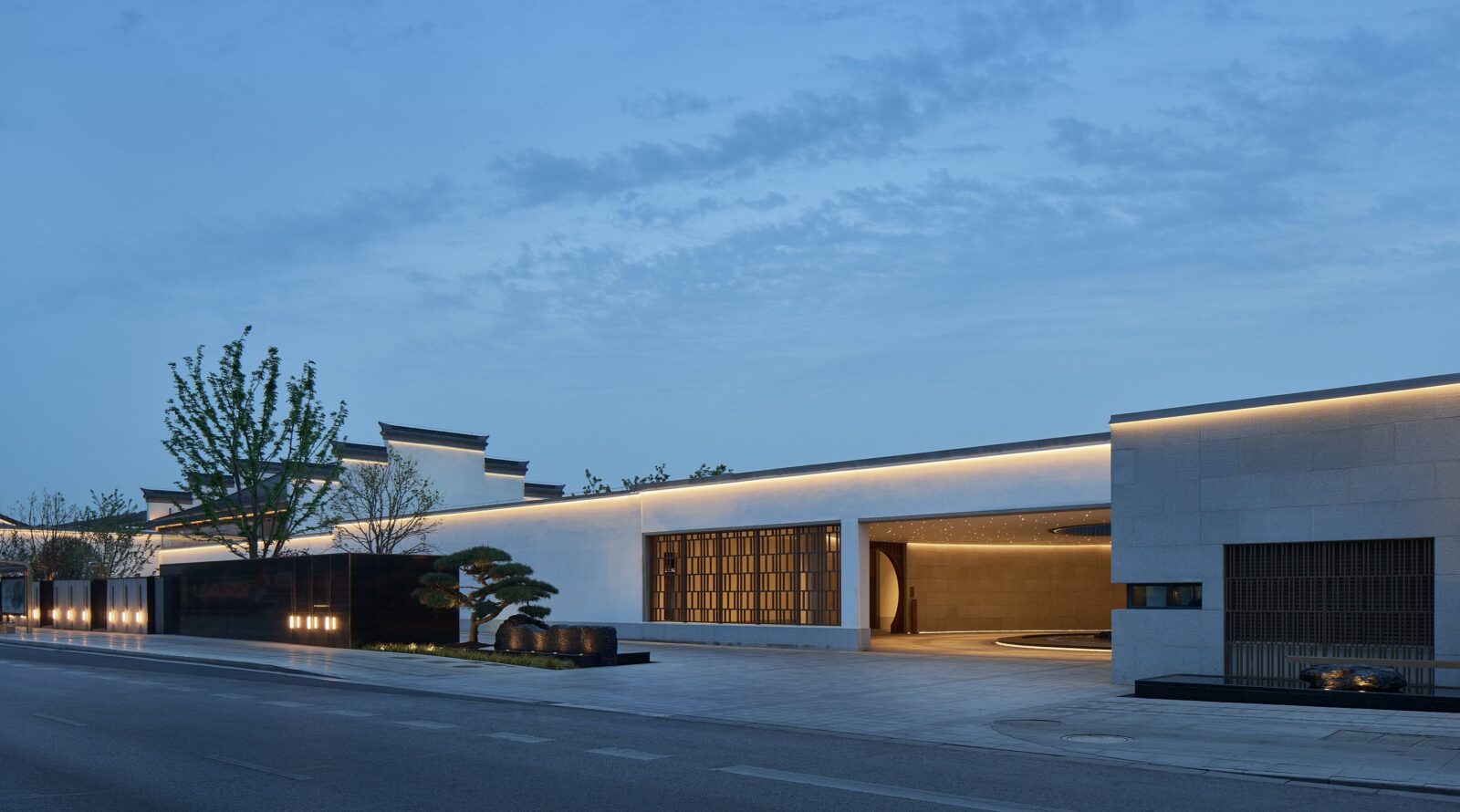
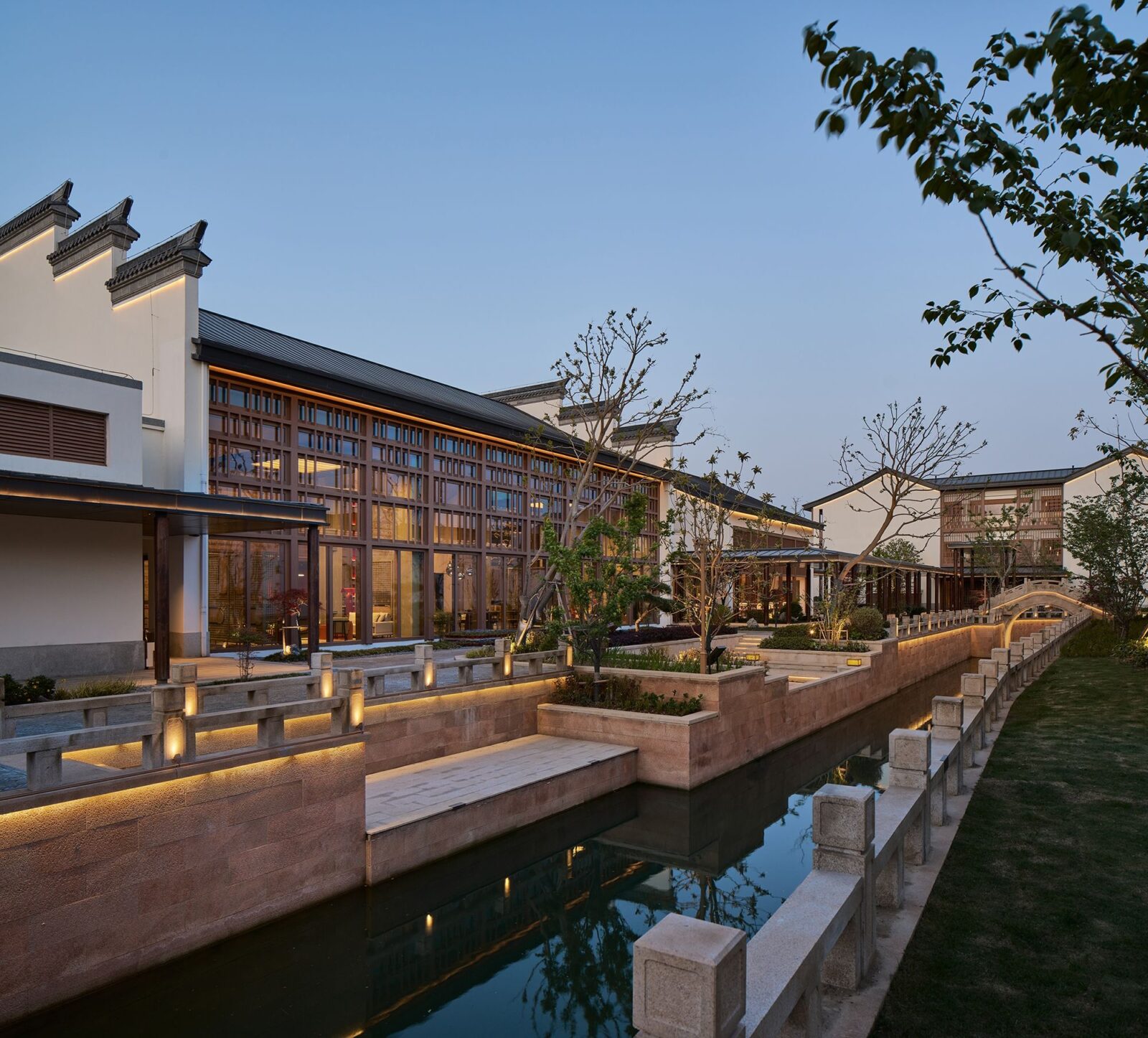
In Dangkou Ancient Town in Wuxi, China, the Dangkou Ancient Town Hotel Wuxi, MGallery Collection, stands out as the winner in the “Architectural Design Asia” category. Designed by WATG, with interiors by Wimberly Interiors, the hotel is surrounded by the calm, canal-filled historic Jiangnan town, where stone moon bridges and narrow canals make it the Venice of China. The hotel is deeply inspired by this old town, using its scale, materials and layout to form a unique contemporary character.
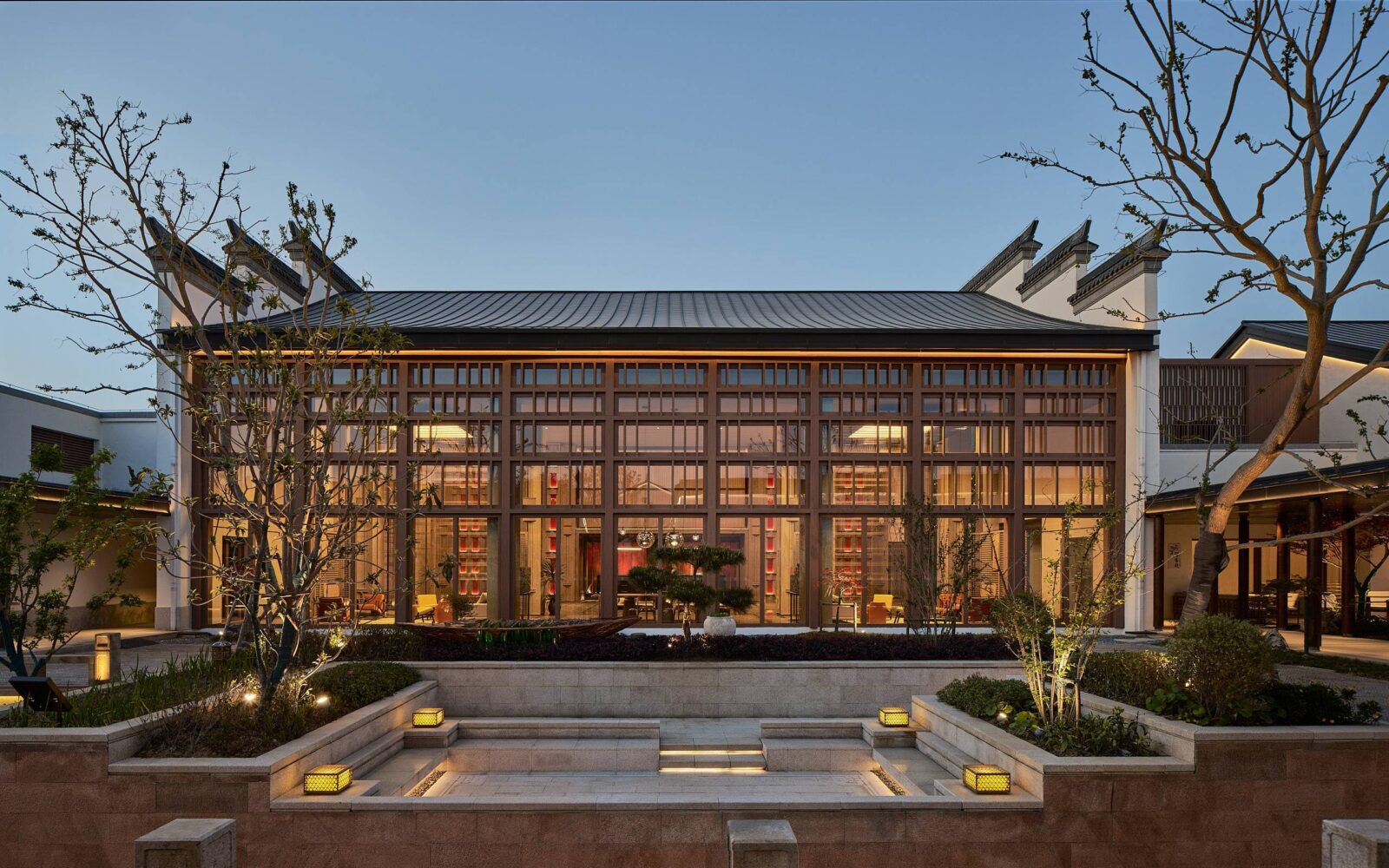
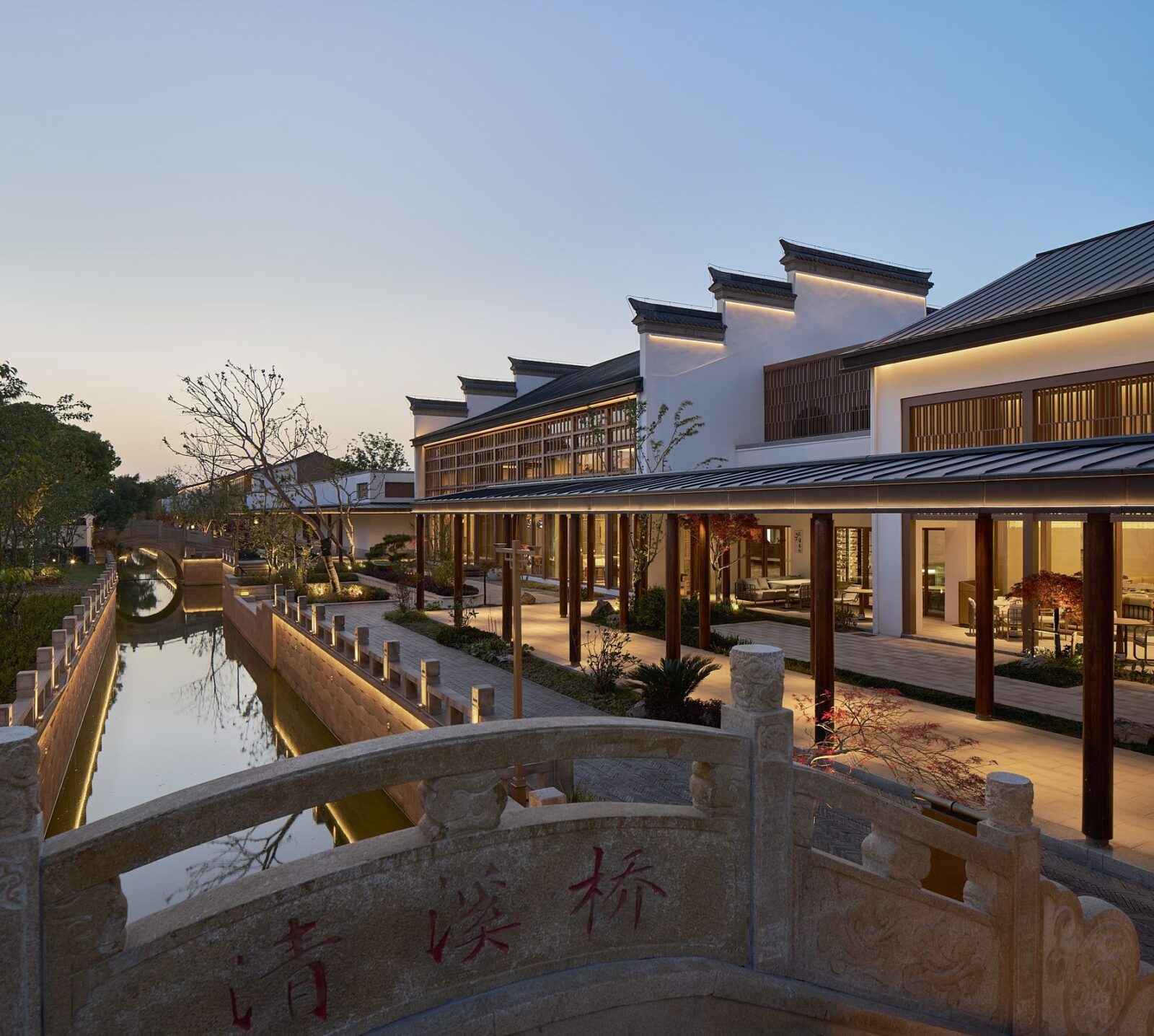
The architectural style comes from the traditional Jiangnan buildings seen around town, especially their layered spaces. Such a layout creates a sense of progression, which is complemented by the use of water as a divider and decorative element. Perhaps the most celebrated water element of the hotel is a small pool by the entrance, marking the guests’ arrival and welcoming them into the old canal town.
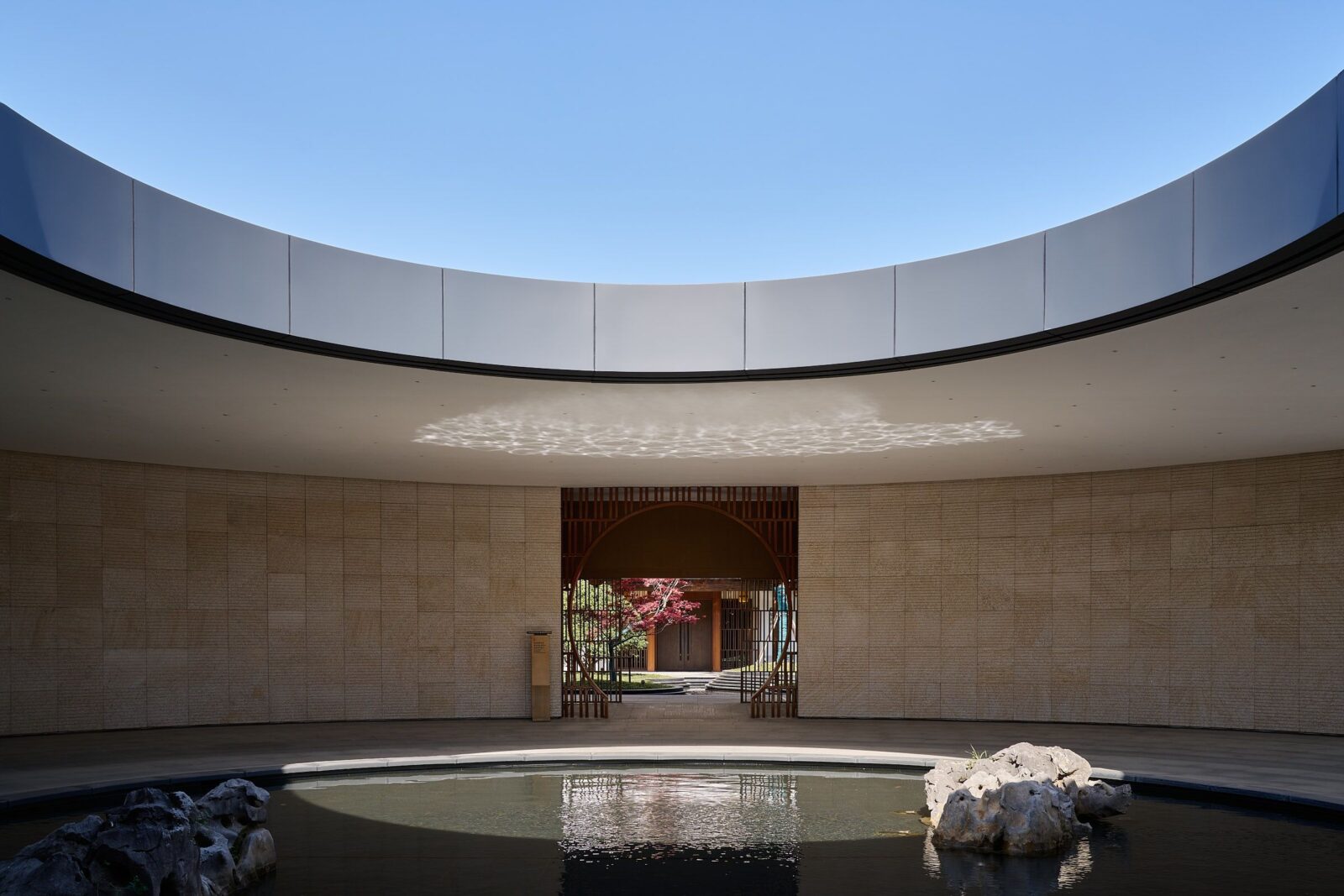
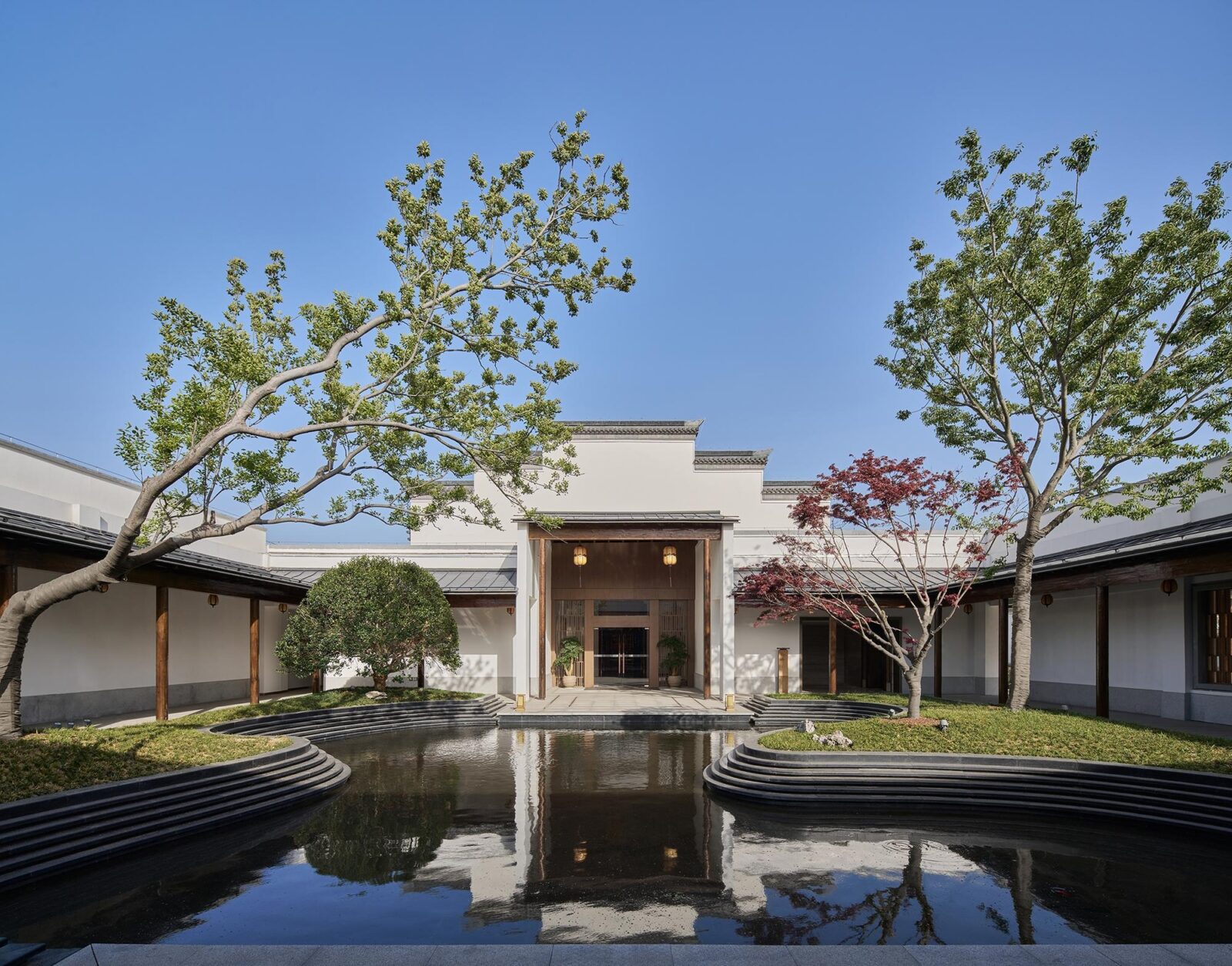
Inside, the designers from Wimberly Interiors linked the decoration, colour and materials to the region’s cultural history. The legacy of Hua Tai Shi can be found in the library, teahouse, art pavilions and cultural halls, giving the interior a more civic and scholarly character than what is normally seen in standard resorts.
America
Karma Candi Dasa
On Bali’s eastern coast, with Mount Agung on one side and the sea on the other, Karma Candi Dasa, the winner in the “Architectural Design Resort – Luxury” category, was designed by Patterns for Karma Group. The resort was created as a coastal retreat shaped by the natural topography of the land, a vision that was part of the designers’ minds in all parts of the project. Finding the perfect site was, therefore, crucial, making nature as much of an actor in the guests’ accommodation experience as the hotel itself.
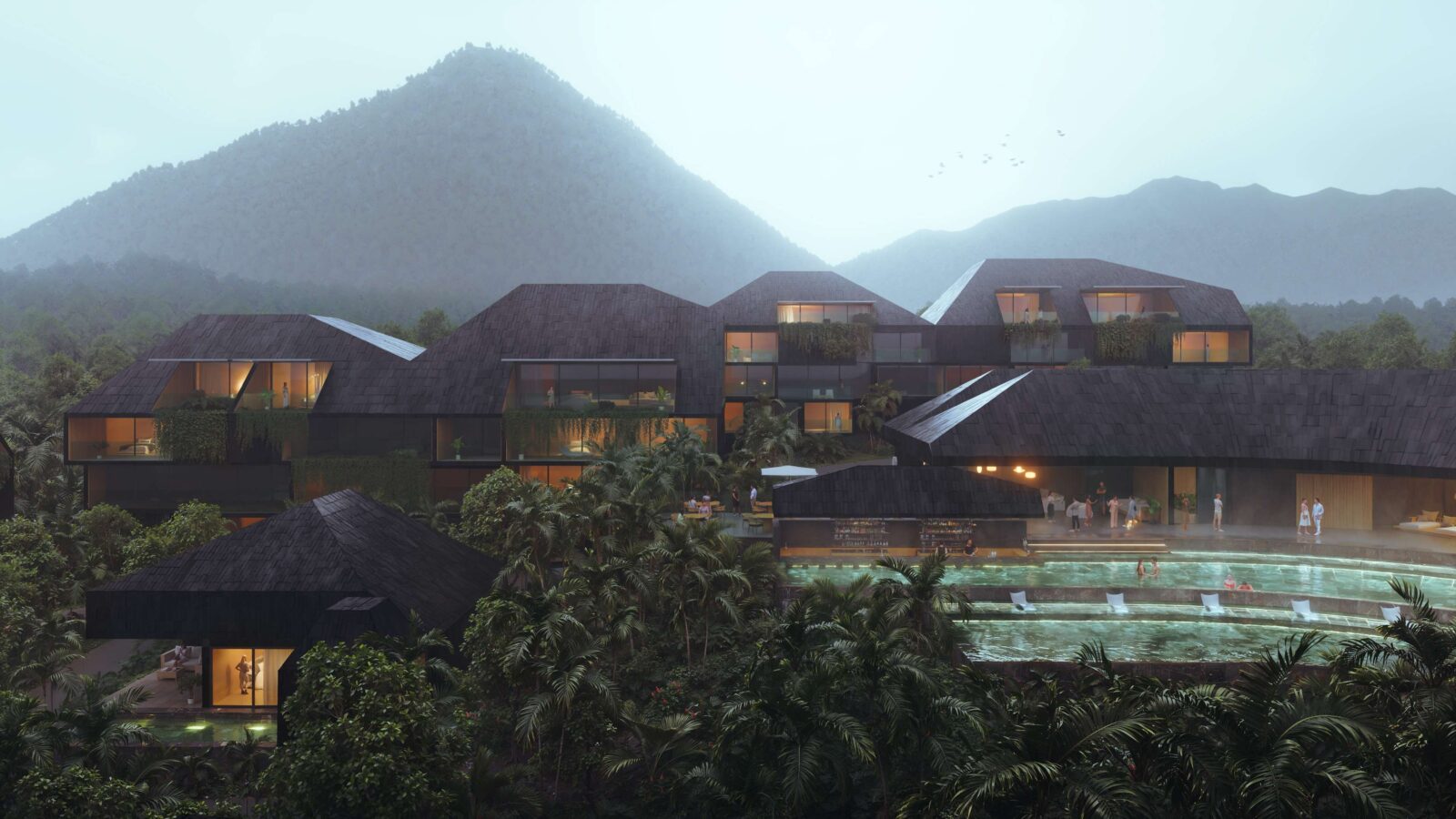
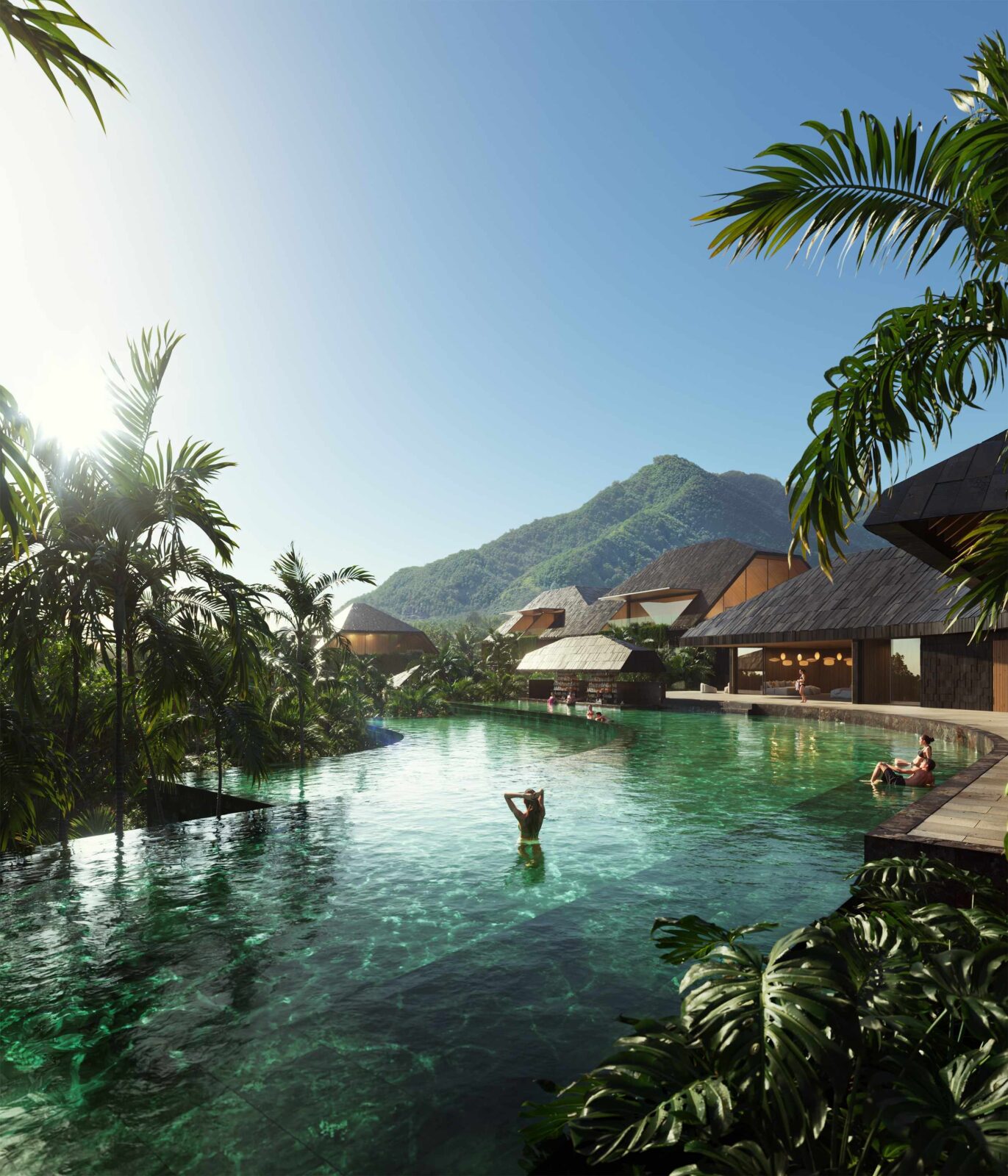
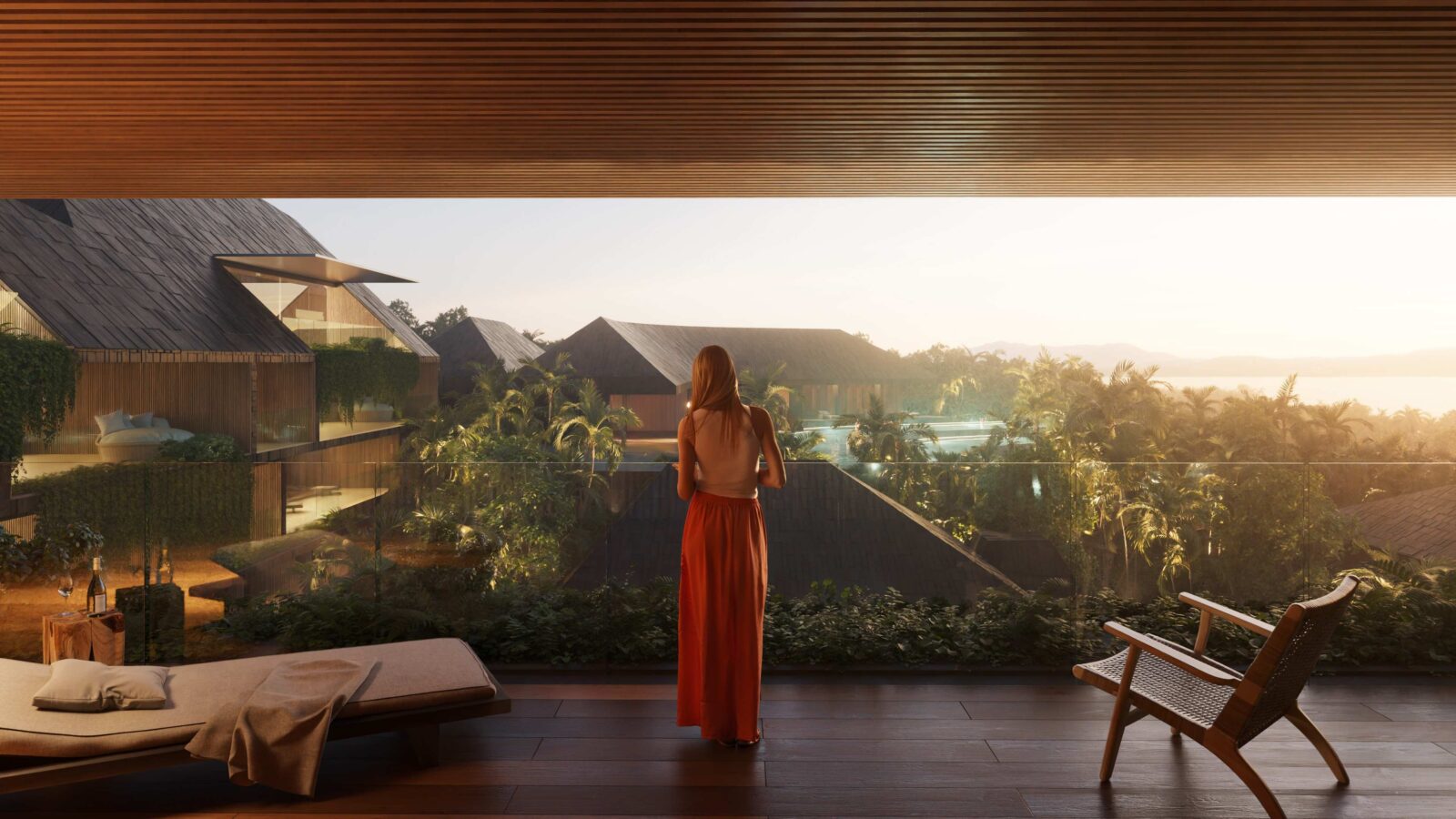
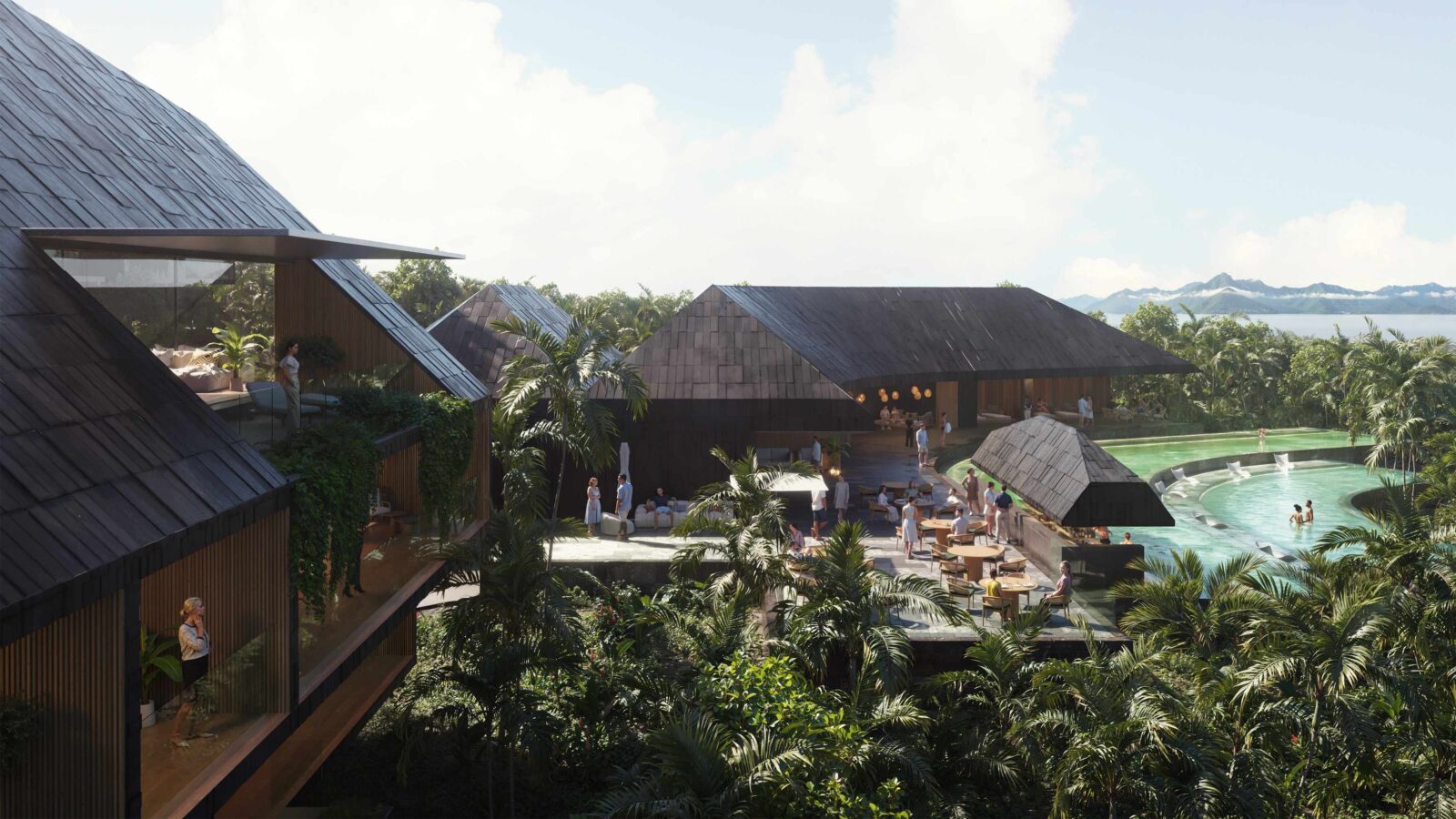
The architecture was inspired by a series of terraced volumes that can be found here and there across Bali’s volcanic landscape. Marcelo Spina and Georgina Huljich, the designers, scattered 60 rooms of studio suites, private villas and penthouses around the site, all with stunning views towards the sea. The main public venues are gathered around a central terraced pool with a swim-up bar, alongside the reception, restaurant and spa. Due to the thoughtful layout, rooms and terraces take in the horizon, while courtyards and gardens introduce moments of enclosure.
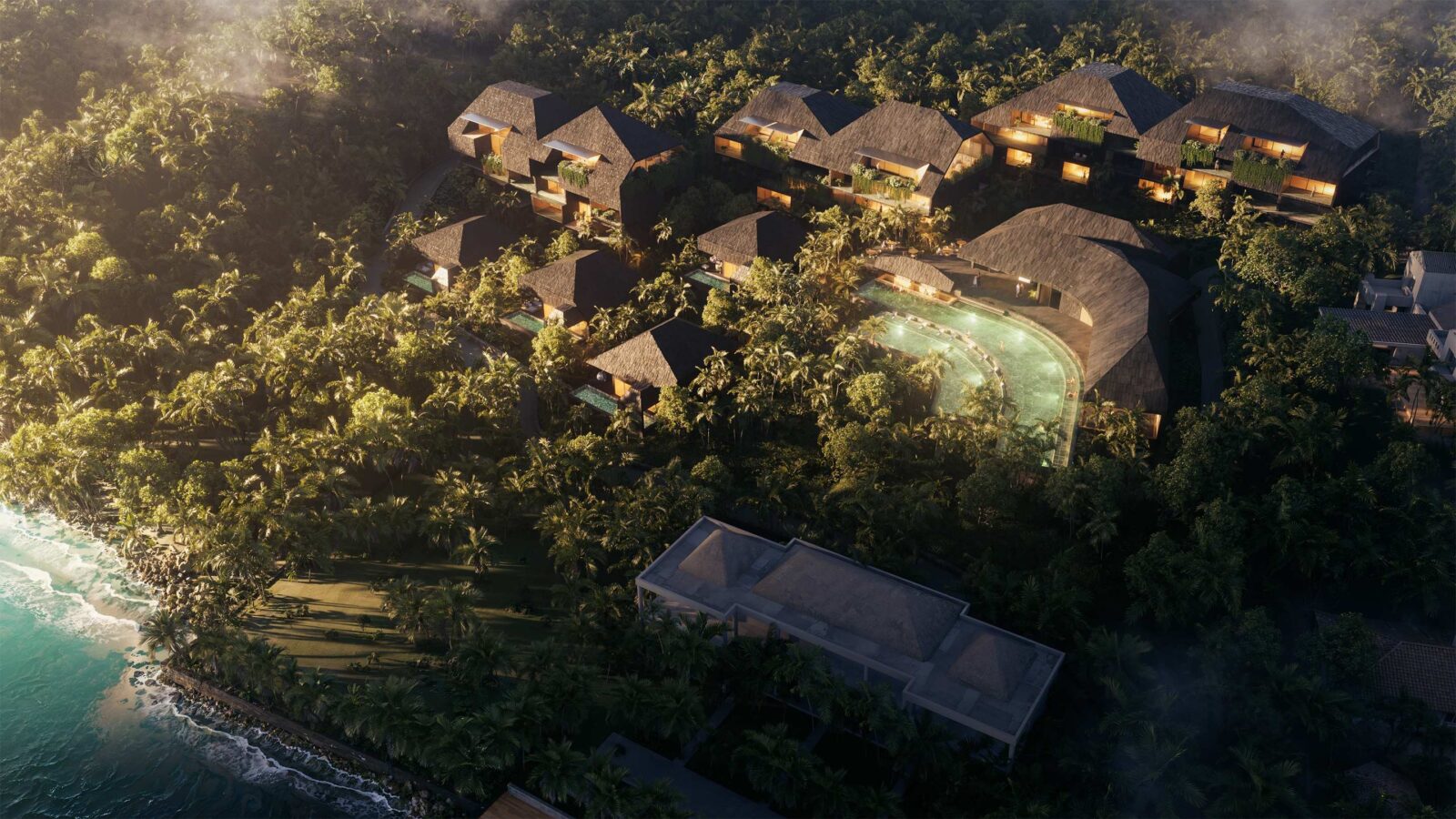
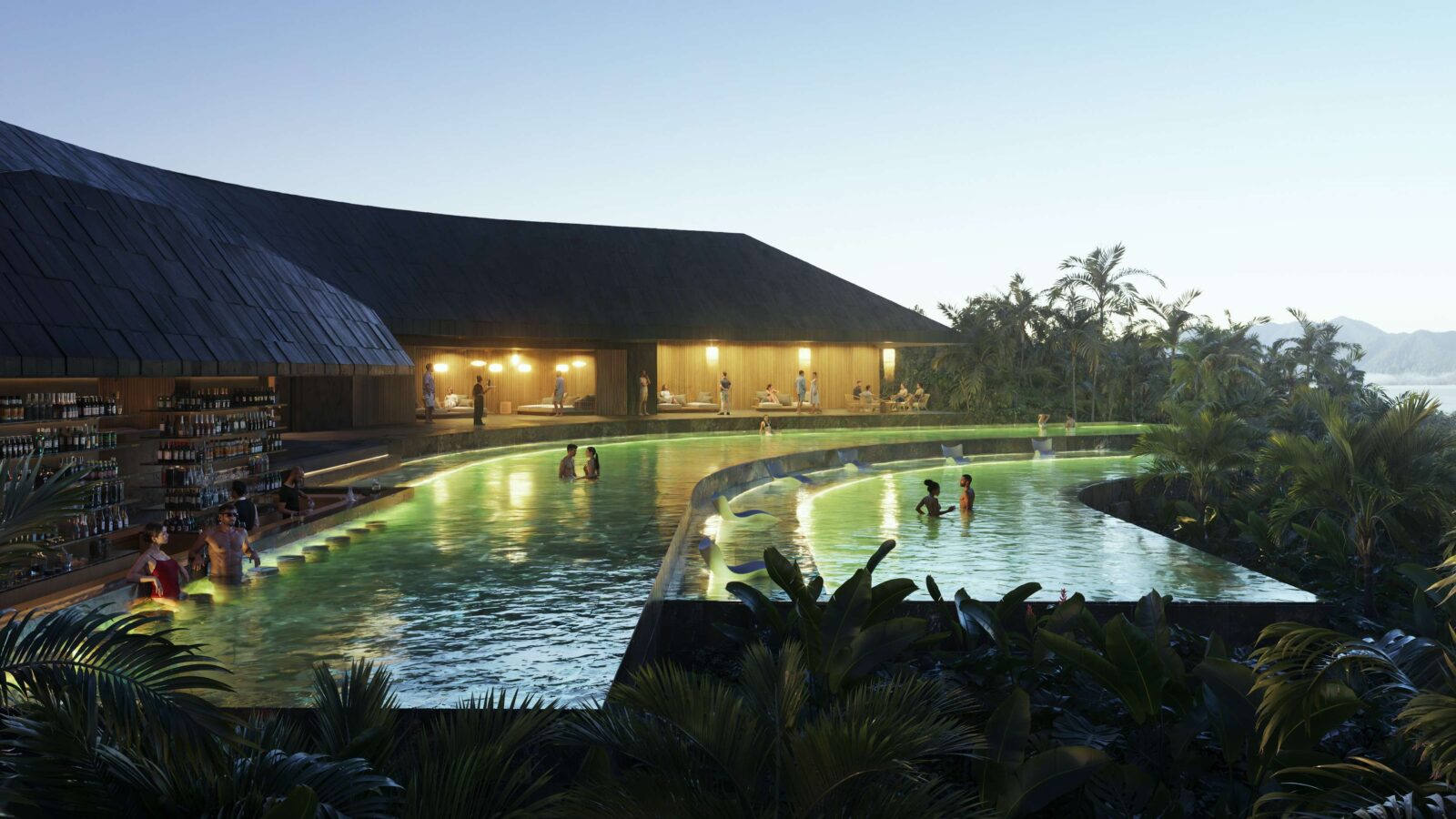
The resort is dressed in local materials, adapted to fit a contemporary luxury aesthetic. Volcanic stone, Balinese tiles and native woods are the main ones used, giving the buildings weight, texture and a link to the island’s landscape and culture.
The St. Regis Cap Cana Resort
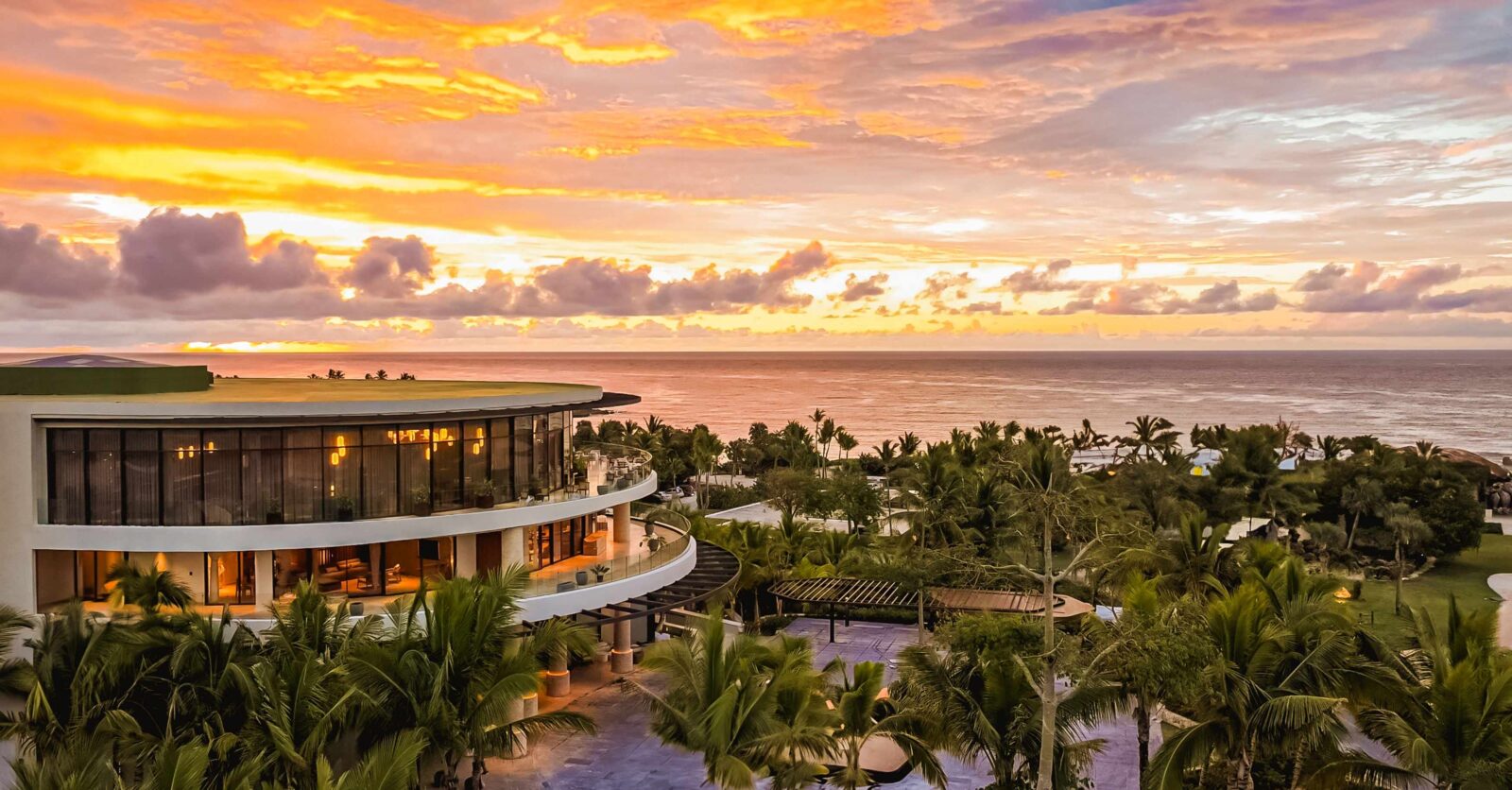
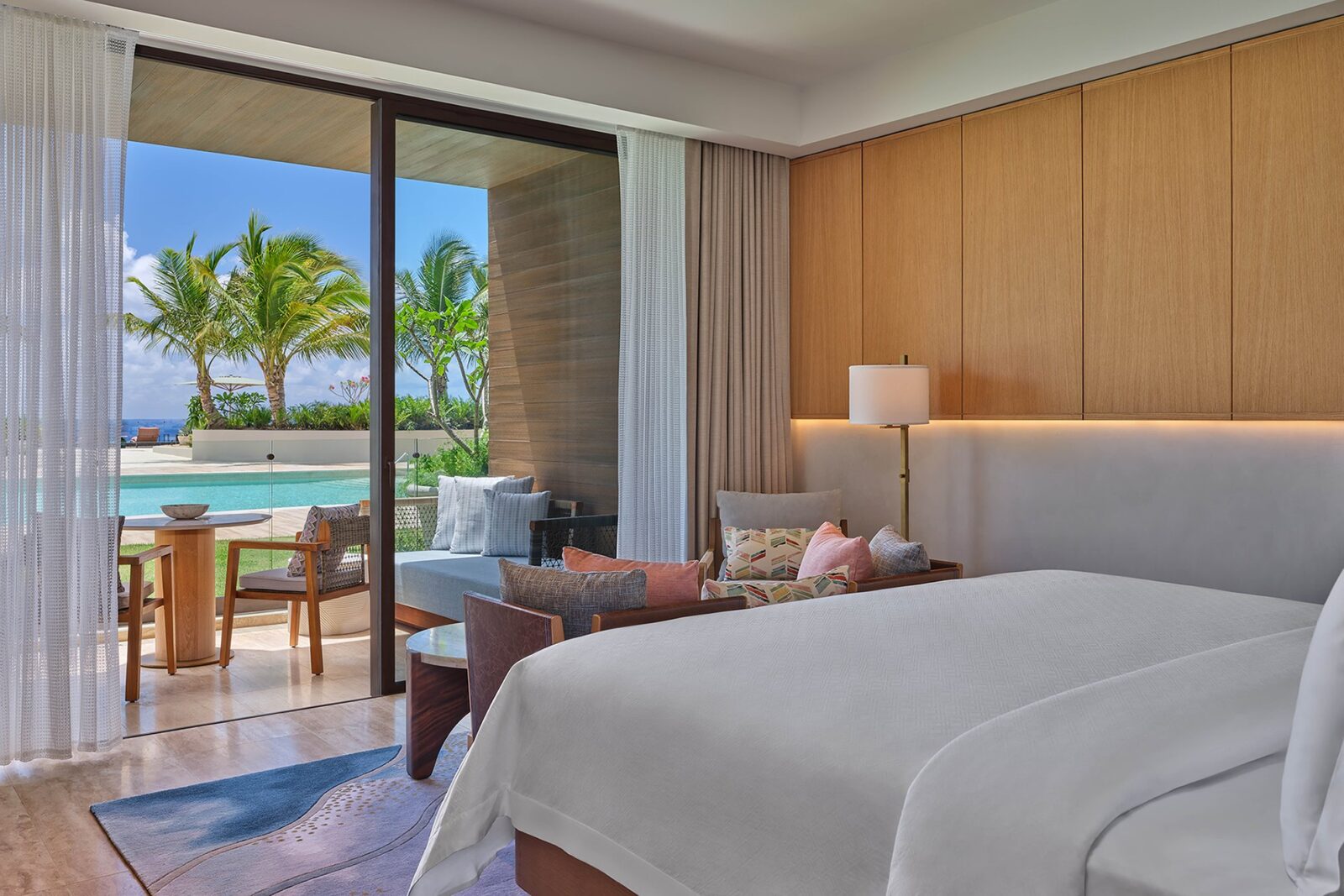
In Cap Cana, on the eastern coast of the Dominican Republic, the St. Regis Cap Cana Resort won in the “Architectural Design Brand New” category. It was designed by Acebal Canney Arquitectos & Asociados, with interiors by Chapi Design, and is set along the coast, enjoying open views to the sea and neighbouring the Punta Espada Golf Course.
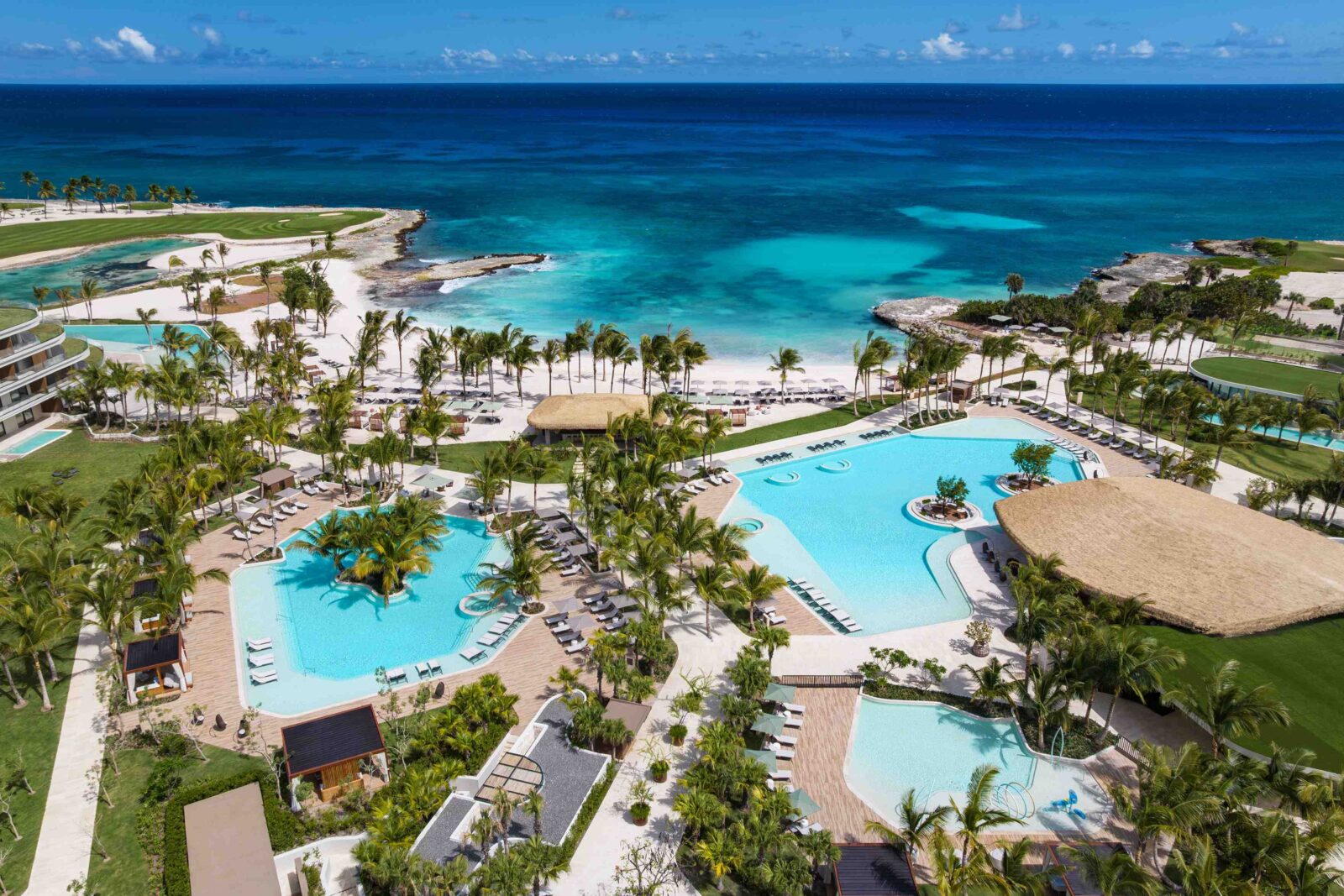
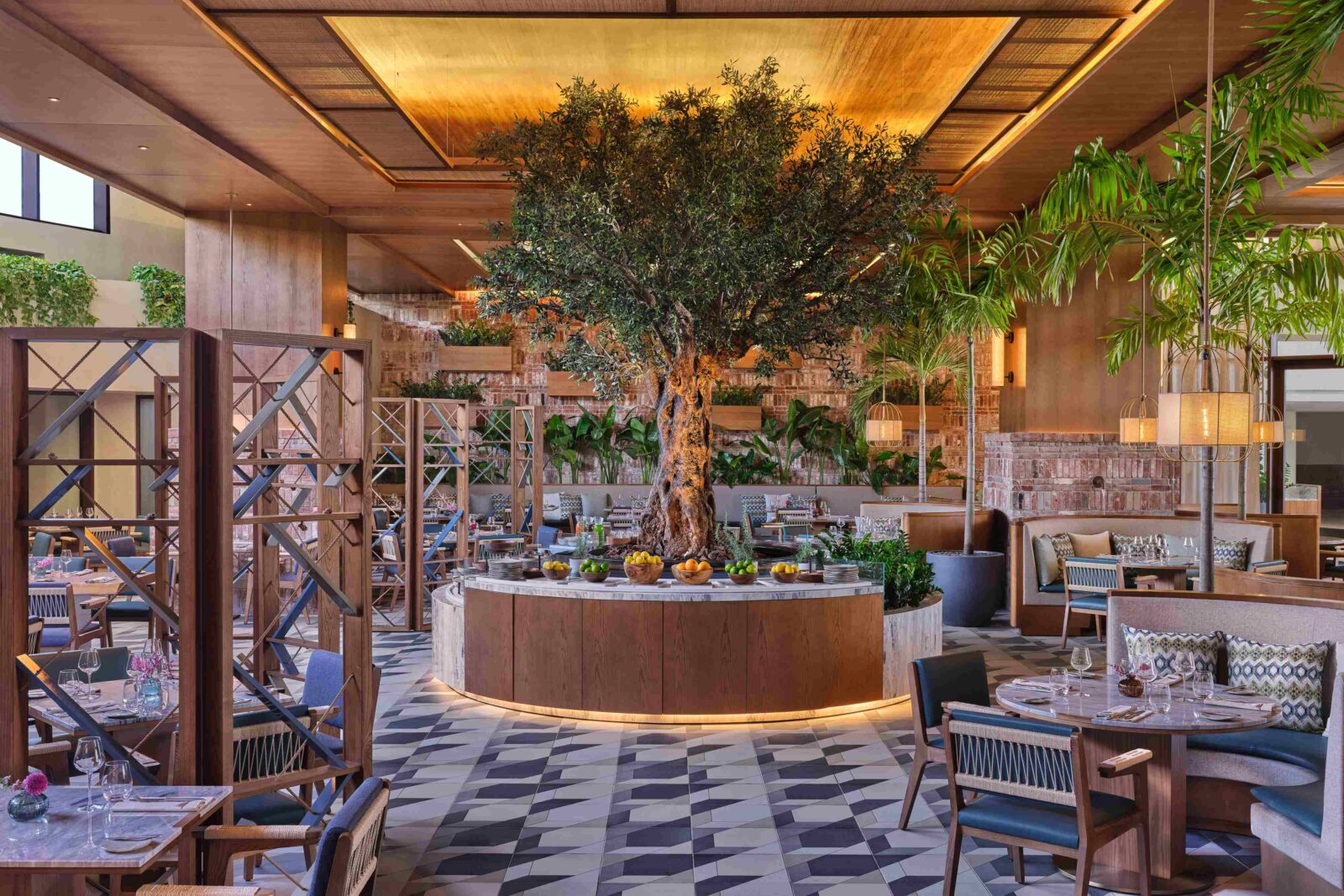
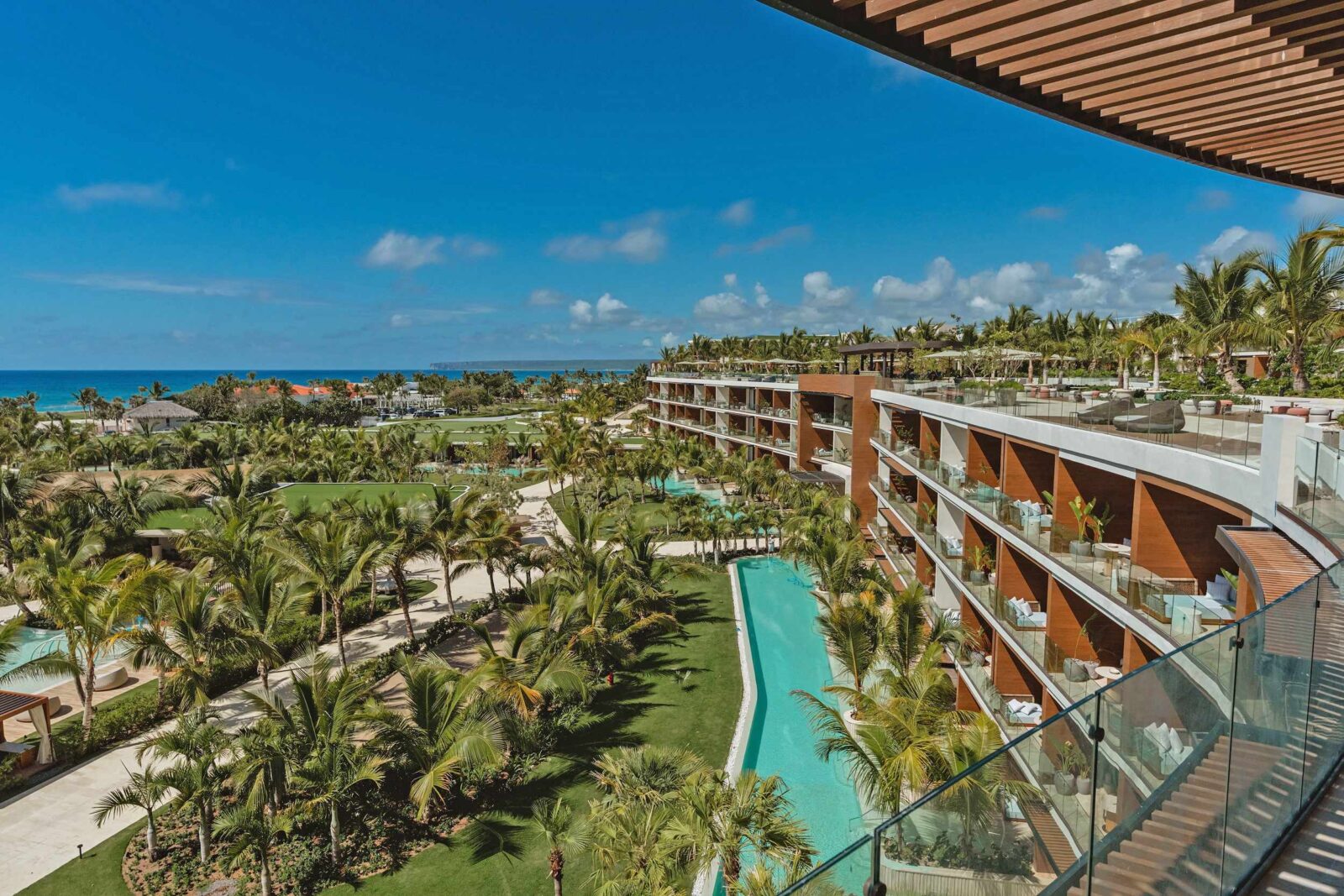
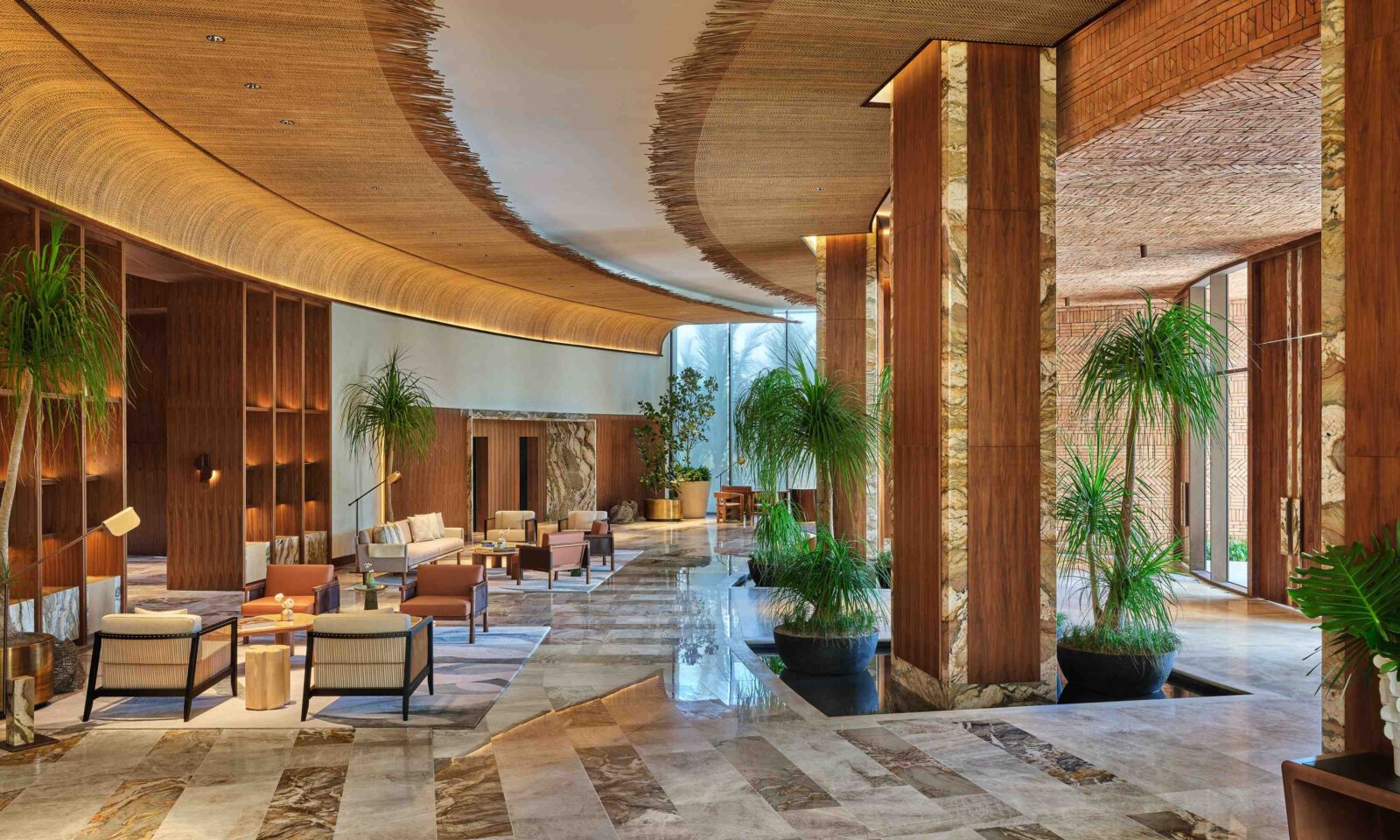
The layout is based on a dogleg-shaped arrangement of staggered and angled volumes, following the lines of the neighbouring golf course and the natural topography of the land. The bedrooms and public spaces are spread across the site, which allows for more privacy, wider sea views and efficient spatial use. Coral stone, wood and travertine connect the hotel to the Caribbean setting, while gardens, skylights and water bring light and colour into the buildings.
Punta Gorda
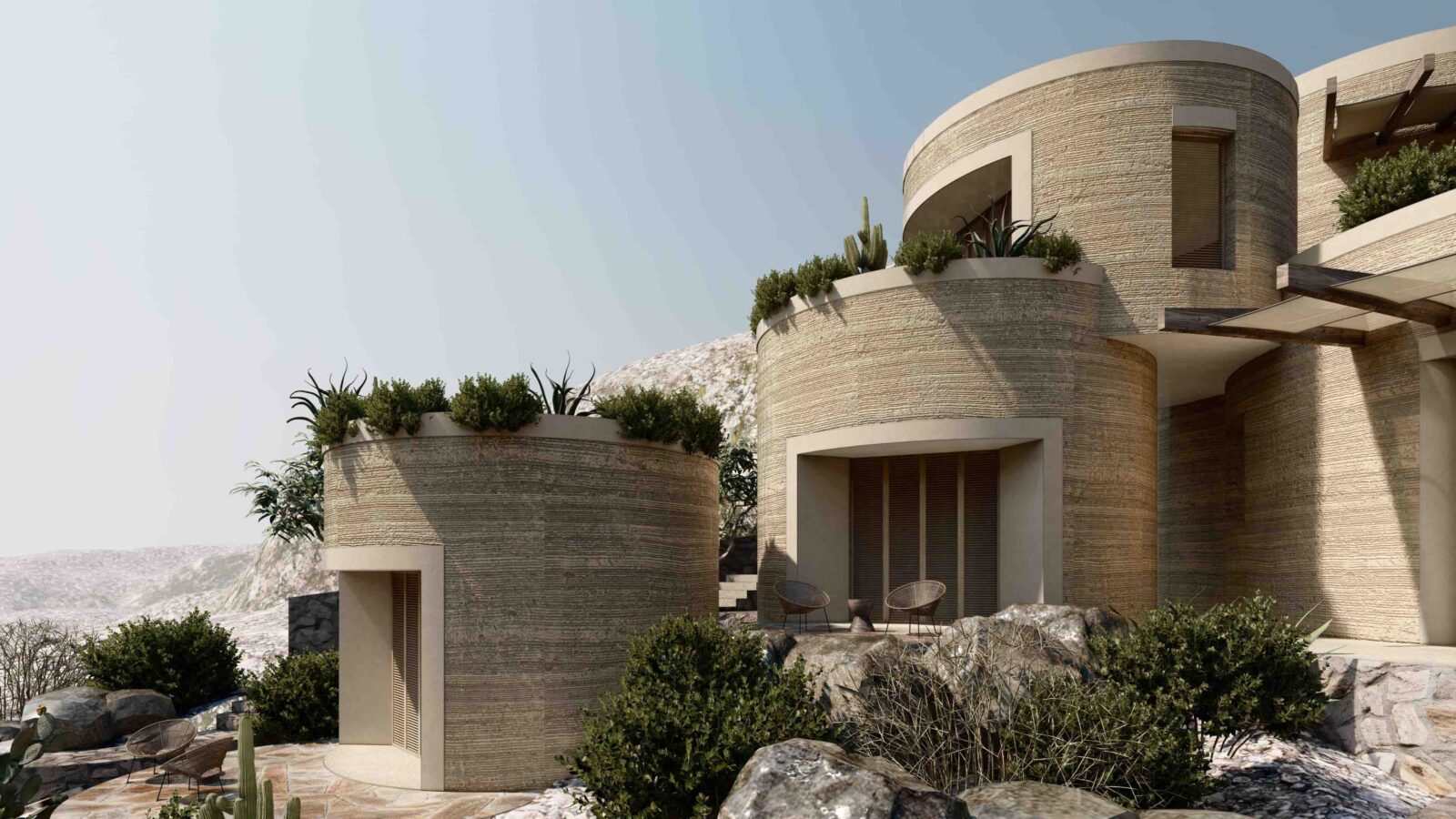
In Malpais, in Costa Rica’s Provincia de Puntarenas, Punta Gorda won in the “Architectural Design Beach Destination” category. Designed by Y.T.A. Yturbe Taller De Arquitectura under Diego Yturbe, the resort is defined as a retreat for 12 guests on a steep mountain-coast site.
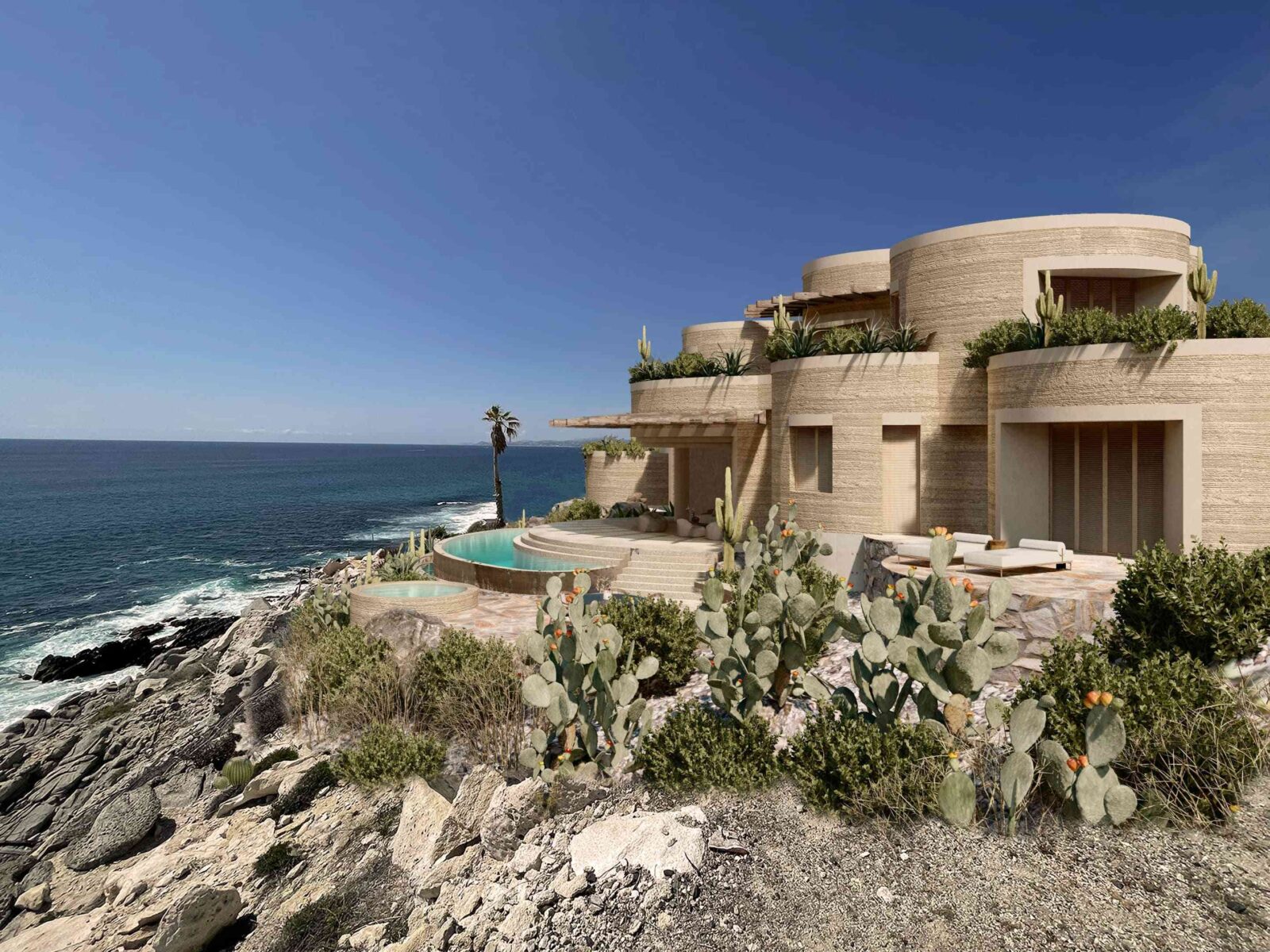
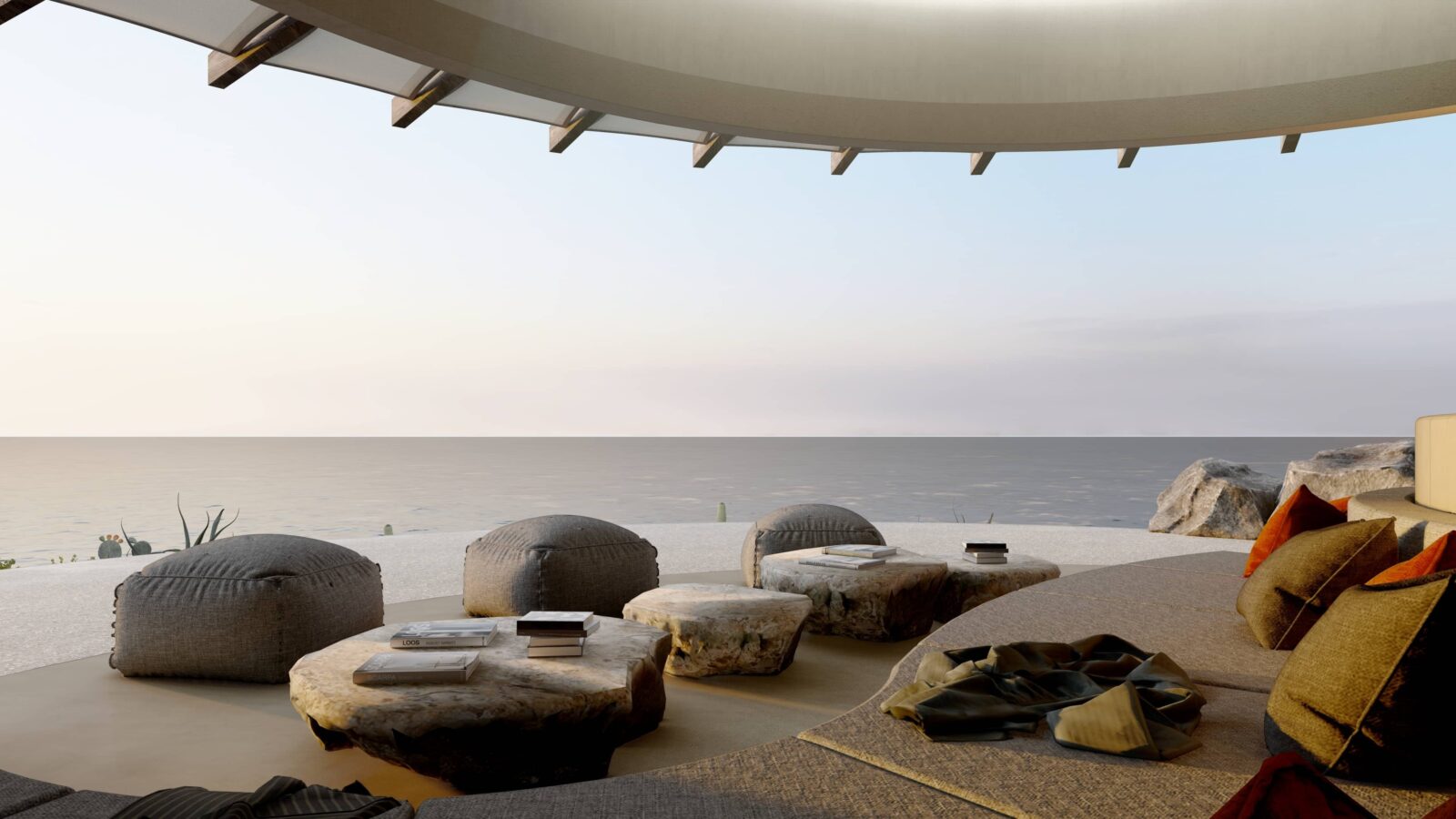
The buildings were placed along the slope of the site, with open views across the surrounding landscape and towards the water, bringing in the kind of luxury you can’t buy. The project was developed in four stages: the first stage includes the living and dining rooms, kitchen, terrace and service areas; later phases add the bedrooms, pool, plunge pool and family room.
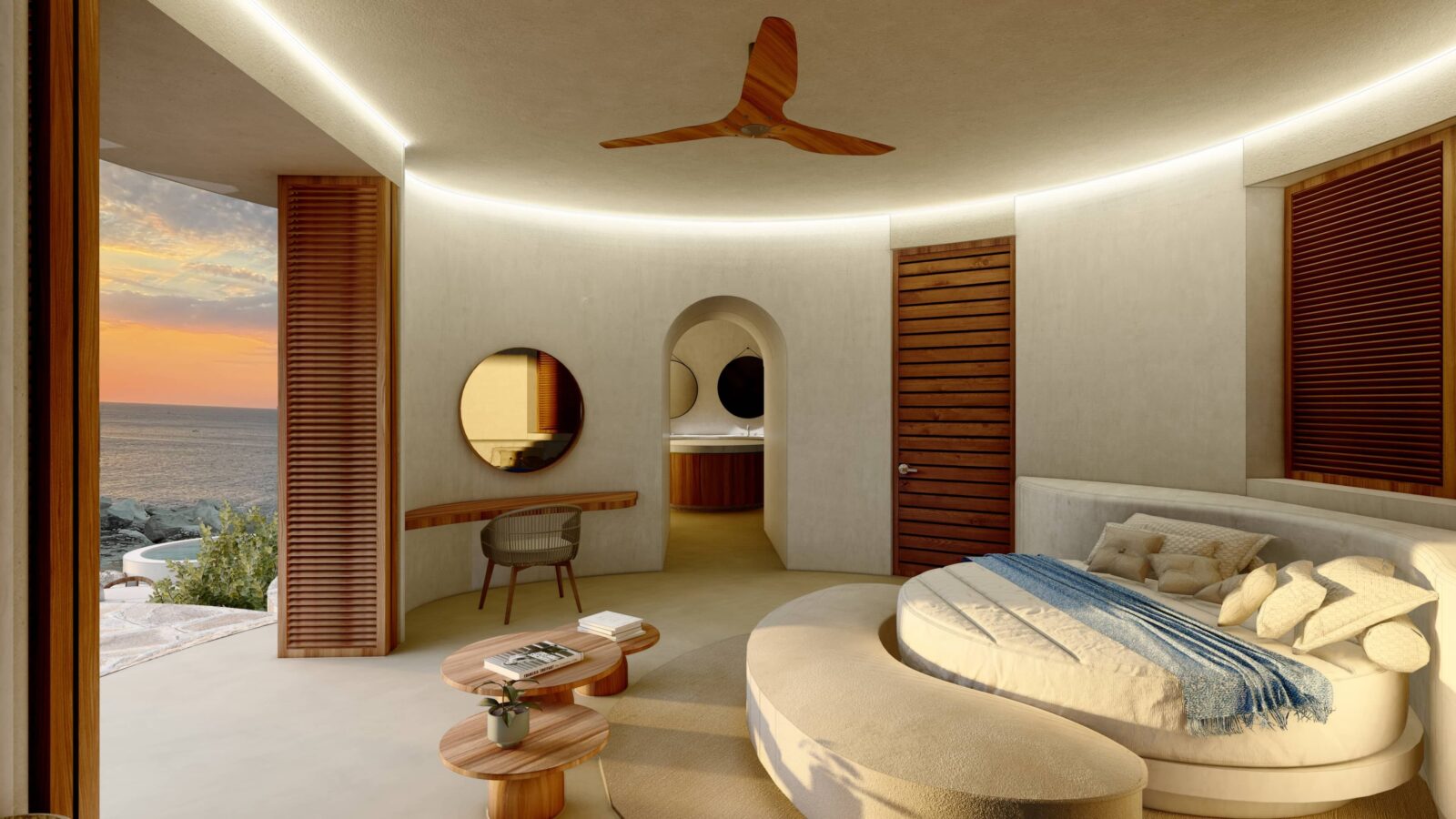
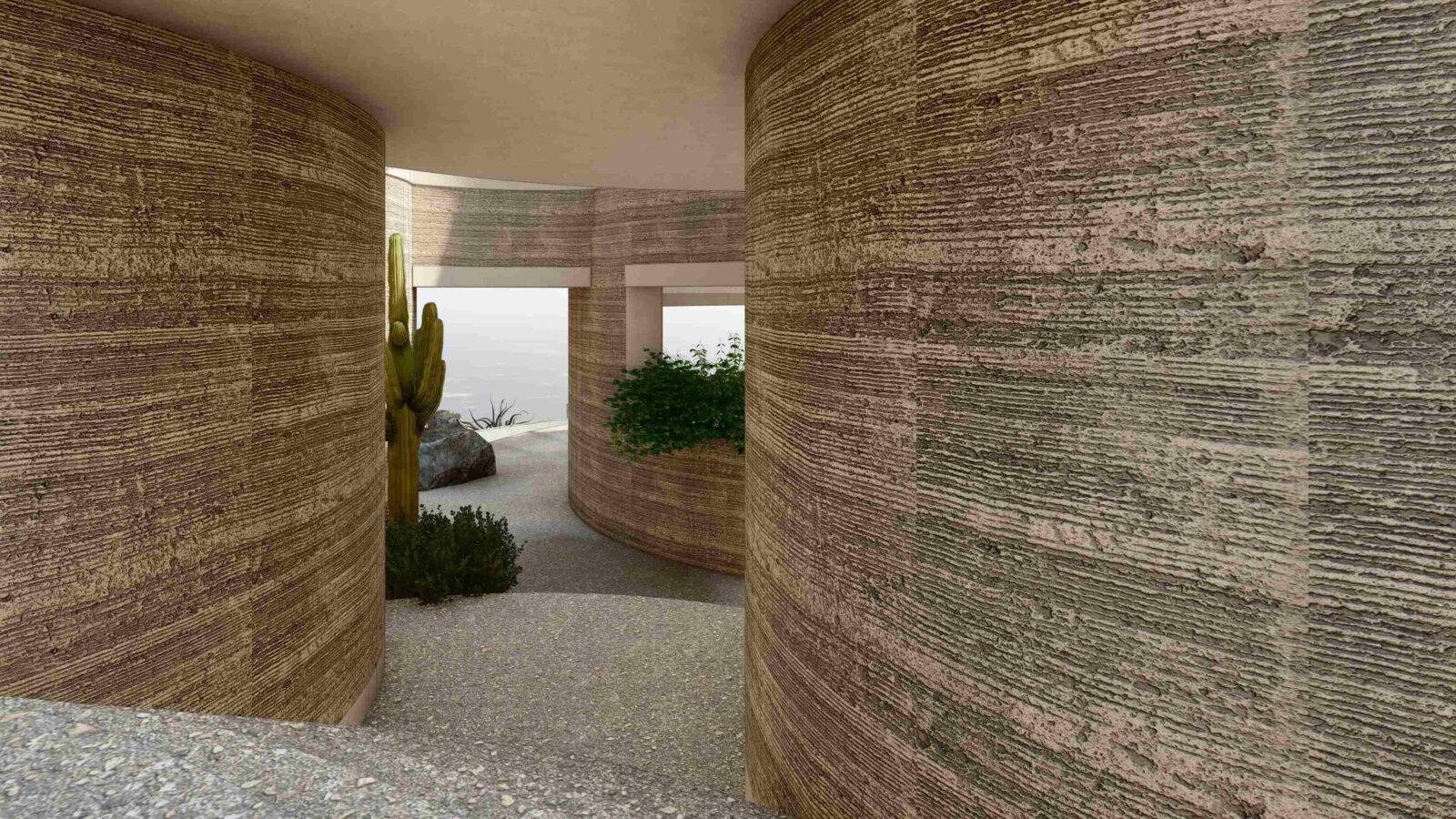
Local stone and earthy finishes were used all around the retreat, having been complemented by passive cross ventilation, solar energy capture and wastewater reuse to reduce the environmental load of the development and create a comfortable environment.
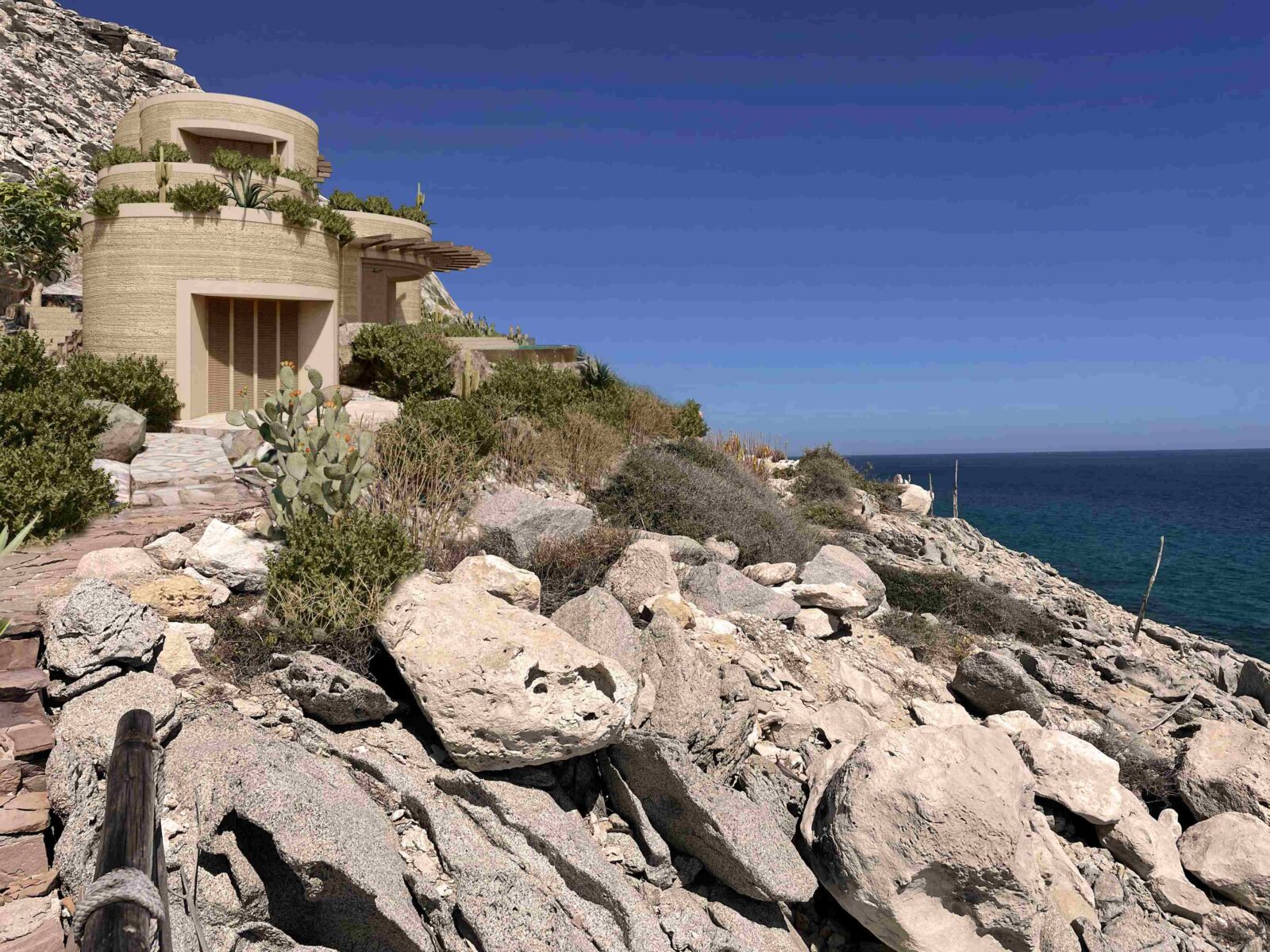
Across these LIV Hospitality Design Awards winners, retreat is shaped through access, privacy, materials, views and the way each project is connected to its setting.


