Header: Courtesy of RALPH PUCCI International
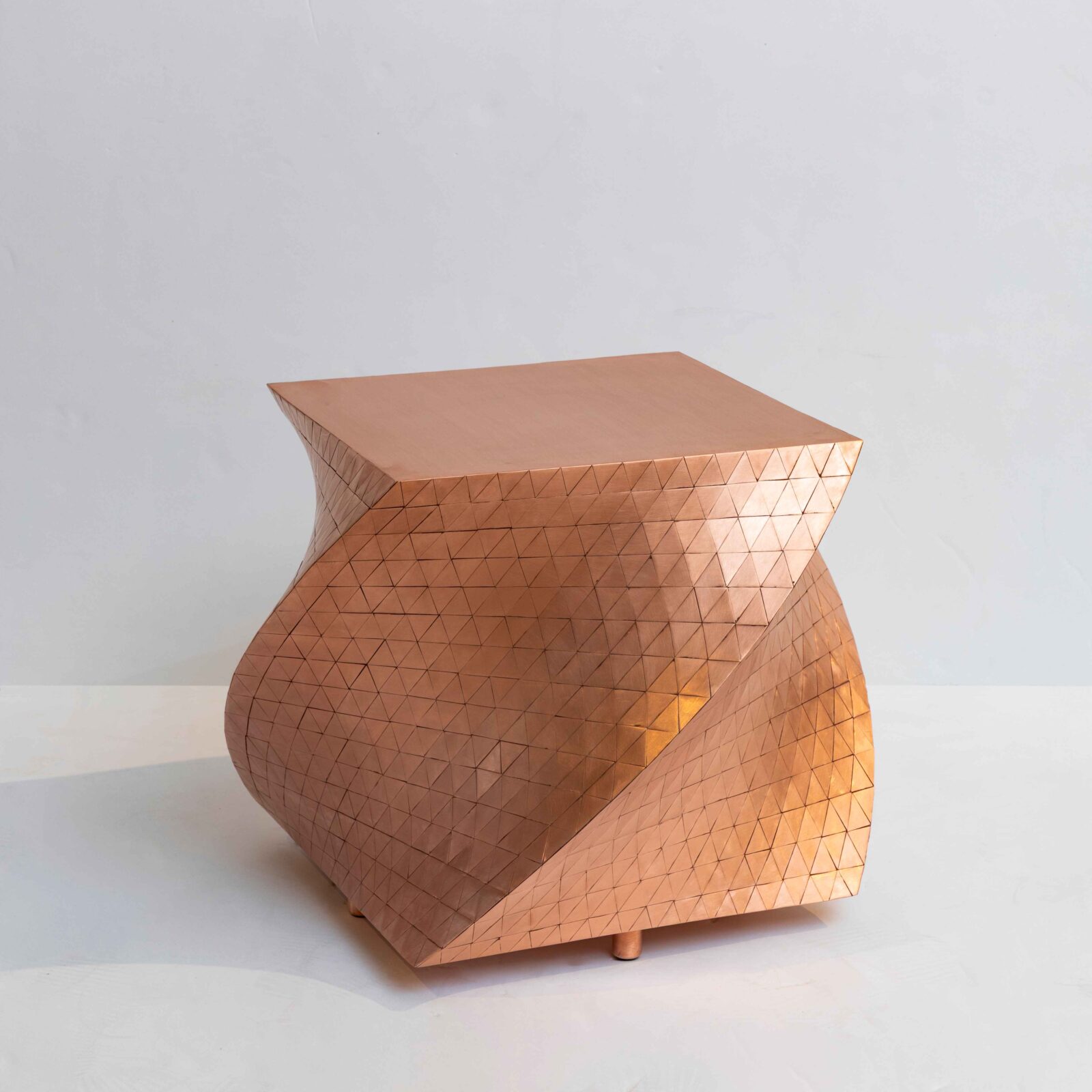
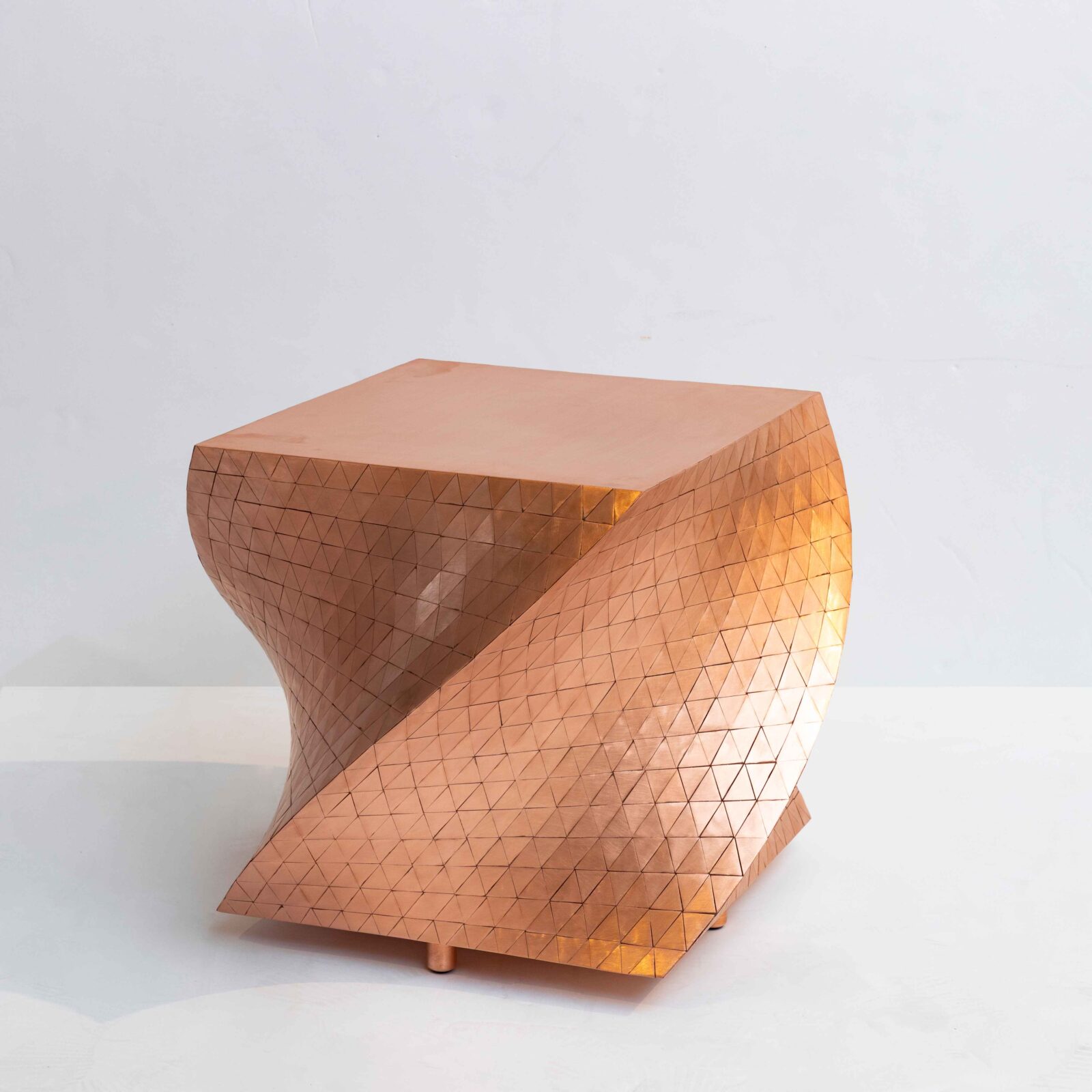
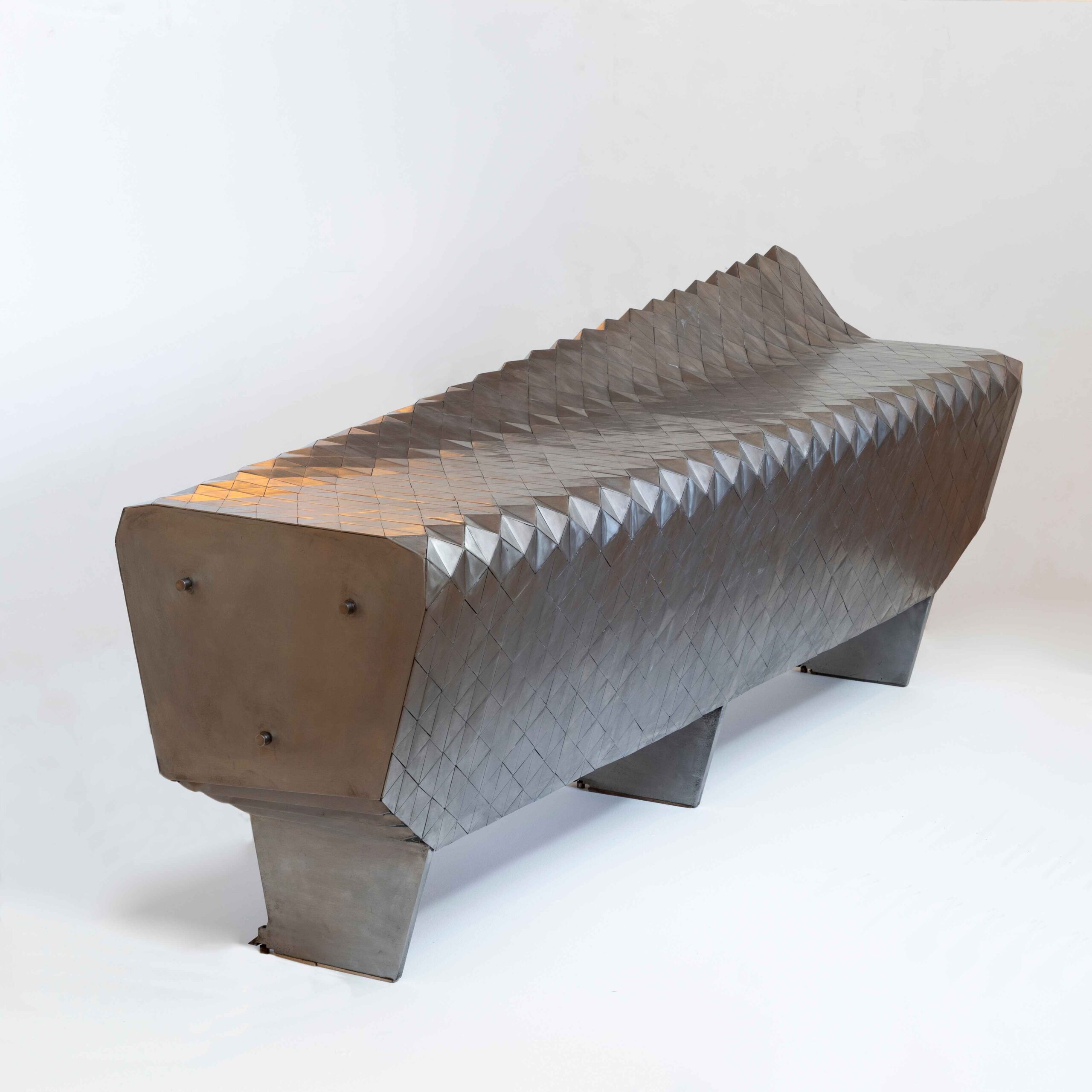
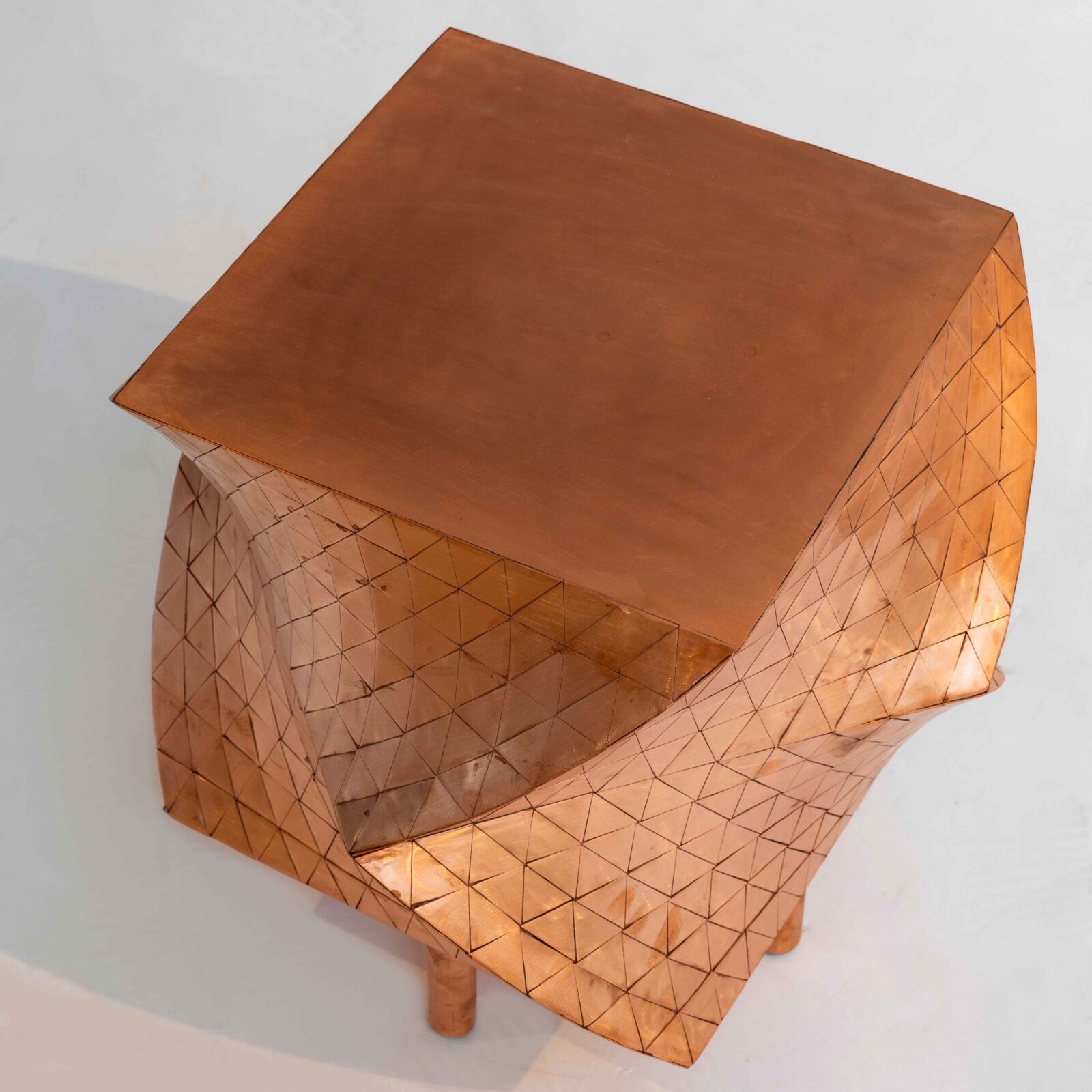
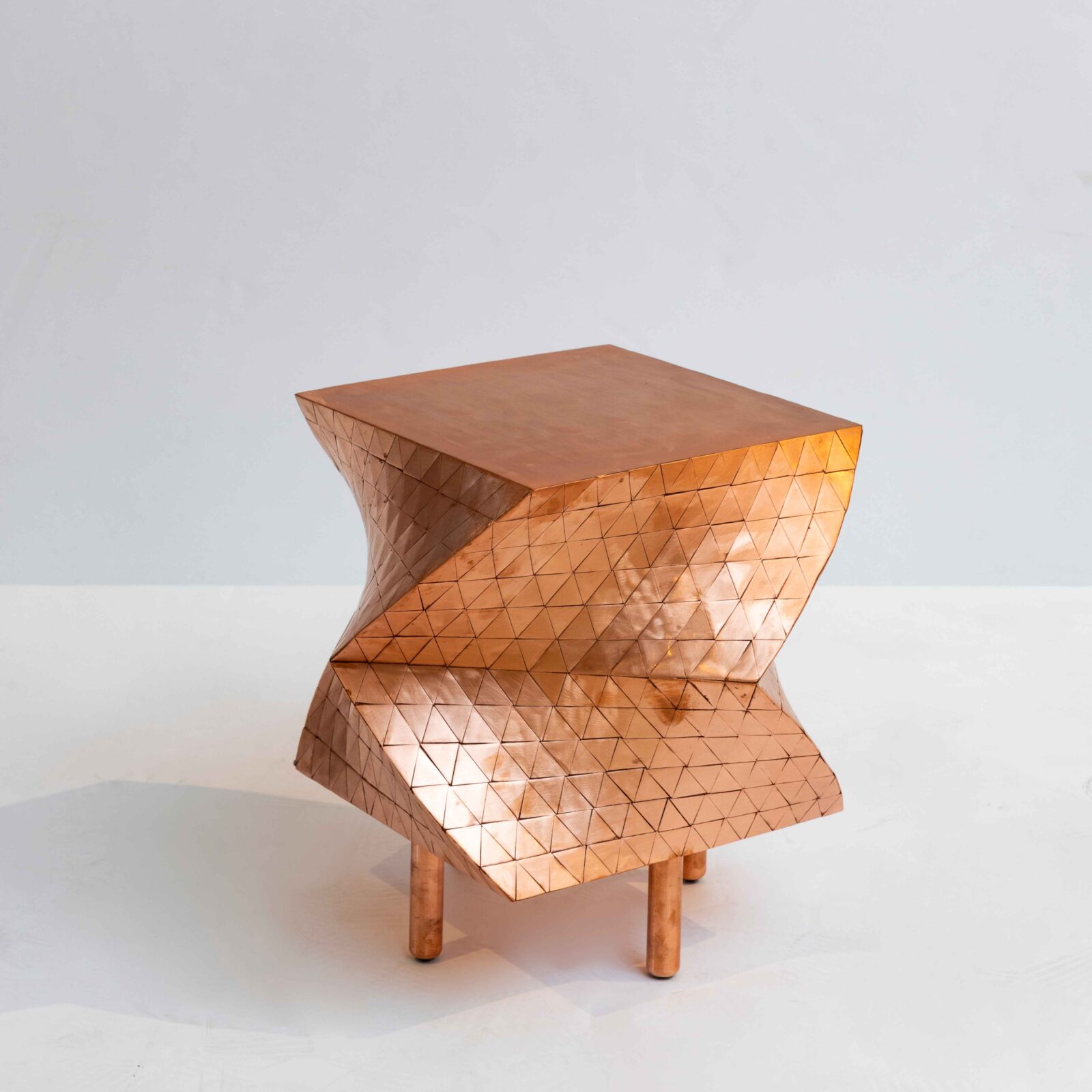
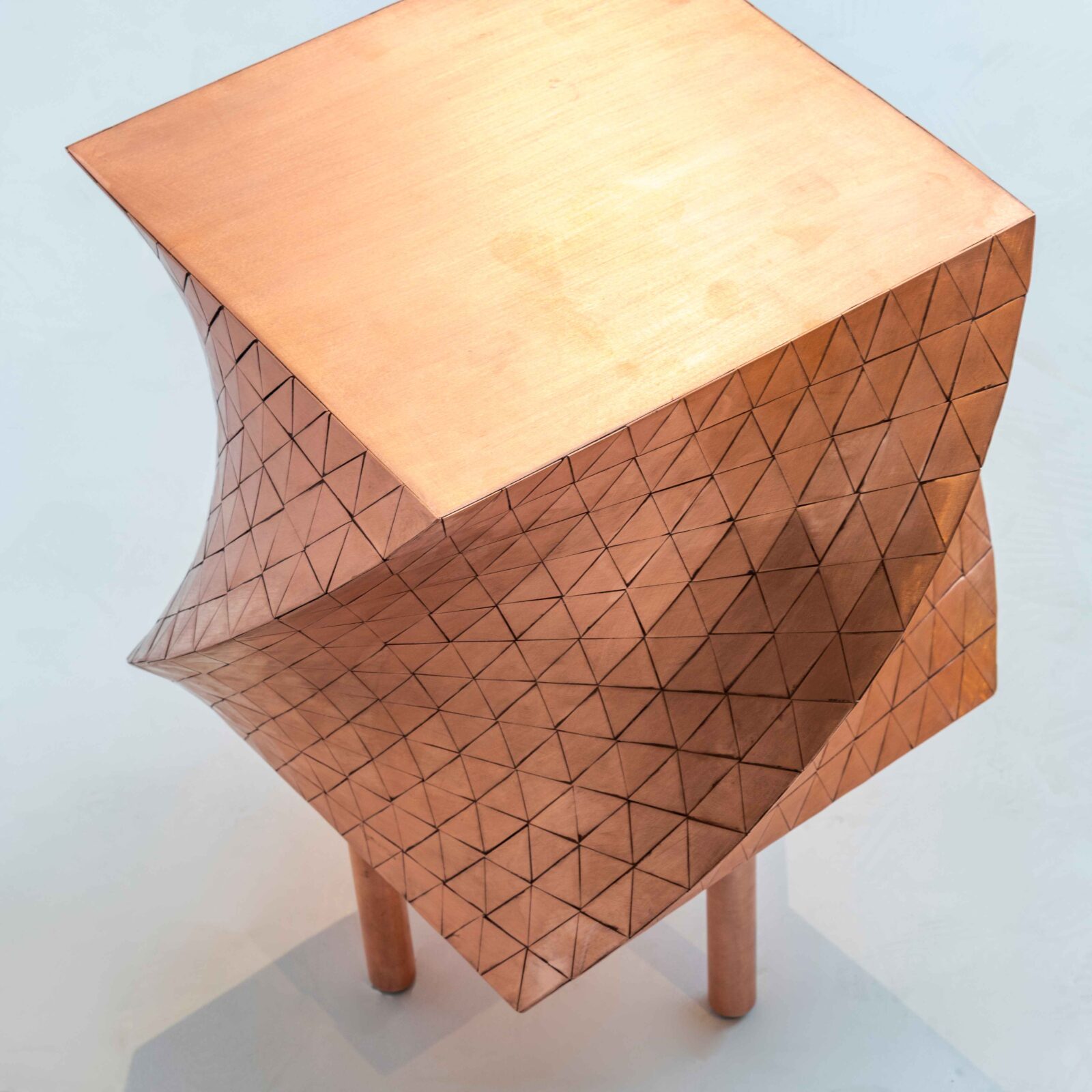
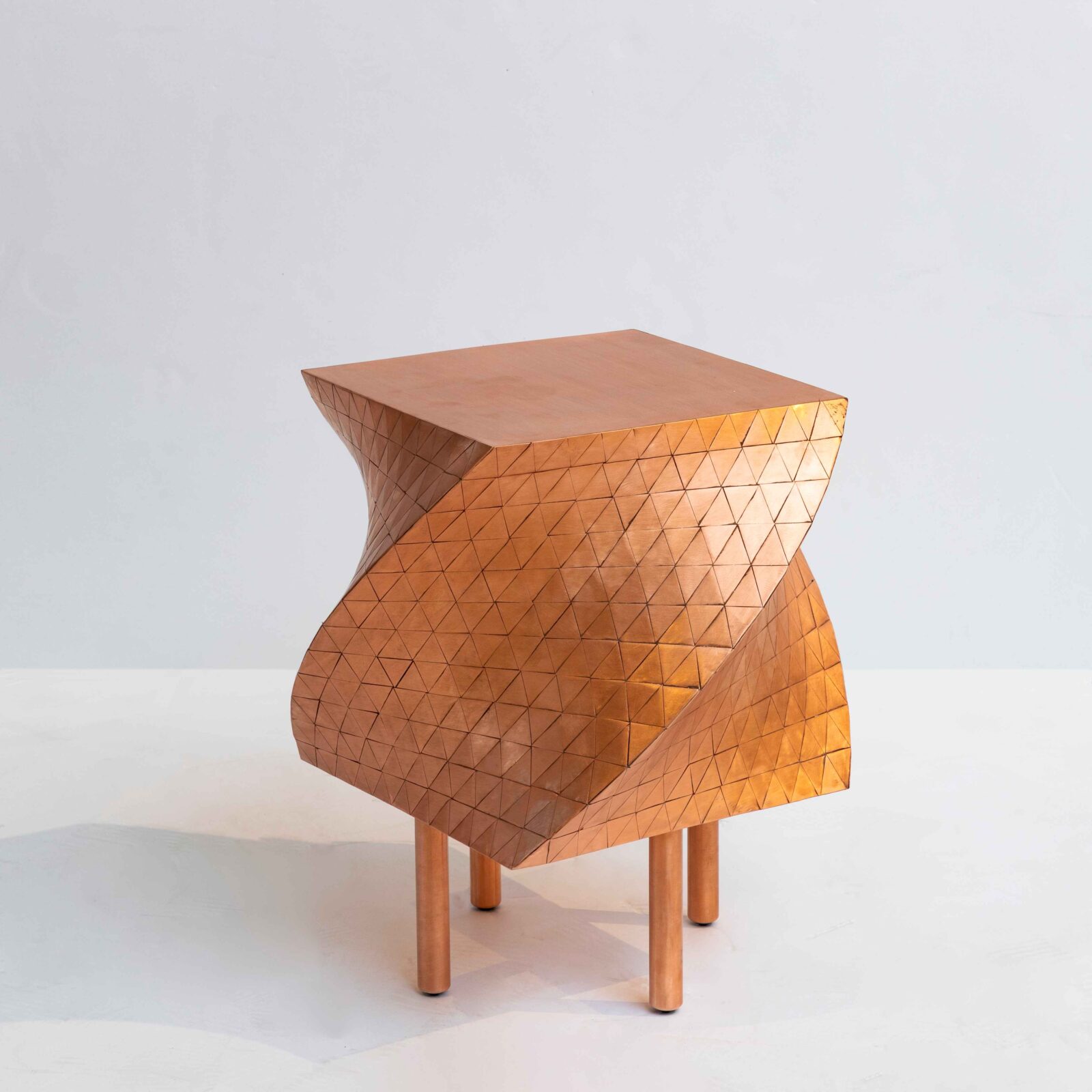
Fran Taubman’s “Clair de Lune” is a furniture series made up of a 72-inch steel bench and a group of copper cubes produced in different sizes and versions. Presented by RALPH PUCCI International, the work brings together digital design methods and the metalworking knowledge Taubman has built over four decades.
Metal shapes and craftsmanship
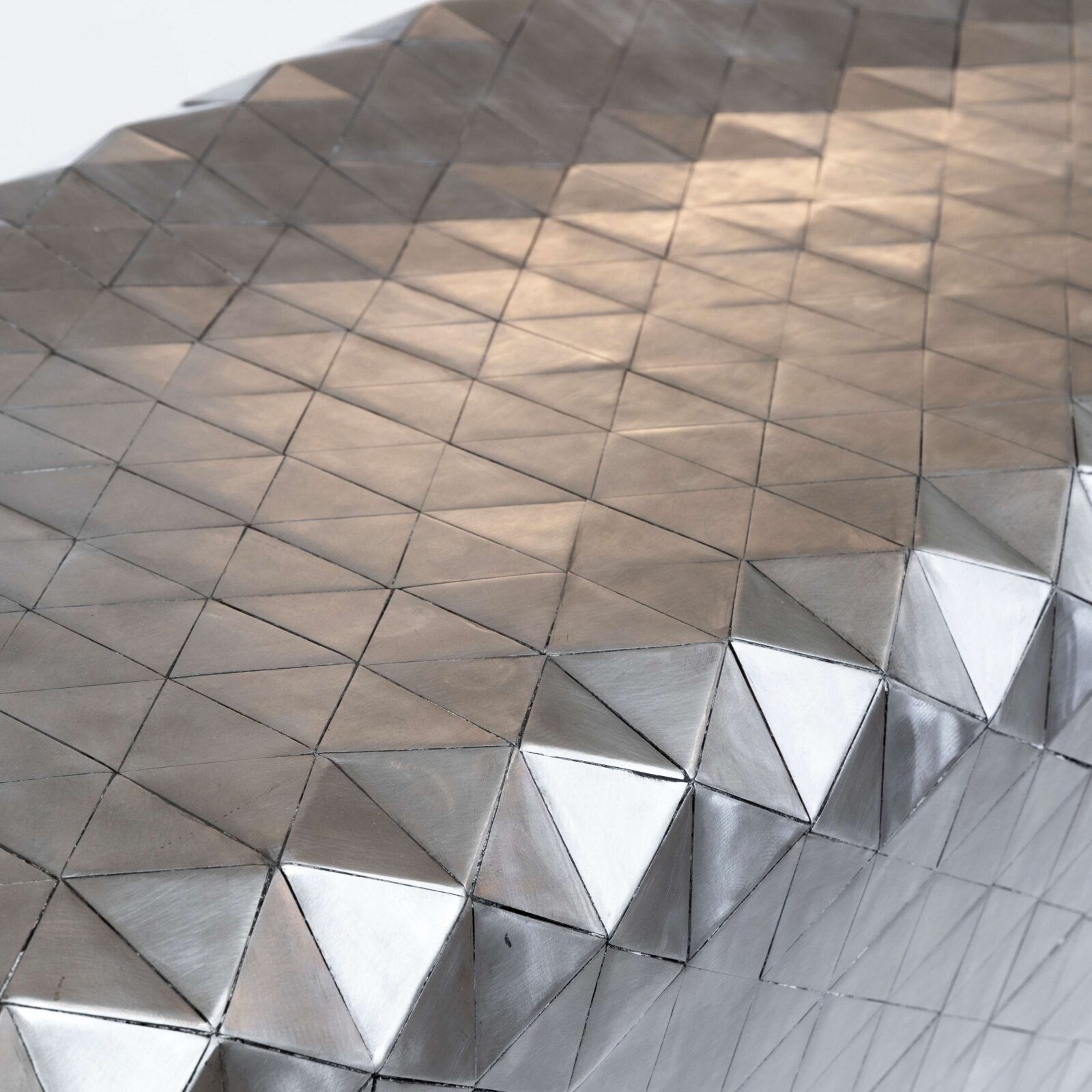
The pieces are developed in her studio on Shelter Island, New York. Their forms begin through parametric modelling and algorithmic design, with computer software used to build curved shapes from hundreds of polygons. Those digital patterns are then passed into steel or copper triangles cut by CNC. In the end, Taubman fixes each of these metal parts by hand onto an inner framework made from ribs in wood or plastic.
The light of the moon
Light is crucial to the way the series is perceived, as the many-angled faces of the metal skin catch reflections across the surface in a different way, producing a shifting, glittering finish that reminds one of the moonlight moving across water. It is this image that gives the collection its name.
Velvety feel and personalisation
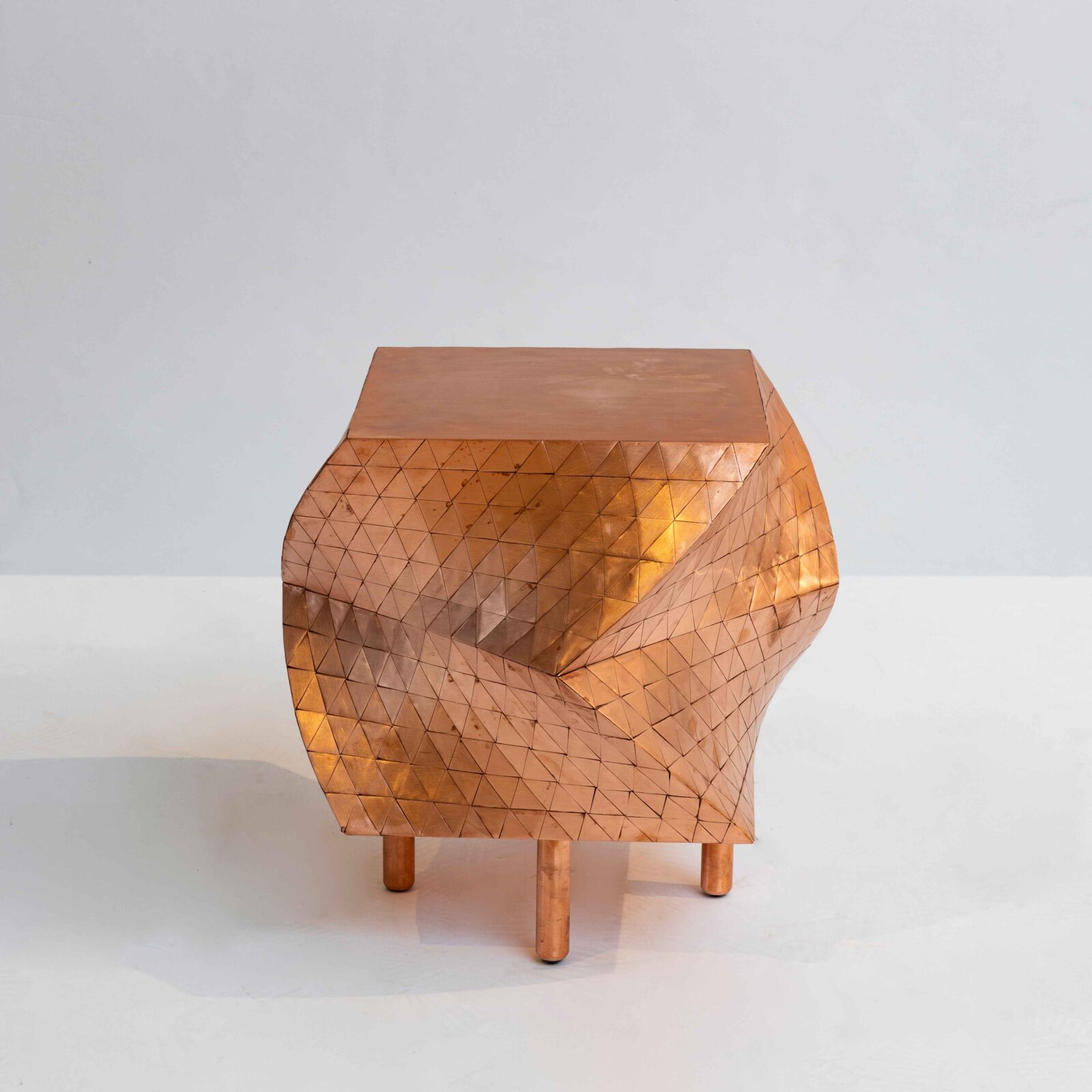
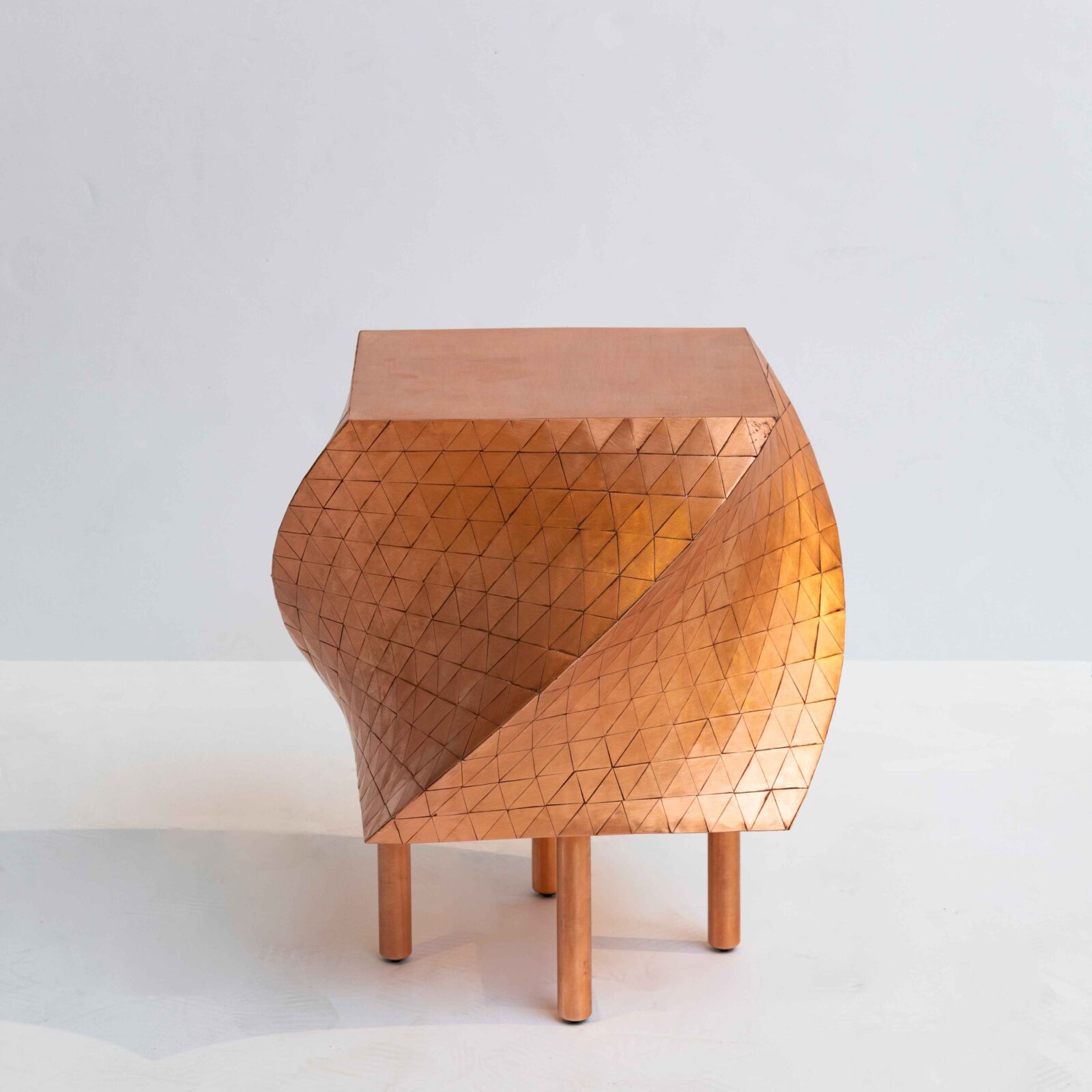
The bench is made from steel, but it does not feel as hard or heavy as that suggests. Even with its precise digital design and metal construction, the 72-inch seat feels soft and velvety when used. The copper cubes use the same faceted surface in a smaller format and come in different sizes. Some have a single twist, while others have a double twist, where the direction changes halfway through the form.
Each cube sits on hidden roller castors so they can be used as a side table, an occasional table or a stool. The leg heights are made to be changed, allowing the proportions to be adjusted for different uses.
“I fell in love with the idea of using computer software to mathematically describe forms and shapes. I have never been into designing a form or shape to create a piece of furniture. Parametric modelling is a natural evolution of that thinking. The math gives the work purpose.”
Fran Taubman
Logical shapes
In Taubman’s work, the way parts fit together comes first. Earlier pieces used square bars with notches so they could lock together like building blocks and metal plates pressed together to make a structure. In those works, as in “Clair De Lune”, the final shape came from the way the pieces were joined.
“Fran’s work is both technical and insightful. “Clair de Lune” shows how technology and hand fabrication can come together to create something totally unique.”
Ralph Pucci