





Header: Petr Polák
On the slope above the Krkonoše village of Strážné, a timber log cottage once stood. It was swallowed by the era of mass recreation, along with respect for ownership, craftsmanship, people, objects and nature. The original house was concealed beneath layers of alterations, extensions and makeshift additions, poor repairs, and artificial panel cladding.
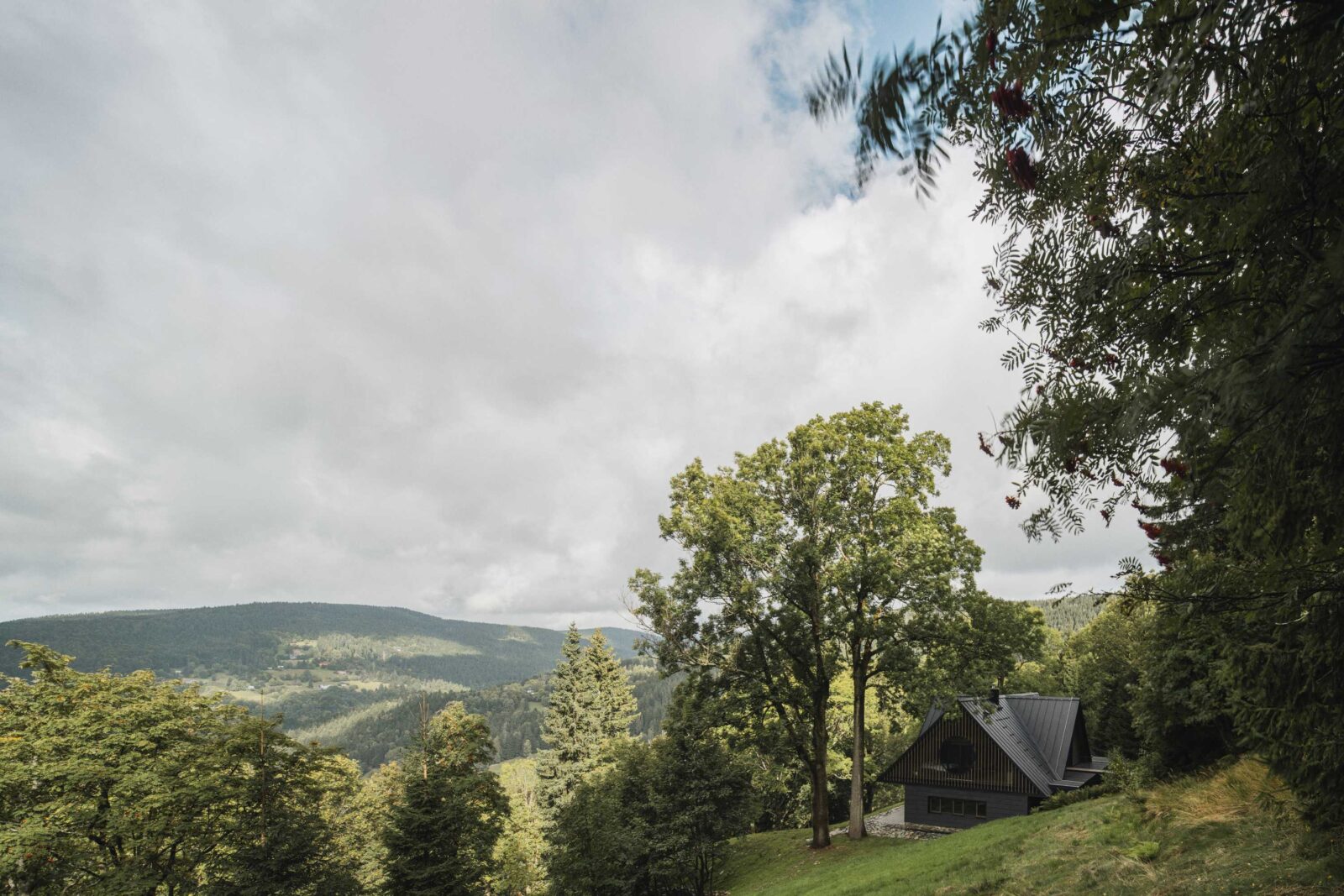
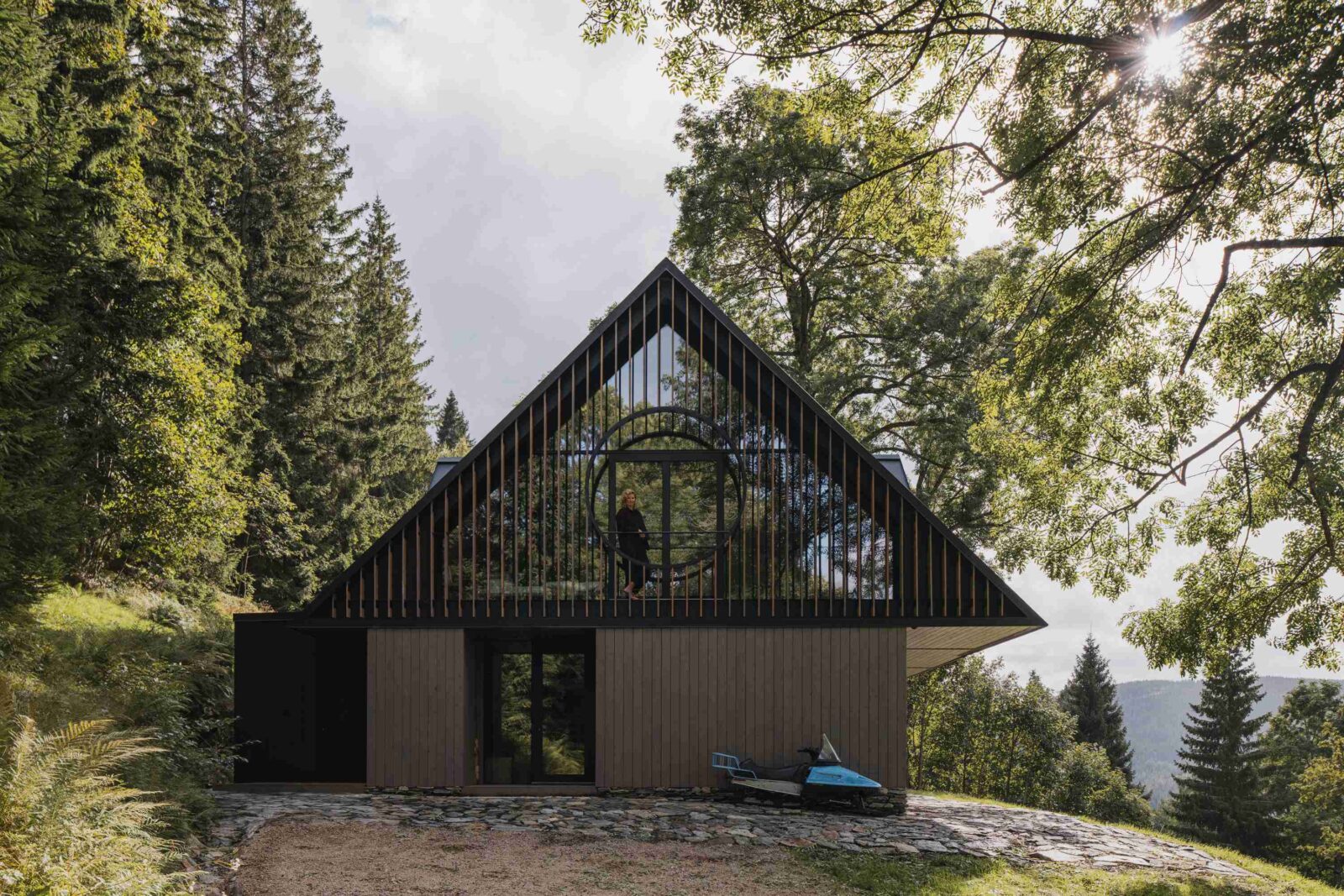
Unfortunately, almost nothing of the original cottage remained worth saving. The small number of preserved original structures were, for the most part, in poor technical condition. Rather than merely preserving its material substance, the aim therefore became to rediscover the spirit of the house.
A new traditional cottage
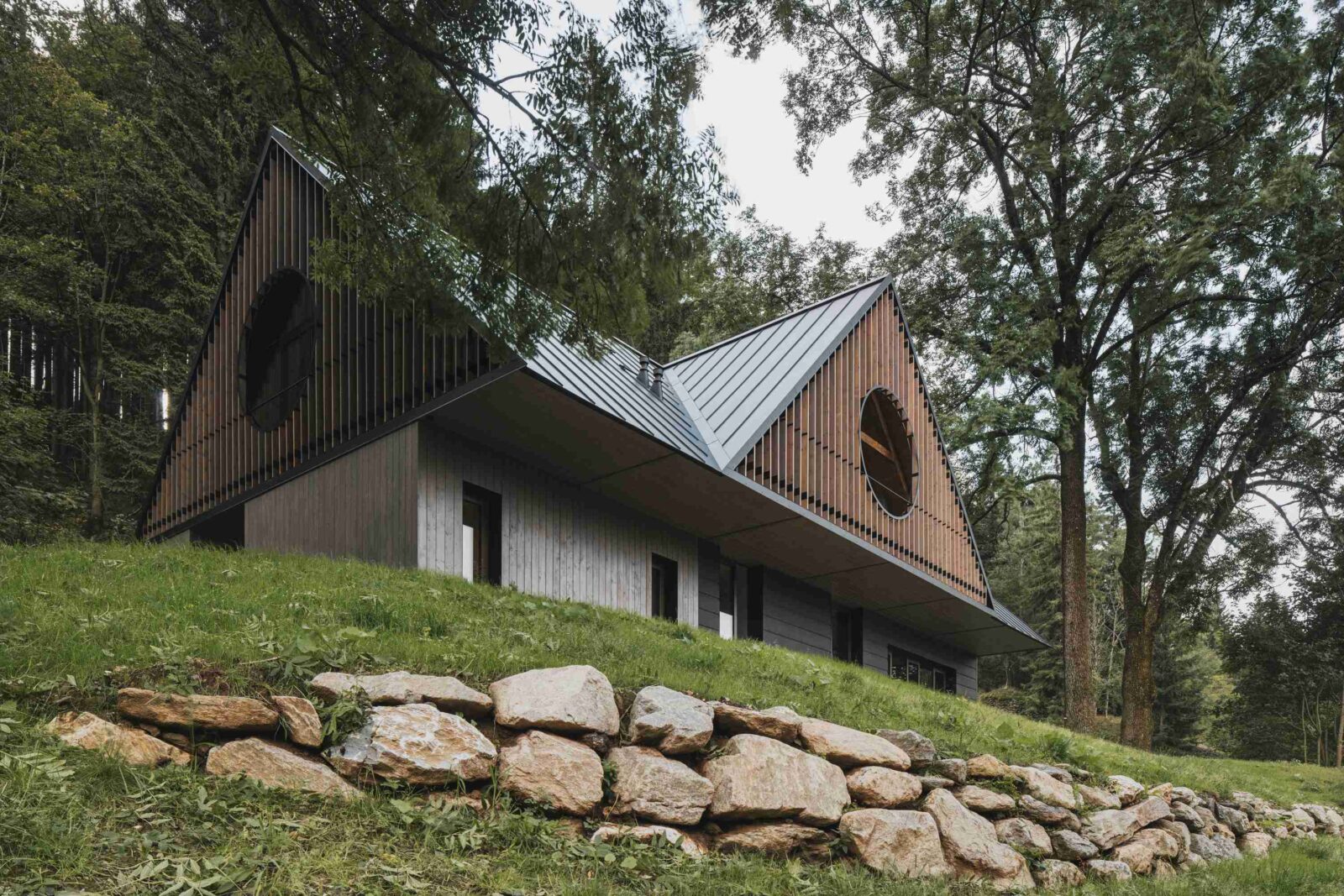
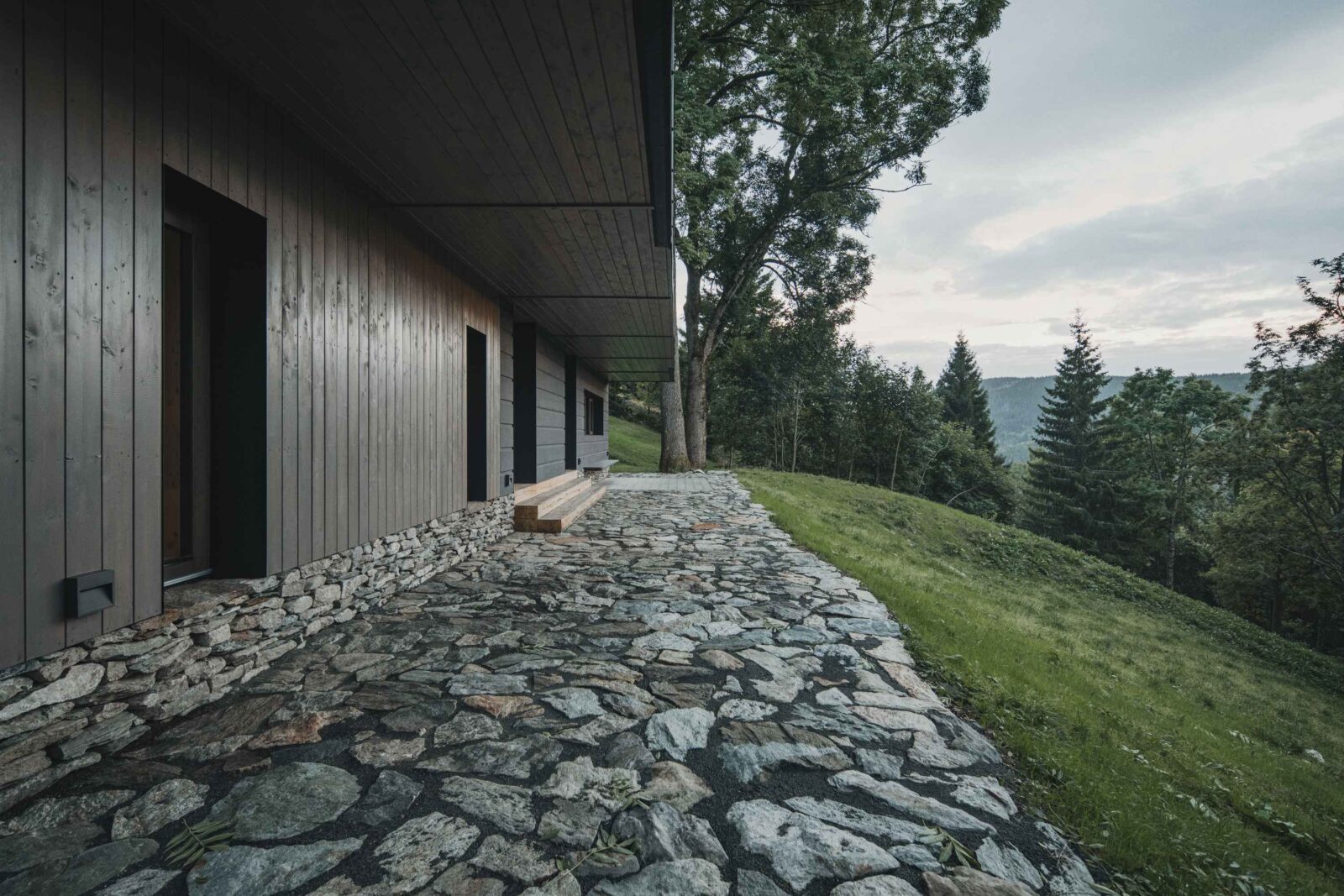
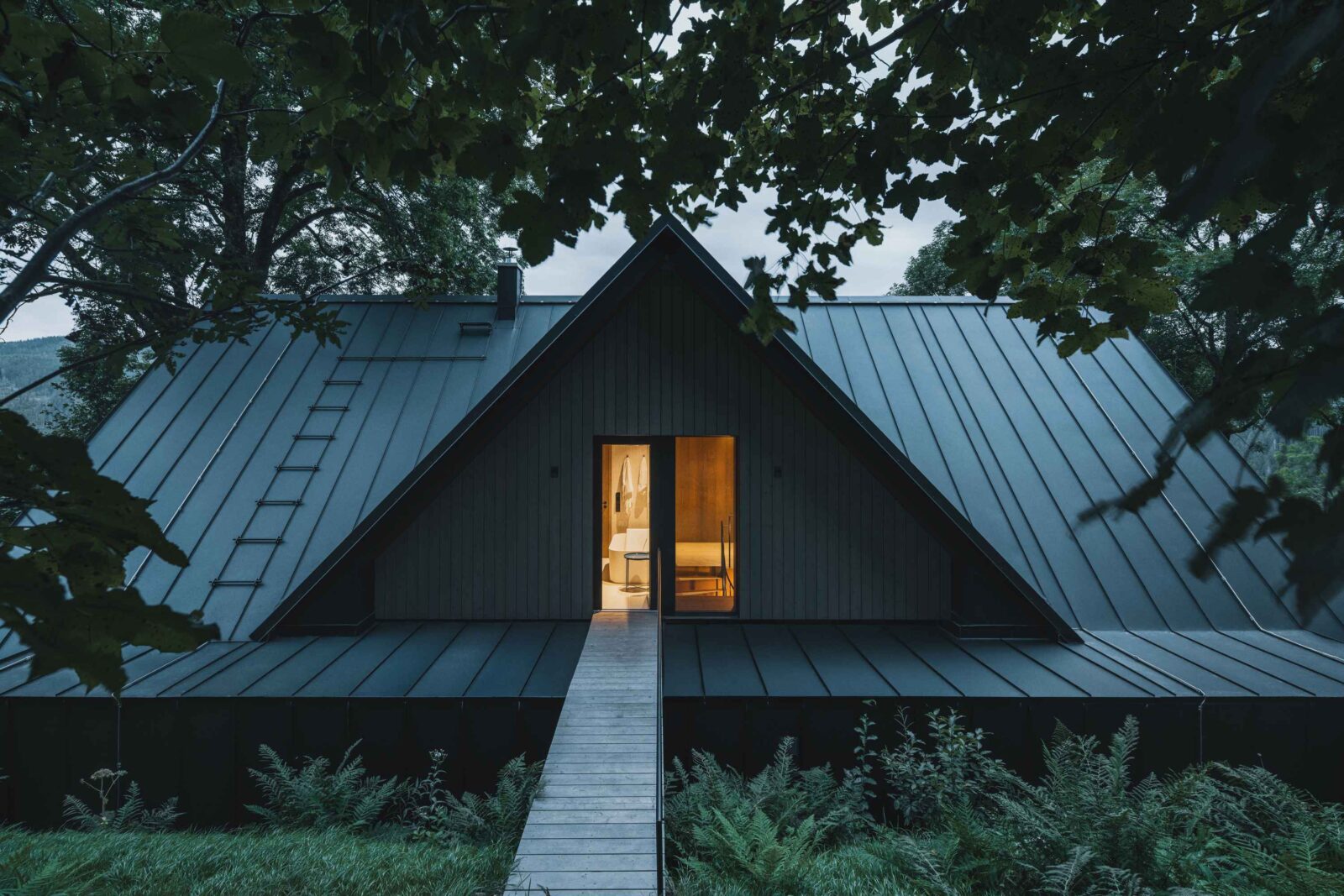
Buildings in the Krkonoše Mountains are defined by massive, steep roofs that once made it possible to survive the long winters. With hayloft dormers, an asymmetrical roof set on a low log structure creates a sheltered porch, boarded gables, stone plinths, and a traditional tripartite layout. It was precisely such a house that Mimosa Architects sought to return to its rightful place.
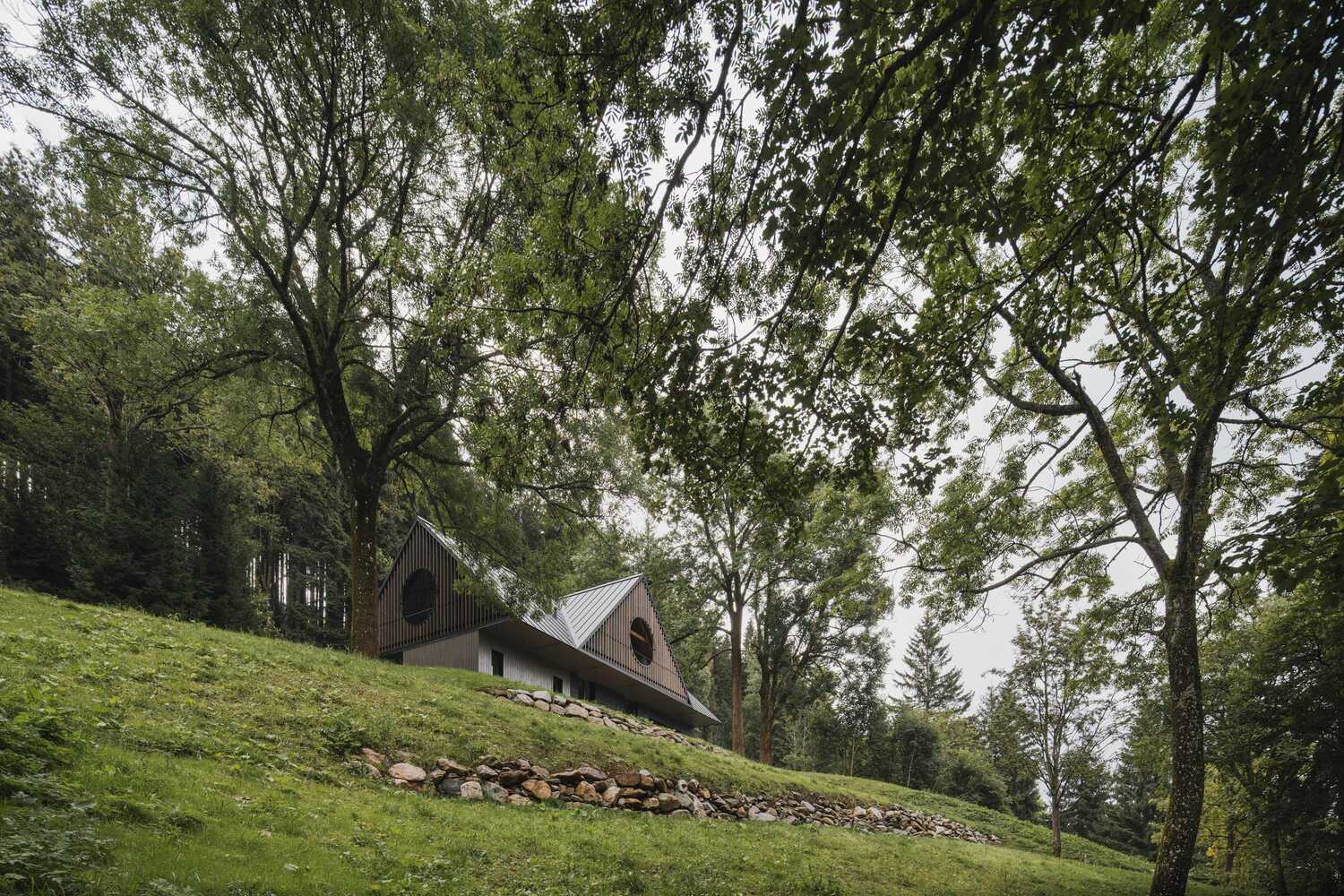
The design aimed to create an authentic cottage atmosphere without resorting to historicising elements devoid of genuine historical value. The team of designers, comprised of Jana Zoubková, Petr Moráček, Pavel Matyska and Eliška Vinklárková, did not attempt to force contemporary spatial principles into a traditional volume; rather, they set out to create a contemporary building rooted in traditional spatial principles.
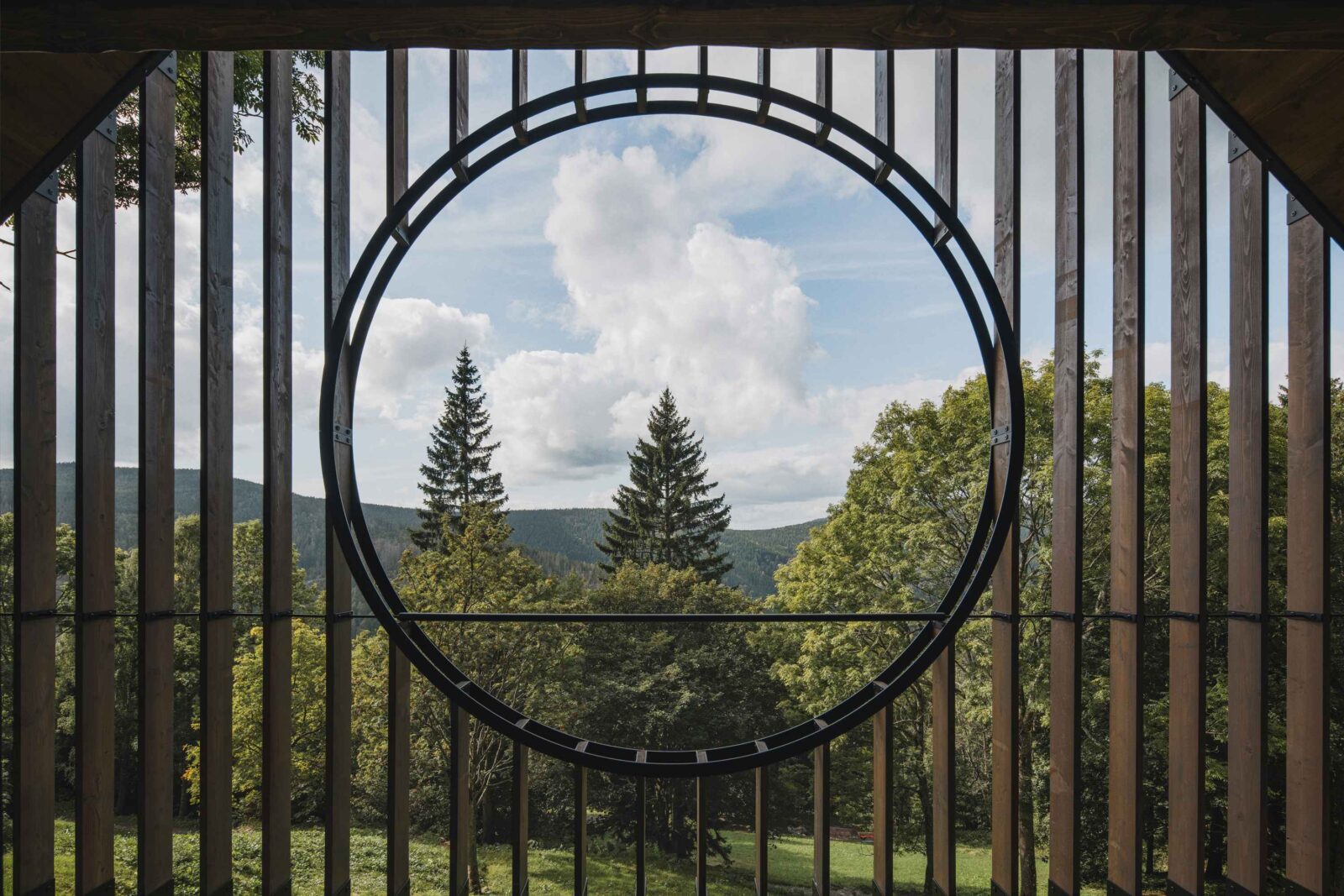
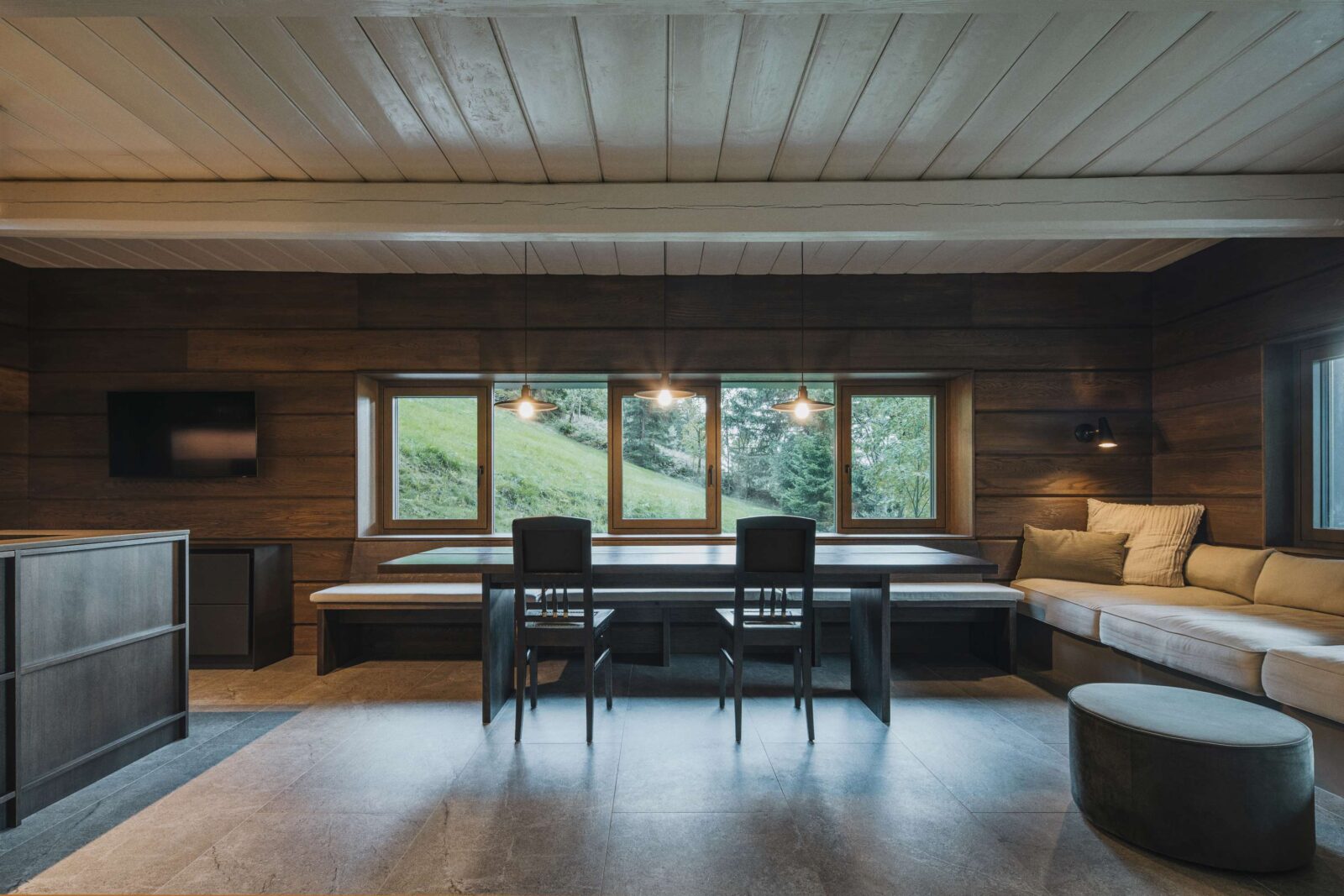
The main living room retains the atmosphere of an enclosed, safe and intimate space. Its dimensions (and subsequently the scale of the other rooms) were determined by one of the few preserved elements: the exposed beam ceiling. This defined both the clear height and the overall proportions of the space. Thanks to a combination of operable and frameless glazing, the rhythm of the traditional structure has been preserved in both the exterior and interior, while at the same time, the interior opens up to views of the surrounding landscape.
A tour indoors
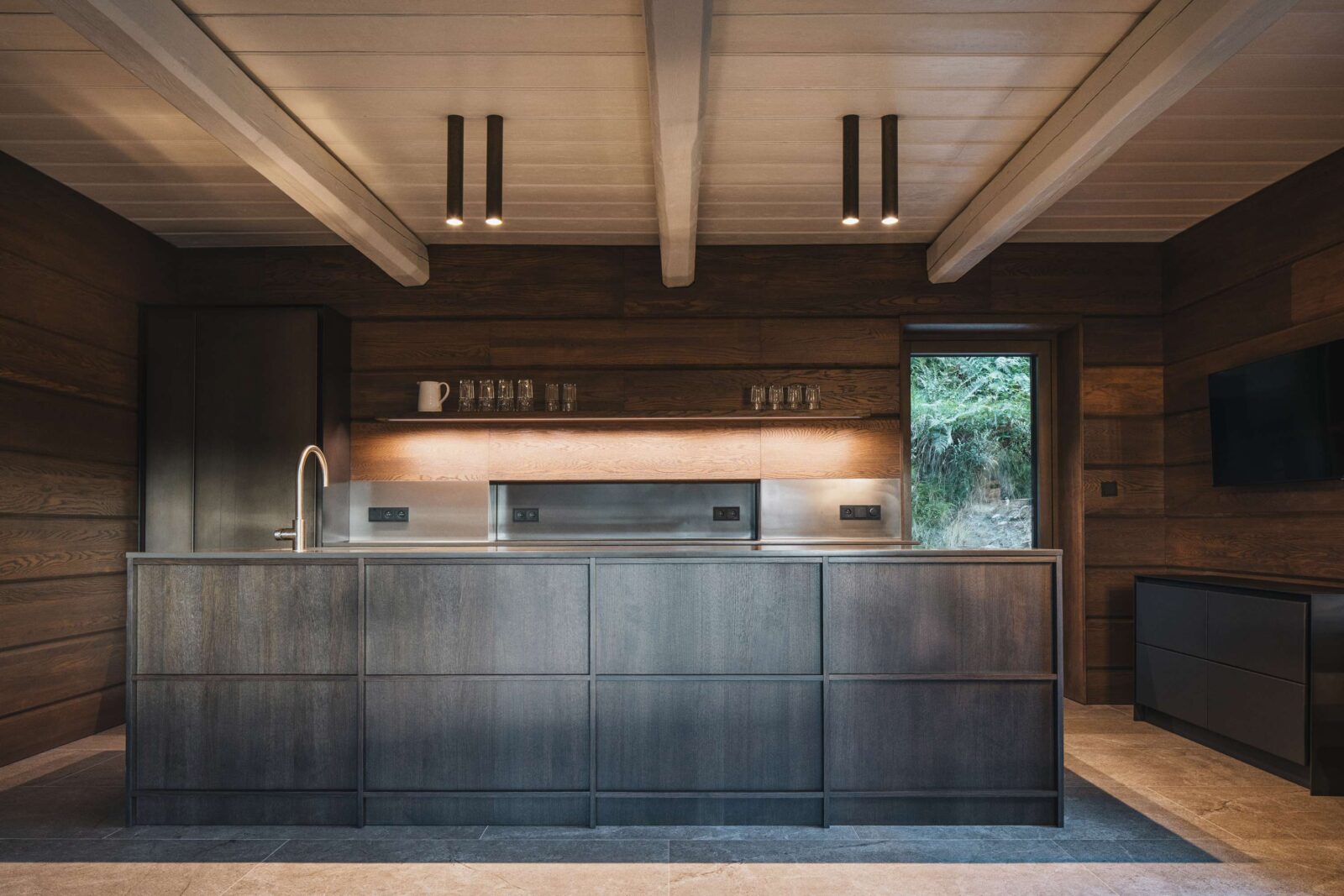
Today, the cottage offers comfortable accommodation for the family and their friends. The heart of the ground floor is the main living room, with built-in seating beneath the windows and a large table.
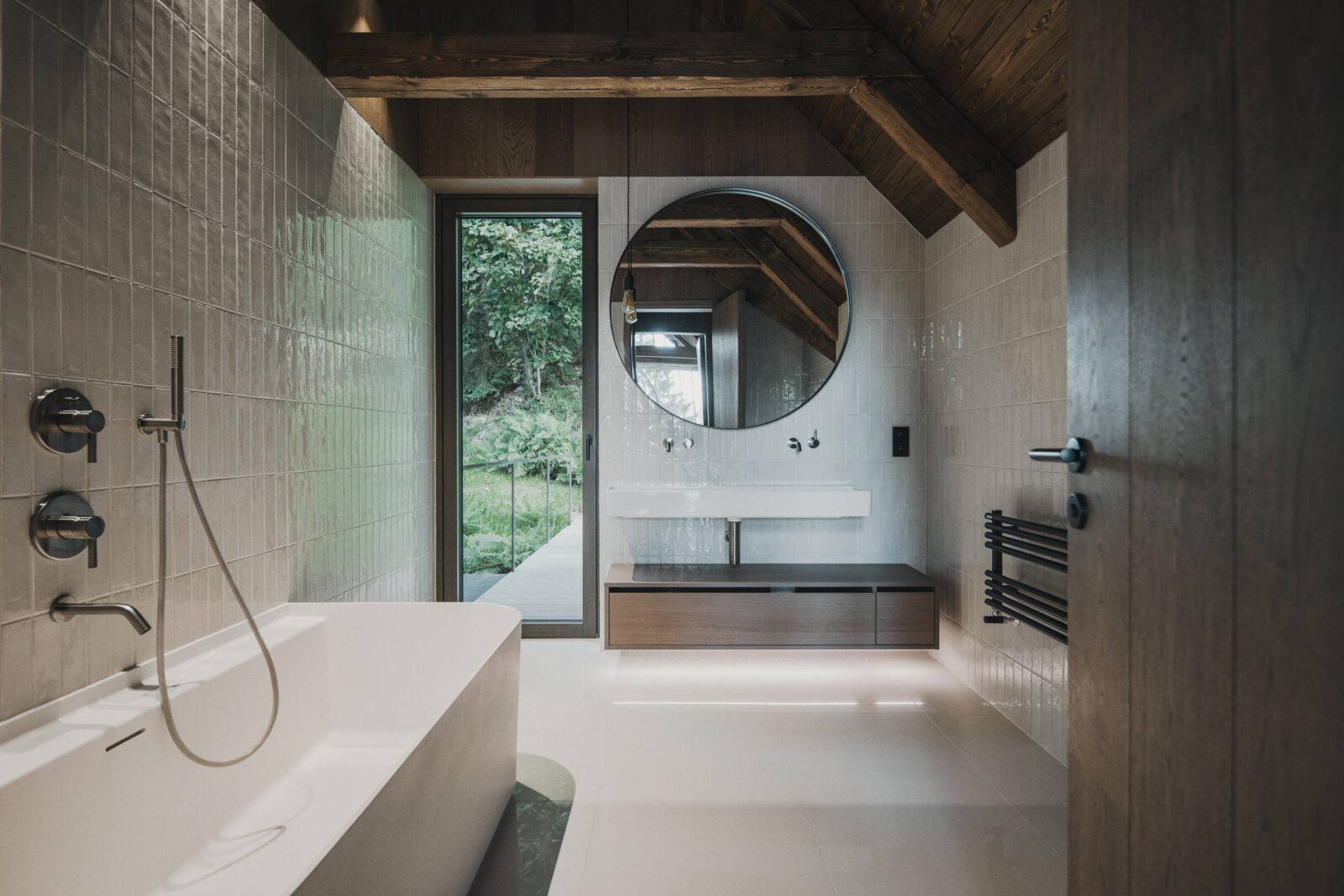
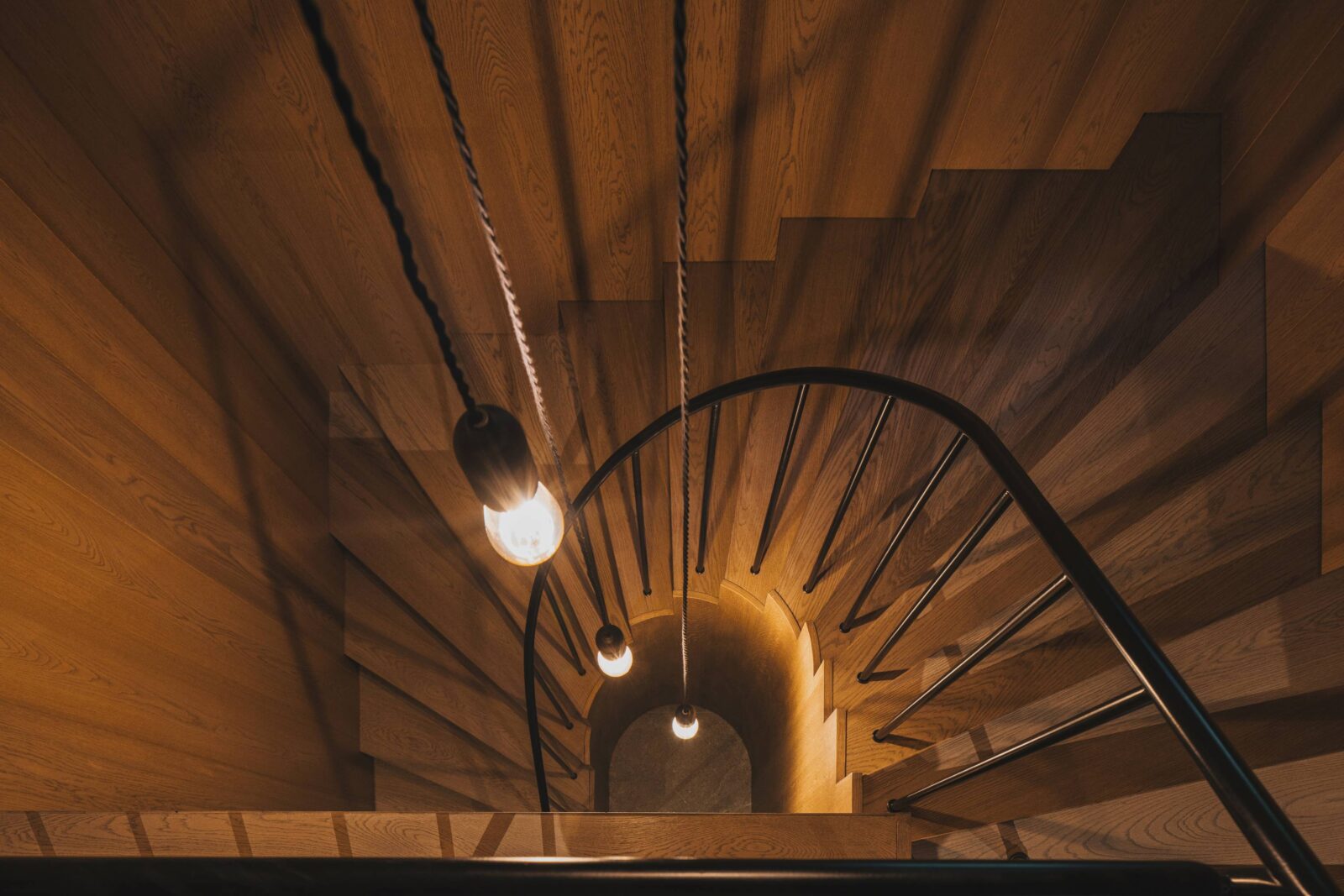
Within the volume of the original house, in addition to the living room, a guest bedroom and a staircase have been inserted. Toilets added during the socialist era have been transformed into a sauna with facilities.
Inserted between the slope and the original volume of the cottage is storage and technical space for everything that may prove useful in the mountains: a pantry, laundry room, equipment storage for skiing and cycling, a workshop, a plant room and a combined washroom for both dog and bicycle.
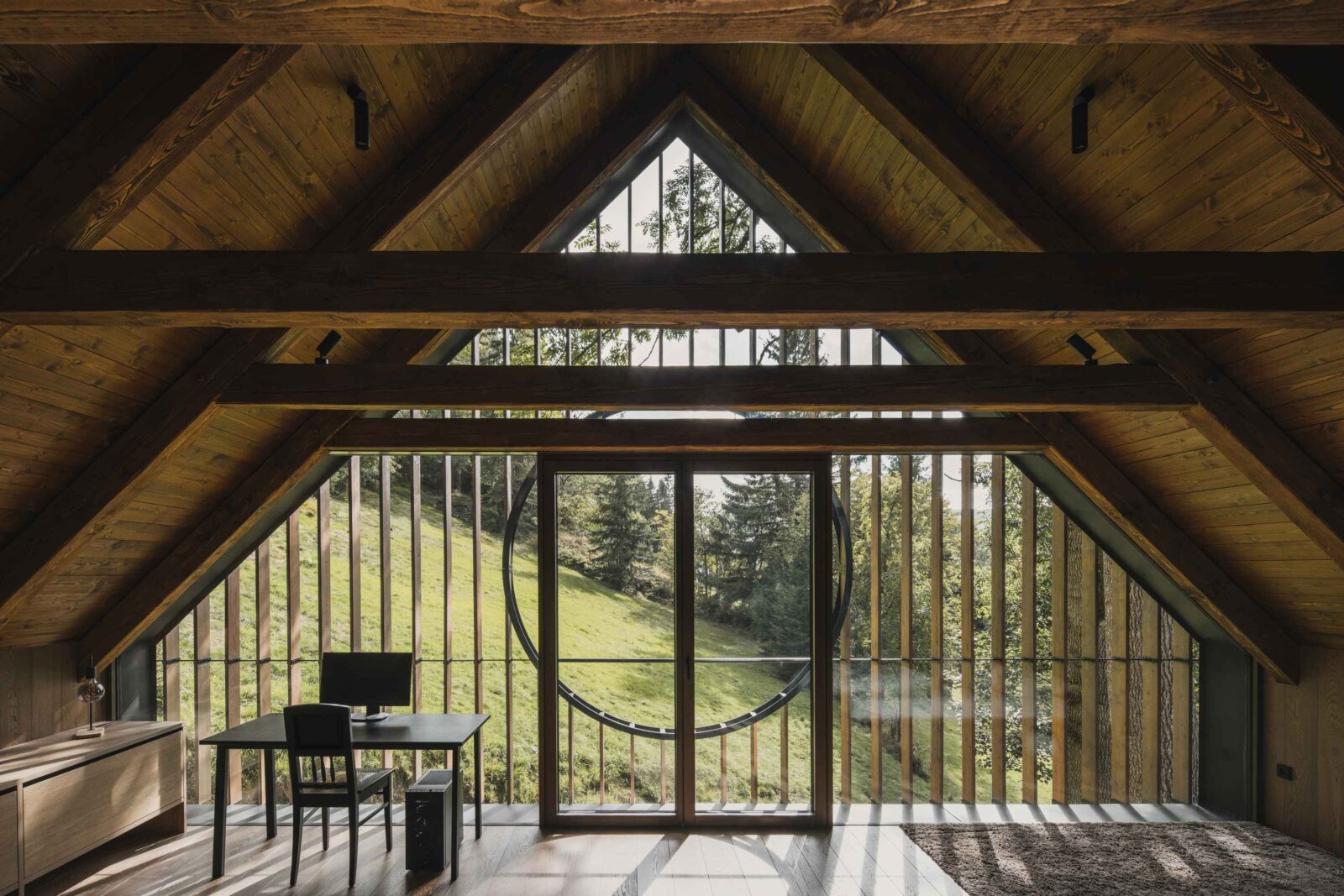
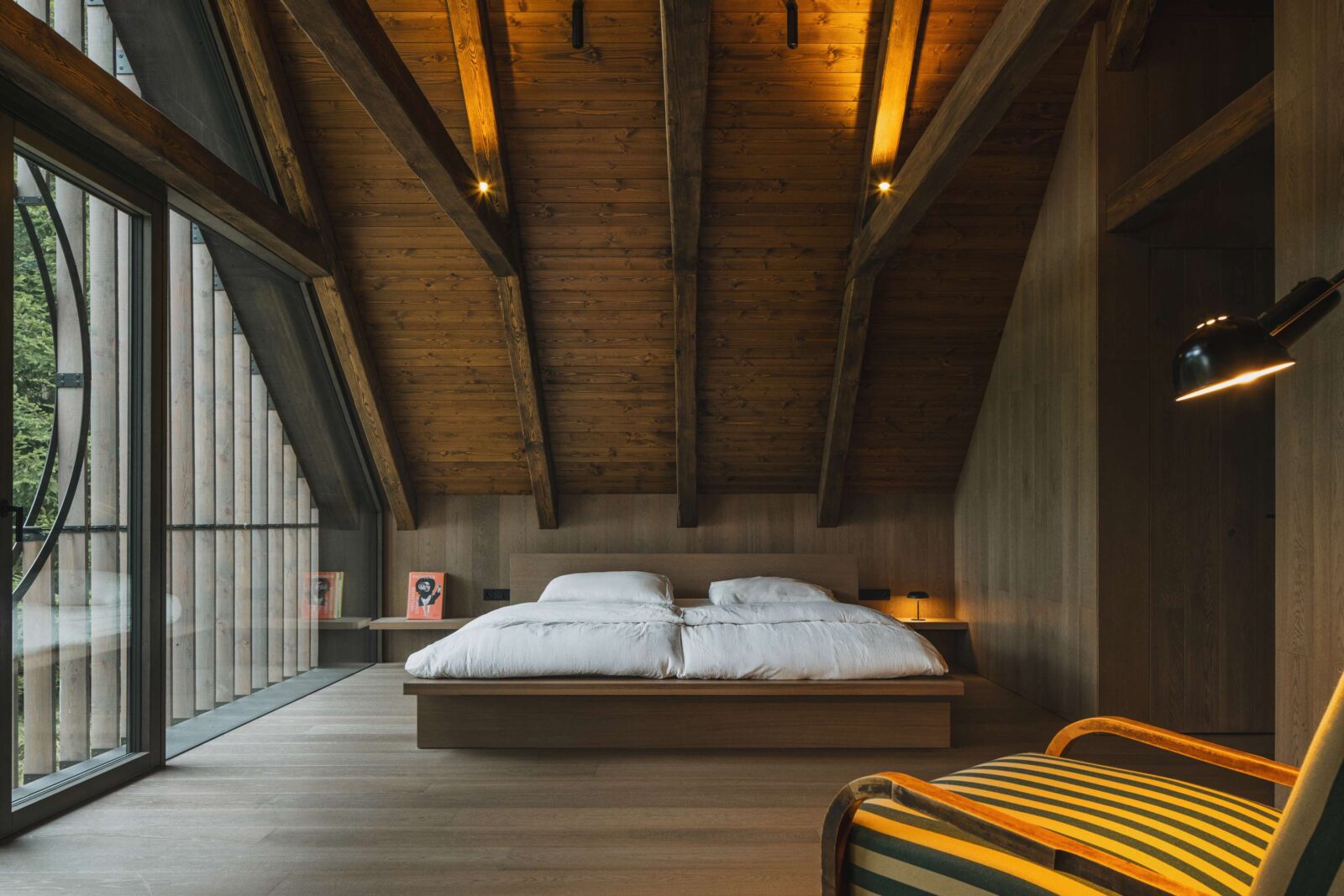
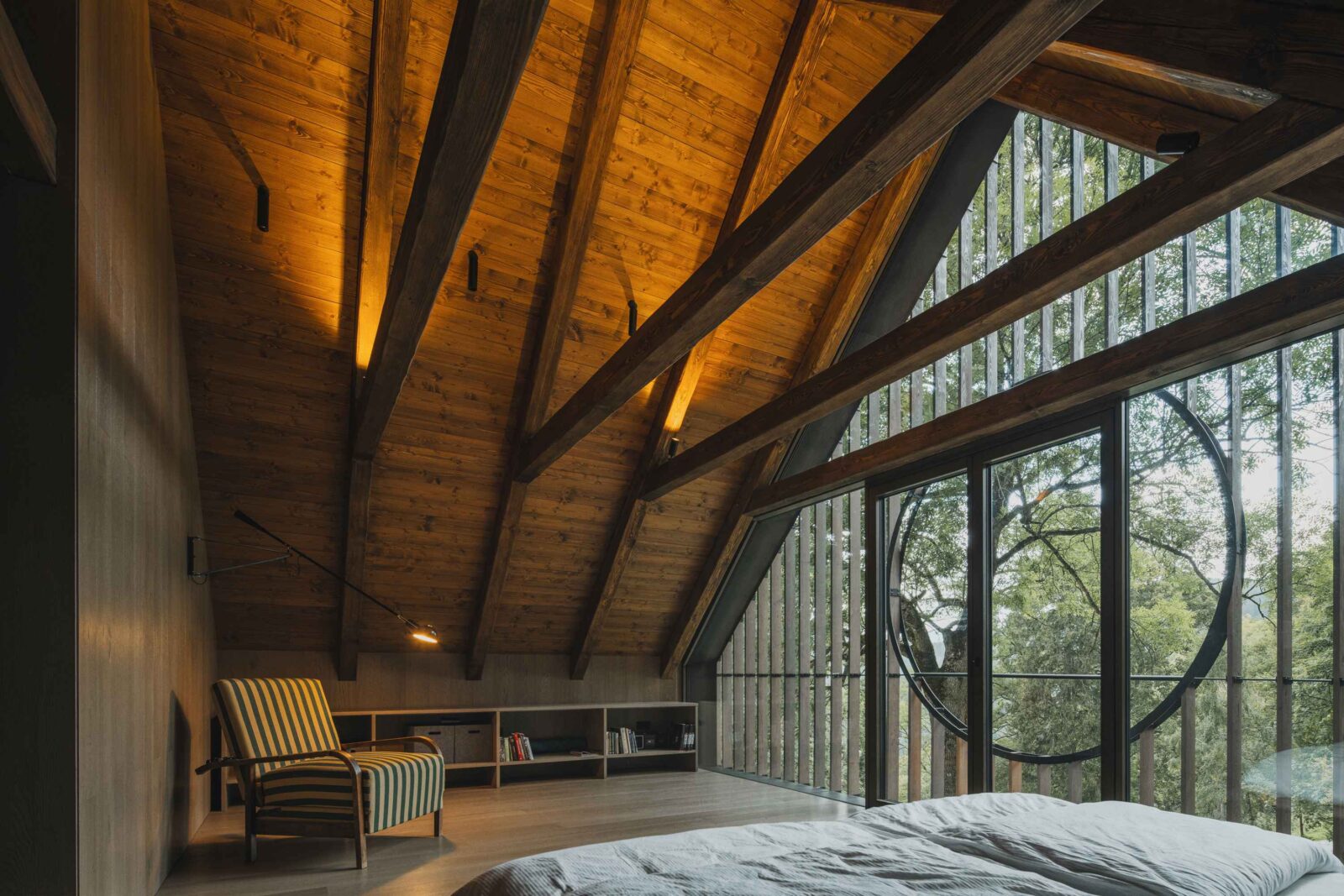
The attic spaces, in keeping with the character of traditional loft interiors, are generously open while providing privacy for individual family members. Rooms in the gables offer breathtaking views of the Krkonoše mountain ridges.
Creating self-sufficiency
The building’s technical systems were designed with careful consideration of the cottage’s location. The intention was not demonstrative technological self-sufficiency but rather the simplest possible, functional and unobtrusive operation. Despite its secluded position in the landscape, the house is connected to the electrical grid.
Heating and domestic hot water are provided by a ground-source heat pump with a geothermal borehole. The house is supplied with water from a nearby spring, and wastewater is treated in its own on-site treatment plant.
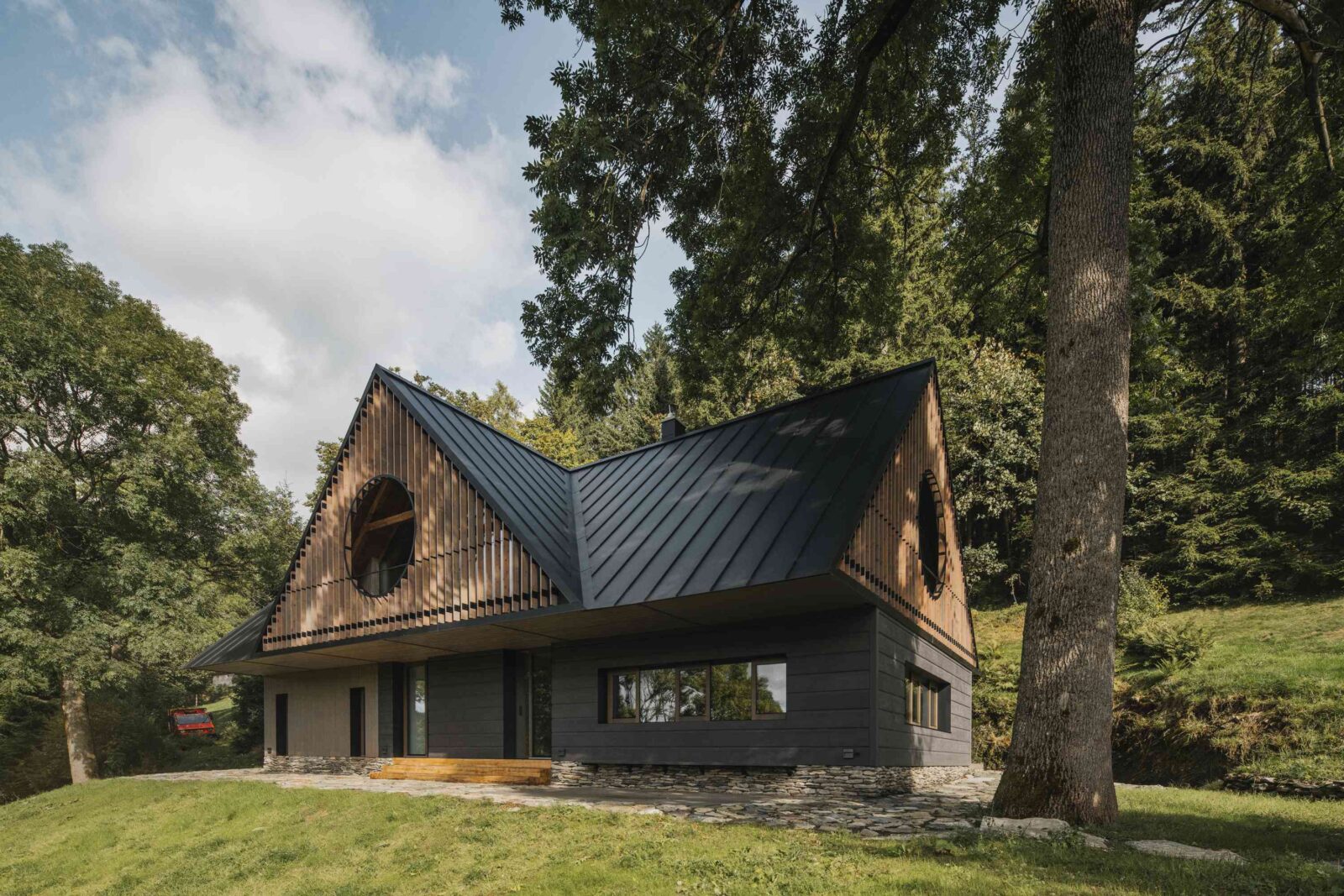
The old cottage had been smothered by extensions and makeshift add-ons, which meant that, with so little worth keeping, it had to be rebuilt. The result is a traditional Krkonoše cottage, complete with the best contemporary techniques and materials that it has to offer.


