



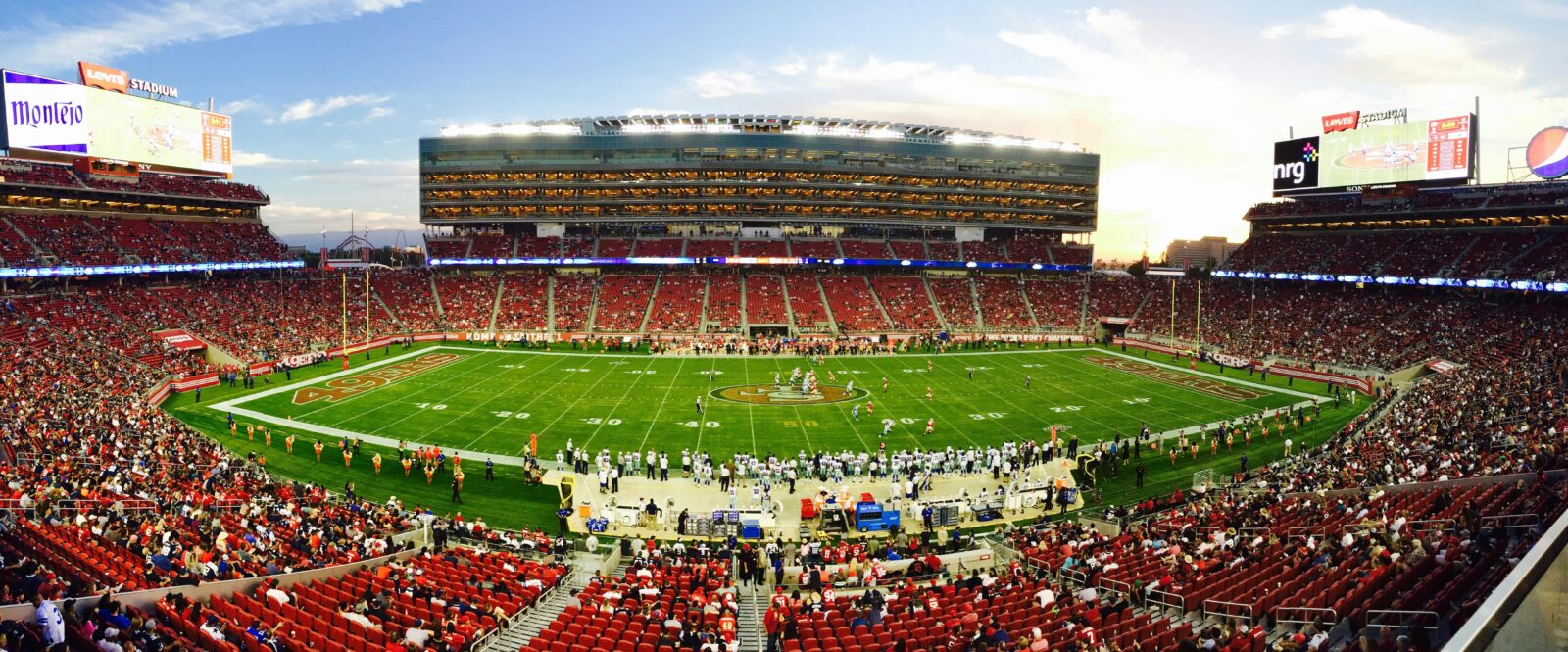
When Super Bowl LX takes place on February 8, 2026, the focus will be on the game (Seattle Seahawks vs. New England Patriots), the halftime show, and the cultural machinery surrounding the NFL’s biggest event. Yet the setting of one of the world’s most important sporting events deserves more attention than it often receives. This year, the show will be happening at Levi’s Stadium, a venue designed to reflect a specific moment in American architecture, technology, and sustainability.
A Stadium Designed in Silicon Valley Logic
Levi’s Stadium opened in 2014, replacing the San Francisco 49ers’ historic Candlestick Park. Located in Santa Clara, it was completed by HNTB as a home for the team and has also hosted other sports and music events, with a capacity of up to 80,000. HNTB is renowned for complex transportation projects, including bridges, tunnels, highways, and rail systems, and also excels in sports architecture and airport design. Built for the Bay Area’s temperate climate, the natural-grass stadium combines a large suite building with a broad amphitheatre bowl, with its exposed structure subtly referencing the engineering language of the Golden Gate and Bay bridges.
One of the less-discussed but architecturally significant aspects of Levi’s Stadium is its approach to premium seating. Instead of isolating suites and clubs as exclusive luxury zones, the design integrates these spaces into the stadium’s overall circulation paths, making them an essential part of how people move through and experience the venue. This strategy connects the revenue and hospitality logic directly with the fan experience.
The premium program includes 174 suites and a wide range of clubs and lounges distributed throughout the stadium, from the main concourse up to the rooftop and owners’ environments. This range was intentional: by placing premium spaces in different locations and offering various amenities and price points, the design supports diverse social interactions and experiences. As a result, Levi’s Stadium functions both as an elite hospitality destination and a public gathering place.
Interestingly, many of these premium environments serve dual purposes beyond game days. The stadium is physically and operationally connected to the Santa Clara Convention Center, so suites and clubs can also be used for conferences, corporate events, and large-scale gatherings. This helps the magnificent sports architecture and practical civic infrastructure support each other. They create year-round revenue streams not only for the franchise but also for the charming Californian city and its citizens.
These premium spaces were inspired by the San Francisco 49ers’ identity without making it feel like a theme park. Instead, they were inspired by a contemporary palette focused on durability, legibility of movement, and clear visual connections to the field. With this in mind, they made the VIP spots feel less like sealed-off boxes and more like social environments conceived as architectural extensions of the stadium. They prioritized experience and collective atmosphere over isolated luxury.
Sustainability as Infrastructure, Not Decoration
One of the most interesting aspects of Levi’s Stadium, especially in the context of an event like the globally famous Super Bowl, is its environmental strategy. The venue was the first NFL stadium to achieve LEED Gold certification. This led the way at a time when sustainability was still peripheral in professional sports architecture.
It seems the architects were thinking of every little detail, with solar panels installed on-site generating renewable energy; a reclaimed-water system supplying irrigation and non-potable uses; and a 27,000-square-foot green roof with a one-foot soil profile, acting as a farm that integrates a food system into the stadium’s operations.
Built for Broadcast
Levi’s Stadium was designed from the beginning with media in mind, with its infrastructure supporting extensive broadcast equipment, data connectivity, and crowd management systems, all critical for an event watched by more than 100 million people globally. That approach is especially important in 2026, when the Super Bowl halftime show will be led by global sensation Bad Bunny. The stadium’s open structure, generous staging potential, and carefully considered acoustics allow performances of that scale to land with impact, without the architecture competing for attention.
“Bad Bunny represents the global energy and cultural vibrancy that define today’s music scene. As one of the most influential and streamed artists in the world, his unique ability to bridge genres, languages, and audiences makes him an exciting and natural choice to take the Super Bowl halftime stage,” said Jon Barker, SVP of Global Event Production for the NFL. “We know his dynamic performances, creative vision, and deep connection with fans will deliver the kind of unforgettable experience we’ve come to expect from this iconic cultural moment.”
This year, Sony, an official technology partner of the NFL, announced that its technology ecosystem will play an expanded role in Super Bowl LX, marking the company’s most advanced presence at the NFL’s championship game to date.
The upcoming Super Bowl will be the first to be played using Sony’s NFL Coach’s Headsets, which debuted at the start of the 2025 season. Inspired by Sony’s industry-leading 1000X headphone series and designed to optimize sound quality and maximize durability, comfort and clarity, the headsets have supported coaches and staff across all 32 teams with consistent reliability in high-noise, high-pressure environments in all types of weather conditions. At Super Bowl LX, they will carry the strategic communication that guides the game’s most critical moments.
As is typical each year, Sony’s imaging technology will play a major role in capturing and sharing all the action from Super Bowl LX across both video and still photography. In total, more than 175 Sony cameras will be on and around the field on game day, including HDC cameras for broadcast and high-frame-rate capture, as well as many Alpha™ camera bodies such as the acclaimed Alpha 1 II and Alpha 9 III models, and E-mount lenses, including G Master™.
“Technology plays a central role in how the NFL continues to evolve the game,” said Aaron Amendolia, Deputy CIO of the NFL. “Sony’s integrated systems, whether officiating data or sideline communication, help us deliver a faster, clearer, and more consistent experience on our biggest stage.”
A Venue That Aged Better Than Its Hype
The Stadium opened in 2014, and today, more than a decade later, it’s great to see it has avoided the fate of some early-2010s mega-projects. They managed that through ongoing upgrades, like last year, when they completed $200 million in renovations that added 13,000 square feet of LED screens. Various technological updates and infrastructure upgrades have kept the venue relevant as it prepares not only for Super Bowl LX but also for other major events in 2026, including FIFA World Cup games in June and July this summer.
Beyond being an amazing venue to experience, Levi’s Stadium also plays an active civic role in its context. Publicly accessible plazas and a permanent restaurant at the northeast entry support daily activation, while pedestrian connections strengthen ties to the surrounding district.
With Super Bowl 2026 approaching, we can use Levi’s Stadium as a beautiful example of contemporary stadium design that feels more self-sustainable than excessive, also serving as an example of how large-scale venues are designed as long-term systems.
Header: Photo by Naveen Venkatesan

