Header: Pedro Mascaro
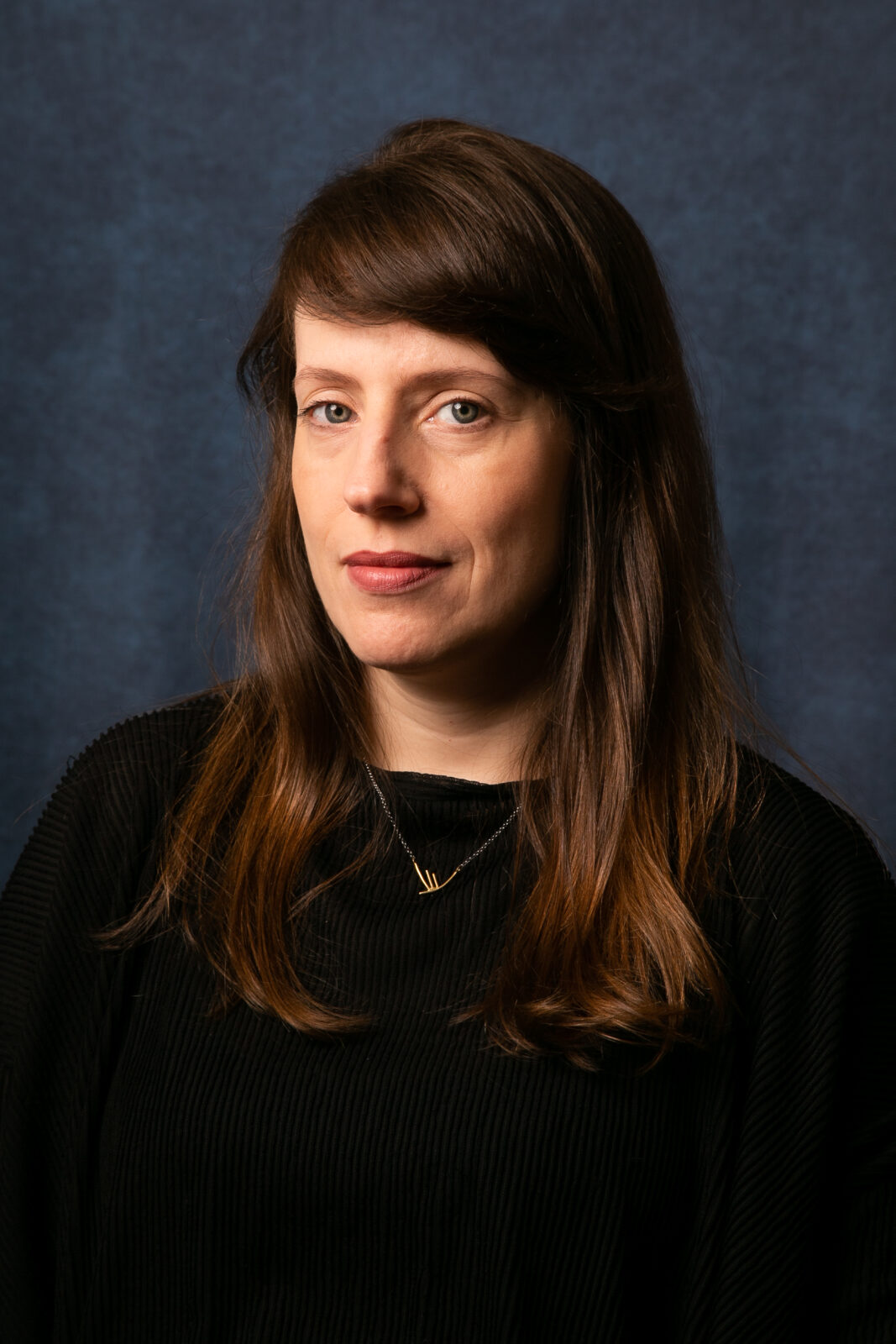
When Mariana Novaes founded her studio, Atiaîa Lighting Design, she chose a name from the Tupi-Guarani language meaning ‘ray of light’. It is a fitting title for a designer who has just been named the winner of the Architectural Lighting Design of the Year 2025 at the LIT Lighting Design Awards. Her winning project, the Brumadinho Memorial, stands as a quiet but powerful piece of work on the site of the 2019 dam collapse in Brazil. It is a space built to remember the 272 people who lost their lives, ensuring that the scale of the environmental and human loss is never pushed aside or forgotten.
In this interview, Mariana talks us through the weight of taking on such a sensitive task in her home state of Minas Gerais. She explains how she used darkness just as much as light to create a place for quiet thought, and how she balanced the need for a striking tribute with the practicalities of a rural setting. We learn about the technical hurdles of working with concrete mixed with mining waste and the challenge of keeping the night sky dark while still honouring the “jewels”, the victims, with light that looks like a flickering candle or a star.
You can expect a deep dive into how light can be used as a tool for healing and resistance. Mariana shares the specific ways her team tucked lights away to keep the focus on the textures of the memorial, and why she believes the best design happens when you stop thinking about yourself and start thinking about the person walking through the space. From the 272 glowing flowers in the concrete walls to the reflection of the 2019 sky in a still lake, this conversation reveals the technical heart and the human soul behind one of the most important projects of the year.
1. Can you tell us about your background as a designer and what inspired you to start your own studio, Atiaîa Lighting Design, back in 2016?
I graduated as an architect and urban planner, and even in college, I understood that I wanted to focus on lighting. The work of great masters, such as Louis Kahn, Alvar Aalto, Peter Zumthor, and Lina Bo Bardi, among others, made my eyes shine. I always understood architecture as the first outer layer, beyond our body, that influences our well-being, where light is a fundamental aspect of this. At that time, the technological revolution caused by LED technology was gaining momentum, and research on the impacts of light on our health was beginning to be disseminated, which soon caught my attention, making me interested in learning more about the subject.
Before doing my master’s in Architectural Lighting Design at KTH, I completed a postgraduate degree in ergonomics, which has many principles integrated into Atiaîa’s work methodology. After a seven-year period away from Belo Horizonte, my hometown, studying in Sweden and working on lighting studios in Rio de Janeiro and Singapore, I really wanted to return “home.”
Atiaîa emerged after a previous partnership fell through. I was already in Belo Horizonte and understood that there was a good reception for the service in Minas Gerais and Brazil. That’s when I saw the opportunity to become an entrepreneur as a way to apply what I believe in, based on everything I had been searching for, learning, and processing as relevant: projects that take the user experience as their starting point and contribute to their well-being as a result; consideration of visual, biological, and psychological aspects; inspiration from light phenomena and urban, social, economic, and cultural contexts; in-depth technical, technological, and aesthetic solutions; meticulous attention to detail; research-based work; close collaboration with clients, suppliers, design and engineering disciplines; and the pursuit of excellence.
Atiaîa is a word from the Tupi-Guarani language meaning ray of light, which reflects luminosity. These qualities are sought daily in our professional practice and conduct.
2. How did the tragic history behind Brumadinho shape your vision for the memorial’s lighting from the very beginning?
I remember watching the news about the Brumadinho dam collapse on TV at lunchtime, in disbelief, just over two years after the Mariana dam collapse, which had already been shocking enough. My feeling was one of great outrage. I couldn’t comprehend how, in such a short time, such absurdity was happening again and so close by, here in Minas Gerais. I wondered: hadn’t the previous collapse taught us anything? What else was needed for there to be more respect for lives, for the environment? And then we learned more news and information, even worse, about the tragedy. It was unbelievable.
Some time later, the architect Laura Penna called me, inviting me to join the project team. I knew it was being carefully chosen and that the synergy found in previous projects with GPAA had created a lot of trust between us. I felt very honoured to take on this commitment with her. The first time I saw the project developed by Gustavo’s office, I was deeply moved and felt the profound respect dedicated to the victims’ families. Beyond respect, values such as humility and care were premises for the development and implementation of the entire project.
Developing the lighting design wasn’t just about my vision. Before that, there were feelings and perspectives of the victims’ families and how architecture transformed them into a solemn space against oblivion, for collective reflection.
In my mind, since I learned about the tragedy and read the architectural project, I could only think about lighting a candle, this gesture of tribute, remembrance and consideration, so ancient and present in many cultures. The glow of the flame, which symbolises the presence, in memory of those remembered, while simultaneously illuminating and comforting those who light it. This is what I wanted to convey with the lighting design.
3. How did you use light to make the experience more immersive for visitors, not just visually but also on an emotional level?
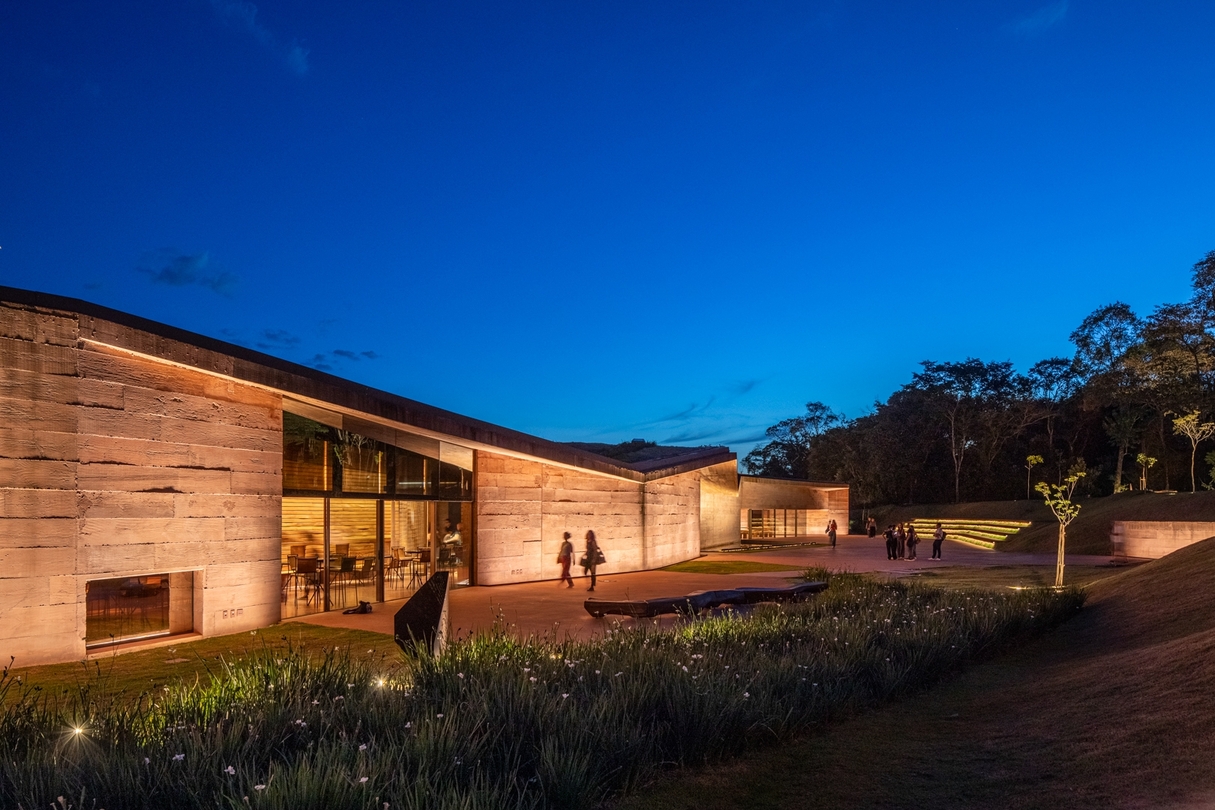
The presence of light guides the eye, highlights architectural elements such as materials, details, and the space itself. It reveals messages and symbols. But its absence invites pause, reflection, and introspection. I believe it is the balance between light and darkness, where there are contrasts and gradients, that allows these symbols and meanings to be striking. The light distribution, the dosage of intensities and quantity of light, the choice of colour temperature, and where light falls were some of the strategies used to create the Memorial’s atmosphere.
Visiting it during the day and at night are distinct but complementary experiences – equally moving and important. Visual experiences create meanings as well as feelings. Individually, each person experiences the Memorial in their own way.
4. Could you share how you used light to reveal or emphasise specific architectural gestures in the memorial?
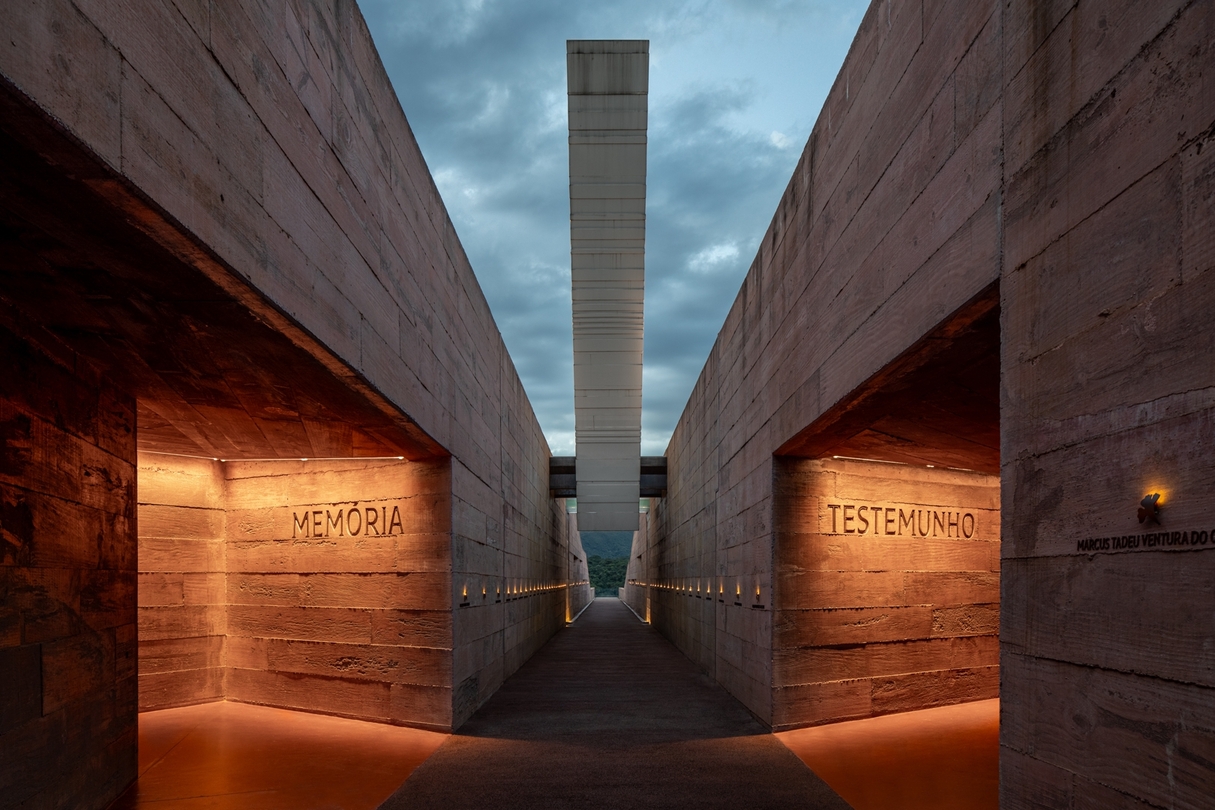
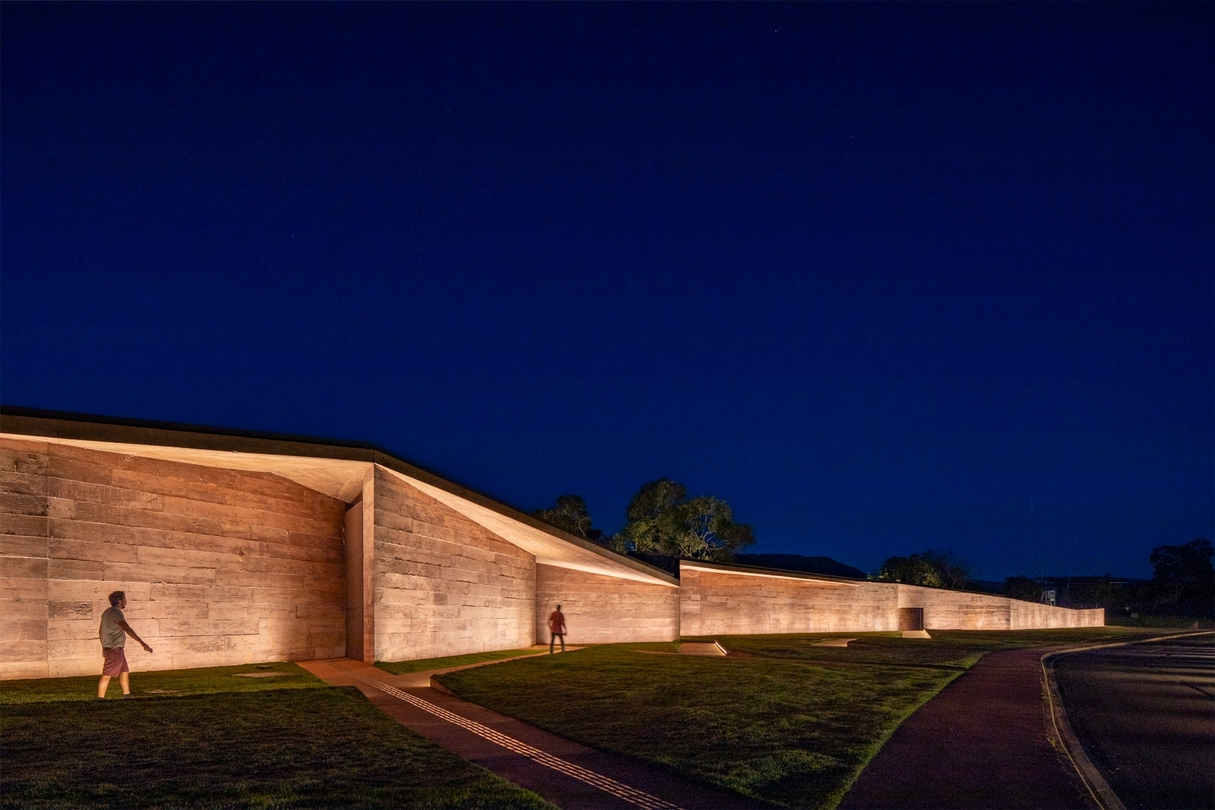
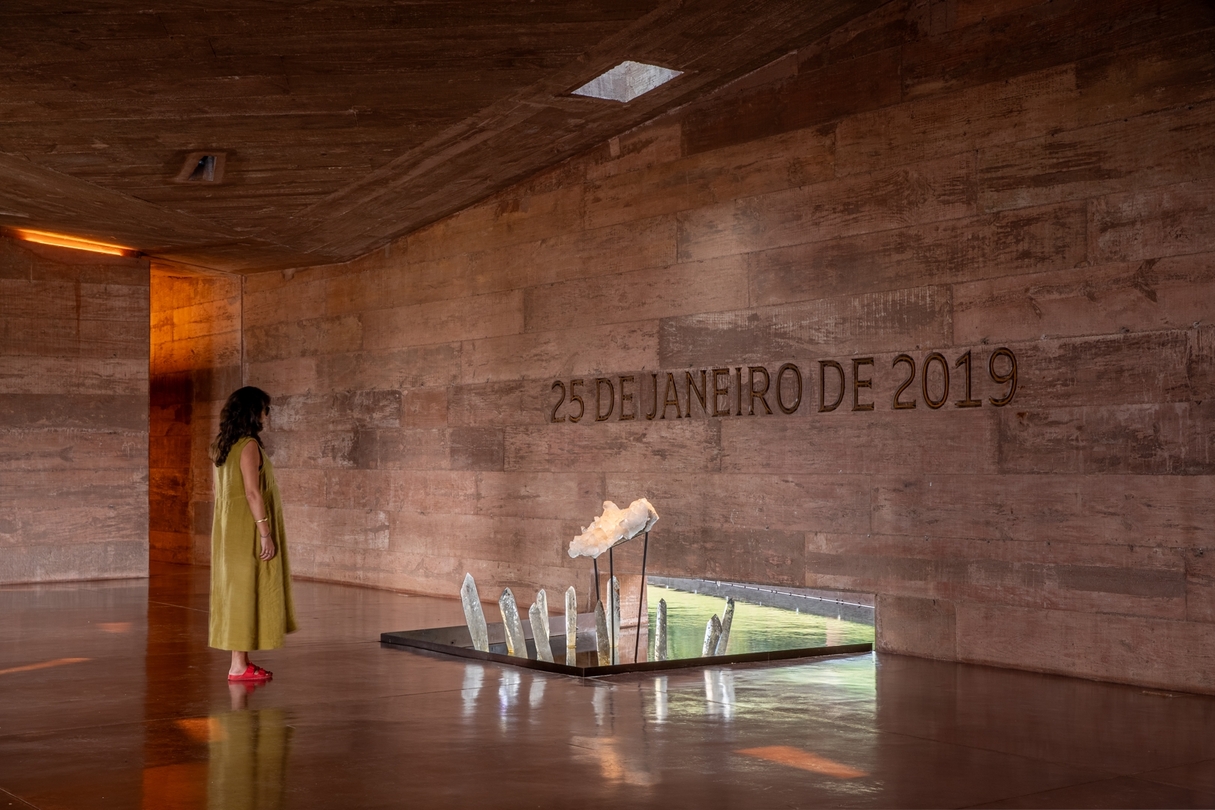
We interpret and attribute meaning and significance to what we see and experience. Therefore, nothing is better than inviting our gaze to perceive the interaction between light and materials, and our bodies to feel its impact on space and on our experience. For example, the entire architecture of the Memorial is made of concrete mixed with pigment from mining waste. The Entrance Pavilion confronts the visitor with the brutality of the tragedy. Its front facade has fragmented blank planes, illuminated by grazing uplighting solutions, drawing attention to the texture and colour of the concrete. The amount of light is not bothersome but striking, highlighting the transition between the exterior and interior, indicating a solemn space and emphasising the contrast with the interior of the entrance hall. This hall features small openings in the ceiling and large planes of pigmented concrete. The darkness invites reflection on the shock of the dam rupture and the overwhelming force of the mud.
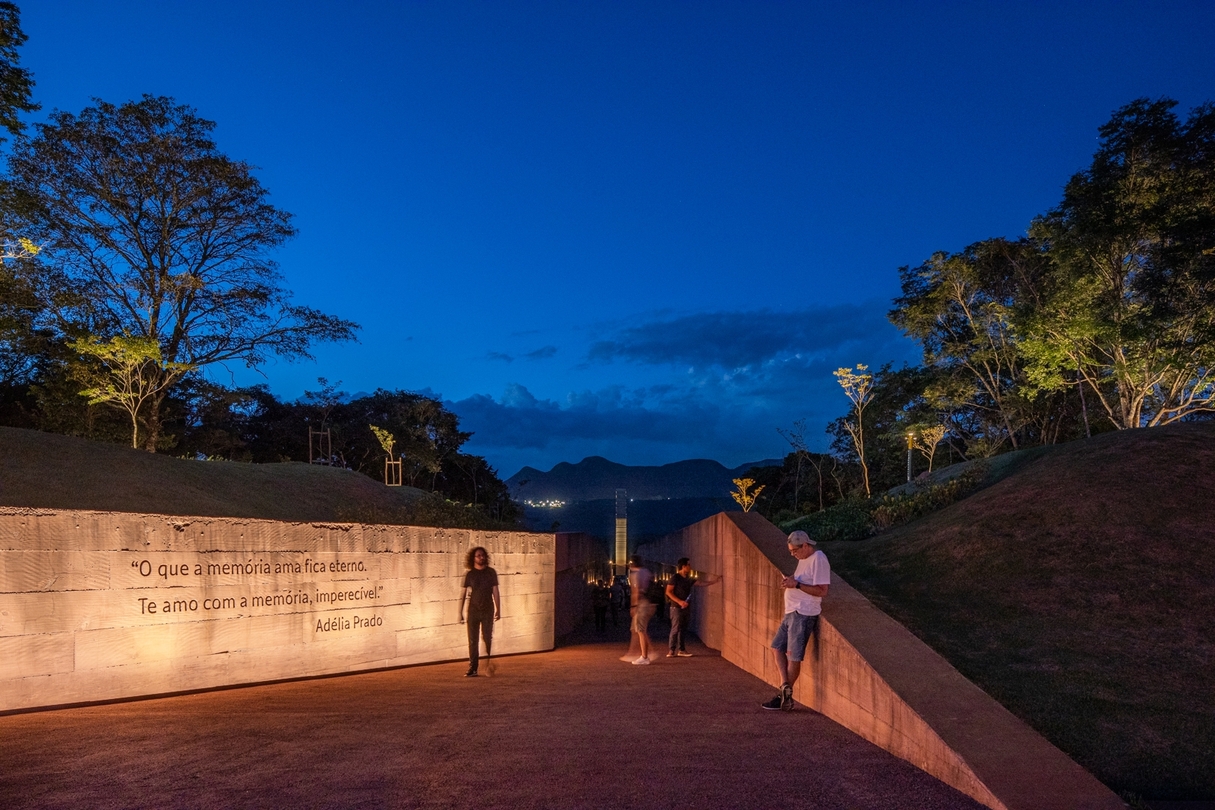
There is a focal point: the crystal druse, a tribute to the jewels, as the families affectionately refer to their loved ones lost in the tragedy. We integrated ellipsoidal projectors into the skylight above for highlighting the main druse. The other druses in the reflecting pool have integrated fibre optic lighting, developed by the designer Demian Quincke. For guidance and to mark the light projection on the floor, each skylight integrates a mini adjustable projector with an ellipsoidal reflector, lens for zoom adjustment, beam adjustment, and framing shutter. The concrete walls have slots with integrated profiles with translucent diffusers, indicating the limits of the space and the transition to other areas. Just like the facades of the entrance pavilion, the Poem located at the beginning of the Rift is illuminated, highlighting the text and the tactile surface of the concrete, revealing the “scars” generated by the tragedy.
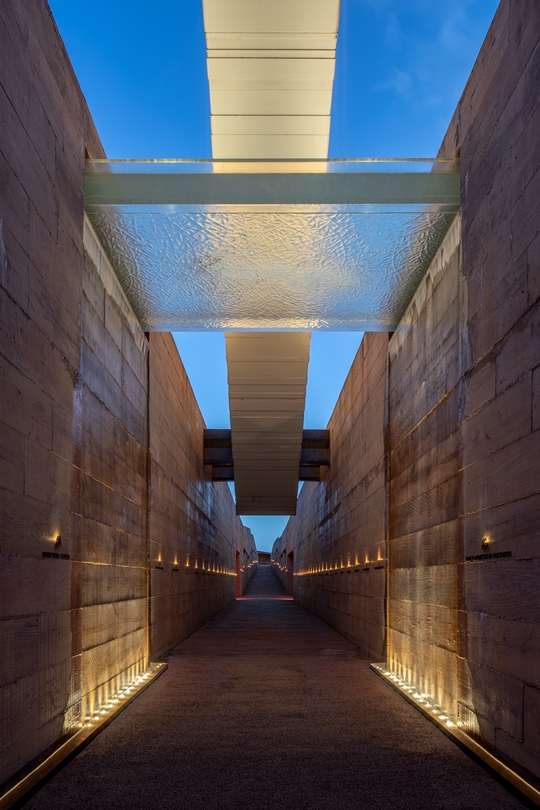
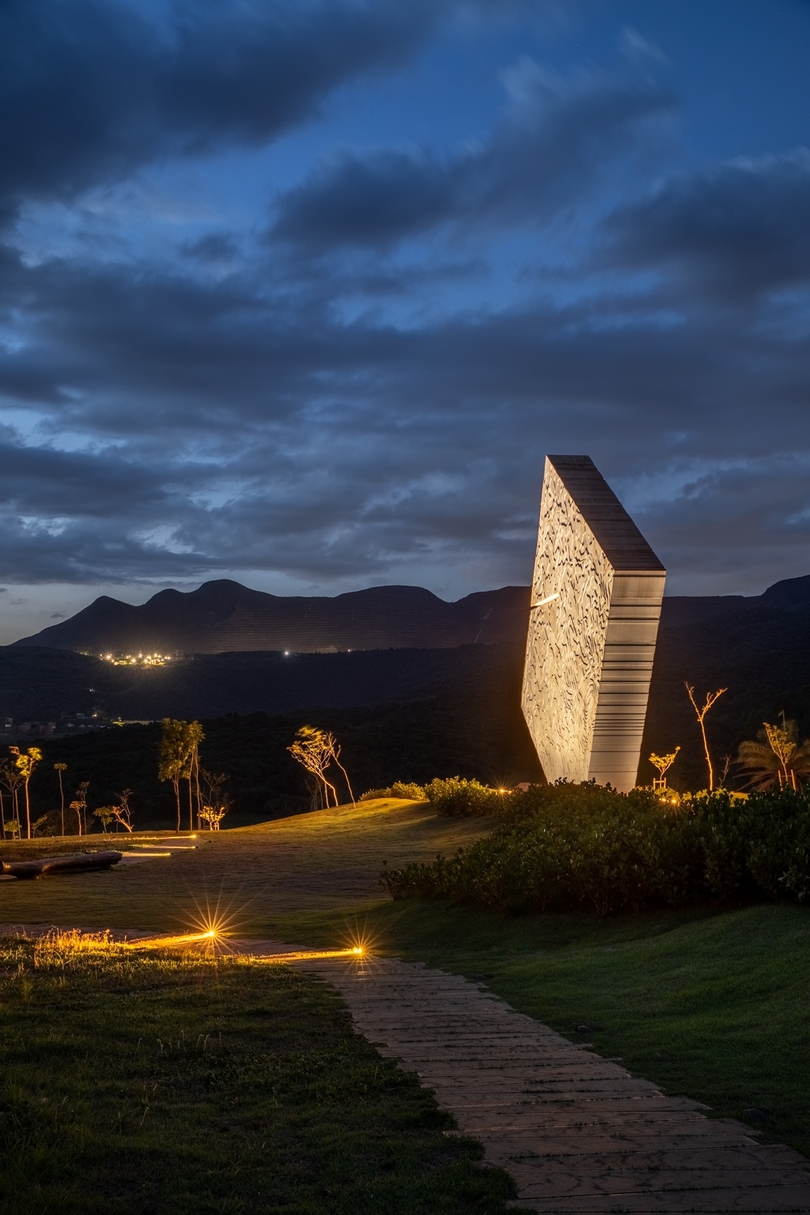
At the central point of the project, an 11m x 11m square sculpture rises like a head suspended over the path of the rift, representing humanity in its failure. Special linear luminaires are mounted at the top of the rift’s retaining wall, parallel to the monument, mounted in a continuous line, with asymmetrical lenses and wallwasher uplighting distribution to illuminate the lateral surfaces of the Monument, which have the map of Córrego do Feijão embossed in high relief.
At the point where the “tears” cascade from the Monument, fibre optic endlight terminals with flat glass lenses are integrated into its structure to provide downlight illumination of the water, which falls into a glass container before flowing down the concrete walls of the Fissure. These walls also receive fibre optic endlight terminals with lenses integrated into concrete to provide uplight illumination of the water cascade. Furthermore, the colour rendering chosen for the project aimed to ensure a more natural perception of the architectural colours, avoiding significant distortions. The chosen colour temperature was 2700K, seeking a colour appearance that would contribute to creating a comforting atmosphere.
5. Is there a specific lighting detail or sequence that you feel best captures the character of this project?
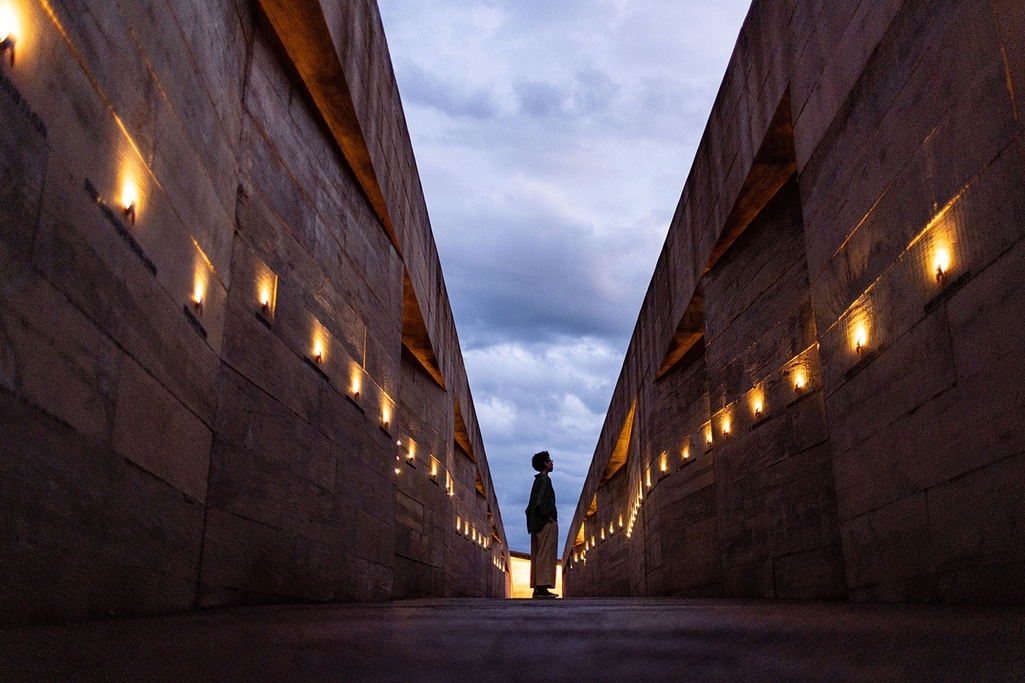
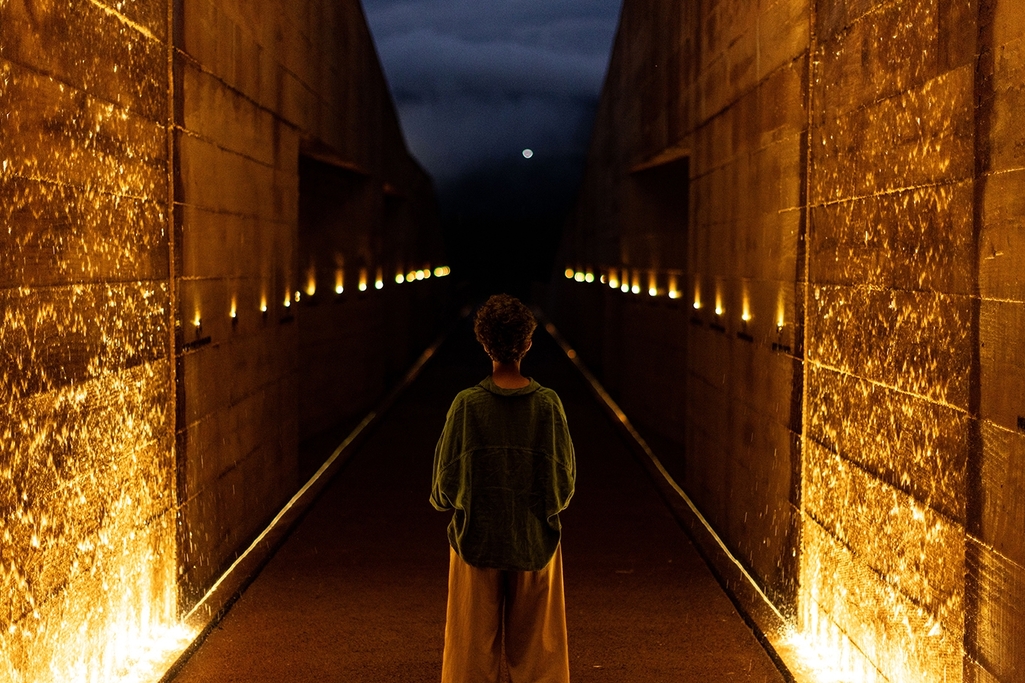
There are two areas of the project that I would like to highlight. The first one: the rift – the beginning of everything, which resulted in the dam’s collapse. It was marked on site by the architecture so that day would not be forgotten. During the day, 272 ipê flowers accompany the names of the victims, fixed to the vertical planes of the space. The ipê flowers are a symbol of resistance, of resilience. At night, the flowers light up – these are fibre optic terminals embedded in the concrete.
The impression we get when descending the rift is of being in a procession, among 272 candles. But, as we know, in a procession, the one who pays tribute is the one who walks the path and carries the candle, which, at the Memorial, would be the visitor. However, in the rift, the ipê flowers, the symbol that represents each of the victims becomes light – they are present, they are brilliant. Symbolically, those who are honoured illuminate the path of those who visit and walk through the rift.
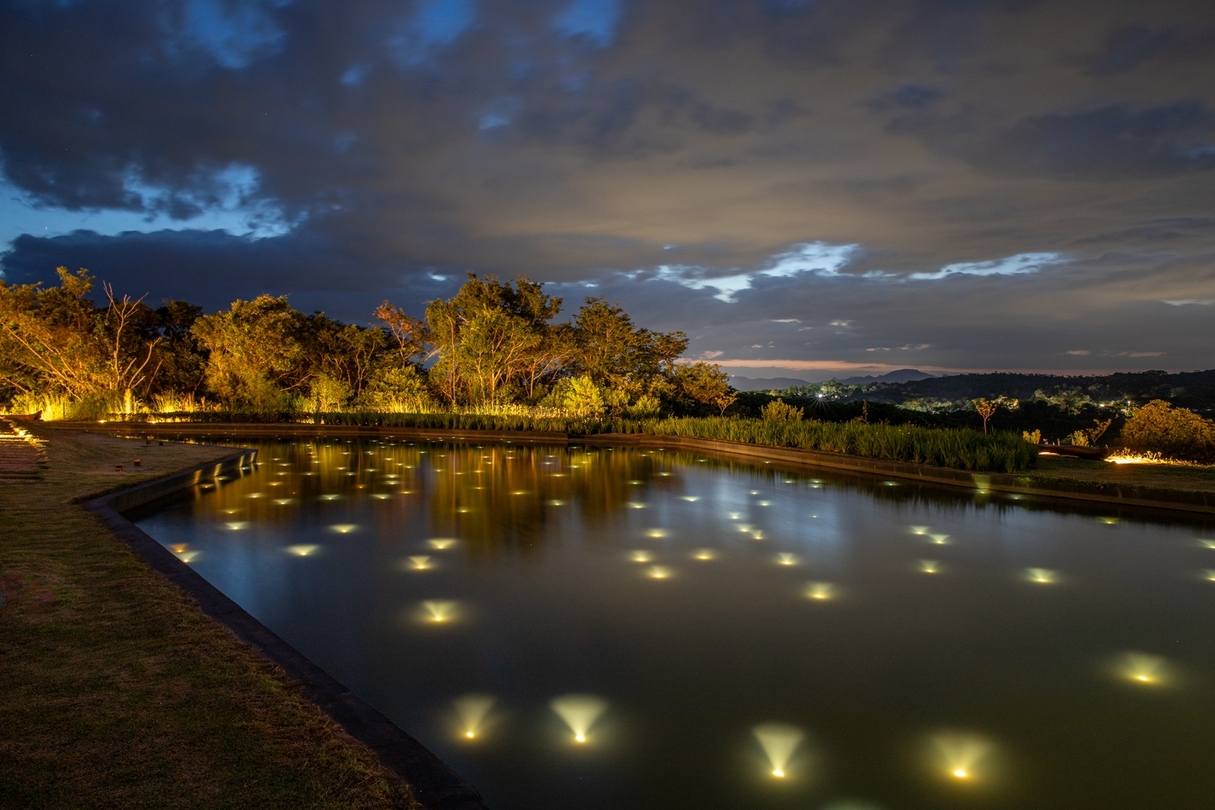
The second one: next to the rift’s viewpoint, where the landscape of the valley affected by the mud unfolds, there is a lake where we pay a final tribute to the victims. The lake reflects the sky during the day. At night, the light from the Córrego do Feijão Mine remains lit, where the operations to repair the territory and search for the victims still missing continue. At the bottom of its water surface, 272 underwater fibre optic terminals programmed to oscillate as a starry sky effect were installed. As a basis for the design of the points of light, a map of the celestial sphere projected onto the site on January 25, 2019, at 00:01, the date of the dam rupture, was used.
Therefore, it is possible to look to the horizon with some hope. Light is presence, light is life.
6. What concrete decisions did you make to ensure the lighting respected the rural context, minimising light spill and impact on the environment?
I sought to balance the solutions to honour the memory of the victims with the need to preserve the night sky, fauna and flora, directing light where needed. Most of the project’s strategies sought to illuminate horizontal surfaces along the pathways or are contained within the interior spaces. Contrast is welcome and is present in areas that are sometimes illuminated and sometimes not highlighted at all, with only spill lighting or lighting from specific elements, considering visual landmarks and areas of affective importance.
Despite the use of uplight solutions, such as grazing effects for concrete walls, wallwashers for the Monument and in-ground fixtures for selected tree canopies, light spill was mitigated where possible.
Facades have eaves which helps shielding from light dispersion, the use of high efficacy LED fixtures, the consideration of life maintenance standards (LM70 and LM80), the choice of optical controls with additional accessories, such as louvers and light shields, the choice of precise luminous flux and intensity, the specification of lighting fixtures manufactured in Brazil, minimizing the carbon impact of transport, are some of other strategies considered.
Also, the Memorial remains lit only during opening hours, minimising power consumption and light pollution.
7. Can you describe your collaborative process with the architecture and landscape studios? How did you coordinate so that light, architecture, and nature complemented each other?
At Atiaîa, we always work in a multidisciplinary way: we constantly communicate with the design disciplines (architecture, interiors, landscaping, signage), engineering, project management, suppliers, manufacturers, installers, and construction companies, as well as the client. The Architecture’s vision for the Memorial was very clear from the beginning, which facilitated the development of all projects, as well as their coordination and compatibility. We held meetings and workshops to discuss and align all concepts and integration needs.
With the landscaping team, we sought to understand the existing species and their vision for the night landscape. Despite the symbolic importance of the 272 yellow ipê trees scattered across the site, we agreed on the concept of light patches in the grove, without illuminating all of them, for example.
At Atiaîa, we always want to see the architecture illuminated – we try to avoid visible light fixtures and light sources whenever possible. On the other hand, the architectural design of the Memorial contains many symbols and messages – light needed to be present, to present itself as brilliance. We exhaustively studied all the solutions with the architecture and the signage teams, seeking to integrate the lighting solutions. We made several prototypes and lighting tests so that decisions could be made together. I believe that, in this project, this synergy makes it difficult to separate the analysis of one discipline in relation to another.
8. Was there a particular challenge that forced you to rethink your approach, and how did you resolve it?
As I mentioned earlier, the architects’ vision for the project was very clear from the beginning, which guided all disciplines well. We held many alignment meetings. Therefore, we didn’t face challenges in terms of rethinking, reworking, or changing the project’s course, but rather in terms of making it feasible. For example, the schedule was very tight for a complex and special project that demanded research and innovative solutions for integration with the architecture. Therefore, our development team was dedicated to prioritising design solutions for the project.
The coordination between disciplines required a lot of dedication and dialogue, as the lighting design needed to be integrated with architecture, interiors, structures, hydraulics and fountains, waterproofing, signage, landscaping, air conditioning, and sustainability, in addition to electrical installations and automation discipline. We held several workshops until everyone was on the same page and all integration details were resolved.
The budget was limited; it wasn’t possible to specify everything I wanted or solve everything exactly as I wished, but in the best way possible. We did some value engineering, ensuring cost-effectiveness without compromising quality and the idealised concepts for the project.
In technical terms, which lighting solution would allow cabling to run long distances, be installed outdoors, and offer durability and easy maintenance on concrete slabs and retaining walls mixed with mining waste pigment – whose behaviour and reaction over time we still don’t fully understand? We researched what the market could offer and opted for fibre optic solutions.
How do we raise awareness among managers and the construction team of the relevance of each detail and the importance of each desired result, given the pressure of meeting schedules and contracts? And, similarly, how to deliver technical project responsibility before the realisation of all the prototypes necessary to prove the special solutions conceived – prototypes that would only be developed on-site, during the construction, which also had a very tight schedule? The approach was to present and re-present the project as many times as necessary, reinforcing the project’s purpose, as well as following up on the prototypes and lighting tests, until they were properly completed and recorded in reports so that nothing was left behind.
How to change the culture of luminaire installation to fully meet LED system solutions? How to improve the maintenance culture of LED systems? We sought to present and deliver as much technical information as possible, in addition to bringing installers closer to manufacturers, to facilitate the clarification of doubts and the success of installations.
Some of these challenges are common in carrying out any project in the market. It is up to us to be resilient and proactive in promoting cultural changes, giving due support to the project’s implementation.
9. Congratulations on receiving the LIT Lighting Design Award! How do you see this award reflecting the work and commitment of your studio?
Thank you, LIT and Jury, for this fantastic recognition! I am very happy; it’s a gift for me and for the studio – we are celebrating Atiaîa’s 10th anniversary in 2026!
The Memorial project is very special. It is a space of great significance and importance, so I feel very honoured to present its purpose to the world through this award.
Receiving the Architectural Lighting Design of the Year award is yet another incentive for the work at Atiaîa to continue firmly aligned with our values, in pursuit of quality, excellence, and transcendence, always maintaining a critical eye, with meticulous attention to detail, and becoming increasingly structured and vibrant, seeking to develop spaces that promote well-being and enchantment for those who use them.
I am grateful to each client, partner, supplier, and collaborator. I am very proud of each project developed, the endless learning experiences, and all the paths walked through.
10. What are the next steps for you and your studio, and what would you say to emerging lighting designers who hope to create projects with a strong social and emotional impact?
I hope they are as prosperous as this first decade. I hope that we have even more incredible work opportunities, that we can grow with each challenge received, that we can consolidate more successful partnerships, and that we can strengthen our international collaborations.
What I can say to those who are starting now, regardless of whether they are involved in projects with social and emotional impact, is that the projects we do are not about us, but about others, especially those who will experience the built space. I believe architecture is the first layer, beyond our bodies, that stimulates our experiences and makes us happier, more sensitive, and healthier. We cannot forget that architecture is about people and for people. Listening is fundamental; it’s important to be together. This doesn’t mean you will do exactly what your client imagined or wanted, because you have ethical and technical responsibilities. But I believe it’s important to see each project as a unique opportunity to go beyond what is expected. I believe that this search for transcendence is always a good path, and it’s when we can contribute, in some way, to shaping a better world.