

Header: Starboard Hotels
For many travellers, the humble airport hotel is merely seen as a place of transit, rarely thought of as a destination on its own. But at Ibis Styles Gatwick, the journey begins long before guests reach the runway.
High-quality design and themed interiors
Located in the Manor Royal Business District and less than 10 minutes from London Gatwick Airport, one of the world’s busiest single-runway airports, this airport hotel has been transformed through a £14 million redevelopment and refurbishment plan by Nottingham-based Philip Watts Design for Starboard Hotels.
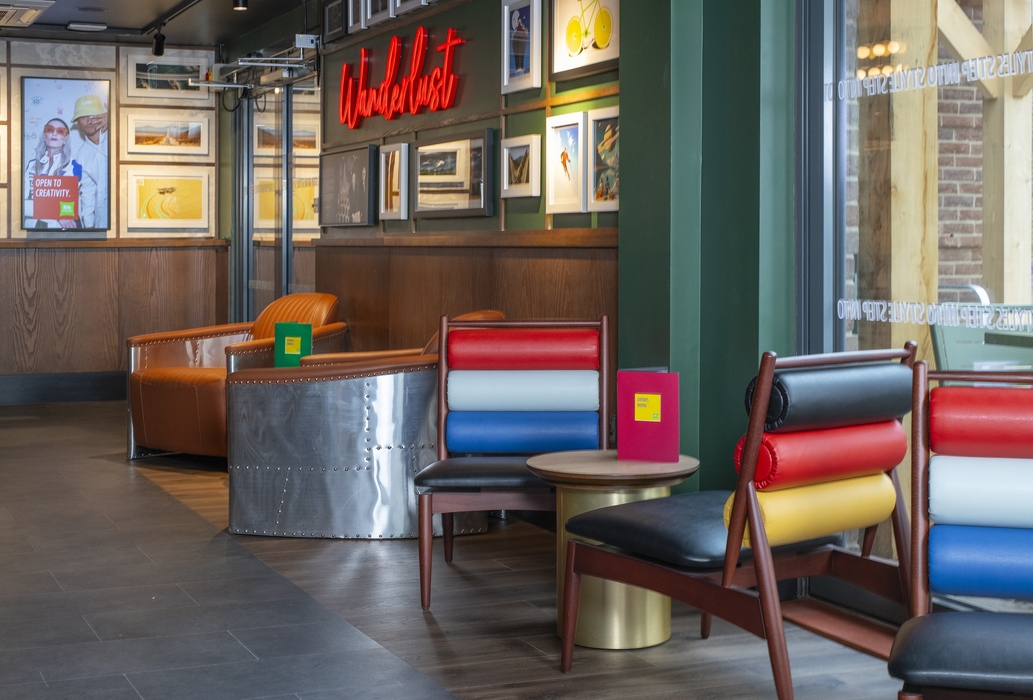
While Ibis Styles hotels are typically positioned as a budget-friendly option for guests around the world, they are proud to be a part of the Accor Group’s economy portfolio. The hotel sets itself apart through its higher-quality design standards and themed, design-forward interiors that reflect the character of each city.
Wanderlust as a theme
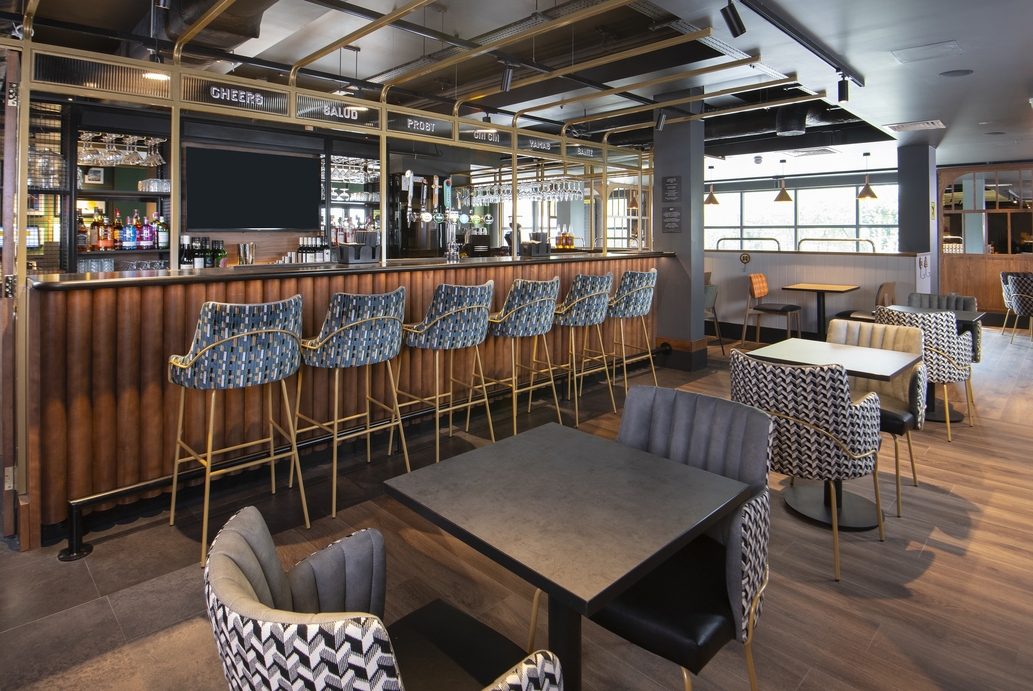
Instead of gravitating towards the conventional, purely functional language of airport hospitality, the design of Ibis Styles Gatwick is driven by the theme of ‘wanderlust’. This narrative sparks travel, anticipation, and discovery amongst guests, inviting them to engage with the space instead of simply passing through.
Throughout the entire space, ‘wanderlust’ is woven into every detail, experienced as an emotional journey rather than through literal imagery. Design firm Philip Watts Design translates this theme by balancing subtle nods to vintage travel with contemporary textures and patterns, creating a space for guests to explore the interiors in the same way they might explore a new city.
It’s a tribute to both nostalgia and the spirit of curiosity, transforming waiting, arrival, and transit into experiences in their own right.
Hospitality experience for every traveller
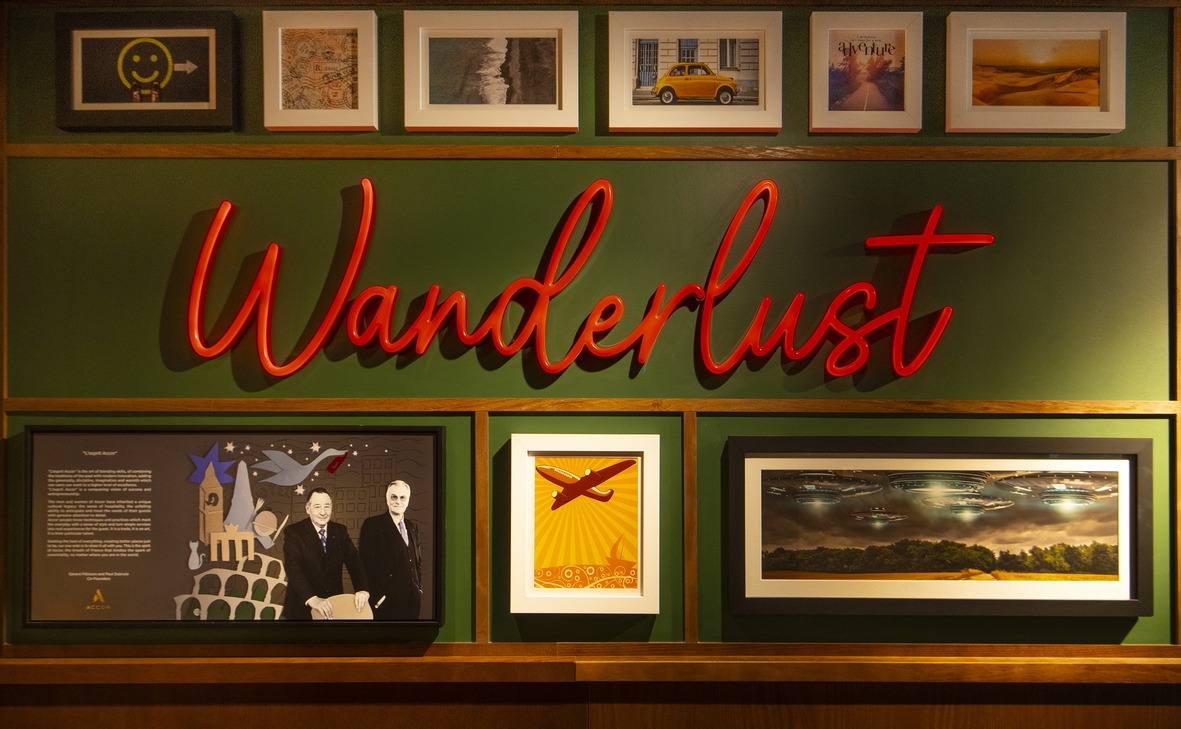
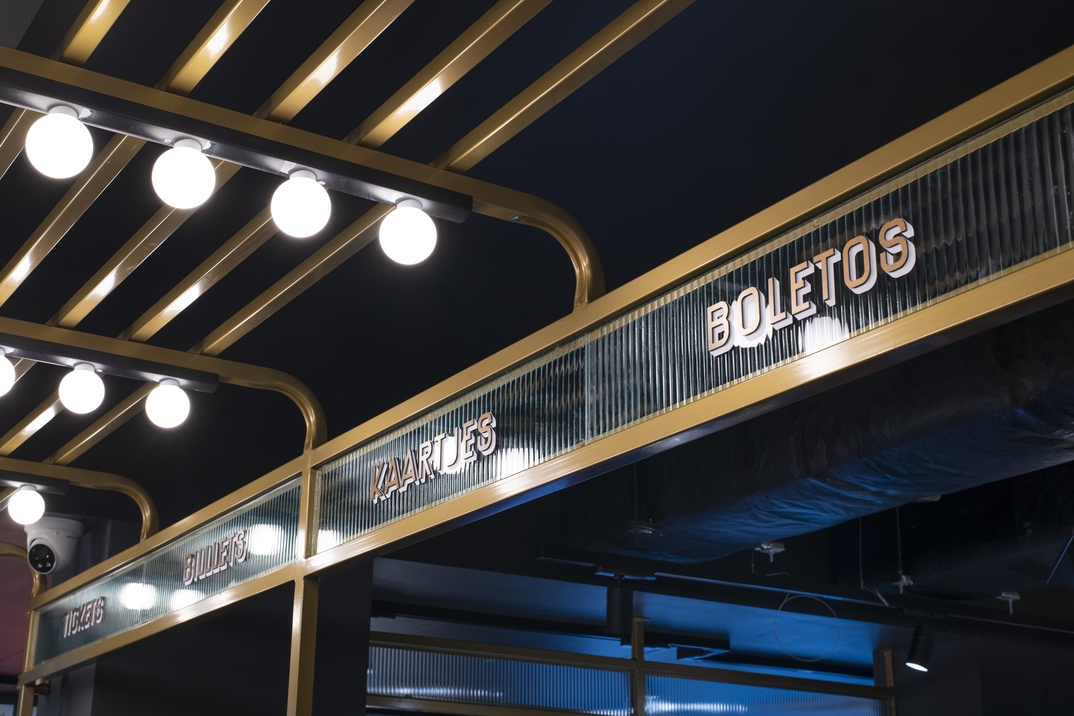
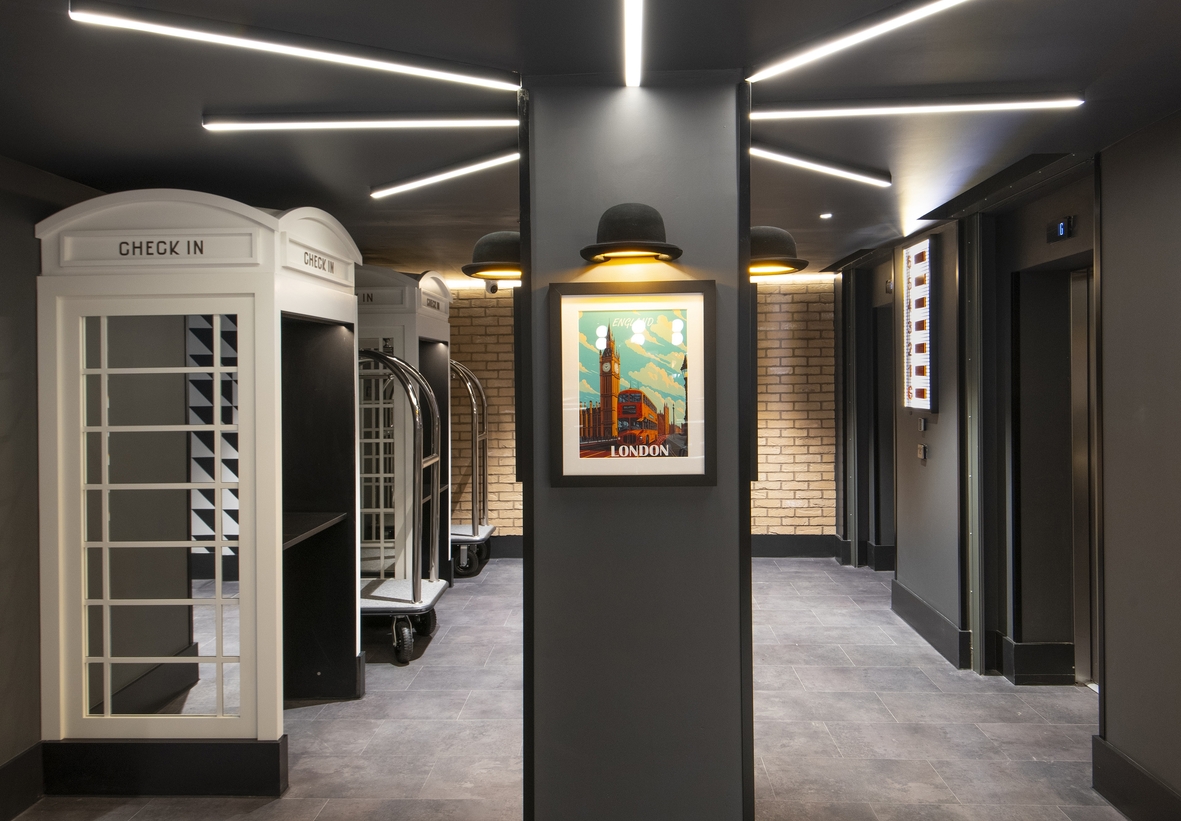
The public areas are what bring the theme to life, through every layout, the materials, and all the playful and whimsical details, almost unfolding like a curated travelogue. From sociable bar stools and banquette dining to quiet lounge nooks, the open-plan lobby is carefully zoned to offer a variety of hospitality experiences for every type of travel.
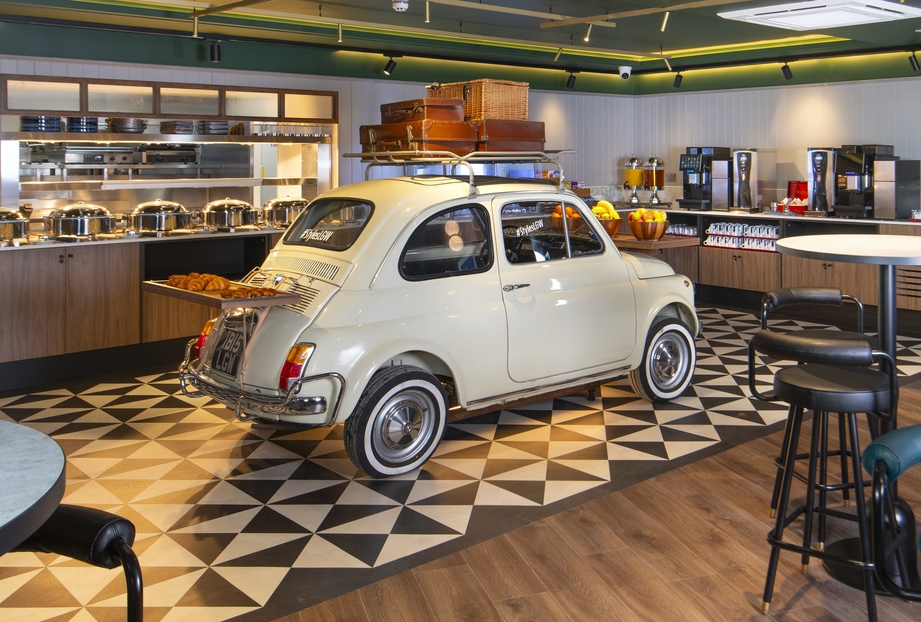
Mid-century-inspired finishes and contemporary patterns set a welcoming tone for guests, while subtle vintage travel references add to the overall character and charm of the space. The main attraction? A vintage Fiat 500, playfully reimagined as a breakfast buffet island, serving both as a functional centrepiece and an homage to the spirit of travel.
A peaceful pause
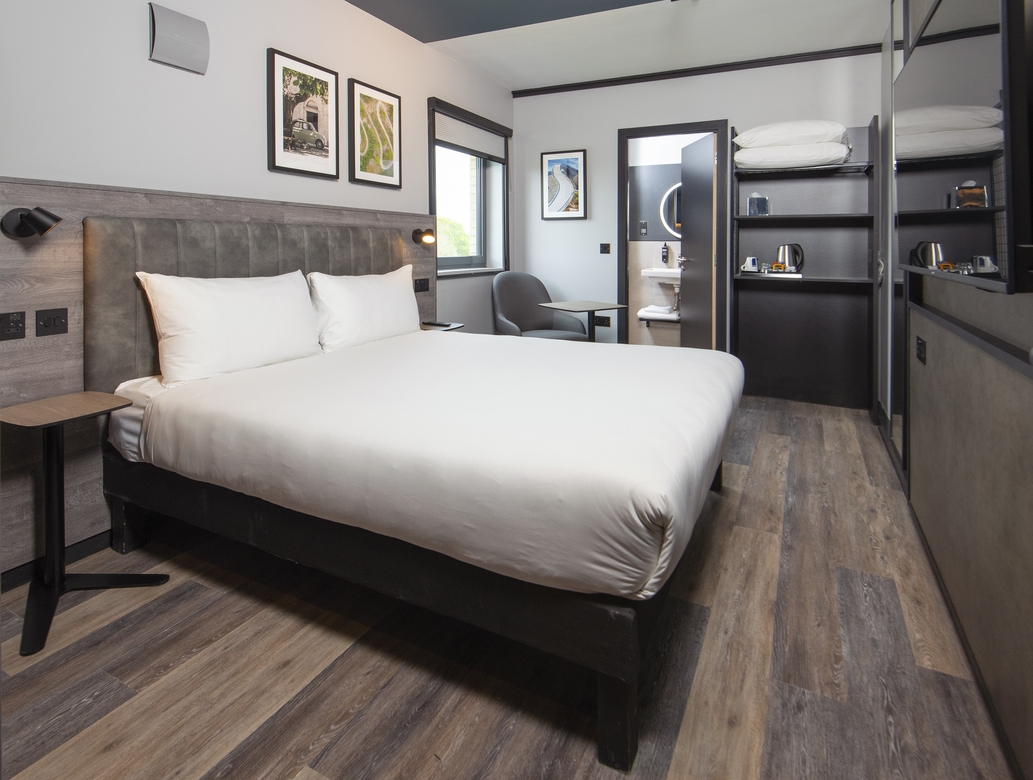
Moving on to the 182 guest rooms, the wanderlust narrative continues in a more intimate form. While the mid-century influences make a bold statement in the lobby and common areas, the rooms embrace restraint with a soothing colour palette and carefully chosen materials that are meant to create a restful and restorative environment. Here, the spirit of wanderlust lingers quietly, offering a peaceful pause in between journeys.
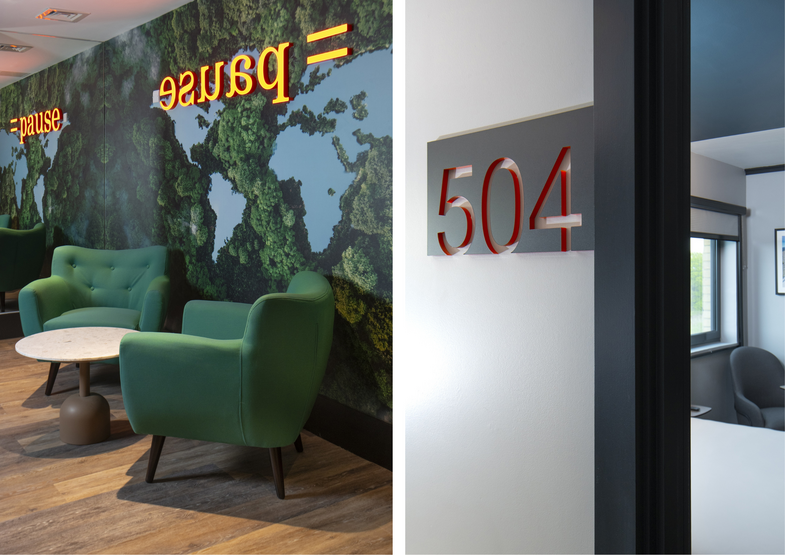
The true strength of Ibis Styles Gatwick lies in how the hotel itself transforms the transit experience. Who said airport hotels have to be all business and no charm? The direction the Philip Watts Design team chose demonstrates how thoughtful, concept-driven interiors can turn a typically transient place into an experience in itself.
Recognised with an Honourable Mention at the 2024 LIV Hospitality Design Awards and as a 2024 SBID Awards Finalist, this project raises the bar for airport hotels, proving that the spaces centred around efficiency can also be imaginative and memorable.