

Header: Wenhan Luo
In hospitality settings like restaurants, bars, hotels, and cafés, atmosphere is as important as product quality and service because it can make or break an experience. One study suggests that nearly nine out of ten people place importance on ambience when choosing where to eat (Technomic, 2014), but even with this knowledge, lighting is still often treated as a background element of design. Some designers, however, use it to shape perspectives during the first few seconds of arrival and later, when guests finally settle into it.
Light, perspective and emotions
It is this first impression that deserves some extra thought, as it happens before anyone has tasted anything and is mostly emotional. People read the room quickly, and their conclusion sets the tone for the entire experience, be it warm, intimate, festive, or cold and impersonal. While décor, music and furniture also contribute to this perspective, light is what literally shapes the space and makes it feel alive. When the lighting works, it can make a meal taste better, foster interesting conversations and make colours look brighter, but when it does not, it can push people away even if the food is excellent.
Lighting gives designers a set of controls for building their desired mood, as small technical choices can completely change the feel of a room, no matter its design. Intensity is the first consideration: bright light can feel energetic and active, while dimmer light tends to feel more relaxed and intimate, though going too far either way can create problems with comfort and functionality. Colour temperature matters just as much: warm light around 2200–3000 K is welcoming, while cooler light at 4000 K and above makes people more alert. Add dynamics like dimming and programmed scenes, plus the way light is directed and diffused, and the same room can go from a bright and dynamic lunch event to a warm and elegant dinner party without changing anything else.
We can say that lighting also affects the way people behave in a space. Research links good lighting to improvements in the dining experience, including longer stays and a greater willingness to order food and drinks, which ties atmosphere directly to commercial performance. Warm, moderate lighting can encourage people to linger and take their time, while brighter lighting can speed decisions and shorten meals (which is not a bad choice, fitting high-rotation businesses). Even taste perception and food appeal are affected, since high colour rendering (CRI 90 or above) helps food look authentic and vibrant, and poor lighting (glare, flicker, harsh cold tones, badly placed sources, etc.) can make people feel more irritated.
Looking at three recent LIT Lighting Design Awards winners, it is possible to see exactly how lighting “sets the mood”. In one place, it pulls your attention to the building itself, in another, it makes the food look perfect, and in the third, it uses warm layers to create a cohesive interior look. They’re different restaurants, but each one is a practical example of how light can shape the atmosphere people pick up on as soon as they walk in.
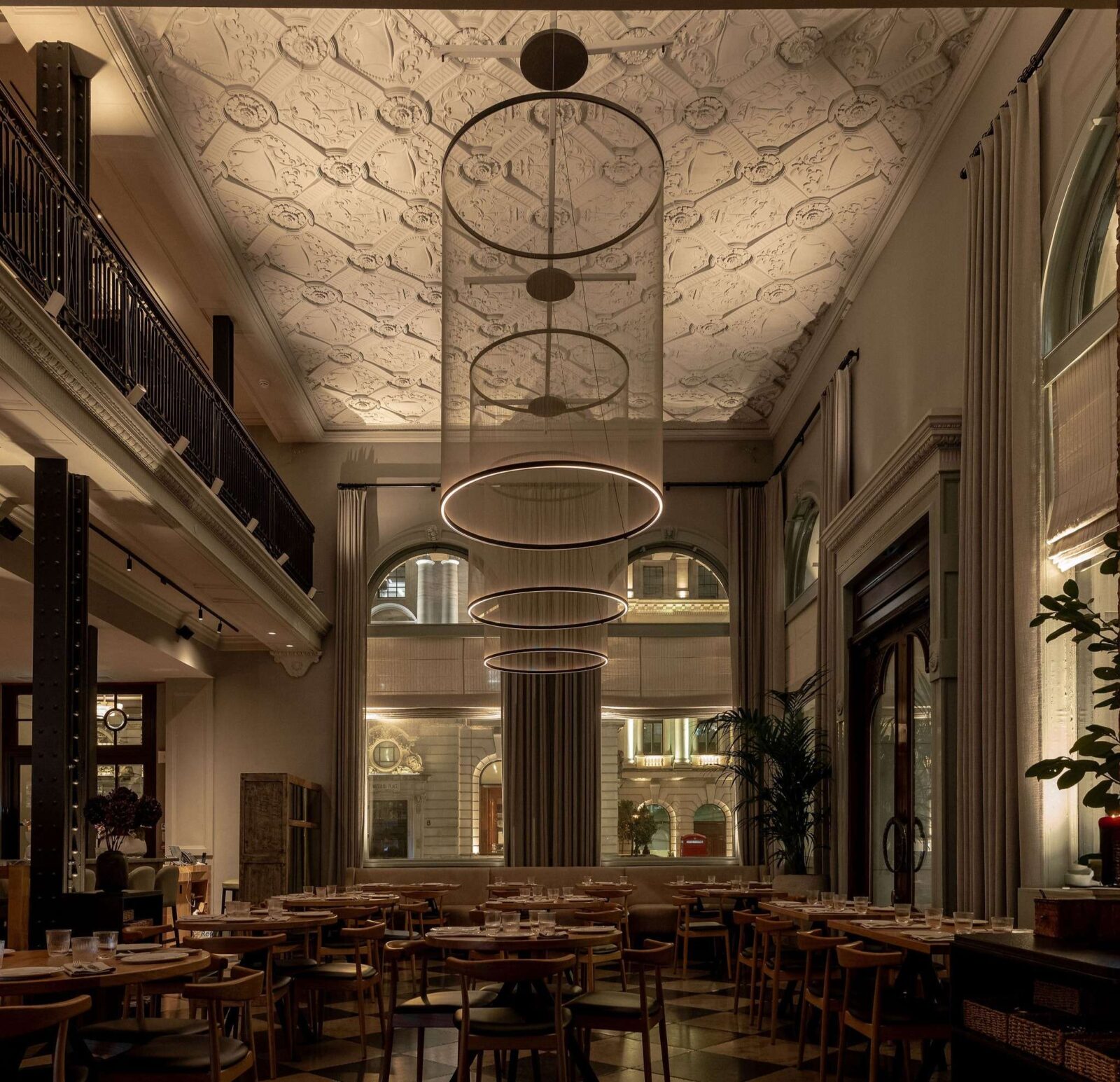
Claro Restaurant
Claro is a restaurant in London that has recently been picked as a winner at the LIT Lighting Design Awards for how lighting influences its atmosphere. The lighting design was done by Antumbra Lighting EU Limited, with Damien McKay as lead designer, accompanied by Giuseppe Simone and Hygerta Tufa, and is a perfect example of how light can craft interiors in ways traditional design can’t.
A spotlight on the architecture
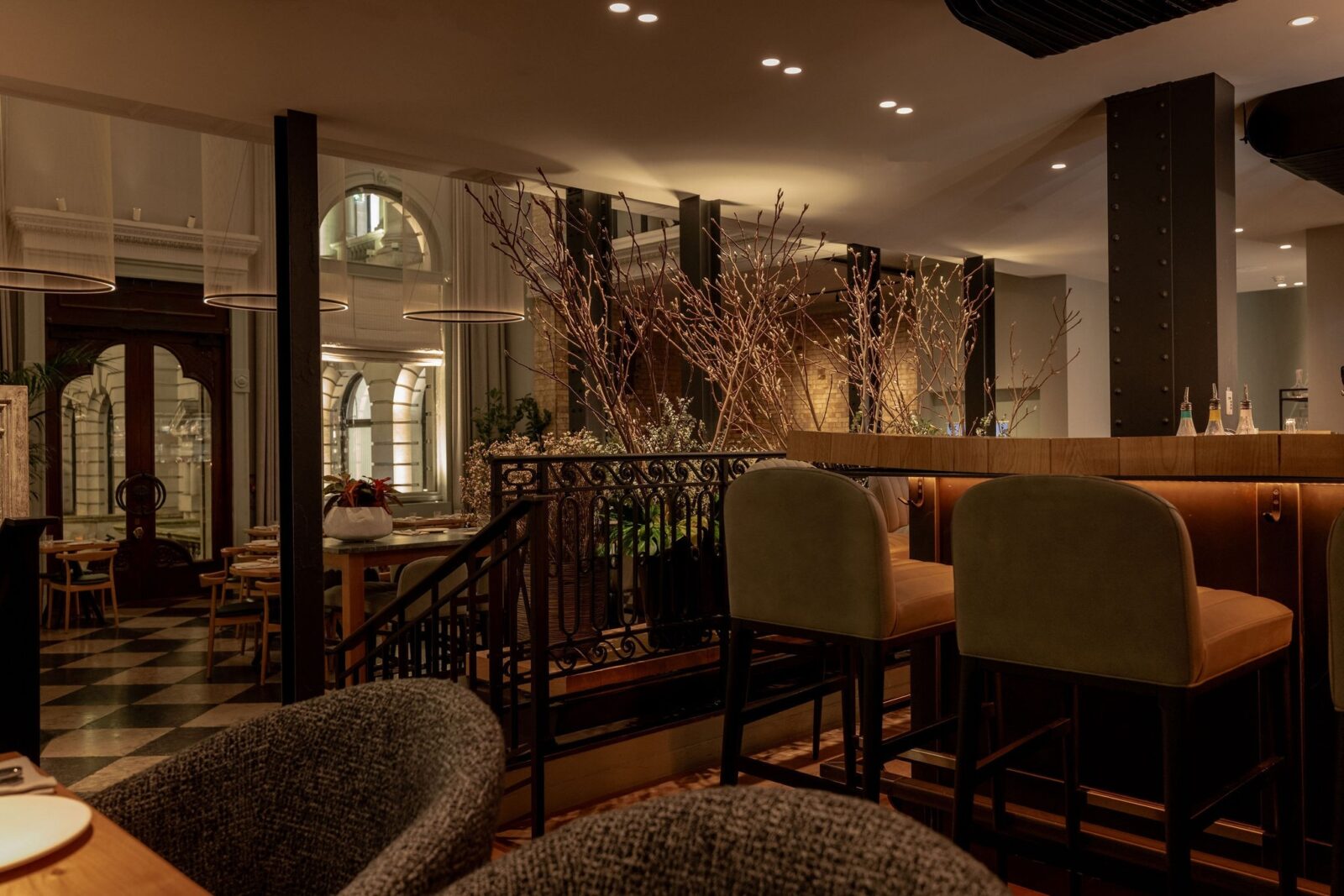
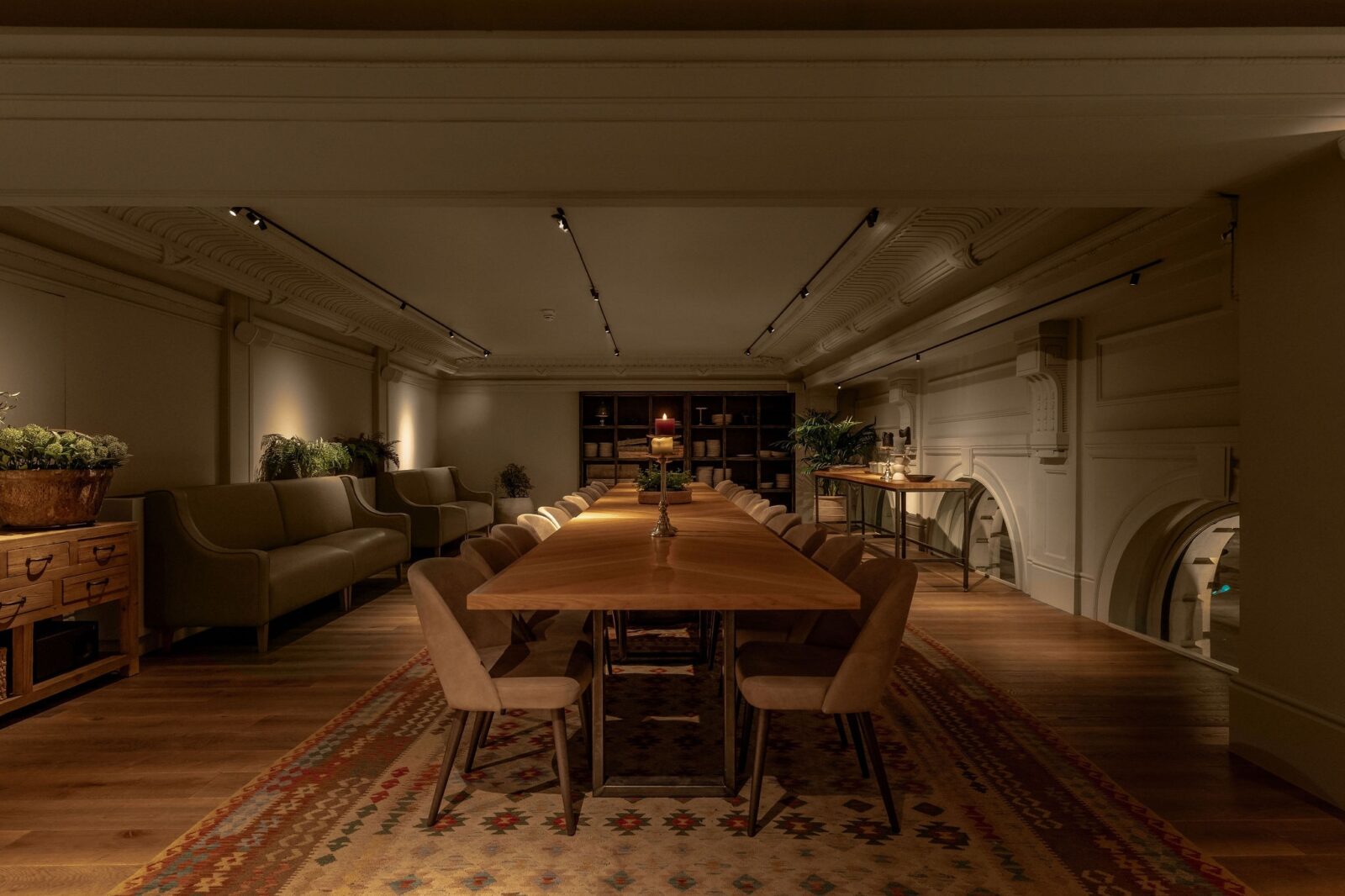
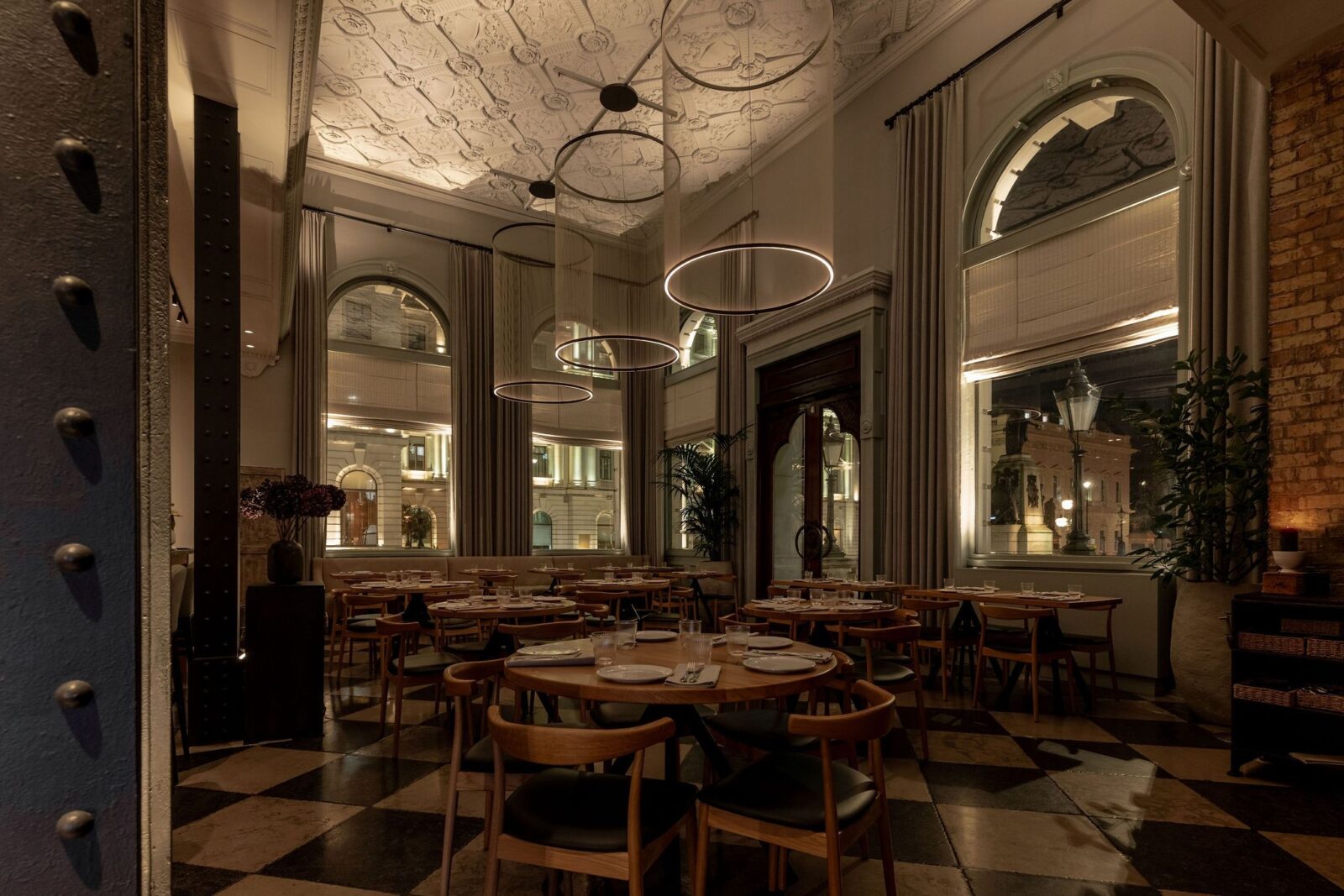
The client asked for lighting that stayed subtle and comfortable while still respecting the heritage architecture protected during construction. To achieve this, the team placed a lot of attention on the structure, especially the Edwardian plaster-moulded ceiling. Spotlights were added above the cornice details to bring the ceiling out, and suspended pendants were used in each central ceiling zone, putting the main dining area in the spotlight. These pendants also help avoid ceiling clutter, as they substitute pin spotting tables, inviting guests’ eyes to rest on the cast iron columns and windows instead.
Curated to each need
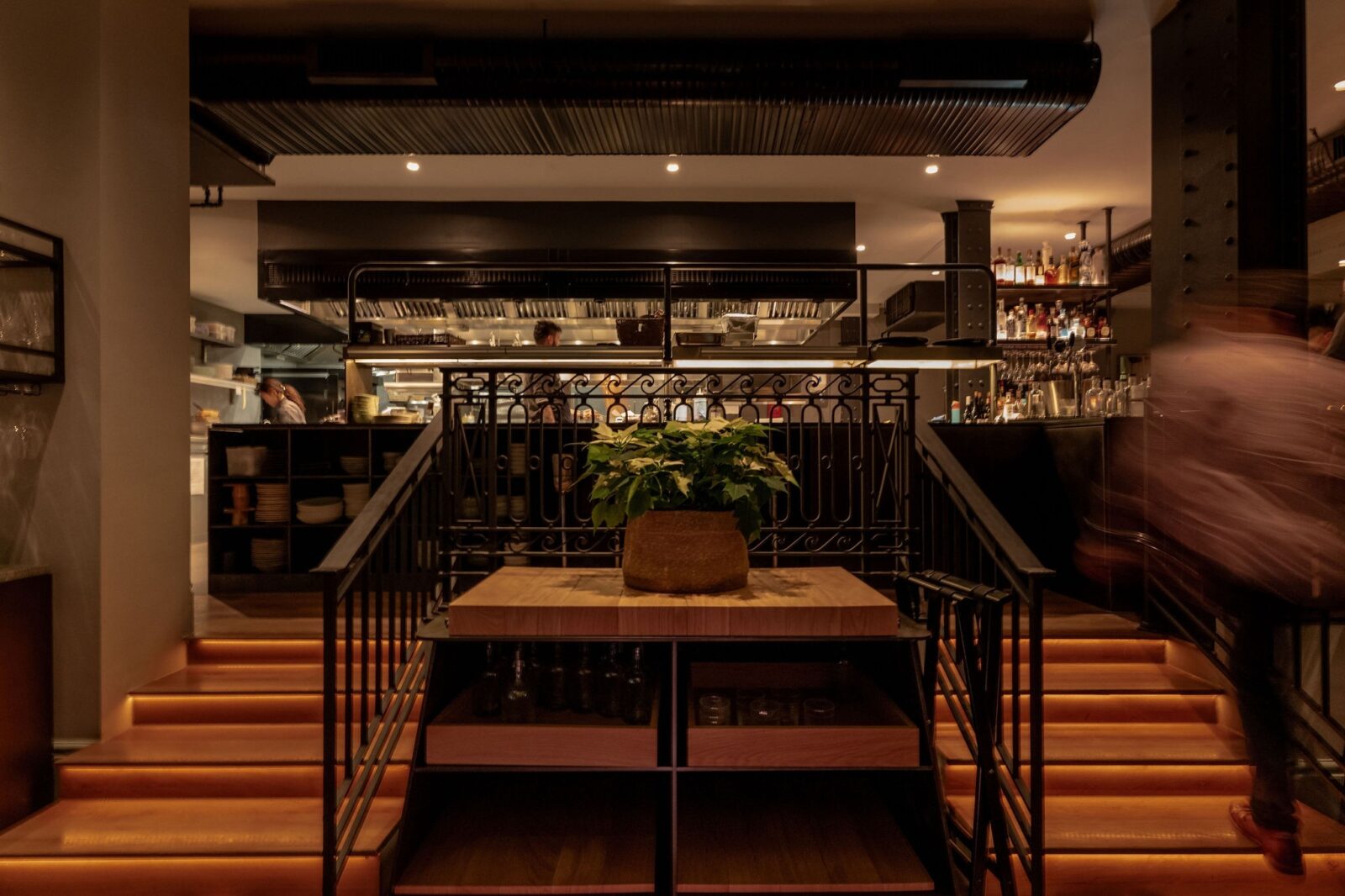
The show kitchen needed to be functional and balanced, but not so bright that it would overpower the softer ambient lighting of the restaurant. For the areas where cutting and cooking demanded enough light, the team decided to use tunable white plaster-in downlights with individual control so higher illumination could be brought up only where it was needed.
At the lower level of the rooms, tunable white strip lighting was built into furniture and detailing. Known as the Casambi lighting system, it was chosen for its flexibility and ease of installation.
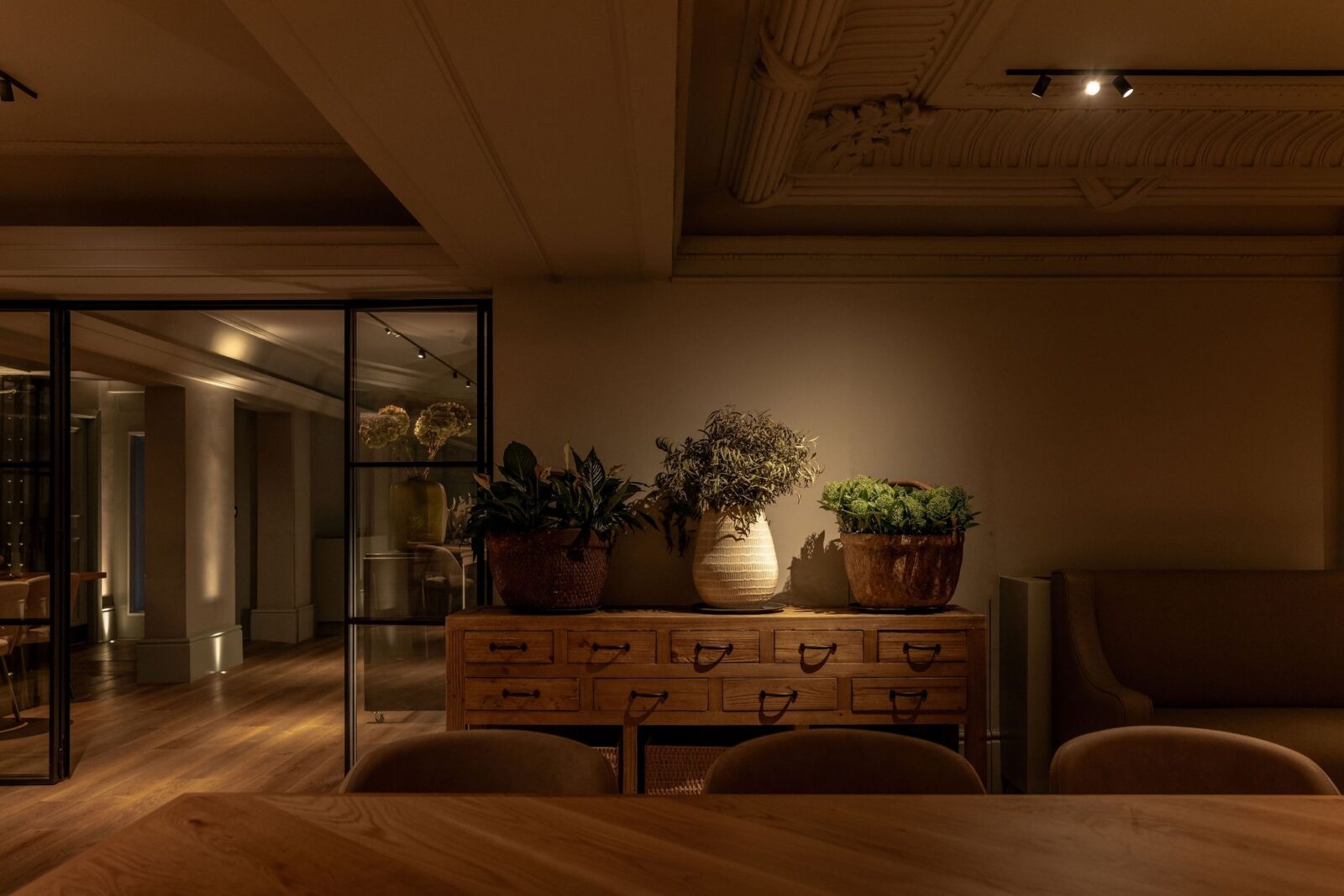
On the mezzanine, the team used flexible low-energy track spotlighting to reduce the need for multiple wiring points, which also made maintenance easier for the client and allowed products to be stored for large-scale functions and brought in only when required.
Energy-efficient design
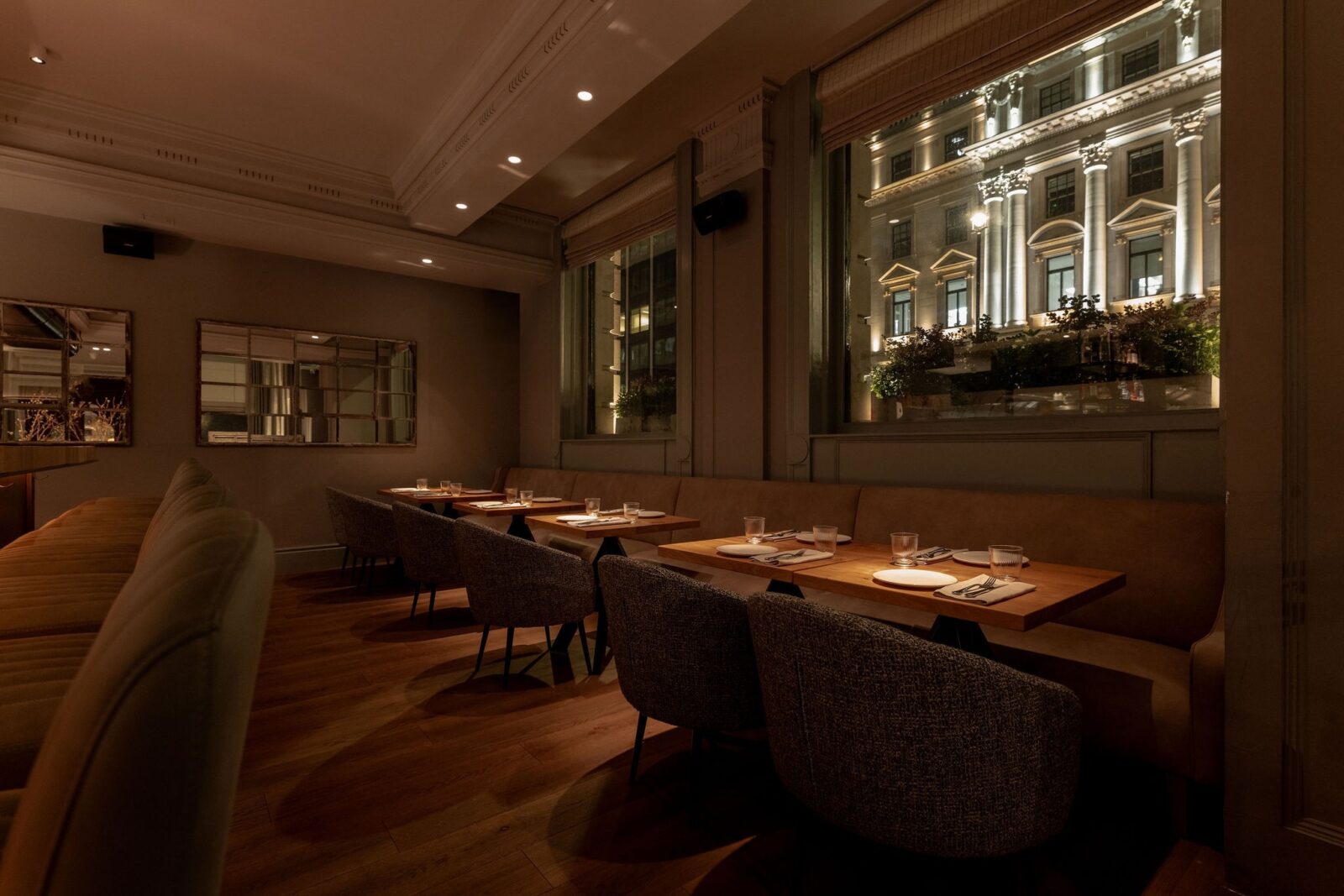
With strip lighting and downlights used in the key task areas, the Casambi system lets the team control fittings individually. With time-based settings that adjust automatically, less extra cabling was needed, and energy use could be managed across the restaurant. And because the building could only handle a set amount of power for lighting and other services, the team kept the lighting simple and used as few elements as possible.
Tong Town
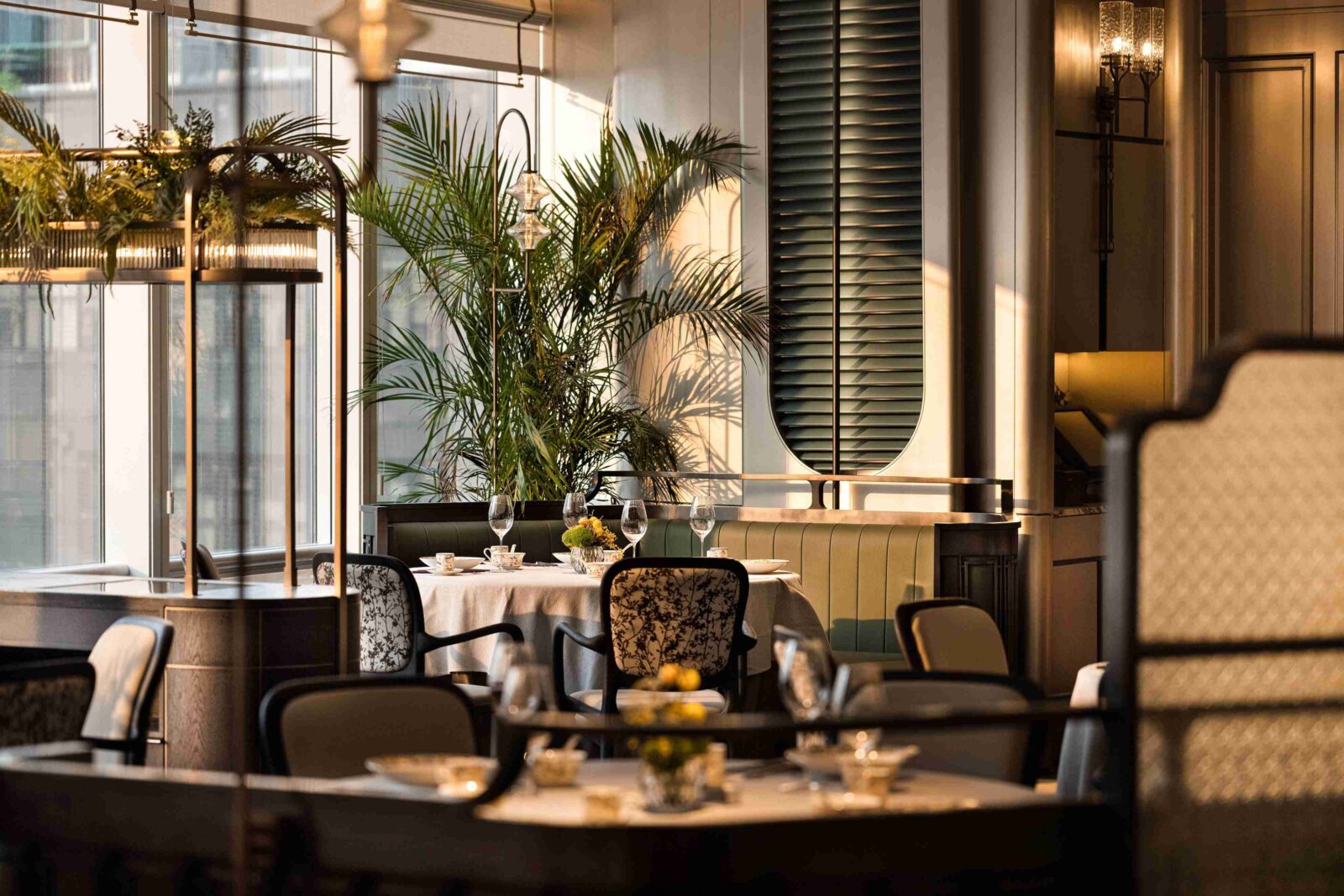
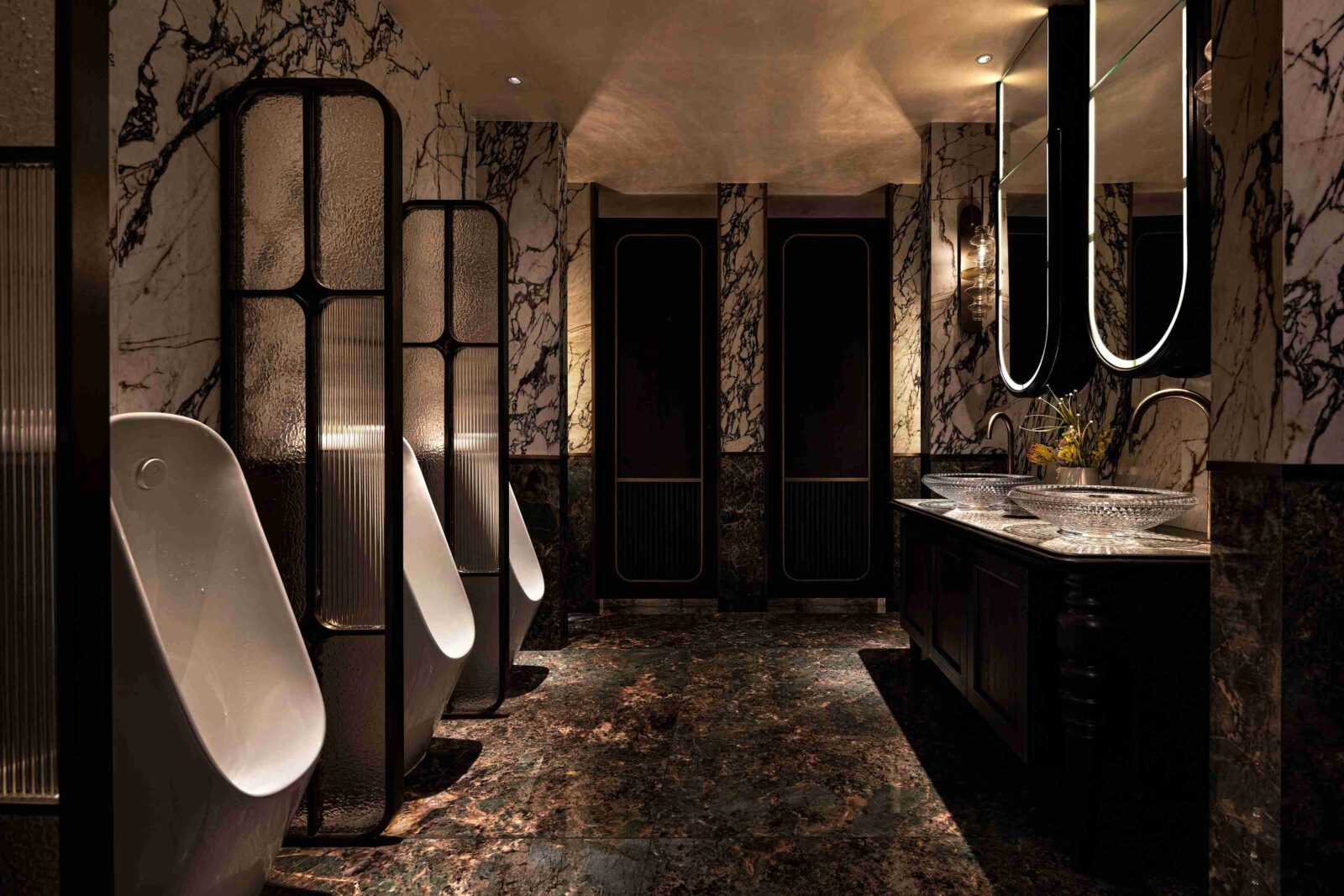
Tong Town is a restaurant in Guangzhou, China, that has recently received the “Bar and Restaurant Lighting Design” prize at the LIT Lighting Design Awards. Licht.Associates Limited, the studio responsible for the design, trusted Jim Ho to carefully create an intimate and elegant atmosphere for guests.
Décor and light
The lighting designers understood that if the lighting and the space aren’t worked out together, then the place is not going to look right and work day to day. With this in mind, they knew how important it was to complement and take advantage of the interior design (by M.ARCHE DESIGN CENTER).
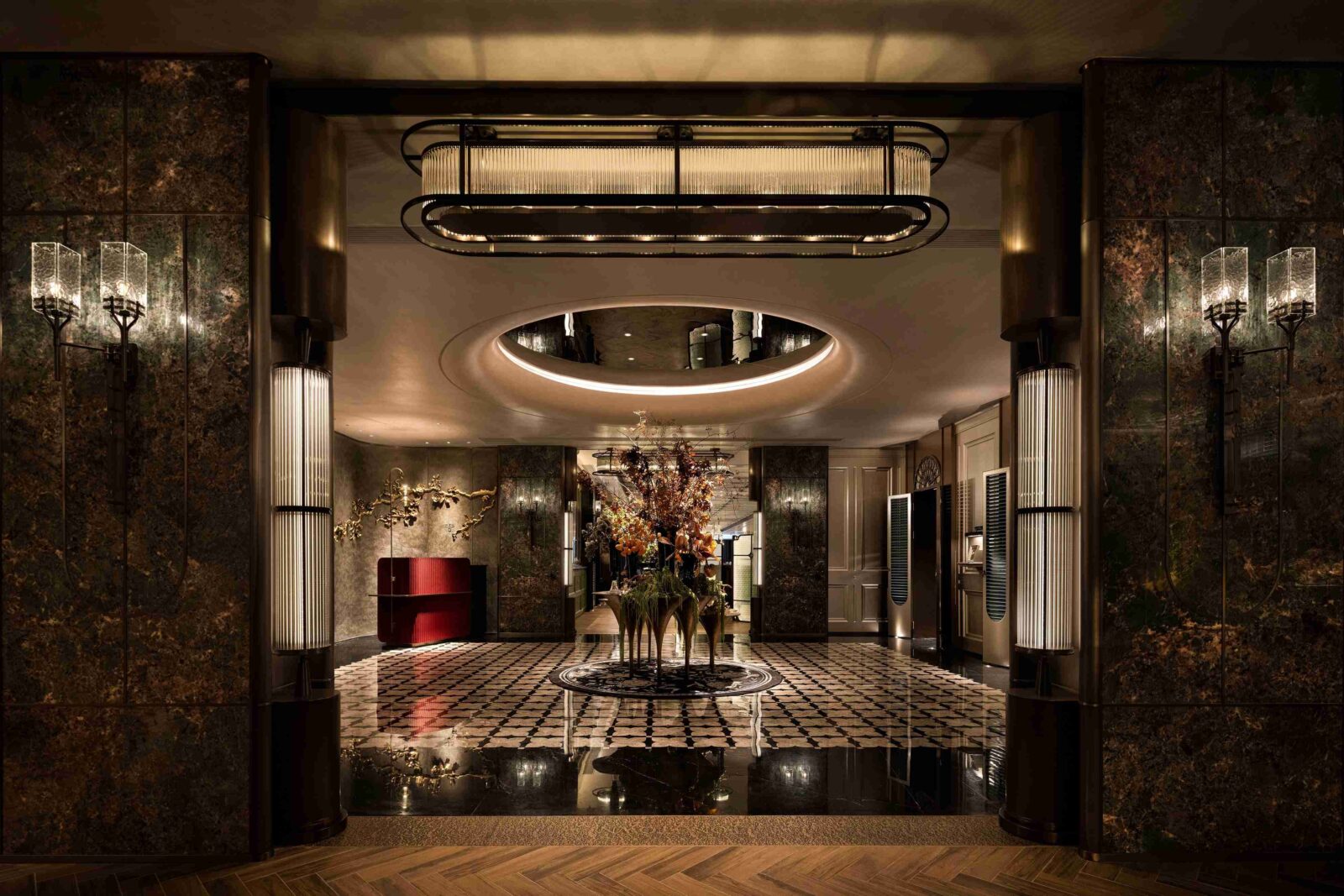
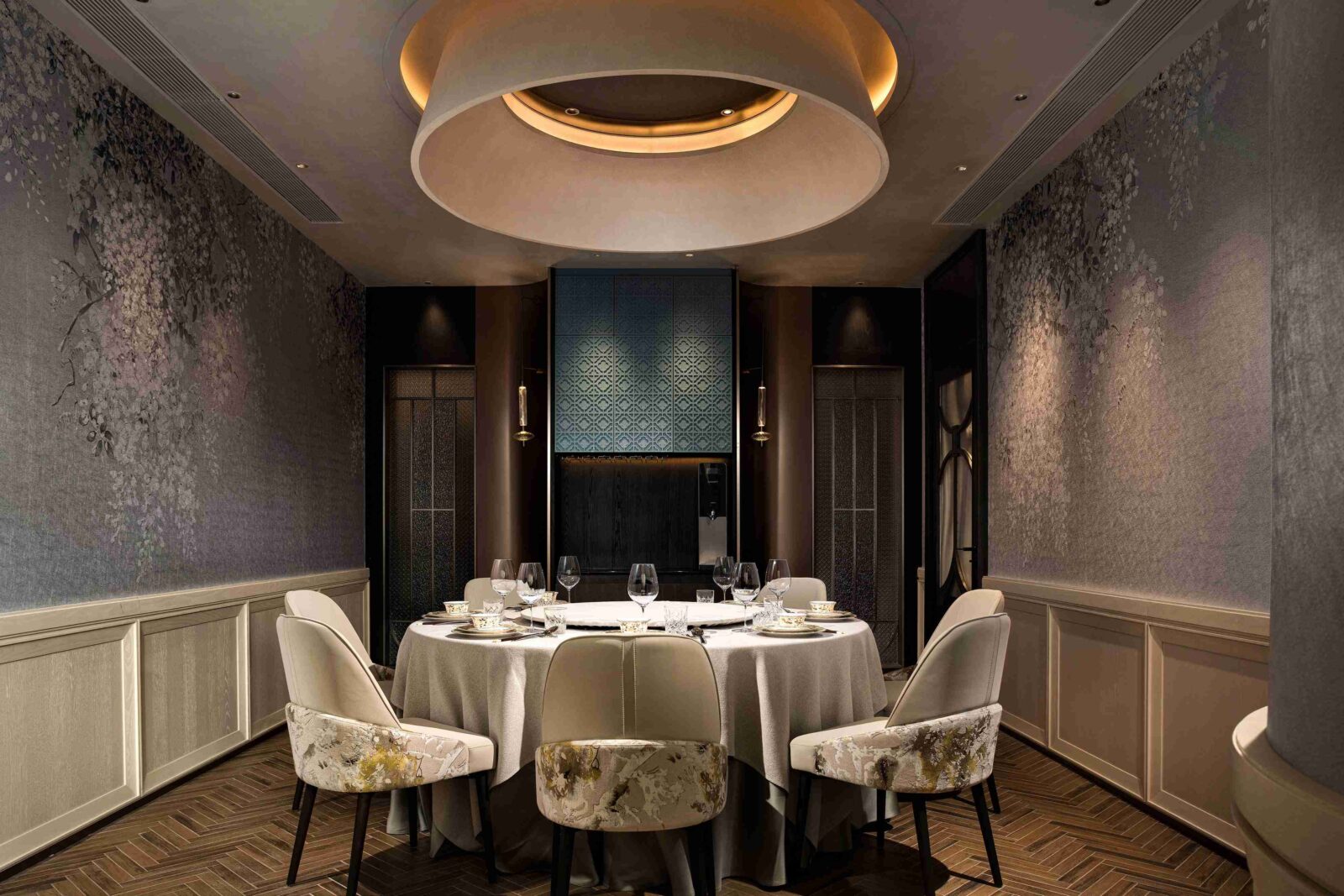
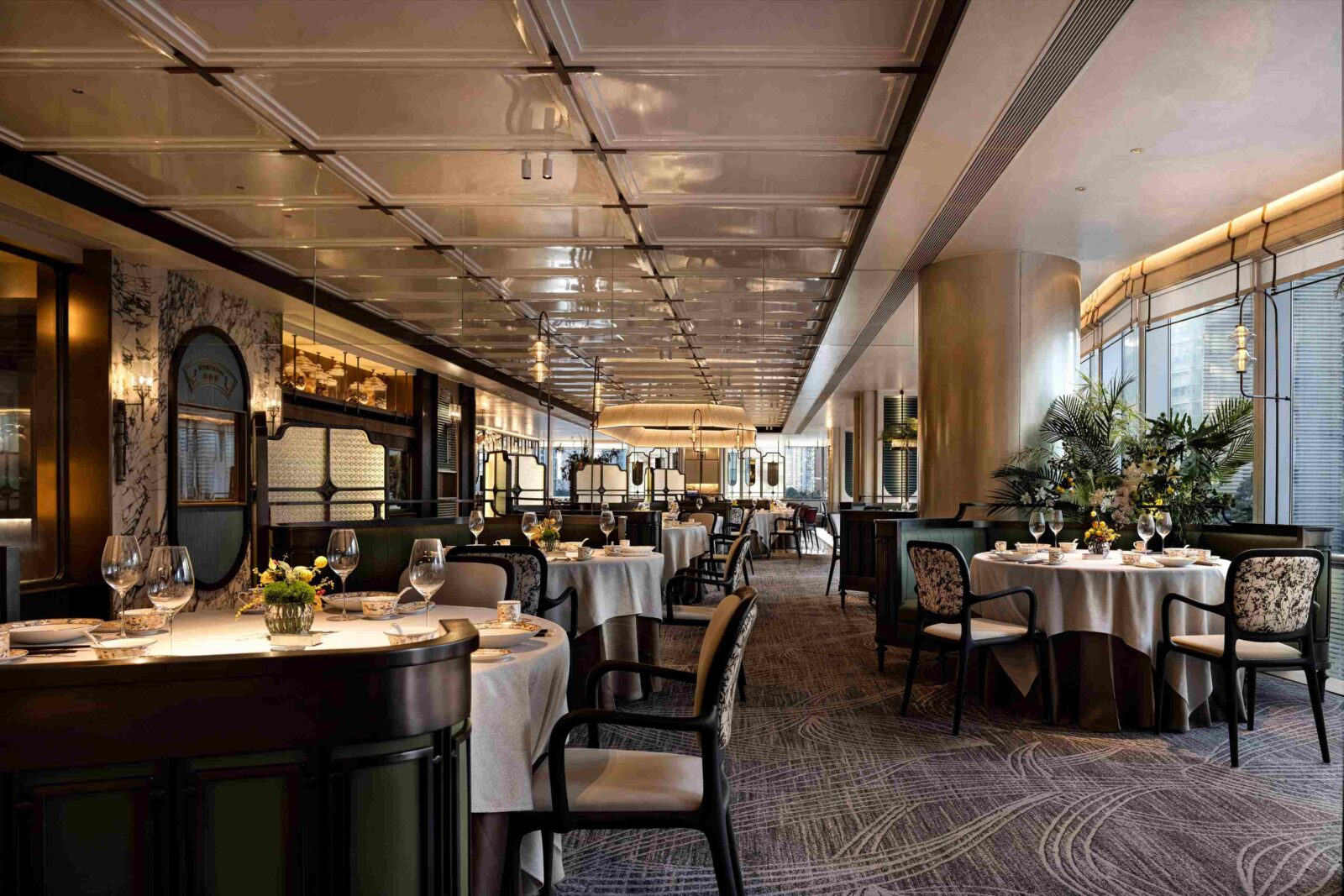
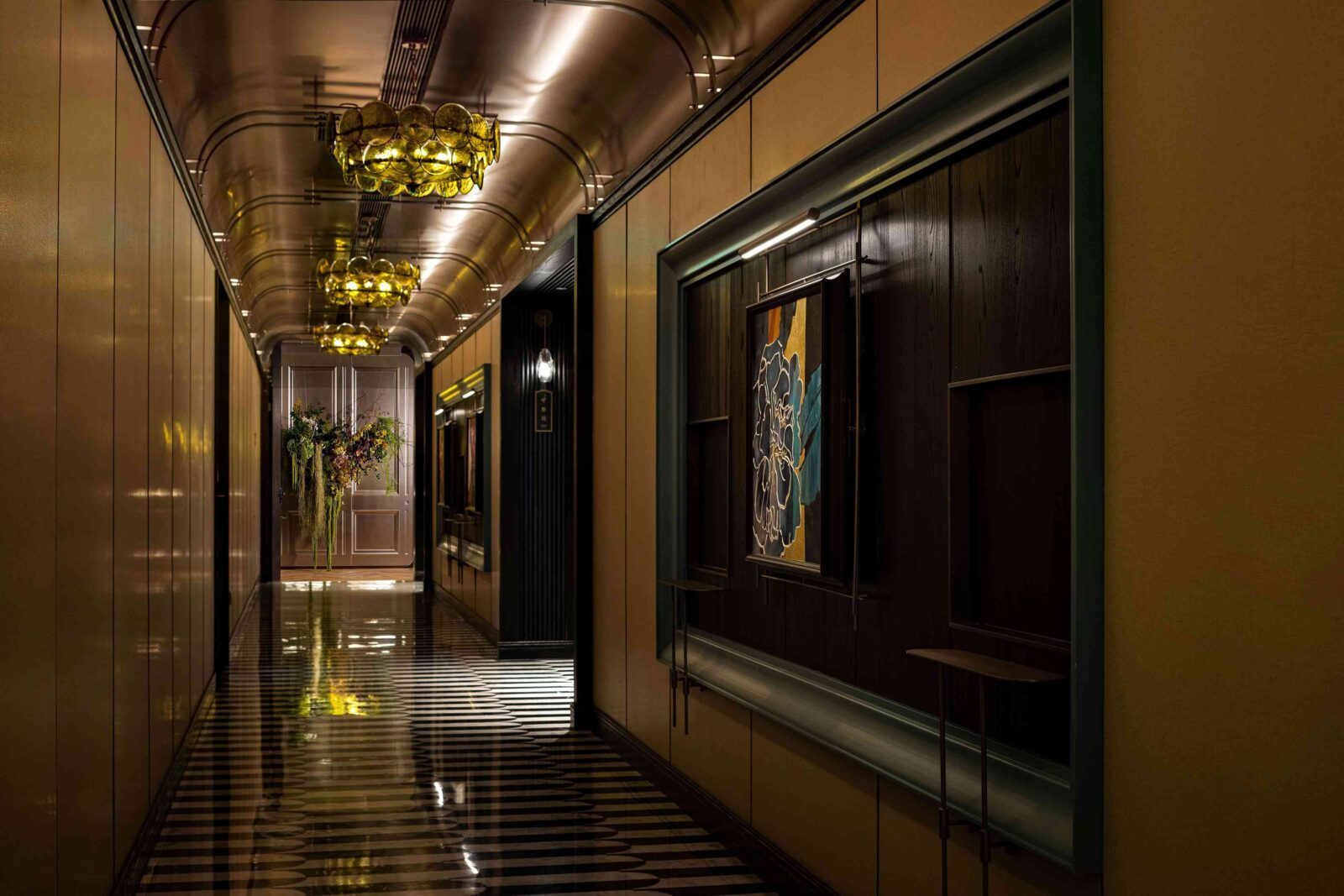
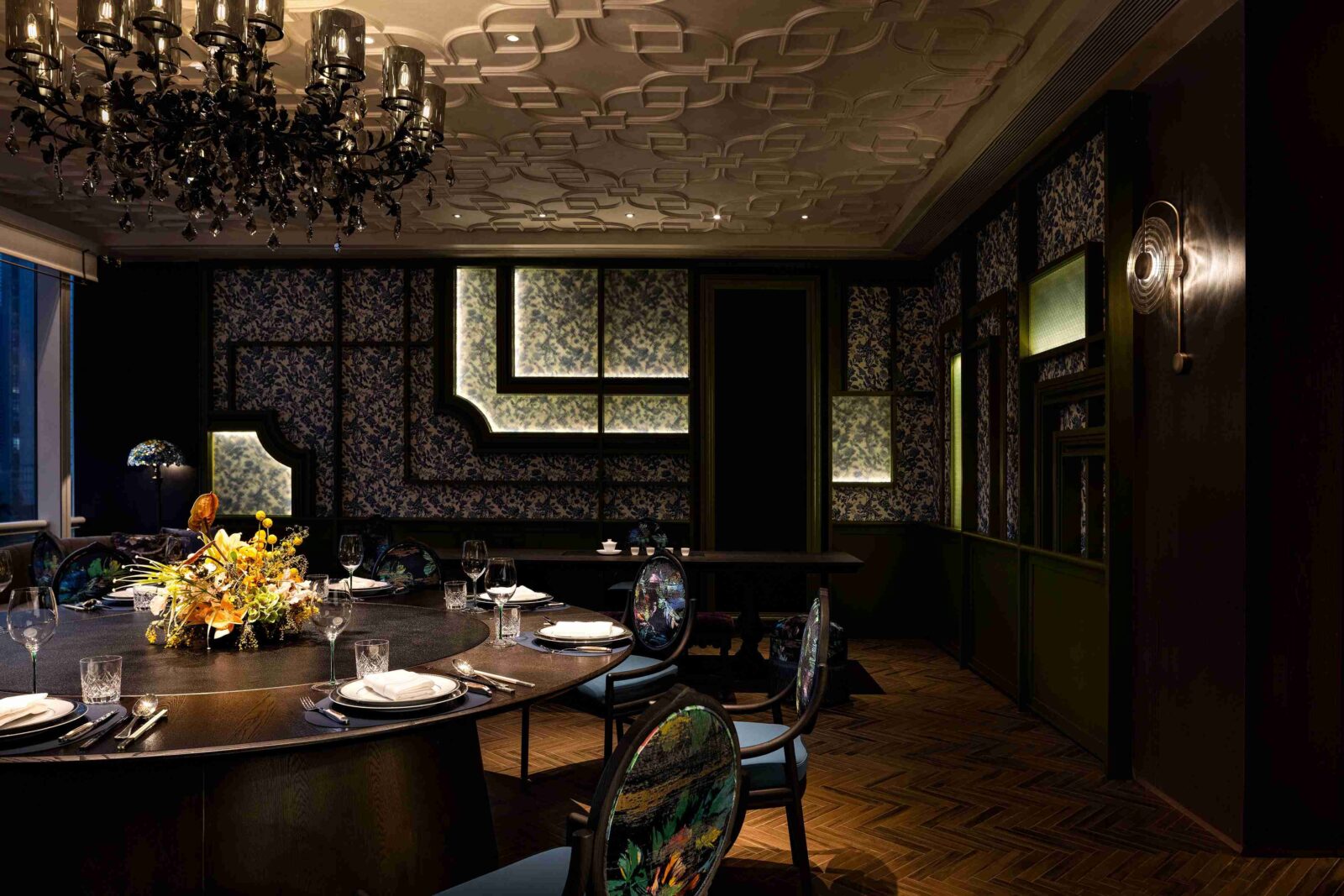
The restaurant’s design mixes Chinese Lingnan culture with a more minimalist Western look, attempting to create a retro feel while still looking modern. In the lighting design, that vision shows up as a focus on contours and colour, as light was used to bring out the detailed parts and “essence” associated with Lingnan culture.
Setting the mood
To further support the guest’s experience, colour rendering was of the utmost importance: food needs to look delicious and vibrant under the lights, especially when the dishes have subtle colours, and guests need to be able to take strong photos from any angle during dining, gatherings, or celebrations.
A centrepiece of the restaurant is the bar area, where lighting puts a spotlight on a metal-carved Chinese lampshade. This detail creates a light pattern that is compared to the shadows of traditional Chinese paper lanterns.
Respect for the community and environment
The lighting designers were careful to use local suppliers for materials and products, cutting down the project’s carbon footprint and supporting the local economy. They also used energy-efficient LED lighting to keep electricity use down without losing the colour quality they needed.
Tevar
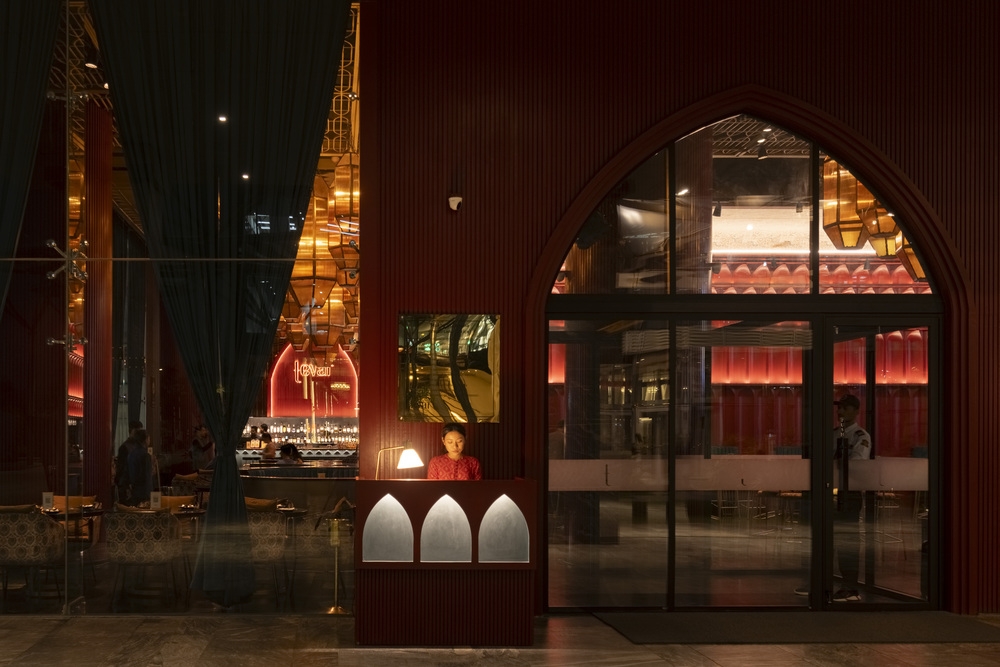
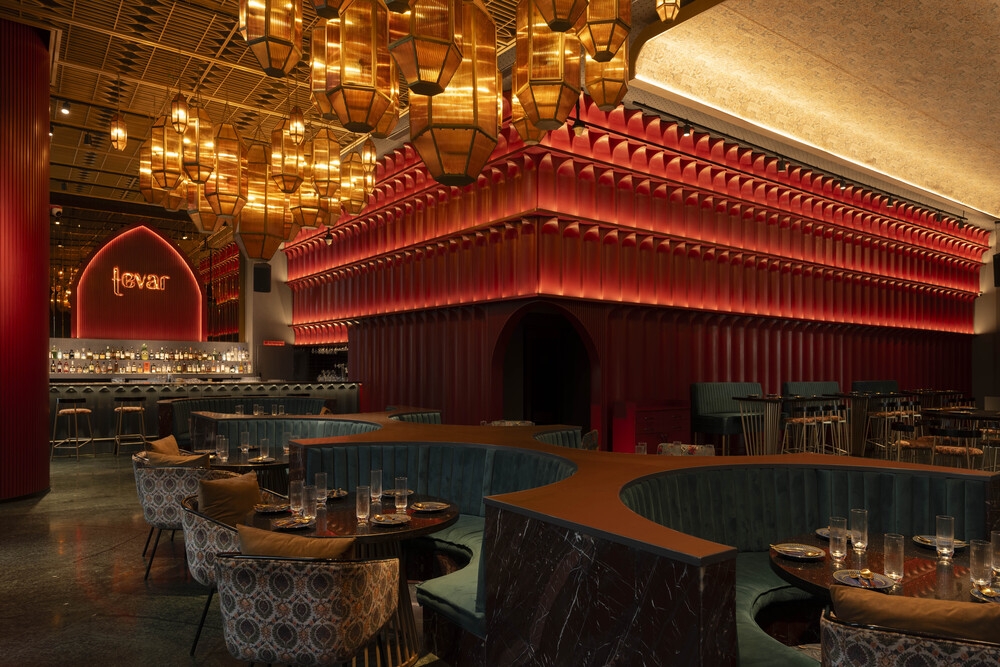
Tevar – The Progressive Indian Kitchen & Bar is a restaurant from SATTVA Knowledge City in Hyderabad, India. Warm and inviting, its lighting design has recently won the “Bar and Restaurant Lighting Design” category at the LIT Lighting Design Awards. The studio responsible for this win is Love of Light, with Dashak Agarwal as lead designer.
Layering warmth
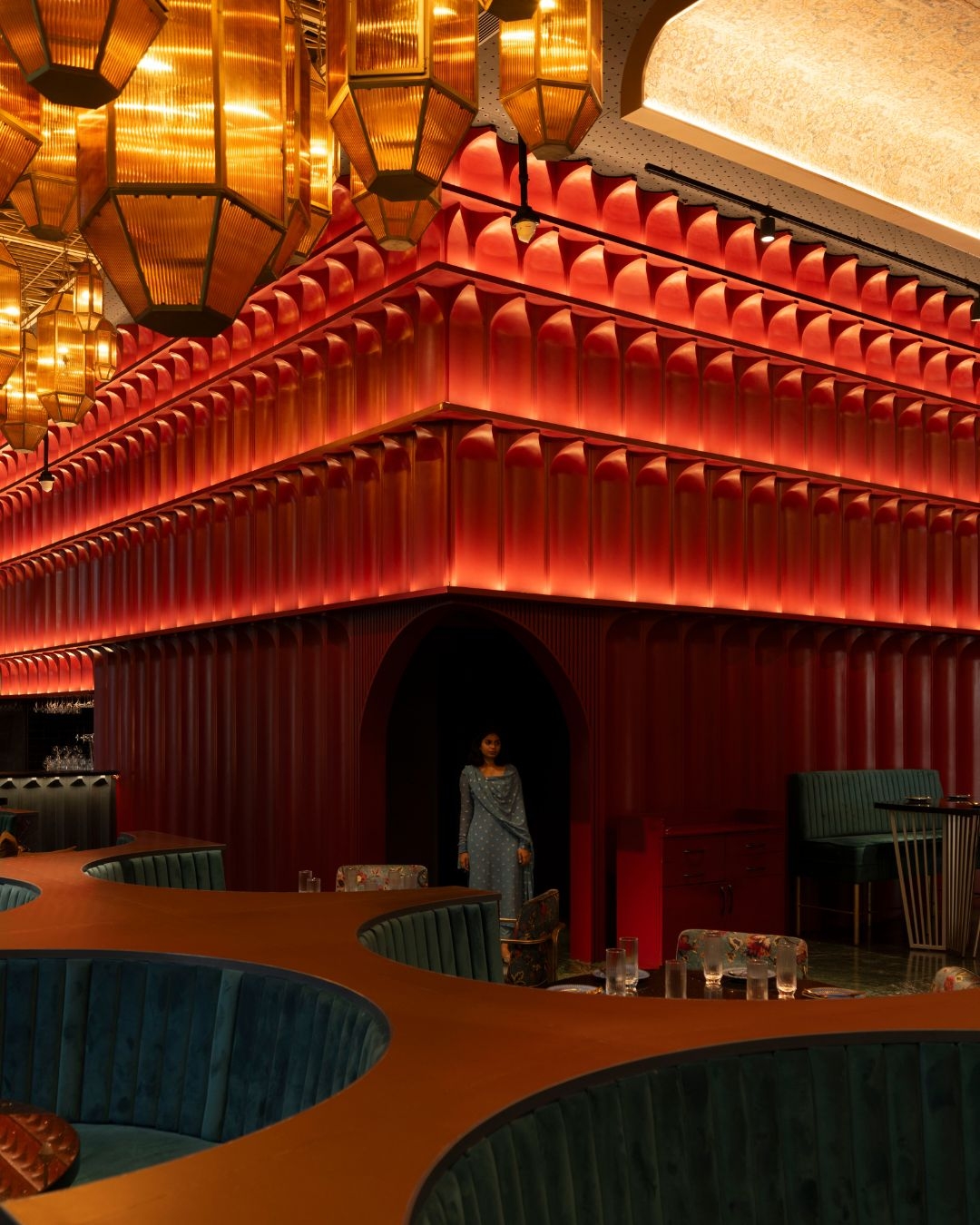
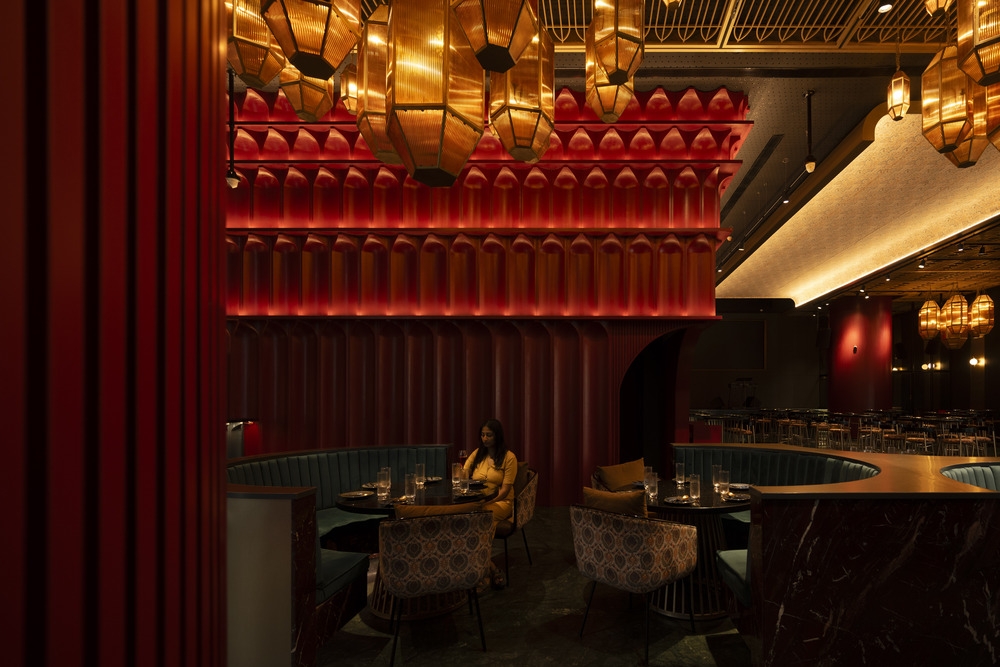
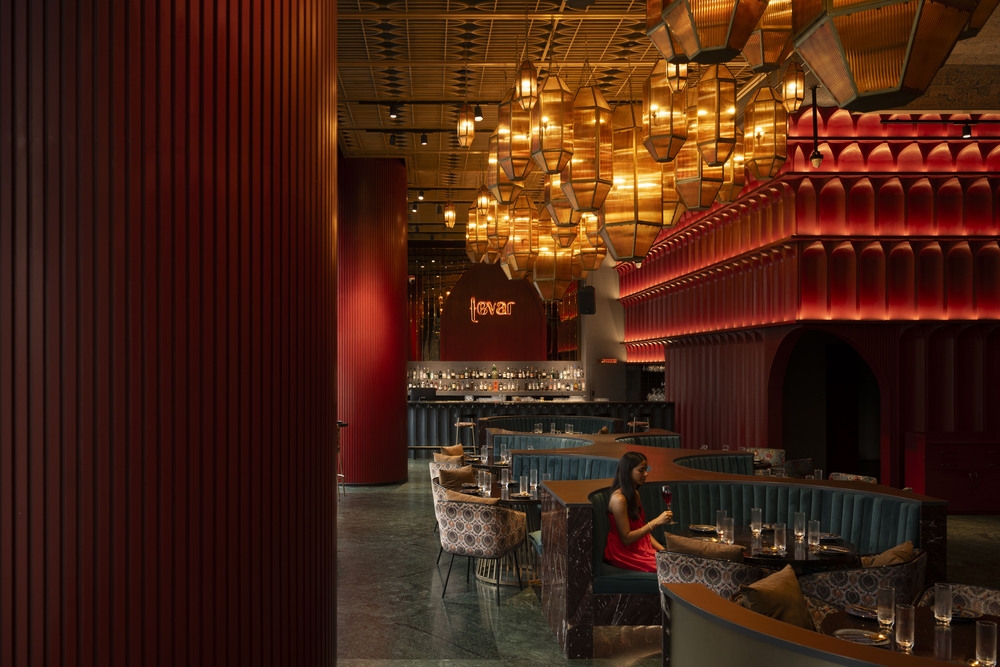
The lighting is described as layered, built around three basics: ambient light, focal glow, and what they call a “play of brilliance“. One of the main features is a set of jharokhas, which were reworked as “windows of the world”. These are lit using custom linear aluminium profiles at 2700 kelvin with CRI 95, and their goal is to bring out the red palette while bringing some depth to the space.
Glossy Indian black quartz tabletops are lit with 2200 kelvin light to take advantage of the material’s reflectivity, while the domed carpet ceiling is softly lit with 3000 kelvin to bring attention to its patterns. The designers argue that the layers are precisely what bring warmth to the restaurant, as they are so finely tuned that the different zones complement each other rather than clash.
A care for sustainability
Custom chandeliers were made from recycled aluminium and handblown glass, locally sourced within 100 km of the site. All fixtures use low-voltage, dimmable LEDs, and there’s a daylight-integrated dimming system that adjusts light levels based on natural light to reduce energy use while keeping the intended ambience.
The modular fixture system was designed so parts like drivers or LED chips can be replaced more easily when needed, extending the product’s life and reducing waste.
Lighting is far more than a practical requirement in hospitality spaces; it is one of the main tools for shaping how people feel, behave and remember their visit. As seen in Claro, Tong Town and Tevar, good lighting can highlight architecture, support interior design and make food look its best, all while improving comfort and efficiency. These projects show that when lighting is considered early and used with care, it helps restaurants create spaces where guests feel relaxed, curious and willing to stay longer. In the end, while guests may not always notice lighting directly, they almost always notice how a place makes them feel, and light plays a quiet but powerful part in that experience.