



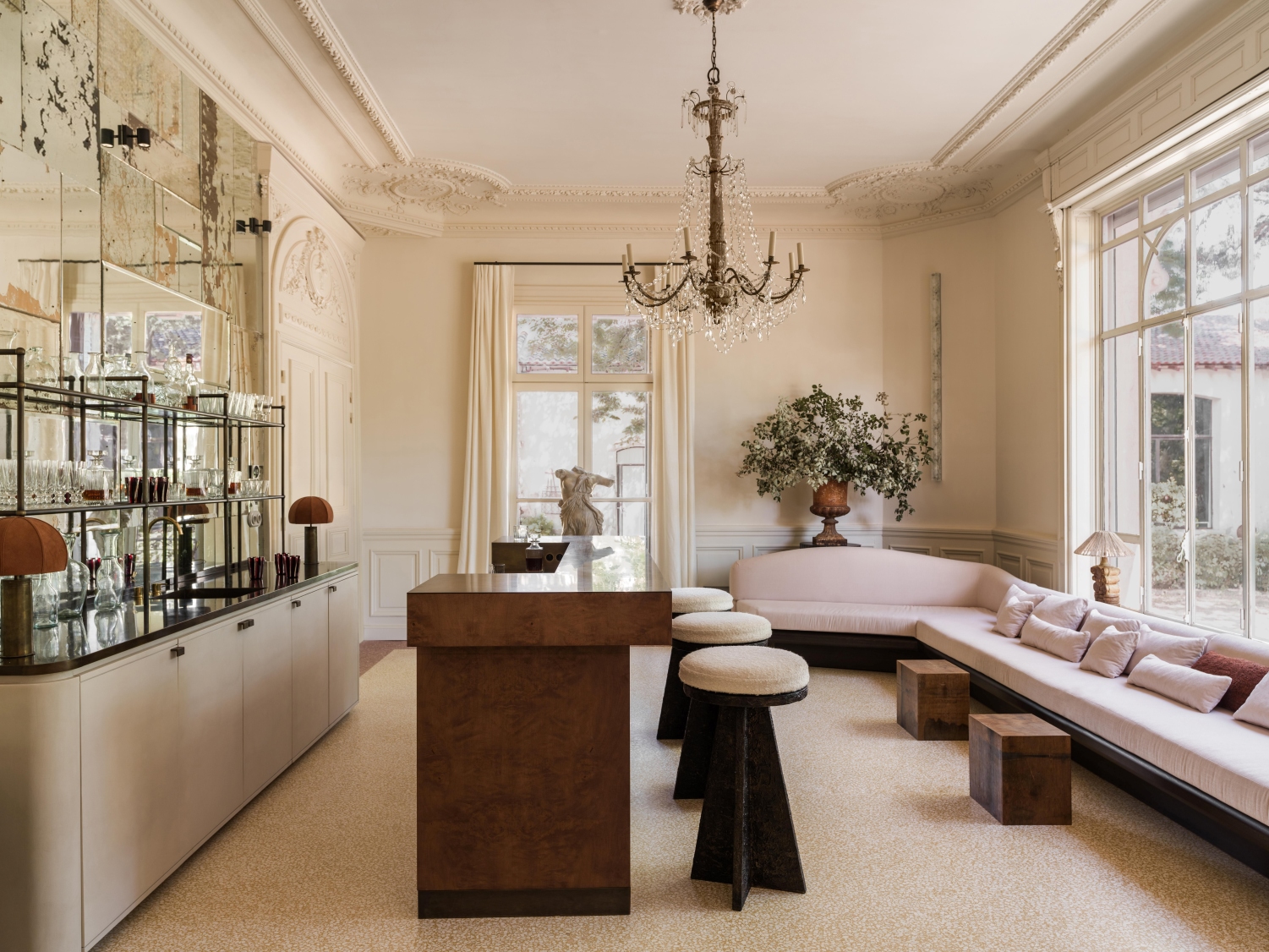
Chateau La Banquière, a historic estate located in the proximity of Montpellier, has undergone a refurbishment led by Marianne Tiegen. The French villa, nestled among vineyards and centuries-old oaks, is equipped with natural fabrics colored in natural hues. The vivid nature surrounding the castle served as a direct inspiration for the interior design. Tiegen employed stone, wood, and textiles to create a dialogue with the outdoors and the natural light.
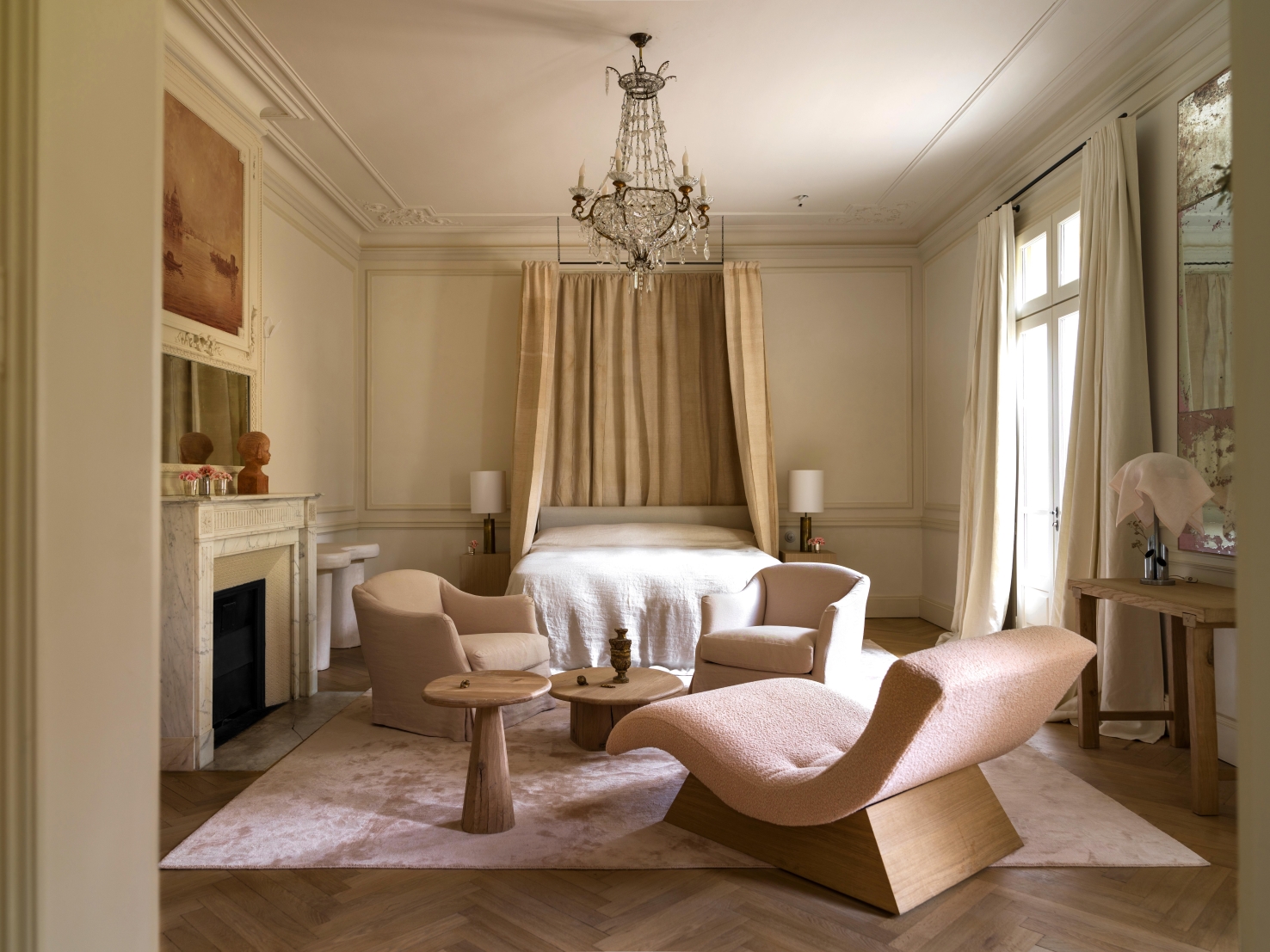
Naturally-dyed textiles
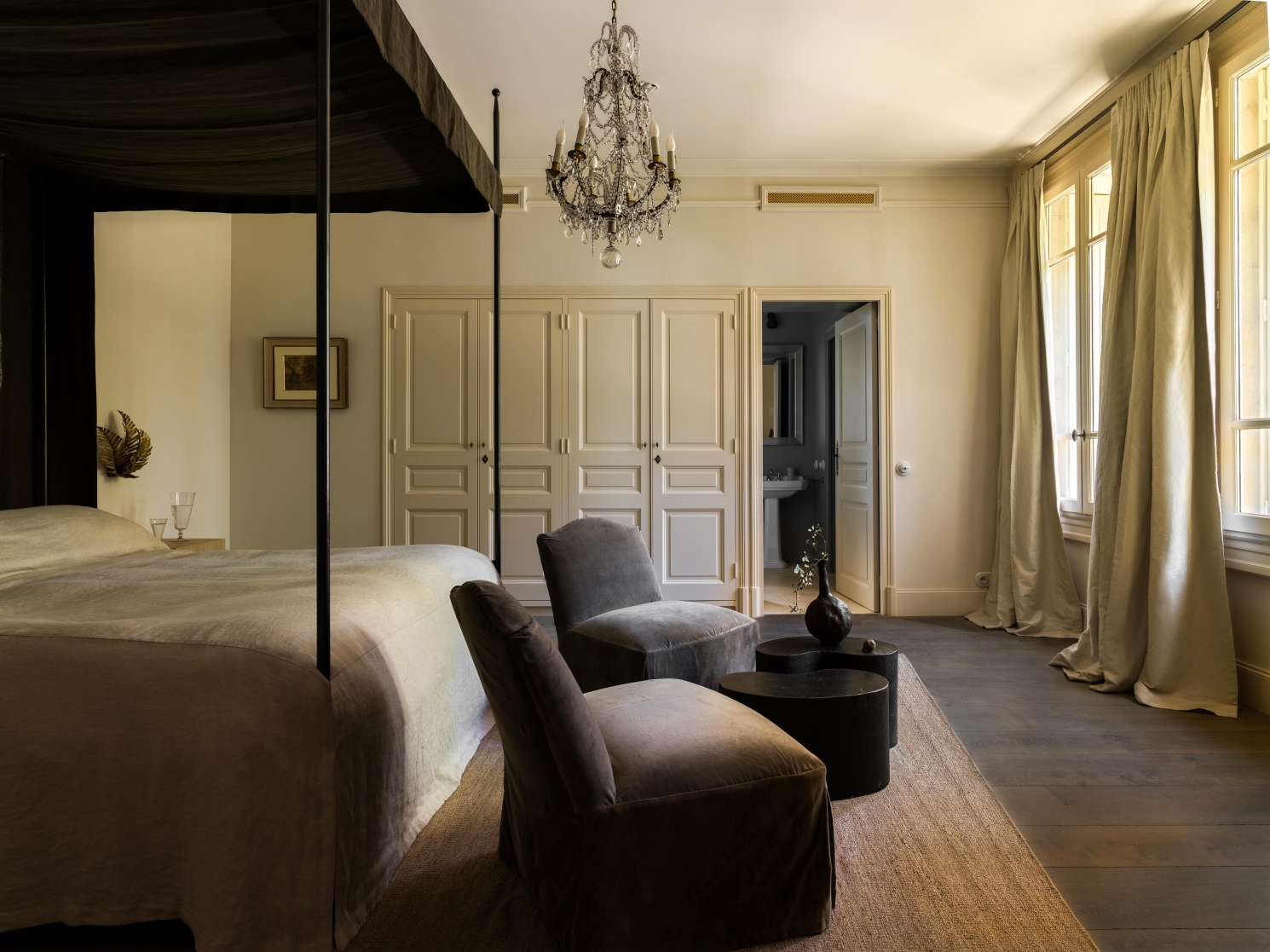
Textiles are strategically used to become spatial anchors. Apart from defining rooms and framing perception, the material is also chosen due to its soundproofing abilities. The softness and warmth emanating from the textiles bring the tactile familiarity typical of private homes into the redesigned hospitality venue. Textile creates the crucial elements of the design, such as wall panels in the lobby, canopies in the bedroom, and screens in the bathroom, which, alongside bed throws, create intimate corners and cosiness while complementing the classic architecture of the 200-year-old castle.
The design brought the Mediterranean landscape indoors through a set of specifically designed shades. Marianne Tiegen Interior collaborated with botanical dyers and local experts on the endeavour, introducing shades like Blush, madder root, and woad. Blush was developed from grape seeds harvested from the local vineyards, while madder root mirrors warm colour and apricot tones. These soft colours have been paired with pastel blues and greys.

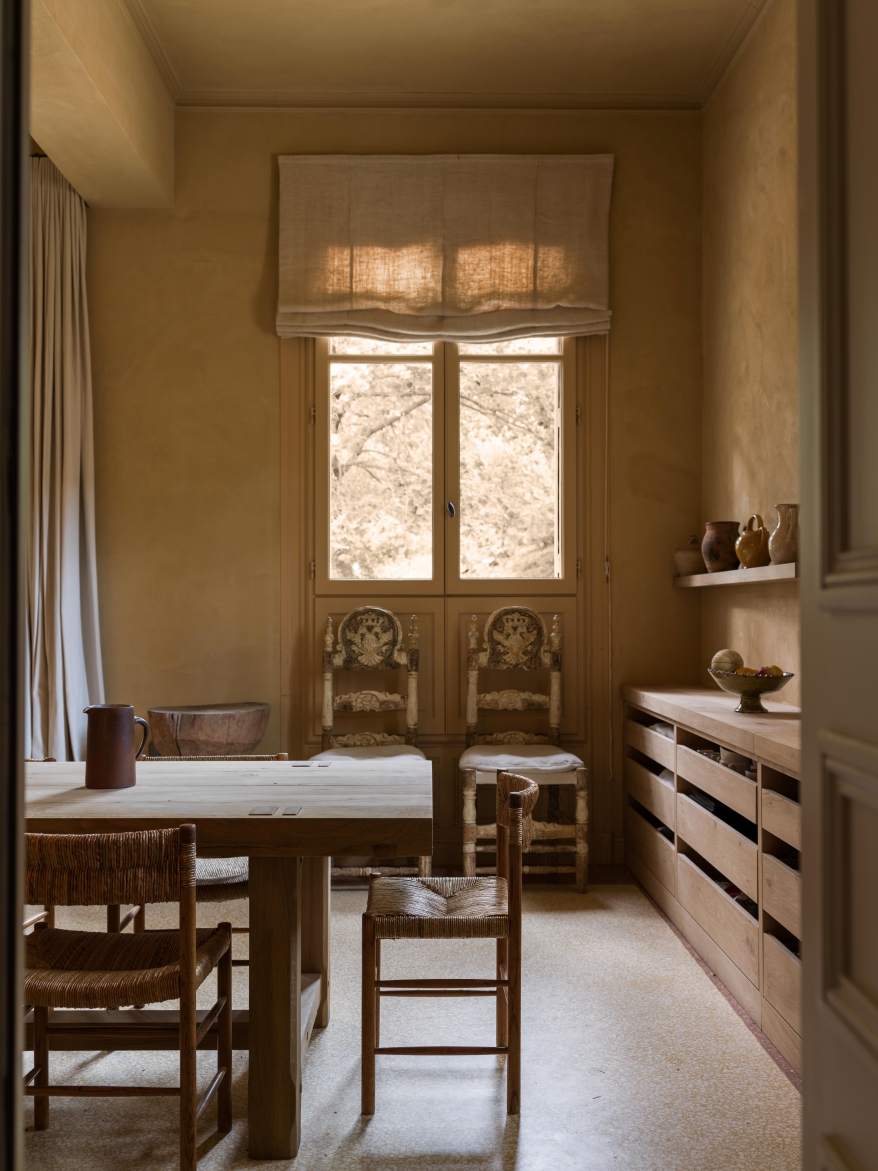
Antique textiles
Natural plant-based pigments were used to dye linen, hemp, and cotton, but alongside these newly dyed materials, the designer used a selection of antique fabrics, including Provençal damasks, Venetian block-prints, and couture-surplus textiles. These antique textiles, sourced from dealers and collectors, often served as a starting point, defining the entire vision with their unique textures and patterns. Sometimes, naturally dyed hemp and linen served the same purpose. Fragile or damaged antique materials were restored, backed with light cotton, or simply put on display to celebrate the history behind the piece, much like the Japanese art of Kintsugi encourages us to accept the damage and imperfections of the ceramics by highlighting them with gold.
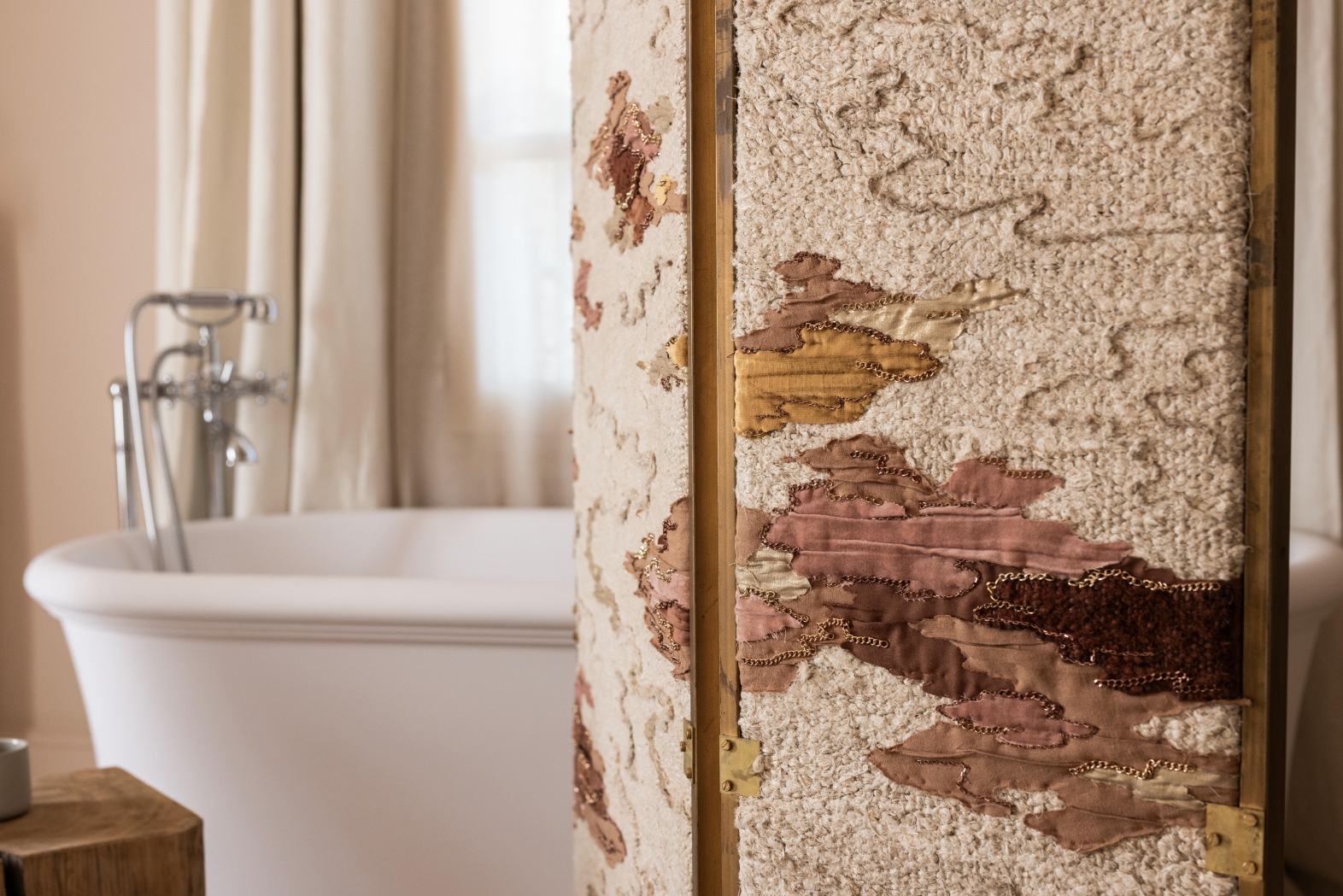
European artisans and circular craft
Once confined to couture ateliers, the skills of European artisans are on full display. Handprinted serigraphs from Lyon workshops and blockprinted Venetian fabrics complement woven Belgian linens and panels decorated with haute couture techniques. The bee rendered in the Pont de Beauvais stitch represents the centre motif of the design, while simultaneously symbolising the biodiversity and regenerative spirit of the building. Canopies, screens, and bed throws, anchored in metal frames or removable structures, offer practicality because they can be removed, cleaned, repaired, or repainted. The upholstery is equally reusable, with removable covers and replaceable cabinetry and screen panels. According to Tiegen, luxury and sustainability go hand in hand.
“With La Banquière, we show that sustainability can be a form of true luxury – rooted in nature, in history, in care.”
Marianne Tiegen Interiors is a global design firm with over 20 years of experience. With offices in France, Switzerland and the US, the company is known for collaborating with talented artisans to create soulful, sensorial designs.
Technical sheet:
Project name: Chateau La Banquiere
Location: Montpellier, France
Project type: Hotel
Design lead: Marianne Tiegen
Photography: Jeremy Wilson
Source: v2com-newswire

