In this conversation, we speak with Kotchakorn Voraakhom, founder of Landprocess and recipient of the Landscape Architecture of the Year award at the BLT Built Design Awards, about the transformation of the Thailand Government Complex in Bangkok. One of the country’s most important administrative hubs, the complex has long reflected the priorities of institutional power, scale, and control. Today, it is being reimagined as something radically different: a civic landscape designed around people, access, and care.
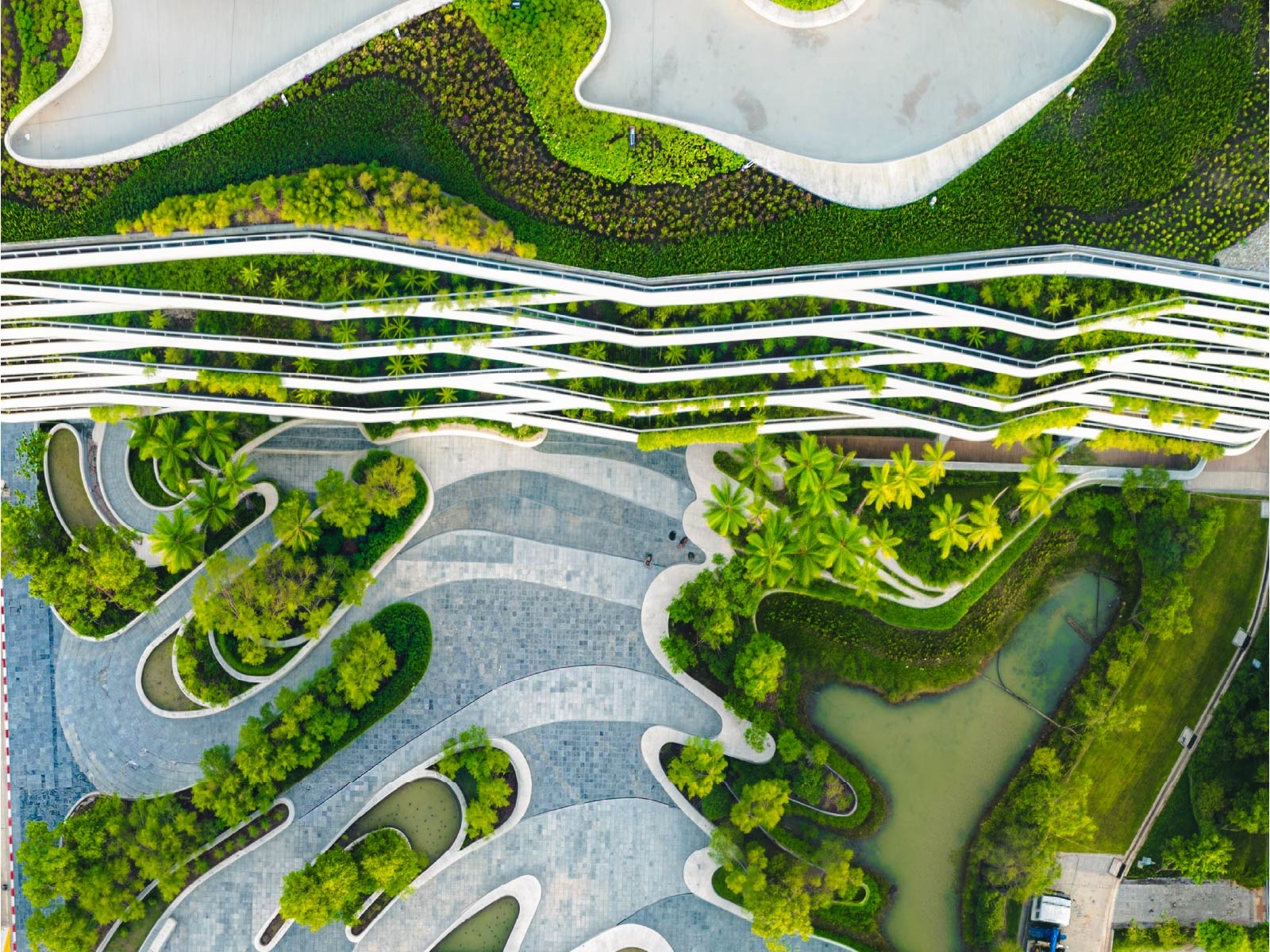
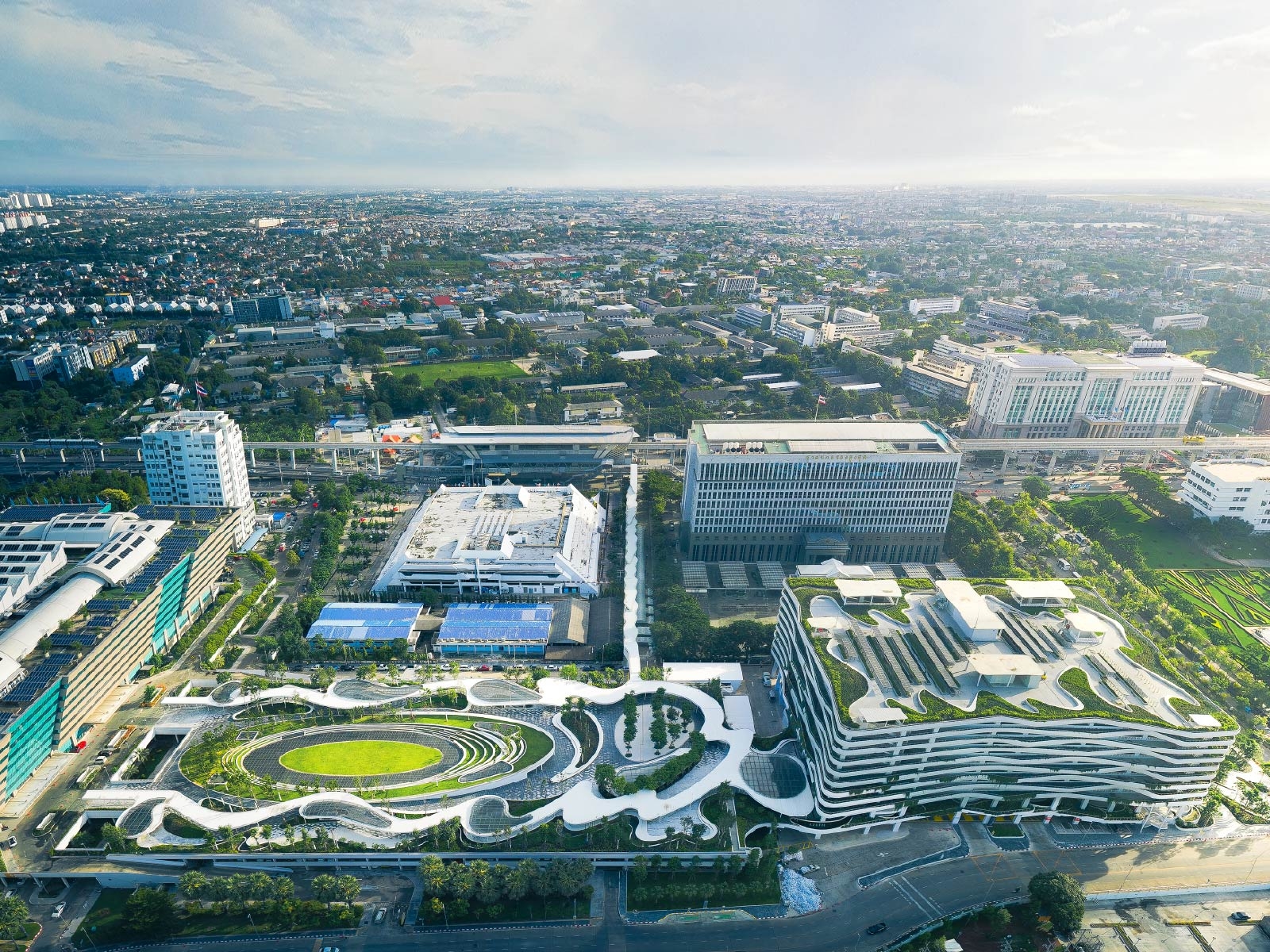
Spanning Zones A, B, and C, the project retrofits a car-dominated government campus into a network of walkable green spaces, shaded promenades, and public plazas, reclaiming vast hard surfaces and integrating blue–green infrastructure directly into everyday experience. Rather than treating sustainability as an add-on, the redesign integrates mobility, water management, cooling, and social life into a single, visible system that supports climate resilience while reshaping how citizens encounter their government.
In the following interview, Kotchakorn Voraakhom reflects on growing up in Bangkok with limited access to public green space, the long and complex process of transforming a formal government campus, and what it means to design a people-first model of governance through landscape architecture. The conversation reveals how trust, collaboration, and long-term commitment can turn public infrastructure into a living civic space, and why care may be the most powerful design tool of all.

Can you tell us about your background? How did you first become interested in landscape architecture, and how did that path lead you to work on the Thailand Government Complex?
My path to this project feels less like a coincidence and more like a calling, though it’s hard to put into words. Growing up in Bangkok—a city at great environmental risk and with among the least public green space per capita in the world—I felt the absence of public space deeply. I knew I wanted to help create places where people could breathe, connect, and truly enjoy their city, long before I knew it was called landscape architecture.
This conviction led to projects that became stepping stones. After completing the Chulalongkorn Centenary Park—Bangkok’s first major public park in 30 years—my team and I learned that each accomplishment doesn’t make the work easier; it prepares you for greater challenges. It opens the door to larger, more complex missions.
That is how the path led here: through a commitment to public life and a proven readiness to take on transformative civic projects. When the opportunity arose to reimagine the Thailand Government Complex, it was a natural progression—a chance to apply everything we had learned to reshape the heart of the nation’s public realm.
What is the main vision behind the project, and what does “people-first government” mean in practical design terms on this site?
The main vision is to realign the Government Complex’s physical reality with its fundamental mission: to serve its people. For decades, the campus reflected institutional priorities—order, control, separation. Our vision was to flip that entirely and create a living model of a people-first government.
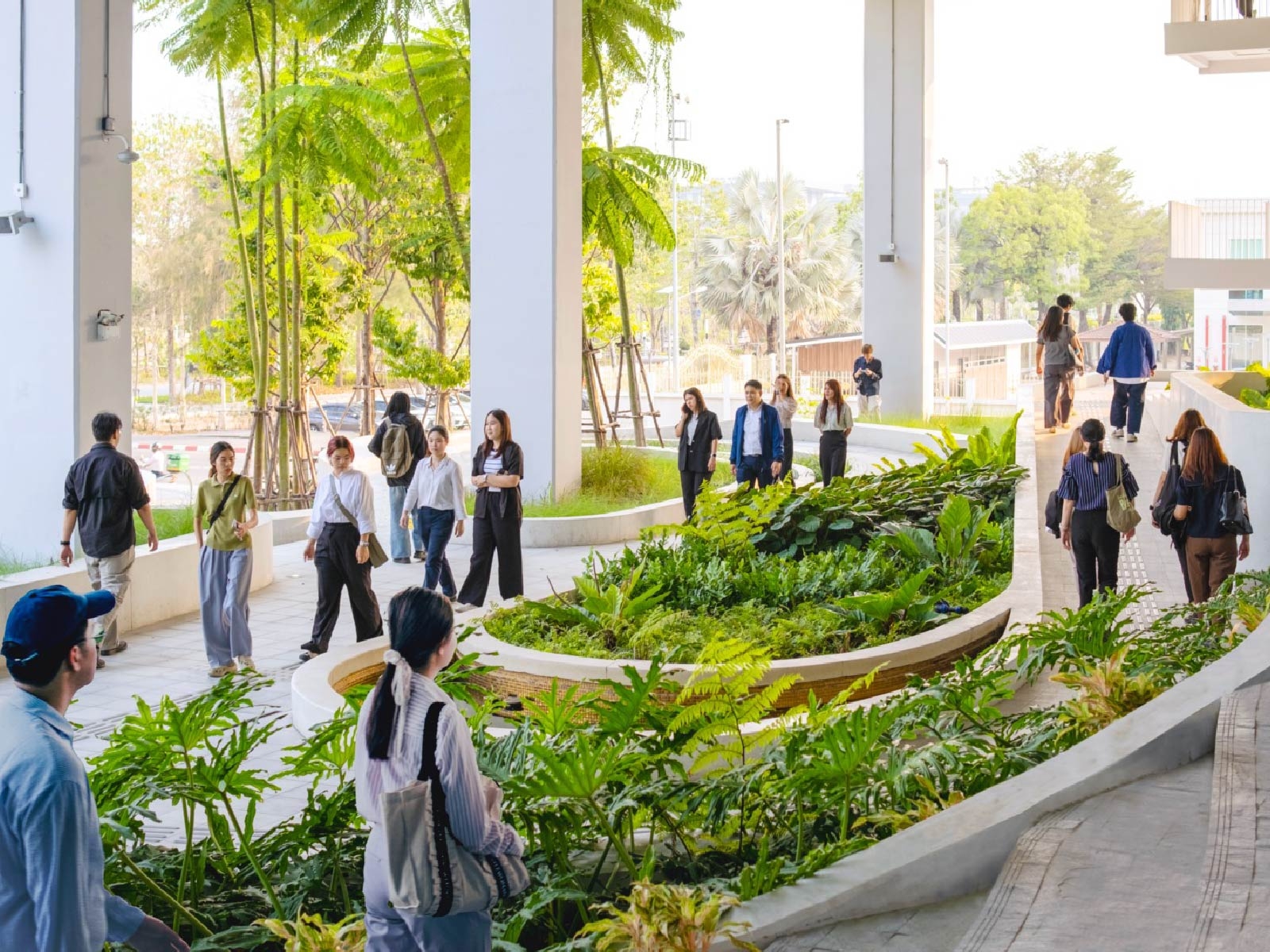
We prioritised accessibility over authority, transforming car-dominated roads into shaded, walkable promenades. We valued engagement over efficiency, replacing vast, unused plazas with intimate gardens, seating areas, and flexible event lawns. We championed integration over isolation, weaving the complex into the surrounding urban fabric with green connectors and welcoming edges. And we committed to resilience over rigidity, using nature-based solutions to manage climate risks while creating cooler, more comfortable public spaces.
Ultimately, “people-first” here means designing from the human scale upward. It means every design decision answers a simple question: Does this make the citizen feel welcomed, respected, and cared for? The site is no longer just a place of administration; it is a civic place-making.
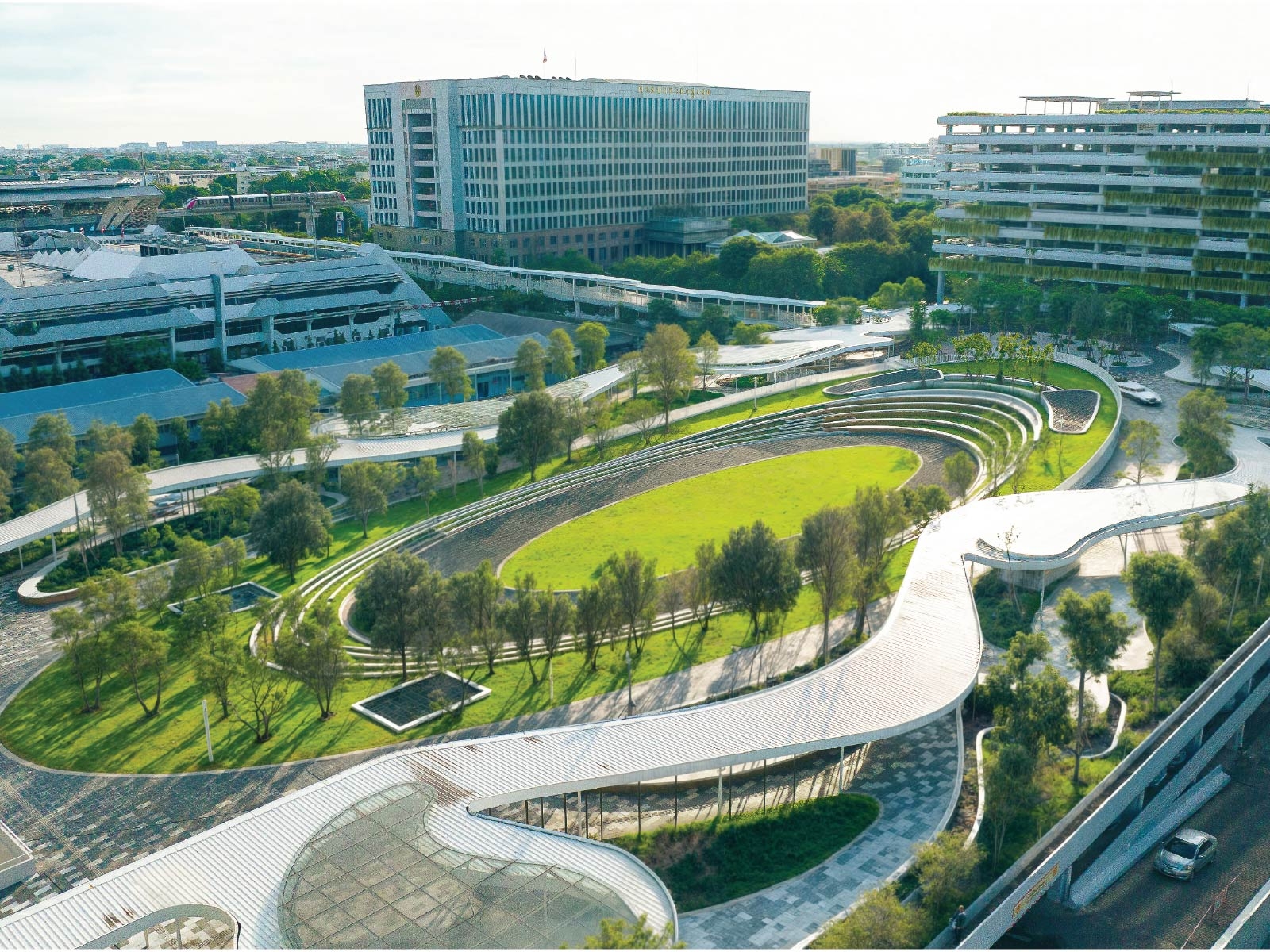
How did you approach adding 55 acres of hard surface into green social spaces and a central plaza, and how did you decide on what to remove, keep, or add?
Our approach was one of strategic retrofitting rather than a blank-slate redesign. With every square foot as registered state infrastructure, we worked adaptively within the fully built campus. The guiding principle was simple: design for the human experience—for the person on foot. We shifted the core question from “Where do cars go?” to “How do people move, gather, and thrive?”
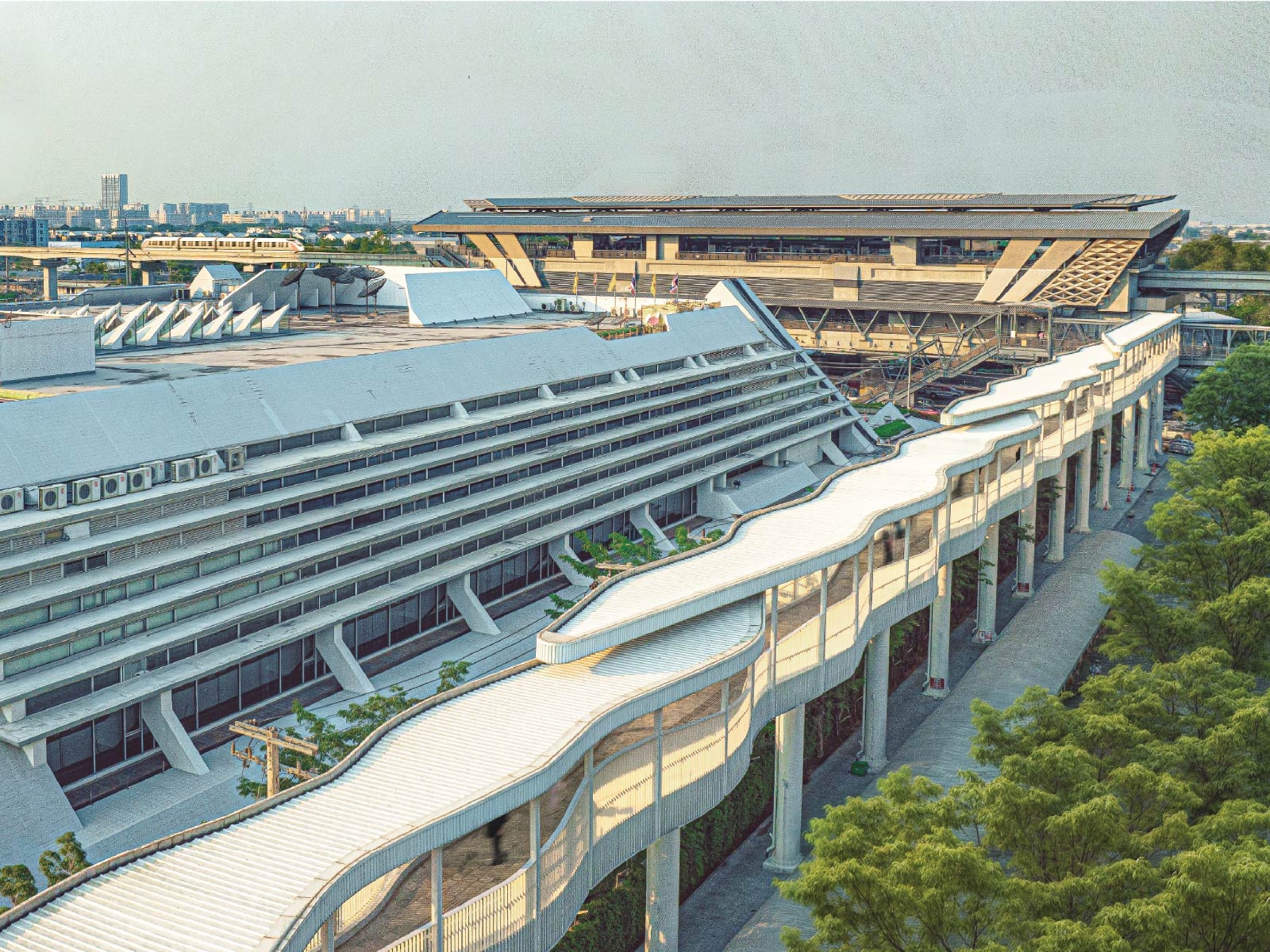
This led to clear criteria. We removed barriers to seamless movement, prioritizing the elimination of decades of traffic congestion. We kept and repurposed robust existing structures while liberating the ground plane for people. And we added a continuous network of green pathways and vibrant social plazas, weaving nature-based infrastructure with public transit.
Ultimately, we transformed the logic of the complex from separated to integrated, and from obstacle to connection. The result reimagines urban mobility: turning of hardscape into a resilient, people-centric hub for its 40,000 daily users—a new benchmark for how civic space can serve both community and climate.
Can you tell us about the sustainable features of this project, and how did these choices shape the look and feel of the space?
Our sustainable strategy is not just a list of features; it’s the foundational principle that shaped the entire design. We engineered an integrated ecological and social system that fundamentally changed the look and feel of the site.
In essence, we transformed infrastructure into ecology. The most telling examples are how we redefined mobility and repurposed concrete. We rerouted car traffic underground to reclaim the surface for people, creating a network of “Cooling Corridors.” Here, 3,500 new trees and a system of bioswales replaced six lanes of asphalt, lowering local temperatures by 4-6°C and turning sun-scorched roads into shaded, walkable greenways.
This philosophy of transformation extended to every hard surface. A massive 5.5-acre concrete pond became a regenerative “People’s Oasis,” while the rooftop of an 8,000 sqm parking garage was reborn as a vibrant public park—a new green “front door.” We even celebrate functional elements, like turning rainwater pipes into sculptural “gold” features, making the system’s performance visible and beautiful.
Multifunctional Rooftop Utilisation: Repurposing three large parking garage rooftops into a green plaza and health space for all, while increasing green with new design intervention, a solar-powered urban farm that incorporates vertical greenery for food production and rainwater harvesting.
The result is a complete sensory shift: from hot, hard, and car-dominated to cool, soft, and people-centric. The space now feels like a lush, resilient campus where sustainability isn’t hidden—it’s the very experience of comfort, connection, and civic life.
How do you think the new public spaces change the relationship between citizens and their government, and what kinds of activities or behaviours on site matter most to you?
The traditional perception of government is often one of formality, inaccessibility, and emotionlessness. It can feel like an uncommunicative monolith, more focused on its own bureaucrat persona than on the people it serves.
We are working with the site and the habitual pattern of 20 20-year-old governmental campus where the car is king. The goal is to leave behind the old impression of an imposing, unapproachable government. The new space should make it self-evident that the government’s primary role is to serve the people. When the design successfully prioritises human connection and community needs, that message is communicated not through command, but through powerful, mundane experience.
New, thoughtfully designed public spaces at the heart of the government complex can fundamentally flip this script. By prioritising human experience over institutional grandeur, they transform the relationship from one of transaction to one of interaction. The government ceases to be a remote authority and instead becomes the host of a shared, public living room.
What were the biggest challenges of redesigning an existing, formal government complex, whether technical, bureaucratic or climatic, and how did you deal with them?
The greatest challenge was not technical, climatic—those are solvable with expertise and creativity. The true test was navigating the complex bureaucratic environment of a government institution, where overlapping layers of authority and entrenched silos could have easily stalled progress.
Fortunately, we had an exceptional client in Dhanarak Asset Development, led by Dr. Nalikatibhag Sangsnit. Without his visionary leadership and unwavering commitment, our team could not have managed these invisible complexities. He fostered the will to change and created an environment of respect and professional trust.
Over 6.5 years, I learned that the most critical element in transforming a formal government complex is not just design skill—it is building and sustaining that trust. His perseverance, alongside our team’s dedication, allowed us to turn ambition into reality.
What does winning the award for “Landscape Architecture of the Year” mean to you?
For us, it is a profound validation of our team’s commitment to meaningful, regenerative design. But more importantly, for our government client, it is tangible proof that public leadership can—and must—drive ecological and social change. This award underscores that real adaptation happens not just in policy documents, but in the physical reinvention of our shared spaces.
It sends a clear message to governments everywhere: you can lead with action. By reimagining infrastructure as living systems, you directly serve your communities, your workforce, and the climate itself. This project represents a fundamental shift—from top-down planning to co-creating with nature. It demonstrates that a government can be the catalyst, turning vision into a built reality that heals, inspires, and endures.
This isn’t just an award for a project; it’s recognition of a new model for public stewardship.
What advice would you give younger landscape architects who want to influence public policy and urban life through design?
Through collaboration and intergenerational thinking, you are more powerful than you realise. Your most essential tool isn’t just technical skill, but your capacity for care.
I remember walking through imposing government complexes and feeling the architecture’s clear intention: to awe and intimidate. I asked myself, “Why would a governmental design need to make its people feel small?”
As a citizen and landscape architect, I won’t be tasked with tearing those buildings down. Instead, my role is to heal, to soften, and to reconnect. Our mission is to find a way to “communicate” with those who impose power and structures—to wrap them in accessible plazas, connect them with green pathways, and create spaces at their feet that invite people in rather than push them away. Your goal is to introduce a more human-centred, nurturing quality to the civic realm. Never again should a citizen feel small in a place meant to serve them.
Use your designs to foster dignity, belonging, and dialogue. When you succeed, you do more than design a space; you transform the relationship between a citizen and their government and the city. And in that transformation of my care, your care to form a generation, we all benefit.