In this interview, we speak with Lisa Van Staden, winner of the Emerging Interior Designer of the Year award at the BLT Built Design Awards, about Symphony, her proposal for the Museum of South African Languages. Developed at Cape Peninsula University of Technology and set within the Cradle of Humankind, the project examines how language, sound, and cultural identity can be translated into space.
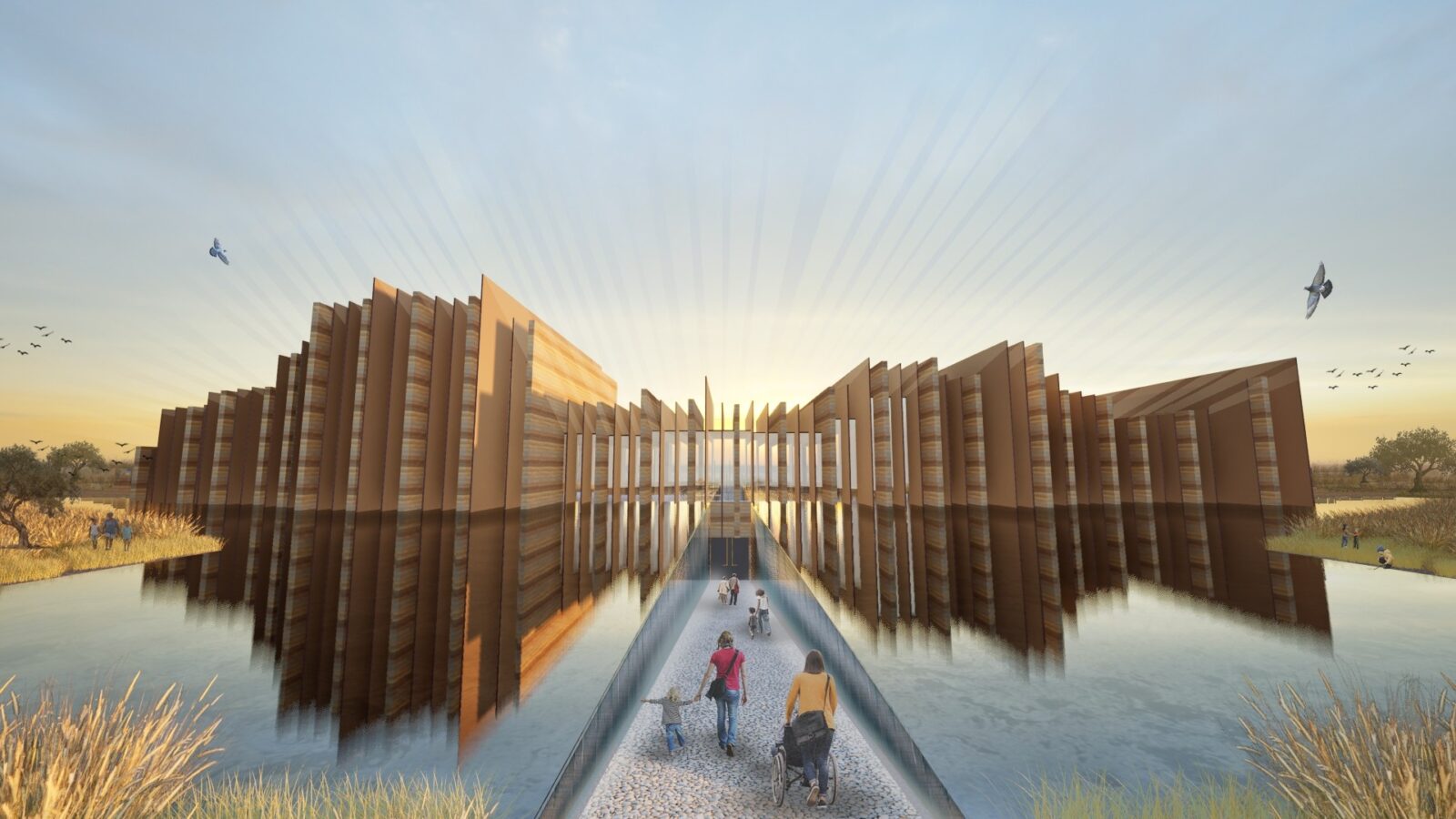
Symphony draws on the logic of sound waves, using a fragmented façade to express rhythm, movement, and diversity. Each vertical element shifts in depth and alignment, responding to light and framing the vast horizon of its setting, where the landscape becomes part of the architectural experience. Inside, these gestures produce changing shadows throughout the day, reinforcing the idea of language as something dynamic rather than fixed.
Material choices play a central role in shaping the project’s atmosphere and performance. Timber and rammed earth echo the colours and textures of the surrounding landscape, supporting comfort, climate response, and a strong sense of place. Rather than treating the museum as a static container, Symphony positions architecture as a medium for communication, encouraging visitors to experience language spatially and reflect on its role in human connection.
Can you tell us a bit about your background? How did you decide to make a career in design?
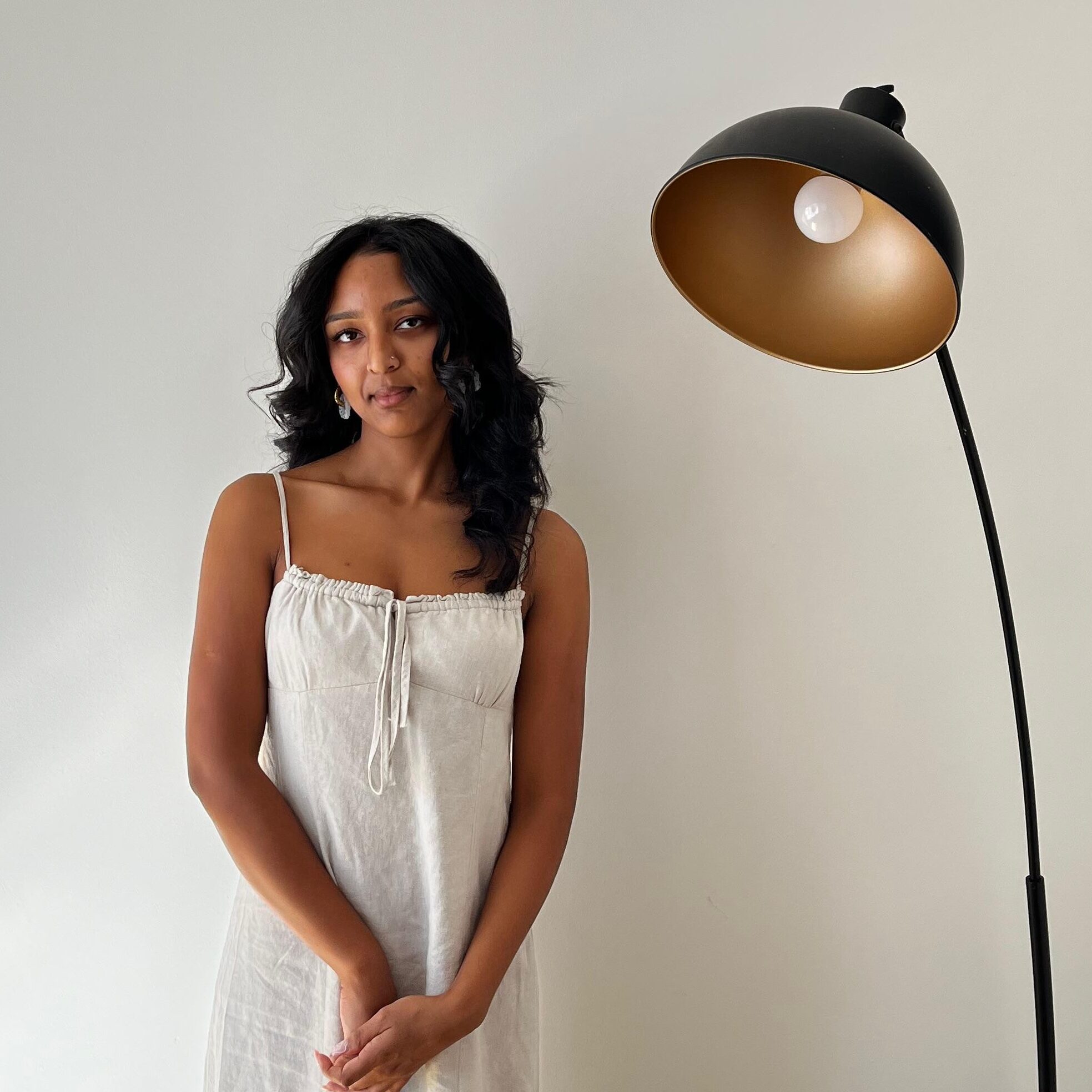
I grew up in Cape Town, South Africa, and from a young age, I naturally gravitated toward anything creative. I was always drawing, painting, or paying close attention to beautifully designed spaces and objects. While I did well enough in school subjects like mathematics or economics, I always felt most confident and most myself in design-related work. It was the one area where I excelled without forcing it — it felt intuitive. Over time, I realised that design wasn’t just something I enjoyed; it was something I needed to pursue. Choosing a career in interior architecture became a way to combine creativity, problem-solving, and my love for transforming ideas into physical experiences.
How did your personal background and experiences growing up in South Africa influence your approach to this project?
I wouldn’t say my personal background directly shaped the concept, but growing up in South Africa definitely influenced the scale of my thinking. When I received the brief — a museum of South African languages — I felt inspired to think boldly and creatively. South Africa is incredibly diverse, with 11 official languages, each tied to complex cultural identities. Understanding this diversity made me want to approach the project with depth, respect, and ambition. Rather than designing something ordinary, I wanted to challenge myself to create a concept that celebrates the richness of communication in this country in a meaningful, poetic, and innovative way.
What is the vision behind Symphony and why did you decide to express the idea of South African languages through a building form that behaves like a sound wave?
The vision behind Symphony is rooted in sound — specifically, how sound shapes language. Growing up in South Africa, English has always been my first language, but I’ve always been fascinated by the unique sounds of the other languages spoken around me. The way people move their tongues, shape their mouths, and create specific sounds is something I find so beautiful.
I started thinking about communication itself: how do we understand each other? What is physically happening when we communicate? That line of questioning led me to sound waves. Every word we speak exists as a pattern of sound, and each language has its own rhythm. With so many languages in South Africa, there are countless sound patterns and expressions. I wanted Symphony to capture that idea of movement, diversity, and energy — the physical expression of sound. The building needed to feel alive, as if someone’s voice had been frozen in space.
How did you conceive and develop the fragmented façade so that each section echoes the movement of a sound wave while also catching light differently and framing the almost endless horizon of the Cradle of Humankind?
This was one of the most enjoyable parts of the design process. I didn’t want to base the façade on just any random sound wave — I wanted the form to have meaning. So I recorded myself saying the word “language” on my phone. I then used the waveform from that voice note as the literal foundation for the building’s form. That exact sound wave became the fragmented silhouette of Symphony.
Because the Cradle of Humankind has a flat, almost infinite horizon, the vertical fragments of the façade create a striking contrast against the landscape. The horizon acts as “silence” — the flat line that appears on a sound wave when nothing is being said. As you move toward the building, the fragmented form rises from that silence like a sound coming to life.
On top of that, the reflective pond at the front of the building mirrors the upper half of the façade, creating the illusion of a complete sound wave. As you walk from one side to the other, the building shifts rhythmically, catching light differently and framing the endless horizon between each fragment. This merging of architecture and nature reinforces the idea that sound — and communication — is something that flows, evolves, and exists in constant motion.
Could you explain how your design responds to dynamic environmental or experiential conditions?
In Symphony, the concept of the sound wave is fully embedded in the architecture, not only in elevation but across the entire building form. When viewed in plan, the building mirrors the exact same sound-wave pattern seen on the façade. This is achieved through the strategic placement of walls that shift in and out, creating a rhythmic motion that mimics the movement of sound.
These walls are positioned at varying depths and heights, generating a dynamic interplay of light and shadow as the sun moves throughout the day. Sunlight passes through and around these staggered wall elements, producing a sense of continuous motion — as if sound is physically travelling through the space. This changing light condition animates the interior and enhances the building’s experiential quality, reinforcing the idea that Symphony is a spatial translation of sound itself.
What materials have you selected and why? Are they locally sourced or appropriate to the context?
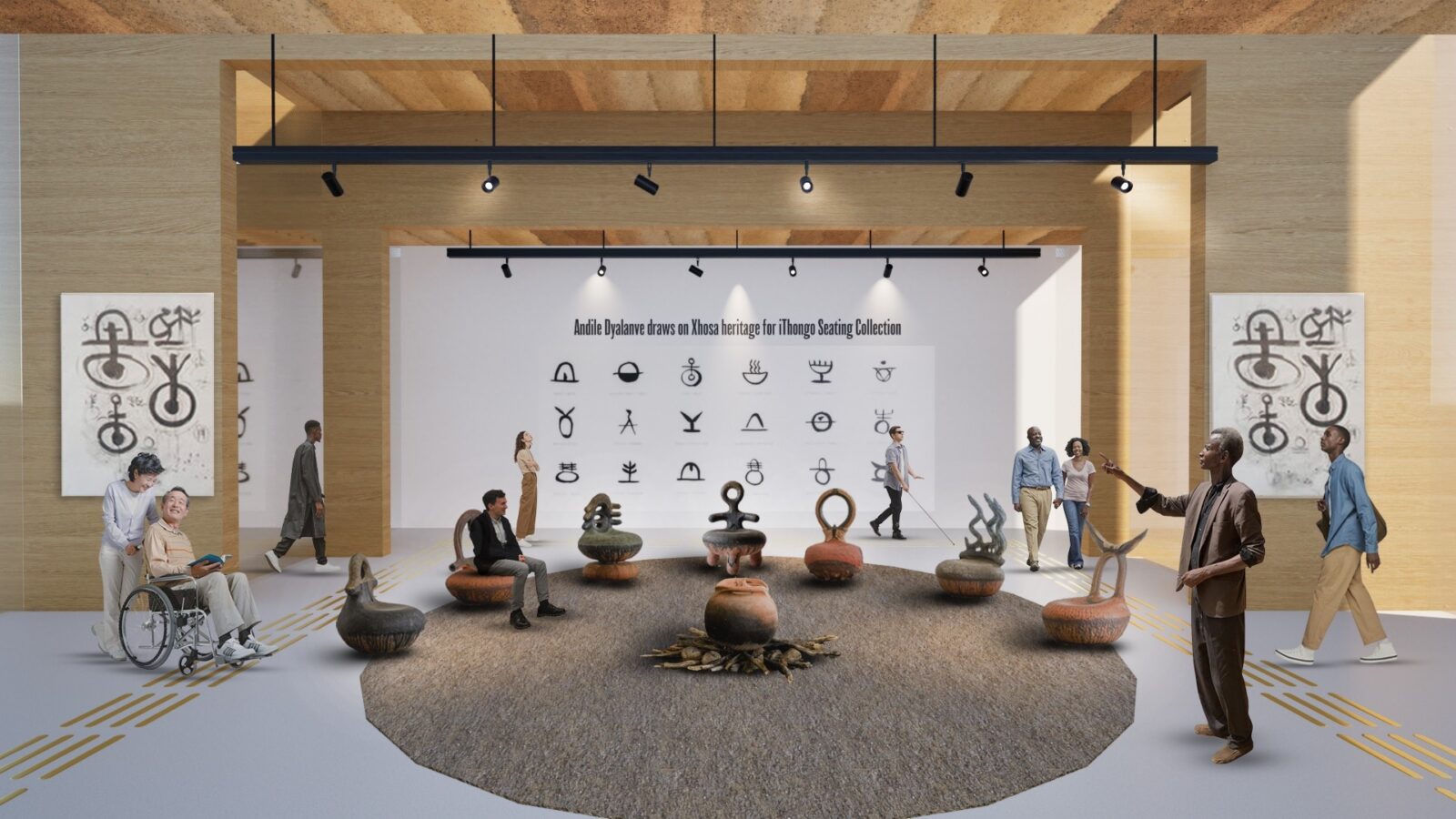
The materiality of Symphony is intentionally tied to its setting within the Cradle of Humankind, a landscape known for its rich natural textures and earthy tones. Timber and rammed earth were selected because they can be locally sourced with the right research, making them contextually appropriate and environmentally responsible choices.
Rammed earth directly uses the surrounding soil, meaning the landscape itself becomes the building. This allows Symphony to blend naturally with the site while benefiting from rammed earth’s excellent thermal performance. Timber can also be sourced from the region and provides a warm, tactile quality that complements both the architecture and the natural environment. Together, these materials reinforce the connection between the building and its land, grounding Symphony in the cultural and geological identity of the Cradle of Humankind.
How does your building encourage cultural communication or engagement?
Symphony is designed as a physical and conceptual translation of sound — one of the oldest and most universal forms of communication. By shaping the entire building as a sound wave, Symphony becomes a place where visitors can experience communication spatially rather than only verbally. The in-and-out movement of the walls visually expresses the rhythm and pattern of sound, symbolising the connection between people, language, and shared experience.
Its location within the Cradle of Humankind strengthens this intention. As a site deeply rooted in human origins, it becomes the ideal setting for a building that celebrates how people interact, express meaning, and connect across cultures. The interior pathways guide visitors through shifting light and shadow, creating moments of pause, reflection, and engagement — encouraging them to think about the evolution of communication and their relationship with one another. Through form, movement, and environment, Symphony becomes an active reminder that communication is at the core of our shared humanity.
How does your design support user experience, comfort, and well-being?
Symphony supports user comfort and well-being through both spatial and environmental strategies. The rhythmic arrangement of walls filters natural light throughout the day, reducing glare and creating a softly illuminated interior. This promotes visual comfort while reinforcing the building’s concept of movement.
The excavation of the structure into the landscape improves thermal performance, helping maintain stable indoor temperatures and enhancing occupant comfort. The use of natural materials such as timber and rammed earth further contributes to a calming sensory experience — these materials regulate humidity, reduce harsh acoustics, and visually connect users to the surrounding natural environment.
Walkways and openings allow fresh air, framed landscape views, and controlled daylight into the building, supporting mental restoration and emotional well-being. Combined with its cultural concept, these design choices ensure that Symphony is not only visually meaningful but also a comfortable, restorative environment for all users.
How do you feel about winning the BLT Built Design Award?
Winning this award has left me genuinely overwhelmed — in the best way. I constantly remind myself that hard work really does pay off. I don’t carry pride or feel above anyone; I try to stay grounded in humility, always knowing that none of this would have been possible without God’s guidance. As much as we sometimes think we can do everything on our own, I truly believe this recognition is a blessing I could never have achieved without Him.
This prize makes me feel empowered. It makes me feel young, strong and capable — like a thriving female interior designer who is ready to take on the world. It reminds me that there is nothing I cannot accomplish if I commit myself fully. I’m extremely grateful for this recognition, and I’m excited for everything that lies ahead in my interior design career.
How do you see your future as a designer after Symphony, and what advice would you give to other students who want to engage seriously with cultural identity and language in their interior architecture work?
I see myself thriving as a designer who is not afraid to explore new ideas and create work that has never been done before. My goal is to design with intention, originality, and cultural depth — bringing my African roots into every project in a way that feels authentic, contemporary, and meaningful. I want my designs to tell stories: stories of identity, place, communication, and the beauty of being African in a global design world. I believe that the future of my career holds endless opportunities to innovate, to lead, and to show through my work that creativity is limitless when you stay true to who you are.
Receiving this recognition has reminded me that hard work truly pays off. I feel empowered, grateful, and inspired to keep pushing boundaries and trusting my abilities. I see myself becoming a strong, young female interior designer who contributes something fresh to the design industry — someone who is confident in her craft but grounded in humility.
What advice would you give to students?
Always trust the process, even when it feels overwhelming. Stay curious, stay open, and never be afraid to ask questions. Consistency is more important than perfection — small steps every day will get you further than you think. Stay true to your own voice and identity, because your background and your story are what make your work unique. And lastly, remember that passion shows in your designs; when you love what you’re creating, the work naturally becomes stronger.