Header: Hai Zhu
Hangzhou is a city of two speeds. You have the rush of modern life and the bright city lights, but you also have the calm of the West Lake and the tea mountains. RARA House, a showroom for a high-end custom home system brand, sits right in the middle of this mix. But the location came with a tricky problem. The building is surrounded by other structures, meaning natural sunlight is hard to come by.
The solution wasn’t just to install brighter bulbs. Instead, lead designer Ke Yang and the team at YAANK Lighting Design decided to manufacture their own atmosphere. Working alongside interior designer Feibo Chen, they turned the building itself into a source of light that mimics nature’s rhythm.
A façade that tells time
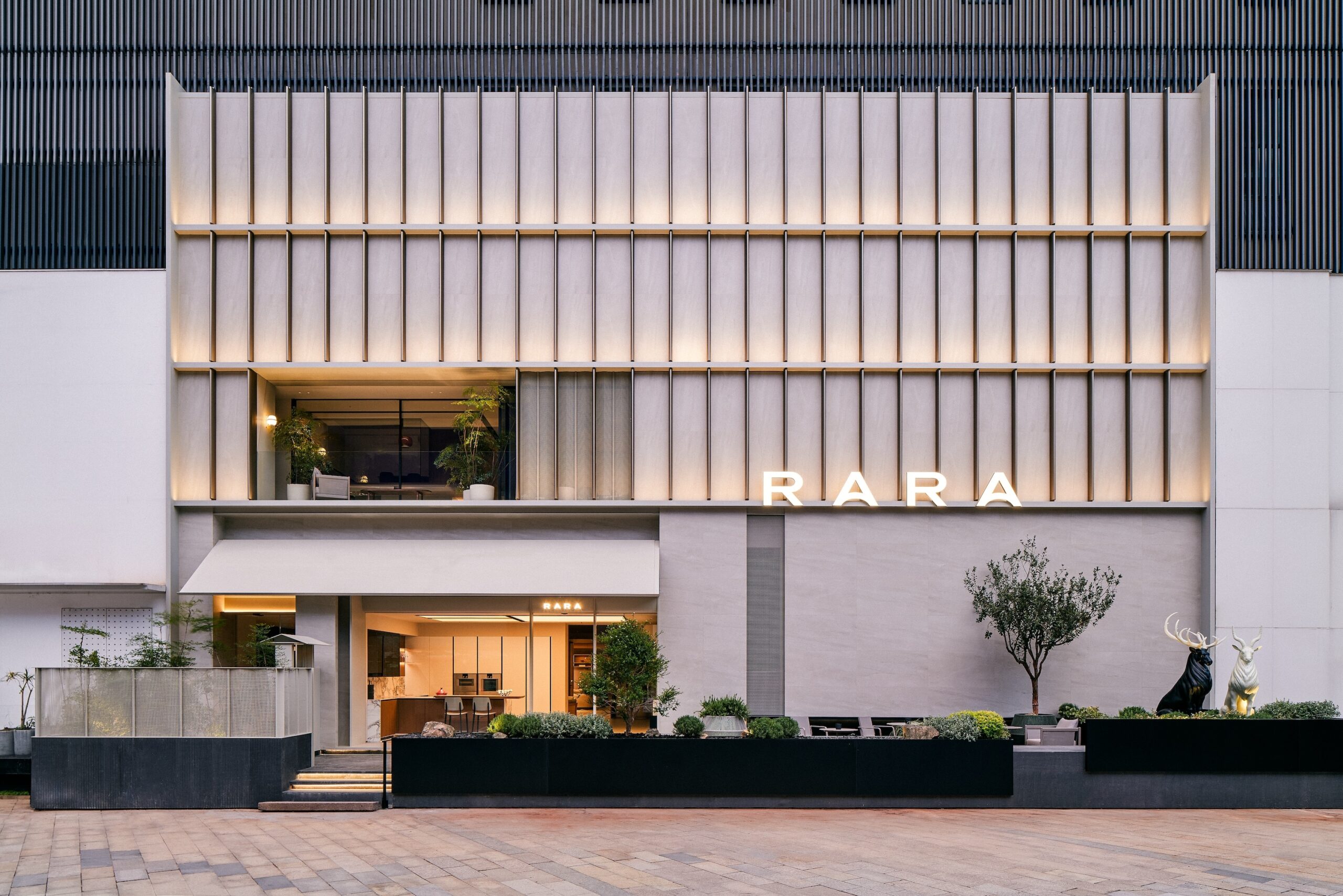
The most distinct feature of the project is how the exterior communicates with the street. The designers treated the building façade as a canvas to interpret the local circadian rhythm. Since they couldn’t rely on the sun, they built a modular lighting system that changes throughout the day.
It works in three specific modes. First, there is the Morning mode. This lights up the upper half-cavity of the structure, creating a slow, upward gradation that looks like morning light sweeping over the mountains. Next is the Daytime mode, where both the upper and lower cavities light up to match the brightness and energy of the busy afternoon streets. Finally, as the evening sets in, the Twilight mode activates. This lights up only the lower half of the structure, reproducing the soft, fading look of a setting sun. It is a clever way to make a static building feel like it is breathing along with the city.
Faking the sun with paper and acrylic
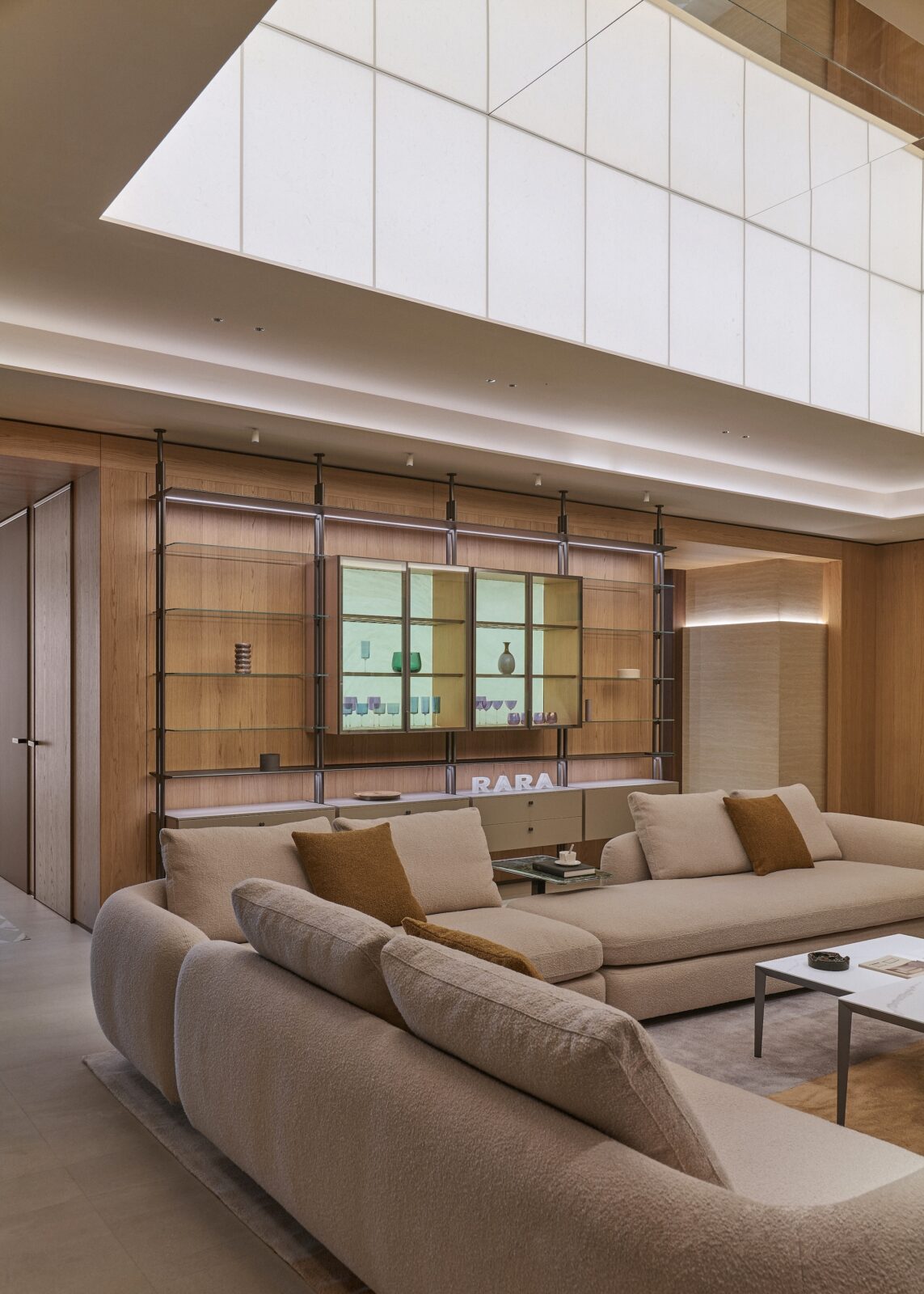
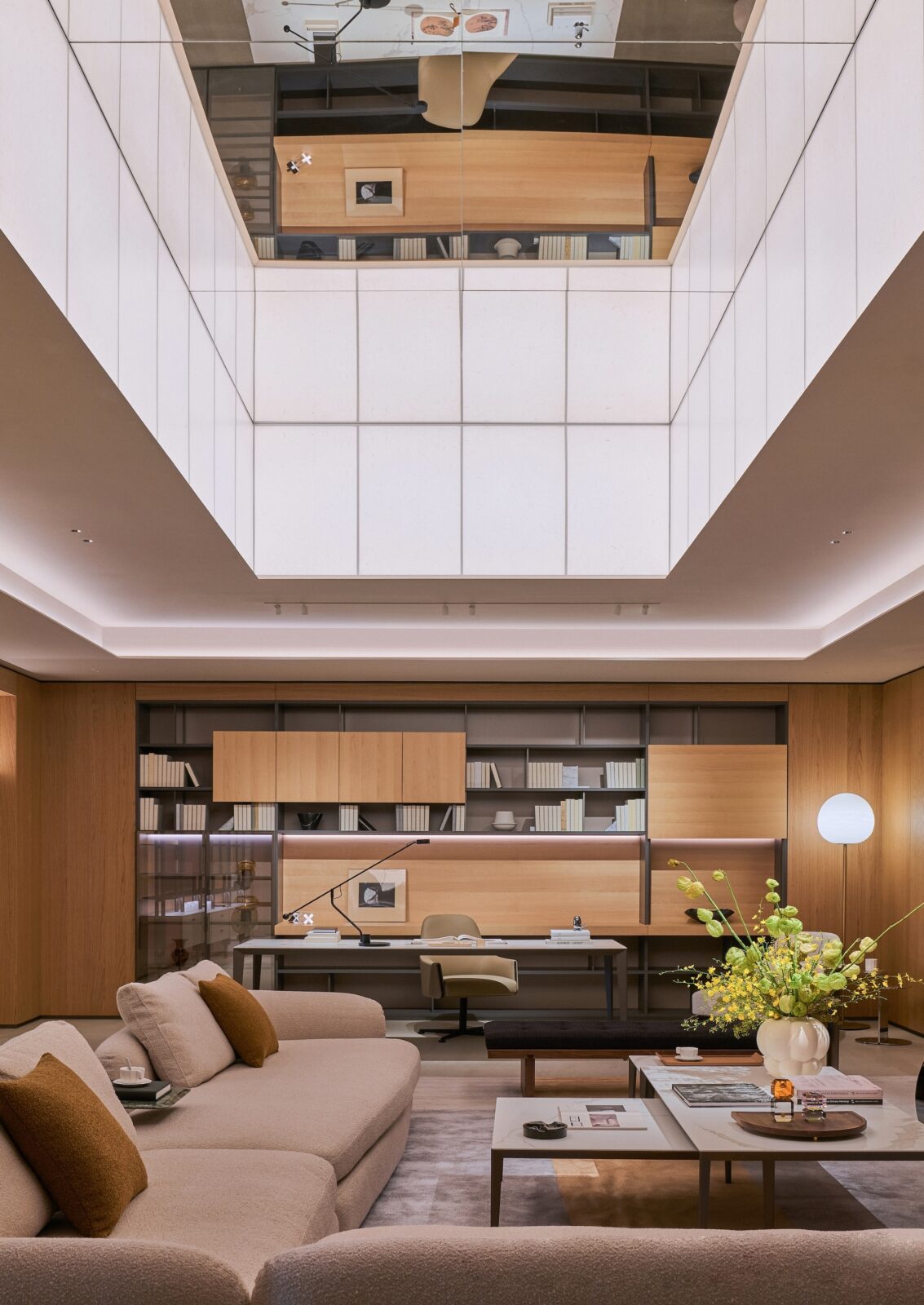
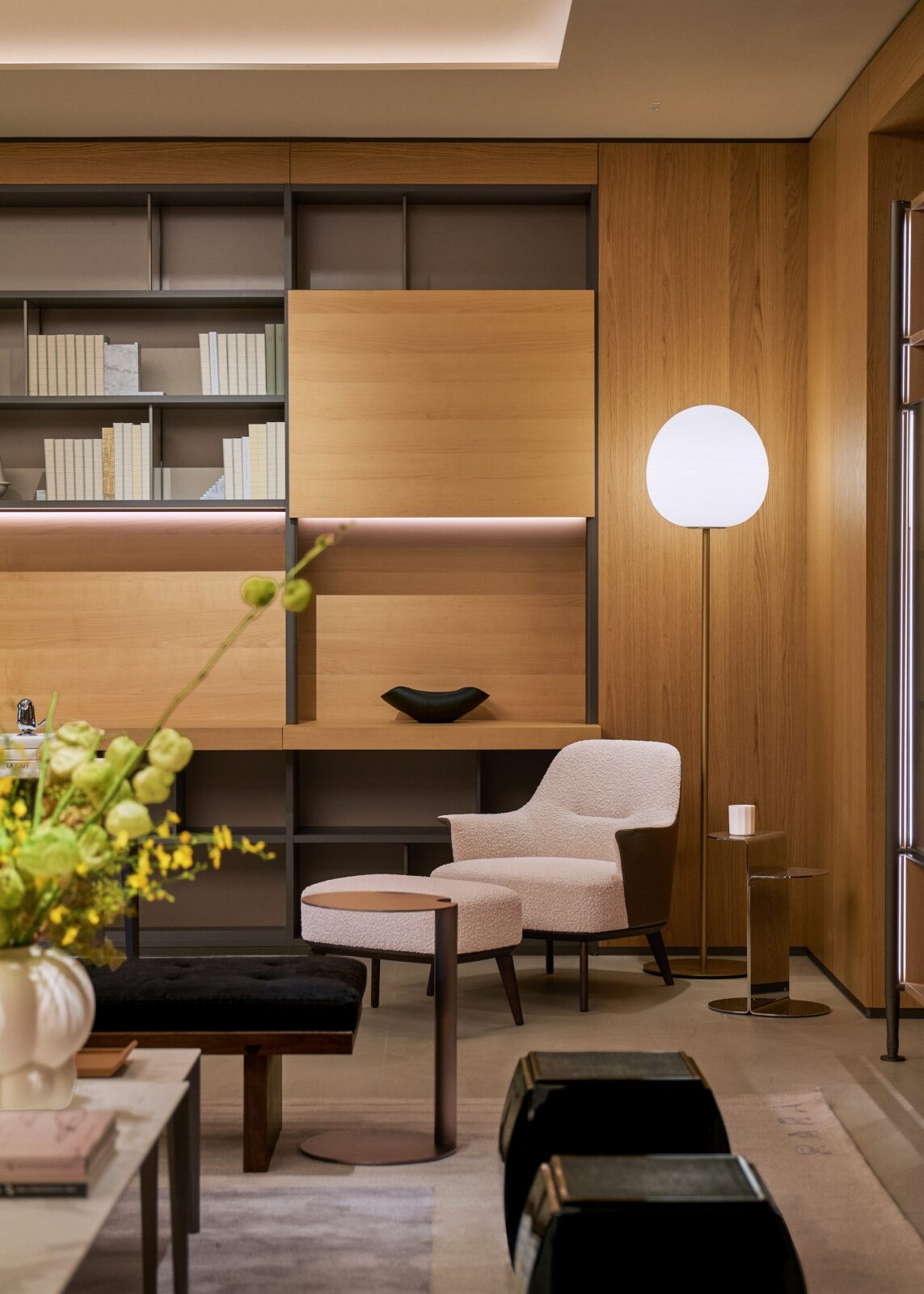
Inside, the challenge was even harder. Because the neighbors block the sun, the interior could easily feel closed off and artificial. The design team looked to old Eastern aesthetics to fix this. They focused on the ceiling, covering it with a mix of acrylic and handmade rice paper.
This material choice is crucial. With a light transmission rate of 42%, the paper texture diffuses the artificial light so it spreads out like ink on paper. It avoids that harsh commercial glare. When you look up, it feels like you are standing in a traditional courtyard looking at a patio, seeing a soft sky rather than a ceiling. It tricks the brain into feeling connected to the outdoors, even when you are deep inside the showroom.
A journey from social to private
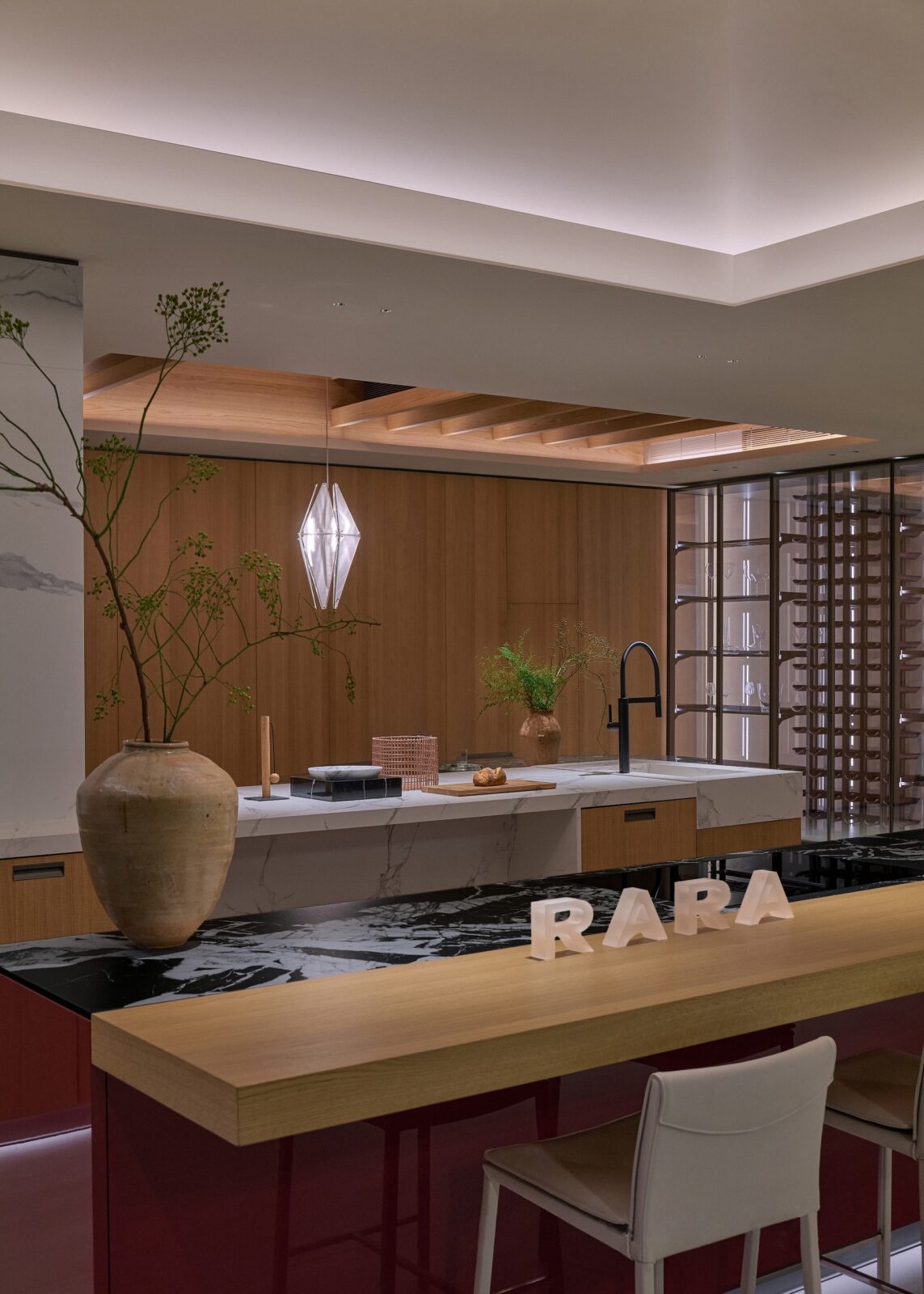
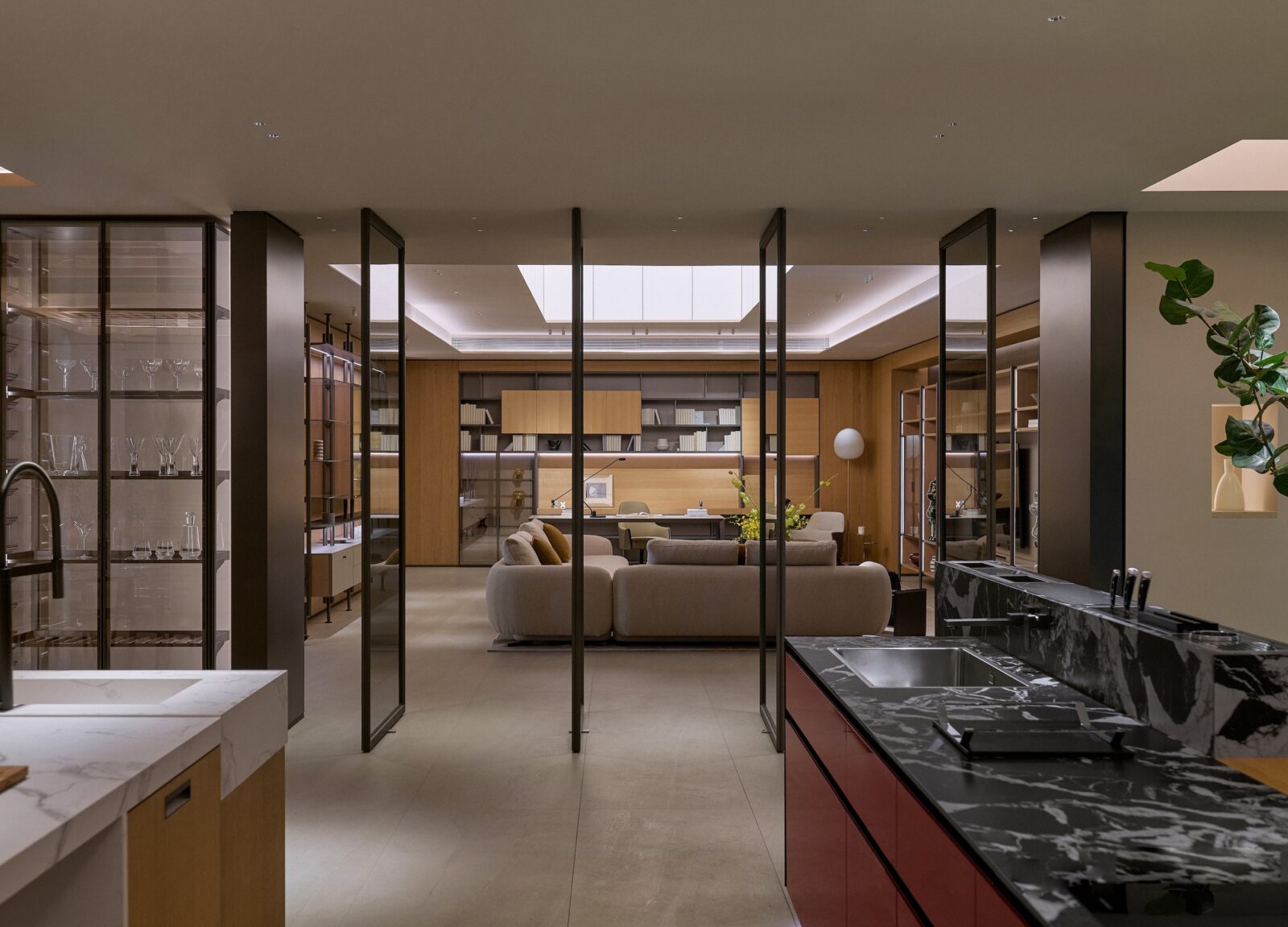
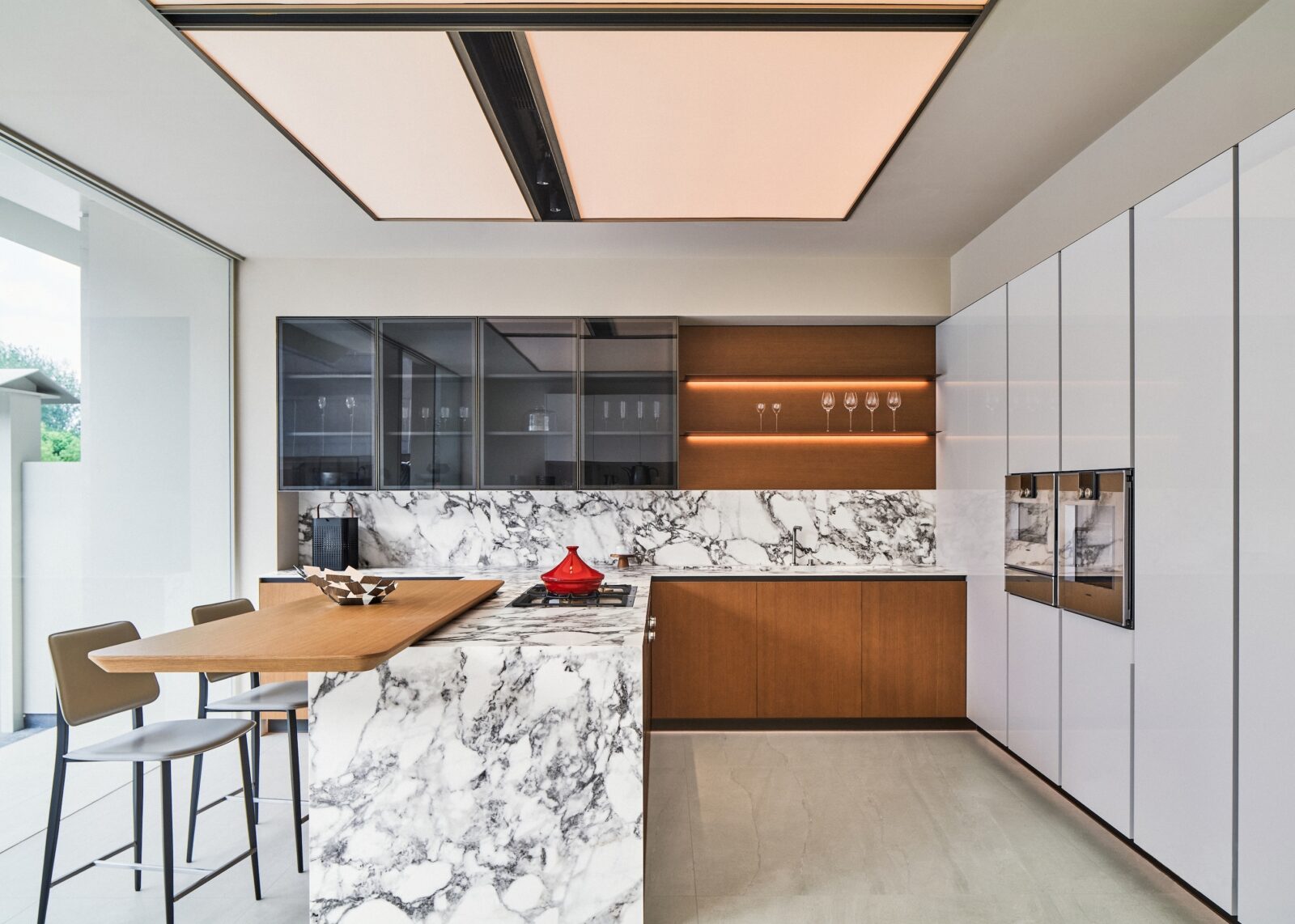
The lighting shifts as you move through the different zones of the house. The entrance leads into a kitchen area, which RARA sees as a social hub for dining or working. Since this spot gets the little bit of real sunlight available, an intelligent control system reads the external light and adjusts the interior brightness to match. It keeps the transition from outside to inside easy on the eyes.
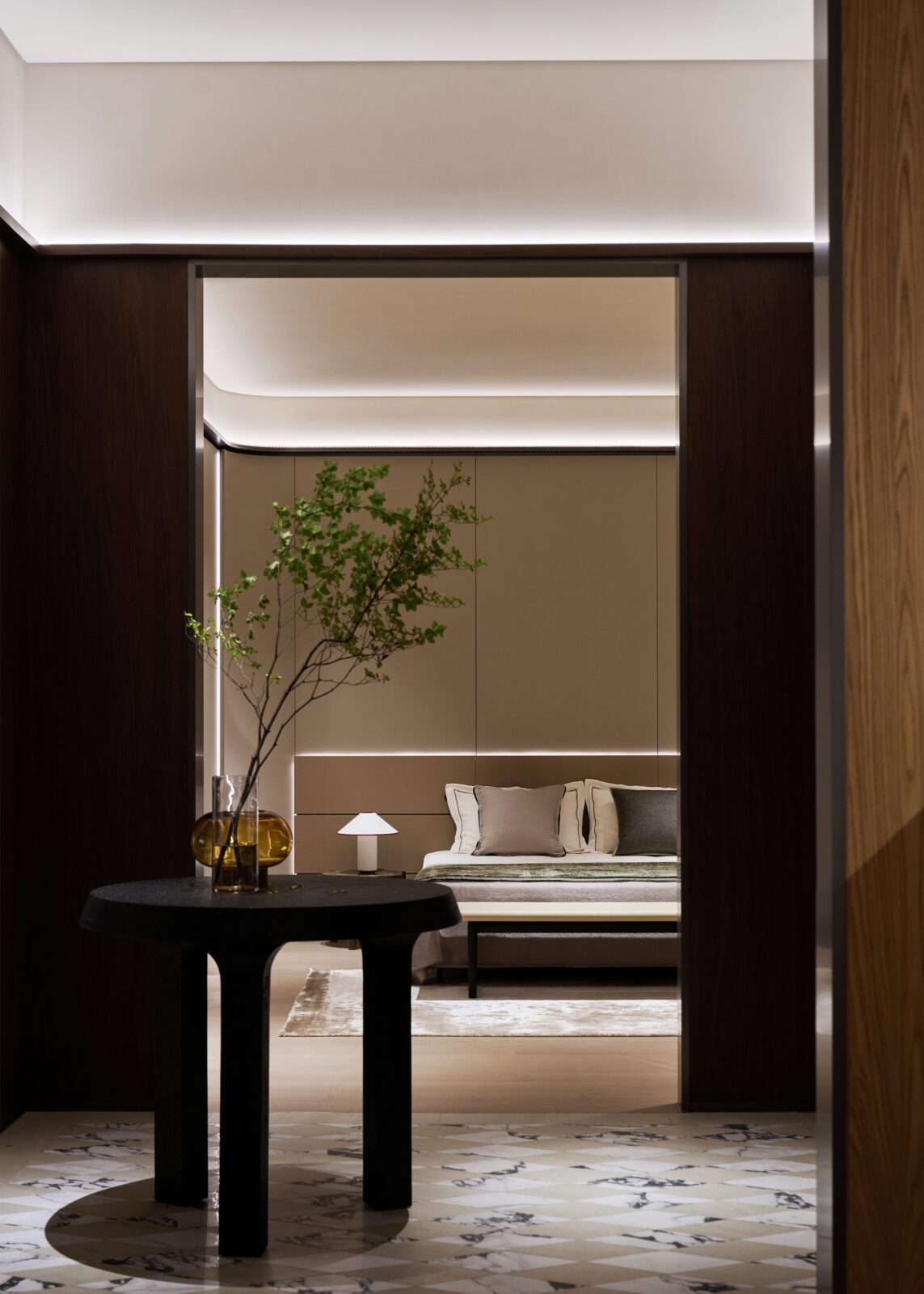
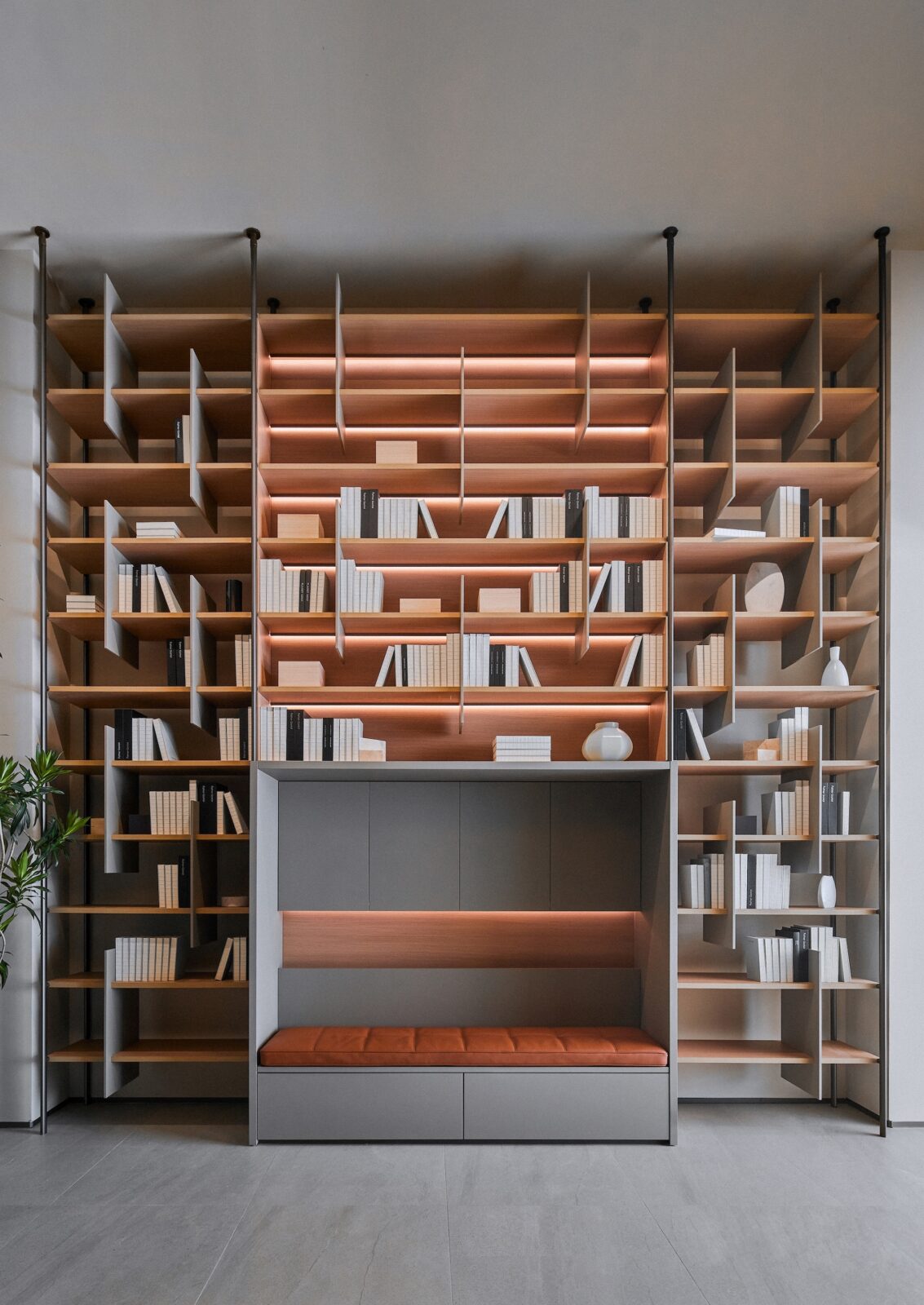
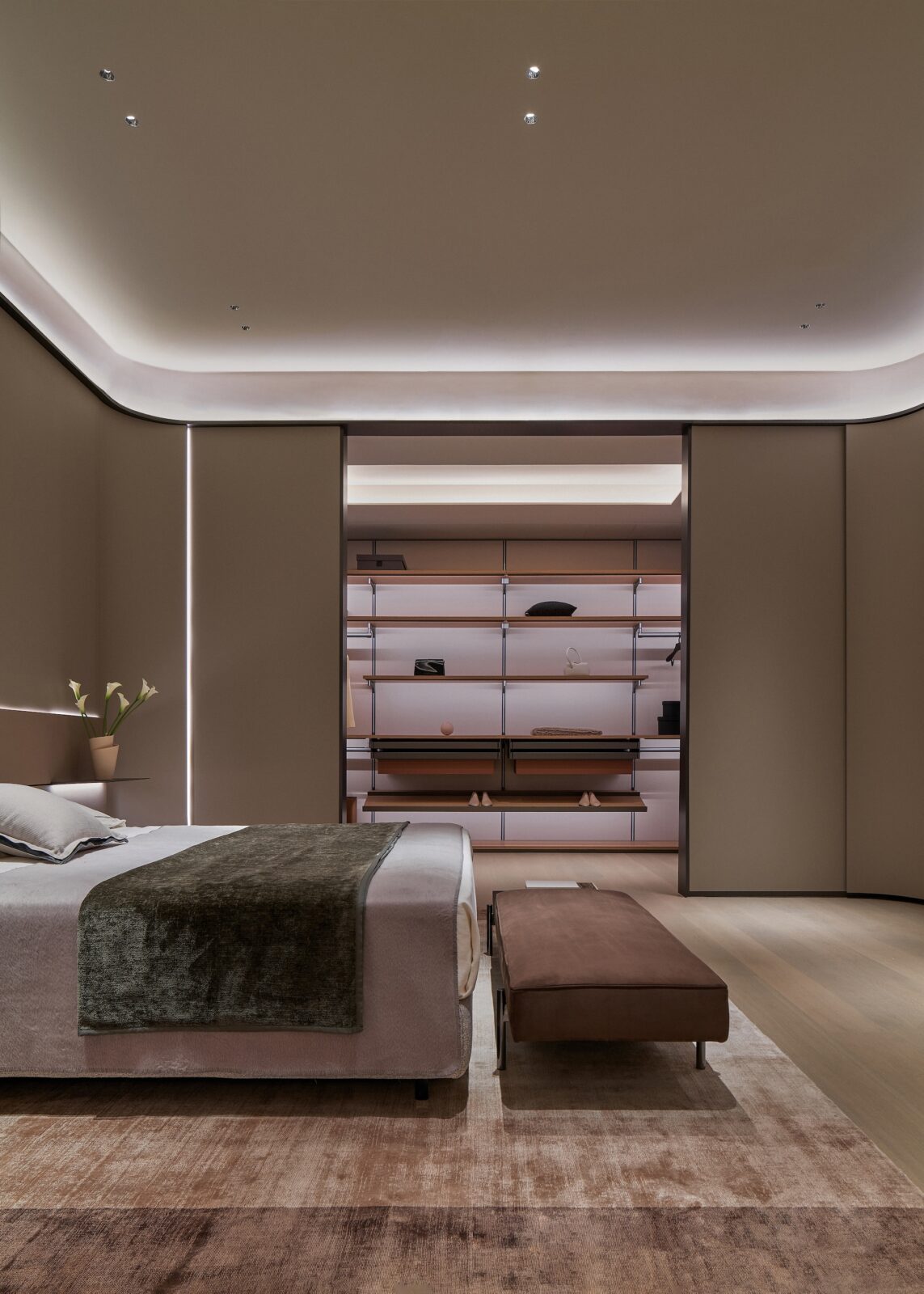
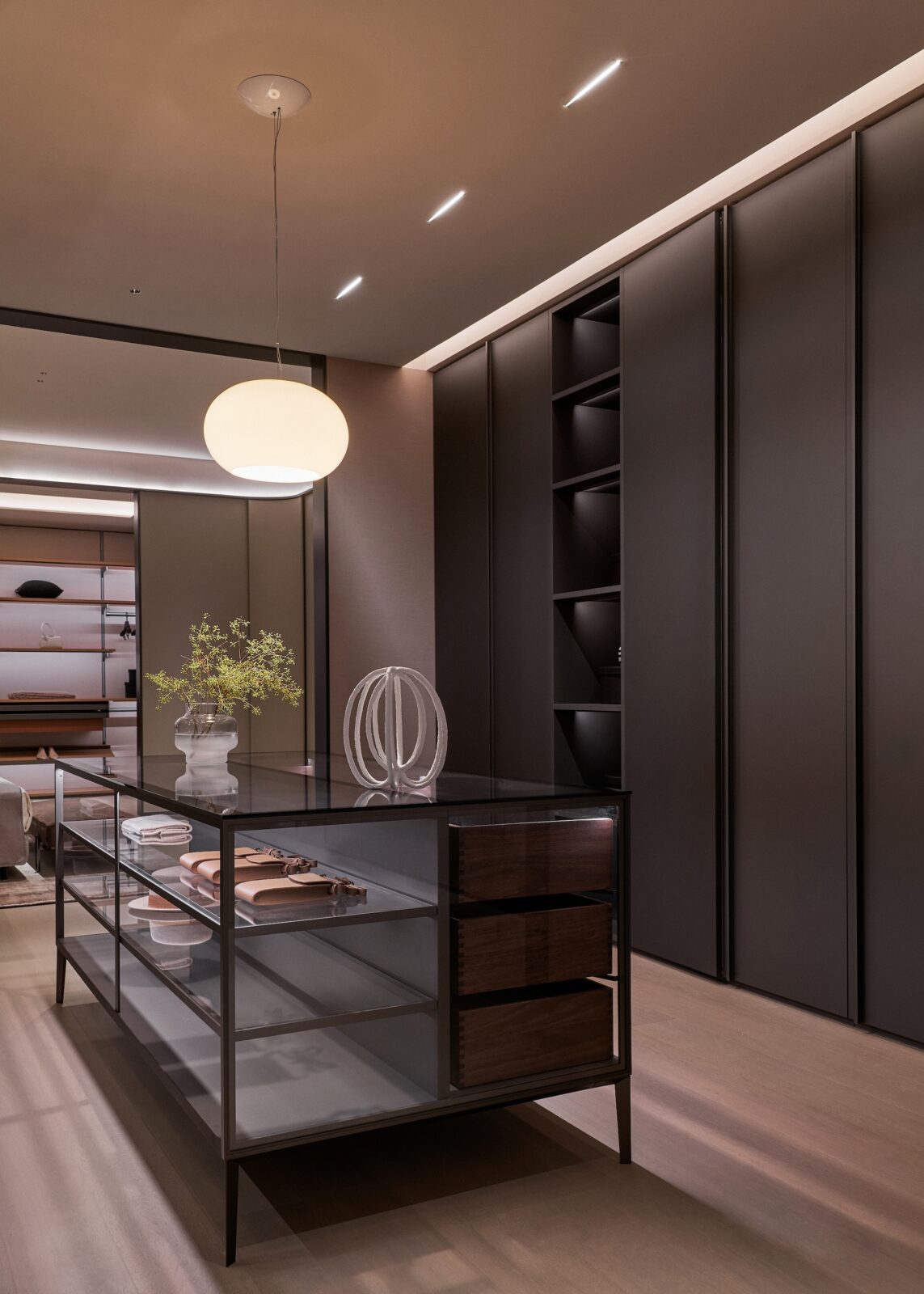
As you walk past the kitchen, the natural light disappears, so the artificial lighting takes over completely. The atmosphere gets quieter here. The designers used linear light bands to guide visitors through the space. Up on the first floor, where the bedrooms and tea rooms are located, the approach changes again. It becomes about privacy and calm. They used a mesh grille to hide the light sources, ensuring a soft glow with no glare.
Smart systems
Beyond just looking good, the system is built to last. The team used modular furniture and lighting components, meaning parts can be swapped out or upgraded later without tearing the place down. The intelligent control system also helps cut energy use by dimming the lights when they aren’t needed, a move that stops the space from being over-lit, which is a common problem in retail design.
This innovative, sensitive approach has earned the project attention, winning at the LIT Lighting Design Awards for Retail Lighting Design.
RARA House shows that you don’t need floor-to-ceiling windows to create a space that feels natural. By treating light as a material rather than just a utility, YAANK Lighting Design and RARA have created a showroom that offers a break from Hangzhou’s fast pace. It captures the feeling of nature through technology, proving that even a building boxed in by concrete can still have a rhythm of its own.
Project info
Lighting Design/Product Company: YAANK Lighting Design
Lead Designers: Ke Yang
Other Designers: He Zhang
Interior Design Company: Feibo Chen
Client: RARA
Photo Credits: Hai Zhu
Completion Date: 2024
Project Location: Hangzhou, China