




Header: Courtesy of Sanina Arch Club
Architect Alina Sanina has developed Lynx, a conceptual drone station designed to support search-and-rescue operations and eco-tourism across remote mountain landscapes. The project imagines a new architectural typology in which drones, visitors, and natural terrain operate within a shared high-altitude ecosystem.
High-altitude support hub
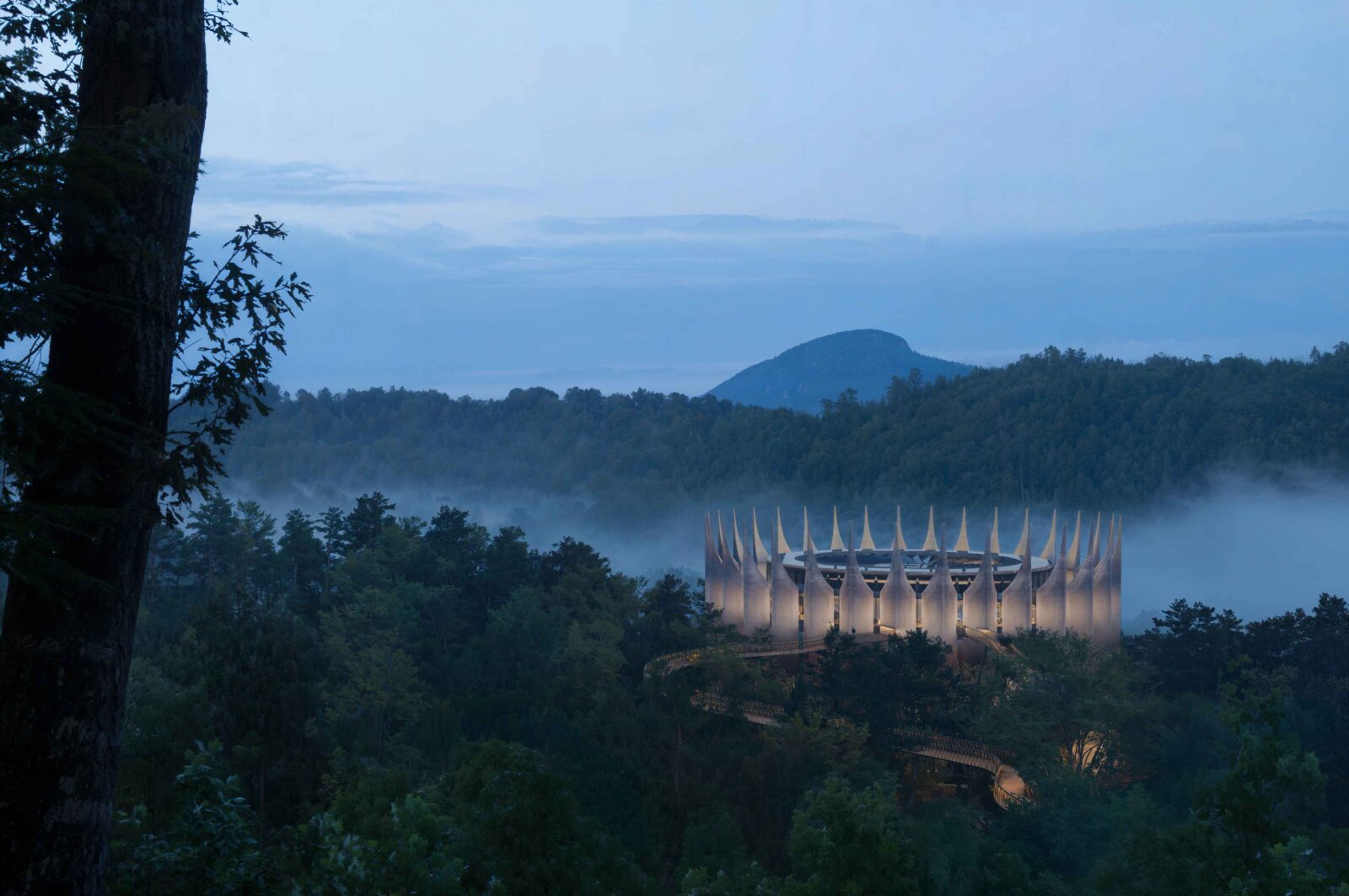
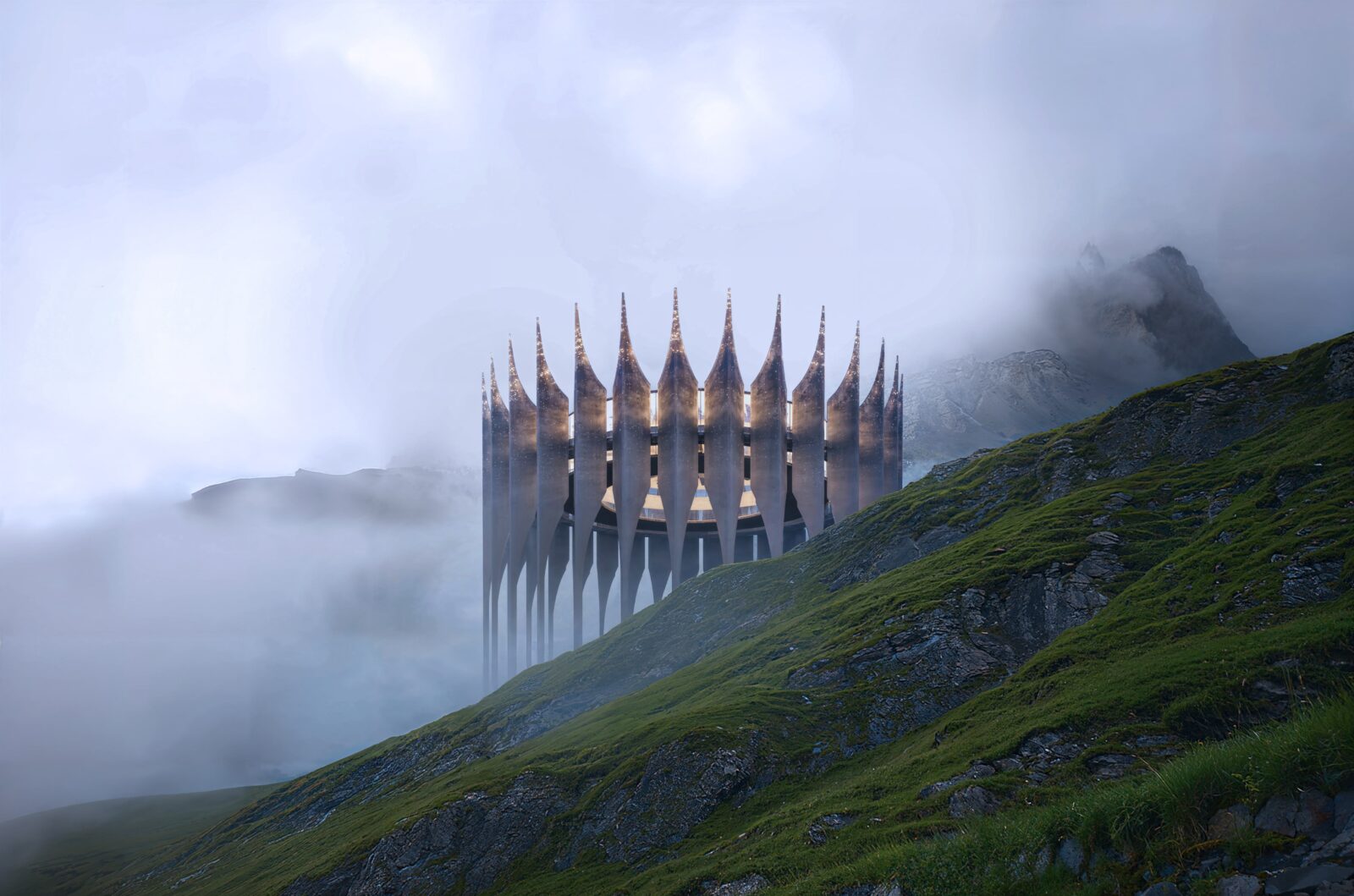
Conceived for environments where steep terrain limits mobility, such as the Carpathians, Alps and Pyrenees, the scheme introduces a network of autonomous outposts that combine drone technology with public-facing facilities.
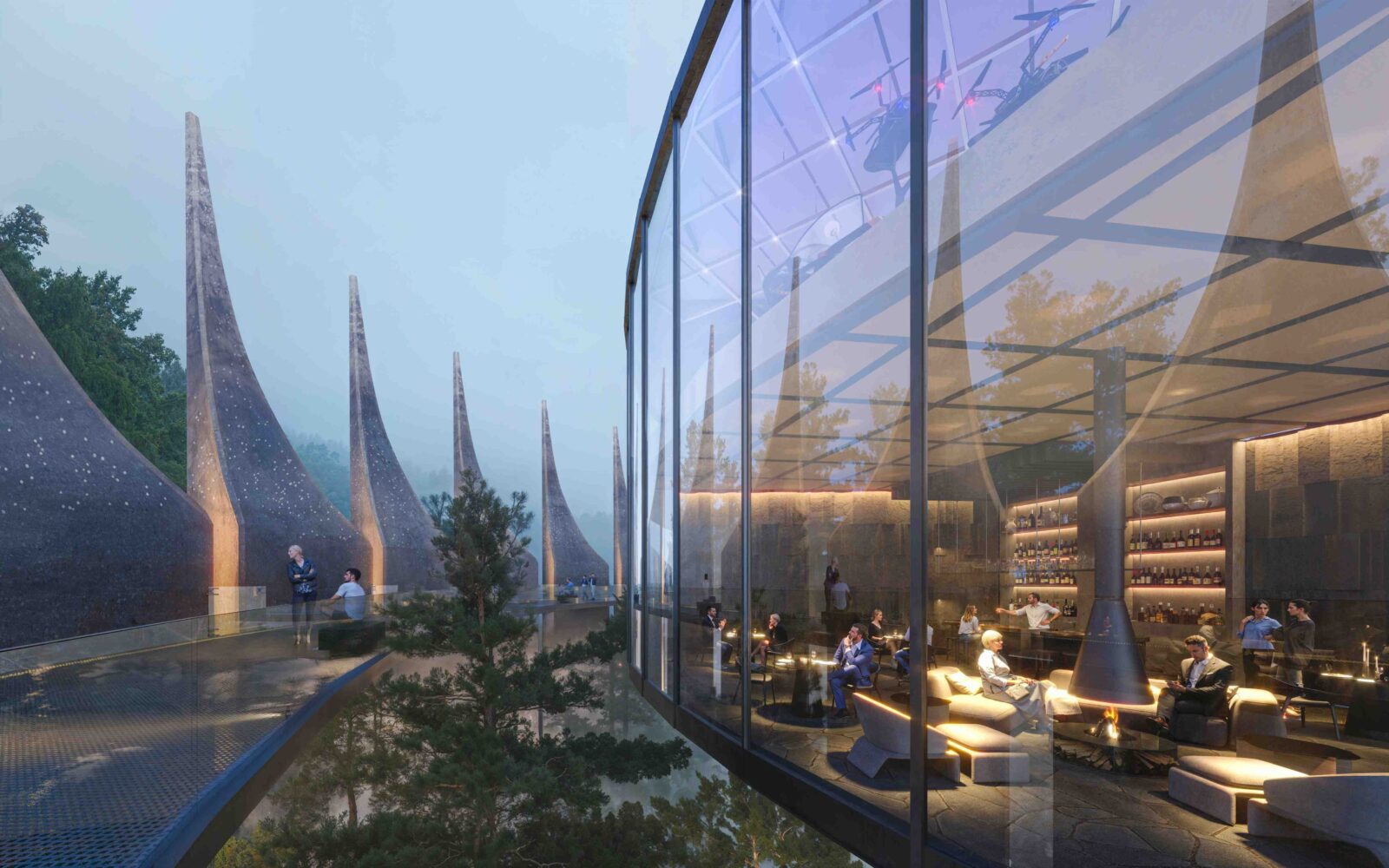
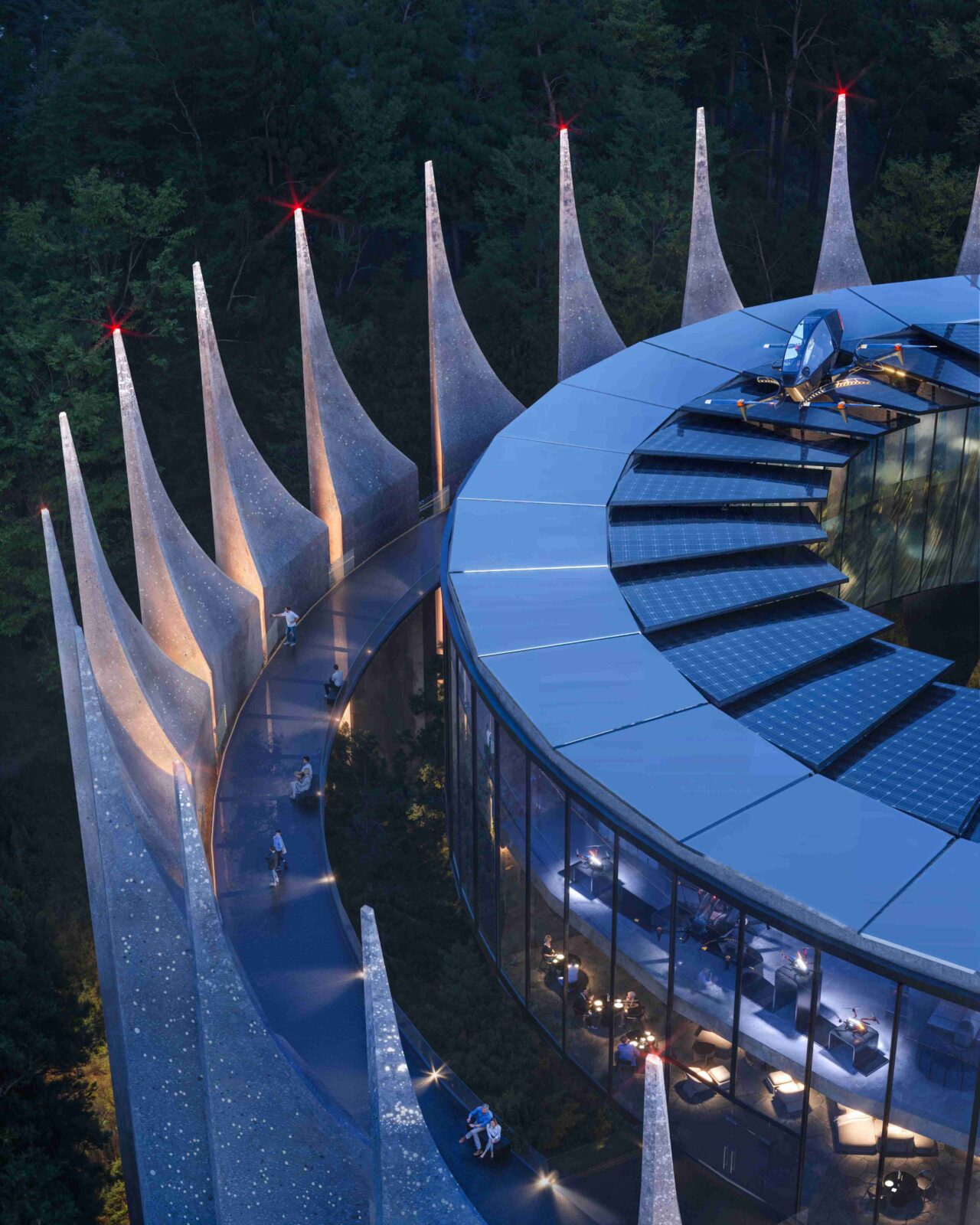
Each Lynx station acts as a hub for drone storage, charging, maintenance and flight coordination. Depending on its location, the circular structure could also incorporate a planetarium observatory, scientific research spaces, viewing terraces, a media library or compact accommodation, positioning the stations as architectural destinations rather than solely technical infrastructure.
A place with multiple purposes
Placed in hard-to-reach areas and linked into a single system, the stations would monitor environmental conditions, support tourism routes and coordinate emergency responses.
Service drones would deliver essentials such as water, food and medical supplies to high-mountain hiking segments, while a separate category of passenger sightseeing drones would offer aerial tours.
Visitors would interact with the network through a dedicated mobile app that provides route data, weather updates, and an integrated SOS function. The system proposes what Sanina describes as a “new layer of mountain infrastructure for both people and drones”.
Unusual architecture
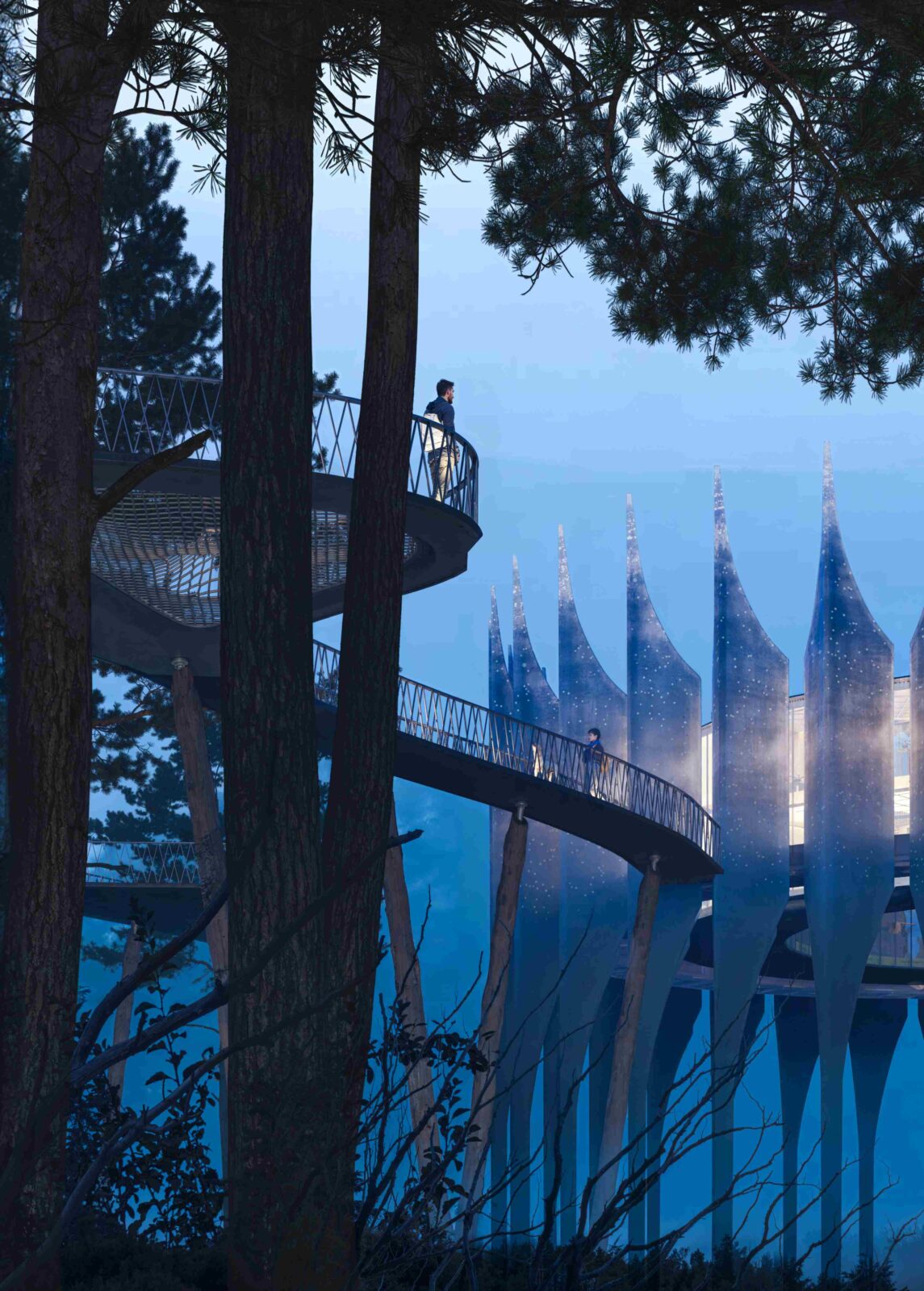
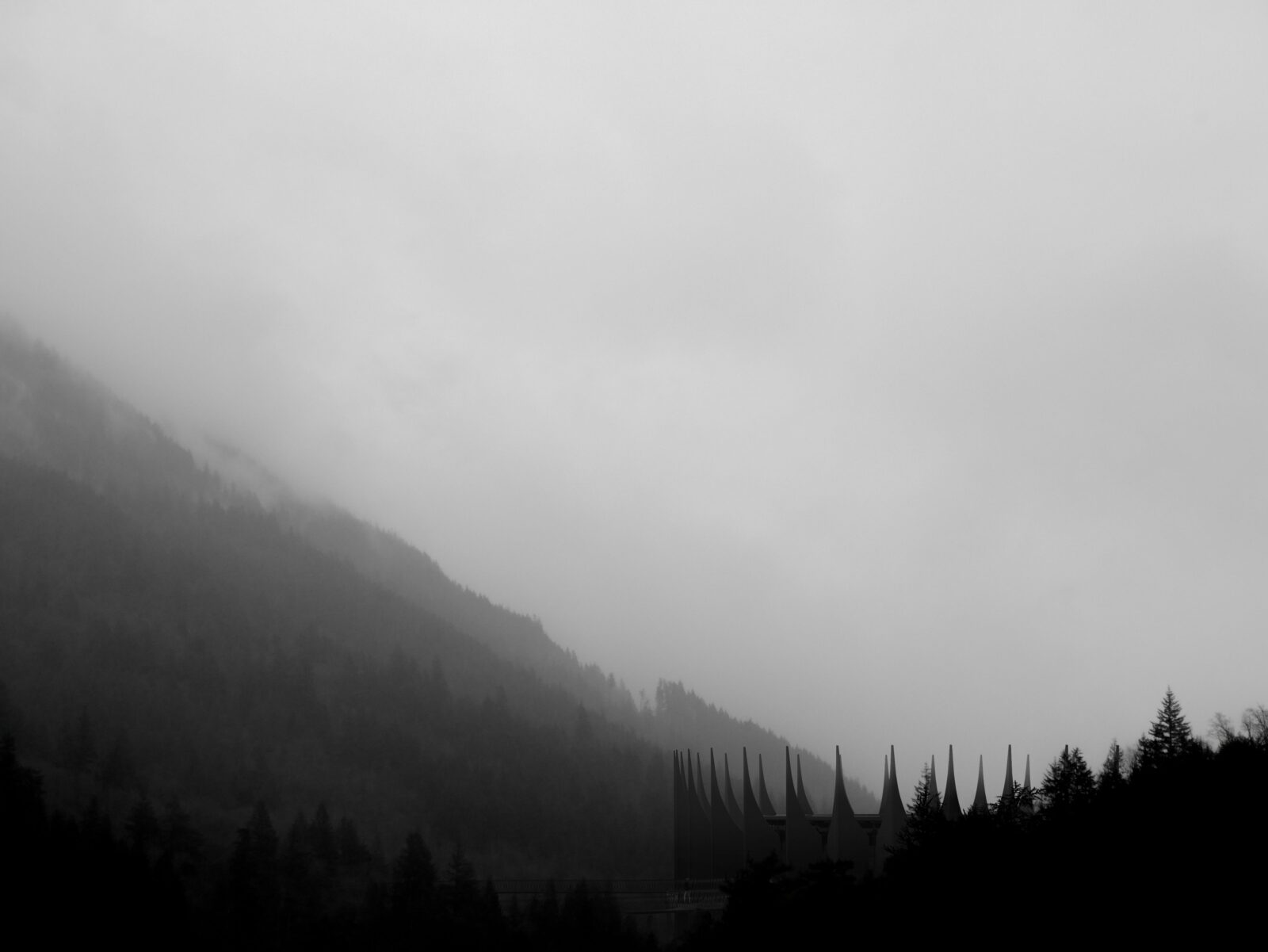
Lynx is characterised by a “gothic futurist” aesthetic that pairs monolithic concrete with lightweight glazing. It is organised as a series of concentric rings referencing ancient defensive fortresses. Along the perimeter, a serrated concrete wall forms rhythmic vertical peaks that echo the surrounding ridgelines.
Inside, the glass-clad volume opens to panoramic views, blurring boundaries between the building and its surroundings. The typology is designed to be flexible, functioning variously as an observatory, wayfinding landmark, small airport or resort-adjacent public space.
Glass and cement body
The structure is built from a composite material combining concrete with dispersed glass inclusions. The ratio shifts gradually from solid concrete at the base to a higher concentration of translucent glass toward the upper levels, creating a gradient effect that makes the architecture appear to dissolve into the sky.
Microscopic glass particles embedded within the mix refract light, giving the façade a crystalline sheen that changes throughout the day in response to sunlight and cloud conditions.
Photovoltaic cells integrated into the glass panels turn the exterior into an energy-generating skin, allowing the station to operate autonomously in remote mountain terrain. Additional solar panels on the roof power drone charging and internal systems.
A project born from need
The concept responds to the growing challenges of mountain tourism. In the Ukrainian Carpathians alone, more than 500 rescue missions were conducted in 2024. Sudden weather changes, loss of communication and difficult routes frequently put hikers at risk, requiring resource-intensive operations involving rescuers, dogs, specialised equipment and helicopters.
According to Sanina, drones offer a faster and safer alternative, capable of surveying wide territories in minutes, detecting thermal signatures, delivering urgent supplies and transmitting instructions. The project also reflects Ukraine’s rapid innovation in unmanned aerial systems, accelerated by wartime technological development.
“The moment for Lynx has come. The technology is ready, aerial routes exist, and there are hundreds of skilled operators. It’s time to imagine how drones can serve rescue, care and human well-being.”
Alina Sanina
Salina’s vision
Lynx positions drones not as military or purely utilitarian devices, but as part of a broader ecological and humanitarian infrastructure. The concept imagines drone stations becoming as commonplace in mountain regions as shelters, viewpoints or lift stations – yet far more adaptive and intelligent.
By integrating technology with landscape-driven design, Lynx proposes a future in which innovation and nature operate symbiotically, shaping safer and more accessible mountain environments.


