
Header: Sebastian van Damme
What does sustainable collective living in the densified city of the future look like? That was the question behind Republica, a pioneer project in the former industrial hub of Buiksloterham in Amsterdam North, which is being transformed into a new piece of circular city. The answer? Sustainable collective living would resemble a functionally mixed and connected “urban village” with a building density of FSI 3 and a remarkably high quality of housing and public realm.
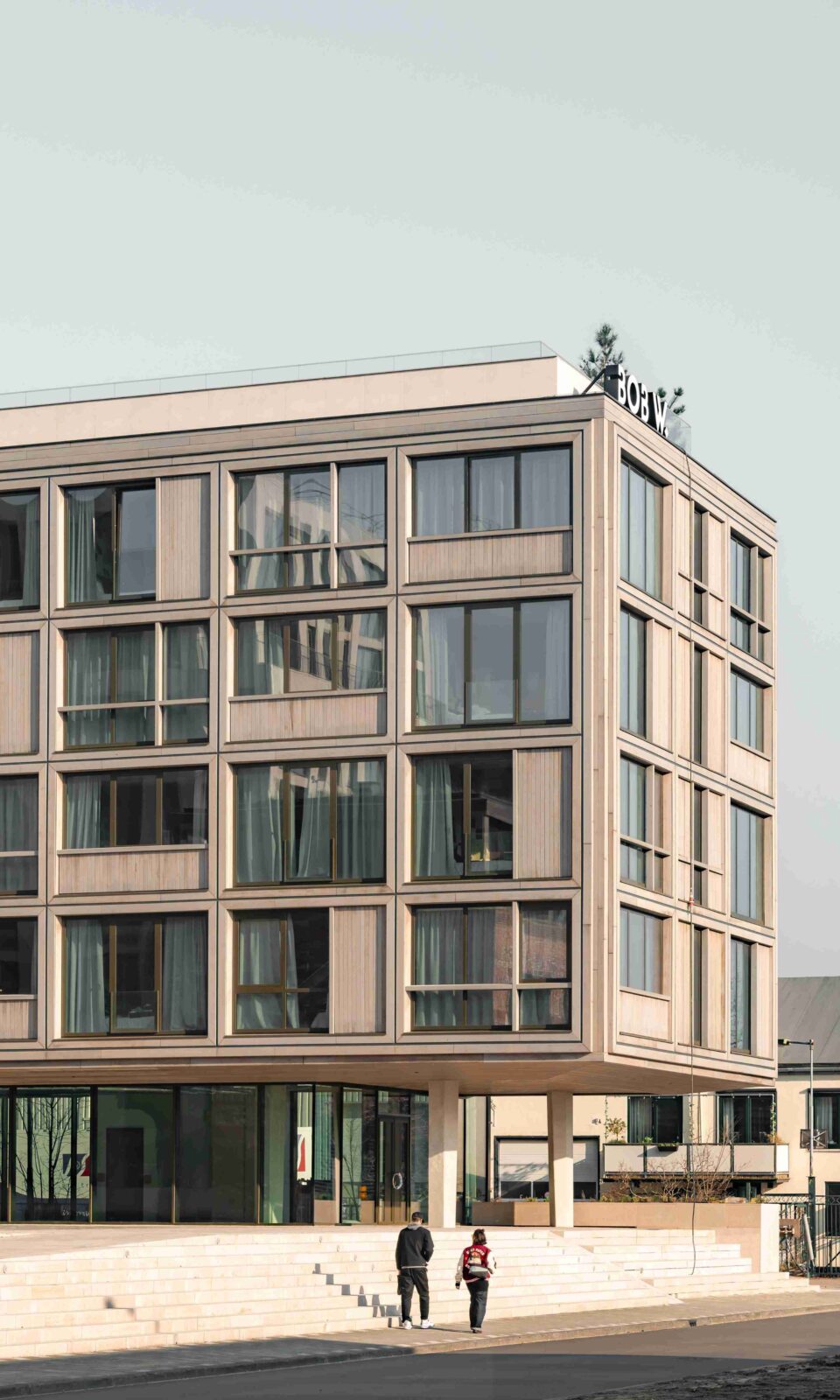
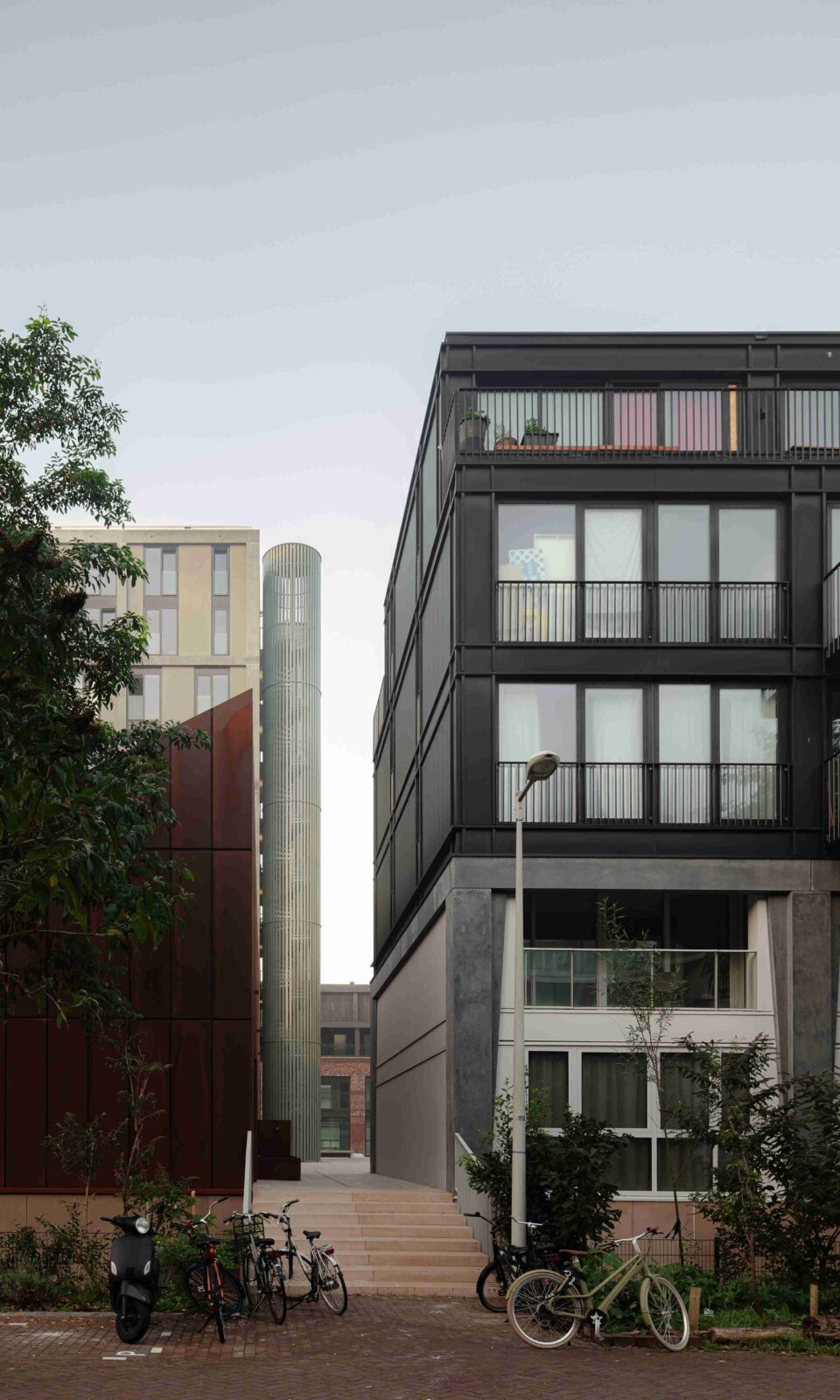
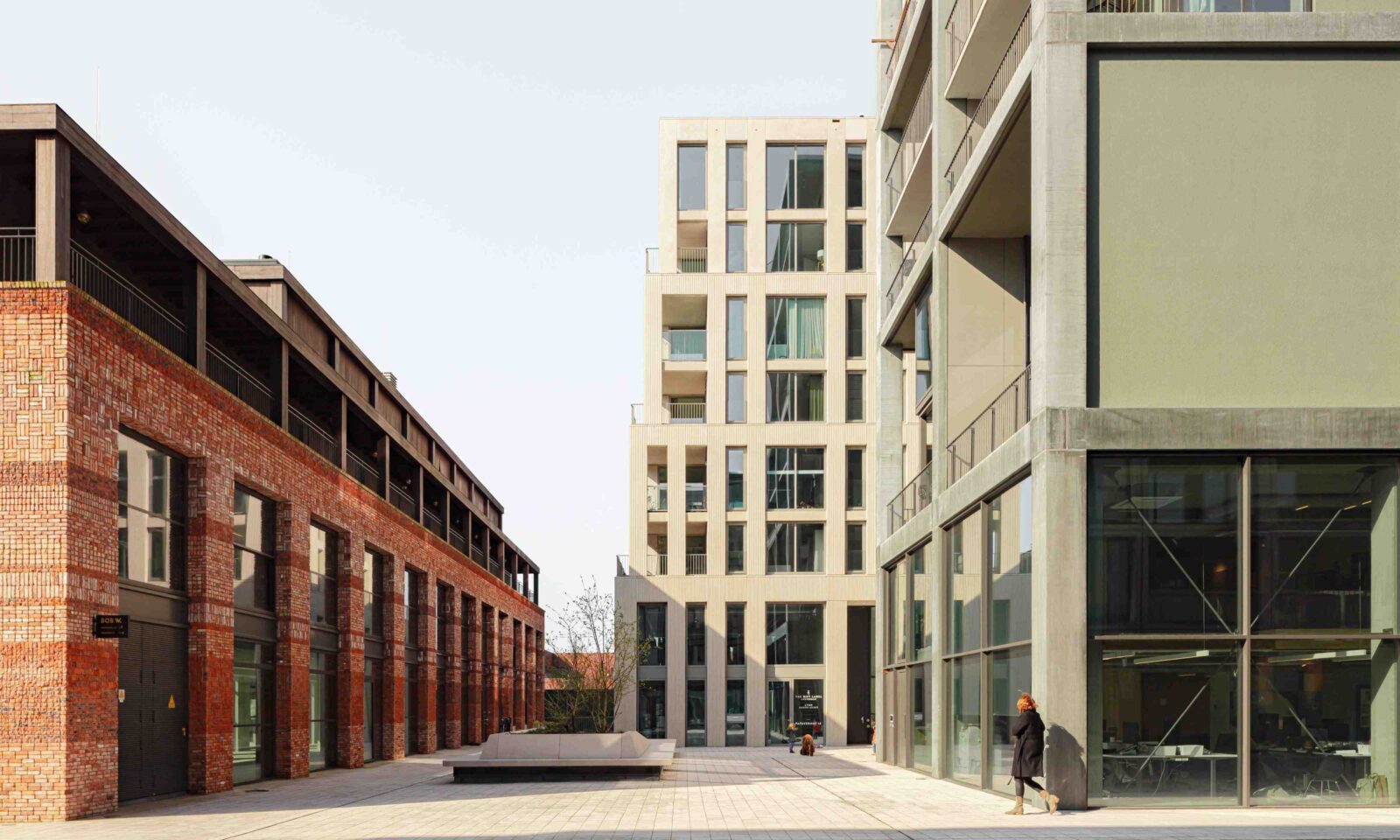
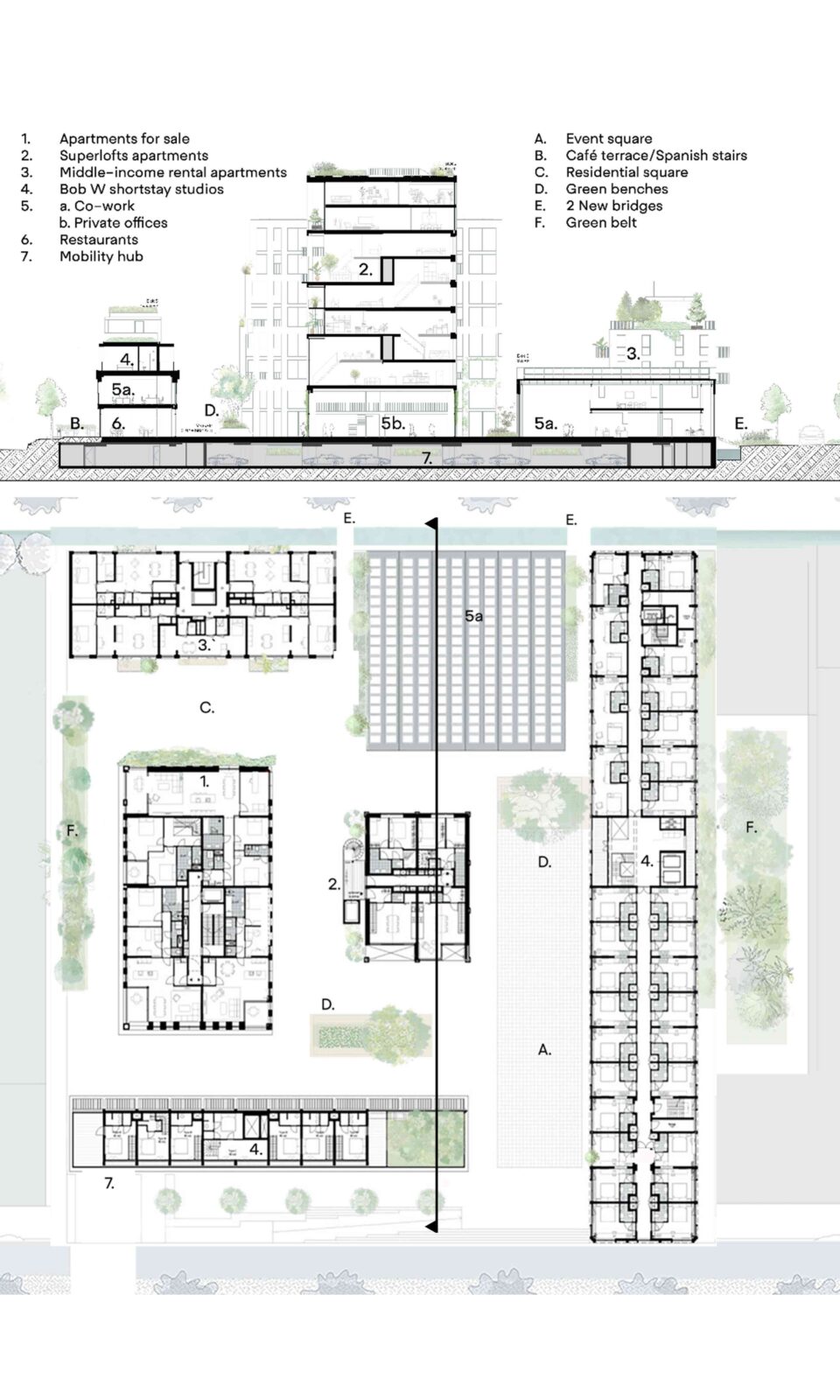
Republica uniquely integrates housing with co-work and flex office, leisure, hospitality, and e-mobility facilities in a pedestrianised “permeable super block”. Here, tall buildings are combined with intimate public squares, alleys, stairs, and terraces, with seats well integrated into planters for rainwater retention. With architecture by Marc Koehler Architects (MKA) in collaboration with Loer Architecten, the result is a functionally hybrid, spatially densified yet light, spacious, and human-centred urban public realm.
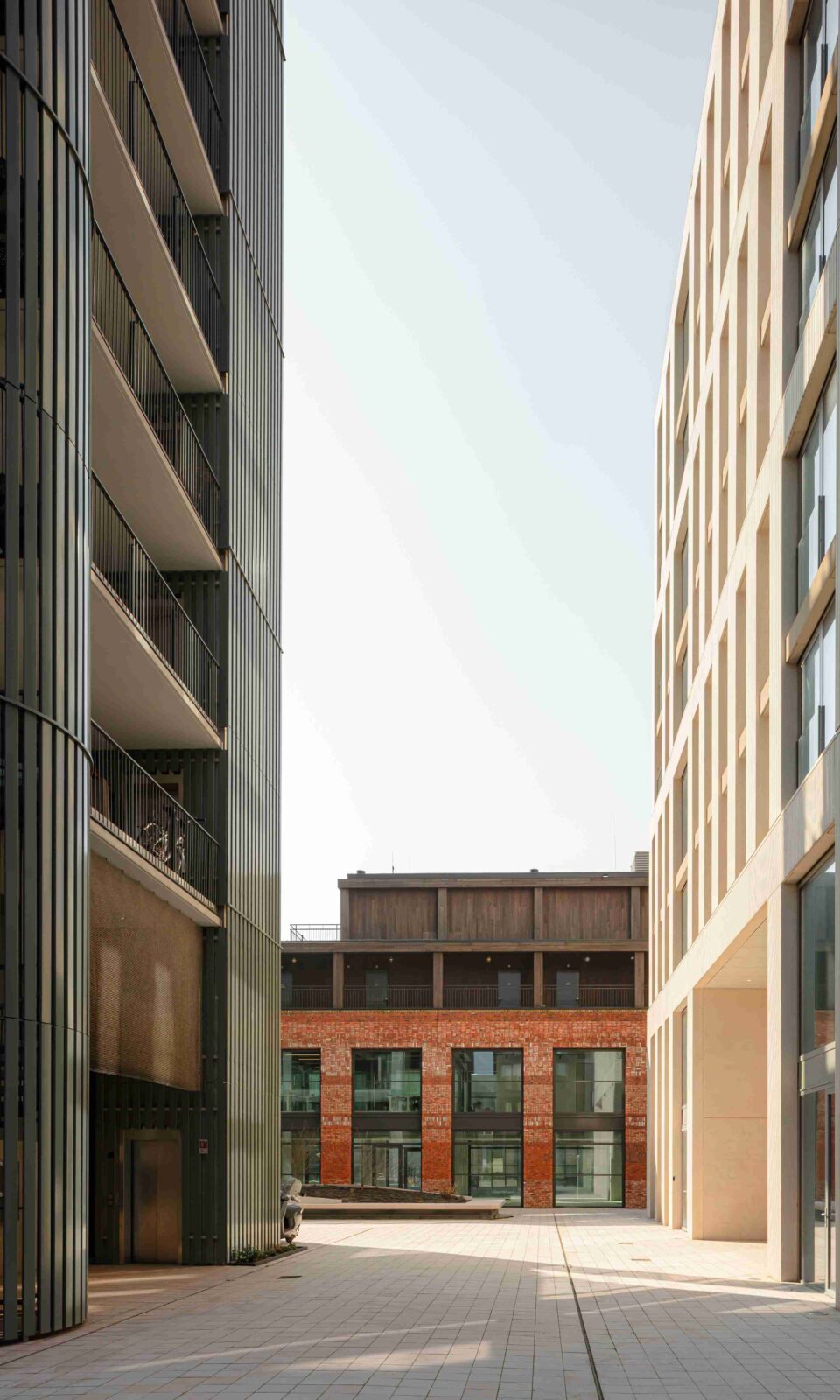
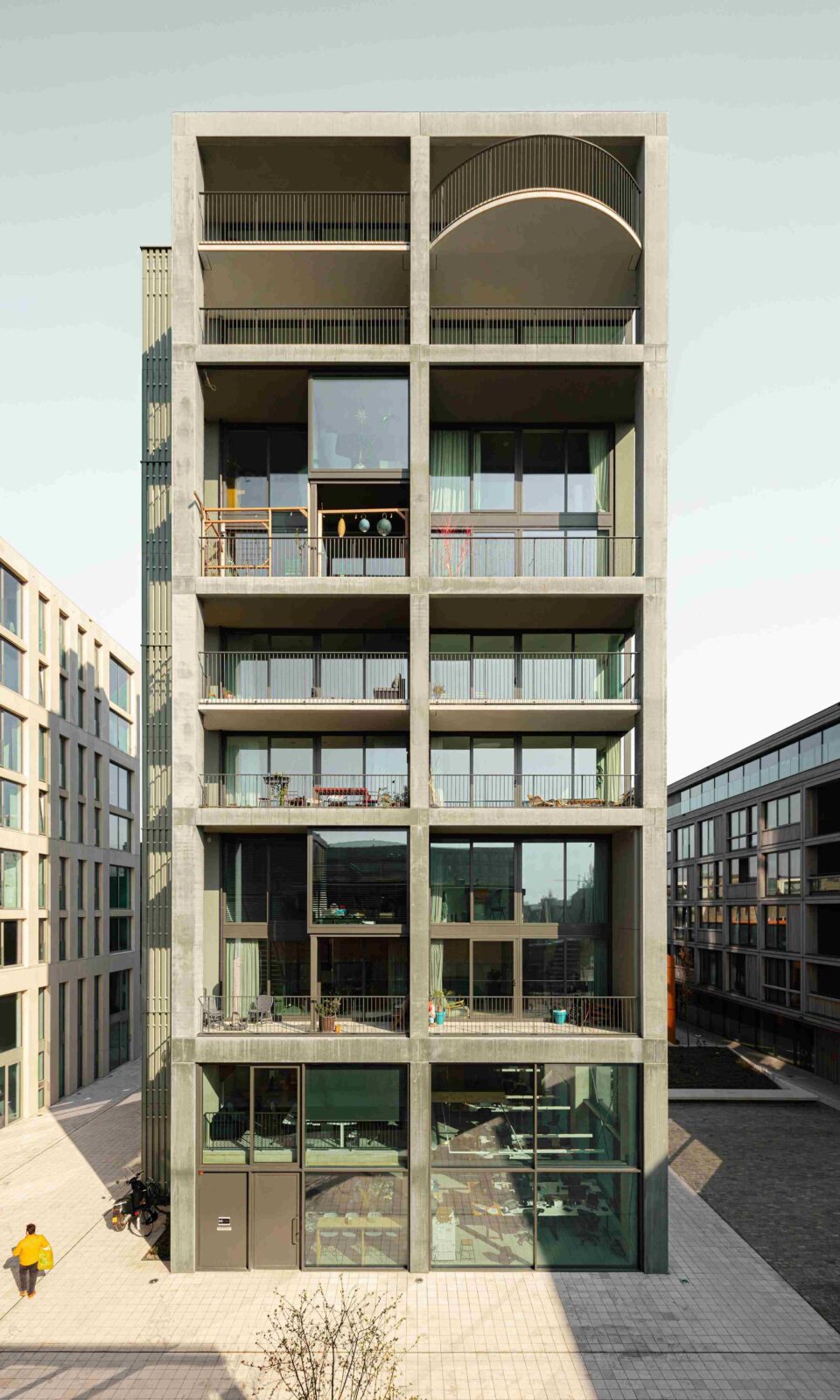
Loft architecture
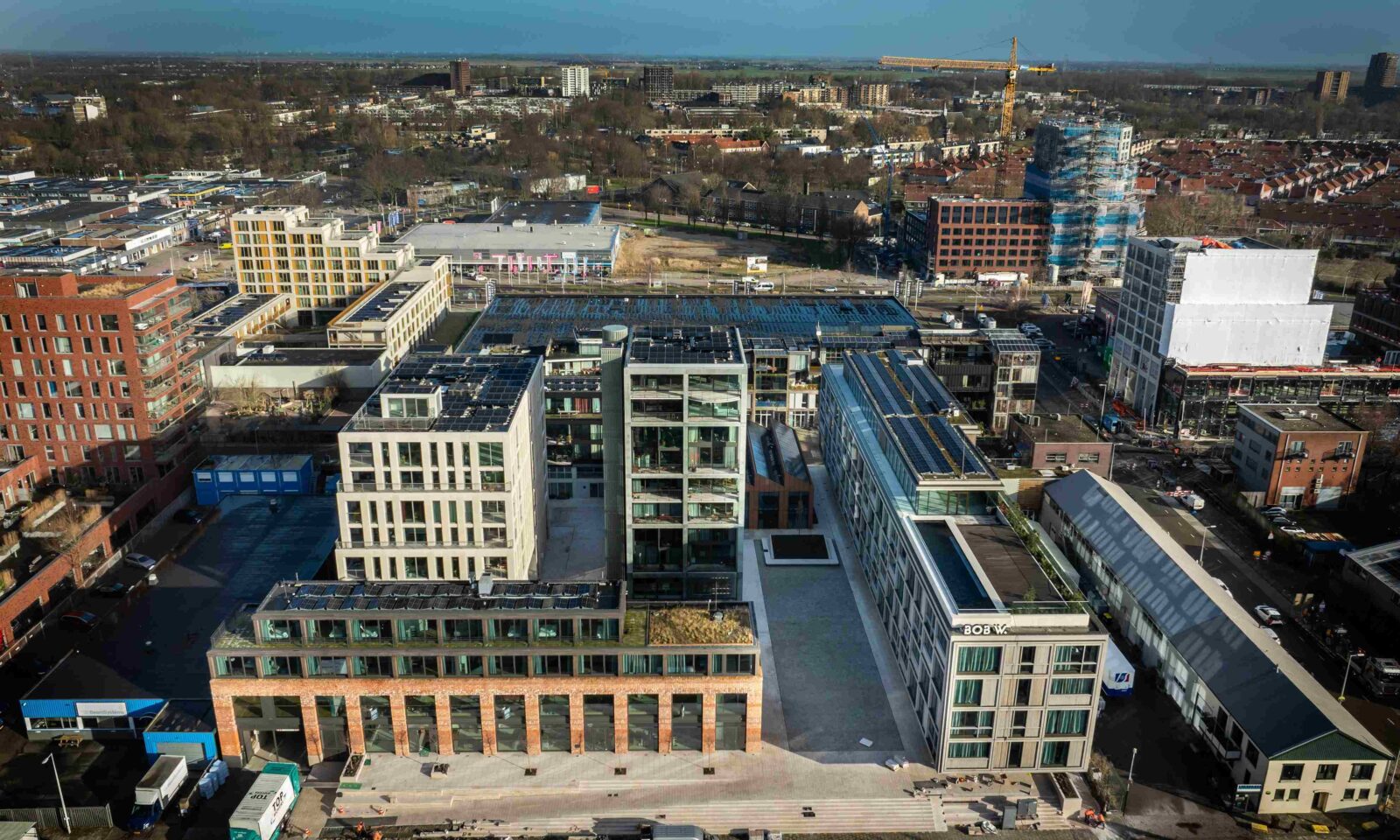
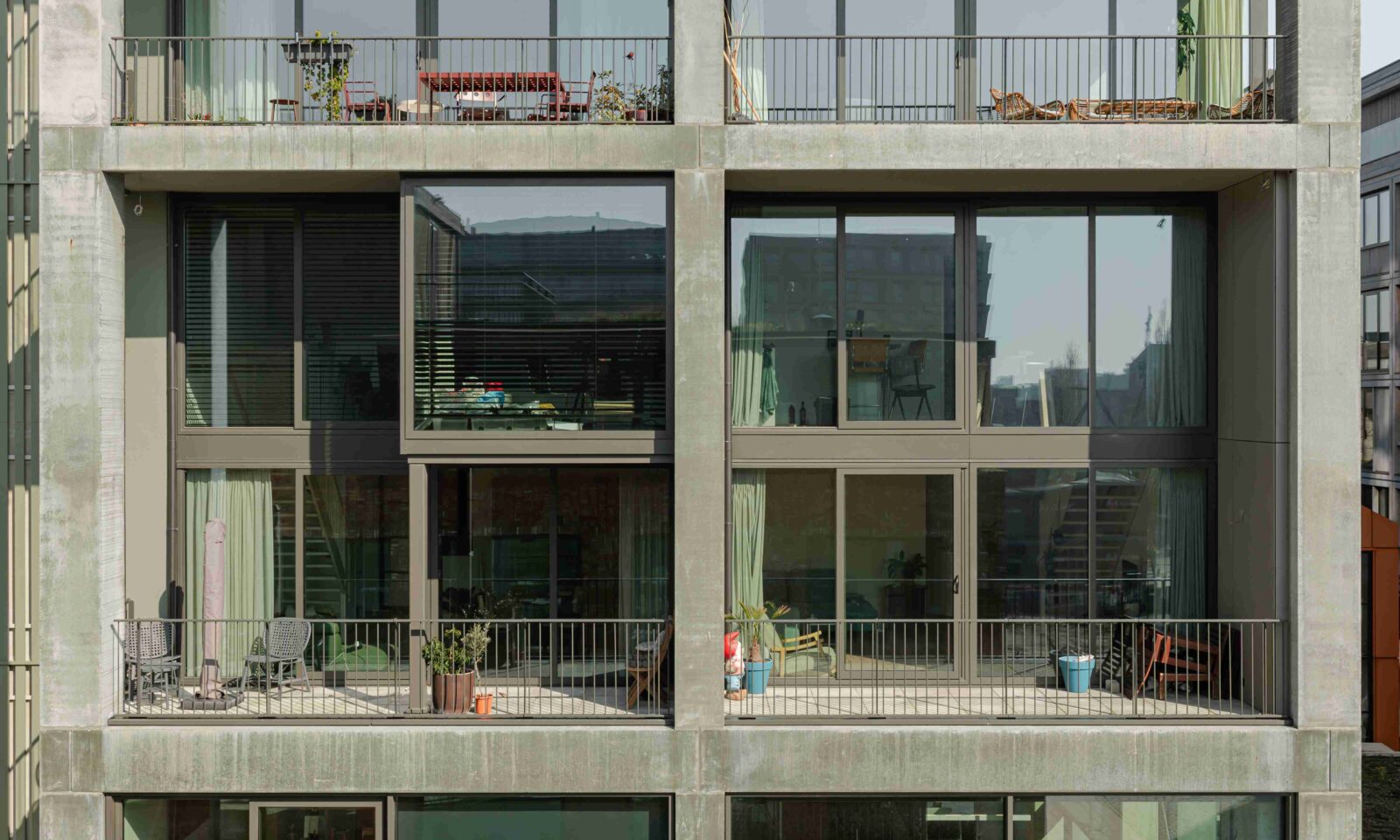
The loft architecture, with large windows, high ceilings, large floor spans, and robust materials, references the industrial language of the Amsterdam harbours, while the natural stone plaza and grand stairs have a cheerful, almost Southern European quality. The restaurant building has a monumental brick facade and slightly recedes from the building line. The resulting space, which faces south, is furnished with wide seating steps: the “Spanish steps” of Buiksloterham.
All of these structures are “lifted” on a half-submerged parking garage with charging points for electric shared cars and a large bicycle parking area. Furthermore, experimentation is being done with sustainable and circular materials and installation techniques such as greywater reuse, a self-established electric power company, a micro-grid, heat recovery from air and sewage water, and waste separation.
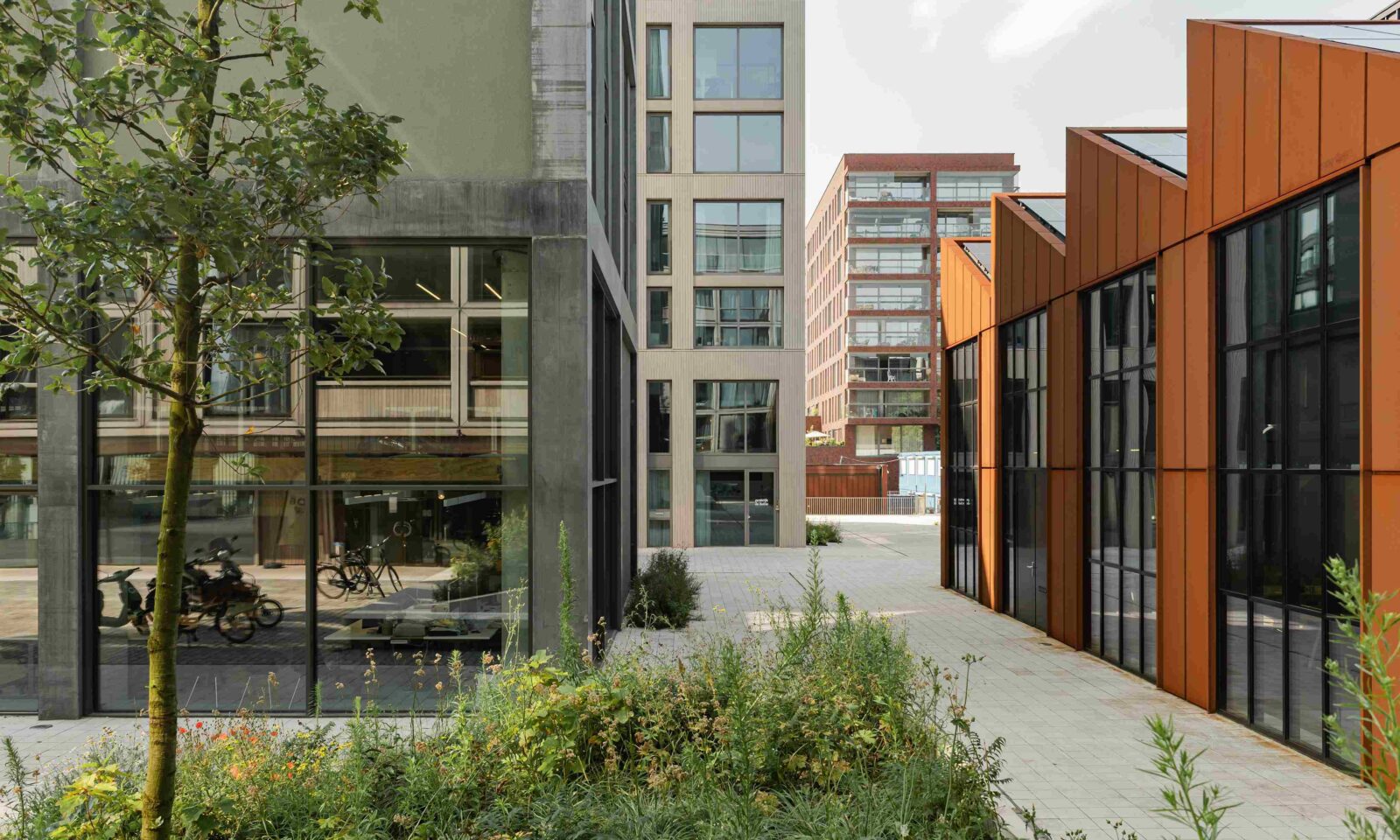
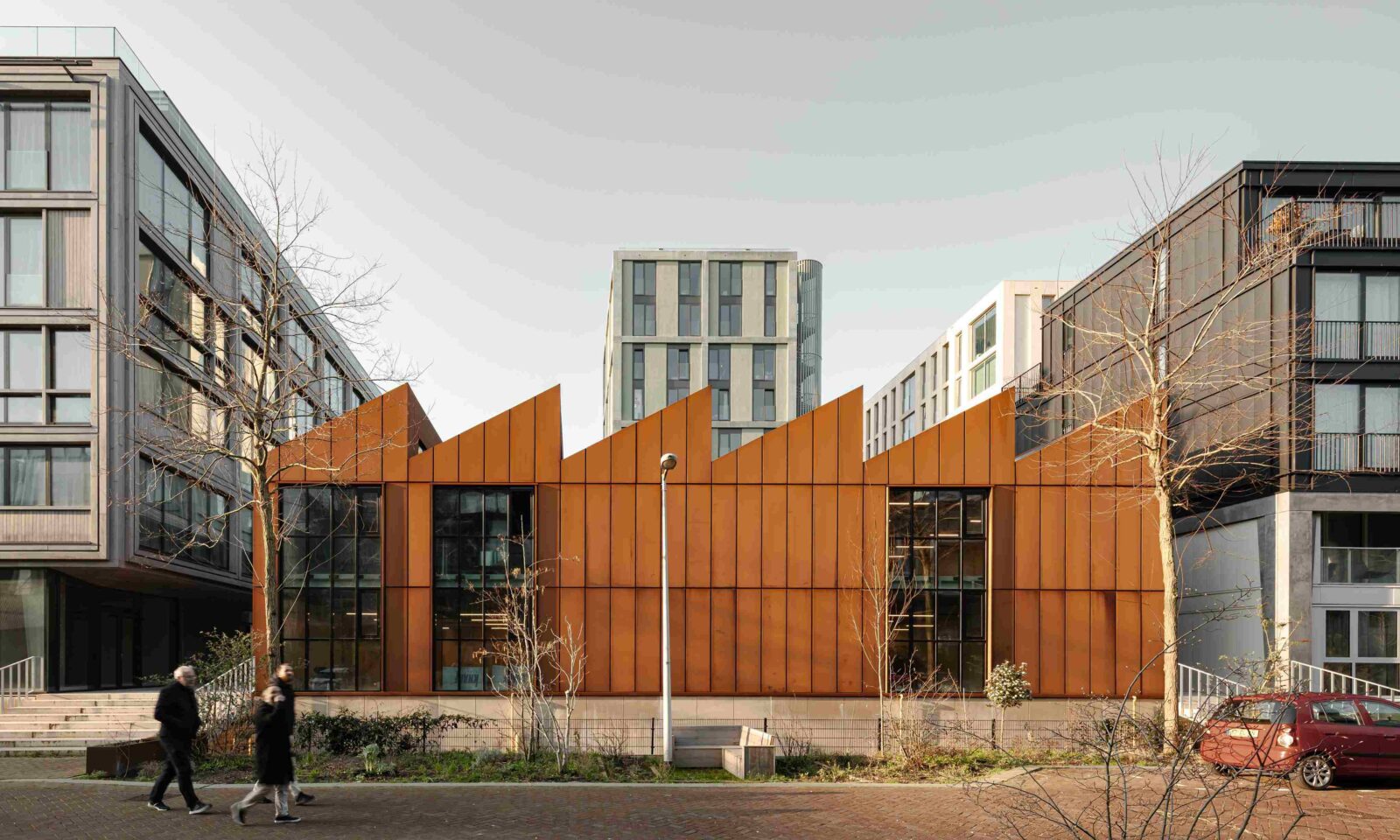
“We “opened up” the given closed factory plot of 80mx80m to the surroundings and carefully rearranged it into an ensemble of six buildings and squares and alleys, connecting them to the neighbourhood via two bridges and a monumental stair. It includes a lively mix of functions: apartments (built to rent and to buy between 60 and 130 m²), including a tower with ten Superlofts, commercial and office spaces, a gym, two café-restaurants, and a mid- to long-stay apartment hotel. On the roof, there will be a sauna club with a pool overlooking the IJ lake.”
MKA
Open building and circular economy
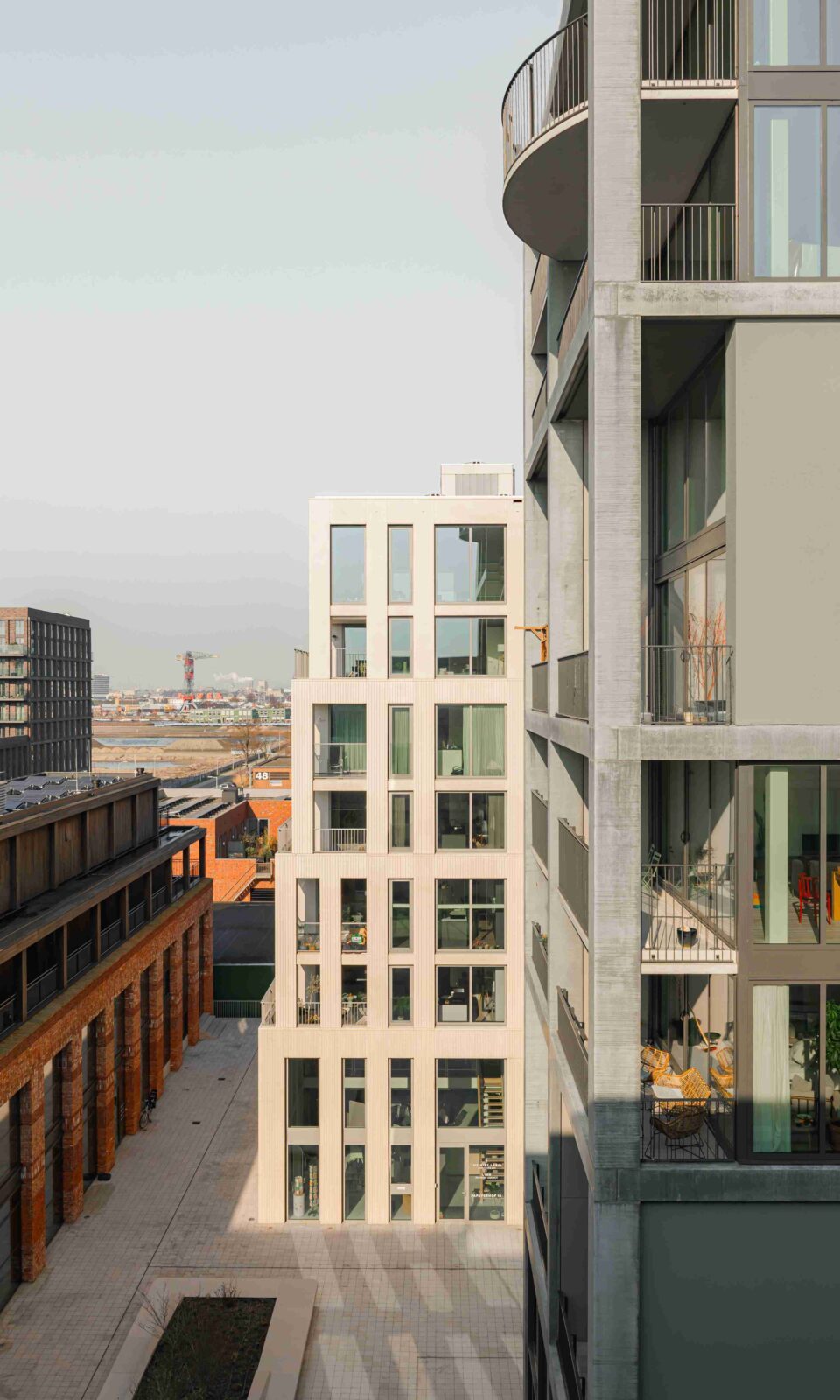
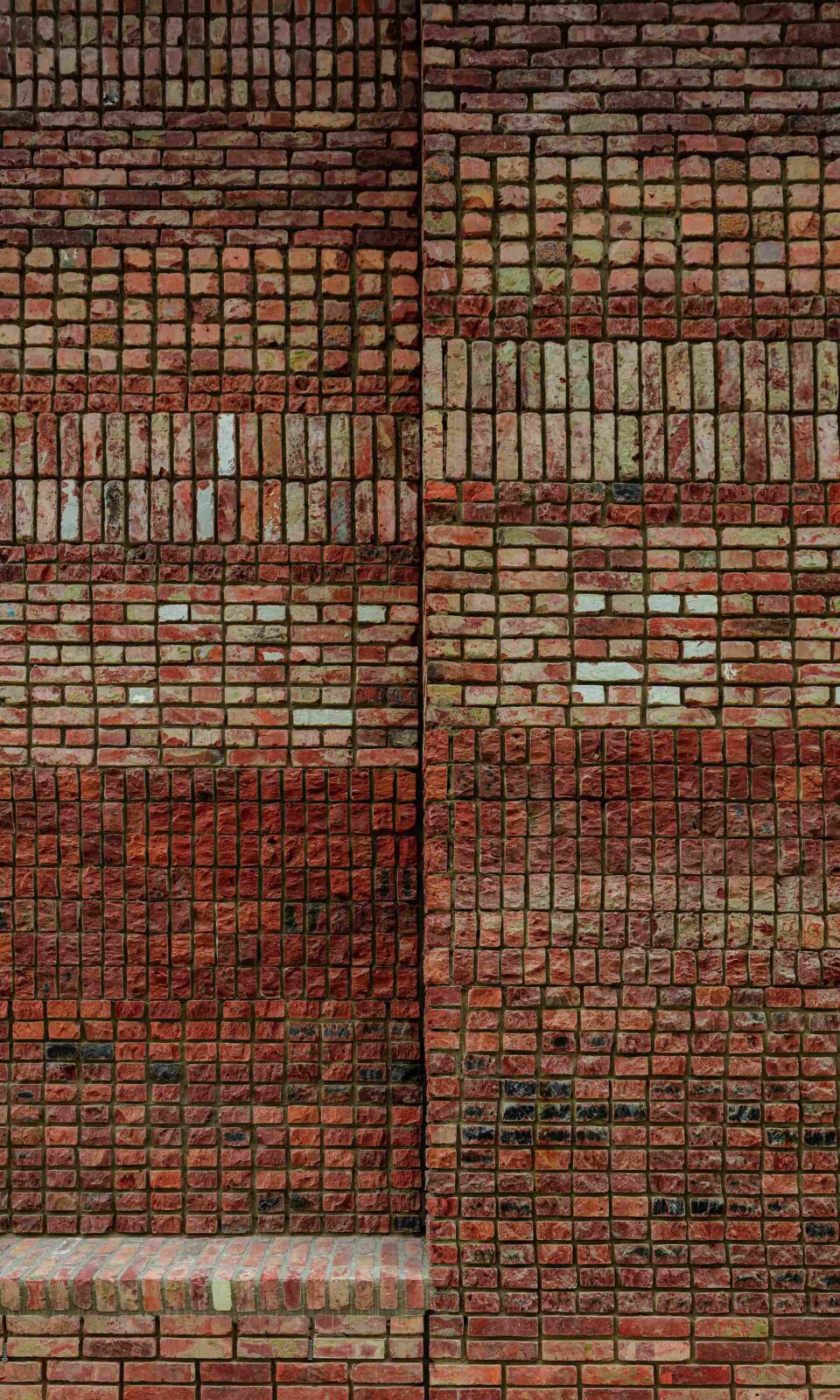
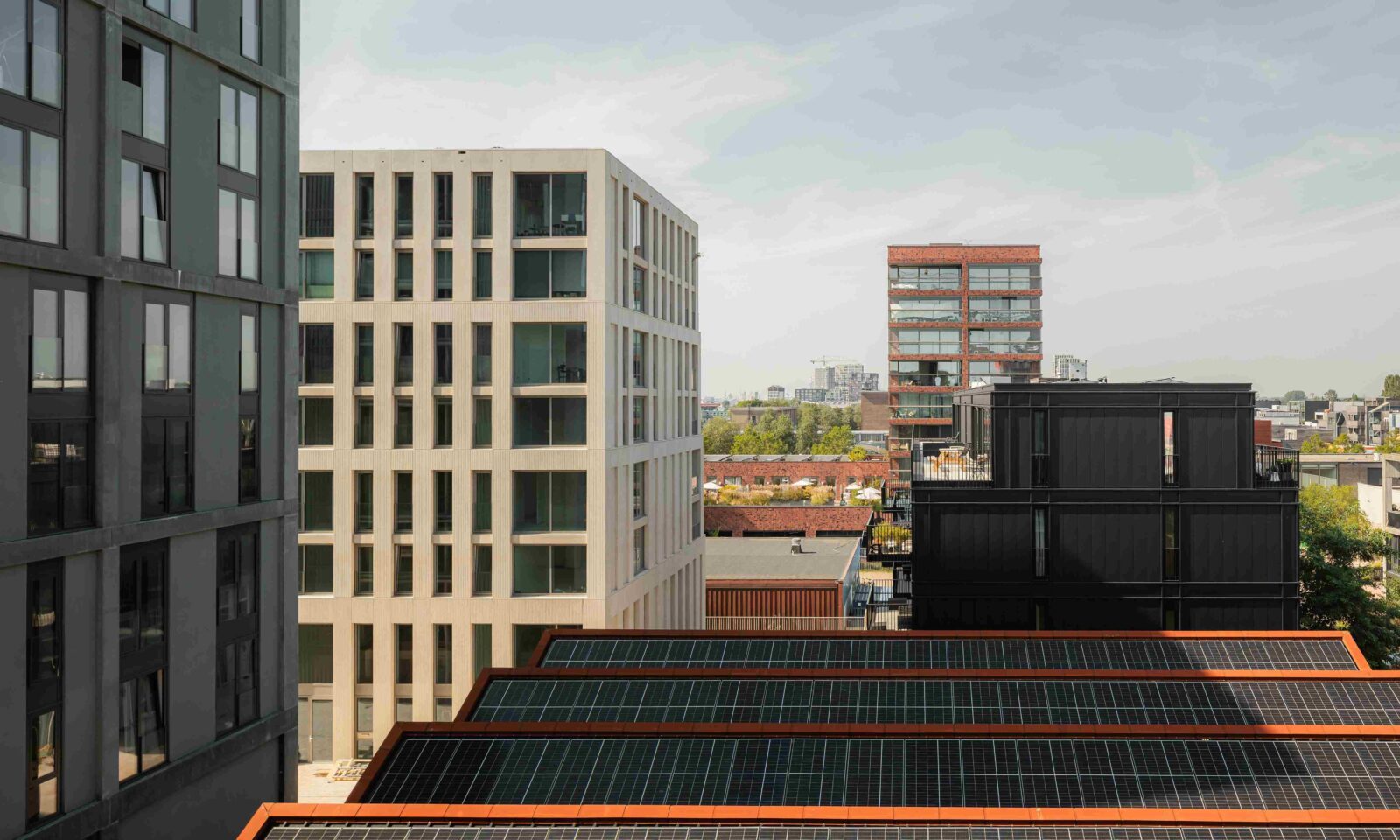
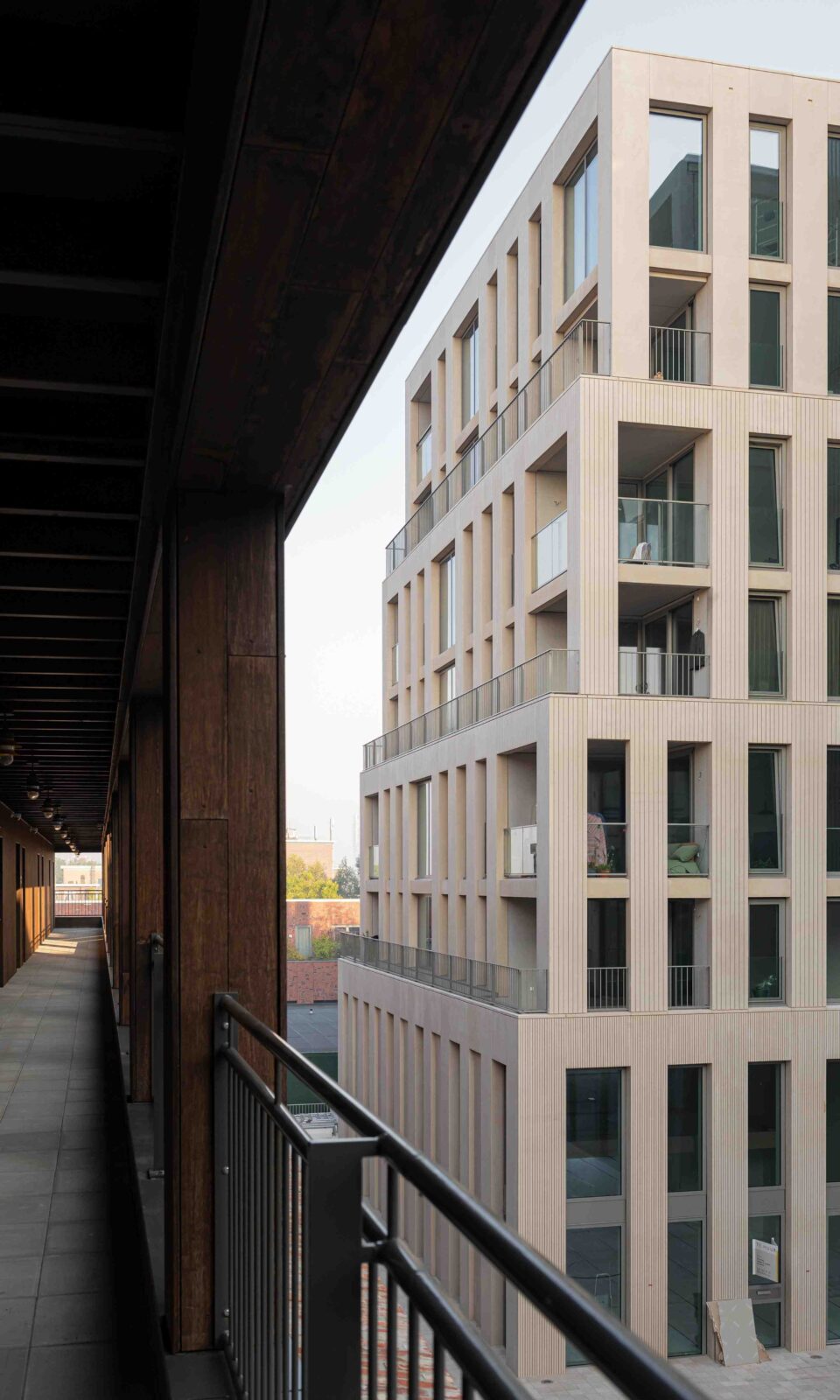
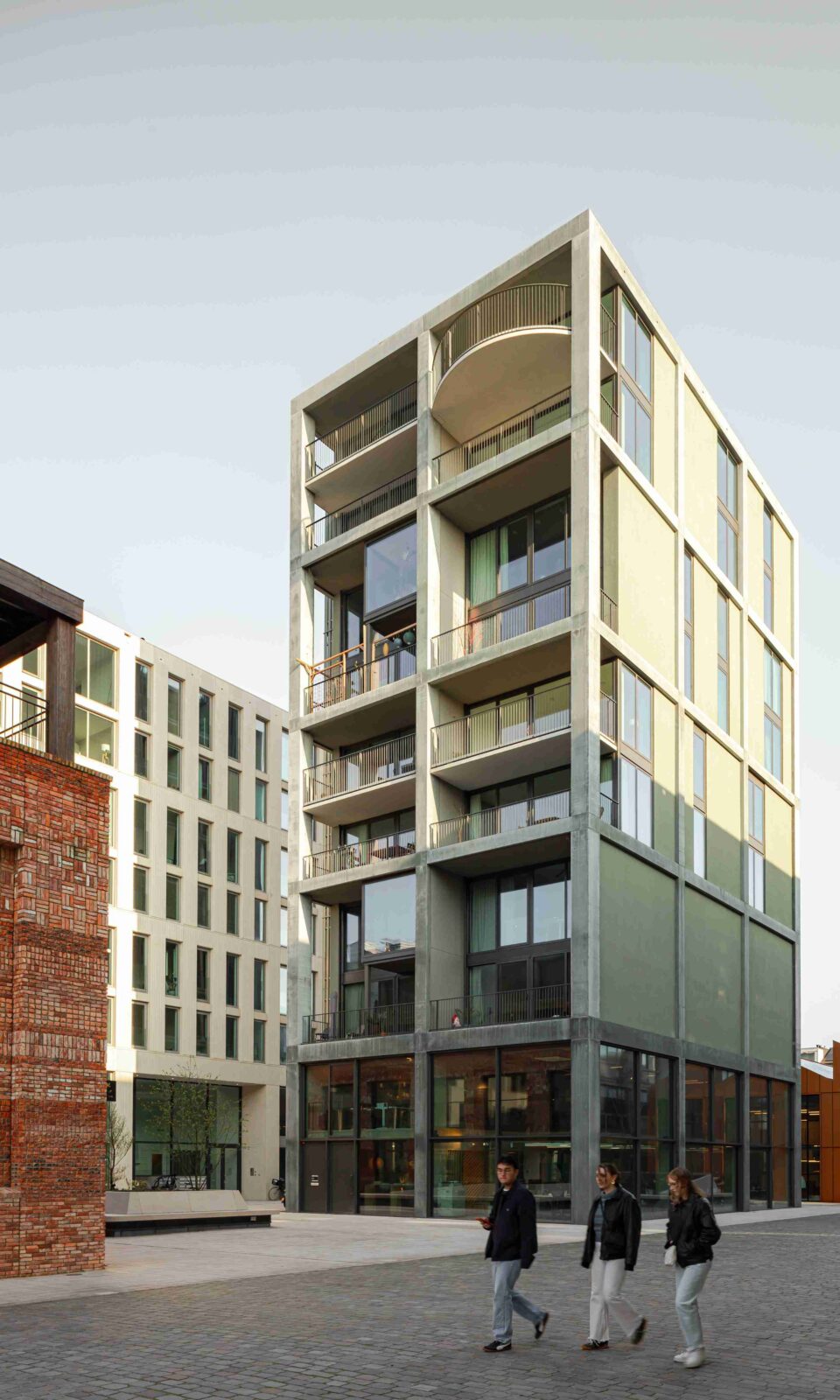
The soft green concrete tower with adaptable core and shell Superlofts allows residents to radically customise their interiors. It also marks the central “village square”, which is paved with demountable natural stone. The white residential block is made of timeless, specially profiled (partly recycled) concrete; the apartment-hotel building has a wooden façade, coming from a source of renewable materials. The warehouse office building is made of recyclable and durable Corten steel, and, due to its extra clear height, it is also suitable for manufacturing. The brick façade of the café and co-work is made of recycled bricks, which are manipulated in surface texture and laid in different patterns. Each building thus has its own story, structure, function, form, and sustainable façade finish and can therefore be adapted independently of each other in function, layout, and expression (Open Cities).
They “grow” with the times and thus last longer, likely resulting in significantly less demolition and construction waste in the future. Most buildings are flexibly divisible due to the separation of support and fit-out systems, large spans, high ceilings, large windows, and demountable material systems (the results are what MKA calls “Open Buildings and Open Systems”). The timeless circular and social architecture that is the result that MKA strives for is inspired by the so-called Open Building movement, founded by the late John Habraken in the 1960s.
Energy cooperative
As part of circular Buiksloterham, Republica is a test lab for sustainable construction and living, selected by the City of Amsterdam and subsidised by the EU. It is an energy-positive city plot (meaning the renewable energy systems generate more power than is needed). An innovative energy cooperative has been established to generate, store, and exchange sustainable solar energy among residents through a microgrid network, a “neighbourhood battery”, and a geothermal well.
Vibrant plinth
All technical rooms, parking spaces, bicycles, installations, storage, waste separation, and hotel logistics are concealed in the semi-underground garage, ensuring sufficient daylight in the parking area. This keeps the façades facing the raised ground level and the surrounding streets open on all sides, thus increasing liveliness, social safety, and liveability.
Source: v2com newswire