





Header: Vinay Panjwani
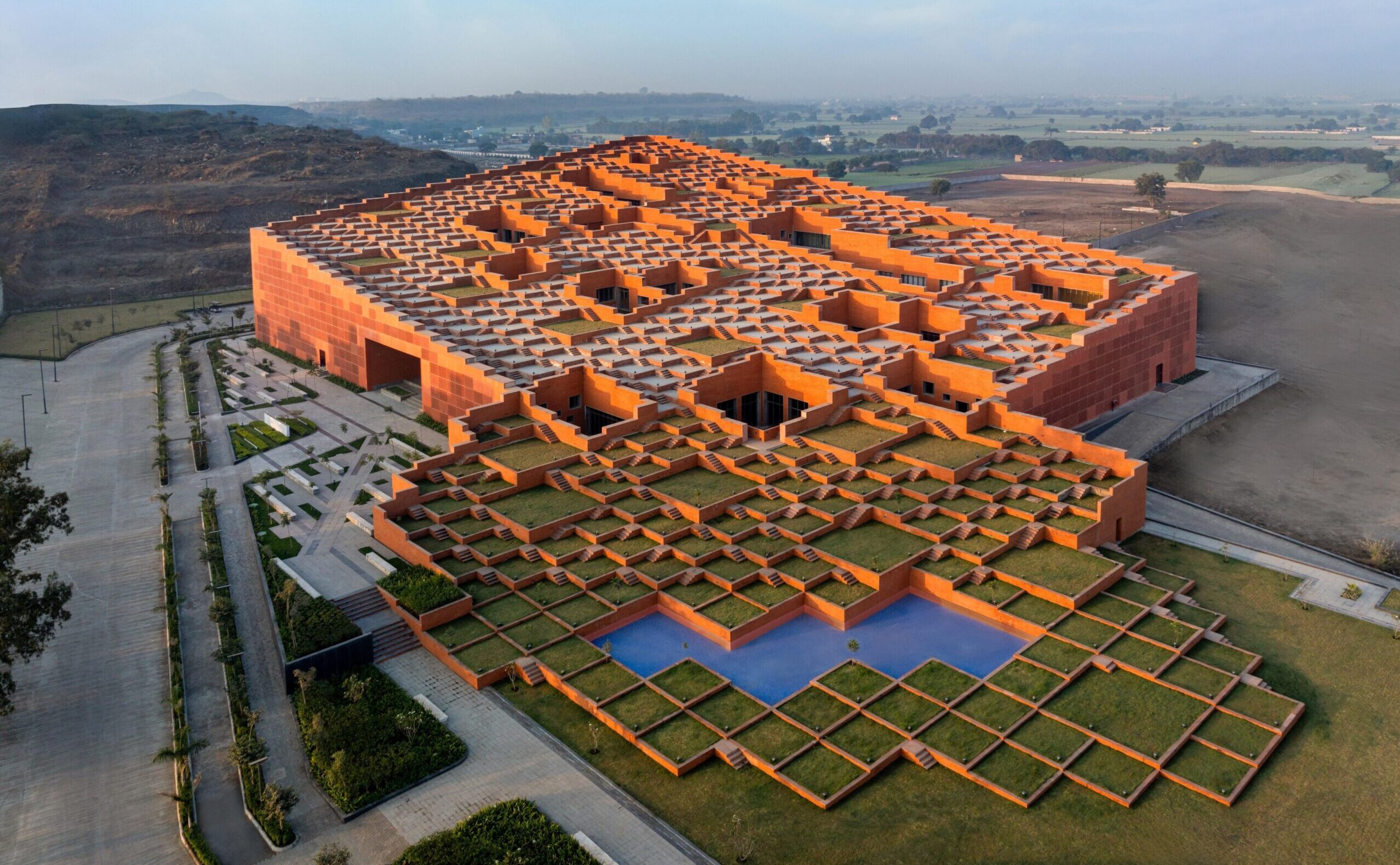
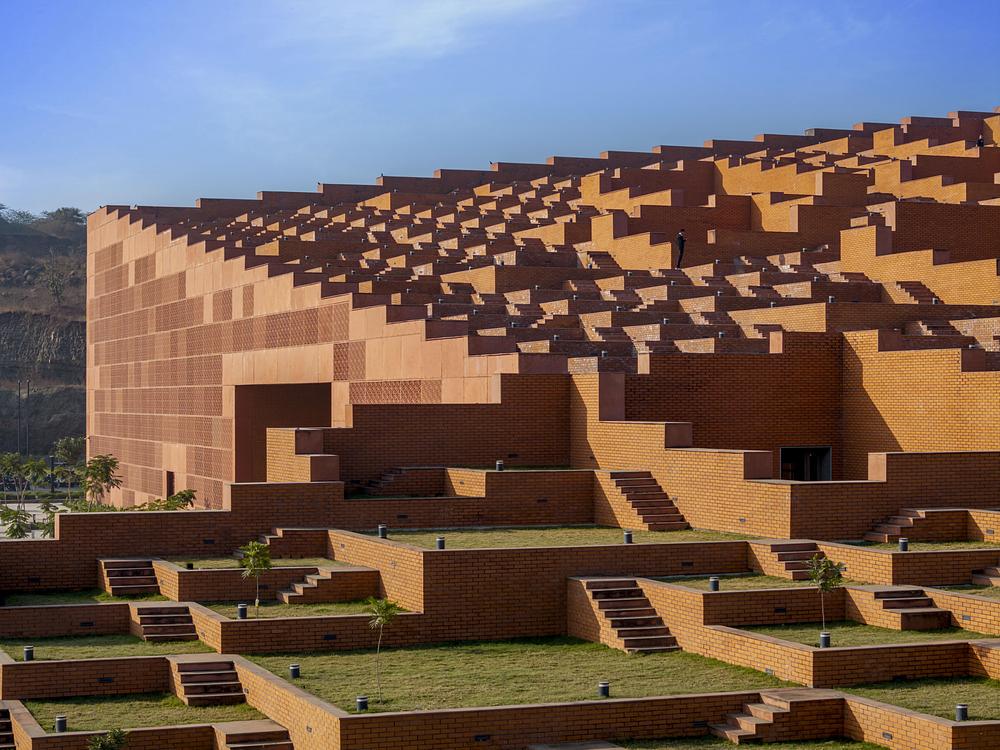
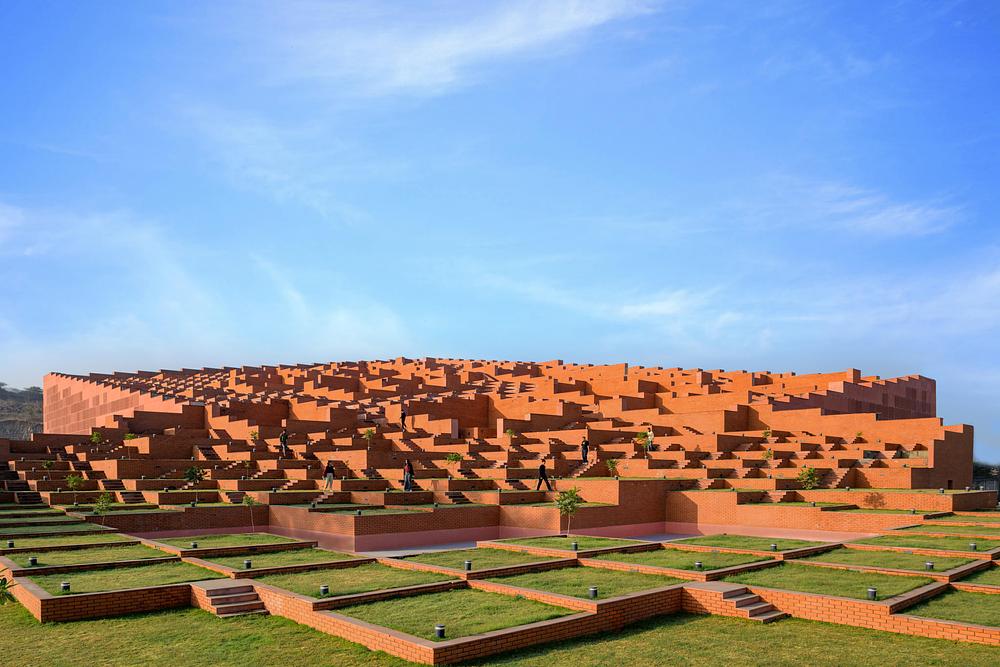
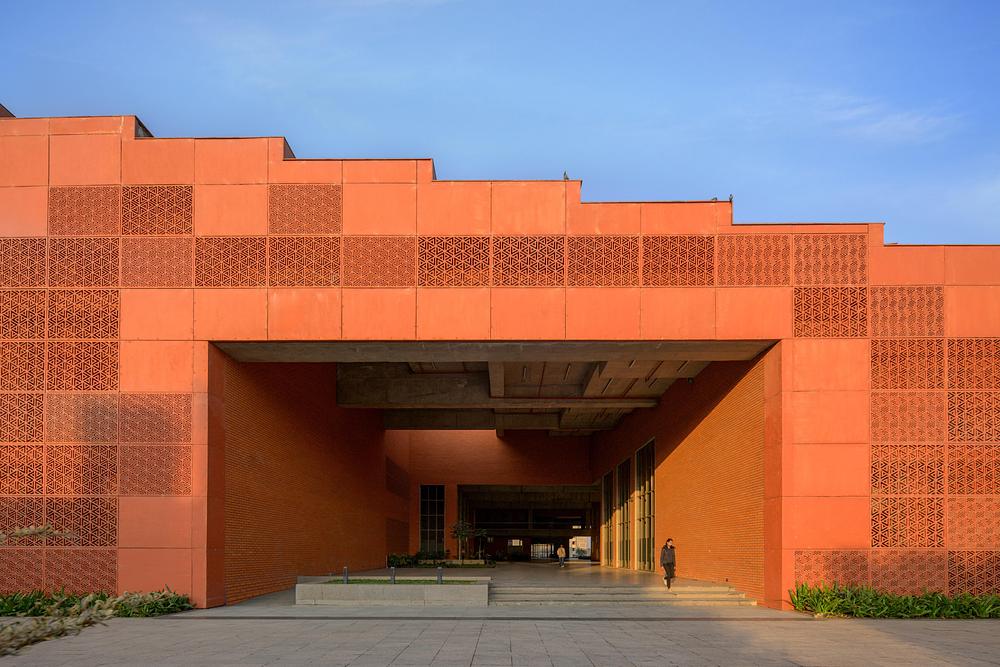
In the heart of a 32-acre campus, a new landmark challenges the traditional idea of what a university building should look like. Designed by the internationally acclaimed Sanjay Puri Architects, the Prestige University project in India is less of a static monument and more of a living, breathing landscape. Standing 28 metres tall, the structure avoids looking like a massive block by gradually stepping up from the ground, eventually turning into a giant, multi-layered stage for student life.
Inspired by ancient Indian stepwells
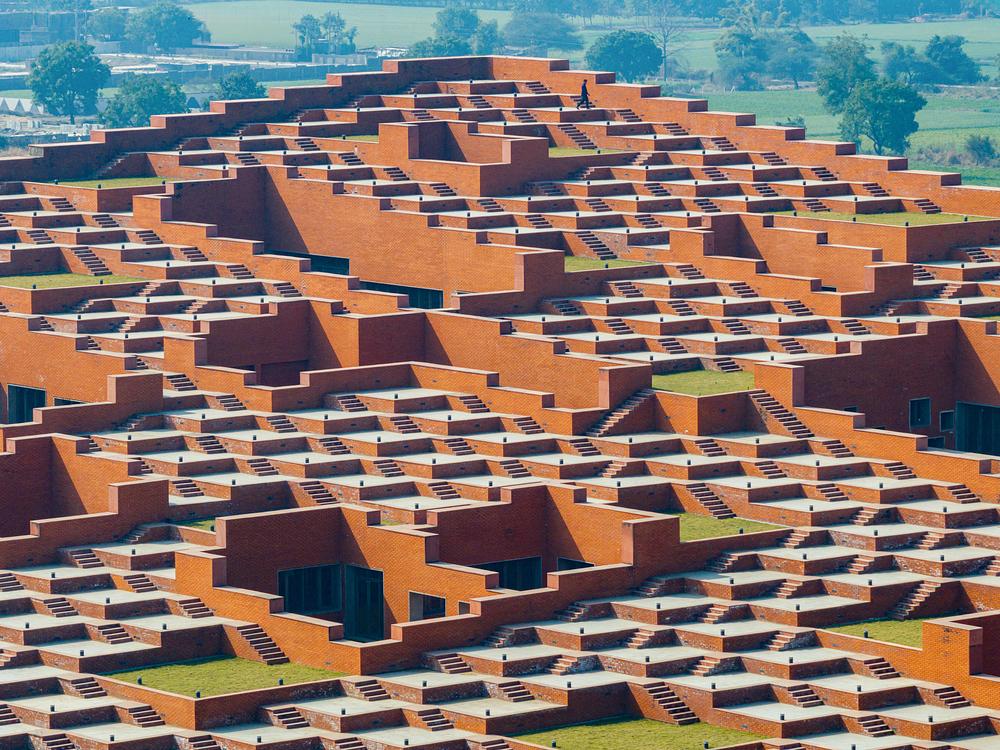
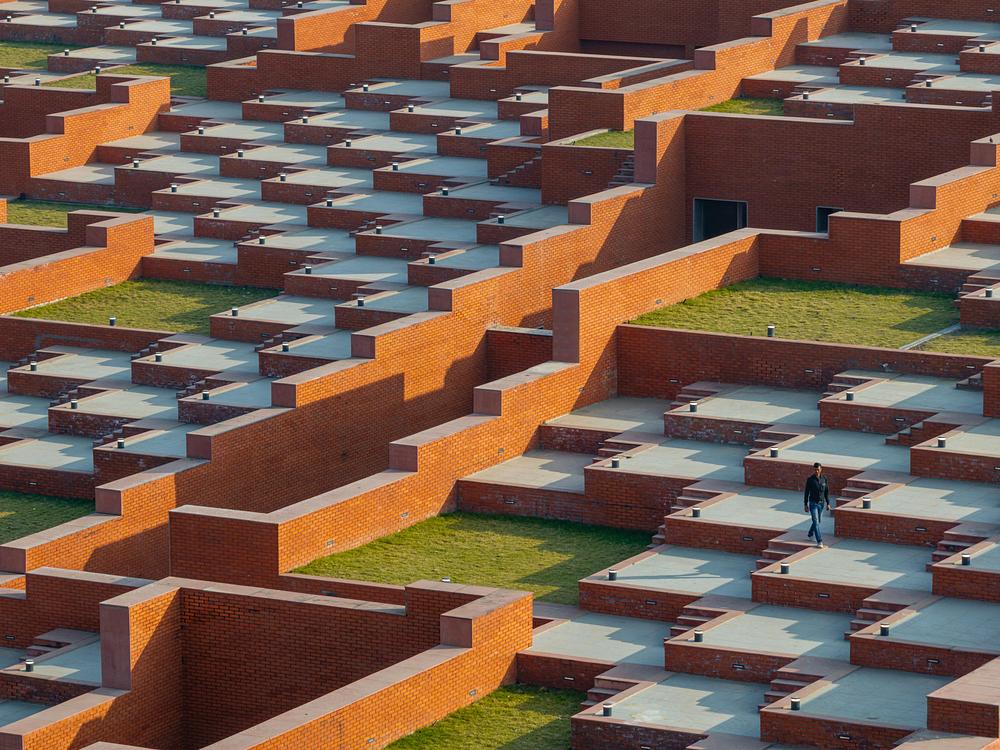
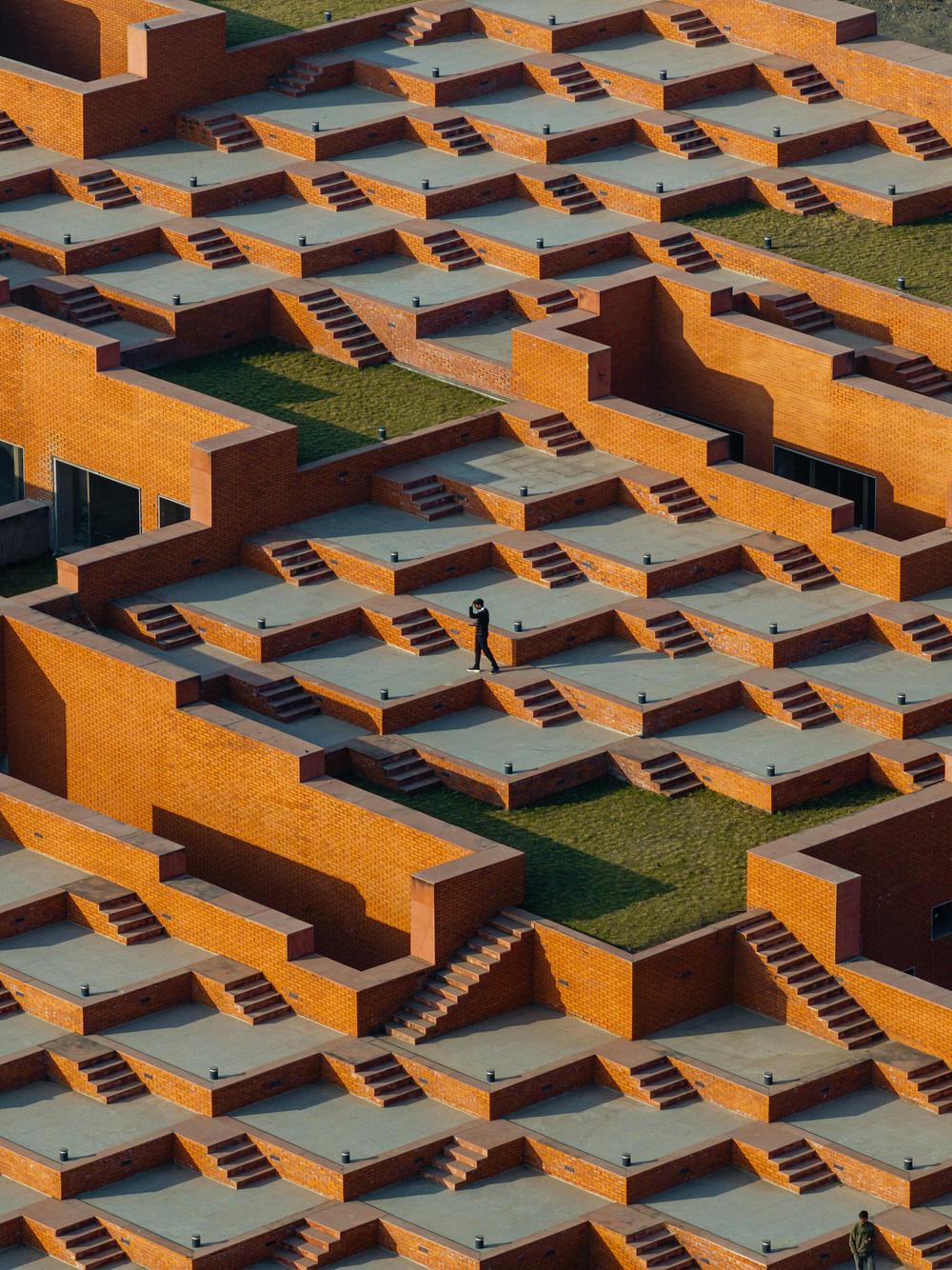
The most noticeable feature of the building is its shape, which draws inspiration from Indian stepwells that date back over a millennium. Historically, these wells were not only used for water storage, but they were also social hubs where communities gathered to escape the heat. Sanjay Puri Architects used this logic to create 463 stepped platforms that form a massive 9,000-square-metre rooftop garden.
The entire roof is accessible to students and staff, effectively doubling as an open-air auditorium that can seat 9,000 people for large events. By making the roof a functional part of the campus, the architects have turned a five-level building into a public park.
Smart cooling and natural light
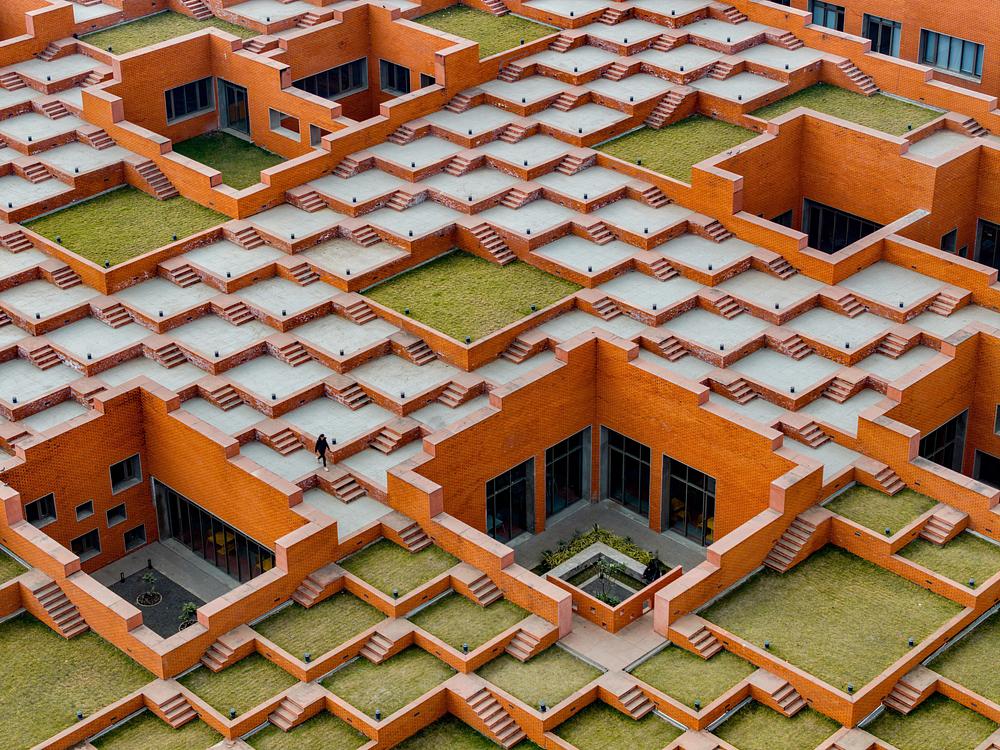
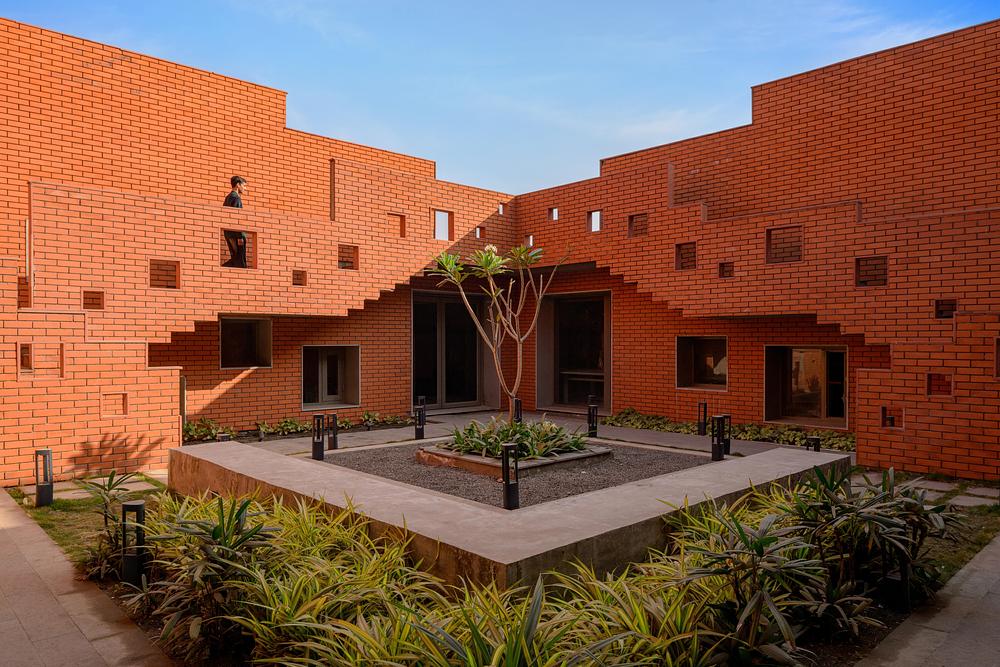
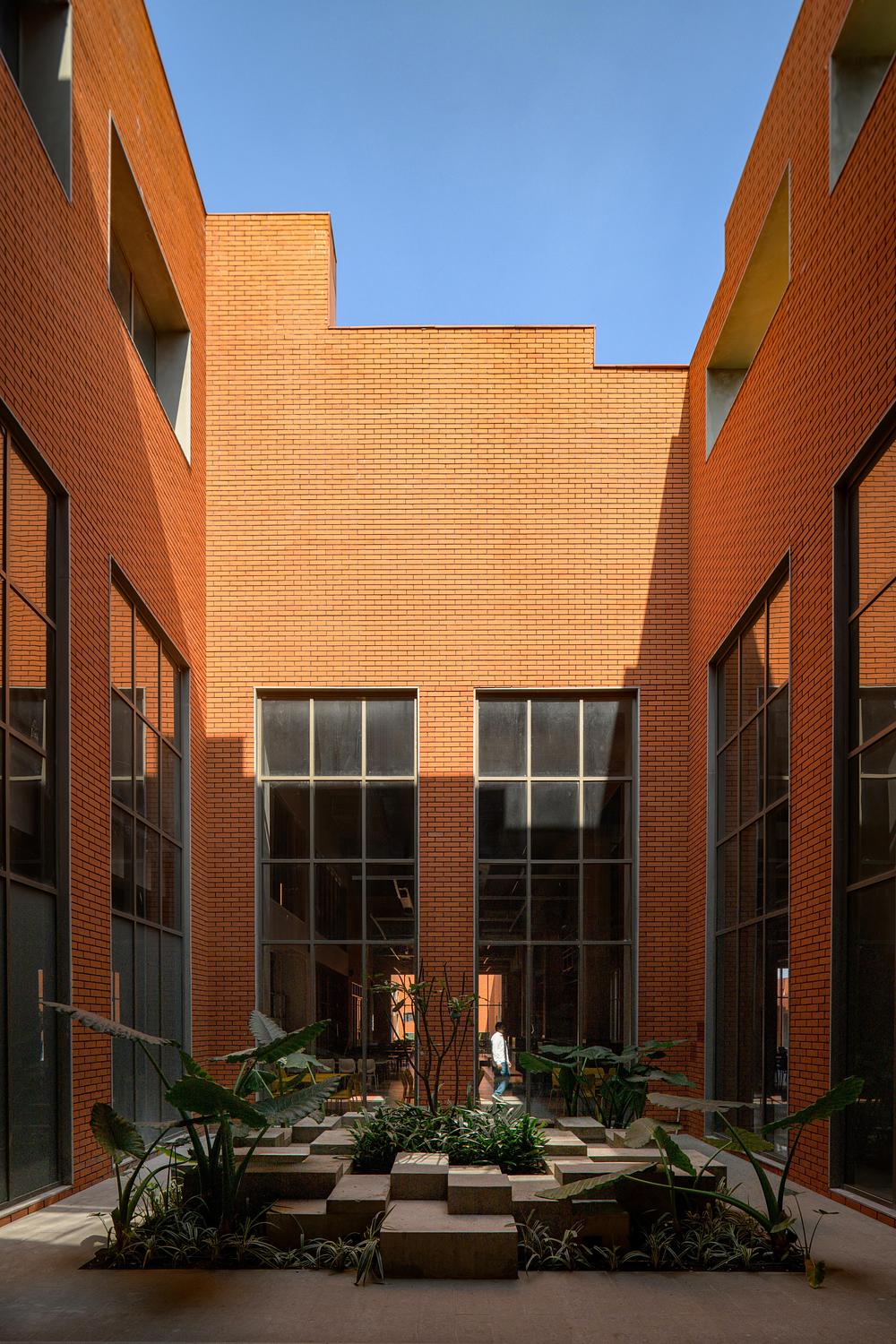
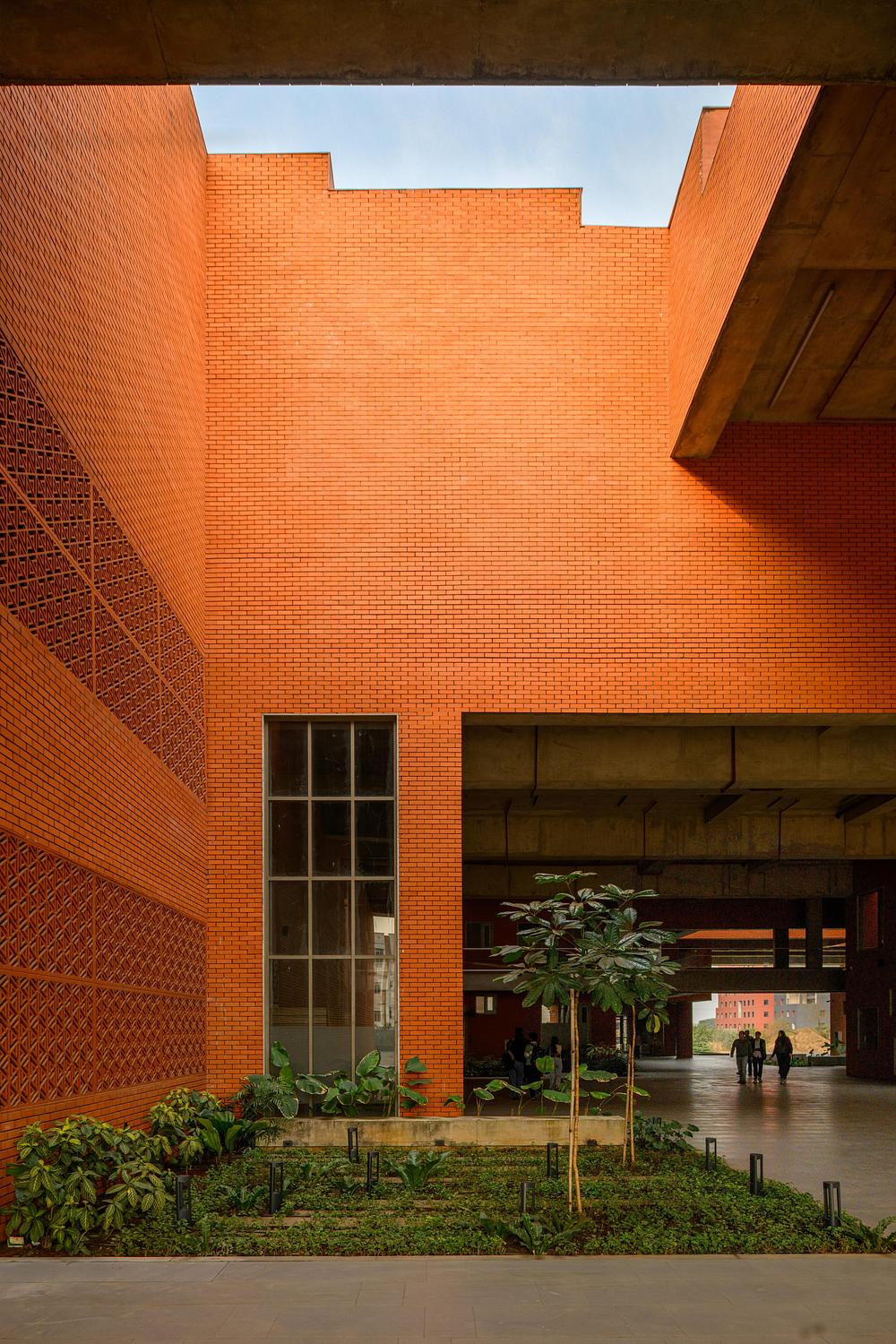
Designing for a climate where temperatures stay between 30°C and 40°C for most of the year requires more than just heavy air conditioning. The building uses north-facing lights and several open courtyards to pull in soft, indirect sunlight. This reduces the need for electric lights and keeps the interior from overheating.
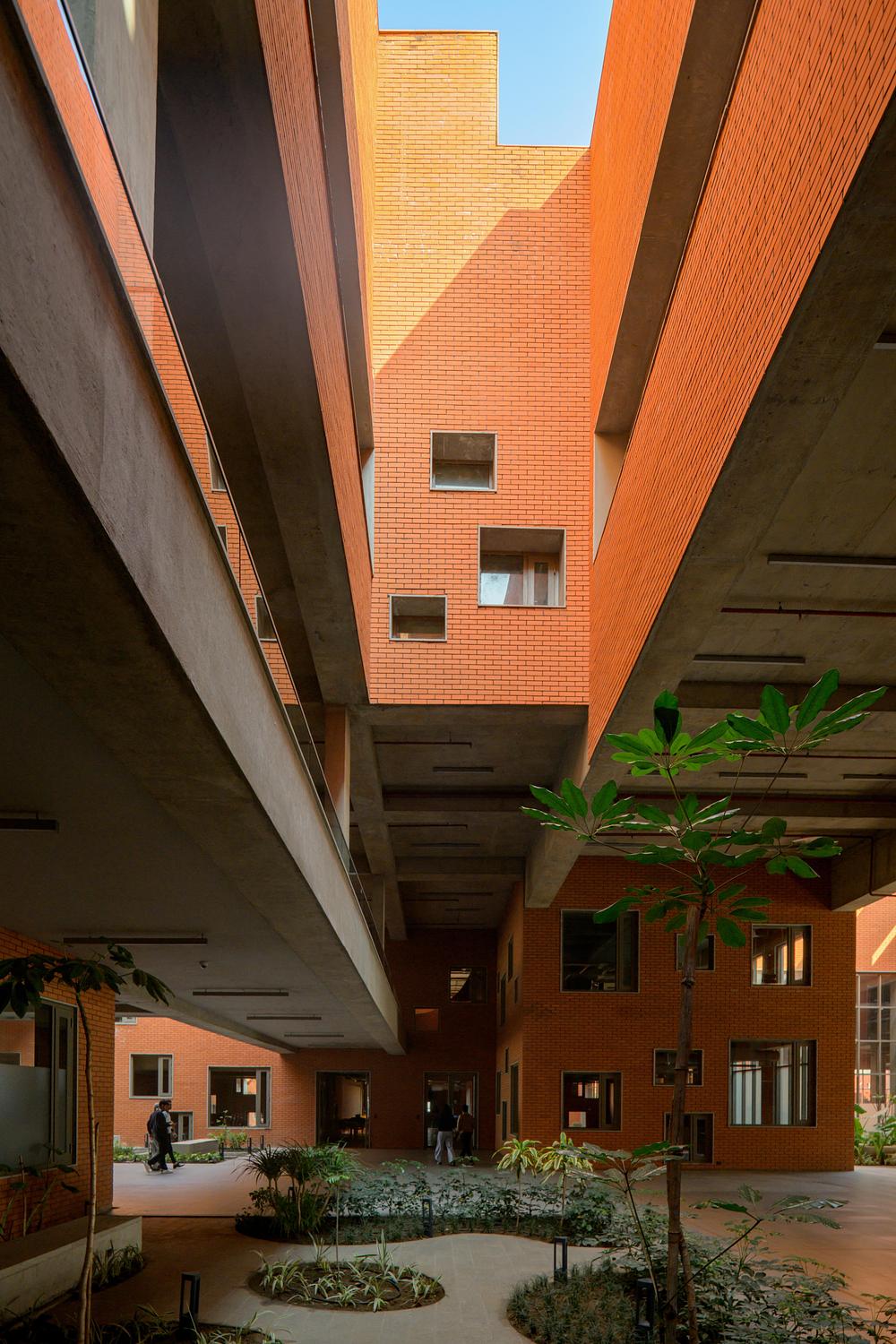
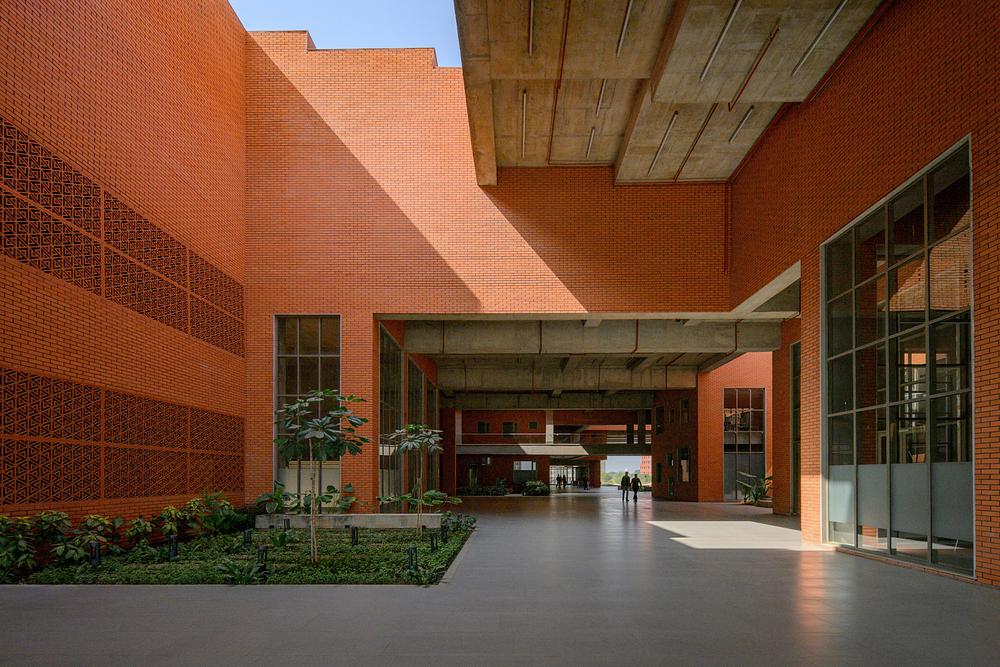
To further battle the sun, the east, west, and southern sides are wrapped in ventilated GFRC screens. These screens act as a protective skin, blocking out harsh heat while letting air flow through. Inside, a diagonal “indoor street” cuts through the building, working with the open courts to ensure that a natural breeze moves through the various levels.
Inside the five-storey layout
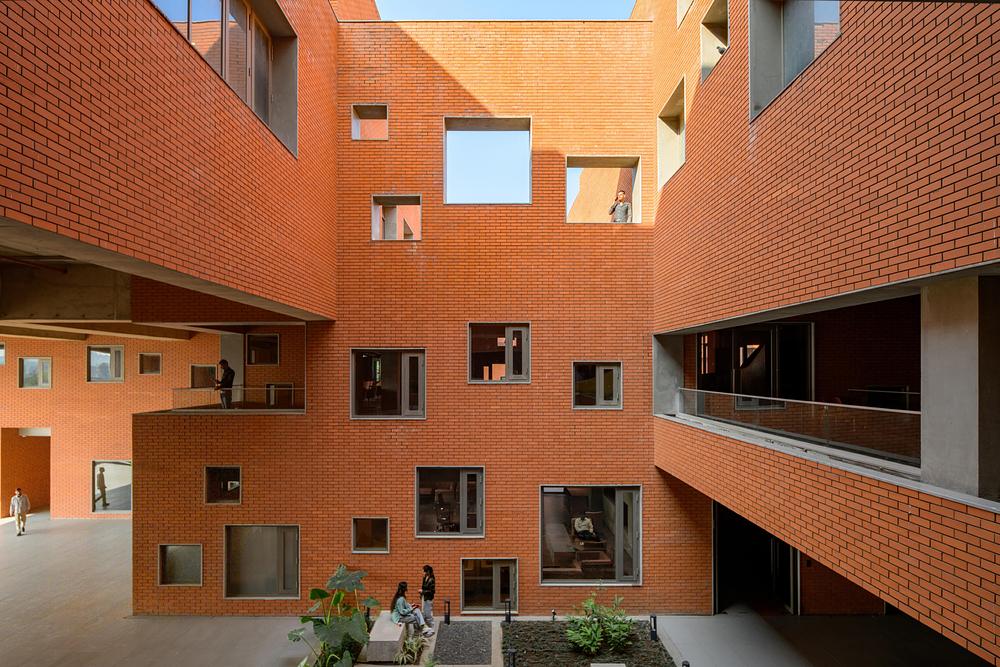
The interior is organised to make the busiest areas the easiest to reach. The ground floor houses the administrative offices, a food court, and a formal auditorium. Moving up to the first floor, a bridge spans the indoor street to connect the different sections of the library.
The second floor is dedicated to common classrooms, which use the open courtyards as “spillover” spaces for students to relax between lessons. Tiered classrooms are located on the third floor, while the top level is reserved for faculty offices and administrative facilities. This arrangement ensures that the most populated areas stay connected to the green, outdoor spaces at every level.
Sustainability through traditional wisdom
By looking back at traditional Indian architecture, Sanjay Puri Architects have created a university building that is incredibly energy efficient. The use of natural ventilation and smart shading means the building doesn’t have to rely heavily on mechanical cooling. Even the rooftop is inclusive, with specific platforms designed to be wheelchair accessible so every student can enjoy the view and the fresh air.
By turning the roof into a garden and using ancient cooling techniques, Sanjay Puri Architects have created a space that stays cool in the heat and provides a massive area for social interaction. It is a practical, clever response to the local environment that prioritises the people who use it every day.


Project info
Project Name: Prestige University
Project Type: Built – Educational, Institutional
Location: Indore, Madhya Pradesh, India
Commencement Date: August 2018
Completion Date: January 2026
Client Name: Prestige Education Society
Construction Company: BL Constructions
Architecture & interior Design Company: Sanjay Puri Architects
Lead Designers: Sanjay Puri, Ruchika Gupta, Madhavi Belsare
Design Team: Manveer Chopra, Devendra Dugad, Arjun Gupta, Bijal Bhayani
Photo credit: Vinay Panjwani
Source: v2com newswire


