Header: Courtesy of Porsche AG
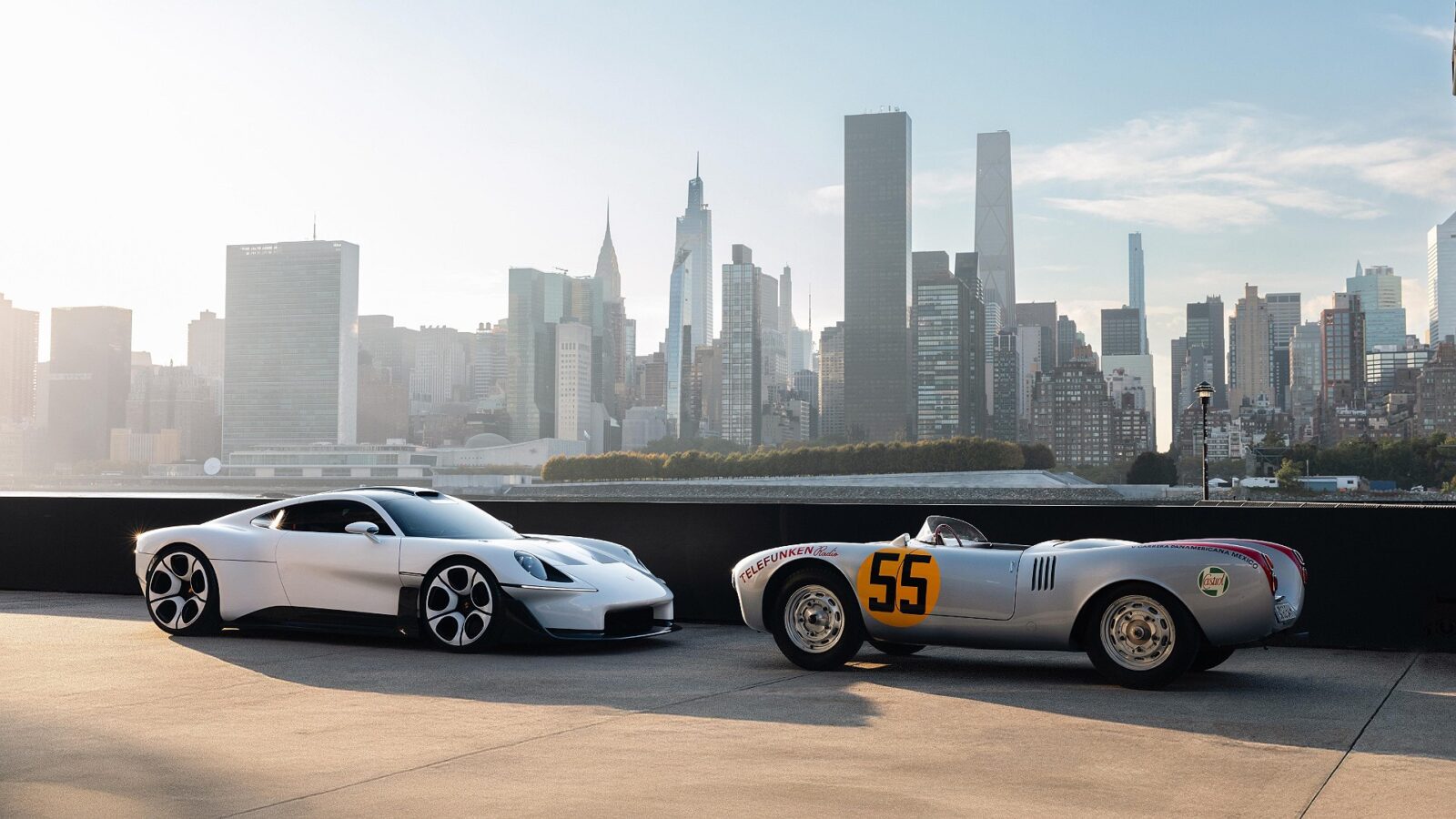
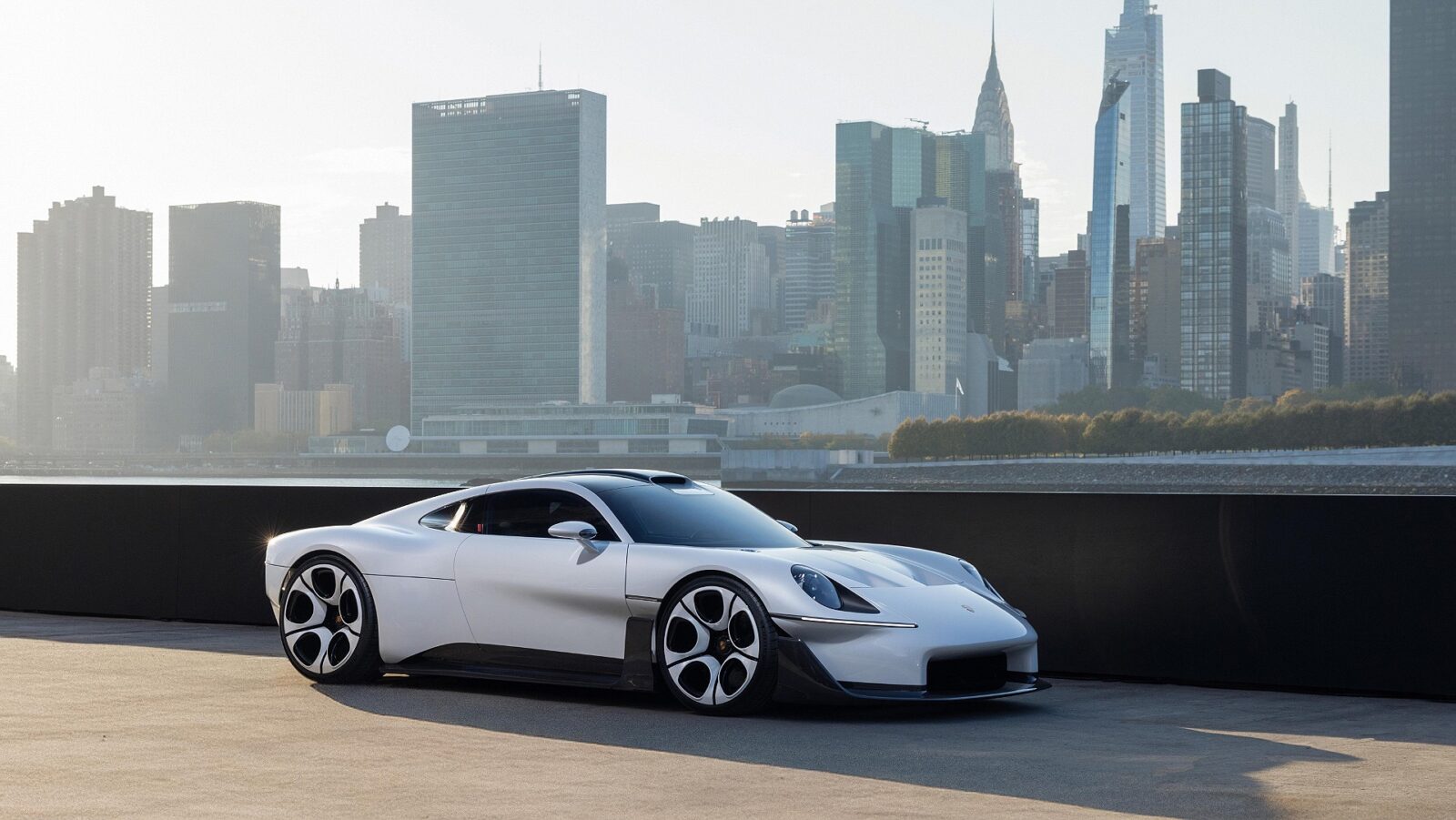
Porsche has recently revealed its new concept model, the Mission S, on a pier in Queens, New York, facing the Manhattan skyline. It is a first look at a new mid-engined super sports car that Porsche plans to sell above the 911, which places the engine behind the seats and ahead of the rear axle. Apart from the engineering changes, it also shows how Porsche will design its cars over the coming years, with round headlights, wide torpedo-shaped front wings and an active rear wing built into the tail.

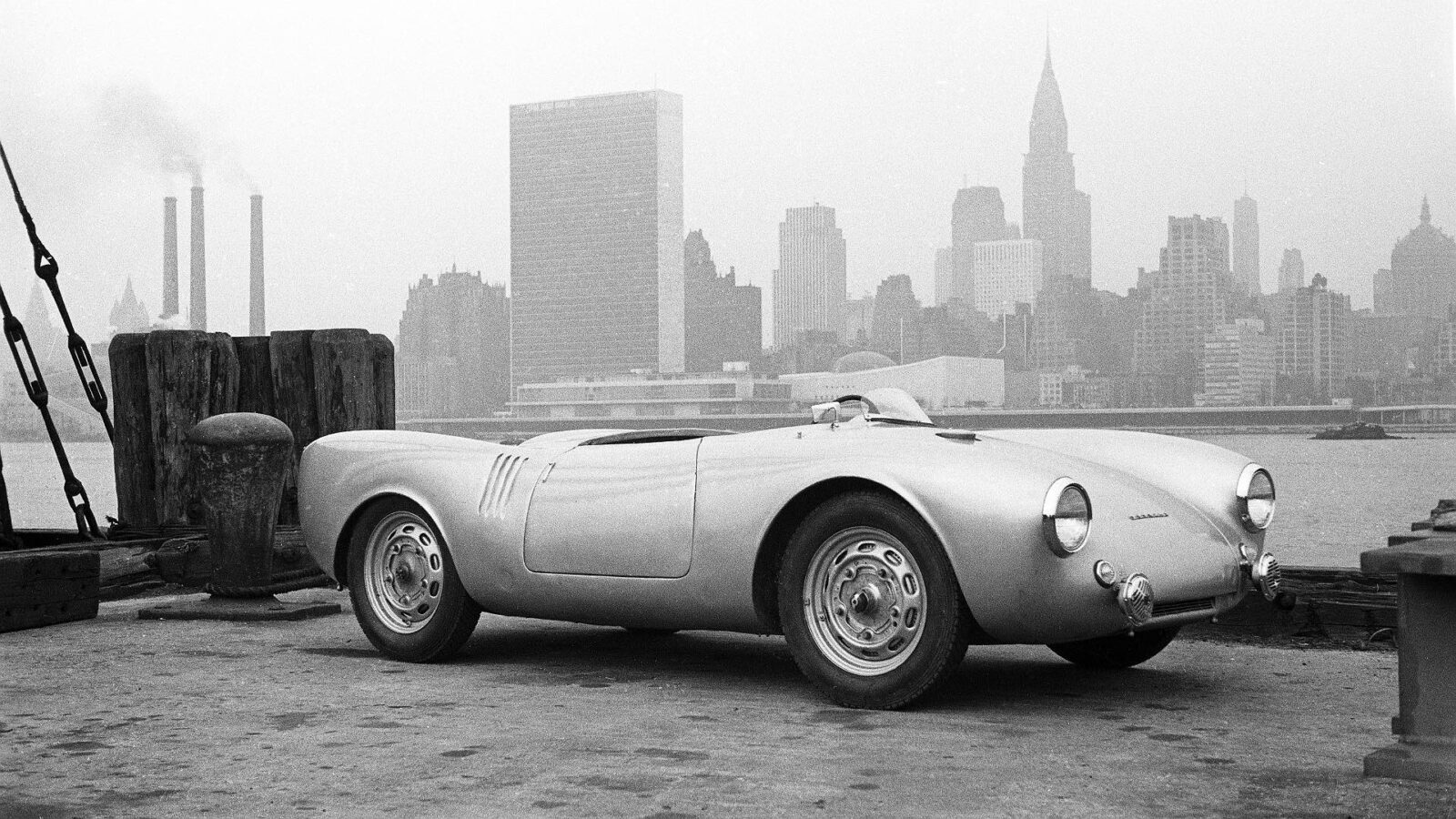
The pier and the 550 Spyder
The pier was chosen because the 550 Spyder was photographed there in 1953, a model which Porsche calls its first super sports car. The 550 was also mid-engined, and Porsche credits it with laying the foundation of its success in the United States. The Mission S was painted in two colours especially developed to symbolise the brand’s future, Firn White Metallic and Light Red Metallic, based on the white, grey and red of Porsche’s racing cars.
Older Porsches in the design
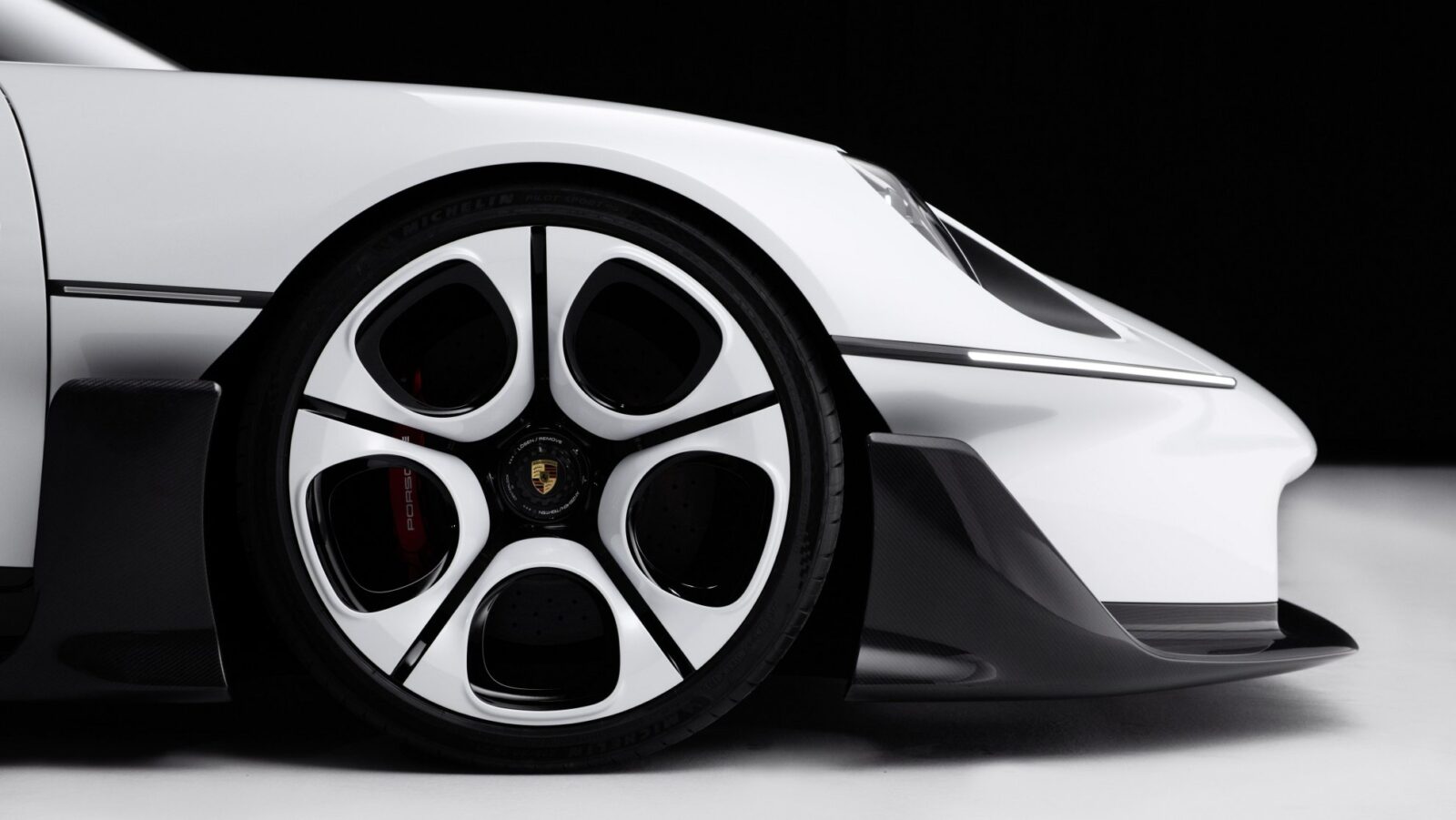
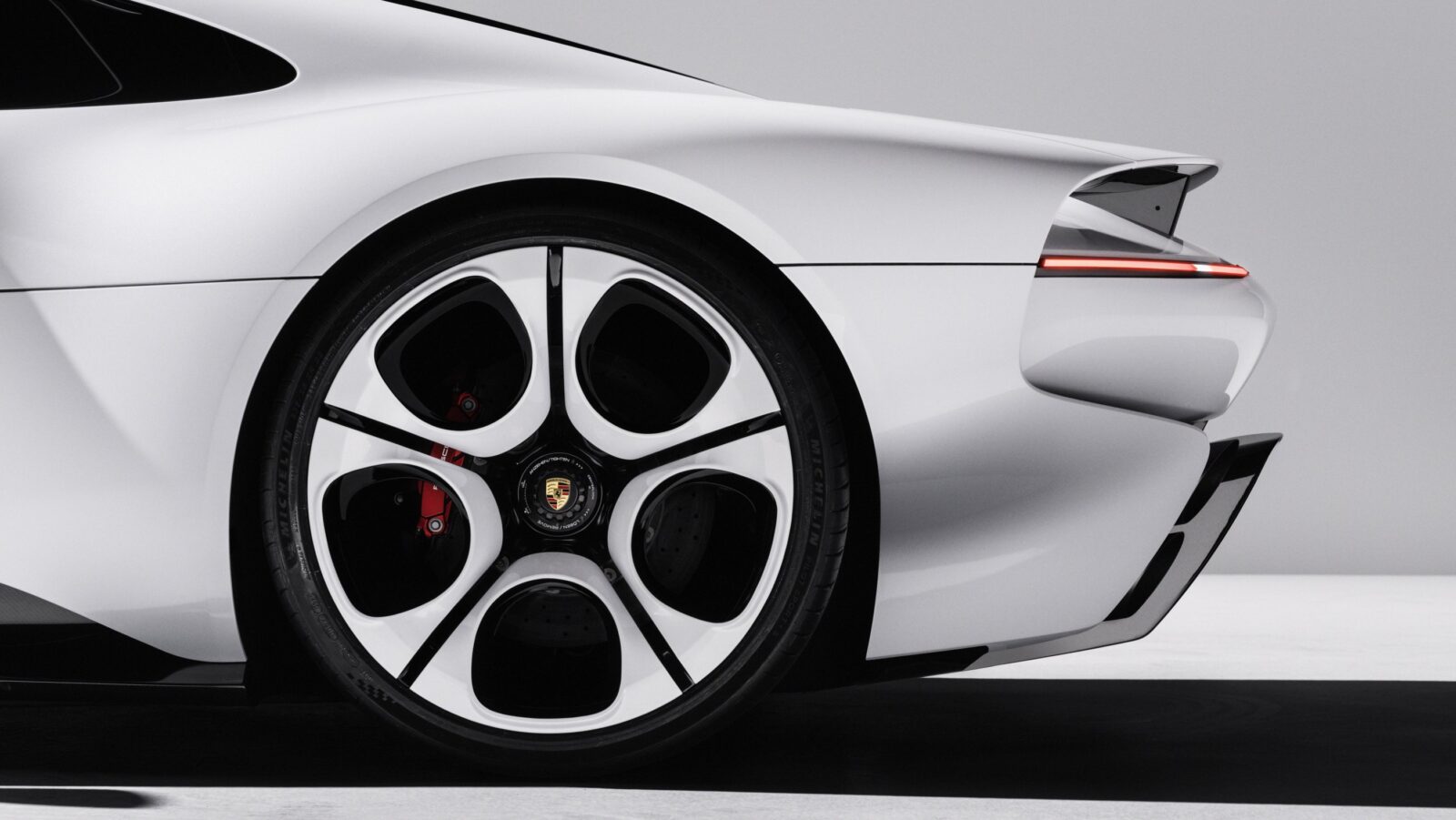
The flat front was taken from the GT1, an iconic Porsche racing car, the low roofline beneath the rear wing recalls the 959 supercar, and the cooling fan at the back is based on the radiator fan of the 917 racing car. The round headlights and the front wings refer to the 911, while the shut lines, the gaps around the doors and panels, merge into the lights as they did on the G-Series 911. The lightweight wheels are a new version of the dial design used on the 928.
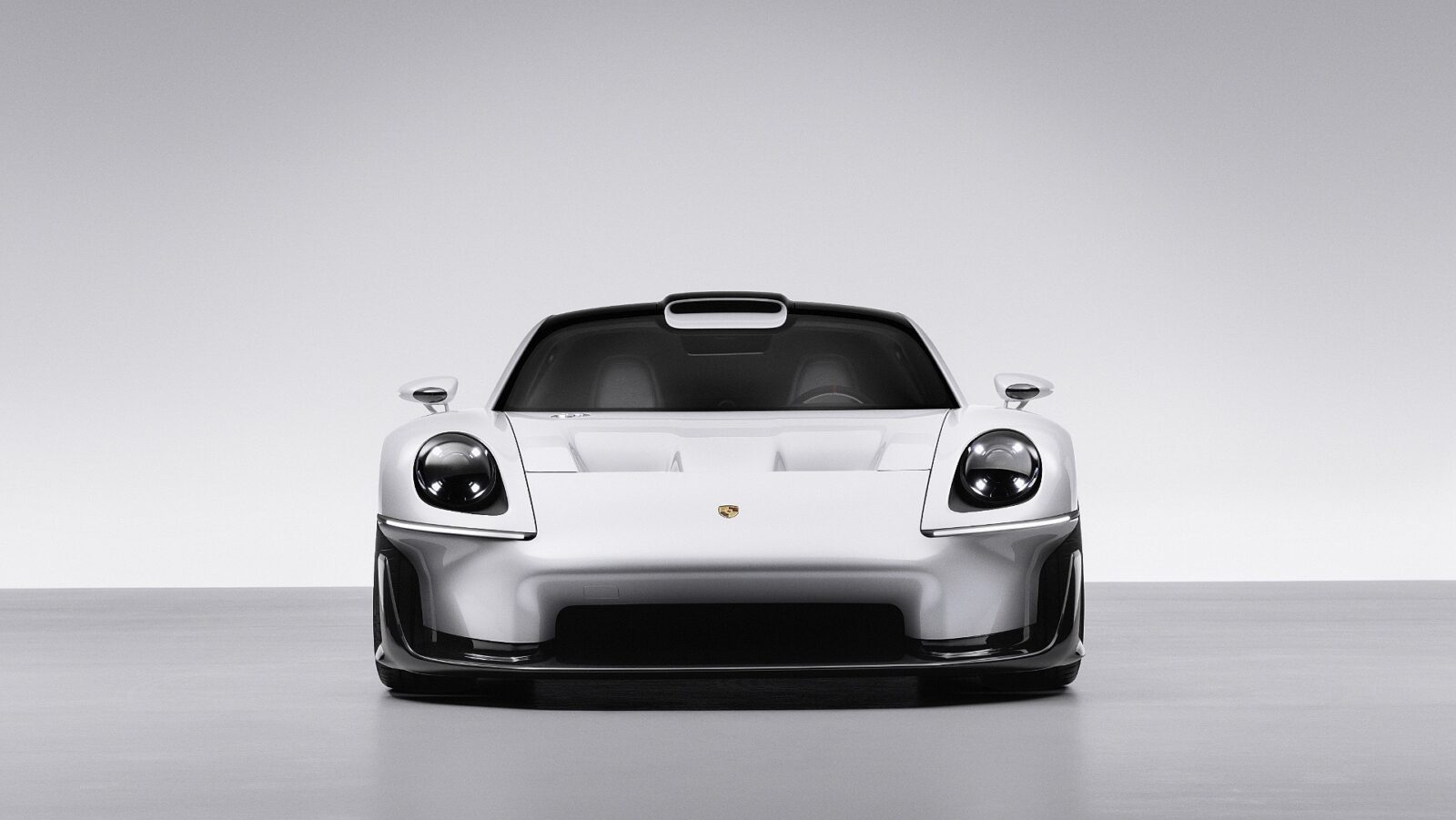
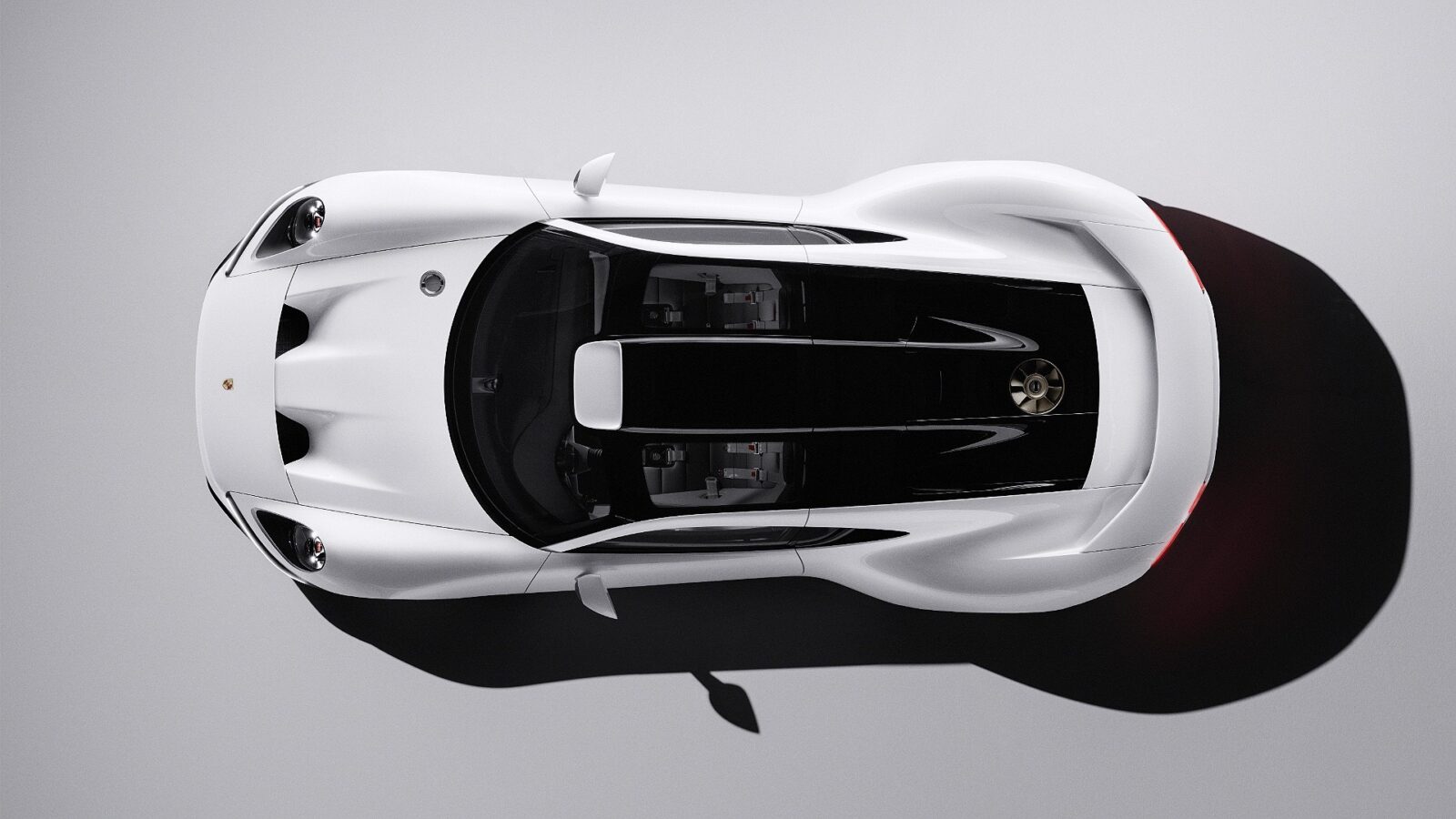
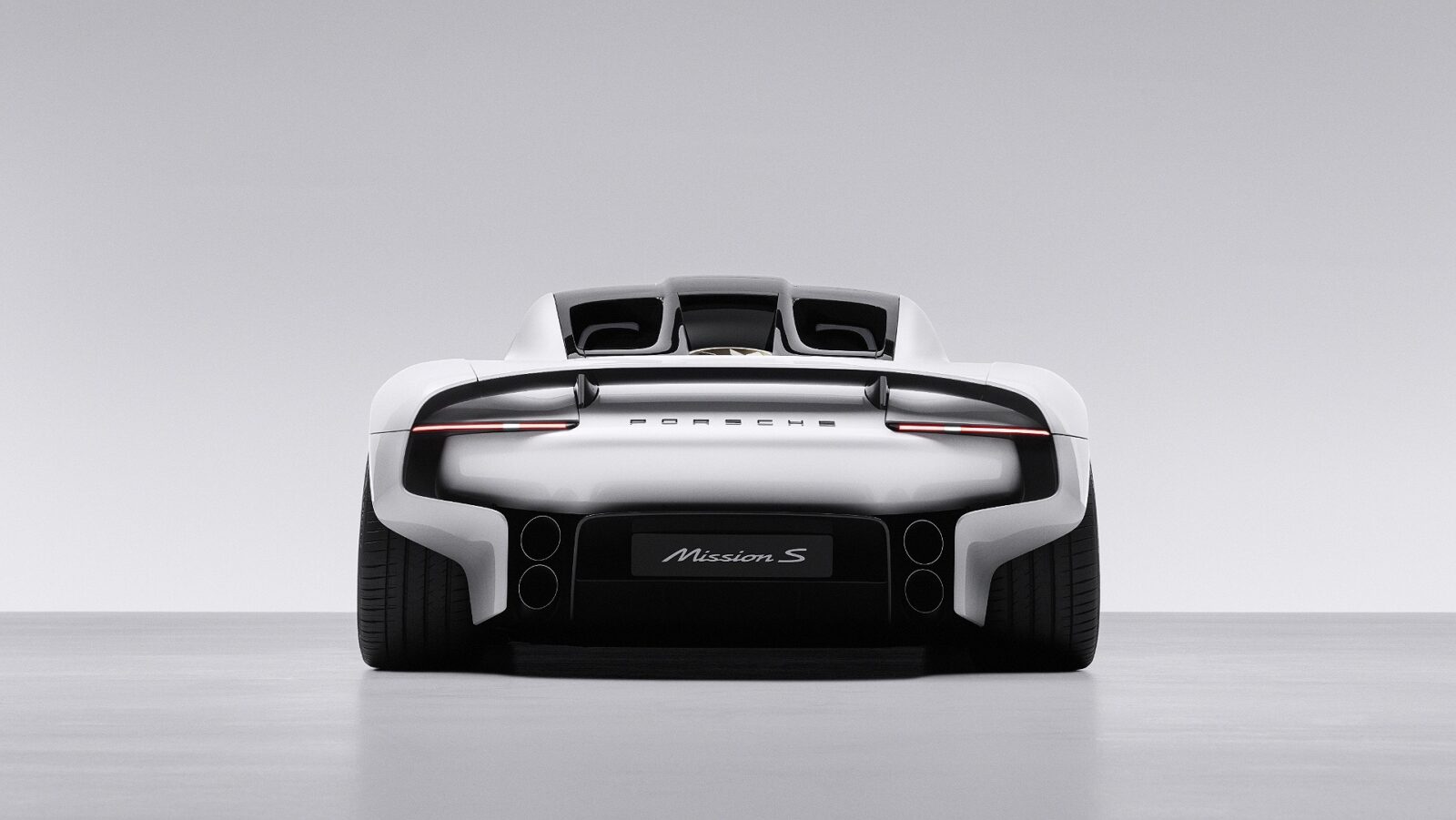
A single line runs around the whole car and joins the lights at the front to those at the back. Porsche describes the bodywork above that line as muscular and the parts below it as showing the car’s technical functions and lightweight construction.
The cockpit
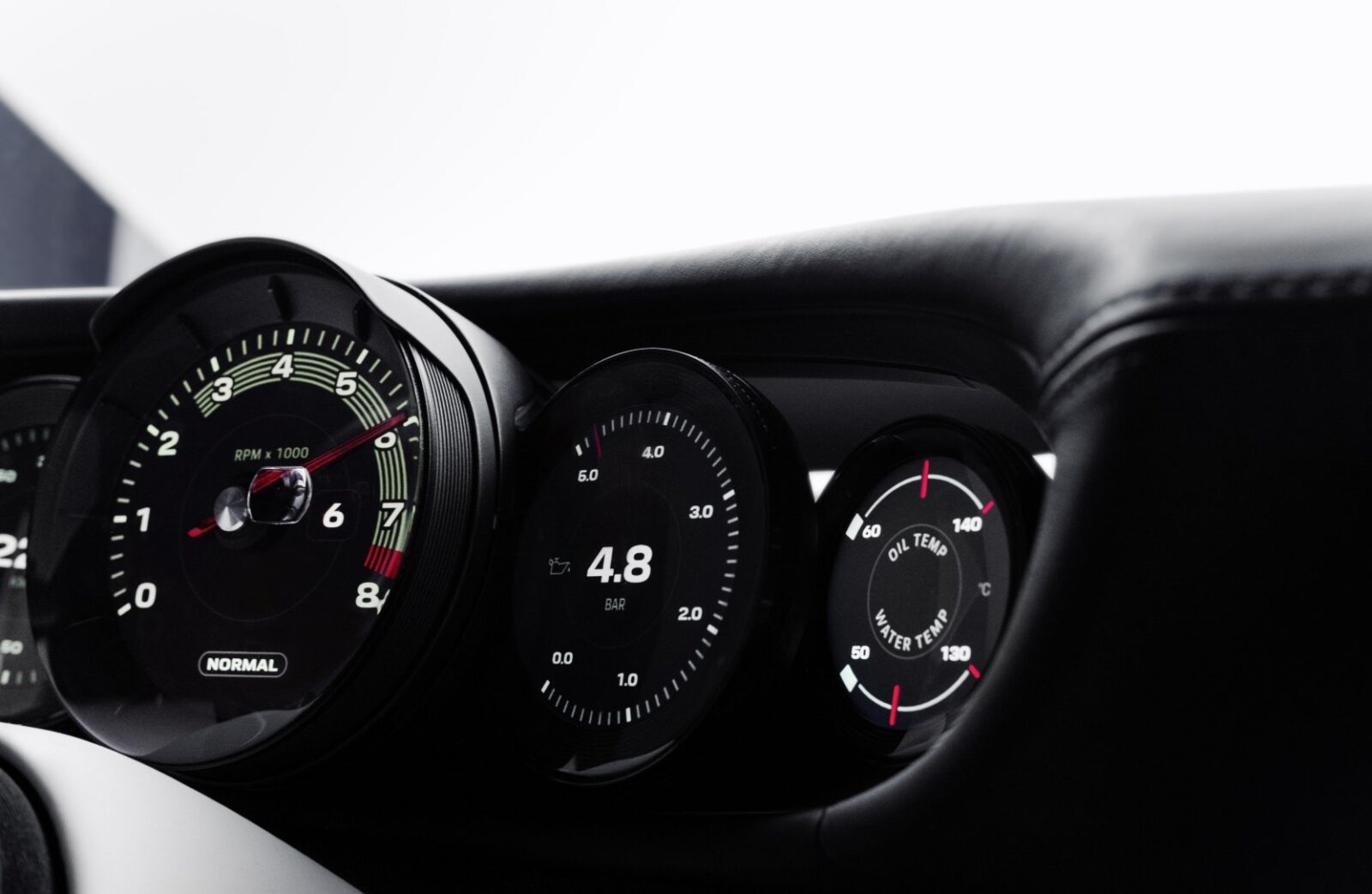
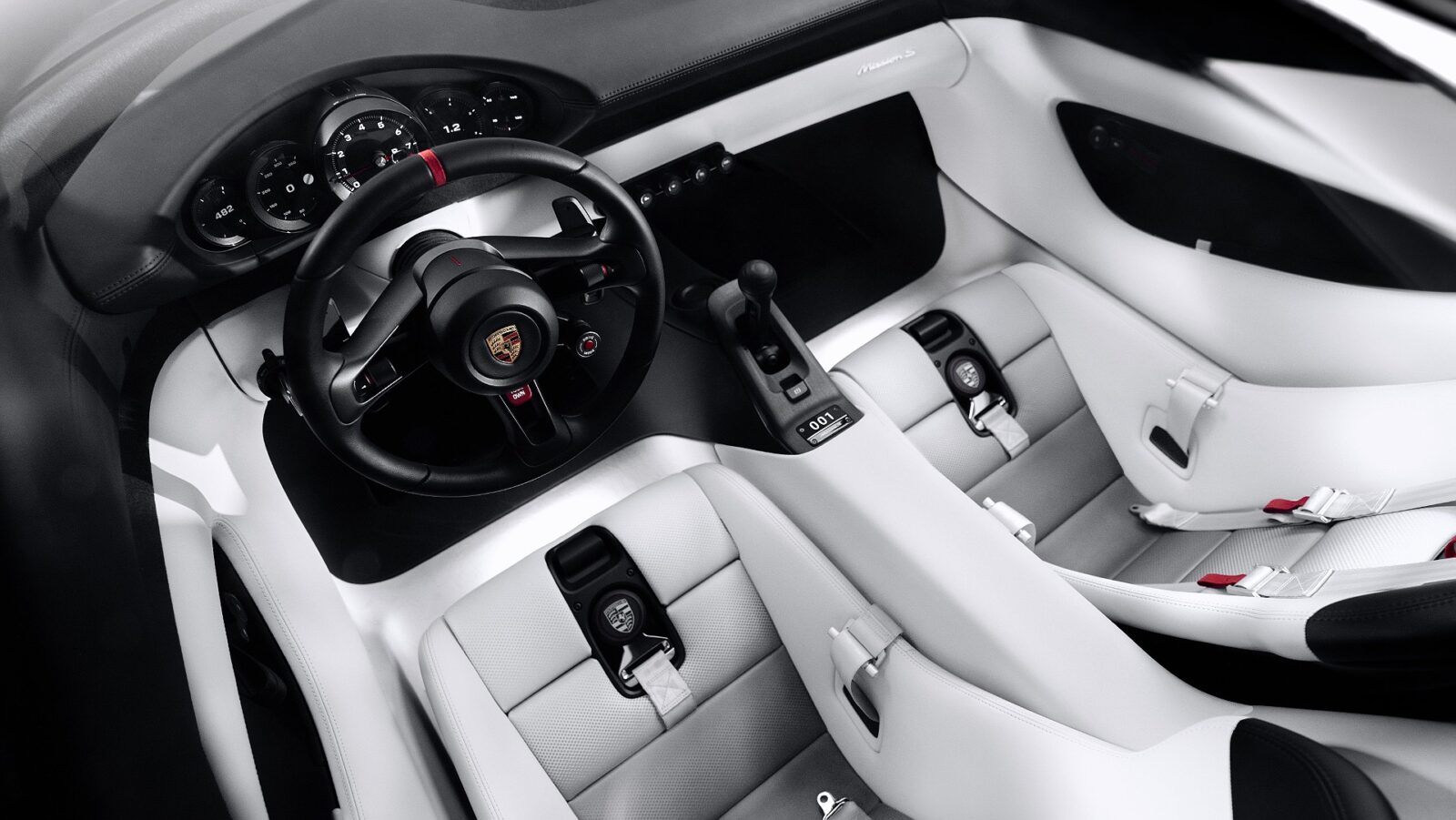
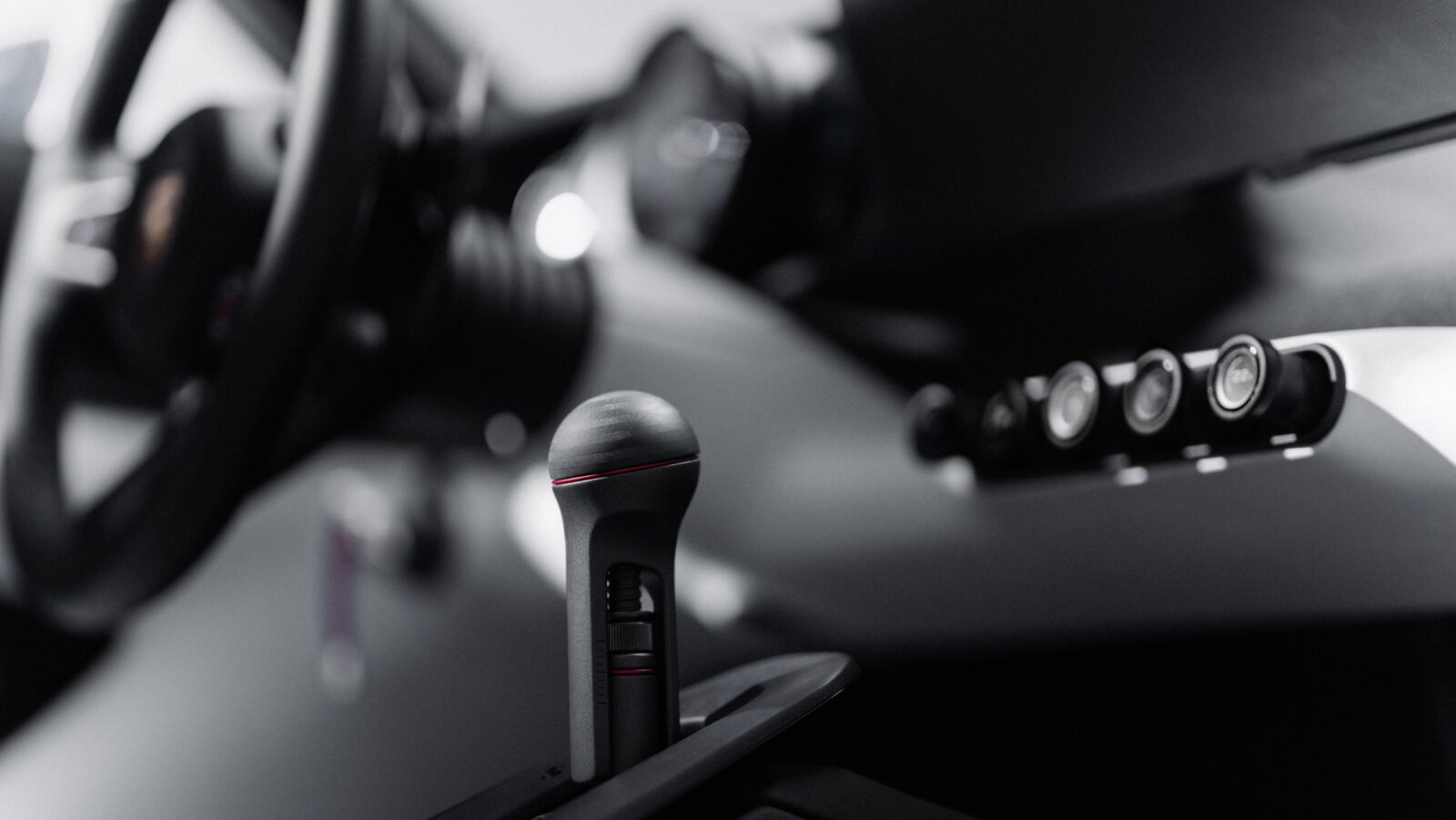
Inside, two lines cross the dashboard and the doors, continuing the lines of the exterior. Porsche says they give the feeling of sitting deep within the car, as in the 550 Spyder and the 356. Behind the steering wheel are five round dials, with the rev counter in the centre keeping an analogue needle in front of a screen. Depending on the drive mode, the dials sit side by side or one behind another, and the rev counter moves closer to the driver.
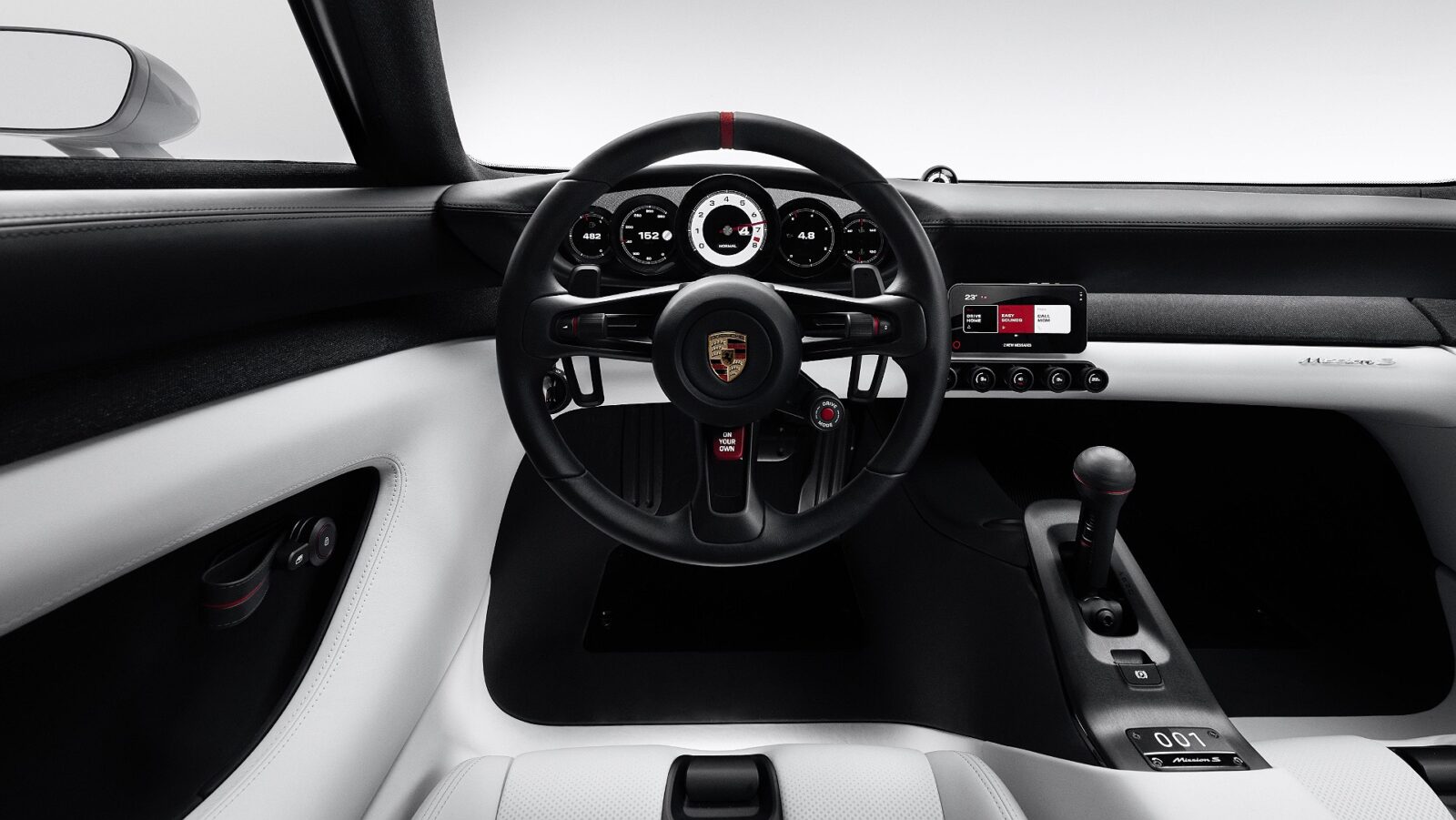
There is no traditional screen in the centre of the dashboard or in front of the passenger; instead, the driver’s smartphone goes into a retractable MagSafe holder and becomes the navigation display. The key goes to the left of the steering wheel, the buttons on the dashboard are pushed and pulled, and a switch on the wheel called “On Your Own” turns off the supporting systems. The seat belt buckles are built into the centre of each seat, and the cabin is finished in Black Chrome and Special Black.
A car above the 911
The Mission S previews a mid-engined platform, the shared base for a range of models, which Porsche plans as a permanent line above the 911. The car is part of Sportwagenschmiede ’35 (German for “sports car forge”), the strategy until 2035 that Porsche presented on the 7th of October. It was presented by Michael Leiters, who became chief executive at the start of 2026, after running McLaren and spending eight years as chief technology officer at Ferrari.
“A Porsche must be recognisable as a Porsche at first glance.”
Michael Leiters, Chairman of the Executive Board of Porsche AG