Header: Courtesy of Singer
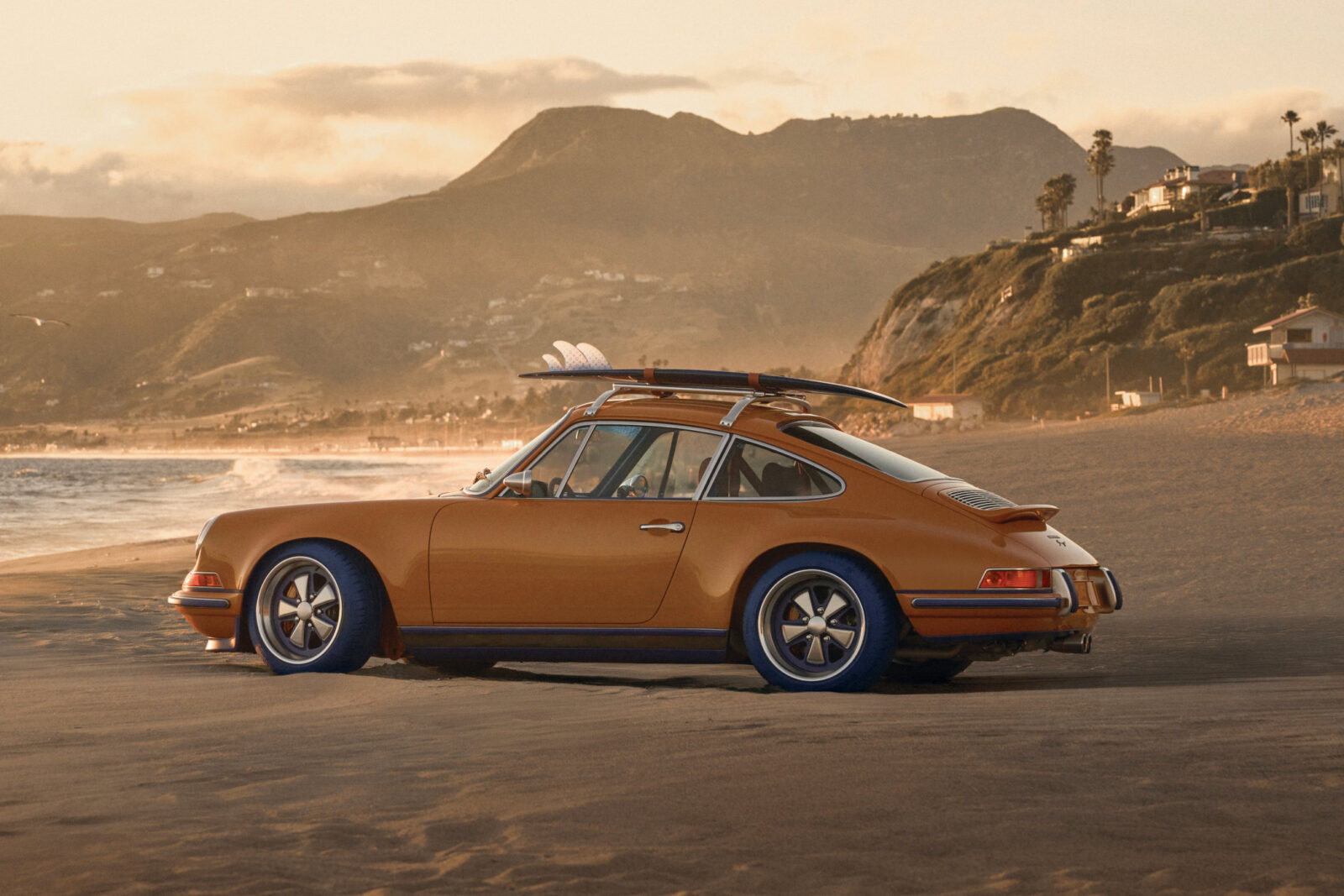
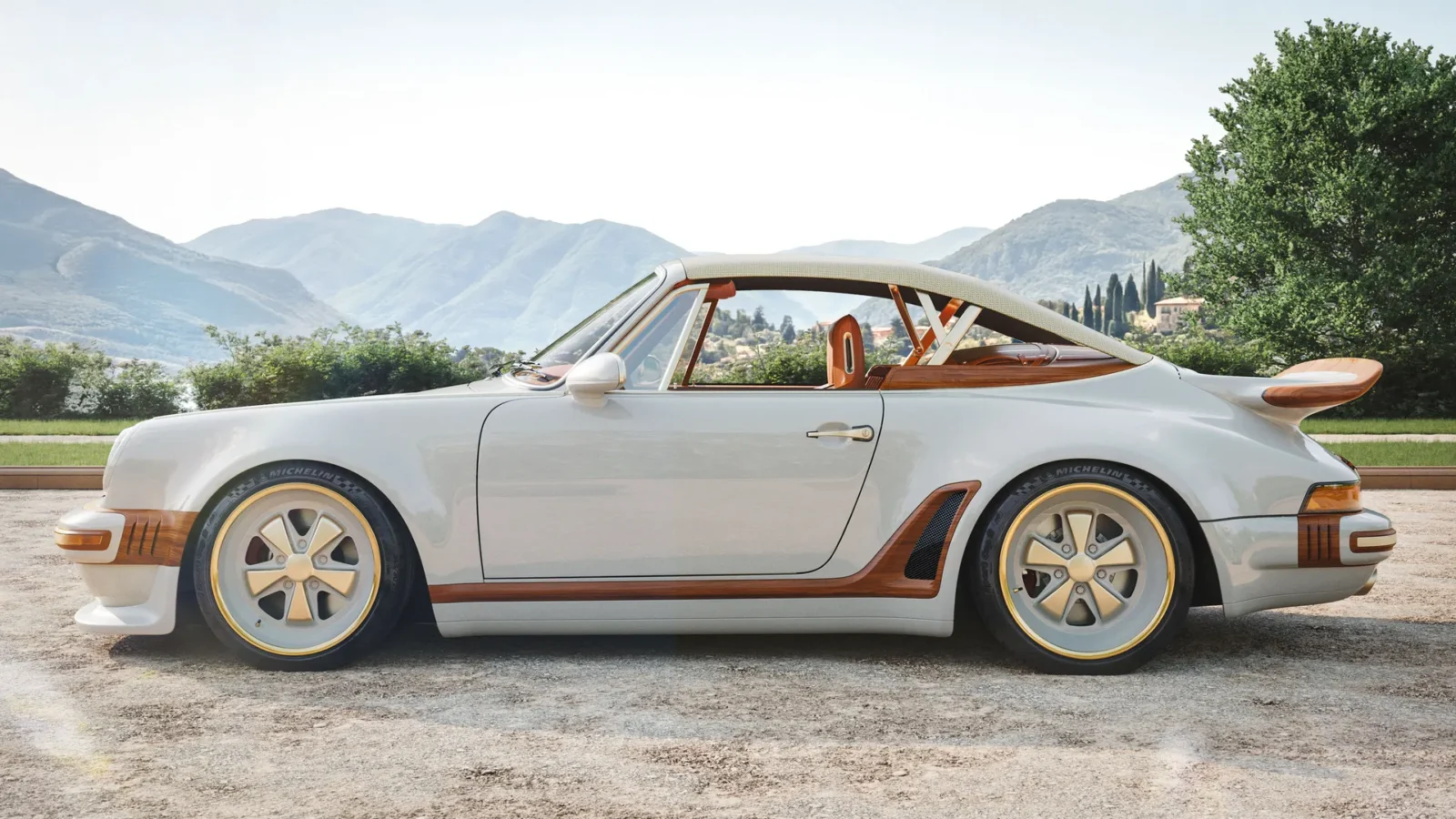
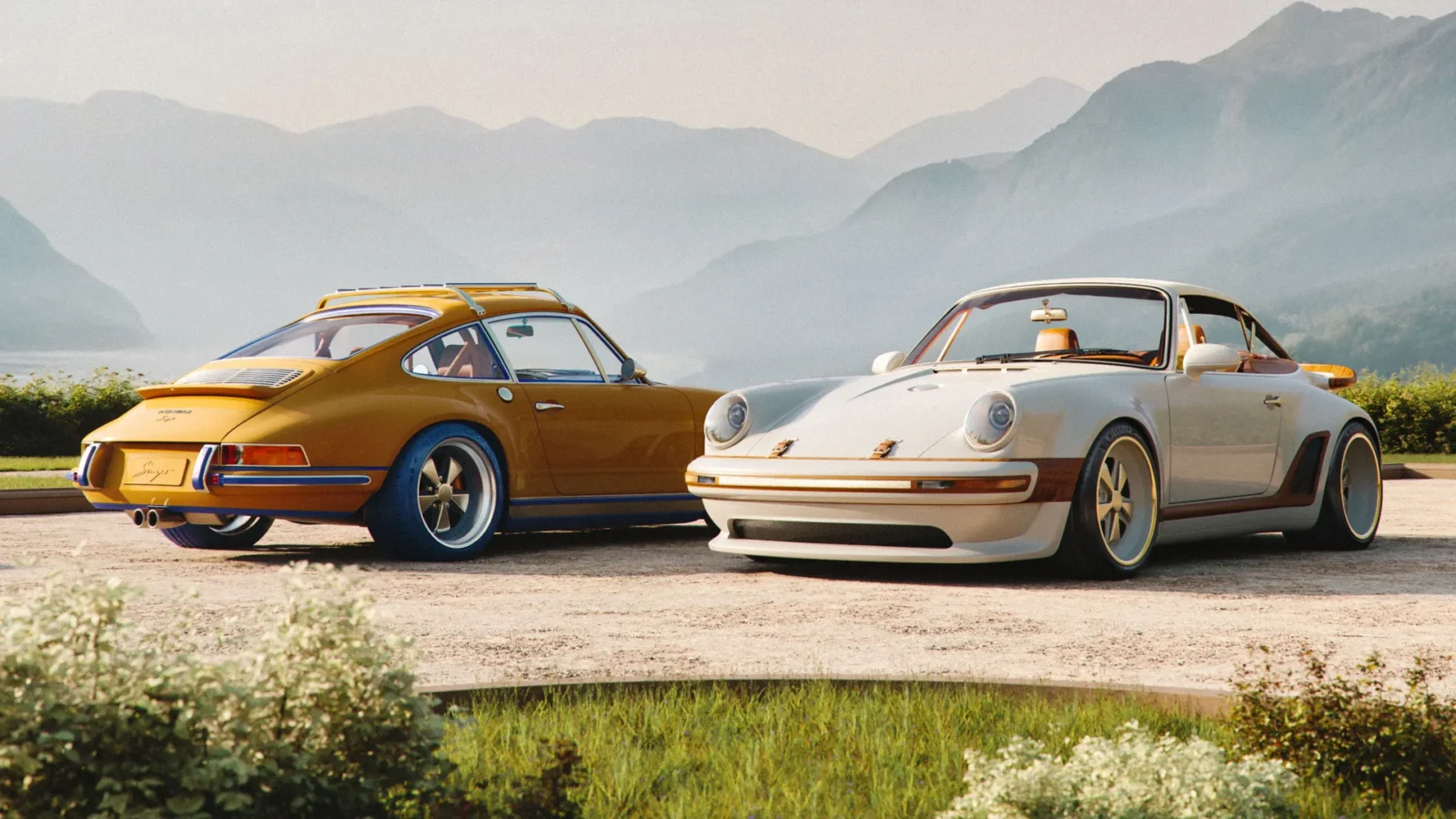
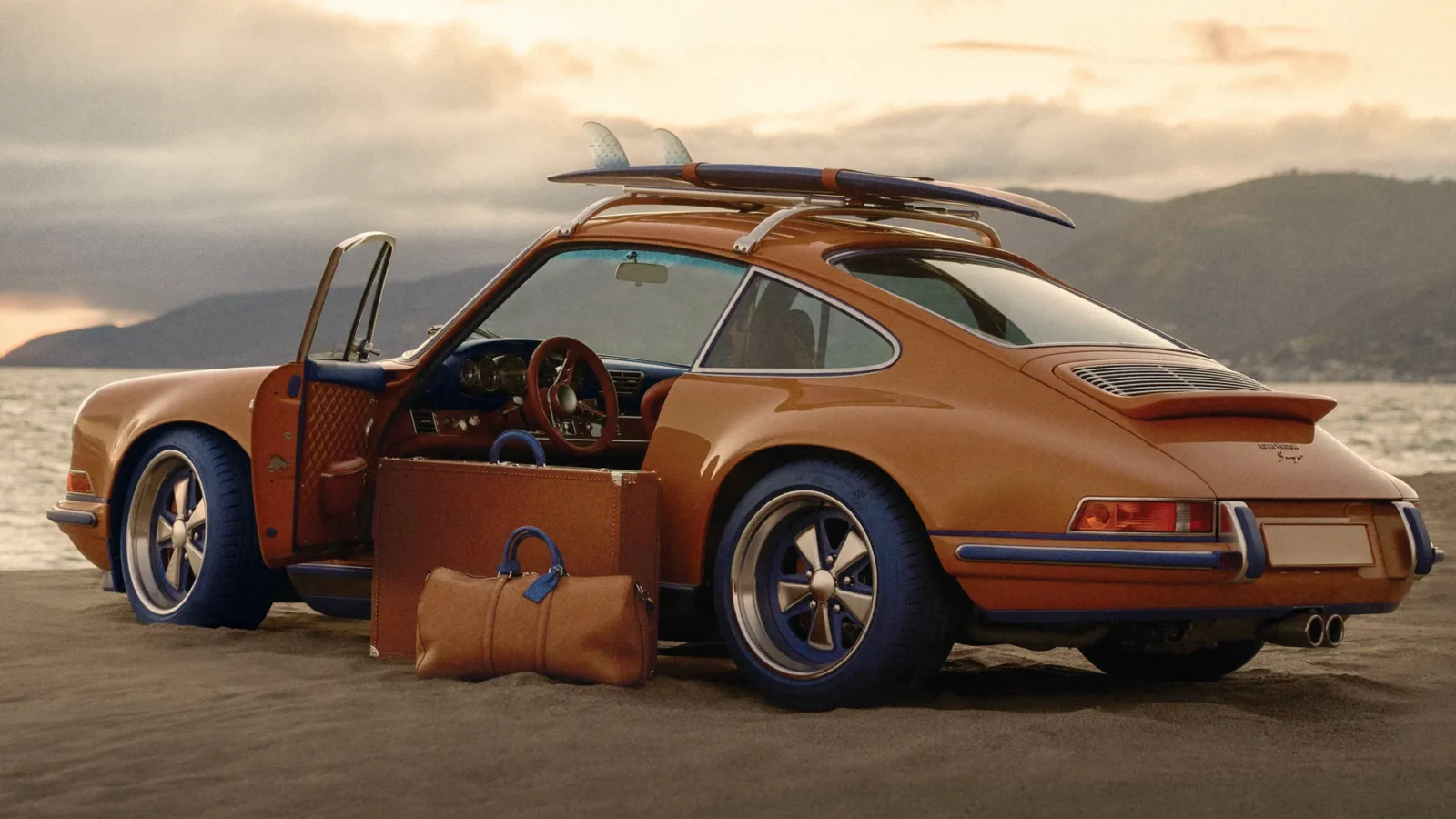
Two new Porsche 911s have hit the market, but they are not like any other you might have seen cruising the roads: a saffron coupé with a surfboard on its roof (Porsche 911 Reimagined by Singer – Classic) and a white cabriolet with a varnished wooden deck behind the seats (Porsche 911 Reimagined by Singer – Classic Turbo).
Both are Type 964 cars, the generation Porsche built between 1989 and 1994, and both were taken apart and put back together by Singer, the Californian company that rebuilds classic 911s to each owner’s specification. The final looks actually came from Louis Vuitton, which supplied the colours, the leather, the metalwork and the instruments.
Both are one-off commissions that will not be repeated for other clients, with the coupé having been assembled in Singer’s California workshop and the cabriolet at its facility in England. In 172 years, Louis Vuitton had never put its name on a product alongside another company’s, and neither had Singer.
The clock that started it all
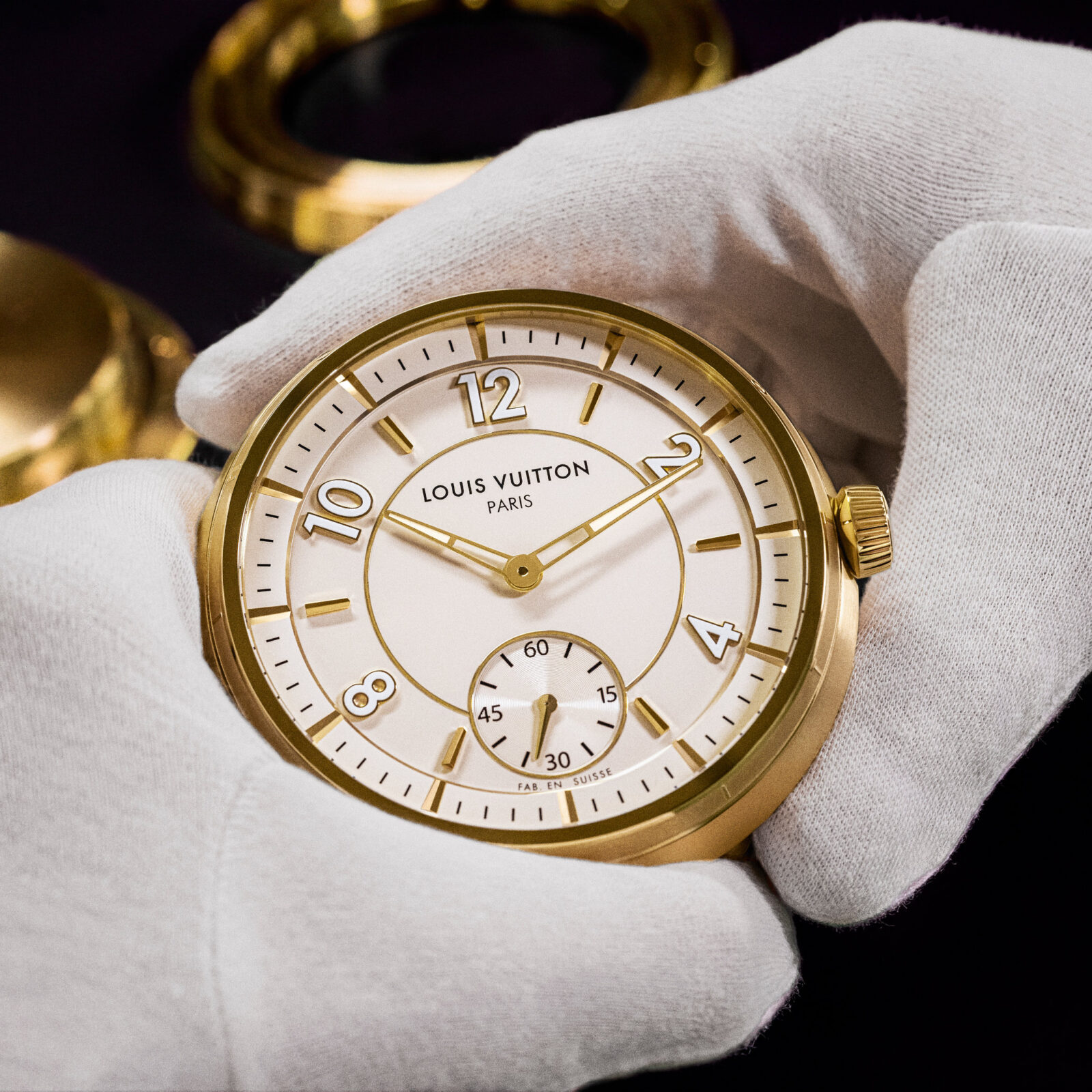
The project began when Singer asked Louis Vuitton for a clock to sit in the dashboard of a car it was rebuilding. What arrived was a small mechanical timepiece made by La Fabrique du Temps Louis Vuitton, the house’s watch workshop in Geneva, built so that it could be unclipped from the car and stand on a desk. Its shape comes from the Tambour, the drum-cased watch Louis Vuitton has made since 2002, and twelve letters, each polished and engraved, spell the company name around the bezel.
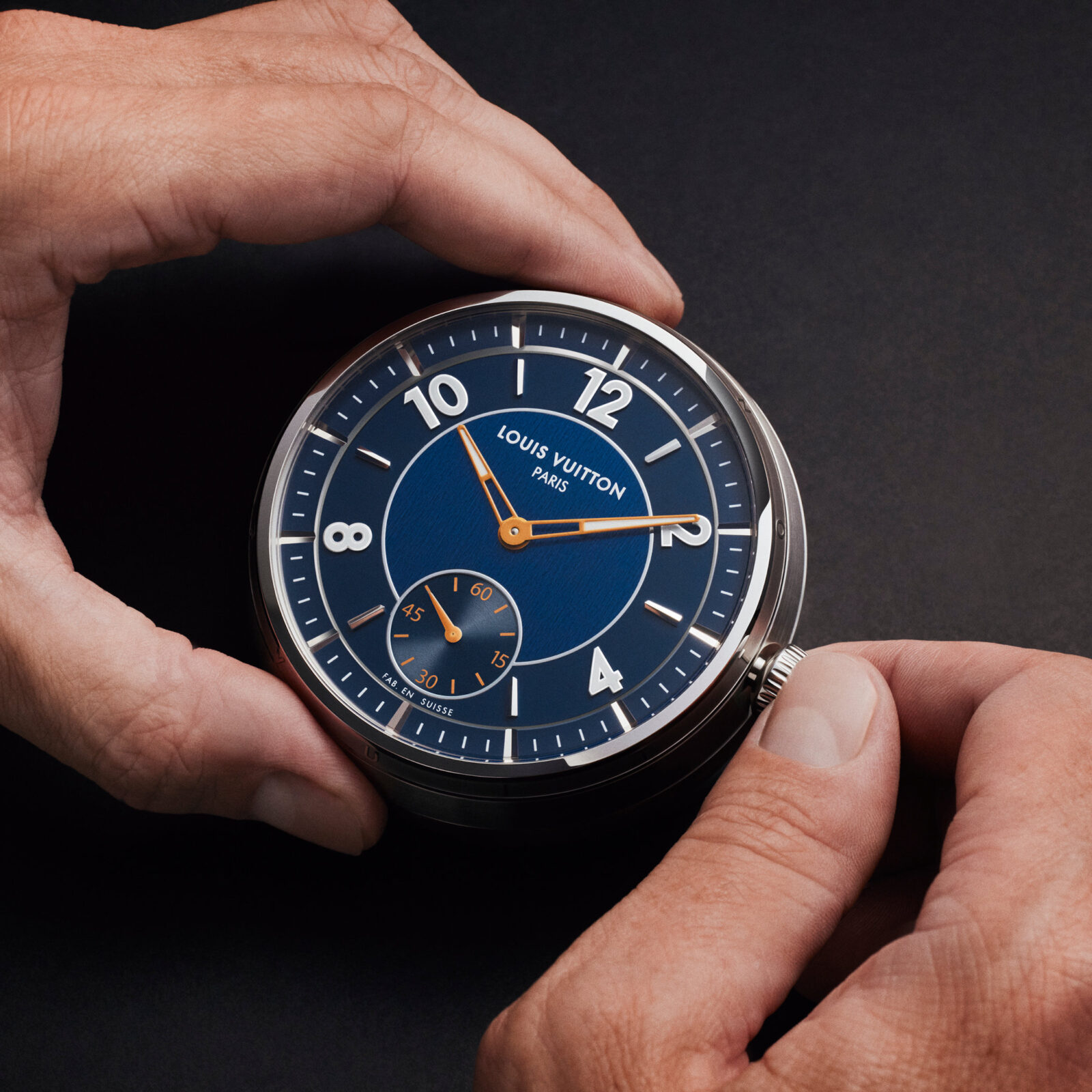
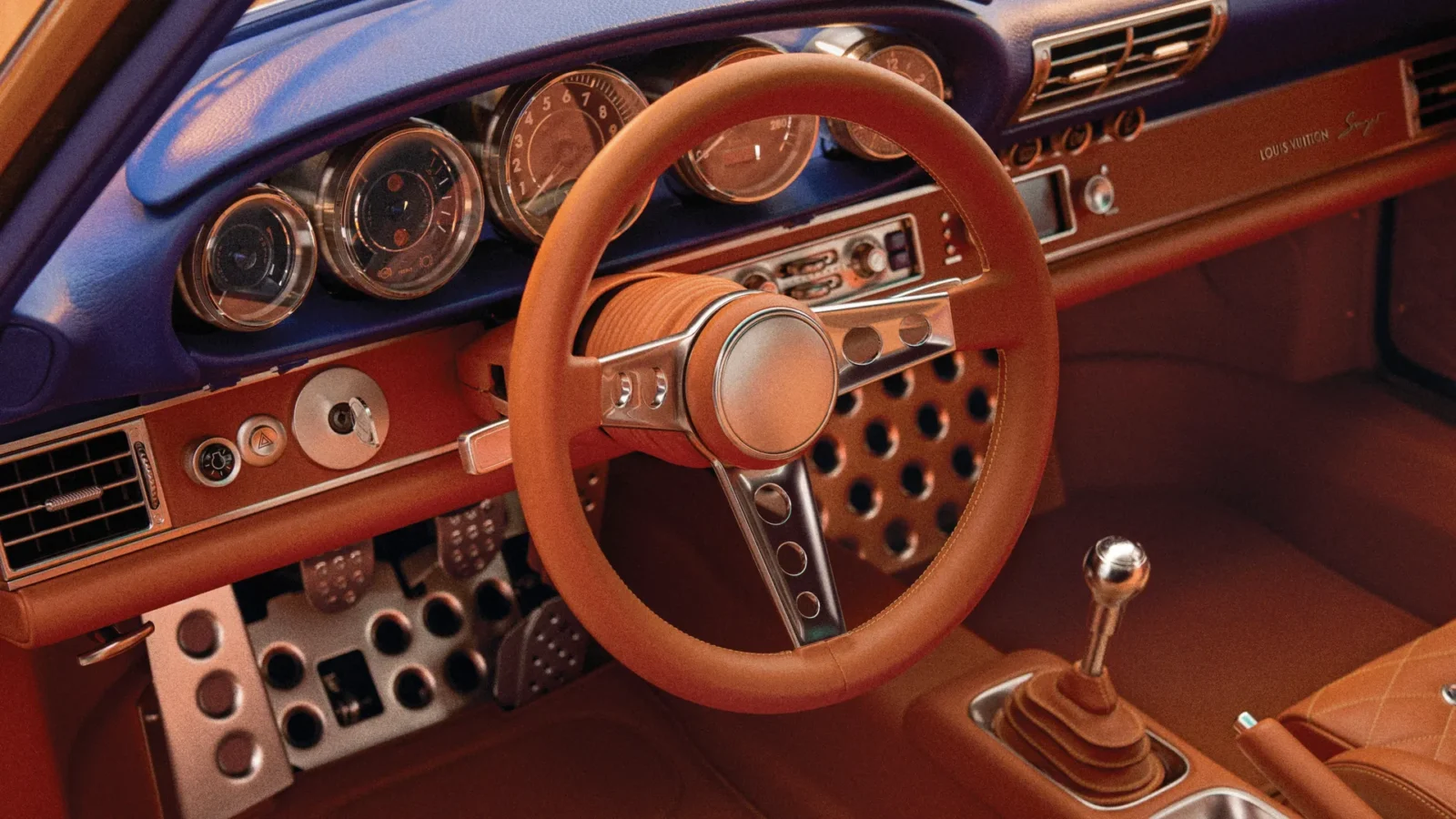
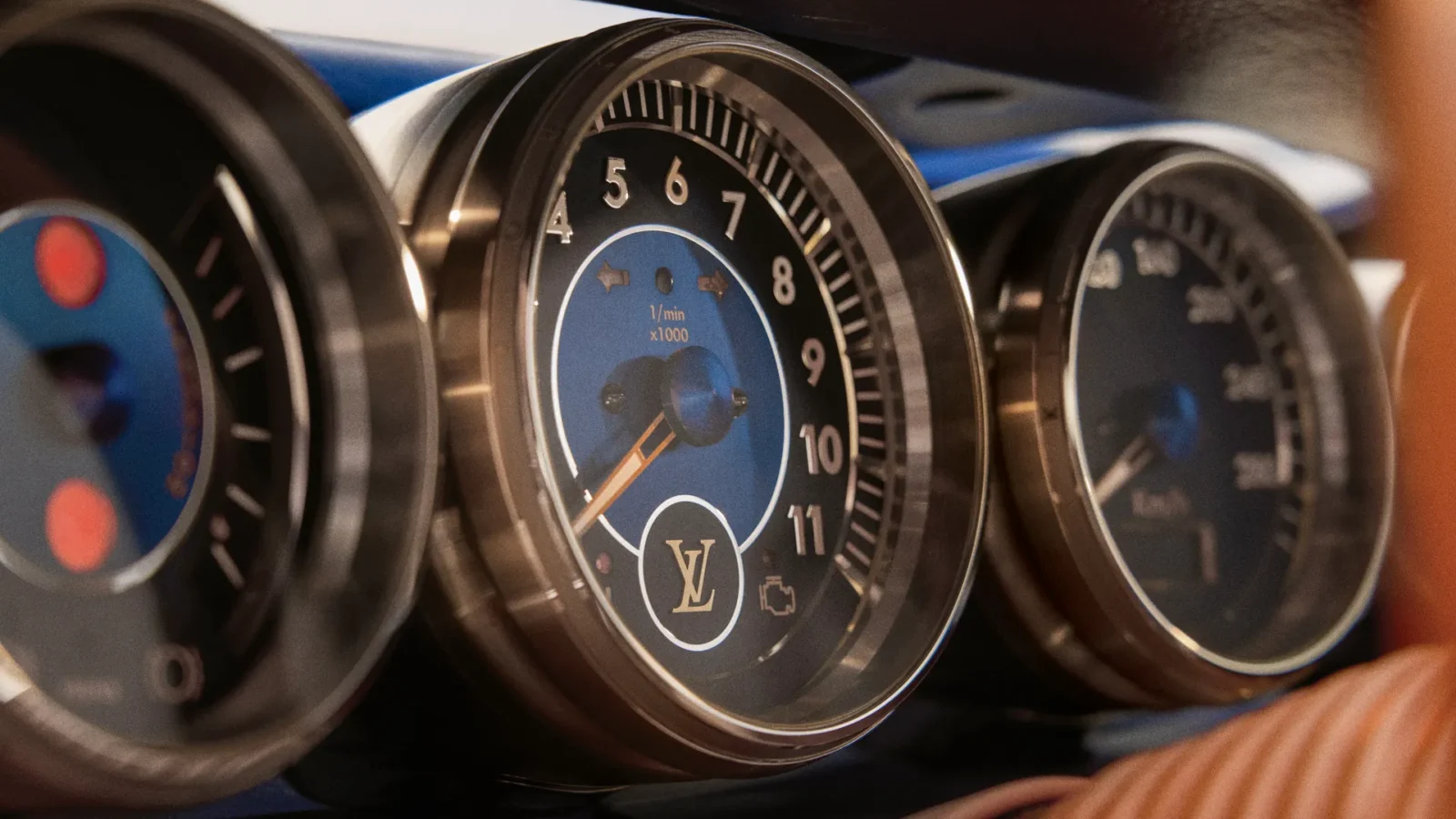
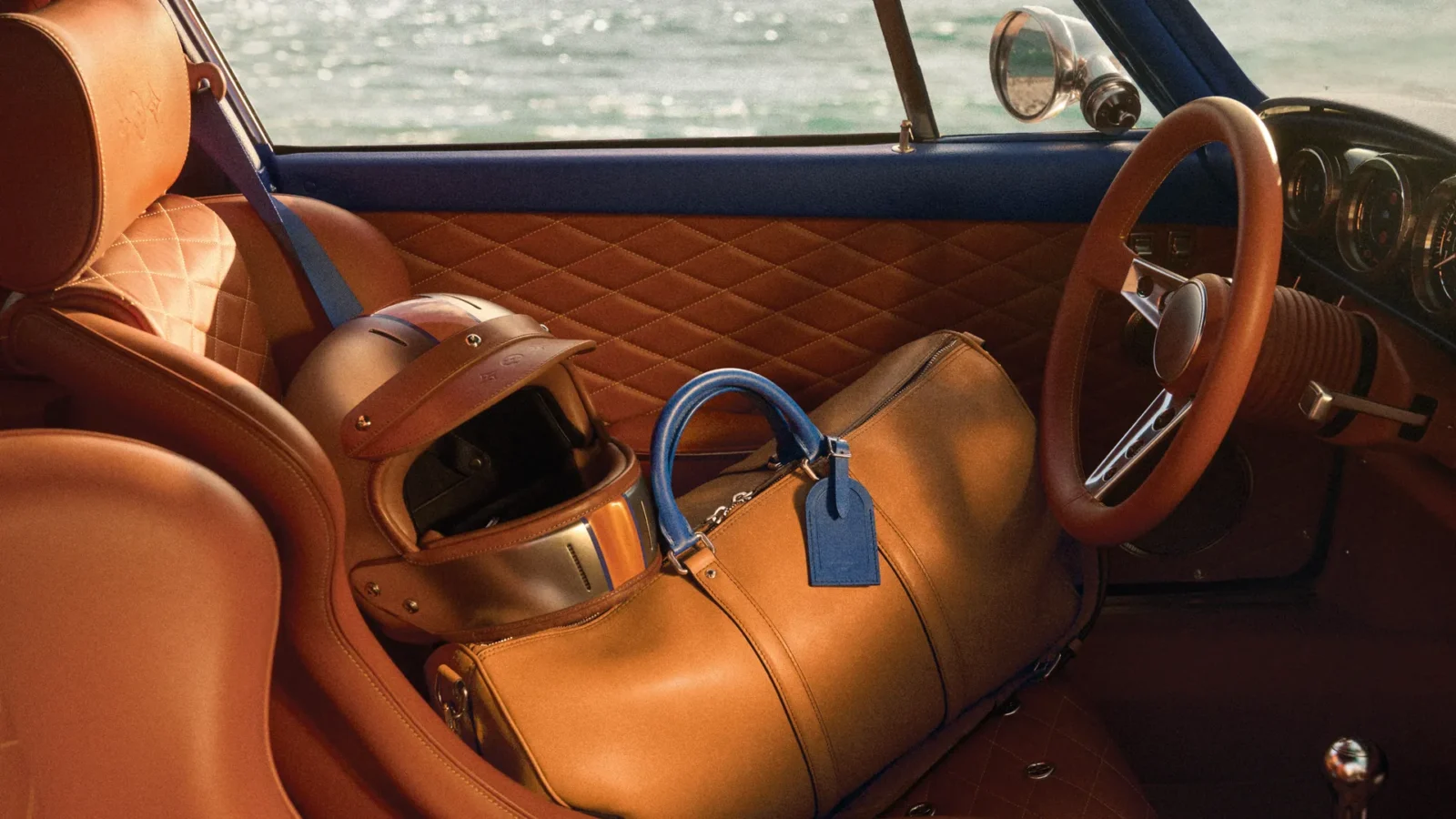
Once the clock was fitted, the house decided that the instruments behind the steering wheel had to match it, and that took a year of work. The speedometer, the rev counter and all the gauges were redrawn with the hands, the index markings and the dial edges used on Tambour watches. Their faces are cobalt blue with the lettering in bright orange.
“This unique and remarkable adventure began with a request for a dashboard clock for a car reimagined by Singer. In addition to the design and production of this clock by La Fabrique du Temps Louis Vuitton workshops in Switzerland, it quickly became apparent to us that this collaboration with Singer could extend to the personalisation of every functional element of the vehicle.”
Jean Arnault, Louis Vuitton Watch Director
The saffron coupé
Luxury starts on the coat
The colour “saffron” has been in the Louis Vuitton archives for more than a century and a half, and it has covered the company’s boxes and bags for the past twenty years. It is also quite similar to Bahama Yellow, the warm Porsche paint offered on the 911 between 1966 and 1970 and a favourite on Singer’s earliest cars. The cobalt blue comes from the travel trunks Louis Vuitton built for Citroën in 1924, which already used cobalt reinforcements inside. The bright yellow of the saddle stitching on the house’s luggage completes the three colours.
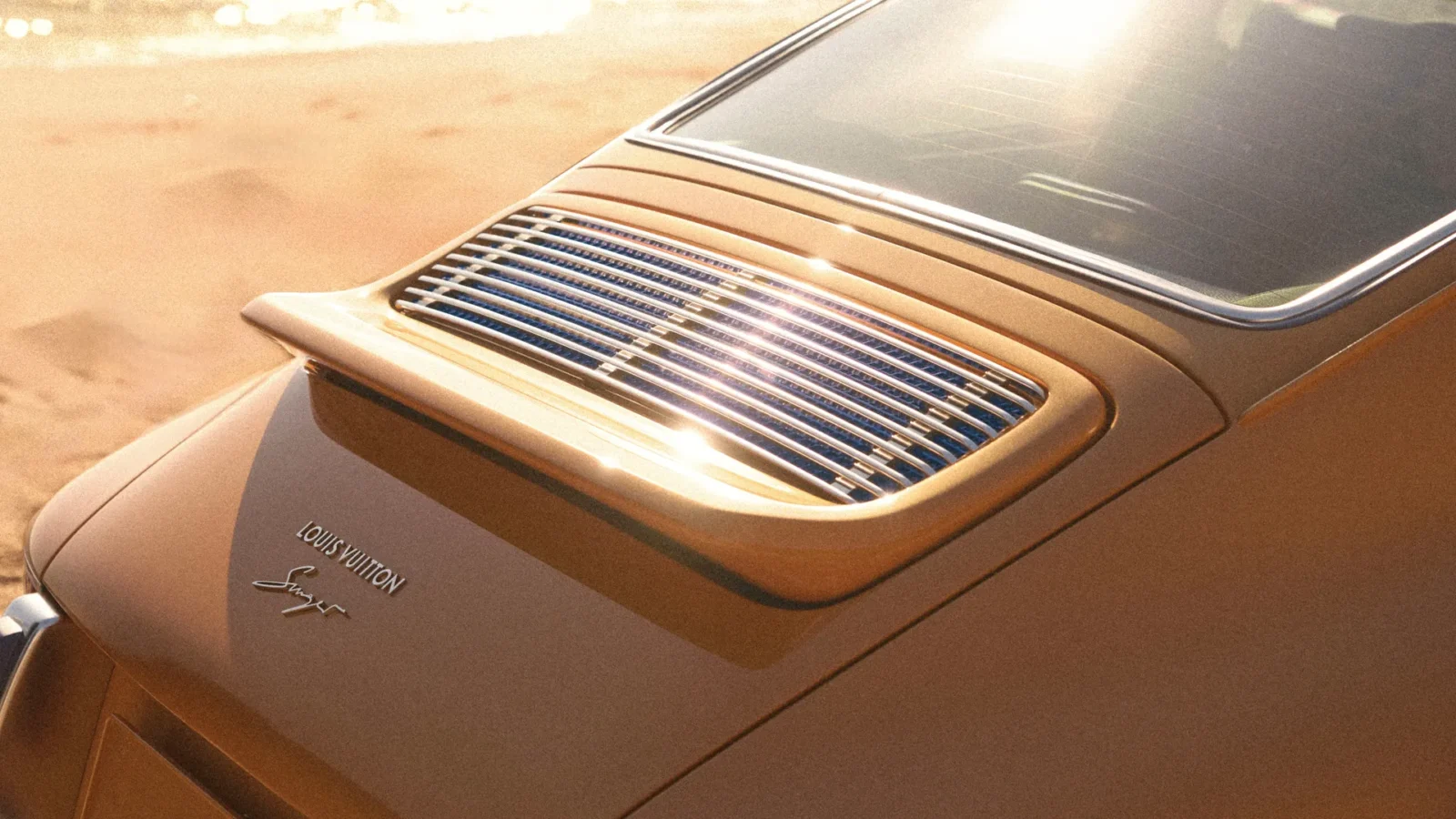
Painting a car in a maker’s colours is an old habit in motor sport, going back to the 1900 Gordon Bennett Cup, which gave each competing nation its own shade. Here, however, that reference is not as obvious – depending on the onlooker, of course. The tyres fitted for display are cobalt blue, taken from the handles and ribbons on Louis Vuitton packaging, and the grille over the rear engine air intake hides a pattern built from the letters L and V. A rear wing rises out of the body once the car is moving fast enough. The roof rack, to top it off, can fit a trunk and a surfboard or a pair of skis, having been made specifically to only be used in this car.
Once inside the coupé
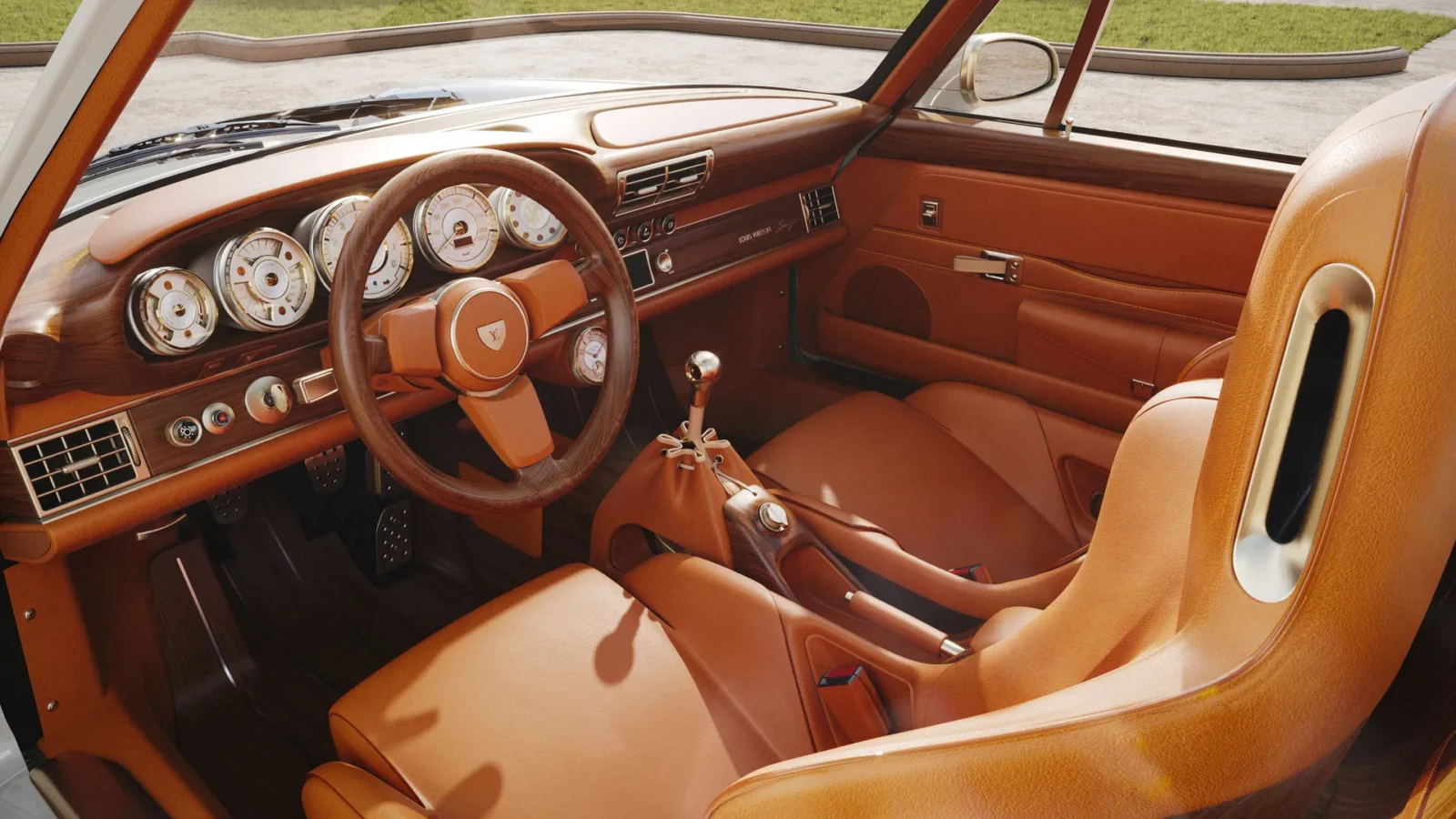
The cabin is lined in leather in the natural tone of VVT, which Louis Vuitton uses for the handles and shoulder straps of its luggage and for the trims and labels of its coated canvas bags. The house’s artisans picked the hide and the colour for the seats to complement it, with Singer’s own team having done the cutting and stitching in the car. Where the leather around the door handles has been cut, the raw edge is sealed and painted by hand, which is the finishing Louis Vuitton gives to the edges of its bags. The seams next to it are sewn in yellow thread.
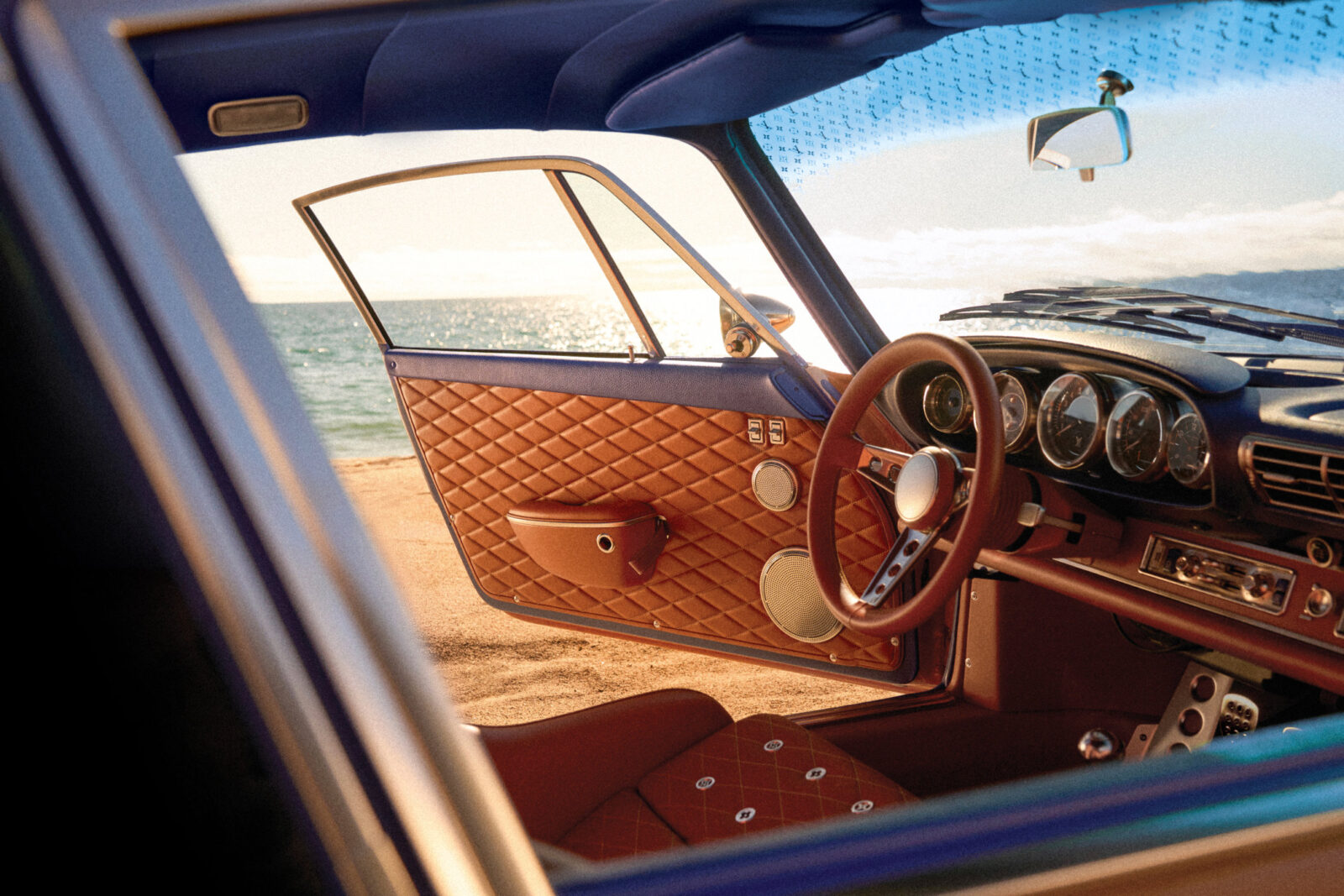
The seats, the front boot lining and the rear engine compartment are embossed with the diamond pattern known as malletage, which is the padding found inside the house’s trunks. Each ventilation eyelet in the seats was made and finished by hand in the shape of the Monogram flower, with the same flower appearing on the sun visor and on the headrests.
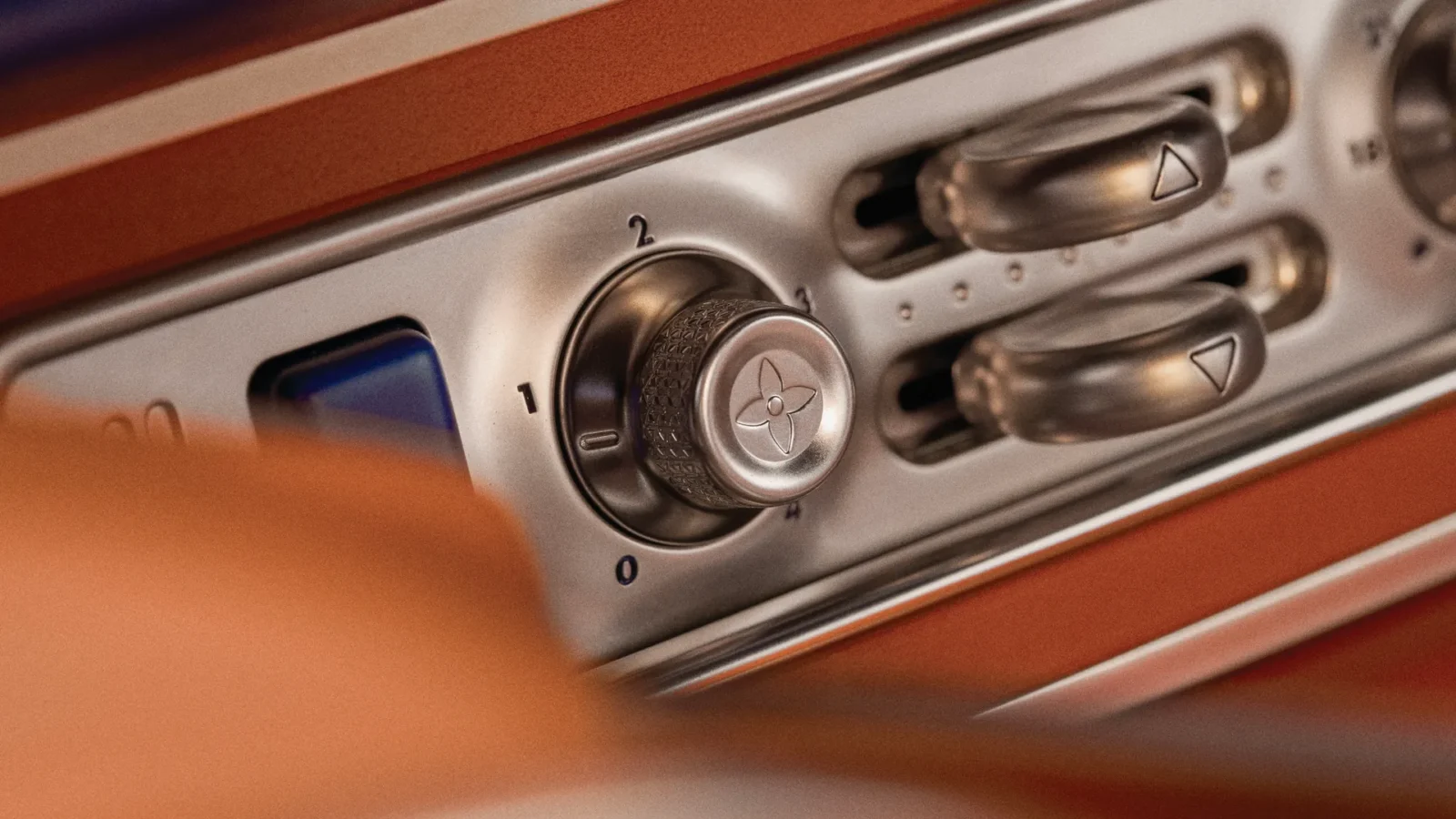
Everywhere a normal car would use moulded plastic, this one uses metal. The knobs, switches, locks, pull-tabs and air vents were all made in metal and mostly plated in rhodium, then finished by hand with the polishing and satin brushing used on watch cases. Their colours were achieved through anodising and electroplating, both processes that change the surface of the metal electrically without covering it in paint. Even the fuel and oil caps were engraved in the typeface Louis Vuitton uses on its watch parts.
“Every transition between materials, every metallic reflection, every knurled surface, every mechanical interaction and every graphic element has been meticulously considered, often at an almost microscopic level.”
Octave Chany, Project Lead Designer at Singer
The white cabriolet
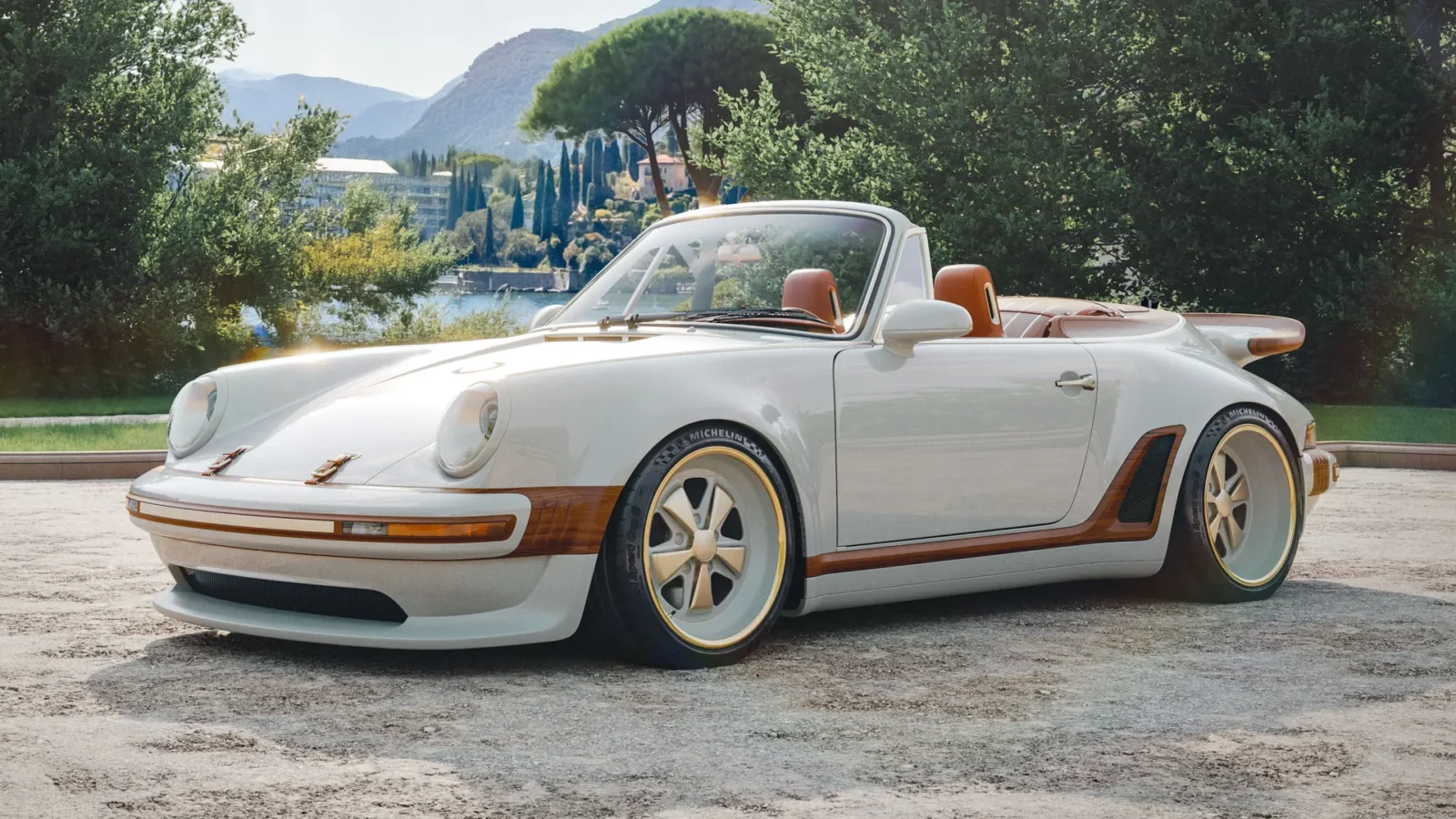
The second car came from Nicolas Ghesquière, Artistic Director of Women’s Collections at Louis Vuitton, who wanted an open car with the roof down and the sun as cover. Its white is called Calcaire Lutétien, after the Lutetian limestone quarried around Paris and used for the Louvre and much of the city, including the company’s own head office beside the Pont Neuf. Brown and gold appear in small amounts against the white. Above the engine is a flat, raised wing known as a whale tail, the shape Porsche put on its first turbocharged 911s in the mid-1970s. It works by pushing the back of the car down onto the road as speed rises, which keeps the rear wheels gripping.
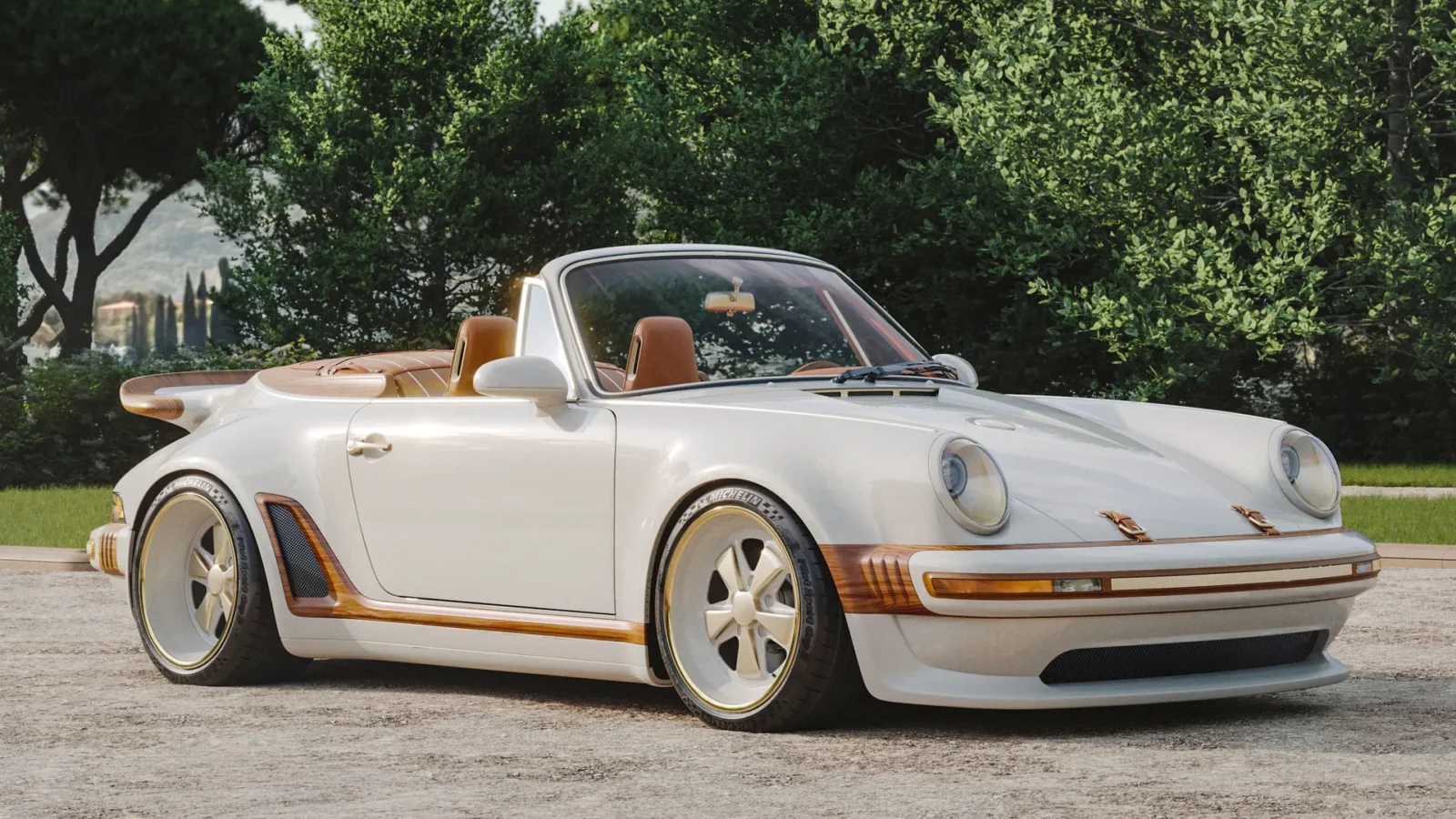
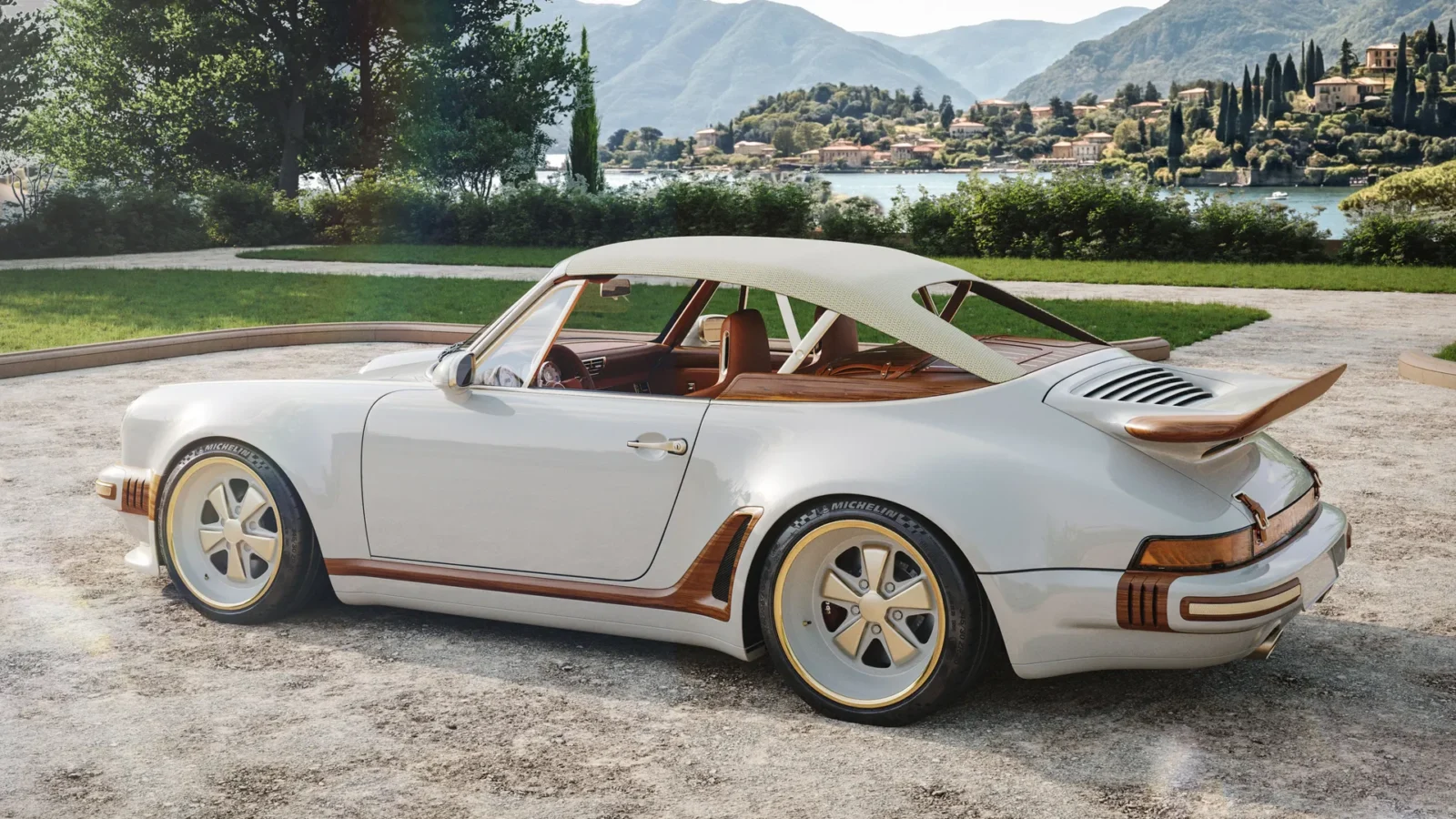
Ghesquière wanted the car to look like a wooden motorboat, hence the real wood used throughout: in the bumpers, which caused the designers and engineers a good deal of trouble; behind the seats, where a luggage compartment that opens from the rear is decked in varnished wood, laid the way the deck of a motorboat is laid; and in the panelling that lines the rear engine compartment and the front boot, where a trunk made of three separate boxes locks together into one.
“Automotive design is a passion that has always lived within me. My collaboration with Singer has been a chance to reconnect with this fascinating world: a magnificent opportunity to explore truly exceptional automobiles.”
Nicolas Ghesquière
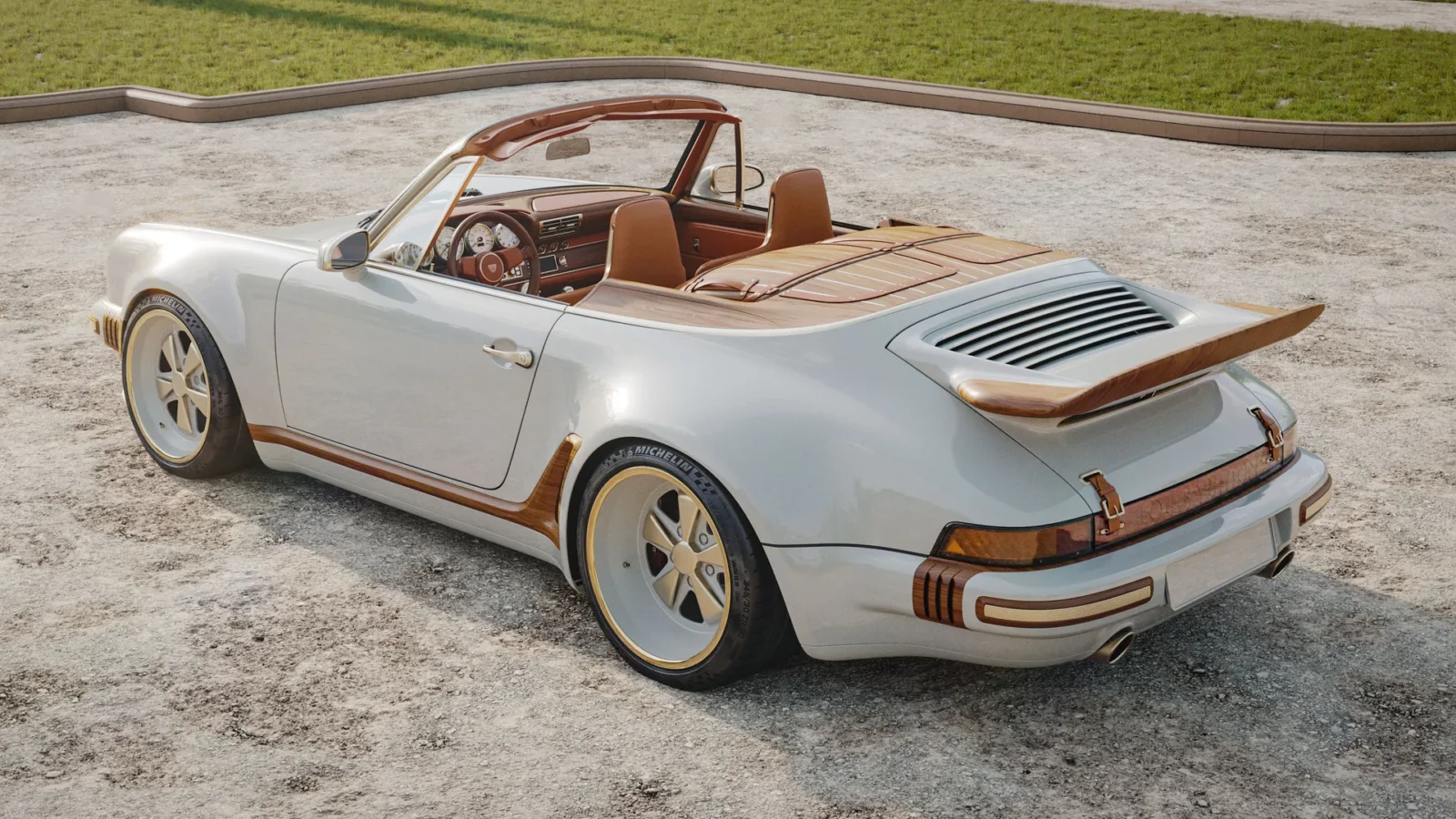
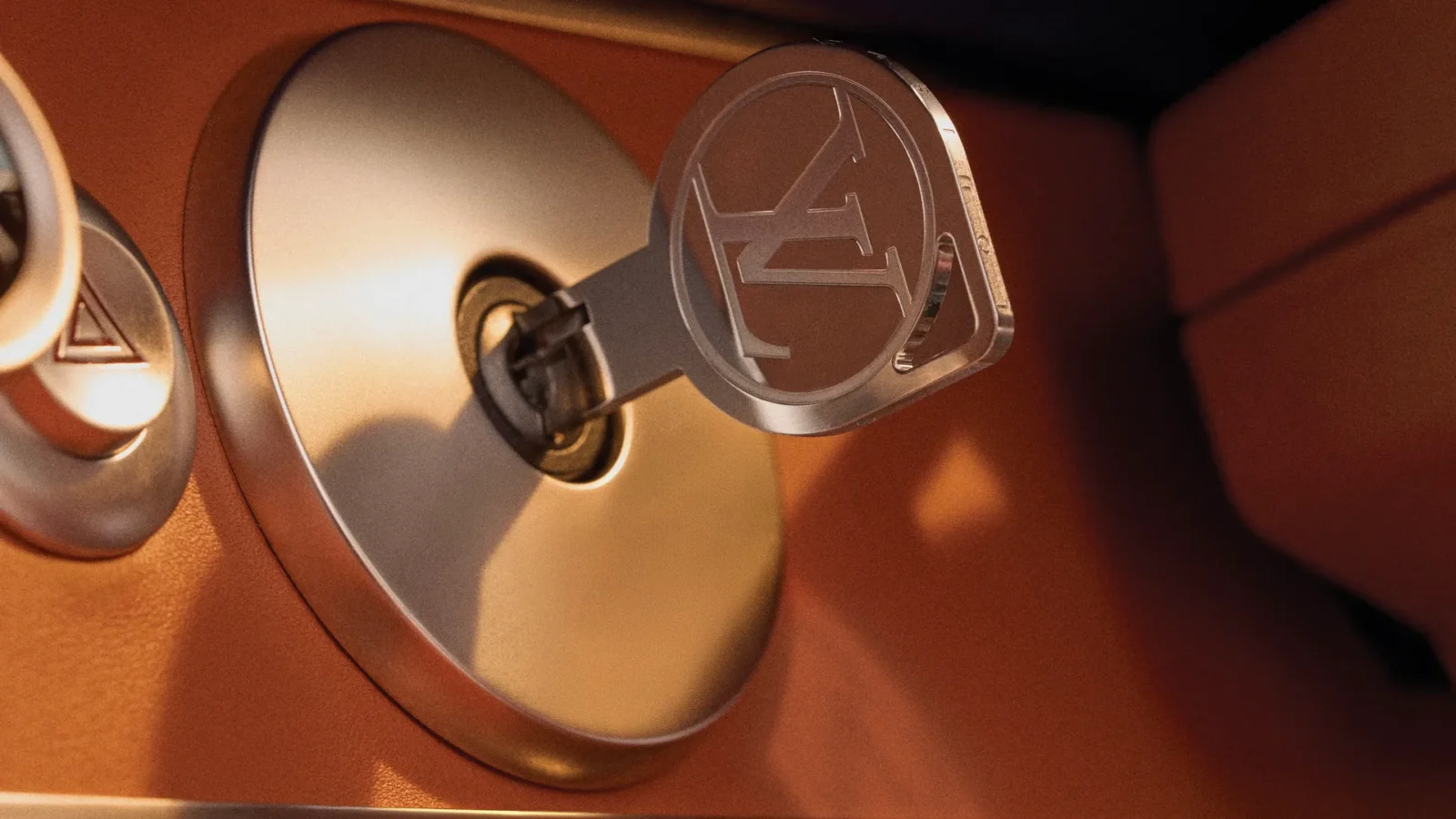
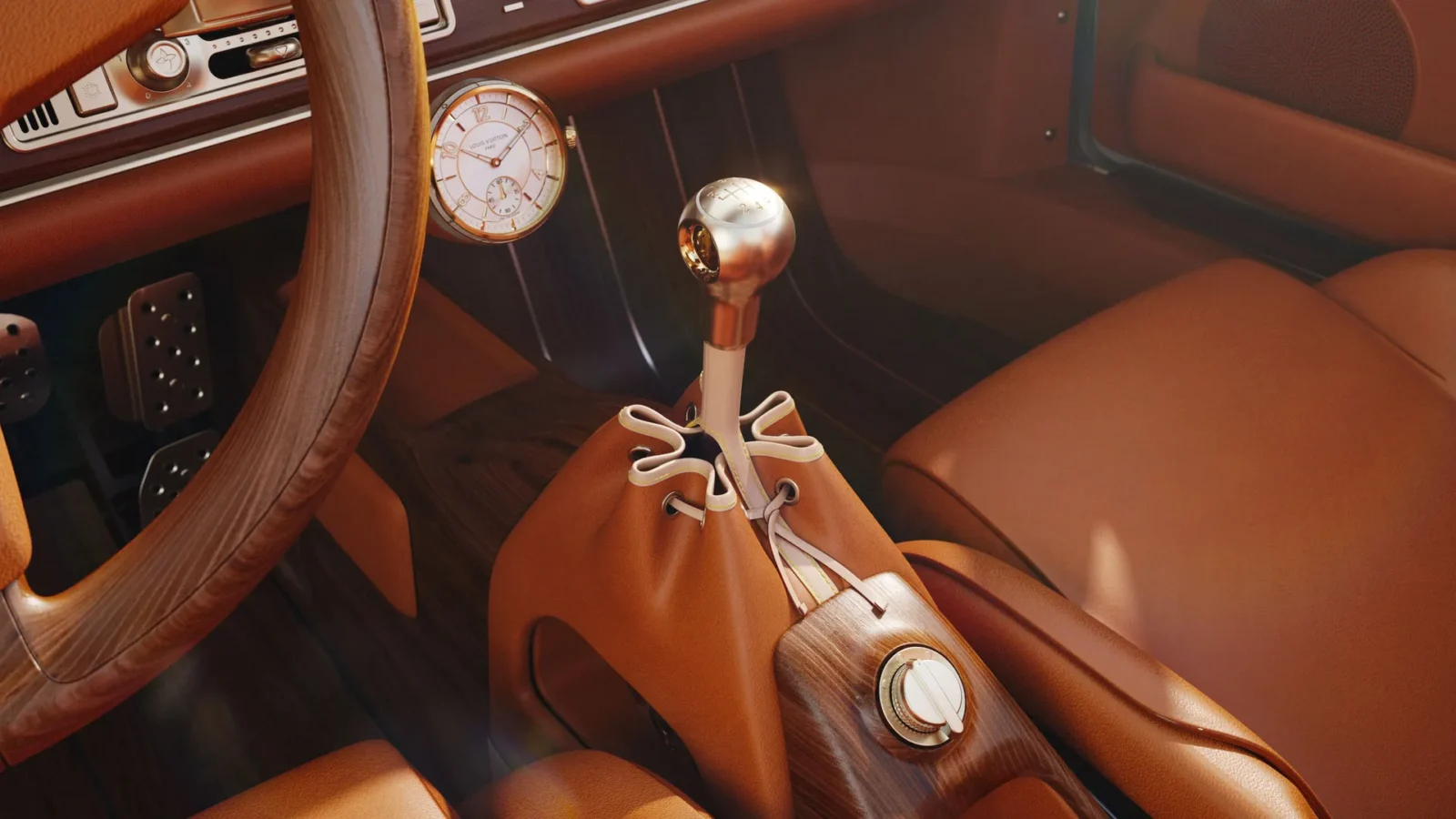
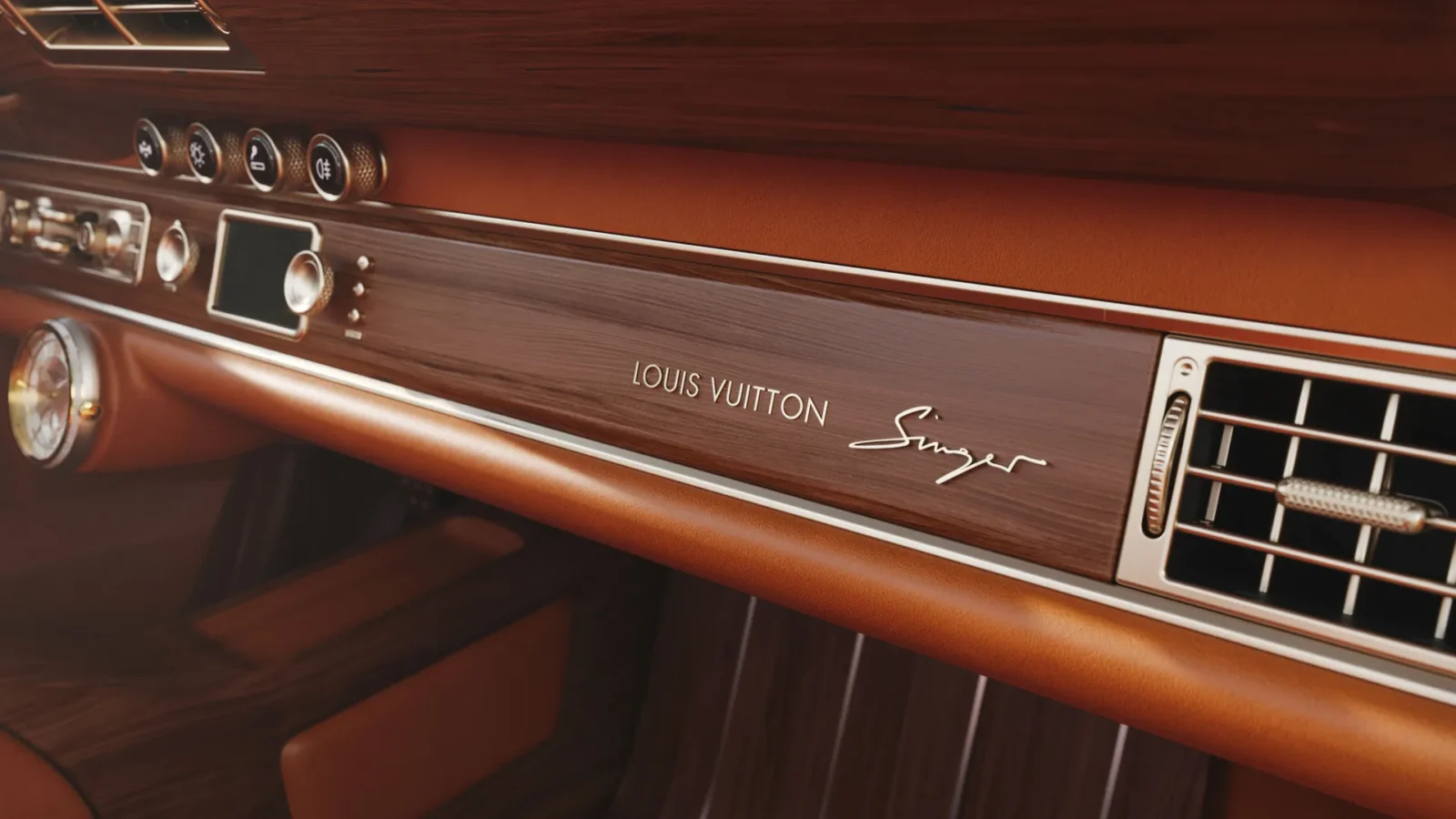
Inside, the dashboard clock has moved out of the instrument cluster and into the middle of the console. Its dial is painted the exact white of the bodywork, and the gauges around it are gold, with the ignition key to match. Beneath it, the gearshift trim is finished with a natural leather drawstring taken from the Noé bag, and the steering wheel is dressed in a leather patch, a detail Ghesquière puts in his own collections. The Louis Vuitton signature is on the dashboard, and it shows up again after dark inside the tail lamps. Leather straps with pin buckles hold down the front and rear lids, a fastening that belongs equally to racing cars, trunks and watch straps.
Under the engine covers
The coupé’s engine is a 4.0-litre flat-six, which means six cylinders laid flat in two rows of three, cooled by the air passing over them as Porsche engines were until the 1990s. It has no turbocharger, so its power comes from the size of the engine alone, reaching the rear wheels through a six-speed manual gearbox. The brakes are oversized carbon-ceramic discs, a racing part that copes with the heat of hard, repeated braking better than steel and weighs less.
The cabriolet has a 3.8-litre flat-six with two turbochargers, which are small turbines spun by the exhaust gases to force extra air into the cylinders and raise the power. Compressing that air heats it up, so it passes through a water-cooled intercooler on its way in to bring the temperature back down. This car is also rear-wheel drive and manual, and the driver can switch between settings that change how it responds.
Both bodies are made of carbon fibre, a plastic stiffened with woven carbon threads that weighs less than steel, which is normal practice at Singer. Neither company has said how much power either engine produces.
The accessories that come with the cars
The coupé’s accessories
Louis Vuitton dressed the drivers as thoroughly as it dressed the cars. The coupé comes with a racing jacket in leather, closed by an LV zip pierced with small holes and set with three eyelets across the chest, each one shaped like the Monogram flower. The same flower is embroidered on the silk lining, where only the wearer will see it. With the jacket, the brand chose straight-cut jeans in a heavy denim woven from cotton and silk, washed to look worn in and fastened with an engraved button in aged gold.
The drivers have two shoes to choose from: the LV Rally, a driving shoe with small rubber pads across the sole, and the LV Remix Derby, a lace-up shoe that looks like a hiking boot, with a deep blue leather key holder hanging from it. Then there are driving gloves pierced with small holes, which come in natural leather or cobalt blue, and a helmet in an open-face design, made of carbon and glass fibre, trimmed in calfskin and fitted with a small peak held on by rivets.
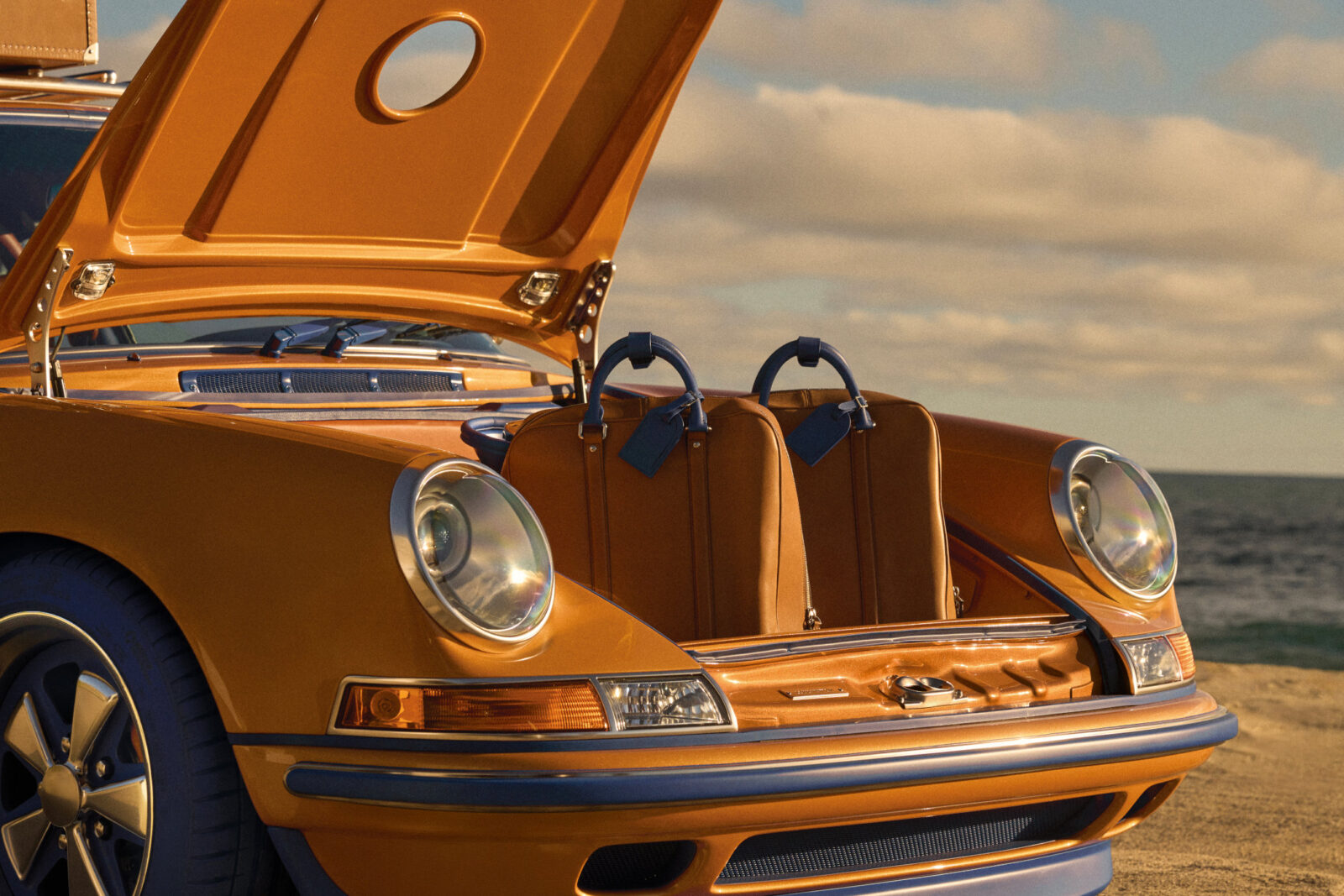
Each piece of luggage was made to fit the car:
- A helmet bag copied from a 1950s shape, with its metal fittings coloured to match the fuel cap.
- The Bisten, a flat suitcase Louis Vuitton has been making since 1892, which keeps clothes from creasing.
- The Keepall, in the range since 1930, which takes a week’s worth of clothes.
- Two more bags shaped to fill the nose of the car exactly.
- A folder that holds six keys.
- A blue key holder in the house, which can hang from a bag or be worn around the neck.
- A case for the car’s papers, copied from a 1950s office sleeve, with a zipped slot for a pen.
The surfboard on the roof was made by hand in Angers, then sent to the Atlantic coast to be coated in resin and fitted with its fins. Its Monogram is inlaid in pale oak and walnut, each small piece of wood cut and fitted by hand, which took many hours. The skis were made in the French Alps from wood, steel and titanal, an aluminium alloy that makes a ski stiff without making it heavy.
The cabriolet’s accessories
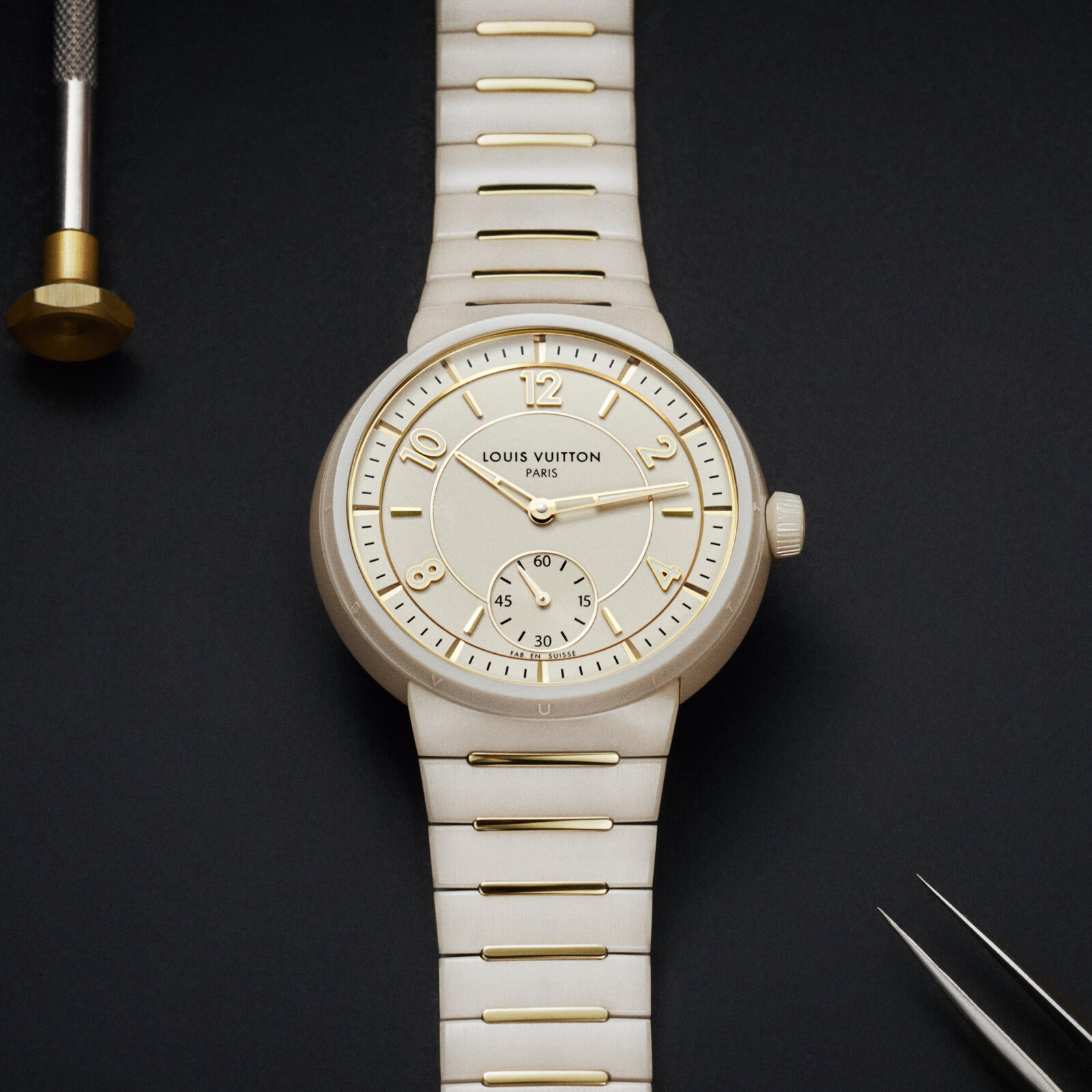
The pieces made for the cabriolet come in the same wood and gold as the car. The Tambour Automatic is a wristwatch in ceramic and yellow gold, forty millimetres across, with the same drum shape as the clock on the dashboard. The watch and the car clock each have their own Coffret Trésor, a case Georges Vuitton first made in 1896 and reissued here as a pair.
The driver’s suit is made to measure from parachute silk, with its seams standing out from the fabric in the shape of a V. The gloves are made of braided leather, closed with a press stud painted by hand with the Monogram. The sunglasses are gold and plastic, with a Monogram flower hidden behind one lens, and the helmet is varnished cream with a tan visor.
The bags made for the cabriolet are as follows:
- A garment bag that lies flat in the cabin, with a hanger and a name tag inside.
- The Cruiser, big enough for a pair of gloves and some sunglasses.
- The Alma and the Noé, whose drawstring the gearshift borrows.
- The Express, lined with the same diamond malletage as a trunk.
- A Petite Malle cut from a wood chosen to match the timber in the car.
- The three-part trunk in the front boot, which lifts out as three separate cases.
- The Keepall 45, with a protective cover that can be taken off.
- A flat case for the car’s documents.
Singer was the Central Feature Marque at this year’s Goodwood Festival of Speed, and while neither Singer nor Louis Vuitton would say what these two cost, a standard commission from the former company starts at almost half a million dollars.