



Header: Sali Chigvaria
Moono is a pendant light designed in Tbilisi by the Georgian studio SHRE, with Iva Mazmanishvili as lead designer, that was launched in 2025 and went on to win the LIT Lighting Design Award in the “Pendant Lighting” category. The studio frames the object as part of a minimalist, craft-driven design approach coming out of Georgia, revealing it is the result of two years of technical and material research.
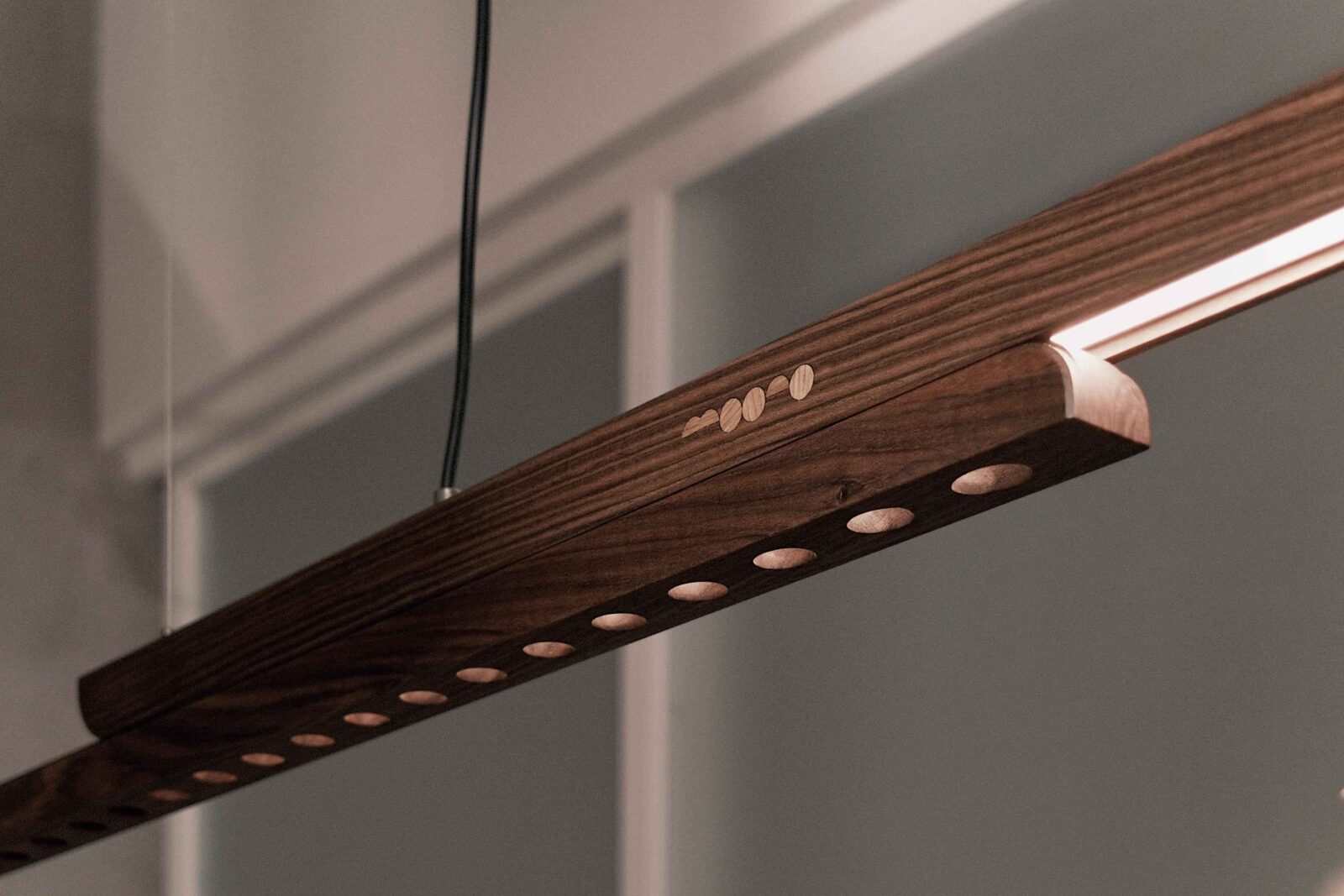
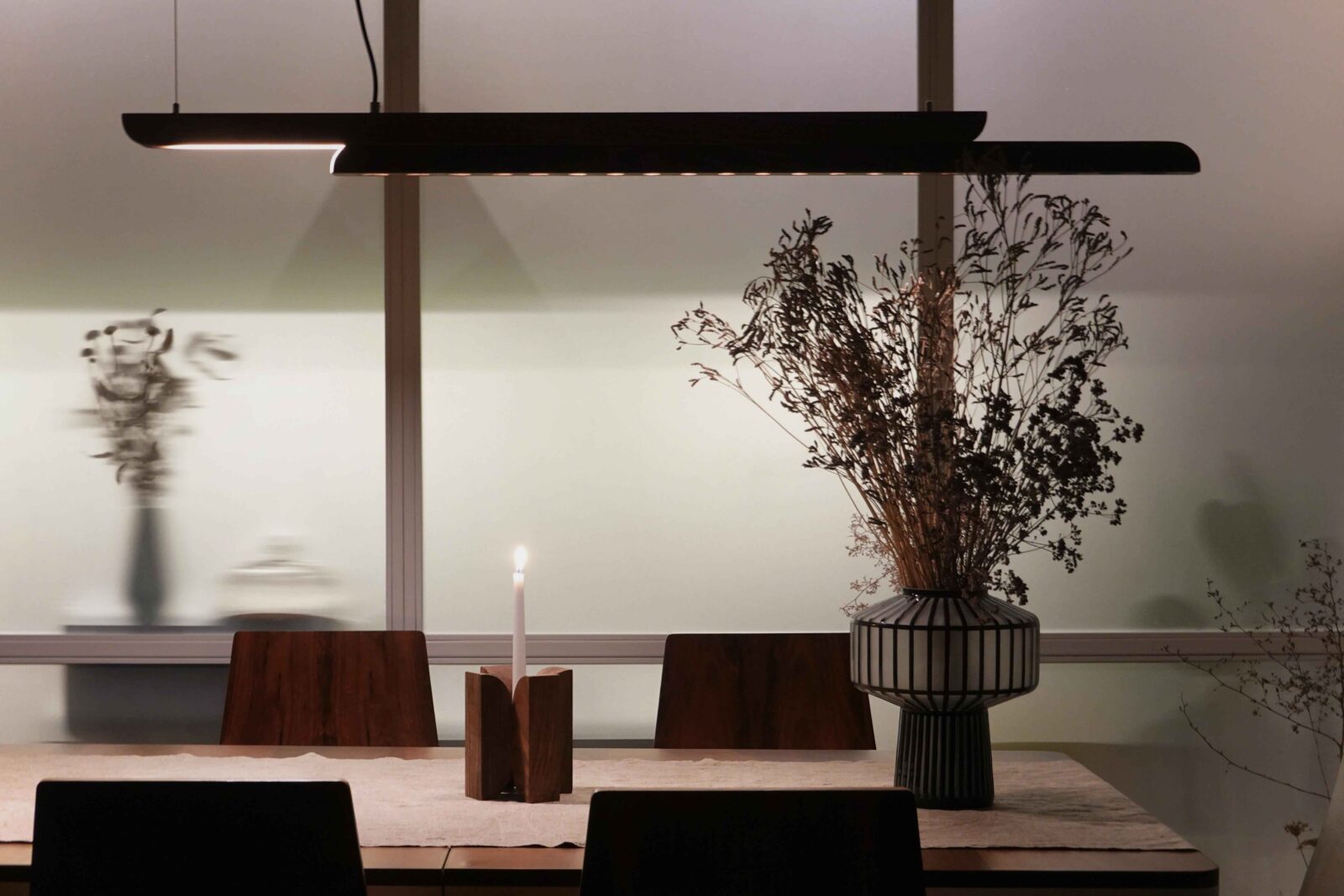
The Moon and its phases
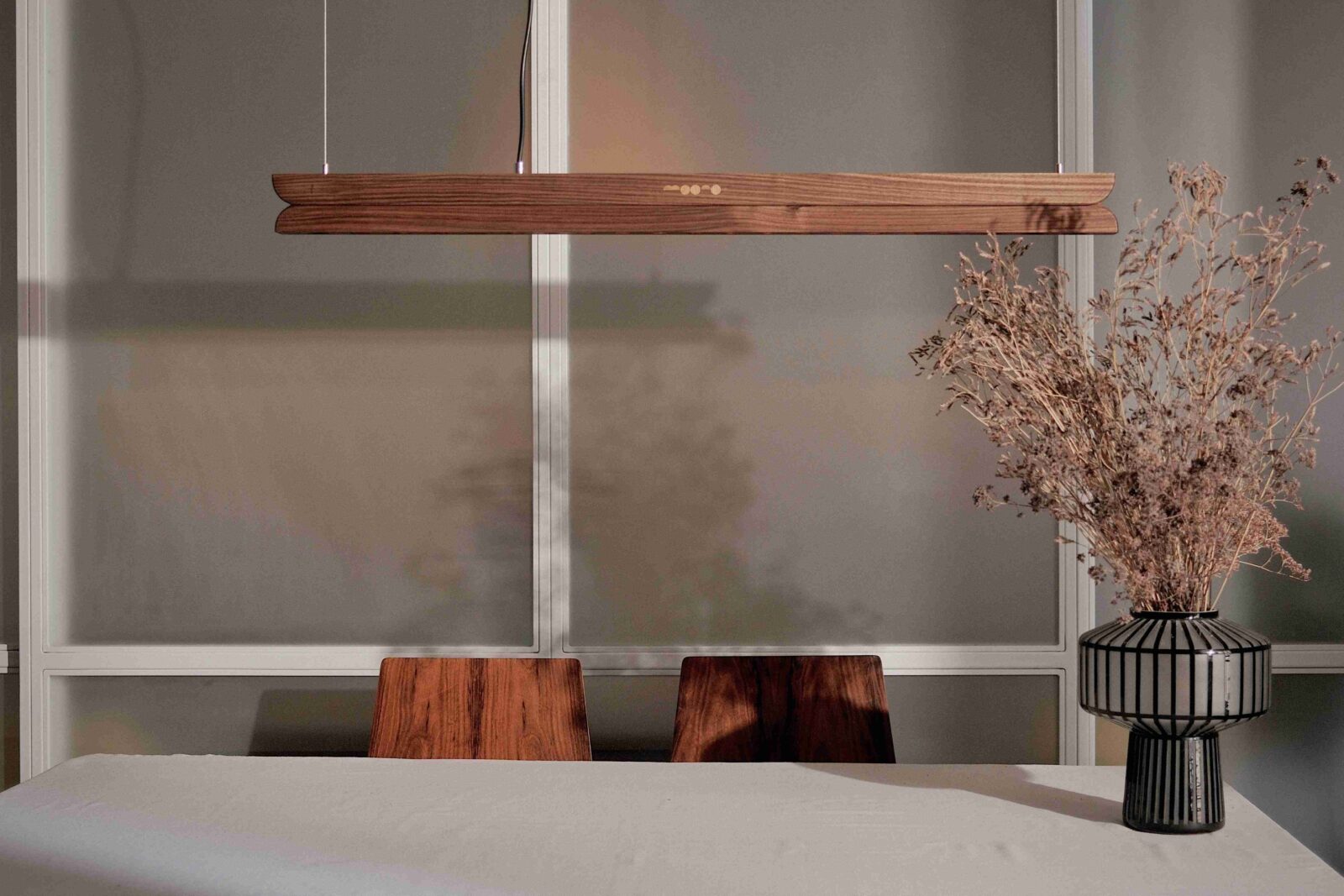
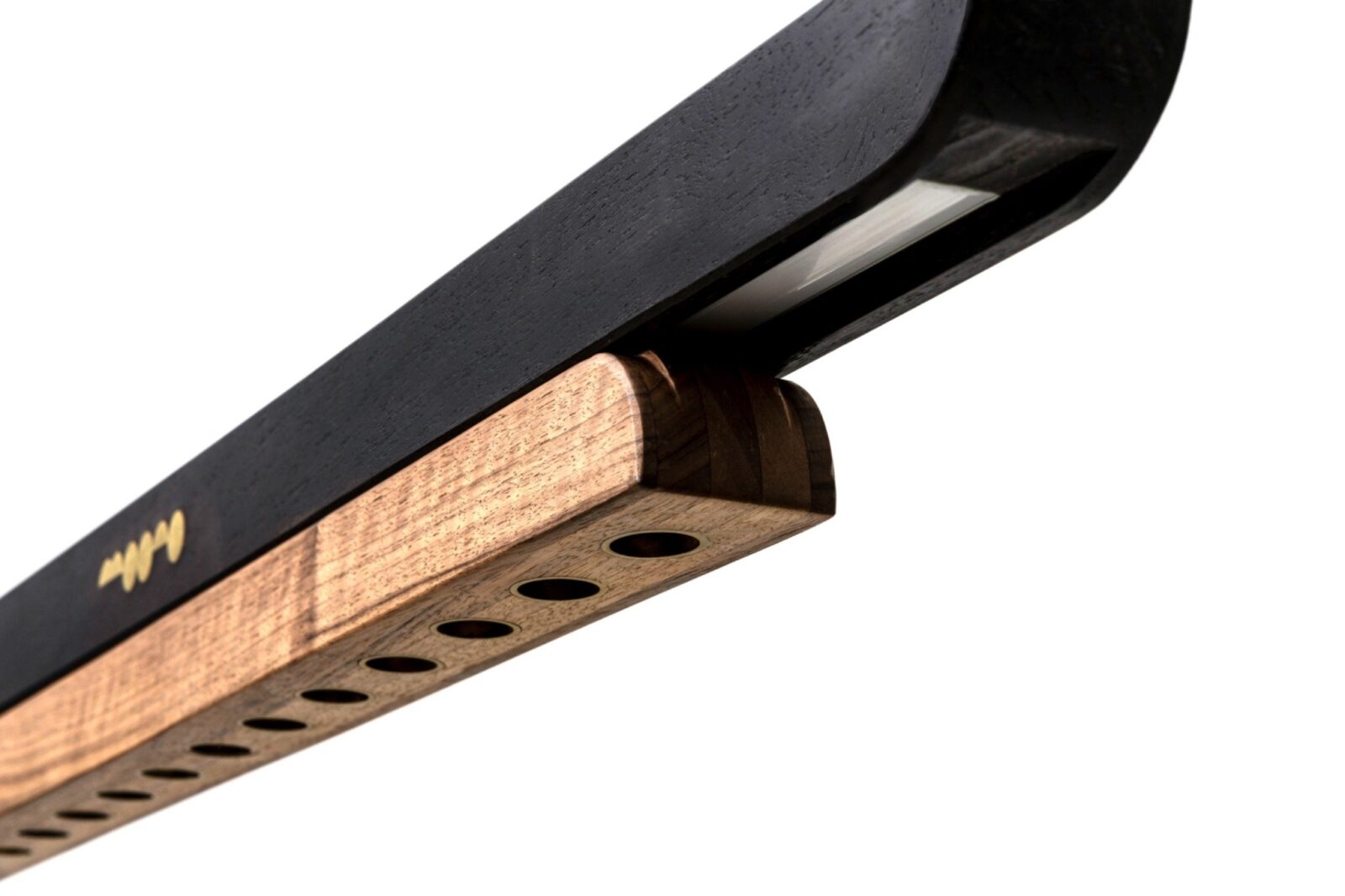
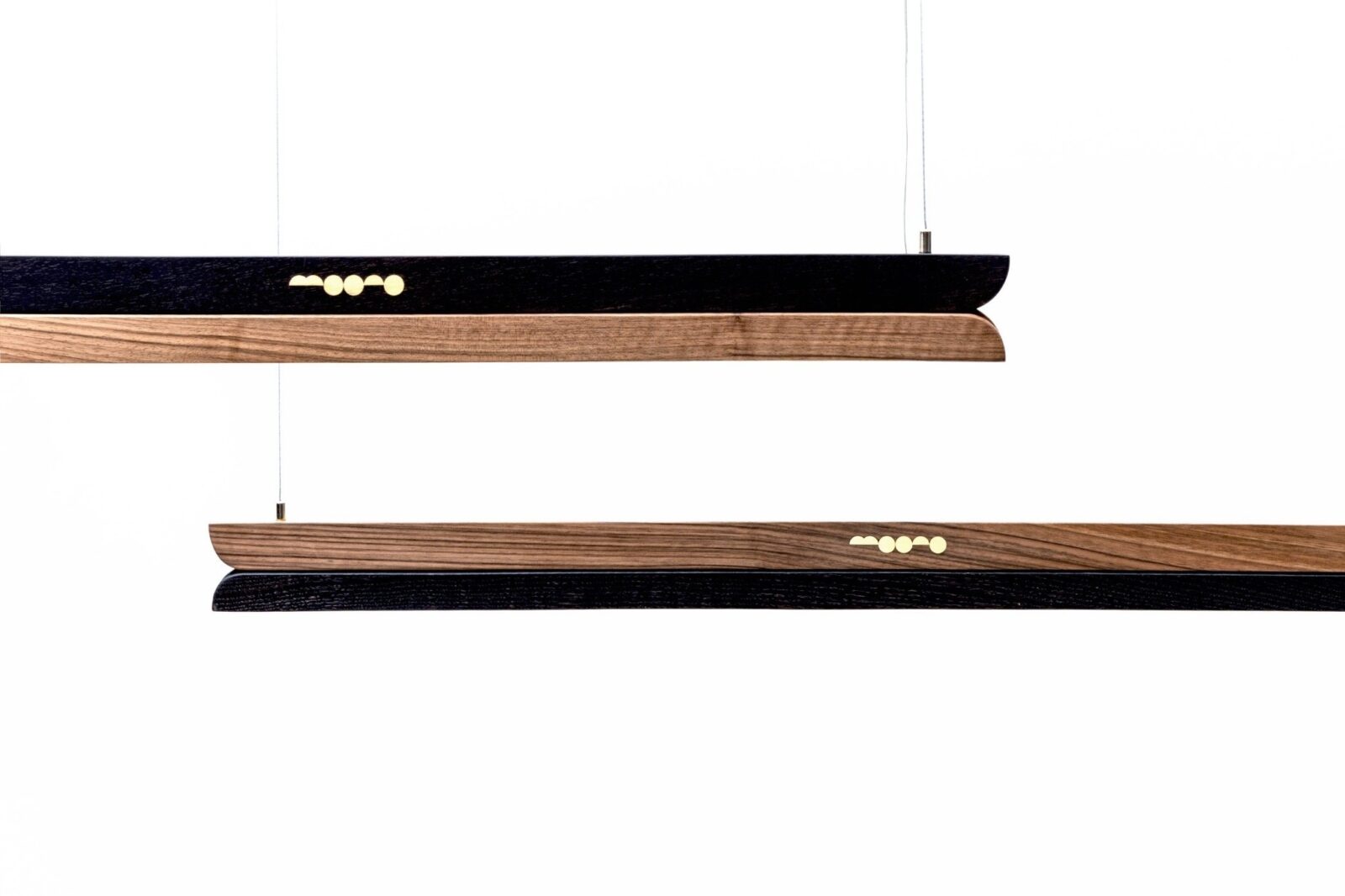
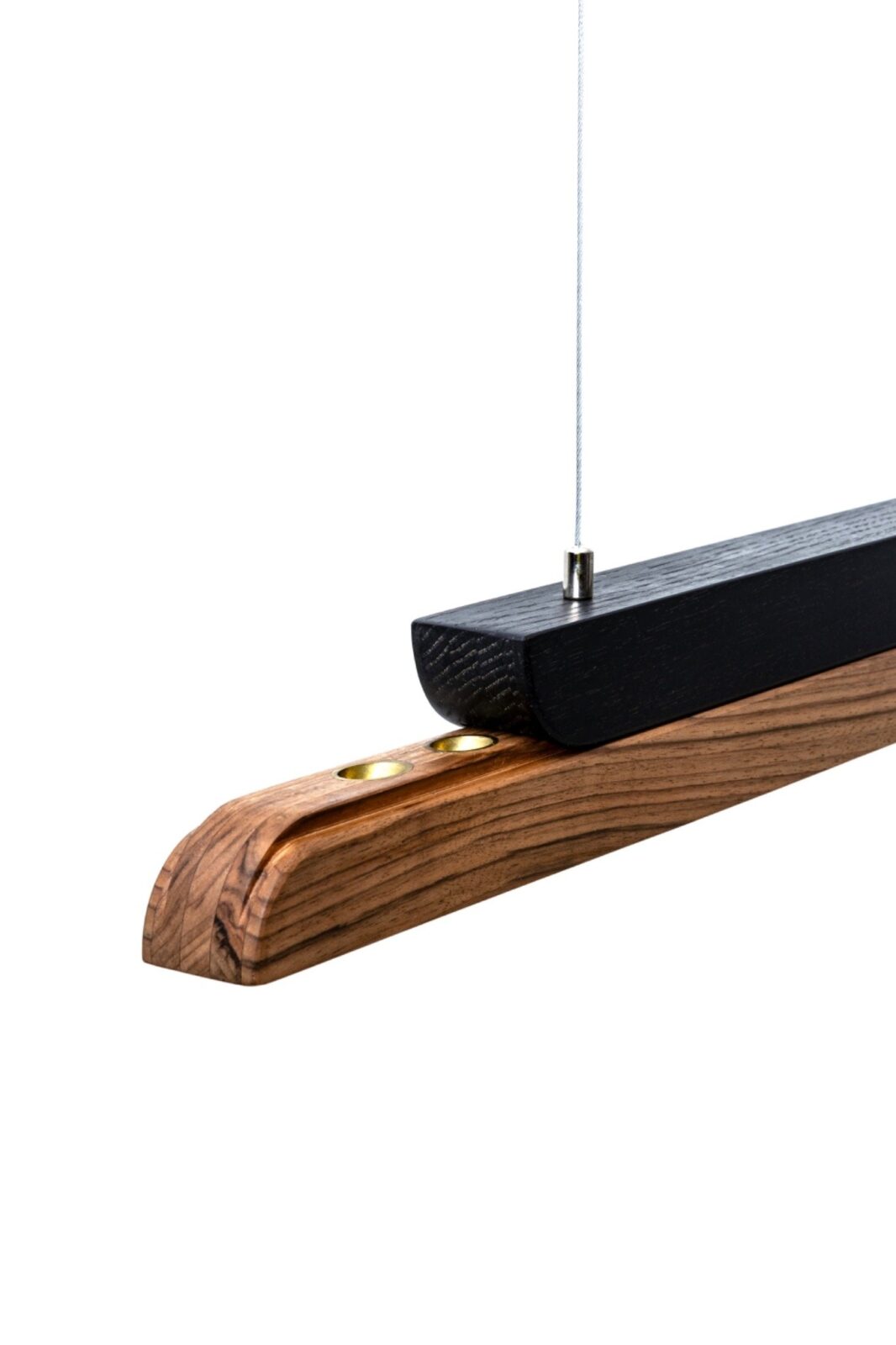
At first glance, Moono resembles a simple wooden pendant made from two main parts, but the whole point is what happens when you touch it. The lamp is built around a fixed upper wooden block and a lower wooden panel that slides, connected by a concealed rail that guides the sliding movement. Rather than relying on a switch, a sensor or any kind of digital control, the idea here is that the user changes the light by physically moving the object.
The designers were deeply inspired by the moon when designing Moono, including its phases and the way its glow shifts. This inspiration can be found in the sliding movement itself, as one only needs to slide the lower part and the lamp’s output changes.
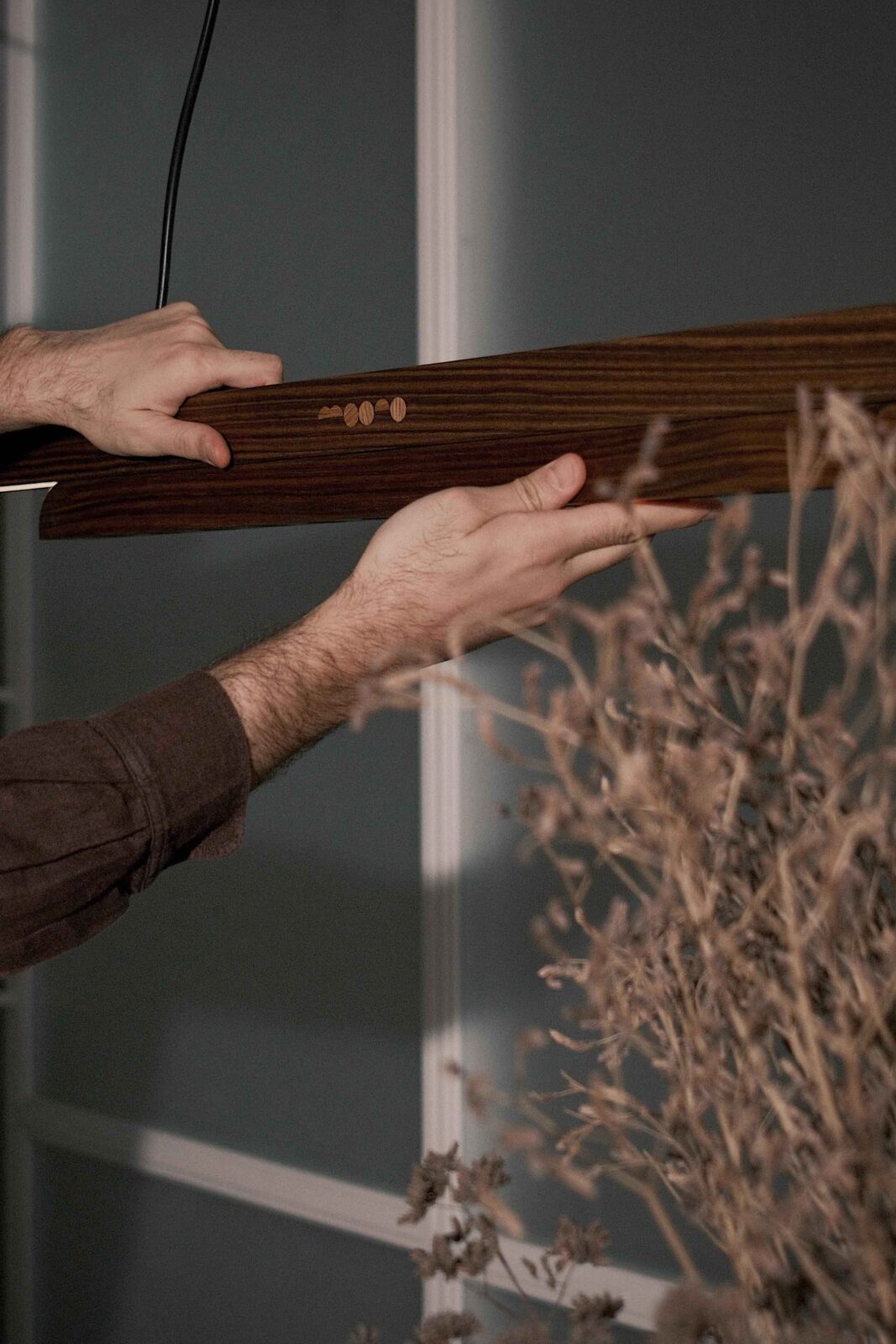
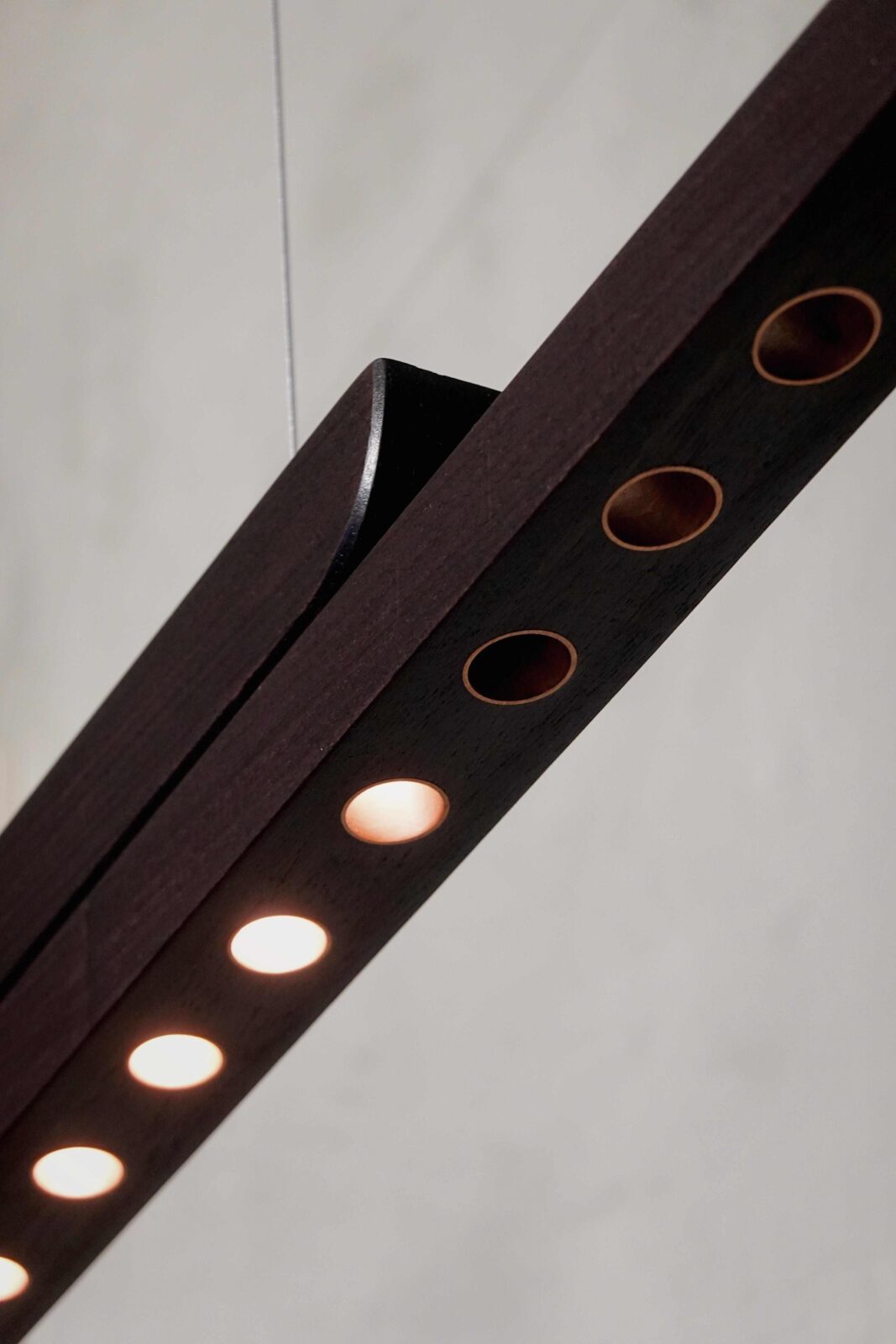
Sliding with intent
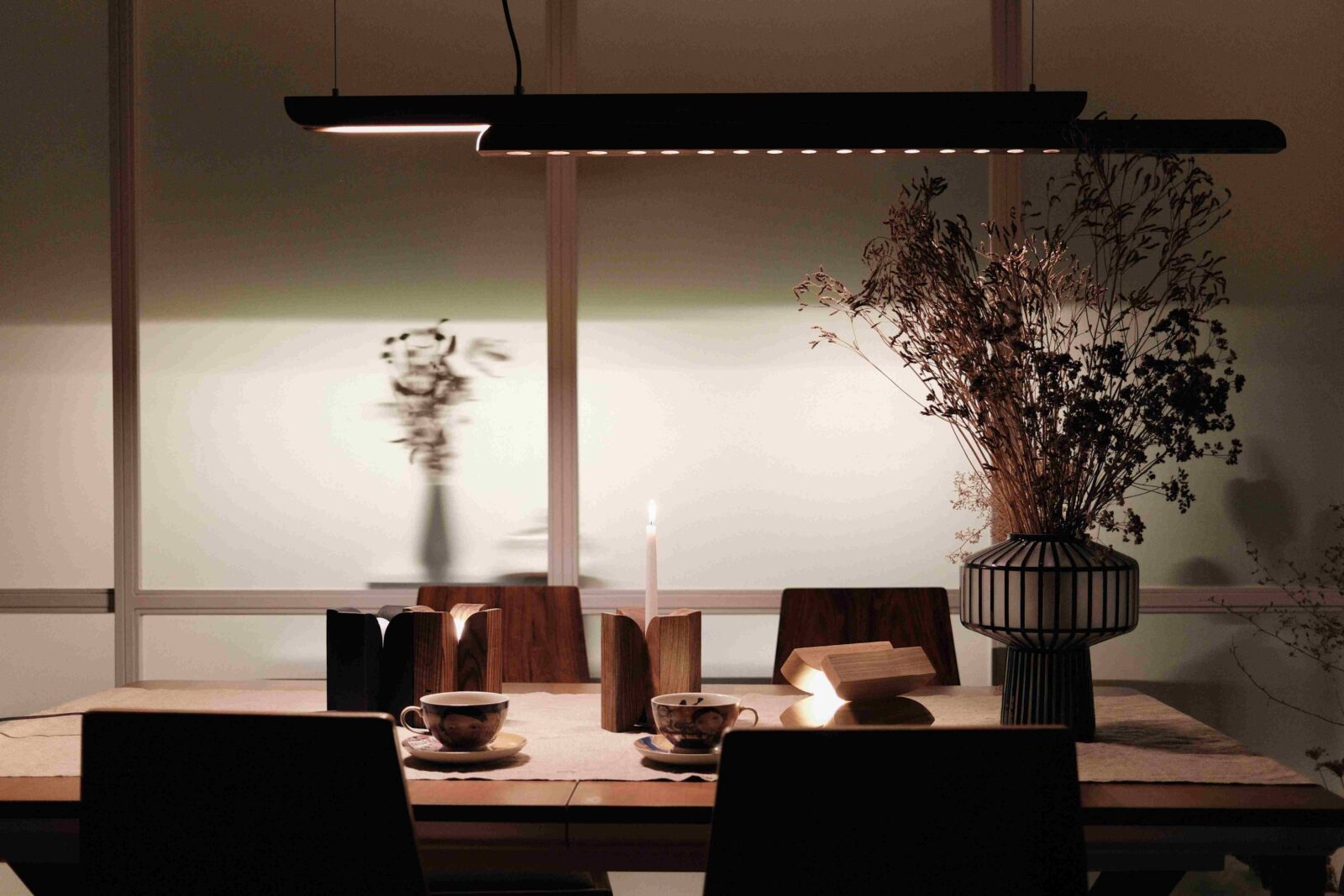
That sliding action does two things at once: by moving the lower panel, the intensity and direction of the beam can be adjusted. It’s a simple action, but it asks for a different kind of intention than tapping a button. The lamp is set up so the gesture is the interface.
Depending on where the panel sits, Moono can sit in a flatter position or shift into a more projecting one, all without changing the fixture or the installation. The change is made through the same physical movement each time, and the lighting change is meant to be obvious and direct.
Lighting without electricity
Technically, the movement is fully mechanical: the studio used an invisible kinetic system integrated into the solid wood body. The joinery and friction are calibrated so the motion remains smooth over the years, without any sticking or jolting.
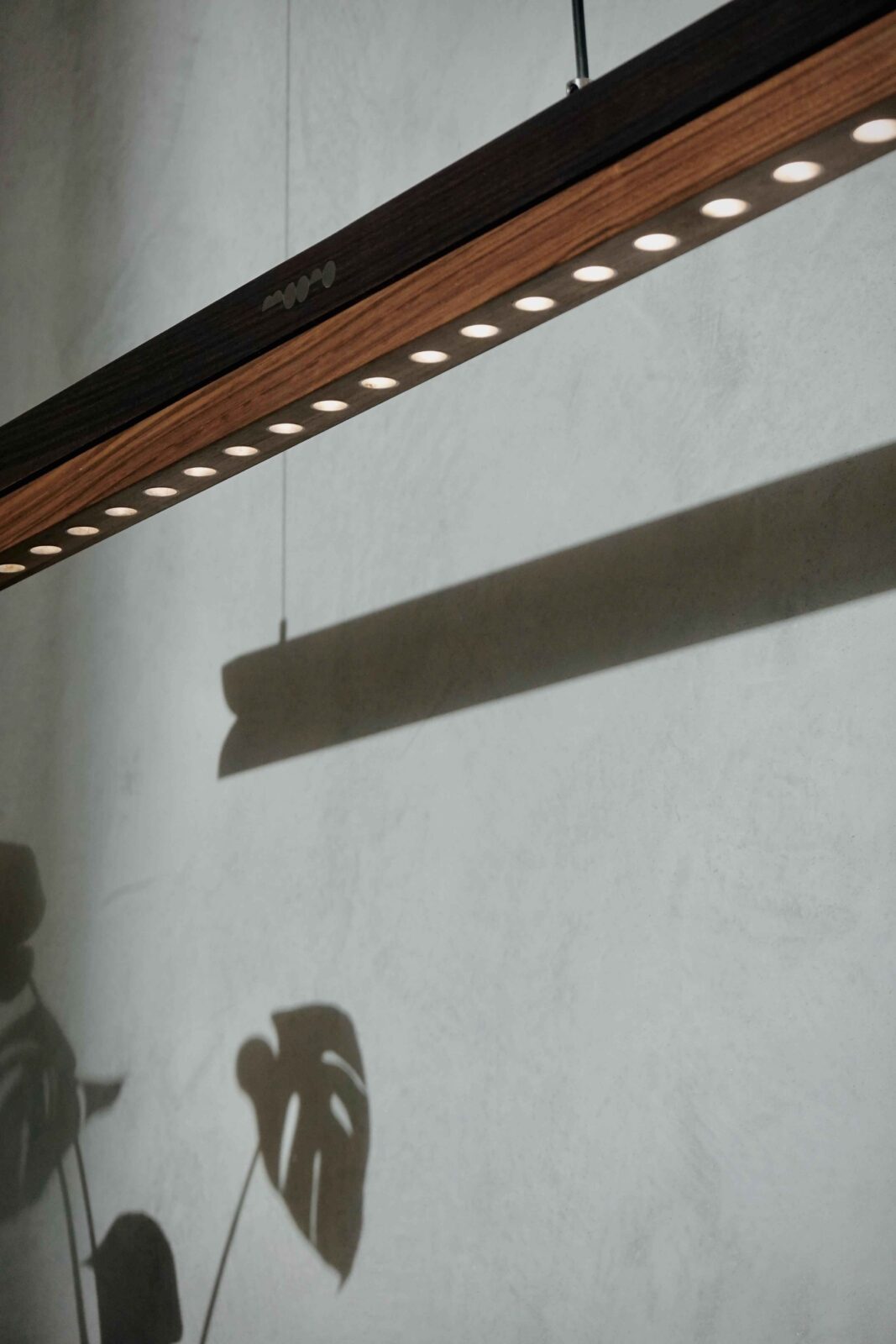
The only part that needs electricity is the LED strip in the sliding panel, which is wired in a way that allows the panel to slide back and forth and for it to stay firmly in place, no matter the chosen position. The studio has been clear that the innovation is in the parts one doesn’t see, especially in the fact that the movement avoids electronics altogether.
Wood and light
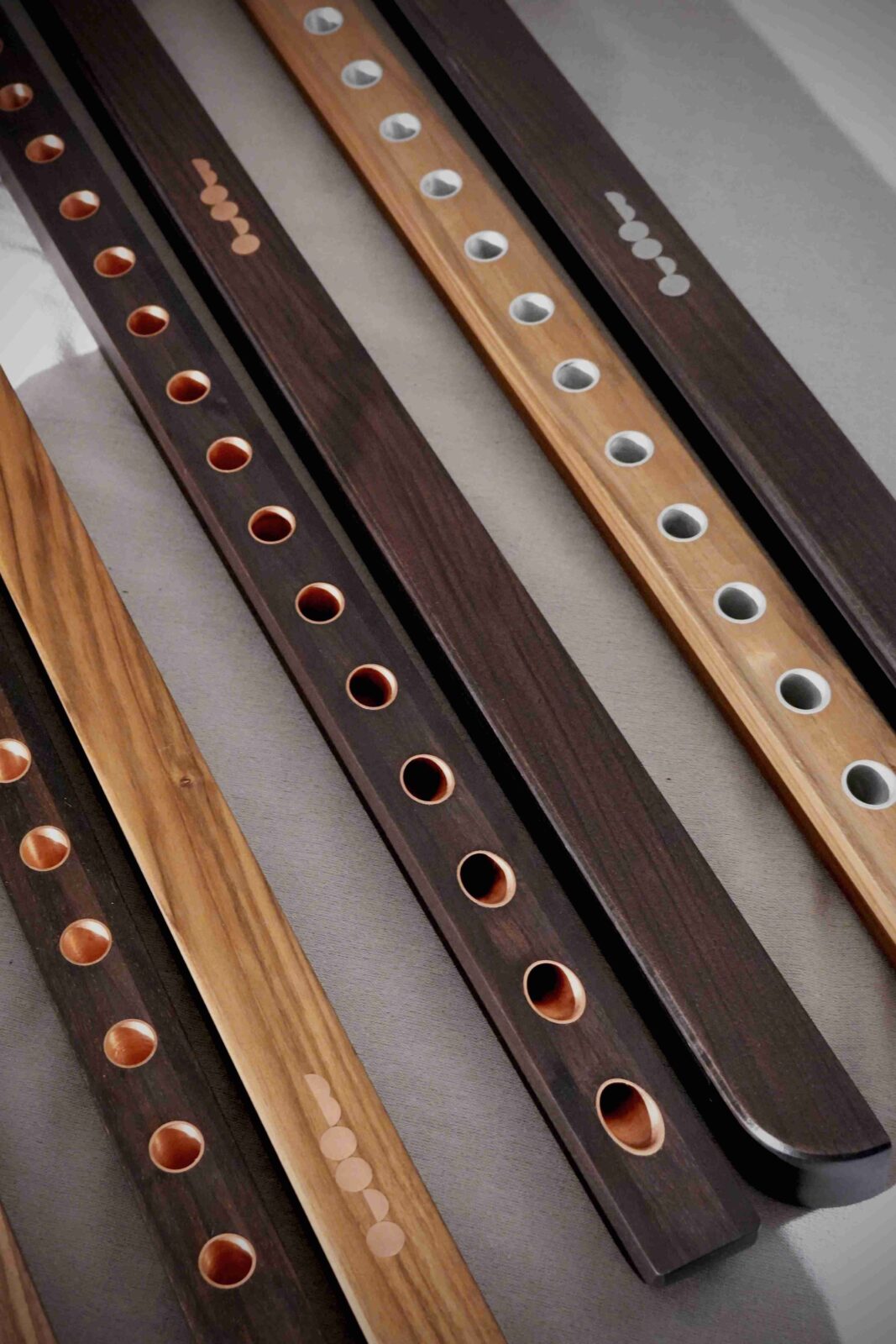
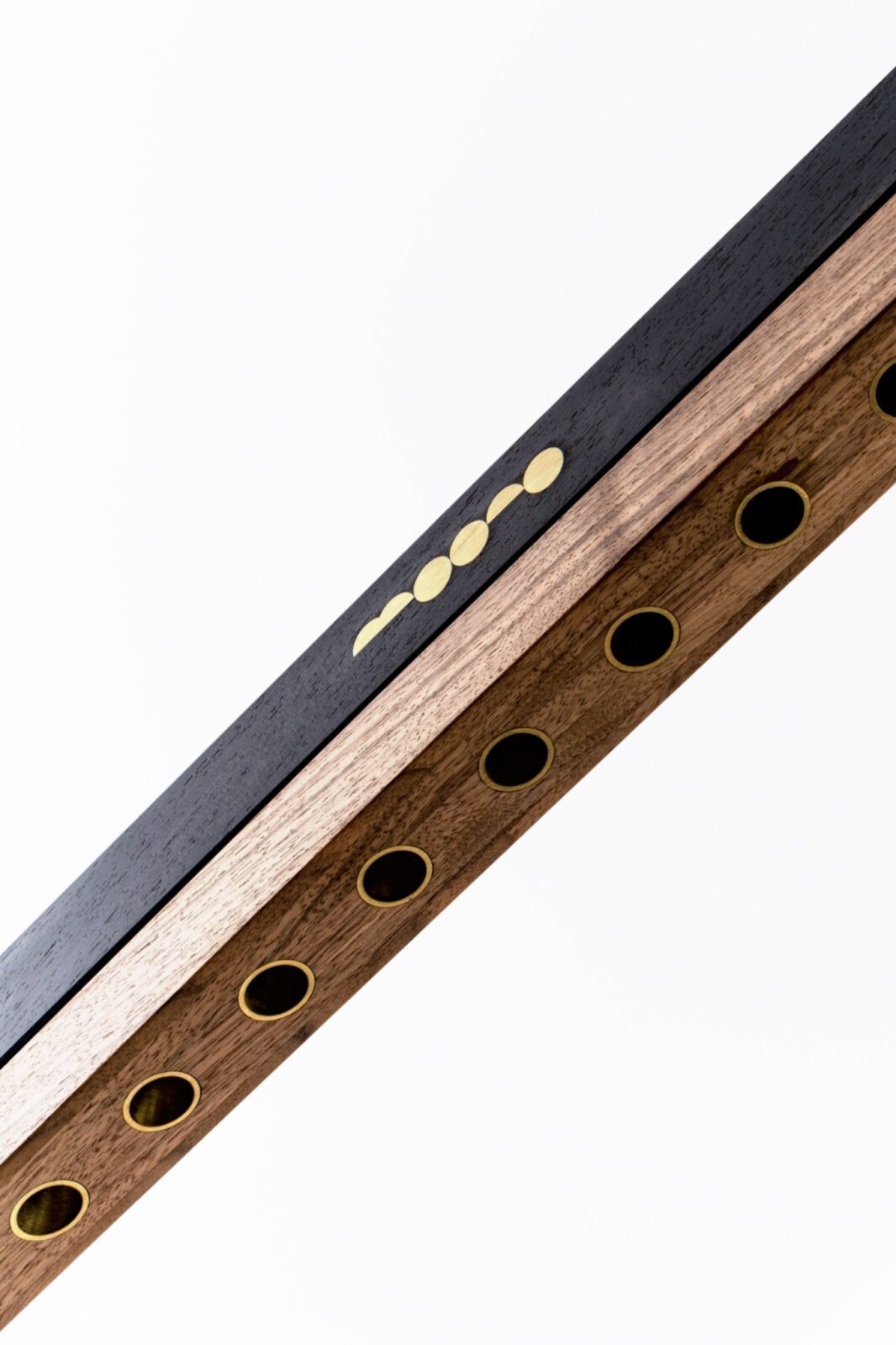
Moono combines natural wood with refined metal parts to achieve its look. The main body is laminated solid wood, offered in oak or walnut depending on the version, and shaped with clean bevels. For finishing details, elements in brass, aluminium or copper are used for parts such as the diffuser, edge trims and the cable cover. The wood is protected with an eco-friendly clear lacquer designed to protect against humidity and scratches while keeping the natural colour.
Moono comes in two lengths, with a rail of either 88 cm or 111 cm. The LED strip offers colour temperature options at 3000K, 4000K, or 6500K, and luminous flux is stated as reaching up to 2430 lumens depending on the model.
Reducing waste
With no electronic parts involved in the sliding mechanism, there are fewer points of failure in the system, making maintenance simpler than on traditional fixtures. The lower part of Moono also helps make this product sustainable, as it is removable and, therefore, replaceable, extending the life of Moono and avoiding waste. Furthermore, the light source is LED, which can last a long time and is energy efficient, reducing the need for frequent replacements.
Finally, the wood is described as recyclable, the metals as recoverable, and the lack of sensors and batteries as a way to reduce electronic waste and support part replacement rather than full disposal.


