



The thoughtful design of structures where students learn, such as schools, universities, and colleges, is called educational architecture. The goal of this architecture type is to facilitate learning while enhancing student well-being. Traditionally, educational design must satisfy basic student needs for safety, accessibility and comfort. But a new purpose-driven design focuses on other needs as well, such as socialisation, collaboration, creativity, and belonging.
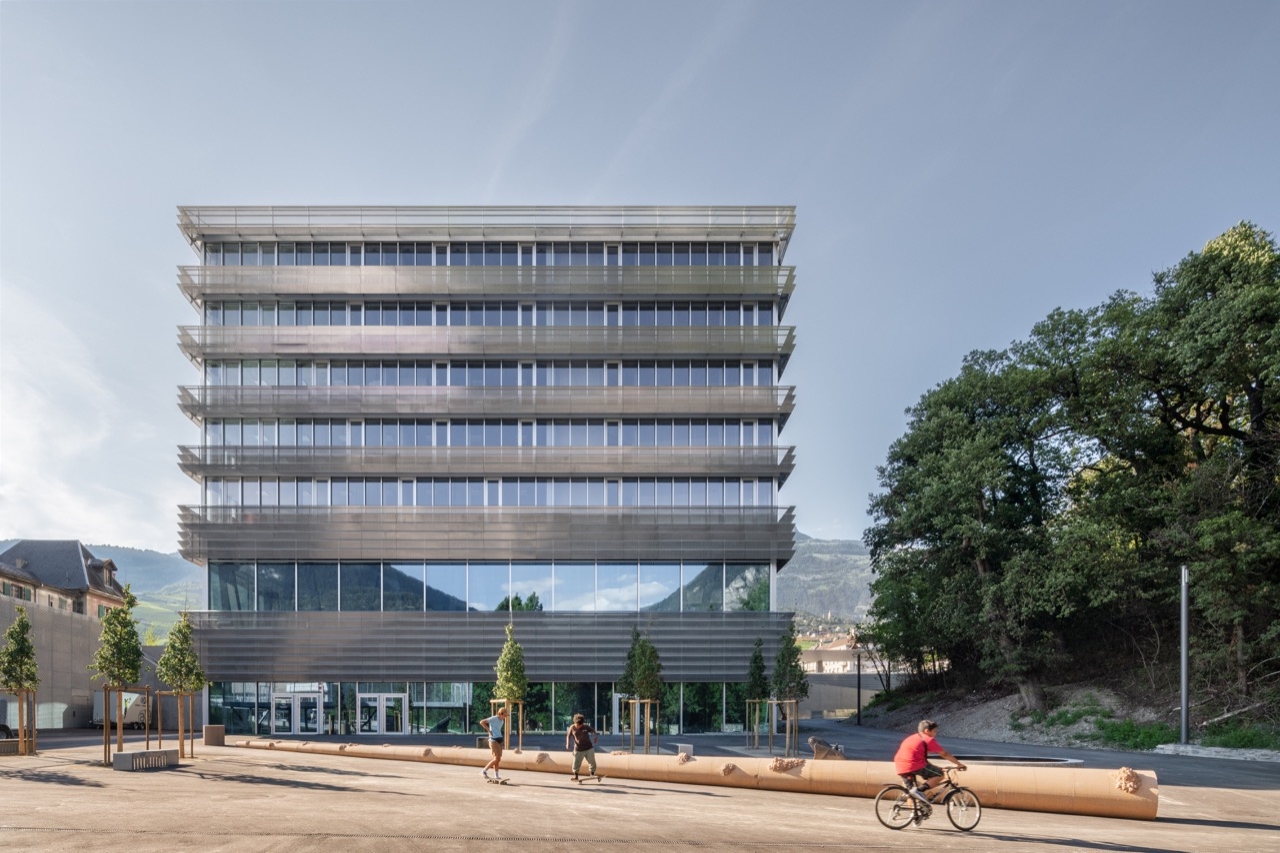
School of Business and General Education, Sierre
To improve Sierre’s educational infrastructure, a new School of Business and General Education is situated next to the University of Applied Social Sciences, spanning beyond the CFF railway tracks into the Bellevue plain. The architects, Bonnard Woeffray Architectes FAS/SIA, used the natural slope as guidance in organising the facilities. The main entrance, for instance, connects to the train station and pedestrian bridge for easy access. The entrance to the gymnasium is on another level. Seismic stability is achieved with peripheral load-bearing walls and V-shaped support. The bright atrium is the centrepiece of the building, which is surrounded by classrooms and balcony-style zigzag walkways that add vibrancy to the design. A contemporary look is achieved through the slick glass façade, polished stainless steel guardrails, and minimal material use.
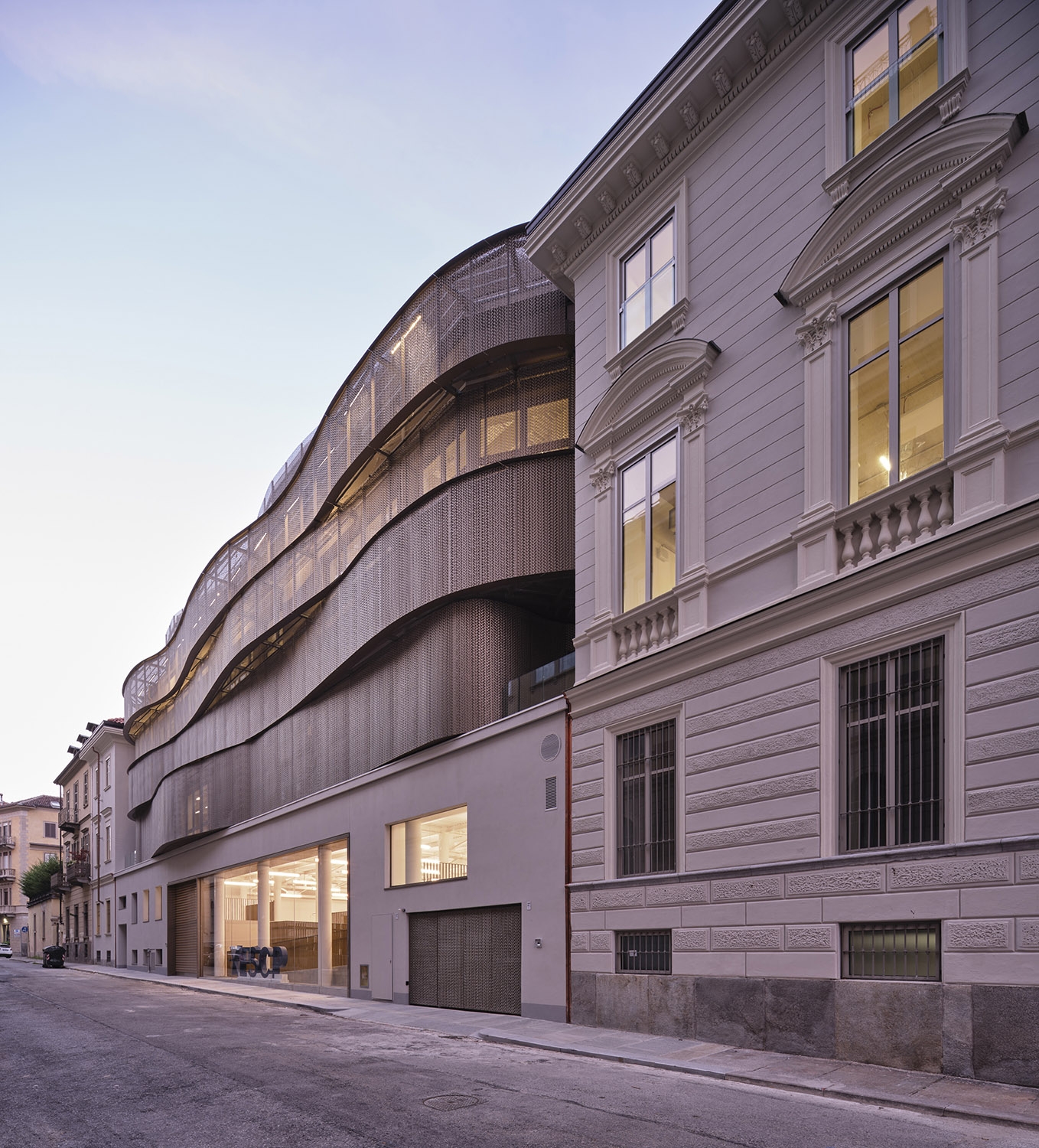
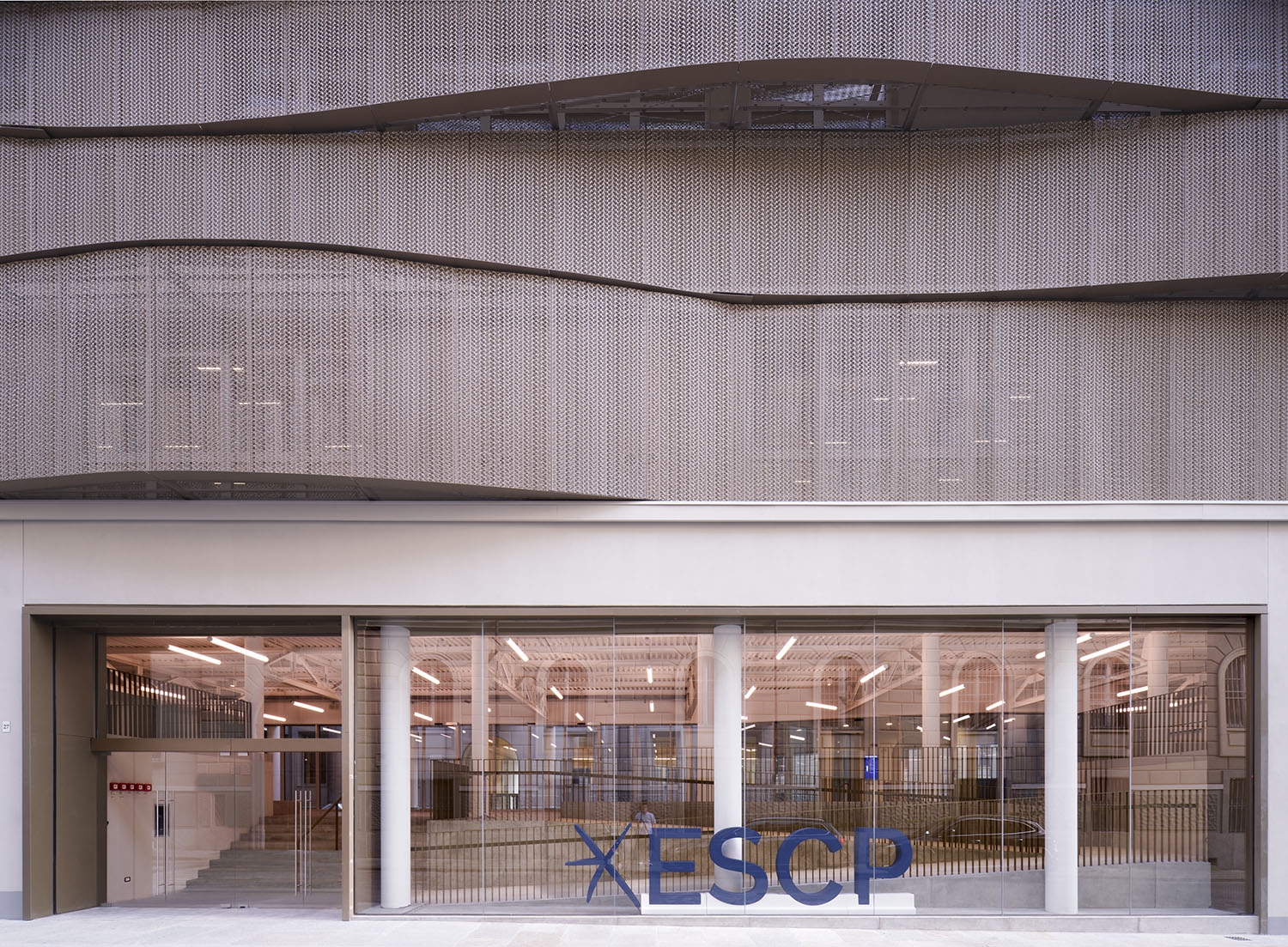
New Campus ESCP Turin
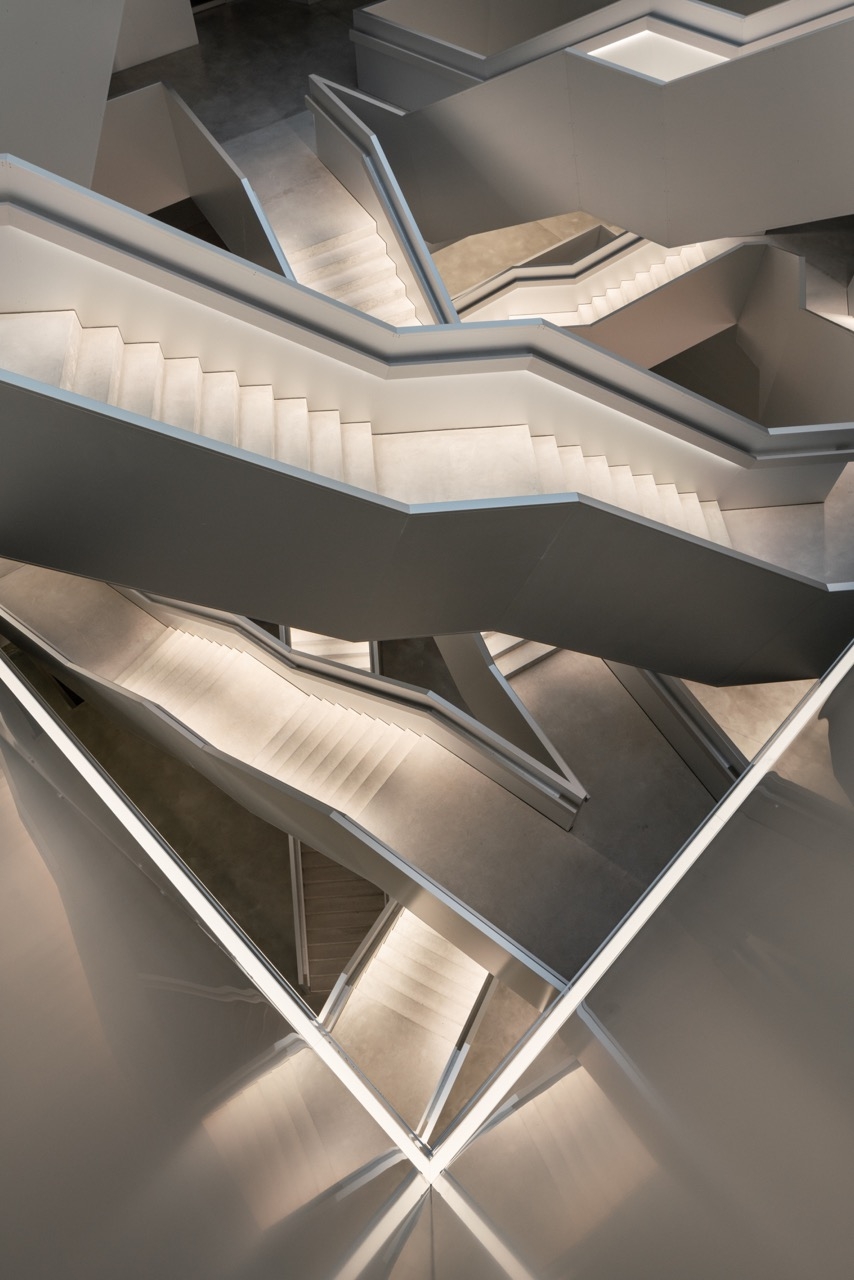
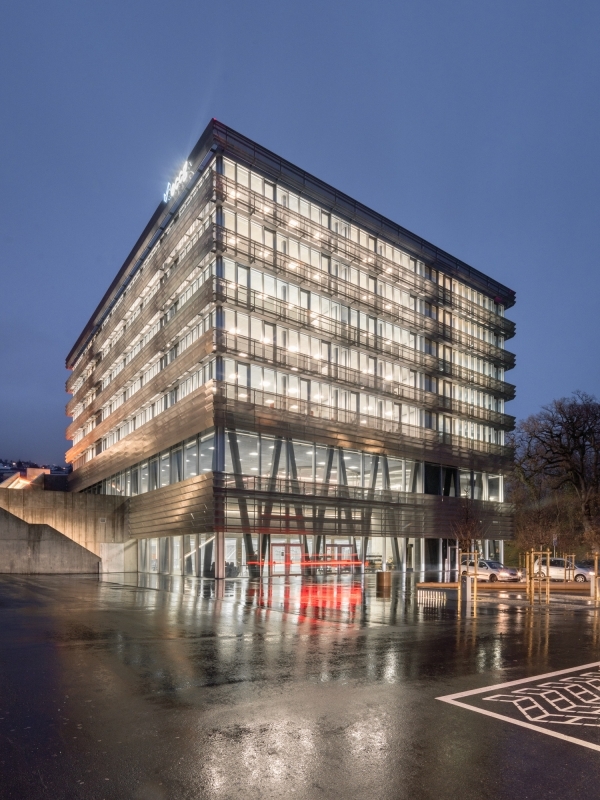
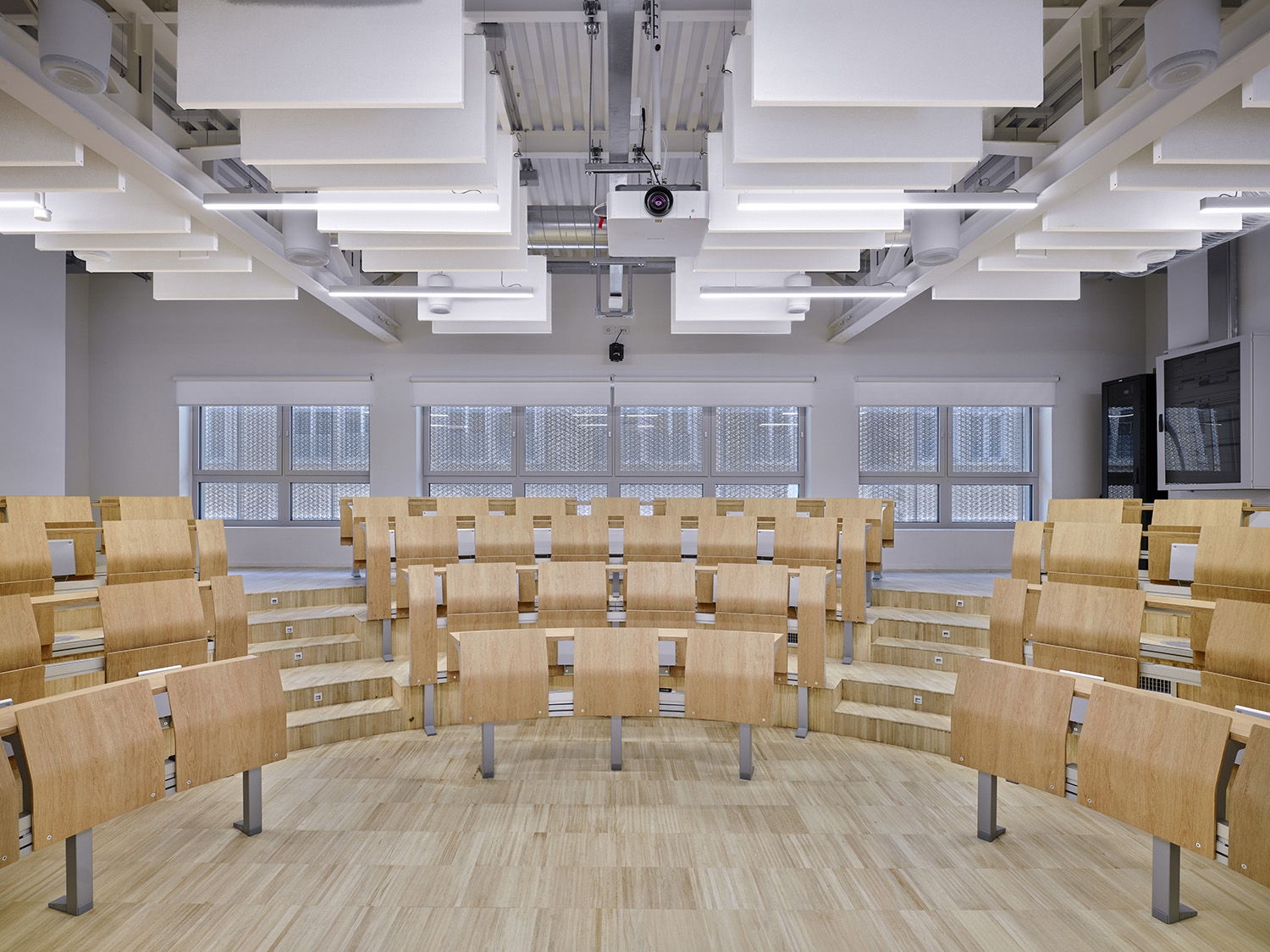
TRA srl design company led by Arch. Isabelle Toussaint turned an old historic building of BNL (Banca Nazionale del Lavoro S.p.A.) into a campus for ESCP students. Historic building hosts smaller classrooms, study areas, and offices, while large lecture halls and conference rooms are located in the new structure in the courtyard. A new urban plaza with a glass entrance on Via Doria connects the institution with the neighbourhood. Services such as a learning centre and a cafe are all publicly available and help strengthen the bond between the school and the surrounding city. Energy efficiency and flow management are improved, as is the thermal envelope, which limits heat moving from the interior outwards. The school uses advanced energy management systems, LED lighting, and Photovoltaic panels. Existing structures are refurbished and reused, while recycled materials are used to reduce environmental impact further. Electric vehicles and bicycles can be charged at several charging points. While integrating past and future, the project also integrates academic mission with civic life.
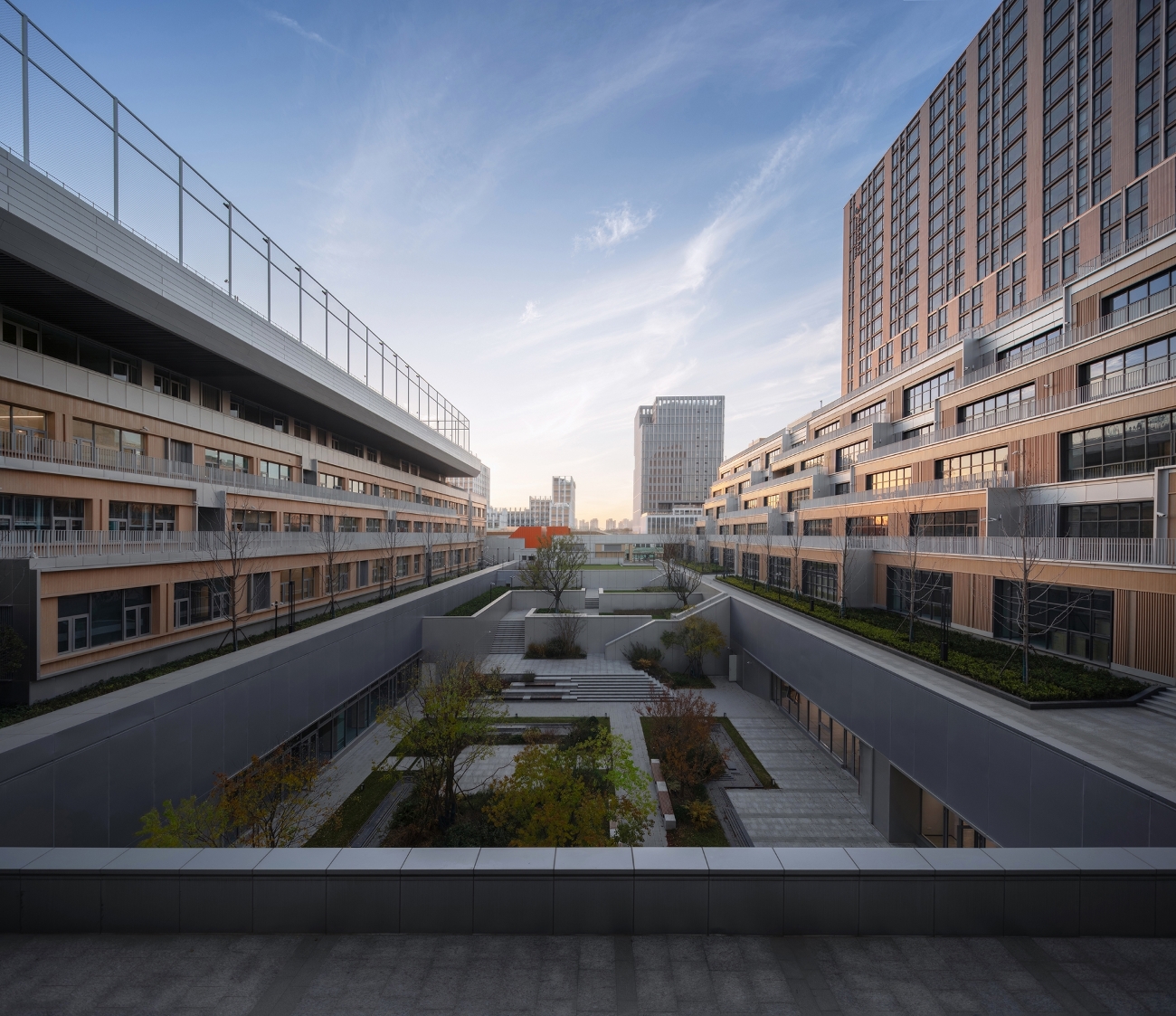
Shanghai Pinghe School Jinding Campus
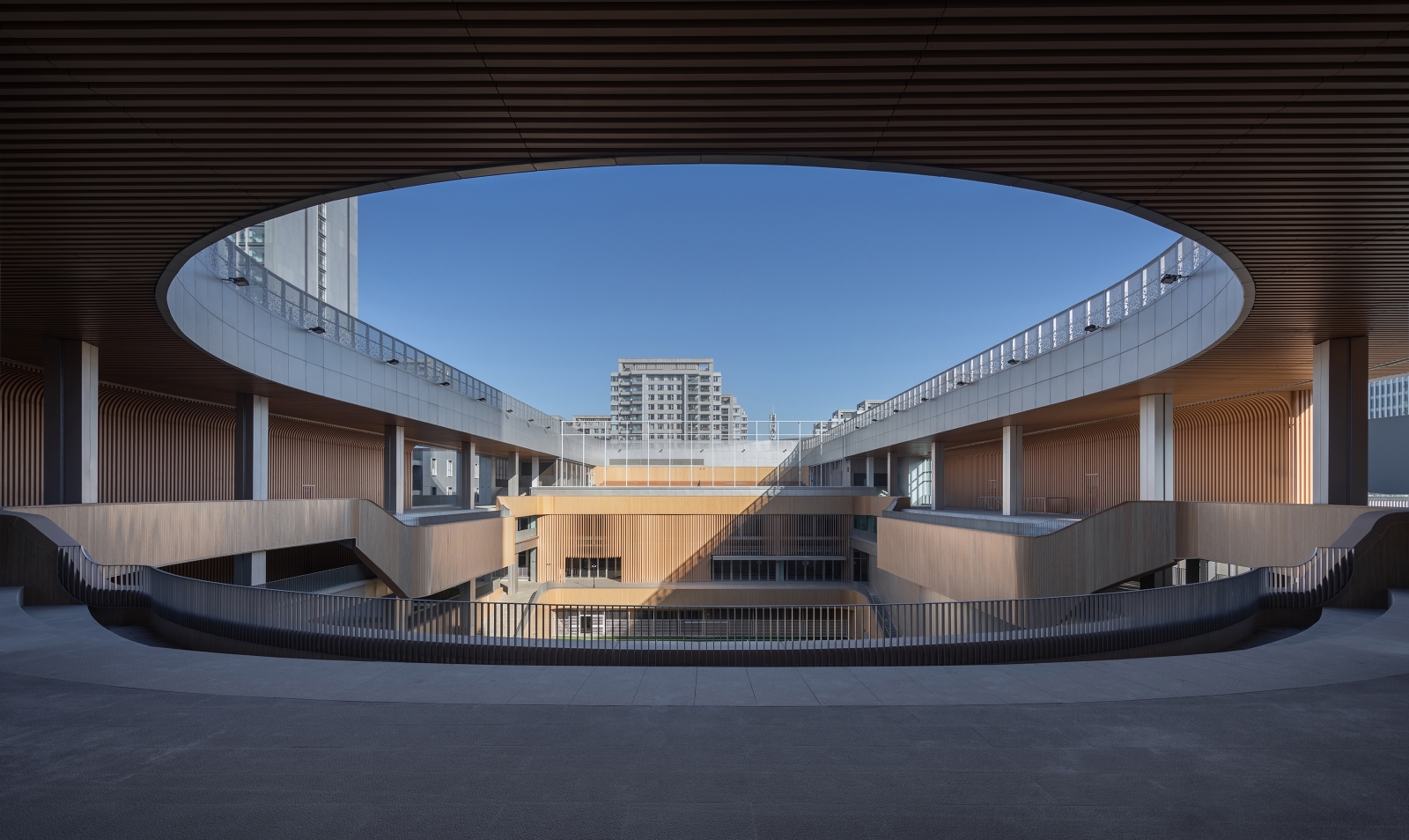
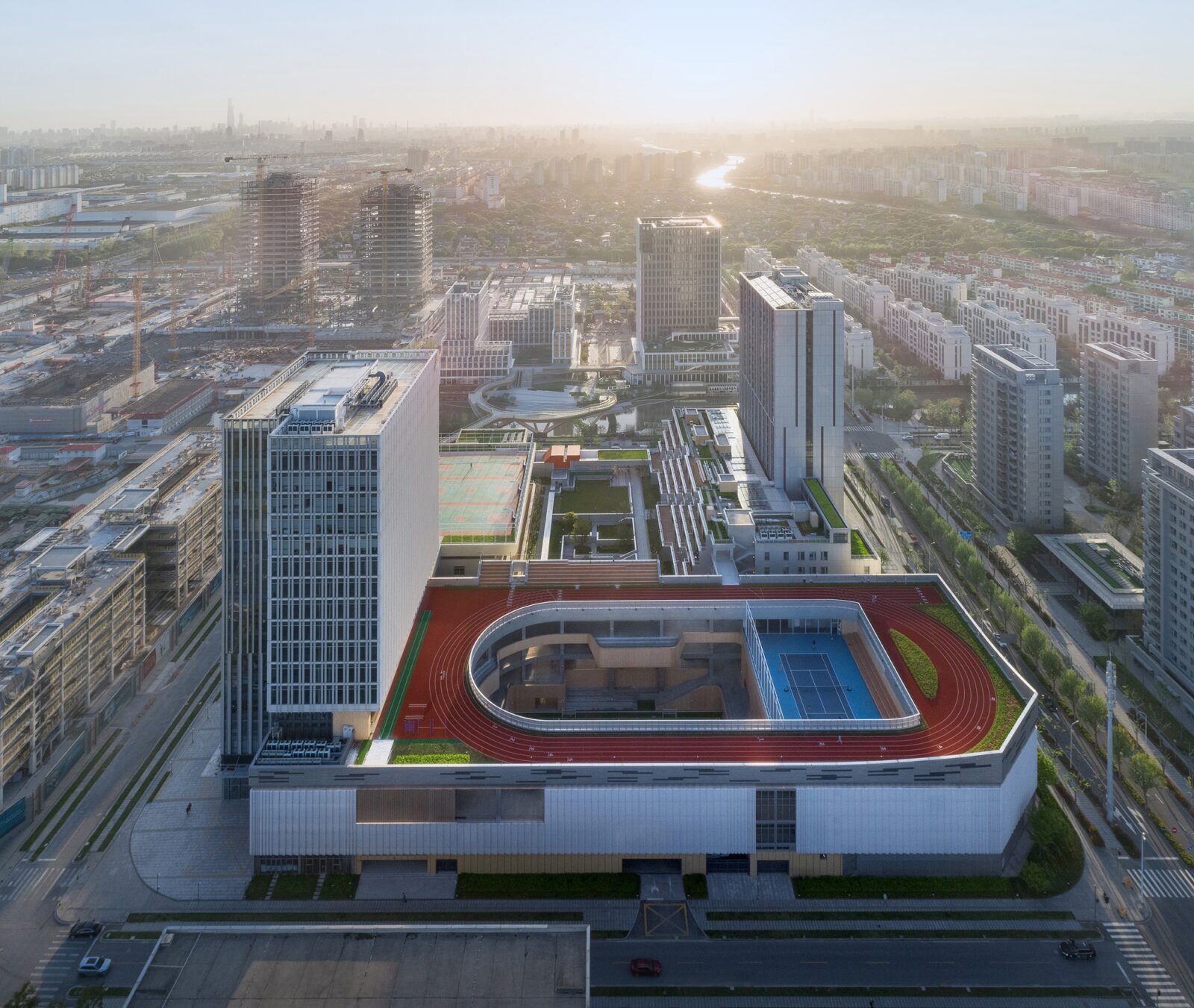
Shanghai Pinghe School Jinding Campus is built at a 3.0 high plot ratio, typical of a densely packed urban environment, meaning the floor area is three times the land plot area. Located in the emerging CBD of Shanghai, the campus becomes an active participant in city life by incorporating publicly available amenities such as theatres, natatoriums, laboratories, and sports fields. All these spaces will host diverse urban and pedagogical programs. The complex consists of 48-class international high schools, 23-class kindergartens, and an adult education facility. Gathering has become a central topic of the newly built structure. c+d studio, ECADI reverts the traditional typology, which approached campuses as closed educational enclaves separated from the outside world. The new design connects the campus with the vibrant city of Shanghai, transforming it into an educational urban life theatre that breaks the boundaries between studying and living.
The importance of educational architecture
Schools have long strived to create environments that help students concentrate and get the most out of their education. Clever use of natural light, acoustics, and flexible layouts can significantly improve concentration and reduce stress, making learning more effective. In addition, purposeful collaborative zones encourage peer interaction and active learning. But contemporary educational architecture now pays close attention to the small details that can make student life easier and more enriching. By opening spaces for the public, architects aim to meet a broader spectrum of student needs, fostering a sense of belonging and connection. Even during their studies, students benefit from feeling part of a wider community, one they will eventually join after graduation. Contemporary campus design helps bridge that transition, shaping not only learning environments but the social ecosystems.
Header photo: Shanghai Pinghe School Jinding Campus, credit: LIANG Shan, SONG Xian

