




Header: Vinay Panjwani
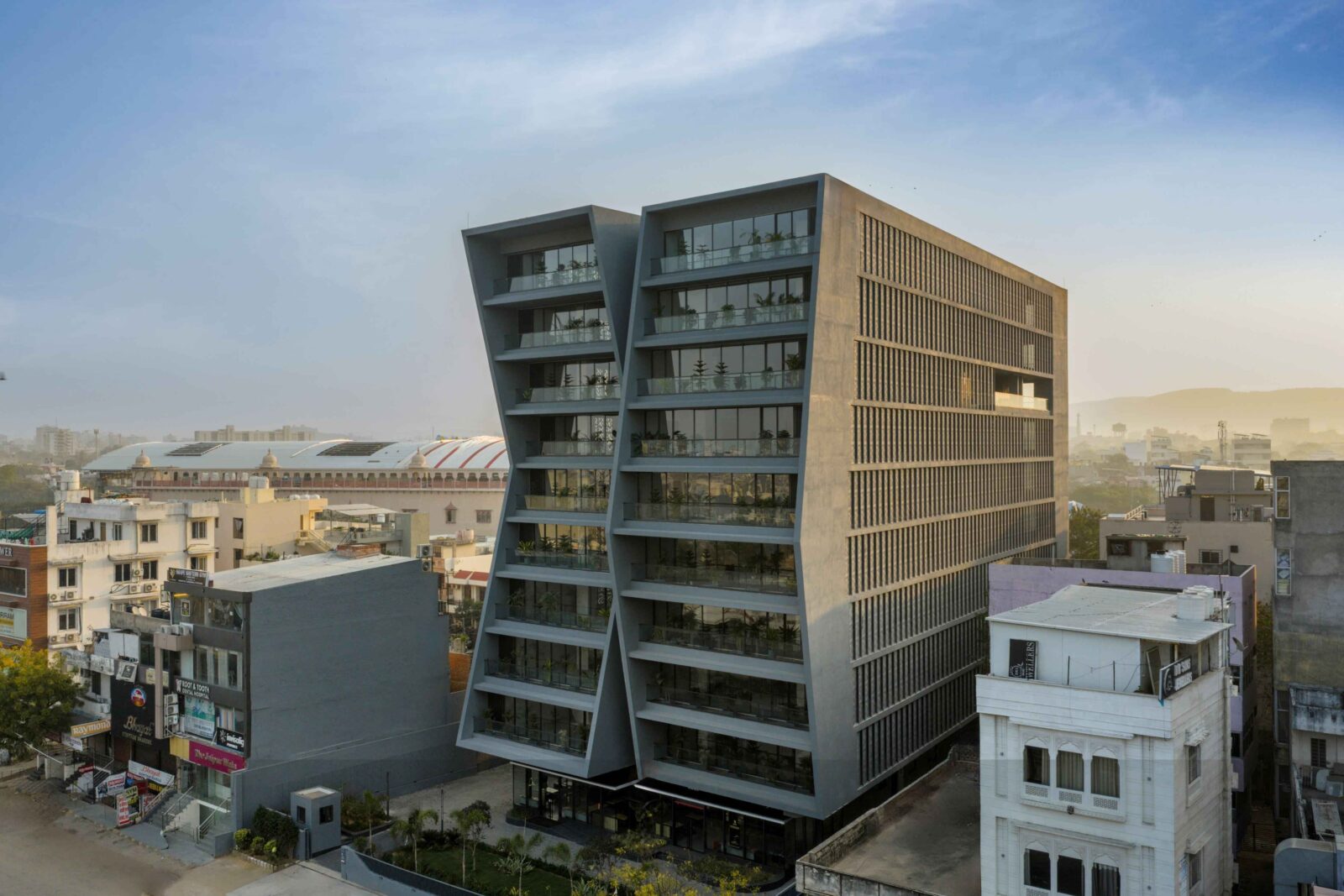
Situated on an extremely busy arterial road in Jaipur, India, within a neighbourhood of old commercial developments, Magnus marks the first new development in the area. Designed by Sanjay Puri Architects to respond to both context and climate, the office building establishes a contemporary identity while respecting the architectural heritage of the region.
Architectural details
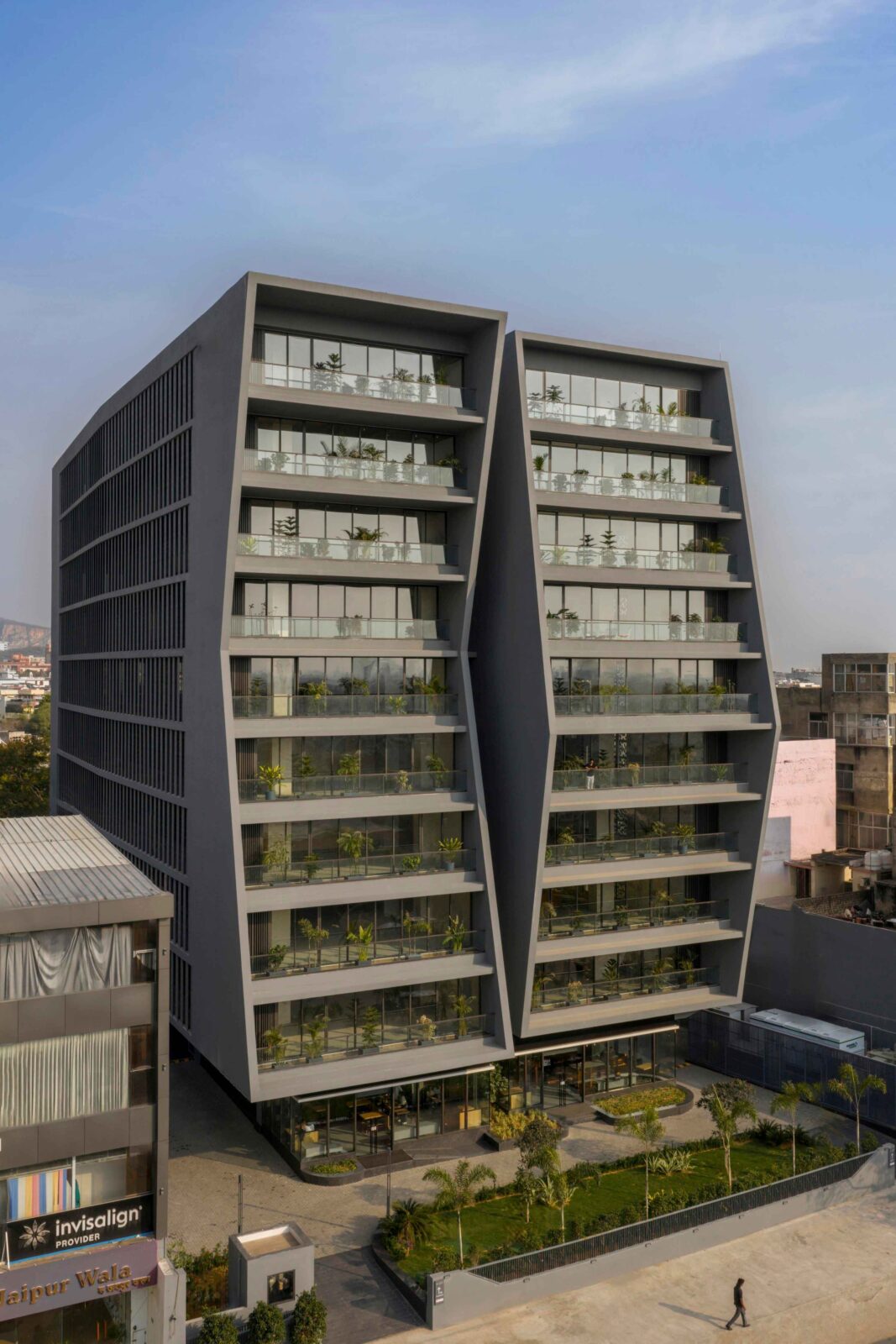
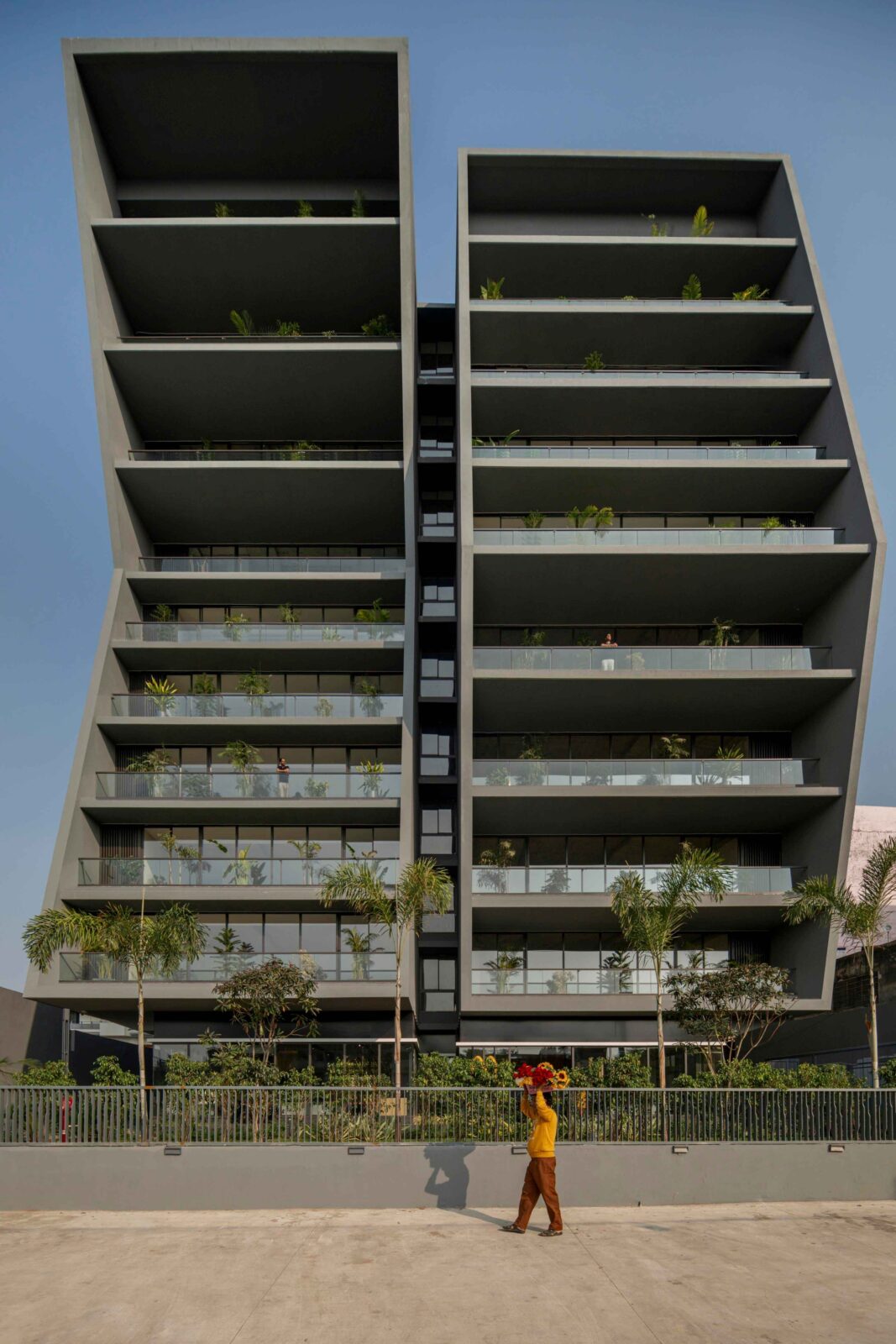
The ground floor accommodates a restaurant and conference facility, activating the street frontage. The terrace level features a cafeteria, gym and landscaped outdoor garden, creating recreational and social spaces for occupants.
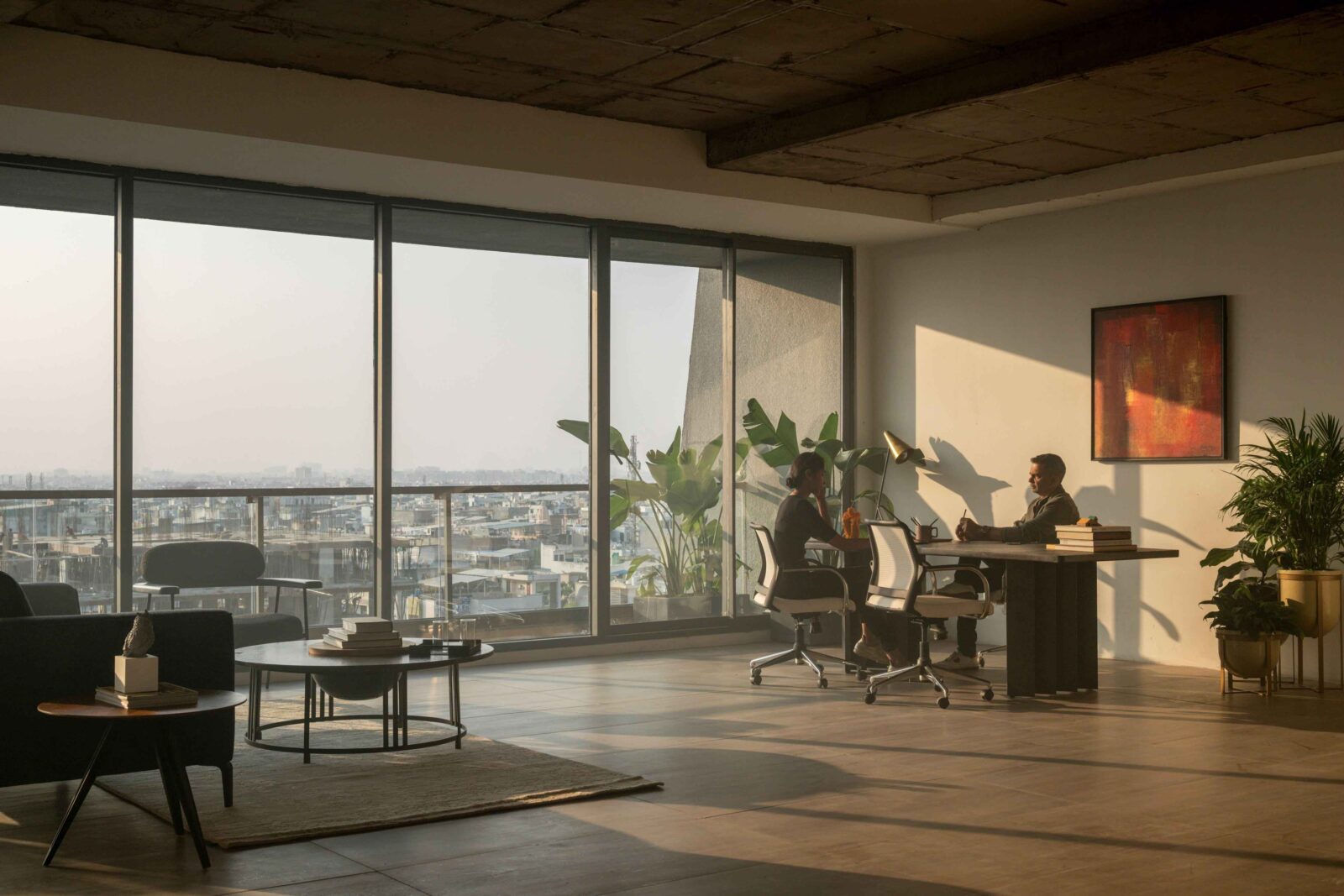
The planning strategically positions the service areas and circulation core along the southern edge, with structural columns placed along the perimeter to ensure complete flexibility across each floor plate. The lower levels accommodate smaller office units, while larger office spaces are located on the upper floors.
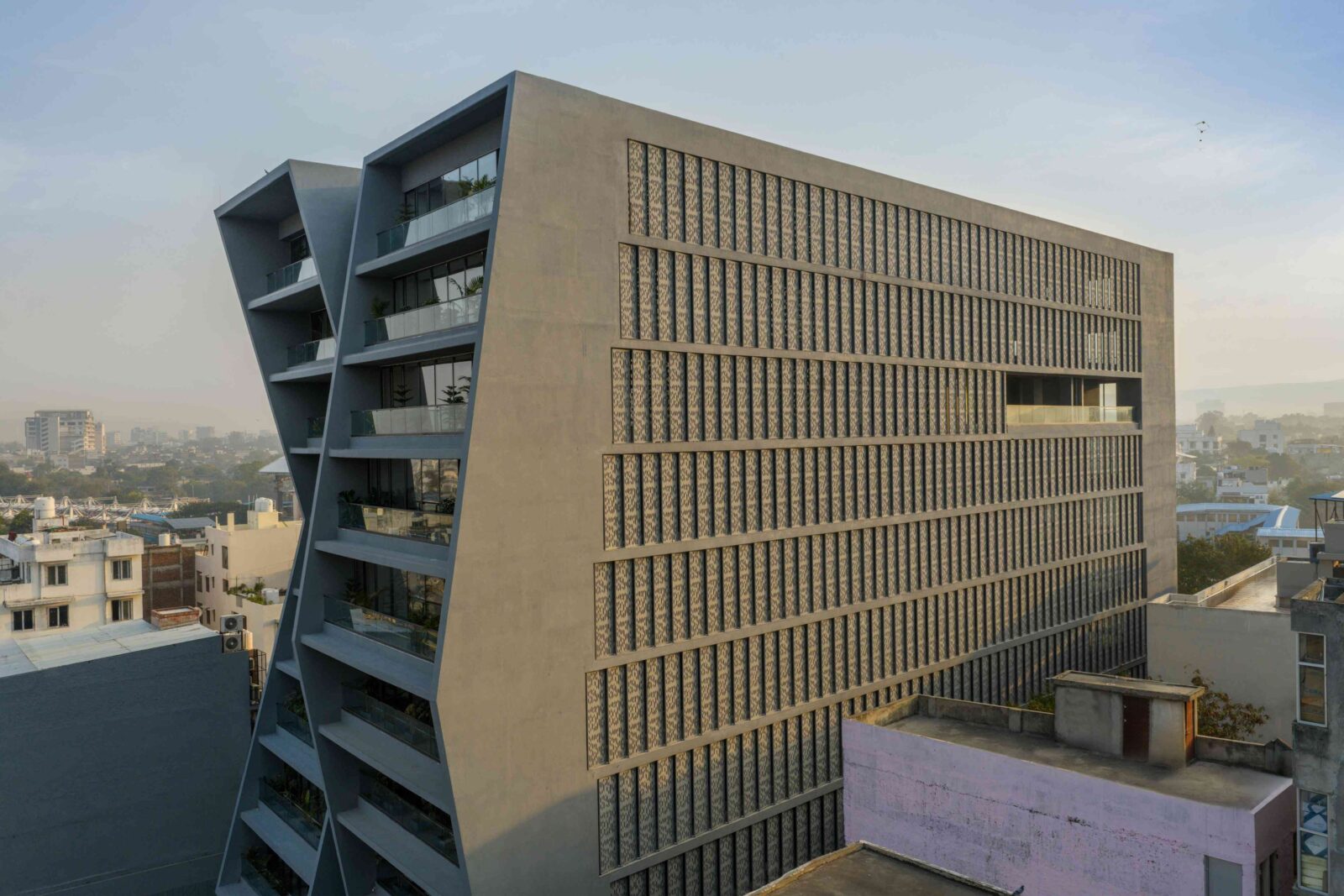
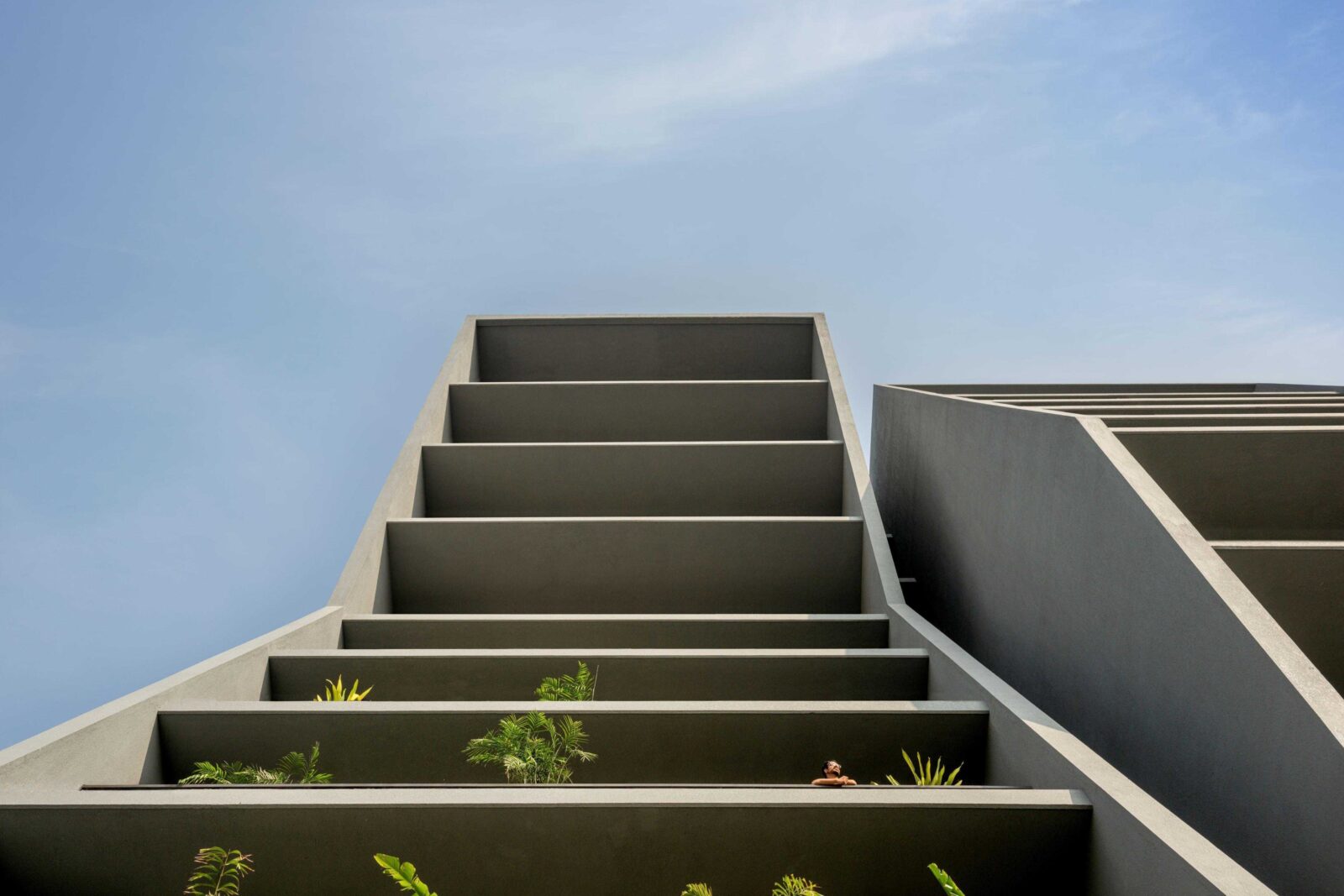
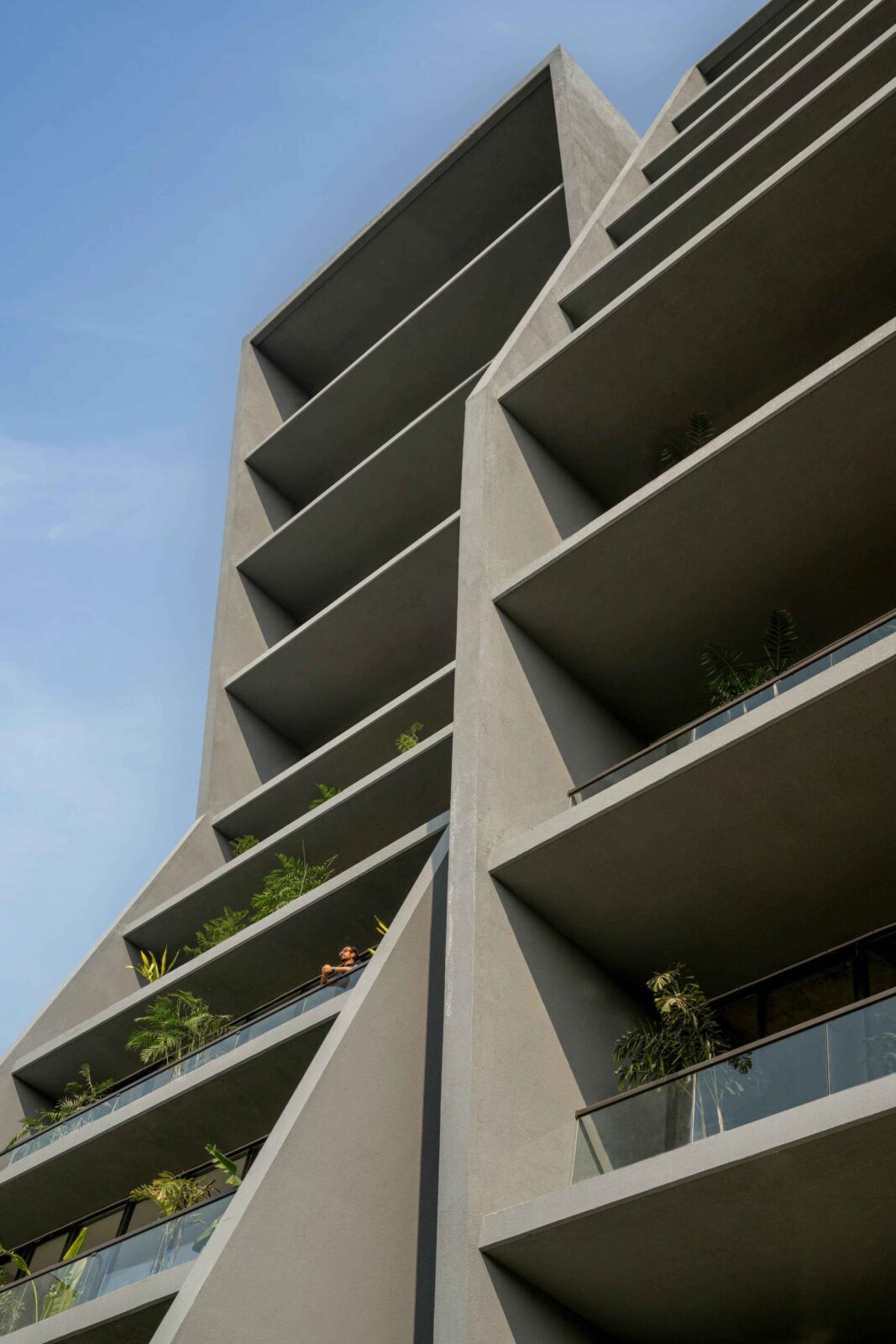
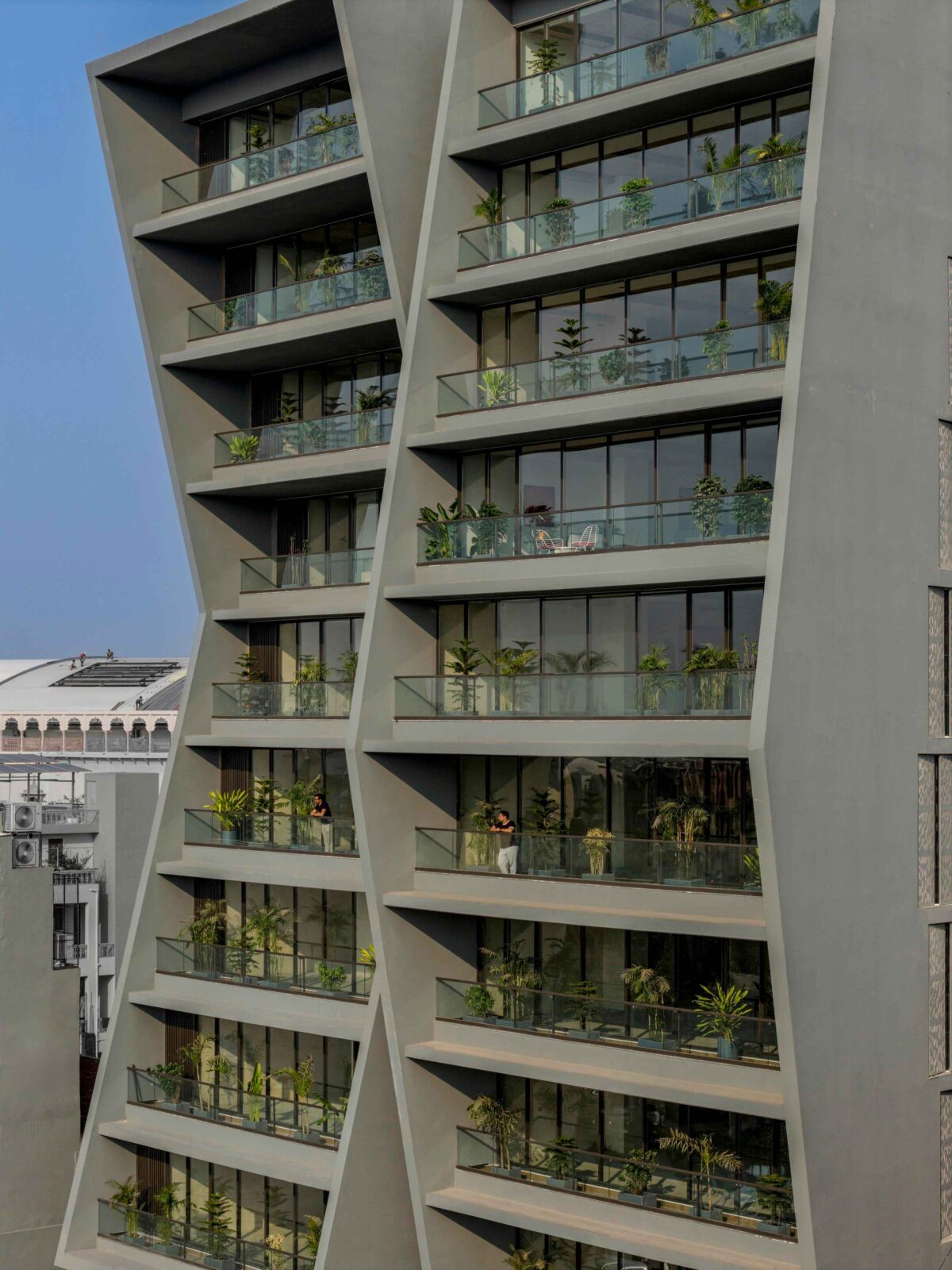
On the road-facing western facade, the building inclines both forward and backwards, forming two vertical volumes with opposing angles. This dynamic massing creates sheltered outdoor decks at every level and ensures privacy between adjacent office terraces.
Rajasthan’s architecture
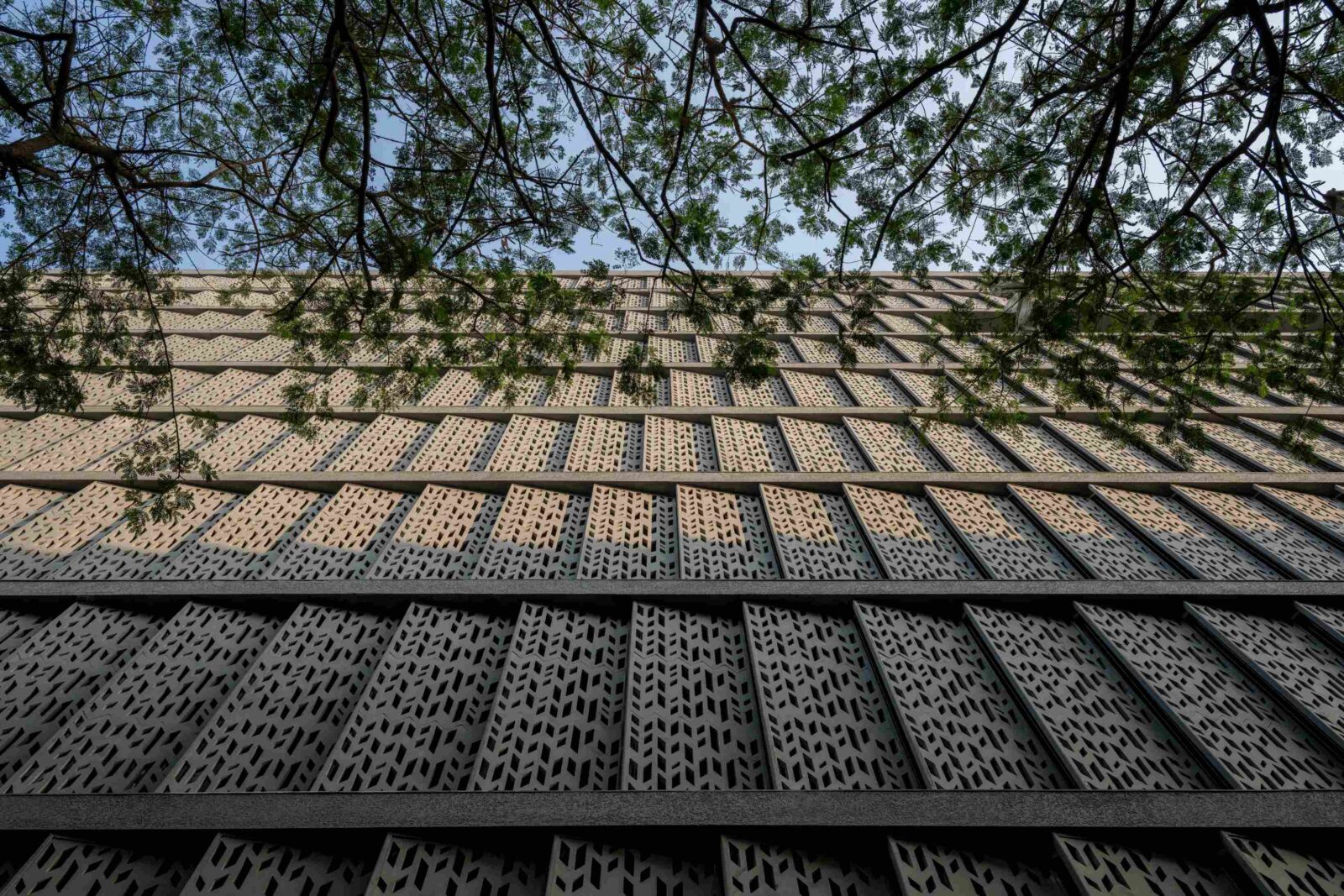
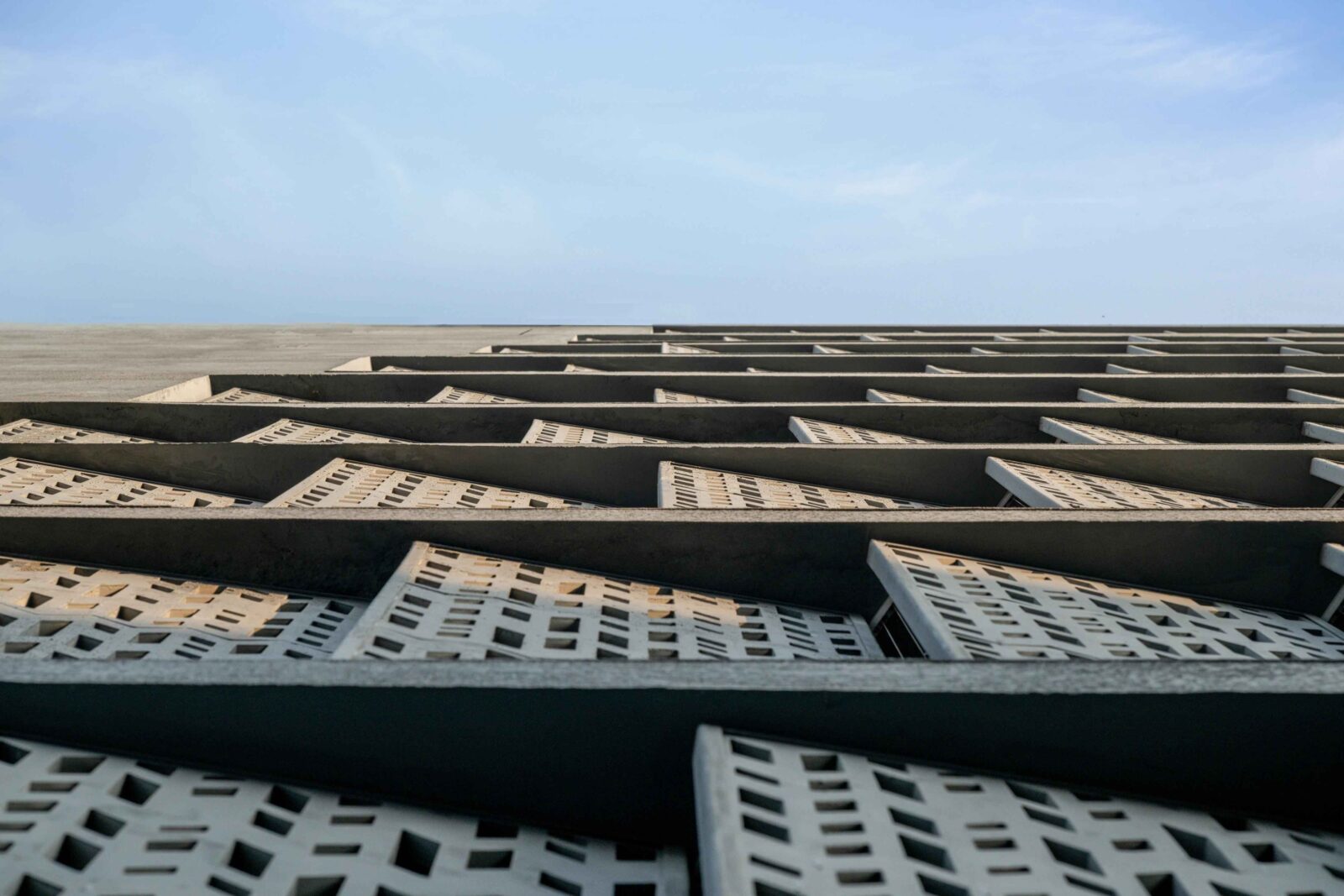
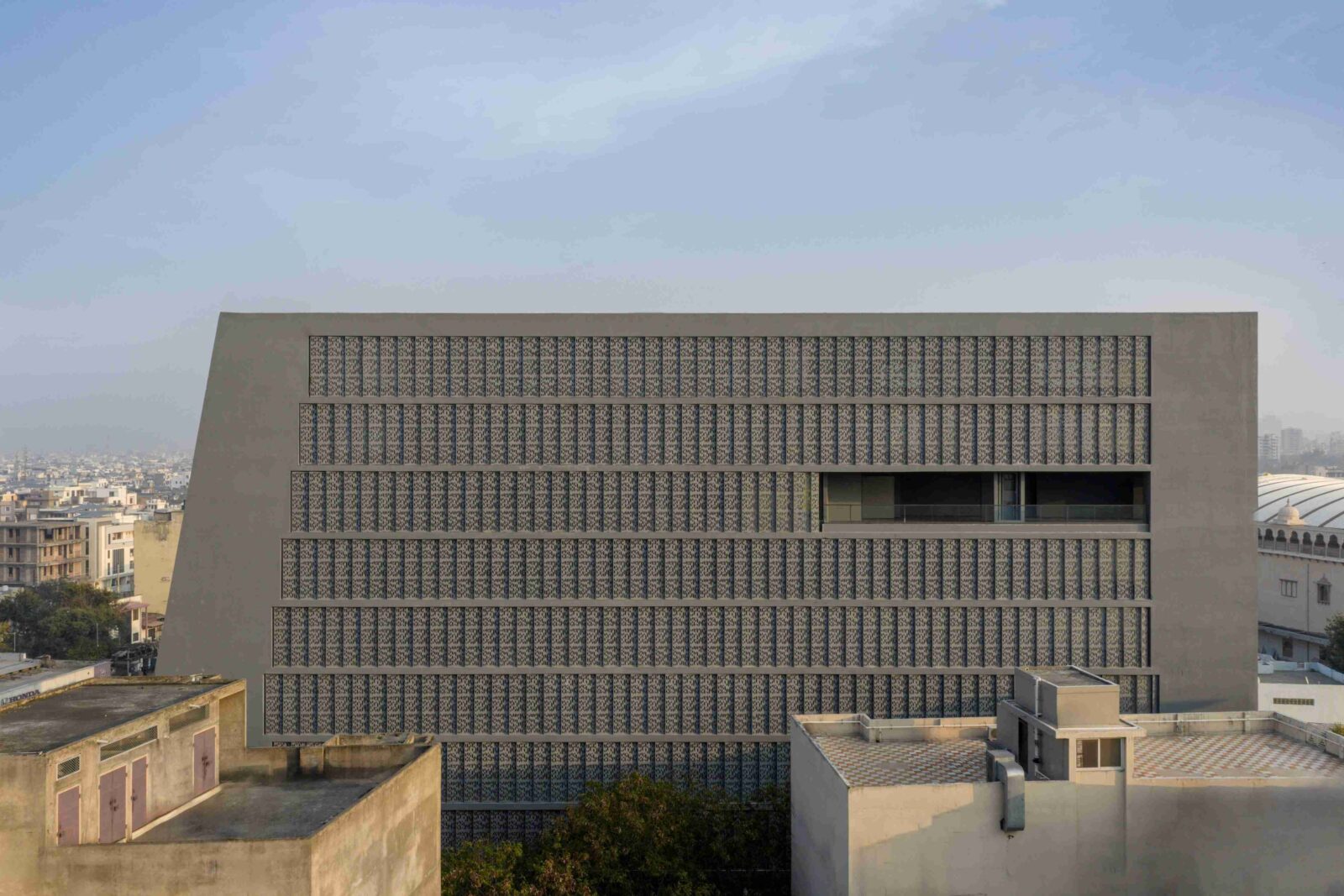
In response to the high-density urban setting, the building’s sides are wrapped in perforated screens inspired by the traditional stone jaali screens characteristic of Rajasthan’s heritage architecture. These screens are fabricated from lightweight foam concrete, composed primarily of recycled materials, and offer thermal insulation properties.
A 3’0″ wide planter zone was introduced between the perforated screen envelope and the glazed facade, serving as a noise buffer from the busy road while simultaneously introducing continuous greenery along the building’s perimeter.
Personalised sustainability
Constructed predominantly using fly ash bricks and an RCC frame structure, the building integrates sustainable strategies such as water recycling, rainwater harvesting, and rooftop solar panels. These measures significantly reduce the embodied carbon footprint compared to conventional office buildings. The perforated screens and recessed decks act as passive shading devices, mitigating heat gain, lowering air-conditioning demand, and reducing lifecycle carbon emissions.
This office building thoughtfully responds to Jaipur’s hot climate while drawing inspiration from regional architectural traditions, resulting in energy-efficient, contextually rooted contemporary workspaces.
Project Information
Company Name: Sanjay Puri Architects
Lead Architect: Sanjay Puri
Design Team: Chandan Joshi, Sonali Chougule
Client: Mahima Real Estate Pvt. Ltd.
Location: Tonk Road, Jaipur, Rajasthan, India
Date of completion: December 2025
Source: v2com newswire
