



Header: Photo by Viola Kovács
Christmas tends to come with a familiar rush of objects, colours, and expectations, and it is easy to assume that a more sustainable approach would somehow make us lose the atmosphere we look forward to each year. In practice, the opposite happens, because once you move away from the idea that the season depends on buying new things, you start turning to materials that are already around you.
1. Decorations
The simplest way to keep Christmas decorations sustainable is to use materials that either return to nature or last for many seasons, and the easiest starting point is greenery. Pine branches, eucalyptus, or any evergreen can be placed on shelves and tables, adding texture, colour, and a sweet resin scent. They are affordable and easy to place, and once the holidays are over, they can be composted or left outdoors to decompose, so there is no storage or waste.

Dried orange slices work in a similar spirit, and they can create beautiful warm amber tones when light goes through them. Preparation is simple: cut the oranges (or lemons, limes, tangerines, etc.) into thin slices, place them in the oven on low heat for 2 to 3 hours, string them on a bit of twine, and voilà! You end up with an ornament that looks great on the tree, fills your kitchen with a sweet scent, and can even be kept after Christmas is over (looks good anytime). They are also fully compostable and cost almost nothing, especially if you make them in batches while doing other kitchen tasks.
Most homes already have more Christmas décor than we realise, and choosing a simple colour palette helps bring it together without feeling the need to buy more stuff. Limit yourself to two or three colours and be intentional about what you add to your home. This small decision prevents the usual cycle of replacing items that no longer “fit the vibe”, as the palette ensures that everything goes well together and costs nothing.
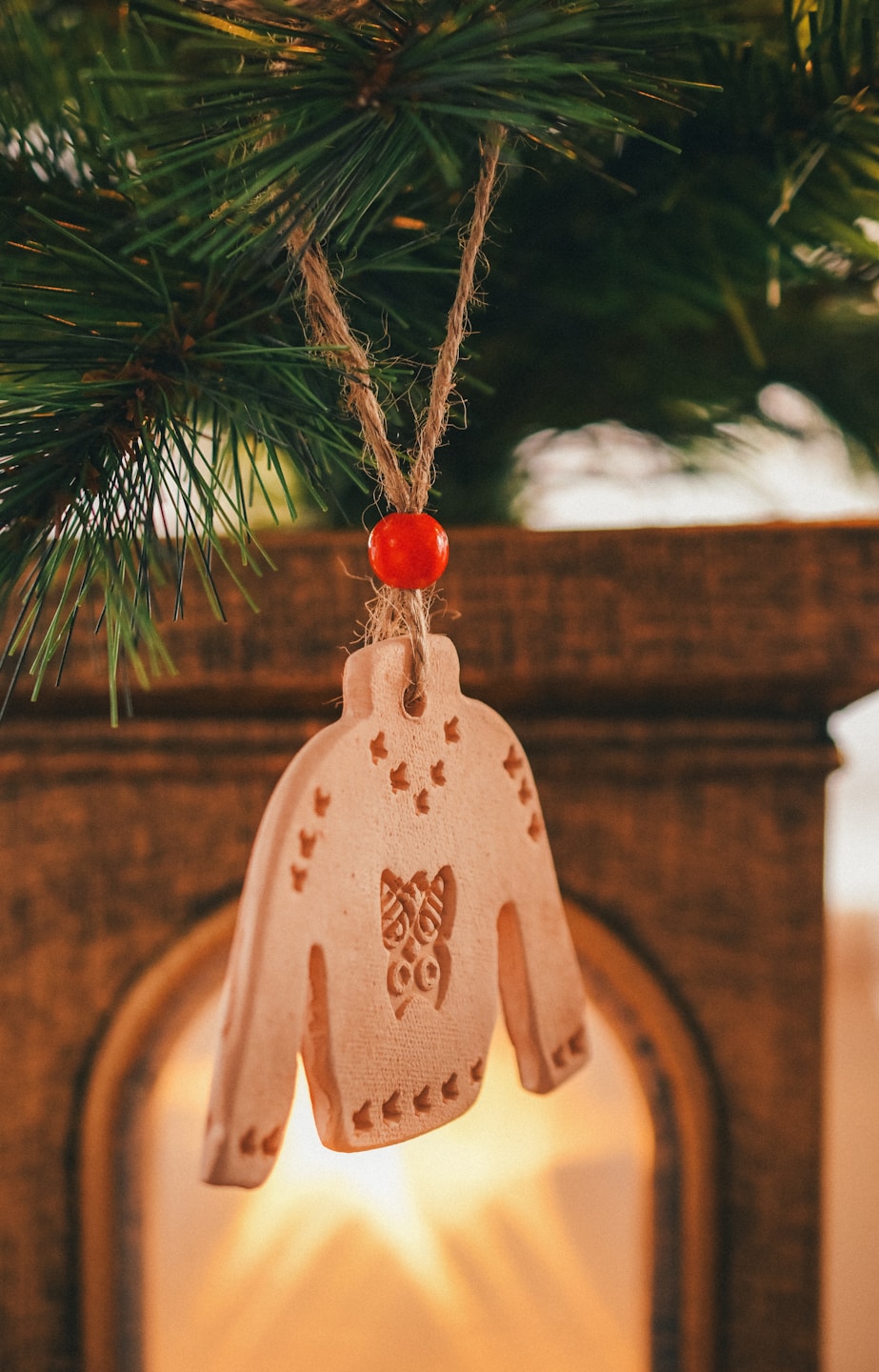
A homemade centrepiece follows the same logic of using what you already have. Candles, pinecones, apples, or citrus gathered around a few branches make a low arrangement that looks amazing on a table. Because everything is either already in the house or naturally biodegradable, there is no need to bring out seasonal plastic pieces that end up stored indefinitely or discarded after one use.
Warm lighting is the final layer of our sustainable Christmas-y home. A few warm-toned bulbs, some candles, or one well-placed string light often achieve more than a room full of physical décor. LEDs keep energy use low, and investing in decent lights means they last for years rather than being replaced every season.
2. Christmas Tree
A potted tree is perhaps the most sustainable option when it comes to Christmas trees, because it is the only real tree that isn’t treated as a single-use object. A cut tree is lovely for a short time, but it is discarded once the needles start to fall, whereas a potted one keeps growing and can return every December or even be replanted outdoors. Not only does it keep a fresh scent, but you can also watch it change over the years (much like you).
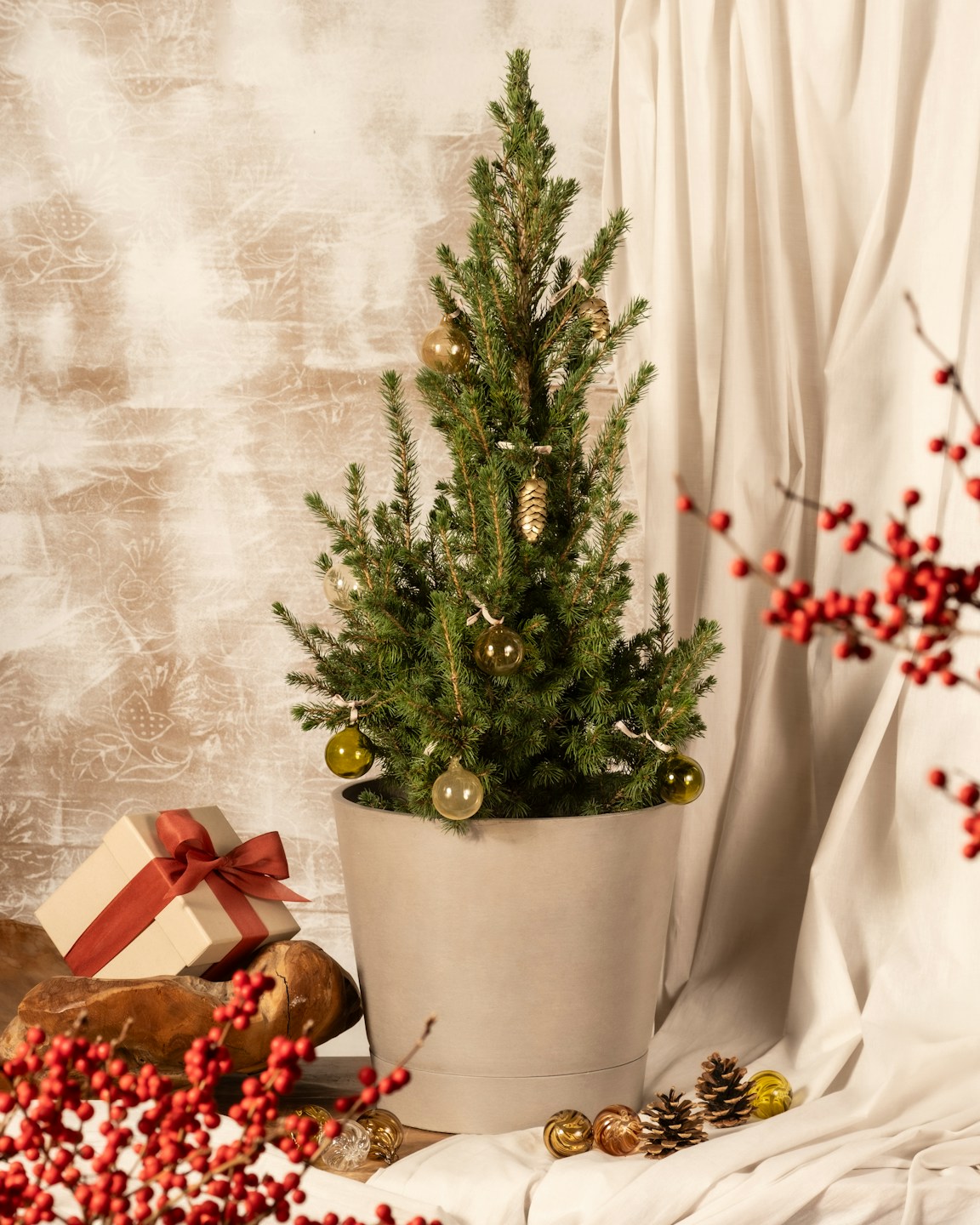
Some people might prefer a lighter approach, such as a branch or a simple wooden form. A found branch placed in a pot gives enough cues for people to see it as a tree, and because it is either already part of nature or made to last, it avoids yearly waste. Once you hang your favourite ornaments, it immediately becomes festive.
If you already own an artificial tree, the most sustainable choice is simply to keep using it. Plastic trees only justify their impact when they remain in use for many years, so replacing one for the sake of having the newest, trendiest social media tree works against the “let’s save trees” logic. Holding on to what you have avoids new production entirely, and you can still refresh it each season with small tweaks such as a different light pattern, a new topper, or a few homemade decorations.
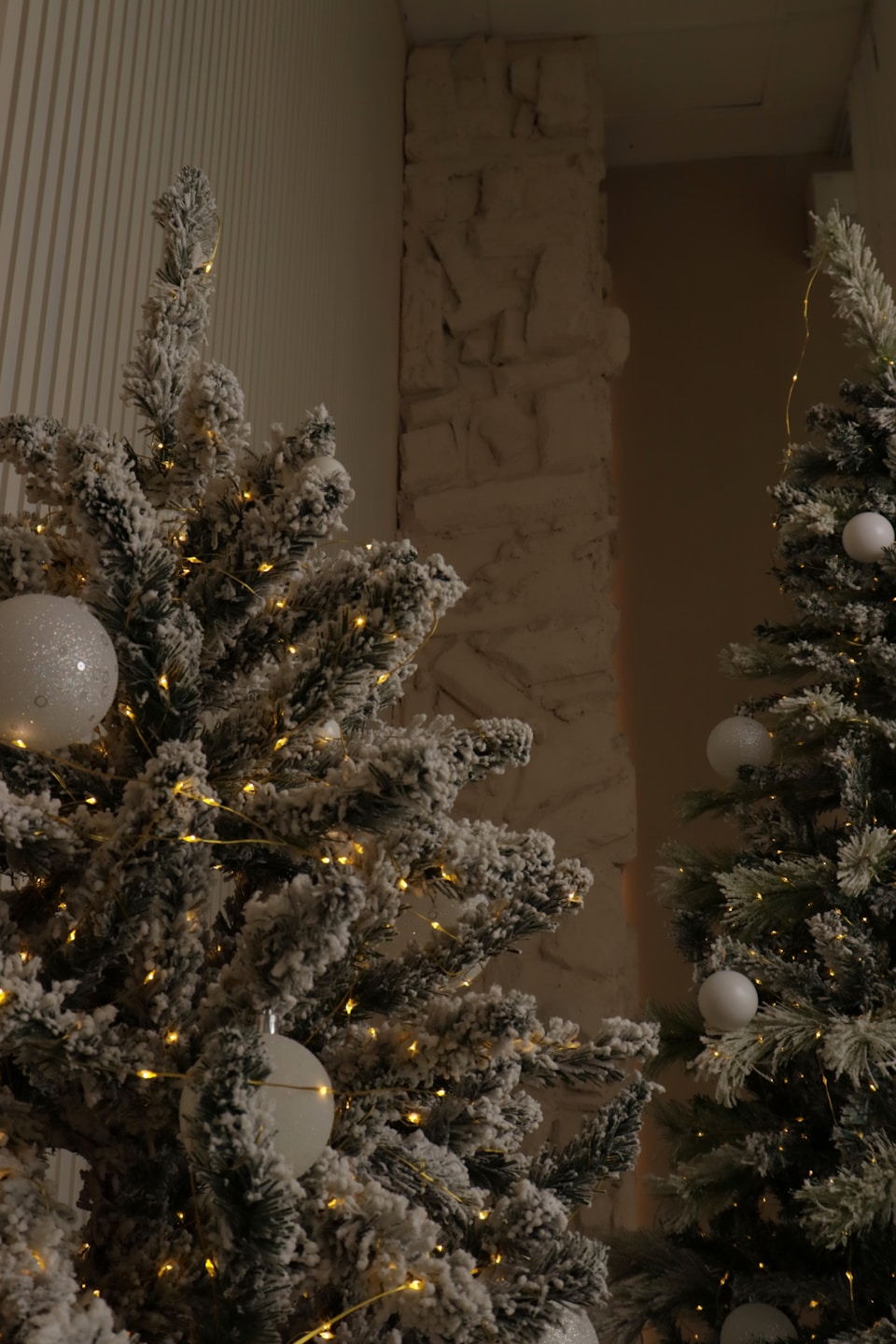
One thing to keep in mind is that a Christmas tree works because of what it represents, not because it is truly a tree. The shape, the lights, the green tones or wooden textures, and the act of getting together to decorate are what create the nostalgic Christmas feeling we all know and love.
3. Gifts
A sustainable Christmas often starts with the gifts themselves, as they tend to be the culprit of much of the waste that builds up during the season. A simple question can help when making a decision: Will this person genuinely use the gift more than once? This naturally filters out objects that look amusing for a moment but have no real place in a home.

From there, it becomes easier to lean towards things made from materials that last, such as wood, metal, glass, cotton, or wool. These materials will survive rough handling and don’t immediately feel historic after a year or two, so the gift can be loved without needing to be replaced or discarded too quickly. Furthermore, one should also steer clear from offering several small items, choosing instead fewer but better things. This avoids a familiar outcome: half of what is exchanged ends up unused. Some people actually prefer to choose experiences, be they gastronomic, relaxing, or anything else a loved one might enjoy.
Wrapping is an area where small changes have a big effect. Avoid single-use paper or plastic by adapting scarves, tea towels, fabric scraps, tote bags, plain kraft paper, or even newspaper (with a simple ribbon). This makes the whole process feel comfy and pleasant, mainly because these materials can be folded away and used again without much effort (plus, they cost nothing if you use what you already have at home).
4. Food
The easiest way to keep Christmas sustainable without losing any magic is to plan your portions. Once you acknowledge that people slow down when there are several courses and that children and older relatives usually eat only part of an adult portion, it becomes clearer why preparing about a quarter less than your first instinct already makes a noticeable difference.

Seasonal ingredients are also a great way to stay sustainable in the holidays, as winter products are at their tastiest and don’t demand extra energy to grow or transport. Vegetables such as carrots, squash, potatoes, leeks, cabbage, and beets can be used in most Christmas dishes, and fruit like apples, pears, and citrus, plus nuts and cranberries, can survive for a long time.
Thinking ahead about leftovers ties these choices together, because food only becomes waste when it has no next step (or mouth). If you picture tomorrow’s meal while planning today’s, it becomes easier to choose which dishes to cook. Roast vegetables can be blended into a simple soup or arranged into a tart, meat and poultry can move into sandwiches, pasta, or fried rice, and yesterday’s bread can be cut into croutons or used for a basic pudding.
Sustainability at Christmas is all about noticing how each decision shapes the days around it. When greenery can return to the soil, when a tree can stay with you for several years, when gifts are chosen with real use in mind, and when food is prepared with tomorrow’s meal already considered, the season becomes lighter without losing any of its cosy magic. These are but small adjustments, yet they build a version of Christmas that feels warmer precisely because it is simpler, easier to handle, and rooted in what people might actually enjoy.


