



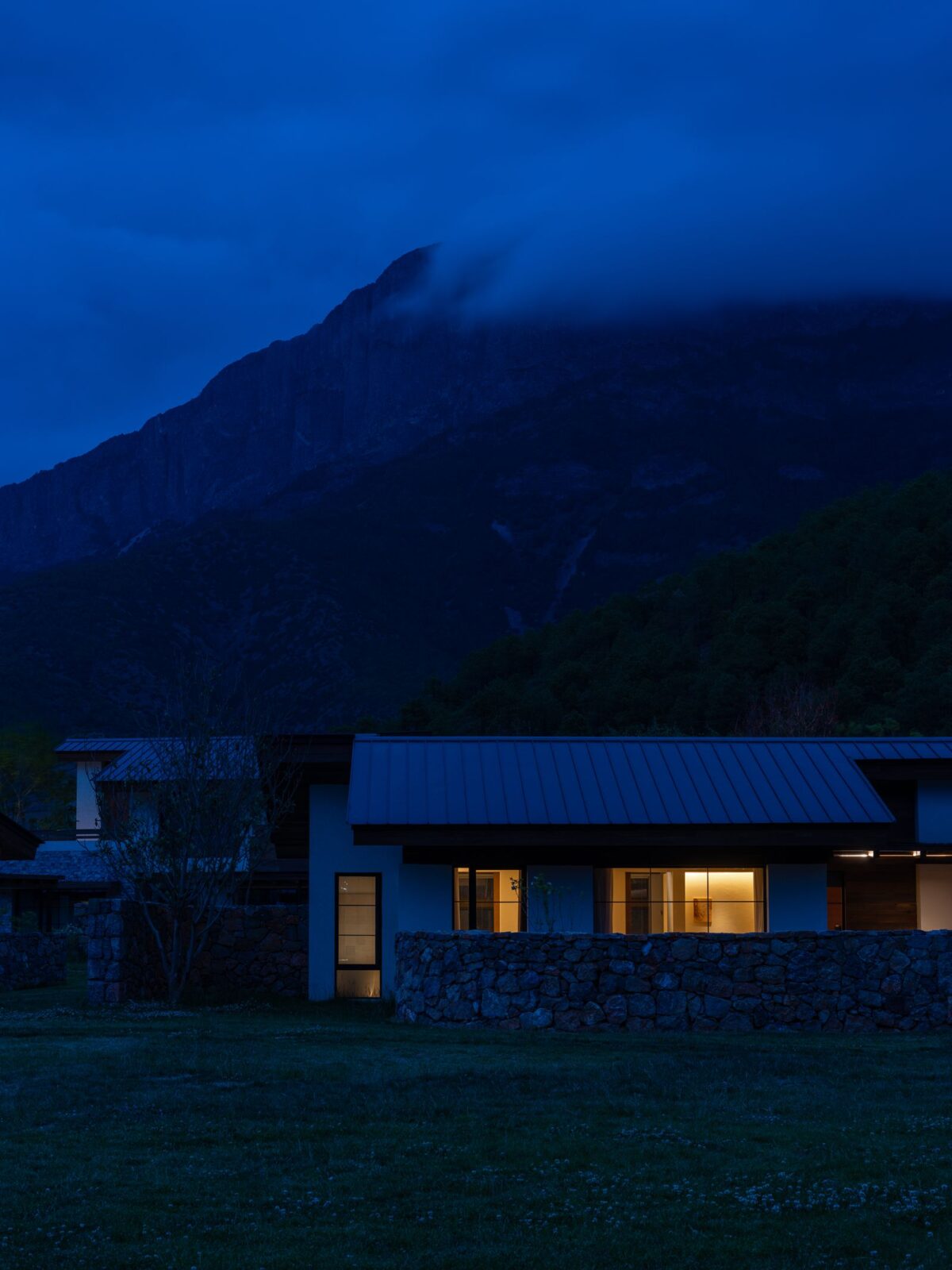
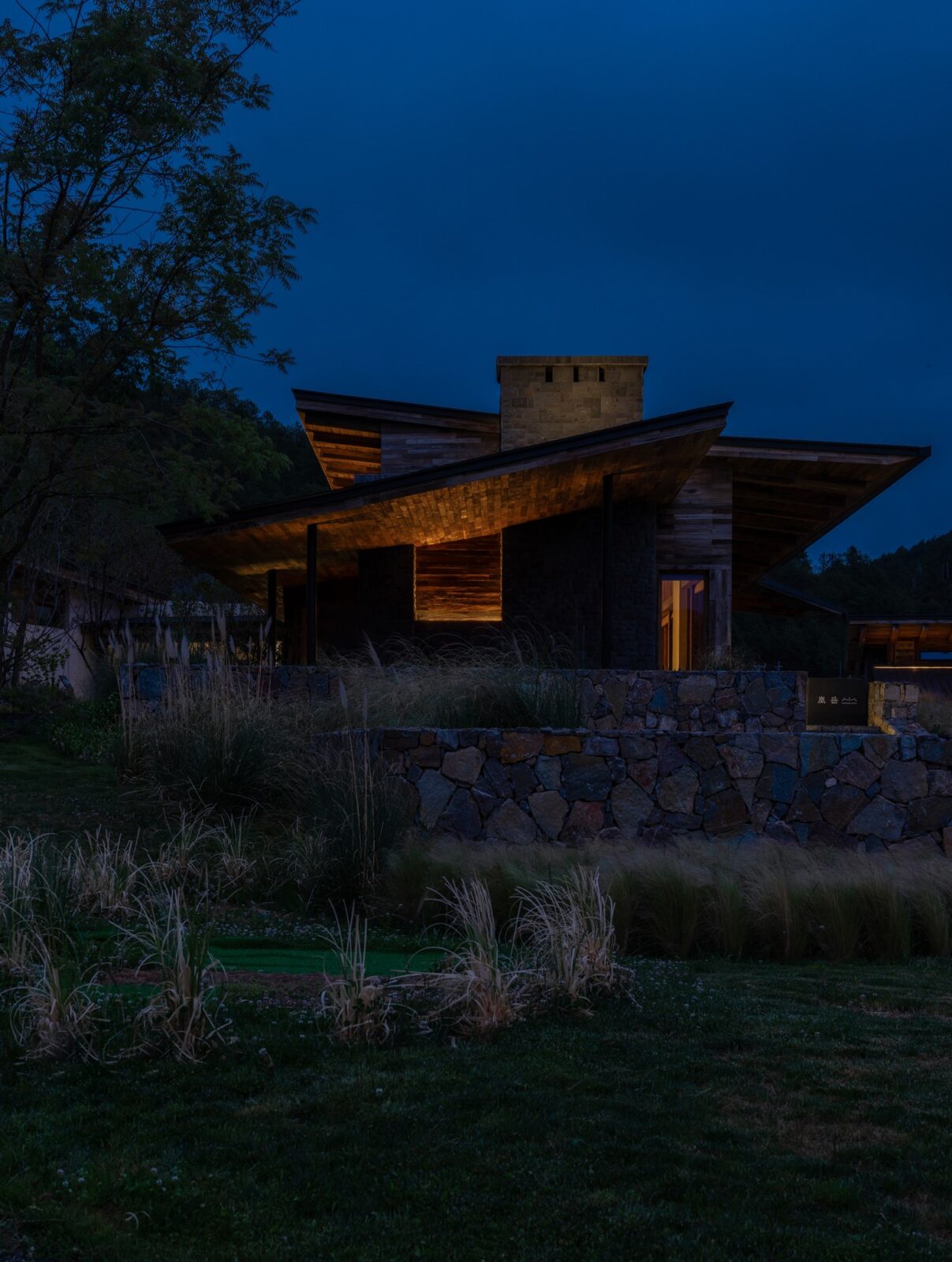
At Lugu Lake Lanyue Hotel in Lijiang, China, Beijing PRO Lighting Design leaves the roof unlit, concentrating illumination on the lower parts of the building and its interiors. After dark, the upper architecture recedes, keeping the hotel from dominating the lakeside view.
There is a temptation in architectural lighting to make sure every part of a building gets its evening introduction. A roofline is outlined, a façade washed, an entrance given enough attention to suggest something quite significant is happening behind it. Here, guests need to find their way in, but the building does not need to be visible in its entirety.
Lighting the hotel at ground level
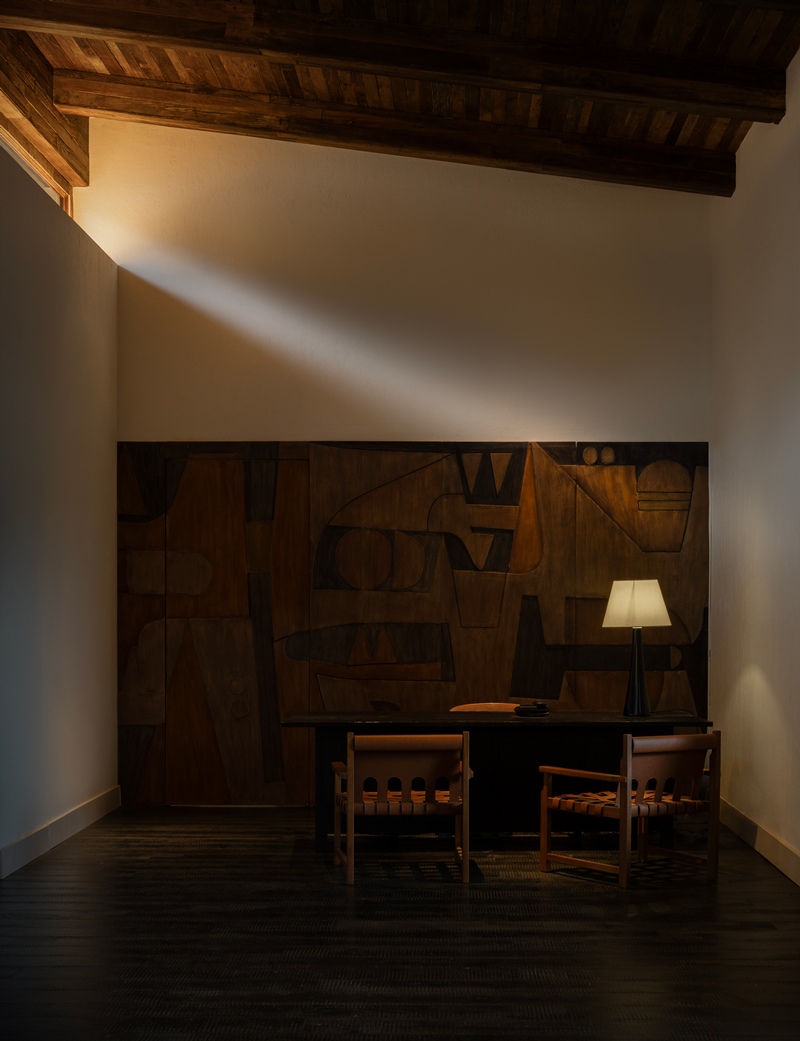
Led by Li Hui, with designer Jing Xin, the scheme received recognition in Hospitality Lighting Design at the LIT Lighting Design Awards. The team drew on Lugu Lake’s moonlight, mist and campfires, translating these references into soft light across wood surfaces and a warm glow in public areas. At the drop-off, selected points of light guide arrivals.
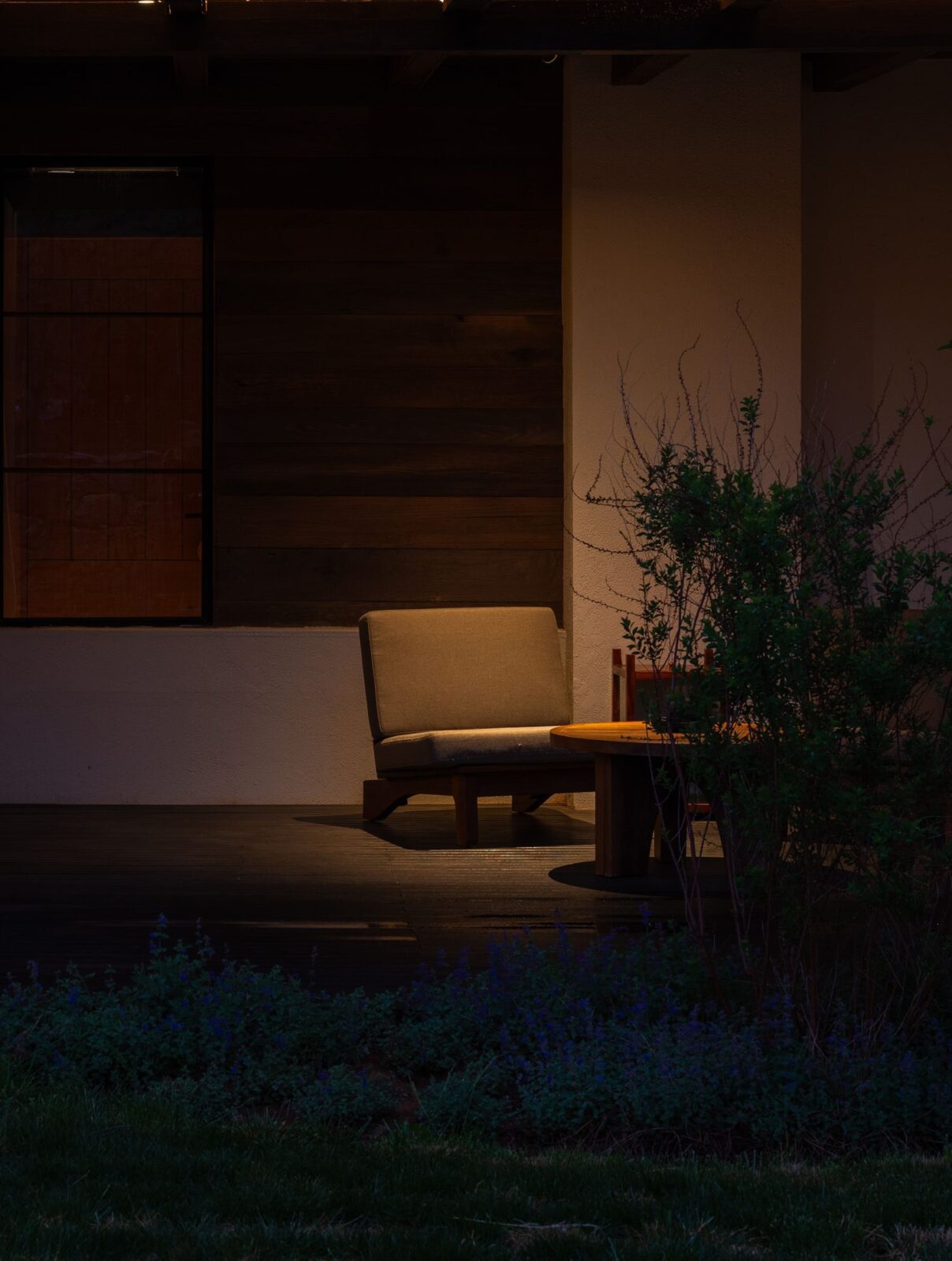
Keeping the emphasis closer to the ground directs attention towards entrances, materials and the spaces people occupy. Someone arriving can read where to go without having every architectural detail competing for their attention.
Warm light where guests gather
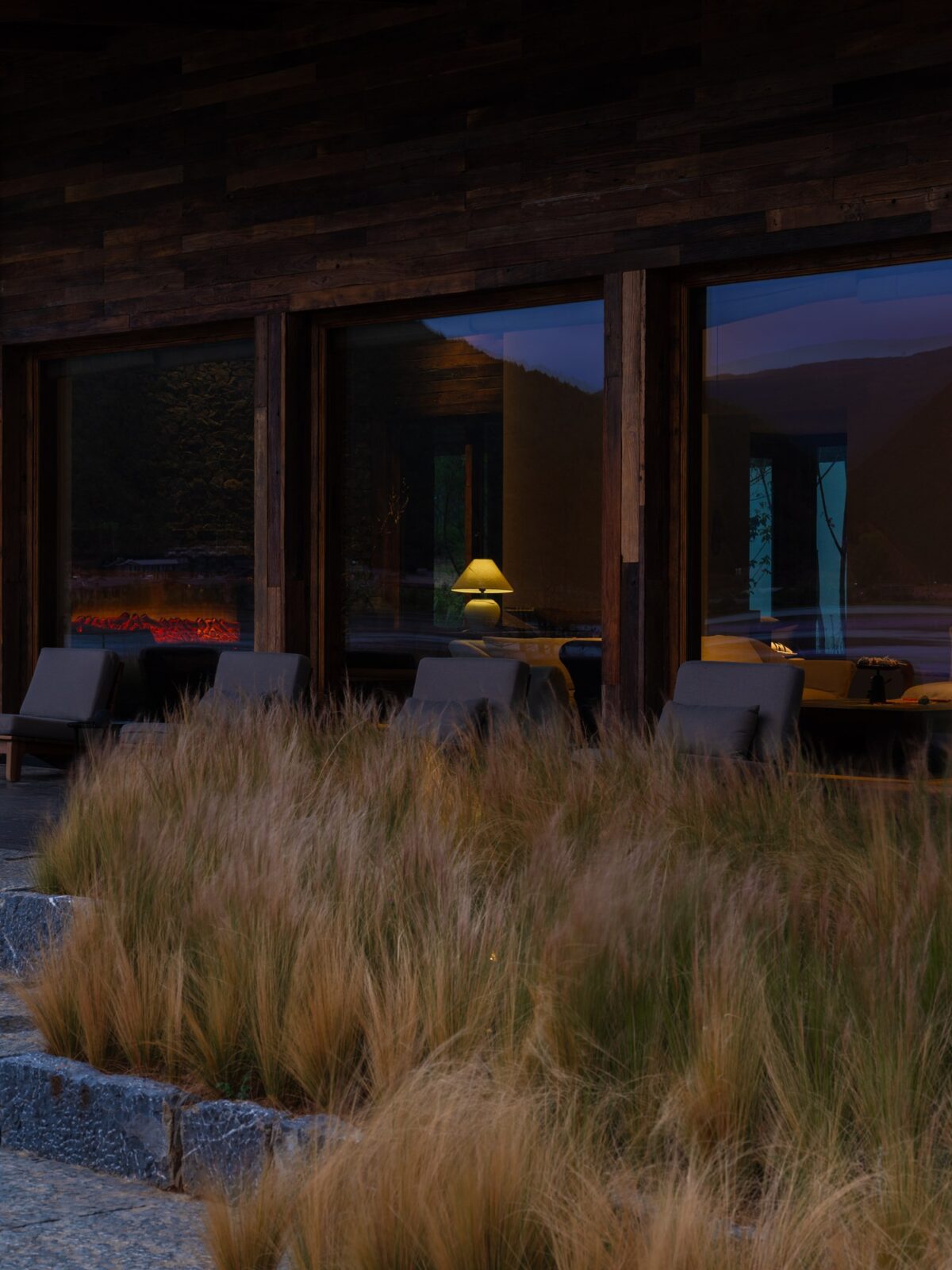
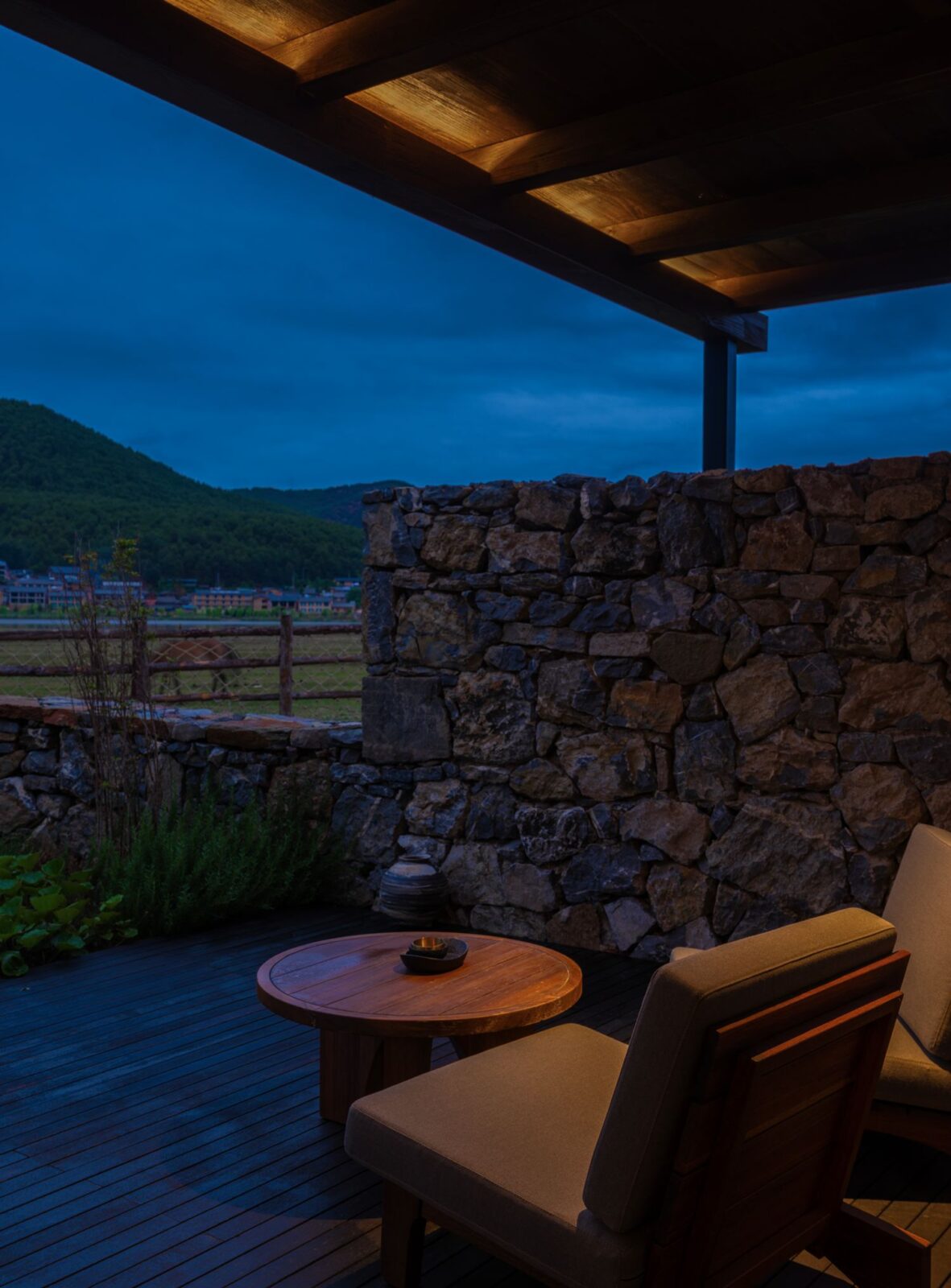
The IALD’s account of the project describes pools of warm light in gathering spaces, with comparatively darker areas between them. Lighting picks out materials and architectural details associated with regional building traditions, keeping their textures visible at low light levels.
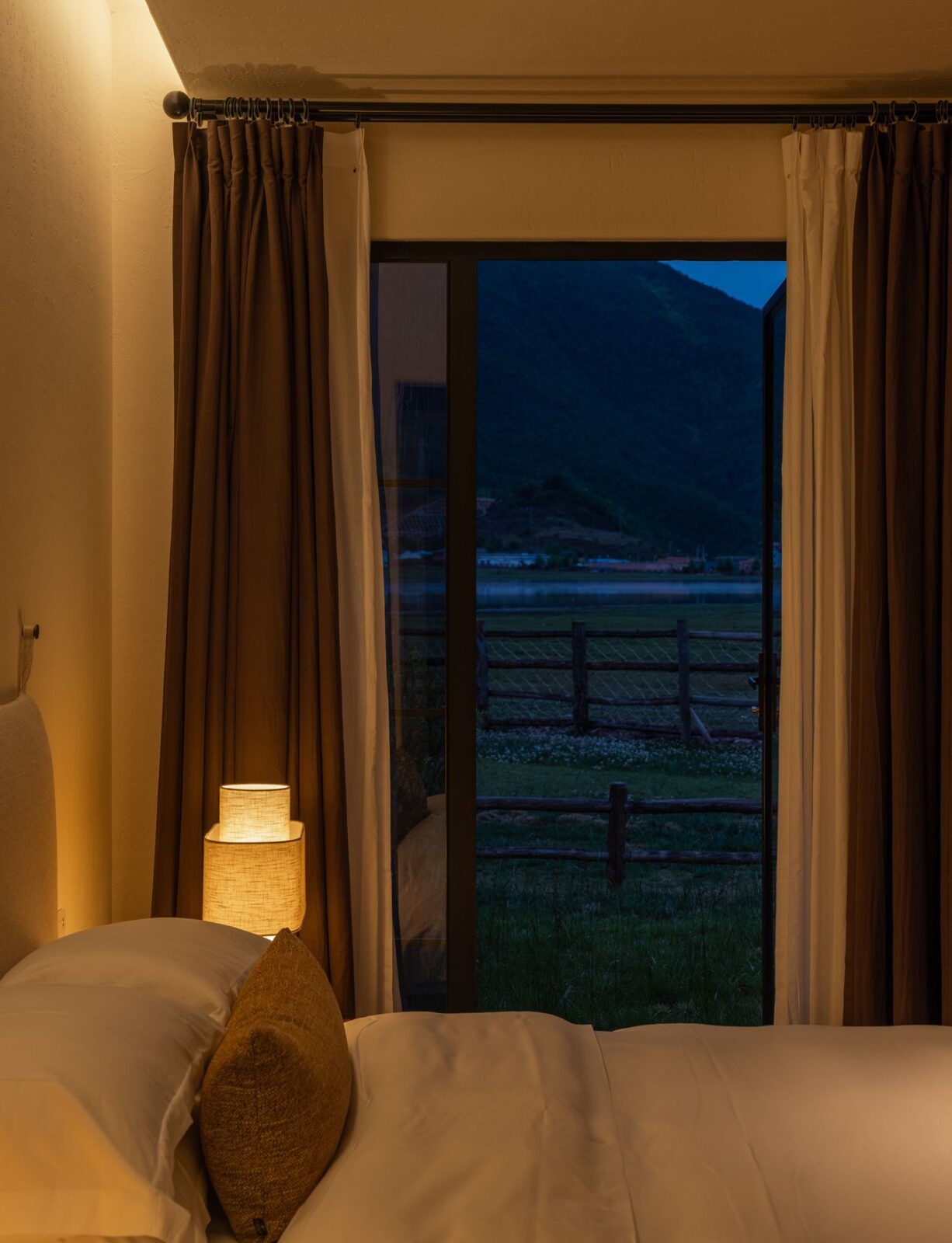
An evenly bright environment gives the eye little reason to pause anywhere in particular, whereas a lit seating area offers an obvious destination. Moving towards it, guests pass through changes in brightness that make the shared spaces feel more intimate. Indoors, warm lighting makes the rooms feel sheltered, while floor-to-ceiling windows frame the lake and mountains beyond.
Keeping the lake visible after dark
According to the IALD, light levels are deliberately kept low so guests’ eyes can adjust to darkness and appreciate moonlight and stars reflected on the water.
A room with a view can lose much of its appeal after sunset if the interior becomes the brightest thing in sight. Here, the lighting is designed to let guests settle into the evening and still see something of the place they have travelled to.


