



Header: Josipa Škrobo
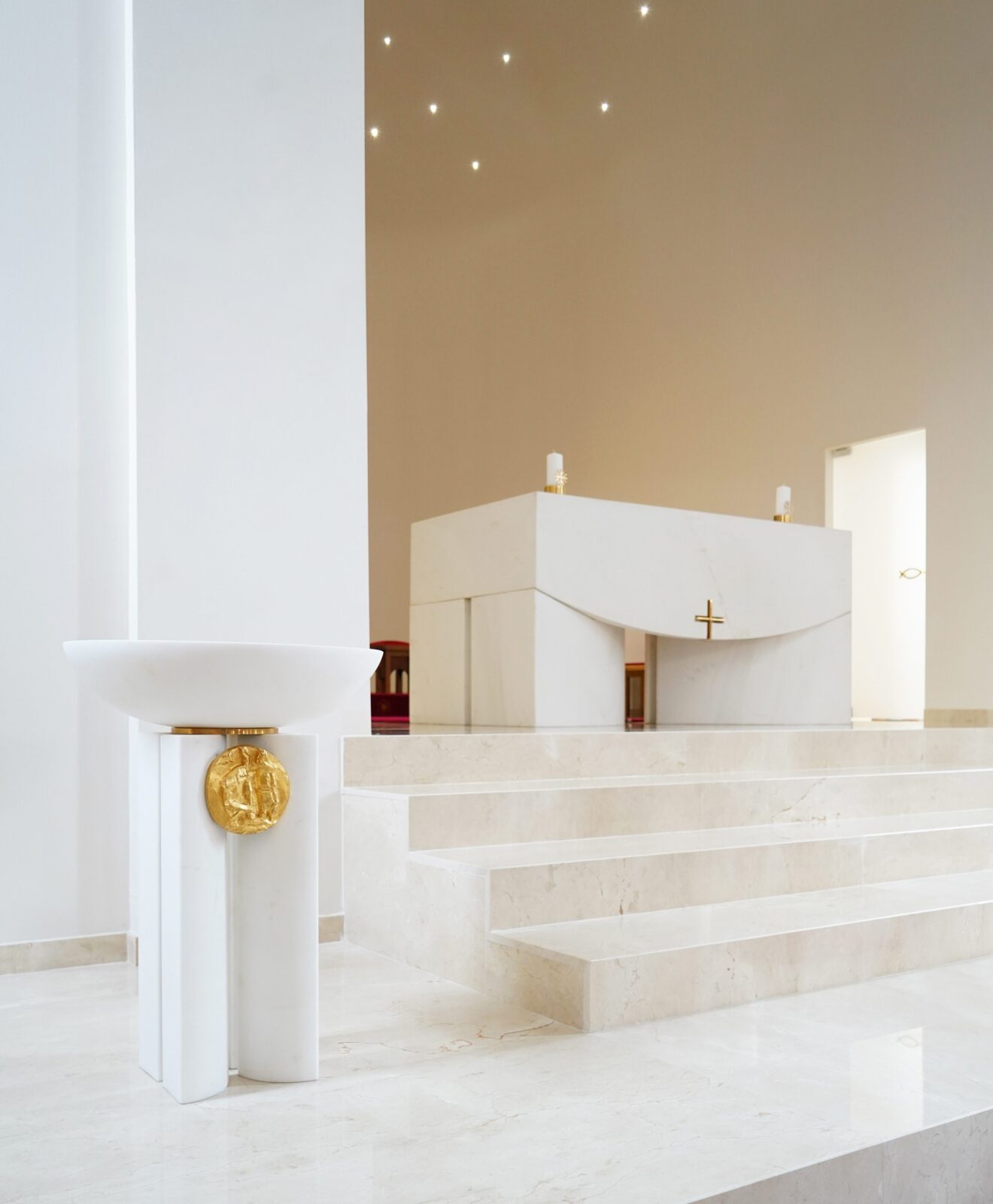
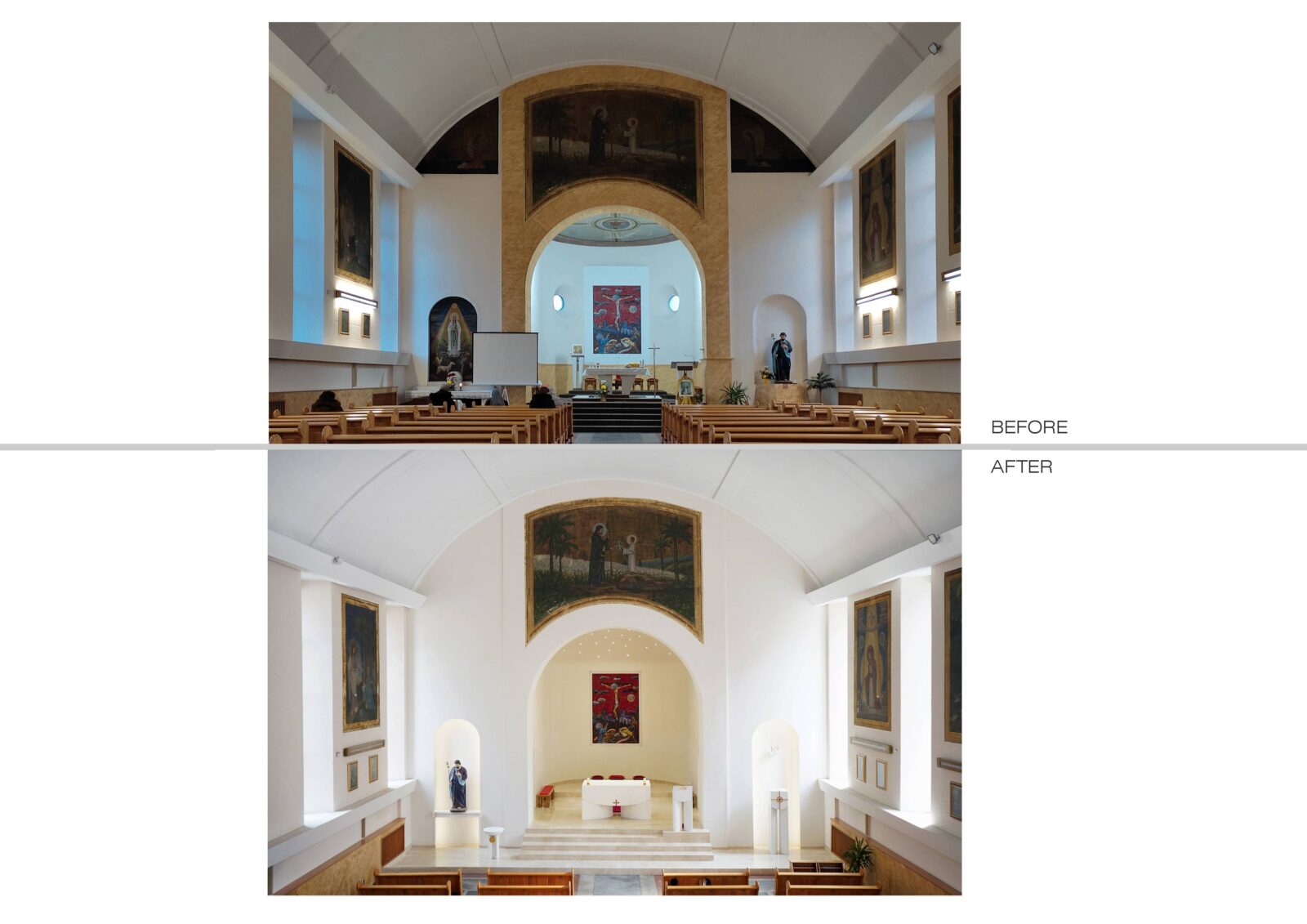
The Church of St. Joseph in Zenica stands in a city shaped by industry and everyday labour. Built in 1939 on the foundations of an older stone church from 1870, it has always been closely tied to the lives of working families. Its dedication to St. Joseph, the patron saint of workers, feels natural in this context. The recent renovation of the sanctuary respects this social and historical background while giving the interior a clear, contemporary voice.
The renovation project was developed by B.A. Arch. Josipa Škrobo, senior assistant at the Faculty of Architecture in Sarajevo. It has been selected for the exhibition “Collegium Artisticum 2024” in Sarajevo, the most important exhibition of architecture, urbanism and design in Bosnia and Herzegovina. This recognition places the project firmly within the current architectural discussion in the region.
An ode to artistic religious traditions
The brief, while simple, shows the thoughtfulness and devotion that went into developing the project: to use the motifs of traditional tattooing among Catholics in Bosnia and Herzegovina as a reference point, then translate that reference into new, modern detailing.
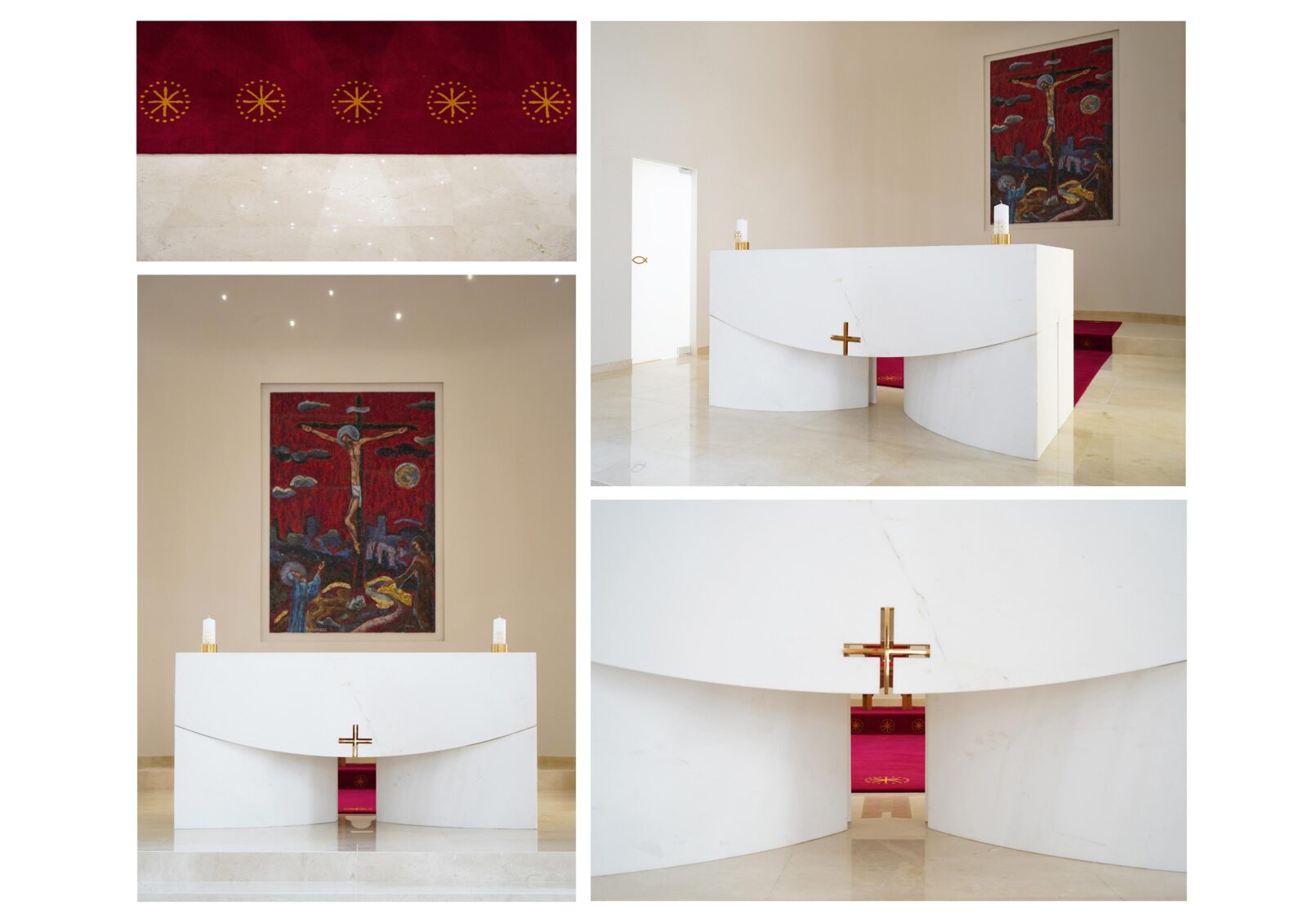
The materials used in said details were carefully chosen to define and highlight the tradition behind them. White stone was used to represent durability and purity, while gold represents nobility and sublimity. This dual palette keeps the space simple and calm, as there aren’t many contrasting finishes to take the attention out of one’s relationship with their faith.
Simplicity and religious devotion
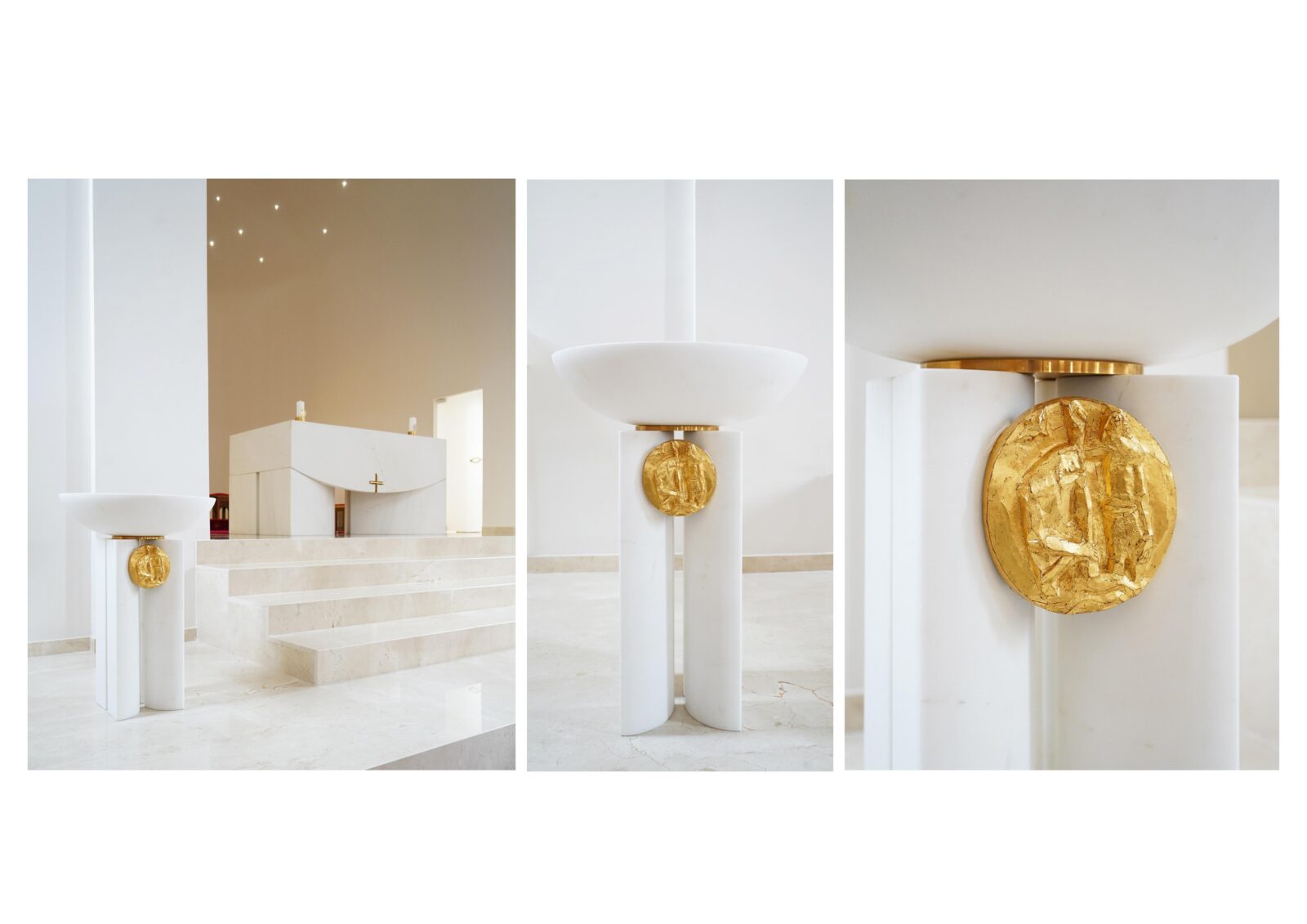
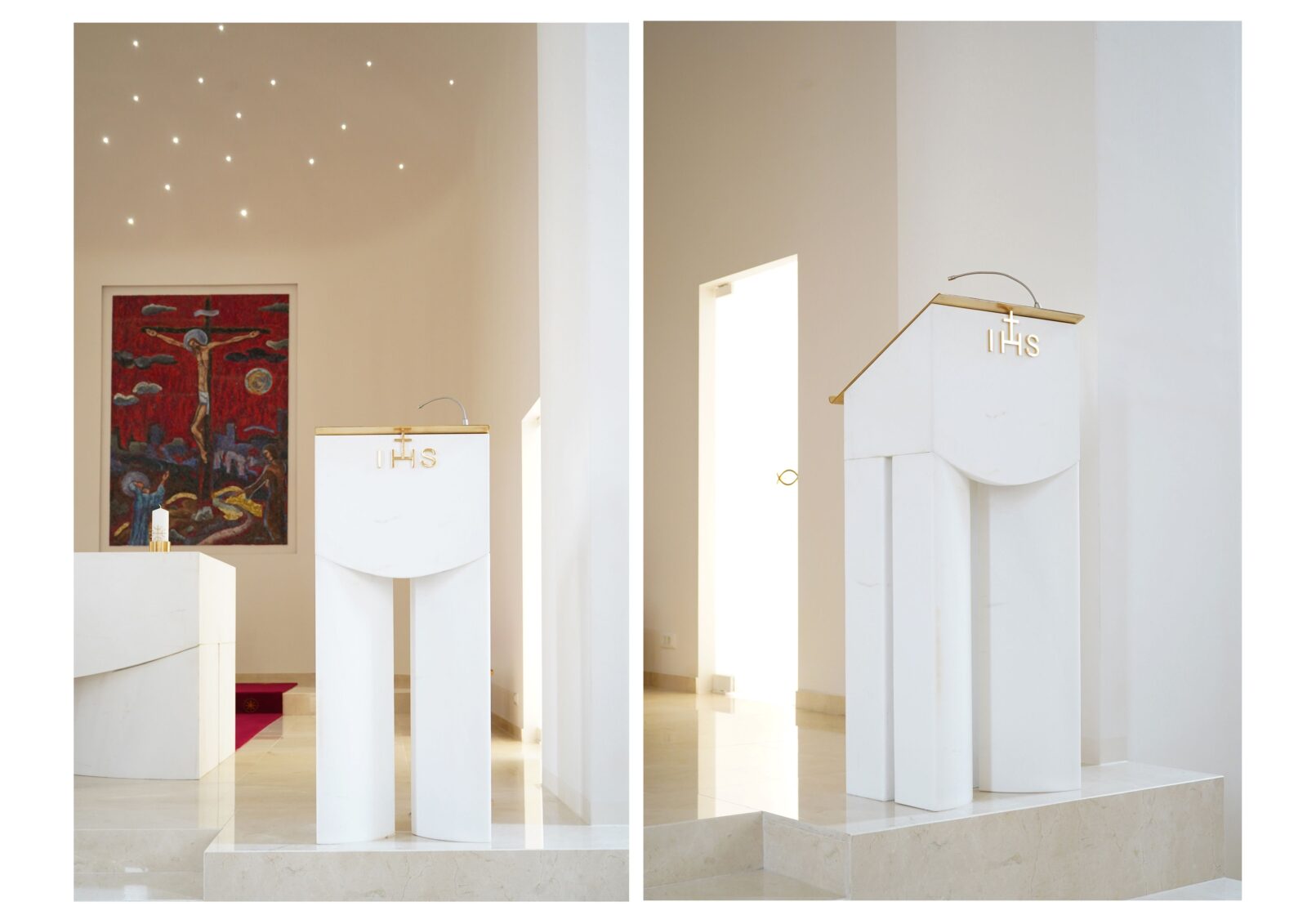
One of the main elements of the design is a four-part pedestal, which was designed free of excess to stimulate the devotion of visitors. Their only ornament is a gold medallion by Mile Blažević.
It is from the traditional wooden benches that the mosaic by Blaženka Salavarda can be better admired. The artwork uses an artistic method that is part of the early Christianity culture, where rich coloured stones were used to portray loving scenes and characters from the Bible.
Tattoo motifs translated into space
The interior details draw inspiration from traditional Catholic tattooing in Bosnia, a custom that has survived through centuries. Motifs such as crosses with circles, once marked on skin, now appear in architectural elements and subtle decorative lines. These references can also be found in local embroidery, creating a clear link between faith, body and home. In the church, they are reduced to clear forms and readable patterns, making the space feel familiar rather than distant.
The apse, light and the sense of openness
A key element of the sanctuary is the apse, with a semi-circular presbytery covered by a semi-dome vault. This form has deep roots in sacral architecture and here it suggests openness rather than separation. Above it, carefully placed lighting creates the feeling of a star-filled sky. The light does not overwhelm the space, but gently follows the curve of the vault, changing throughout the day and during services.
Recognition beyond local borders
This renovated church by architect Josipa Škrobo has caught the international eye. The space, baptised after St. Joseph, has recently been recognised as the winner of the Interior Design/Civic Buildings category at the Paris Design Awards 2026 for the way it celebrates local religious traditions.
The renovated sanctuary of the Church of St. Joseph in Zenica offers an interior shaped by light, white stone and carefully chosen artistic work. Rooted in local religious customs and working-class history, the design speaks in a clear, modern language without losing its sense of tradition. The result is a space that feels calm, open and optimistic, offering both spiritual focus and a strong aesthetic experience to everyone who enters.

