



Header: Vivek Eadara
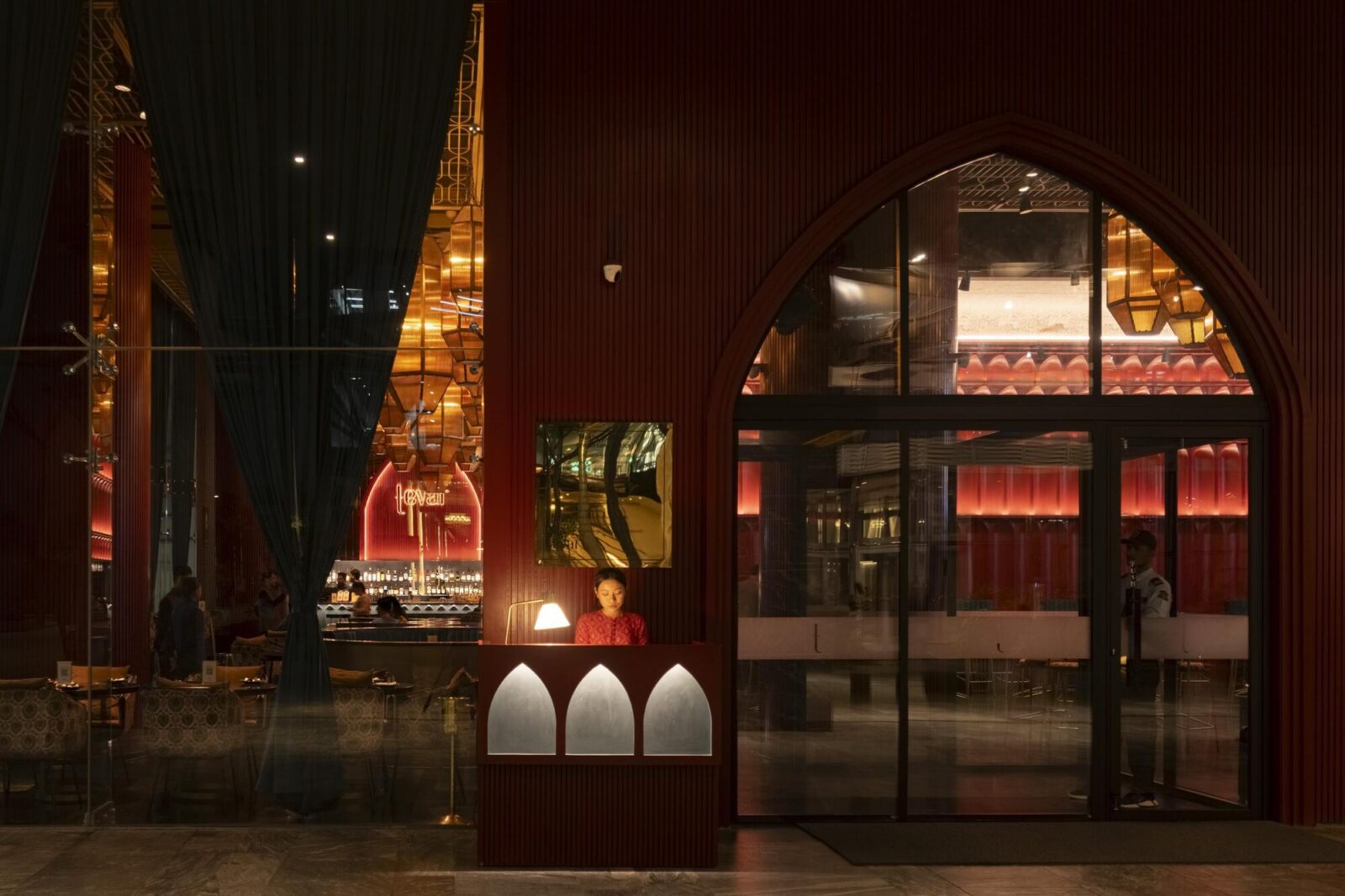
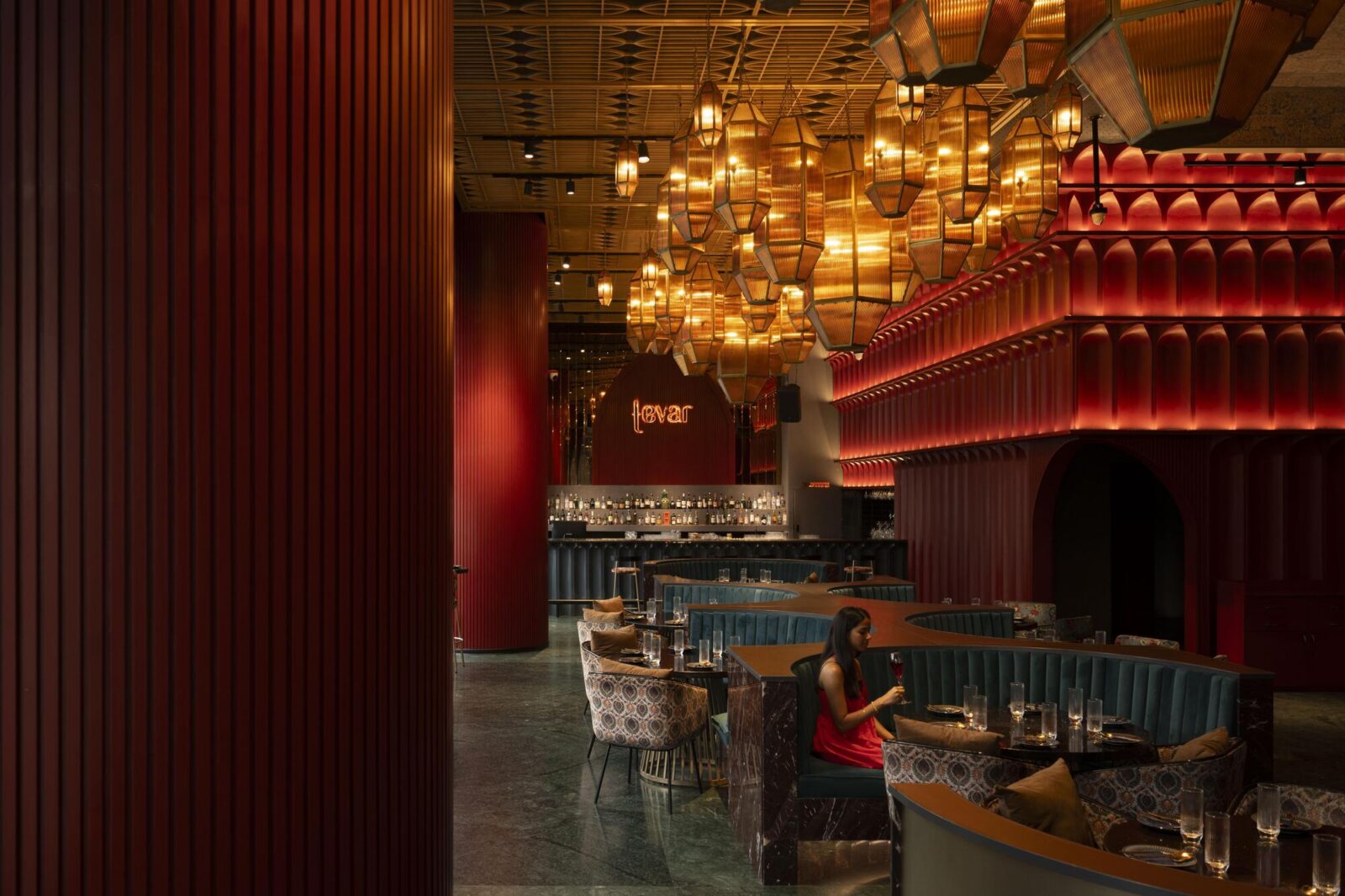
Tevar – The Progressive Indian Kitchen & Bar is a restaurant in Sattva Knowledge City, in Hyderabad, the capital of southern India’s Telangana state, where 89 lantern-like lights made of recycled aluminium and hand-blown glass hang over the main dining room. The impressive lighting was designed by Love of Light, with Dashak Agarwal as lead designer, and the architecture and interiors were created by 23 Degrees Design Shift, named after the 23-degree tilt of the Earth’s axis. Completed in September of 2023, the project has since won the “Bar and Restaurant Lighting Design” category at the LIT Lighting Design Awards.
The restaurant
Tevar belongs to entrepreneurs Narendra Pal Singh and Nikhil Dhawan, who wanted regional Indian dishes served in a modern, contemporary way. The kitchen is headed by chef Radi Manoj, and his menu includes a kakori kebab made with lotus stem and served on a piece of rusk, as well as pani puri brought to the table on a wooden trolley, much like a street vendor would. Inside, a large bar covers one side of the room, with a stage for live music on the other.
Three layers of light
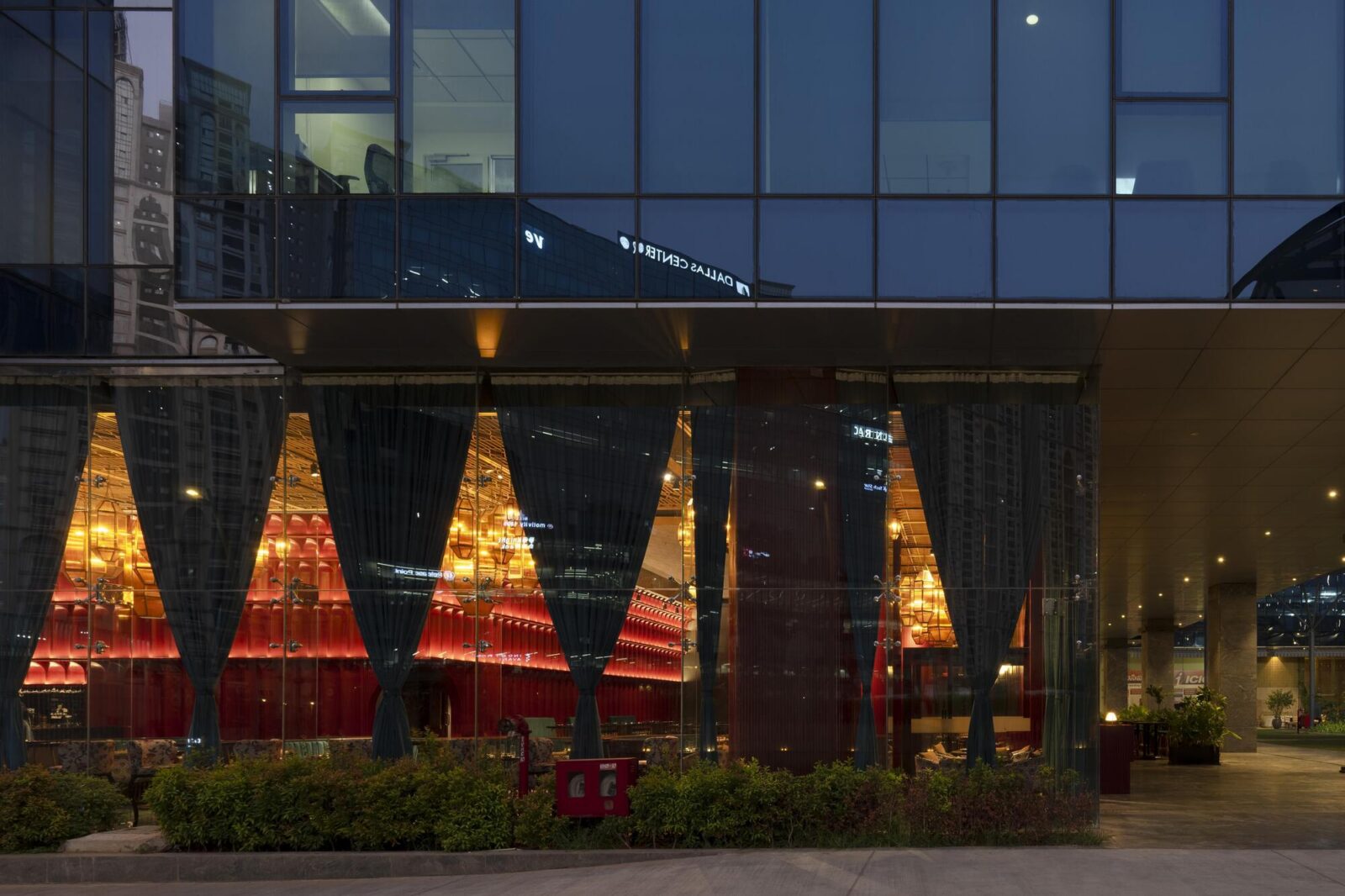
Love of Light built the design on three layers: ambient light, focal glow and what the studio calls a “play of brilliance”. This is to say that ambient light is the soft, even base that lets guests see the whole room, focal glow picks out the things they should look at, and the play of brilliance adds sparkle through small, bright points of light. At Tevar, the room is not lit to the same brightness everywhere, as the accents were especially placed to guide the eye across the dining areas.
The chandelier and jharokhas
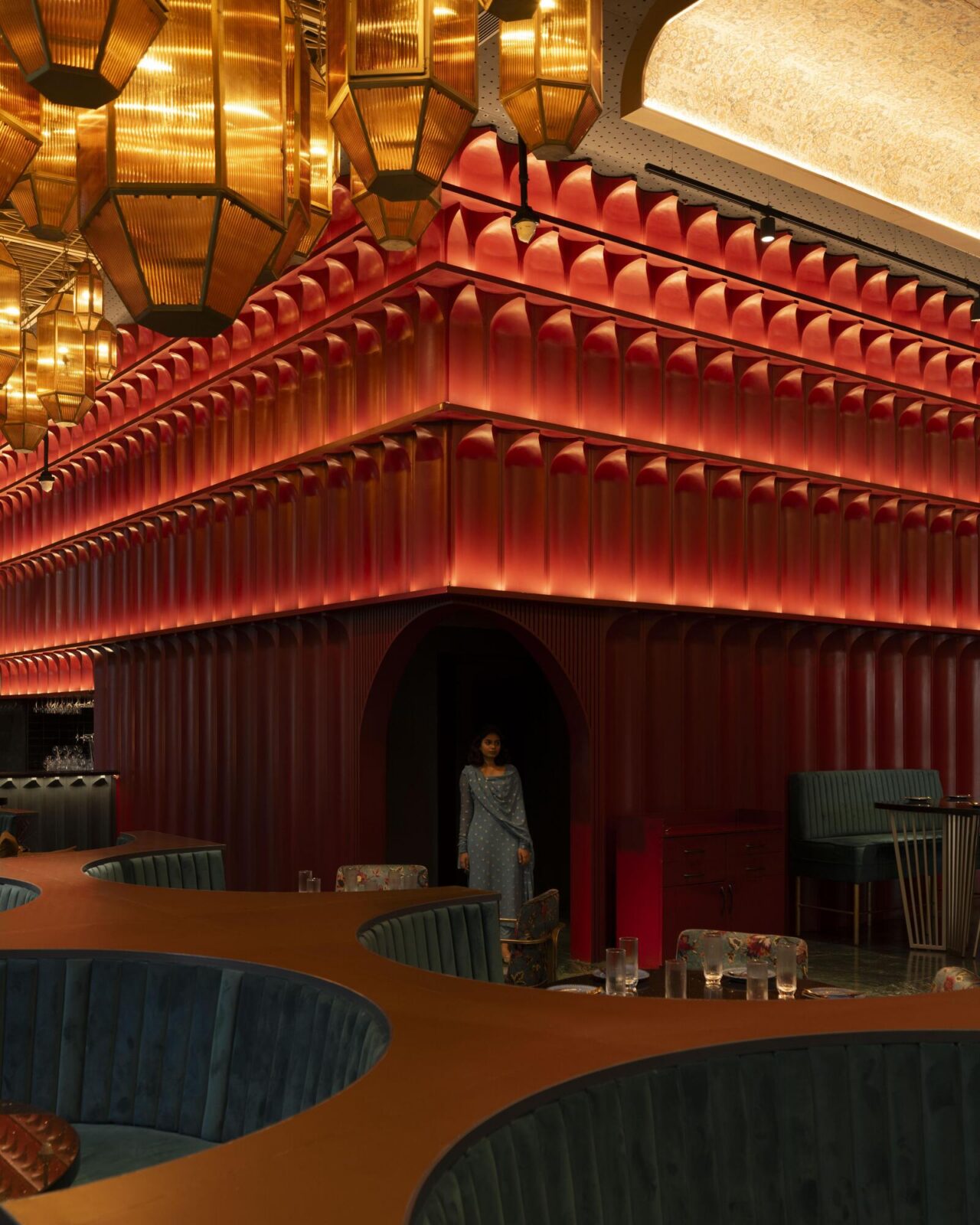
The main dining area is lit by a large chandelier made of 89 warm lantern-like fixtures, which hang across the ceiling almost as a unit. Each piece was made from recycled aluminium and hand-blown glass, all of it sourced within 100 kilometres of the restaurant, and every element went through a long series of prototypes before being produced.
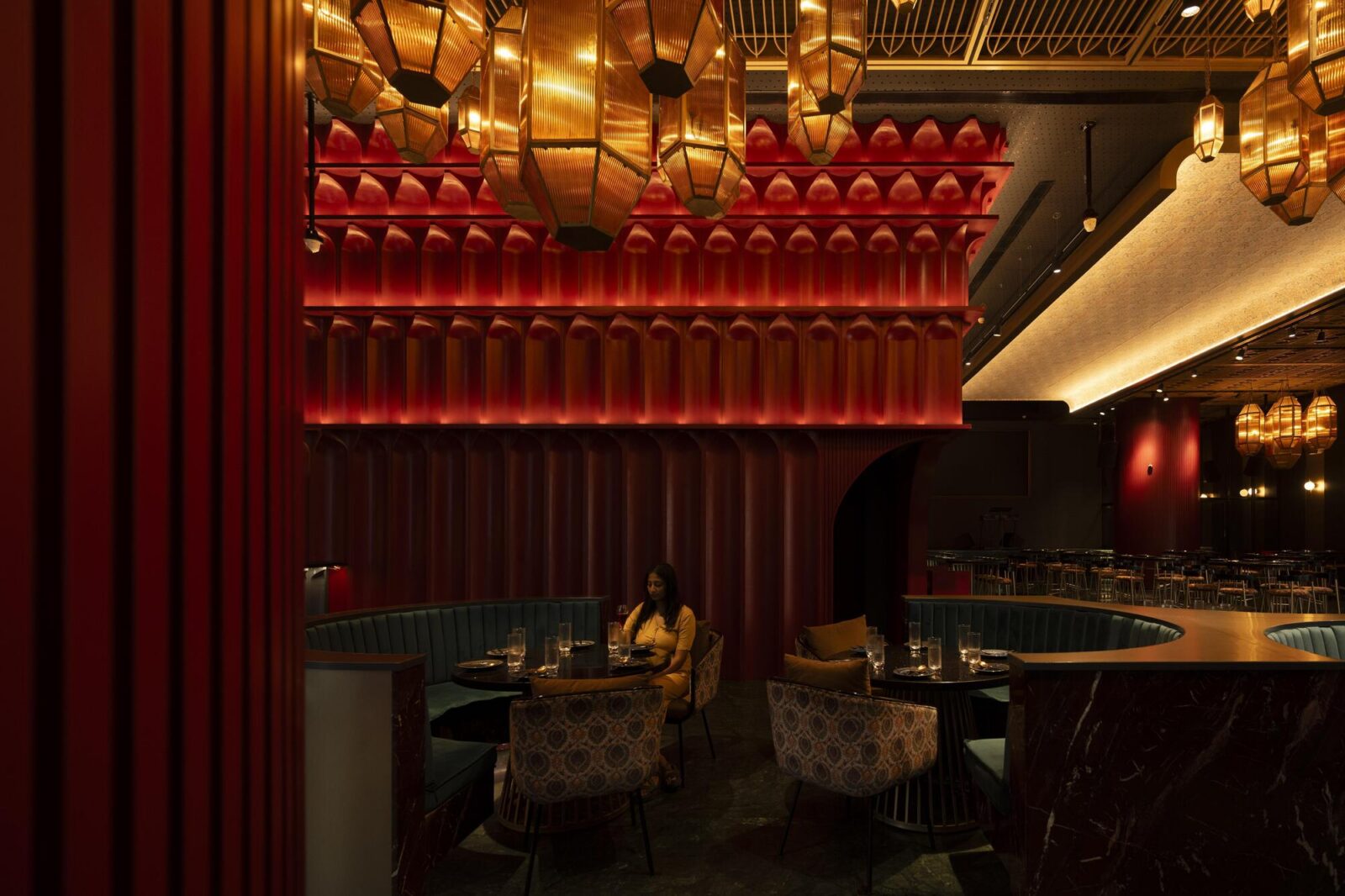
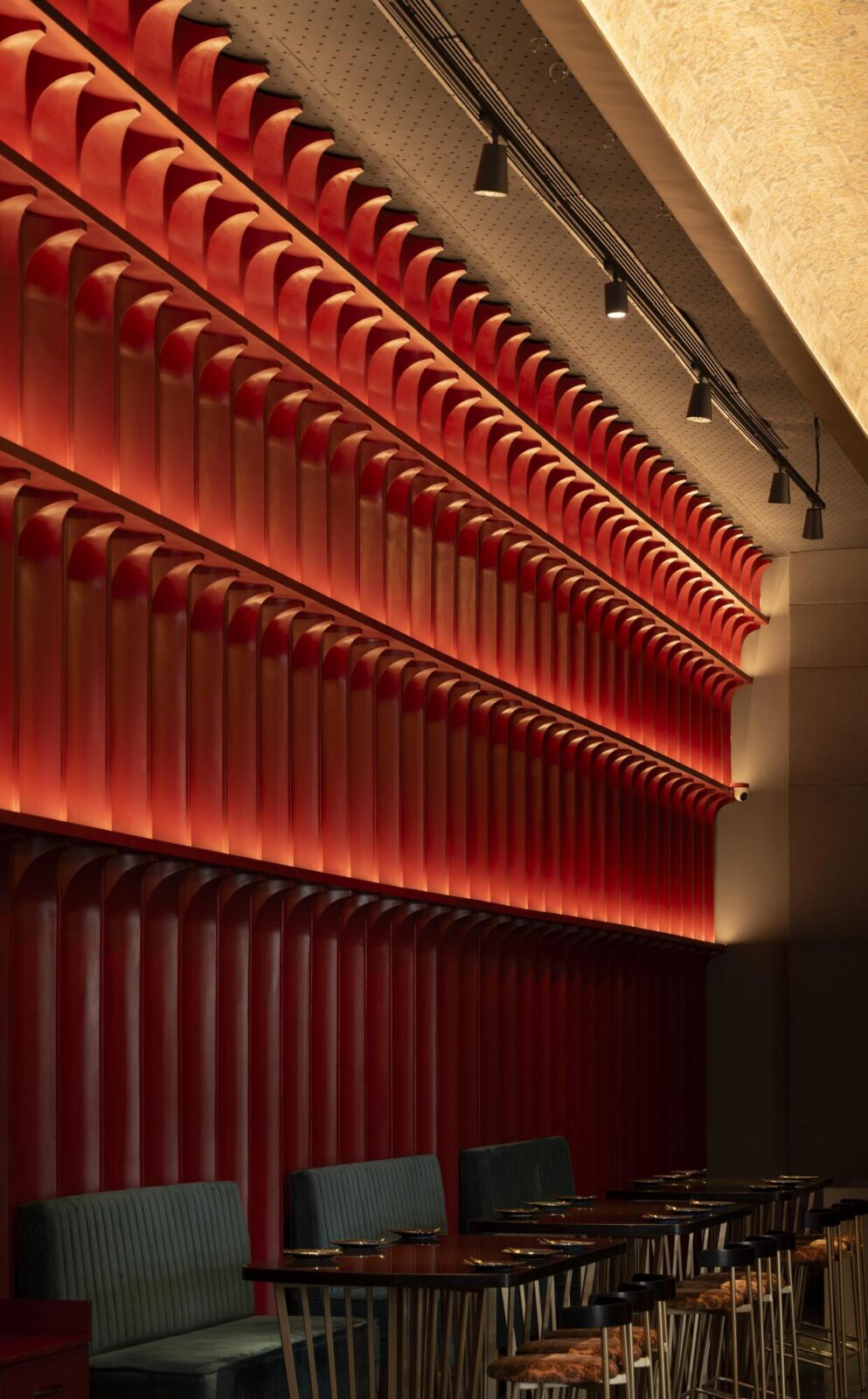
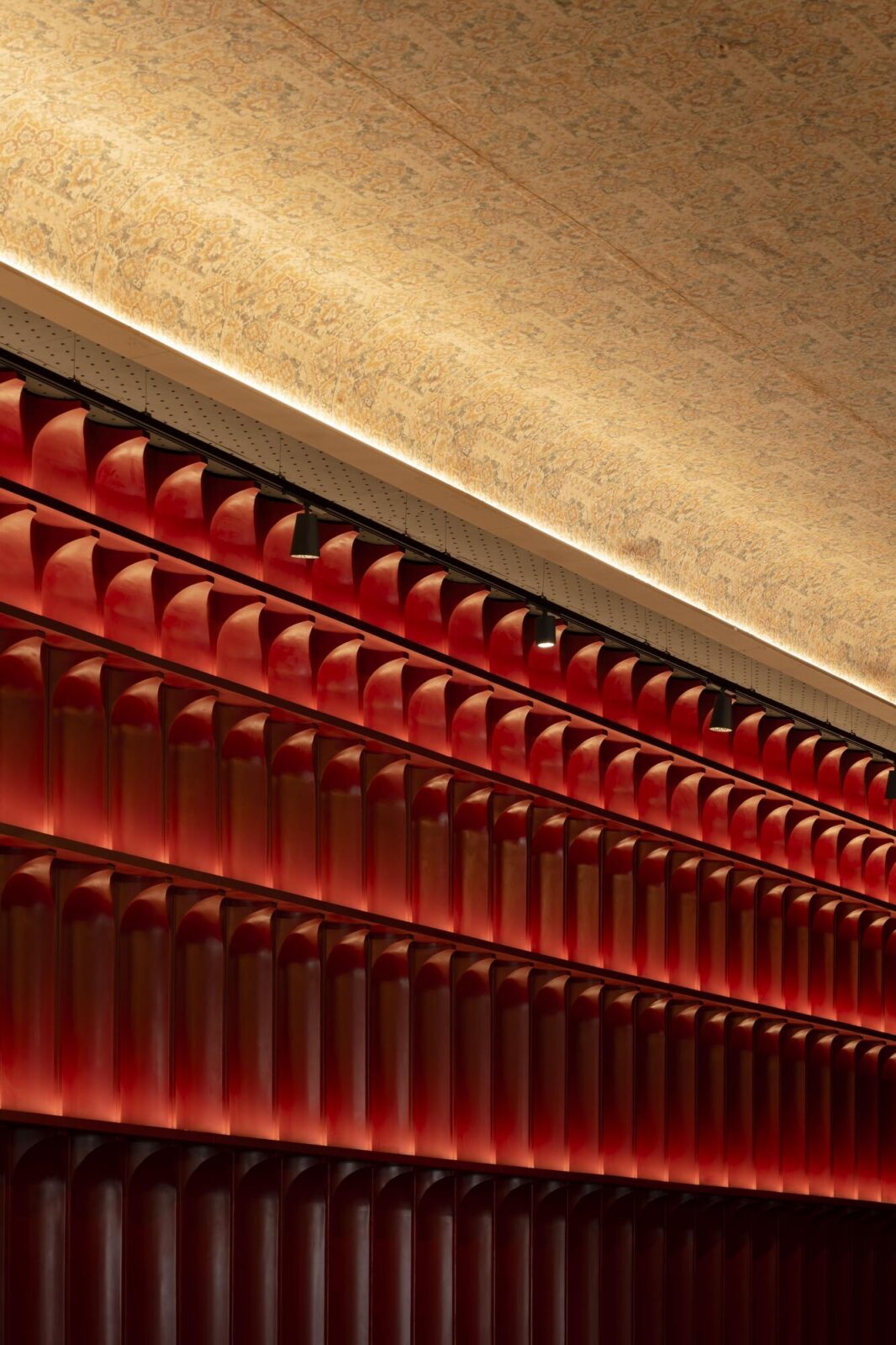
Along the walls, Love of Light installed custom fixtures based on the jharokha, an overhanging window with carved screens that is a common feature of traditional Indian architecture. Here, the jharokhas were reimagined as “windows of the world”, with each having been fitted with custom aluminium light strips that highlight their texture. The strips give a warm light at 2700 kelvin, the tone of an old filament bulb, with a colour rendering index (how faithfully a light shows colours, on a scale of 100) of 95, bringing out the red tones of the interior.
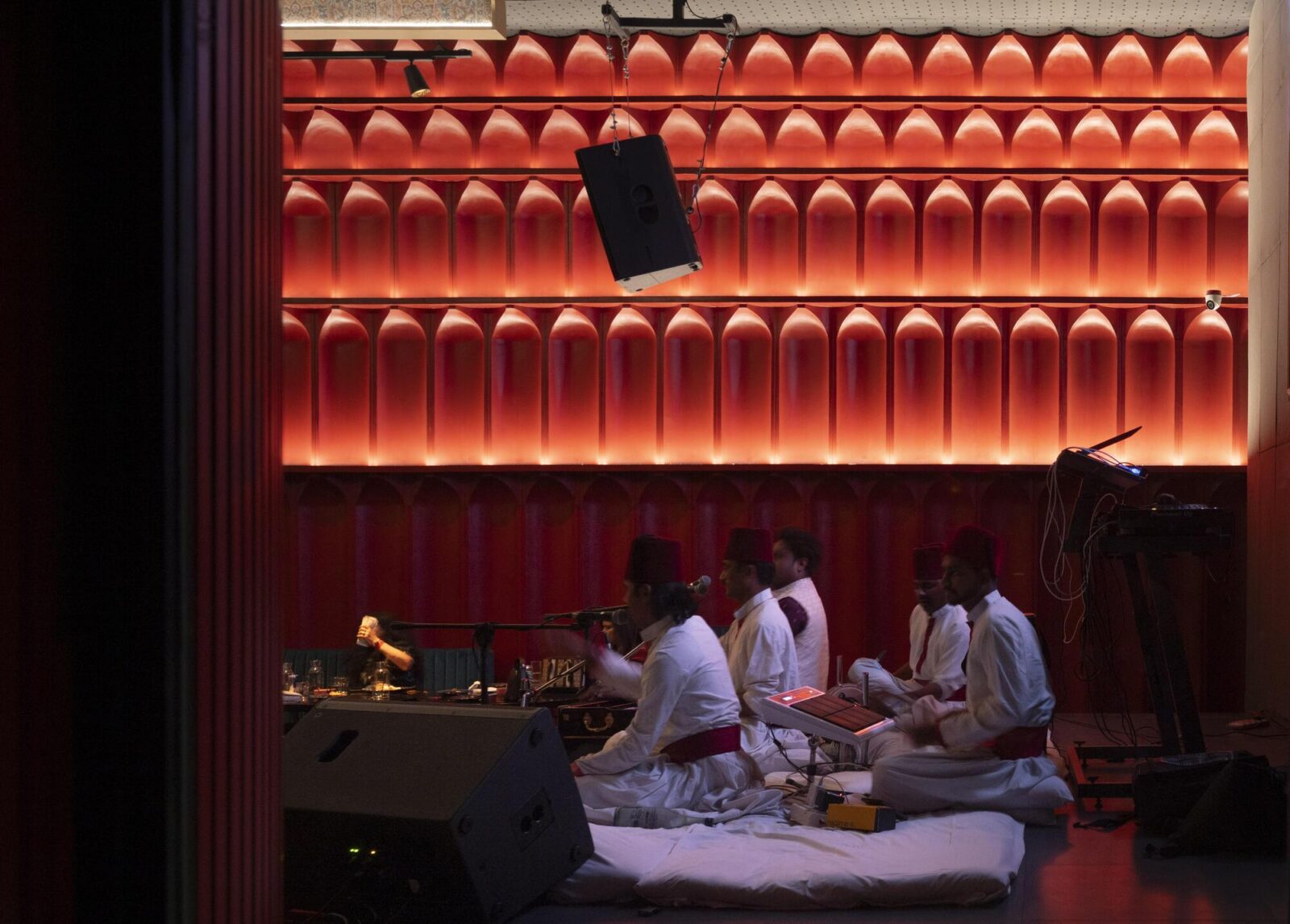
The glossy tabletops, made of Indian black quartz, are lit with an even warmer light so that they shine. The domed ceiling is covered in patterned carpet, and its own lighting makes those patterns come to life. As for the bar, the bottles are lit from behind, while the service counters have soft lights underneath them. On the stage, spotlights fixed to tracks light up the live music performances.
Light through the day
Every fixture in the restaurant uses low-voltage LEDs and is controlled by a system that adjusts their levels according to the daylight coming in. The brightness, therefore, changes gradually from lunch service to evening dinner and to the performances, without sudden jumps between them.
As a final touch, the fixtures were built as modules, so their drivers (the small units that power each LED) and their LED chips can be replaced one by one when they fail. According to the studio, this follows the principles of cradle-to-cradle design, in which products are planned so that their materials can be used again at the end of their life.
Project information
Lighting Design Company: Love of Light
Lead Designer: Dashak Agarwal
Design Team: Syed Mohammad Ahmed, Aneesh M
Architecture and Interior Design Company: 23 Degrees Design Shift
Other Credits: IndiLed, Light4U, Rako Controls, Blue Button
Photography: Vivek Eadara
Location: Hyderabad, India
Date: 2023


