Header: Creg Cox, Justin Patrick
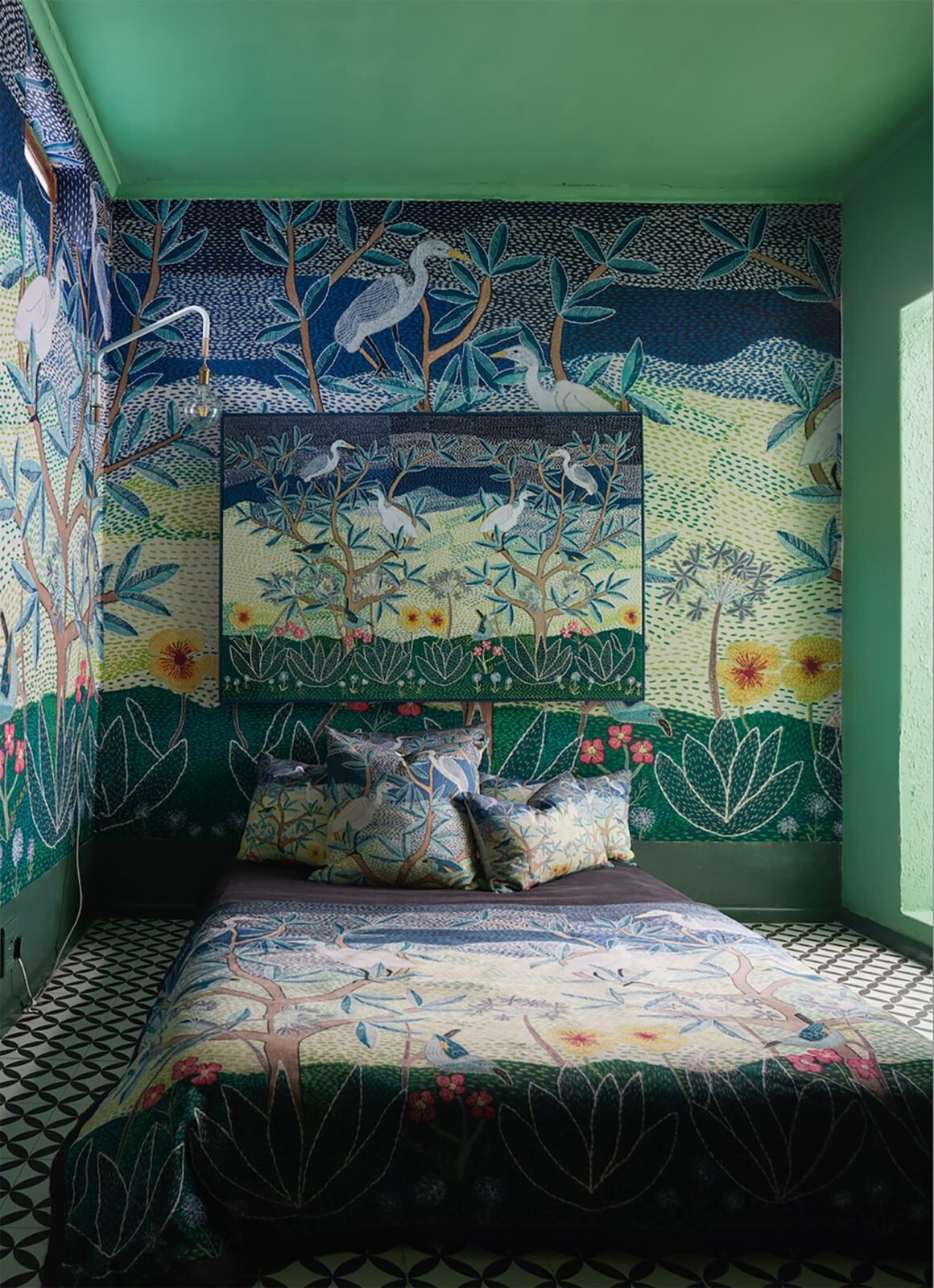
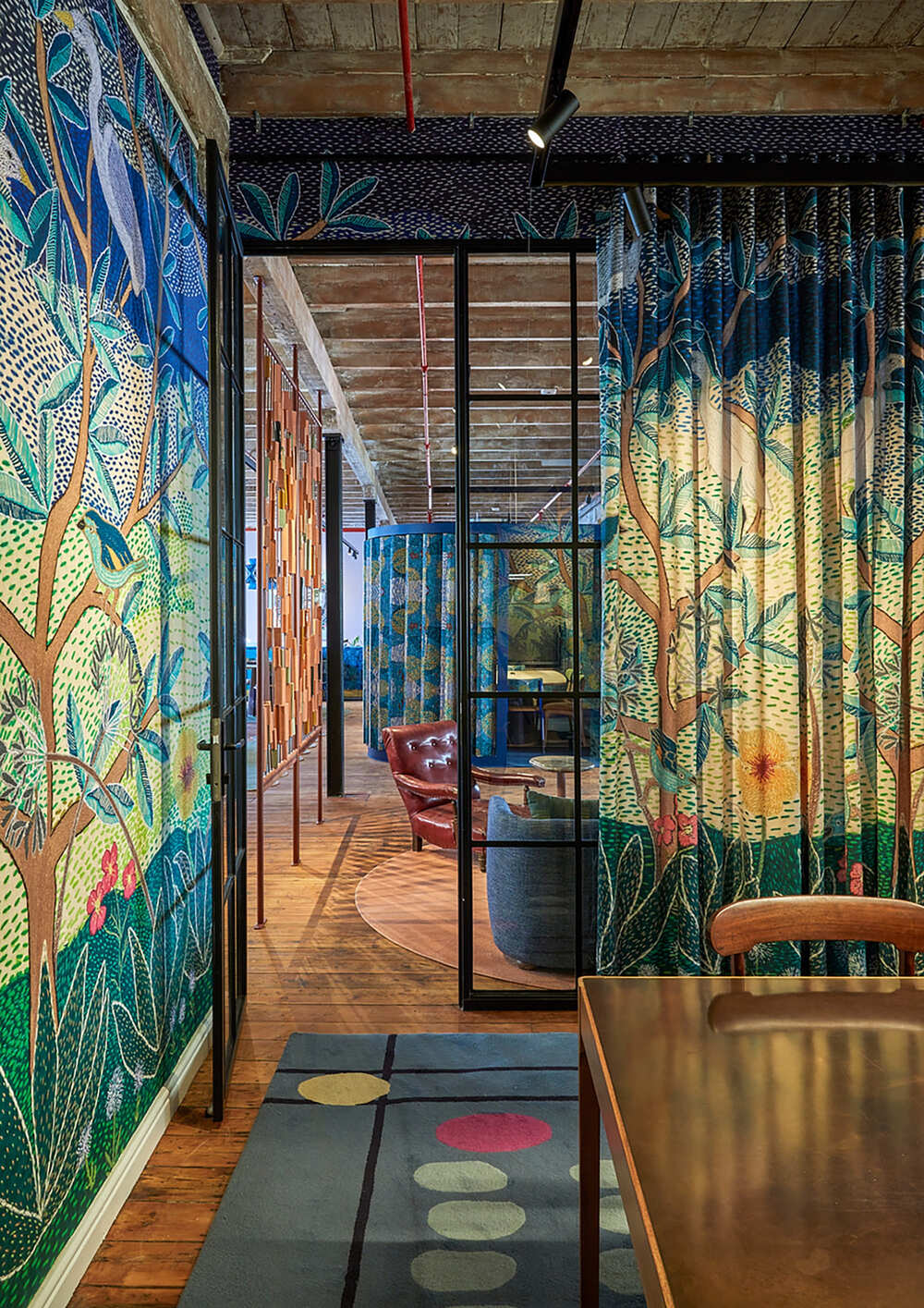
When design agency Clout/SA set out to support local creative talents, they looked beyond traditional manufacturing hubs to the coastal village of Hamburg in the Eastern Cape. There, artists from the Keiskamma Art Project have spent over two decades using needle and thread to document their local history, culture and environment. By taking these elaborate hand-stitched narratives and adapting them for scenic wallpaper, fabrics and homeware, the collaboration created a practical commercial path for a rural artist collective while introducing authentic African storytelling to global interiors.
This unique partnership has now gained international acclaim, taking home the Product Design of the Year title at the 2026 AIDA Awards for their collection titled “Stitched, a story of our home”. Inspired by the birds, flora and waters of the Keiskamma River estuary, the project captures detailed hand-stitched embroidery through digital scanning, allowing the artwork to be printed onto everyday interior products. The recognition highlights how creative direction, digital tools and traditional craftsmanship can join forces to support small-scale makers, create passive income streams, and bring South African heritage into contemporary spaces worldwide.
In this conversation with Clout/SA creative director Tracy Lynch and project leaders from Keiskamma Art Project, we discuss how the team overcame remote working challenges to digitally scan complex stitchwork, how local flora and fauna shaped the visual direction, and why platforms like the AIDA Awards are vital for elevating African design and providing sustainable income streams for local creative communities.
Can you tell us a bit about your background?
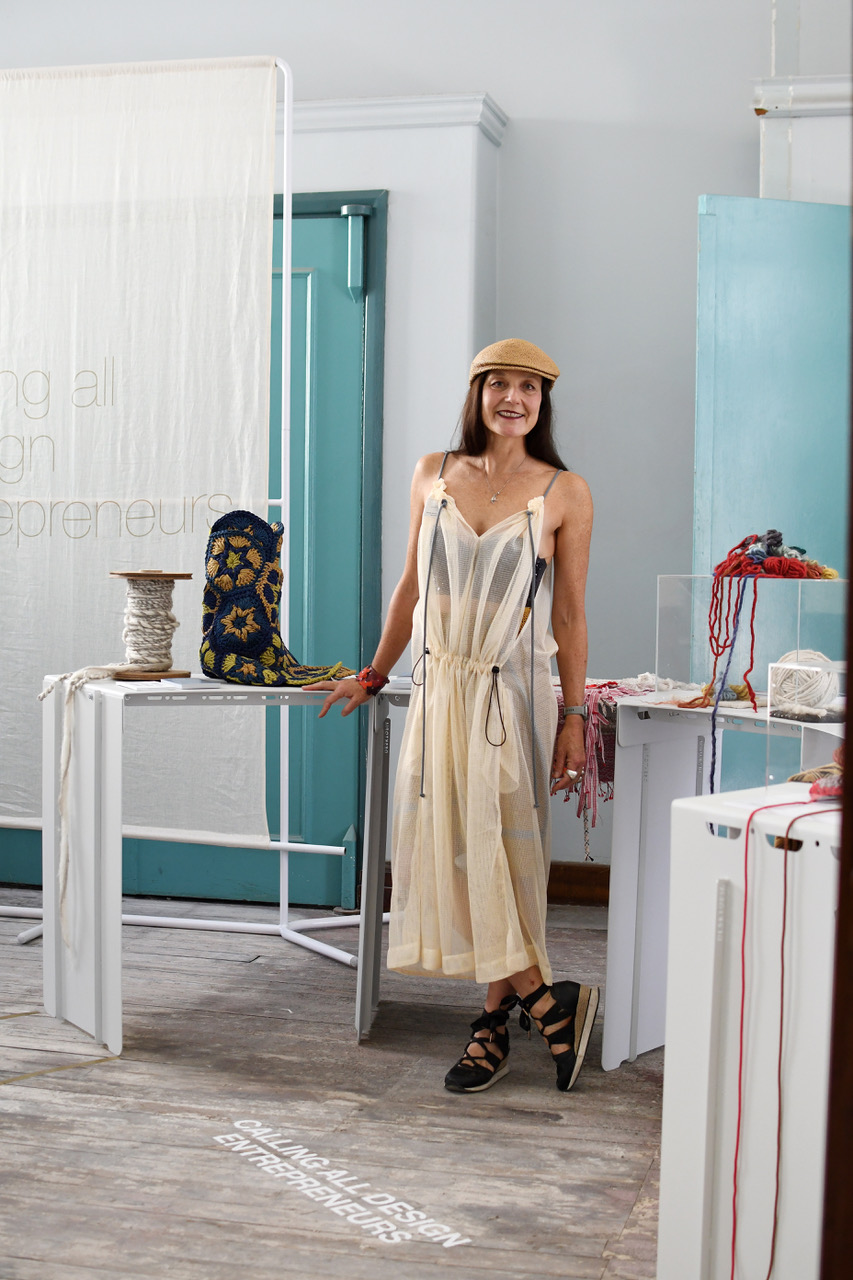
I completed both my undergraduate and postgraduate studies in Visual Art at Stellenbosch University in South Africa. Throughout my studies, I developed a distinct aesthetic vision that has since driven my career and my passion for the creative worlds of interiors, styled experiences and design. Having worked in interior design, rebranding, visual communications, interior design magazines and art direction, I have had the privilege of drawing together and collaborating with many varied, talented people across all aspects of design and production.
Collaboration is hugely important to me, and I have had the good fortune to initiate and curate Nando’s massive, long-term collaboration with South African designers and makers, which has involved the complete revamp of Nando’s Central Kitchen as a showcase of contemporary SA design and the introduction of South African design into the restaurants across the globe. The Portal to Africa and the Hot Young Designers platform, as well as Clout/SA, our business which focuses on creating commercial opportunities for SA designers, are all included in my portfolio.
I contribute to the conceptualisation of commercial opportunities for designers and work as a creative director on interior design and building projects. I also lead the communication of our projects both internally and externally in a way that shares our values and purpose. My goal is always to build meaningful relationships between creatives, with the ultimate aim of connecting Southern African designers with new partners both locally and globally.
What drew Clout/SA and the Keiskamma Art Project together for Stitched, a Story of Our Home?
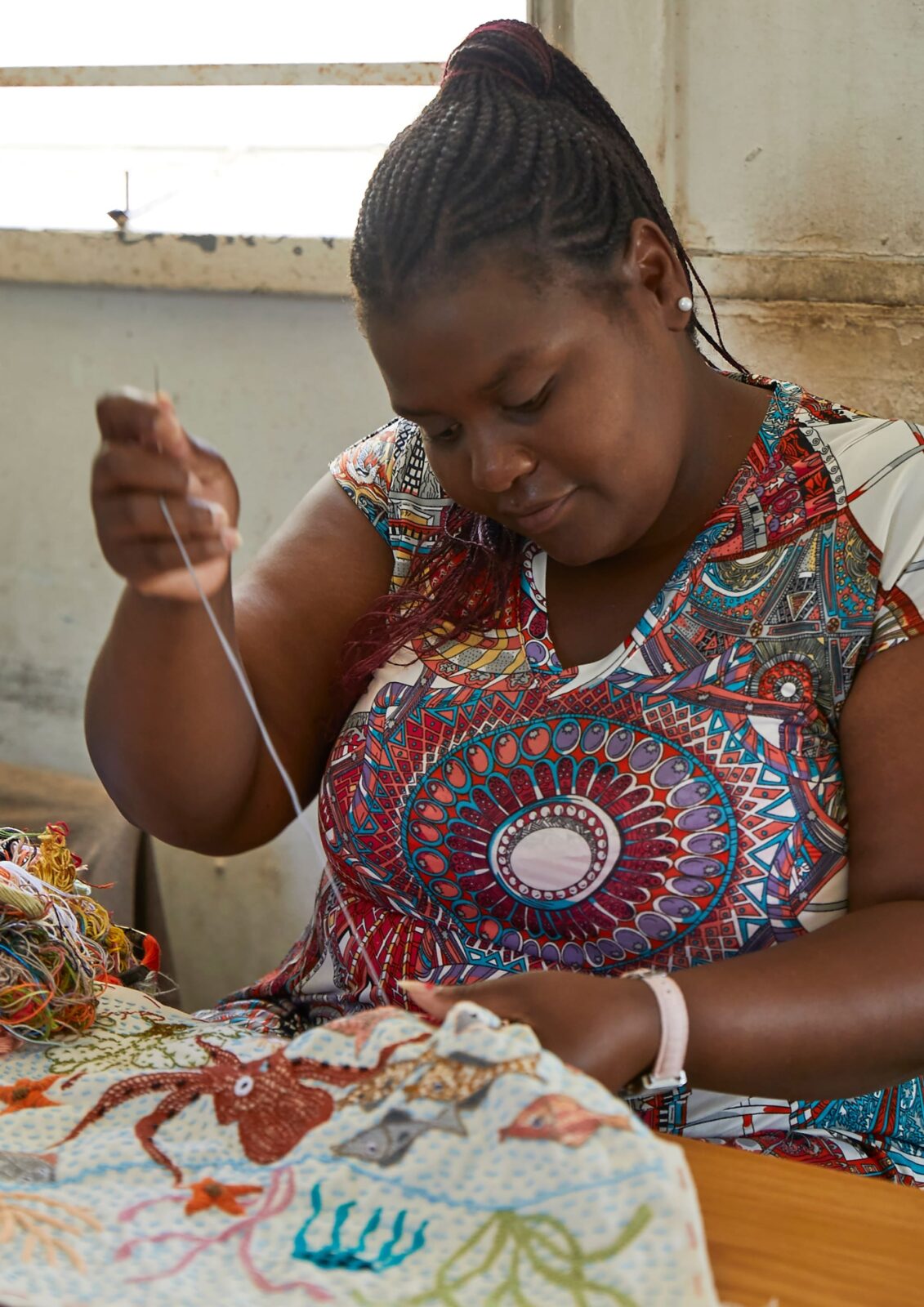
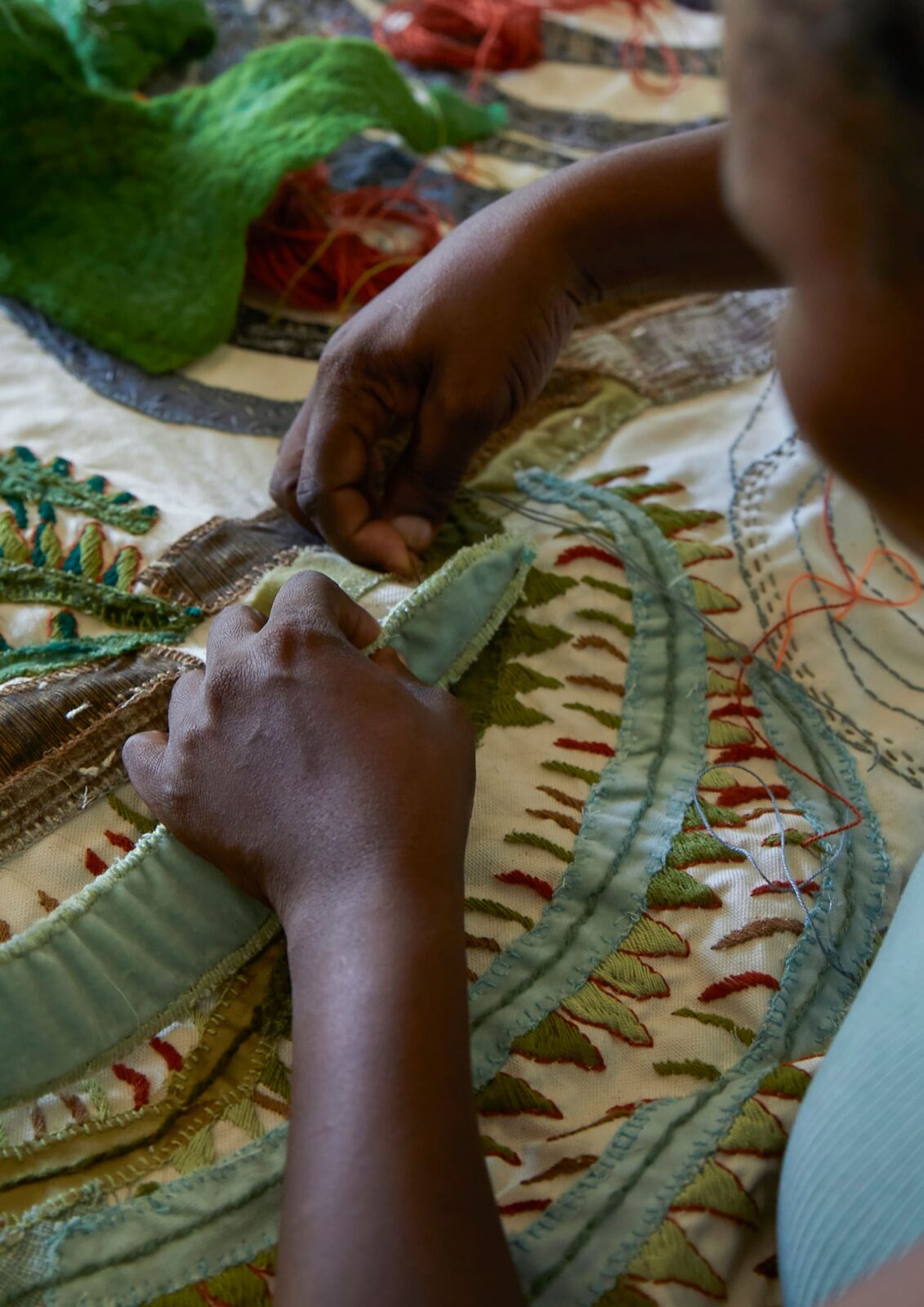
The seed was initially planted when I first visited Hamburg some three years ago. I was introduced to a group of mostly women, young and old, who gather daily in a rondavel to stitch together stories that reveal aspects of their geographical, spiritual and communal experience. It’s hard to put into words why this creative community is so significant, but one thing that comes to the surface in conversation with all who are lucky enough to visit is that this place and the people that gently piece together beautiful imagery help us to learn and grow.
The learning and growth that came from the collaboration went both ways, as KAP directors, Cebo Mvubu and Michaela Howse, like to say.
“What really got me excited was that this process forced us out of our comfort zone. It showed us that we could effectively use messaging apps and create work remotely even with international collaborators. Going forward, we can now challenge ourselves to not be limited by our location in the rural Eastern Cape; we can work with anyone anywhere in the world.”
Cebo Mvubu
“I don’t think we’ve had a better collaboration with anyone. We haven’t been very good at graphic representations of our work, or at being able to work digitally. So it’s been quite exciting to do a bit of work and then see it scanned, and then see what Tracy can do on her side in terms of digitizing that image and giving us feedback. Something that we would never have imagined.”
Michaela Howse
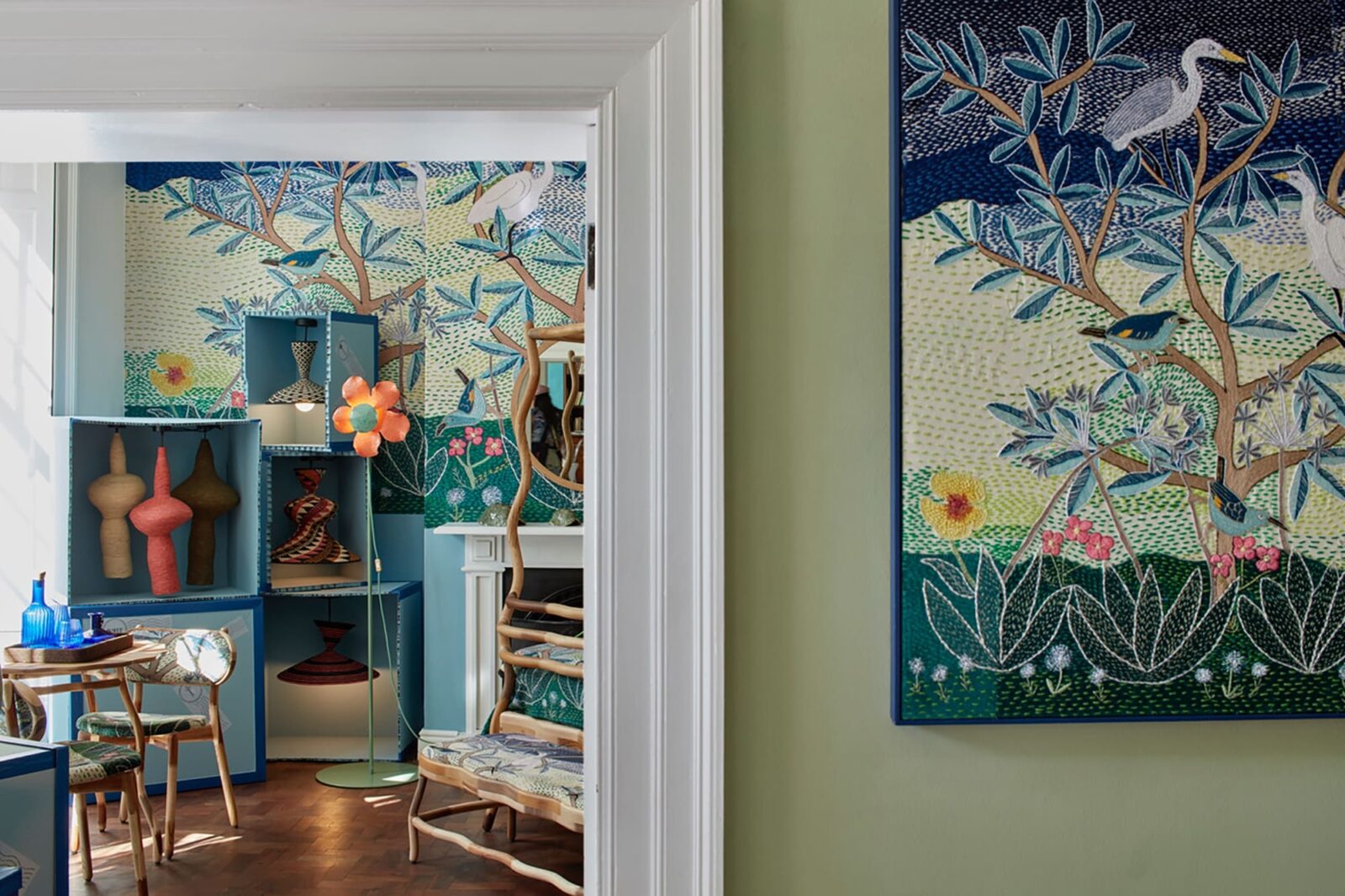
Additionally, the collaboration gives the project a commercial opportunity that contributes to the livelihoods of the artists. While Clout/SA, in its role as an intermediary between the creative sector and corporate businesses, has mainly facilitated opportunities for designer-makers in the past, the lessons the agency has learnt and the infrastructure the team have built can also be very beneficial for artist collectives such as the Keiskamma Art Project.
We’ve learnt so much from previous successful collaborations about the licensing opportunities that exist for creators, and we’ve established ways for projects such as this to be able to support designers and artists by putting them in a position to make additional income. I have a connection with the outside world, and I work in a commercial space; being based where they are means that KAP are pretty isolated. However, together we got to make magic. While my background as an interior designer and a stylist means I have a bit of a handle on what works for design, it is their art form and skills that make this collaboration special and very unique.
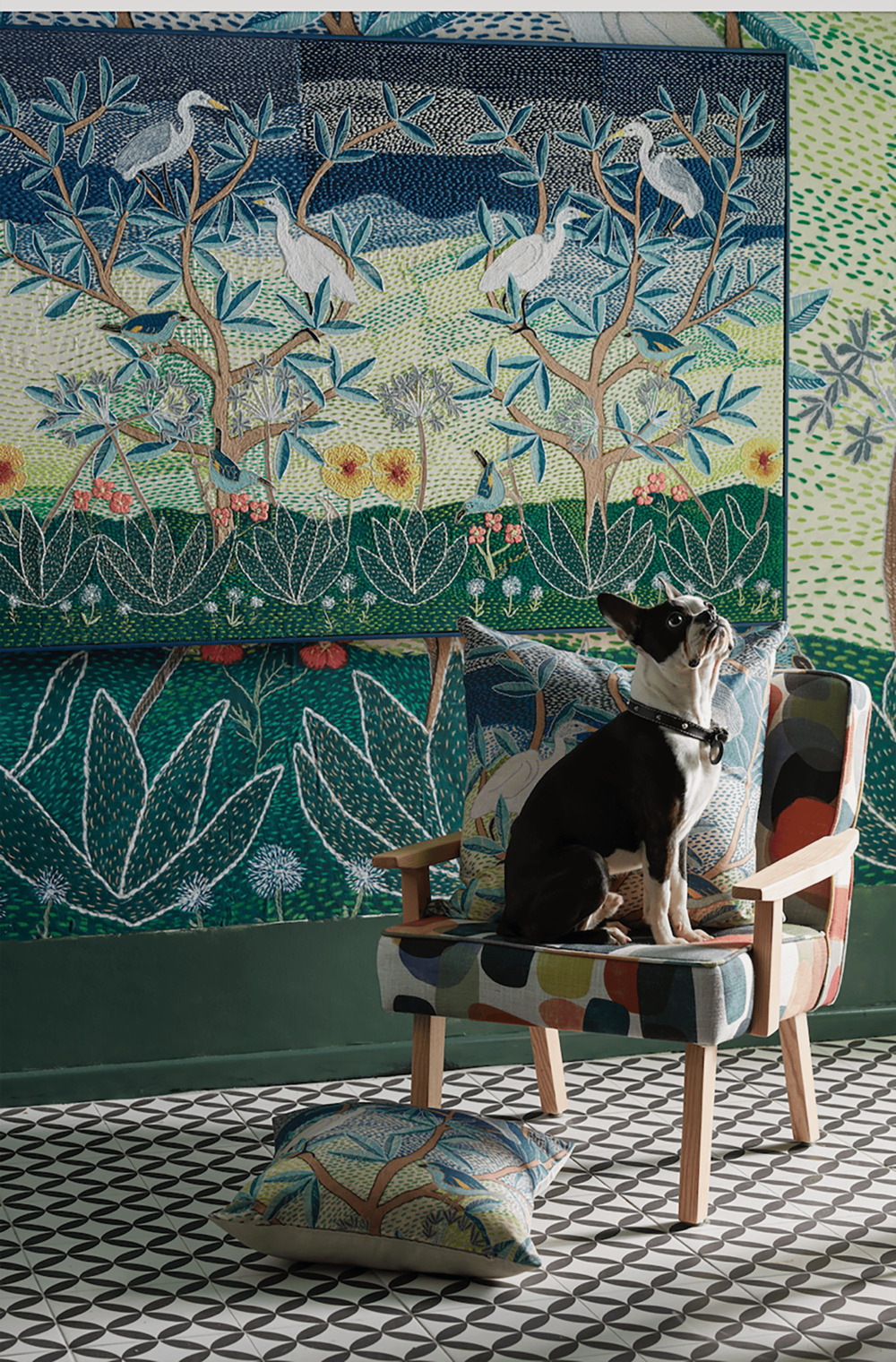
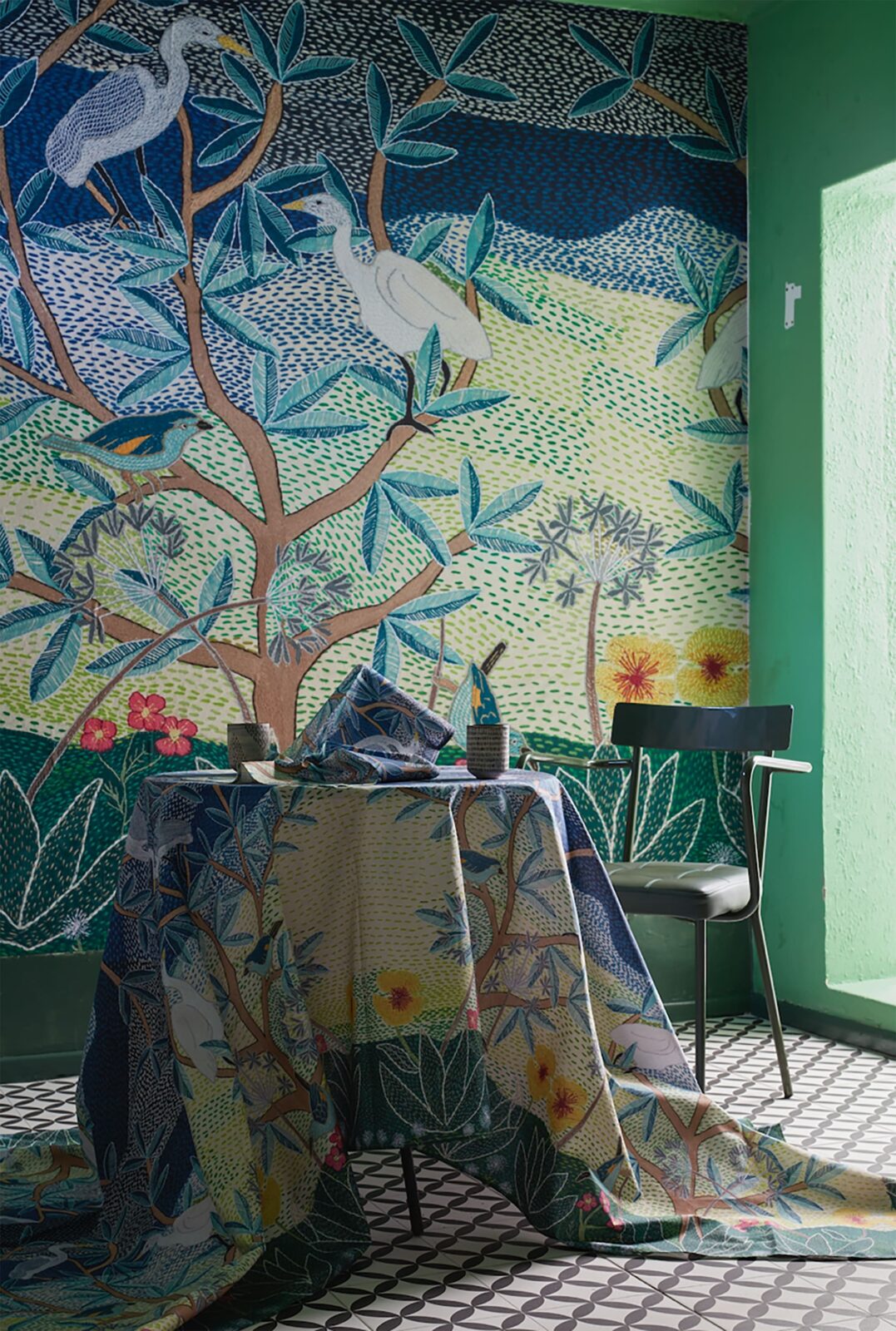
Can you walk us through how hand-stitched community stories became wallpaper, fabric and homeware pieces?
The Keiskamma Arts Trust was keen to broaden its reach and enter the interior design market space with additional applications that allow their unique aesthetic and storytelling to reach a broader audience. The community facilitated a workshop and invited industry specialists to attend to better understand what could be possible. I was, as a creative director of Clout/SA, one of the invited guests.
Clout/SA is a business-to-business market maker, a bridge that connects South African designers, crafters and makers with local and global commercial opportunities. At Clout/SA, our mission is to collaborate, curate and deliver collections of high-quality furniture, lighting, pattern and art aligned with our clients’ brand values and functional requirements whilst encapsulating the unique aesthetic South Africa is celebrated for.
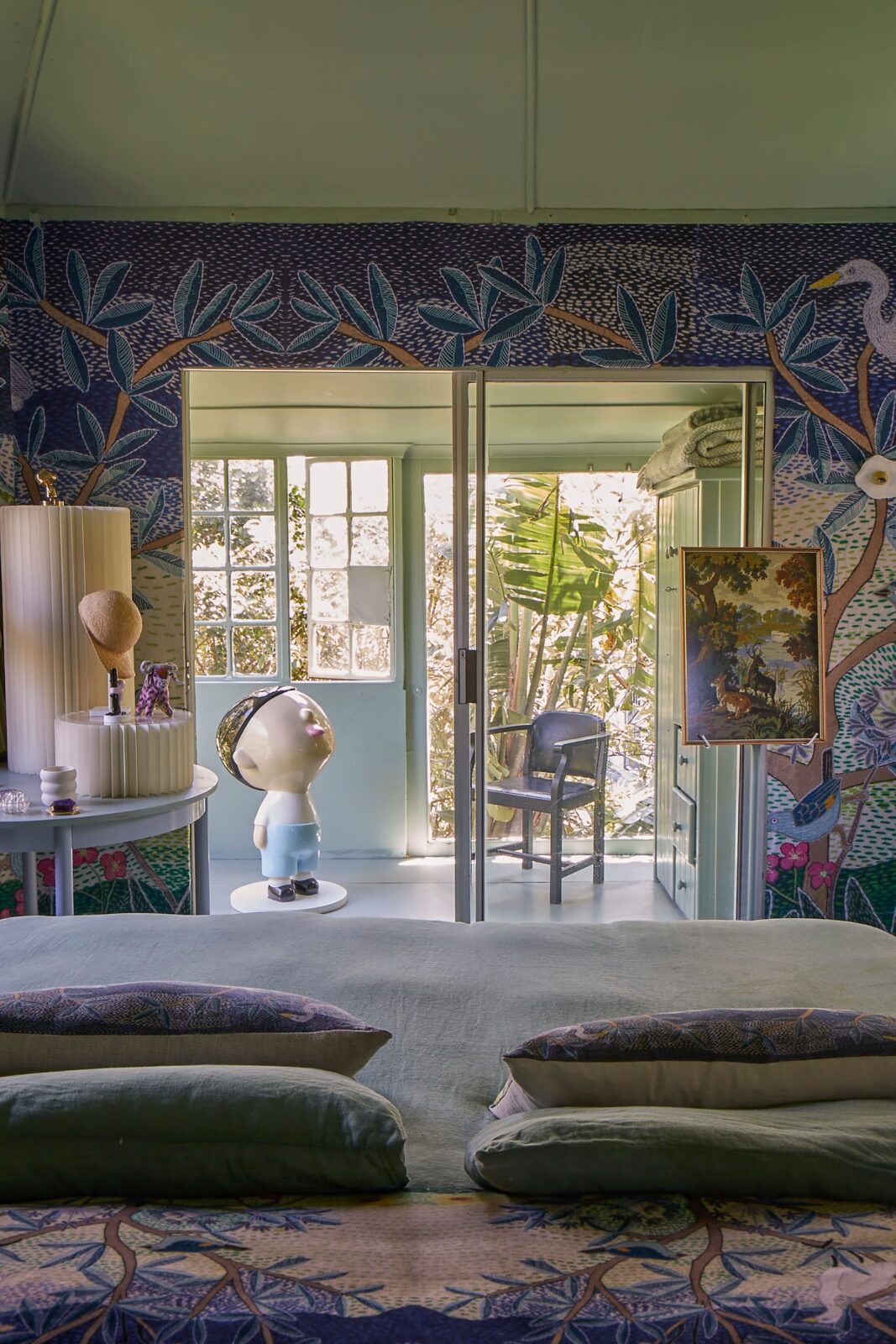
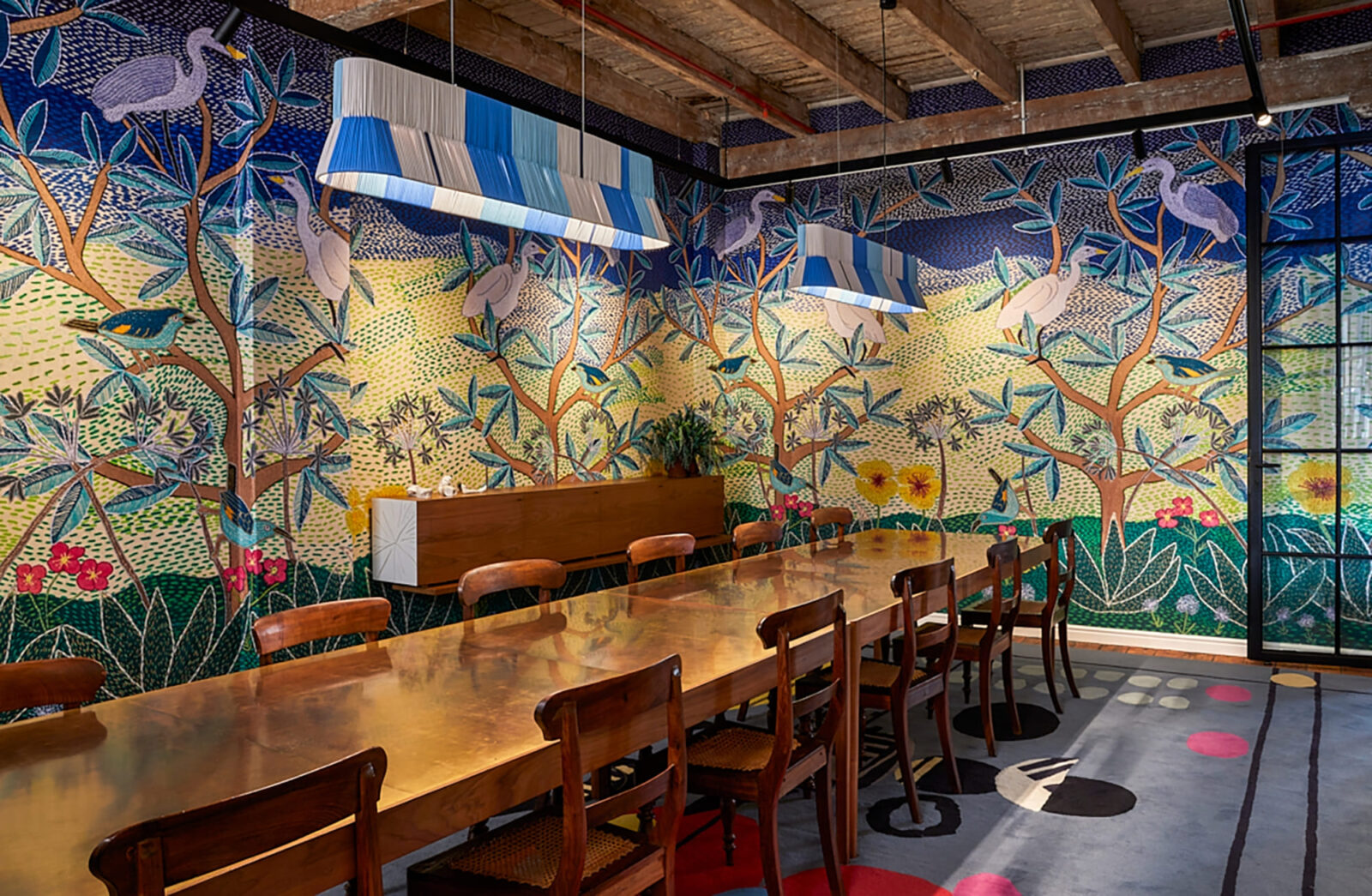
With my curatorial guidance, the artists from Hamburg, Eastern Cape, were challenged to create an embroidered piece that referenced what a scenic and quintessentially South African wallpaper might look like. The intention of this approach was to allow the embroidery style of the KAP artists to be expressed as a printed scenic wallpaper, as well as a collection of compatible printed textiles. The wallpaper collection is printed and installed by Cara Saven Wall Design, and the homeware accessories are available from the V and A’s iconic Waterfront store, AAfrica store.
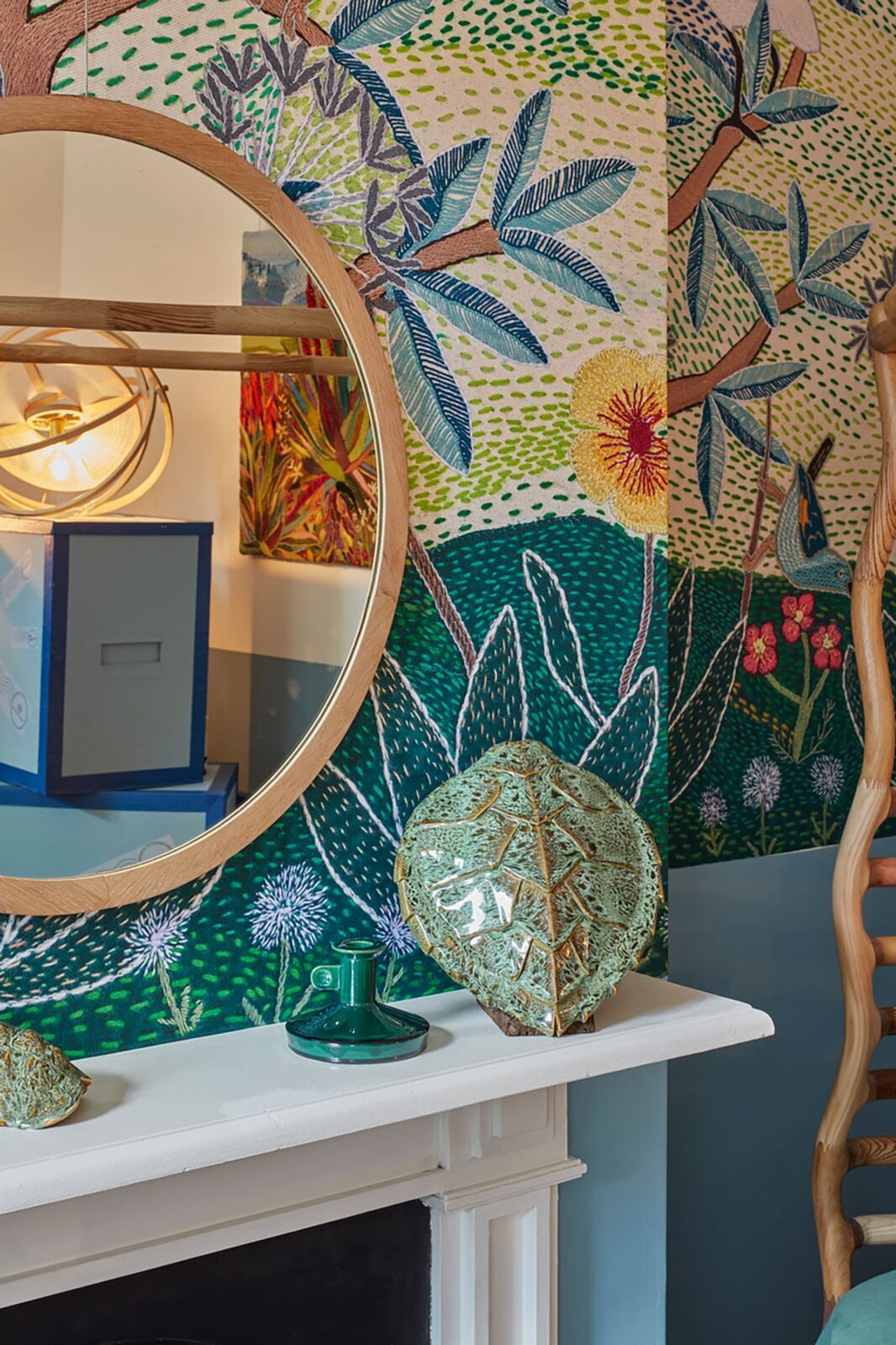
How did you decide on the visual direction of the collection, from the landscape of Hamburg to the birds and vegetation of the Keiskamma River estuary?
I have long been inspired by French-style scenic wallpapers and realised that an African version of this iconic interior application would be an epic way to challenge notions of style and create a quintessentially crafted African version of this highly celebrated and historically fascinating product. In addition, highlighting the craft of rural storytellers and their hand-stitched pieces emerged as an incredible fit for this reworking of a classic luxurious wall application.
To understand the choice of the flora and fauna, please journey with me to the home of the Keiskamma embroiderers.
Along the edge of the Indian Ocean, on a strip better known as the Sunshine Coast – roughly halfway between Port Alfred and East London – sits the idyllic seaside village of Hamburg. Be it the rolling hills blanketed by indigenous vegetation that define the drive to Hamburg, or the bird life in the area, or the Keiskamma River estuary that welcomes you into the village, the area is arguably one of the most beautiful parts of the Eastern Cape. It is also home to the multi-award-winning Keiskamma Art Project (KAP), which was founded in 2000 by Dr Carol Hofmeyer. Over the past two decades and four years of its existence, the project has produced major embroidered textile artworks, made mostly by the women and a few of the men of Hamburg, sharing their stories and experiences, as well as bringing to visual life the oral history tradition of the Eastern Cape.
Now, for the first time since its founding, three artists from the project, namely Anelisa Nyongo, Nozibele Nxadi, and project director Cebo Mvubu, have lent their skills and their particular aesthetic to a design collection that highlights the group’s unique embroidery style and celebrates the magnificent scenery and animal life that they call home.
What does it mean to receive AIDA Awards recognition for such a collaborative project that merges local craft, storytelling and interior design?
To be recognised by AIDA for this work is an incredible affirmation. African designers are driven by purpose; we want to use our skills to effect change. We know that creatives can wake nations, and that beauty is a universal language. When we all speak through beauty, our work creates opportunities for dialogue, connection and learning. When doors open, we find each other, and our differences seem less important. This is motivating and powerful, and knowing that the incredible panel of judges agrees makes this award a magnificent moment that drives us to do more.
Why do you think a platform like AIDA Awards is important now for African craft, product design and creative communities?
Our voices cannot be overlooked; the importance of platforms that are driven by Africans and that evolve from Africa’s soil is crucial. AIDA’s commitment to drawing out and showcasing Africa’s excellence in the fields of craft, design and product design is an important step to entrench our unique creative approach, our innovative use of materials and ancient making skills combined with technology and commitment to collaborative making.
Looking ahead, how do you hope this collection will influence future collaborations between designers, makers and communities?
In my mind, this is a gentle opportunity for Clout/SA to embed our purpose; it’s linked to our mandate to seek commercial opportunities for deserving and magnificent creative visionaries. These creators are the doers! The value lies in seeing these moments that translate into more than revenue streams; they are about manifesting relationships with communities that have abundance because creativity fuels their very being. This is a story that needs to be told, a precious project that needs to be shared. We can do that, and if we partner, we can do so much more. It’s a slow-burn project, but so very special. I believe in this beautiful, precious opportunity, one day at a time, moving towards solving a feasible business model and learning more about each other and what’s possible.
I’m daring to be optimistic. For my part, I’d like to continue taking South African design and creativity to the world; to help overturn outdated ideas about Africa and its place in the world. I want to share a different vision of ourselves – one that reflects our bold, unique, unexpected, authentic and resourceful creative responses to challenges. A vision that looks to the future, but also draws on the past.