Header: Courtesy of Cabbonet
We rarely think about how much the layout of a room dictates our daily habits, but British-Australian designer Andrew Hays has built a career around that exact relationship. As founder of the luxury kitchen brand Cabbonet and co-founder, with Kimm Kovac, of London design studio Arteim, Hays brings a completely unique perspective to residential interiors. Through Arteim, he continues to design theatre, opera, and live performance environments alongside high-end interiors, allowing a constant dialogue between disciplines. By looking closely at this ongoing crossover between design and performance, we can begin to see how the breadth of his work shapes the furniture and homes he creates today.
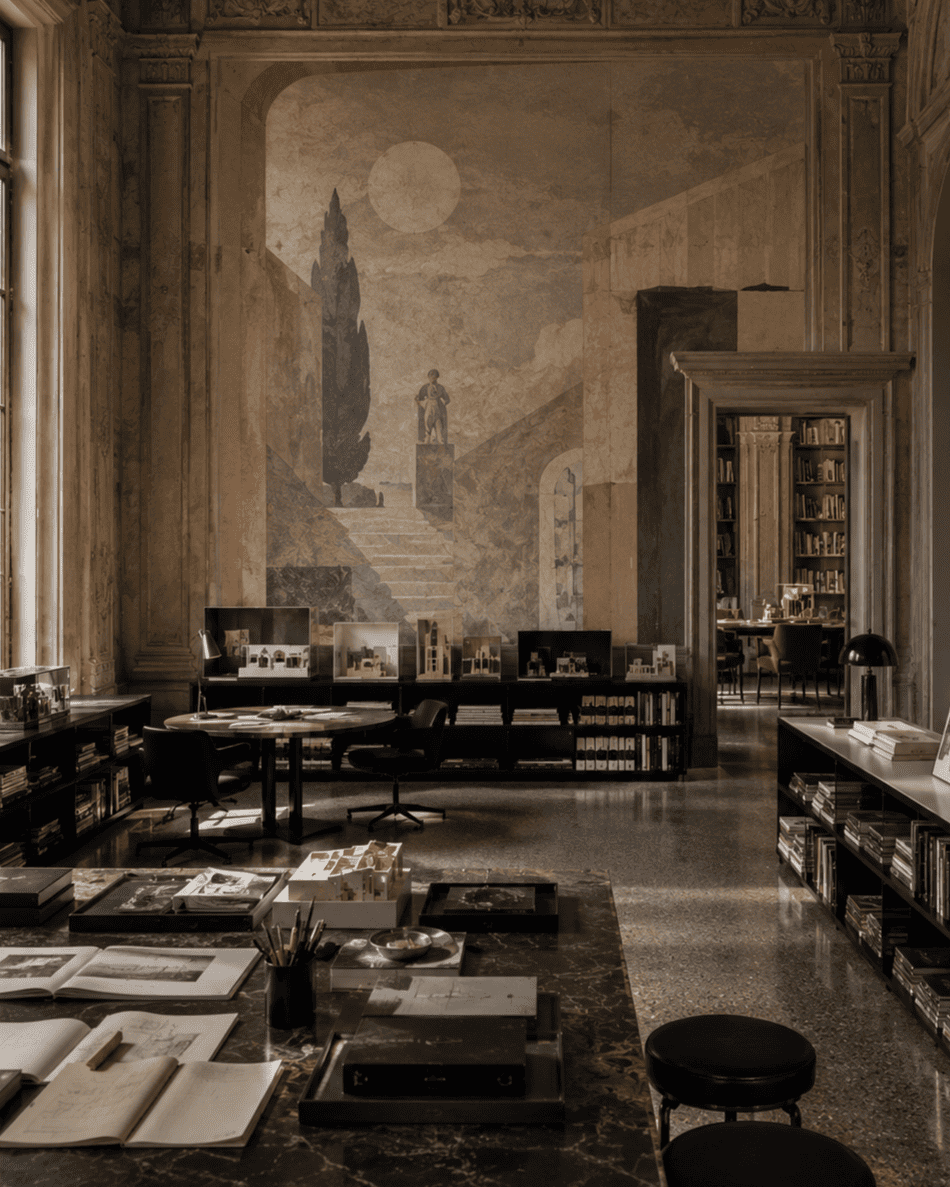
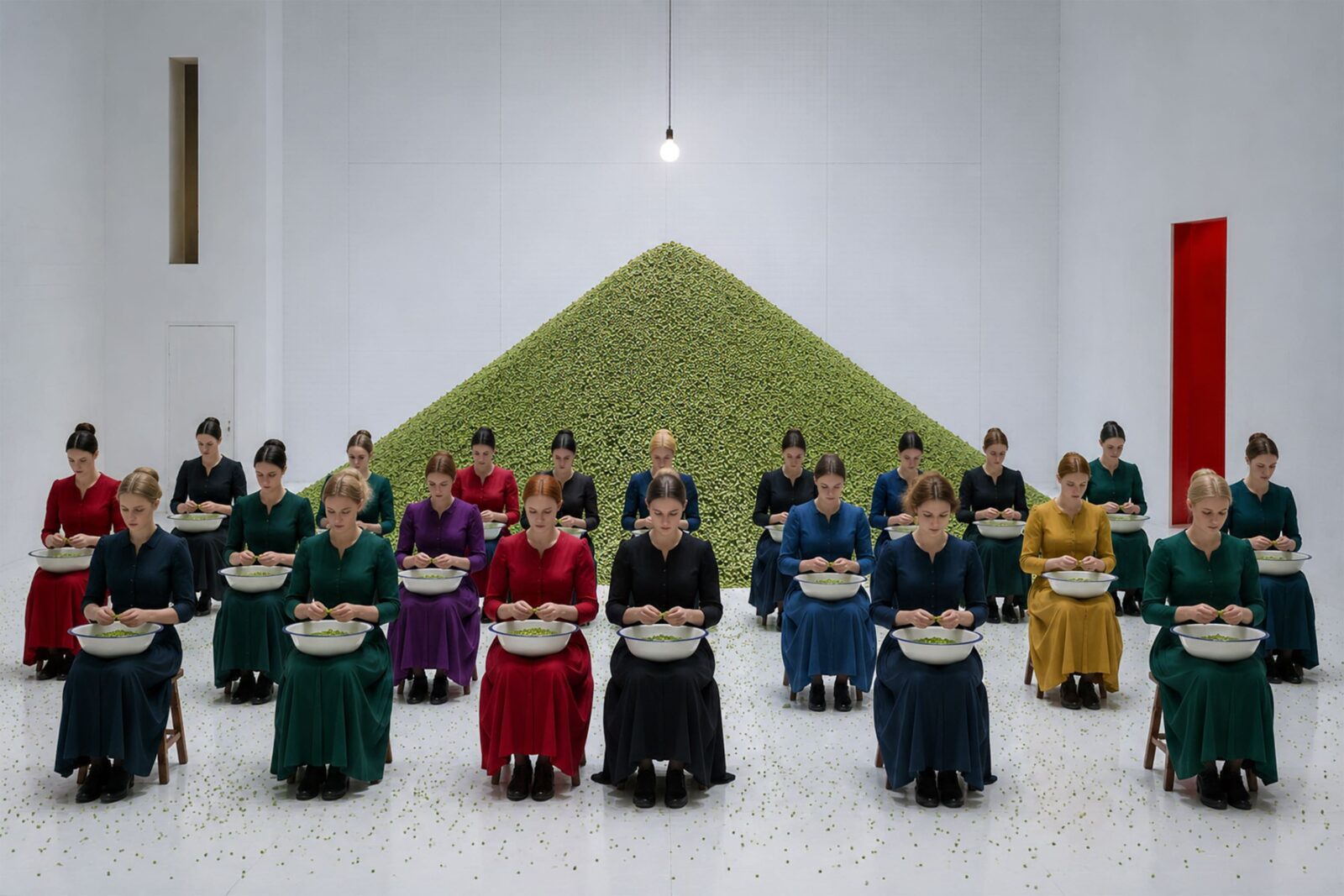
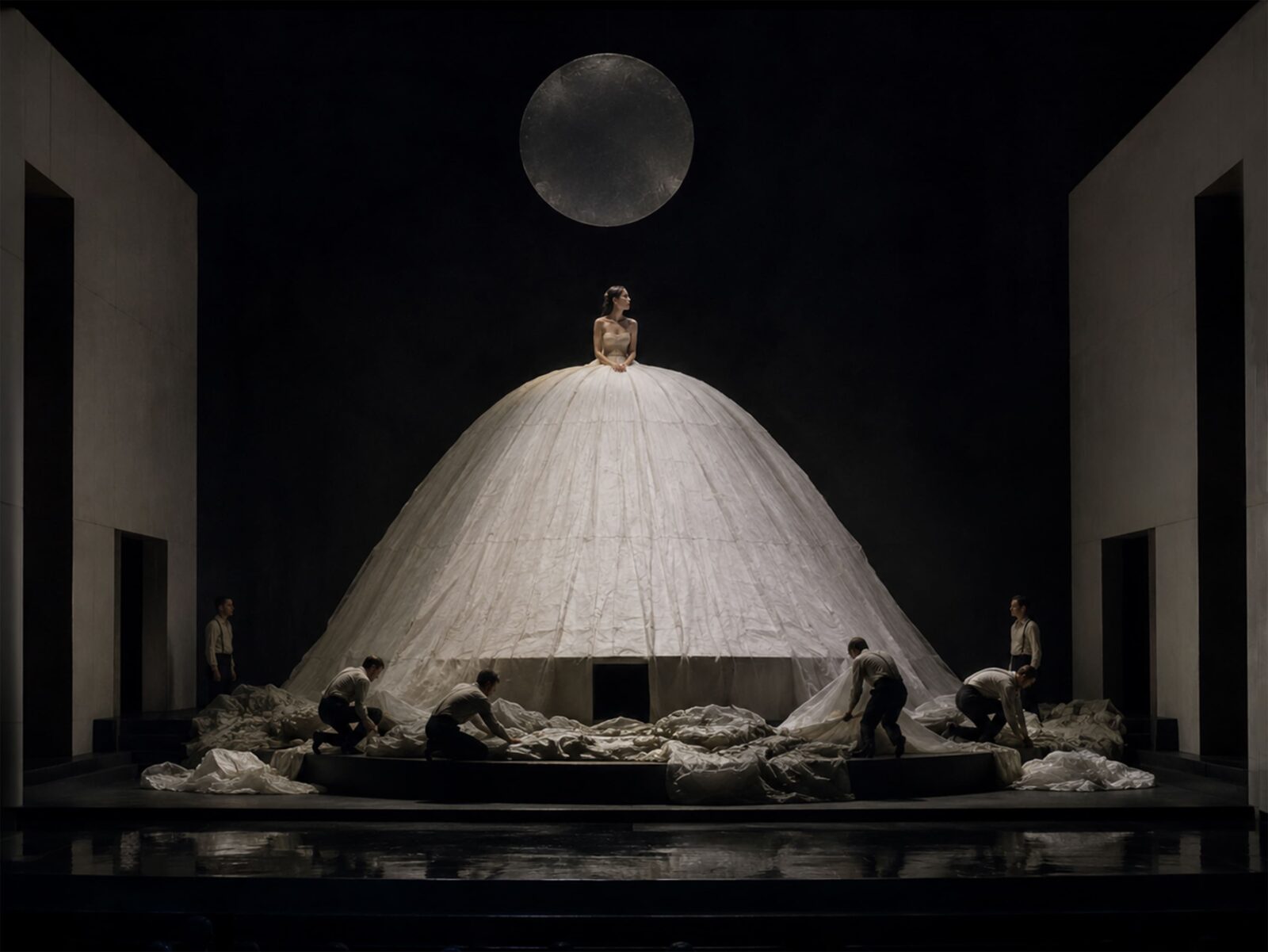
With a foundational background in architecture, Hays established his viewpoint through the lens of live performance—a practice that remains central to Arteim today. The studio continues to design sets, costumes, and immersive environments for world-class cultural institutions, including projects for the Royal Opera House, Sydney Opera House, Teatro La Fenice, and the Arena di Verona. These large-scale theatrical experiences deeply anchor his core design philosophy: that a physical environment should evoke a direct emotional reaction, reveal human character, and communicate a distinct story.
Before launching his independent ventures, Hays developed his commercial expertise within executive creative roles for top-tier European interior brands. He acted as Creative Director for German manufacturer Poggenpohl, and later stepped into the role of Creative and Brand Director at Smallbone of Devizes. While at Poggenpohl, he designed the “Fourth Wall” kitchen concept—a critical turning point in the sector that questioned standard kitchen layouts by introducing architectural scale, built-in technology, and theatrical staging to the space. Building on these executive chapters, Hays continued to develop Arteim with his long-standing creative partner Kimm Kovac: a multidisciplinary design practice rooted in their shared work across interiors, furniture, product development and live performance. From this wider creative partnership, they later co-founded Lanserring. His latest brand, Cabbonet, focuses on bespoke kitchens and furniture for the home.
Today, through Arteim, Hays oversees residential commissions, bespoke furniture lines, and experiential environments in Europe and North America. Materiality, atmosphere, and the rituals of everyday life remain central to his work. This expansive output across interiors, theatre and film has brought Hays and his studio Arteim recognition across international product design, interiors and cultural projects, with accolades including Red Dot, iF, Interior Design’s Best of Year Awards and the International Design Awards. Their creative projects have also been screened at major international festivals including Sundance and the International Film Festival Rotterdam.
We talked with the British-Australian designer to discuss how this ongoing theatrical practice informs his understanding of the home as a place of atmosphere, ritual and emotional connection. In the following conversation, Hays opens up about the shared student origins behind Arteim, the practical role of Cabbonet’s physical material gallery in guiding client projects, and how a recent series of six short films led Arteim to look more closely at the unnoticed, everyday rituals of home life. From rethinking the emotional weight of a kitchen to understanding why people instinctively feel at ease in certain rooms, Hays shares why true design goes far deeper than visual aesthetics.
Your work spans architecture, interiors, set design, and performance. How has working across these different disciplines shaped the way you understand and approach space?
I’ve never really seen these disciplines as separate. Whether I’m designing a stage set, an interior, a building, or an object, I’m interested in how people relate to it, how it becomes part of their lives, and what it leaves behind in terms of memory, meaning, and experience. My work in theatre and opera had a profound influence on the way I understand design. In stage design, you’re creating an environment for a character. Nothing is arbitrary. Every object, material, colour, and detail is there to tell the audience something about who that person is, how they live, what they value, and what has shaped them. At the same time, you’re thinking in terms of metaphor, scale, and the relationship between a person and their environment. A solitary figure in a cavernous interior beneath a shaft of light can evoke an emotional response before a word is spoken. The audience instinctively understands something about the character, the situation, or the story.
That way of thinking has stayed with me throughout my career. Working across architecture, interiors, performance, and design has taught me that we don’t encounter things in isolation. We experience them through our senses, our memories, our emotions, our interactions with others, and the rituals that become part of everyday life. It’s interesting, actually—we recently produced a series of six short films for Cabbonet exploring those very rituals, which reinforced just how much of our experience of home is shaped by the everyday moments that often go unnoticed.
What continues to fascinate me is the ability of a space, an object, or an environment to resonate on multiple levels simultaneously. Whether it’s a stage, a home, a kitchen, or a piece of furniture, I’m interested in creating something that feels meaningful, memorable, and genuinely connected to the lives of those who encounter it.
Could you take us back to the beginnings of Arteim – what was the original vision behind creating the practice, and how has that approach evolved over time?
In many ways, Arteim existed long before there was a company. It began with Kimm and me studying together. We never saw creativity through the lens of a single discipline. One day we would be studio-bound working on the design of an interior, the next we’d be at the Sydney Opera House for a dress rehearsal, and a few days later on the set of a music video we were art directing.
What made that period so exciting was watching the same creative instincts reveal themselves through different forms. Whether it was an opera set, an interior, a brand, or a piece of furniture, there was a common thread running through the work. At the time, we probably didn’t fully understand it, but looking back, those experiences were laying the foundations for what would eventually become Arteim.
There was never a grand plan to create a practice called Arteim. The name came much later. What existed first was the work itself and a way of thinking that continued to evolve as we moved through different projects, places, and experiences. What’s interesting is that while the projects have changed dramatically over the years—from theatre and opera to architecture, interiors, products, and Cabbonet—the questions haven’t changed very much. We’re still interested in people, in culture, in storytelling, and in the relationship between individuals and the environments they inhabit. In many respects, Arteim is still evolving. It’s less a destination than an ongoing journey.
You describe Arteim as the methodology and collective experience behind the work, with Cabbonet being one outcome of that approach. What does this methodology mean in practice and how does it influence the way you design?
I’ve never been entirely comfortable with the word methodology because it makes it sound more deliberate than it really is. For me, Arteim is the accumulation of experiences gathered over many years. It’s everything we’ve been exposed to through theatre, opera, interiors, architecture, travel, culture, craftsmanship, film, music, and the people we’ve met along the way. Over time, those influences become part of how you see and understand the world.
In practice, it means we’re rarely designing a product or a space in isolation. We’re drawing on a much broader set of references and experiences. A lesson learned in theatre might influence the way we think about a kitchen. A memory from travelling through Italy might inform a material choice. A conversation, a piece of music, or an artwork can find its way into a project in unexpected ways. Cabbonet is one expression of that way of thinking. It wasn’t created because we wanted to design kitchens. It emerged because we became interested in one of the most important spaces in people’s lives and the role it plays in gathering, ritual, family, and everyday experience.
Narrative seems to be at the heart of your creative process. How do you translate ideas, emotions, or stories into physical environments and interiors?
For me, every project begins with understanding people. Before there is a design, there is a story, but that story doesn’t always arrive neatly packaged. It’s often revealed through conversations, observations, memories, aspirations, habits, and the way people choose to live their lives. Perhaps that’s another influence from theatre and opera. In stage design, you’re constantly asking what the environment can reveal about a character. What does this object tell us? Why is this material here? What does the scale of the space say about the person who inhabits it? Those questions have stayed with me.
I don’t think of design as imposing a narrative onto a space. It’s more about uncovering and interpreting the narratives that already exist. The most successful projects are often those where people recognise something of themselves within the environment, even if they can’t quite explain why. Materials, light, proportion, texture, and atmosphere all become part of that process. Not to tell a literal story, but to create an emotional connection. To create a place that feels authentic to the people who live there and reflective of their own journey.
Your background in performance and set design brings a unique perspective to residential spaces. What elements from that world continue to influence the way you think about atmosphere, composition, and experience within a home?
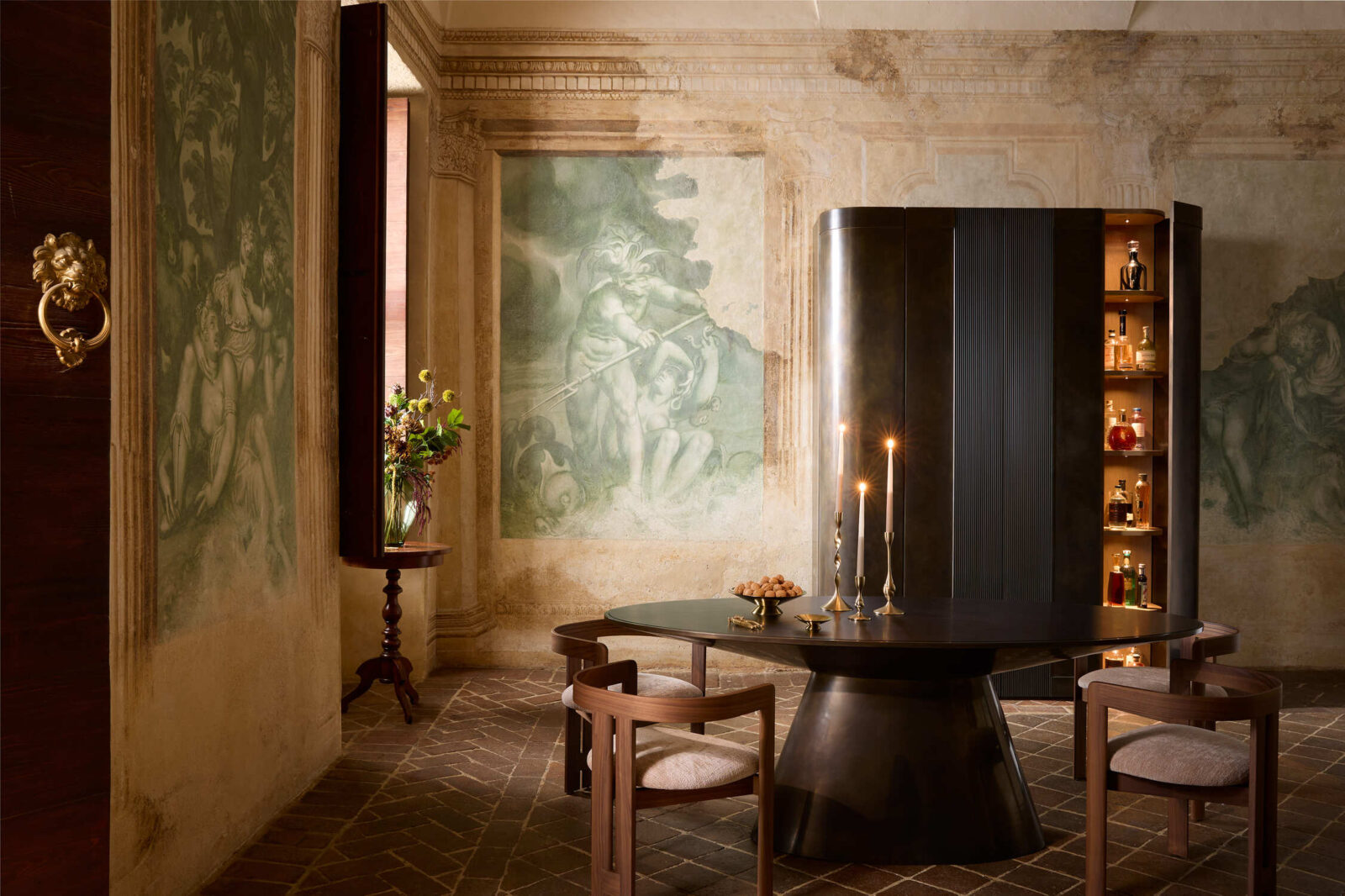
One of the most important lessons theatre taught me is that atmosphere is rarely created by a single gesture. It’s created through the careful layering of many different elements—light, scale, material, texture, movement, sound, and the relationship between people and their surroundings. I’m still very conscious of those things when designing a home. How does someone arrive? What do they see first? What is revealed immediately and what is discovered over time? How does the scale of a space make someone feel? How does light change throughout the day? These are all things that influence our emotional connection to a place, often without us even realising it.
Theatre also taught me that environments are never neutral. A solitary figure standing in a vast space can evoke a completely different feeling from someone gathered around a table with family and friends. The environment shapes our perception of a moment and influences how we feel within it. I think that remains one of my greatest fascinations. Creating homes that support everyday life, while also creating atmosphere, emotion, memory, and a sense of belonging. The most successful spaces are often those that stay with us long after we’ve left them, even if we can’t fully explain why.
Materiality appears to play a central role in Cabbonet’s identity. What is your approach to selecting and combining materials, and what role do they play in creating a sense of character and individuality?
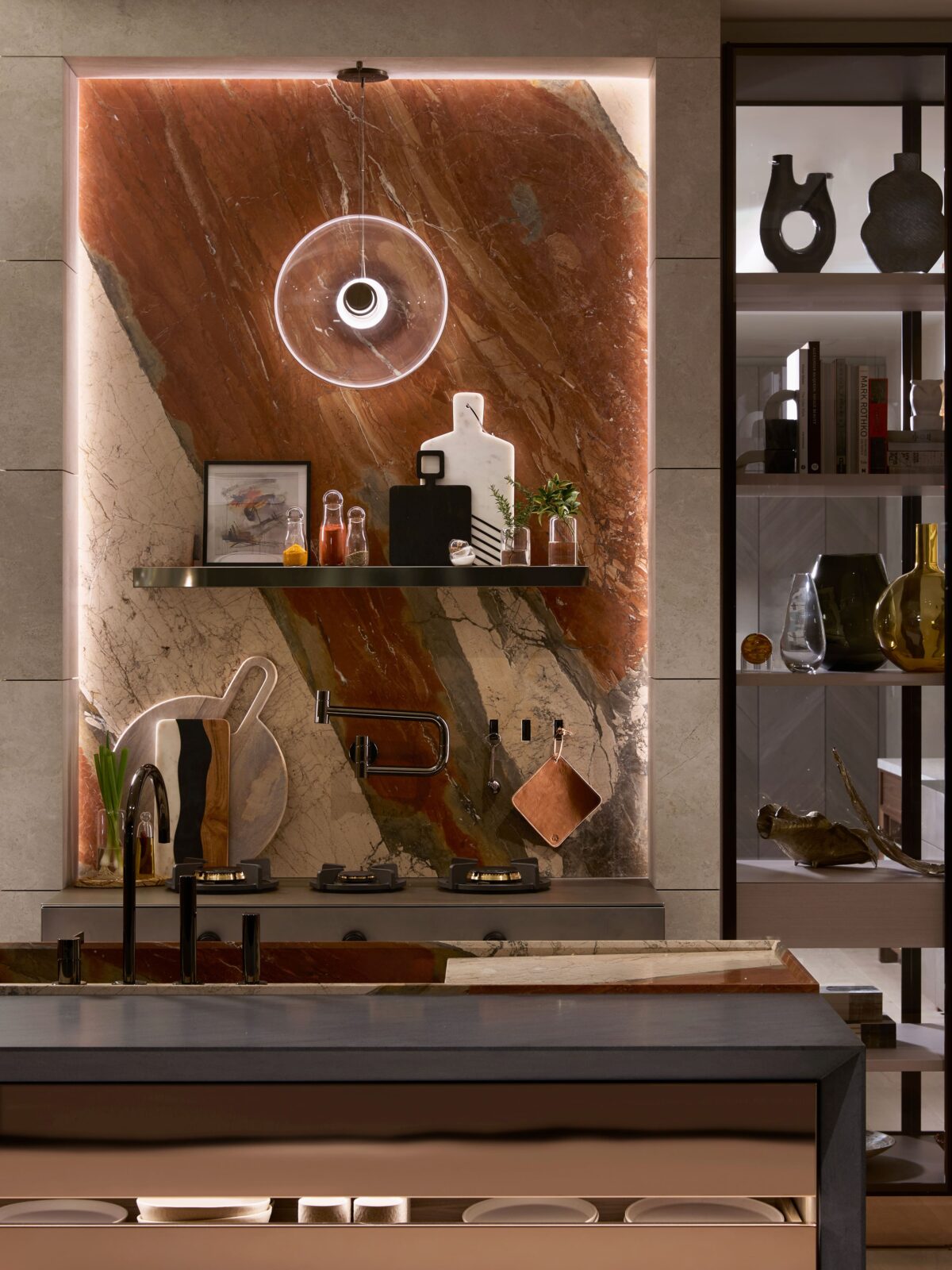
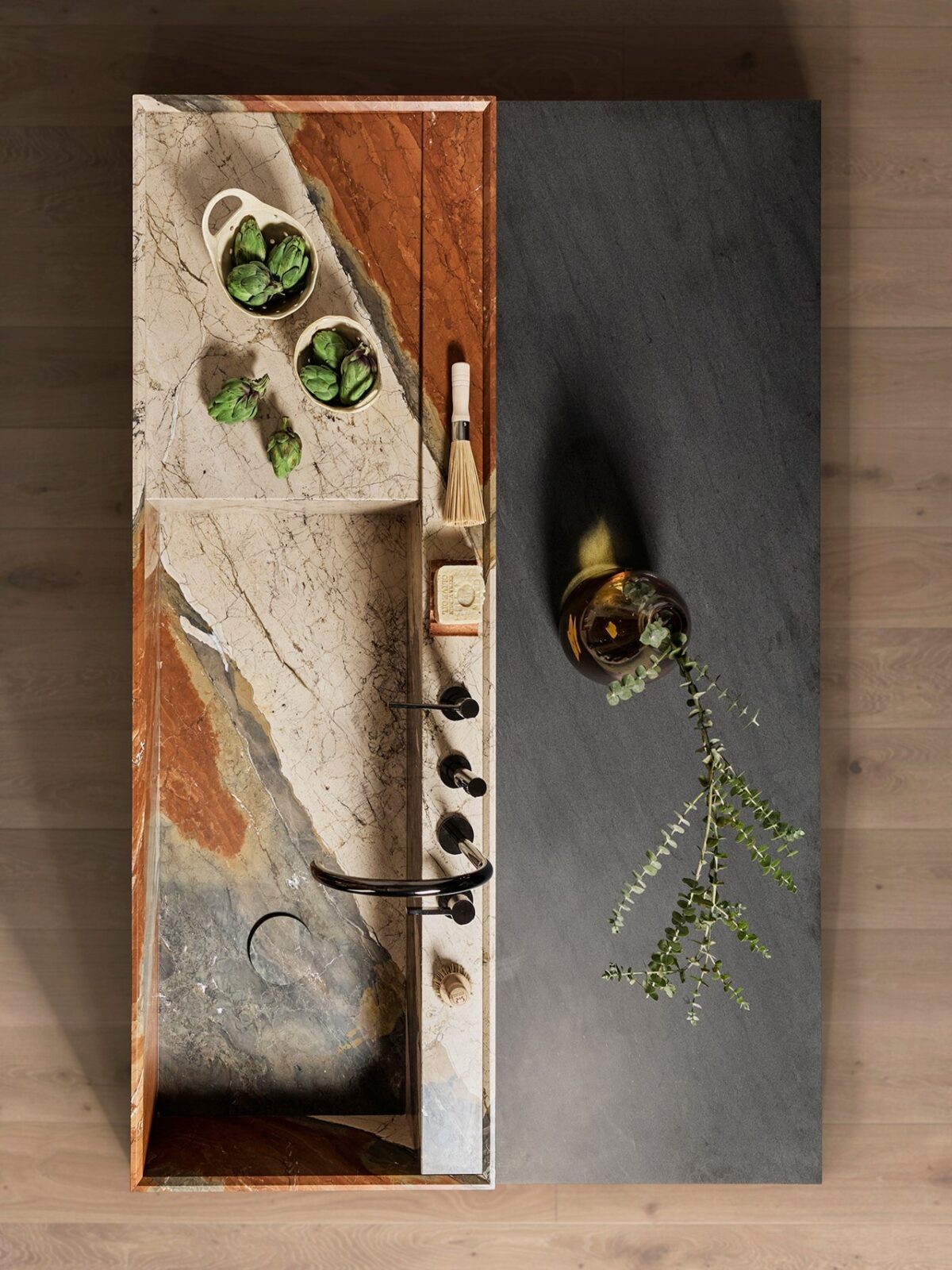
Materials are incredibly powerful because they communicate on both a conscious and subconscious level. Long before we analyse a space, we’re responding to how it feels, how it reflects light, how it ages, and what it reminds us of. I’ve always been fascinated by the way materials can trigger memories and associations. A piece of worn timber, a particular stone, the patina of metal, the texture of linen—these things can connect us to places we’ve visited, homes we’ve lived in, cultures we’ve experienced, or moments we’ve almost forgotten. They carry stories within them.
When we’re selecting materials, we’re not simply thinking about colours and finishes. We’re thinking about atmosphere, character, and emotional connection. How do these materials sit together? What do they say about the people who live here? What kind of feeling do they create? I think individuality often comes from those layers of meaning. Not from following a trend, but from creating combinations that feel authentic to a person’s life, experiences, and memories. That’s where character comes from, and ultimately that’s what gives a space its soul.
Cabbonet’s material gallery is described as a shared reference point for designers and clients. How does this collection evolve, and how does it help shape the creative dialogue during a project?
The gallery is constantly evolving because our curiosity never stands still. We are always discovering new artisans, materials, finishes, technologies, and sources of inspiration from around the world. More importantly, the gallery creates a common language. Design conversations can sometimes be abstract, but when people can touch, compare, and experience materials directly, the dialogue becomes more meaningful and collaborative.
It also encourages exploration. Clients often discover combinations they hadn’t considered, and those discoveries can lead to unexpected and highly personal outcomes. The gallery isn’t simply a library of materials; it’s a creative tool that helps shape the narrative of each project.
Craftsmanship and innovation seem to exist together within Cabbonet’s work. How do you balance traditional making techniques with contemporary technology and new possibilities in design?
For me, craftsmanship and innovation have always gone hand in hand. Every generation of makers has embraced new tools and techniques, so innovation is simply part of the continuing evolution of craftsmanship. The question has never really been whether something is made by hand or with the aid of technology. What matters is whether it helps realise the idea in the best possible way.
There are things that only skilled craftspeople can do. Their understanding of materials, proportion, detail, and finish comes from years of experience and judgement. Equally, there are things that modern technology allows us to achieve with a level of precision and consistency that would have been unimaginable a generation ago. The most exciting work happens when the two come together. Technology allows us to push boundaries, while craftsmanship ensures that the result retains character, integrity, and a human connection.
For me, innovation should always serve the creative vision, not drive it. We embrace new technologies when they help us create something better, but we never lose sight of the people, materials, and skills that ultimately give an object its soul.
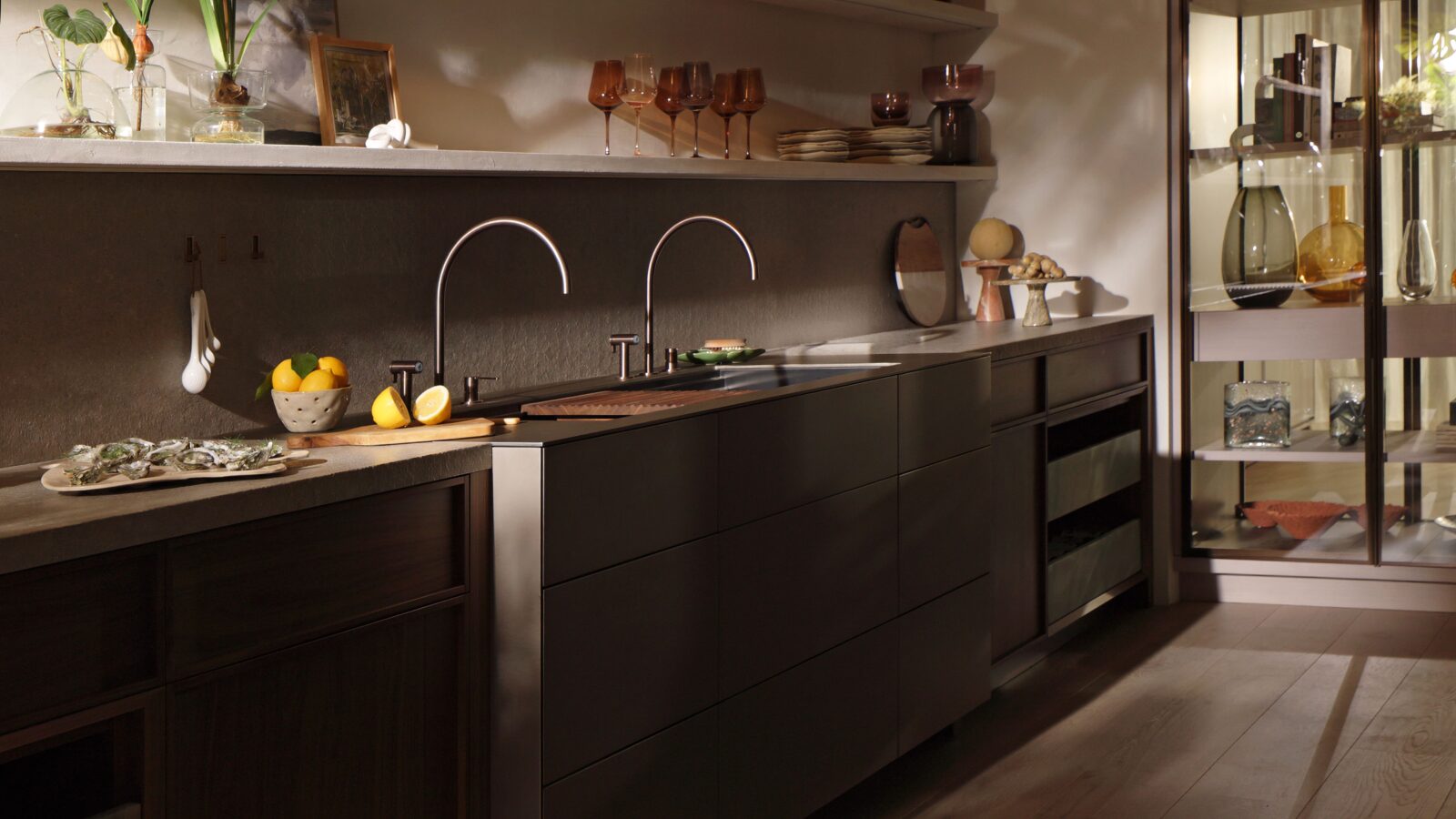
When designing a Cabbonet kitchen or interior, what do you hope people experience beyond the aesthetics of the space itself?
I hope they feel a sense of belonging.
One of the things I’ve learned over the years is that aesthetics are deeply personal. What one person finds beautiful, comforting, or inspiring may be completely different for someone else. Our life experiences shape those preferences—where we were raised, the homes we grew up in, our cultural background, our travels, the food we share, the places we’ve lived, and the memories we’ve accumulated along the way.
For me, the goal isn’t to impose a particular aesthetic. It’s to create an environment that feels authentic to the people who inhabit it. The most successful spaces often tap into something familiar, sometimes consciously and sometimes subconsciously. A material, a quality of light, a proportion, a detail, or a ritual can trigger memories and create a powerful sense of comfort and connection. Beauty matters, but beauty alone isn’t enough. If we’ve done our job well, people don’t simply admire the space. They feel at ease within it. They recognise something of themselves in it. Over time it becomes woven into their daily rituals, their family life, and their own story.
When I look back on the projects that have been most successful, they’re rarely the ones that make the biggest visual statement. They’re the ones that become part of people’s daily lives and memories.
After decades of working across different creative fields, what continues to inspire you and influence the way you approach design today?
Curiosity remains one of my greatest sources of inspiration, but more than anything, I think it’s about being receptive to what’s around me. Inspiration can come from anywhere. A conversation, a piece of music, a film, a meal shared with friends, a building, a landscape, or simply an unexpected moment of observation. Some of the most valuable influences on my work have come from outside the world of design altogether.
Travel continues to be a profound influence because it exposes me to different cultures, perspectives, and ways of living. I’m fascinated by the small details that often go unnoticed — how people gather, how they entertain, what they value, the objects they choose to keep, and the rituals that shape everyday life.
I’m also endlessly interested in people. Every person carries a unique collection of experiences, memories, and influences, and understanding those stories is often where the most meaningful ideas begin. The longer I work, the more I realise that creativity isn’t really about searching for inspiration. For me, it’s about paying attention. I’ve found that the best ideas rarely arrive when I’m looking for them; they tend to emerge when I’m receptive to the world around me. Inspiration can quite literally come from anywhere.