




Header: Rafael Gamo
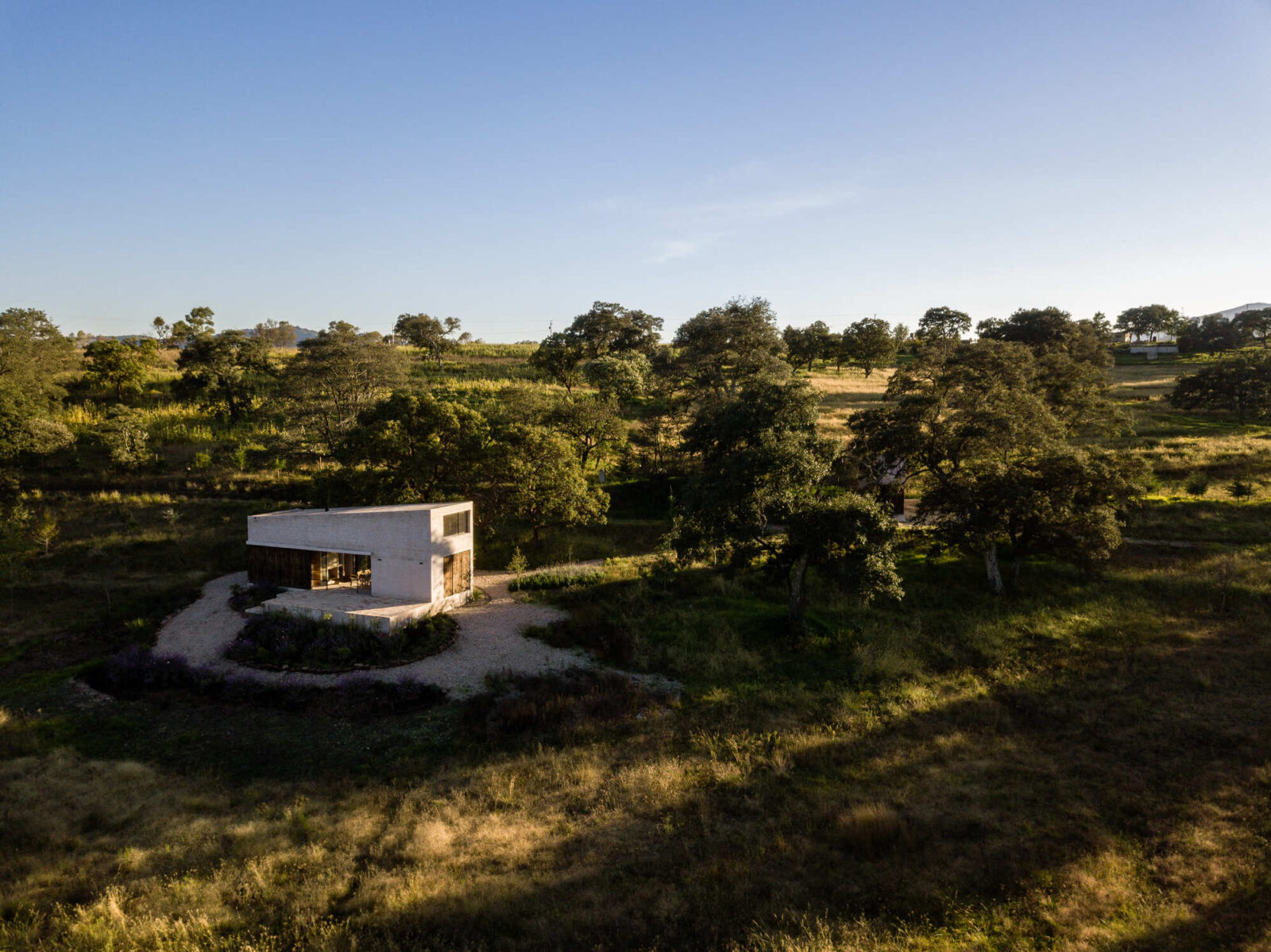
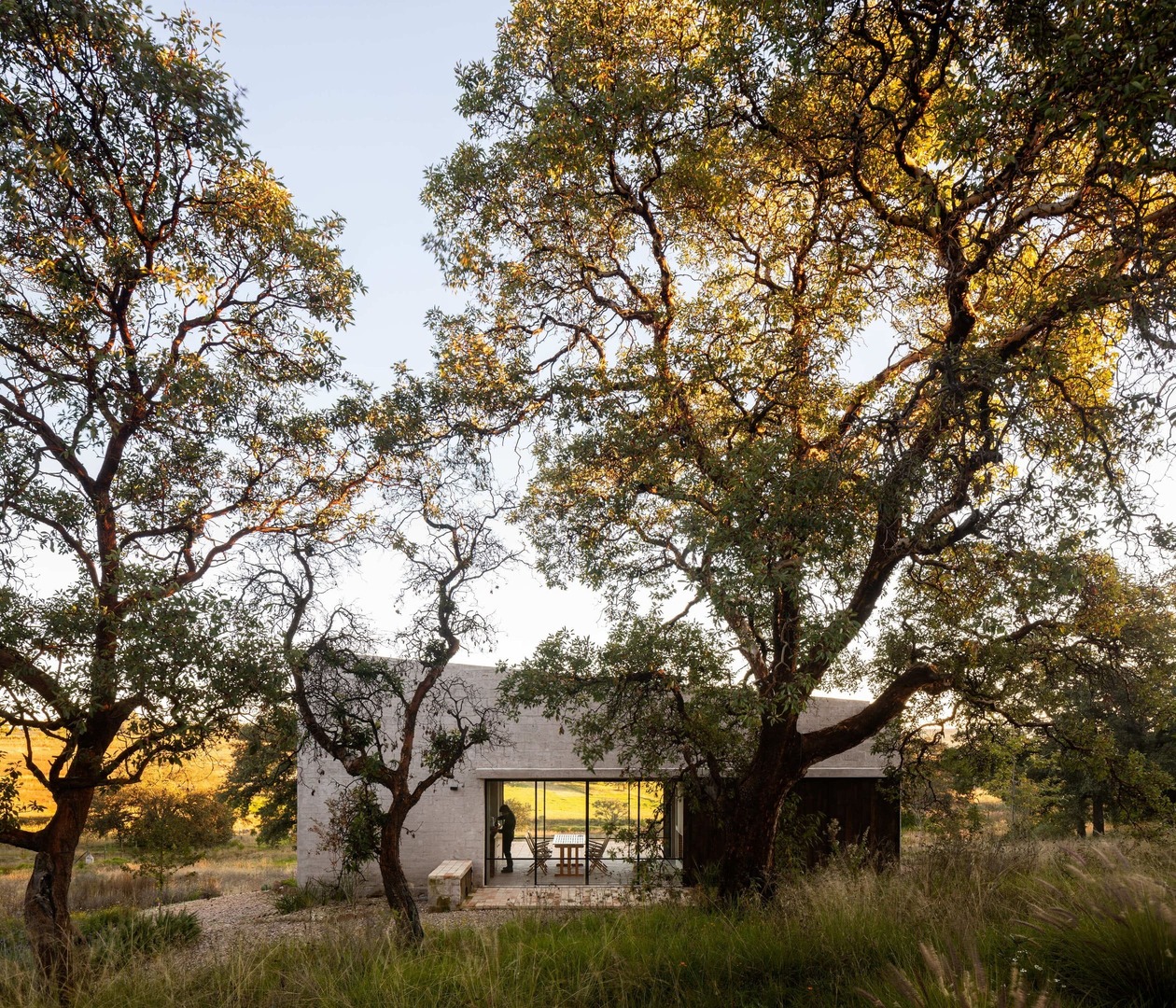
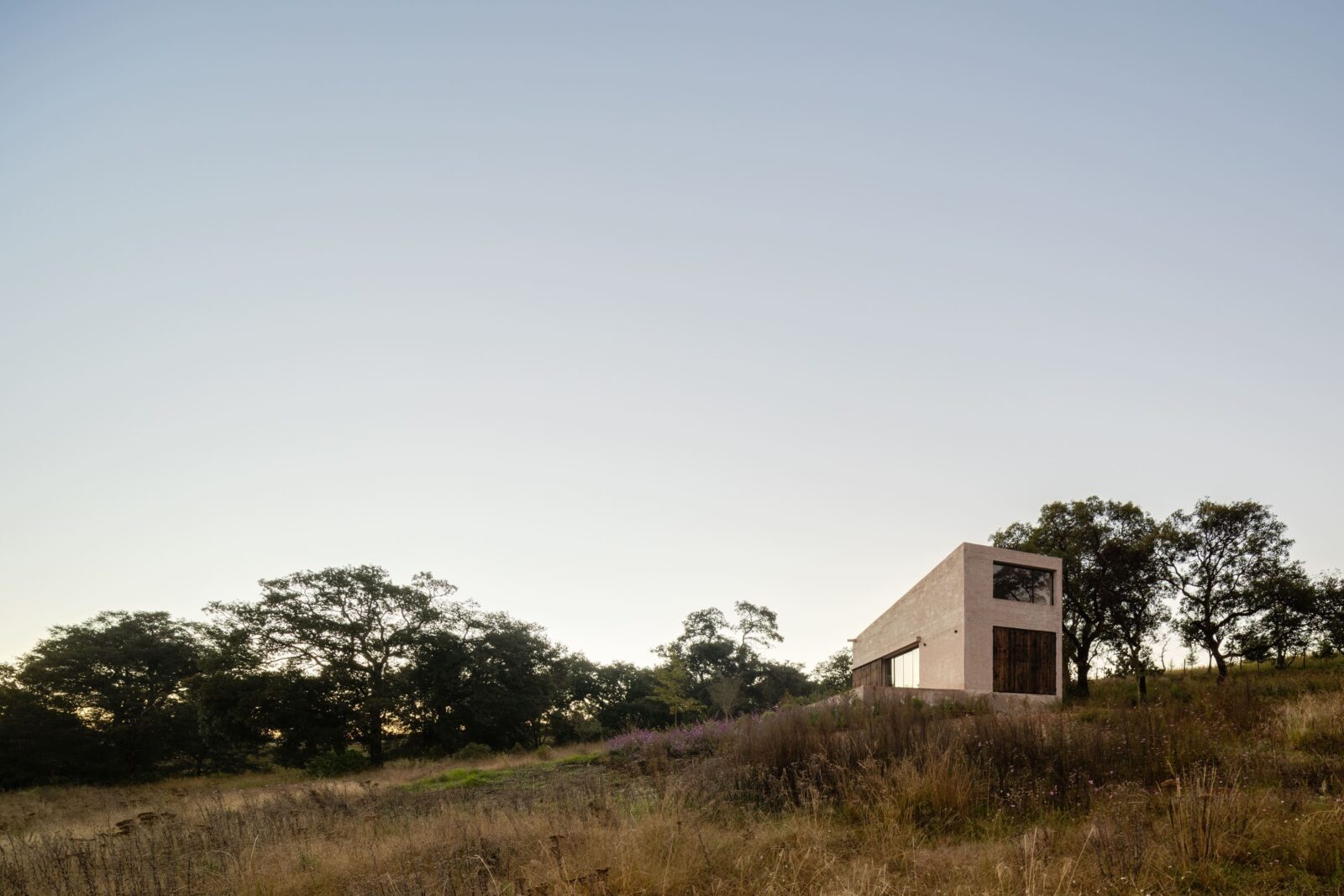
The story of the Aculco holiday home began during an outdoor rock climbing trip. Two brothers found an isolated plot of land surrounded by nature in the State of Mexico, close to impressive cliffs. Enchanted by the setting, they purchased the property and spent several years reforesting the area. When they finally decided to build a getaway to escape modern city living, they commissioned the Mexico City-based studio PPAA Architects to design a compact, minimal-maintenance retreat.
Local materials sourced from a nearby quarry
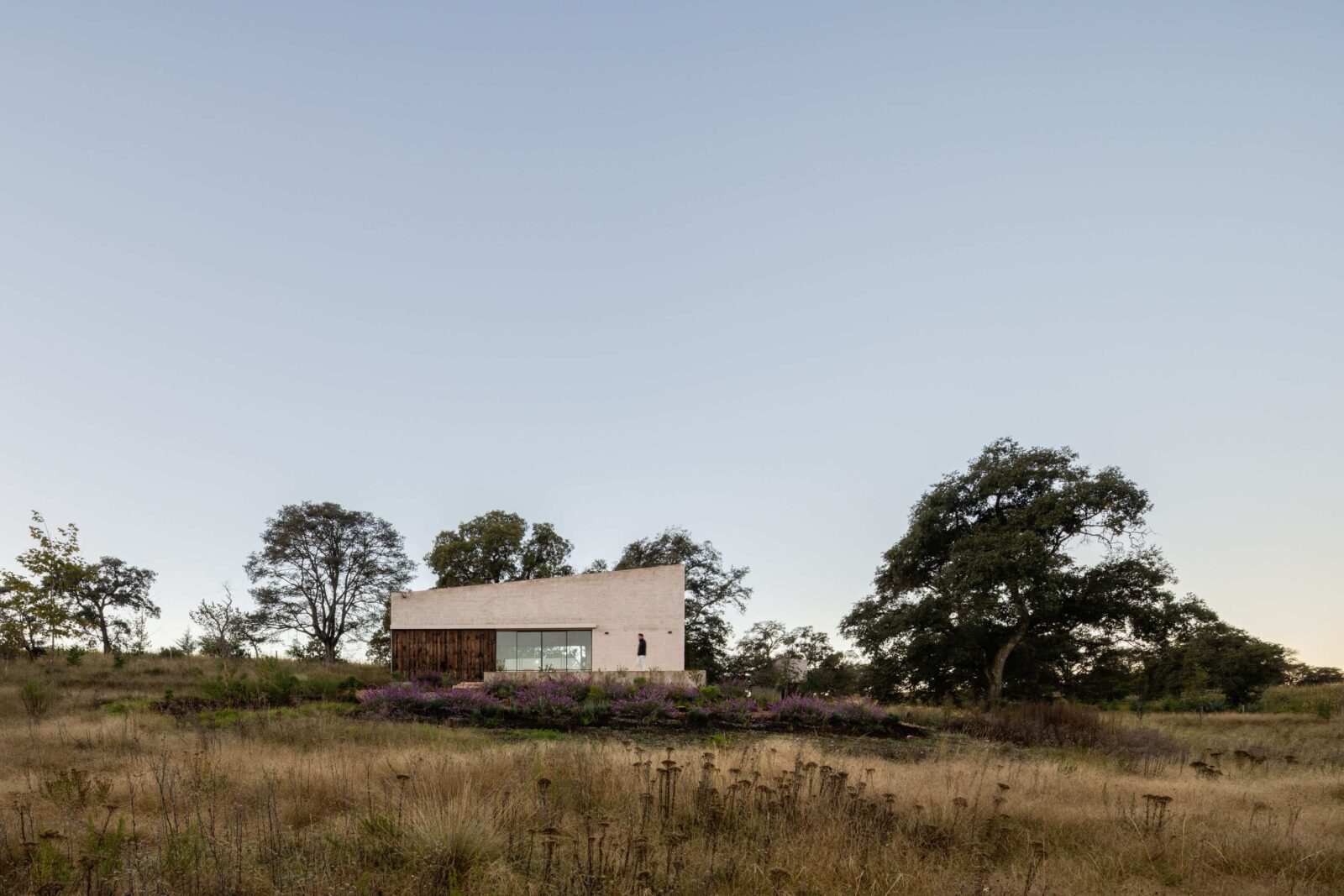
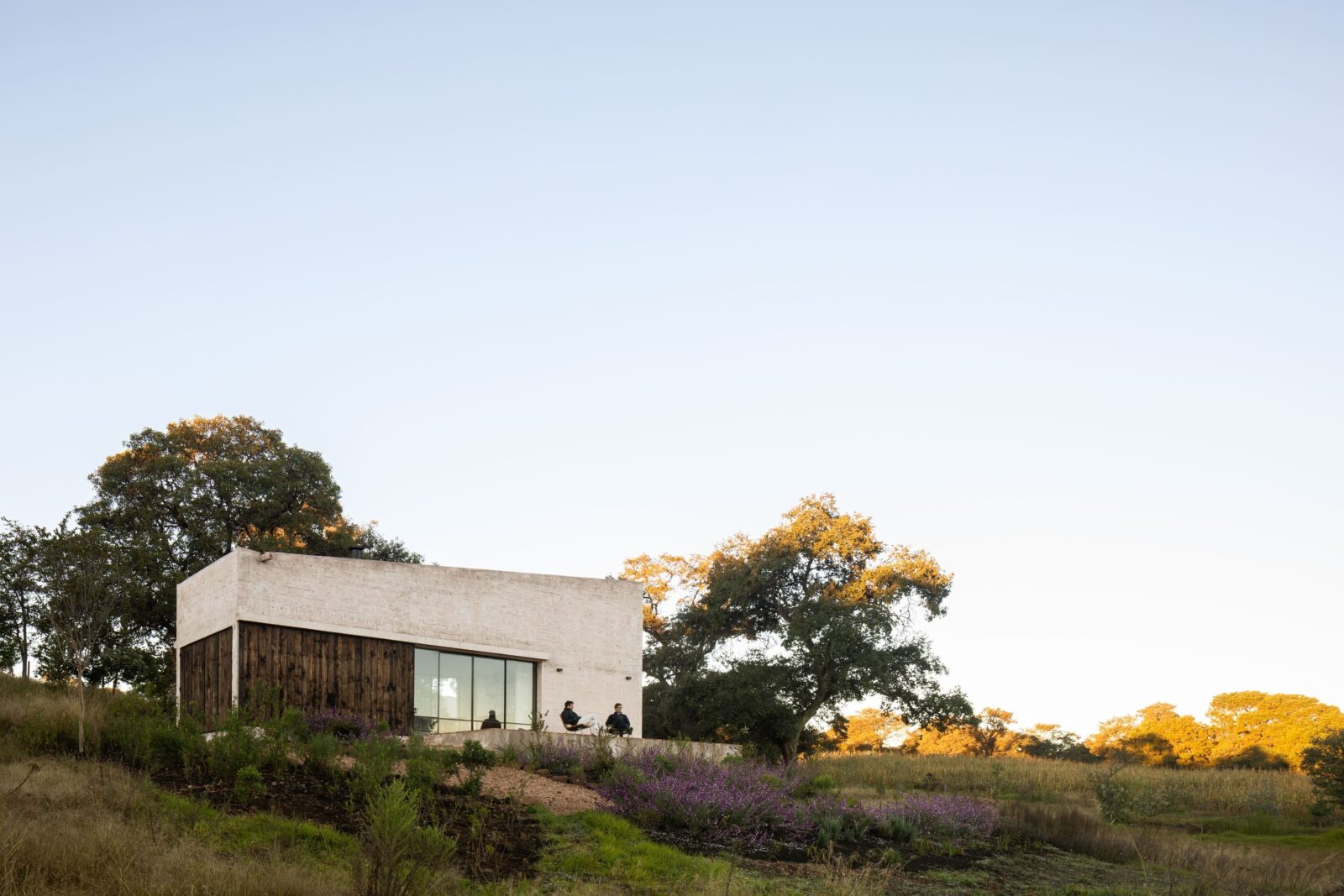
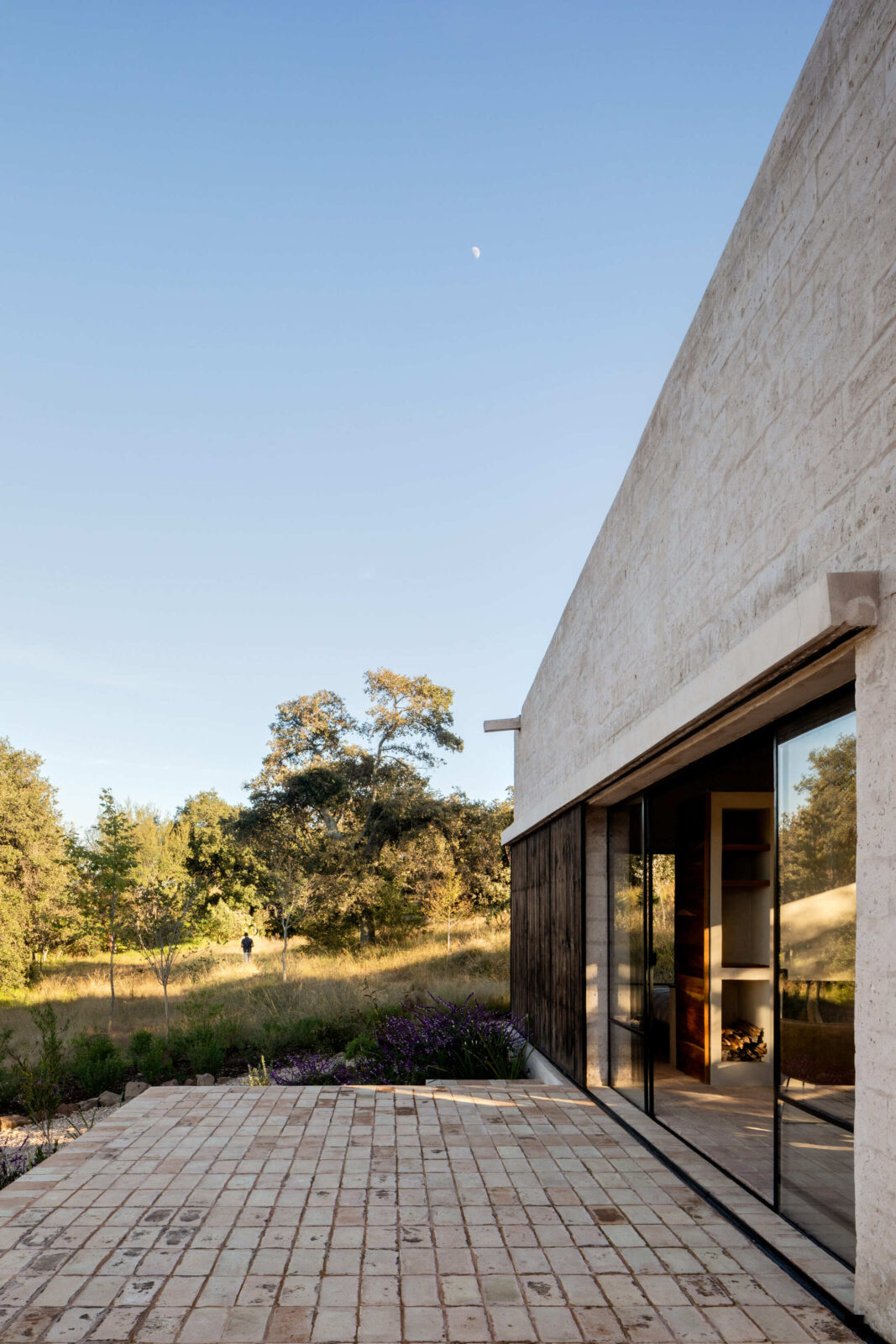
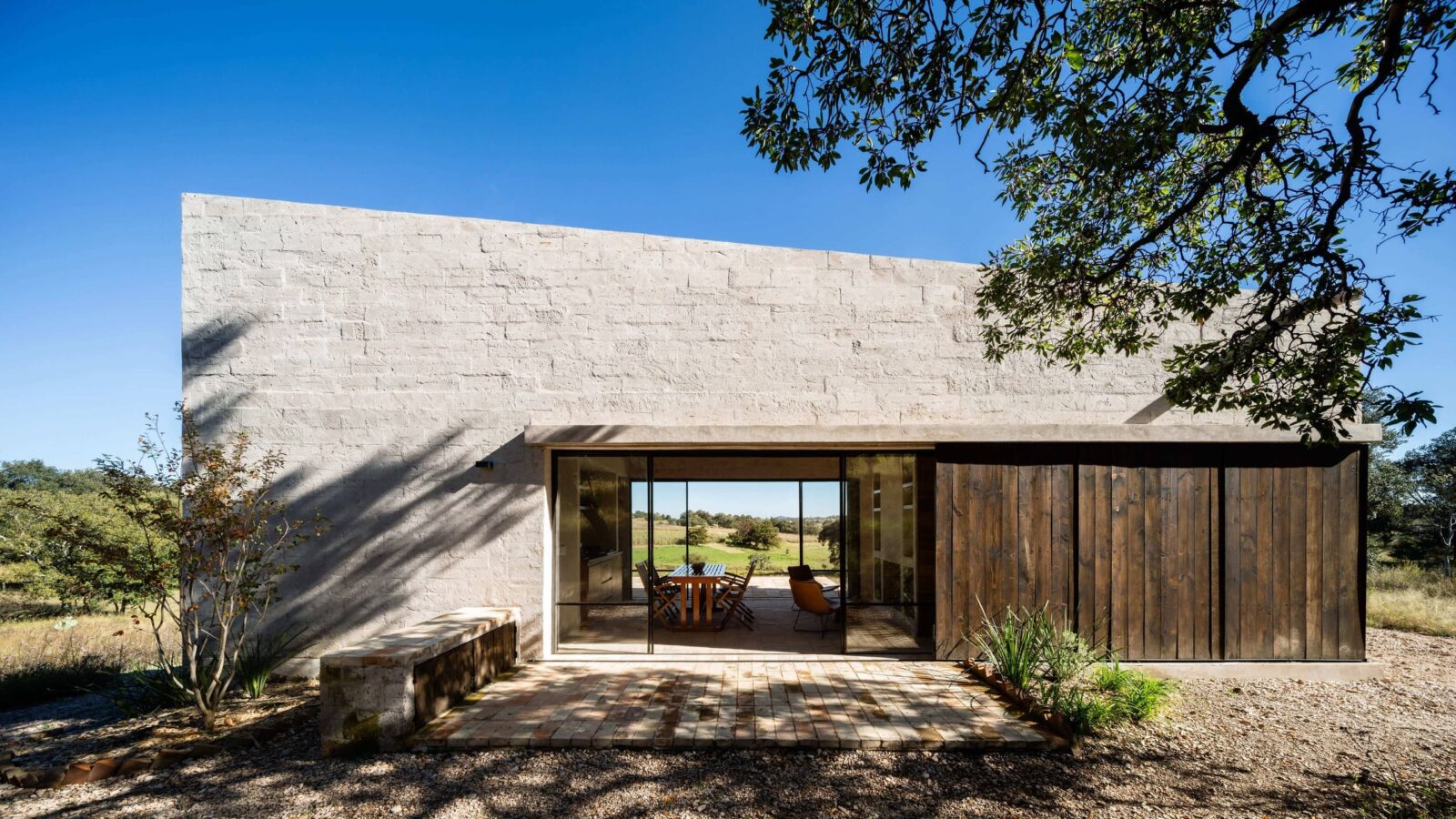
Spanning just 90 square metres, the architecture is a direct response to the remote landscape. Building in such an isolated spot presented a significant logistics challenge, particularly regarding workforce and material transport. To minimise the environmental footprint and avoid moving heavy materials across long distances, the architects constructed the structural exterior walls using solid stone blocks sourced directly from a nearby quarry.
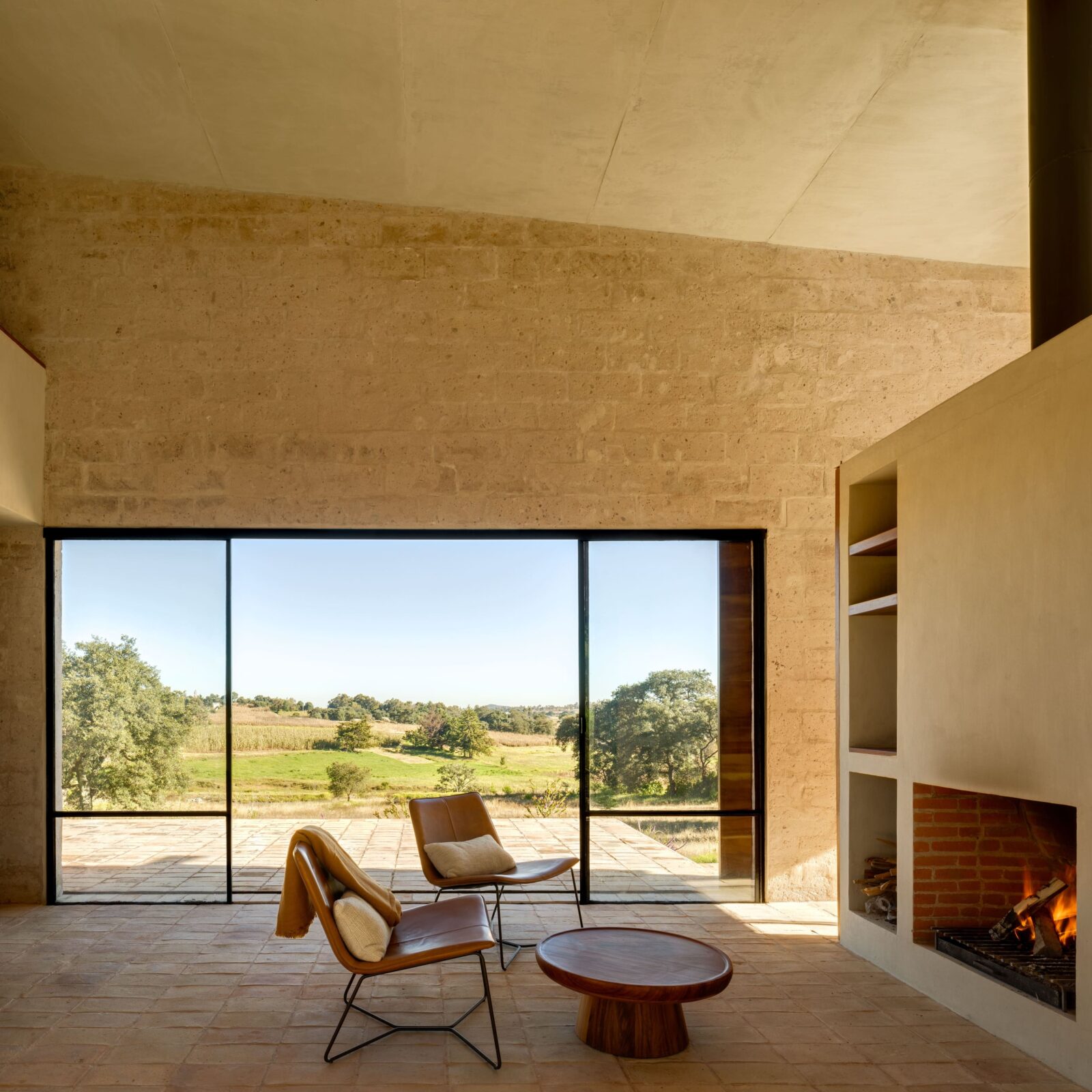
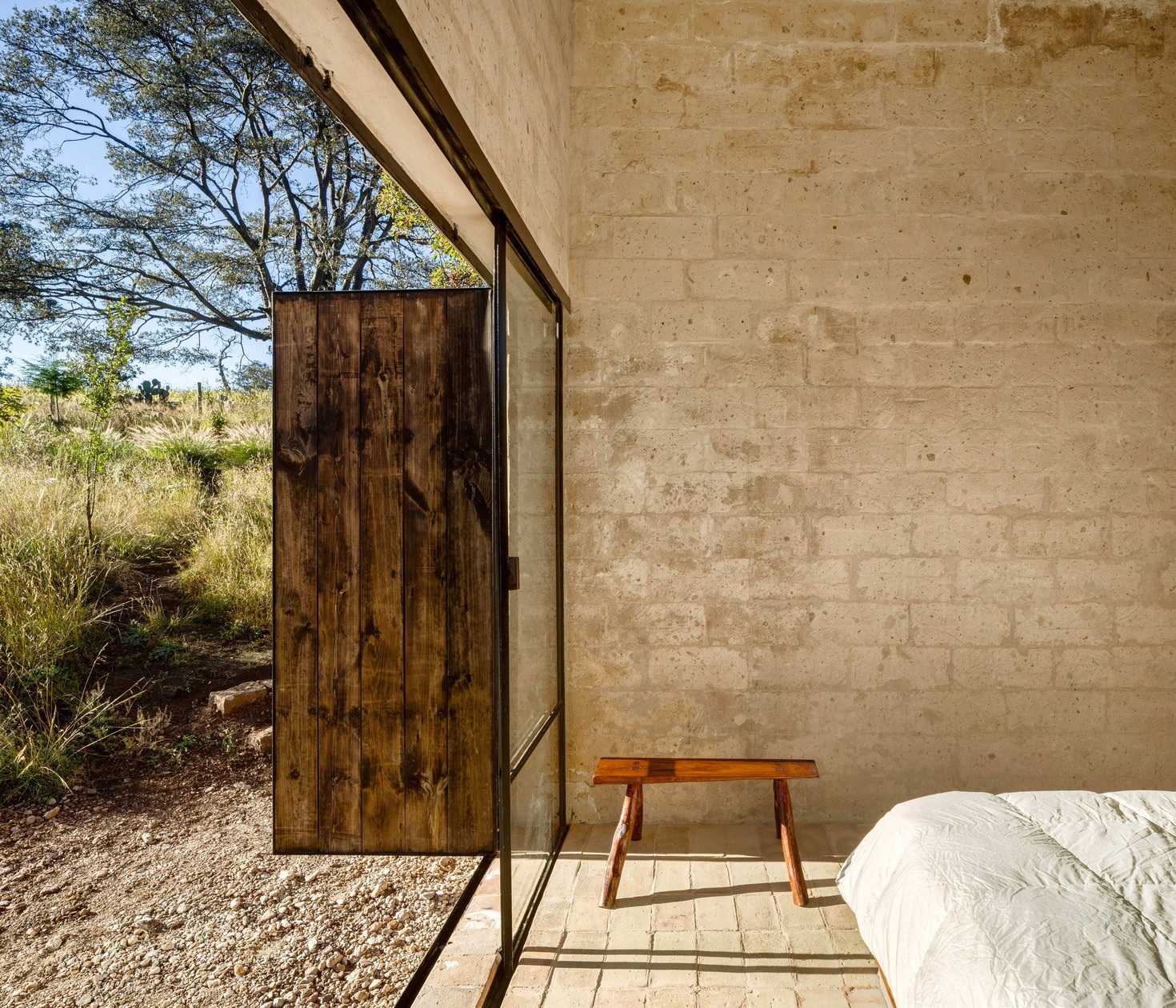
Inside and out, every material remains in its unfinished, honest state without any coatings or plaster. The structural stone walls are paired with local timber framing and raw clay floor tiles. Large timber doors and glass panels complete the structural palette, allowing the textures of the region to guide the interior experience.
Open spaces and shared elements
The footprint of the building forms a simple rectangular volume topped with a slanted roof line. To maximise the connection to the land, the architects kept interior divisions to an absolute minimum, treating the clear internal spaces as a frame for the surrounding terrain.
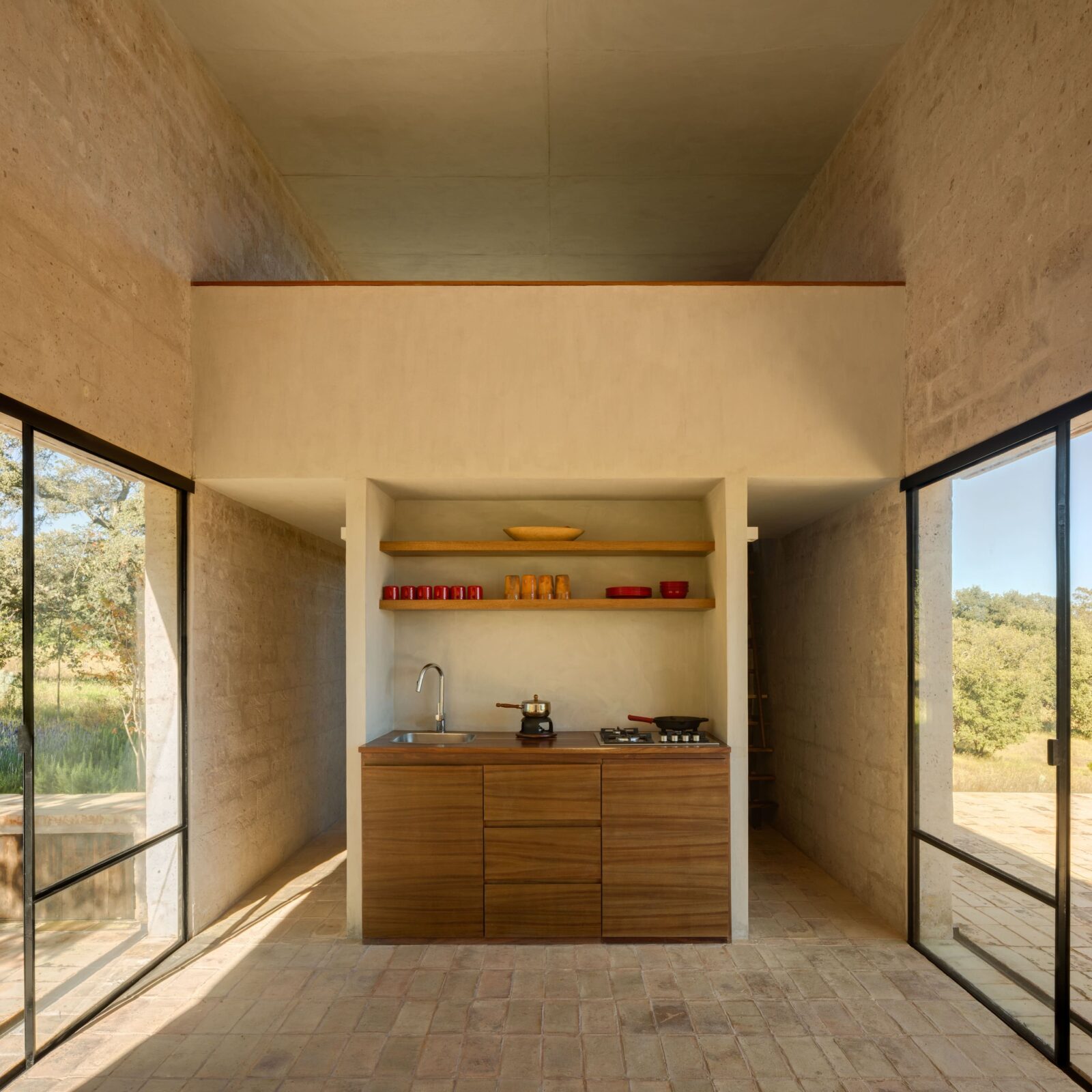
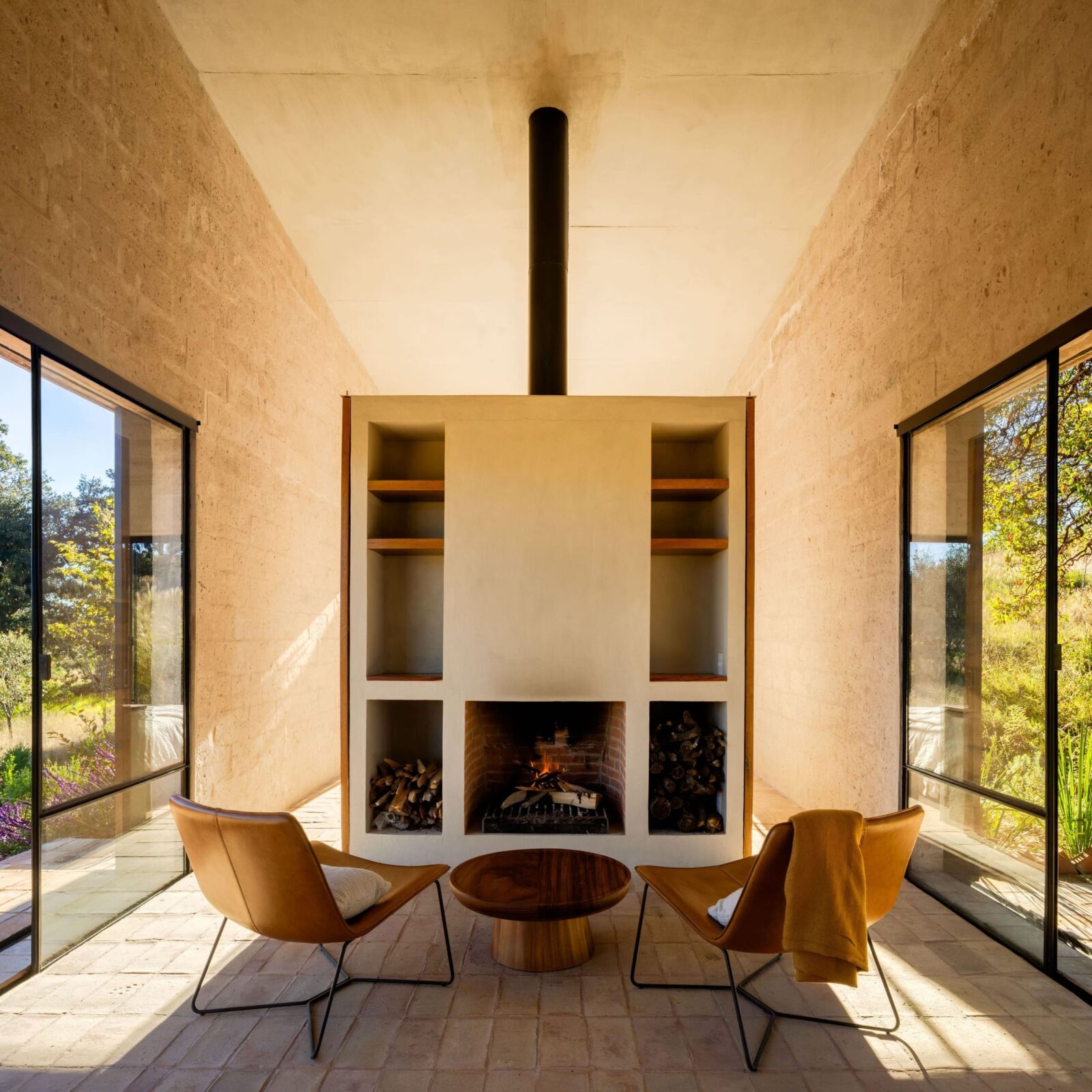
At the core of the ground floor sits the main living area, bounded by a small, built-in kitchen on one side and a fireplace with armchairs on the other. Two symmetrical glass doors slide open to let air circulate naturally through the house. When the owners return to the city, sturdy sliding wooden panels roll across to cover the glass and secure the building.
Mezzanine decks and outdoor terraces
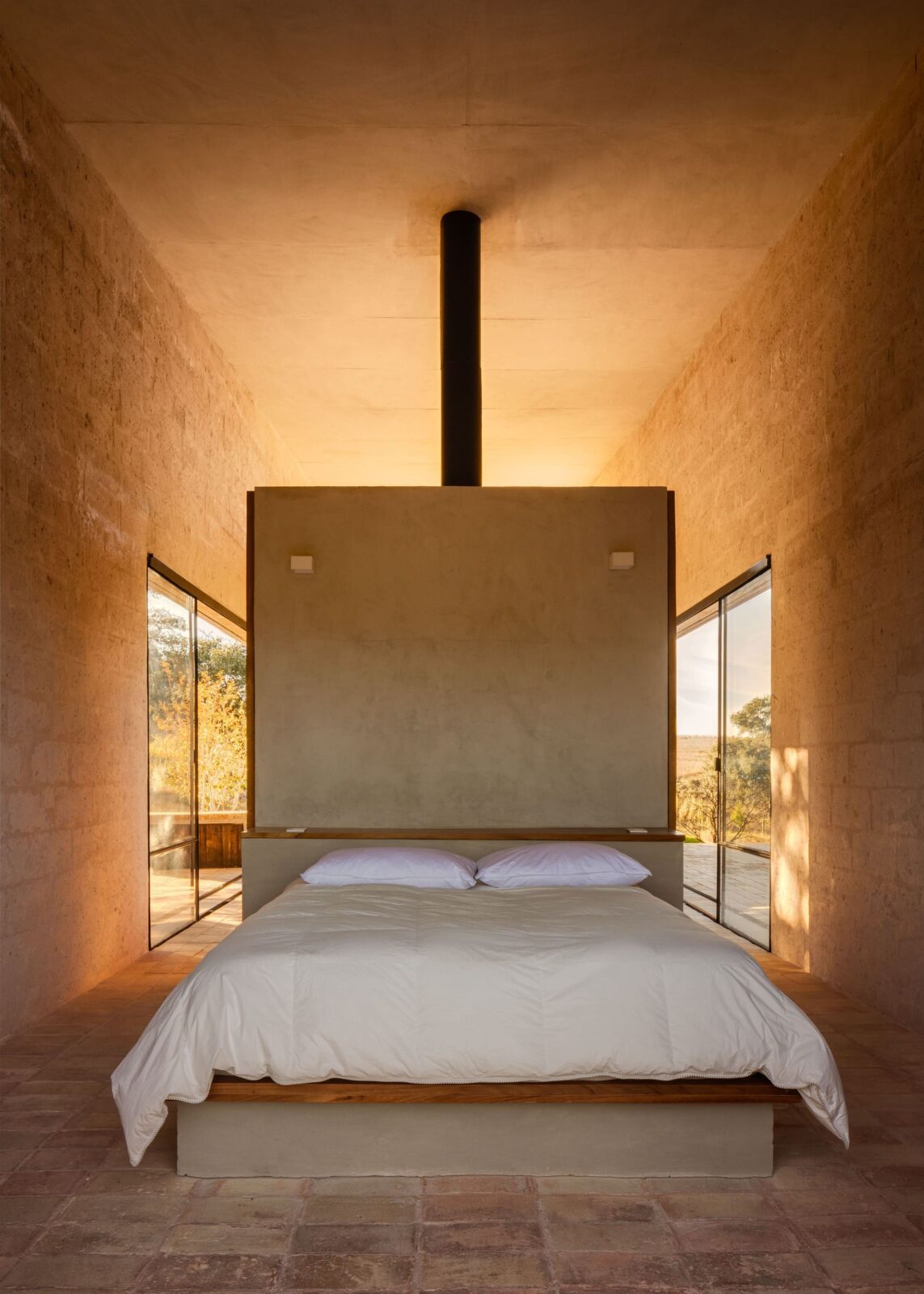
The private quarters are efficiently distributed at either end of the rectangle. Behind the fireplace, the first bedroom features floor-to-ceiling glass that opens onto a small, private patio. At the opposite end, the bathroom and service zone form a solid platform that supports a mezzanine level. Reached via a simple wooden ladder, this upper loft serves as the second bedroom, illuminated by a large opening that looks out across the trees. The indoor living space extends outwards onto a wide timber terrace that nearly doubles the overall footprint of the house. From this elevated platform, a set of steps leads straight down to a nearby natural pond, connecting the brothers directly to the reforested grounds.
A lasting connection to the land
The Aculco project lets the natural landscape take centre stage and demonstrates how architecture can step back. The building functions less like an imposition on the hillside and more like a permanent piece of the topography. It shows that true luxury in modern design does not require complex technology or imported finishes; instead, it can be found by stripping a building down to its essential form and allowing local stone, wood, and light to dictate the space.
Project info
Project name: Aculco
Location: Aculco, Estado de México, Mexico
Year: 2018
Area: 90 m2
Architecture Firm: PPAA
Team: Pablo Pérez Palacios + Alfonso de la Concha Rojas, Miguel Vargas, José Luis Jiménez
Photography: Rafael Gamo

