



Header: JUGAAD
JUGAAD designs transform containers used for long-distance shipping into a climate-responsive residence. Set in Mauritius’ coastal village of Trou d’Eau Douce, the tropical home made up of upcycled containers shines with captivating minimalism, durability and resourcefulness.
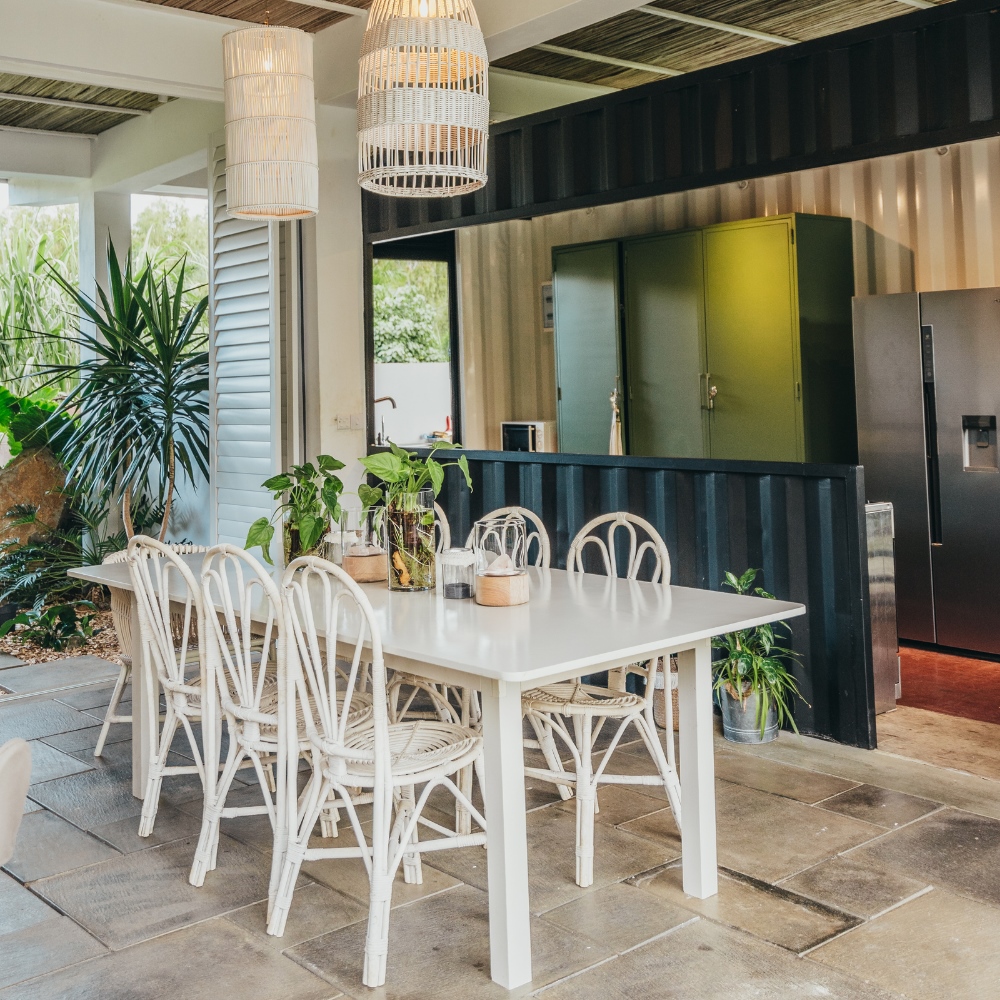
Passive cooling strategies
Built with the tropical climate in mind, the Container house by JUGAAD eliminates the need for air conditioning by relying on passive cooling strategies, which include a large, generous ceiling height, an open-plan layout, and openings carefully calibrated to make the most of prevailing sea breezes, which serve as a nonstop cross-ventilation. Large sliding doors and a permeable façade also contribute to the cooling effect, while blurring the boundary between the interior and exterior. Shaded verandas and breezeways allow daily life to take place outside the hot interiors.
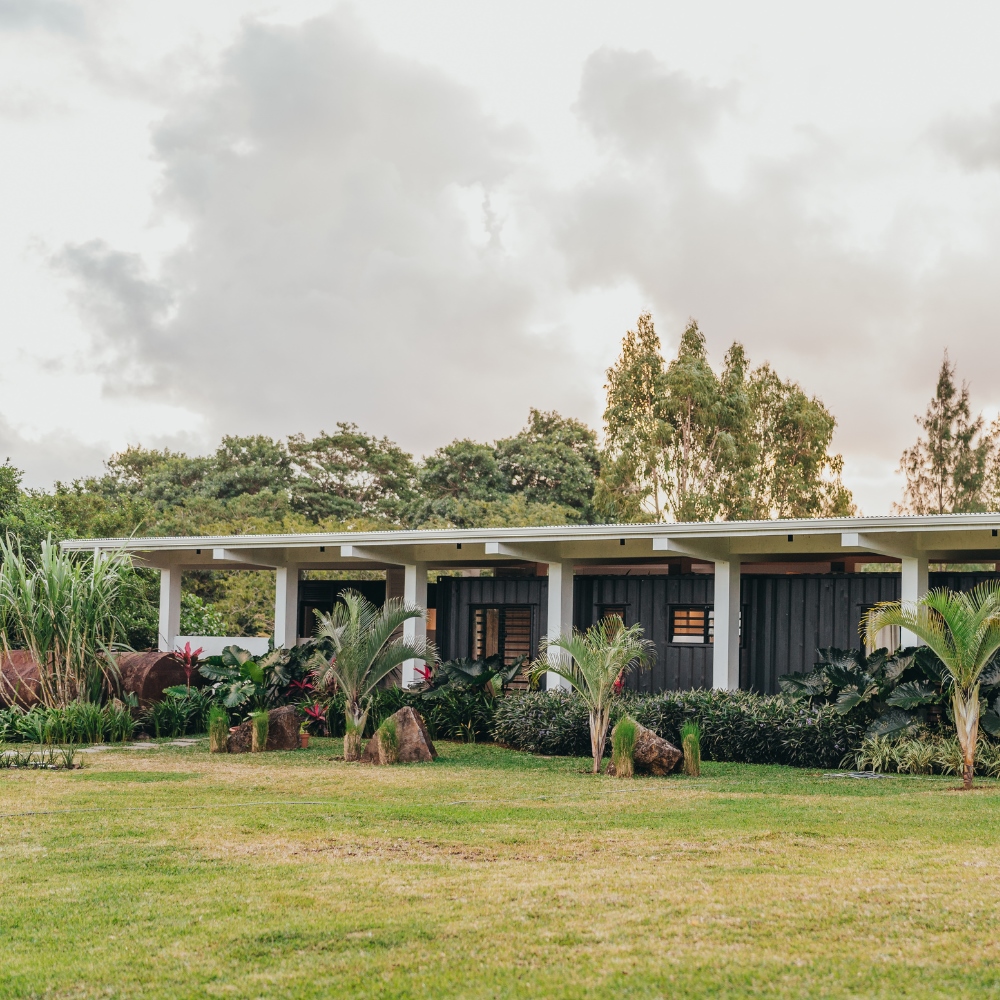
Sun and rain protection is ensured through deep overhangs that simultaneously mitigate heat gain while allowing windows to remain permanently open. Passive cooling is not achieved through architecture alone. It is equally supported by the landscape design. Dense tropical planting surrounds the property, while permeable ground surfaces help reduce heat retention. Thoughtfully planted trees create shade, filter dust, and cool the microclimate through the process of evapotranspiration.
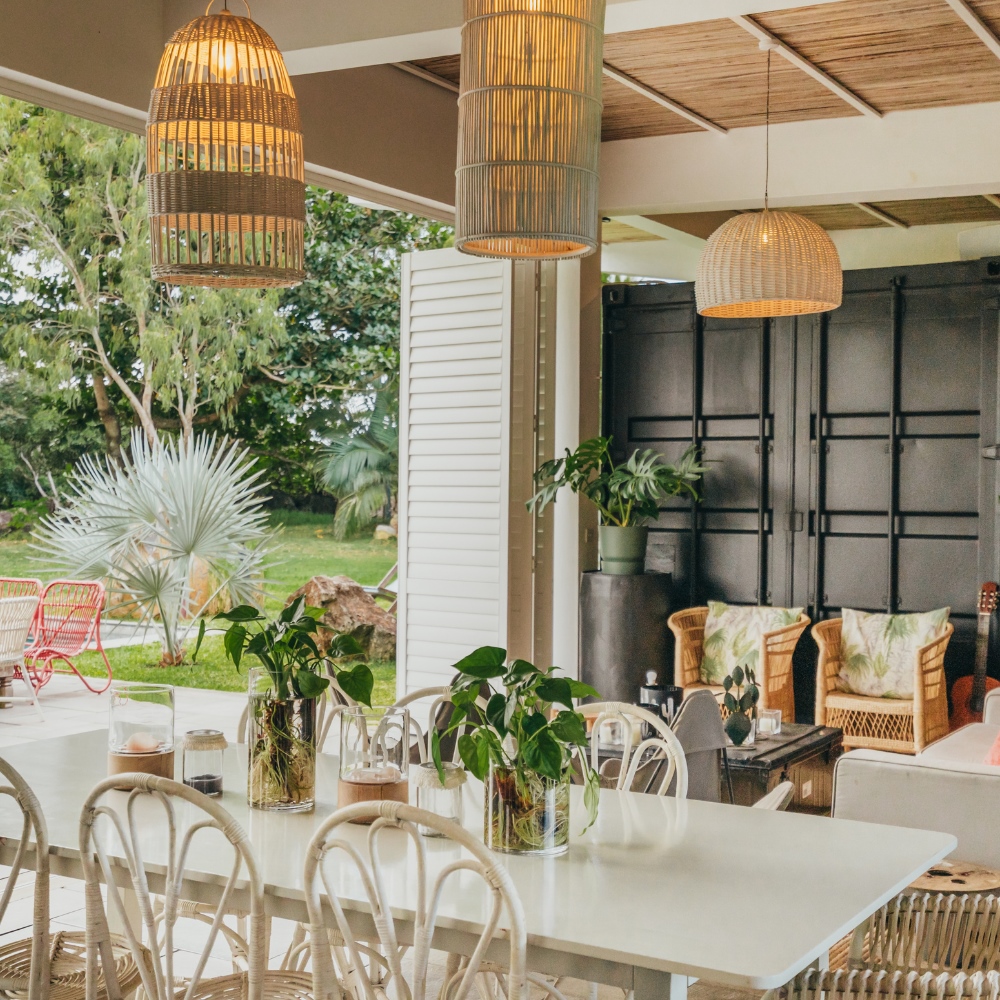
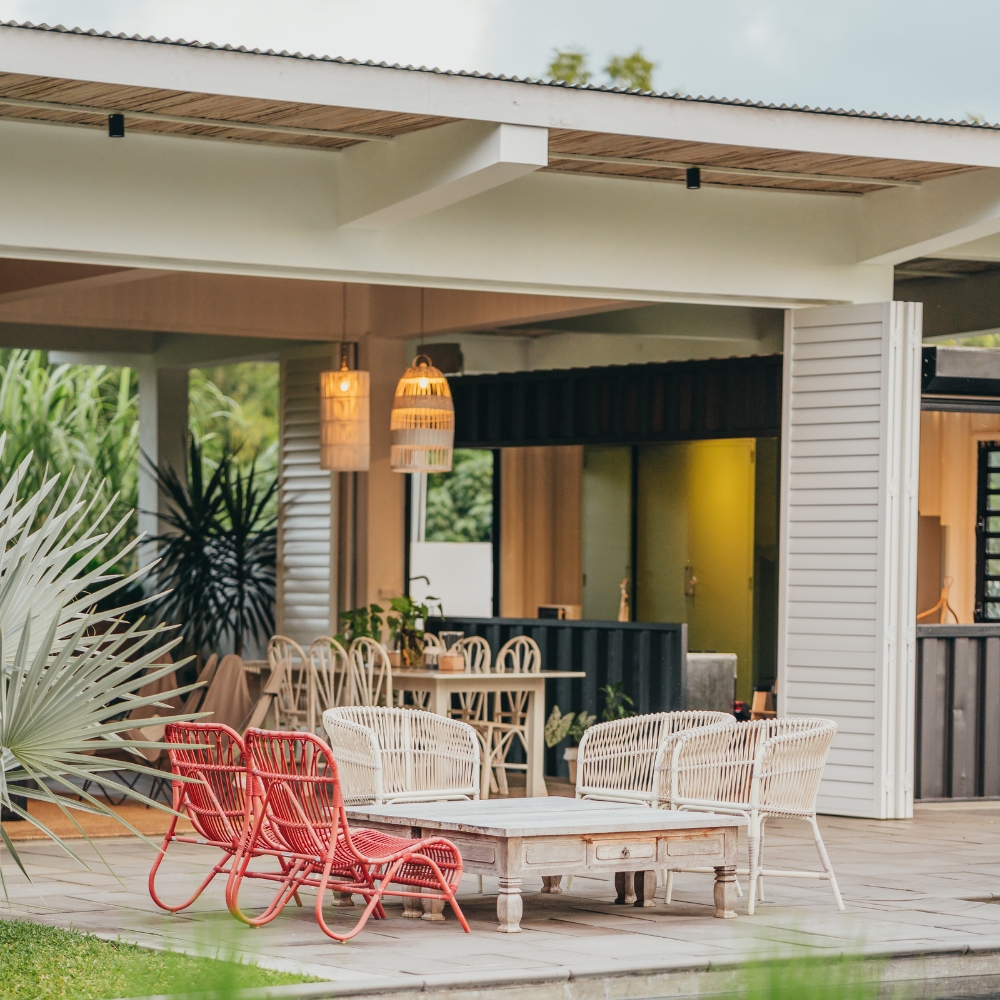
Recycled containers within a concrete frame
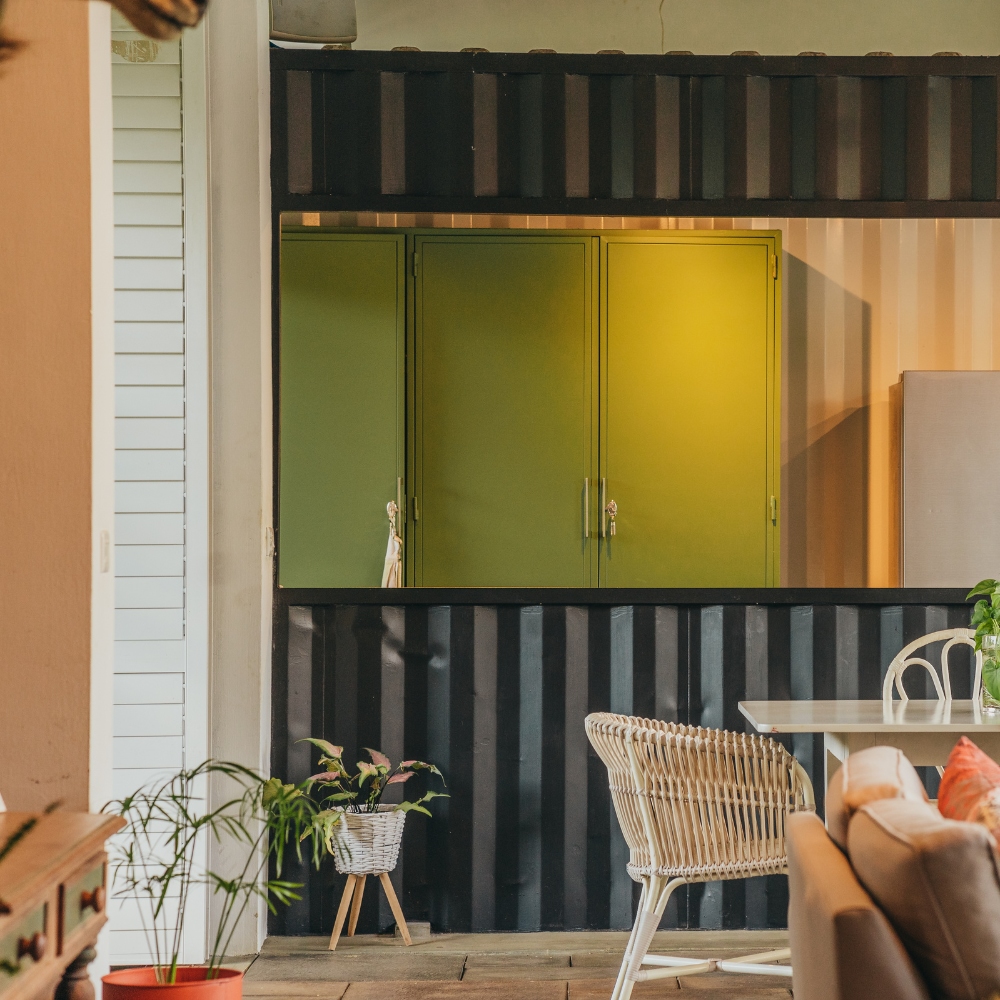
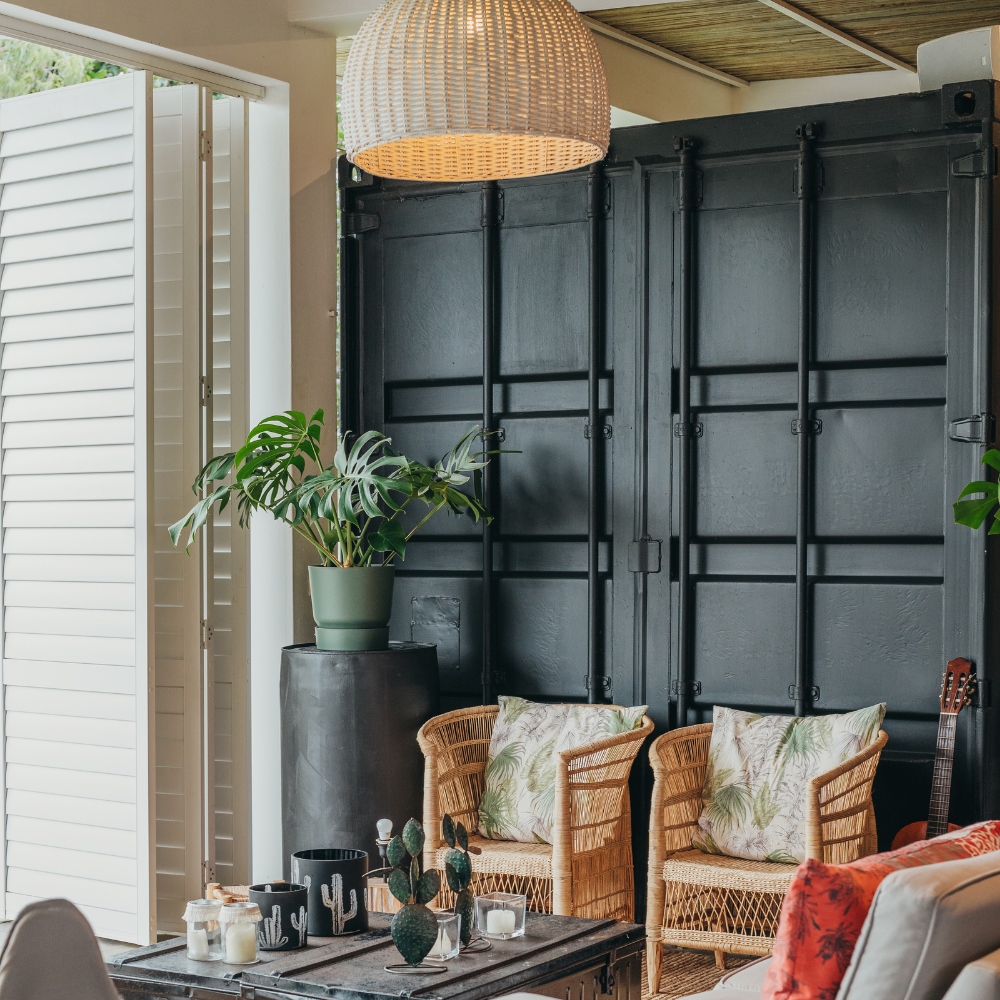
Instead of using just containers as load-bearing modules, the structure is reinforced with concrete for additional stability, durability and corrosion protection. The containers, therefore, serve as prefabricated volumes inserted into the reinforced concrete frame. This approach has numerous benefits. For starters, it allows for larger spans, flexible open-plan layouts and higher ceilings than a pure container structure. Finally, the elevation and shading of steel volumes reduce heat gain, thus boosting thermal performance. That way, the final product strikes a balance between speed and affordability of repurposed containers with the spaciousness and longevity of conventional houses.
Sustainability approach and regional impact
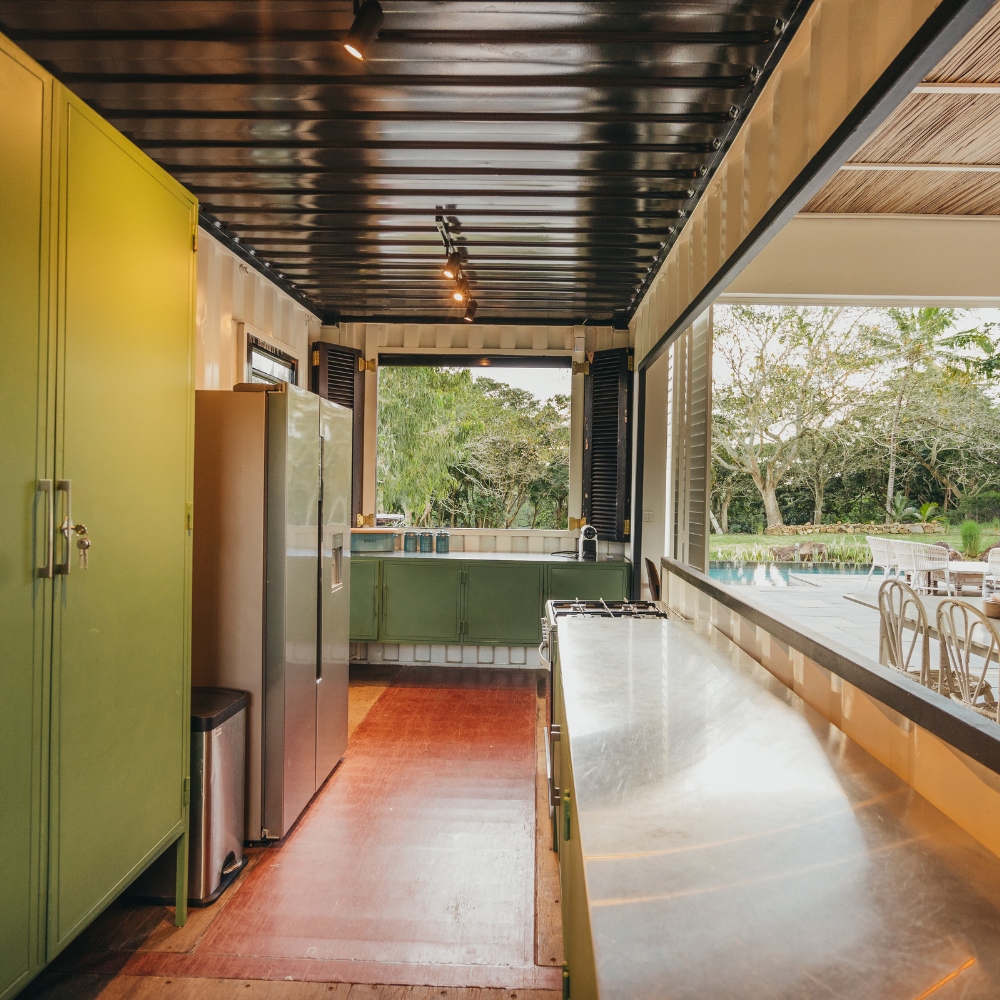
Every element of the project is made with sustainability in mind. Starting from the material selection based on upcycled shipping containers, which reduces material waste. The home’s reliance on passive cooling strategies reduces the need for air conditioning, thus reducing energy consumption. The open plan layout, cross ventilation, deep overhangs and shaded openings improve airflow throughout the structure, thus reducing dependence on mechanical systems. The employment of local metal artisans for the kitchen celebrates Mauritian craftsmanship while simultaneously reducing travel costs and the accompanying carbon impact.
Container House by JUGAAD showcases how sustainable housing can reshape local architectural practices. By mixing passive design, upcycled materials and landscape architecture, the company created a new tropical language. Resource-efficient and climate-responsive, this design still remains affordable and accessible to many, hoping to start a new architecture trend in Mauritius. The design of the Container House has won the AIDA African International Design Award in the Residential Architecture category.

