





Header: Maxime Brouillet
At the edge of a wooded property in Mirabel, Quebec, the Du Corail Residence sits quietly against its backdrop. This contemporary single-family home spans over 7,740 square feet, a size that could easily overwhelm its environment. Instead, Montreal-based design studio Entre Quatre Murs spent four years developing a structure that grows naturally from the land. The project shows how architecture can respond directly to the shape of the earth and the daily routines of the people inside it.
Three levels of light and movement
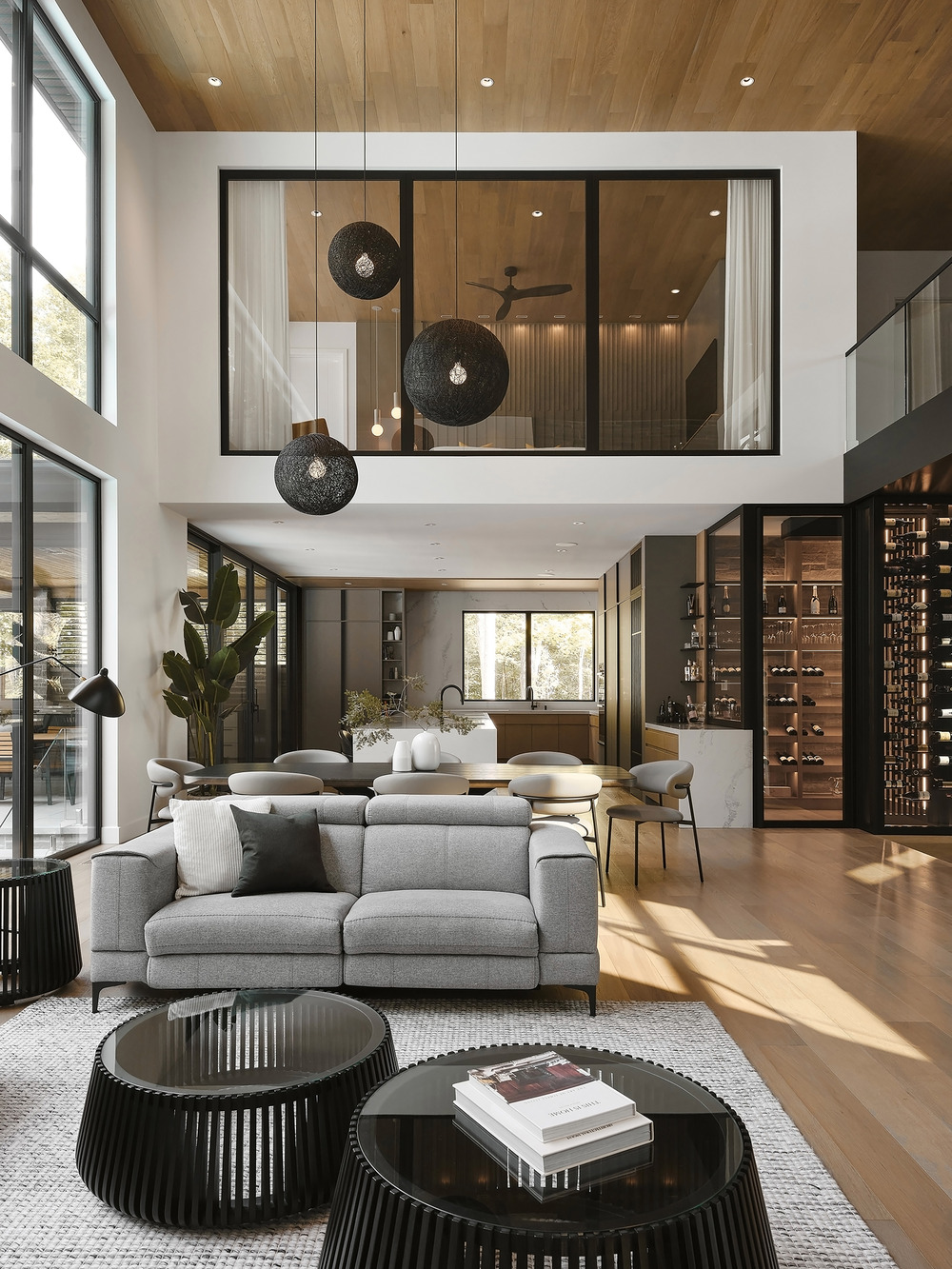
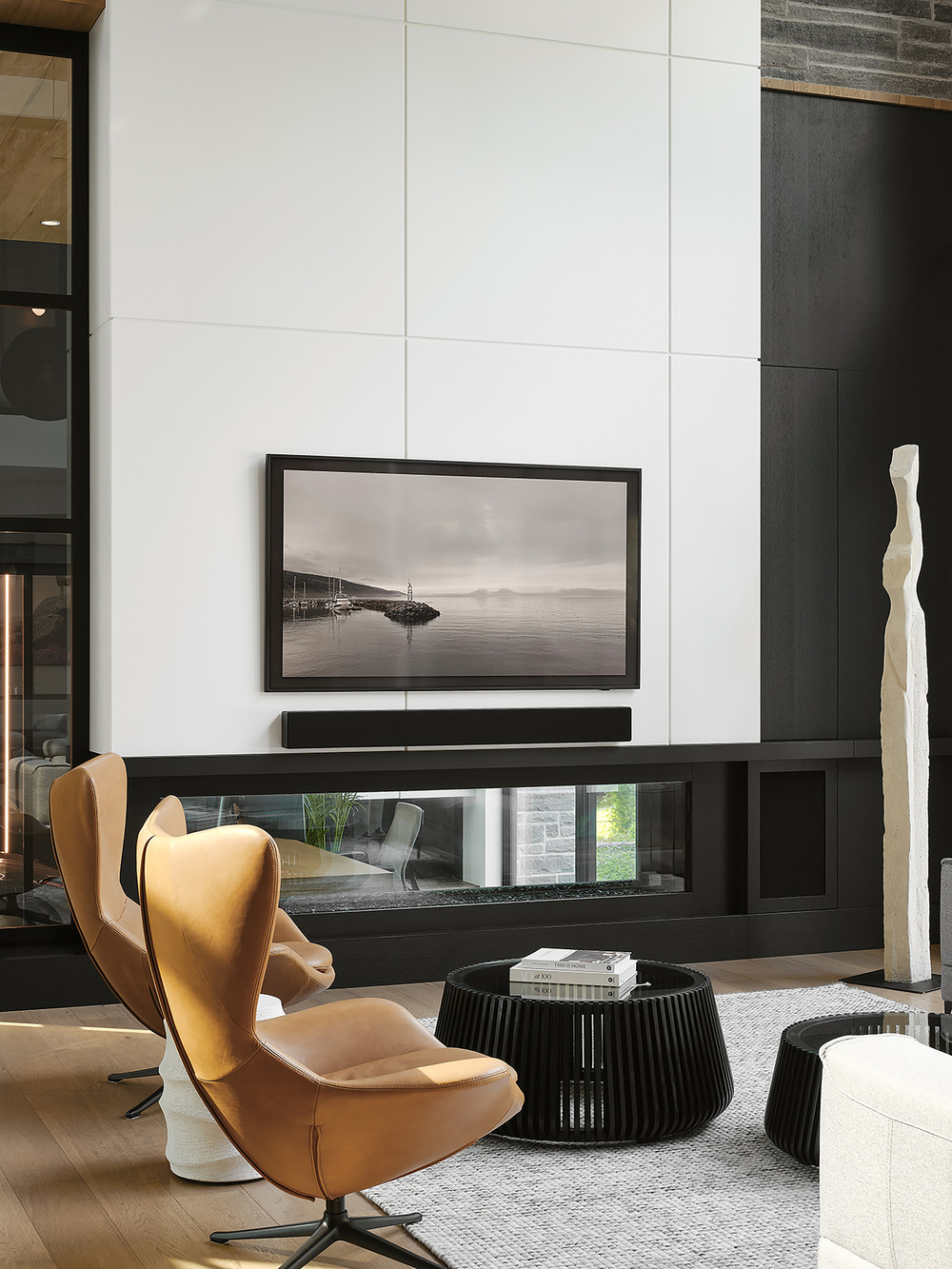
The design team organised the vast interior across three distinct floors, treating each level with the same attention to detail. The main floor acts as the central hub, grouping the kitchen, dining area, and living room under high ceilings. Massive glass bays puncture the walls, turning the shifting daylight into a primary element of the interior experience.
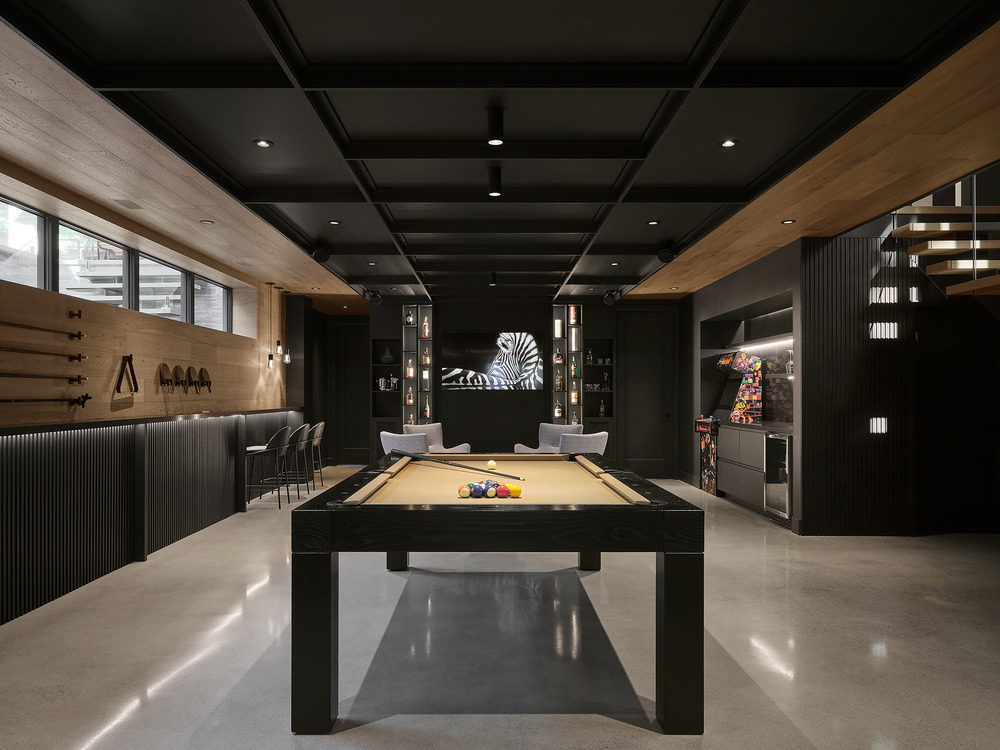
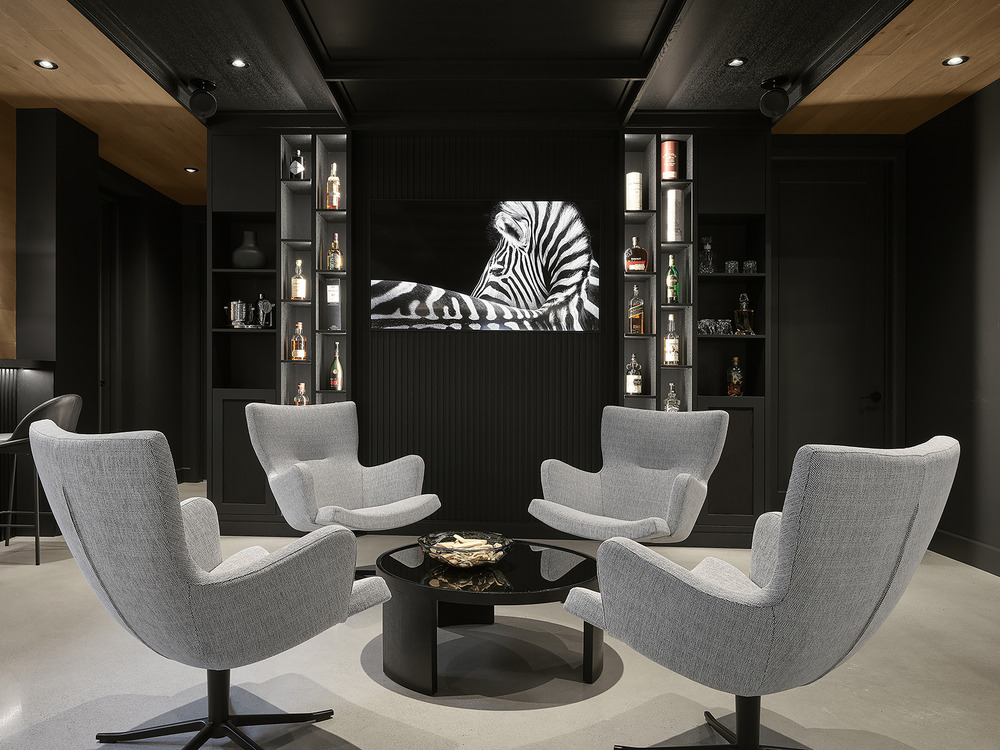
Above this central space, a mezzanine level rests like a lookout point in the trees. This floor functions as a private retreat for the owners, offering quiet views directly into the forest canopy. The lower level takes advantage of the site’s natural slope. Rather than feeling like a basement, it opens up to the outside, housing guest rooms, a dedicated area for teenagers, and leisure spaces.
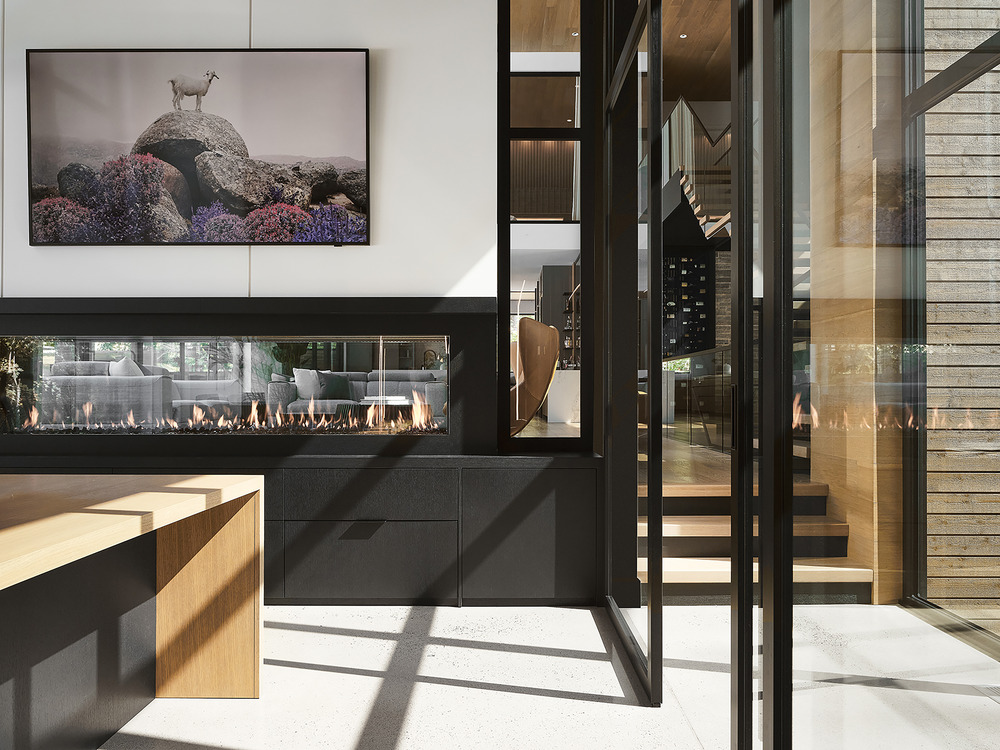
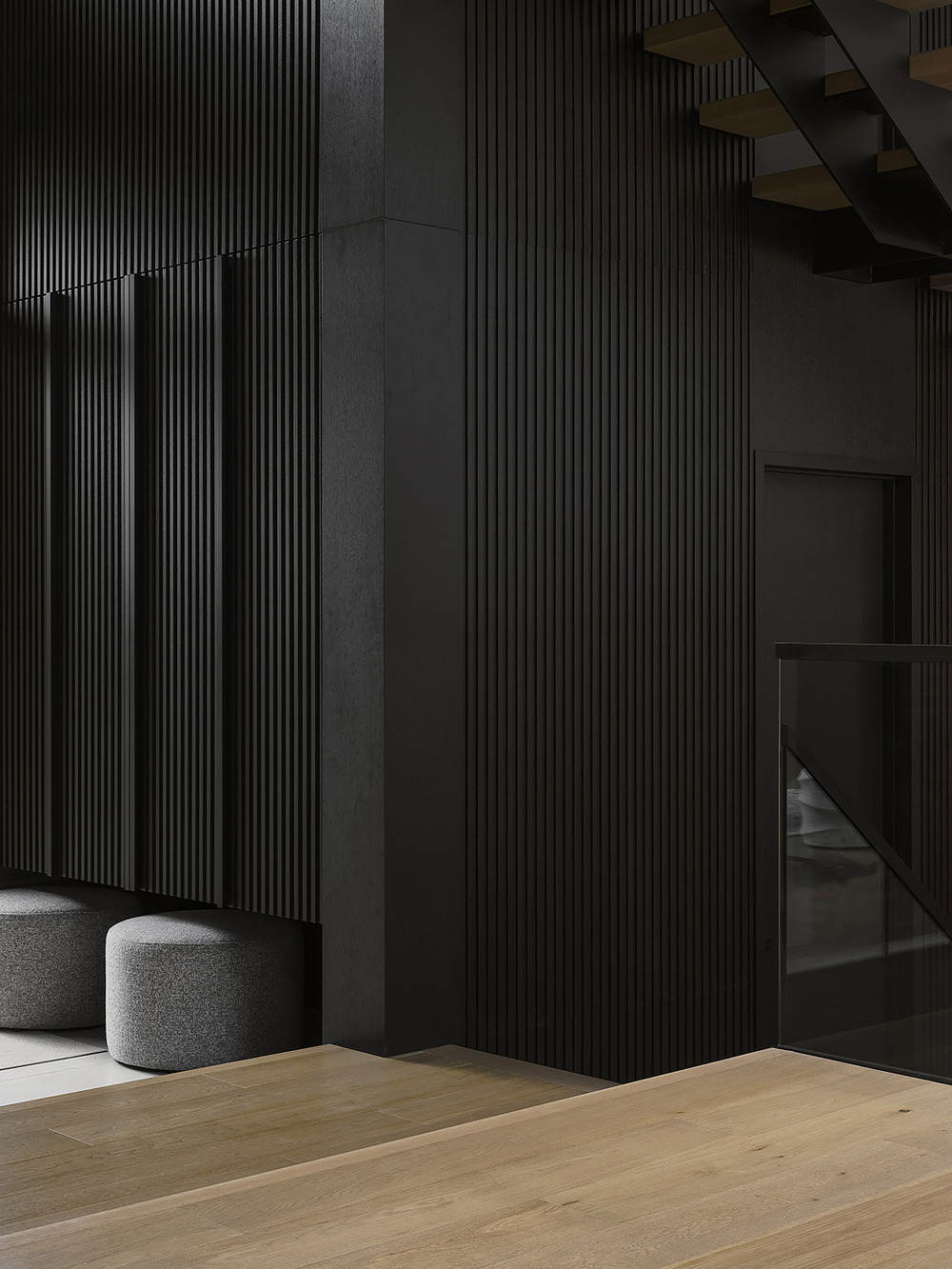
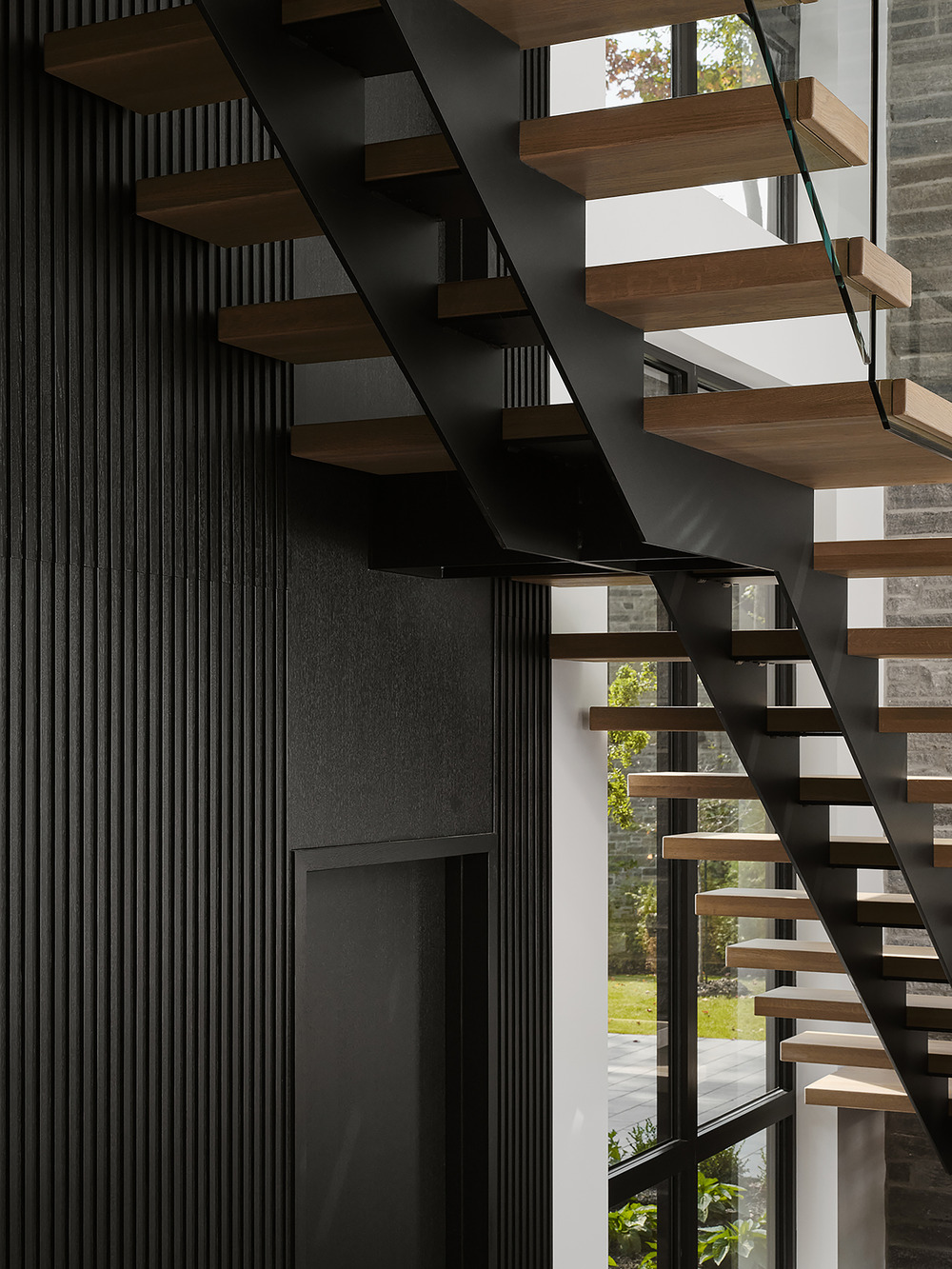
Connecting these three floors is a central staircase that appears to float. By using a clear glass balustrade and open risers, Entre Quatre Murs turned the staircase into a central spine that allows light to move from the roof down to the lowest floor without blocking any views across the living areas.
Raw materials and natural regulation
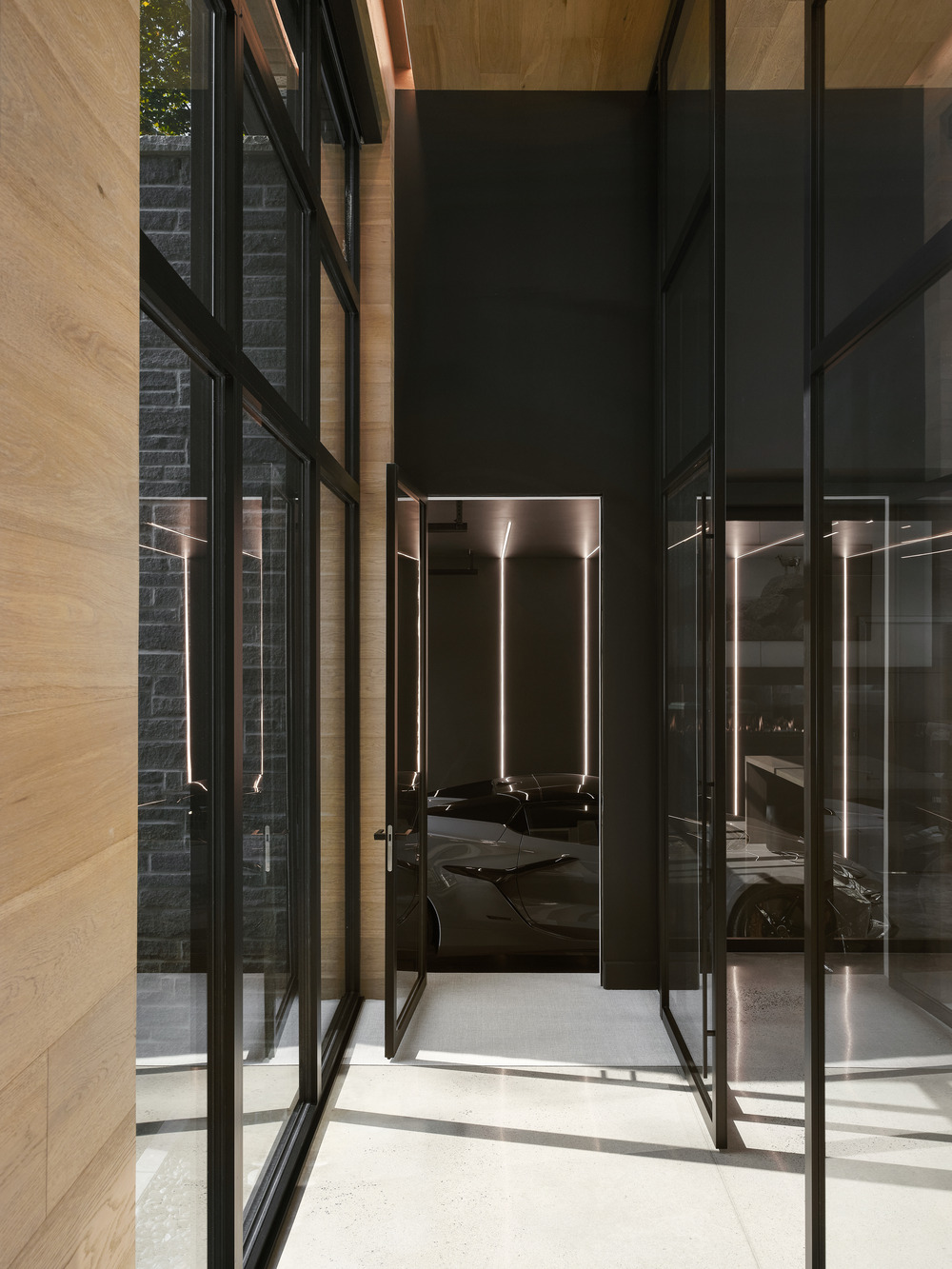
To tie the house to its mineral and forested surroundings, the designers chose a restricted palette of honest materials. Natural stone starts on the exterior facade and runs straight through the glass walls into the living spaces, creating a visual link between the indoor rooms and the wild terrain.
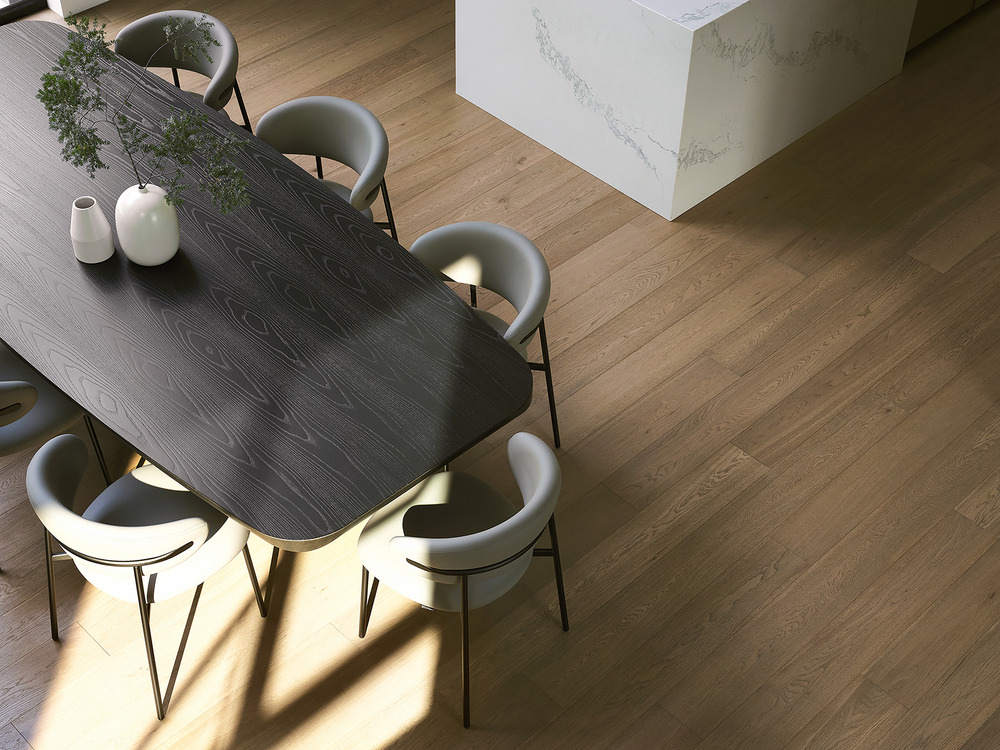
Alongside the stone, light wood covers the ceilings, floors, and built-in storage units. This extensive use of timber adds warmth to the large volumes and echoes the trees just outside. Because these materials age naturally over time, the house will continue to adapt to its site. This choice goes hand in hand with a smart layout that uses passive solar gain and natural cross-ventilation to help regulate the indoor temperature throughout the changing Canadian seasons.
A sculptural kitchen and bespoke furniture
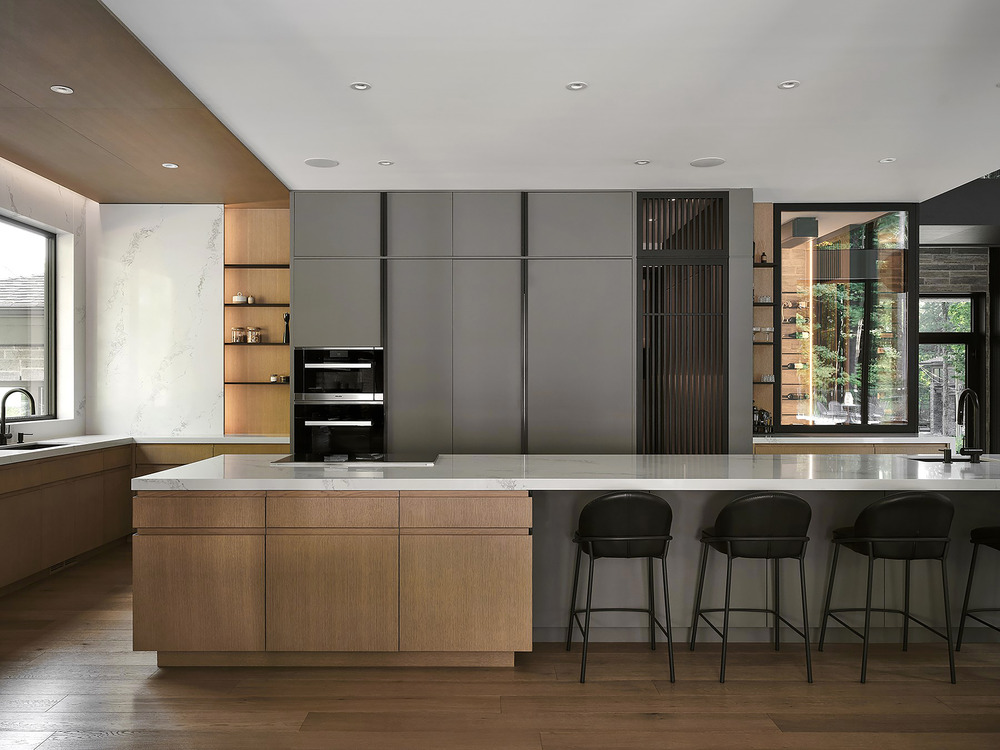
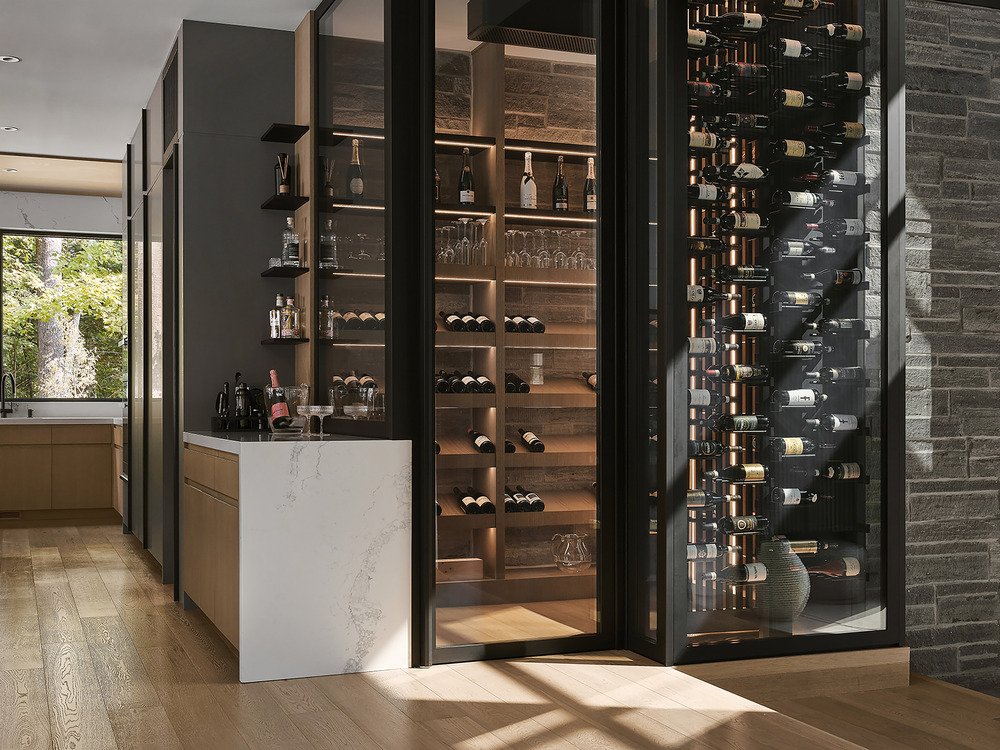
The kitchen serves as a clear example of how the studio tailors spaces to specific habits. The room features pale grey cabinetry, light quartz worktops, and sharp black accents. Its most prominent feature is a corner wine cellar. Completely enclosed in glass, this structure marks the boundary between the cooking and dining zones. The design treats the wine collection like a library, using the bottles as a decorative element that divides the space while keeping sightlines open.
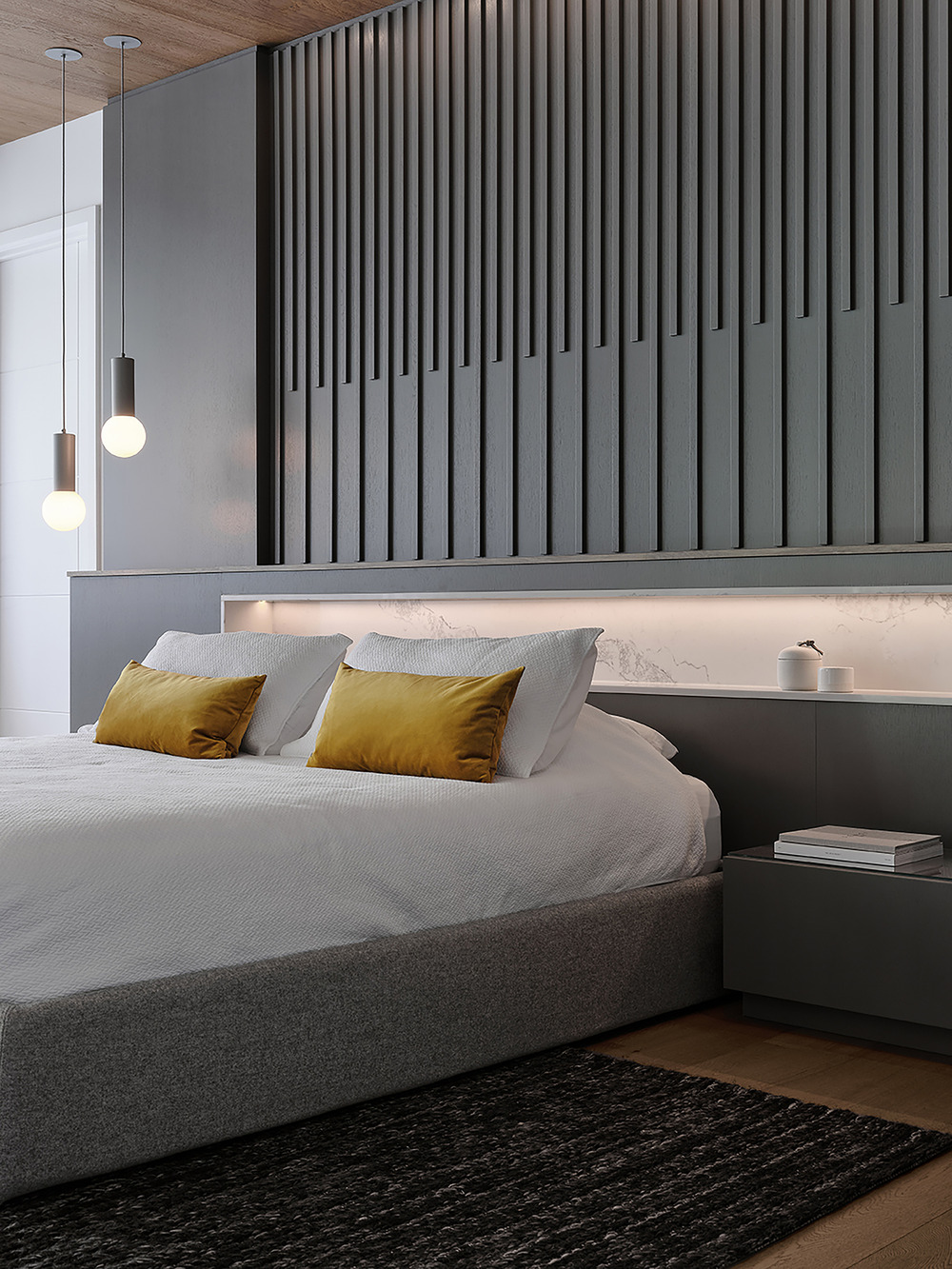
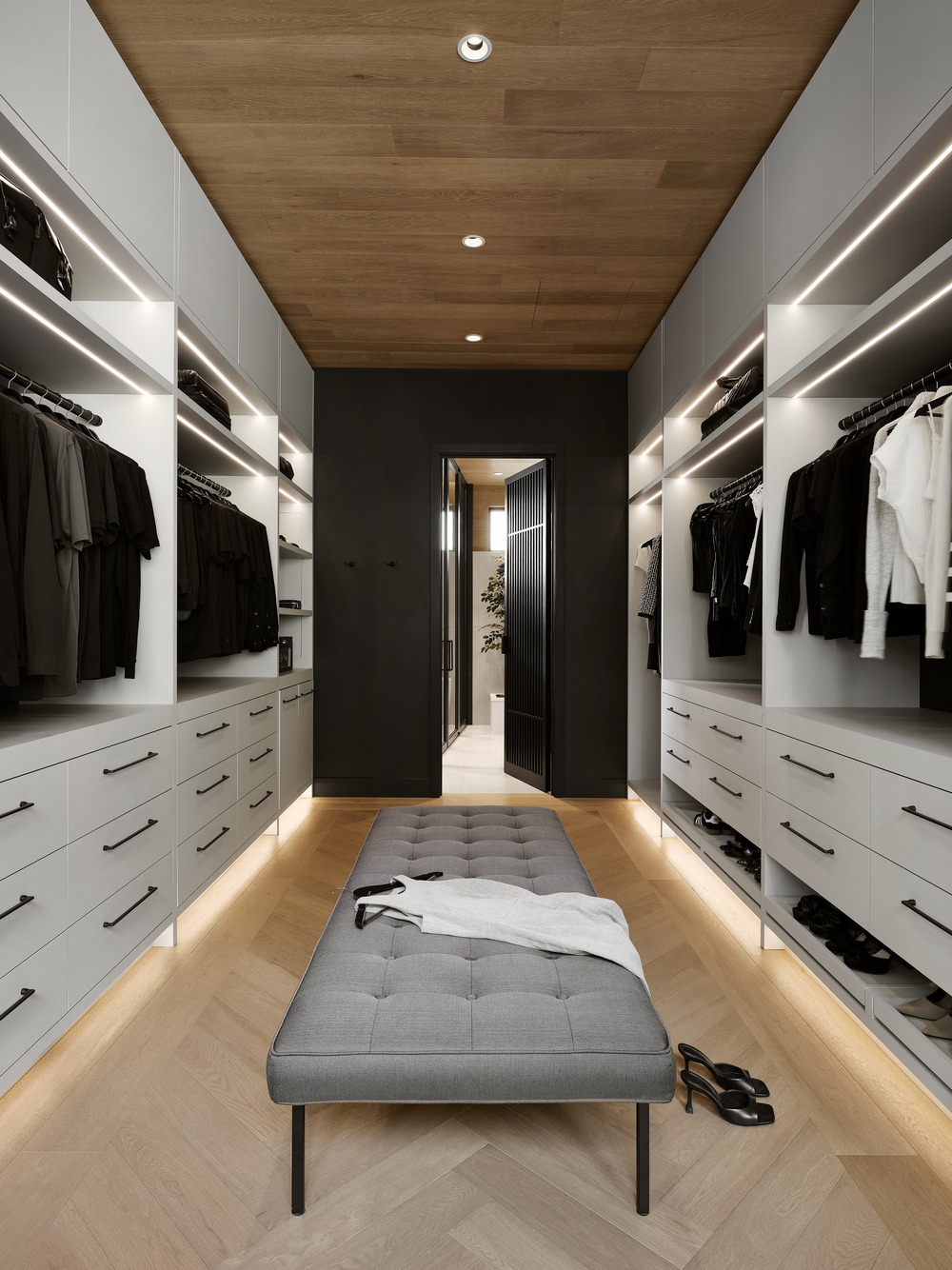
This custom approach continues in every room of the house. From the tailored walk-in wardrobes and custom bathroom vanities to the built-in lighting that shifts in tone as day turns to night, every piece of furniture fits a specific daily function. The aesthetics never get in the way of utility; instead, the shape of each room follows the exact movements of the family.
Designing for the reality of daily life
True design quality shows in how well a building supports the mess, noise, and quiet moments of everyday life. With the Du Corail Residence, Entre Quatre Murs demonstrates that luxury relates less to shiny surfaces and more to the clever use of space, natural light, and durable materials. By focusing on how the owners actually live rather than just how the project looks in photographs, the designers have built a house that serves as a quiet background for the family memories that will unfold inside it for decades to come.
Project info
Official Project Name: Du Corail
Location: Mirabel, Québec
Studio: Entre Quatre Murs
Designer / Project manager: Debby Pagé & Gatline Artis
Cabinetmaker: Ébénisterie LGL
Year: 2024
Photo credit: Maxime Brouillet
Source: v2com newswire


