



Header: OUR Content Studio and Giorgos Sfakianakis
Estia Restaurant, the main restaurant of Lindos Mare Seaside Hotel, a five-star hillside resort in Rhodes, was recently redesigned to take advantage of the voluptuous hills that overlook Vlicha Bay. Lindos, a medieval town, is around two kilometres away, which gives guests the opportunity to have a close relationship with one of the island’s historic landmarks.
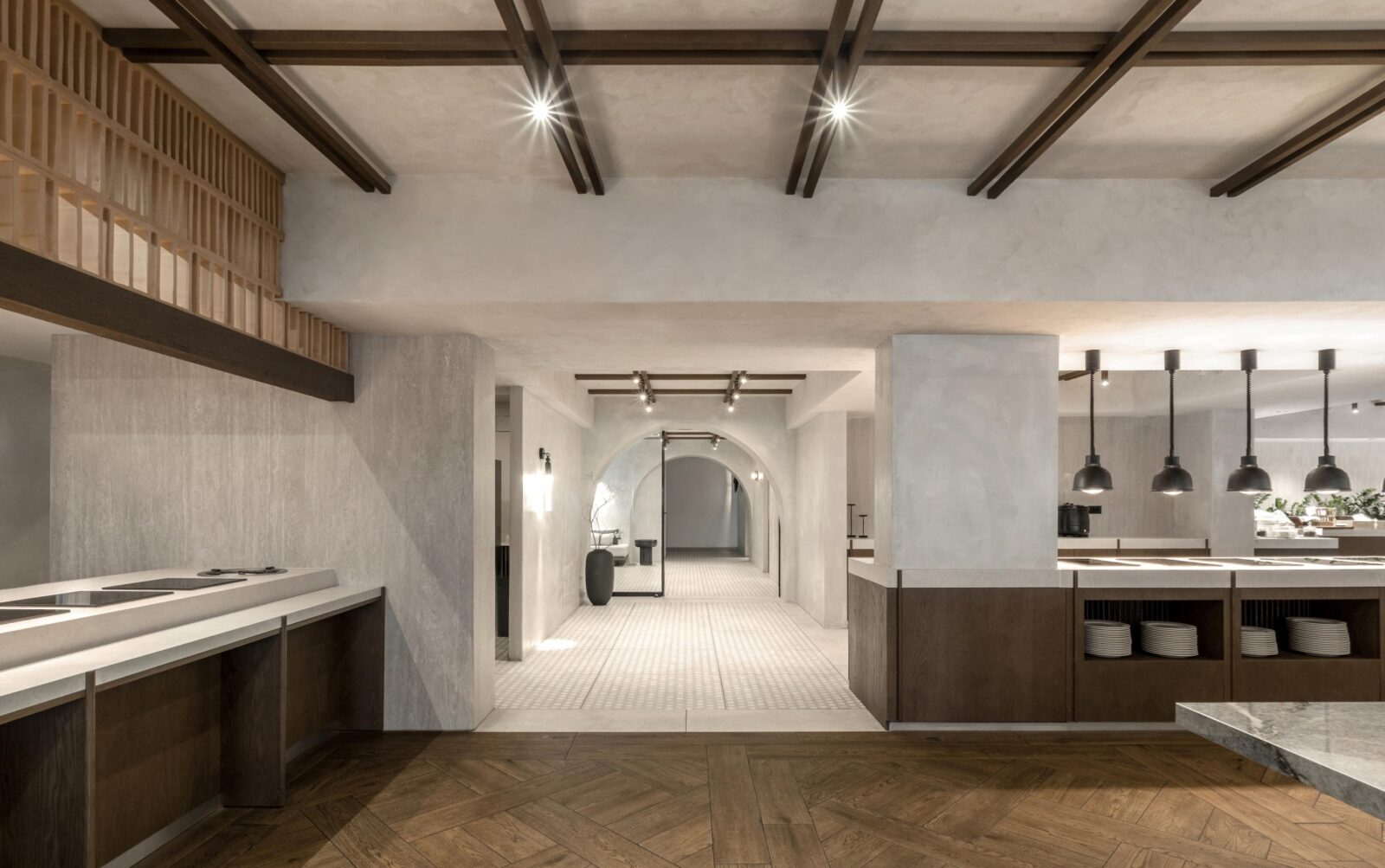
The architecture and interior design were completed by Not a Number Architects, with Dominiki Dadatsi as lead designer, plus Ermis Adamantidis and Evangelia Sofopoulou on the team. For its unique take on historical styles, the project won the “Architectural Design Restaurant – Casual” category at the LIV Hospitality Design Awards, with the restaurant having been especially recognised for its double identity: bright and open during breakfast, then more enclosed and intimate in the evening.
Inspired by the medieval city of Rhodes
The design was deeply inspired by the fortified heritage of Rhodes, especially the medieval city of Rhodes. The city was shaped by the Order of St John, who occupied Rhodes from 1309 to 1523 and turned it into a stronghold. Its upper town includes the Palace of the Grand Masters, the Great Hospital and the Street of the Knights, while the lower town brings together Gothic buildings with Ottoman mosques, baths and houses. Around it all, a four-kilometre wall, part of a fortification system that influenced the eastern Mediterranean at the end of the Middle Ages.
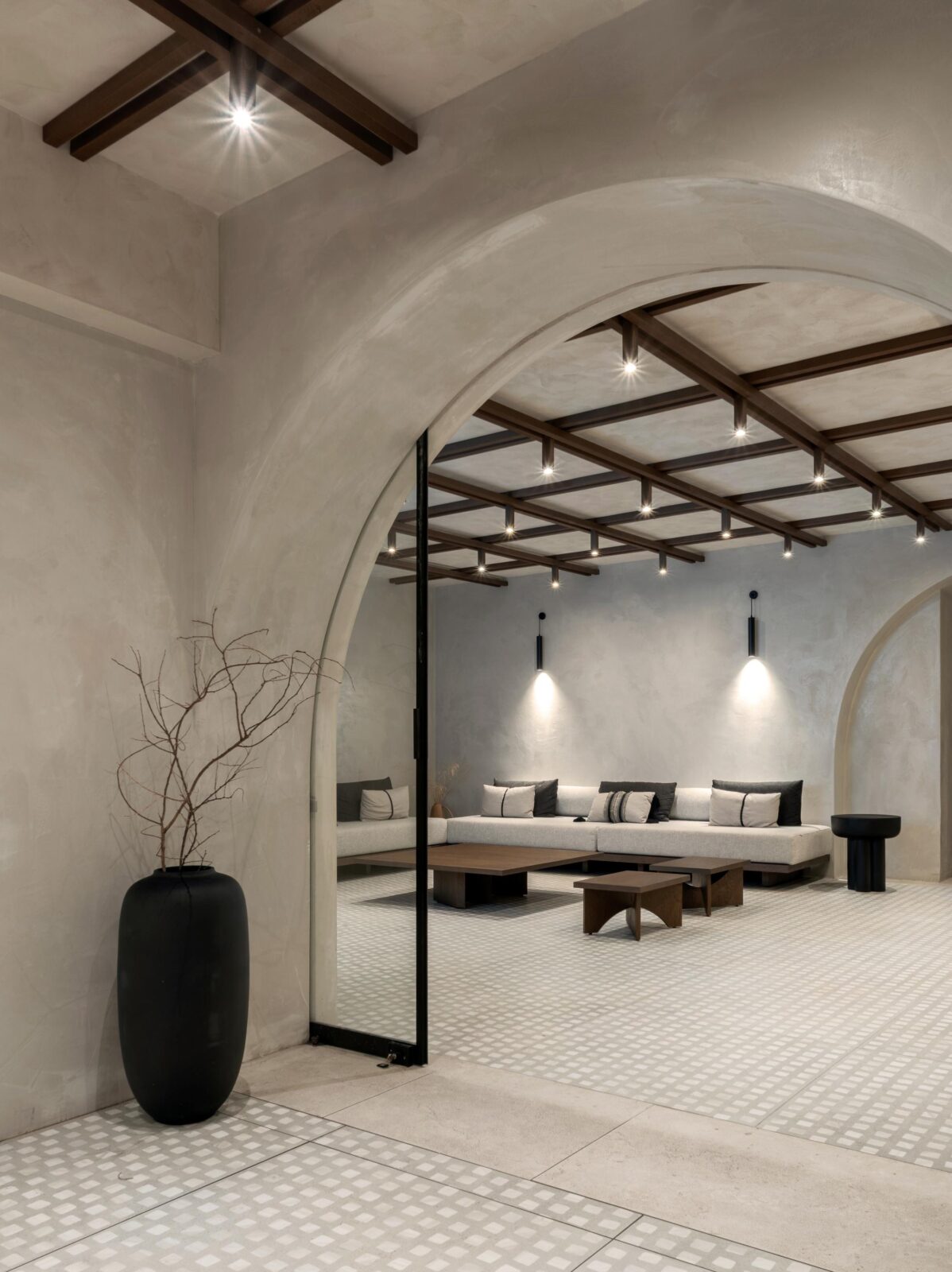
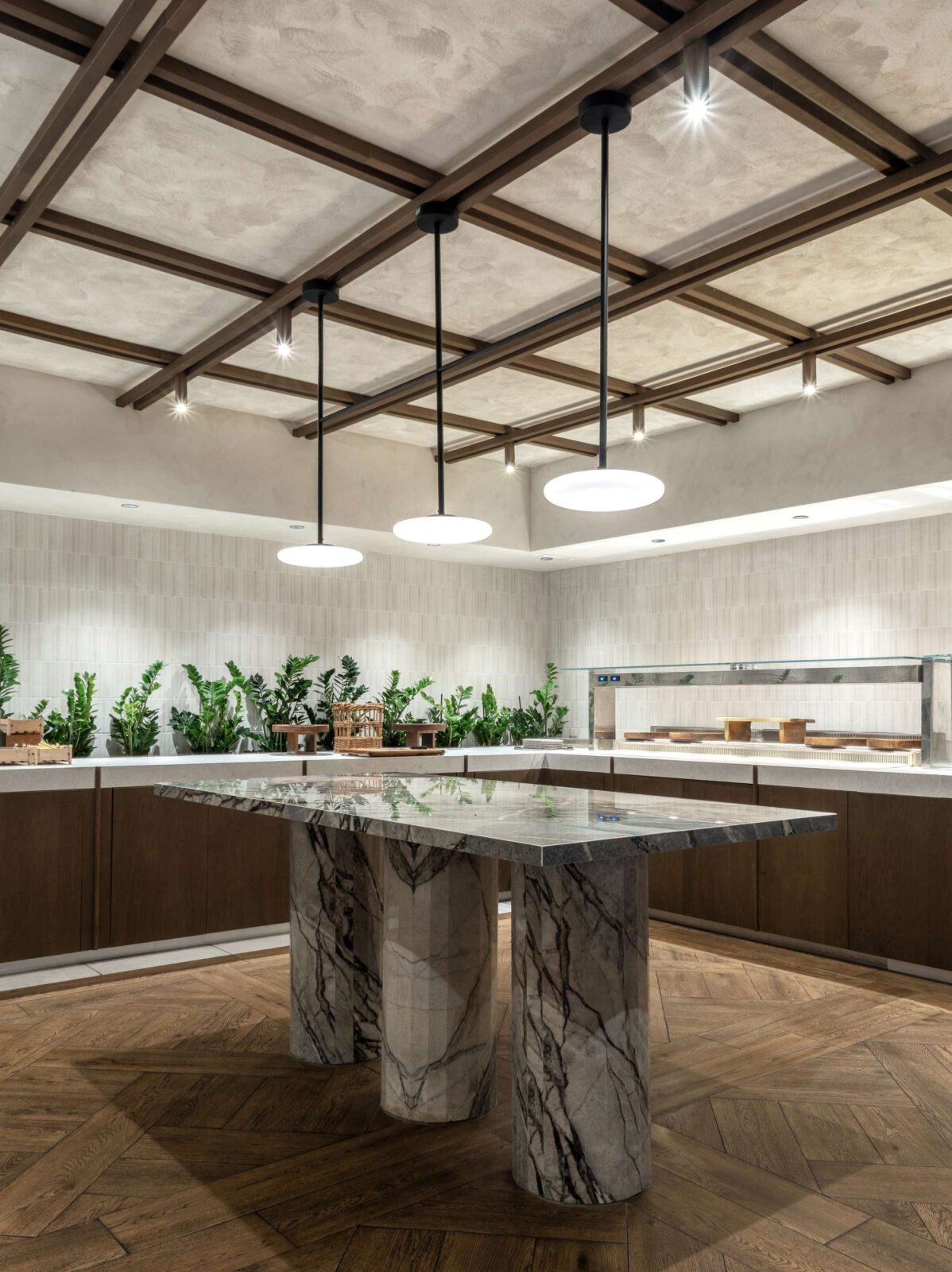
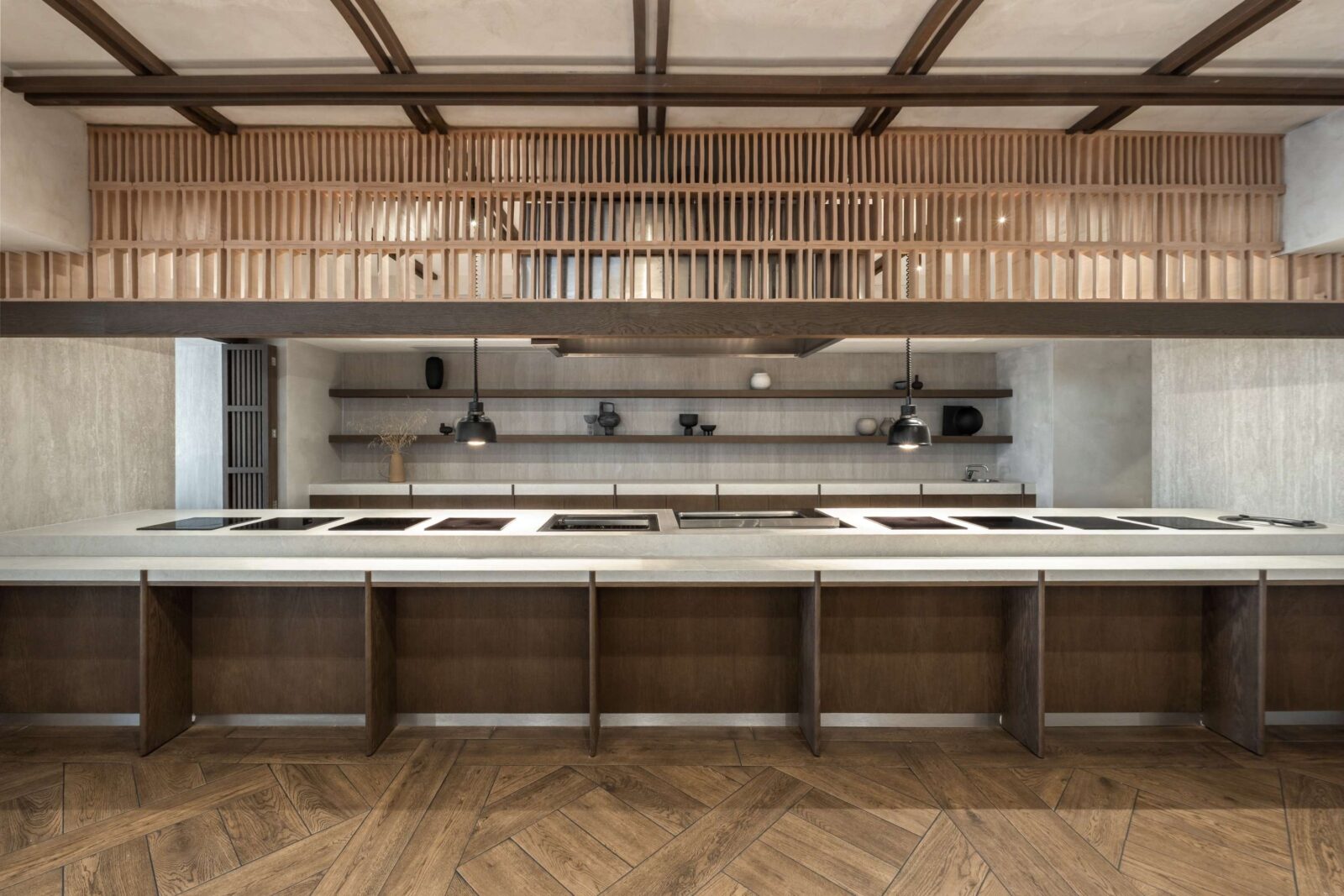
Estia uses mass, thickness, texture, rhythm and thresholds to incorporate this heritage into the space, which can be seen in the heavy stone-like walls, arched openings, gridded ceiling, slatted screens and monolithic buffet island. These refer to the older fortified structures mentioned above, of course, giving guests the unique opportunity to not only visit the region but also get completely immersed in it while dining.
The terrace by day, at sunset and at night
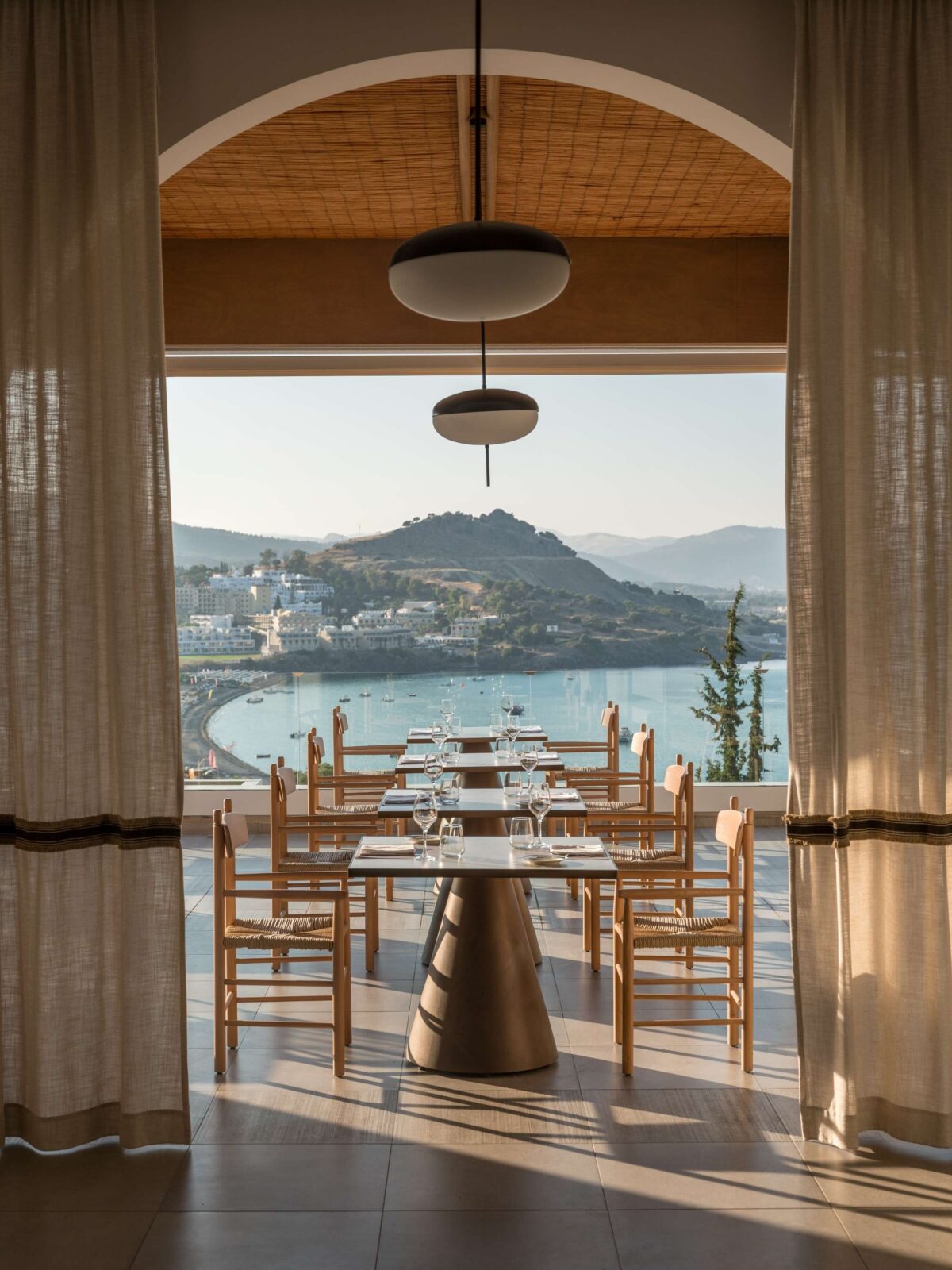
The terrace is the main setting of the mornings. An arched threshold opens the restaurant towards the sea, with sheer curtains softening the intense, almost blue light that inevitably floods in. Pale timber chairs, pendant lights and views across the bay help seal the breakfast experience, which is only complemented by the meals brought to the table.
The hillside position of Lindos Mare means the terrace acts almost as a belvedere, with Vlicha Bay, the surrounding hills and the white architecture of Rhodes creating a living painting beyond the arches. By evening, the same room changes completely due to the lighting, inviting guests to talk about the day, have an extra glass of wine and enjoy the setting sun and the warm colours of the sky.
The materials of Estia
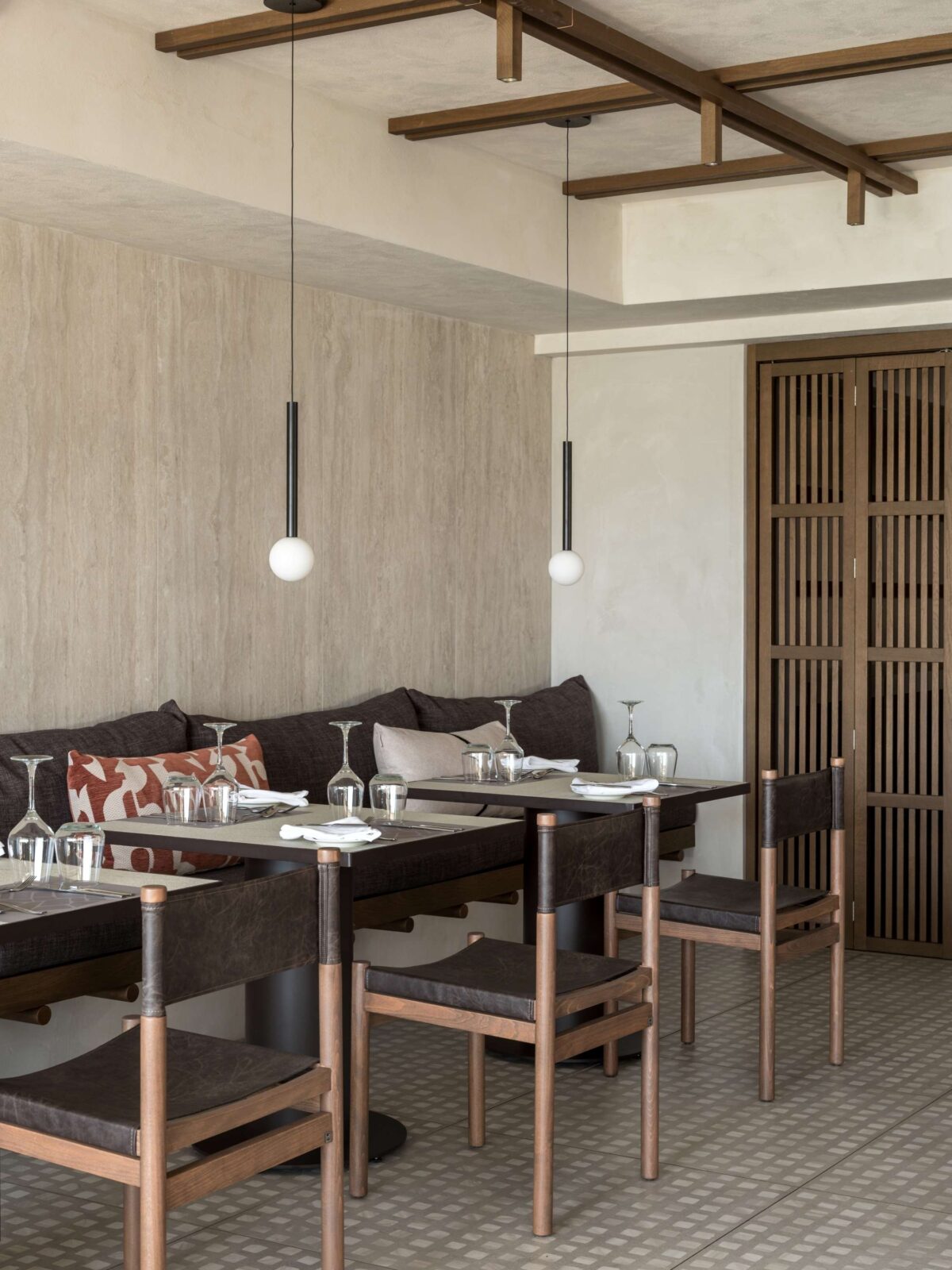
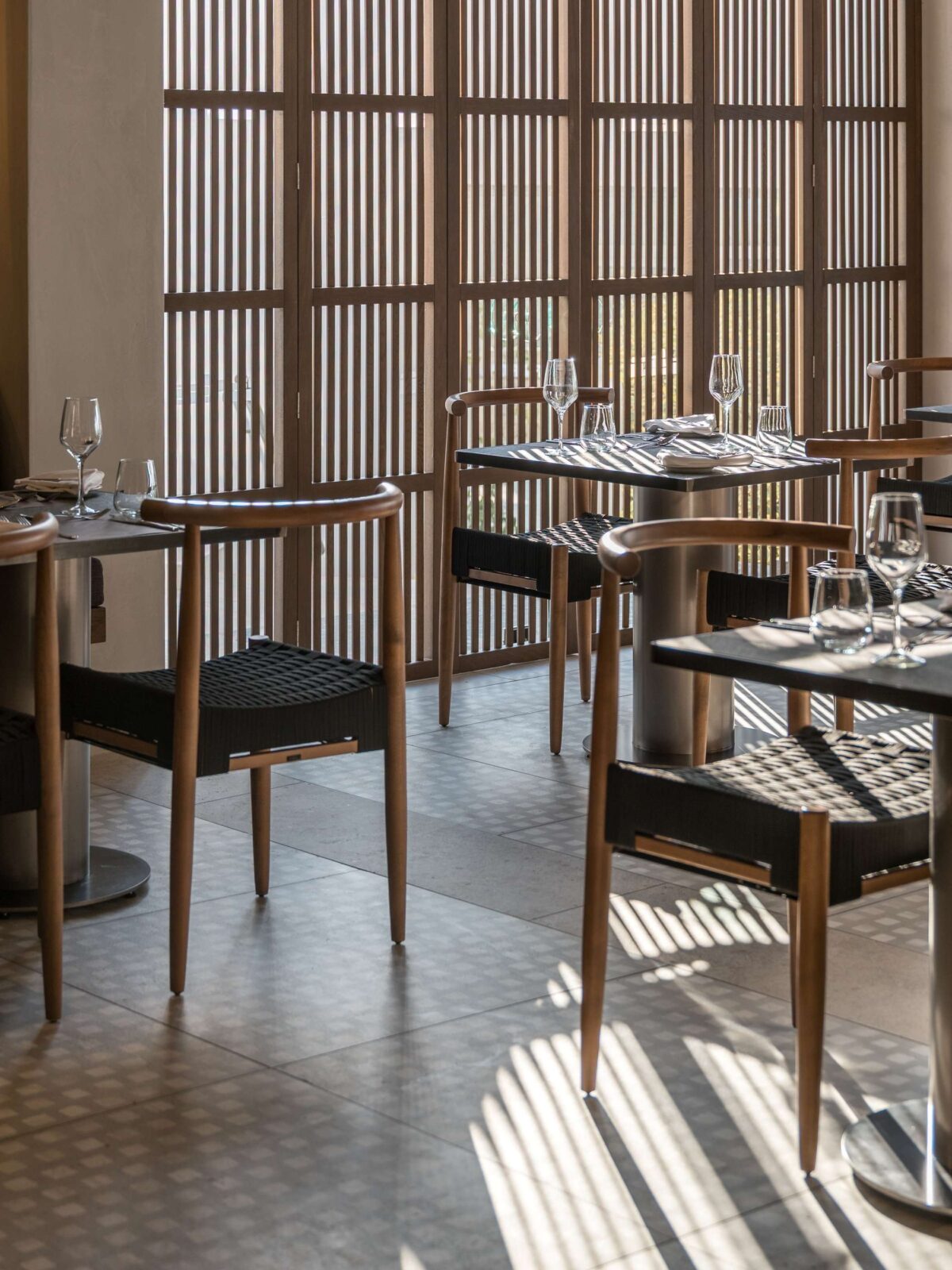
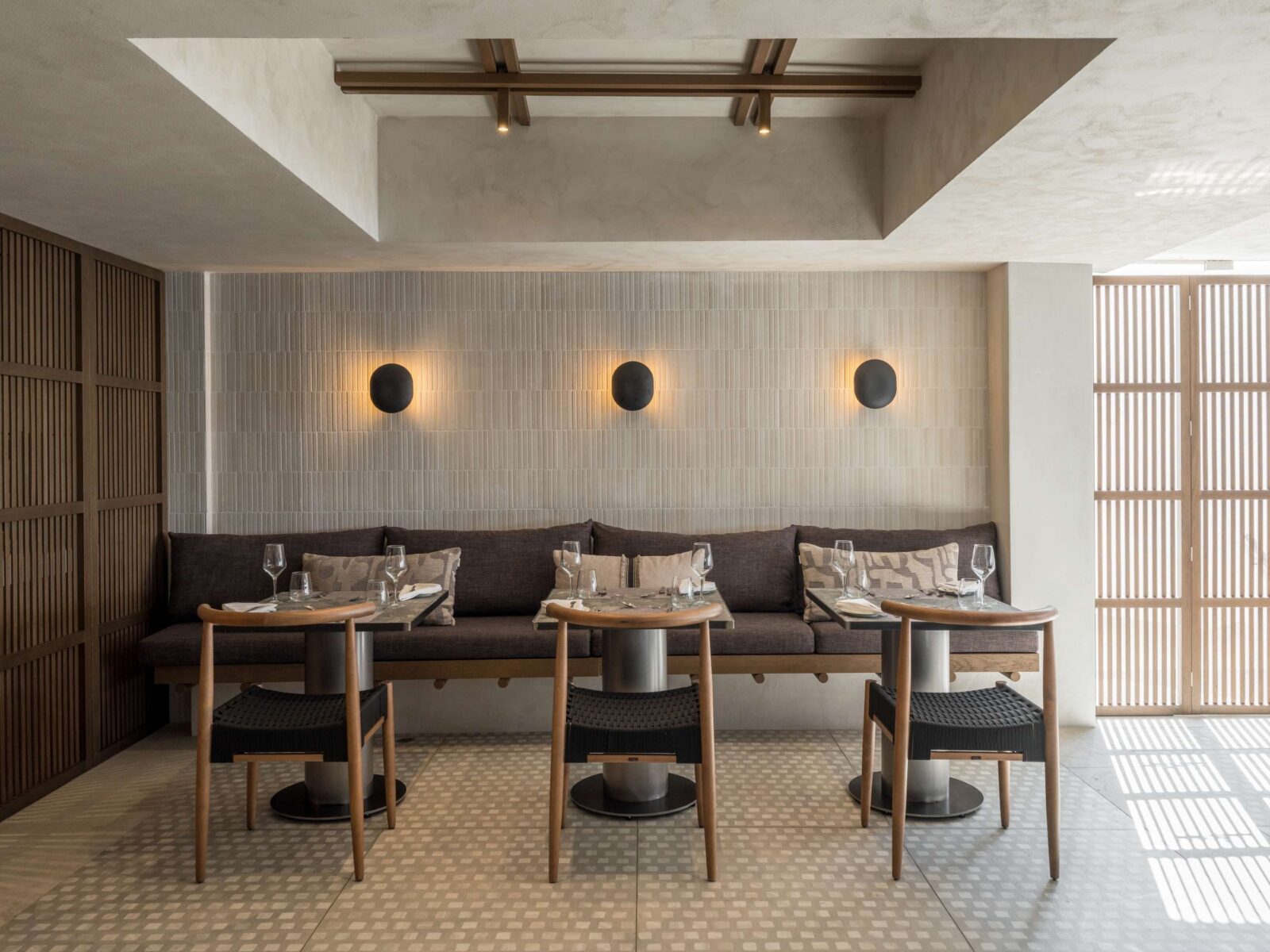
The ceiling grid helps define sections across the interior, supported by metal rails, screens, counters, cylindrical tables and wall lights. Some unique additions to the space are the slatted timber screens, which, apart from offering privacy, filter the sun, casting striped shadows across floors and tables in a very Mediterranean-coded way. In this European region where the sun is strong and the light almost harsh (but not quite, as it creates a warm film), communities have the habit of seeking the shade and the filter. This can be seen in both modern and ancient homes, where porches, terraces, trees and windows provide this duality between dark and light. The same play between light and shadow also brings to mind historic walls, gates and passageways, where sunlight passes through in fragments.
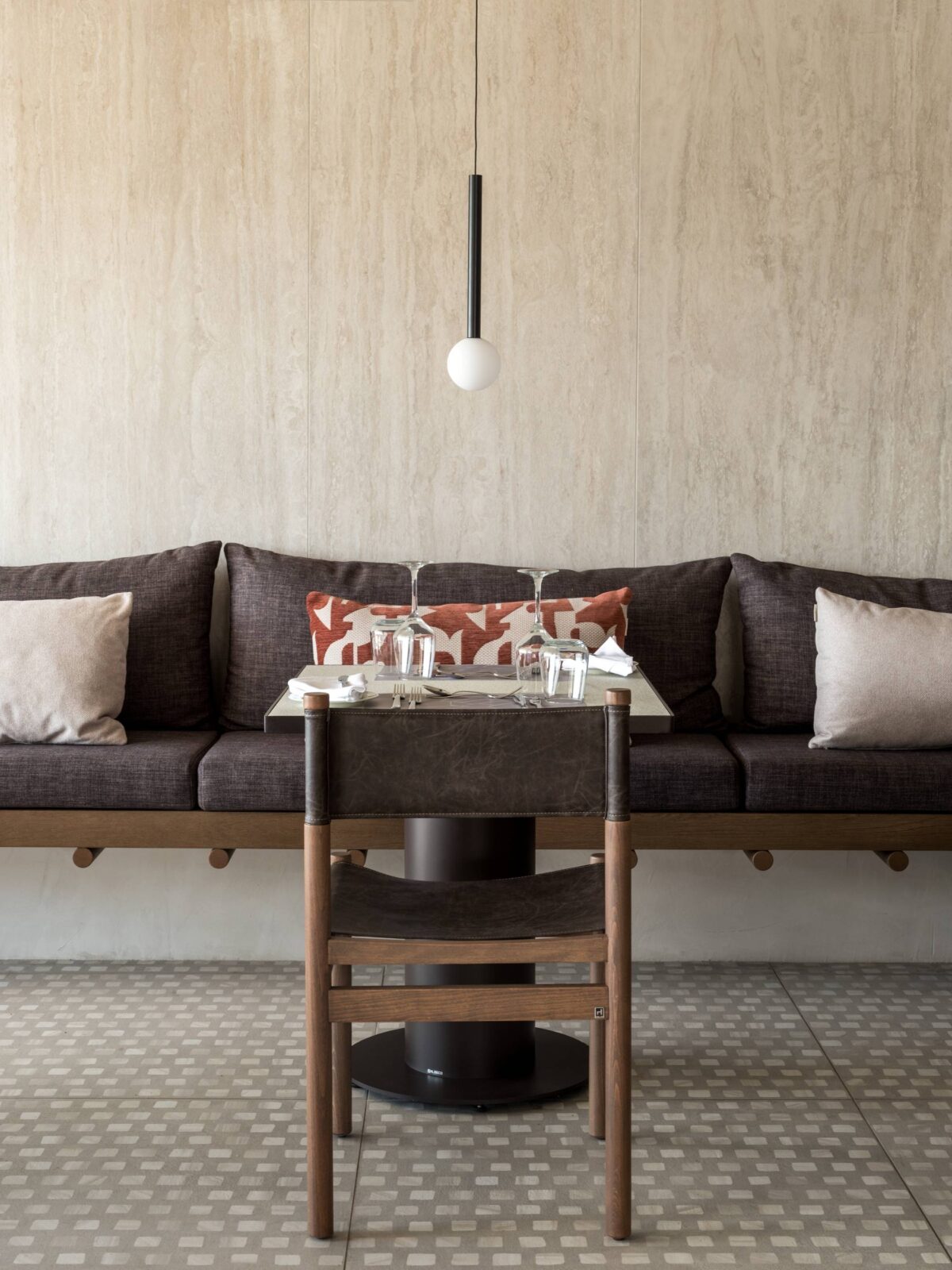
The designers were careful to avoid shiny materials and finishes, having, instead, gone for pale plaster and stone-like surfaces, darker steel, warm timber, woven fabrics, linen and veined stone. The objective was not to create a polished interior just for the sake of it, but rather to pass through the idea of an ancient space alive in time, but with a modern touch.
The job of the lighting design
Lighting is the main catalyst of change between the morning restaurant and the intimate, welcoming space of the night. As seen above, the designers relied on specific fixtures to set the mood: circular pendants, a large spherical lamp above the buffet, track spots set into the ceiling grid and warm wall lights, all used in layers. The MOON suspension lamp, by Davide Groppi, is one of the main elements of the lighting design, fitting perfectly with the sphere seen over the buffet area.
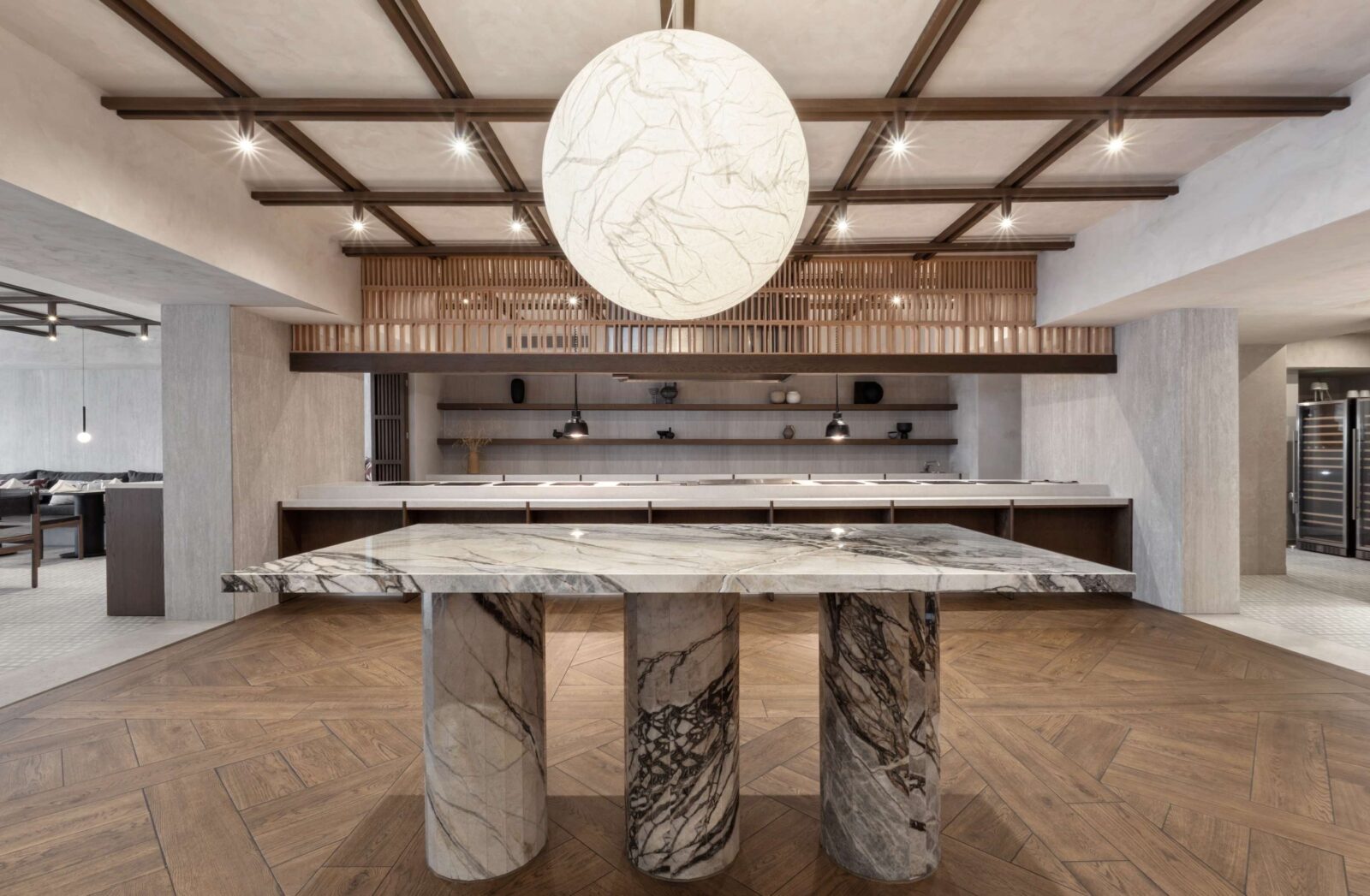
By day, the room relies more on daylight, openness and the view. By night, the light pulls the room in a little.
Project information
Architecture Company: Not a Number Architects
Lead Designer: Dominiki Dadatsi
Other Designers: Ermis Adamantidis, Evangelia Sofopoulou
Interior Design: Not a Number Architects
Hospitality: Lindos Mare Seaside Hotel
Location: Lindos Mare Resort, Rhodes, Greece
Date: 2025


