



Header: Jonas Bjerre-Poulsen
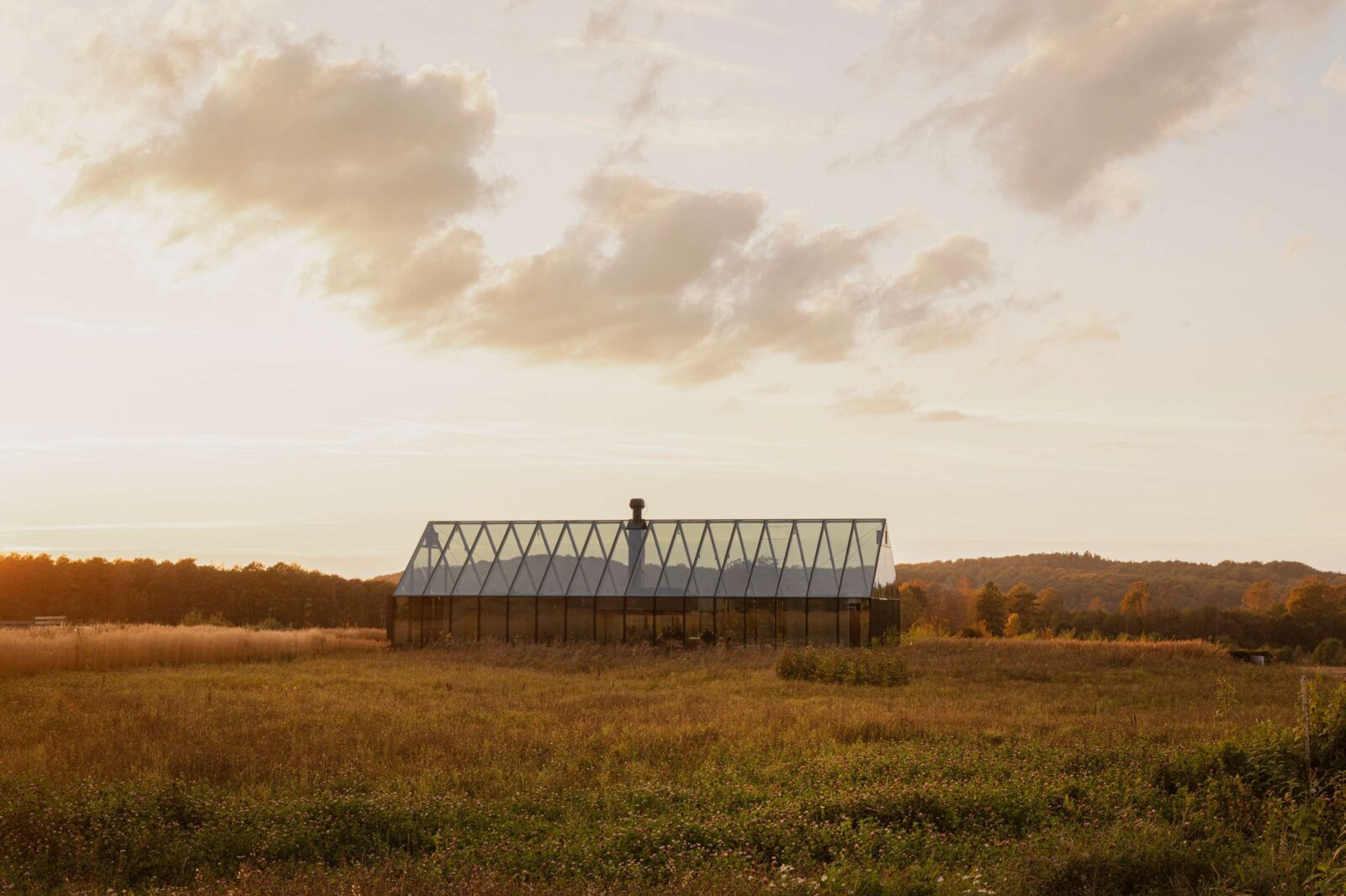
Sitting alone in the undulating fields of Ästad Vingård, one of Sweden’s largest vineyards, is Restaurang ÄNG, a partly underground Michelin-starred restaurant with a spectacular glasshouse entrance, designed by Norm Architects and furnished by Japanese brand Karimoku Case. Here, guests can experience a stimulating interplay between architecture, food, wine, interiors and art that makes for a unique 19-course haute cuisine journey.
Following the path from meadow to table
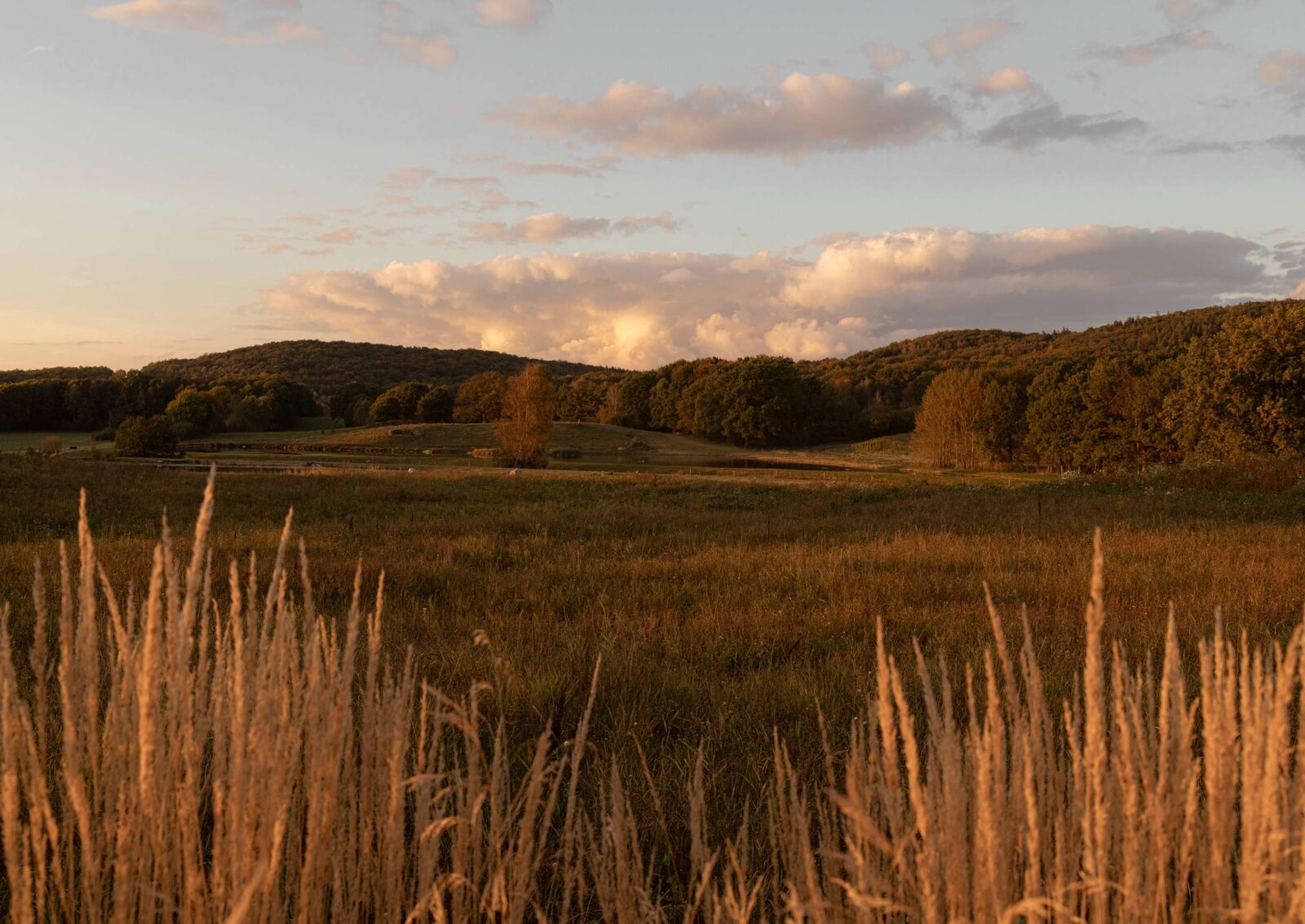
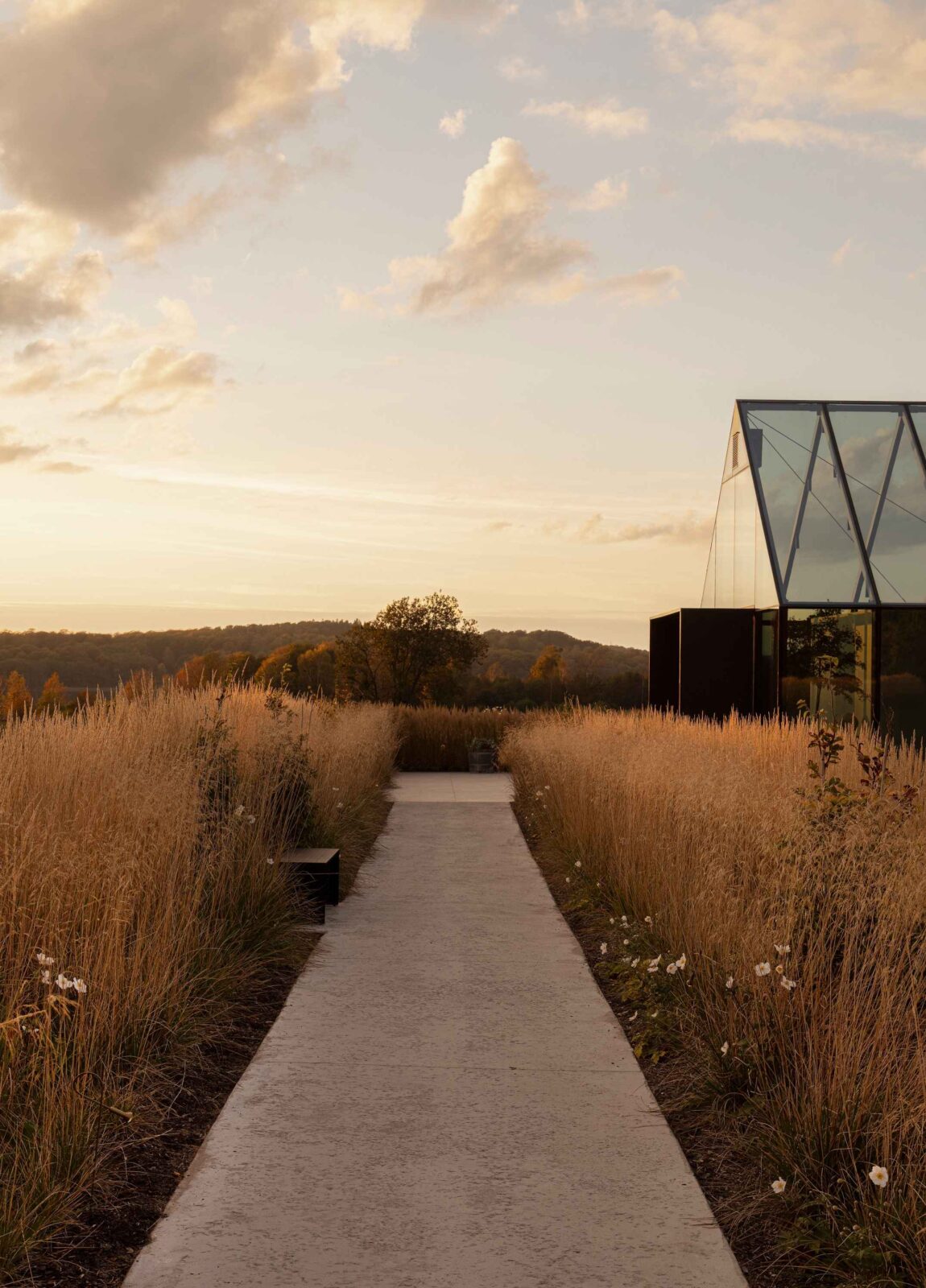
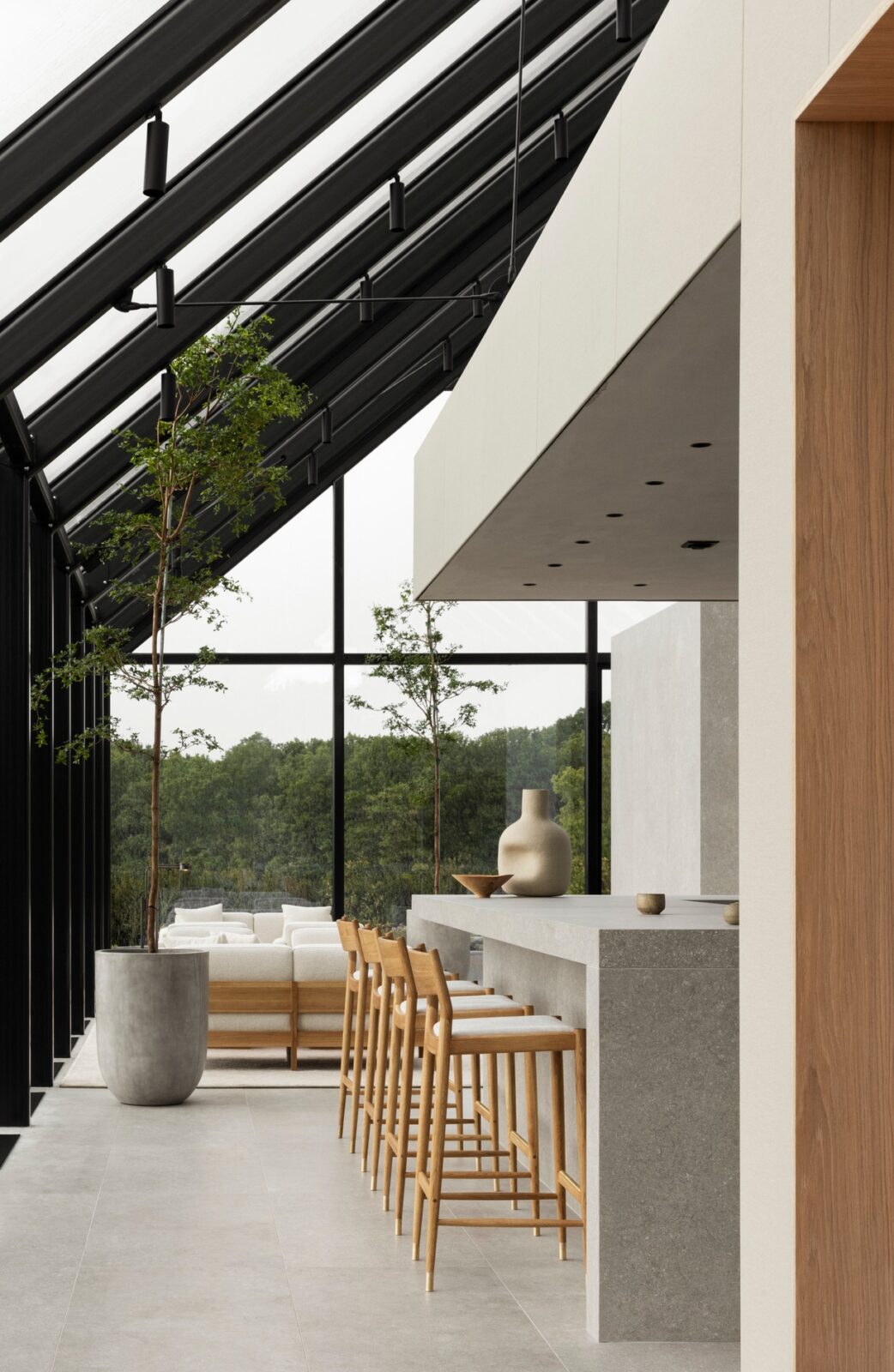
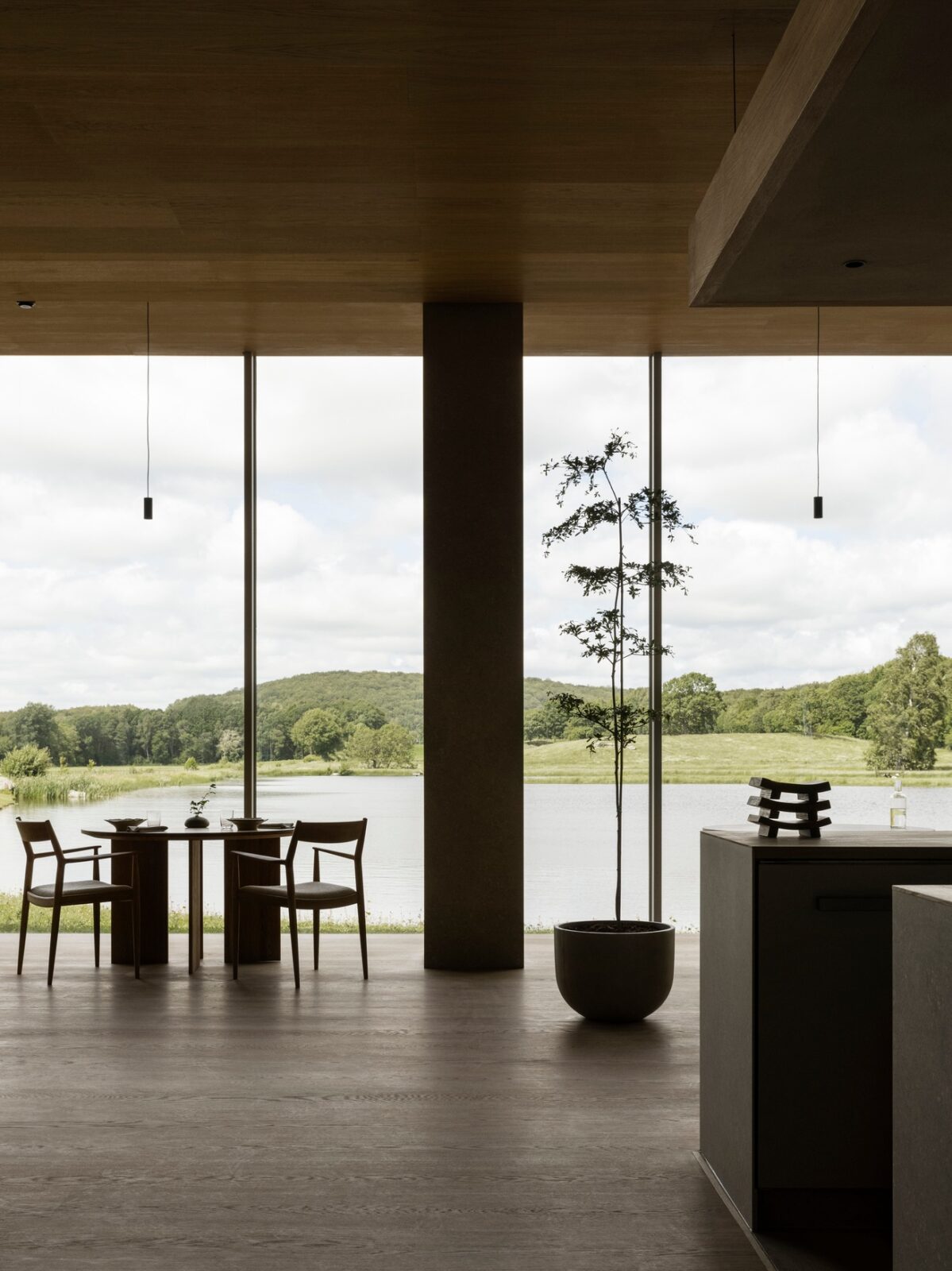
The experience of ÄNG starts by walking through the lush meadow, with crops and grasses on both sides of the winding pathway leading guests to a sparkling glasshouse. Having the iron structure on the inside, it stands like a prism in the middle of the field: sharp and smooth, it mirrors the greenery outside. It is from the surrounding meadows that ÄNG takes its name, as it explores both the surface and the deeper parts of the Swedish landscape (the souterrain view of the wetlands gives guests even more peace of mind).
“We hope to give every guest a long pause, leaving everything else behind, and just enjoy the ÄNG universe. It is truly a beautiful place to look at and spend time in, but it is also a place of discovery for the guest and ourselves.”
Daniel Carlsson, CEO & Partner, Ästad Vingård, Restaurang ÄNG
Closing in on the glass house, a small herb garden out front is the first hint of the culinary experience guests are about to have. A bit in the distance, a protective hedge reveals a limited glimpse of a nearby lake. As a subtle indicator of the strong connection between ÄNG and the surrounding nature, the outside stone flooring continues inside as the heavy glass door opens up and guests take their first steps inside.
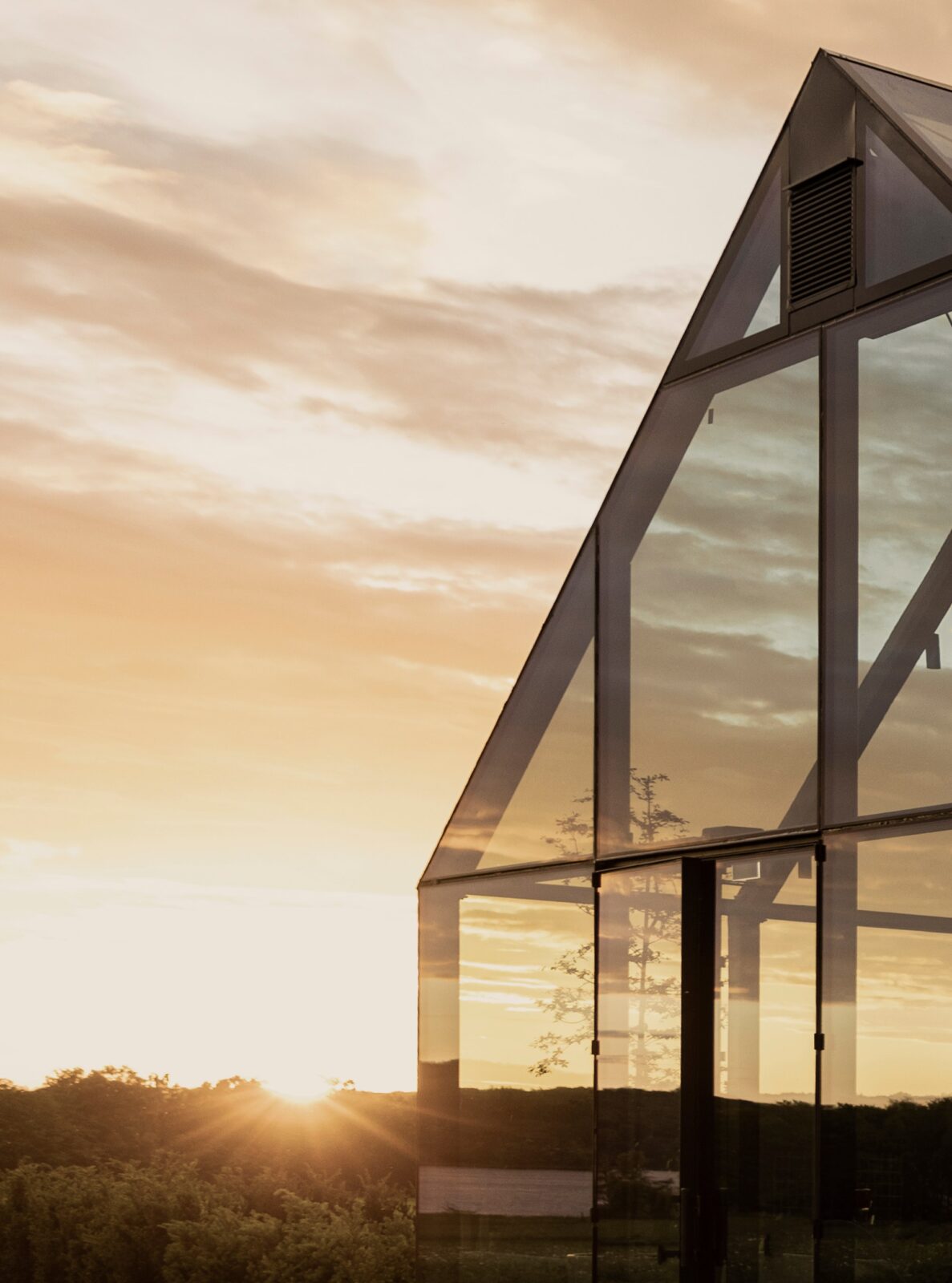
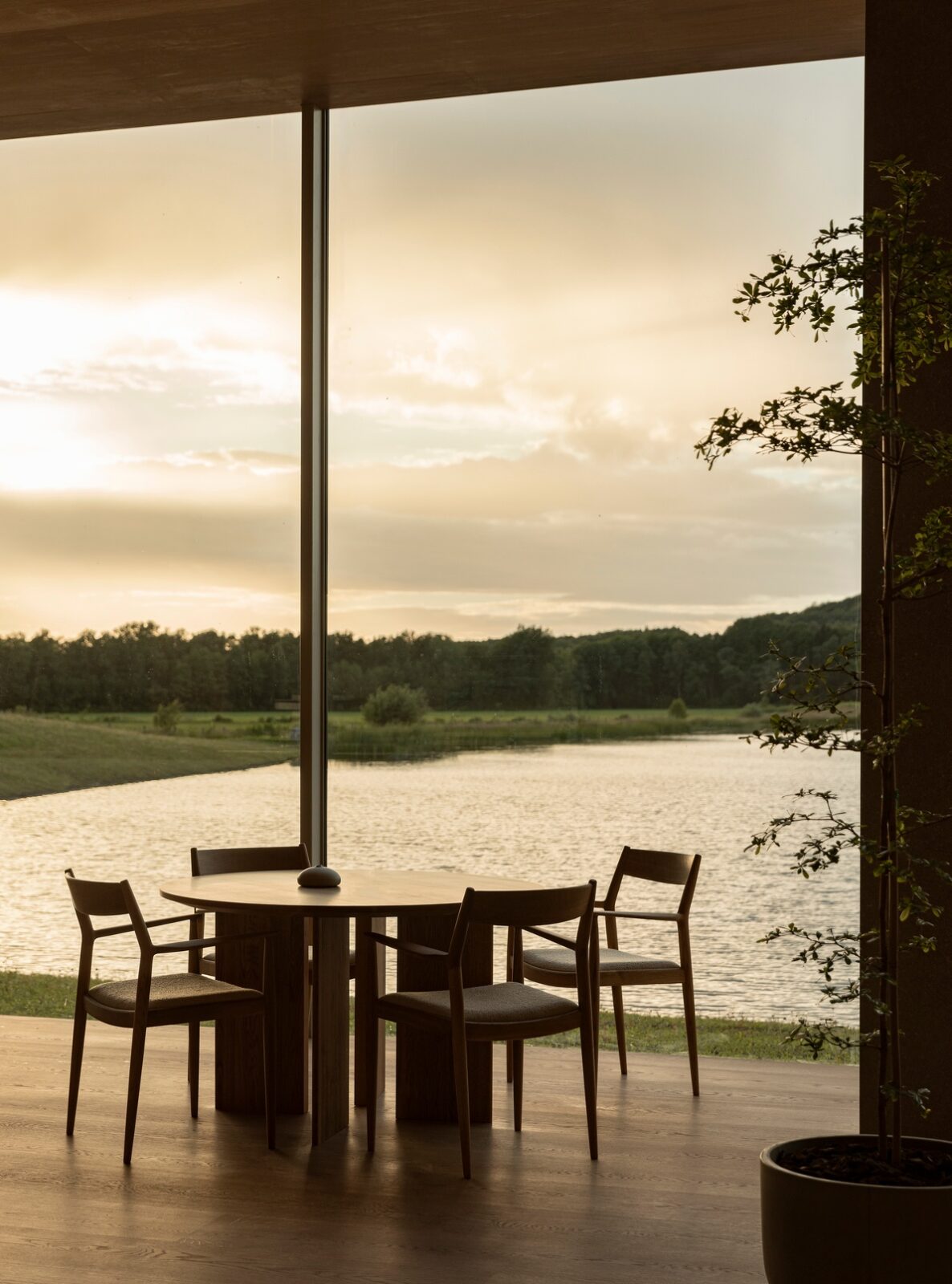
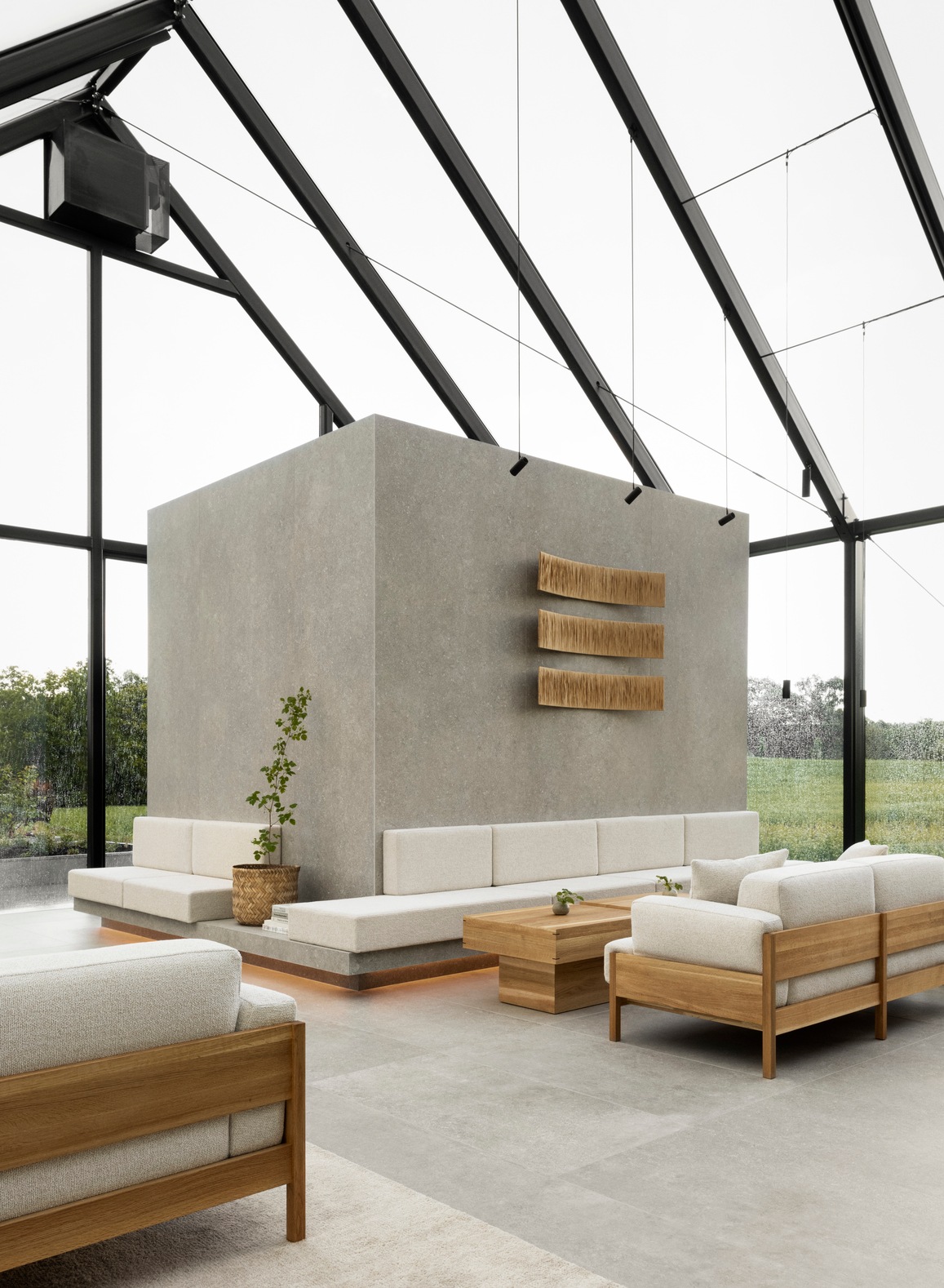
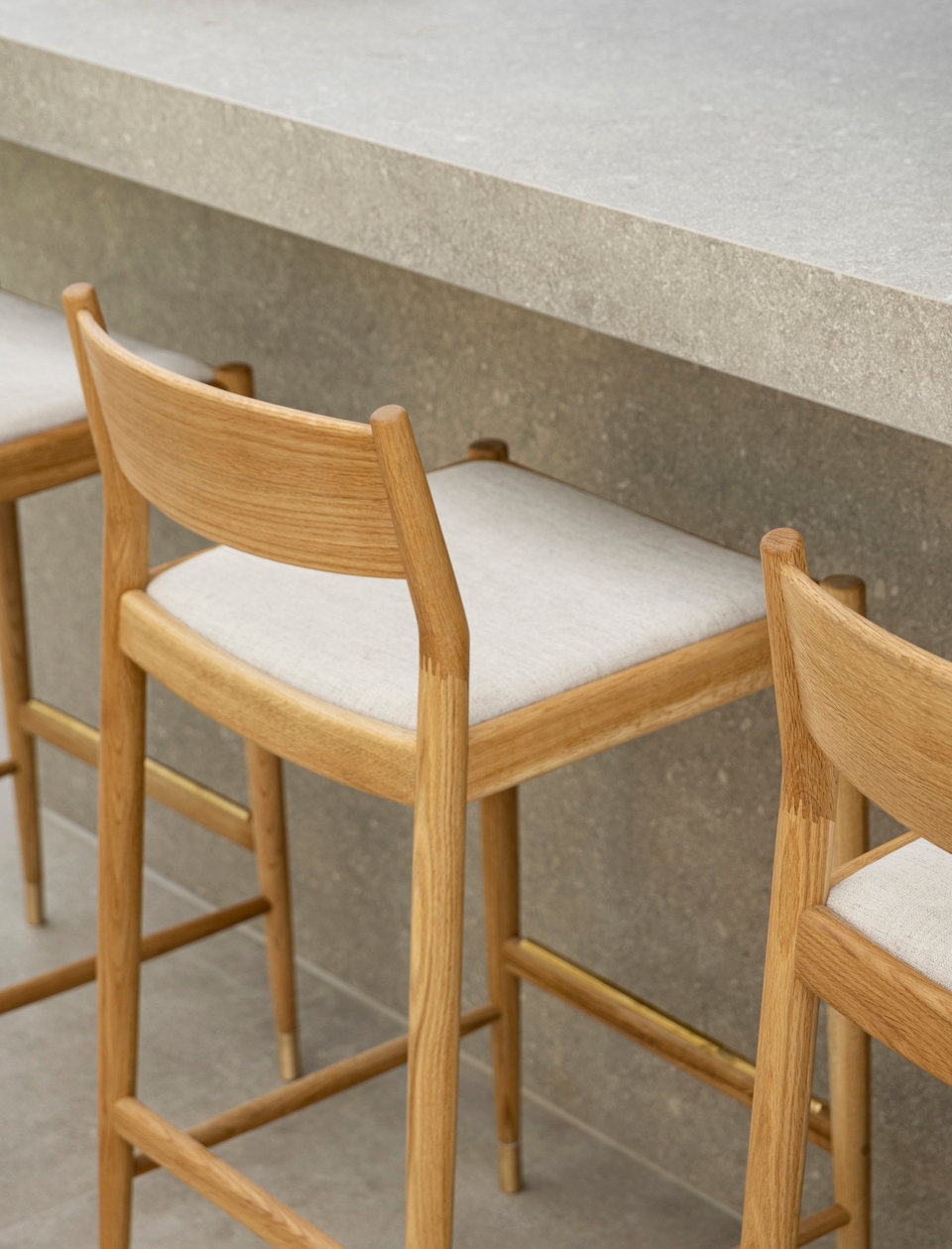
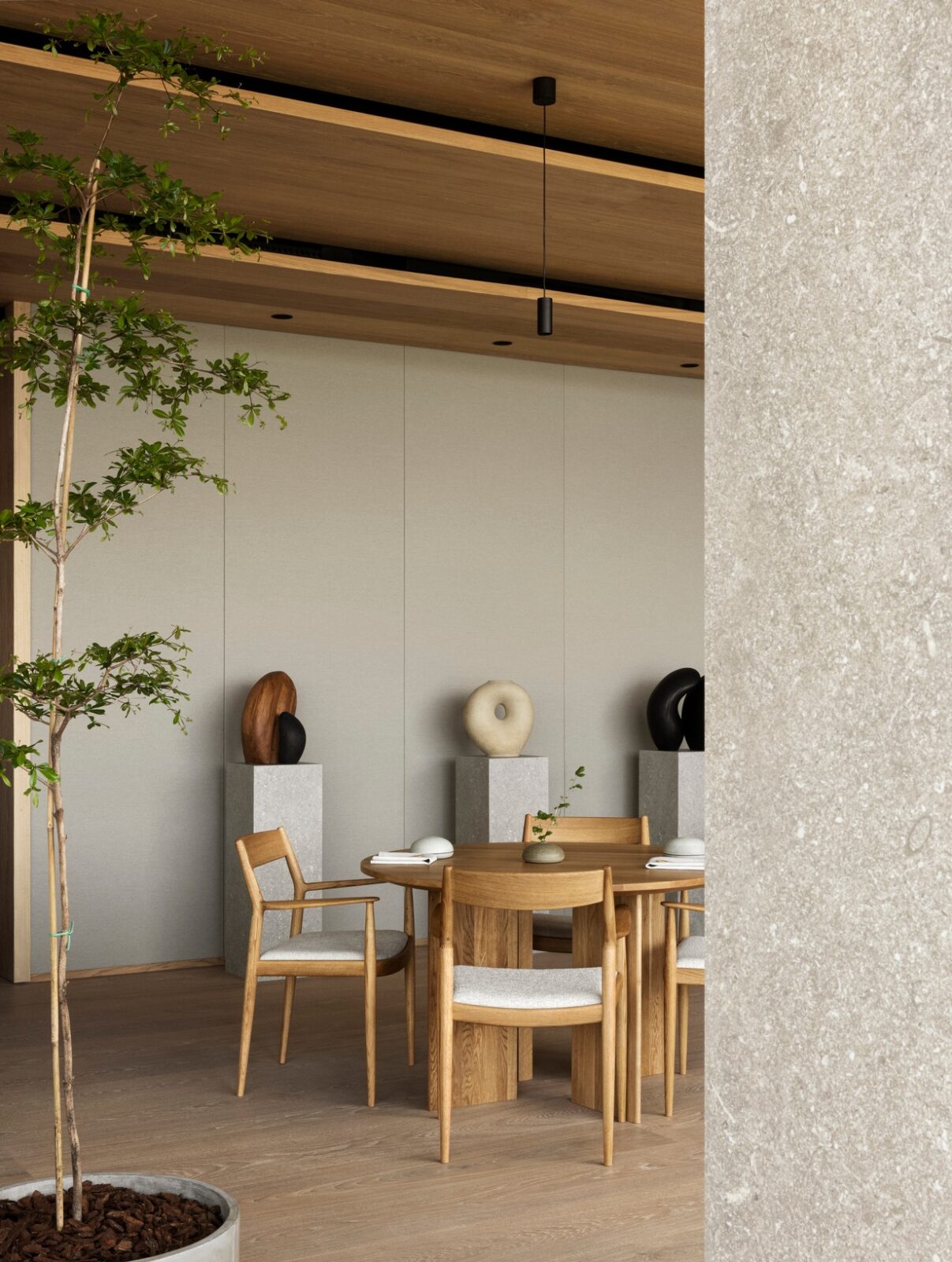
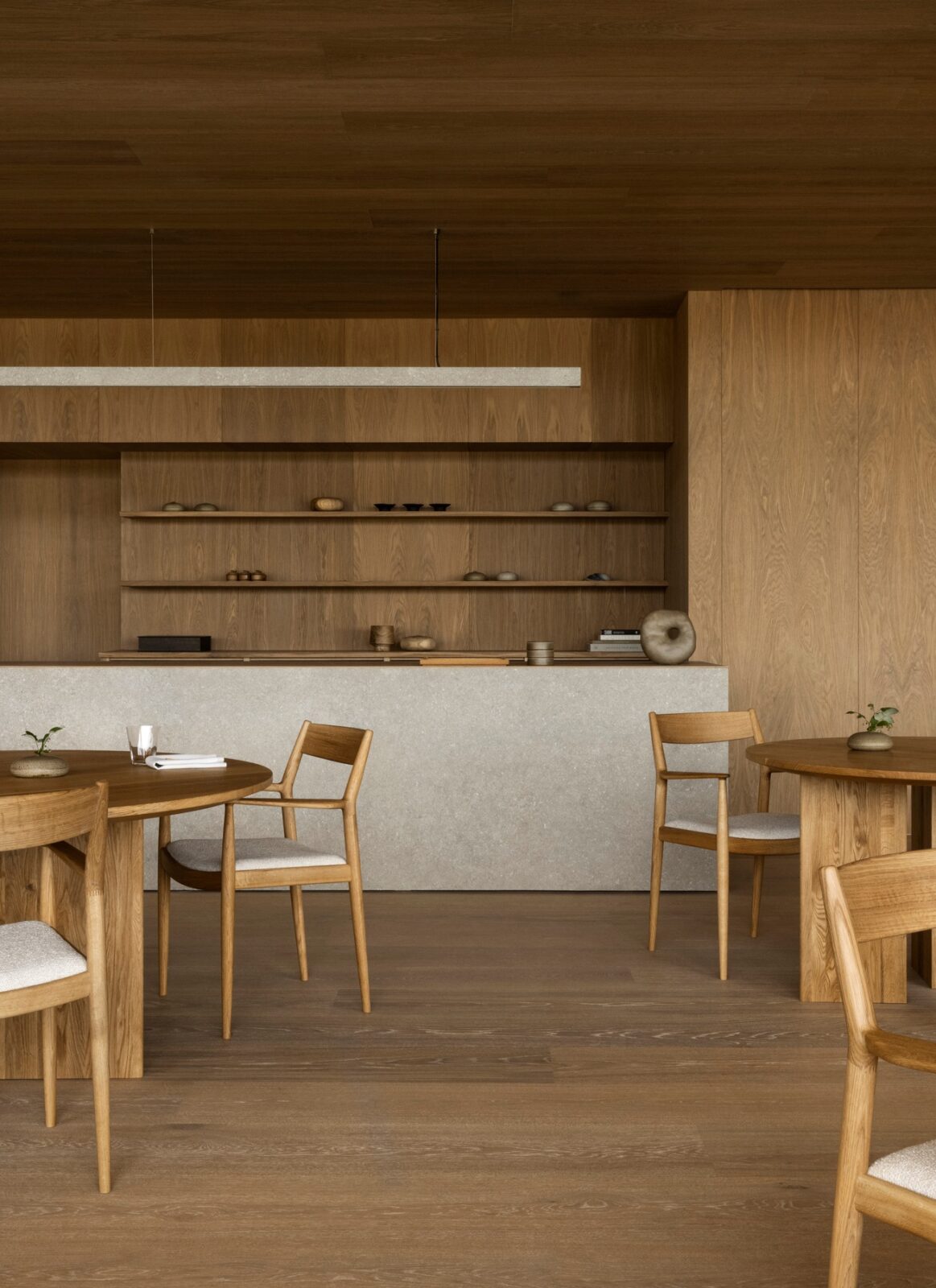
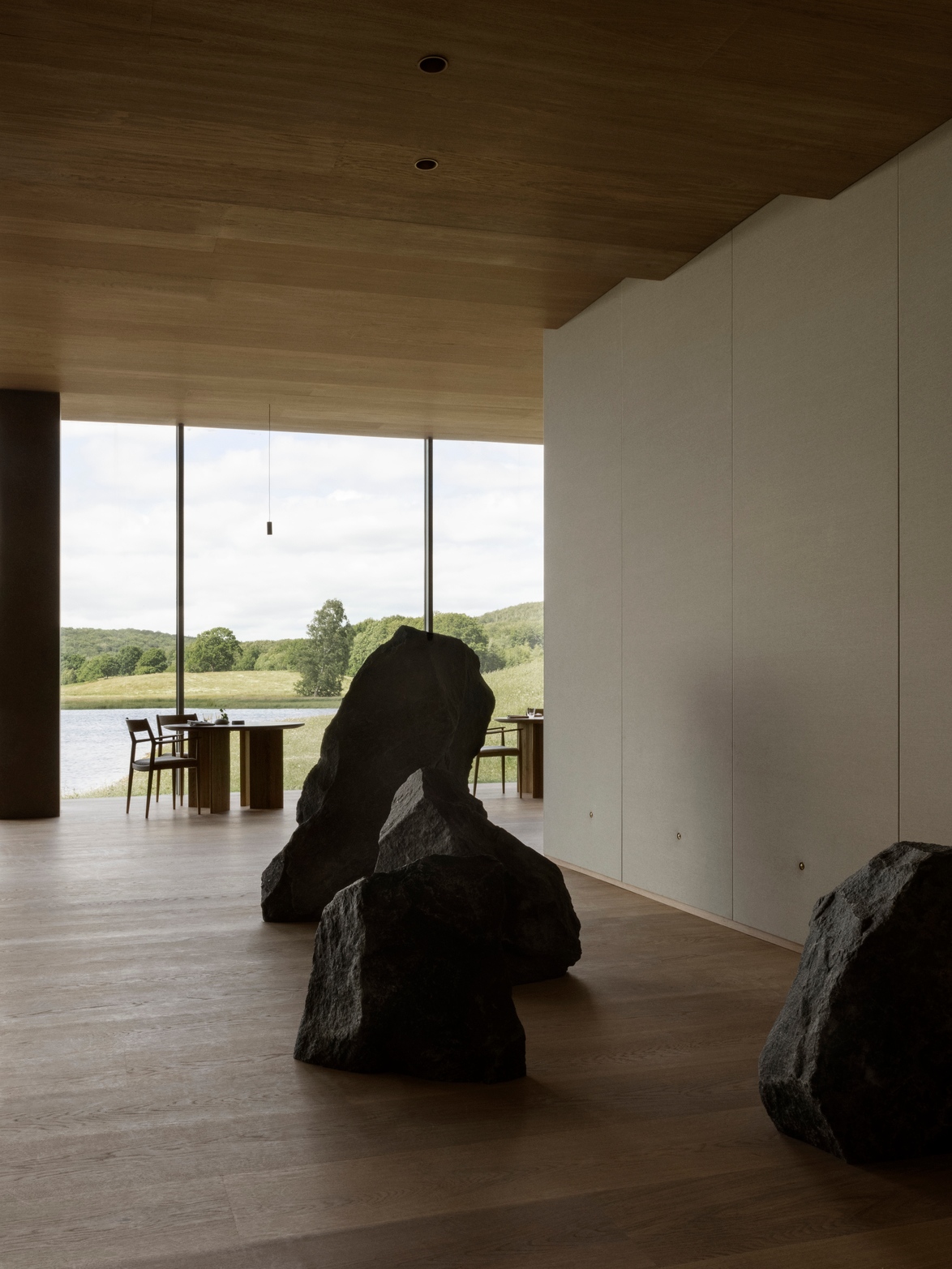
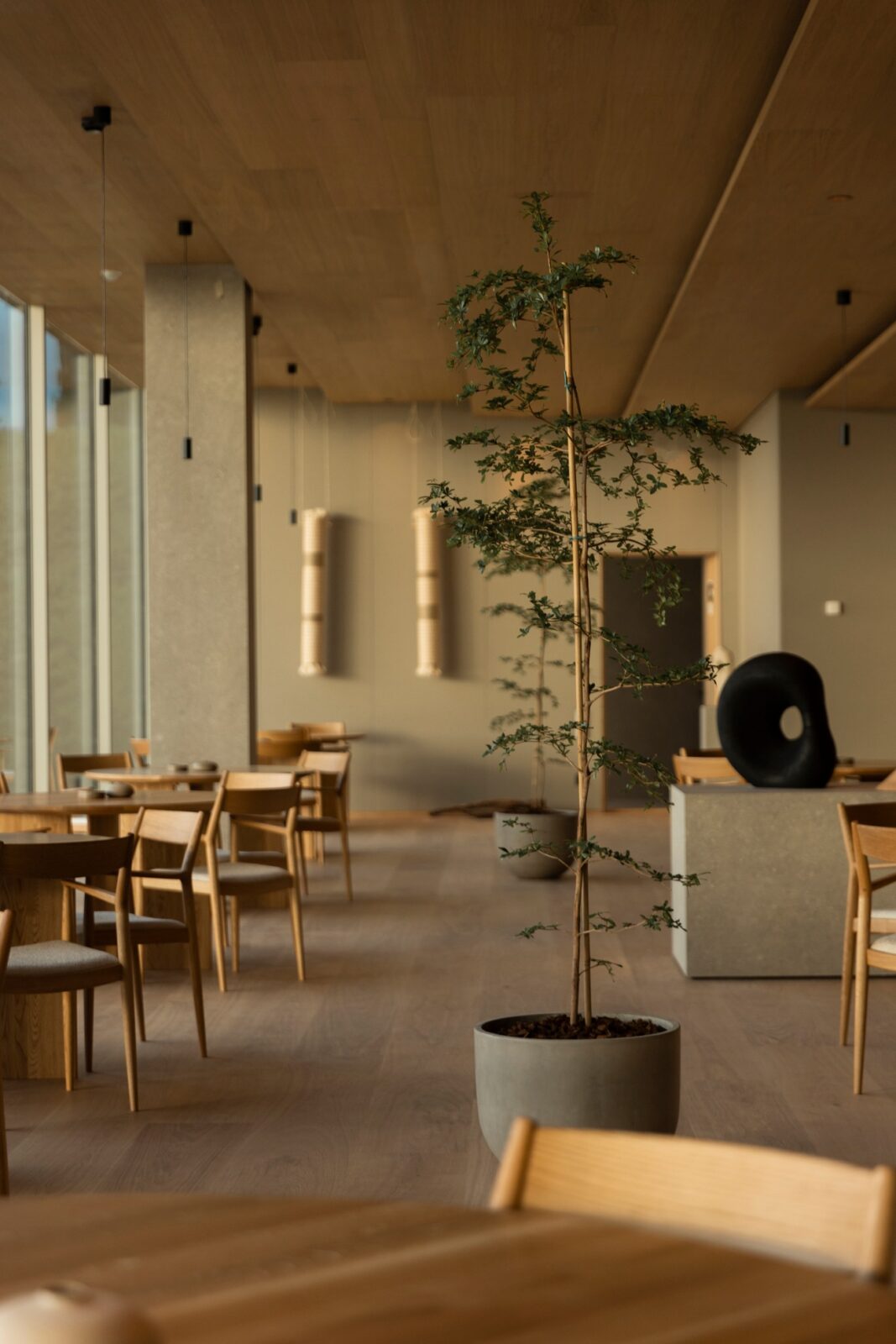
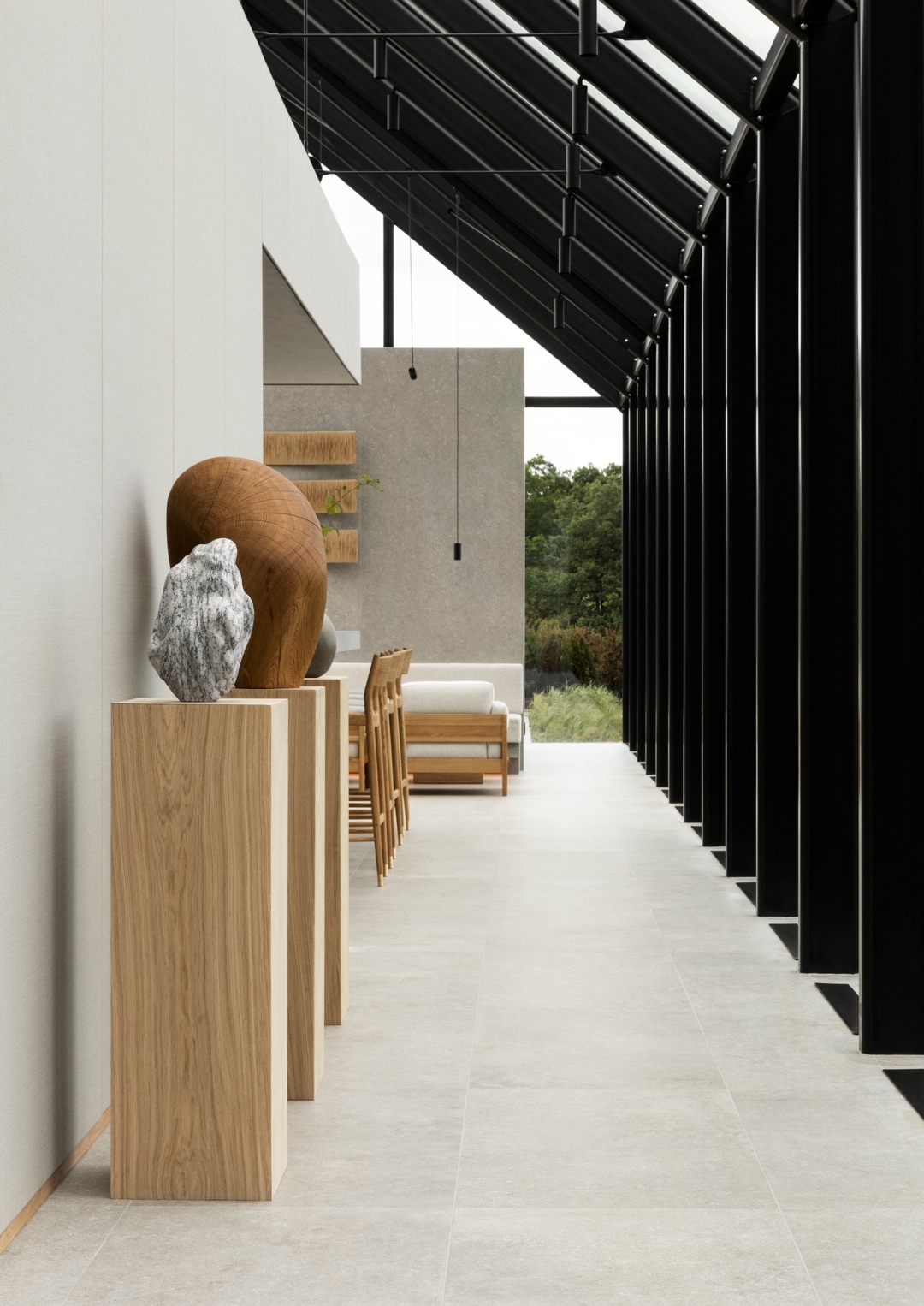
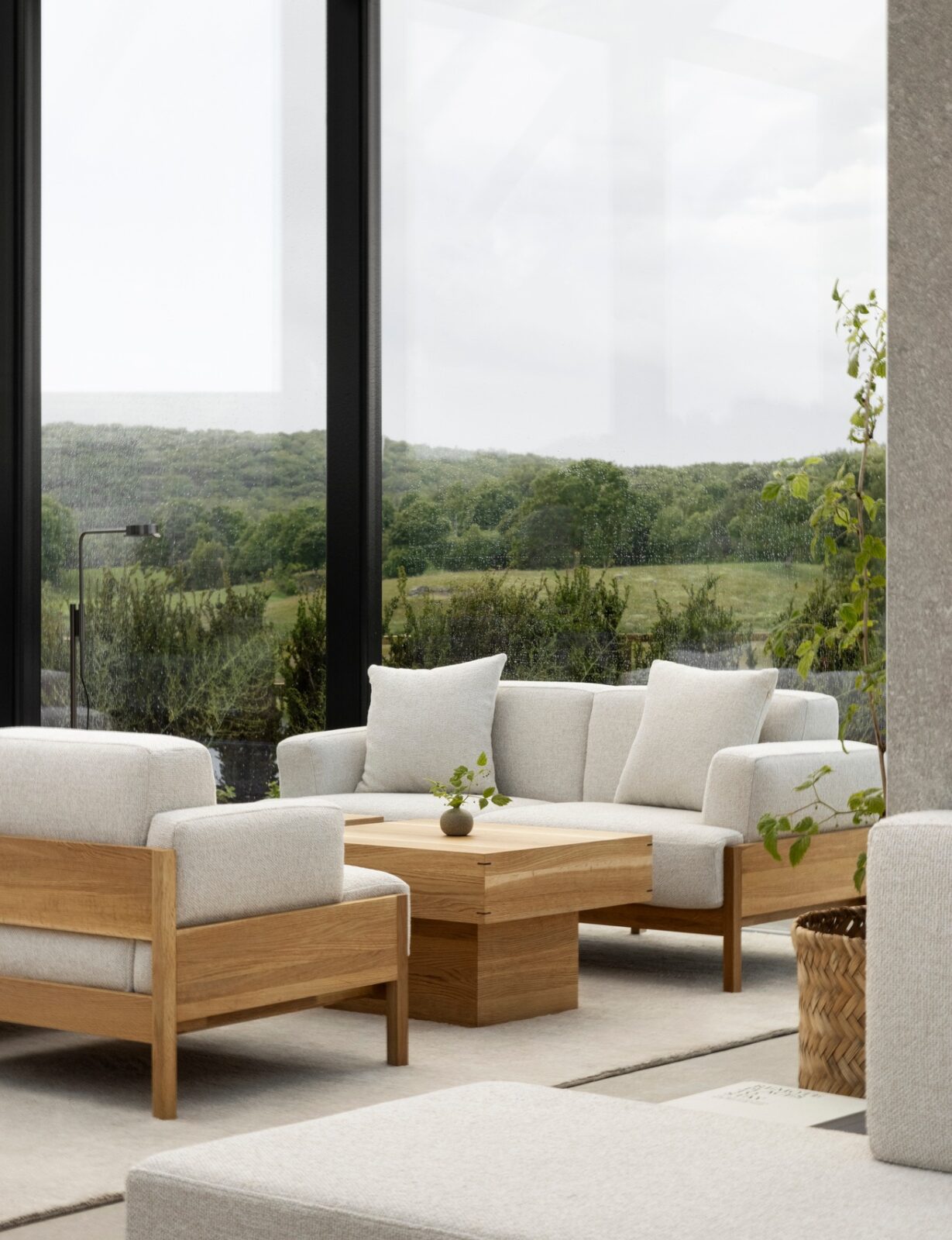
The glass house is light and lush, welcoming. Before finding their seats, guests must walk past an open kitchen, where a grounding stone counter and custom, organic artworks can be found. As they sit down in refined lounge furniture by Japanese Karimoku, made in solid wood with visible woodworking details and soft upholstery, guests can’t quite shake the feeling of sitting in the middle of the field with nothing but clear skies above their heads. It is evident to all how the space dwells on the interplay between nature and culture, capturing the spirit of the unique locus.
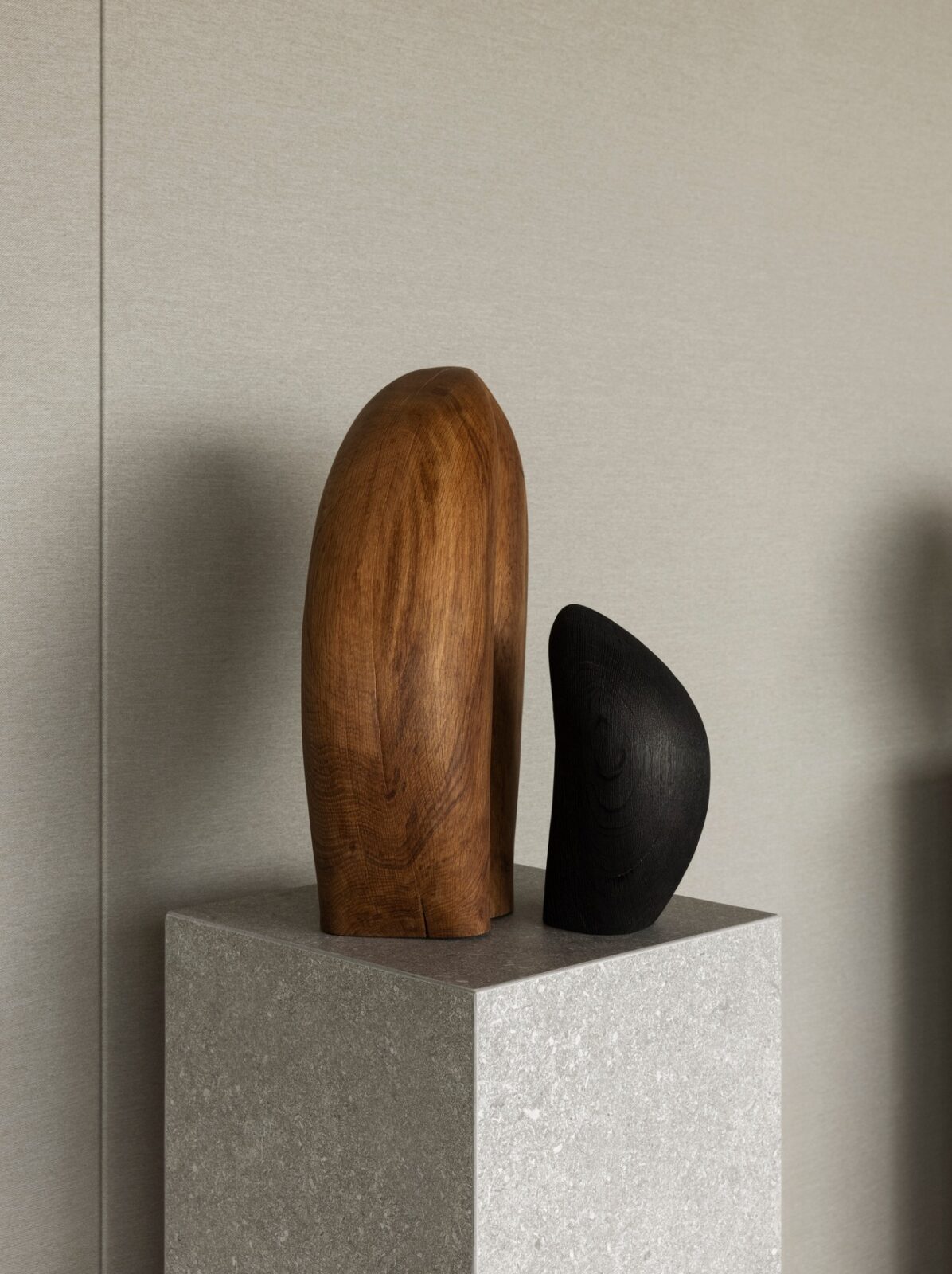
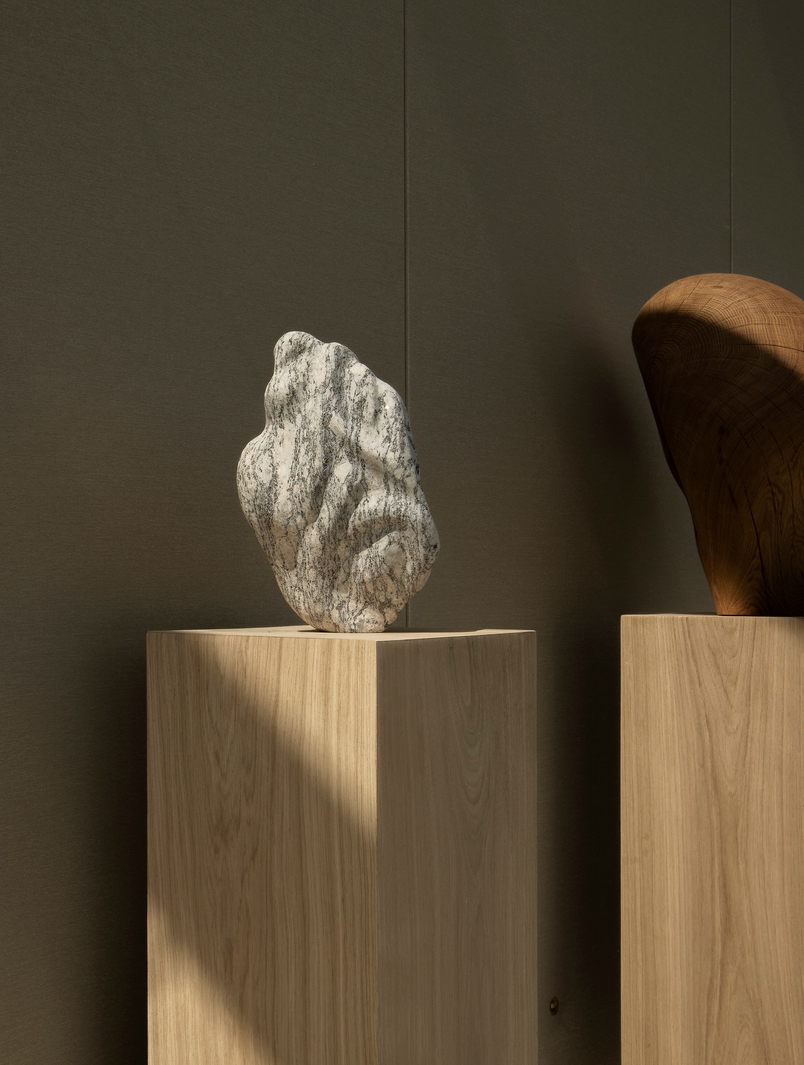
Seven wooden and stone sculptures with organic lines surround the tables, having been custom-made by the talented Norwegian artist, Anders Pfeffer Gjengedal (Løvfall). After years in the world of ballet, the artist now works with the sense of form in collaboration with architects and designers alike, turning natural wood and stone into sensual and expressive sculptures.
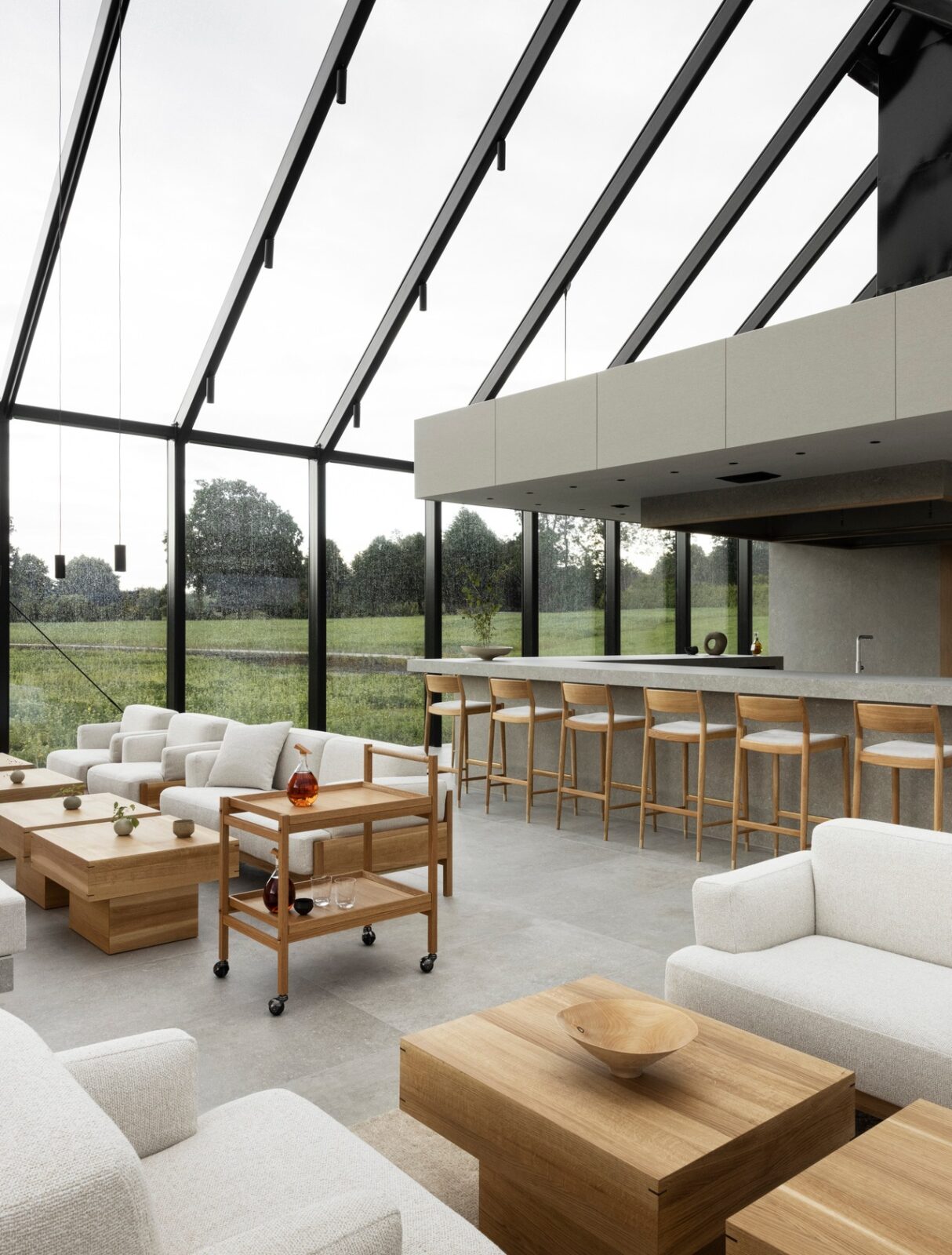
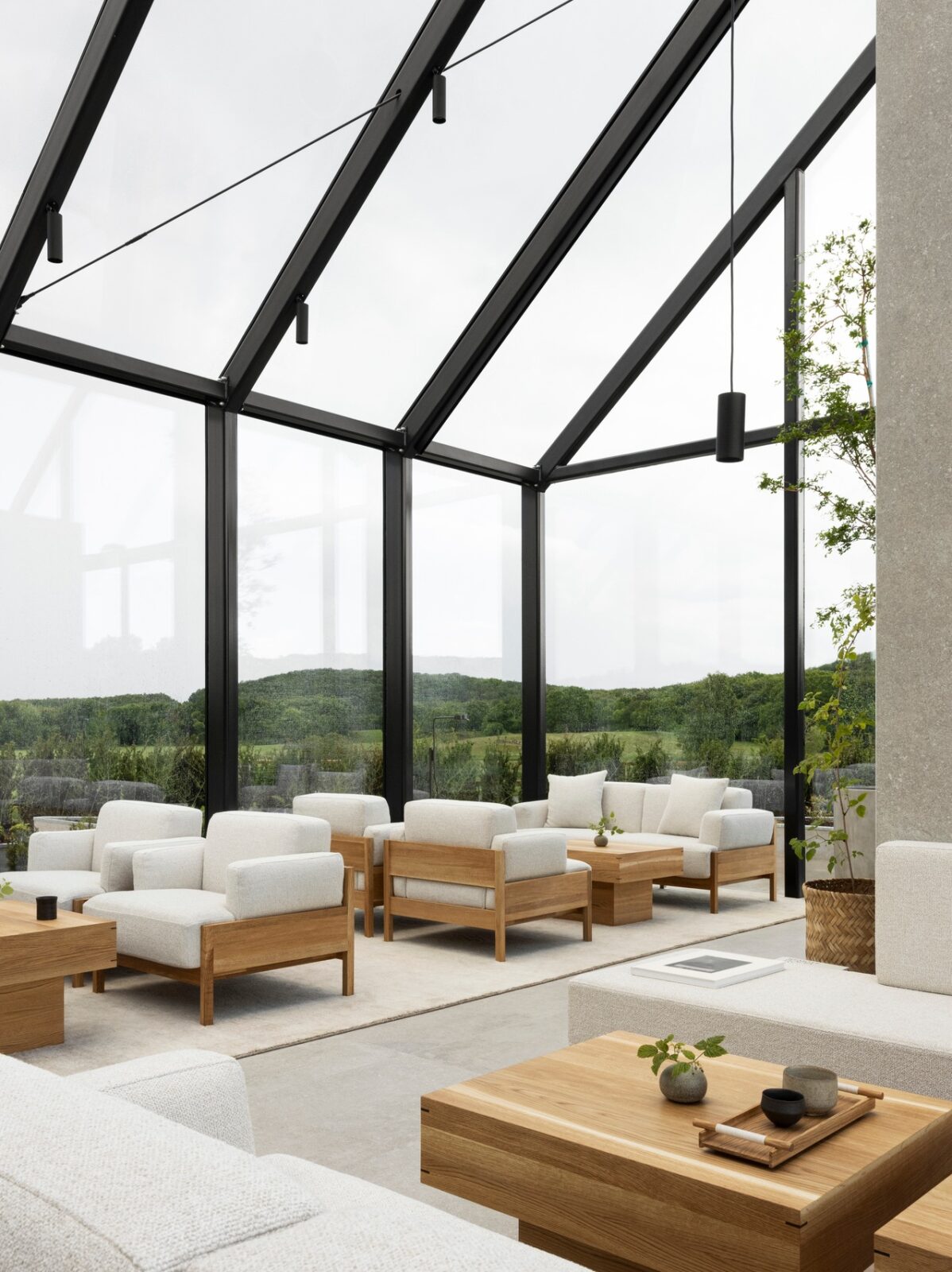
“With inspiration found in both the unspoiled Nordic nature surrounding the premises of ÄNG and Japanese sensibilities in design aesthetics and craftsmanship, the interior provides a holistic, sensory experience that refines the culinary offering and reflects the identity of the restaurant.”
Frederik Werner, Norm Architects & Creative Director for Karimoku
As the staff start to decant local champagne and present astounding appetisers made from homegrown produce, guests start to sit back into the Karimoku chairs to enjoy the 4.5-hour-long pause from the hustle and bustle of everyday. While this simple, yet important, moment unfolds, the sun starts to slowly descend beyond the meadow, serving as a calm and ever-changing backdrop to the evening.
Natural ingredients for an astounding experience
The studio worked with Bonni Bonne to create a small, carefully selected range of everyday products. The collaboration is based on a shared interest in simple, lasting design and practical objects for daily use. The studio is based in Norrland, Sweden, and was founded through an interest in nature, food and the beauty of everyday things. With this collection, they want to bring some of Norrland’s traditions into a modern setting.
In order to emphasise ÄNG’s strong connection with nature, parts of the curated collection are made from green wood, an ancient woodworking method that creates natural silhouettes and raw textures perfect for the atmosphere of the restaurant. The selected natural materials, such as pure oak for the unique furniture items and the elegant stone flooring, have been slightly refined or processed to make them more delicate (just like Head Chef Filip Gemzel refines the local ingredients that make up the astounding tasting menu).
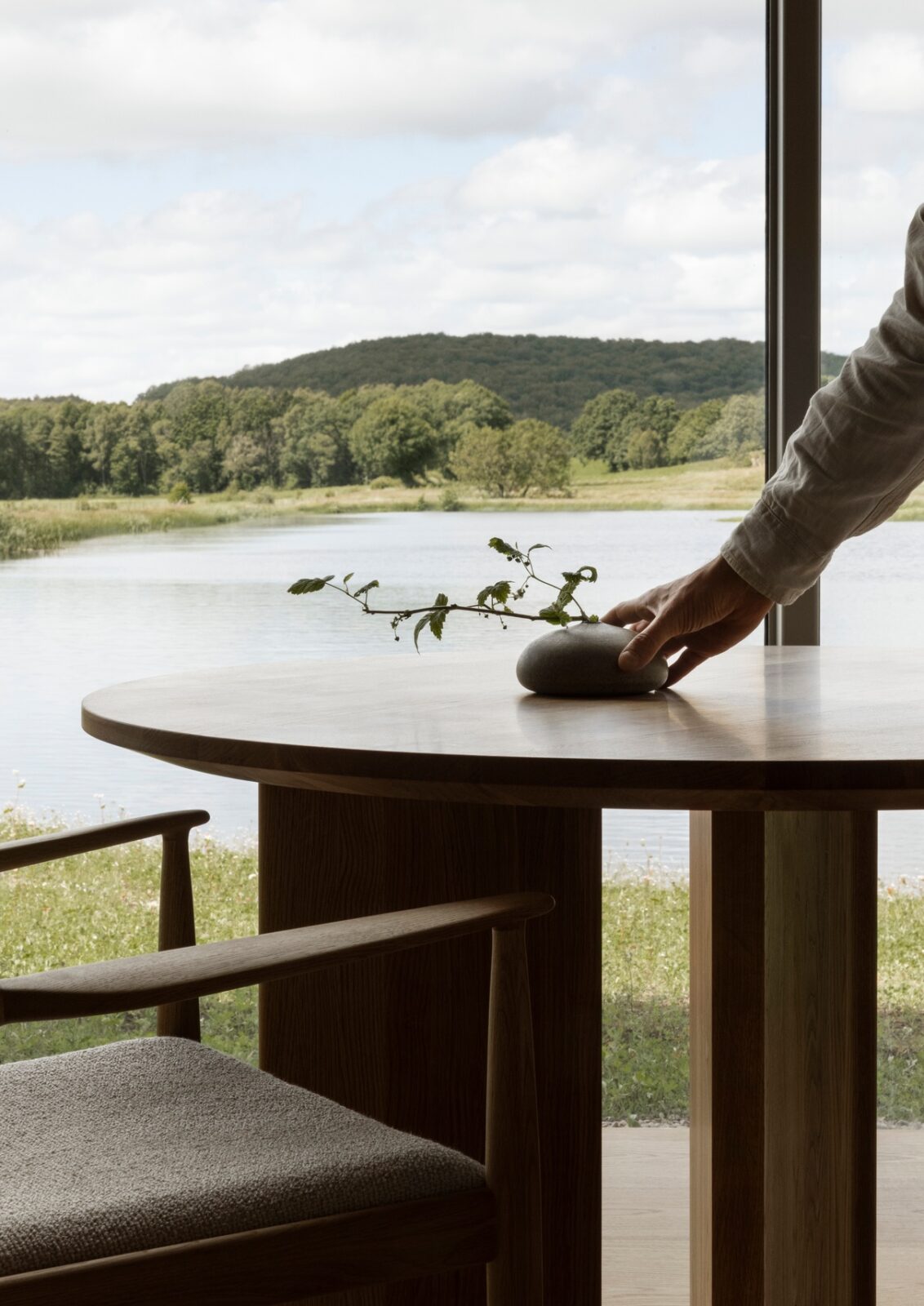
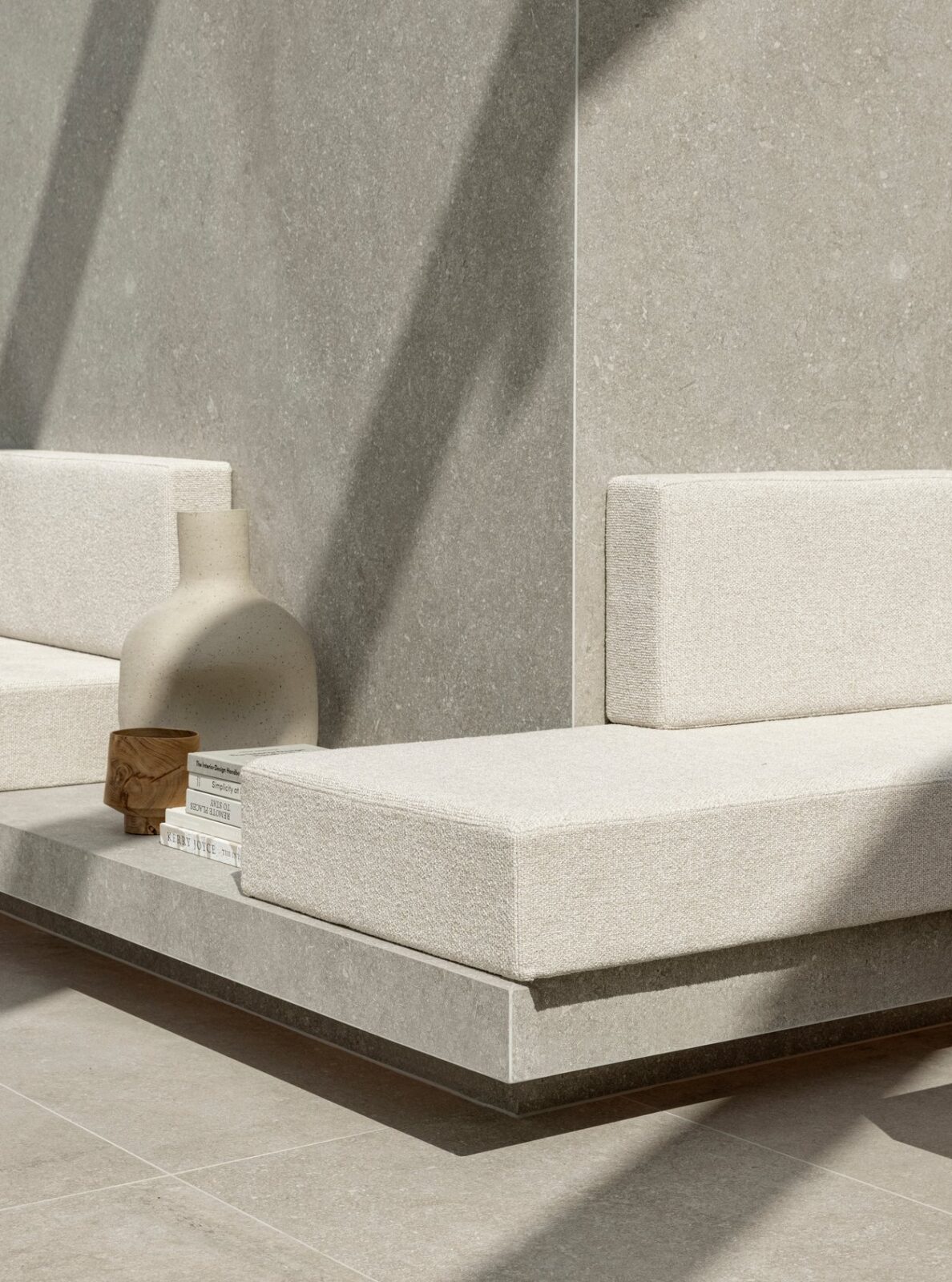
When it comes to haute cuisine, it’s all about this interplay between the many elements that make up the experience; from architecture, design and lighting to taste, smell and sounds. When all these elements are balanced and well-adjusted, that is when everything comes together to create an esteemed experience out of the ordinary.
“The fundamental ambition behind the Michelin-starred Restaurang ÄNG is, in many ways, in line with Norm Architects’ design philosophy of striking a delicate balance between all the sensory experiences that make up a space to create a harmonious setting where all elements support one another.”
Peter Eland, Norm Architects
Integrating thoughtful artworks and sculptures was seen, therefore, as a vital part of the interior and atmosphere at ÄNG. Having the Danish designer Sara Martinsen contribute with custom artworks was obvious from the get-go. Sara, too, believes in the beauty of natural materials, in craft and in the power of a strong visual narrative. The artist arranges local materials so they become inspiring, and one can experience each of their specific characteristics. She finds her inspiration in the origin: a beautiful material, a specific craft or the local history of a given location. This is why she went out in the forest surrounding ÄNG in order to find inspiration for the materials that would later make up the tactile artworks.
From a bright summer evening to an underground lounge
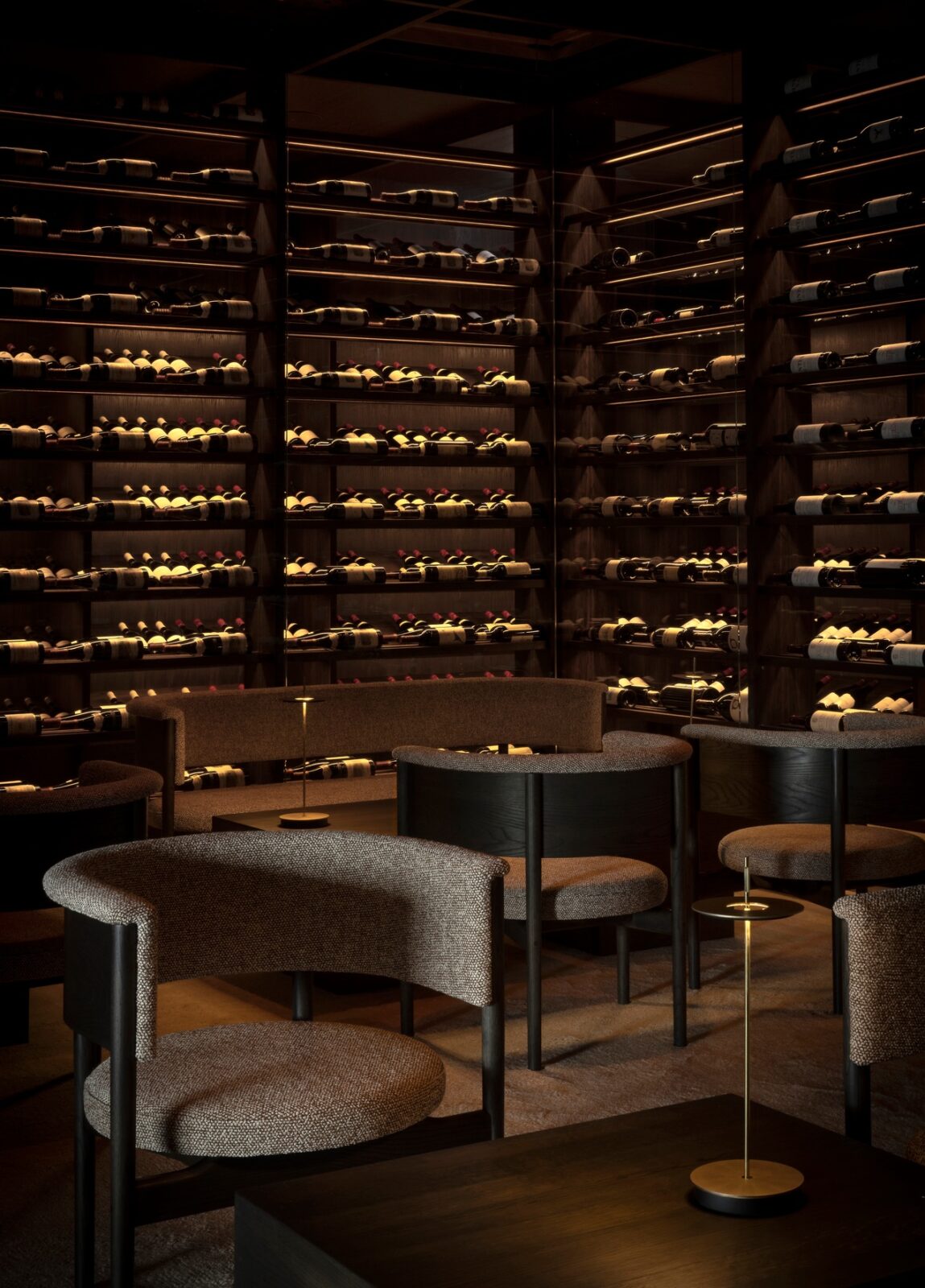
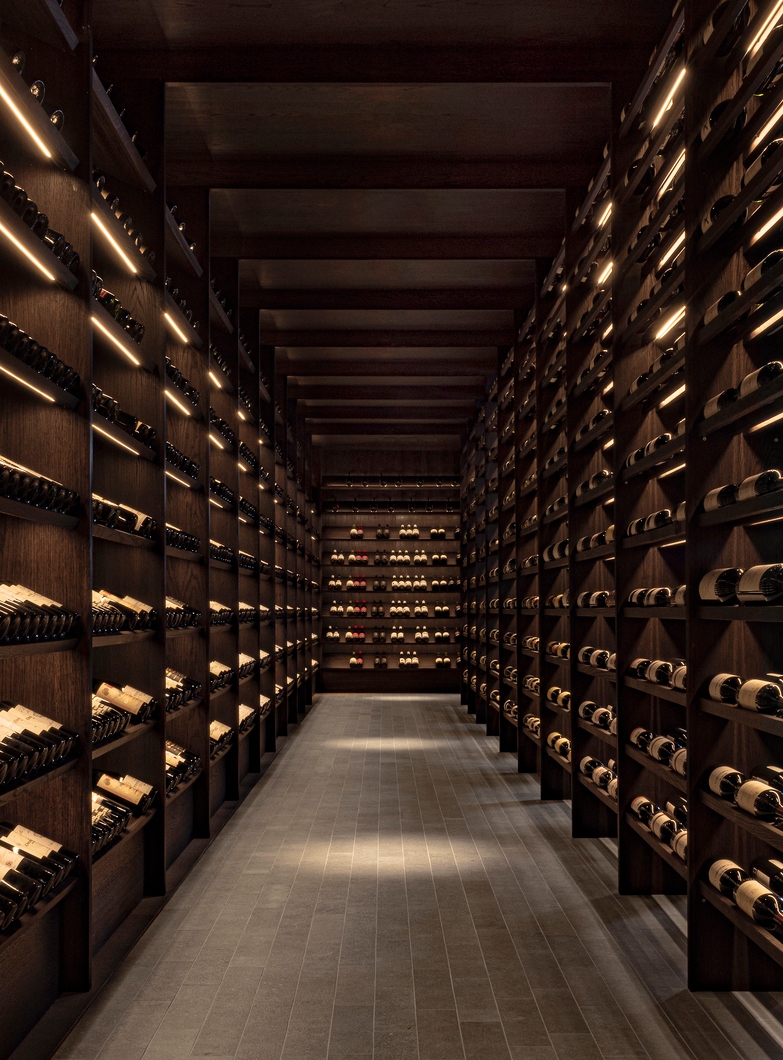
As the evening moves along, guests are led to a hidden elevator, a temporary break from the bright summer evening, as it slowly escorts them underground into a dark, catacomb-like wine cellar with a subdued feeling and sparkling wines of its own production, as well as high-end French labels.
“With the changing of light, we play on the phenomenon of “chiaroscuro”, a technique from visual arts used to represent light and shadow as they define objects in order to achieve a sense of volume. When stepping into the shadows, the vision weakens while the remaining senses intensify. One automatically pays more attention to sounds, smells, tastes and touch, and even intuition and instinct are strengthened.”
Jonas Bjerre-Poulsen, Norm Architects
As the sommelier leads the way through the impressive shelves to pick out the wine for the next part of the dinner, guests will also catch a glimpse of a quiet and dark lounge in the middle of the space, letting on that there is so much more to come.
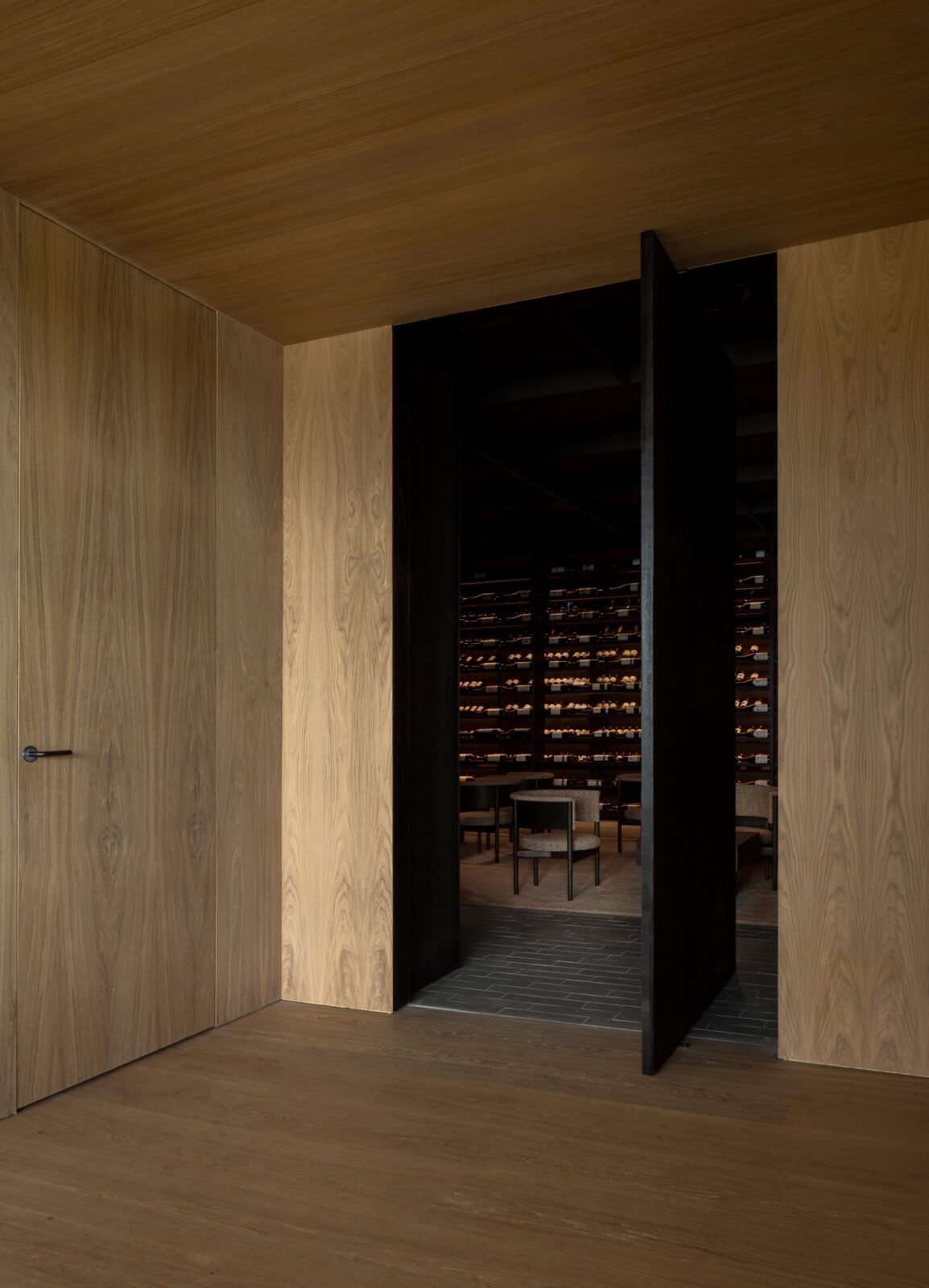
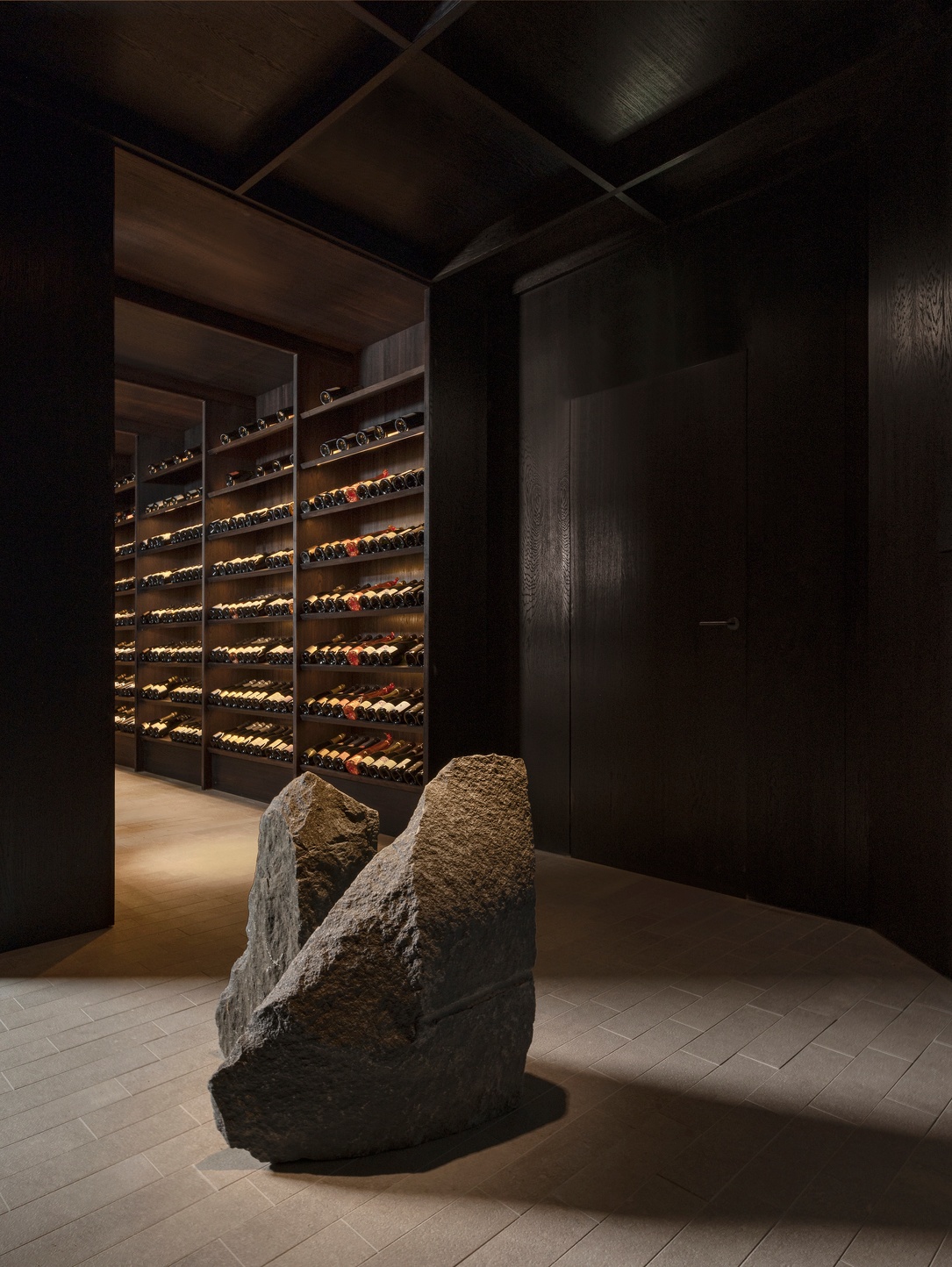
To emphasise the transitions from one atmosphere to another, tiles cut like a brick floor, by the brand Kronos Ceramiche, meet the wooden floor from Dinesen, leading the way into the main dining room with floor-to-ceiling views of a natural lake and the rich fauna surrounding it. The setting turns lighter once again, and the guests’ senses become alert, ready for the next part of the experience.
As the evening moves on and the colour scheme of nature turns even more vibrant, the tones of the selected materials within the restaurant seem to change with it: the oakwood obtains a red tone and the open kitchen in grey stone appears softer. The evening ends back in the glass house, where the experience comes full circle as the sun has now set and the desserts are being served.
Stone, sculptures and ceramics
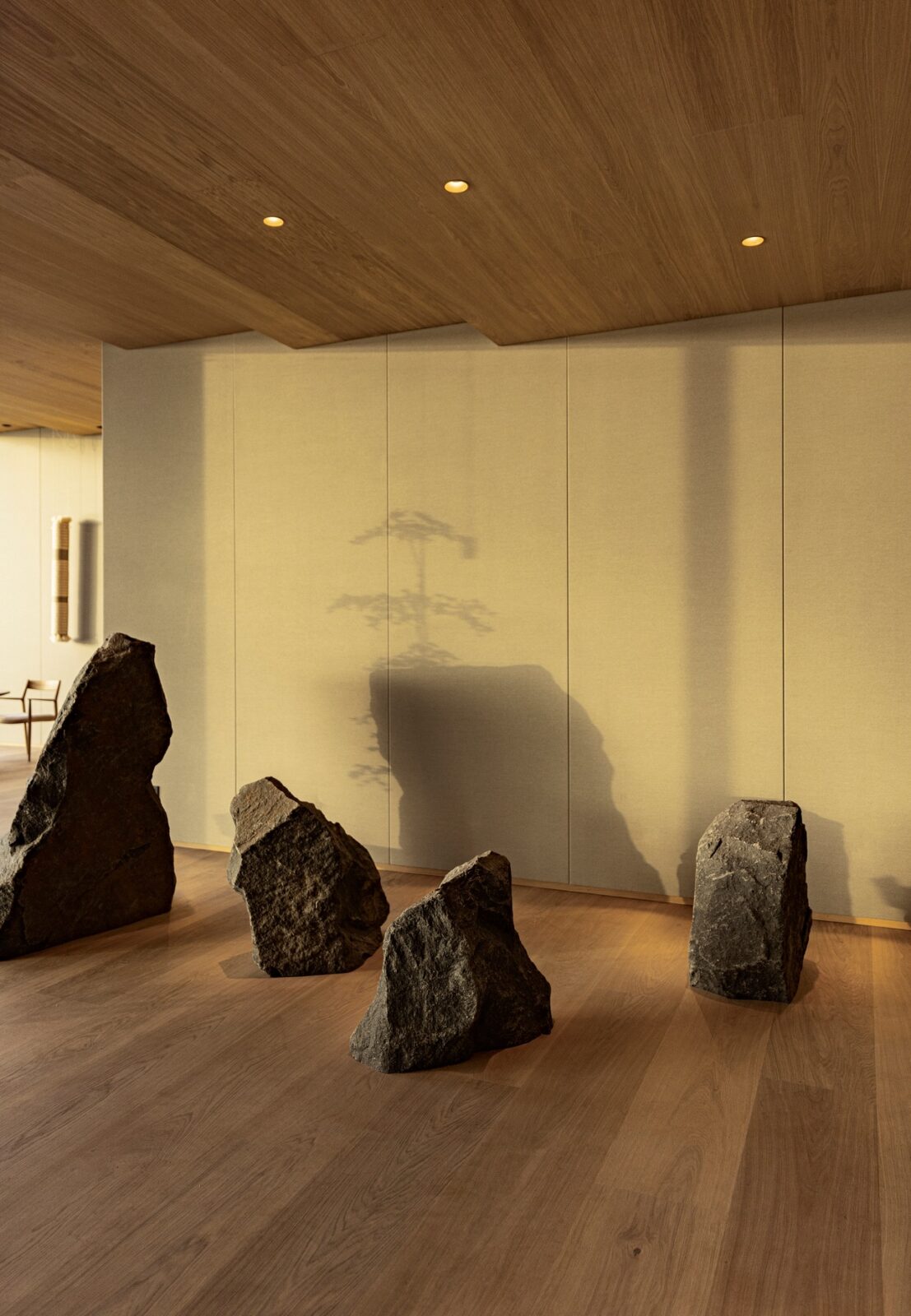
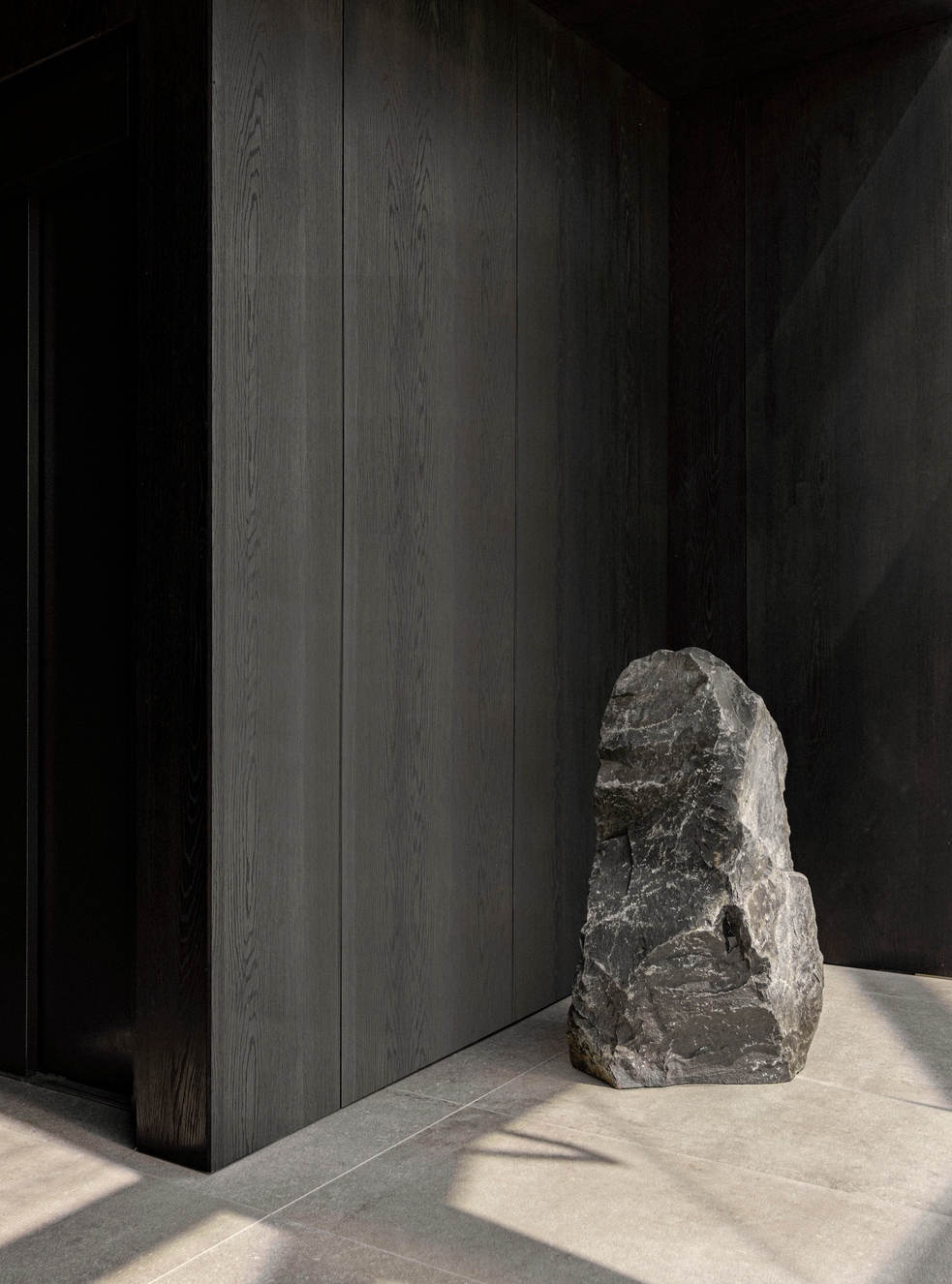
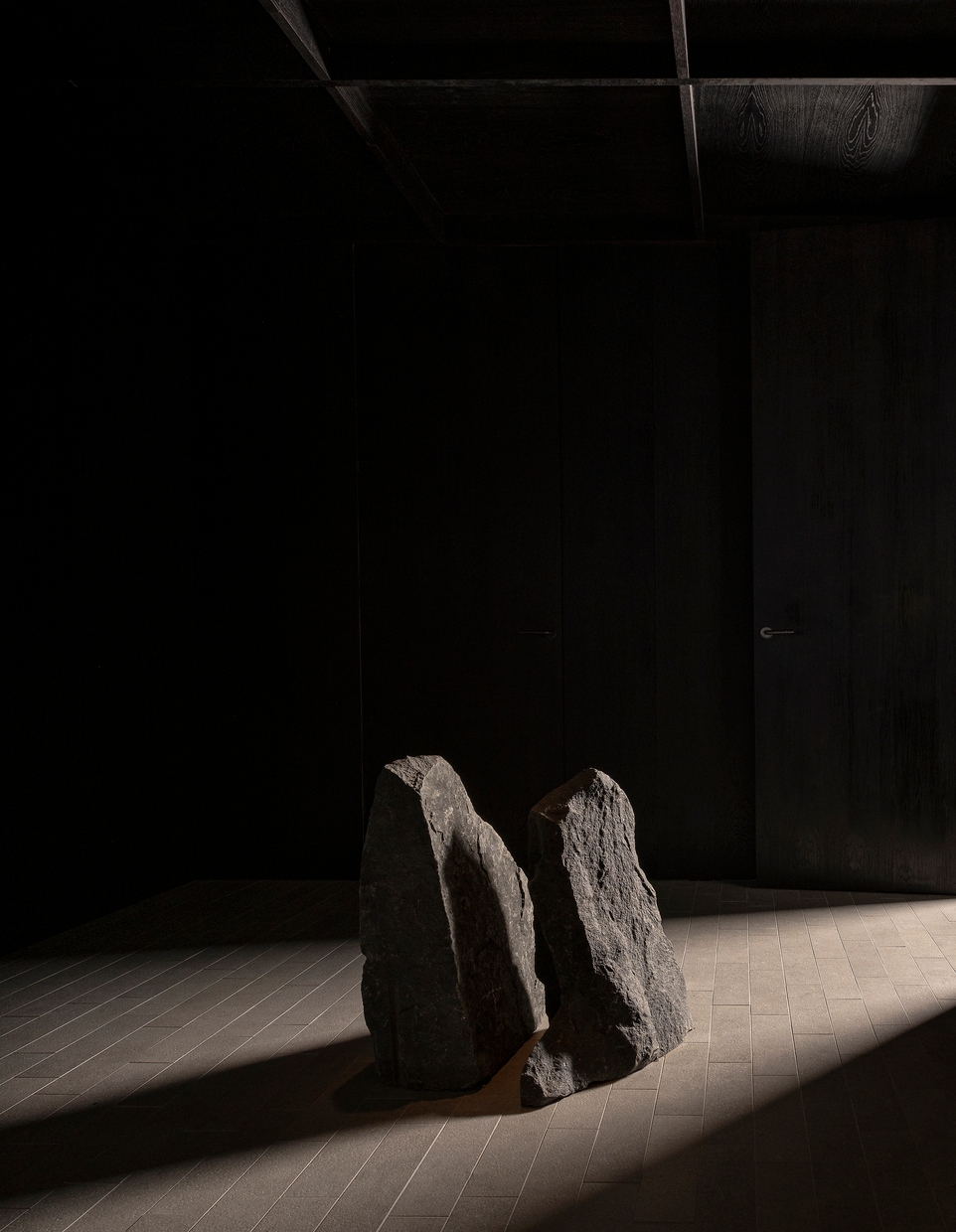
The studio took inspiration from Japanese Karesansui gardens, which use raked sand and stone. To find the stones, they travelled to a large quarry in Växjö and selected pieces shaped by nature itself. One of the main ideas behind these gardens is “yohaku-no-bi“, which means “the beauty of empty space”. After learning from the late stone master Masatoshi Izumi, the team came to see stone in the same way: the sculpture is already there; one just needs to discover it. The finished stone pieces are placed as small versions of the landscape around them, greeting visitors as they leave the dark wine cellar through a large pivoting wooden door.
“If you love food and wine, a fine dining experience is something very special. You never really want the evening to end. Still, sitting at the same table at the same chair, hour after hour, takes its toll. It’s hard to keep your focus throughout such a long dinner. To stay sharp and thoroughly enjoy every serving, you need new stimuli. Something that awakens you and refreshes your mind.”
Daniel Carlsson
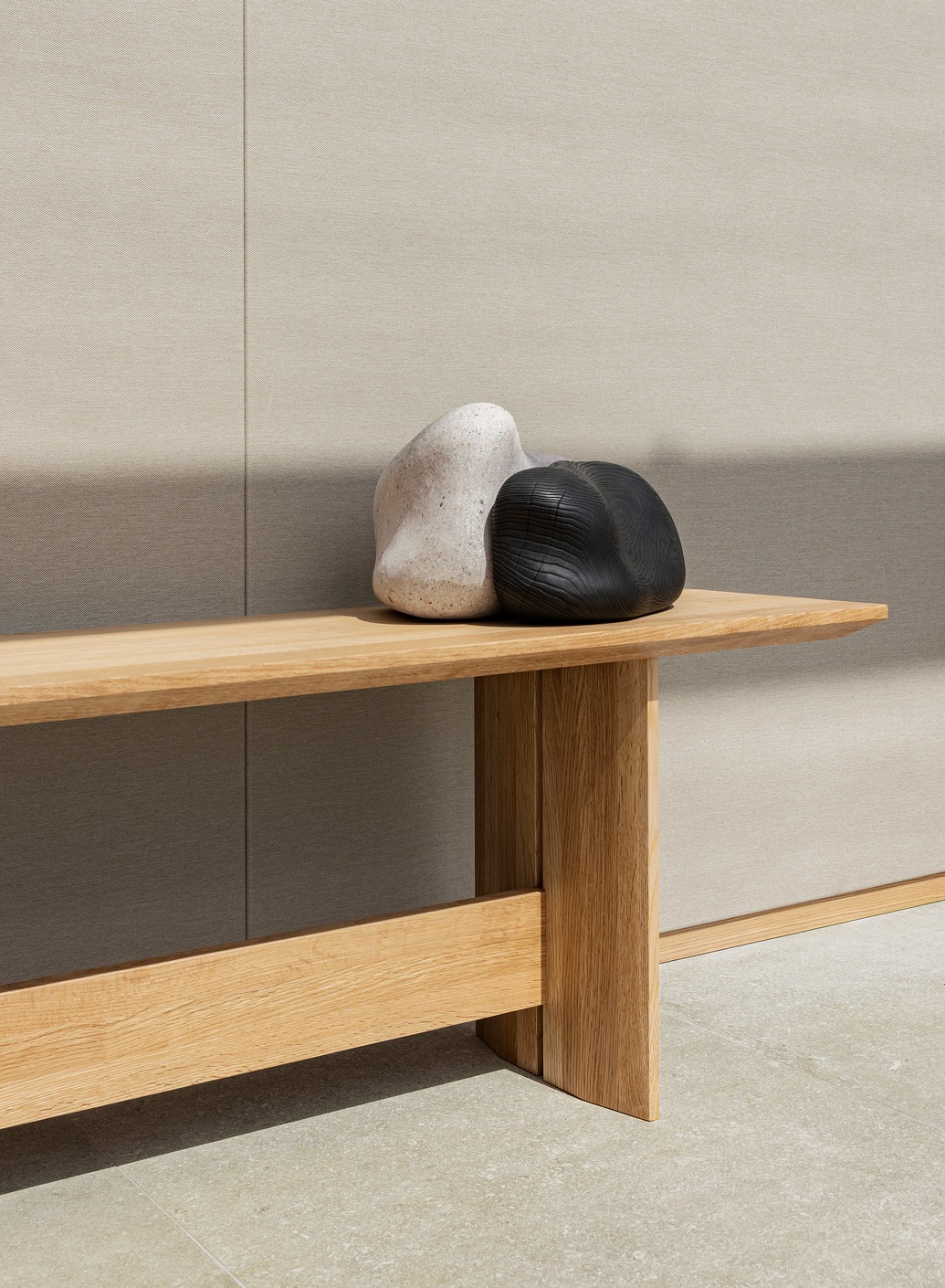
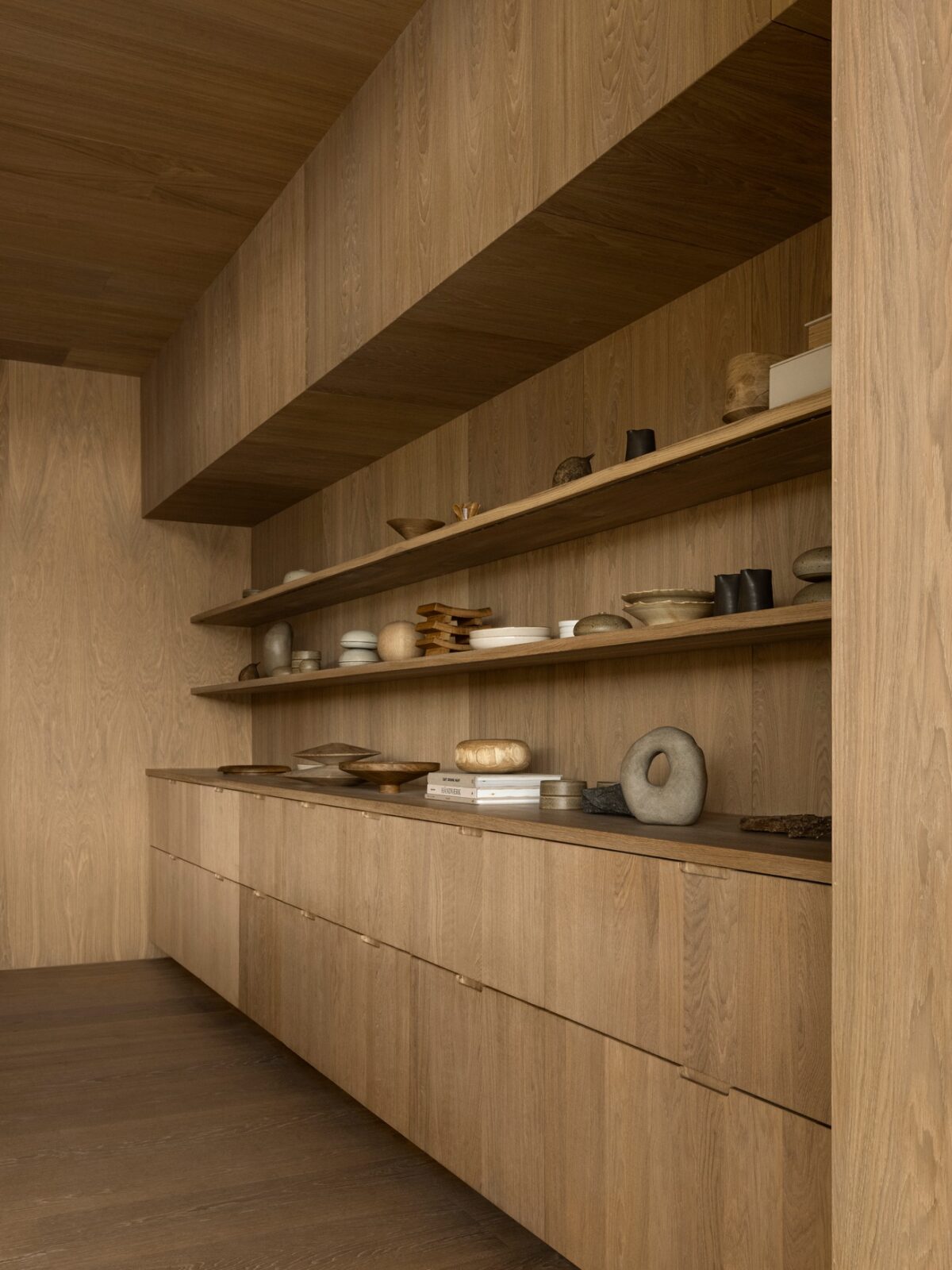
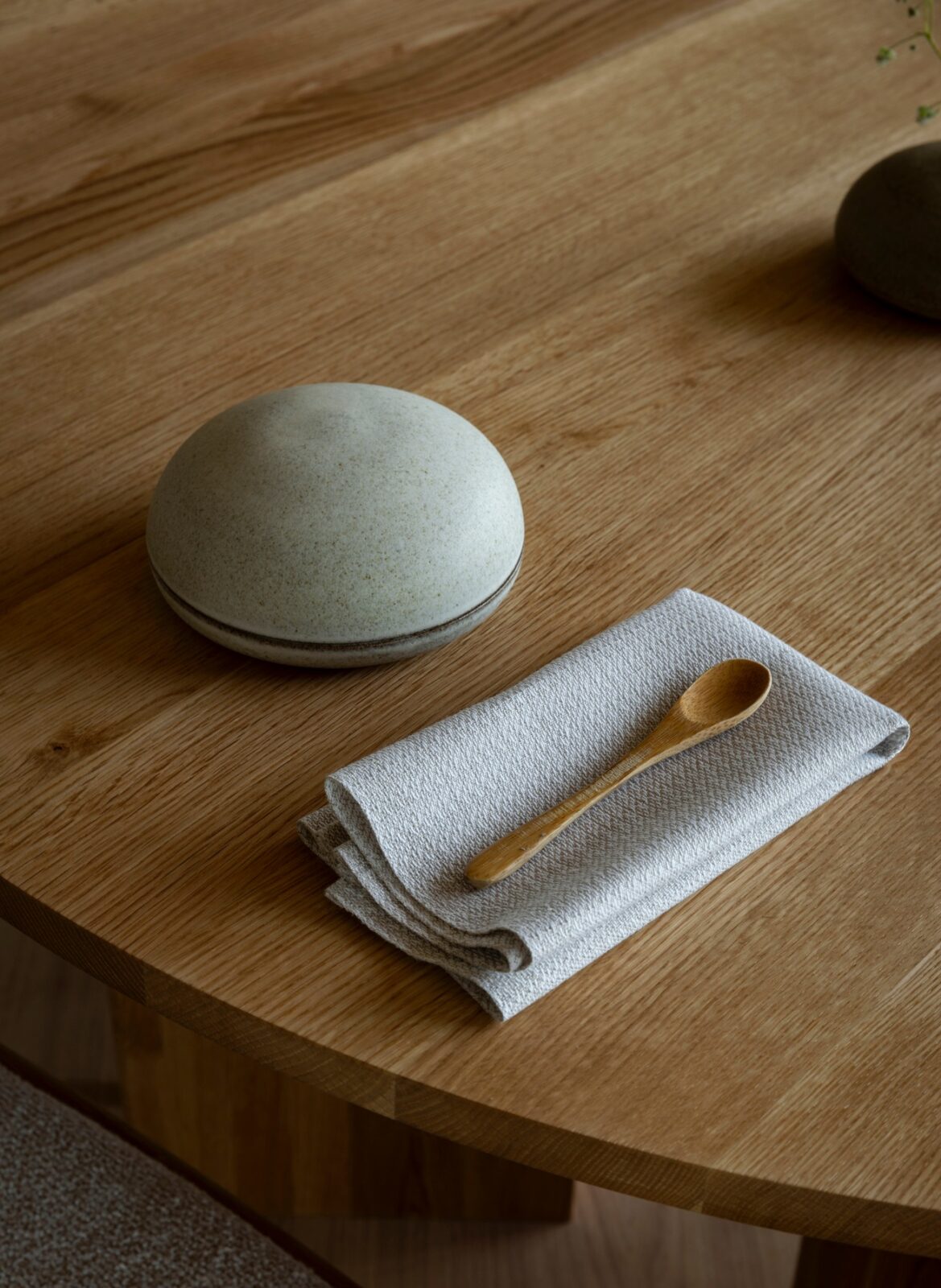
Filled with curated sculptures and ceramics by Viki Weiland and Ulla Bang, the shelves in the open kitchen add a personal and warm atmosphere to the striking room.
Ceramicist Ulla Bang is known for her beautiful, hand-built stoneware ceramics. Created using an ancient pottery technique, her works draw inspiration from forms and shapes discovered in everyday life. Her work is organic and free but also precise and detailed, as she likes her creations to challenge balance and to be free and unexpected in their form, yet always end with a fine, focused and precise top rim.
All of Viki Weiland’s designs are wheel-thrown and glazed by hand. Her style is simple and natural yet raw with a focus on quality, material and detail. In the beginning, she worked only with shapes that were more stringent, but over time, she has come to prefer the more curved yet simple shapes. The craft has also been developed, but to her it has always been about creating sustainable and personal products.
A series of natural, custom-made furniture pieces
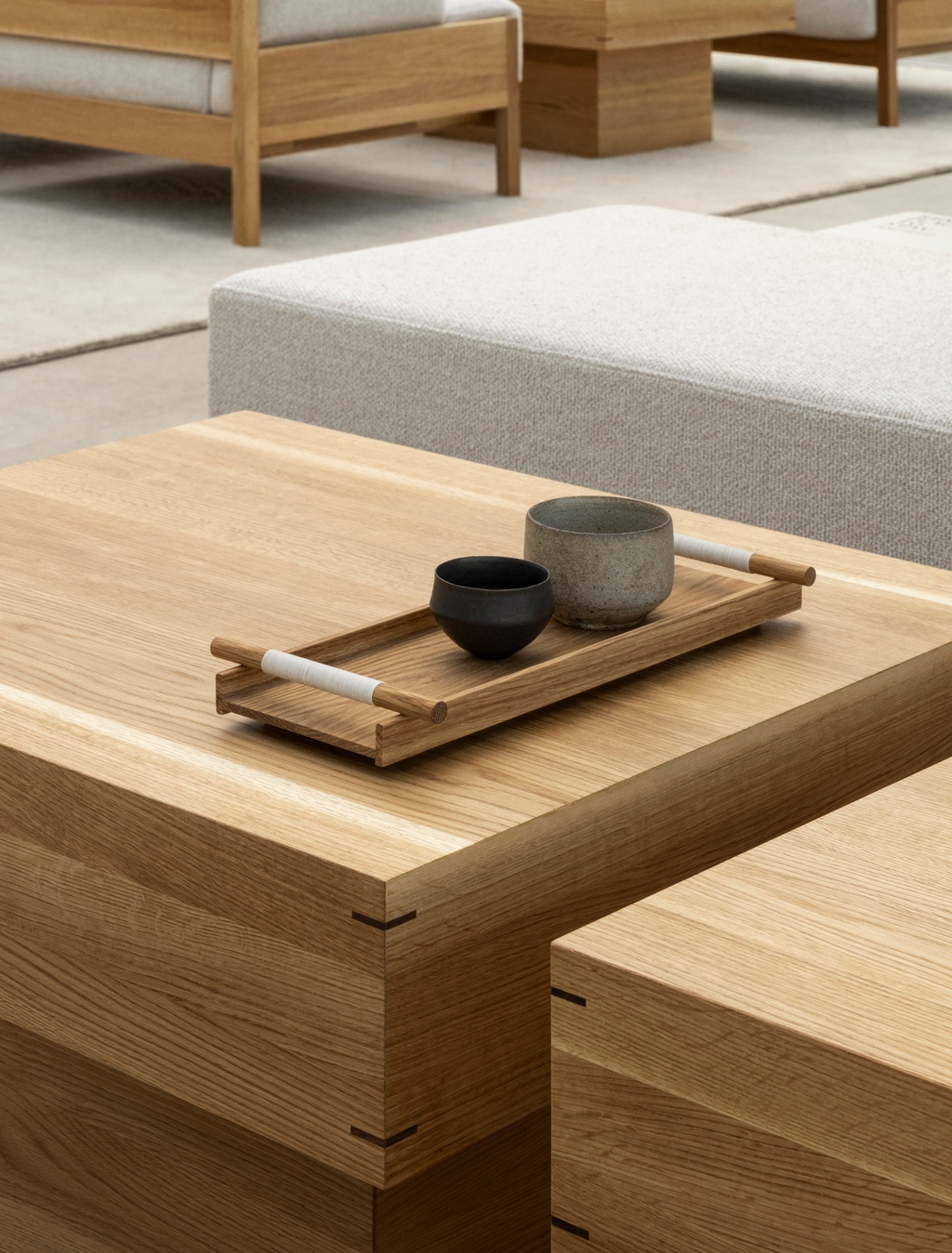
Designed exclusively for ÄNG in collaboration with Karimoku Case Study and constructed from solid oak, the new ÄNG Lounge Table exudes simplicity. The dark-stained oak spline joint is used where the construction is most exposed, a common detail in Japanese furniture design, as it helps strengthen the table. The detail also shows the studio’s approach: to create minimalist designs that are defined by the use of natural materials and honest constructions.
With the A-S01 sofa and lounge chair, Keiji Ashizawa played with the sculptural elements of a Karimoku Case Study from 2019. Here, the design is created in two customised sizes that accommodate the needs of ÄNG’s glasshouse. With its low height, the furniture seems to enhance the size of the space.
Again, by the same designer, the oak tray is both beautiful in the kitchen and practical for the waiters to serve wine from. With the possibility of being stacked on top of one another, this small but important piece takes up as little space as possible. Finally, this time from a 2021 Karimoku Case Study, the A–DT02 dining table is shaped by the way each leg meets the top at an angle, which ends up forming a gentle sense of lightness. In spite of its size, the table appears light and discreet, allowing the organic form of the chairs placed around it to stand out.
Designed by Norm Architects for the Karimoku Case Study, the N–CC01 Club Chair was made to take up little space while still offering good comfort. Its rounded back gives the chair, and now the two-seater version, a soft and welcoming shape made from wood. It also gives the user room to move freely while seated. The inside of the backrest is fully upholstered and folds over the top of the chair to form the armrests.
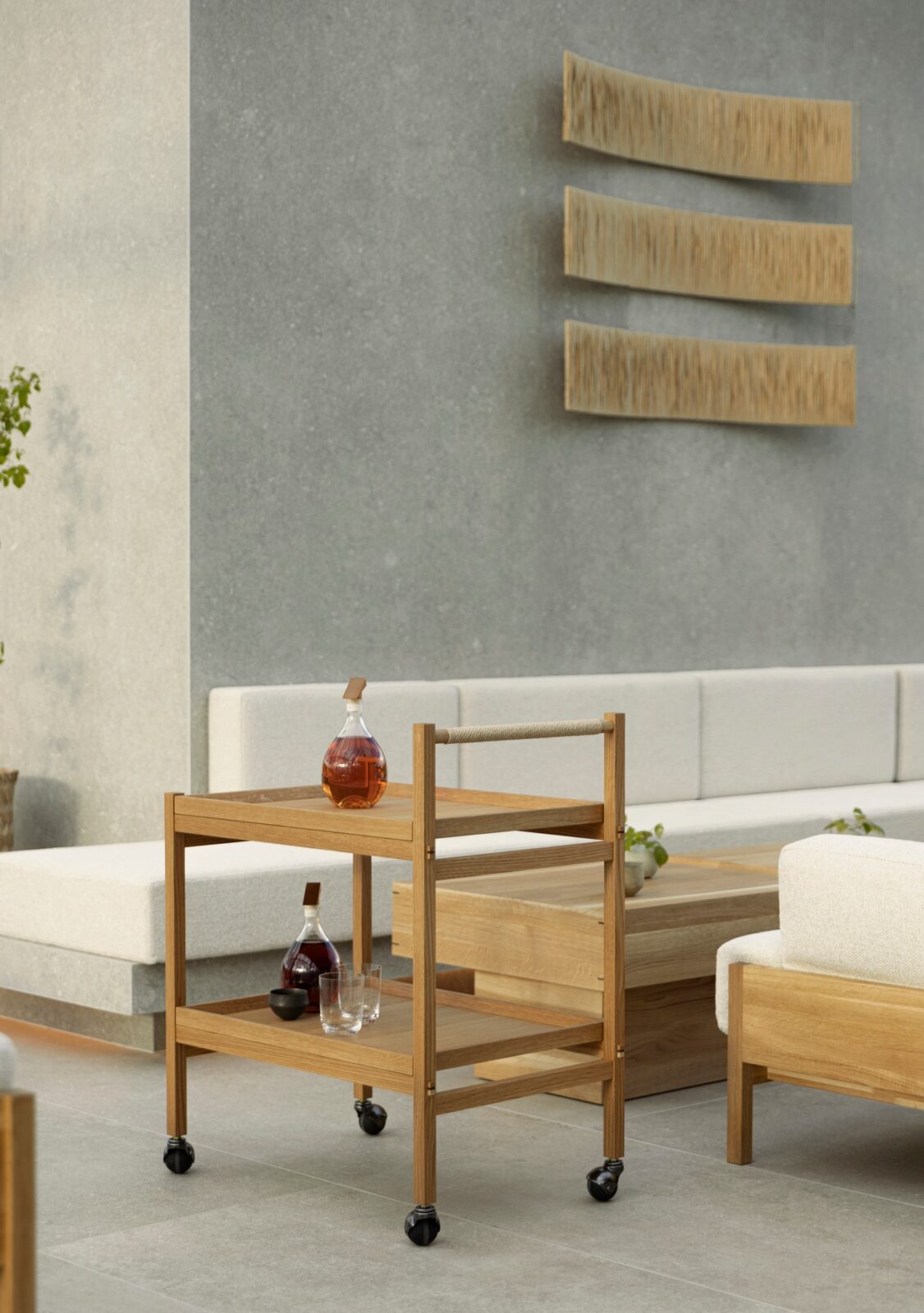
The final custom piece was inspired by the umbrella and shoe racks by the entrance of Japanese temples and shrines. The new solid wood ÄNG trolley was designed in two sizes determined by the needs of the kitchen and staff.
Project information
Architect & Partner: Jonas Bjerre-Poulsen, Peter Eland
Designer & Partner: Frederik Werner
Interior Designer: Hedda Klar
Client: Ästad Vingård
Location: Halland, Sweden
Date: Summer, 2022
Lighting: Anker & Co.
Furniture: Karimoku Case Study, Keiji Ashizawa, Norm Architects
Artworks & Ceramics: Sara Martinsen, Viki Weiland, Ulla Bang, Løvfall, Bonni Bonne

