



Header: Embers & Oak Storyworks
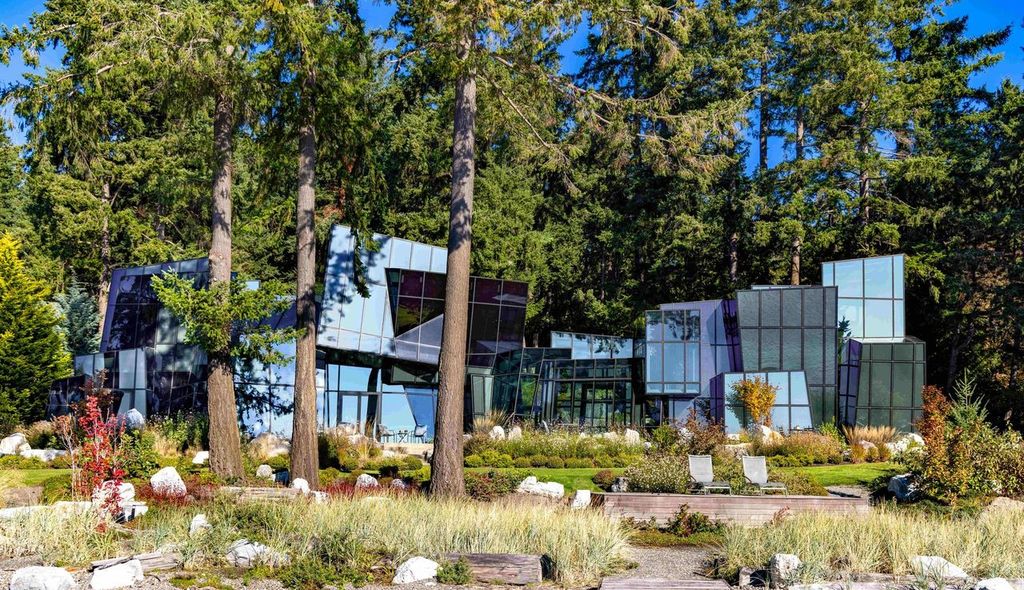
F-House is a 7,300-square-foot private residence on the edge of Lake Washington in Kirkland, Washington. Designed by Goble Berriman Design in a special partnership with glass specialist Pulp Studio, the house was made for a major figure in the development of computer gaming. The client wanted what he described as a crystal house, an idea born from a fantasy world: a broken mass of ice forced up through rocky ground.
“The homeowner had a particular vision which we were honoured to take part in executing. At each phase of the project, we were tasked with maintaining that ‘crystal house’ aesthetic, preserving occupant privacy, delivering material performance and ensuring thermal efficiency.”
Kirk Johnson, Chief Executive Officer of Pulp Studio
Glass on green
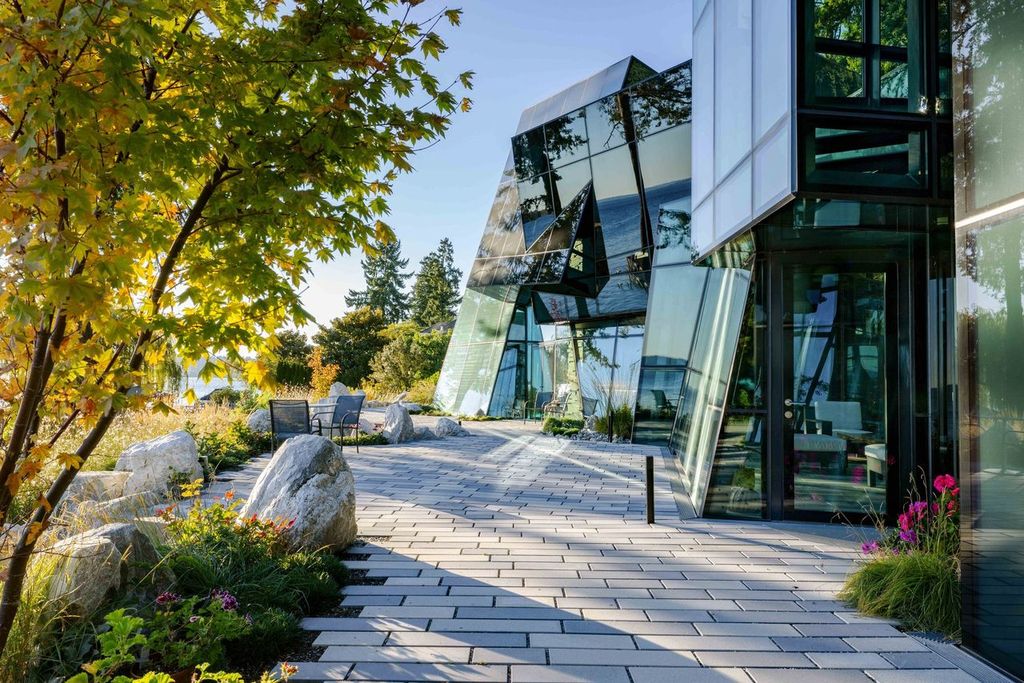
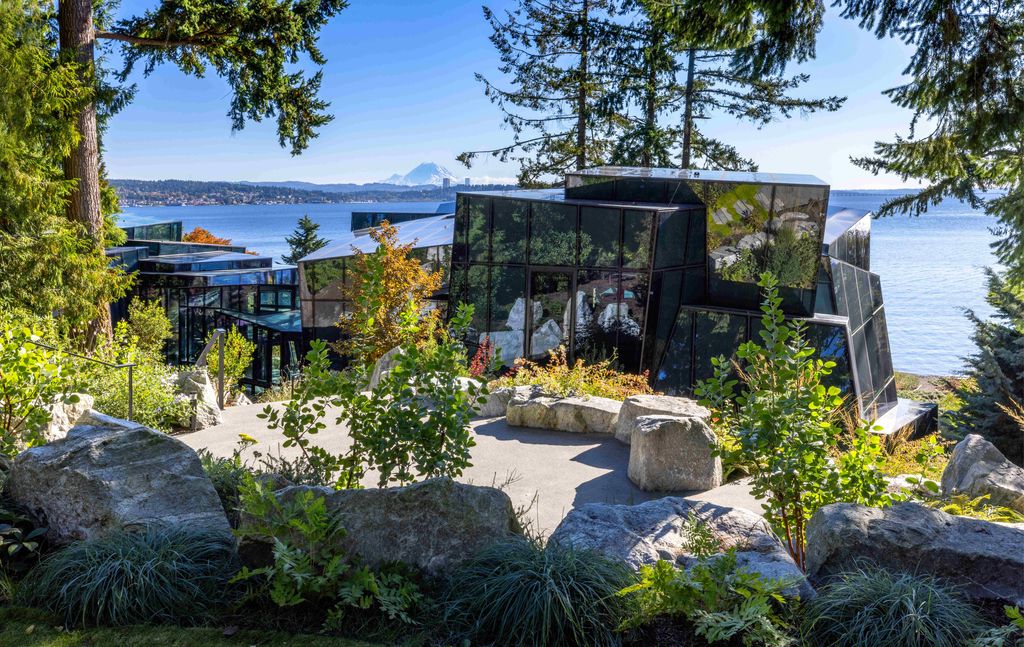
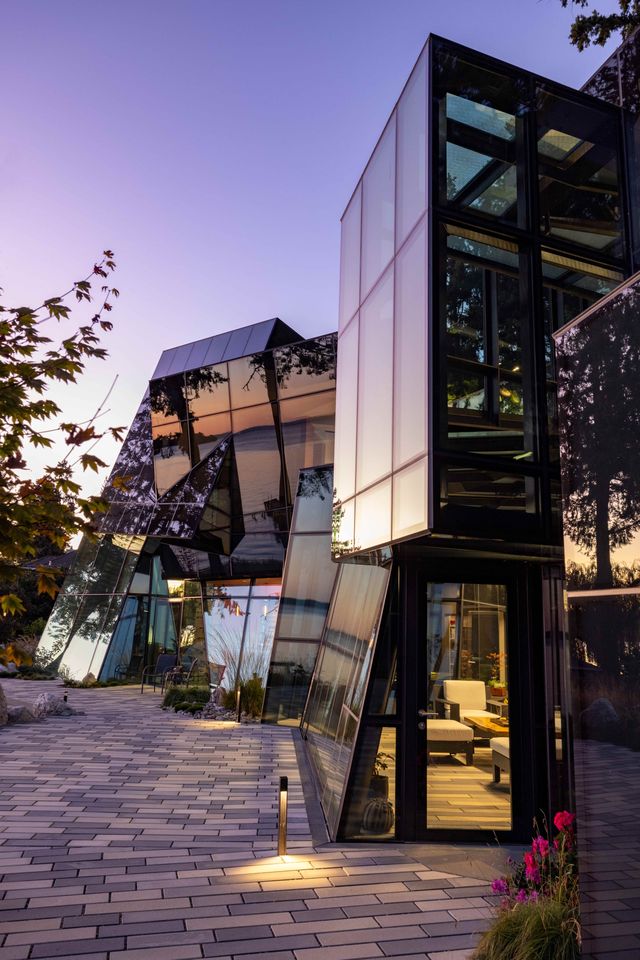
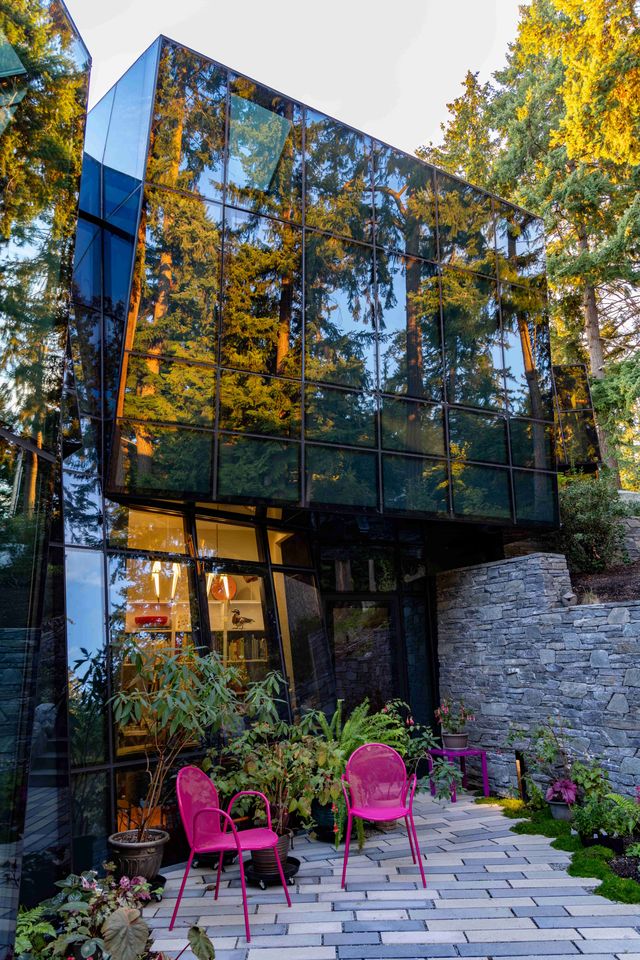
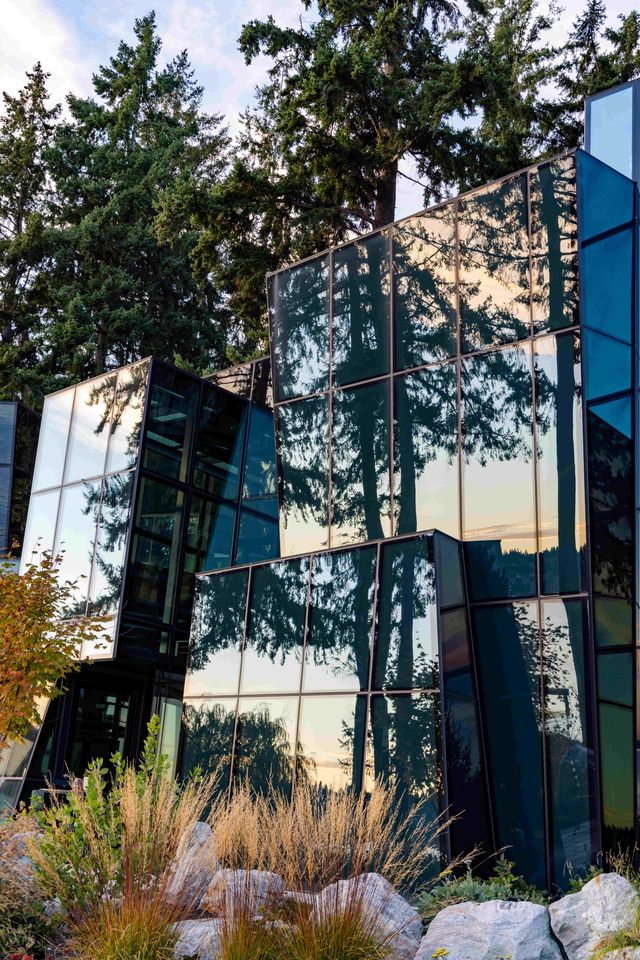
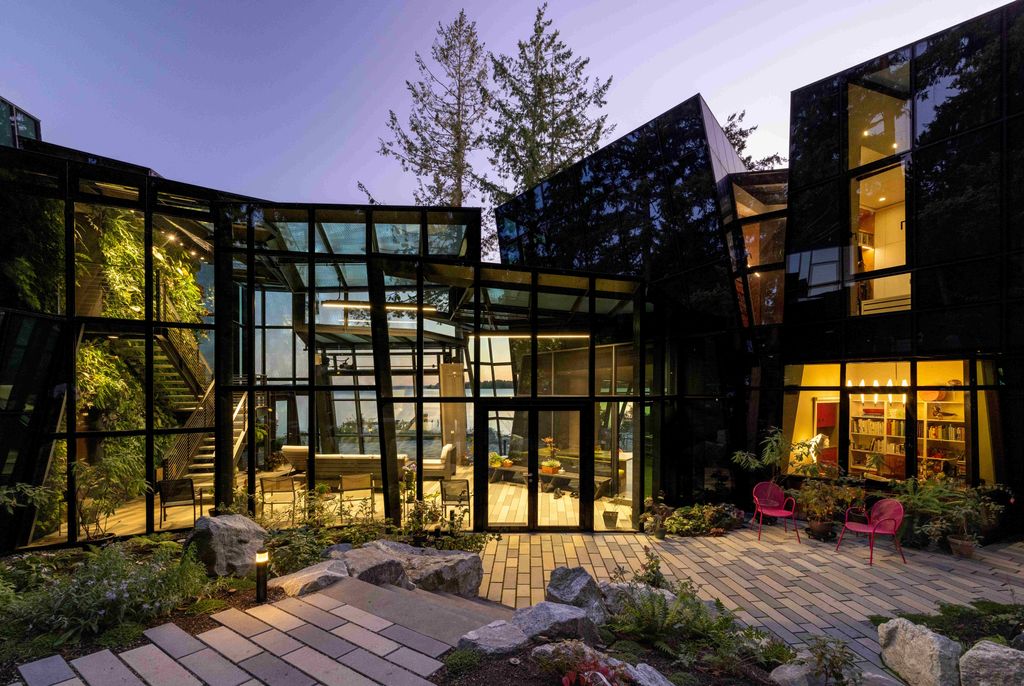
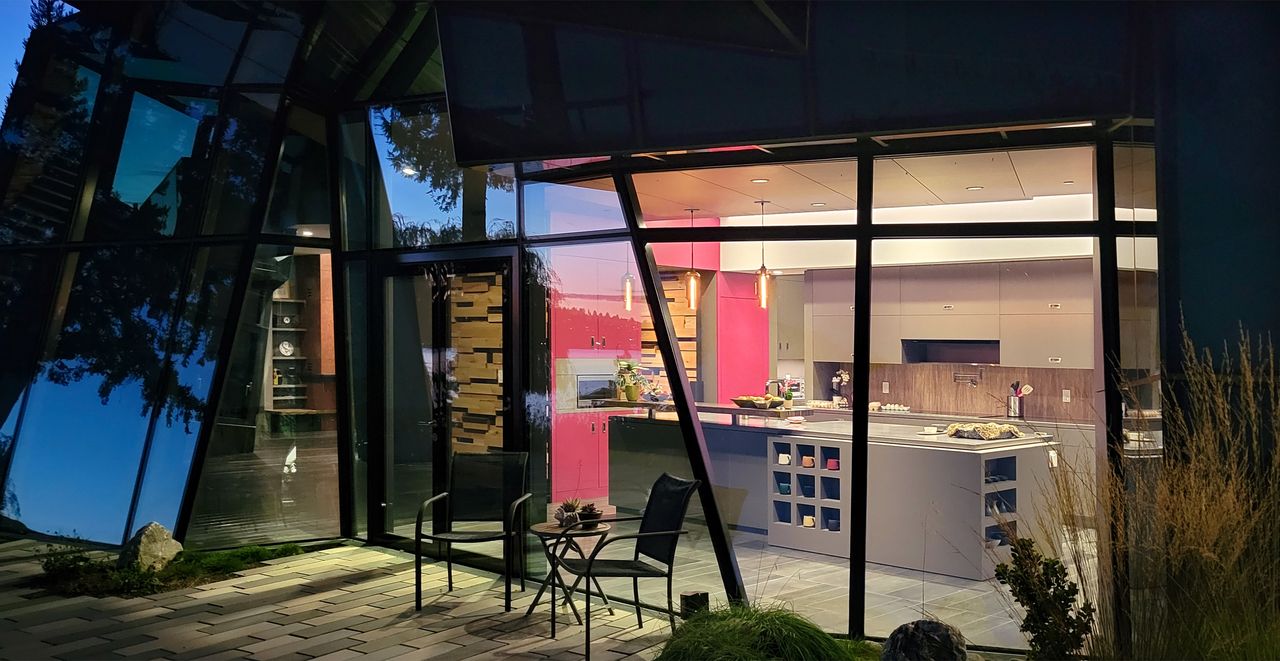
The house is surrounded by dense greenery and natural rock formations, an important design choice as the glass reflects those surroundings across its full surface. Mount Rainier, sitting across the lake and complemented by the water and trees, forms the backdrop of the house, whose sharp glass form stands out against the natural setting.
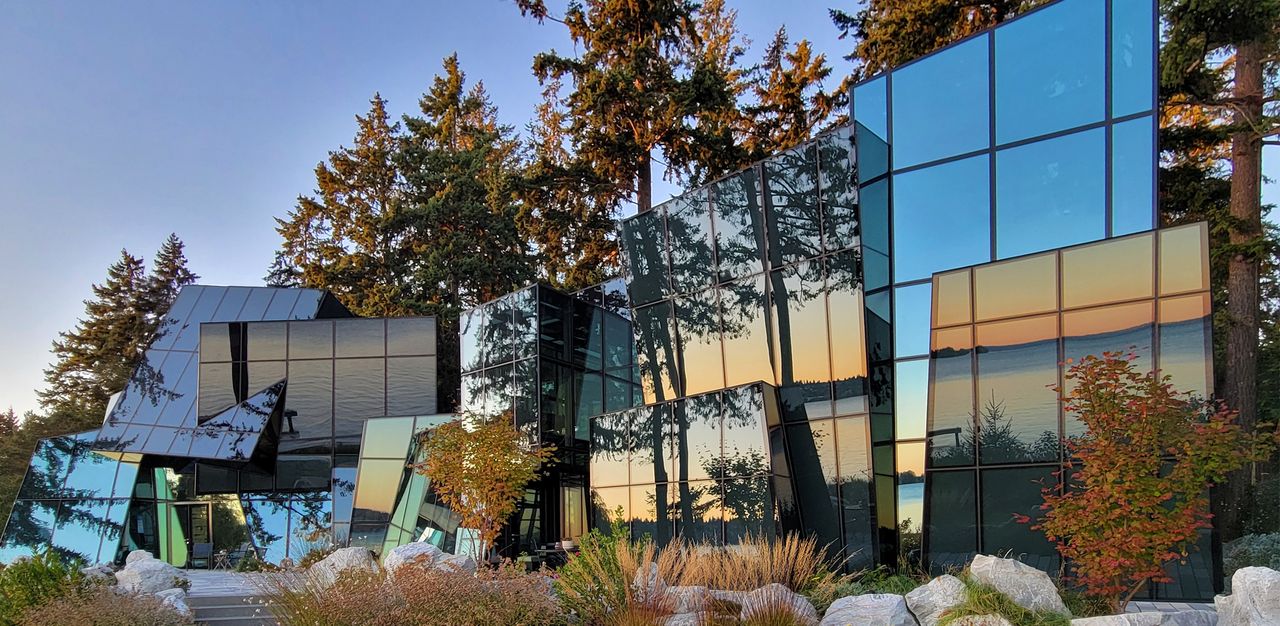
Its outer skin is made only of glass, with no other material used on the exterior. Most of the panels are cut as individual geometric pieces, with only a small number being square or rectangular. Rather than using a repeated form, the façade is assembled from many different shapes, each contributing to the overall crystalline look.
Glass details all around
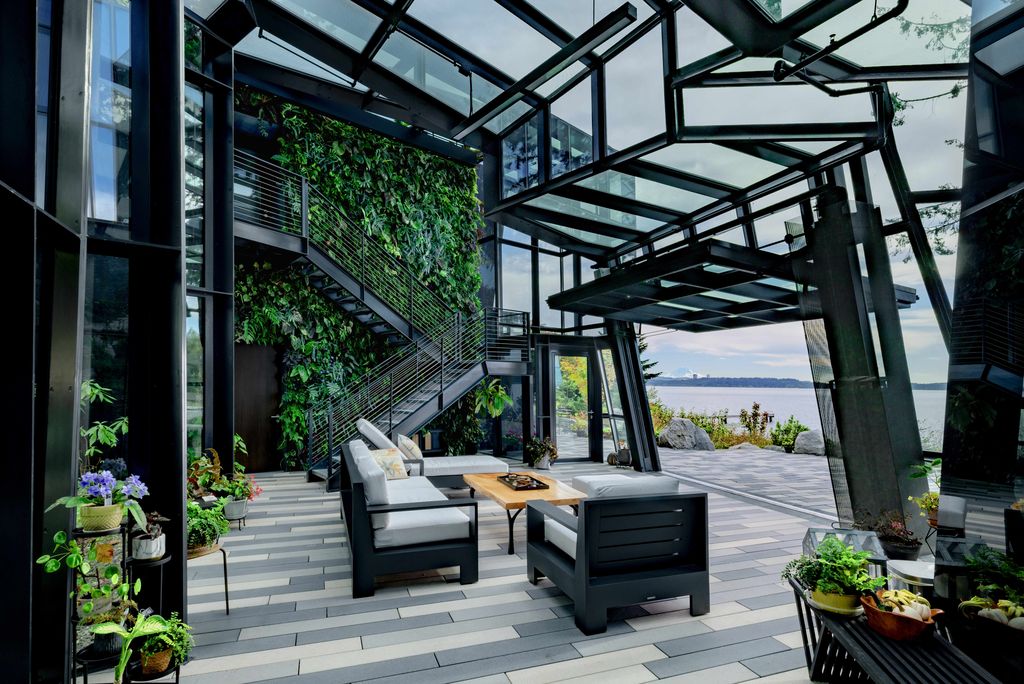
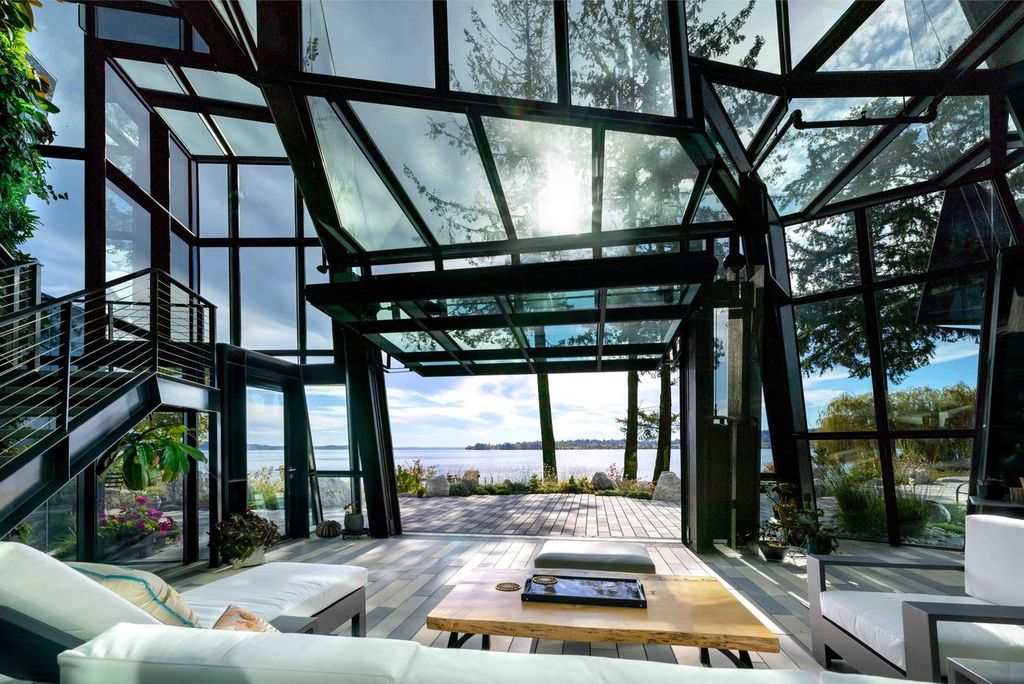
The internal layout was chosen around a winter garden, which separates the main house from the studio and garage. A clear skylight starts at the entrance and continues through the house towards the dining room and the garden terraces. A glass bridge connects the living areas to the master bedroom, helping break the building into connected spaces instead of the typical interior arrangement.
“This project came with unique challenges as it is a private residence and must be considered as such.”
Kirk Johnson
The specifics of working with glass
Pulp Studio developed the custom glass façade with concealed fixings, as each form is supported by a steel structure behind it. To hide these elements and maintain the pristine “crystal house” vision of the client, the company produced direct-to-glass printed borders on every unit. These small details hide the toggles that connect the glass to the structure and cover the drainage channels built into the system.
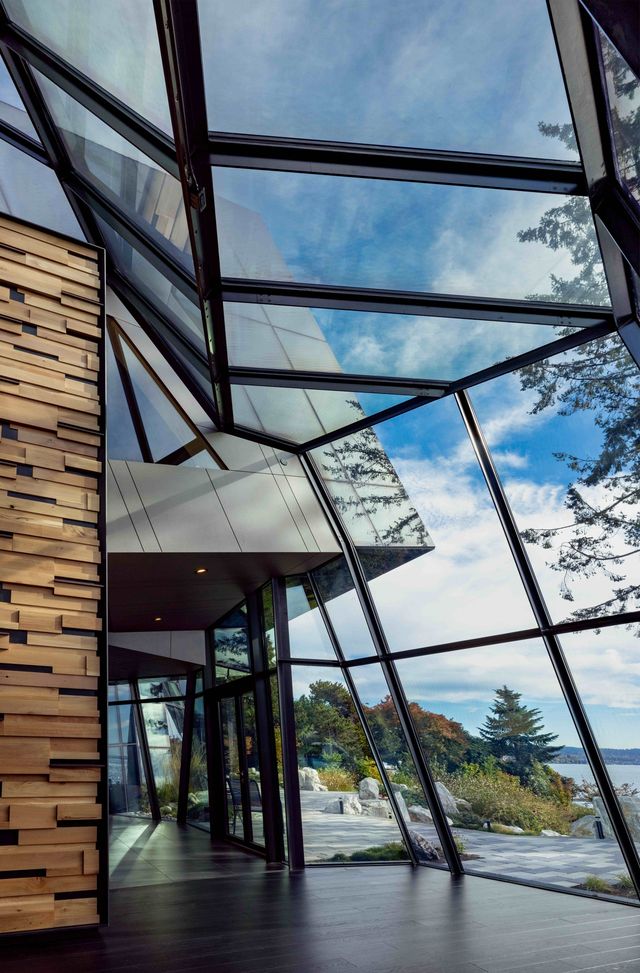
The engineers at Pulp Studio were careful to meet building regulations and thermal performance requirements, having used high-performance low-e coatings throughout. The main house uses double silver-coated glass, while the winter garden uses solar-protected glass chosen for its durability and appearance. Direct-to-glass dot-pattern shading was also added to help control heat gain.
Each glass unit is made of two layers separated by an air gap, with clear, opaque or coloured Saflex interlayers laminated between them. The spandrel panels were insulated with spray foam at the back walls and ceilings. Furthermore, offset edges were used where the glass meets at vertical, horizontal and sloping corners.
Using 3D models for complex designs
All project consultants and contractors relied on an integrated 3D computer-aided design approach to resolve the coordination of the complex design and to document the detailed geometry. This also gave the homeowner a chance to see his vision as it was virtually constructed, ensuring each detail lived up to the standards he had long been imagining.
“With 3D goggles, the homeowner had been walking through the house almost from the beginning of the design.”
Stuart Berriman, Goble Berriman Design
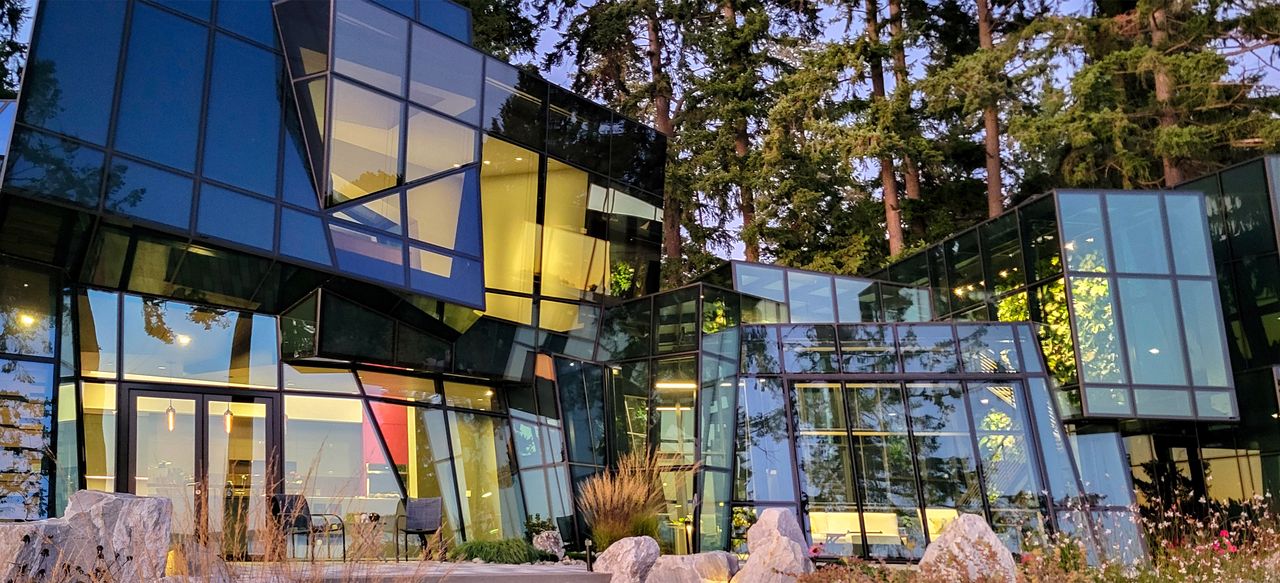
“After years of design and construction, this home marks a visual and functional representation of what is possible in the residential design industry.”
Kirk Johnson
“It would have been hard to do this project without a partner like Pulp Studio,” Berriman said. “One of the things is when you look at the images and think, ‘Wow, that looks really complicated’. It’s actually way more complicated than that. Most bits of glass were unique in how they were manufactured, and Pulp Studio has that expertise and computerised design. We couldn’t have done it any other way.”


