



Header: Joe Fletcher Photography
High up in the Sierra Nevada mountains, three million years of history have dictated the layout of a remarkable new home. Sitting at an altitude of 6,300 feet, Lookout House occupies a steep slope at the foot of an extinct volcano. The landscape is a rugged mix of volcanic sediment and massive boulders, some measuring nearly five metres across. Tall Jeffrey pines and white fir trees grow here, their straight trunks providing a sharp vertical contrast to the 20-degree incline of the ground. Faulkner Architects took these natural cues to create a building that feels like it belongs to the earth.
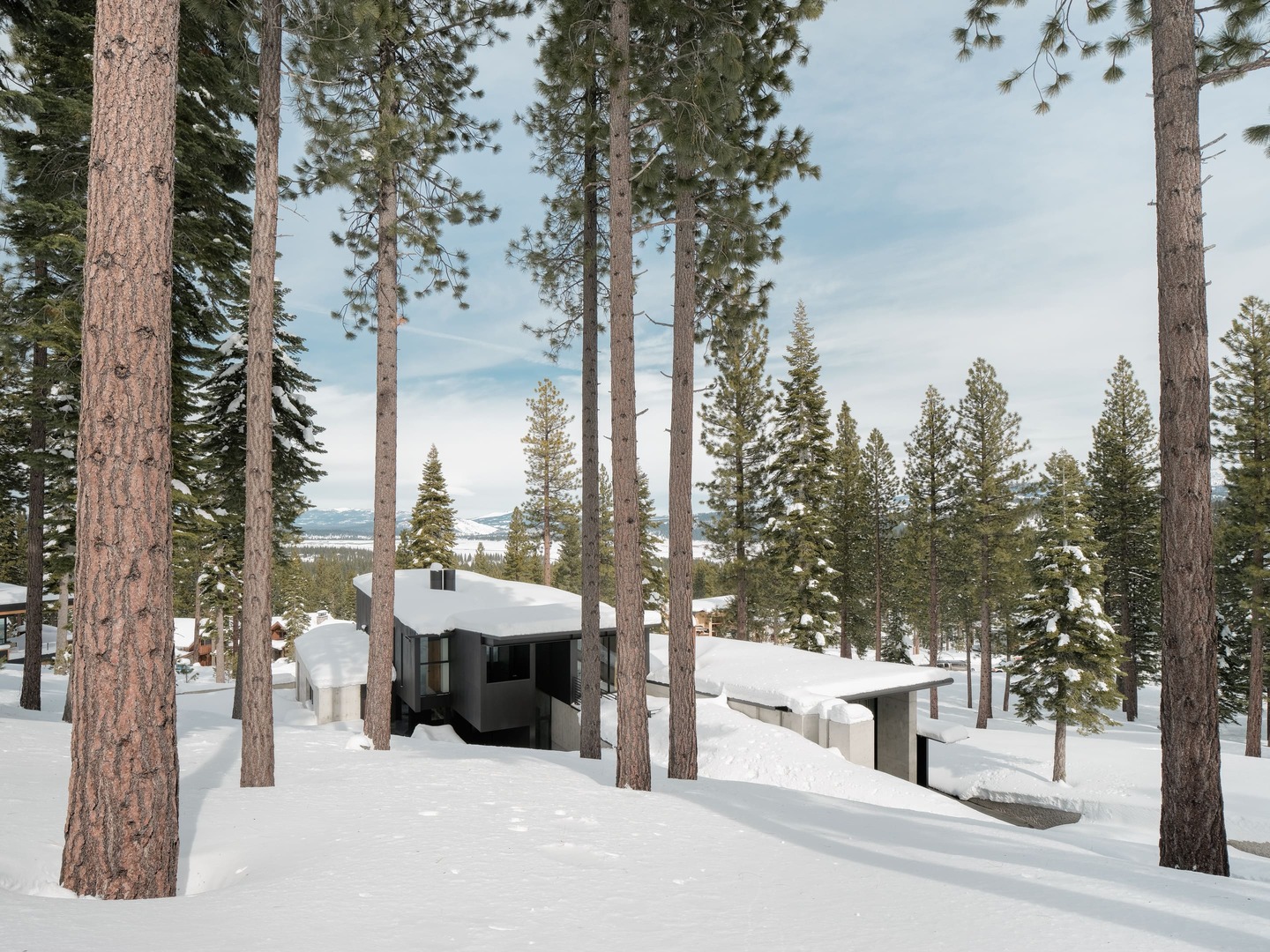
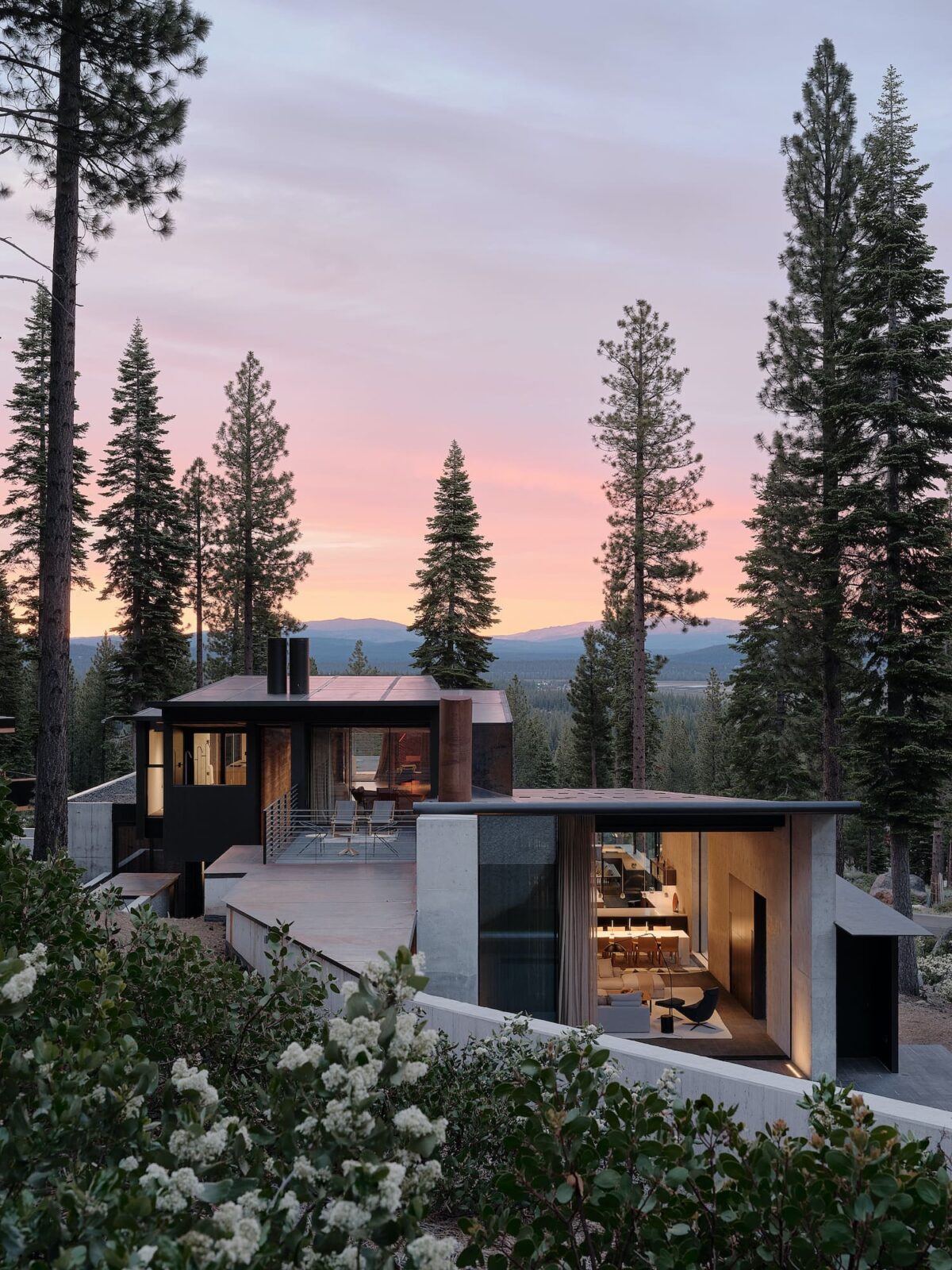
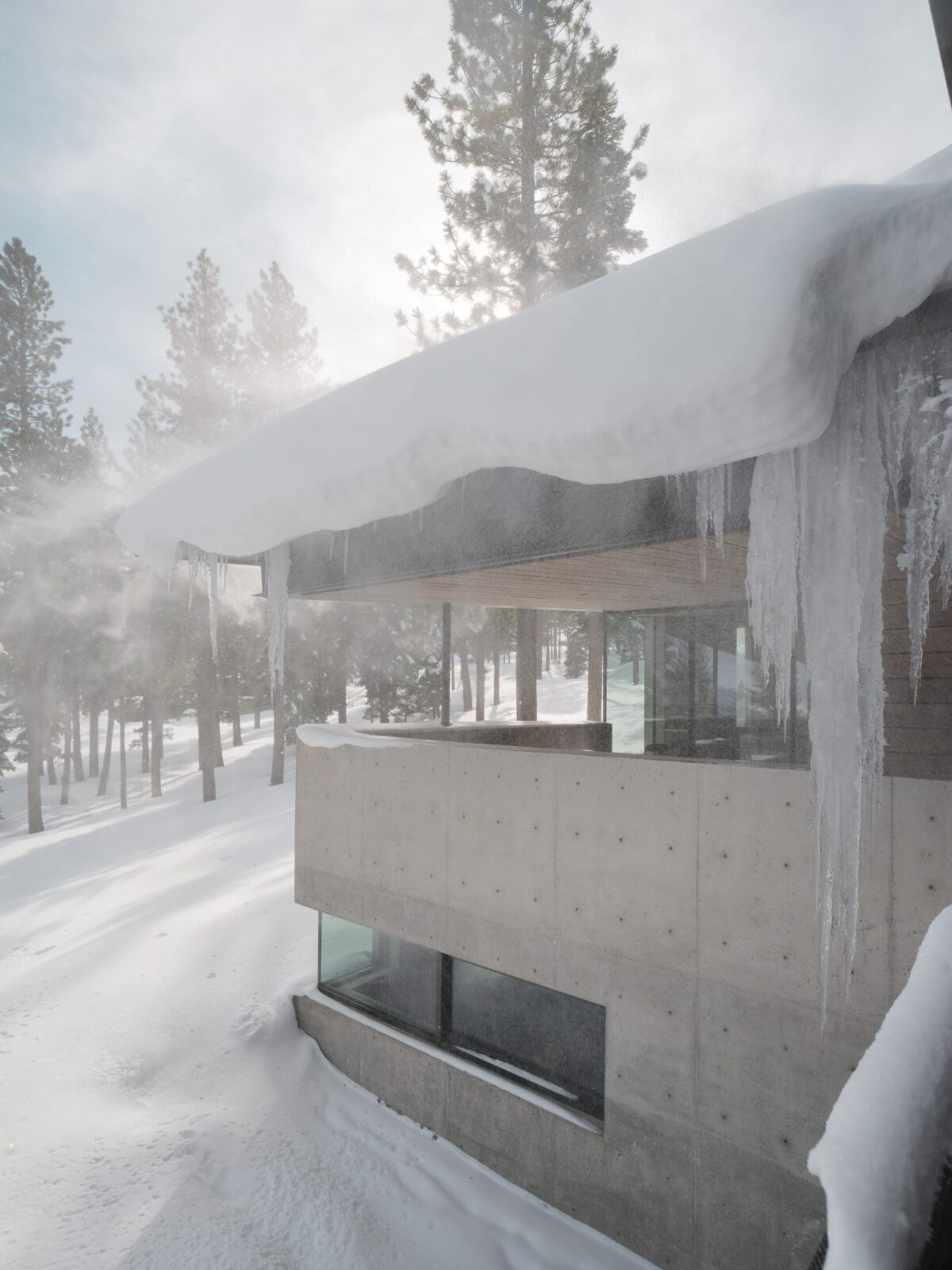
Concrete walls and ski run views
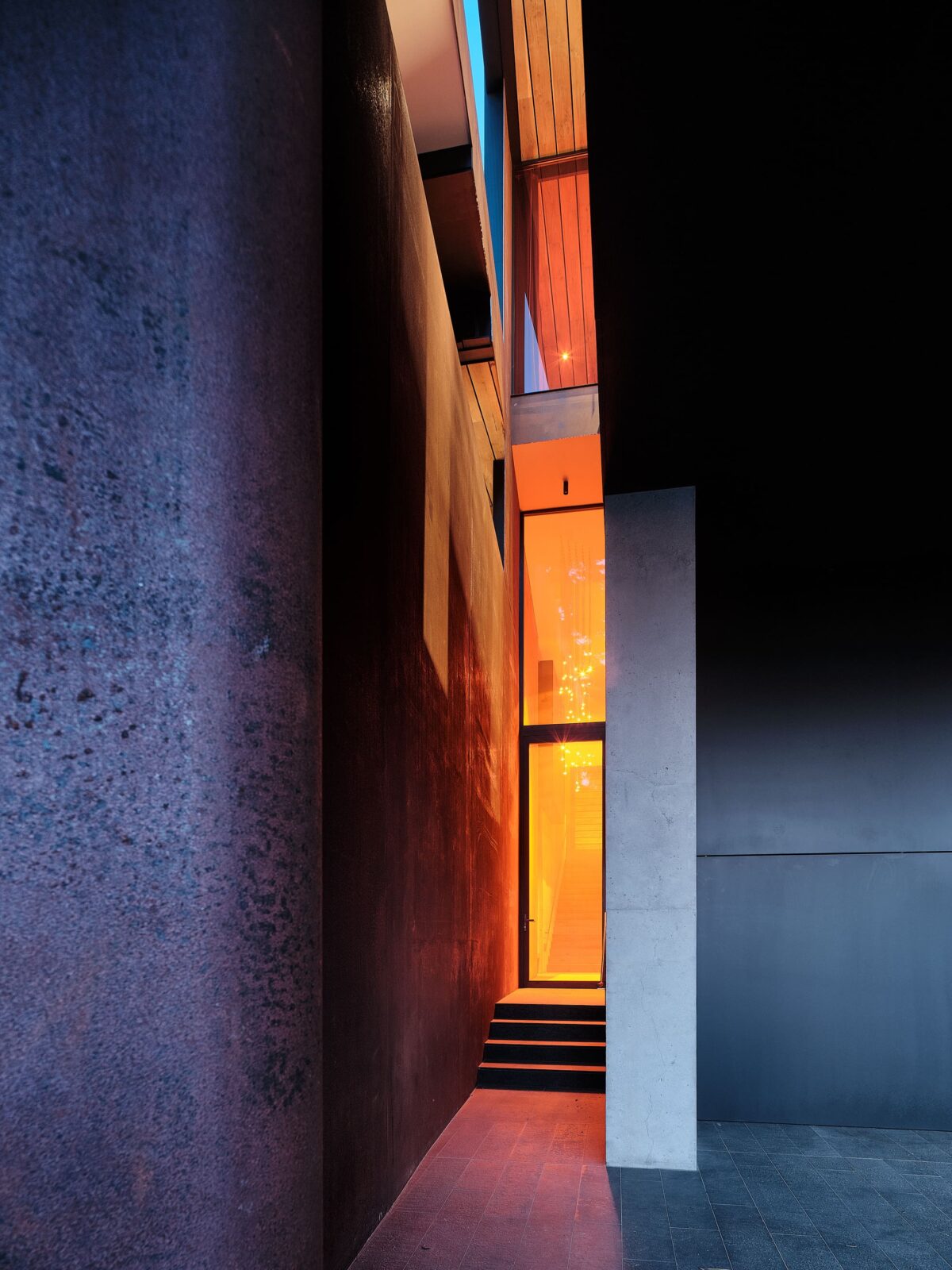
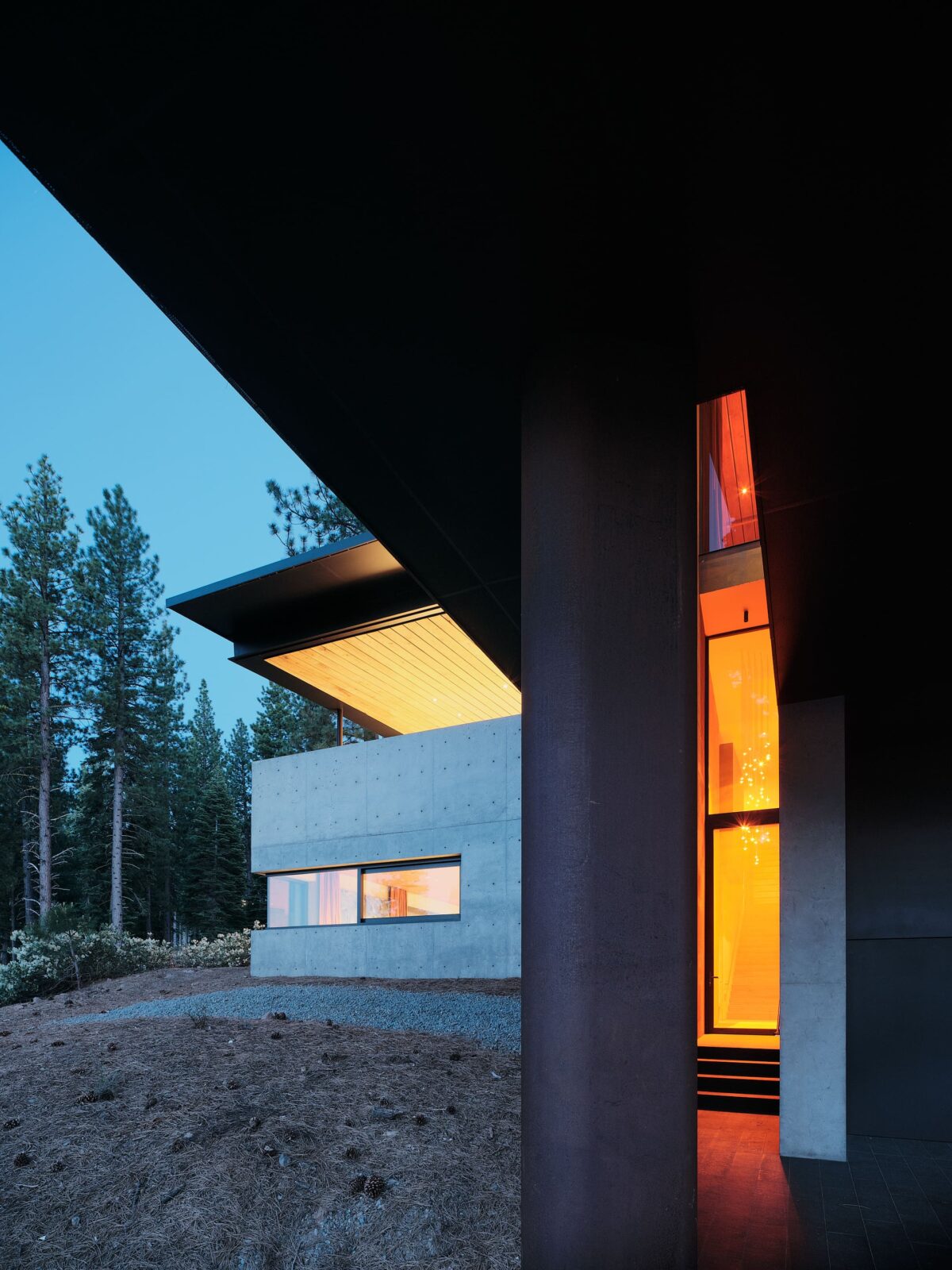
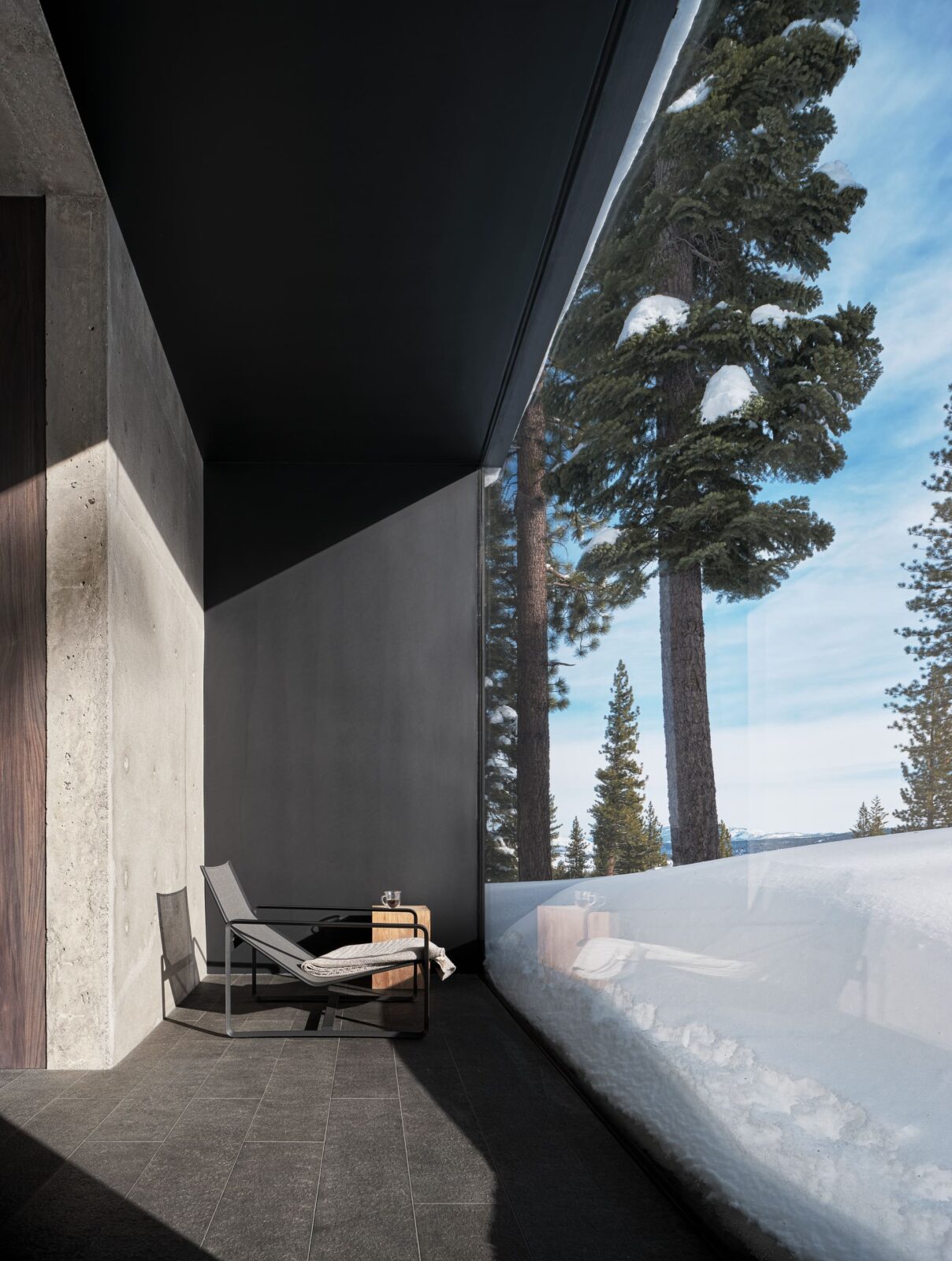
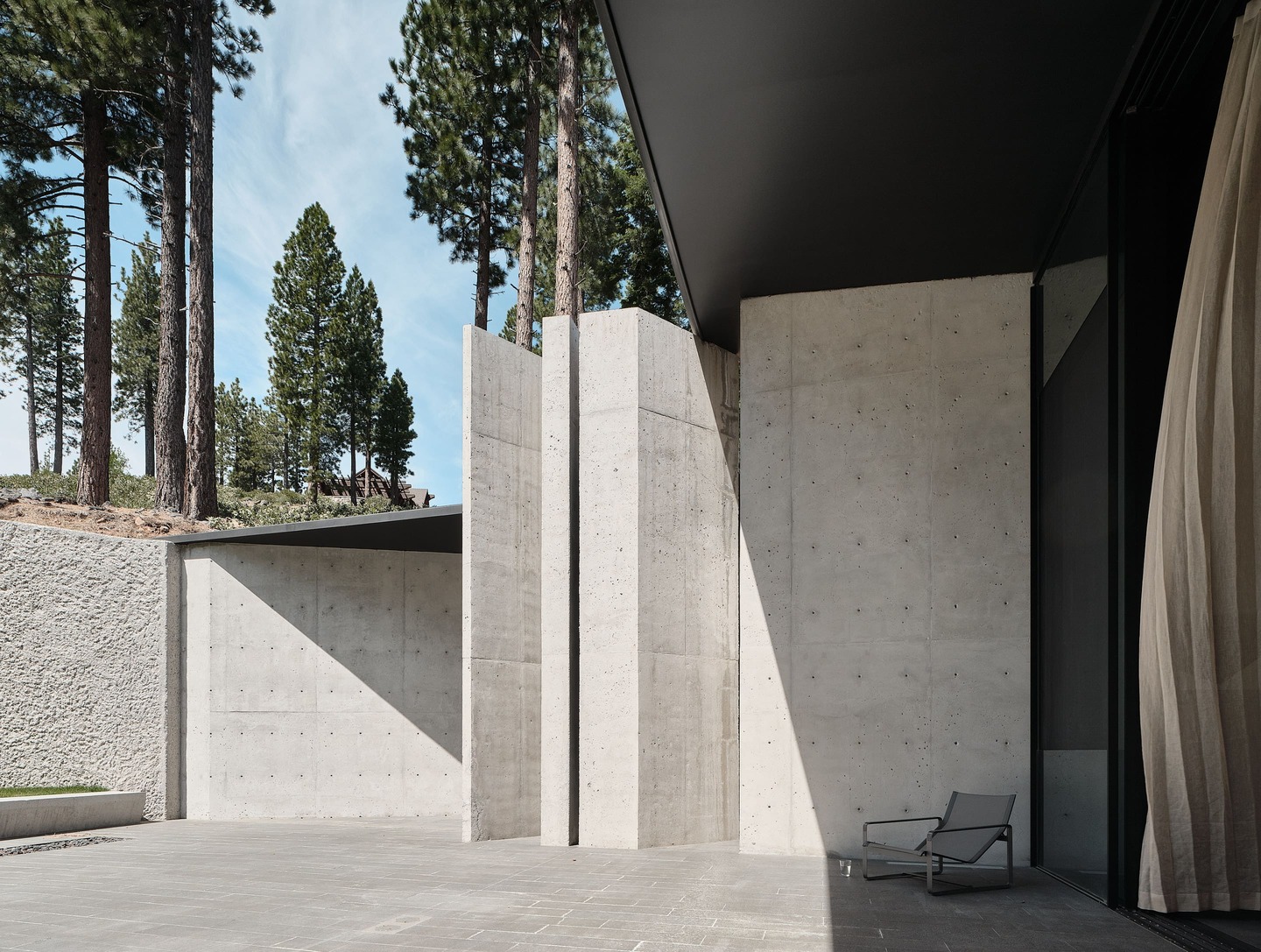
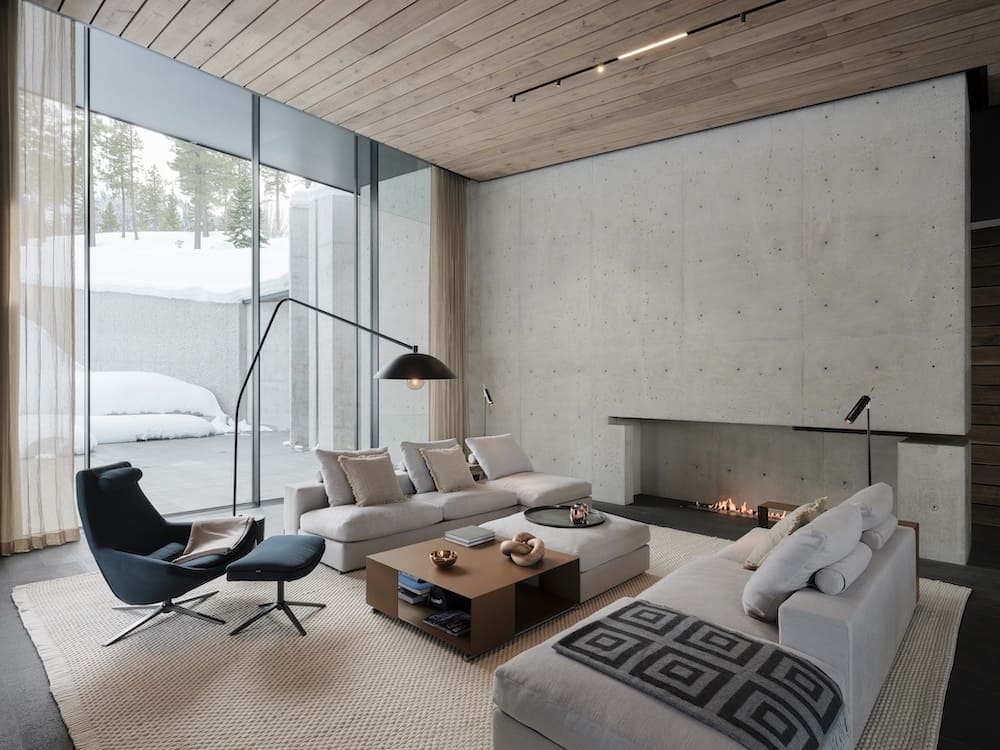
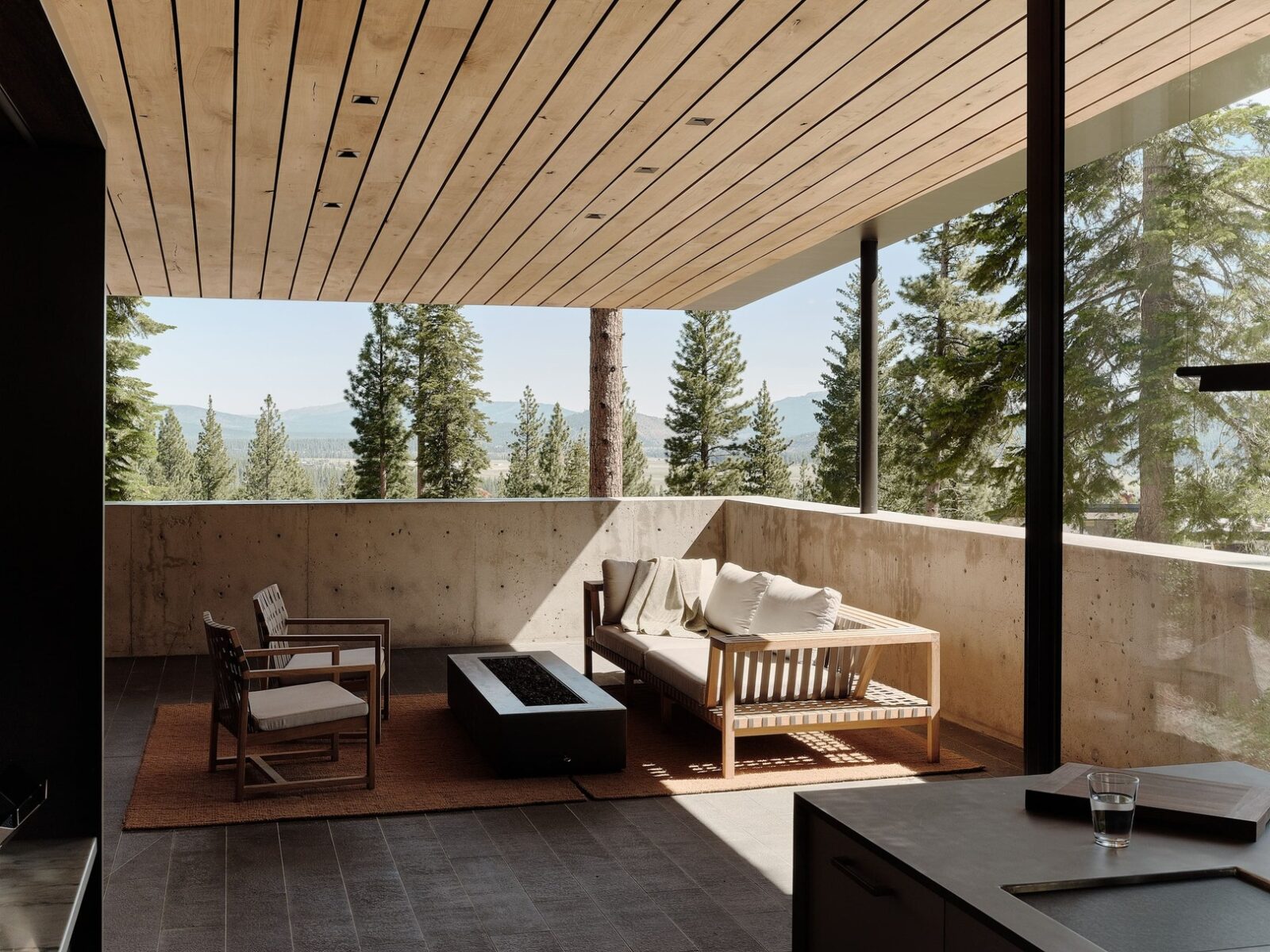
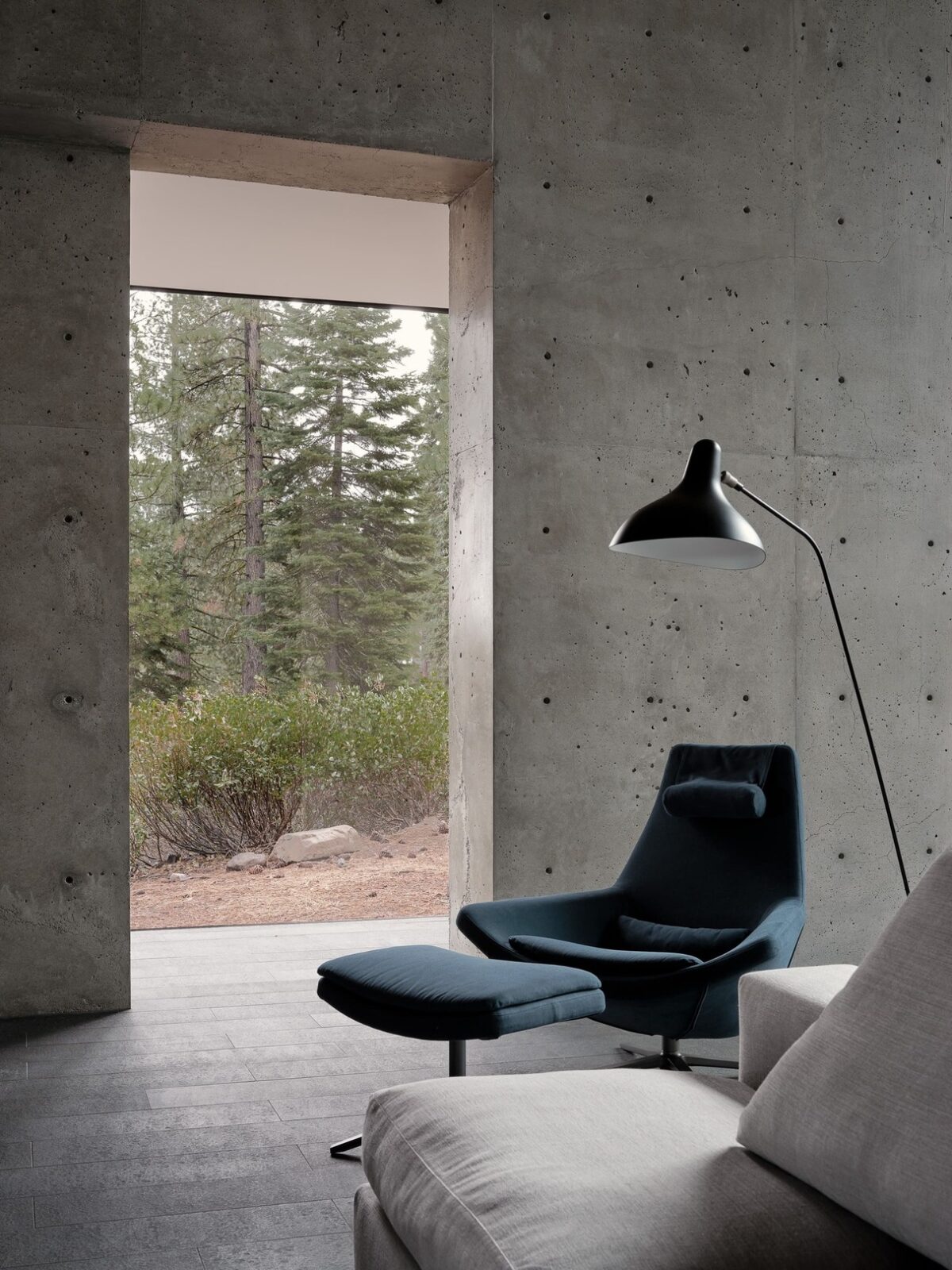
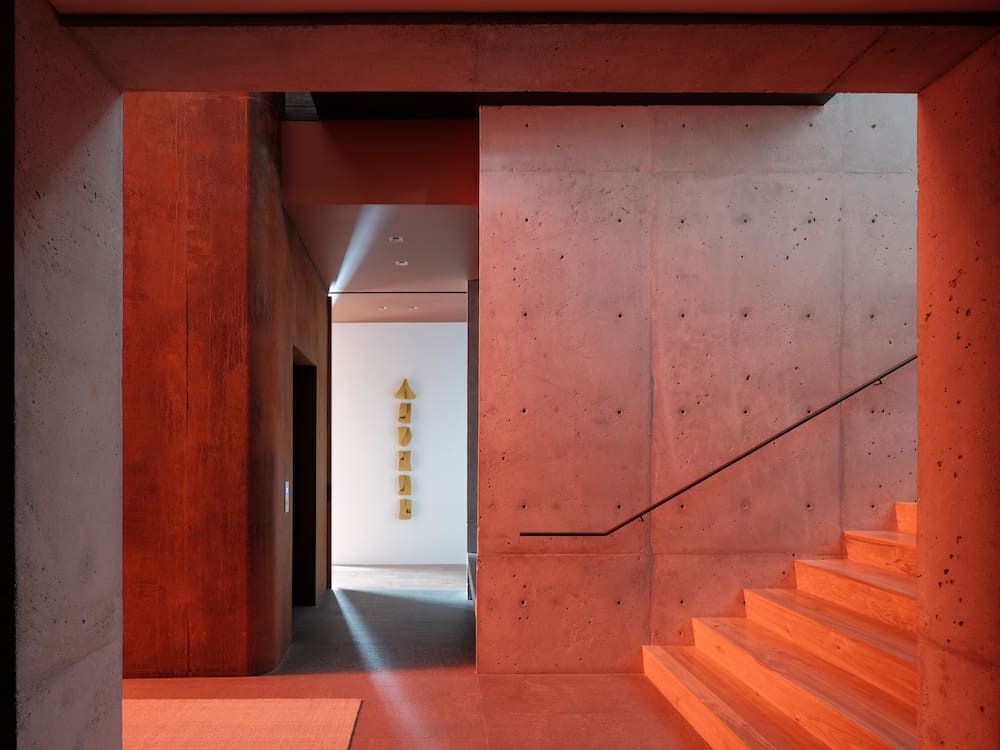
The structure is defined by 20-inch-thick insulated concrete walls, made using sand and stone sourced from the local area. These heavy walls also extend out into the hill to create sheltered outdoor areas. The architects left a three-metre gap where these walls meet the slope, allowing the mountain’s natural grade to pour right into the heart of the building’s shape. Because the house sits next to a cleared ski run, the team designed a long, narrow slot through the middle of the floor plan. This architectural gap mimics the open space of the ski path outside and helps divide the different living areas while keeping them connected.
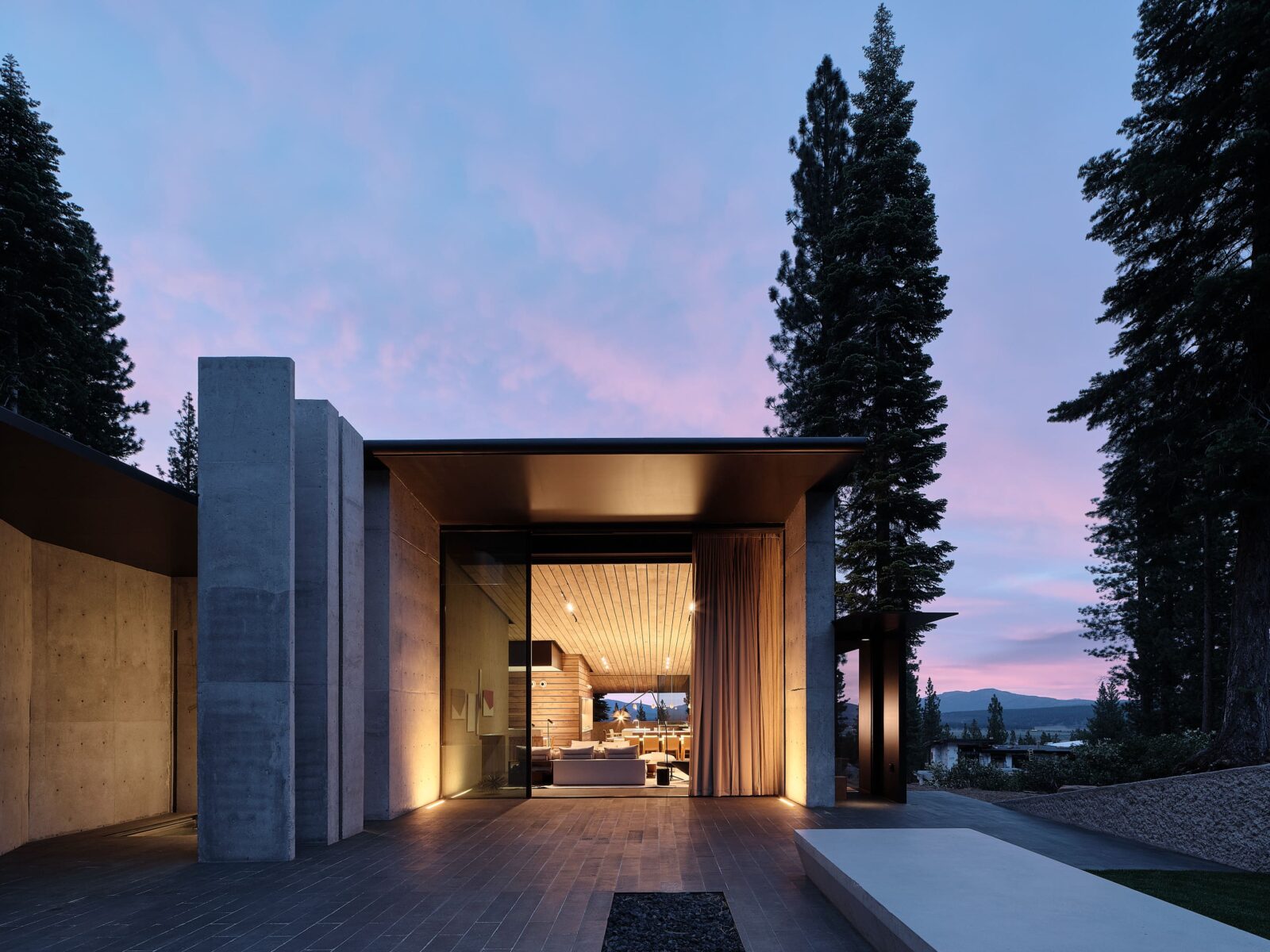
The glow of cooling magma
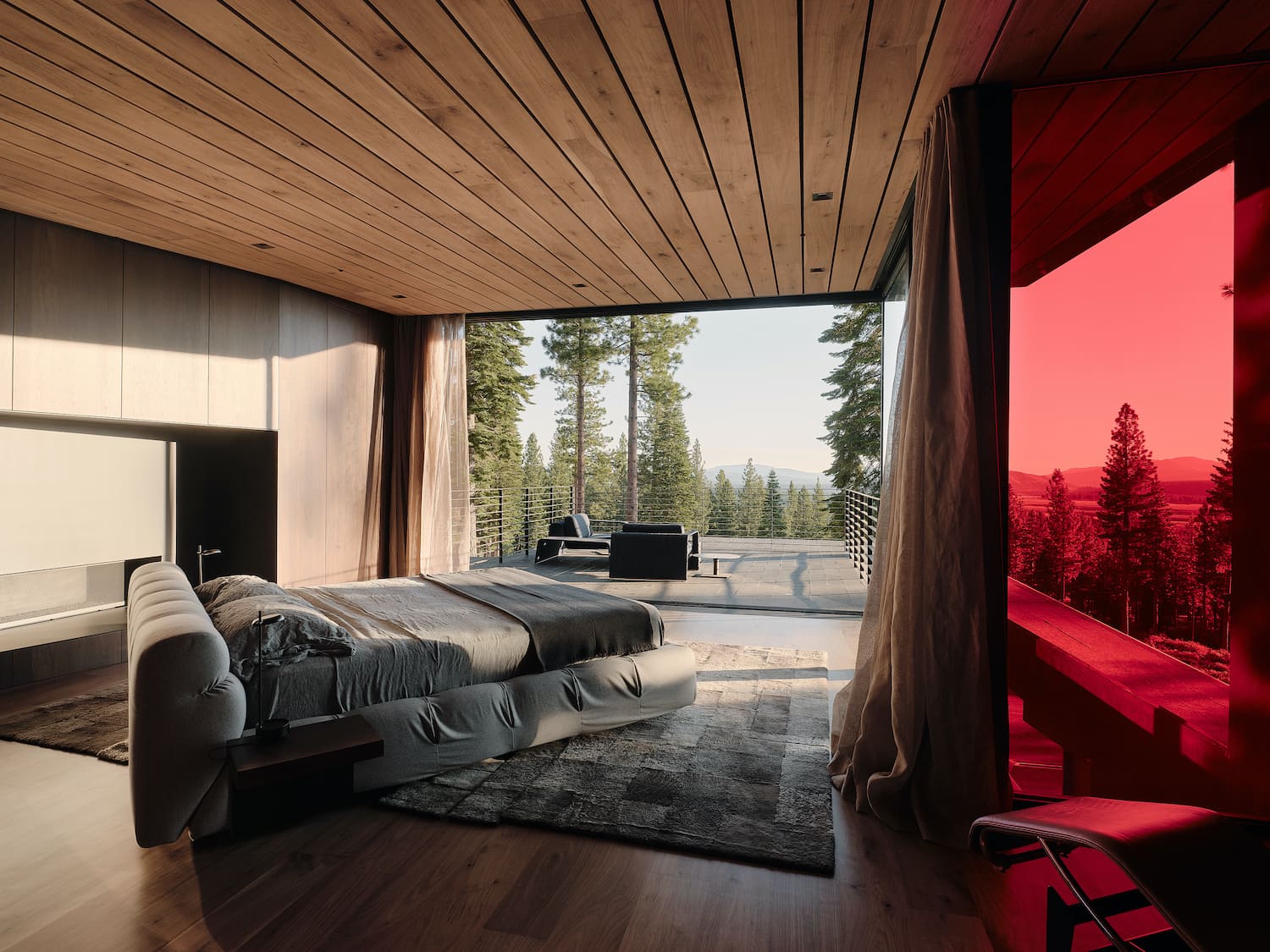
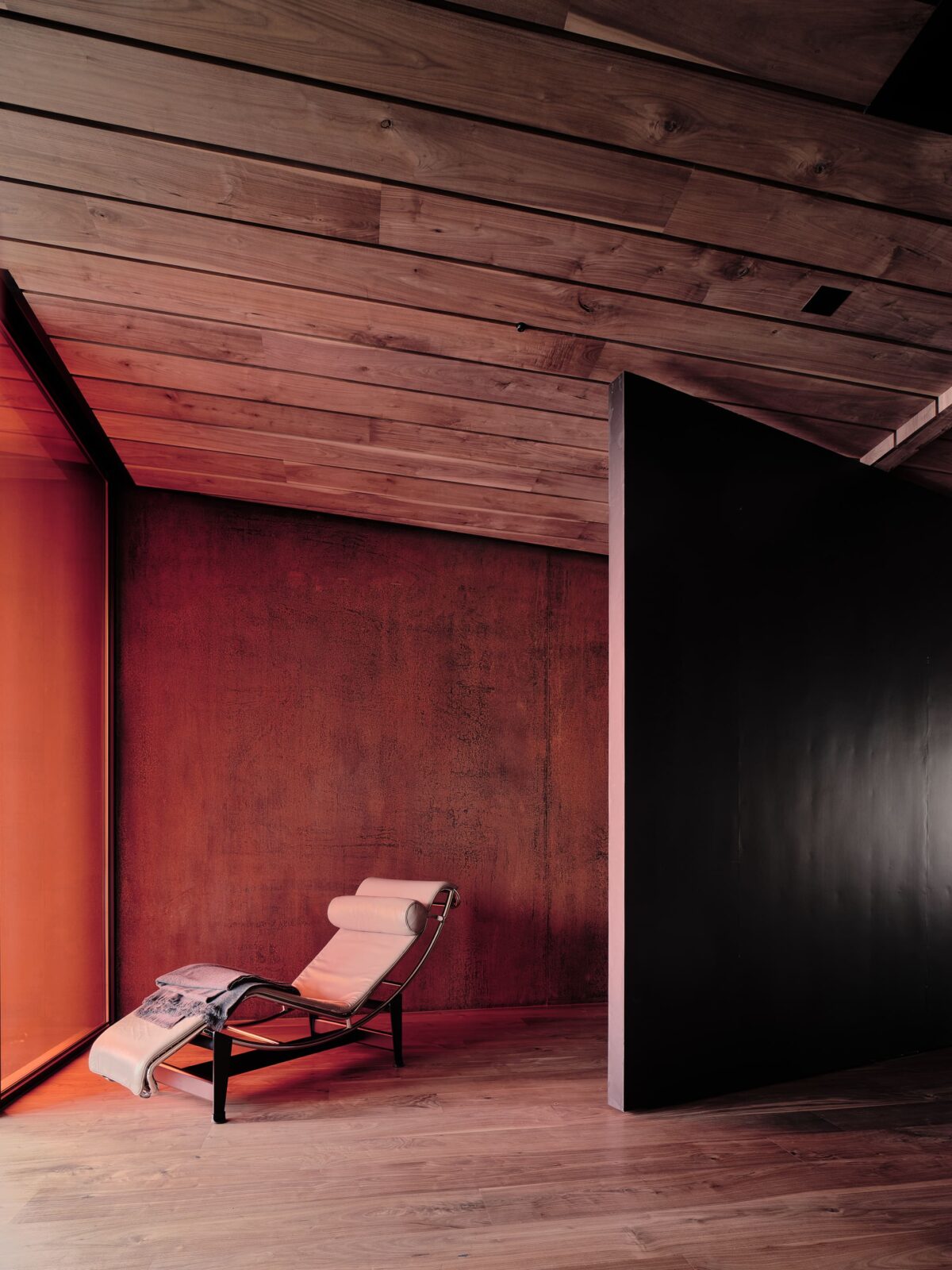
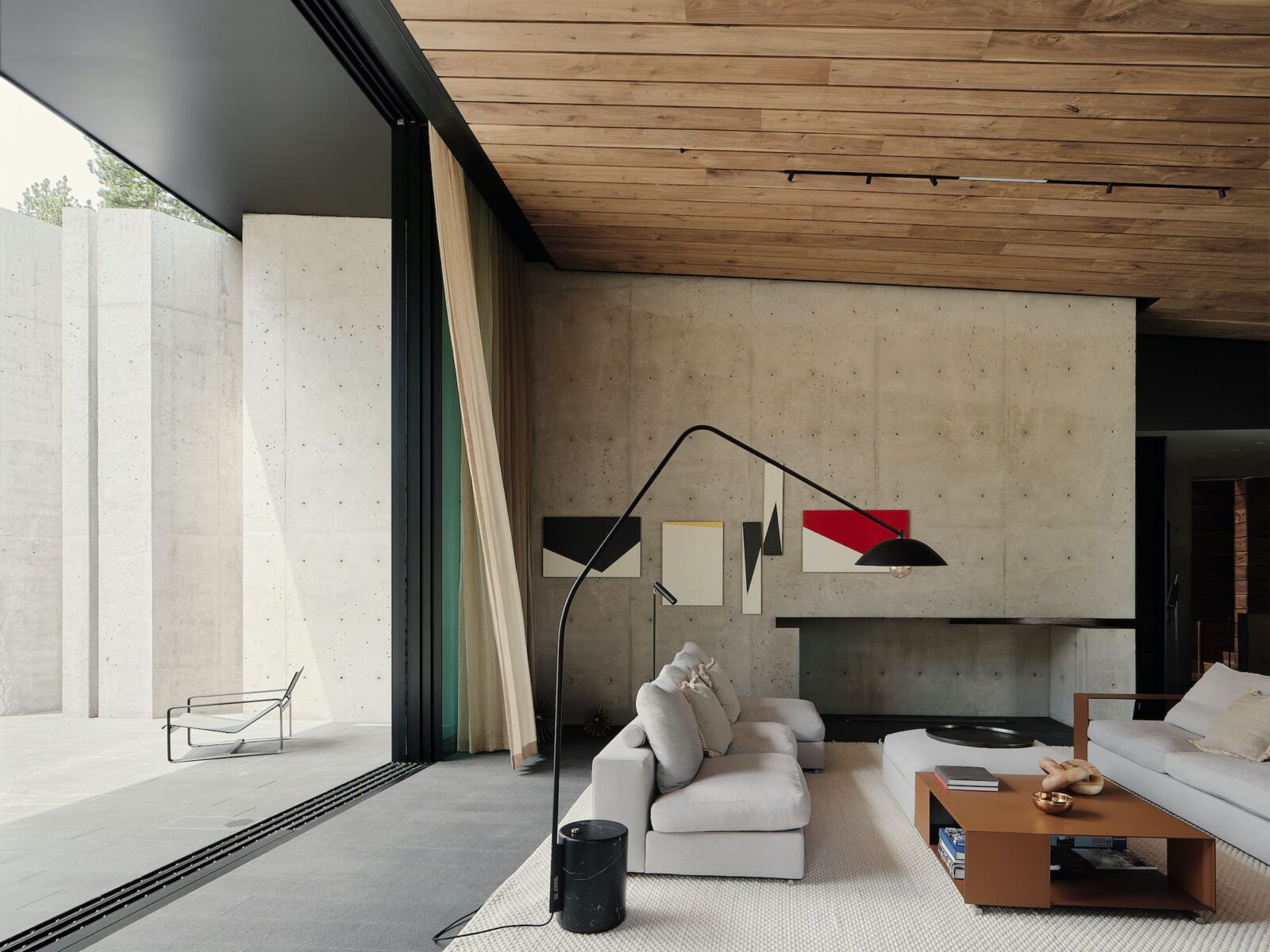
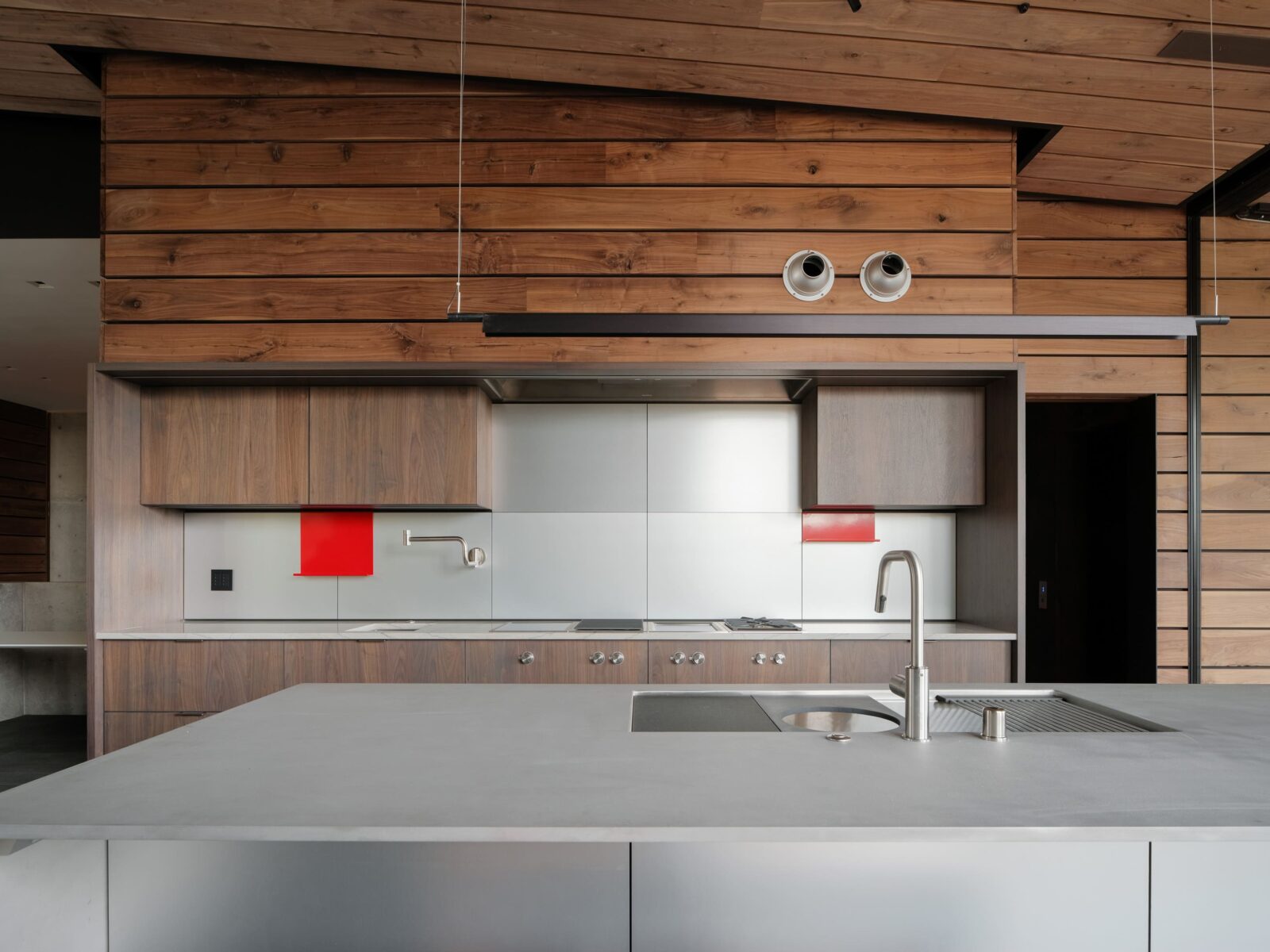
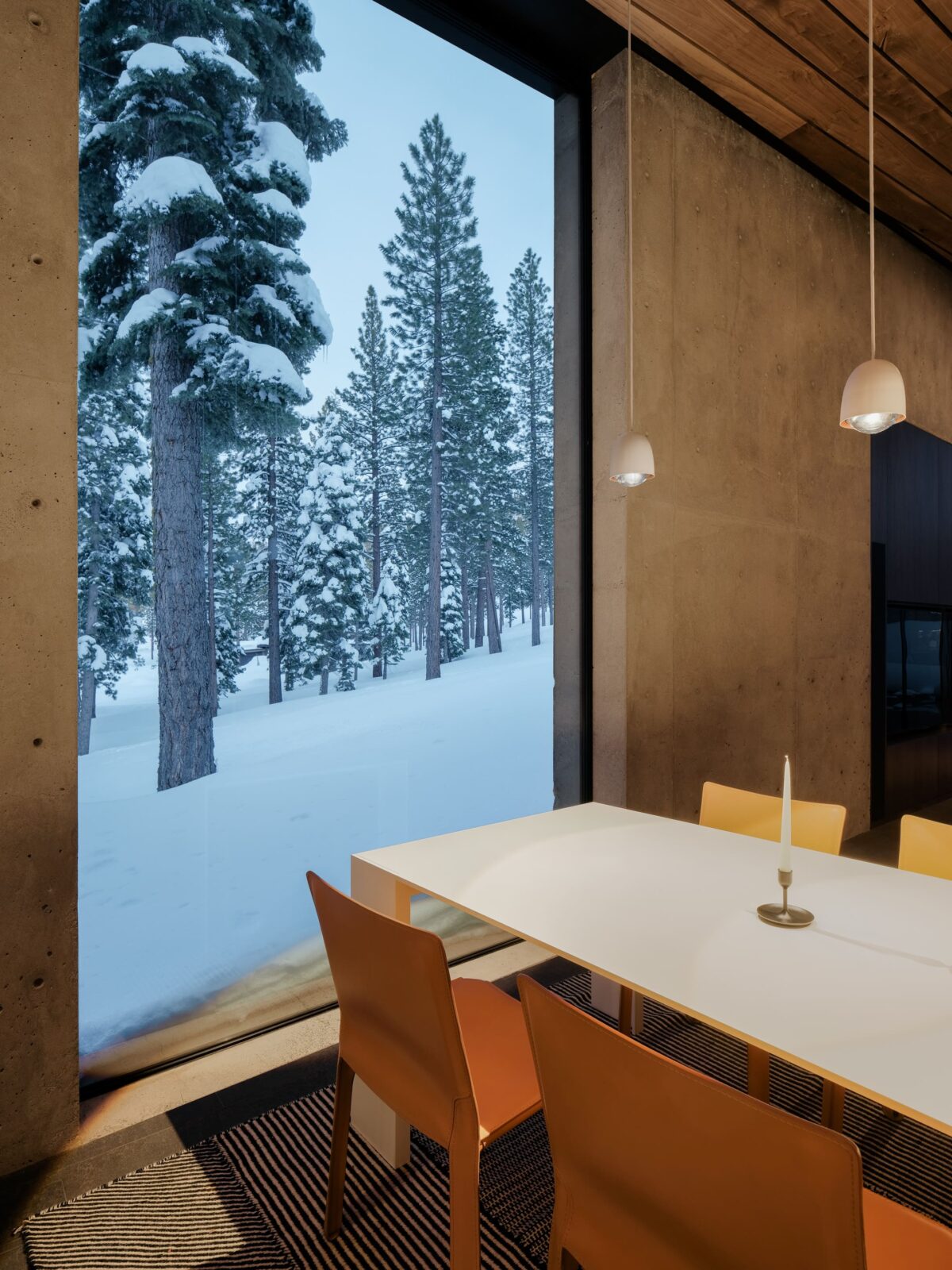
One of the most distinct features of the house is the use of red-orange glass. This choice isn’t just for show; it is a direct nod to the red-hot magma that once flowed across this land. This glass fills the entrance and the central staircase with a warm, amber light that feels inviting against the cold mountain air. Inside, the main living area feels like a traditional, compact ski cabin where cooking and relaxing happen in one big room. For peace and quiet, the bedrooms are tucked away behind a screen made of California walnut, which was specially designed to block out noise.
Built for fire and frost
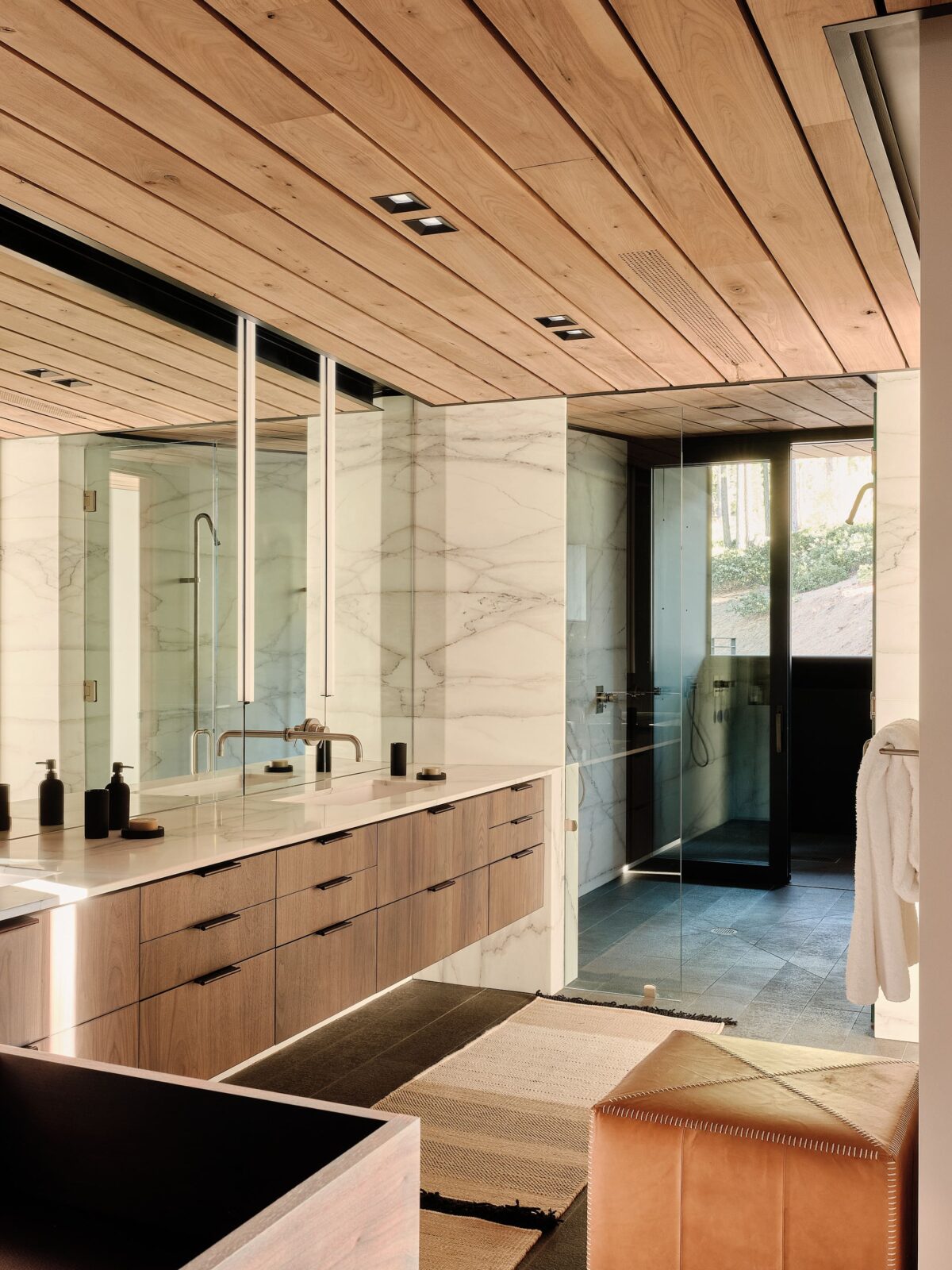
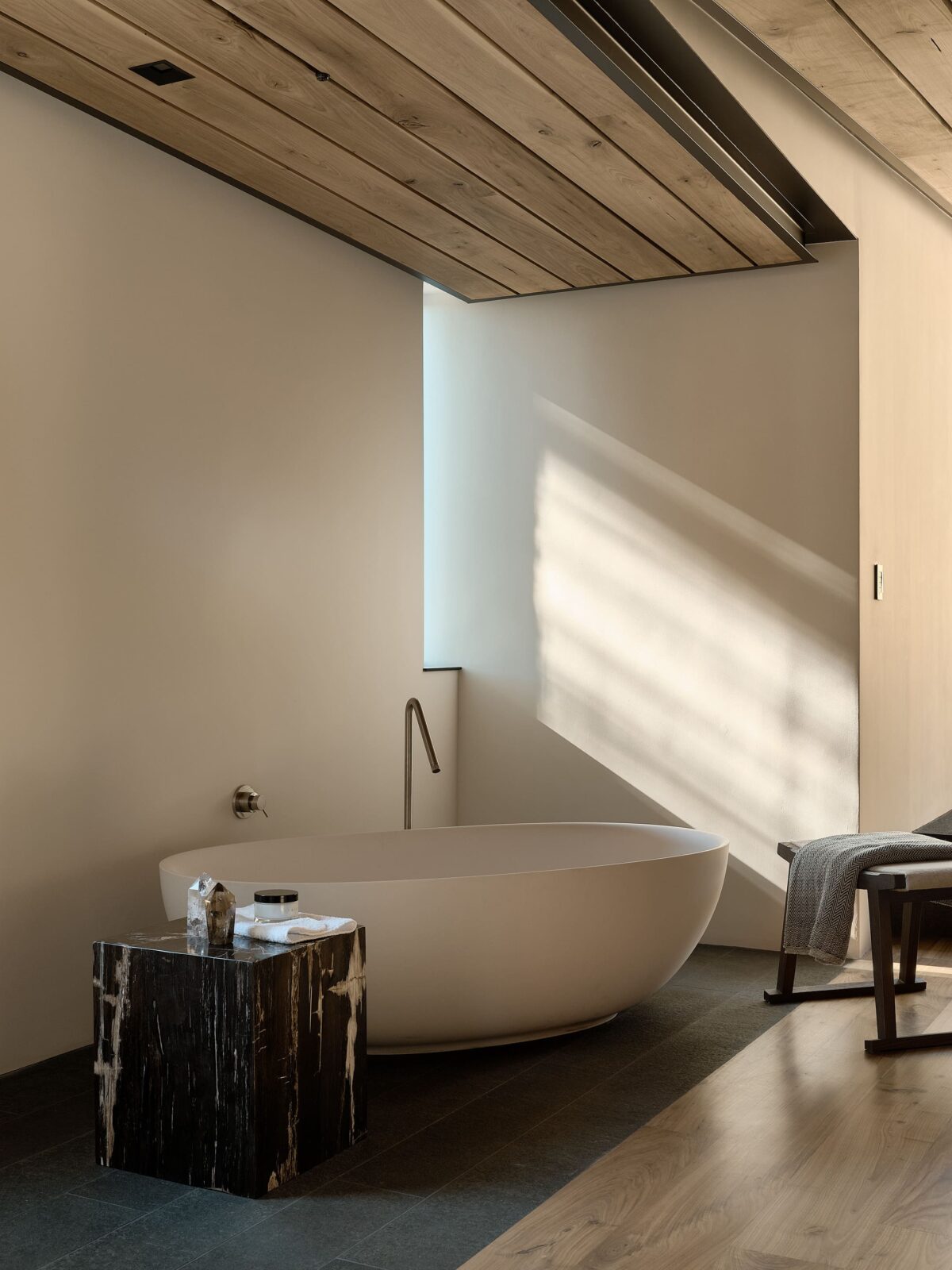
Living in the California wilderness requires a design that can handle extreme weather. The house features a minimal palette of concrete, steel, and glass, chosen because these materials are easy to look after and can stand up to the threat of wildfires. On the floors, the architects used basalt stone to match the dark volcanic rocks found scattered around the trees outside. To keep the heat in during harsh winters, the roof has incredibly thick insulation, and the floors are warmed by a radiant heating system.
Hidden rooms and mountain access
The lower part of the house is tucked into the earth, containing a garage, a playroom, and a dedicated locker room for ski gear. From here, a vertical path leads up through the house and exits directly onto the slope. This allows the owners to click into their skis and head straight onto the mountain from their own doorstep. Every detail, from the height of the windows to the choice of wood, works to turn a difficult, rocky site into a functional and sturdy retreat.
Lookout House is a great example of how local history and geography can lead the way in modern architecture. By using the very stones and slopes that define the Truckee landscape, Faulkner Architects created a home that is tough enough for the mountains but warm enough for a family. It ignores passing trends in favour of heavy concrete and deep-red glass, resulting in a building that feels as permanent as the volcano it sits upon.
Project info
Architecture: Faulkner Architects
Faulkner Architects project team: Gregory Faulkner, Christian Carpenter, Jenna Shropshire, Gordon Magnin, Darrell Linscott, Breanne Penrod, Garrett Faulkner.
Interior and Lighting Design: CLL Concept Lighting Lab, LLC
Civil Engineering: Shaw Engineering
Structural Engineering: CFBR Structural Group
Mechanical, Plumbing and Electrical Engineering: MSA Engineering Consultants
Energy Modeling: MSA Engineering Consultants
Contractor: Rickenbach Development and Construction, Inc.
Photography: Joe Fletcher Photography


