



Header: Yoon, Joonhwan
6³, also known as “6의3승” and associated with Cafe 6”’, is a commercial project by On Architects Inc. in Ilsan-dong, South Korea, with Jung Woongsik as lead designer and Kim Namsu, Kim Hyukgi, Kim Minseong, Choi Seungwoo and Jeong Mingi as part of the design team. The project is one of the most recent LIT Lighting Design Awards winners, specifically in the “Architectural Design – Commercial” category.
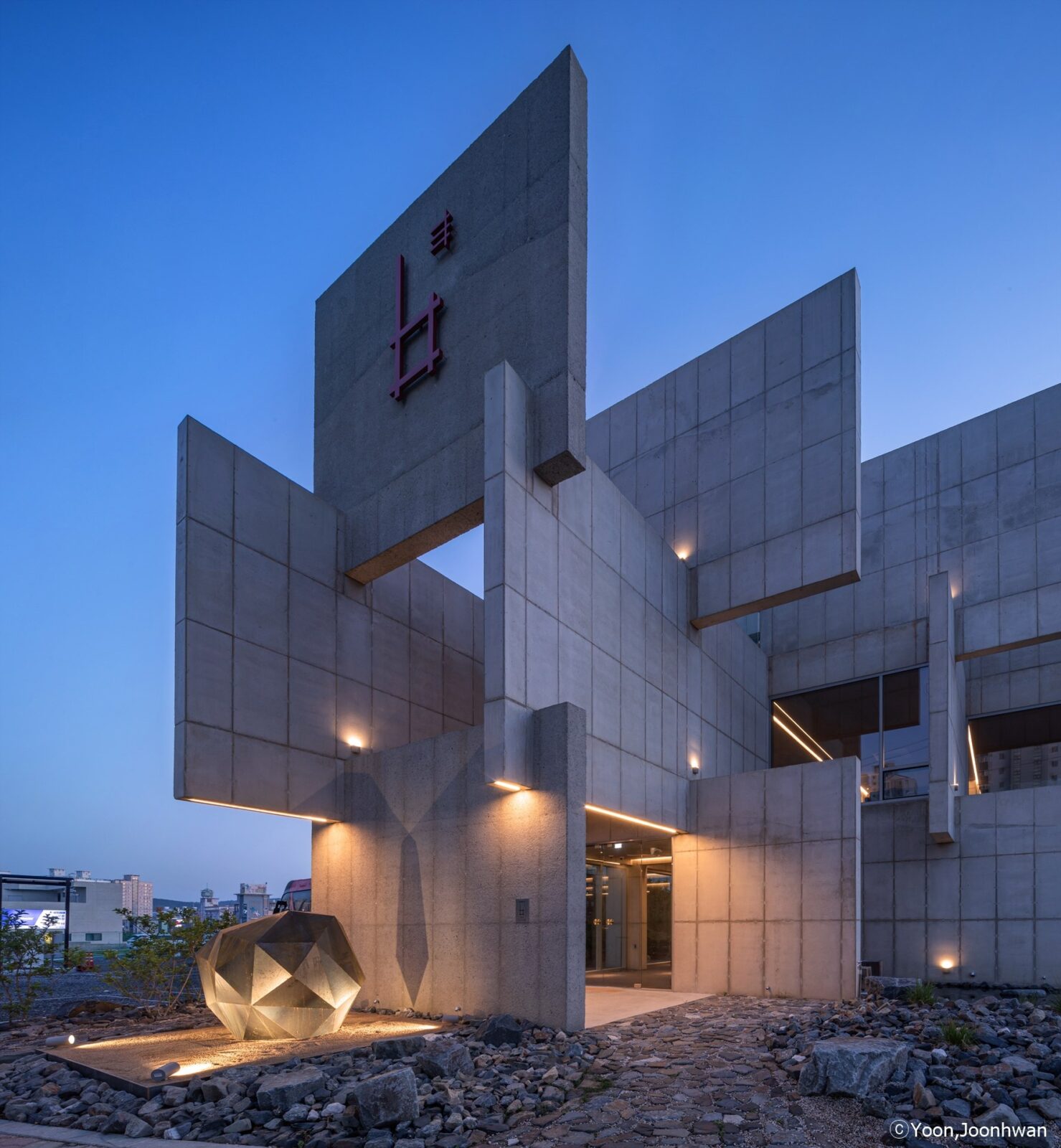
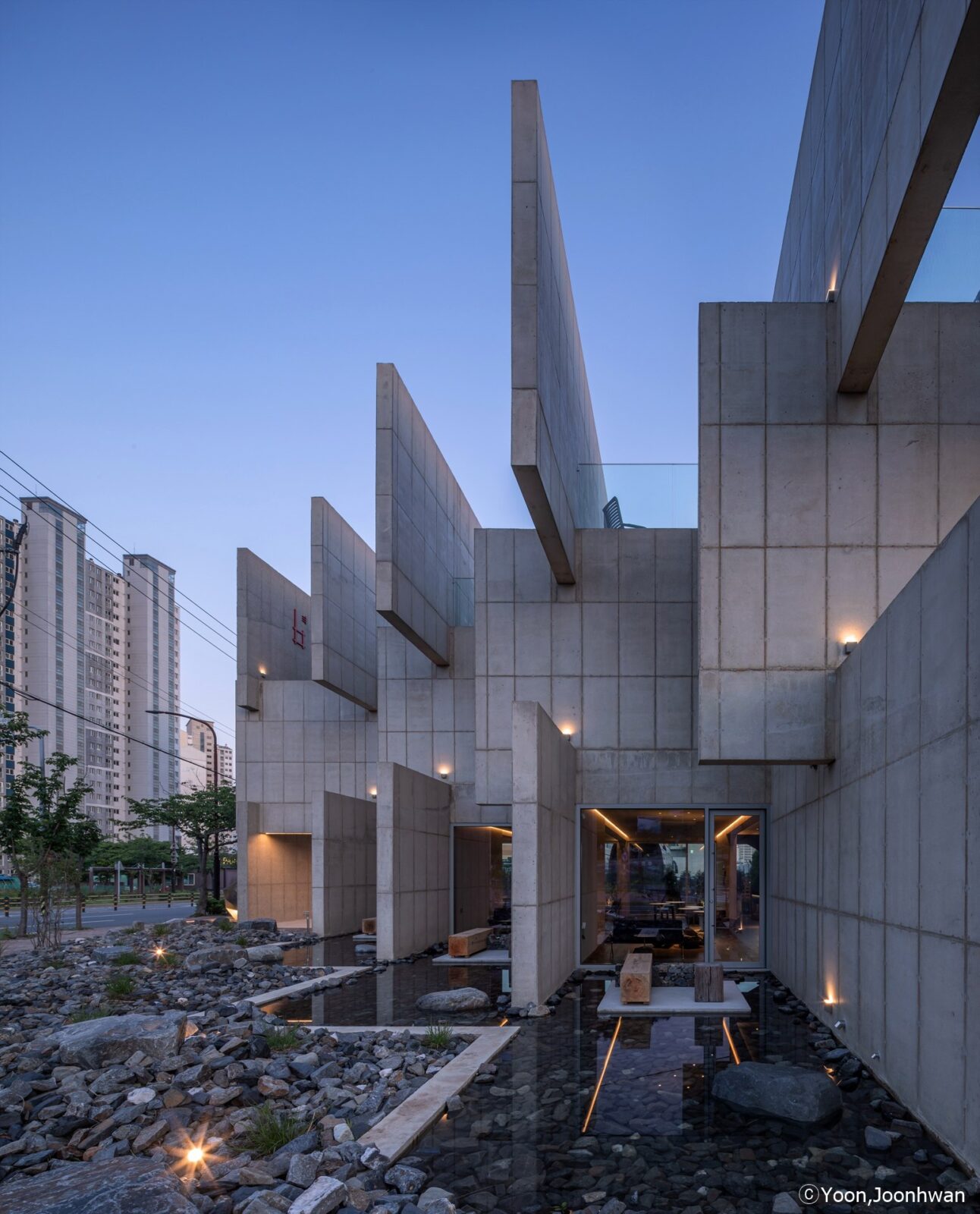
A café at the meeting point
The building stands at the entrance to Daewangam Park, a coastal park in Ulsan known for its pine forest, lighthouse, rock formations and shoreline paths. That location means that the project is not set deep inside a commercial district, nor is it entirely isolated from daily urban life. It simply sits where visitors, residents and park traffic meet.
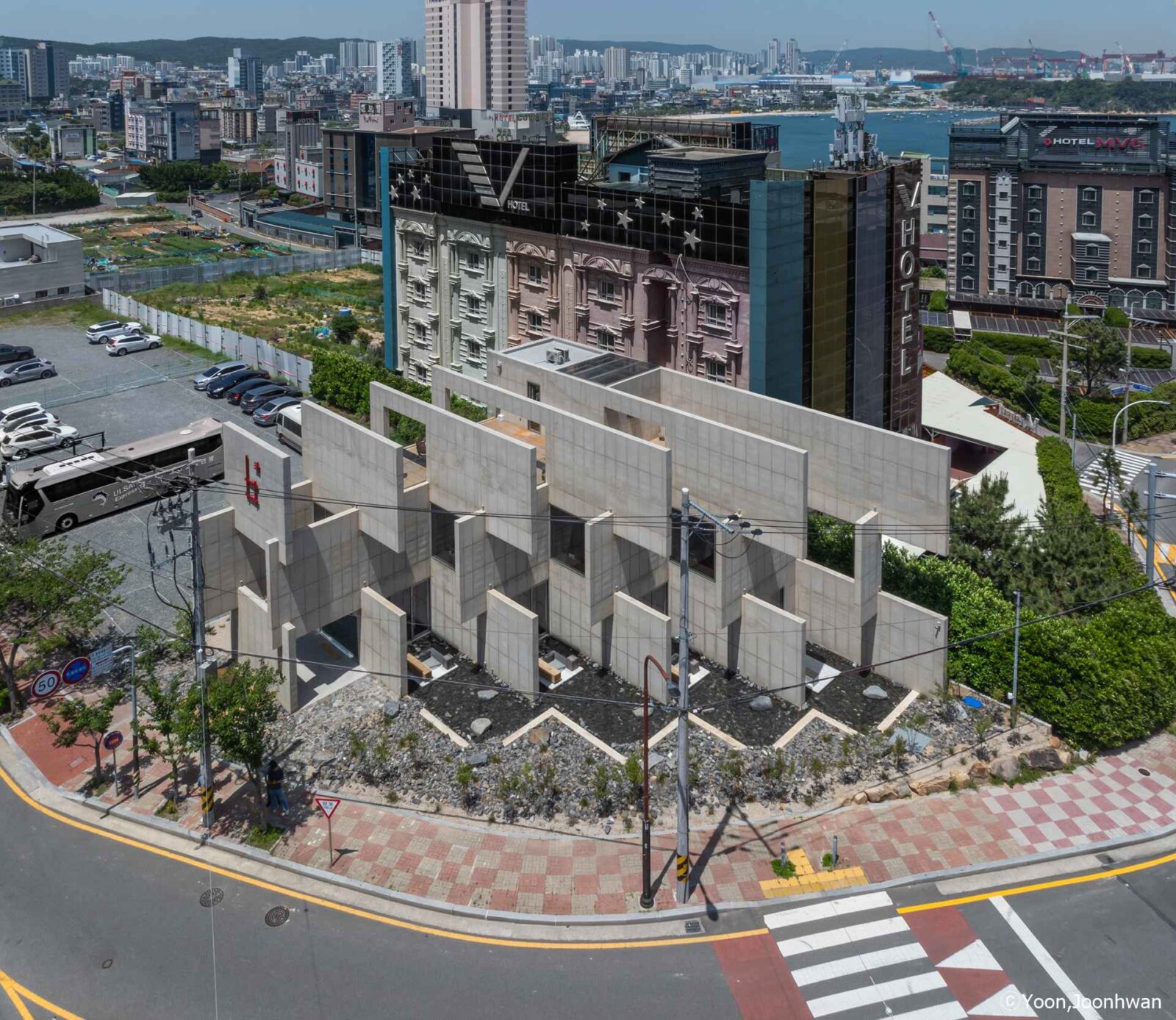
The site lies at the junction of commercial and residential zones, but its designation as green space limited building coverage to 20%. Instead of filling the plot with enclosed floor area, the designers decided to leave most of the ground open, with around 80% of the site being used for plaza, landscape and exterior spaces. The café is therefore not planned as a cosy space surrounded by leftover outdoor areas; it is actually complemented by the open ground being one of the main parts of the venue.
The meaning behind “6³”
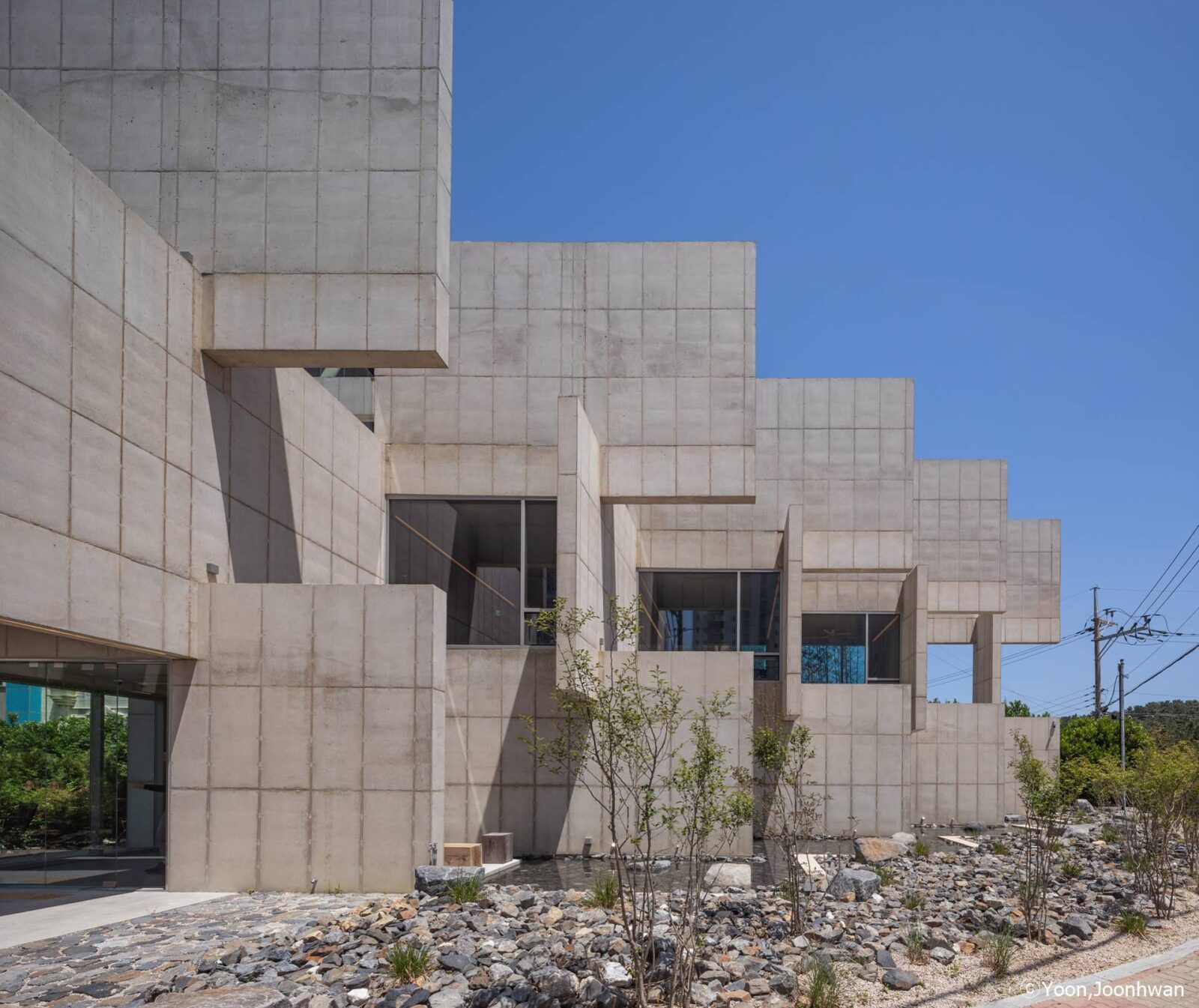
Each floor is built around six walls, a pattern that, due to being repeated across all three levels, makes 18 walls in total. That is where the name 6³ comes from. These walls do much more than just divide rooms; they actually provide support to the building, shape its outer appearance and organise the spaces inside.
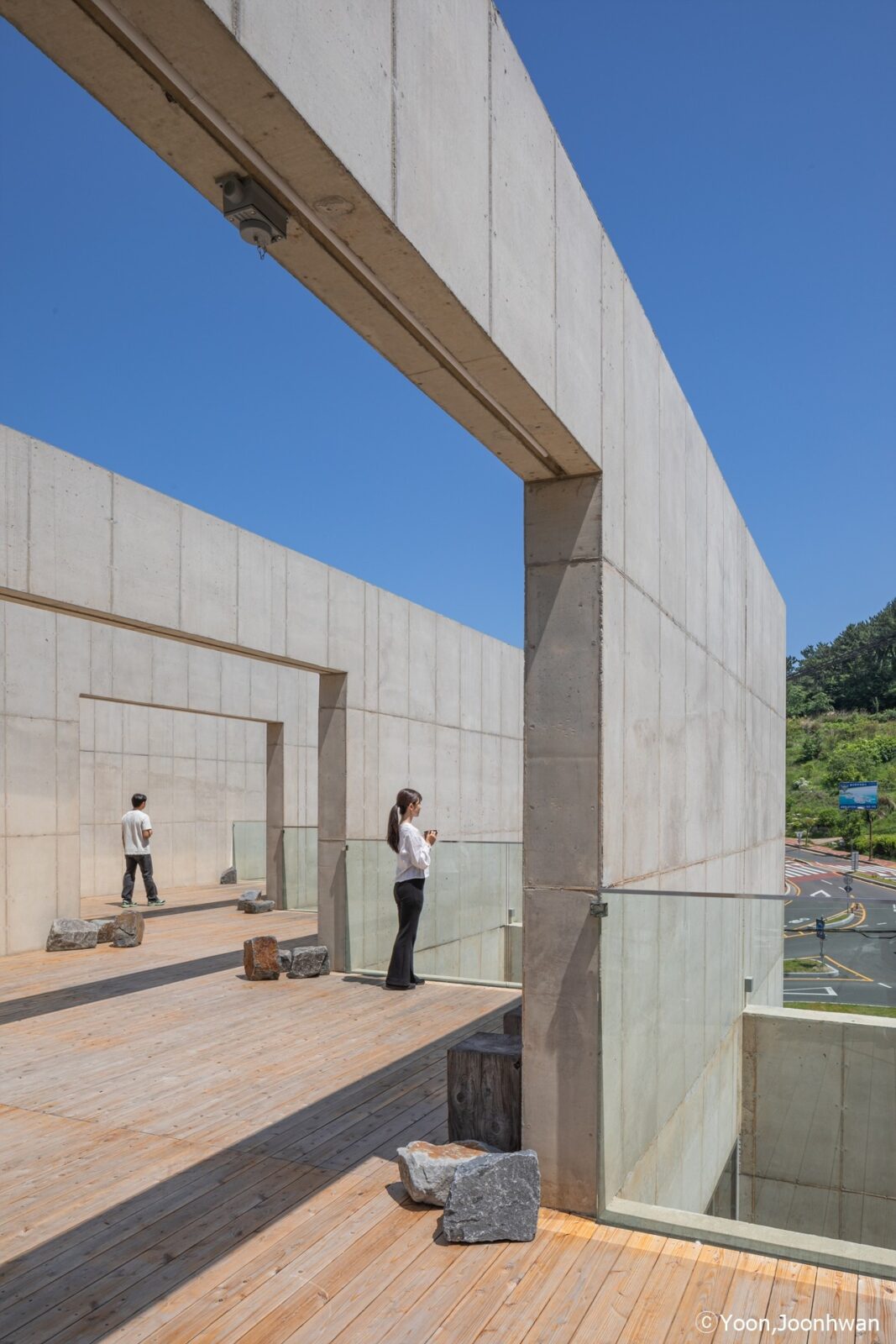
The wall system is also linked to the traditional Korean wall typology. Here, a wall is not only a divider between rooms or between interior and exterior, but it also works as a mediating element. In 6³, the walls form a gradual transition: some areas are fully enclosed, while others are partly open. As people move through the building, they are obliged to pass through these different, dynamic conditions.
Since the building footprint is small, the design depends on the spacing and placement of the walls. The walls break the building into smaller parts and connect the interior rooms, the terraces and the open site around them. This layered layout can be seen throughout the whole project, and it’s its most defining design element.
References through stone and cement
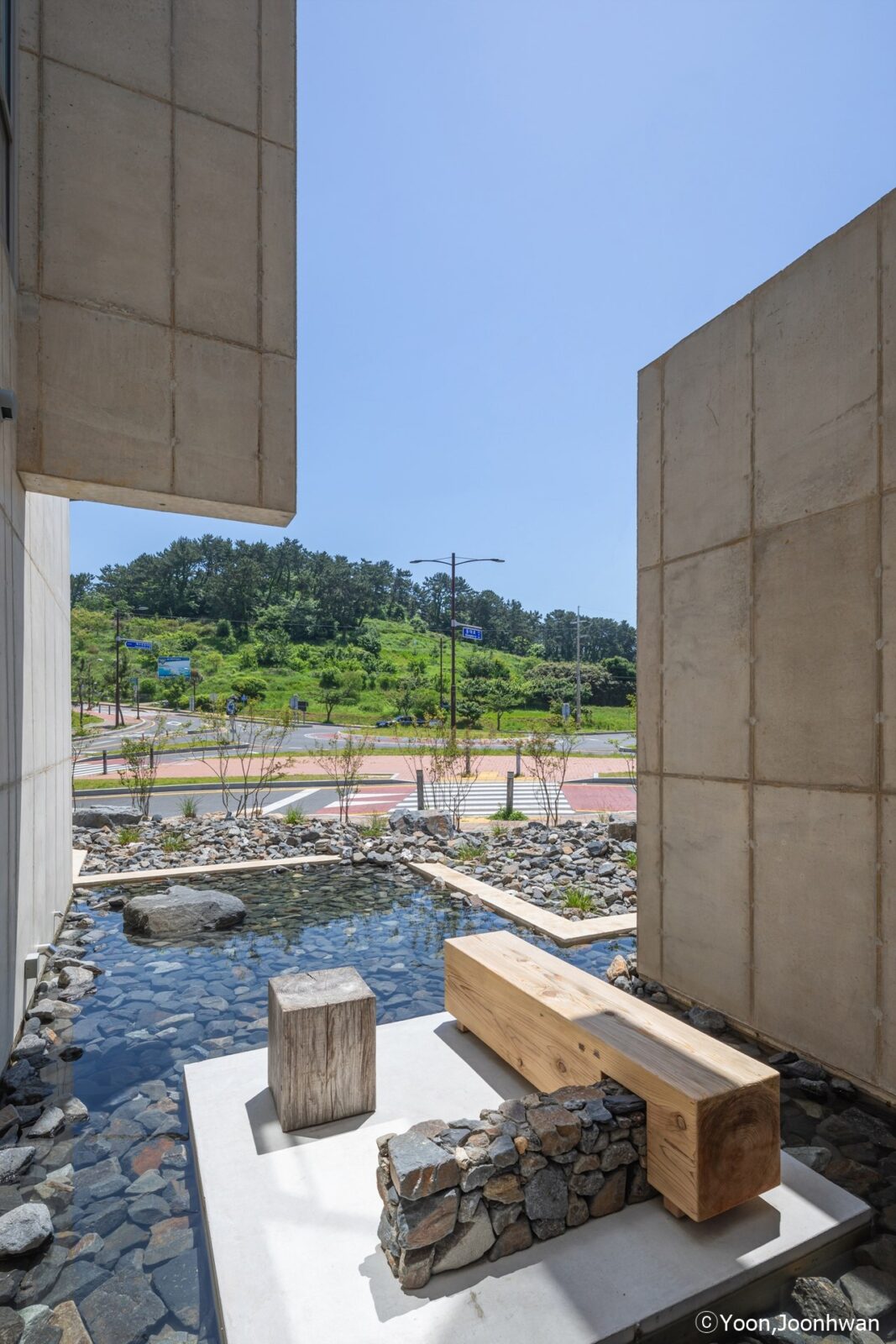
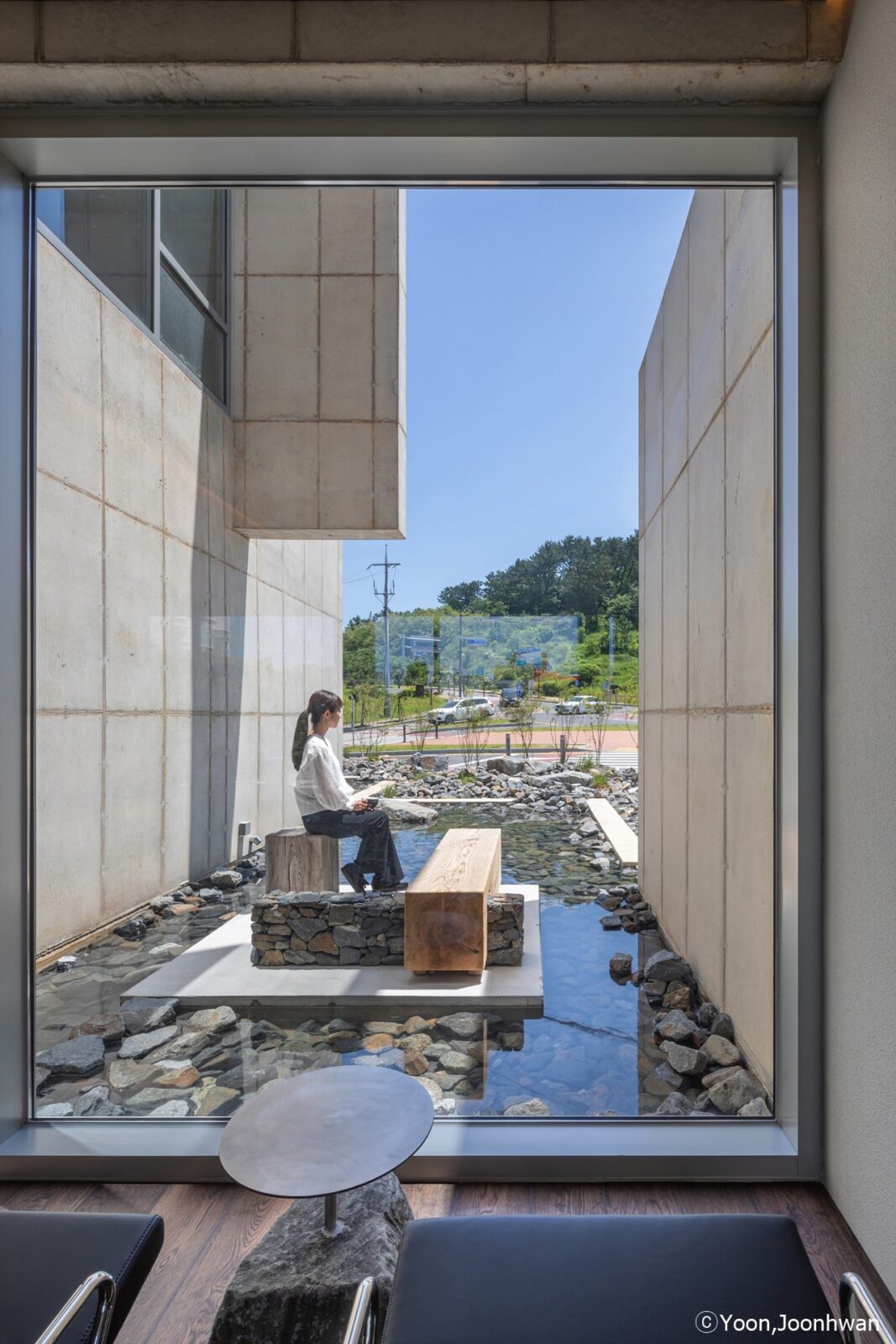
The materials were chosen for their connection to Daewangam and its rocky shoreline. Stone appears repeatedly throughout the project, showing in the landscape, water features and furniture. This keeps the base aesthetics of the structure and its surroundings consistent and shows that connection to the coast can be expressed through the heaviness and texture of the stone instead of through decoration.
Exposed concrete is another important material in this project, as it reinforces the wall system and, in combination with the stone elements, gives the building its heavy, robust, monolithic character.
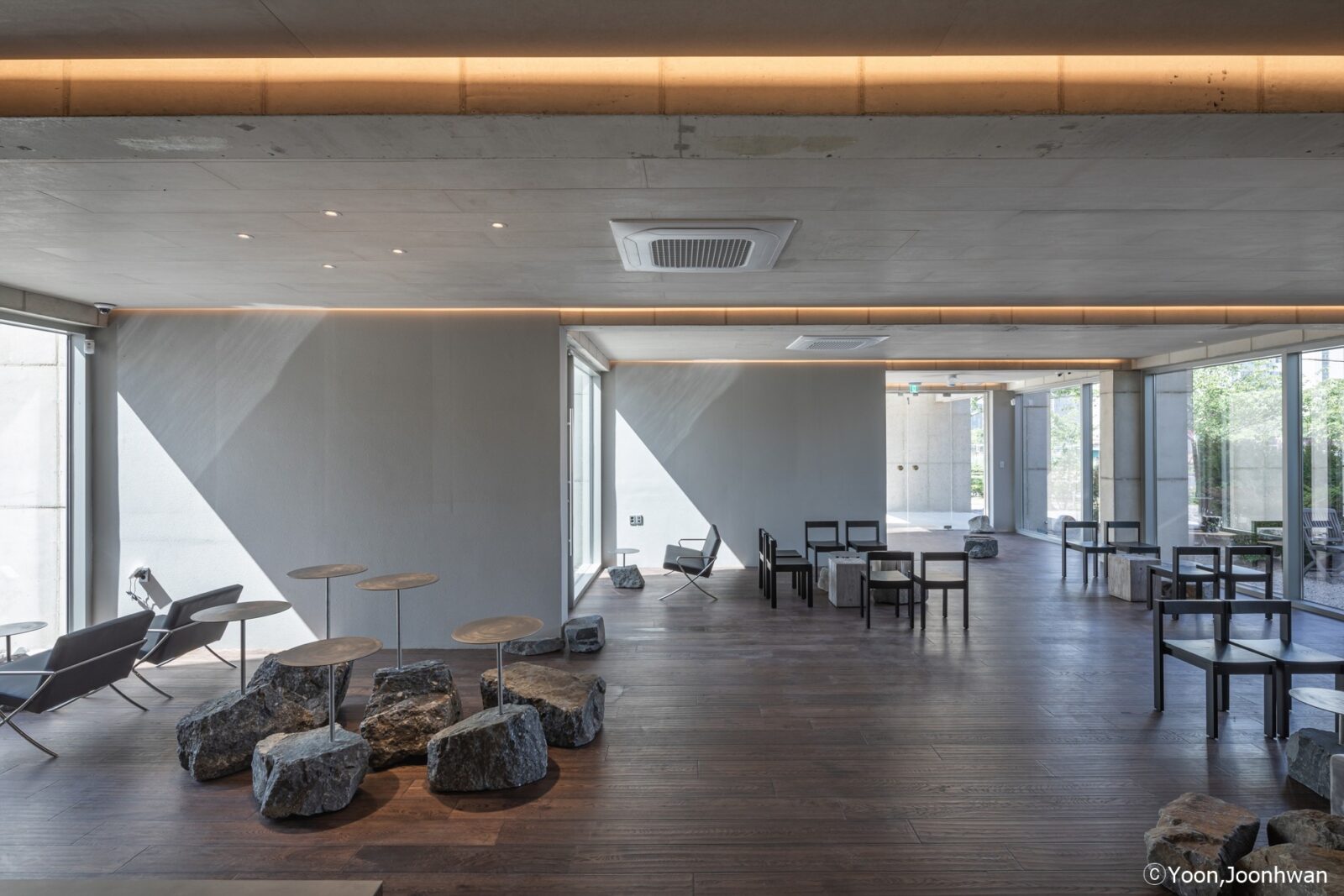
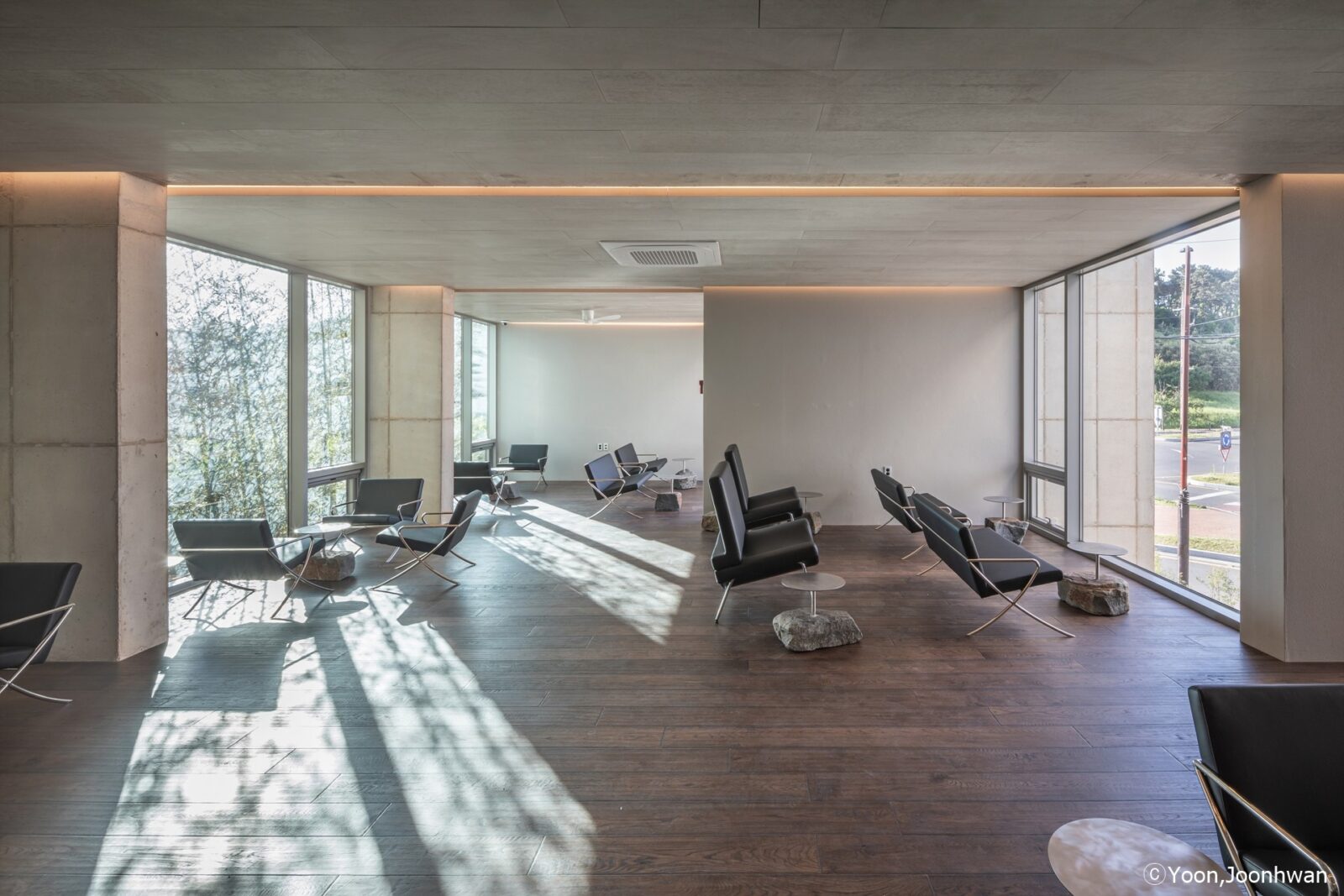
What’s interesting about 6³ is how the team was able to use the restrictions of the plot to produce a unique balance between building and landscape. It is not common to have such a large composition of walls, plazas and outdoor areas in a café or hospitality project, but here it works quite well.

