



Header: Wei Zhao
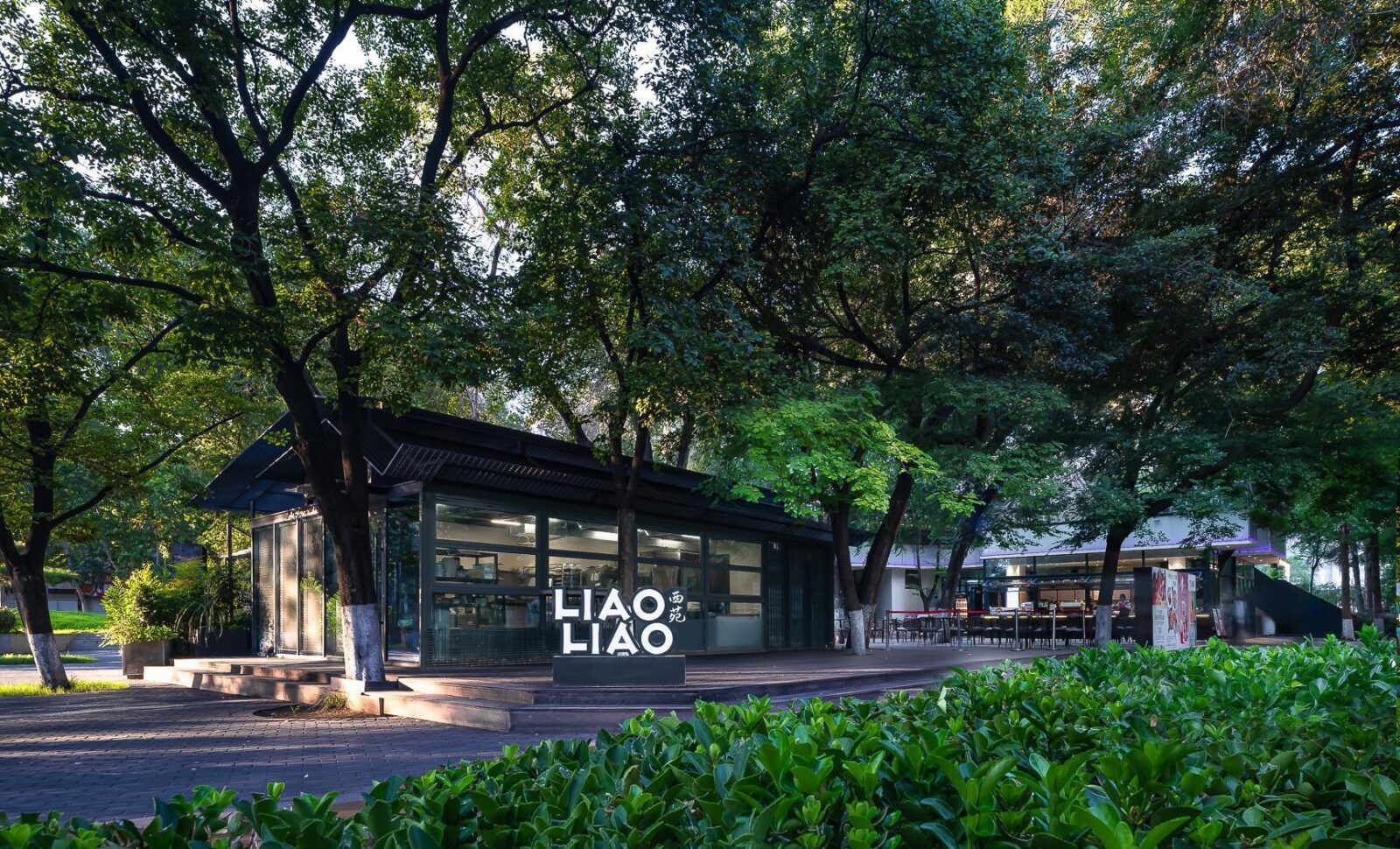
Designers Zhijiang Shan and Fan Li from R & J Design studio have recently finished LIAO LIAO Cafe, a specialty coffee spot located on the grounds of the Luoyang Museum in Henan Province. Before this project, the site was just an empty patch of land by the road. Now, it serves as a social hub that connects the heavy history of the museum with the simple, daily habit of grabbing a coffee. The building acts as a gateway, offering a relaxed space right next to one of the most important cultural sites in China.
Roof shaped by the horizon
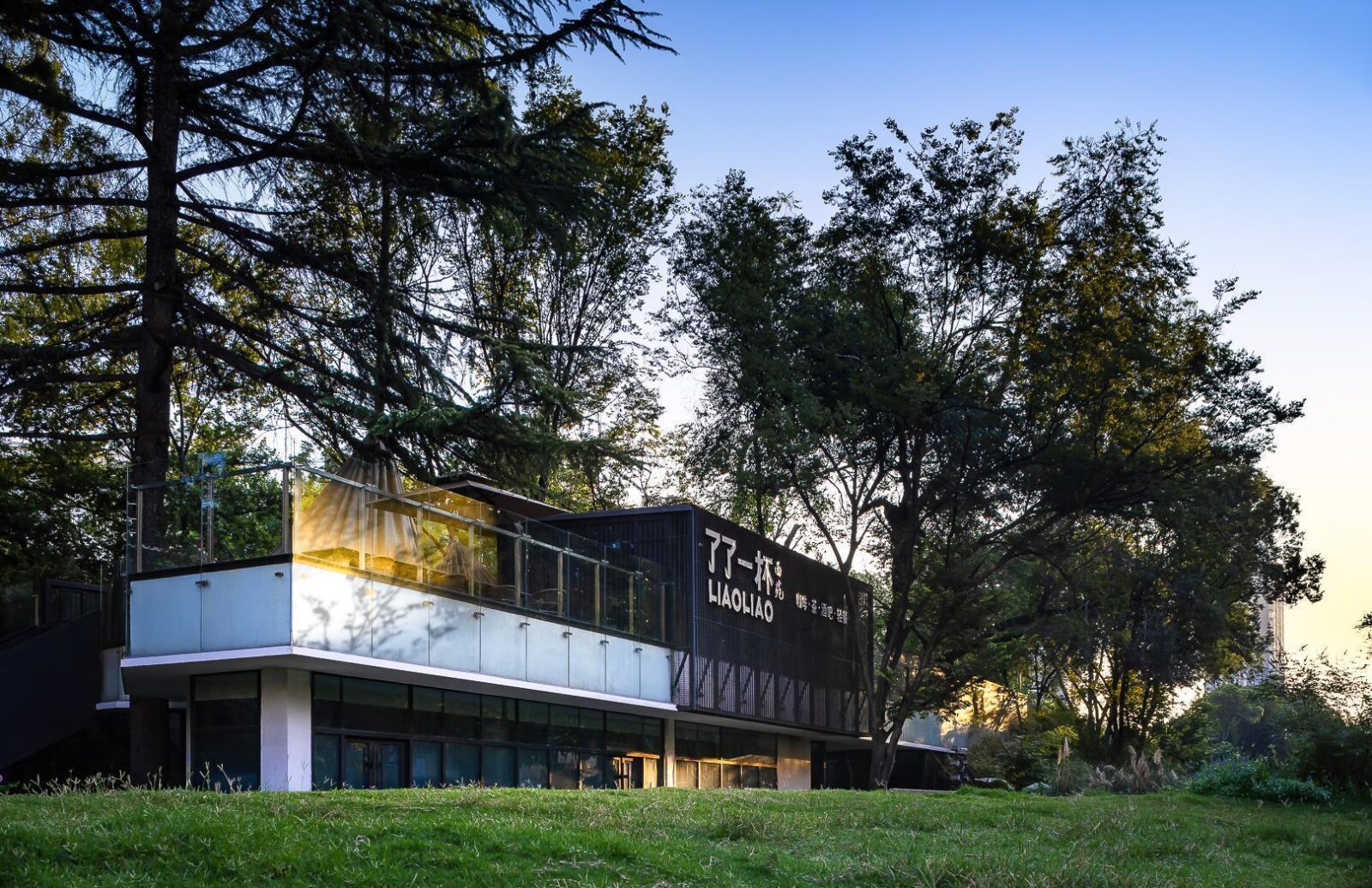
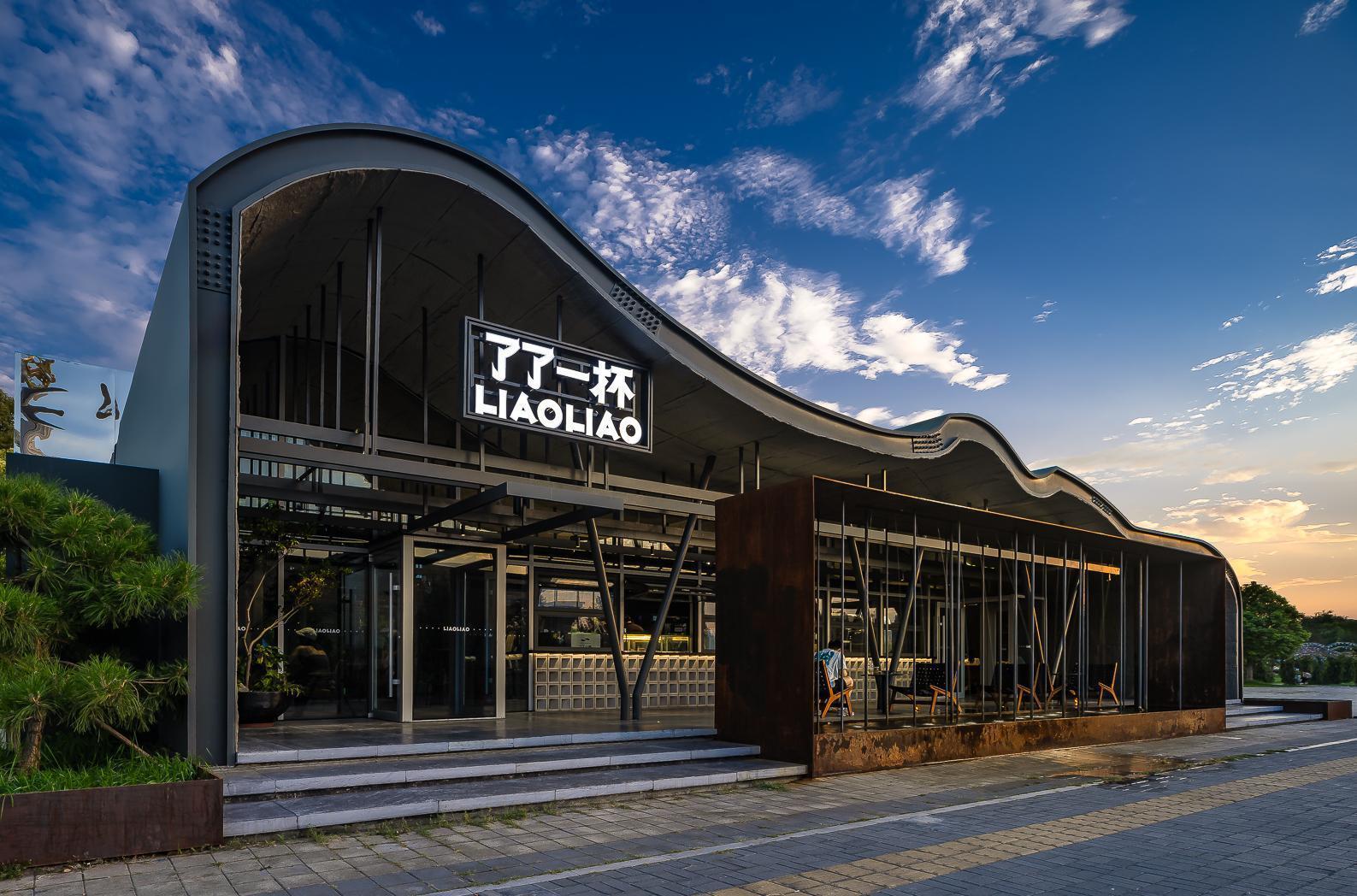
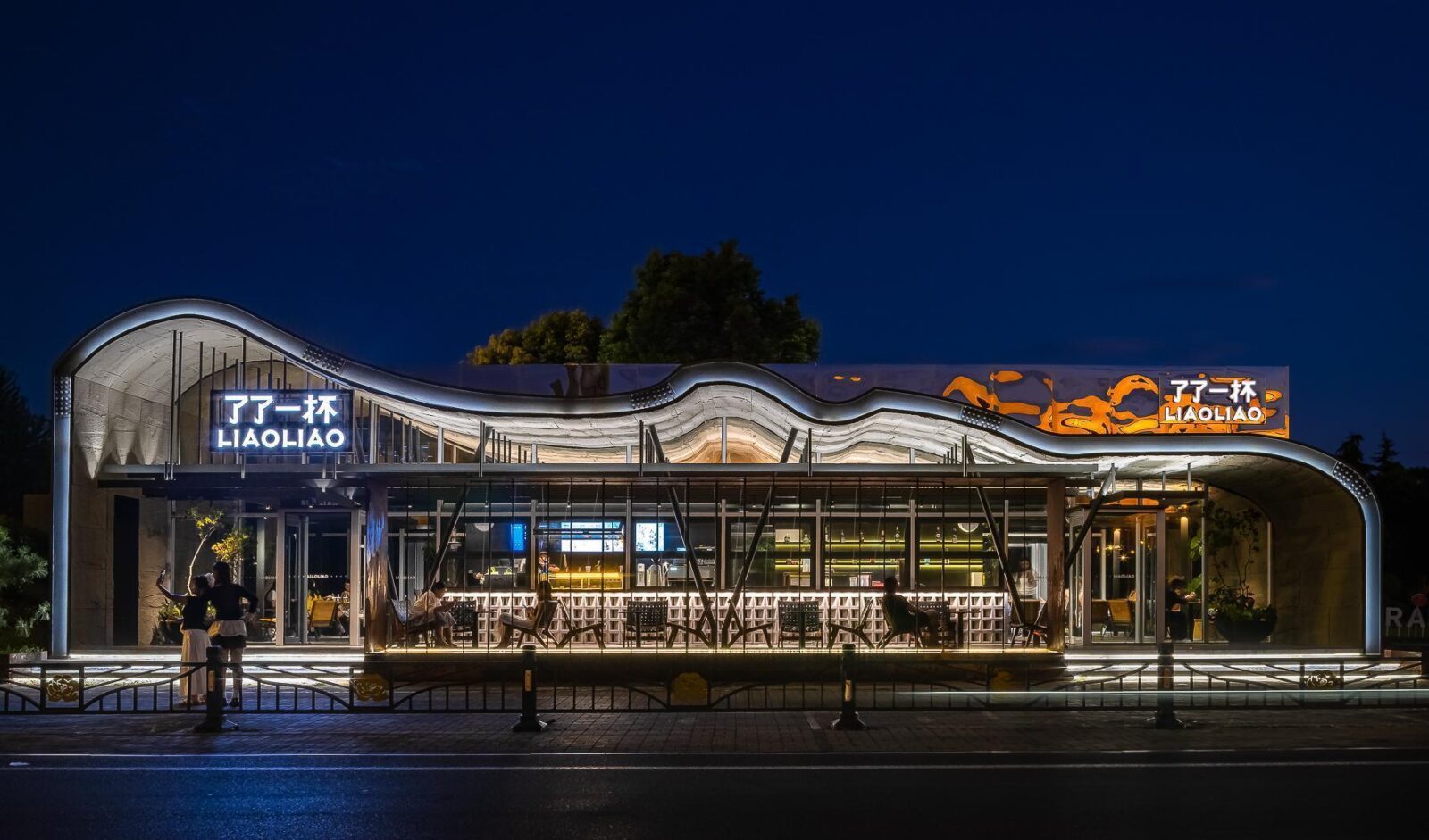
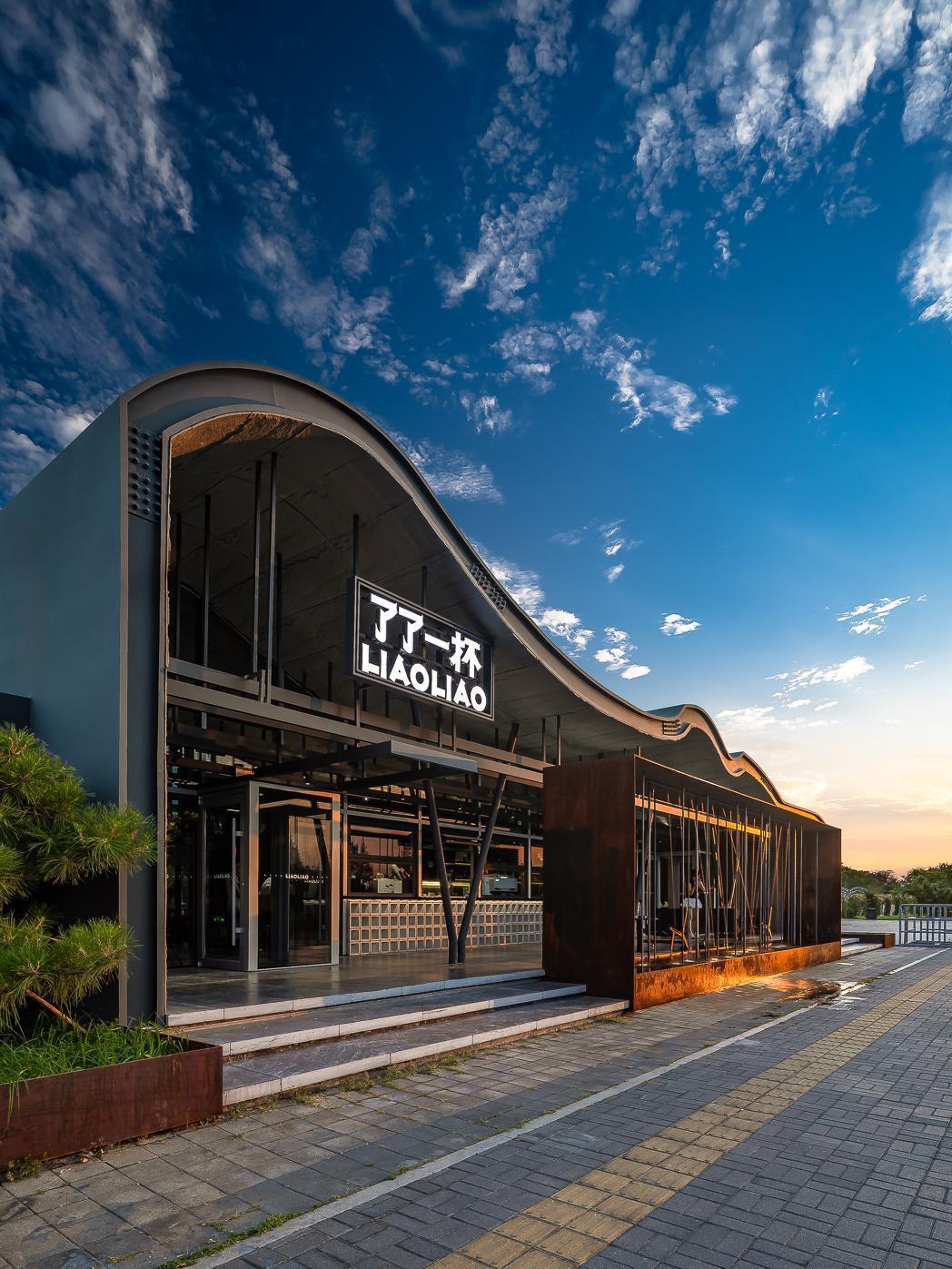
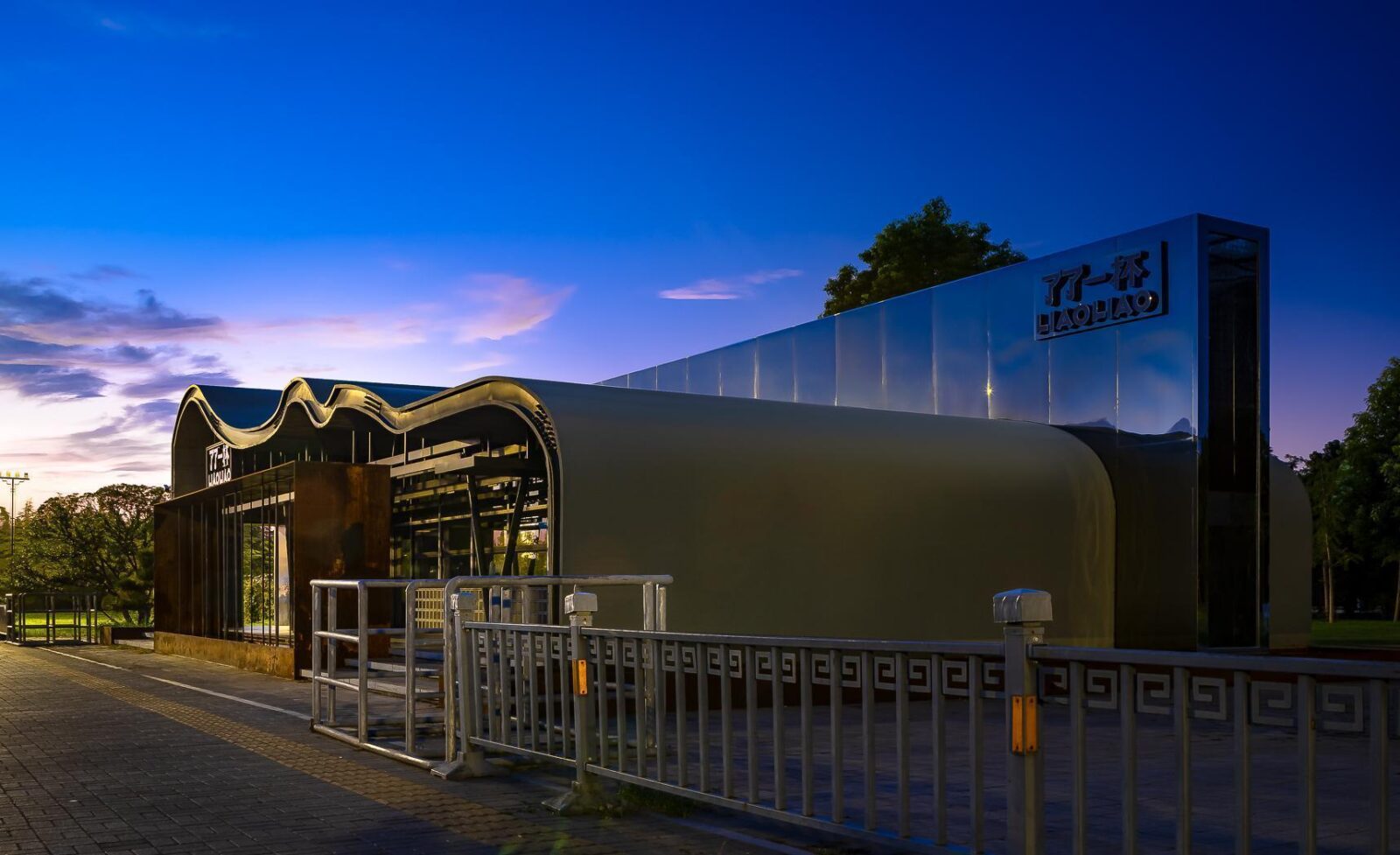
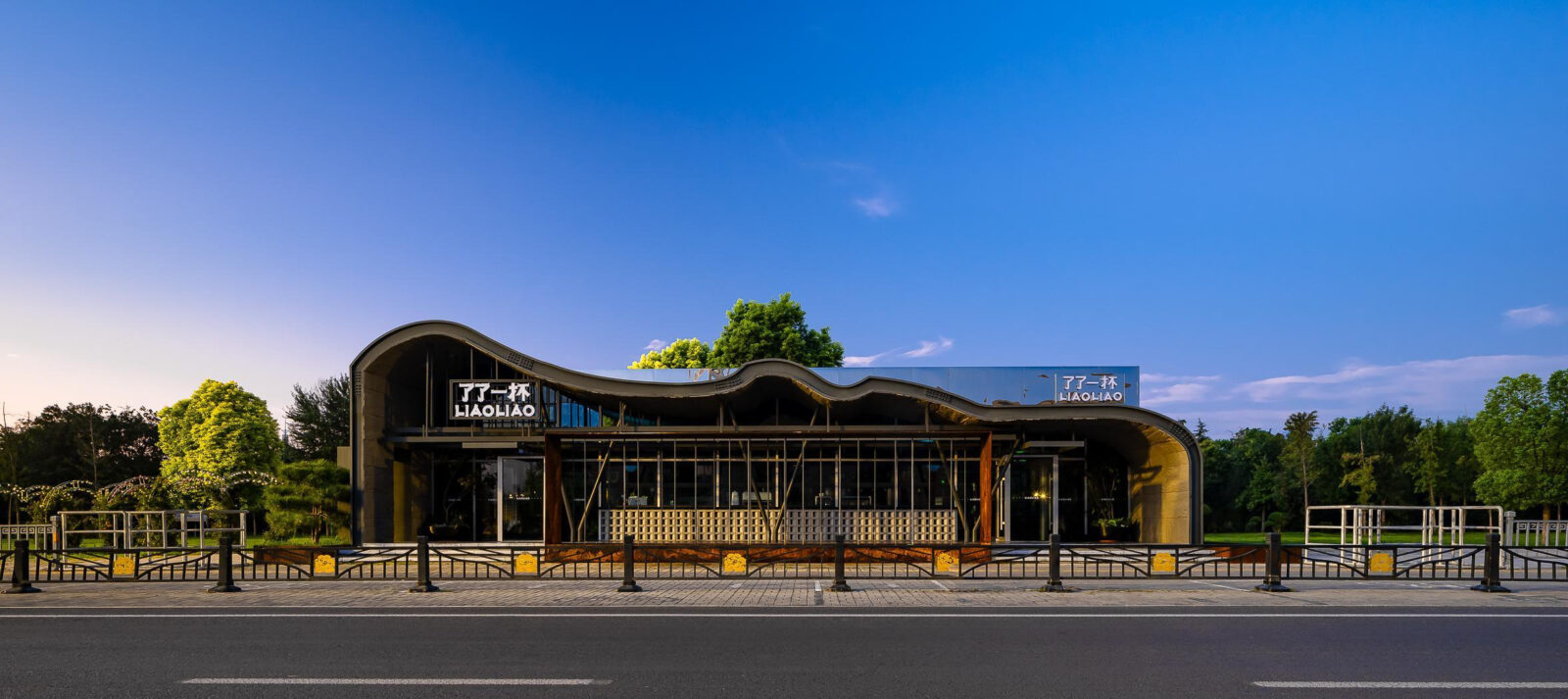
The most obvious part of the building is its long, waving roof. This steel canopy follows a curved path that mimics the shape of the Qinling and Funiu mountains seen in the distance. Because the roof goes up and down, it creates different ceiling heights inside. These changes in height naturally mark out where people sit, where they walk, and where the coffee is made. When you look at it from across the street, the roof looks like a single, flowing line against the sky. It makes the cafe stand out, but it doesn’t try to outshine the massive museum building next door.
Mixing mirror steel and weathered metal
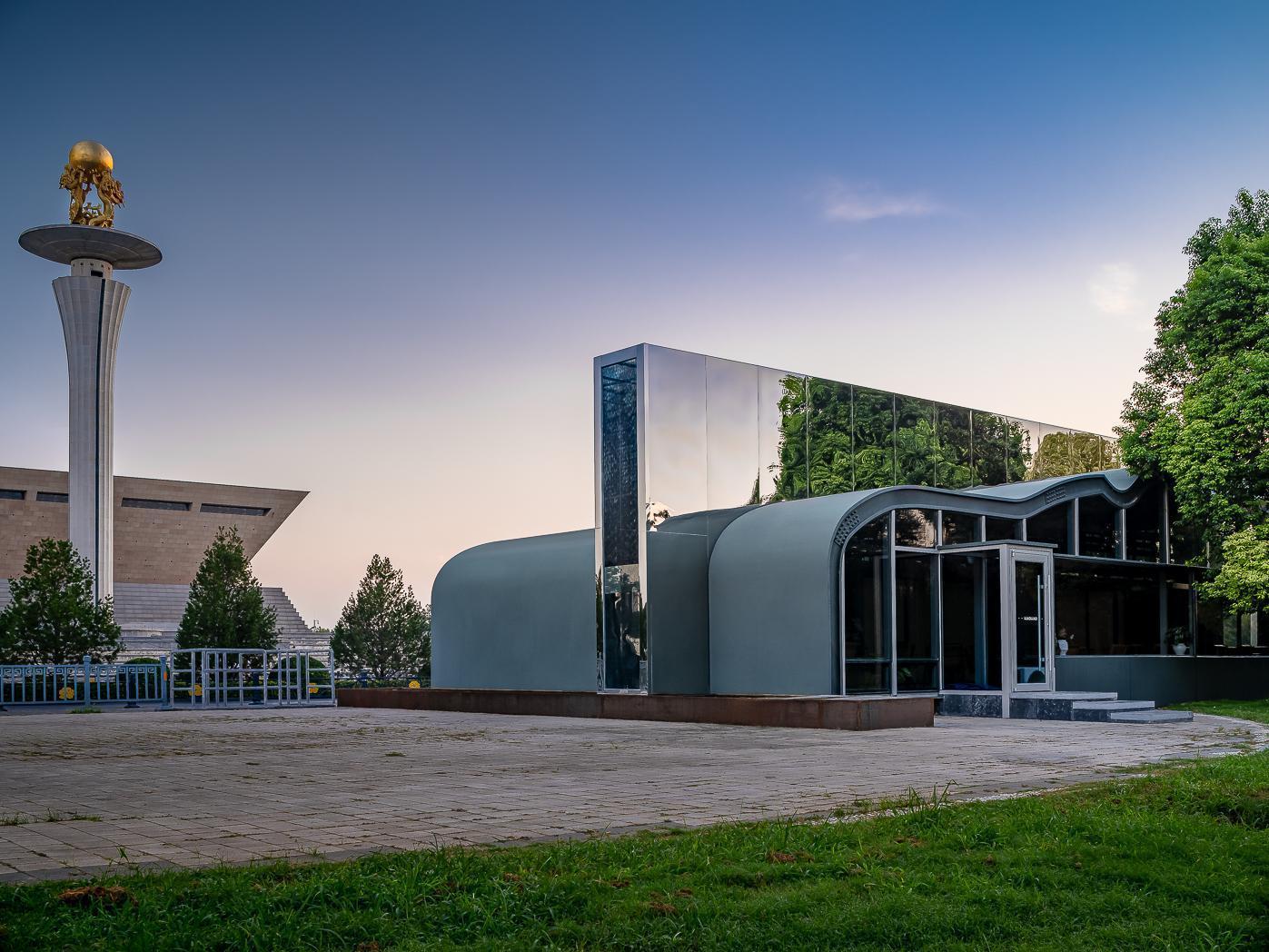
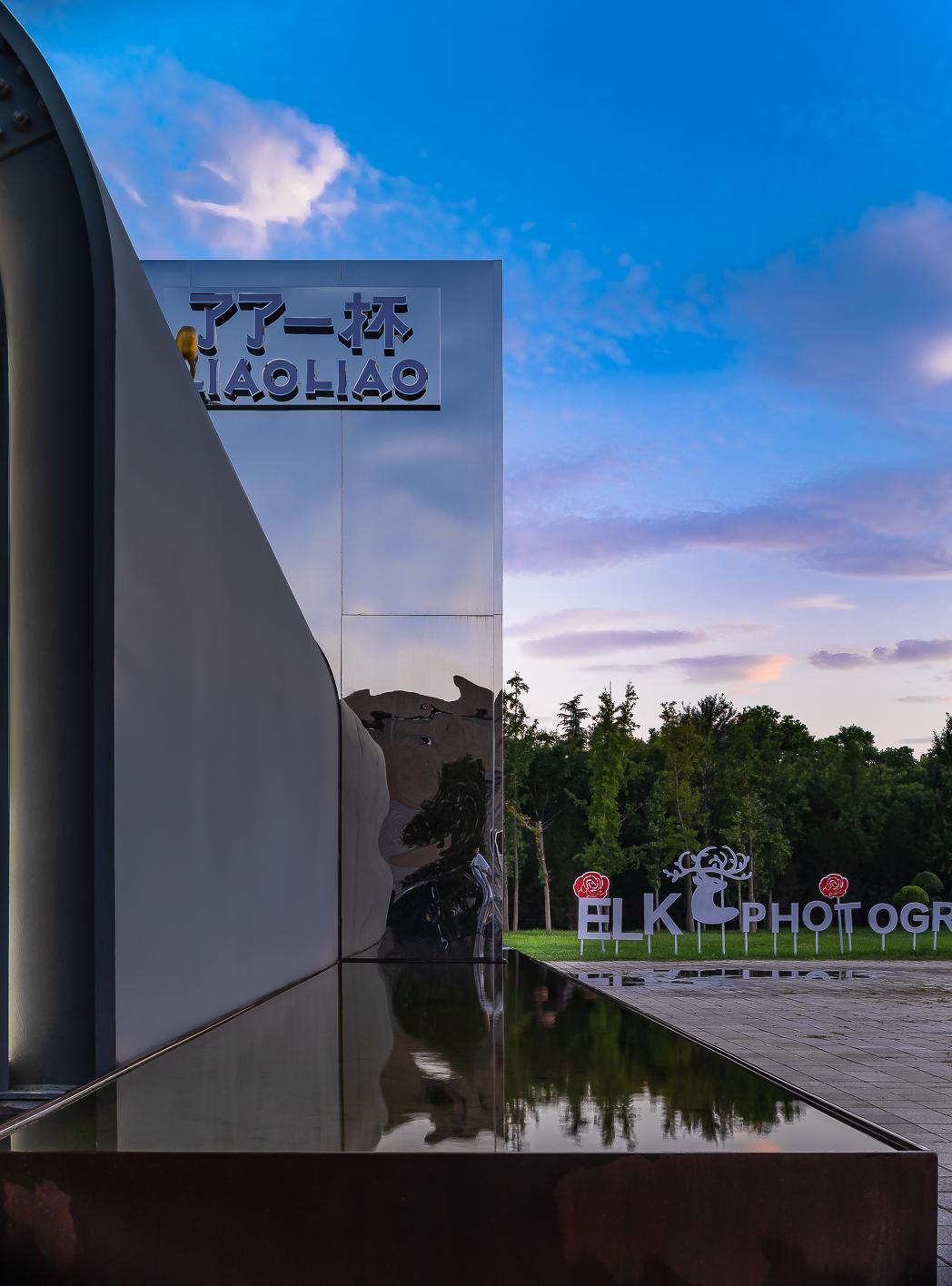
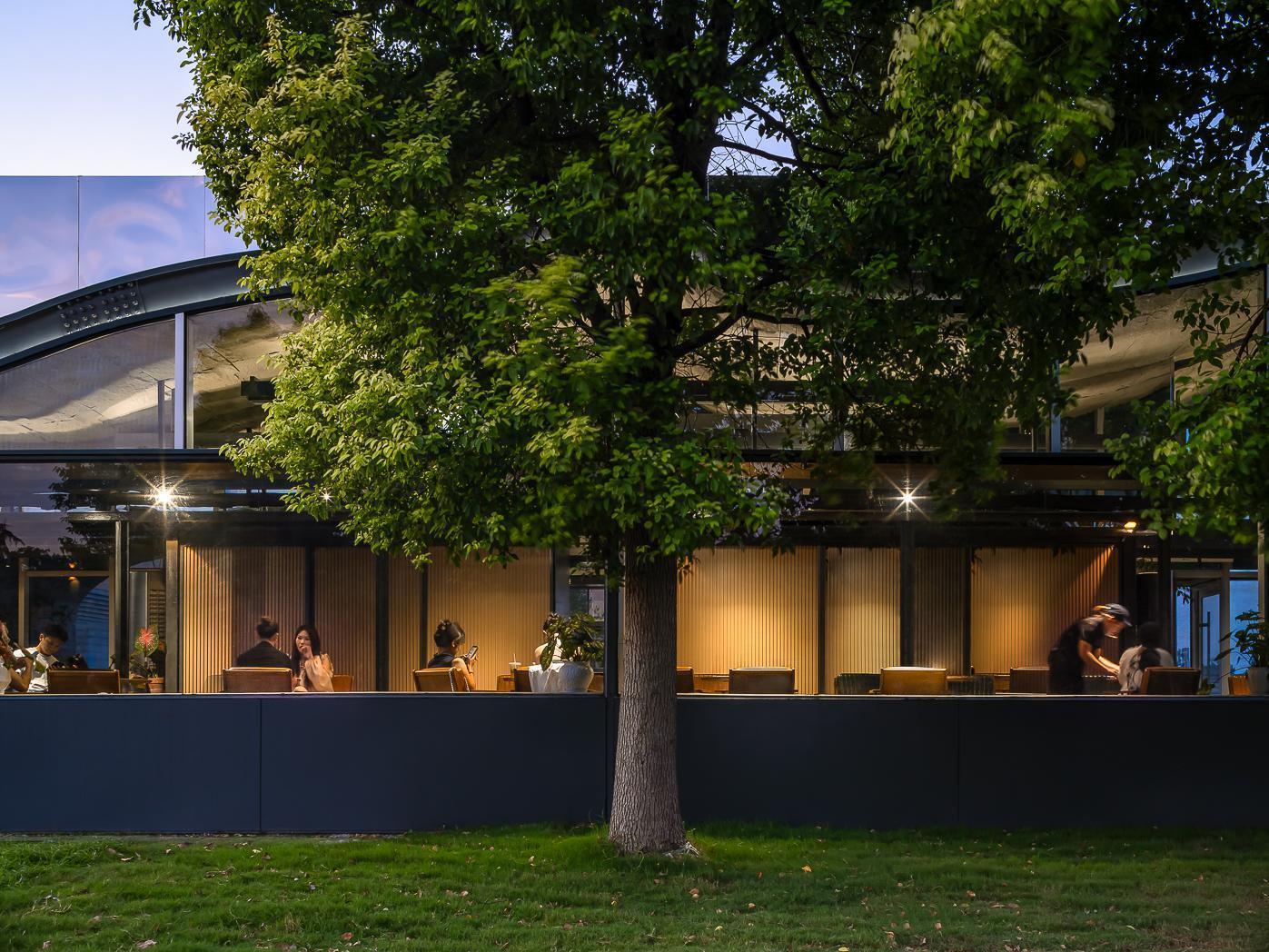
The designers chose a mix of materials that play with light and history. At one end, a box covered in mirror-finish stainless steel reflects the trees and the sky, making that part of the building almost disappear into the park. The rest of the cafe uses dark metal and weathered Corten steel. This rusted orange metal feels like something dug out of the earth, which fits perfectly with the ancient objects stored in the museum. Near the ground, a screen made of holy concrete blocks lets a bit of light through while separating the indoor tables from the outdoor porch.
Showing the bones of the building
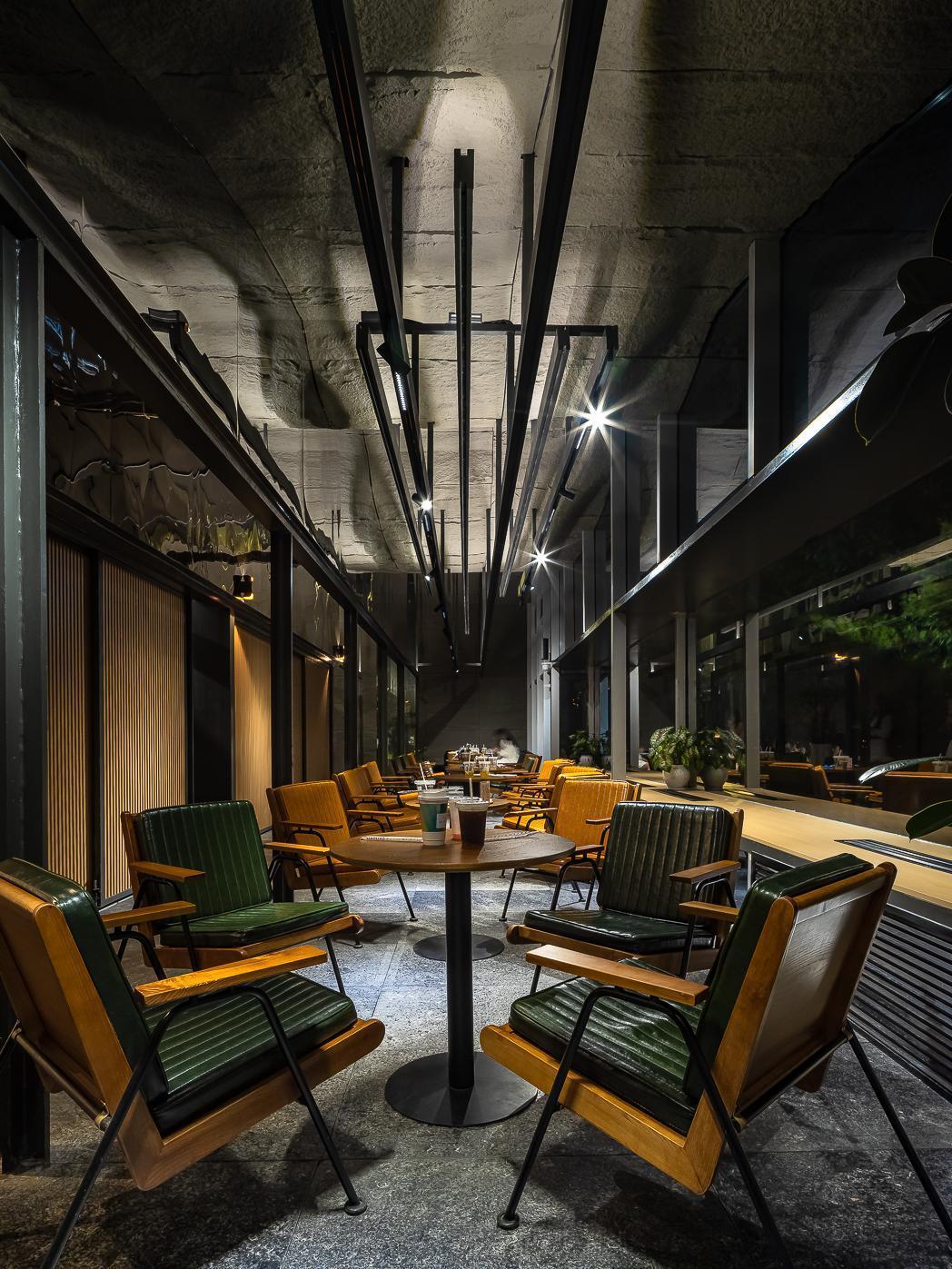
Instead of hiding how the cafe stays up, the designers made the structure part of the look. Inside and out, steel columns branch out at different angles to hold up the heavy roof. These beams look a bit like the trunks and branches of the old trees growing nearby. It gives the cafe a raw, honest feel, almost like a high-end workshop. If you look up, you can see the rough, unfinished concrete underside of the roof. Long lights are tucked along the steel beams to highlight this gritty texture when the sun goes down.
Watching the sky from the sofa
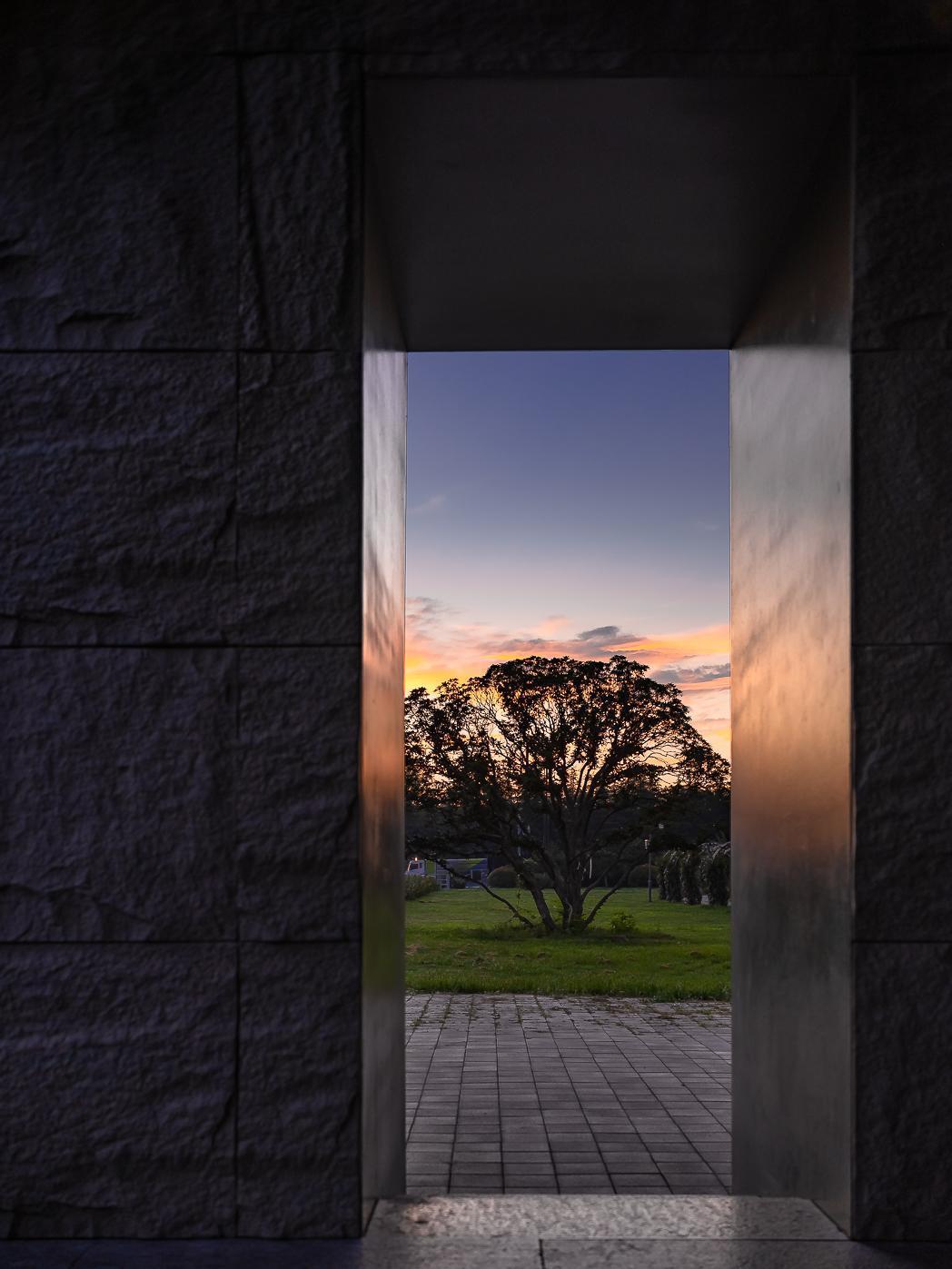
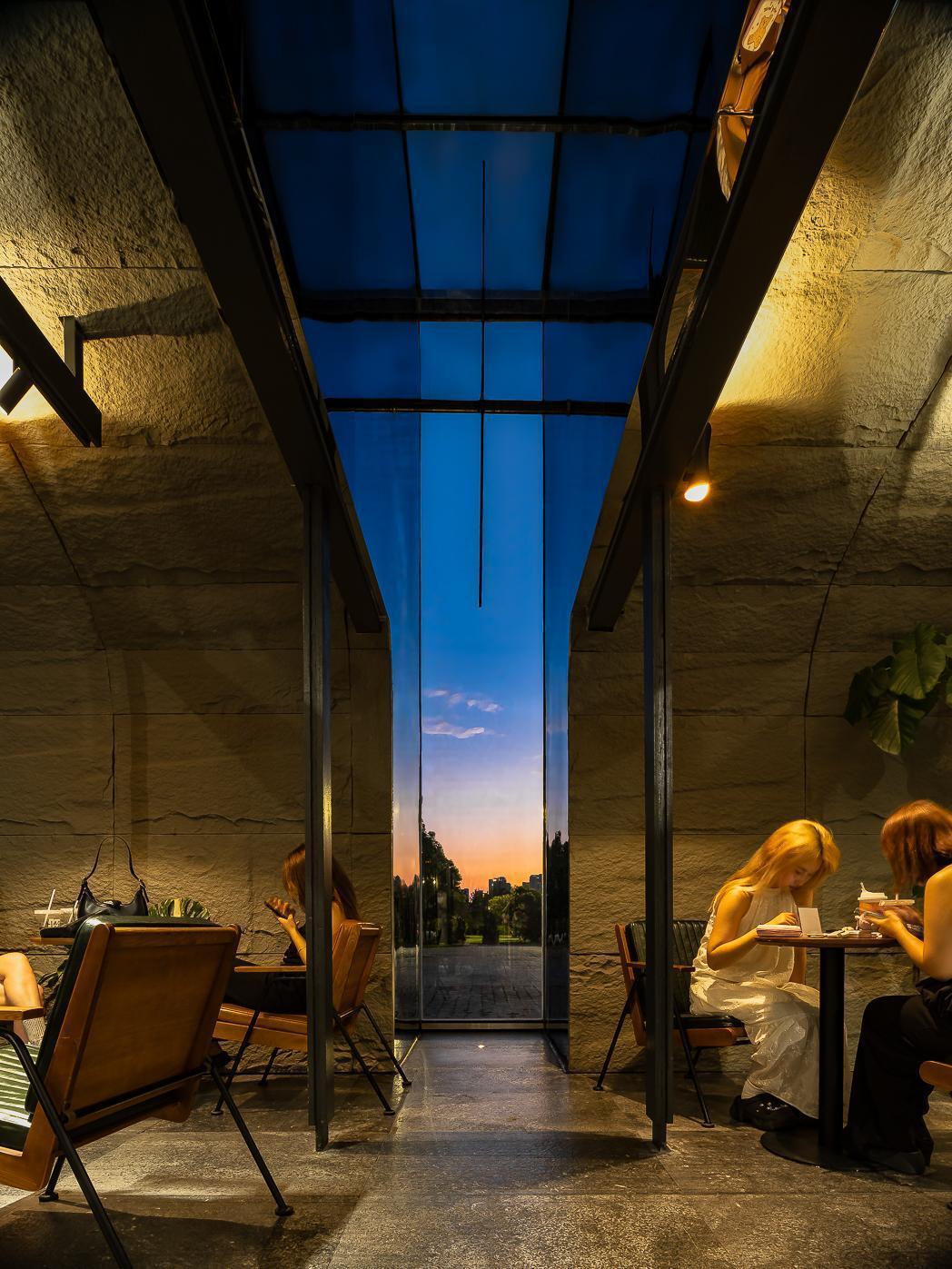
Huge glass walls go from the floor all the way to the ceiling, making it feel like there is no wall at all between the customers and the park. A long, thin skylight runs right along the peak of the roof. This gap lets a sliver of sunlight pour down the stone-textured walls, changing the mood of the room as the day passes. At sunset, this window frames the changing colours of the sky like a long, thin painting. To keep things simple, the furniture uses dark stone floors, green and tan leather chairs, and black metal fittings. This quiet look lets the natural light do all the talking.
The heart of the coffee shop
A long counter sits right in the middle of the room. The front of the bar is made from the same concrete blocks seen on the outside of the building, which ties the whole look together. Because the kitchen is open, guests can watch the baristas work on their craft. Instead of putting chairs in boring straight lines, the designers grouped them into small clusters. This makes the cafe feel more like a living room where people can actually talk to each other.
A bridge between history and today
Sitting right next to a museum full of Bronze Age and Tang Dynasty treasures, LIAO LIAO Cafe is a place where the serious vibe of history meets the easy-going energy of modern life. Outside, the porch is shaded by big trees and filled with wooden deck chairs, giving museum-goers and locals a place to kick back. This project shows that a coffee shop in a historic area doesn’t have to look old-fashioned to fit in.
Project info
Official project name: LIAO LIAO Cafe @ Luoyang Museum
Location: Luoyang, Henan Province, China
Client: LIAO LIAO Cafe
Architecture and interior design: Rongjie Design & Construction Engineering Co, LTD
Designers: Zhijiang Shan, Fan Li
Project completion: 2025
Photo credit: Wei Zhao
Source: v2com newswire


