




Header: ProjetScénie
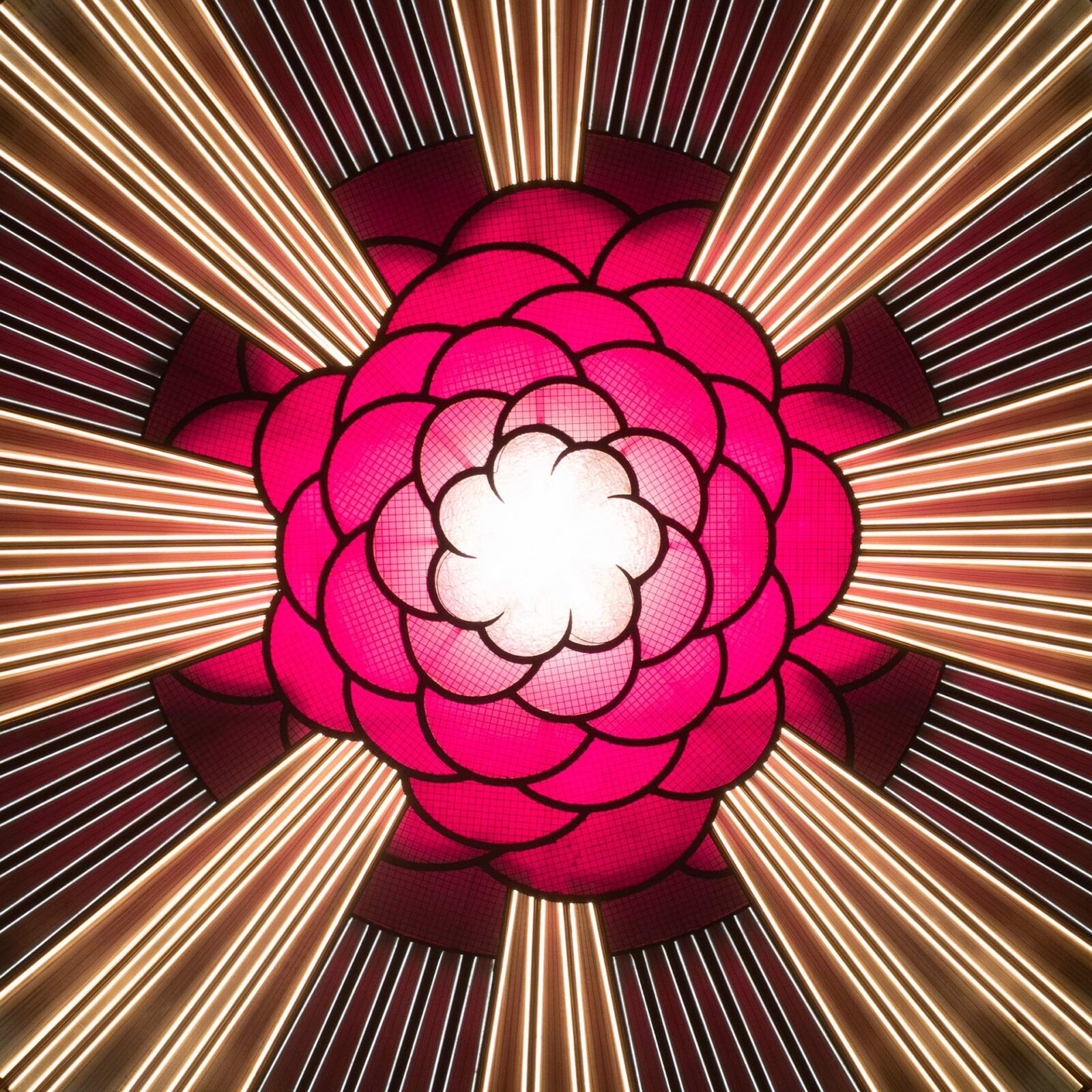
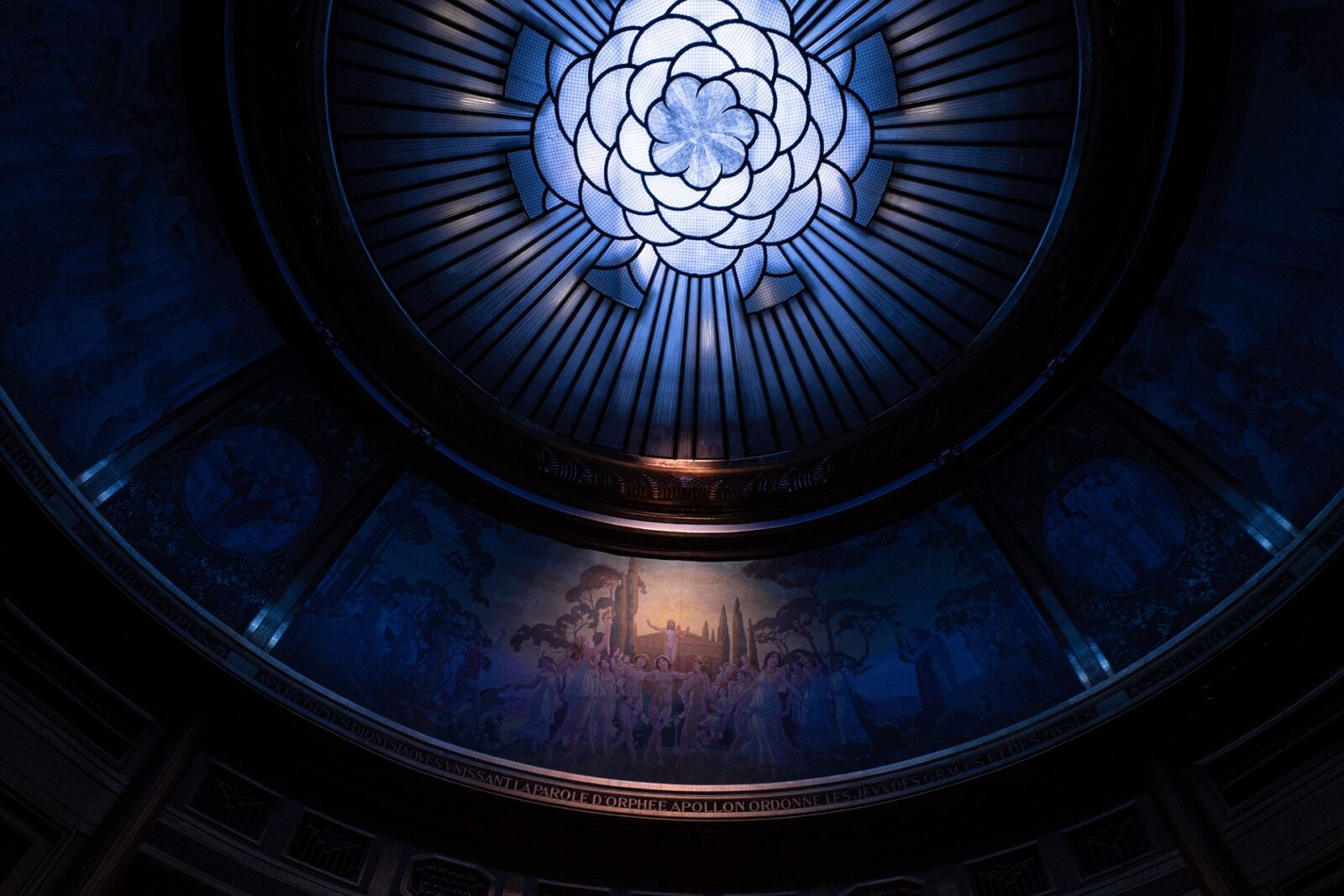
The ceiling of the main hall at the Théâtre des Champs-Élysées in Paris is an enormous glass flower of around 175 m², hanging 25 metres above the seats, that lights the whole room on its own. Over the theatre’s summer closure in 2025, a comprehensive renovation saw the replacement of many elements, including, and most importantly for this piece, the lighting design. Yann Jourdan of ProjetScénie worked alongside heritage architect Paul Ravaux of BLPRRC, having gone on to win the “Heritage Lighting Design” category at the LIT Lighting Design Awards 2025.
The ceiling Auguste Perret built
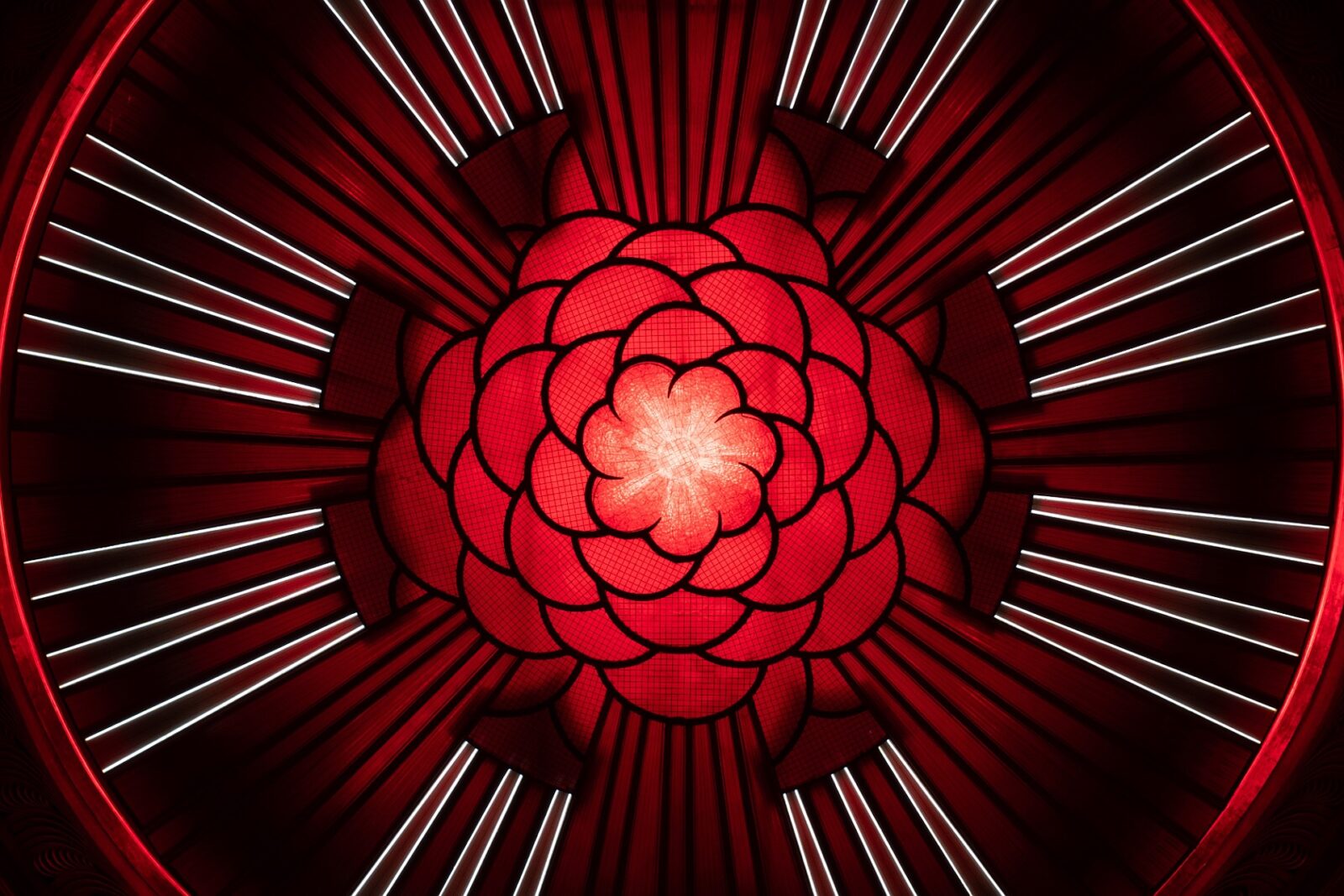
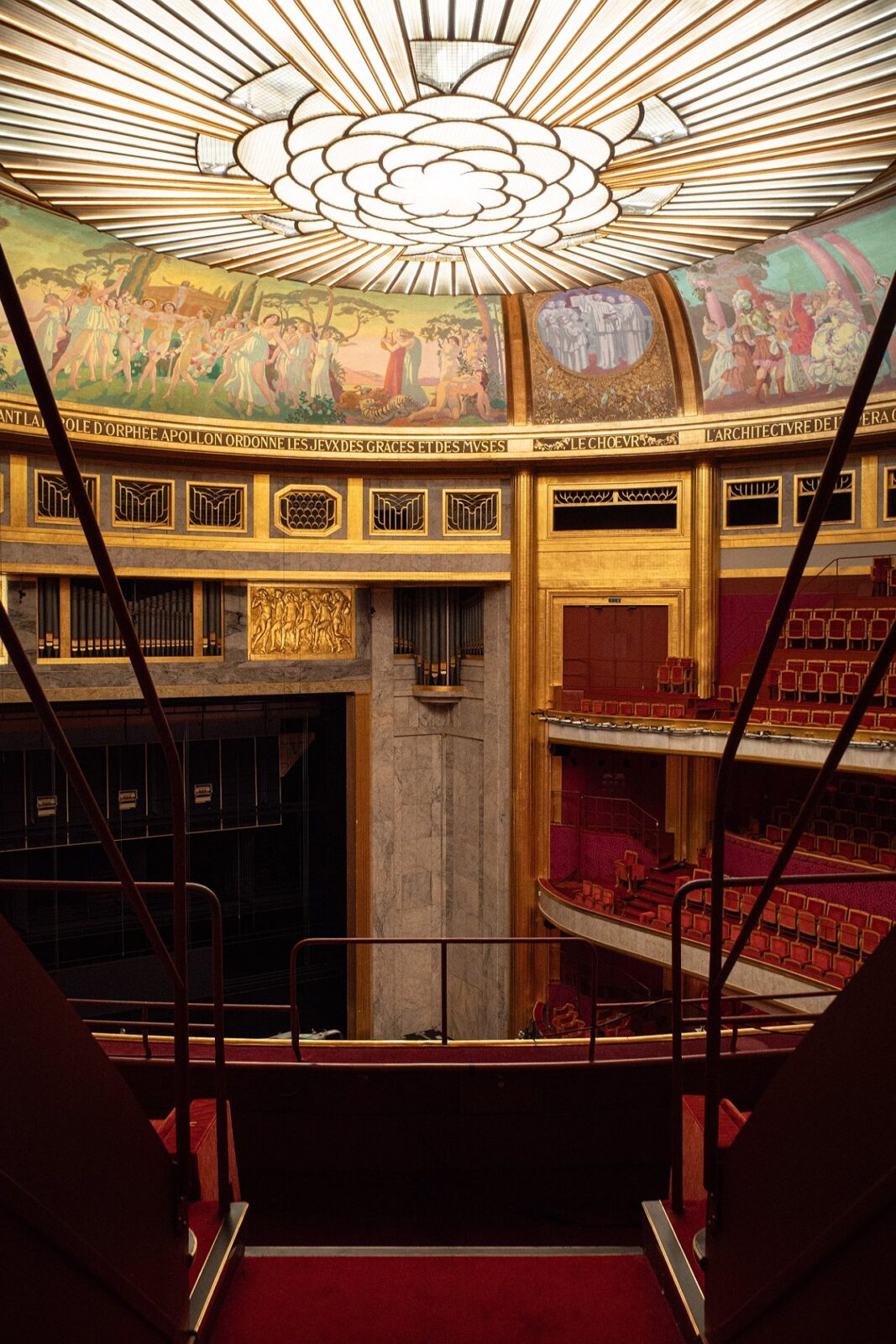
The theatre opened in the spring of 1913, built by Auguste Perret in reinforced concrete, which allowed him to hang the balconies without columns so that nothing blocks the view of the stage. Perret wanted no chandelier, so he put the light into the ceiling itself and called it the “bouclier lumineux“, or, translated, the “shield of light”.
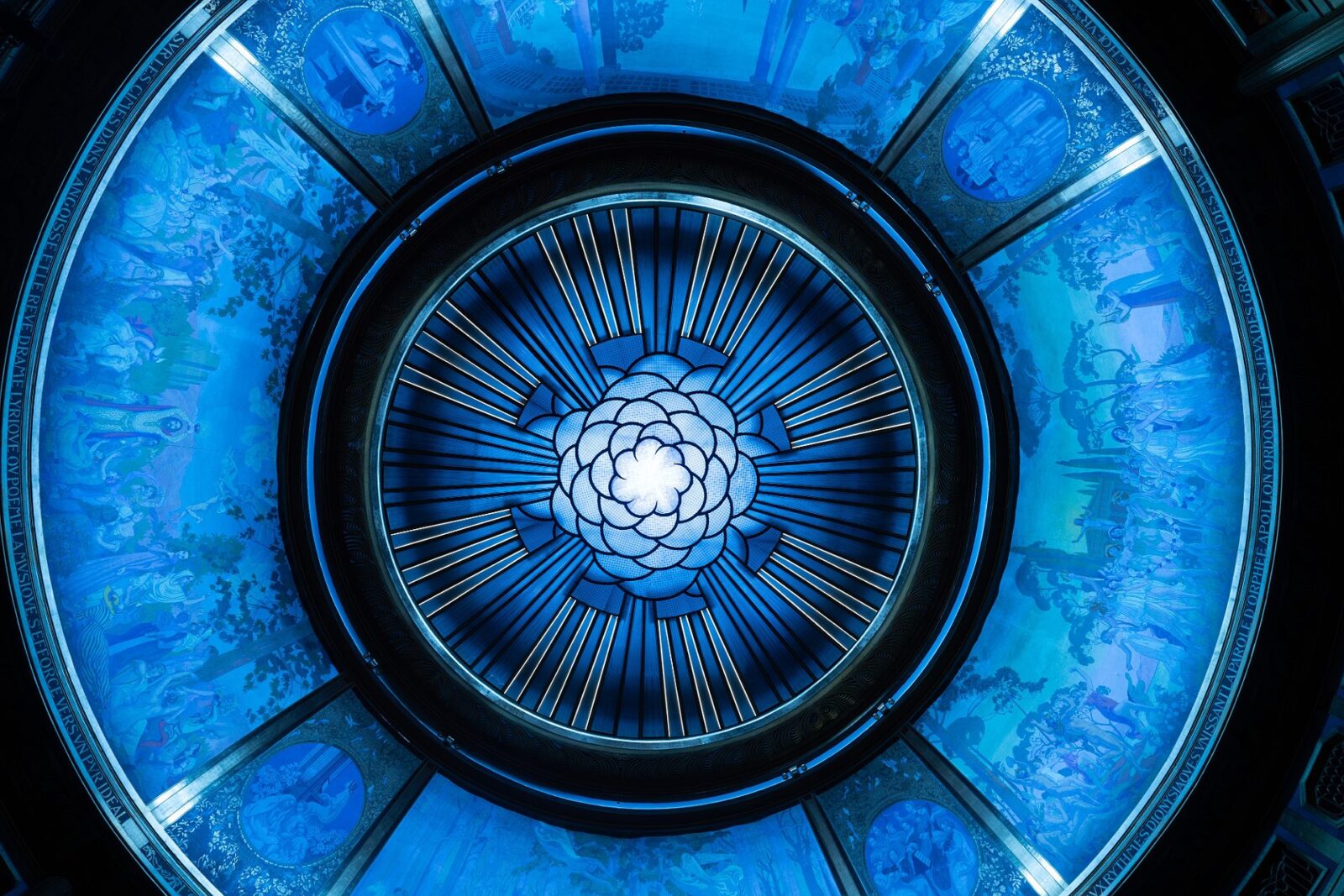
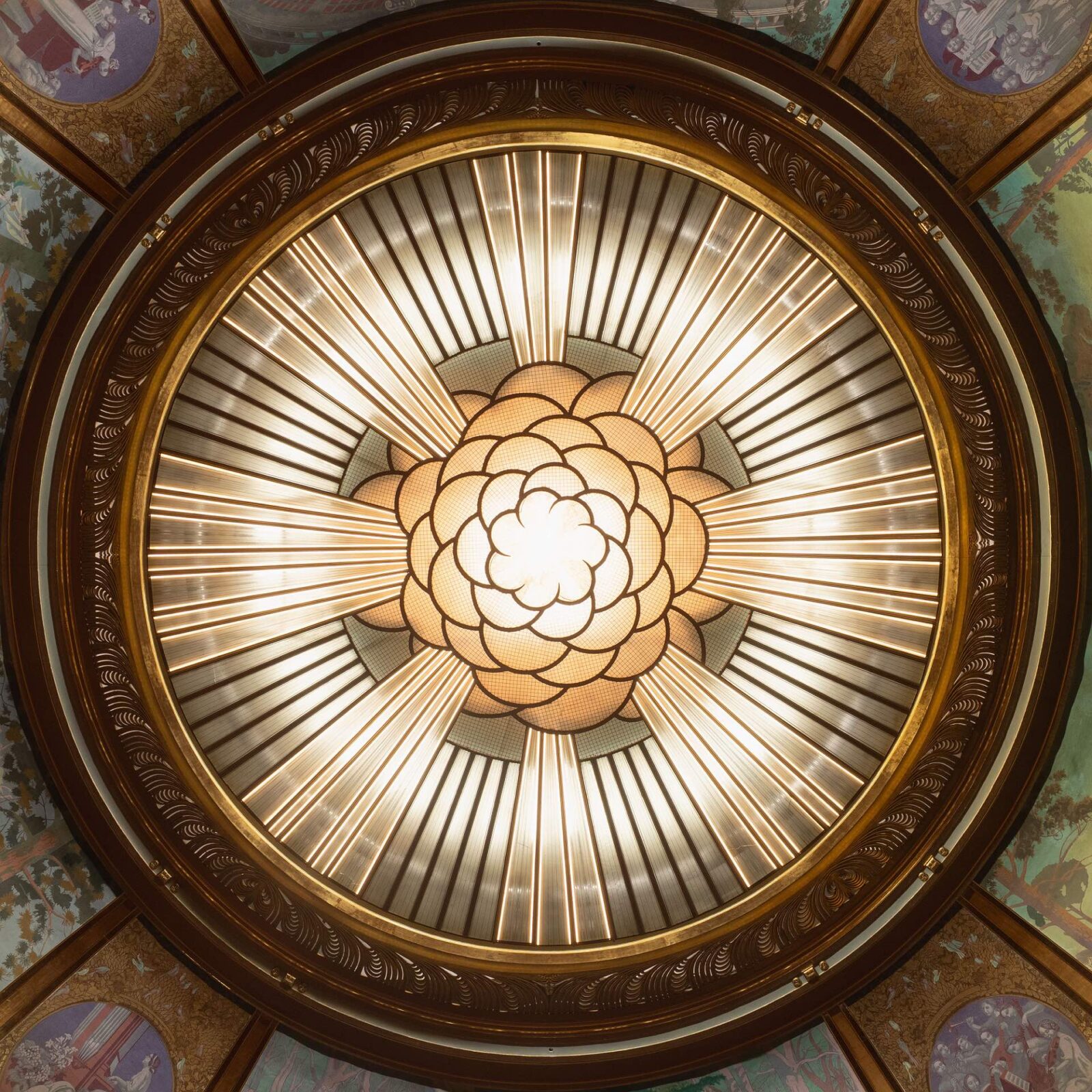
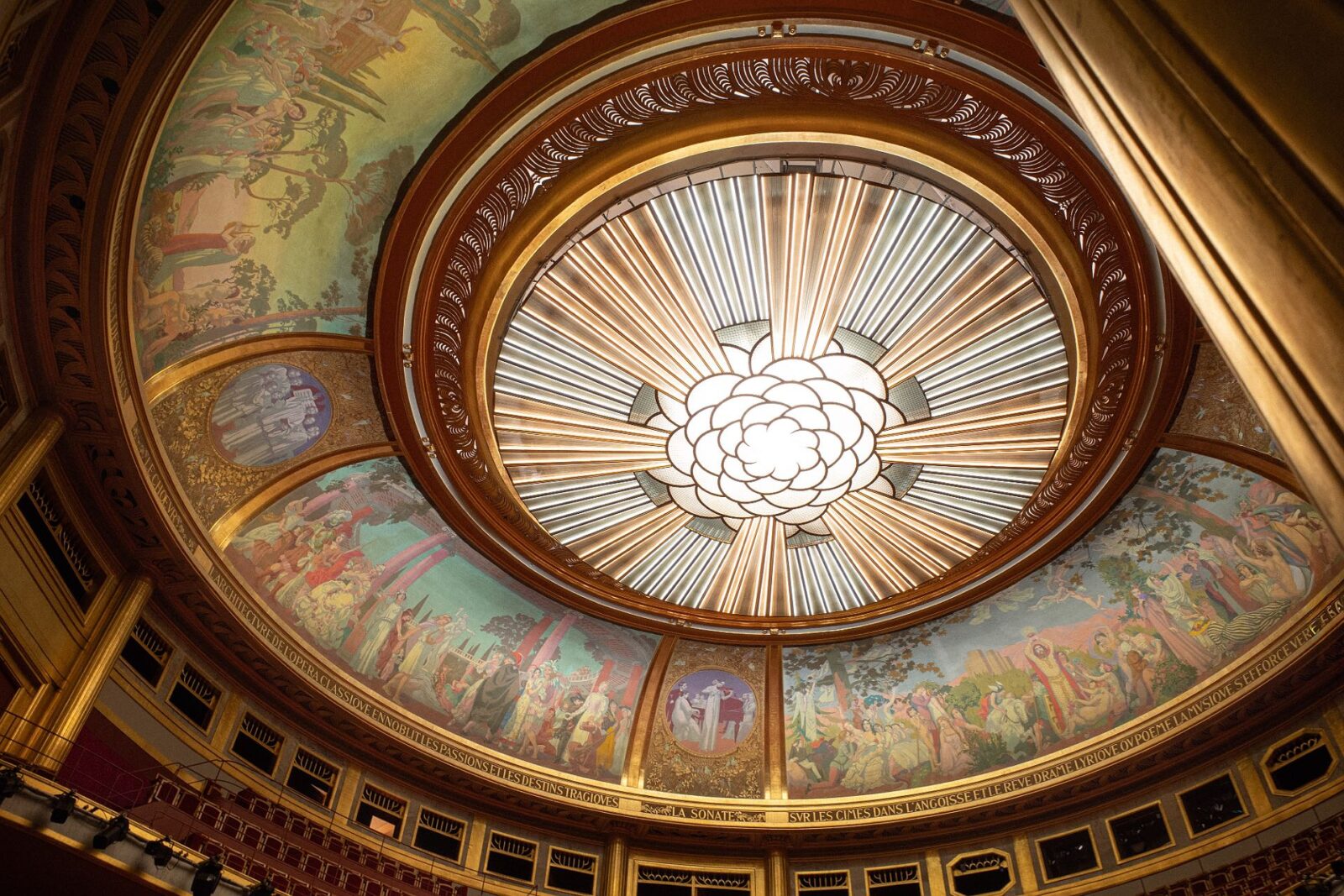
It is shaped like a flower, with pistils and petals made of 131 stained-glass panels that glow from behind. Around it, the dome is decorated with around 300 m² of paintings by Maurice Denis. The hall seats 1,905 for opera, dance and concerts, and it has never had another main light.
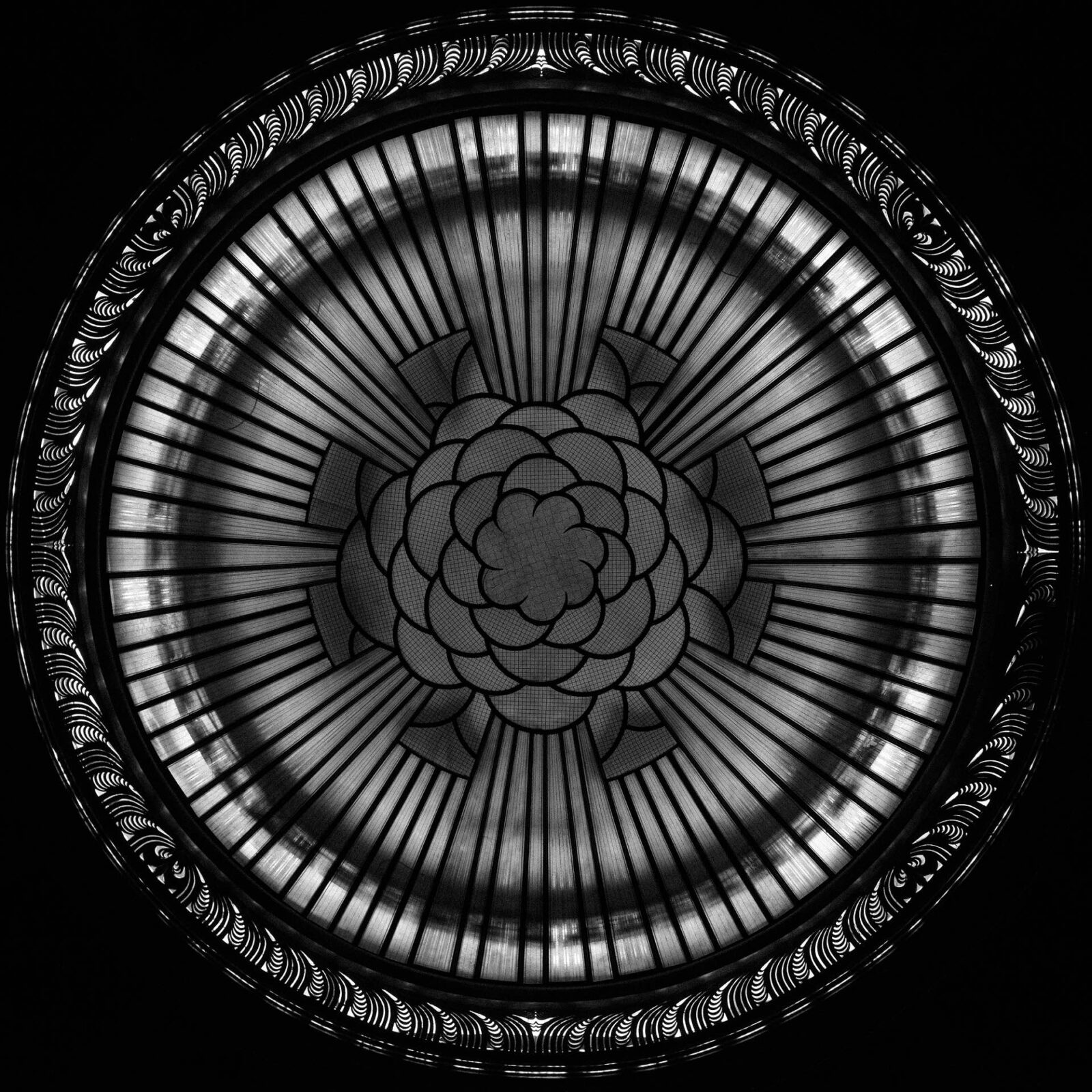
Perret’s system worked for more than seventy years, until the replacements began. Halogen lamps went in behind the glass in 1986, using the original mountings. In 2003, the halogen was replaced by fluorescent tubes, packed side by side in straight lines. The glass below them is arranged in rays going out from the centre, so the two patterns did not match. A jute cloth was then hung around the glass to hide the new equipment, which covered most of the Maurice Denis paintings. By 2025, the fluorescent installation had reached the end of its life, cost a great deal to run and was no longer safe.
“The wall-to-wall fluorescent ceiling that had been there for more than twenty years was arranged in a way that did not respect the sense of the glazing.”
Yann Jourdan
Seven weeks of work at 25 metres
The theatre and the paintings are both listed monuments, and the building belongs to the Caisse des Dépôts et Consignations. Every decision, therefore, had to be approved by the regional heritage authority before any work began. Six months of study came first, including a 3D survey of the dome, structural checks and computer simulations of the light. The work itself had to fit into the theatre’s two-month summer closure, since the shield is the main light in the hall and had to be working for the first season of the new director, Baptiste Charroing.
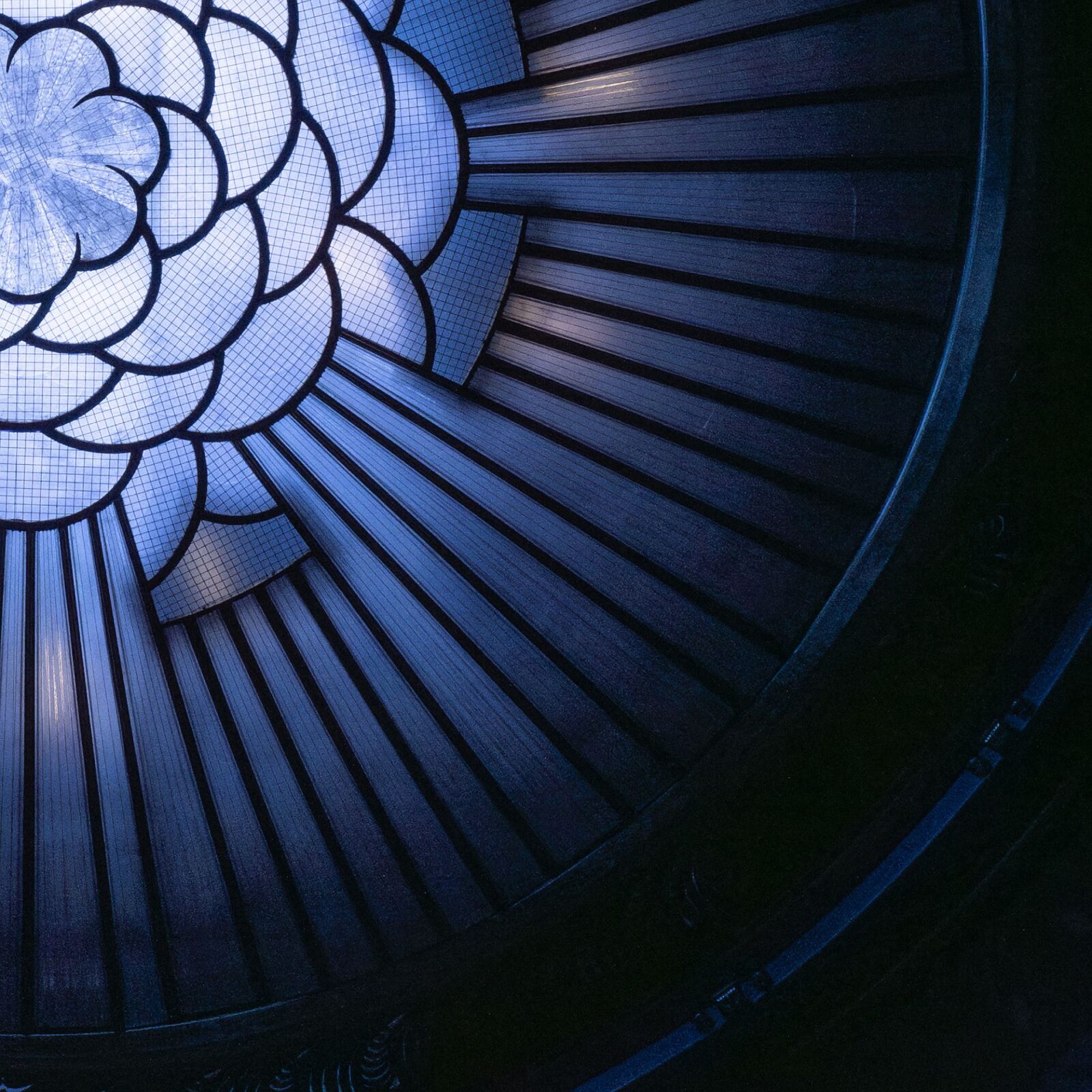
To make matters more challenging, the dome can only be reached on ropes, because the 1913 glass will not take the weight of a scaffold. Rope specialists from the firm Colibri did the climbing, and the technicians installing the lights took rope training themselves before going up. They took down 241 old light sources and put up 385 LED fittings, run on nearly 3,000 digital control circuits.
“All our technicians on this project went and did rope training to take on board what it means to work 25 metres up. The point was not to become rope specialists but to realise that when you pick up a hammer, you must not drop it on the listed glazing from the start of the century.”
Stéphane Rullier
Five kinds of light systems
The Denis paintings around the edge are lit by two rows of Anolis lamps that sit just above the glass and point across at each other. Each one is on an adjustable bracket made for the job, so the skies and the ground in the paintings can be lit separately. A second set of Anolis lamps points the other way, up at the white concrete slab above the glass, and the light that bounces back down gives the ceiling its depth and colour.
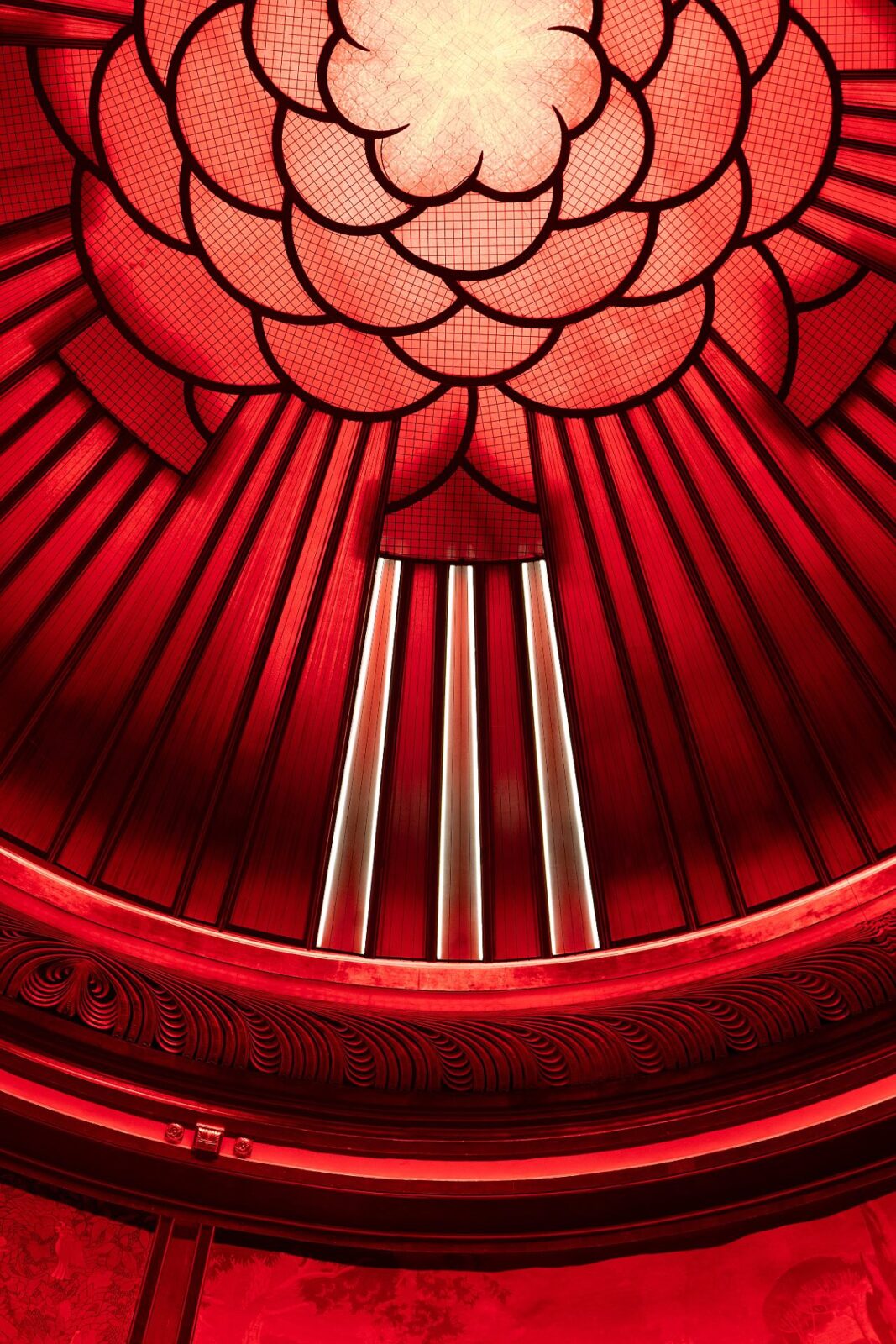
Above the glass, custom LED strips by GDS Coemar run outwards in the same pattern as the flower below, at 3,000 Kelvin, a warm white close to an old filament bulb. Each strip is split into four parts, so the pattern can be changed from one setting to the next. A separate coloured light was placed almost against the glass at the centre of the flower.
The fifth kind is the newest: 160 thin LED strips from ATEA are hidden inside the metal bars that hold the glass, throwing rays across the ceiling without casting any shadow on it. These alternate between 2,400 and 3,000 Kelvin, one slightly warmer than the other.
Matching the paint
Jourdan chose the lamps for how faithfully they show colour, since anything that flattened it would have left the Denis paintings looking bland after all the work of uncovering them. He tested different shades of white against the paintings and took the options to Paul Denis, the painter’s grandson, before settling on one. The manufacturer then measured and adjusted every lamp at its factory in Villepinte so that the colours hold whether the ceiling is at full strength or turned right down.
The finished system holds several settings, of which the heritage authority approved one for everyday use, and that is the one that brings out the gilding and the marble in the hall. The others were developed for performances and change through the evening, moving from the audience coming in, to the musicians arriving, to the conductor raising the orchestra. Between them they give four times as much light as the old installation, while the heritage setting draws half the electricity.
Project information
Lighting Design Company: ProjetScénie
Lead Designer: Yann Jourdan
Heritage Architecture Company: BLPRRC
Heritage Architect: Paul Ravaux
Other Credits: D6 Bell Light (lighting integration and programming), Colibri (rope access), Pezant Électricité (electrical installation), BC Maintenance (metalwork), Anolis Lighting, GDS Coemar, ATEA (fixtures)
Photography: ProjetScénie
Location: Paris, France
Date: September 2025


