





Header: Marcos Zegers
Galeo Pavilion began with a very ordinary situation: a family with a house on the coast wanted an extra place on the same site, mainly for their teenagers and their friends. Not a second house in any formal sense, just a place where younger people could stay, gather, eat, sleep, and come and go without constantly crossing paths with the rest of the household.
The beginning
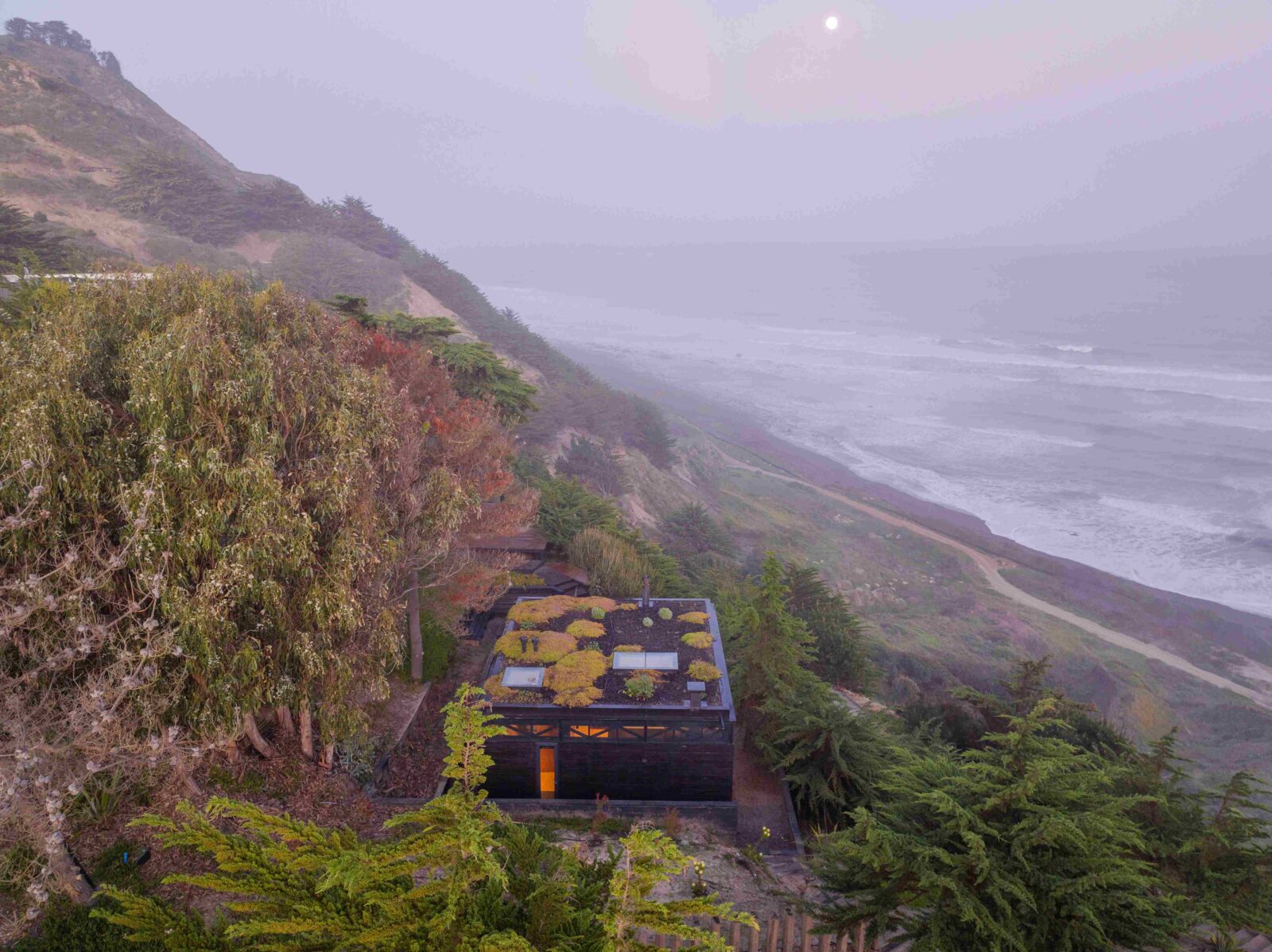
The basic work was already done before official construction started: the ground had been levelled, the retaining walls were there, and the footprint was fixed at eight by eight metres. With the designer on board, Stanaćev Granados, construction started quickly, as per the client’s request.
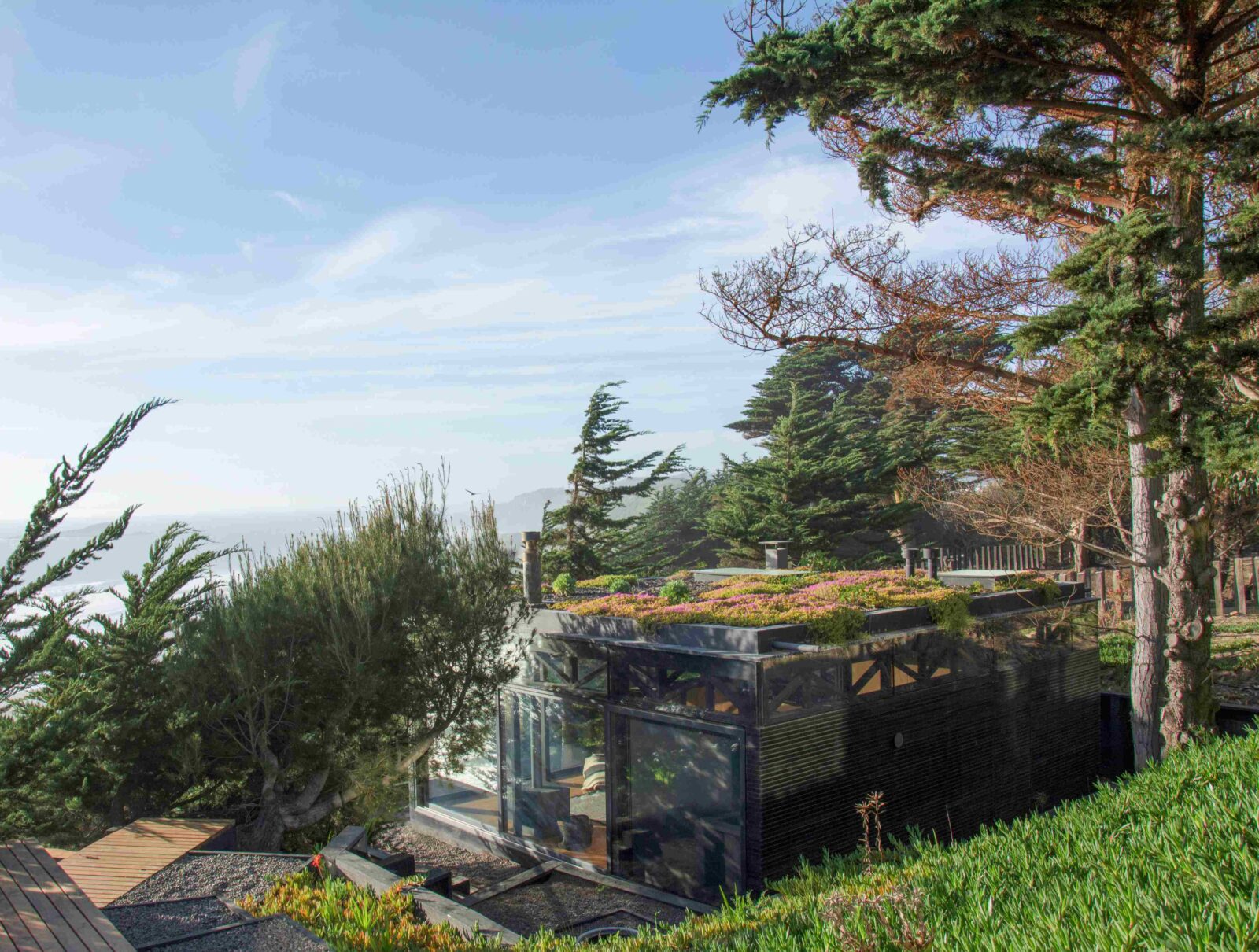
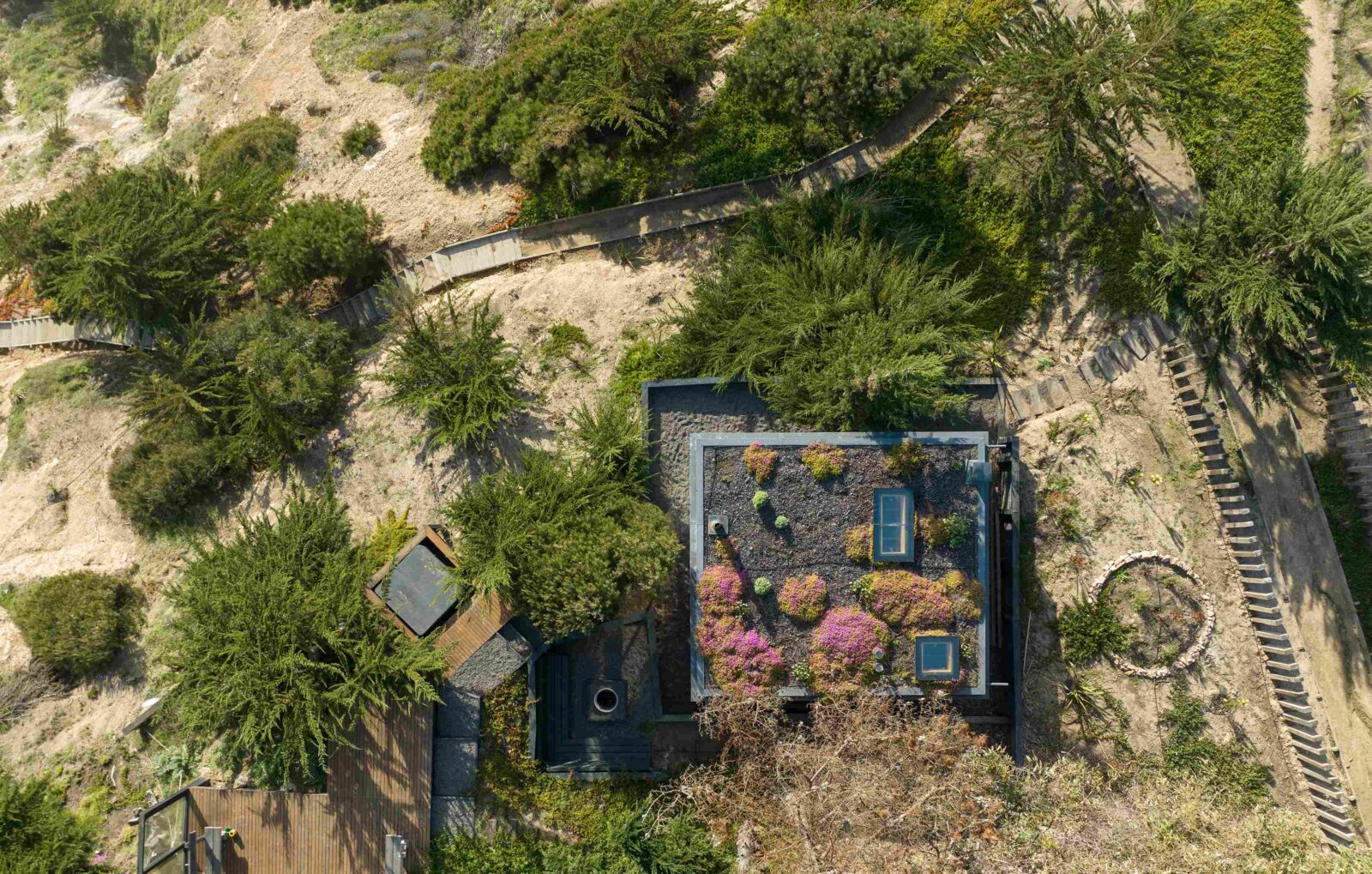
The new pavilion is located close to the main house, on the same level, which could easily have made it feel like an add-on. Instead, the distance helps create some privacy without completely separating the two, a detail greatly helped by the bio roof. Covered in vegetation, Joaquín Lobato from Dinámica Ambiental designed it to completely blend the building with the landscape when seen from above or from the main house. The roof also does some quiet work in the background by helping with heat and sound, something very important as the two living spaces are placed so near each other.
The design
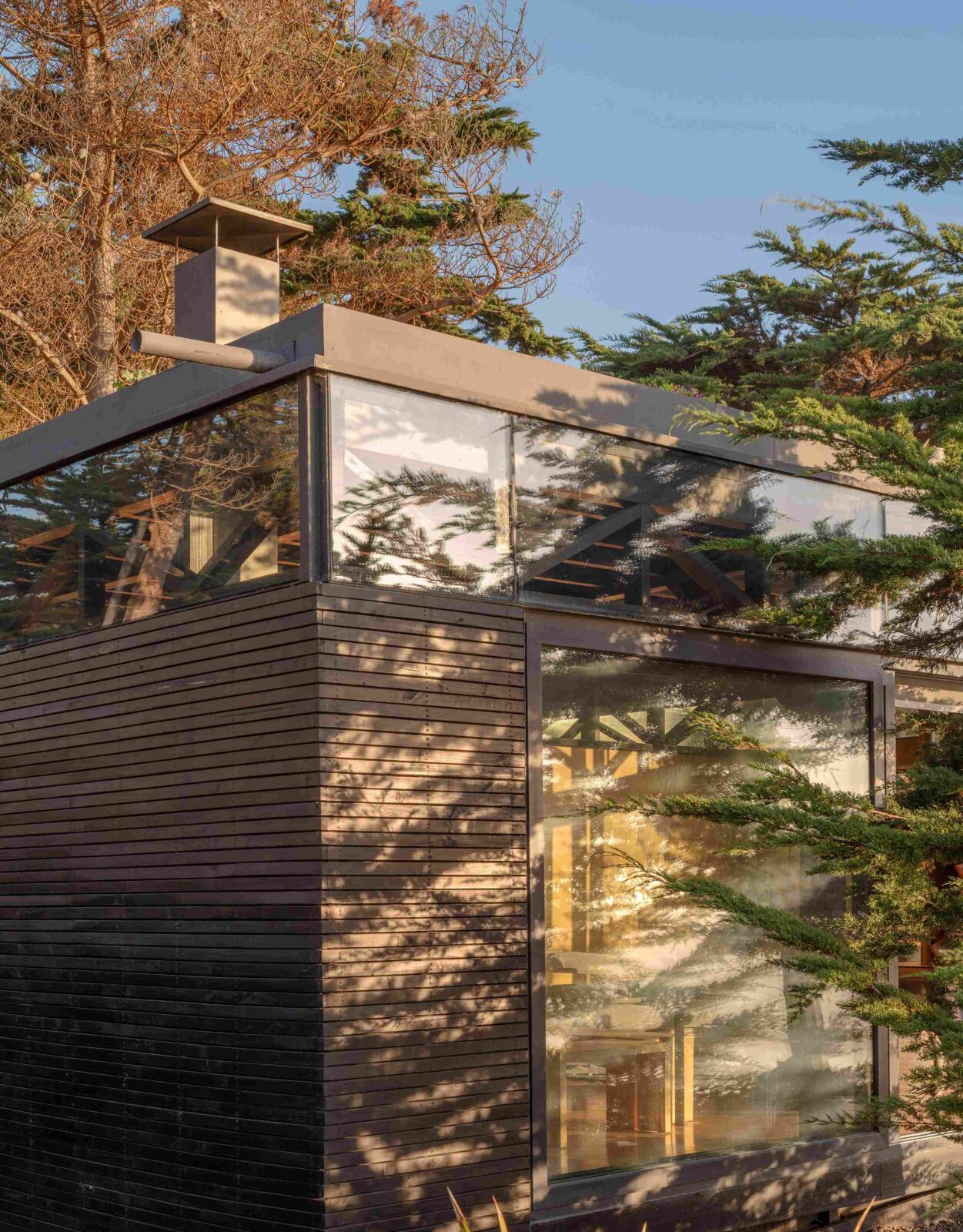
From the outside, the building looks simple and compact. A continuous strip of glass runs just below the roof, bringing daylight into the space. While it may seem like a small detail, this element changes how the space is perceived, as it creates a break between the roof and walls.
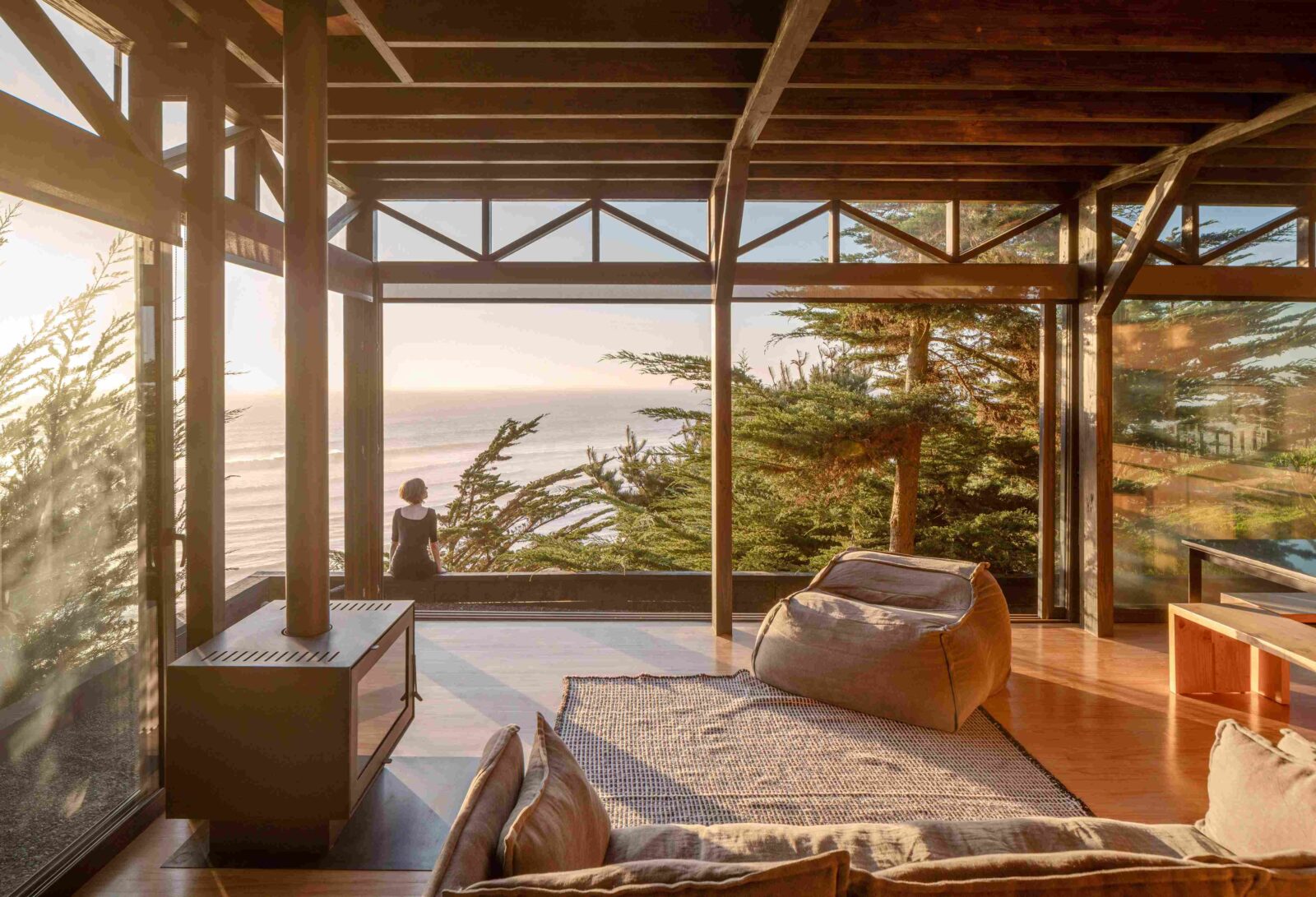
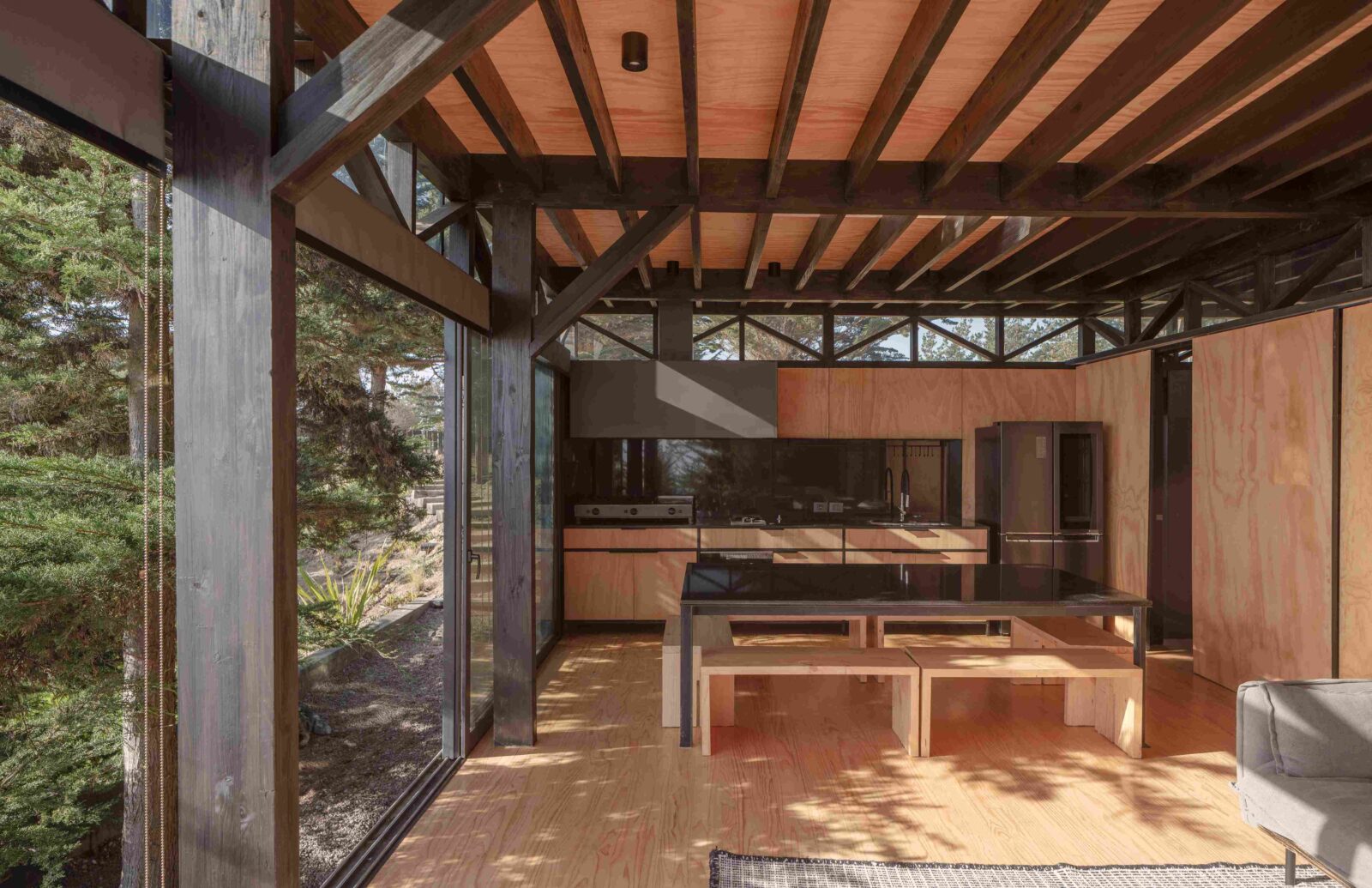
The building was designed to open up toward the sea, with large sliding doors running across the façade to allow residents to enjoy the premium views. These can be completely open to the sides, and when that happens, the pavilion becomes something closer to a covered terrace. This is where the idea of the quincho, a typology embedded in Chilean culture as a space for cooking, eating, sitting around, and moving in and out. It’s social, informal, and a little messy, which is exactly the point.
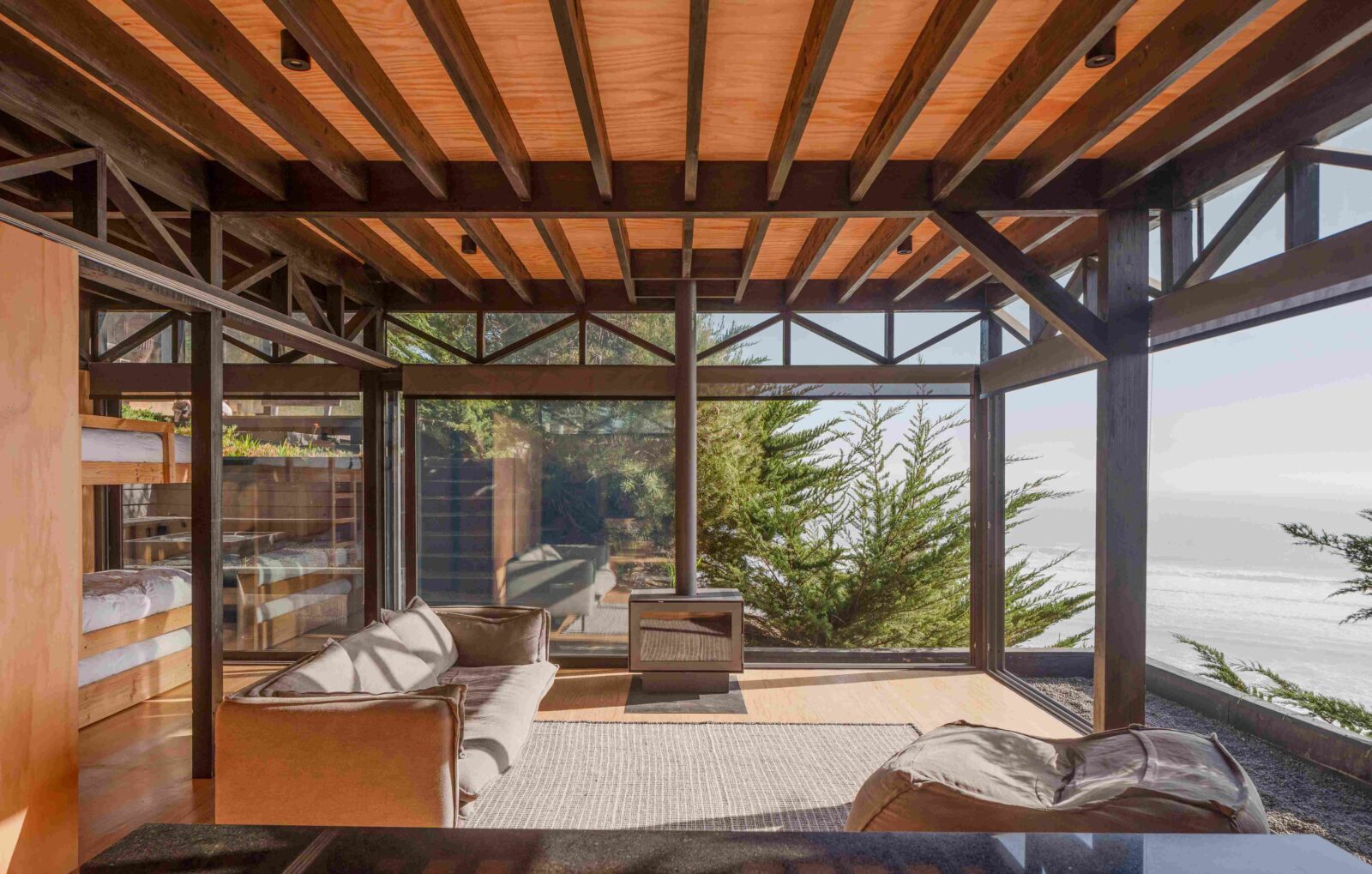
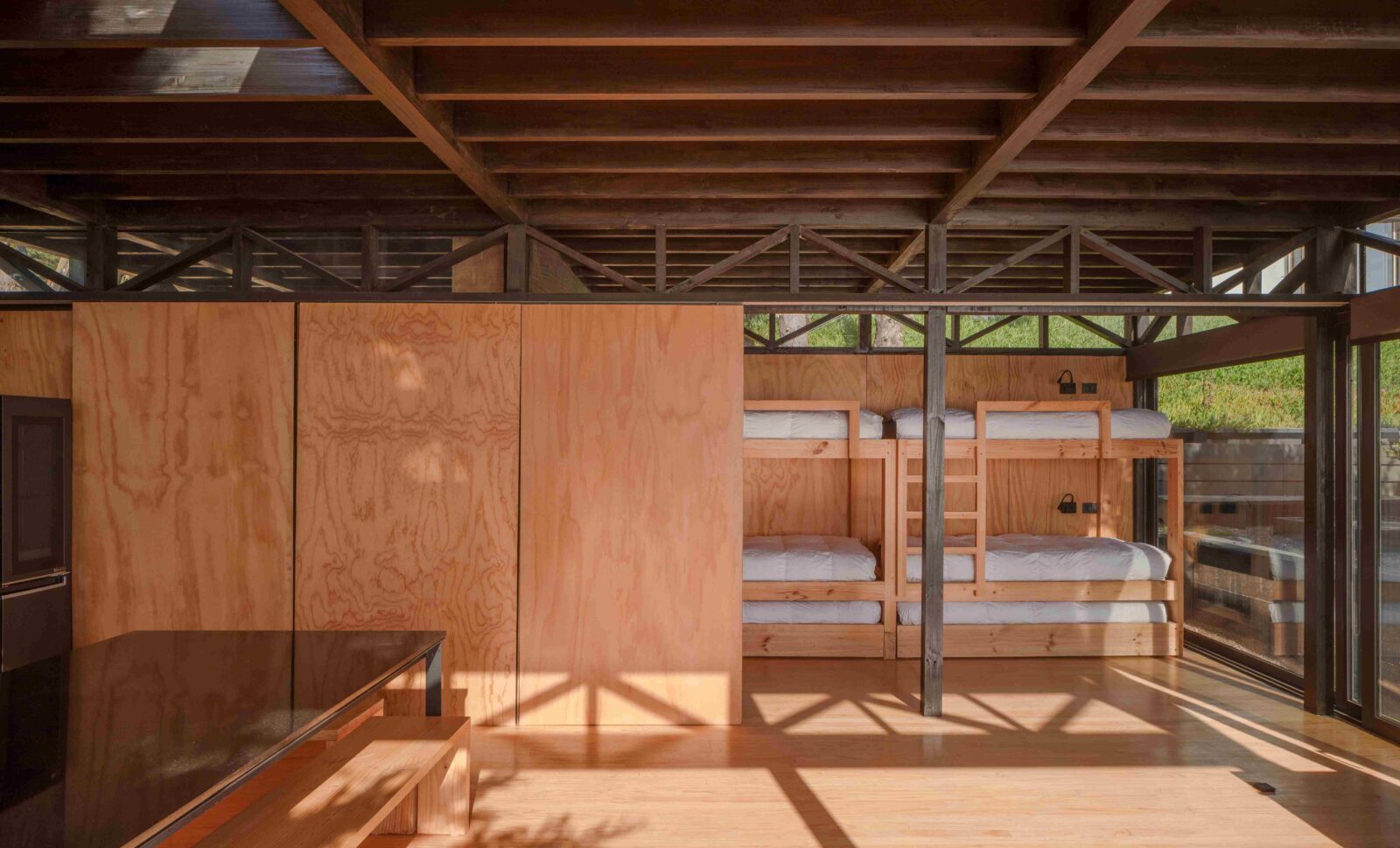
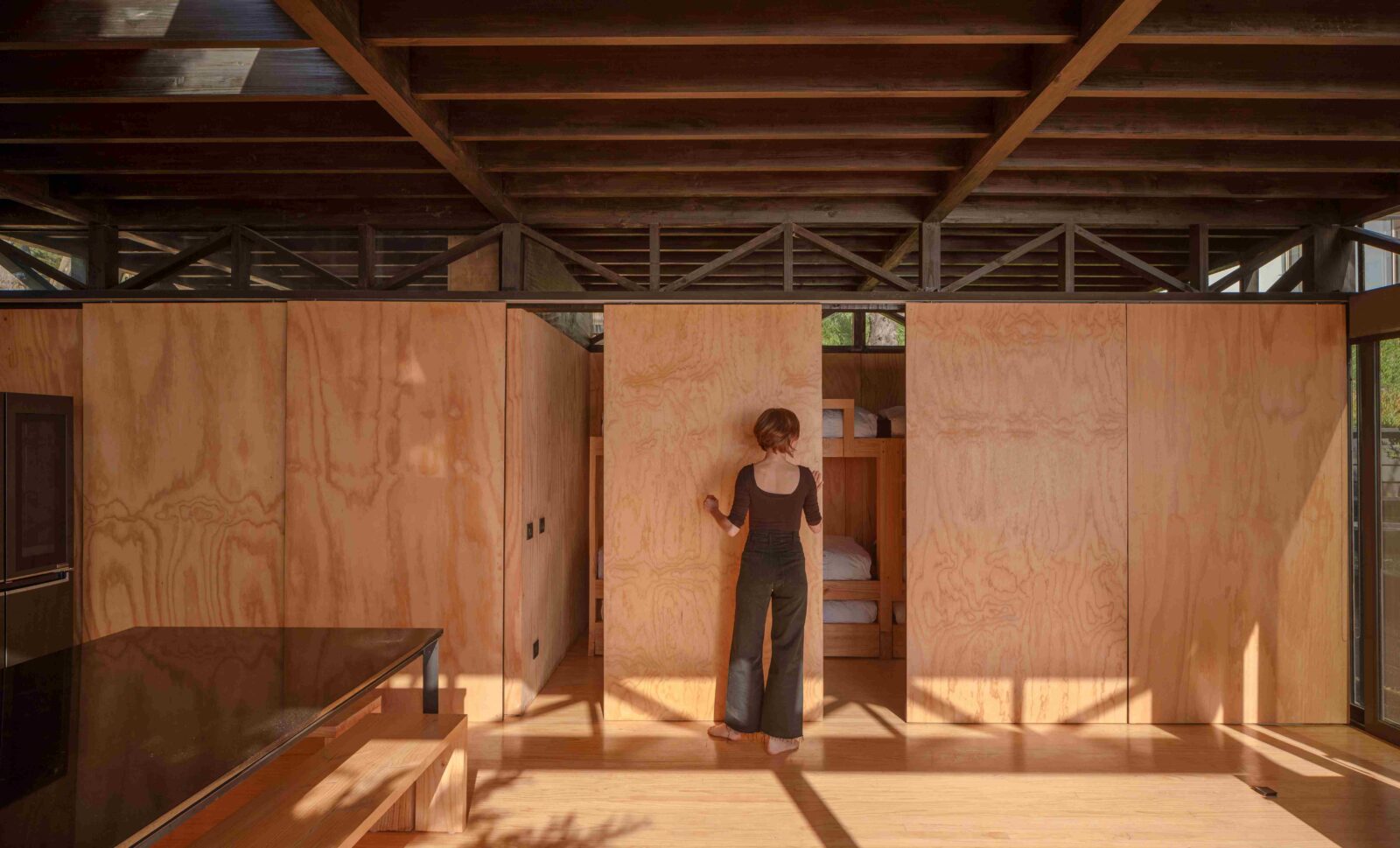
The other sides of the structure are closed, darker, and more contained. These façades face the main house and neighbouring plots, and they do not want to draw attention. Inside, there is essentially one room that can have several functions, depending on who’s using the new spot. Six bunk beds are hidden behind sliding panels, so they only appear when needed. During the day, the building is a generous open space, and at night it quietly turns into shared accommodation.
Material choices
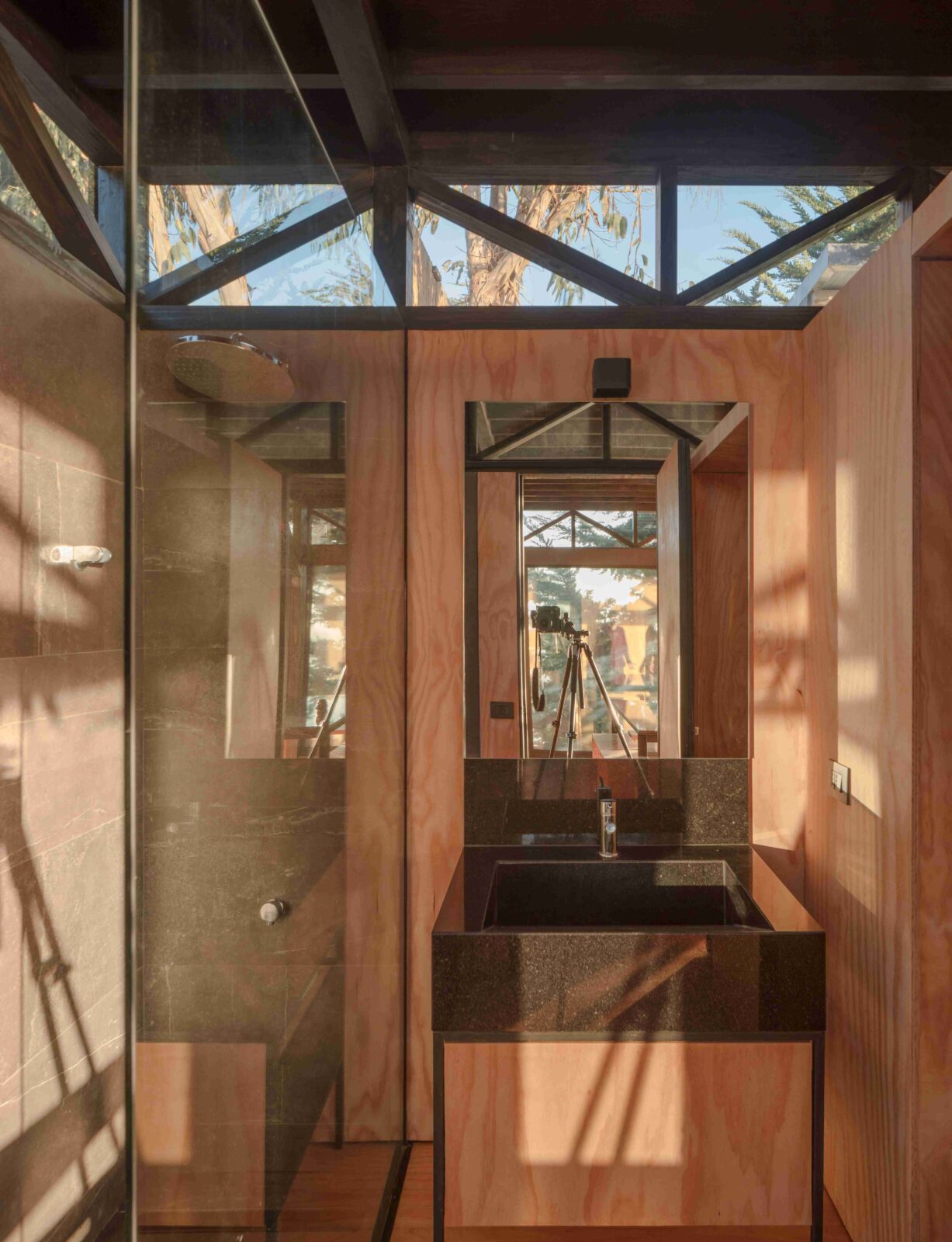
Timber is used everywhere, sometimes in darker stains, other times left natural. Walls, furniture, storage, and partitions all use the same family of materials, which keeps the space visually cohesive even when it’s full of people.
Where surfaces need to be rougher and more durable (such as in the kitchen, the dining table, and the bathroom), granite and metal take over. These are practical additions chosen to last, not to stand out. The designer ensured they would feel muted in the space, as the focal point should be the people, the views, and the woods.
In the end, Galeo Pavilion was designed as a place for younger people, for shared time, for noise and retreat and everything in between.


