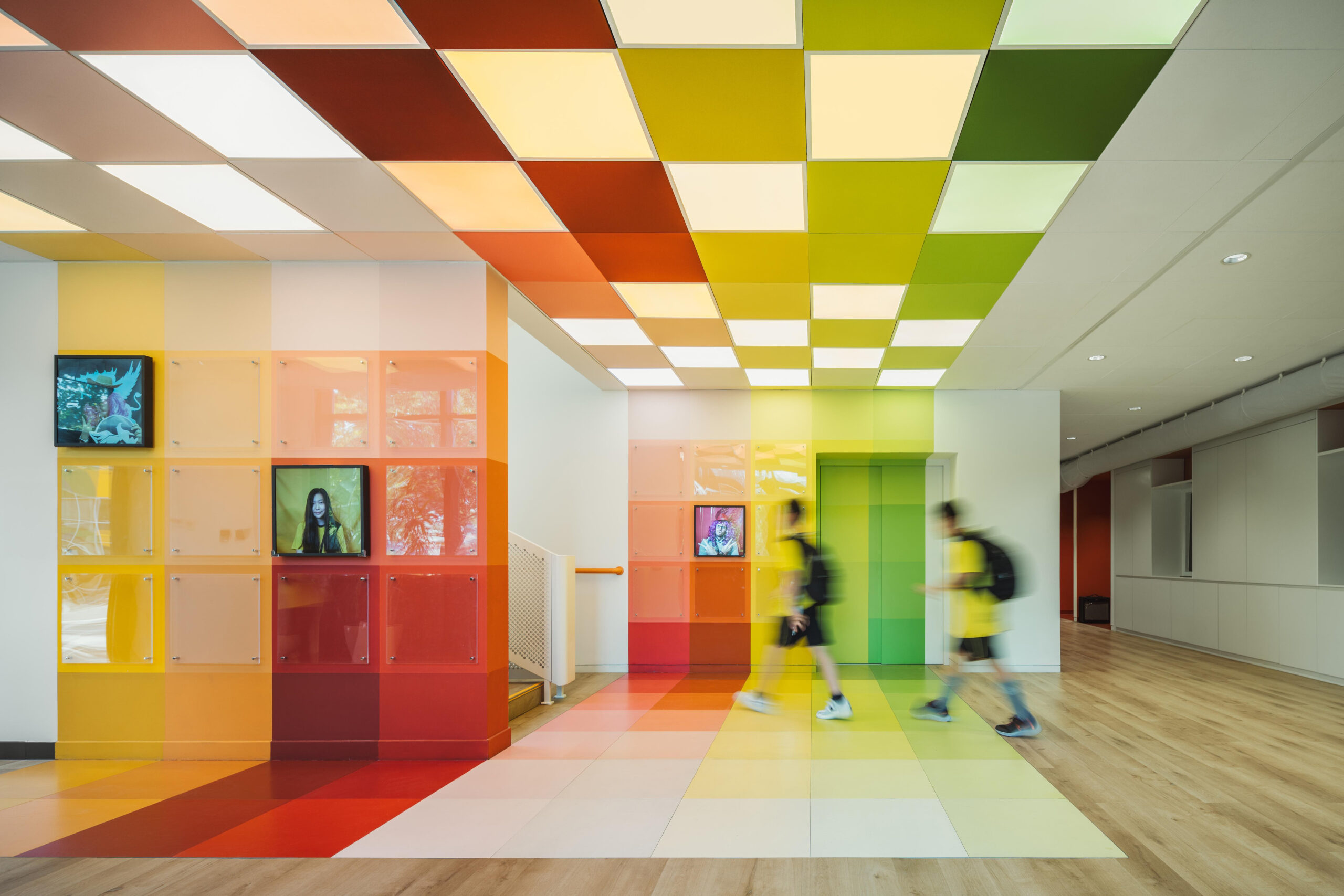
Header: Image Courtesy of Taichung Art Museum; Photography by Iwan Baan
Considered Taiwan’s most important cultural development of 2025, the Taichung Green Museumbrary, located in the country’s second largest city, Taichung, officially opened to the public in December 2025. The new international cultural destination is Taiwan’s first venue to integrate a metropolitan art museum and a city’s central library, which offers a new model for arts institutions.
“The integration of Taichung Art Museum with Taichung Public Library and the park has activated our thinking about the environment, culture, people and the city. With the inaugural exhibition and the special commissions, we not only combine artistic dialogues across generations and cultures but also strive to fulfil the potential of an art museum to enter the everyday life of the city and its residents, as well as to inspire creativity and imagination.”
Yi-Hsin Lai, Director of Taichung Art Museum
Photographer: Iwan Baan
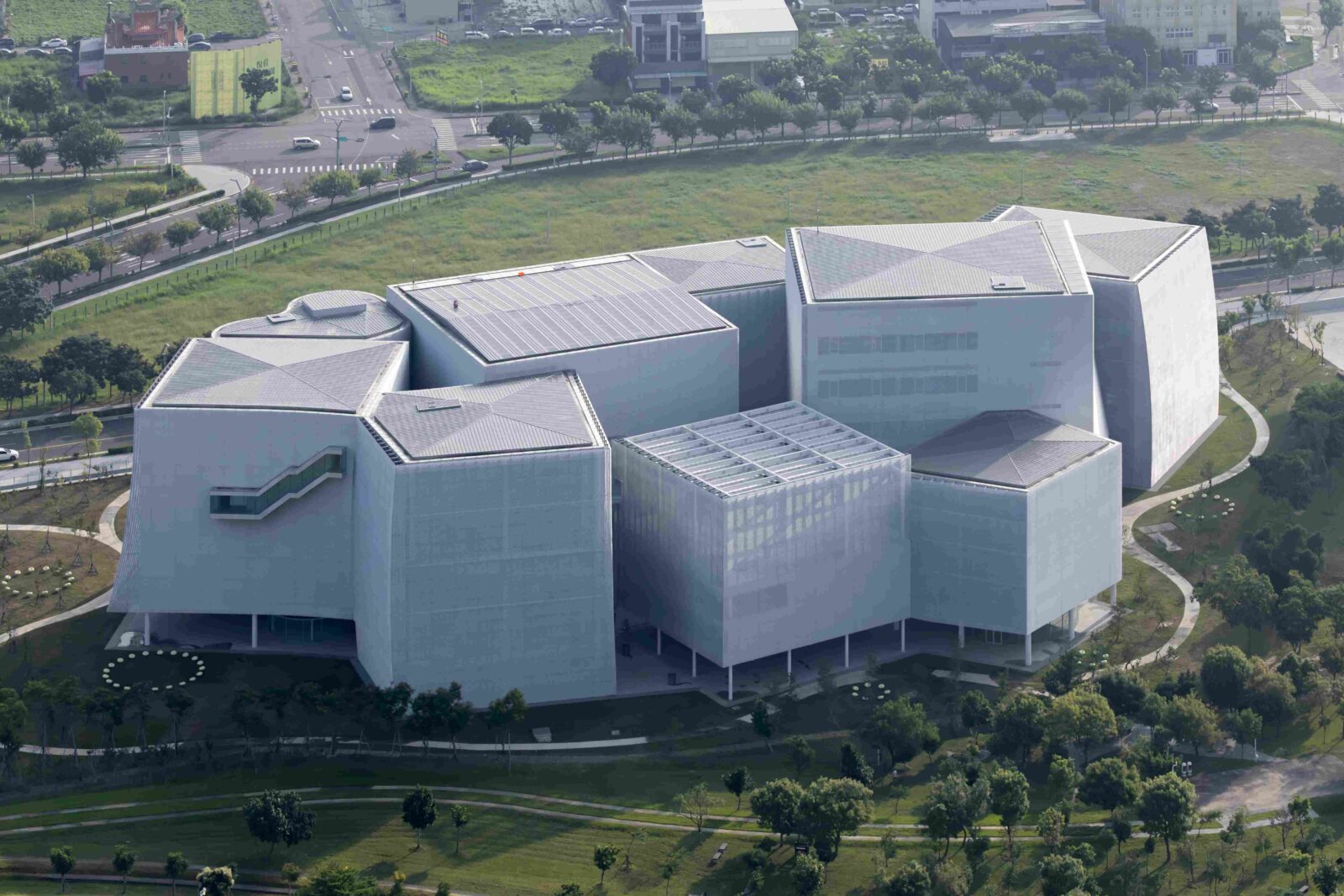
Located within Taichung’s 67-hectare Central Park, Taichung Green Museumbrary is home to the new Taichung Art Museum and the Taichung Public Library. The dual-venue complex was designed through an international collaboration between SANAA, a renowned Japanese architectural team led by 2010 Pritzker Prize laureates Kazuyo Sejima and Ryue Nishizawa, and Taiwan’s Ricky Liu & Associates Architects + Planners.
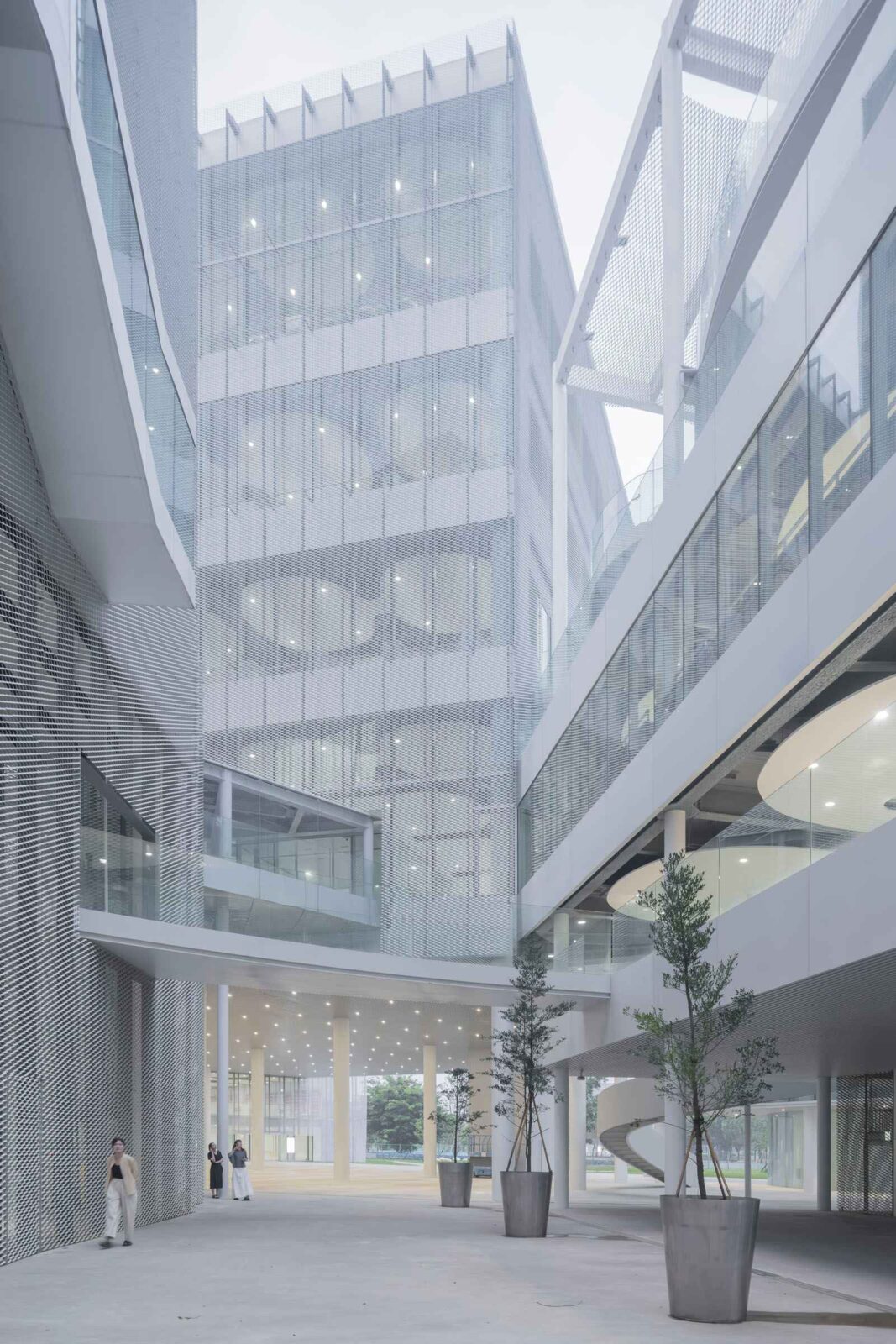
The building covers a total floor area of 57,996 square metres and is both SANAA’s first public building in Taiwan and their largest cultural project to date. One can perfectly make out SANAA’s signature themes in the design, such as transparency and fluidity, as the building is comprised of eight interconnected volumes of varying sizes clad in glass and metal, all enveloped by a pristine white expanded metal mesh curtain façade.
The Taichung Art Museum (TcAM) opened up with the inaugural exhibition “A Call of All Beings: See you tomorrow, same time, same place”, which was curated by an international team from Taiwan, Romania/South Korea, and the United States. The exhibition was created to blend local perspectives with global insights and infuse the city with ideas and innovation. The museum also unveiled the first TcAM Art Commissions in Public Space from Haegue Yang and Michael Lin, establishing itself as a cultural force in contemporary art with a commitment to international dialogues.
“The completion of Taichung Green Museumbrary is a milestone in the city’s sustained investment in culture. It is emblematic of the city’s forward-thinking cultural policy and commitment to innovation. We are grateful to SANAA for gifting this extraordinarily welcoming architectural marvel to our city for all visitors from near and afar to enjoy.”
Jia-Jun Chen, Director of the Cultural Affairs Bureau of Taichung City Government
Photographer: Iwan Baan
Photographer: Iwan Baan
The Architecture
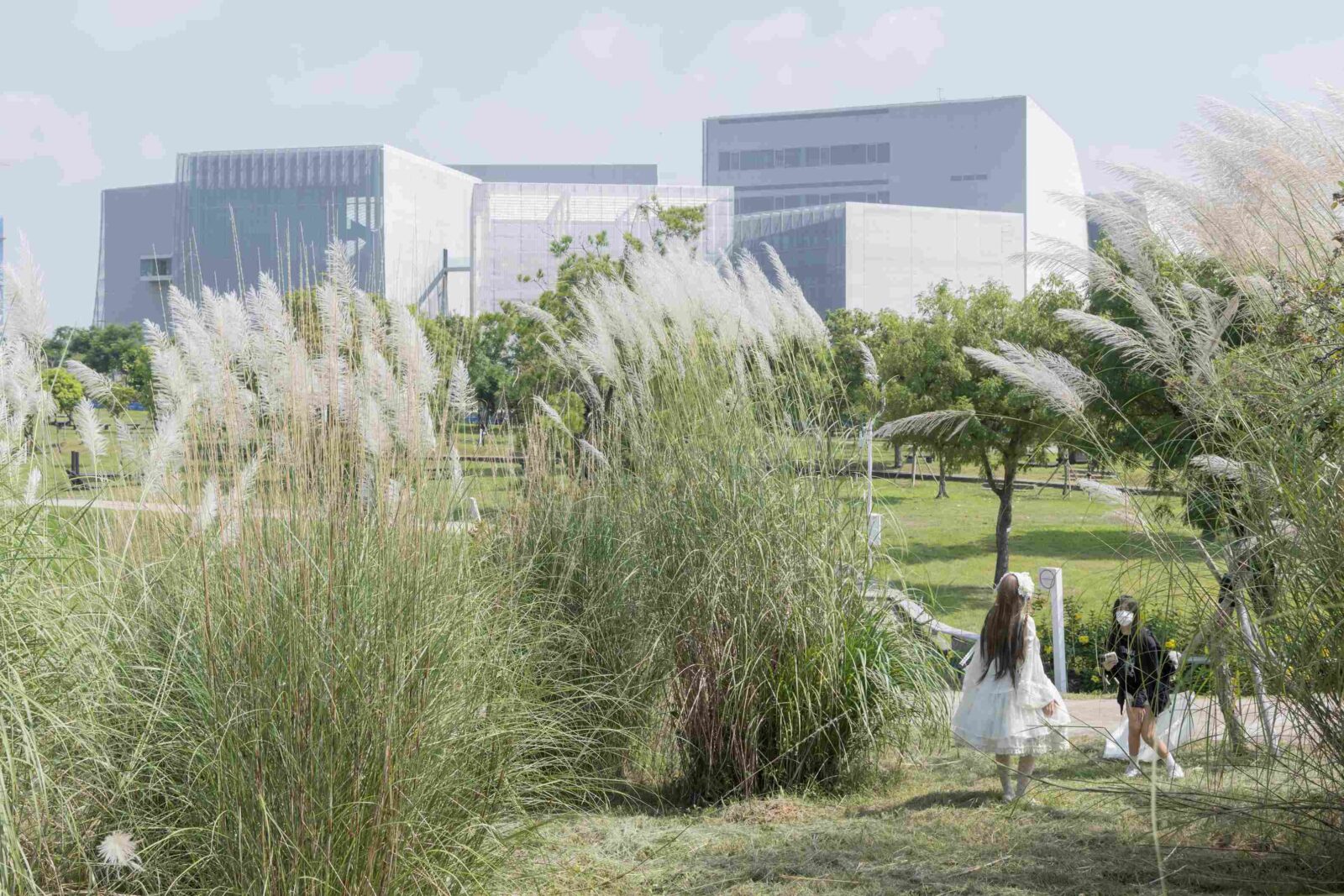
Taichung Green Museumbrary occupies the northern edge of the 67-hectare Central Park within the 254-hectare Shuinan Trade and Economic Park, the site of a former military airport decommissioned in 2004. SANAA’s design embodies the ethos of the Taichung Green Museumbrary as “a library in a park and an art museum in a forest”, with spatial highlights including:
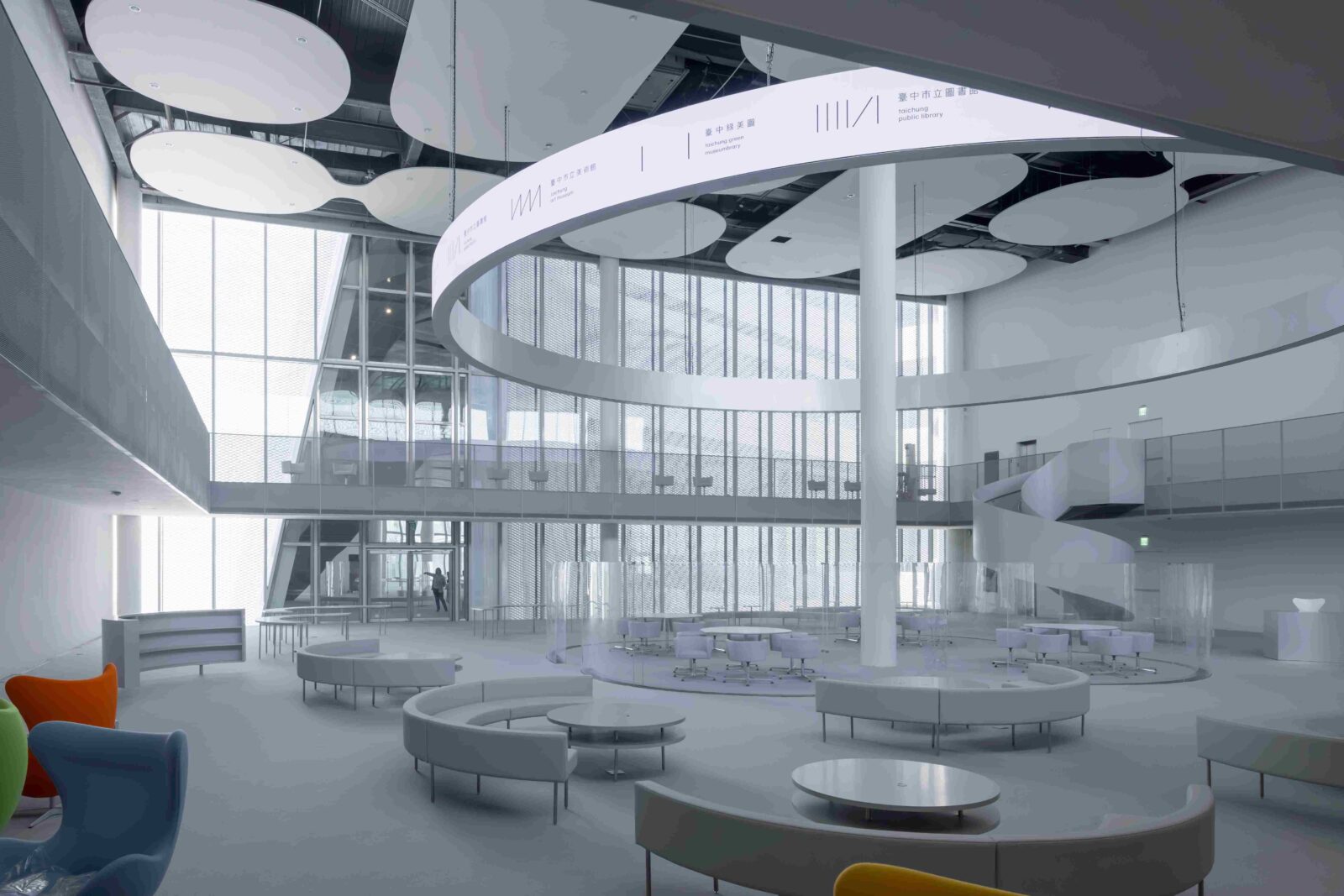
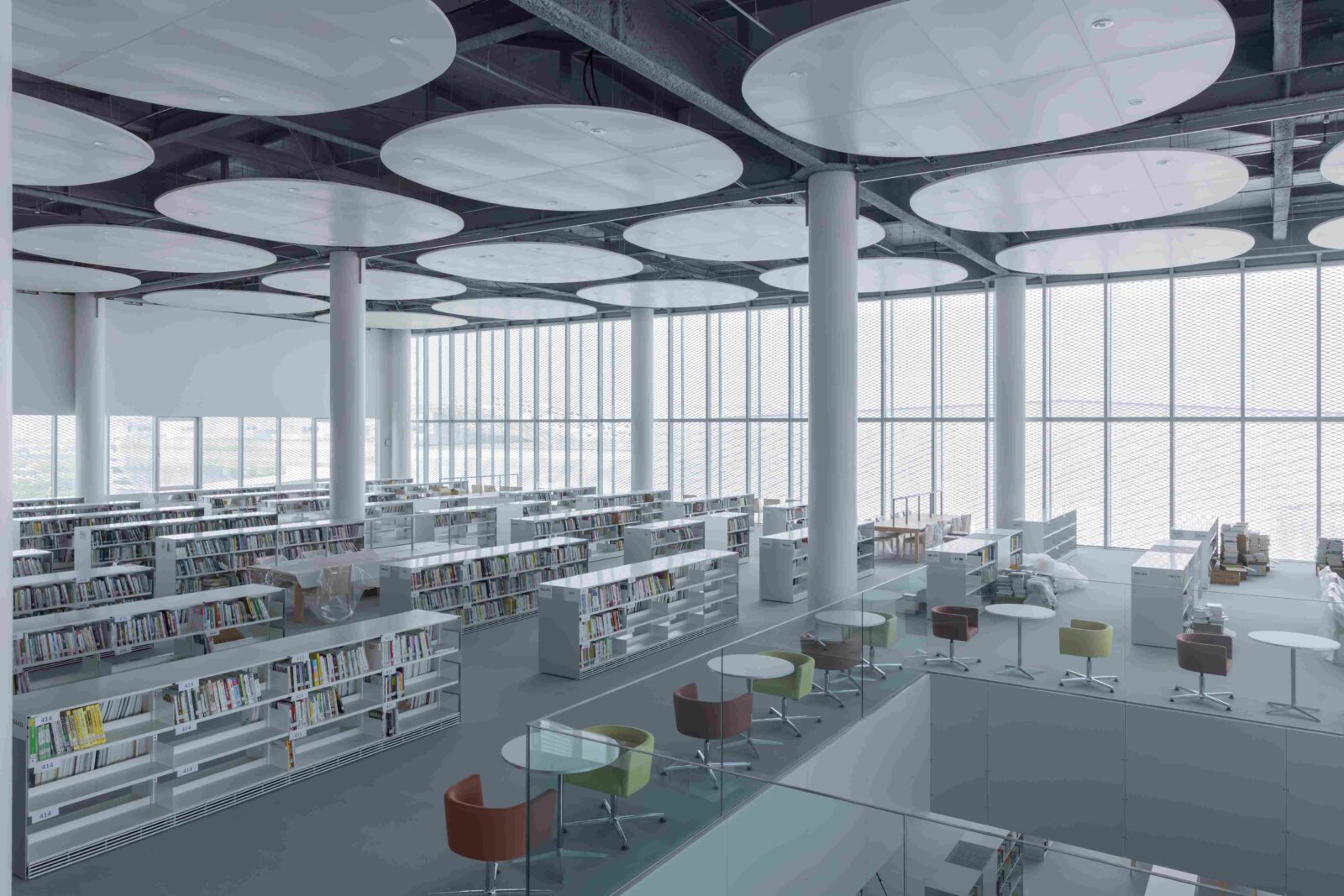
A boundless, inclusive space. The facility dissolves traditional boundaries between museums and libraries, creating an open, inclusive environment where exhibitions and reading converge. The Taichung Public Library houses over 1,000,000 physical books and digital resources.
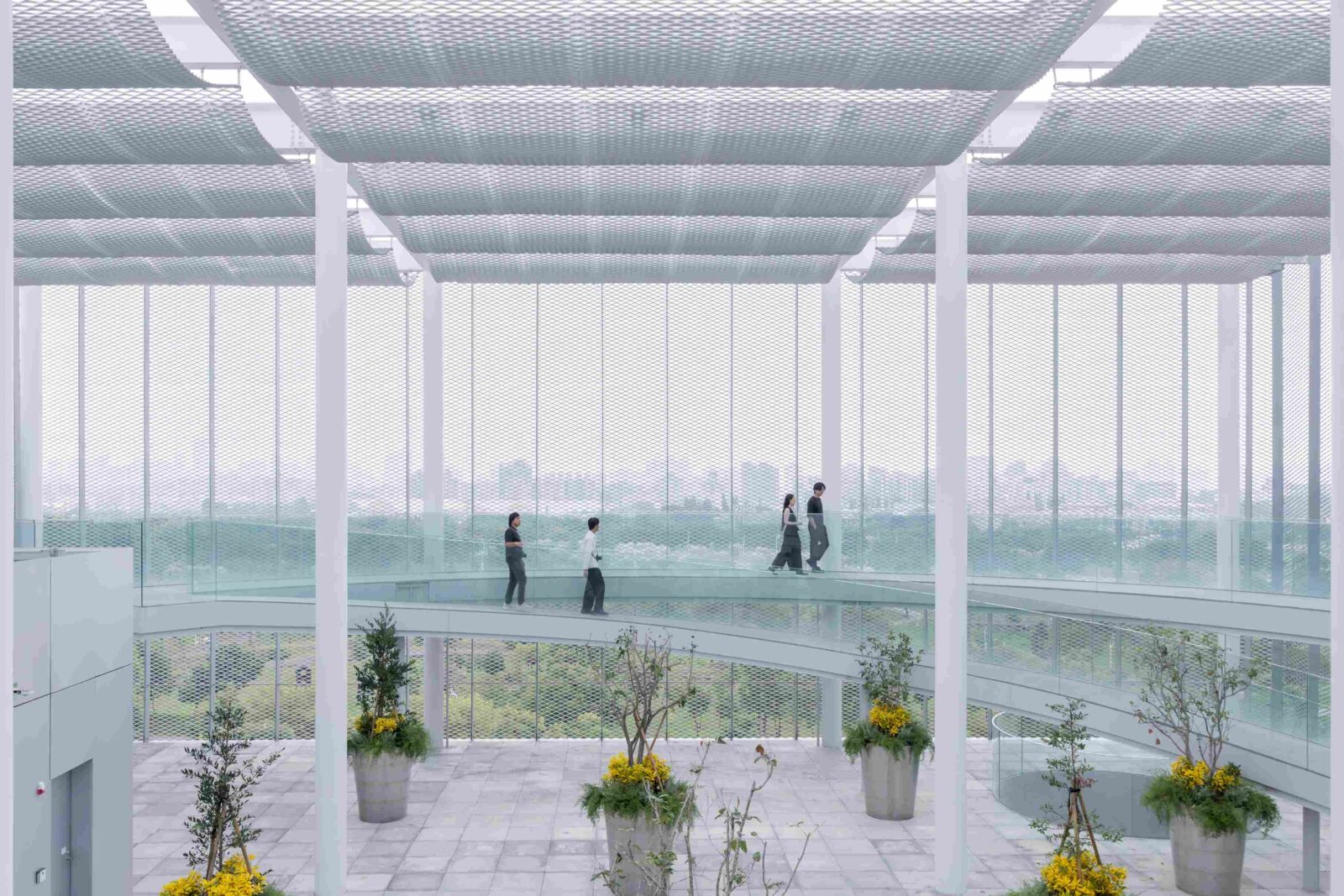
An outdoor rooftop garden. The outdoor rooftop Culture Forest offers visitors an exceptional vantage point to enjoy the sweeping views of Central Park’s lush greenery and the city skyline. Conceived to celebrate the site’s distinctive Central Park setting, it encourages museum and library visitors to immerse themselves in this unique landscape from the rooftop garden.
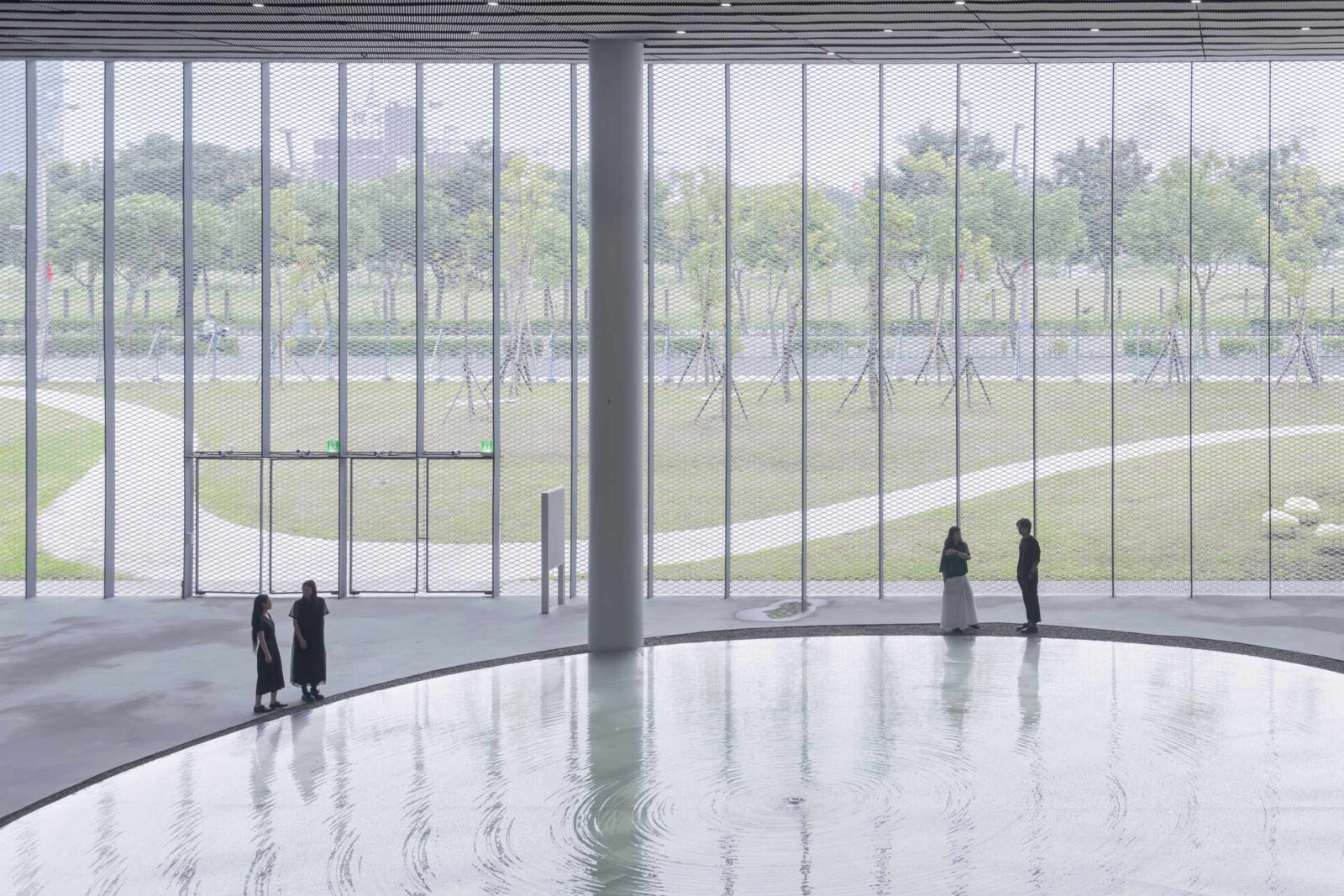
Transparency and openness. The exterior features a dual-layer façade: an inner layer of high-performance low-emissivity glass or metal cladding and an outer layer of aluminium expanded metal mesh. It is this silvery-white veil that gives the building a sense of lightness and transparency. The whole structure sits lifted above ground to allow the park’s breeze and natural light to flow freely through, enhancing the building’s connection to its surroundings. The shaded plazas at ground level enable visitors to access the building from all directions, creating an open and inviting public space.
Kazuyo Sejima and Ryue Nishizawa, partners of SANAA, said that they’ve “always hoped to create an open building that many people can easily participate in. Whether it is the museum providing visual learning through art or the library offering education through literature, combining the two to create a new multifaceted learning space is what [they] believe to be one of the main characteristics of this building.”
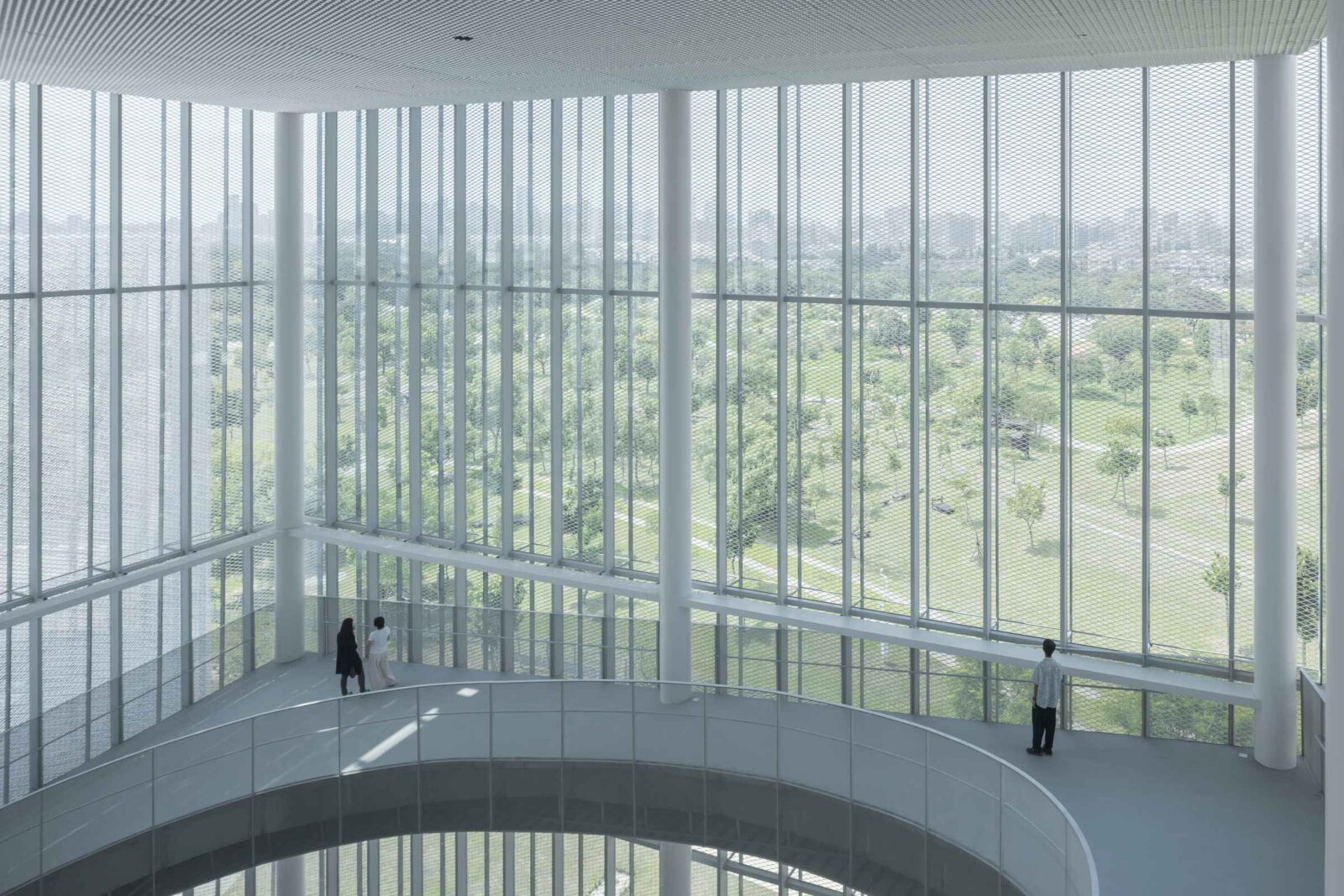
Photographer: Iwan Baan
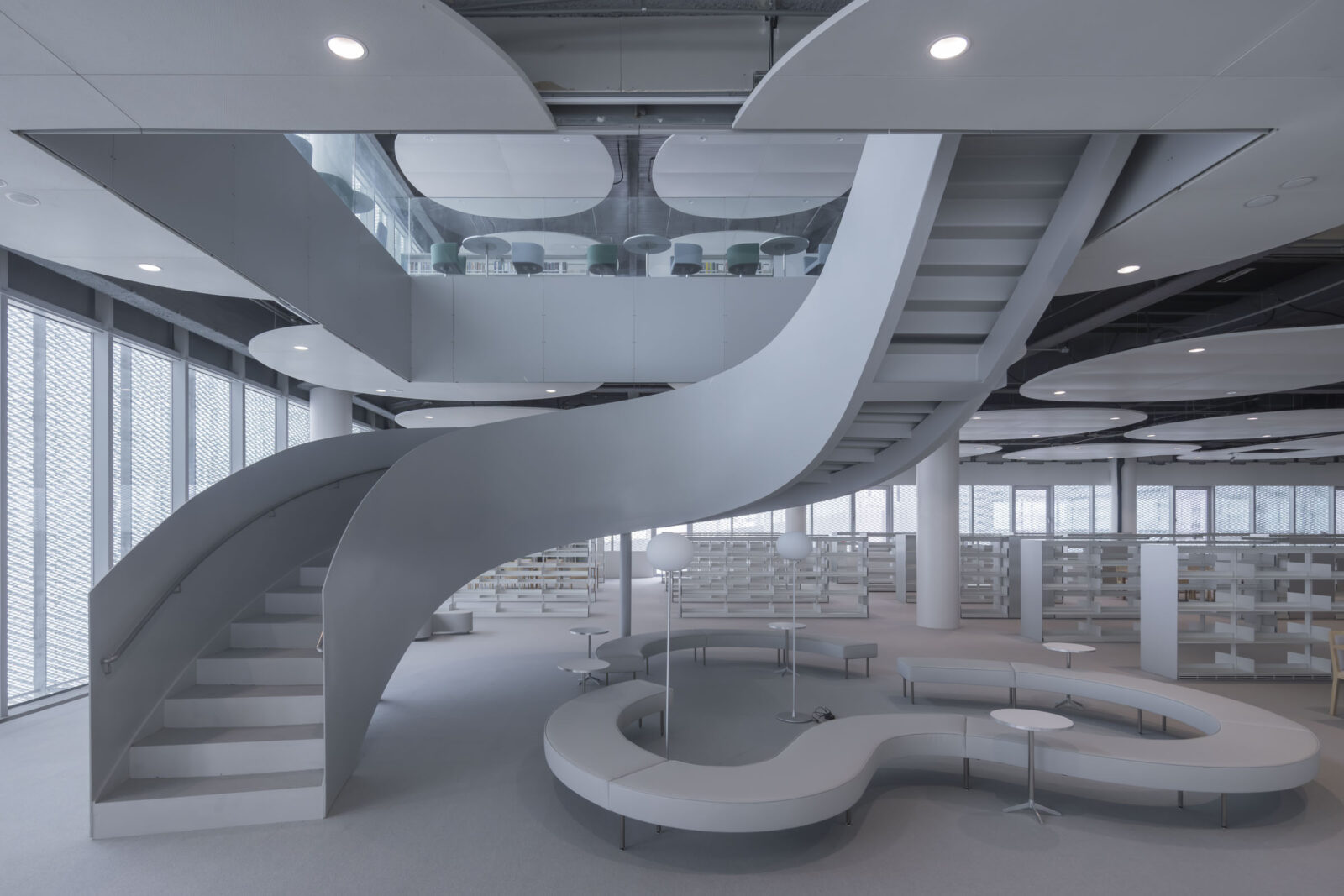
Photographer: Iwan Baan
Taichung Art Museum
Under the leadership of Director Yi-Hsin Lai, Taichung Art Museum is dedicated to supporting local artistic practices while fostering international exchange and dialogue between Taiwanese and global art communities. Its exhibition program embraces open and cross-disciplinary perspectives, inviting the public to new experiences of exploration and sensory immersion.
Central to the museum’s vision are reflections on environmental concerns, cultural infrastructure, and urban development, as well as a unique partnership with the Public Library. The museum is the most important addition to Taiwan’s vibrant art scene following the founding of the Taipei Biennial (1998), Taipei Art Week (2024), and the New Taipei City Art Museum (2025).
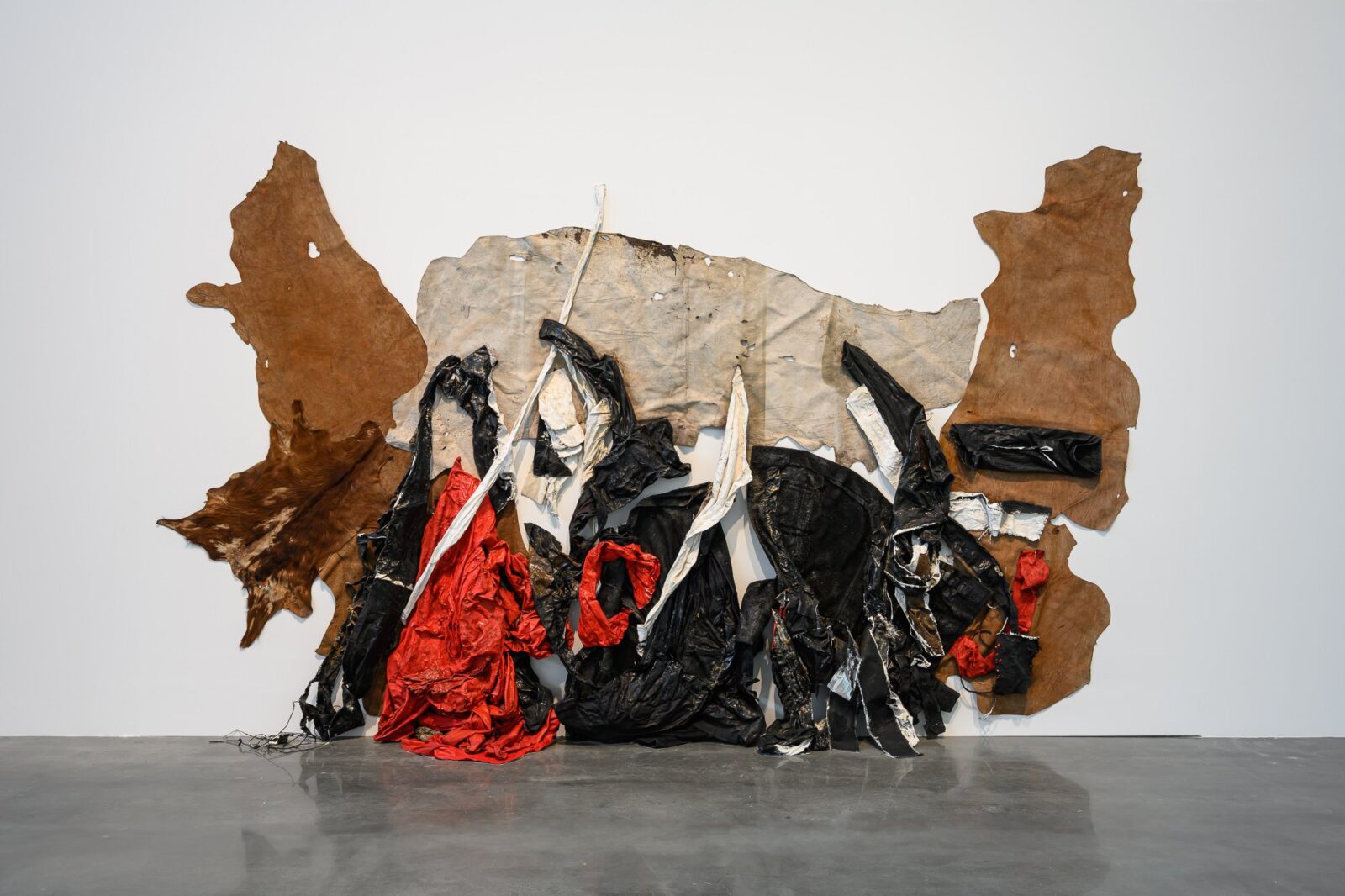
Photo: ANPIS FOTO
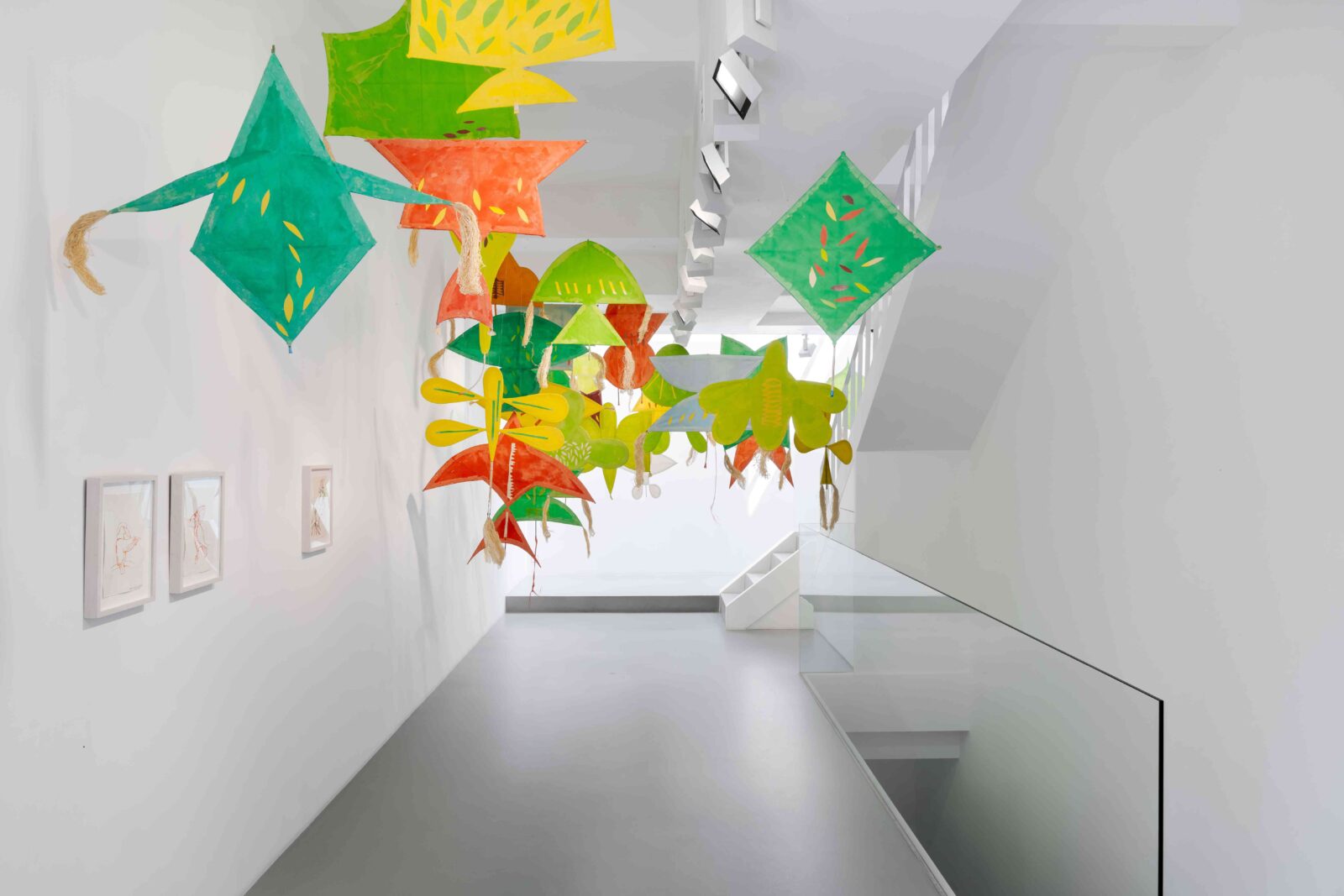
Photography by Jeon Byung-cheol
Photo credit: Joan Jonas / Artists Rights Society (ARS)
Image Courtesy of the artist and Gladstone Gallery
The opening exhibition
Co-curated by Taichung Art Museum’s curatorial team alongside Ling-Chih Chow (Taiwan), Alaina Claire Feldman (U.S.A.), and Anca Mihuleţ-Kim (Romania/South Korea), Taichung Art Museum’s opening exhibition “A Call of All Beings: See you tomorrow, same time, same place” draws inspiration from the natural and urban landscapes surrounding the museum, interweaving architectural openness with diverse artistic perspectives across generations.
Featuring works by more than 70 artists from over 20 countries, the curatorial collaboration weaves multiple methodologies, from Daoist philosophies to indigenous cosmologies, and embodied knowledge to non-Western perspectives. This created a multivocal framework that resists singular narratives about nature, culture, and interspecies relations.
The exhibition draws from the museum’s collection and new commissions to trace how human-nature relationships have been imagined and transformed. Central Taiwan masters establish historical grounding: Chen Ting-Shih’s “The First Crack of Thunder” (1972) renders natural forces through cane fibre relief; Yeh Huo-Cheng captures Mount Huoyan’s mineral-rich earth with impasto; Wang Ching-Shuang’s lacquer work employs maki-e and mother-of-pearl inlay; Chen Hsing-Wan’s “The Song of the Earth No.1” (1996) uses cowhide as ground for hardened fabric forms, the leather pulsing with vitality while textiles congeal into permanence.
Contemporary commissions extend these investigations. Chen Yin-Ju’s “Evocative of Mountains and Seas” (2025) reconstructs mythical animals from the 2,000-year-old Chinese bestiary through sound, scent, and minimal text. Au Sow Yee’s “The Broadcast Project II: A Many Splendored Thing of the Coconut, a Belle from Penang and the Secret Agent II” (2018) interweaves colonial histories of Malaya through fictional narratives of coconut palms and fragmented archives. Hong-Kai Wang’s collaborative publication “Our Words Don’t Suit Prophecies Anymore” asks how we might listen to beings without language.
Photographer: Iwan Baan
Photographer: Iwan Baan
International contributions complicate human-nature binaries. Joan Jonas’ “By a Thread in the Wind” (2024) used bamboo paper kites suspended overhead to evoke uncanny species, requiring upward rather than forward-facing attention. Loukia Alavanou’s VR installation “On the Way to Colonus” (2022) reimagines Greek tragedy within Athens’ Roma settlement, transforming marginalised peripheries into sites of dignity. Karolina Breguła documents coastal communities confronting rising seas, and Haitian artist Myrlande Constant’s beaded Vodou flags (drapos) blend faith, history, and social reality, presenting a cosmology where deities and humans coexist.
Artists engage architectural and performative dimensions. Seung Hyun Moon’s “On Thin and Transparent Things” (2025) activates galleries through bodies negotiating spatial barriers as the artist, born with cerebral palsy, interrogates relationships between consciousness and space. TAI Body Theatre’s performances invoke Truku mythology where giants’ bodies become island topography, transforming the museum into a “dwelling place of giants”.
The exhibition incorporates pivotal historical positions: Joseph Beuys’ late sculptures transform therapeutic objects into vessels for healing; Ana Mendieta’s final earth-body works merge corporeal and terrestrial surfaces; Chris Marker’s Bestiaire series explores reciprocal gazes between humans and animals; Antoine de Saint-Exupéry’s Little Prince manuscripts provide meditations on care and imagination.
Photographer: Iwan Baan
Photographer: Iwan Baan
TcAM Art Commission in Public Space: Haegue Yang and Michael Lin
Taichung Art Museum responds to the visual permeability of architectural language with art commissions in the public spaces of the building on a biennial basis. The TcAM Art Commission not only resonates with the architecture but also the museum’s identity, integrating with its ecological and cultural landscape. Haegue Yang (South Korea) and Michael Lin (Taiwan) unveiled their inaugural commissions within the museum.
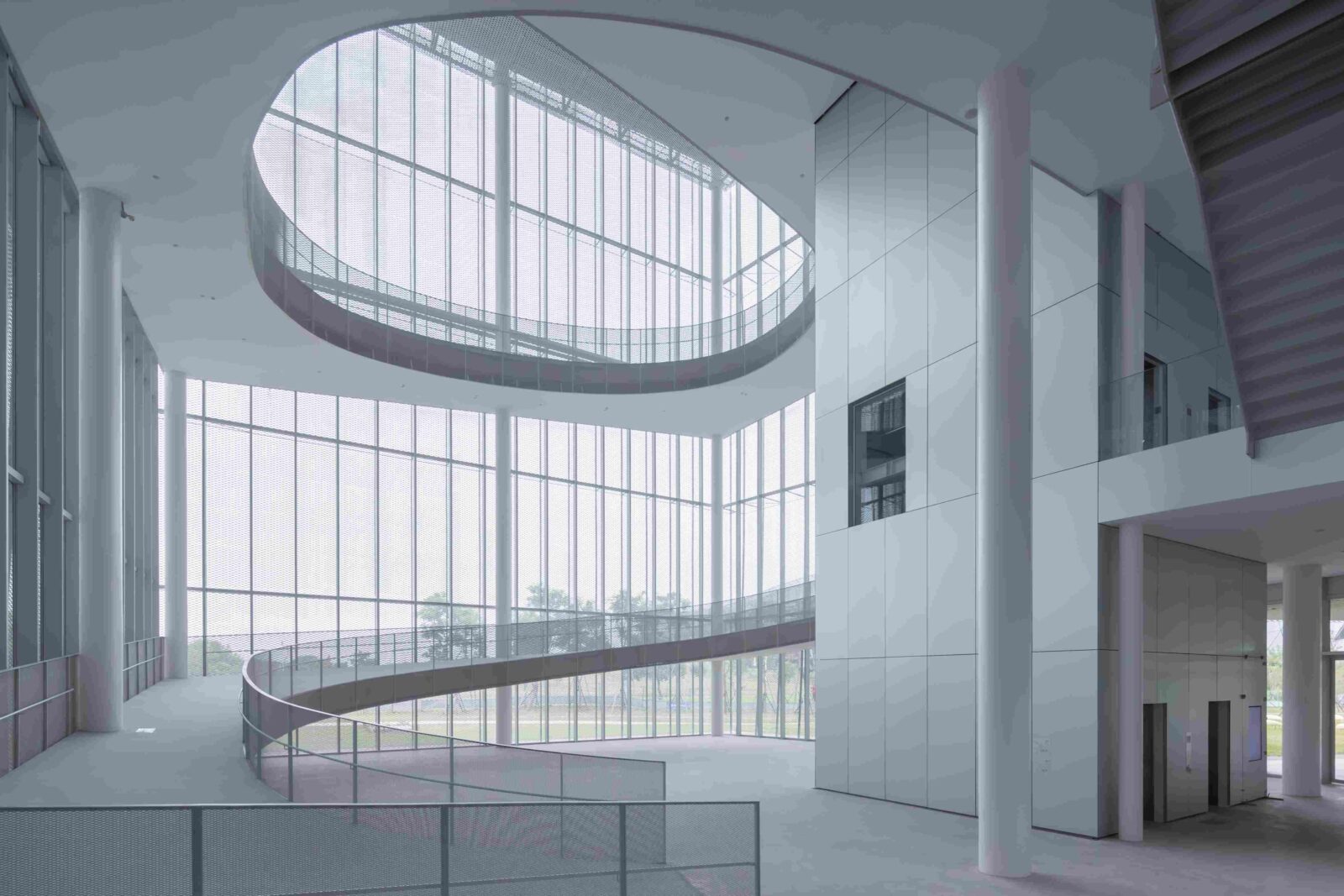
Yang’s installation, “Liquid Votive – Tree Shade Triad” (2025), the artist’s first large-scale commissioned piece in Taiwan, is located in the museum’s soaring 27-metre atrium and is encircled by a spiral ramp. Inspired by the universal tradition of venerating old trees in South Korea, Taiwan, and beyond, her work pays homage to the local as well as transcultural spiritual beliefs in nature.
Based in Taipei and Brussels, Michael Lin has deep family roots in Taichung. His commissioned work, “Processed” (2025), orchestrates monumental painting installations that re-conceptualise and reconfigure public spaces using patterns and designs appropriated from traditional Taiwanese textiles.
Photographer: Iwan Baan