




Header: Trieu Chien
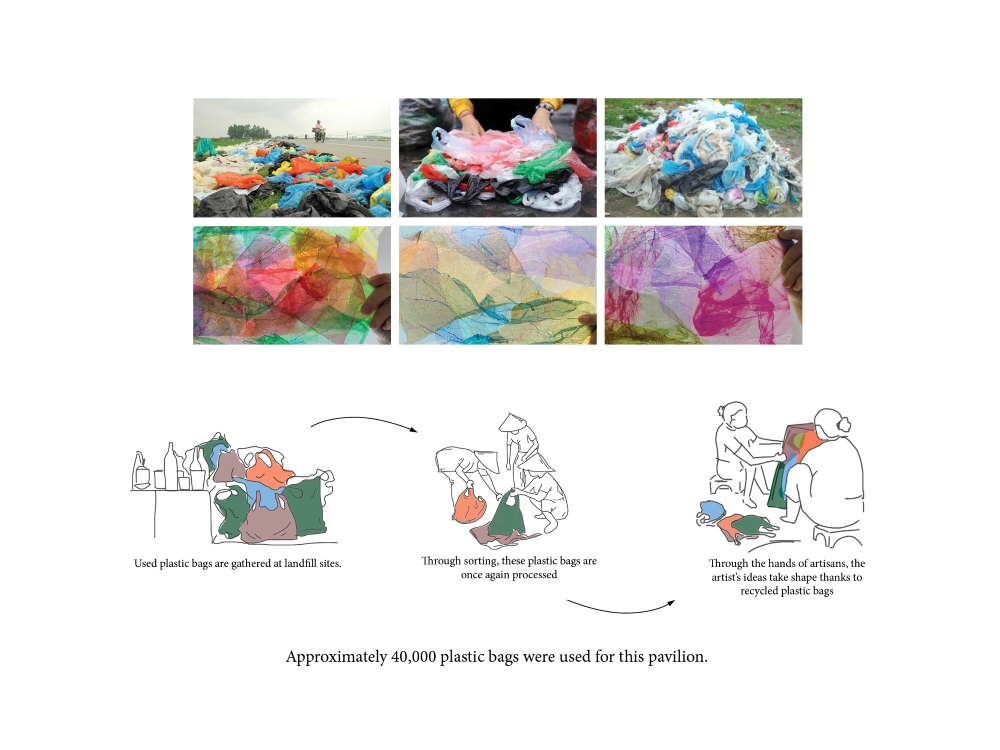
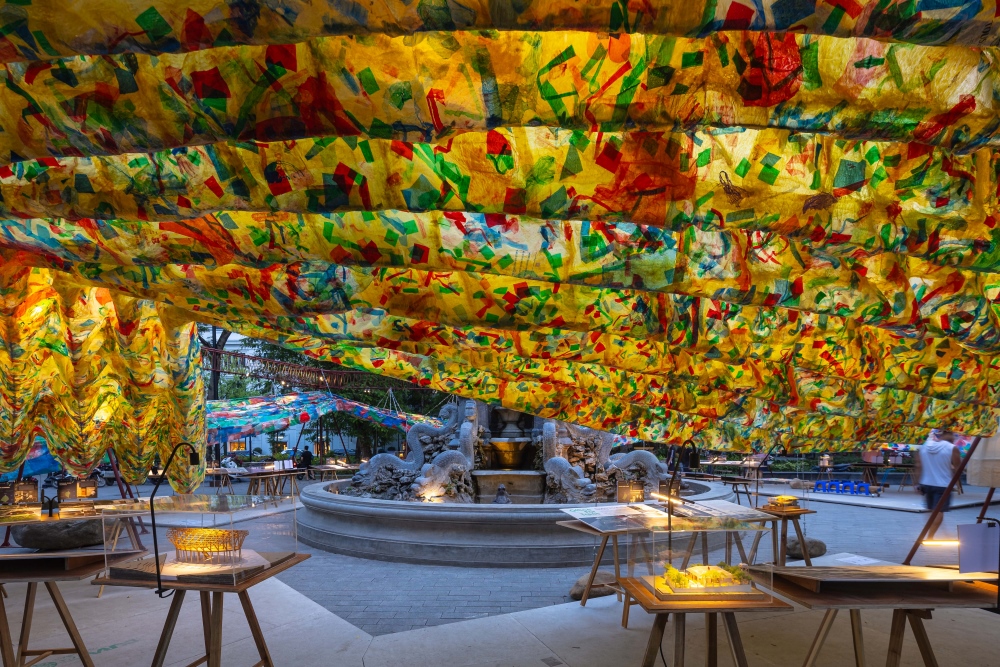
Around 25 million tons of household waste is created every year in the cities and counties in Vietnam. More than a product of daily life, our relationship to trash powerfully portrays how we as a society interact with our surroundings. To reflect the waste management issues, the new project by architects Mai Lan Chi Obtulovičová, Nguyen Duc Trung, and Marek Obtulovič used plastic as the main material for the construction of its T10A Pavilion.
Community-driven environmental project
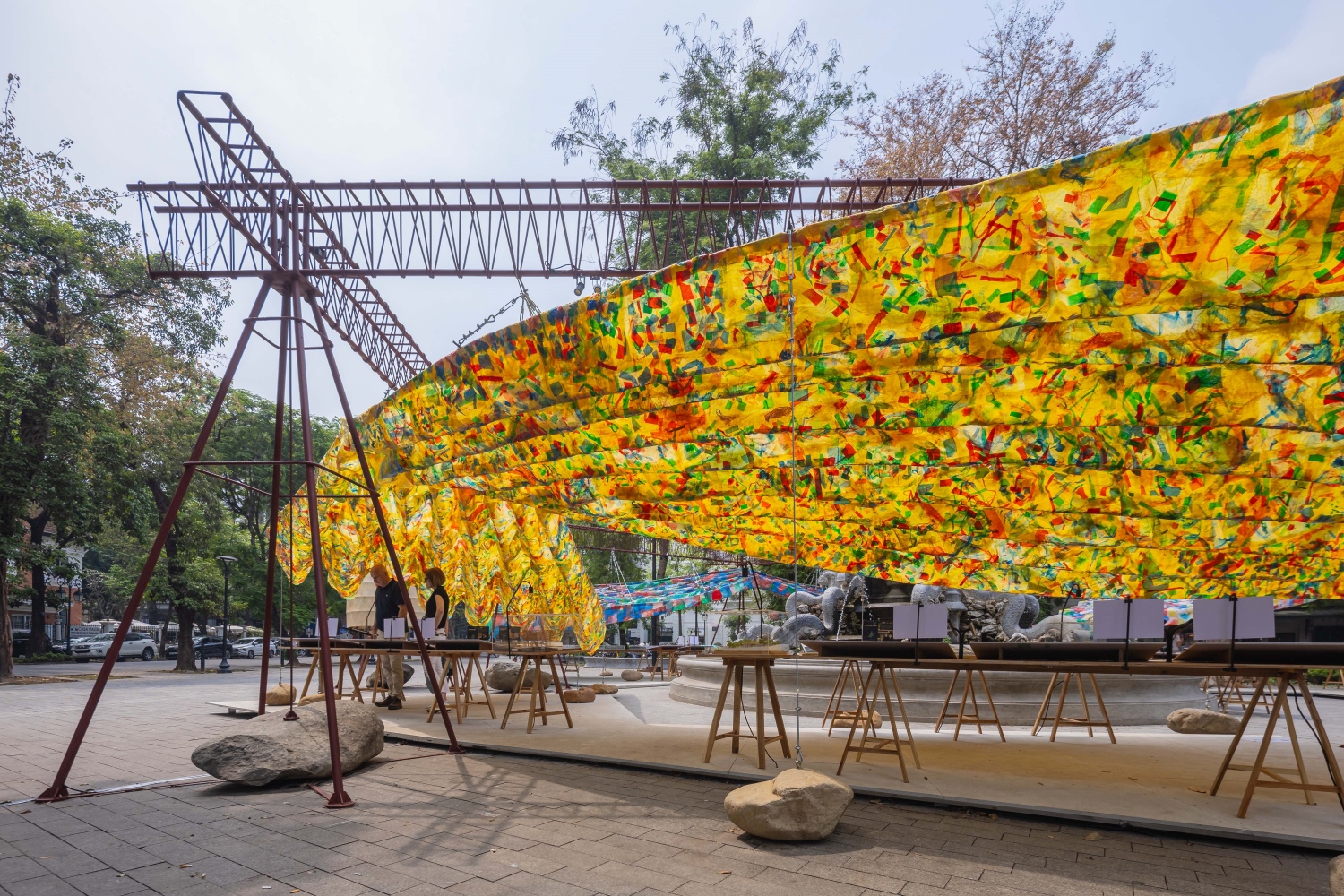
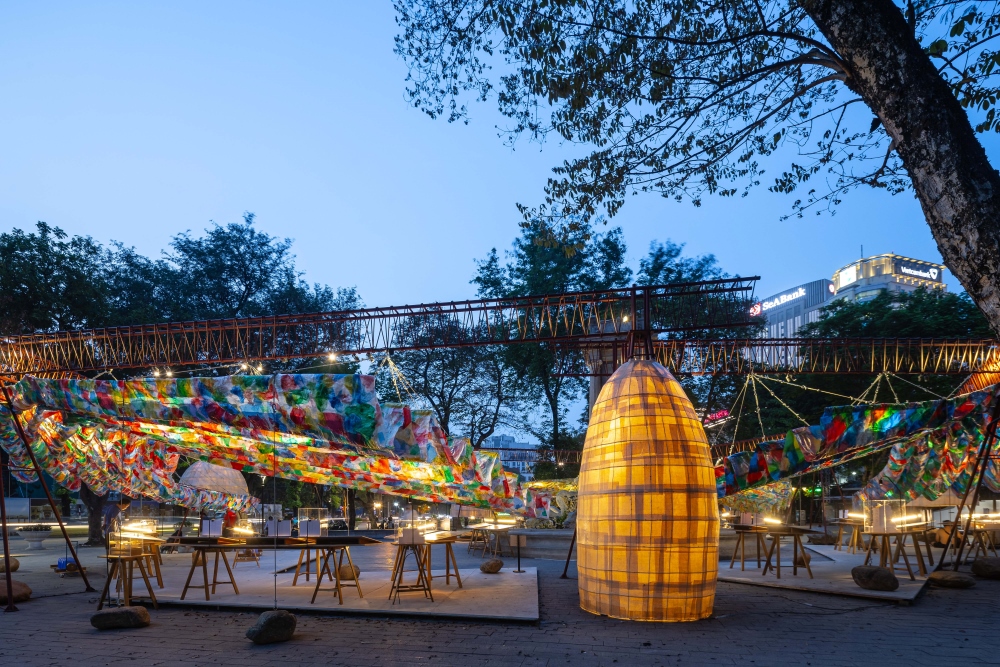
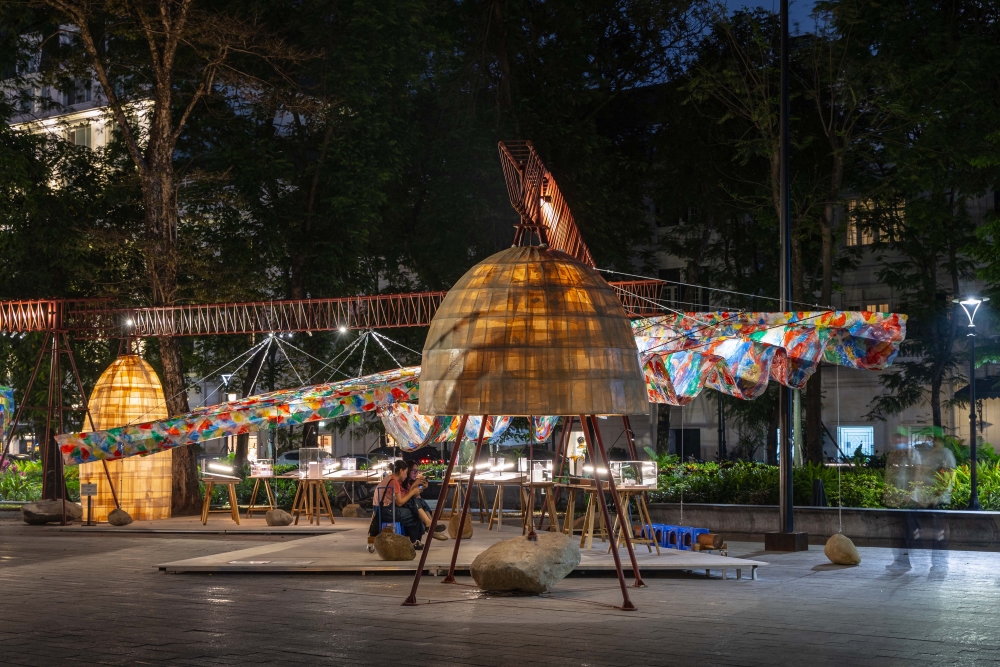
The project included over forty thousand recycled plastic bags, gathered by many volunteers. Apart from gathering materials, the community volunteers have also participated in the construction process. T10A Pavilion acted as a selection of architecture projects, an exhibition space, and a public demonstration of how design and recycling can help create a more sustainable culture in the country.
T10A Pavilion highlights the potential of trash
By drawing from the potential of waste to be useful, the project utilises recycling, upcycling, and material reuse to give an environmental twist to contemporary architecture. Temporary yet impactful design showcases how discarded plastic can be reused and turned into building blocks full of beauty and function. The plastic waste problem in Vietnam is overwhelming, but its importance remains overlooked and neglected.
Honouring Hanoi’s Giấy Dó tradition
Hanoi, a city in Vietnam known for its rich cultural tradition and the local artisan villages, is a fruitful ground for material experimentation. Drawing inspiration from the city’s old tradition of handmade paper (Giấy Dó) and from the informal construction methods widely used in local urban communities, the project creates a perfect balance between the traditional and contemporary.
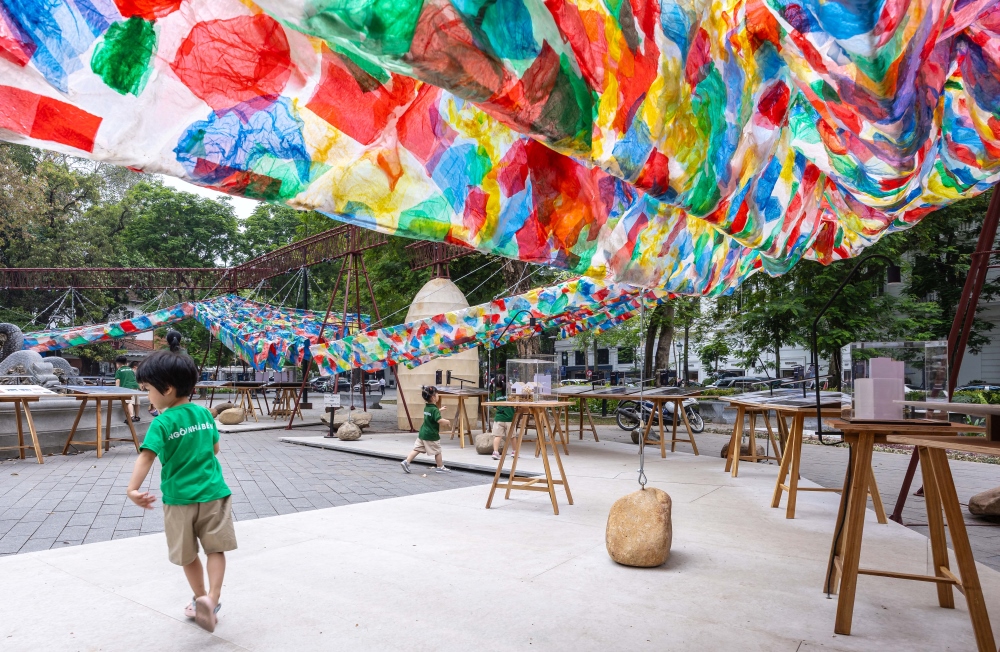
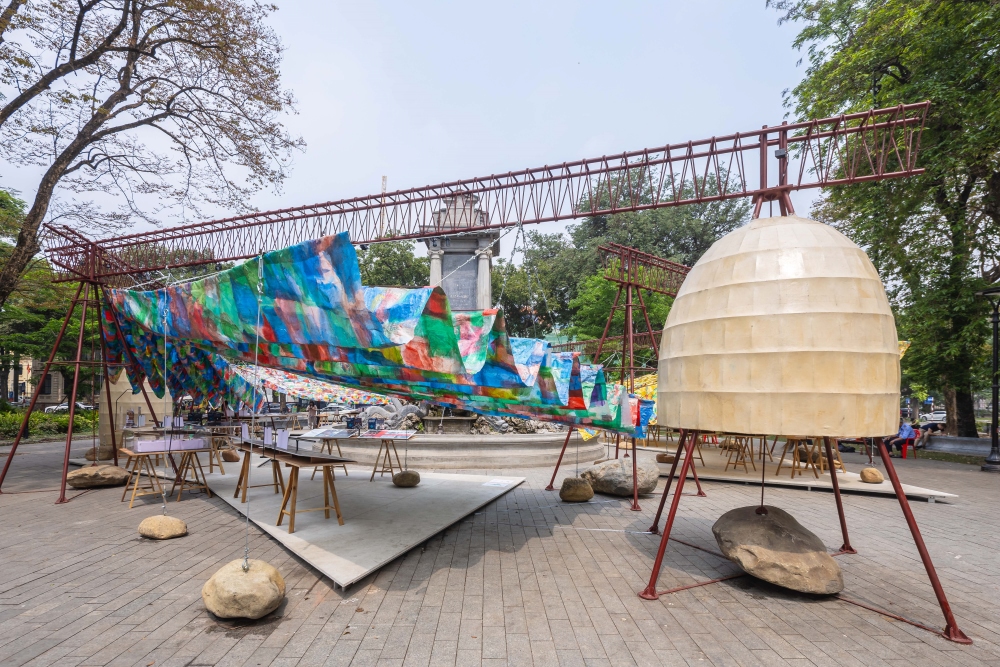
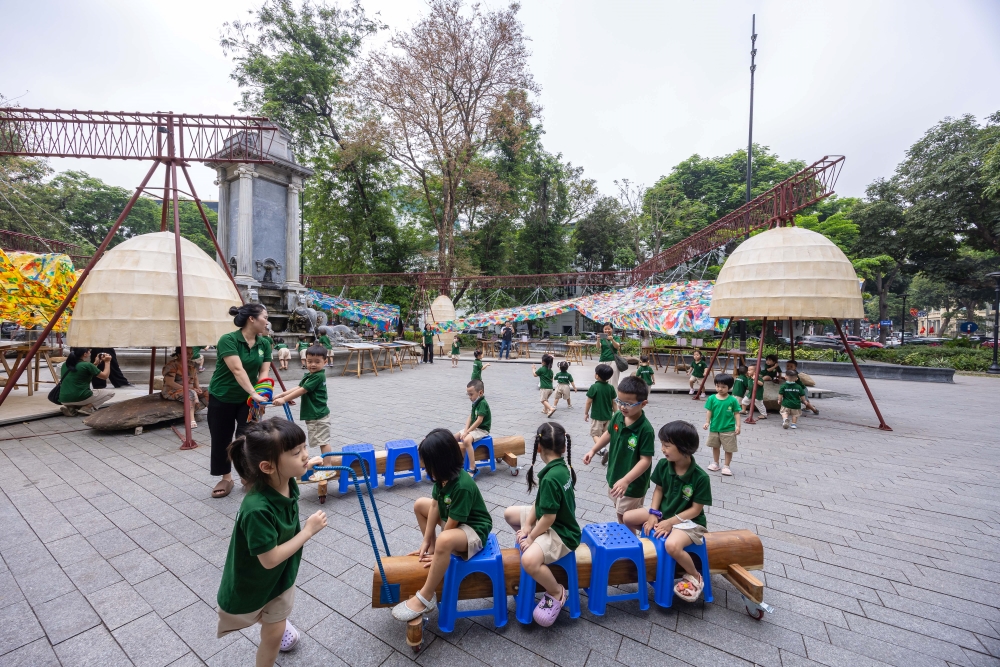
Merging plastic shopping bags and traditional handmade paper, the structure connects past and future. A lightweight frame made of steel links these elements, mirroring the resourceful character of Hanoi’s vernacular architecture. Sky kindergarten kids were invited to decorate the paper domes with handcrafted drawings that portray their vision of the city. The children’s drawings add a playful, human layer to the pavilion.
The showcase of architectural projects
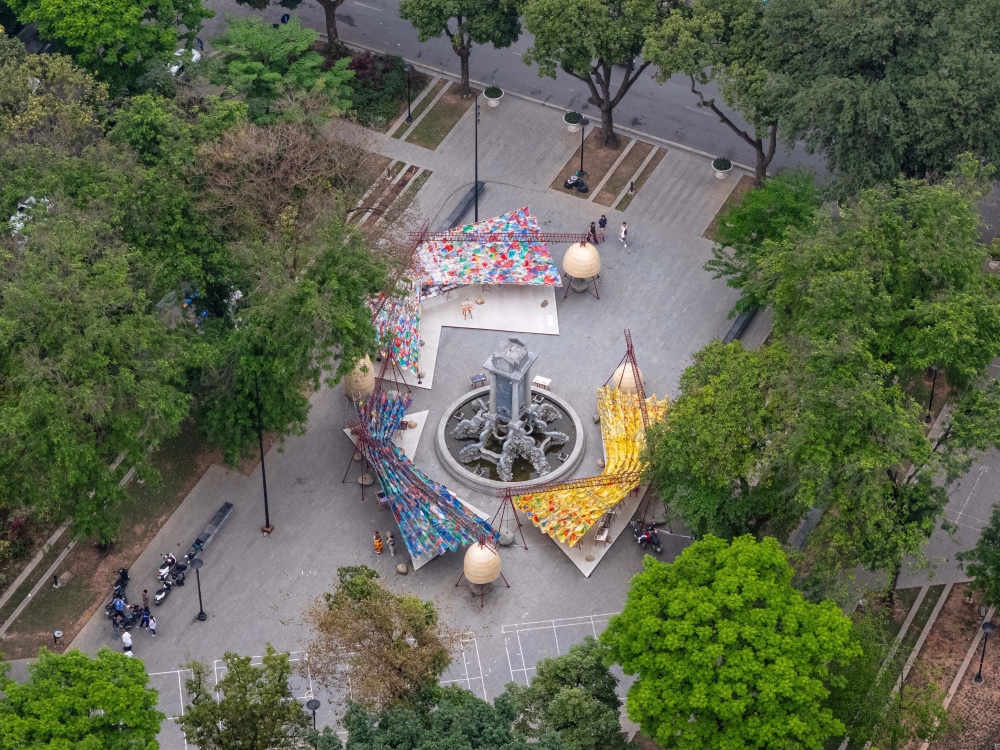
The pavilion contains three wing-like roofs that represent the main exhibition areas, which host architectural projects in the House, Interior, and Sustainability categories. Wings are coloured in distinctive tones, leading the visitors through the space. Semi-transparent panels made of recycled plastic filter daylight, creating shifting shadows during the day, while at night the light illuminates the textured plastic, transforming the structure into a lantern-like object. The exhibition is set beneath the wings. Paper domes made from Giấy Dó are the centrepiece of the show.
The upcycling continues
The T10A Pavilion is envisioned as a contemporary architectural temple. A place where visitors can self-reflect and find inspiration. By redefining the role of the temporary pavilion, the project encourages designers, architects, and the public to view plastic waste as an opportunity rather than a burden. After the exhibition, the plastic structures were further reused for the creation of new design objects, such as bags, thus strengthening the commitment to circular design.
The T10A Pavilion challenges public perception of plastic waste through exquisite craftsmanship and out-of-the-box thinking. By giving a new life to unwanted materials, the pavilion makes a small yet bold step forward towards a circular economy.
Project info
Project Name: T10A Pavilion
Project location: Hanoi, Vietnam
Lead Architects: Mai Lan Chi Obtulovičová, Nguyen Duc Trung, Marek Obtulovič
Architect in charge of the project: Le Duy Huy ( ODDO architects )
Client: Kienviet.net
Recycled plastic sub-contractor: Red River Recycling, Duc Pham
Photo Credits: Trieu Chien


