



Header: Tian Fangfang
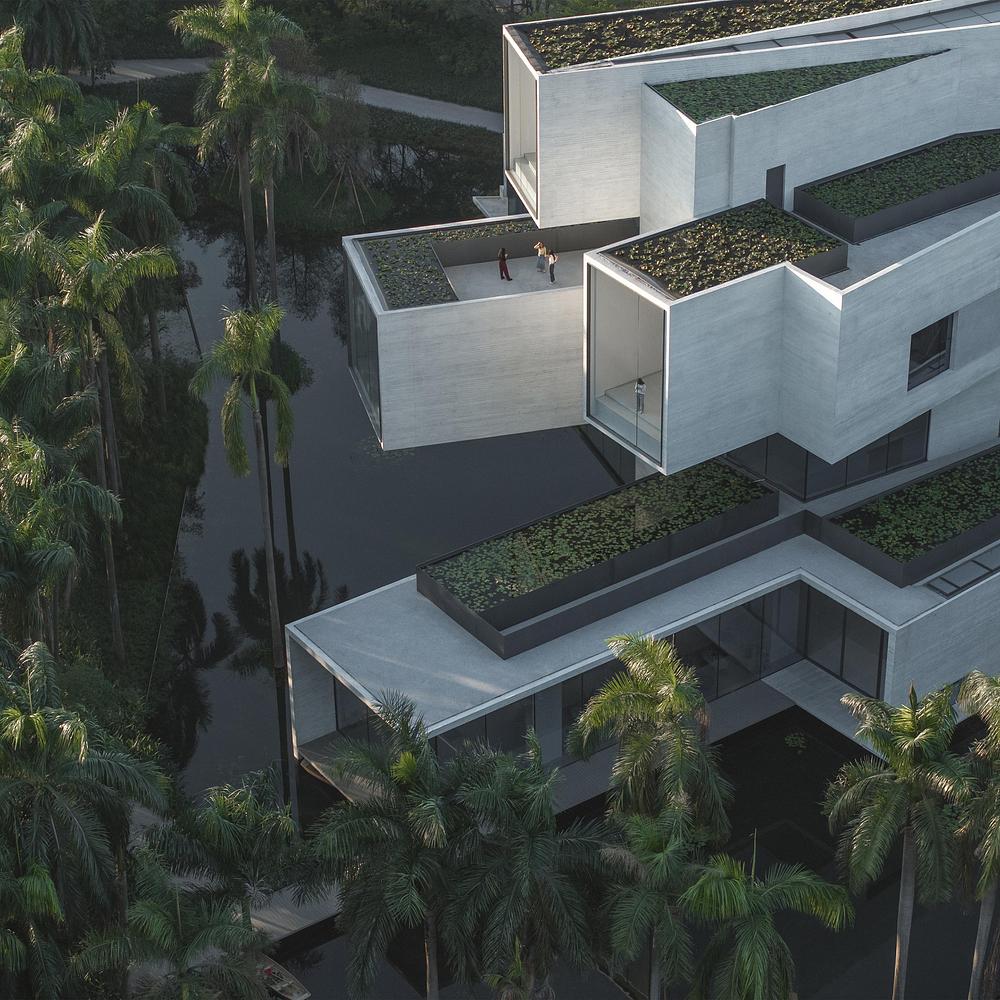
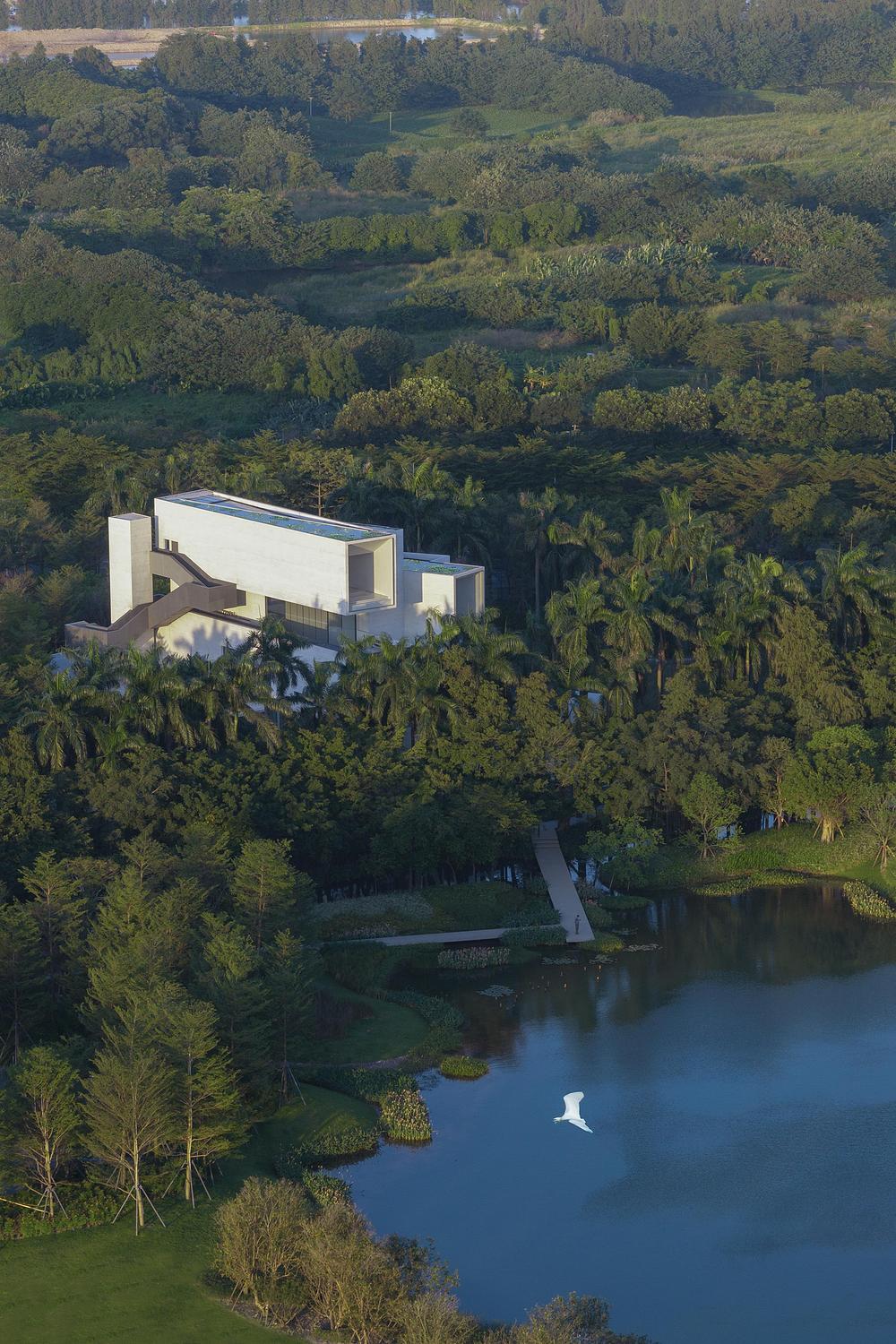
In the heart of Shunde, China, a new structure stands quietly within the Yunlu Wetland Park. It sits right next to an ecological island that serves as home to roughly 25,000 egrets. This is the Yunlu Wetland Museum, a project that functions as both a bird-watching tower and an educational space. Rather than standing out as a shiny landmark, the building tries to do the exact opposite. It attempts to fade into the background, prioritizing the birds over the architecture.
A legacy of birds and bamboo
The story of this place began twenty-six years ago with a man known locally as “Uncle Bird,” or Xian Quanhui. He planted a bamboo forest which, over time, attracted a massive flock of egrets. Seeing the birds arrive, Uncle Bird dedicated decades of his life to maintaining this oasis, turning it into a true paradise for the animals.
Recognizing the value of this ecological hotspot, the Shunde government stepped in to help. They expanded the protected area by thirteen times its original size. Scientists, engineers, and designers worked together to fix the water systems and improve the bamboo forests, transforming the private effort into the public Yunlu Wetland Park. The museum is the newest addition to this protected zone.
Four lenses in the forest
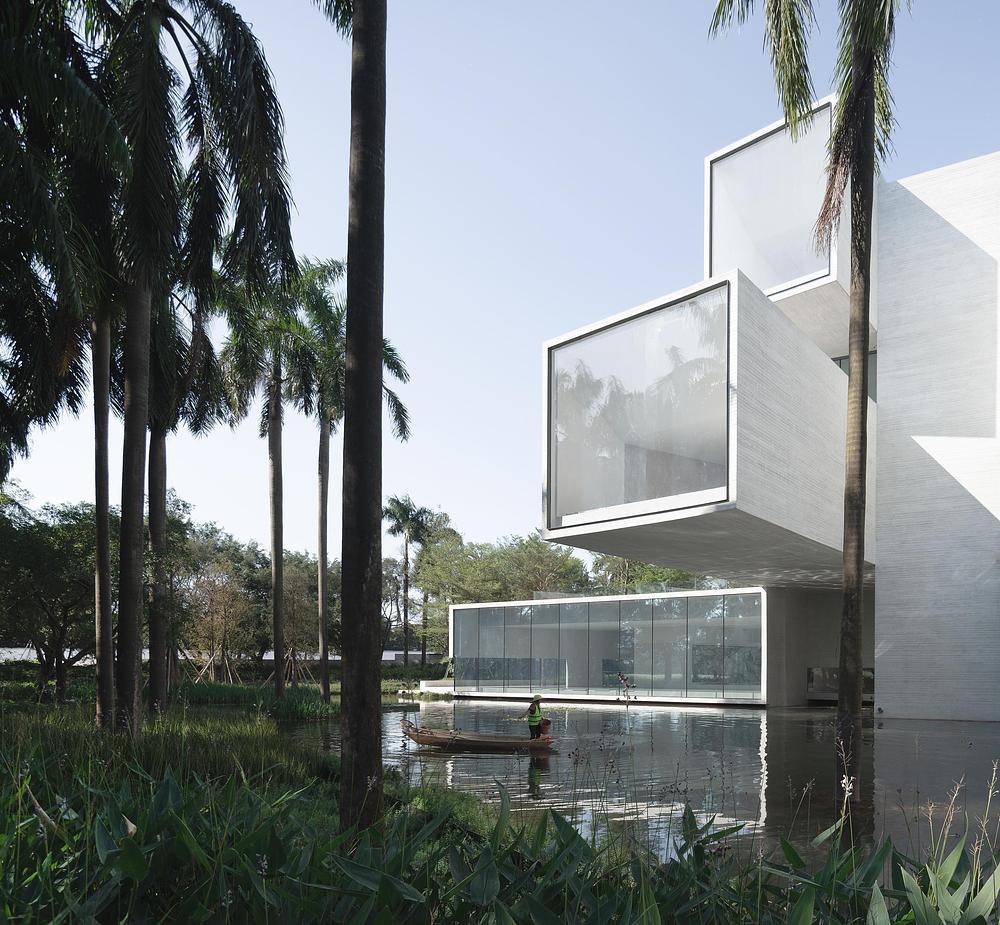
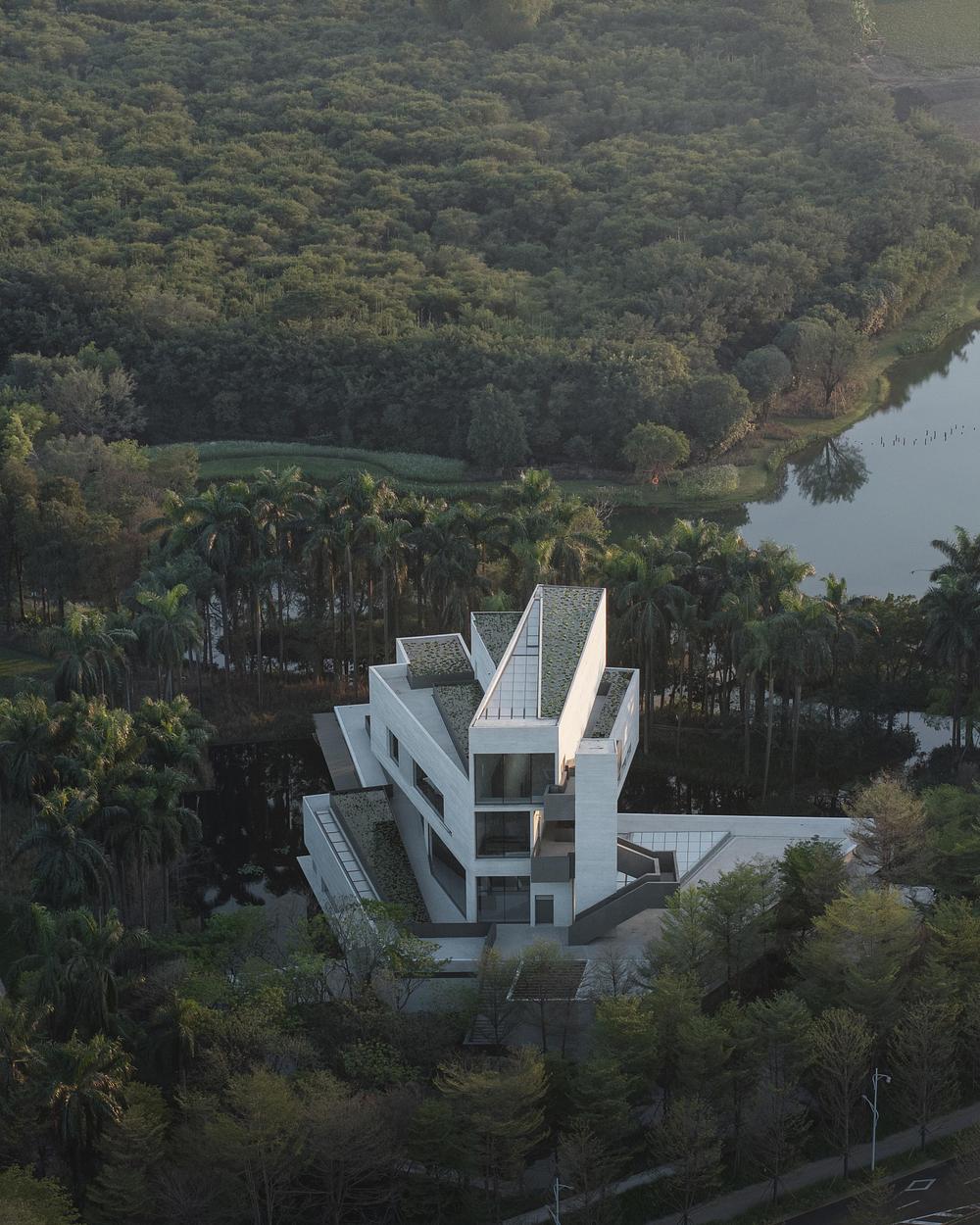
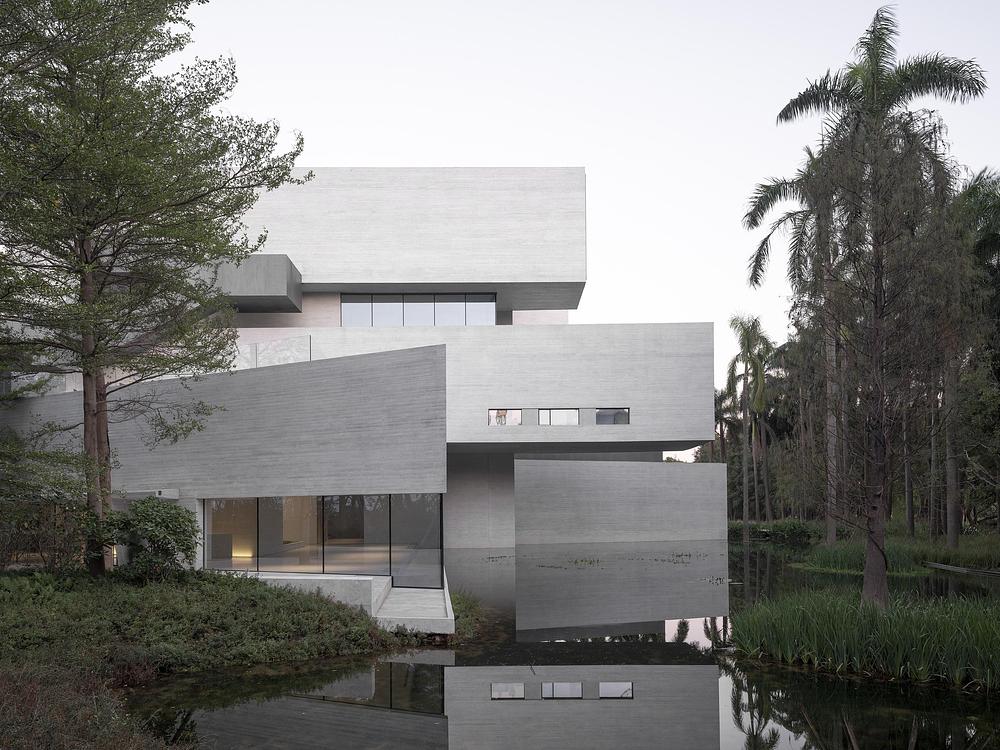
The architects decided that the best way to build near such a sensitive habitat was to hide the structure behind a row of existing cedar trees. The design is unique but simple. It looks like four concrete tubes stacked on top of one another. These tubes are not perfectly aligned; they are rotated horizontally, resembling four camera lenses adjusting to capture a photo.
From the perspective of the birds on Egret Island, the museum is barely visible. It tucks itself into the lush subtropical forest. The goal was to minimize the physical bulk of the building so it exists quietly alongside the indigenous creatures.
Framing nature from every angle
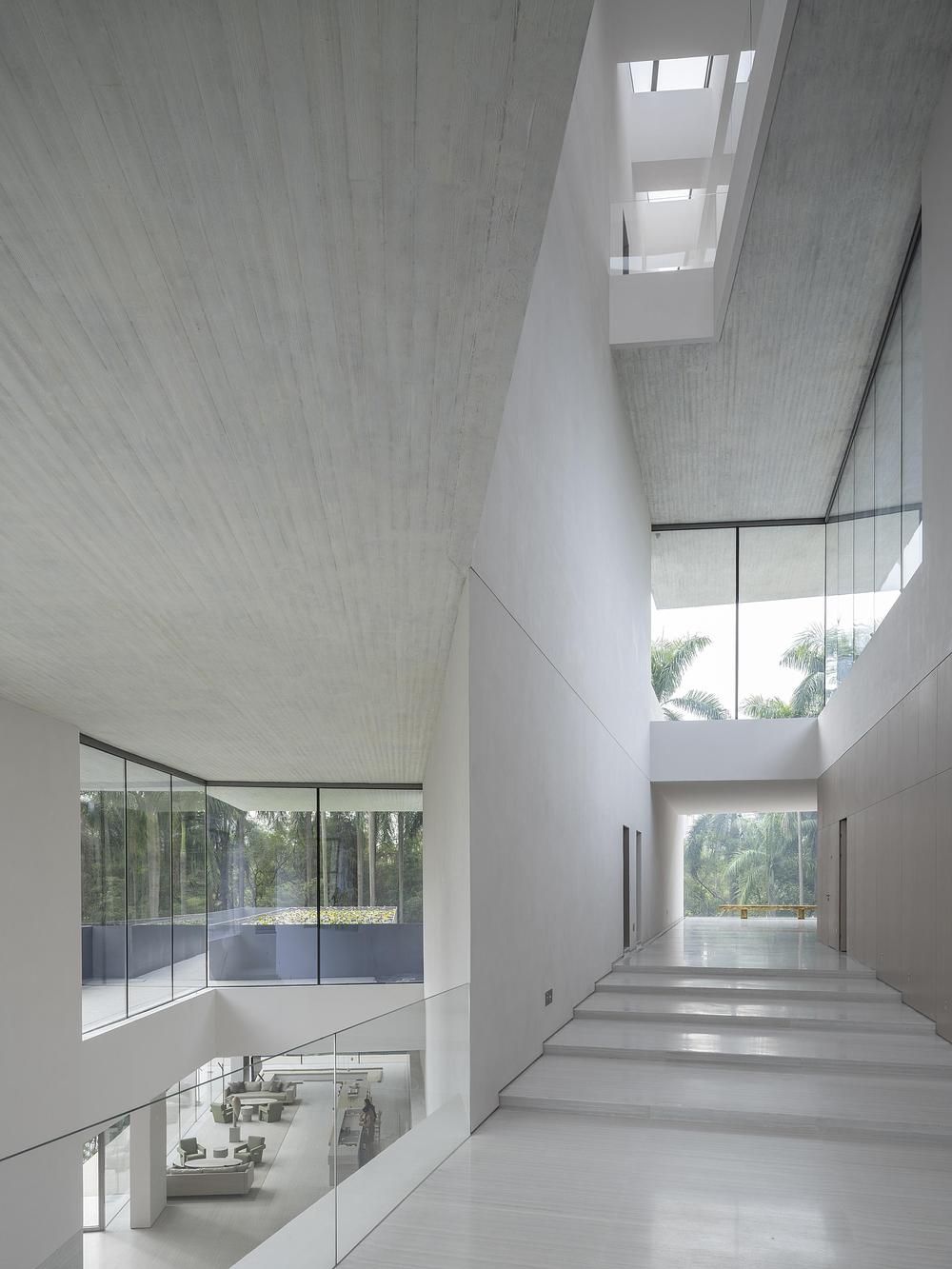
The interior experience is entirely dictated by how those four tubes are stacked. Each tube faces a specific direction based on the best views available on the site. This creates a series of staggered frames inside. As visitors move from the first floor up to the fourth, their view changes dramatically. They see the tree roots, then the trunks, followed by the crowns, and finally the treetops.
This design breaks down the usual way people look at buildings. Instead of one big view, the museum offers a scattered perspective oriented entirely toward nature. Visitors can watch the shadows of trees swaying and birds fluttering from various heights.
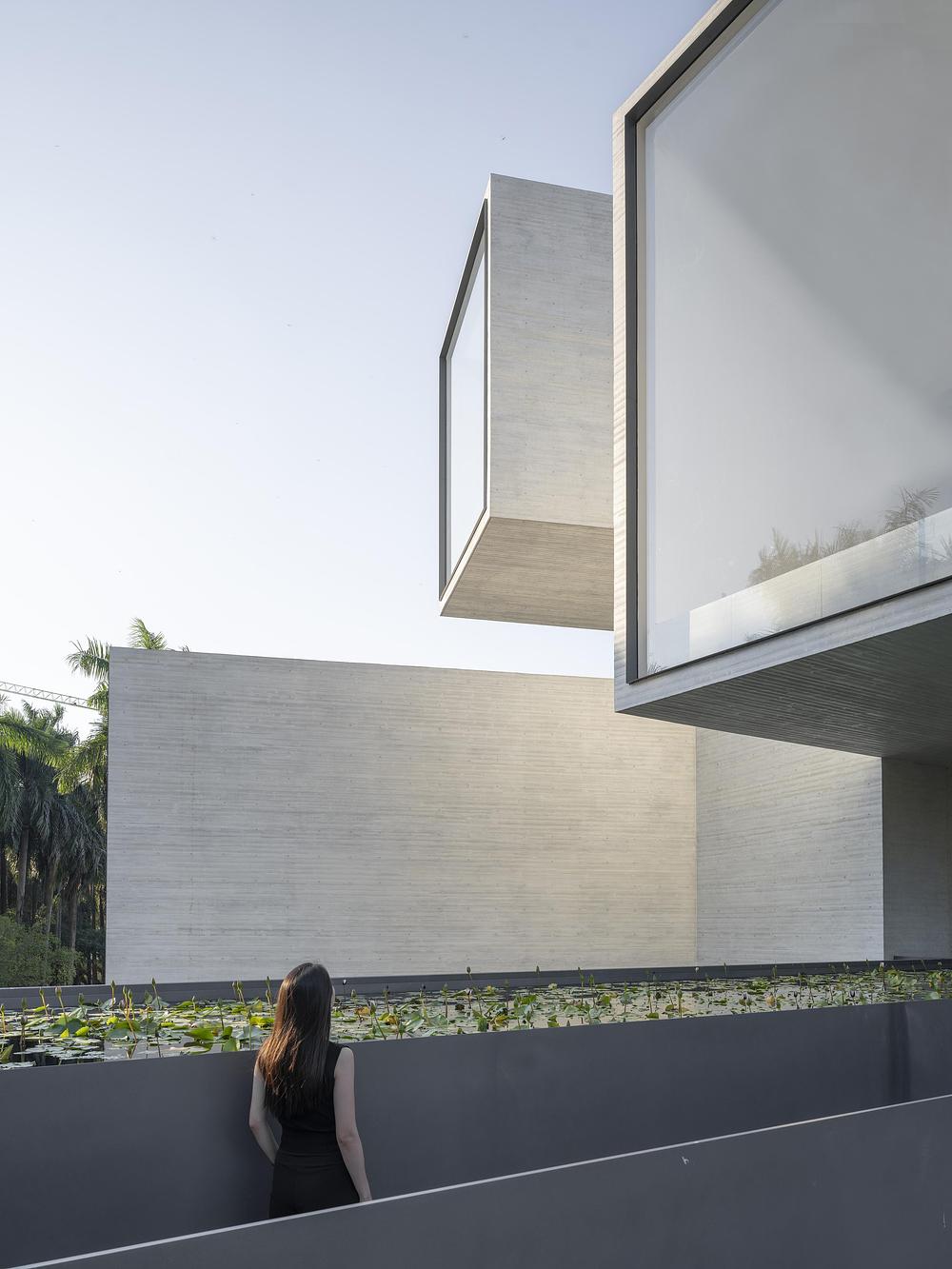
At the center of these four stacked tubes is a vertical triangular atrium. This space was created by carving out a section of the overlapping volumes, a technique known as a Boolean difference. This atrium connects all four floors. Standing here, a person can look through the tubes in different directions all at once. The window at the end of each tube acts like a landscape painting hanging on the wall, except the picture is real and constantly moving.
Concrete, wood, and water
The building relies on a box-type concrete structure. The walls, floor, and ceiling of each tube work together to hold the building up. Deep beams soften the sunlight as it enters through skylights, allowing visitors to feel the changes in weather and seasons while inside.
Respecting the existing landscape was a priority. Before construction began, the team surveyed 560 trees in the area. The architect used this data to carefully place the building and rotate the floors to avoid cutting down native trees. This reduced the building’s footprint while still ensuring excellent views for bird watchers.
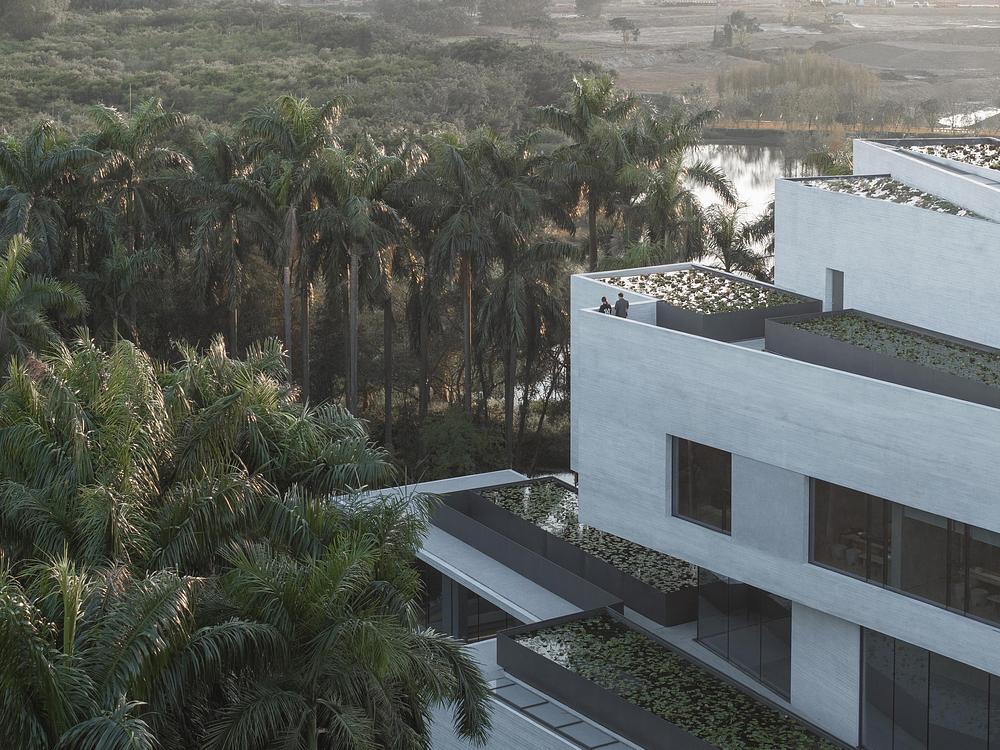
The exterior walls are made of cast-in-place pine molded concrete. This means the concrete was poured into molds made of pine wood. When the wood was removed, it left a fine grain texture on the concrete surface that matches the surrounding forest. To further help the building merge with its surroundings, the roof is covered by lotus ponds. These water features act as an ecological layer, making the building look like a pond rather than a roof when viewed from above.
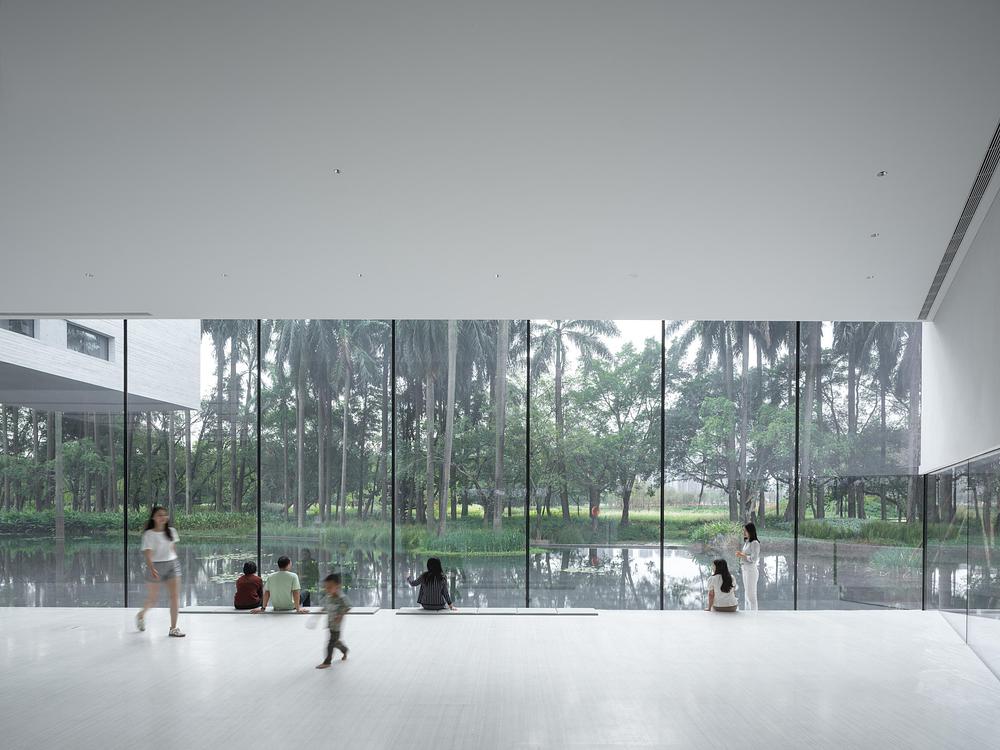
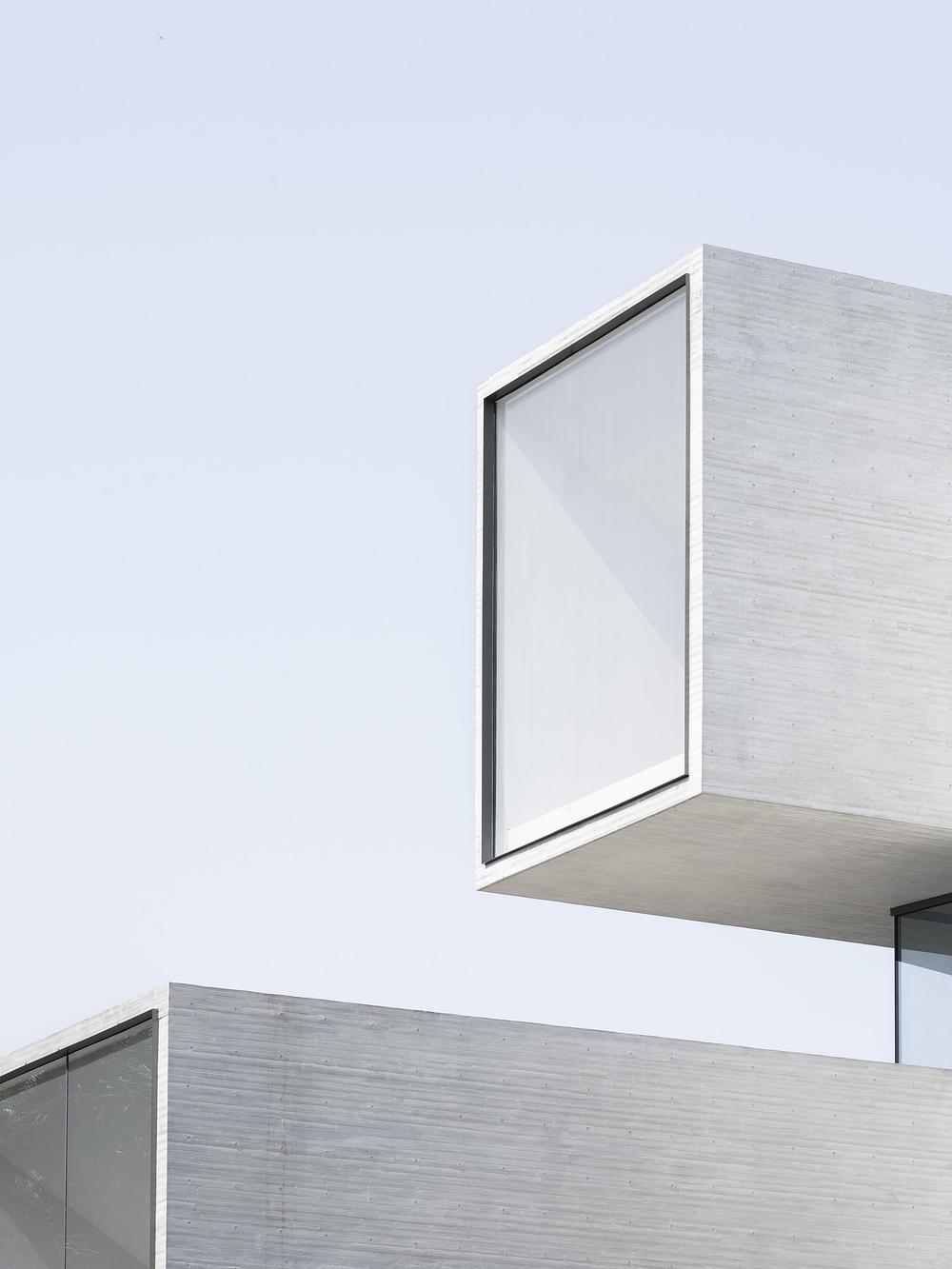
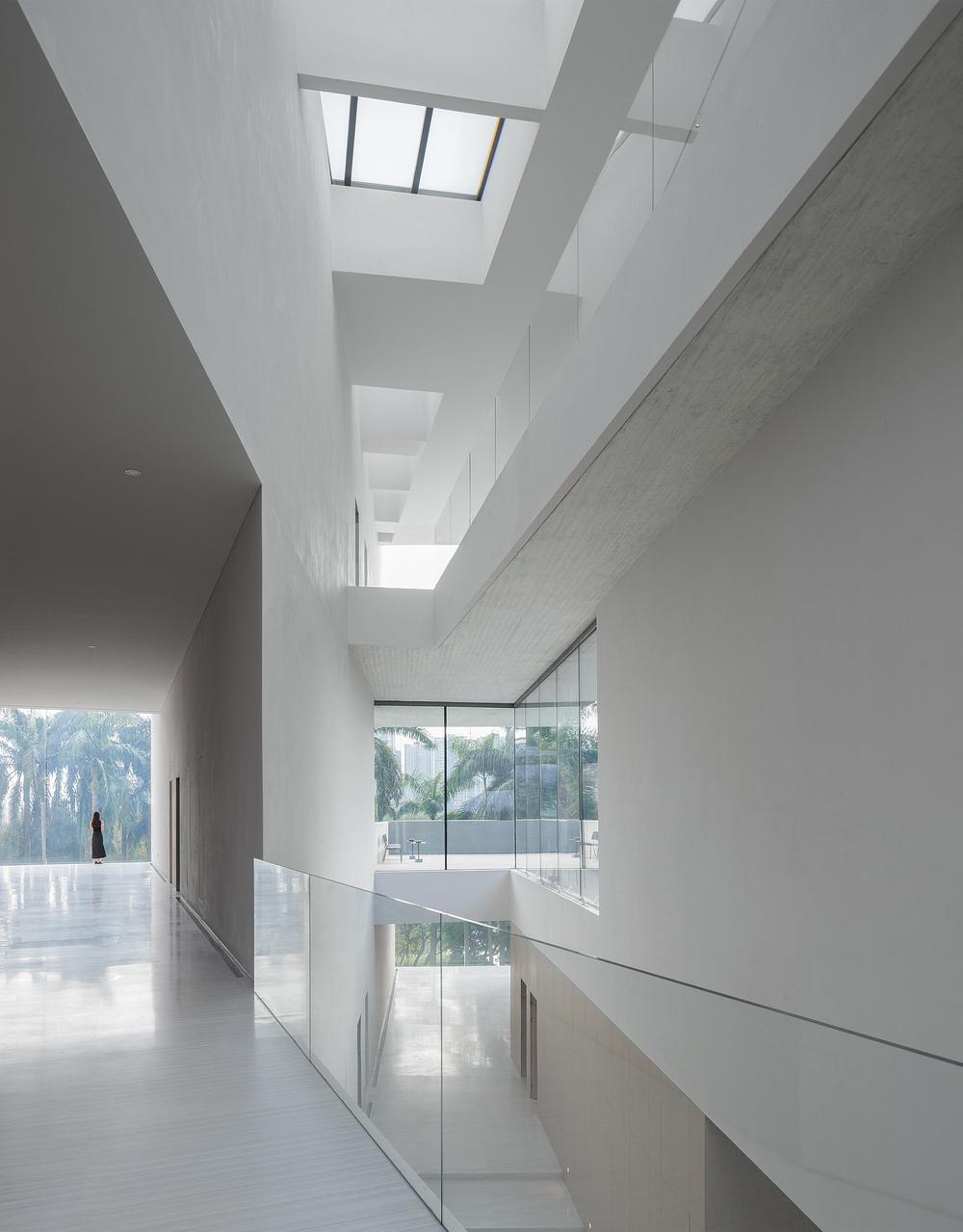
The Shunde Yunlu Wetland Museum shows how architecture can step back to let nature take the stage. By lifting the viewing platforms and wrapping the structure in textured concrete and water, the design honors the legacy of Uncle Bird and the thousands of egrets that live there. It is a functional space for humans to learn and observe, yet it remains humble enough to belong in a wild paradise.
Project info
Project Name: Shunde Yunlu Wetland Museum
Project Location: Guangdong, China
Project Type: Cultural Architecture-Museum, Gallery
Client: CR Land, Shunde People’s Government of Foshan
Completion Date: 09/2024
Chief Architect: Yichen Lu
Project Manager: Shiyu Guo
Project Team: Rui Zhou, Jiaqi Zhang, Zhenwei Zhong, Zida Liu, Jingbing Cheng, Luis Ausin, Lingyun Yang, Feng Qi, Jiarui Xu, Xinning Hua, Sarah Kenney, Zishi Li, Isabella Chong
Architect & Engineer of Record: Shenzhen A+E Design Co., Ltd.
Landscape Designer: CHANGE
Interior Consultant: Yu Studio
Lighting Consultant: Gradient Lighting Design
Source: v2com-newswire

