
Header: ebi_times
Reimei Kobashi is a pedestrian footbridge in Chūō City, Tokyo, that crosses the Asashio Canal between the area around Kachidoki Station on Tsukishima Island and Harumi 3-chōme, part of the Grand Marina Tokyo development. It was commissioned by the Kachidoki East District Urban Redevelopment Association as part of a bigger waterfront push to make it easier to get around on foot and to add more usable public space, having been built alongside new green spaces and waterfront promenades.
The name translates as “Dawn Small Bridge”, set up as a counterpart to the larger nearby Reimei Ōbashi, or “Dawn Bridge”. It also symbolises “a new beginning”, which is a fitting metaphor for a project that brings new light to the city.
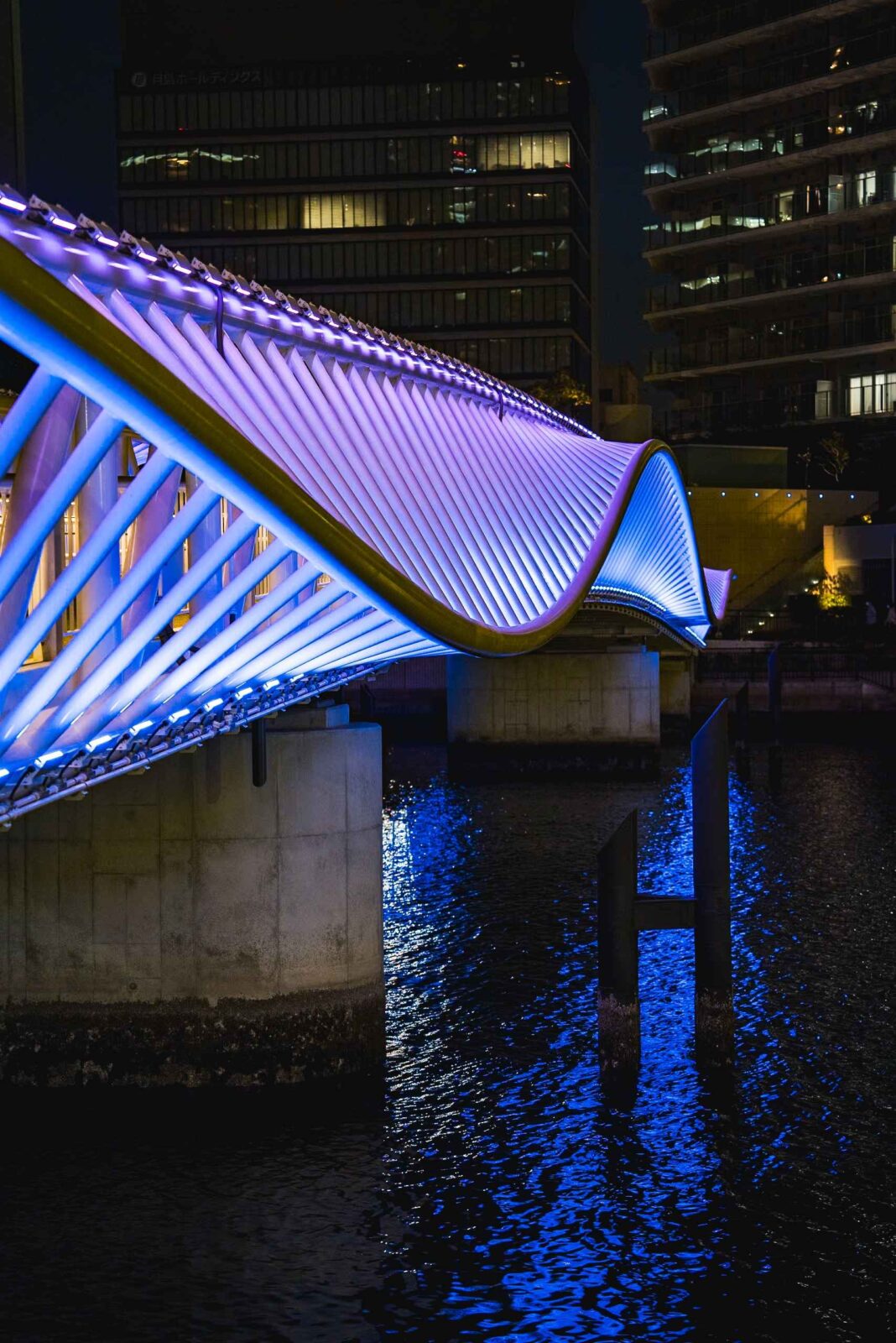
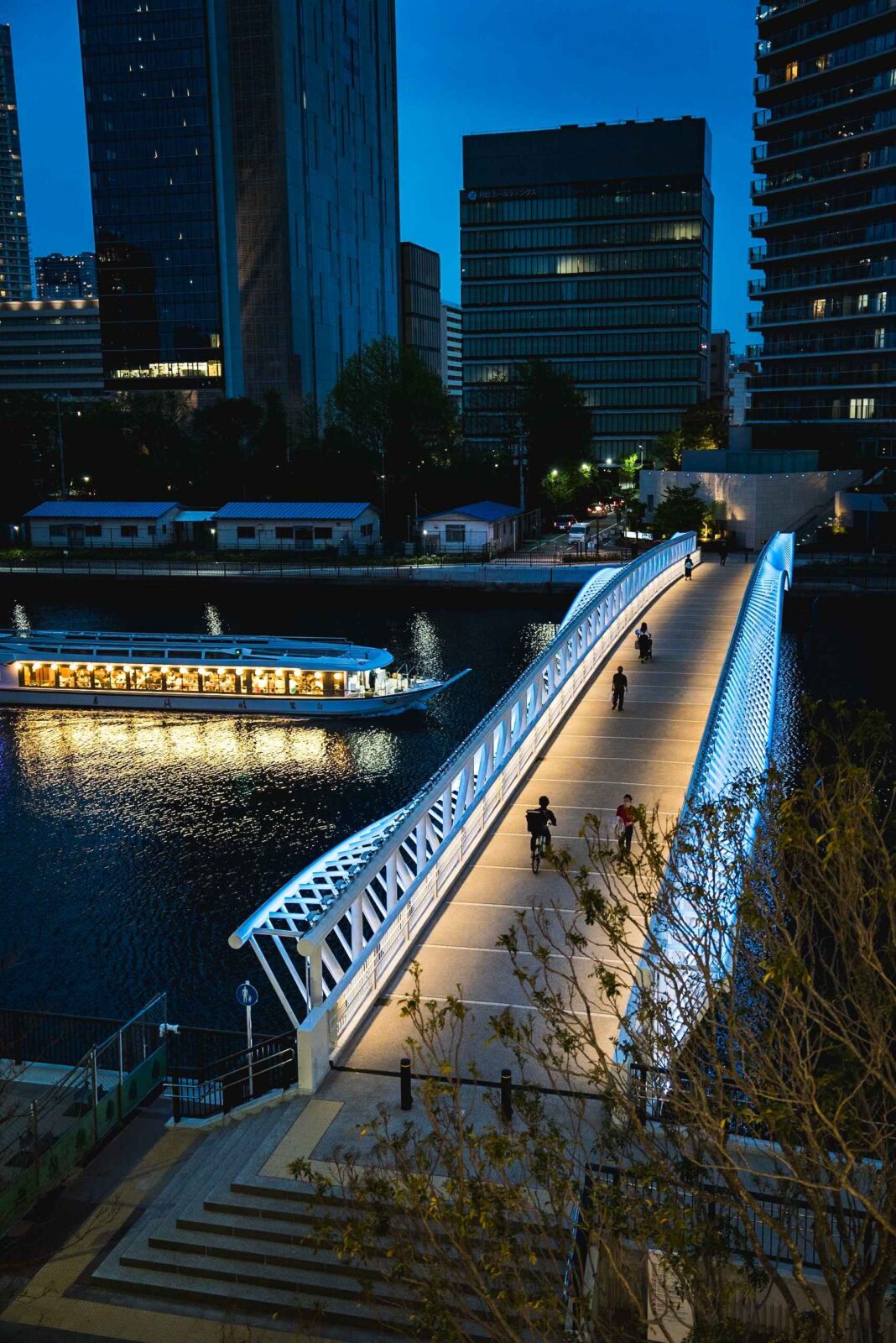
A white arch over the canal
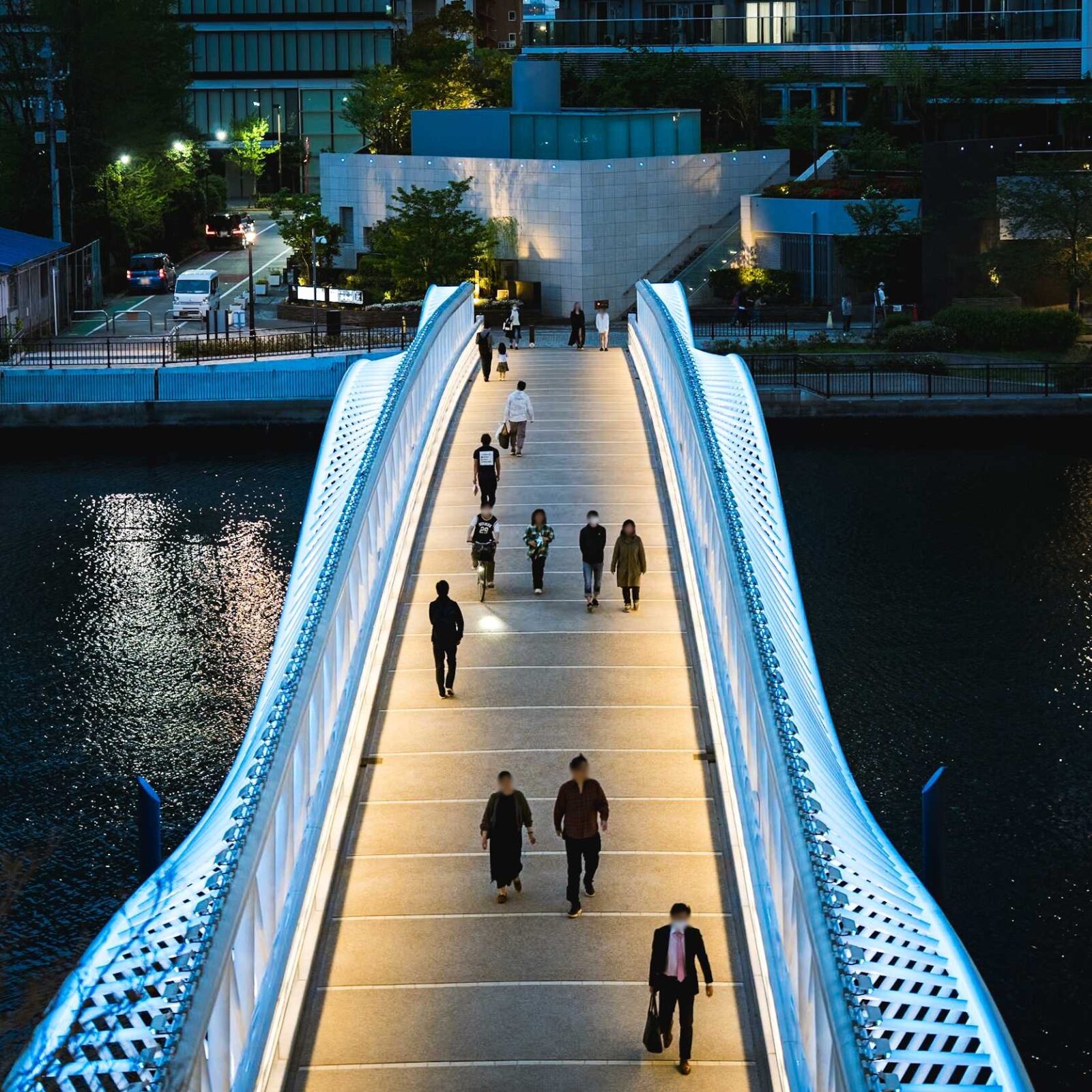
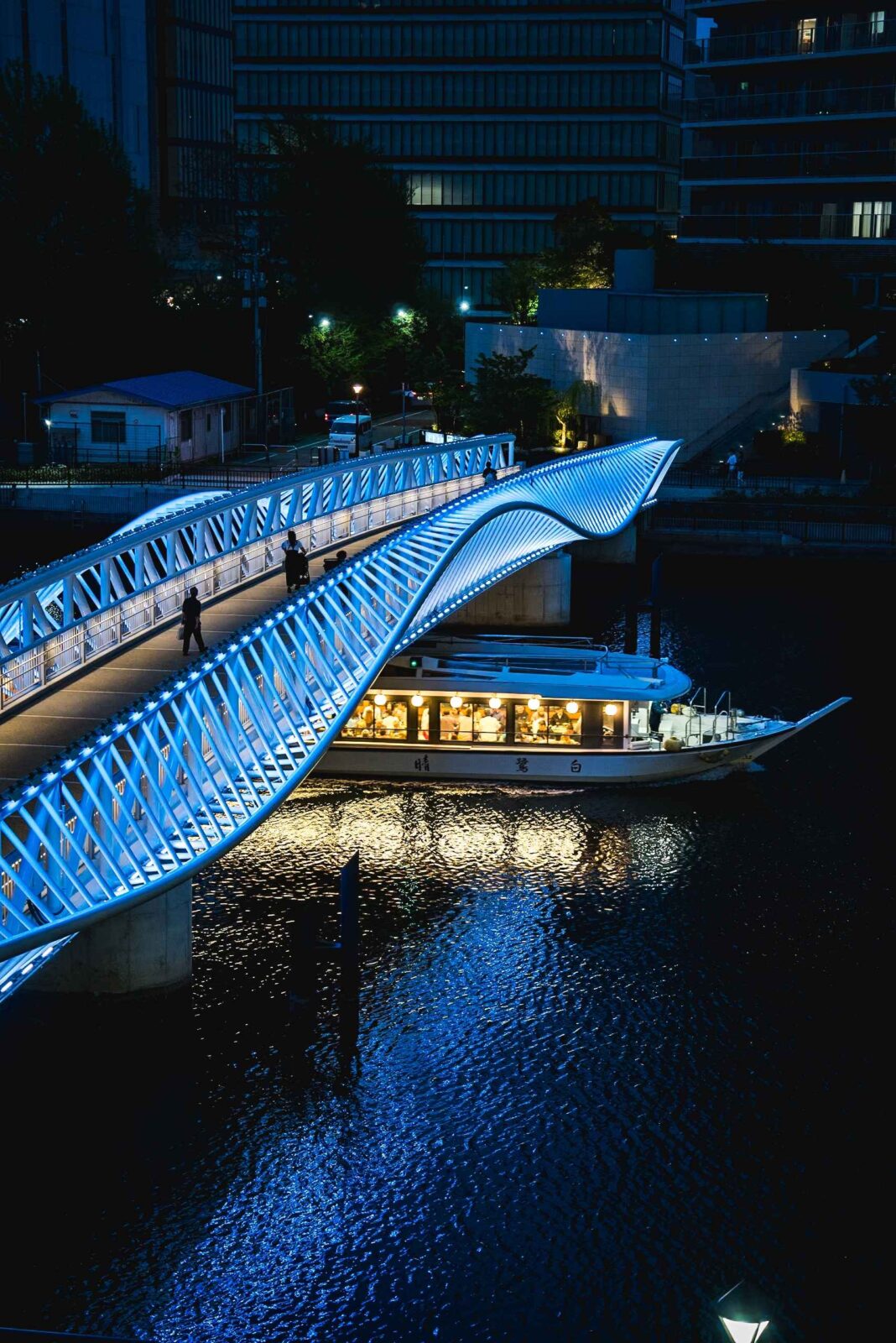
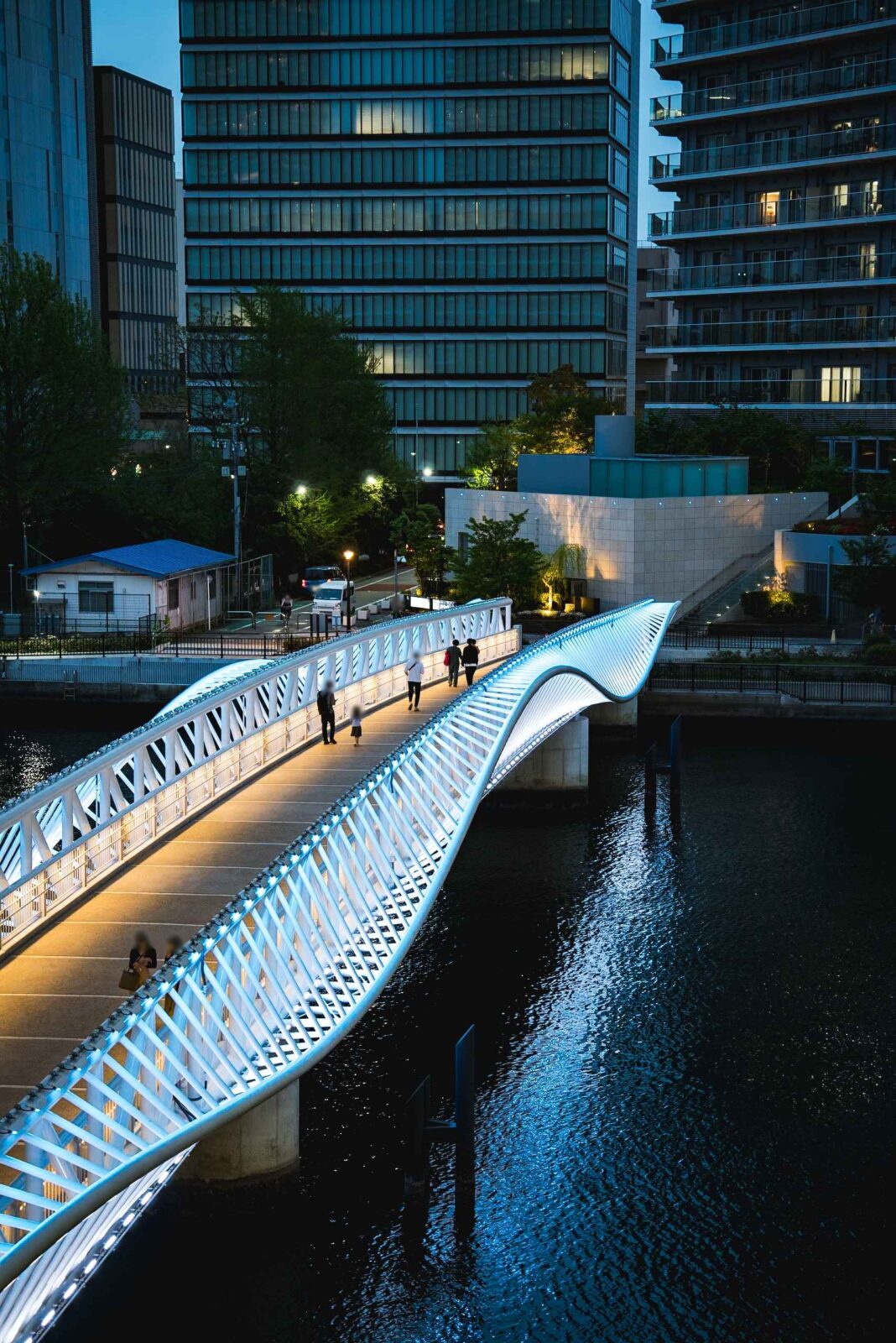
The bridge is a white steel structure, 85 metres long, that rises in an arch and subtly changes its frame as one walks from one side to the other. Along the edges, a series of repeating curved ribs does two jobs at once: they work as guardrails and allow daylight and wind to pass through the gaps, opening up views to the canal.
Hoshino Architects, with Hiroaki Hoshino as lead designer, was responsible for the design, having delegated the construction to Shimizu Corporation. The deck arches as one heads towards the middle of the bridge, giving enough space over the canal while keeping the slope manageable for day-to-day walking. To make the shape work, the steelwork was made in separate sections, each shaped to match the bridge’s curves, then brought to the site and put together. The bridge crosses the canal in a single span, which means that all structural supports are placed on the two banks rather than in the water, leaving the canal uninterrupted beneath.
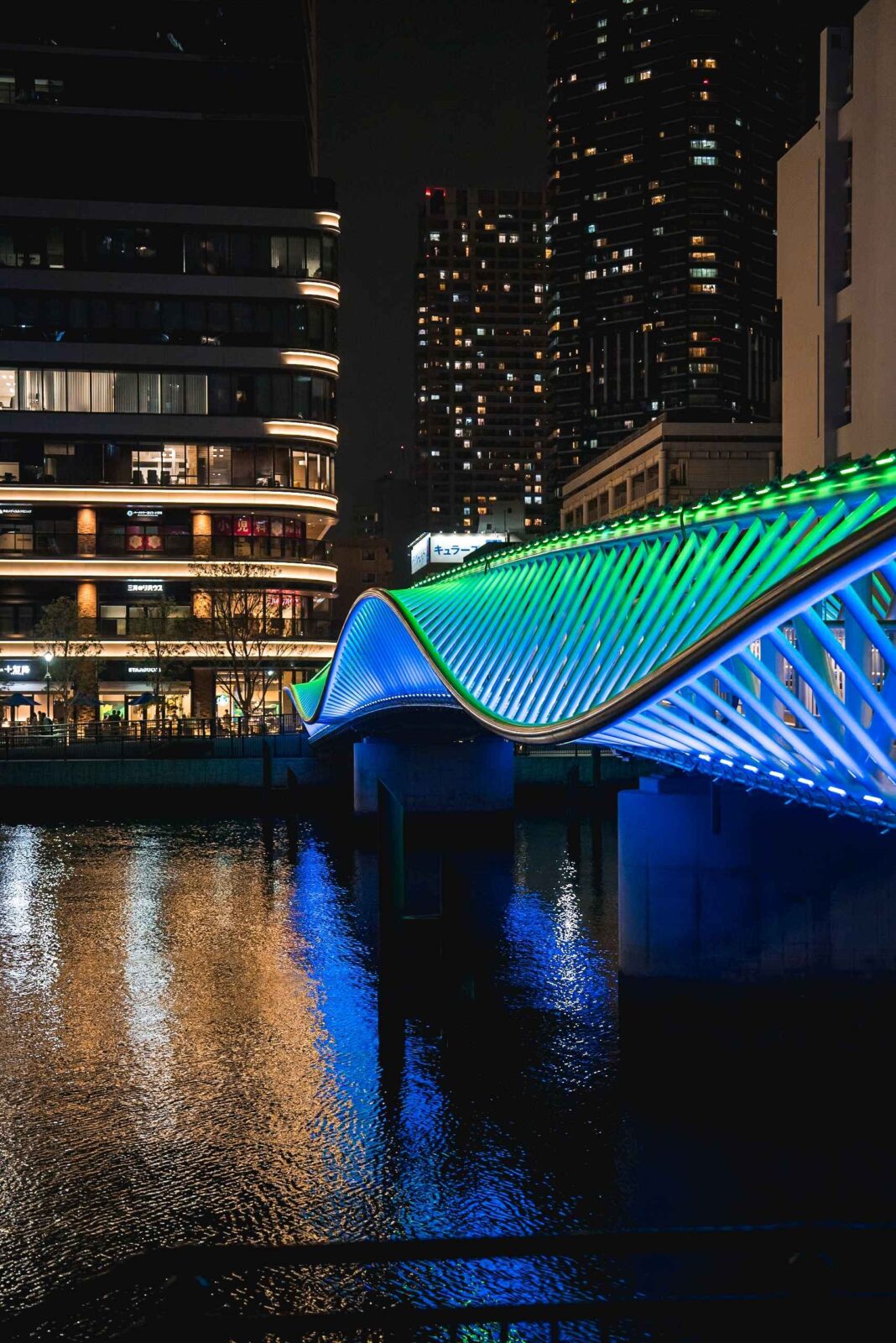
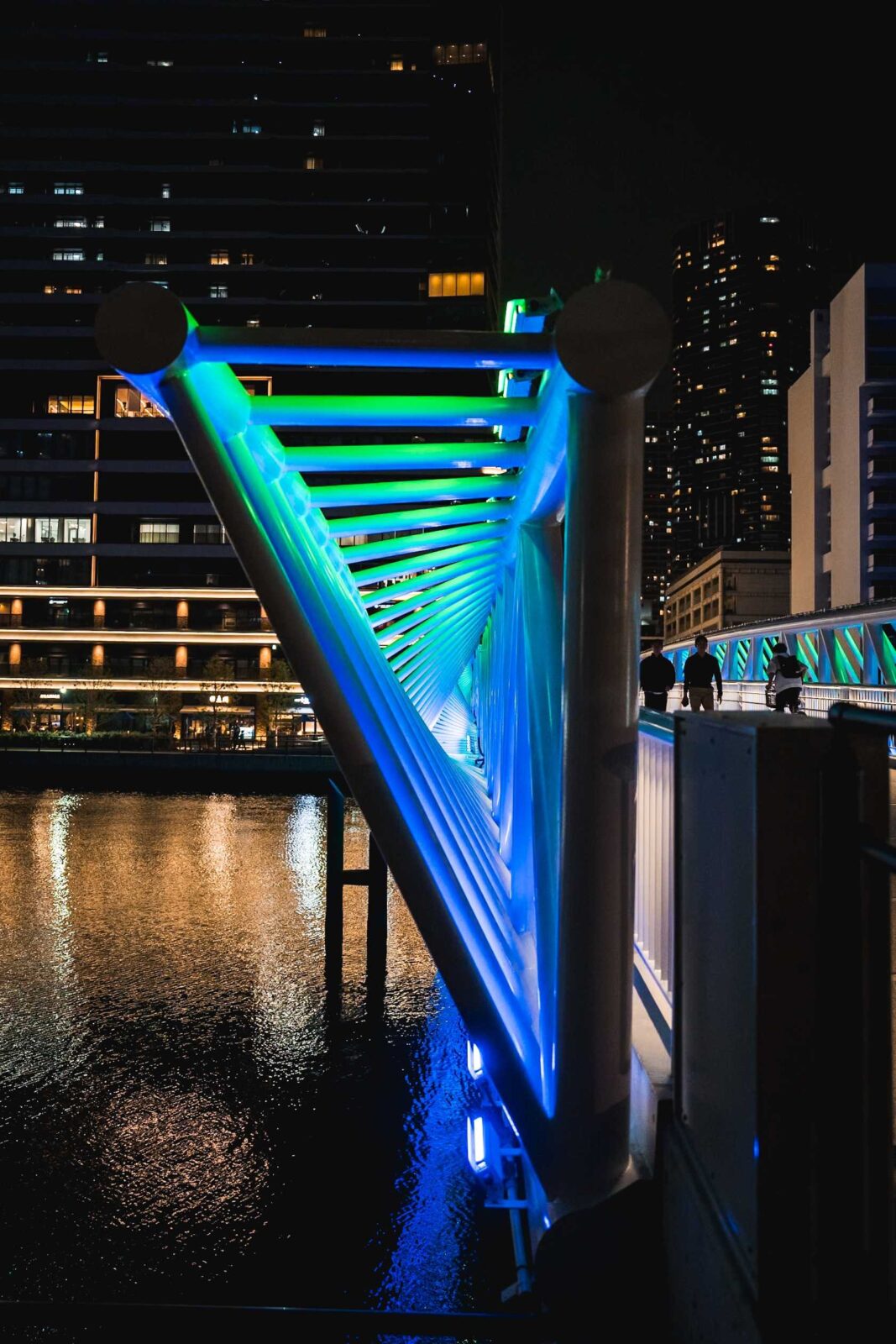
Artistic lighting above the water
Lighting was designed by Izumi Okayasu, from Izumi Okayasu Lighting Design Office, using a programmable LED system integrated into the bridge’s ribs on both sides, with the fixtures concealed within the structure. Colourful light flows from the railing edges and the underside of the bridge, with the tones gradually shifting throughout the day rather than switching abruptly.
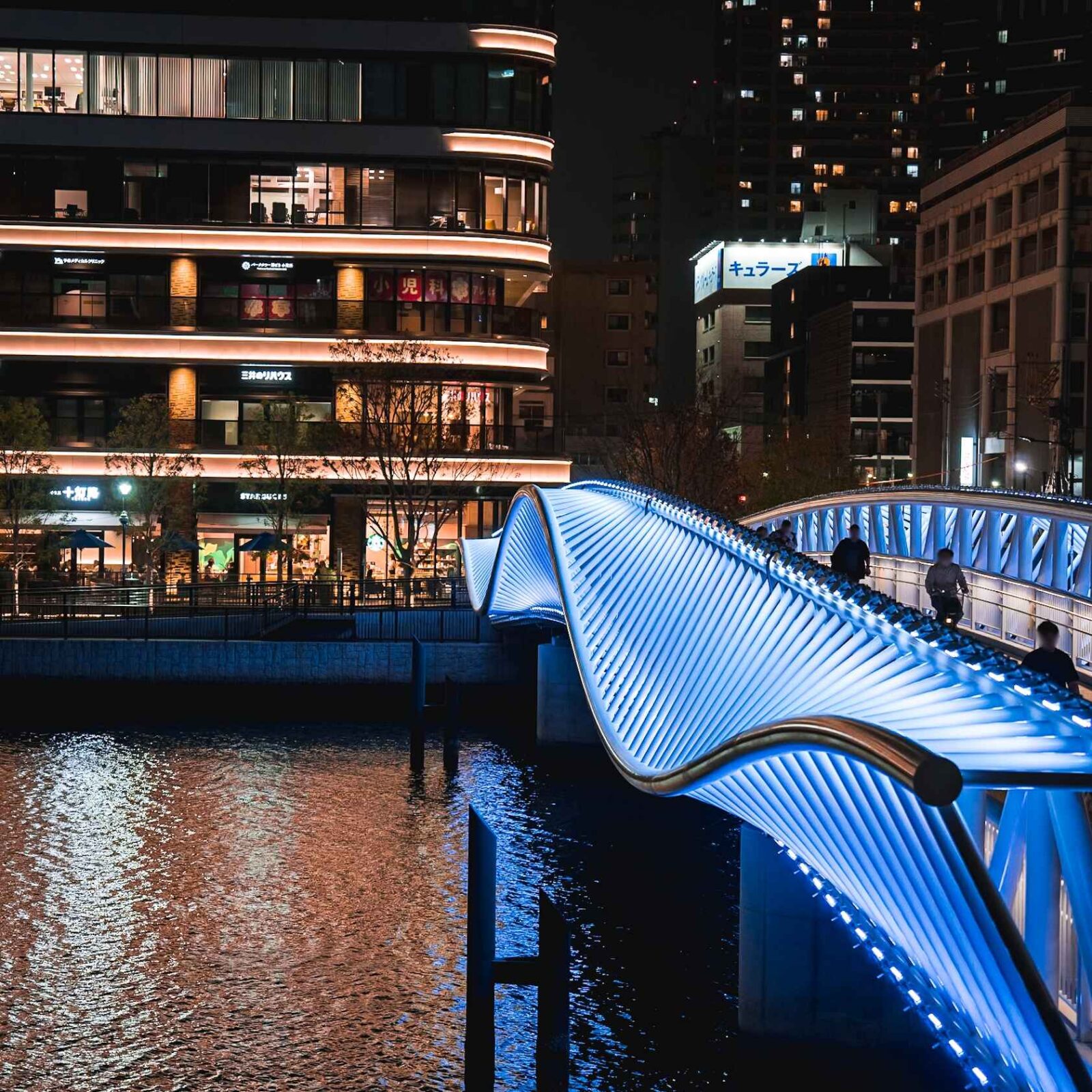
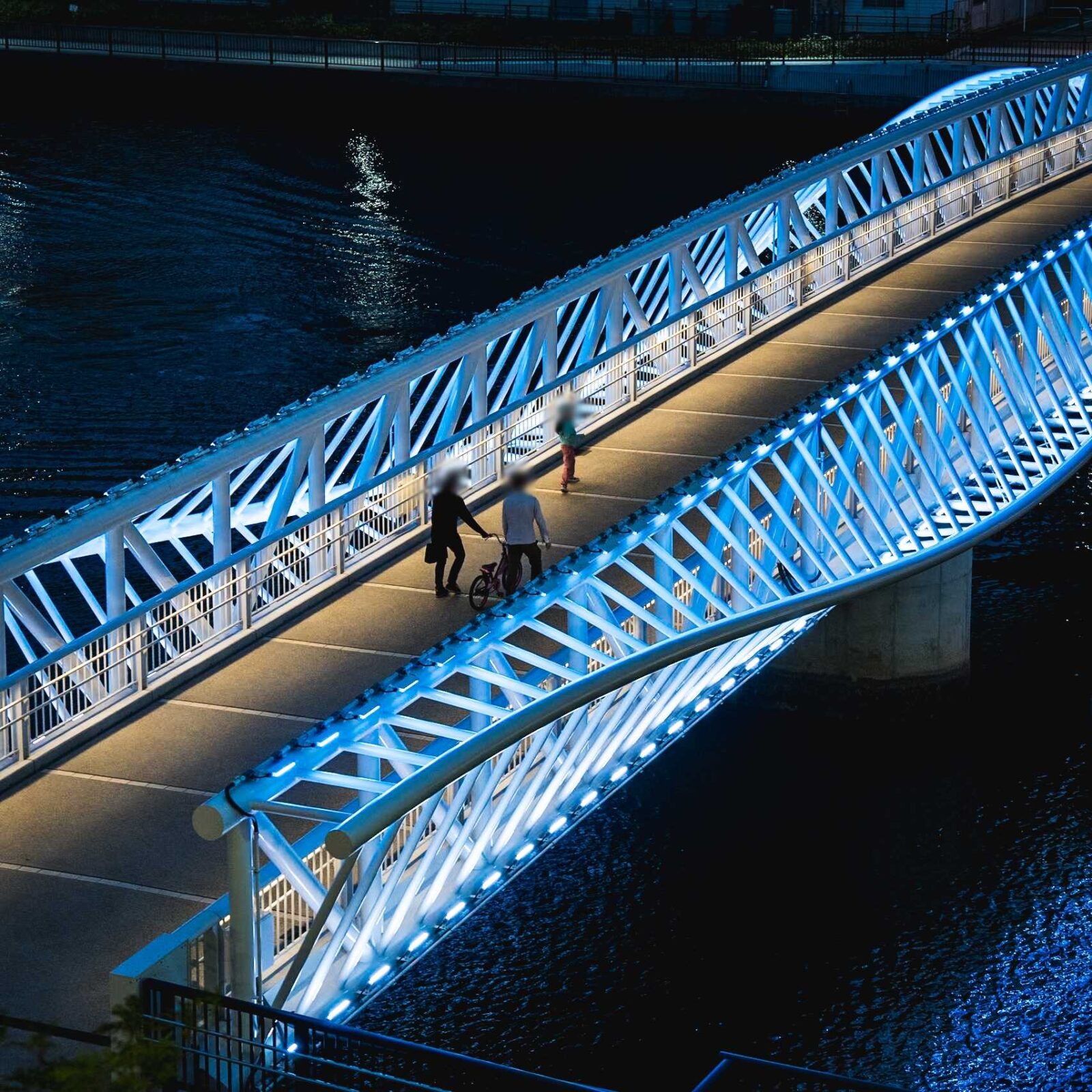
The programme varies by season and day of the week, meaning that the colours are different on, say, a summer weekend versus a winter weekday to ensure that the visual experience is always evolving rather than repeating nightly. The upper and lower parts of the structure are controlled separately, so two colours can appear at once (for example, a cool tone on the top and a warm tone on the underside) and shift at different speeds, creating layered visual effects and allowing for more freedom of combinations.
At night, the coloured lights reflect on the Asashio Canal below, creating shimmering patterns on the water’s surface that resemble gentle waves appearing to wash over one another. The lighting design has since received international recognition, with Reimei Kobashi winning the 2025 LIT Lighting Design Awards in the Bridges and Public Infrastructure Lighting category.
Project info
Lighting Design/Product Company: Hoshino Architects / Izumi Okayasu Lighting Design Office
Lead Designers: Hiroaki Hoshino / Izumi Okayasu
Architecture Company: SHIMIZU CORPORATION
Client: Kachidoki East District Urban Redevelopment Association
Photo Credits: ebi_times
Completion Date: 2024
Project Location: Tokyo, Japan