



Header: Pavelín and Oscar Hernández OHFA
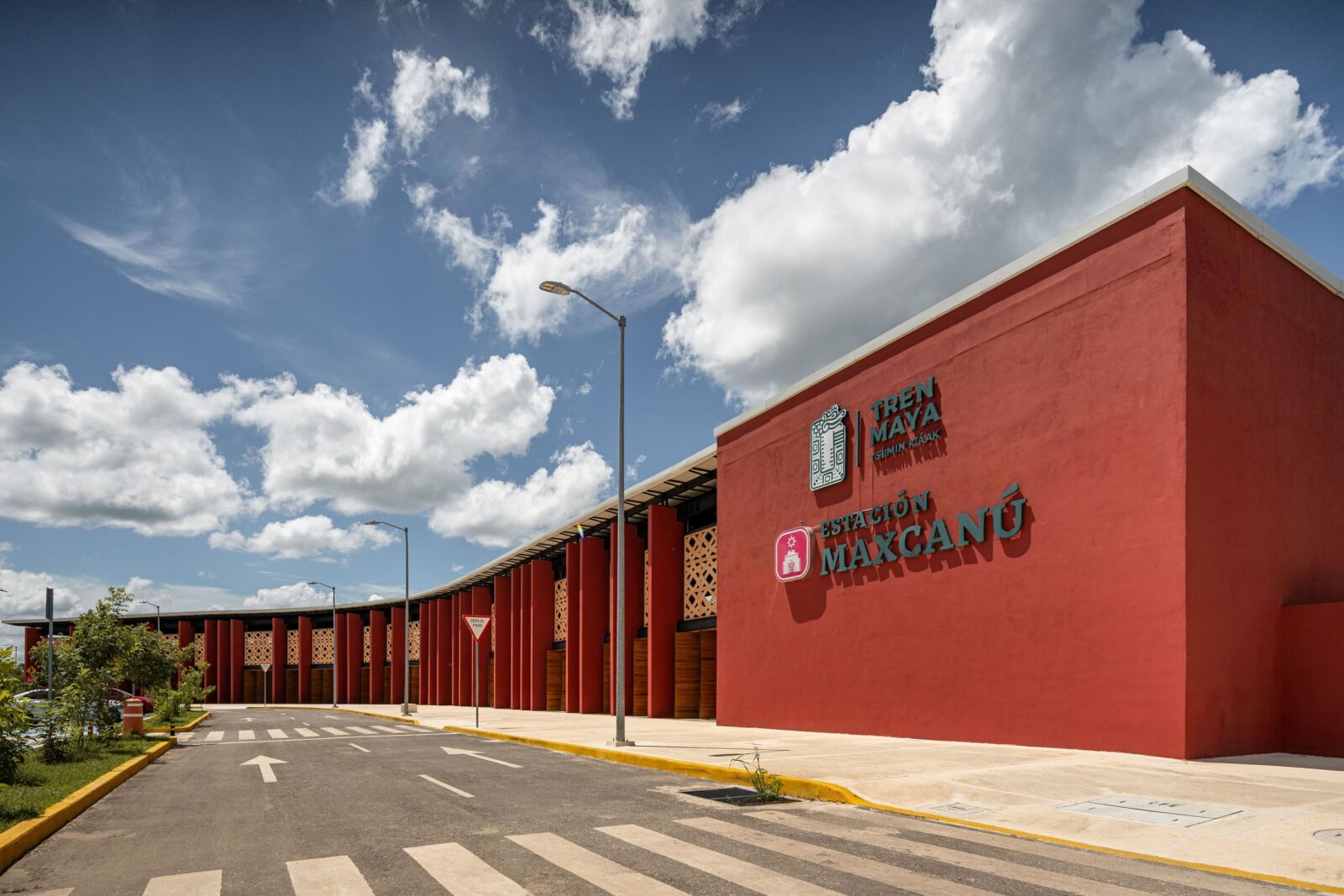
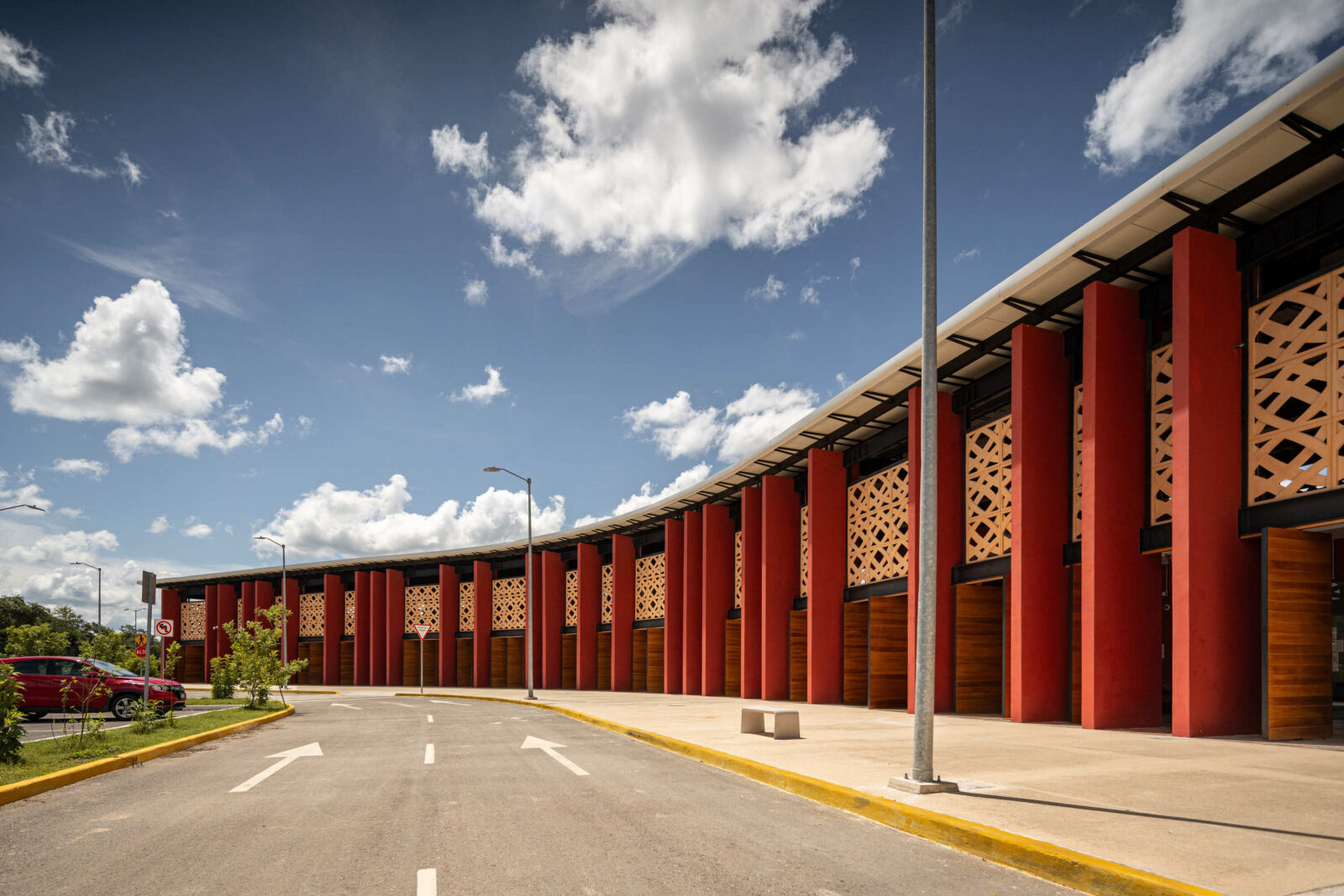
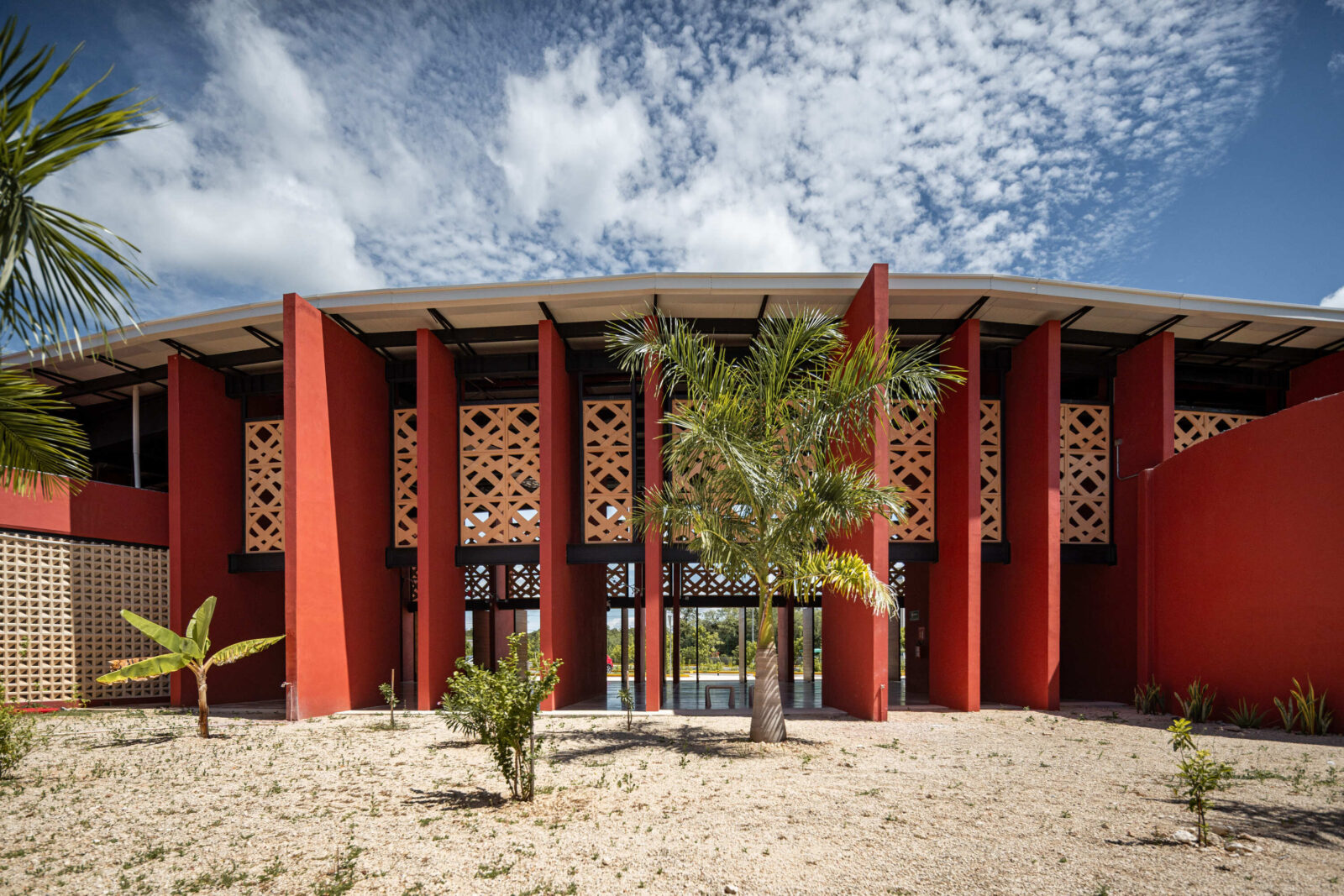
The new Maxcanú Station in Yucatán, México, designed by GI21 Arquitectura, stands as a key stop along Section Three of Mexico’s Maya Train network. Located 65 kilometres west of Mérida, this 1,690-square-metre terminal serves as a physical rest point for up to 10,000 daily passengers. The architects shaped the main building as an open, curved volume. This specific geometry serves a practical purpose: it faces east to capture the soft morning light while closing off towards the west to block the harsh afternoon sun.
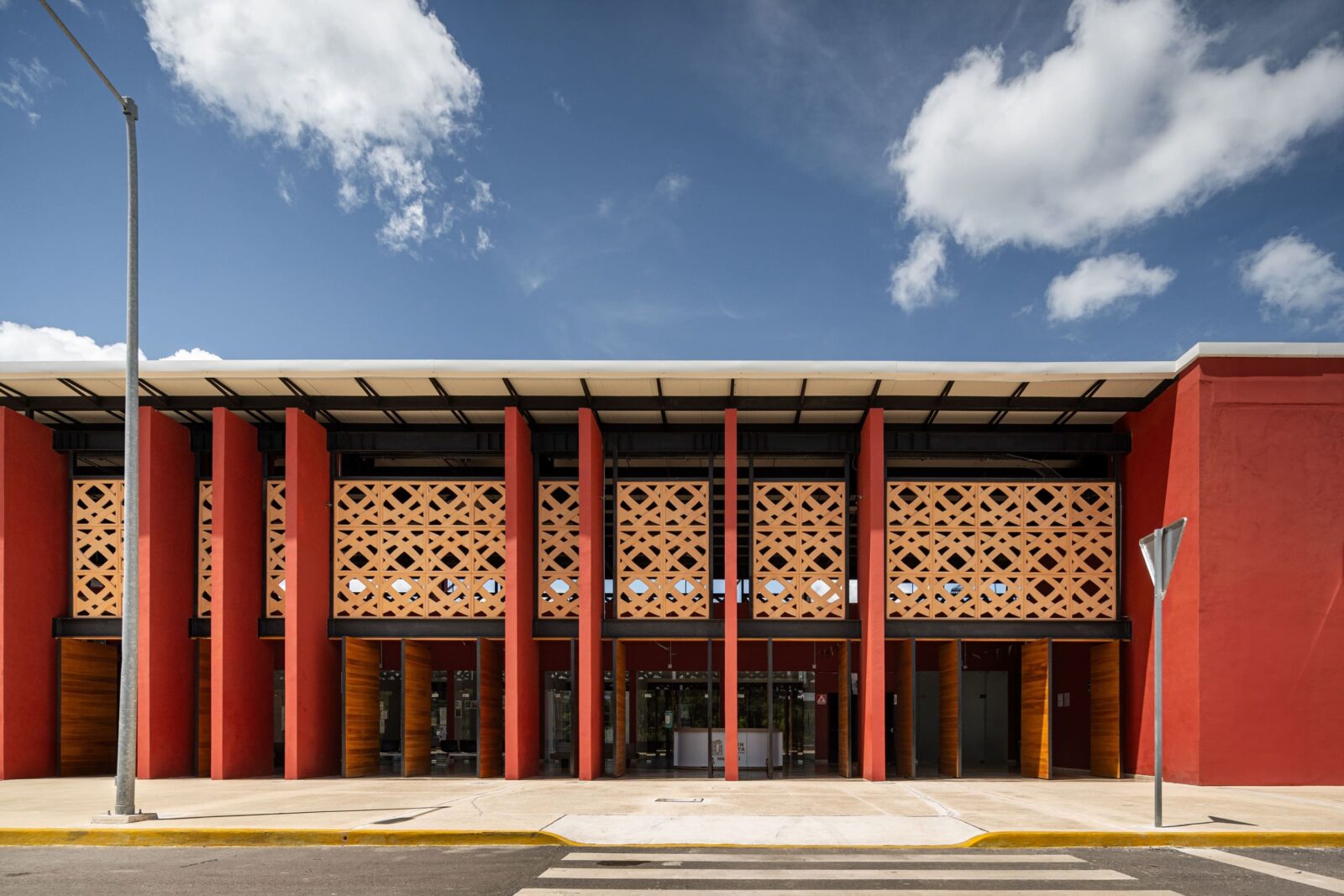
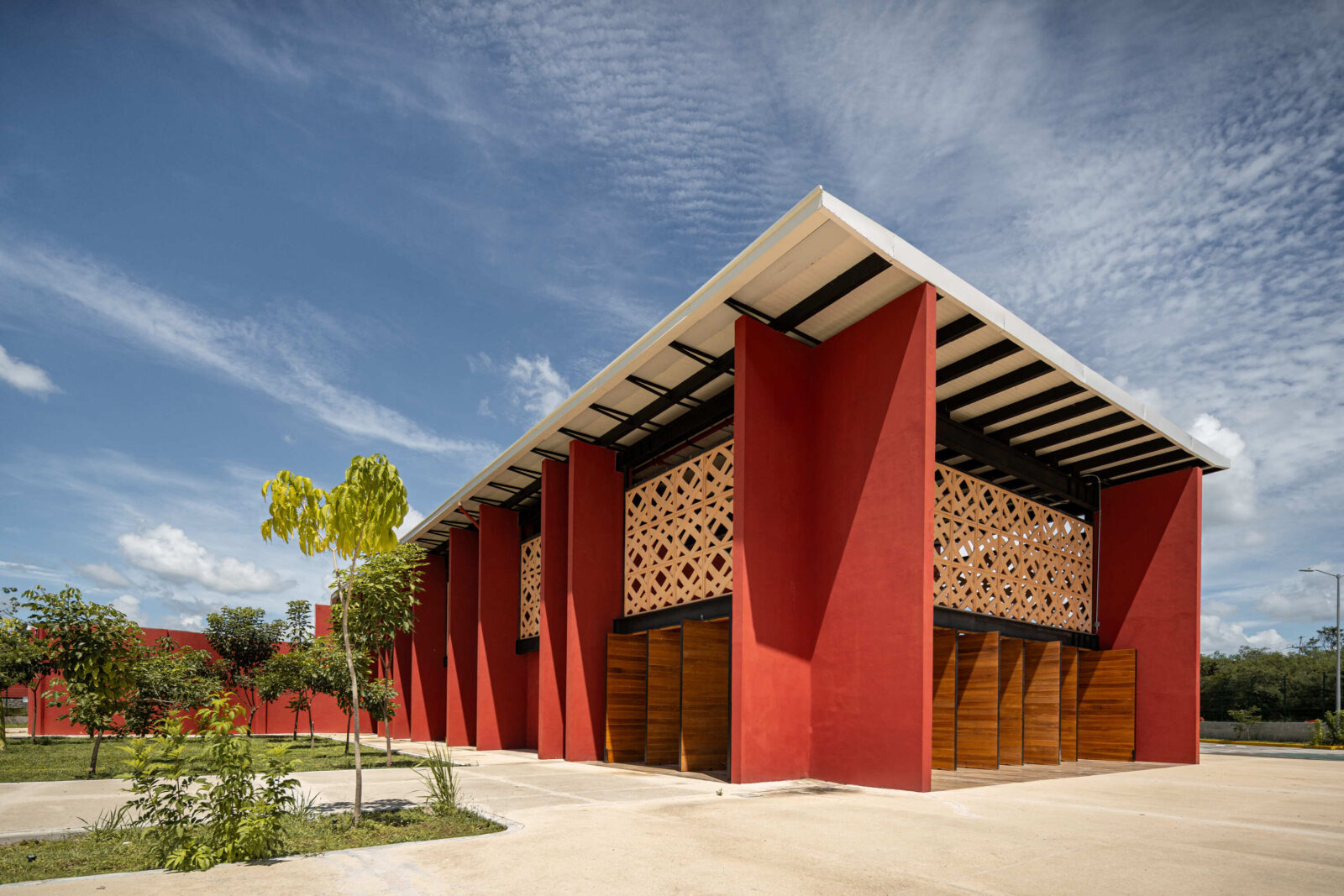
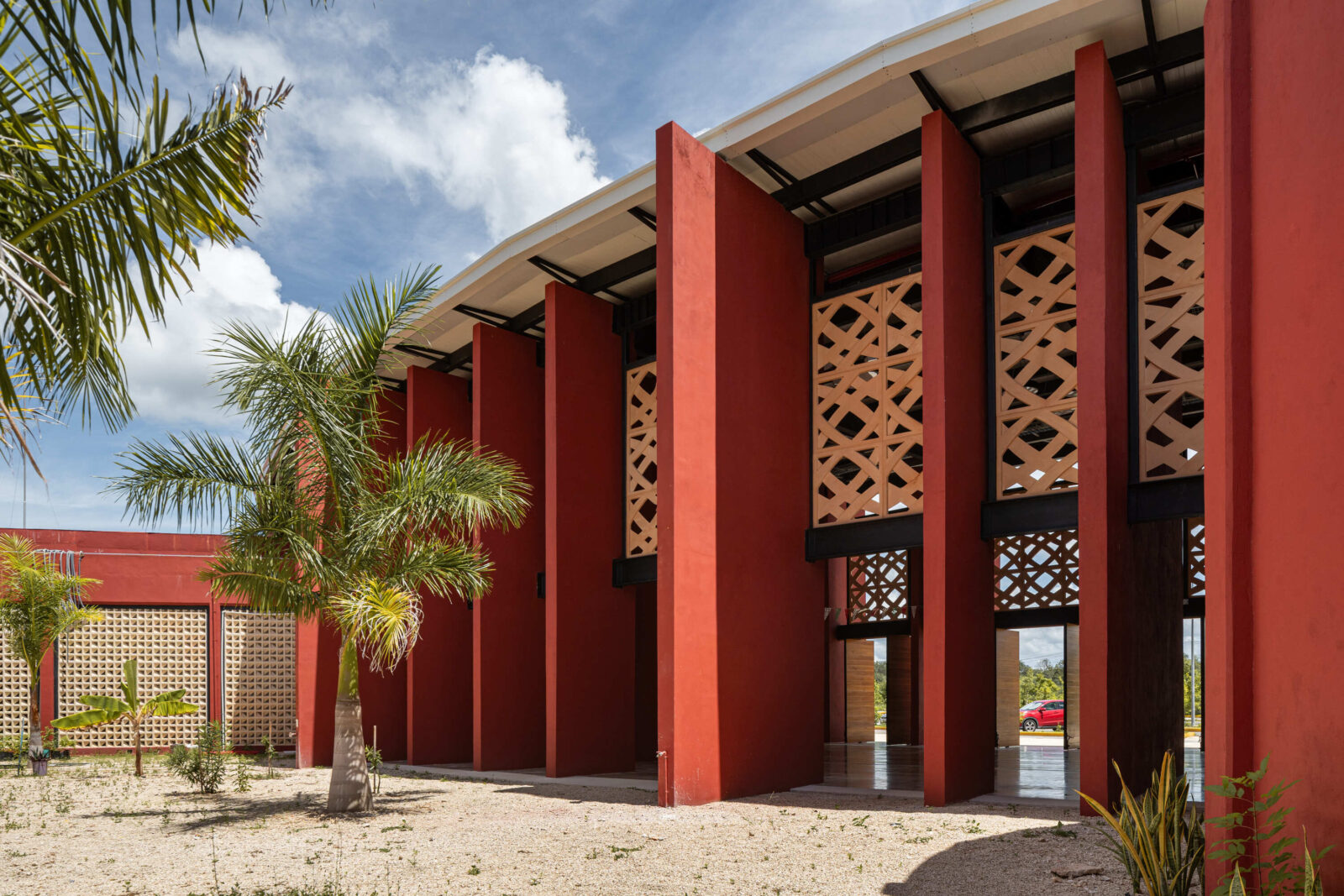
Rather than relying on mechanical cooling, the station uses passive climate control. Large concrete façade brackets frame the entrances and guide passengers through the building. At the same time, these deep structures act as fixed sunshades that block direct solar heat, working alongside cross ventilation to keep the indoor temperatures low. This structural setup takes inspiration from the ancient ruins of Palenque, where rows of columns supported large platforms and allowed people to enter from multiple sides.
Local pigments and textures of the jungle
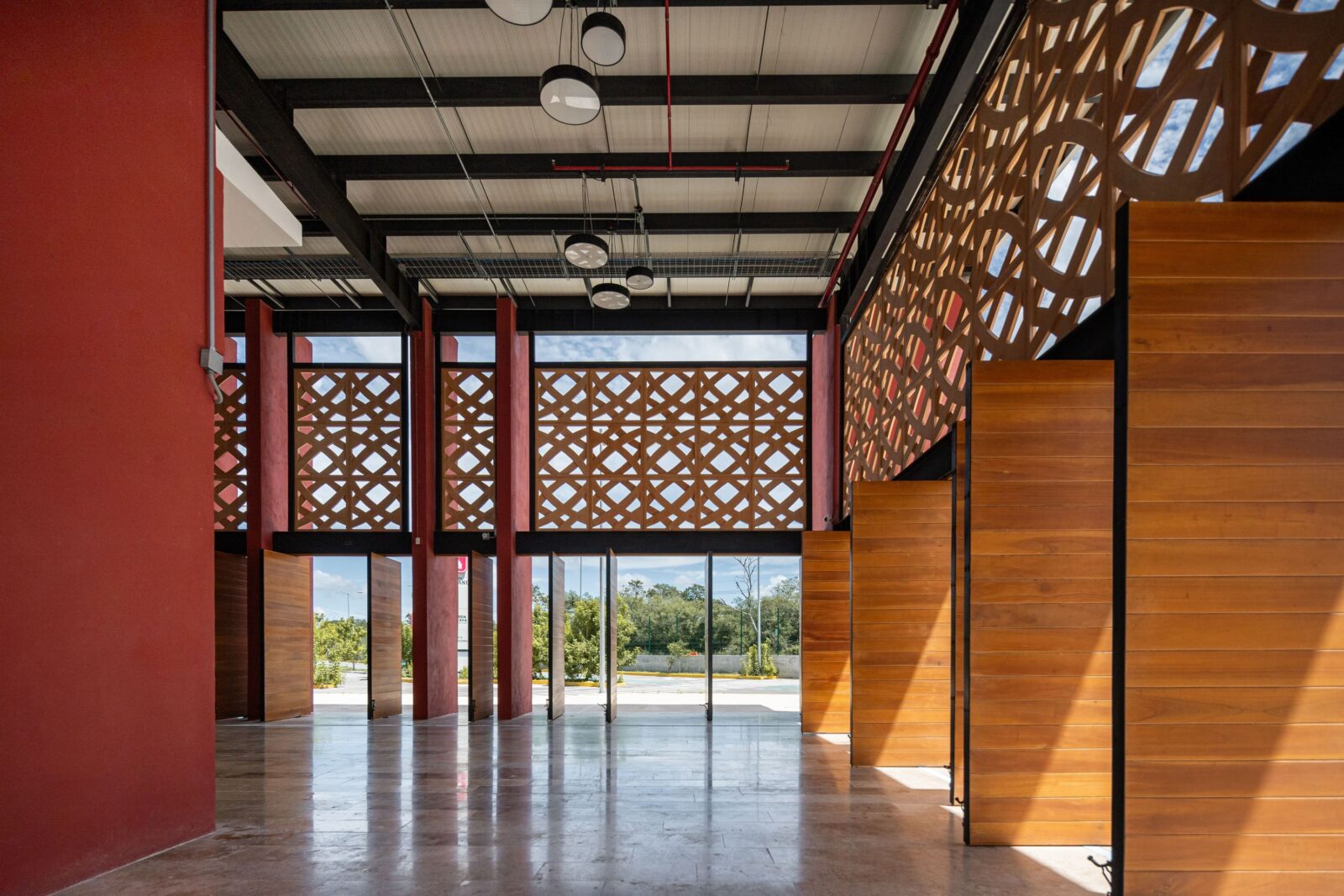
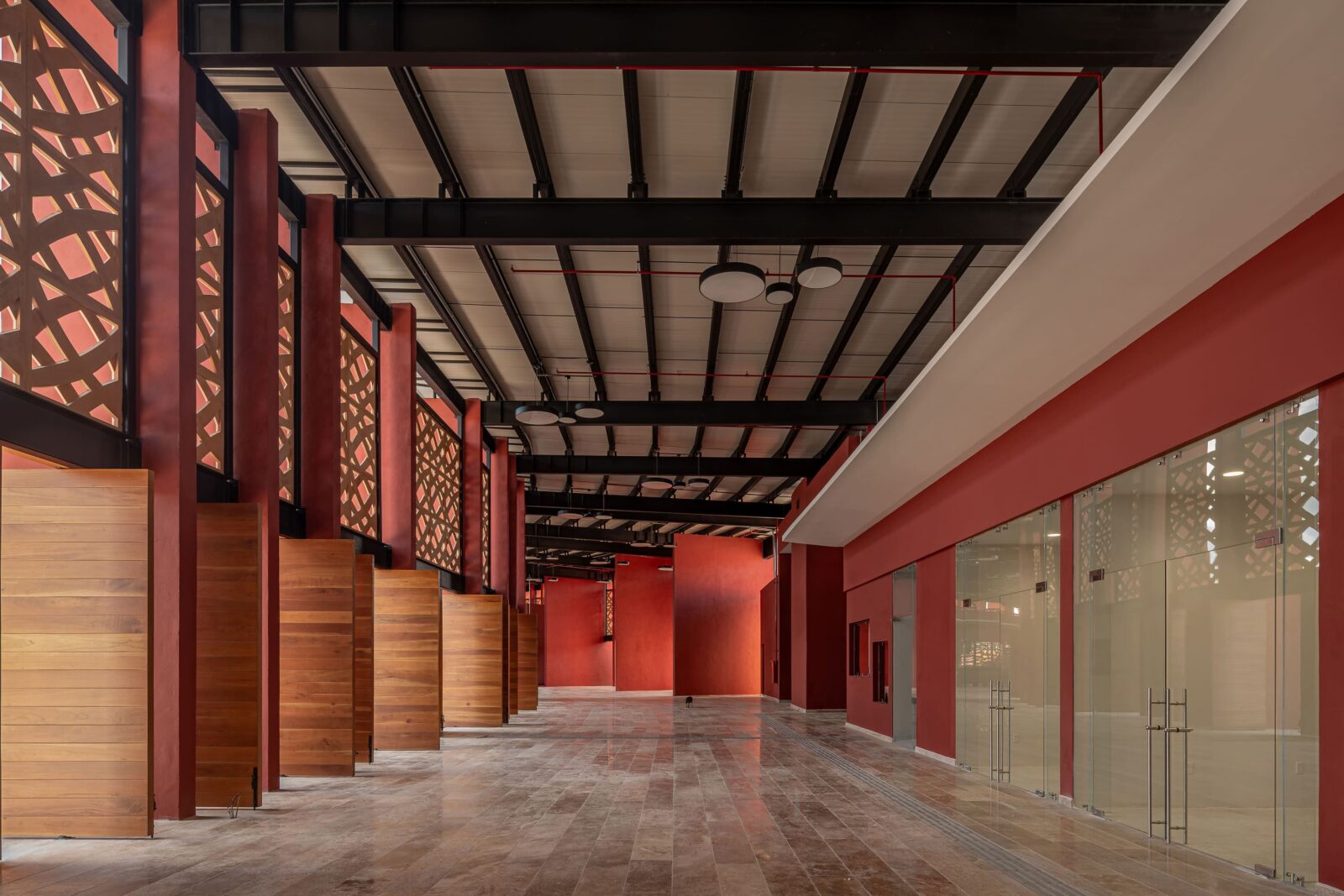
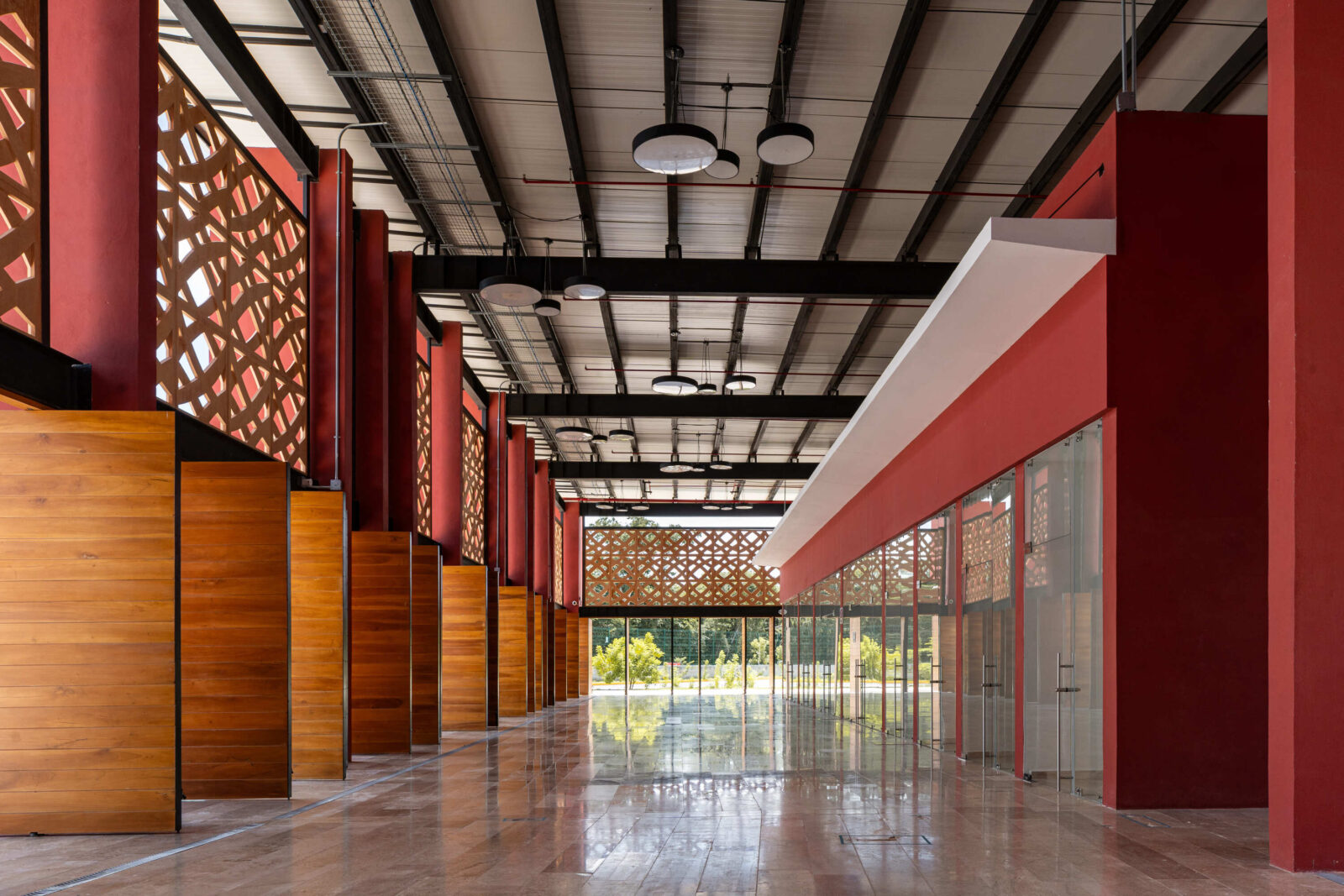
The colour palette of the station connects directly to the nearby town of Maxcanú. The exterior walls are finished in a distinct cochineal red plaster, a natural crimson dye made from insects that live on desert cacti, which mirrors the facade of the town’s historic church. This bold red is paired with black steel framing, grey exposed concrete vaults, and warm tropical wood pivot doors sourced from the region.
The latticework system
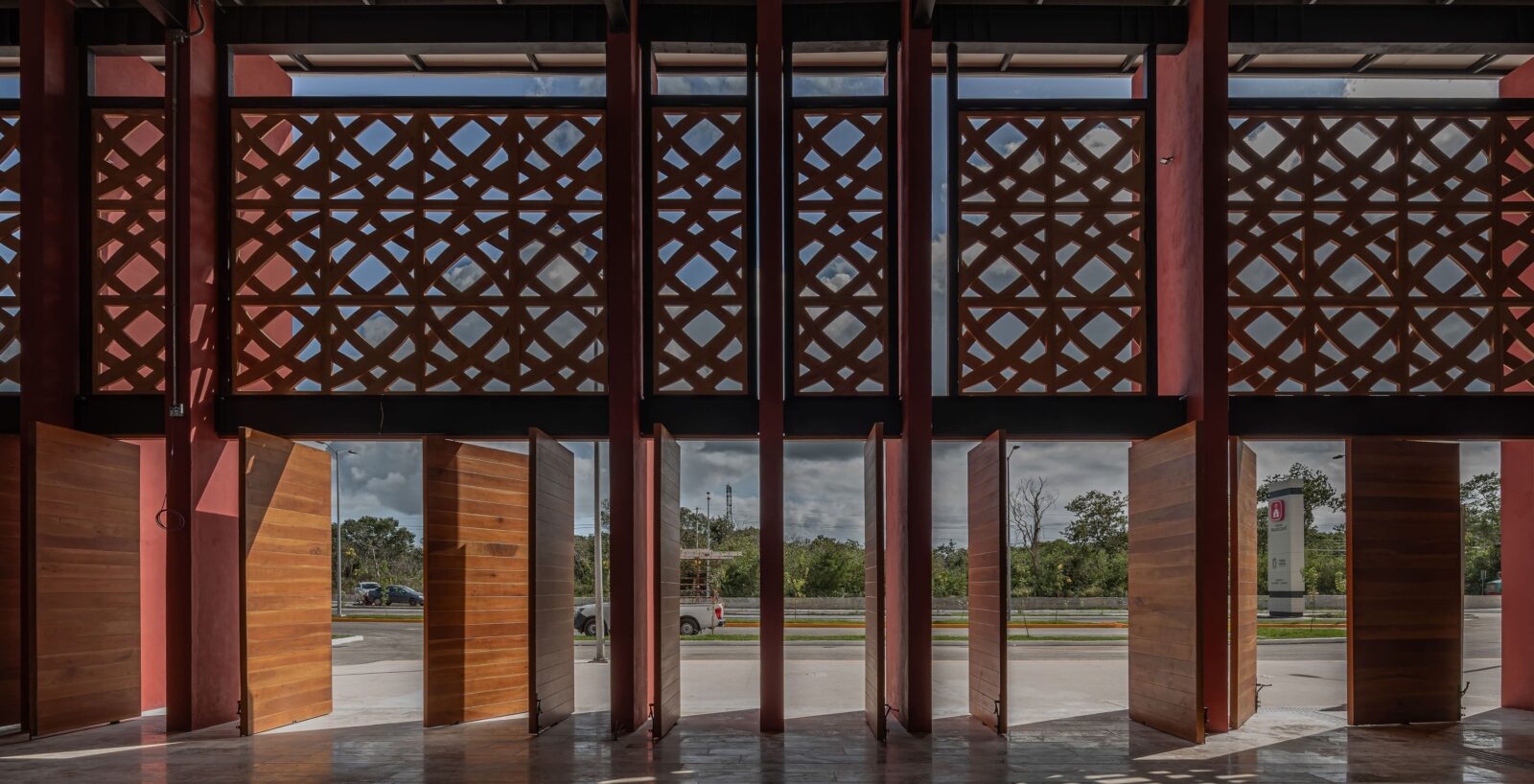
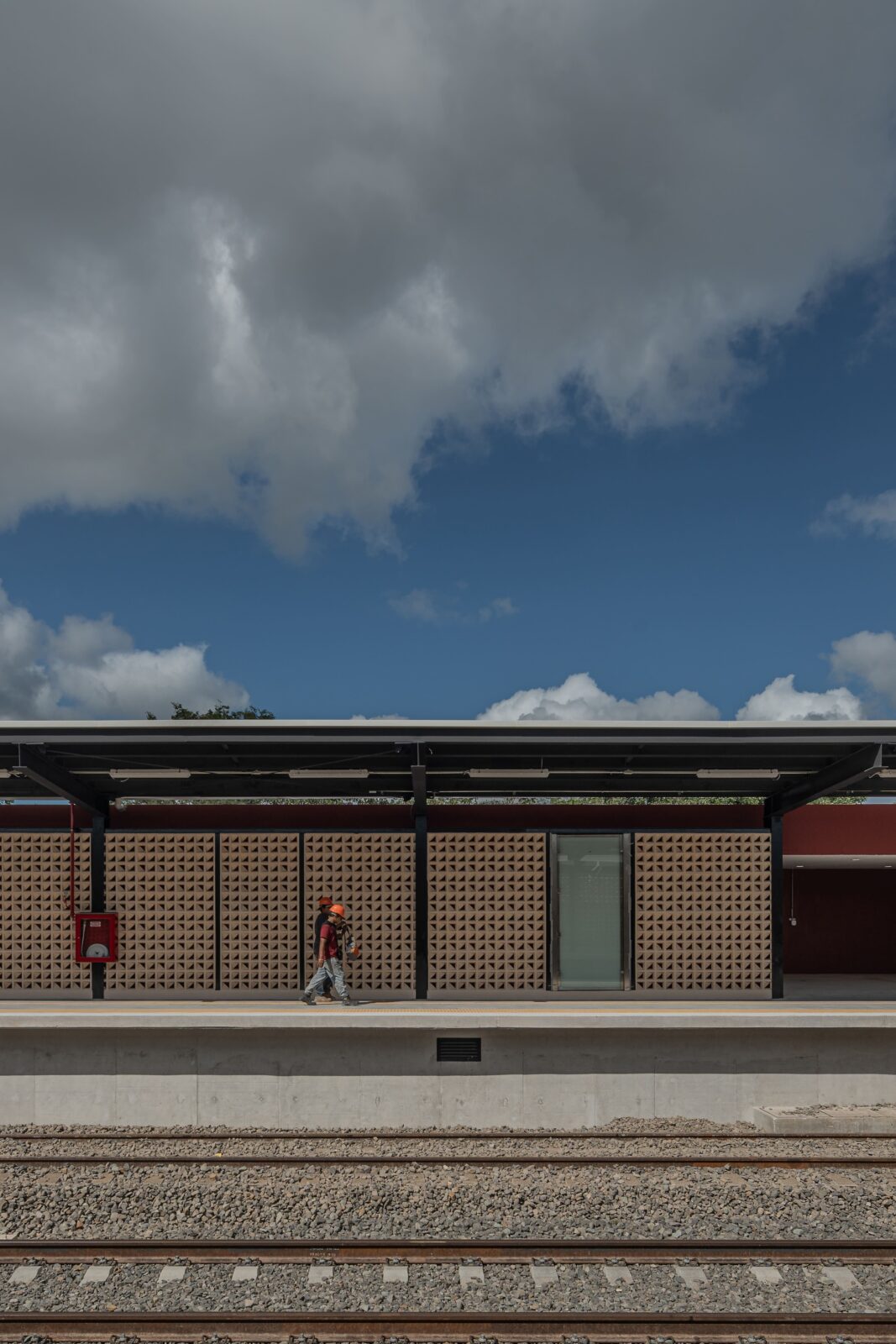
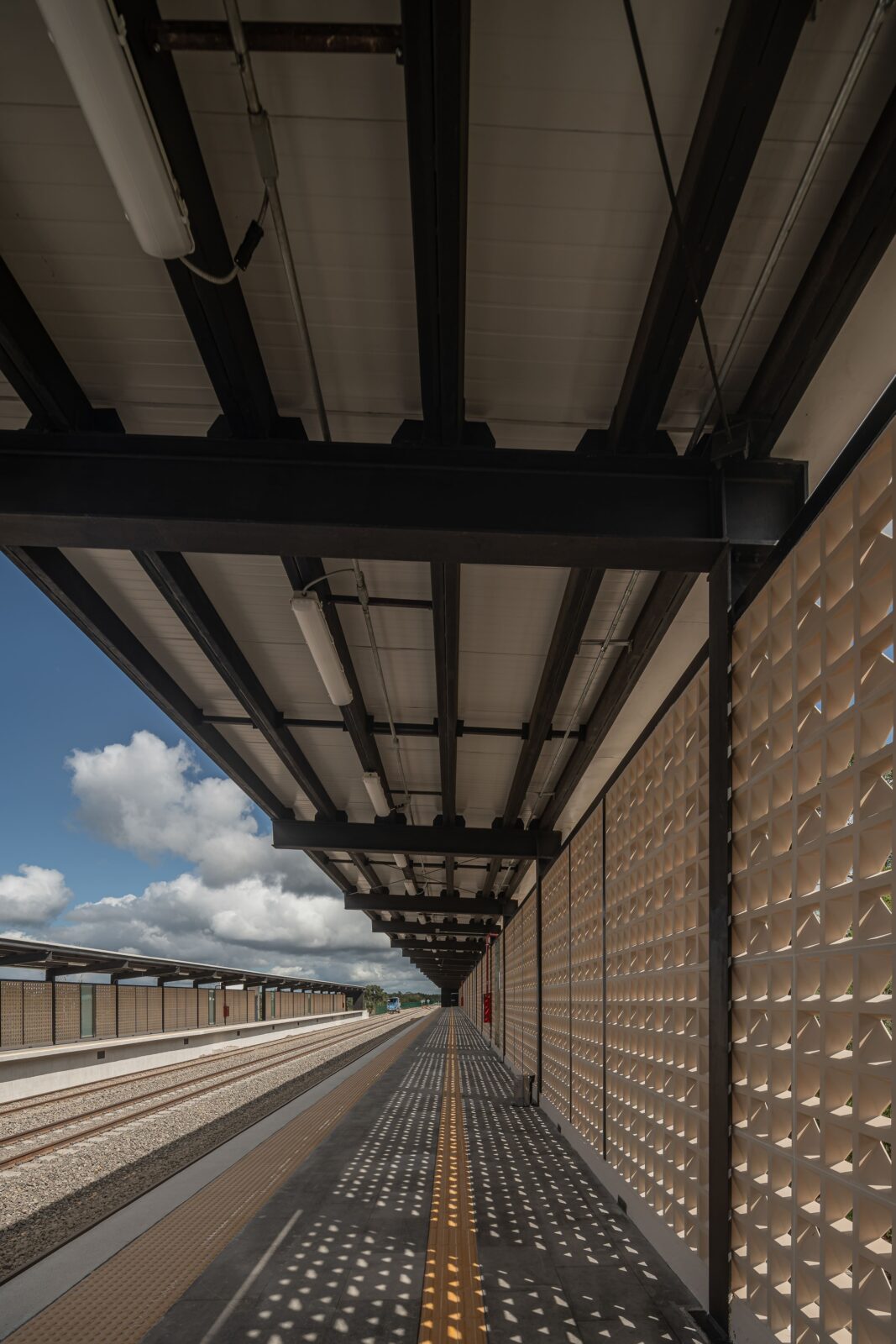
To control light and air, the architects installed two types of prefabricated concrete latticework across the building, with patterns influenced by traditional regional textiles:
- In the waiting halls: The concrete grid uses a wide, open pattern to encourage airflow and let in natural daylight.
- Along the boarding platforms: The grid pattern becomes much tighter and denser, providing maximum shade for passengers waiting for trains.
As sunlight passes through these different concrete screens, it projects shifting patterns of light and shadow across the floors, replicating the feeling of walking under a dense jungle canopy.
Adapting to cenotes and ancient ruins
Building the station was a 36-month process that required constant structural changes. Because the Yucatan Peninsula sits on a fragile limestone shelf filled with underground rivers, caves, and archaeological remains, the design team had to alter their plans as construction progressed. Working with the National Institute of Anthropology and History (INAH), the team mapped out subterranean structures and cenotes to ensure the heavy transport infrastructure would not damage them.
To handle the cavernous ground and meet strict seismic and wind load safety rules, the engineers used a shallow foundation made of continuous reinforced concrete footings. On top of this base sits a lightweight steel frame that supports prefabricated roof panels, while the main walls rely on reinforced masonry. The ceilings use an exposed beam-and-vault system, leaving the bones of the building visible to keep maintenance simple.
Courtyards, gardens, and local transport
At the northern end of the site, a semi-desert garden provides a quiet space for passengers. This area mimics the traditional Mayan courtyard, a historical layout used to cool down living spaces. The organic, curving pathways of the garden are pulled from ancient pre-Hispanic murals where spirals represented the natural world. The grounds are planted with native shrubs, palm trees, and Golden Shower trees, a yellow-flowering species chosen for its ability to thrive in tough, dry conditions.
The station connects directly to the Mérida–Campeche bypass, making it easy for local mototaxis and collective buses to ferry passengers to the town centre in a few minutes. The layout also includes new bicycle paths leading into Maxcanú, tactile paths for visually impaired travellers, and dedicated accessible parking bays.
The true value of this terminal lies in its quiet submission to the environment it joins. Rather than forcing a rigid blueprint onto a fragile landscape, the architects allowed hidden caverns and ancient ruins to dictate the final layout, relying on natural airflow and regional materials to handle the heat. Heavy infrastructure does not have to destroy ecosystems or ignore local history; patience and structural adaptation can keep both intact. The final structure operates as a practical transit point that serves the everyday needs of Maxcanú residents while offering outsiders an authentic introduction to the region.
Project info
Architecture: GI21
Location: Maxcanú, Yucatán, México
Engineering: Ing. Arq. Griselda Isabel Nájera García
Landscape: Arq. Ignacio Graf Noriega
Client : FONATUR Tren Maya
Year: 2024
Photo credit: Pavelín and Oscar Hernández OHFA


