

Header: Dominik Scherrer
Dominik Scherrer belongs to a fresh group of designers who are changing how we think about making and wearing shoes. After winning the Emerging Footwear Designer of the Year 2025 at the Global Footwear Awards, he has gained a lot of attention for his project, Closed Loop Footwear. Instead of following the usual way of making shoes, Dominik looks at them as technical systems. He focuses on modular parts that users can put together themselves, making it easier to fix or recycle them later on.
With a background in mechanical engineering and a deep interest in eco-friendly design, Dominik treats shoemaking as a puzzle to be solved. He digs into the messy problem of how to take shoes apart and reuse the materials, which is one of the toughest challenges in fashion today. In this talk, he explains the moment in his studies when he started to doubt traditional factory models and how using bits of banana fibre and hemp leather helped shape his award-winning trainers. He also talks about how his win at the Global Footwear Awards has given him the push to keep questioning the status quo.

Closed Loop Footwear approaches sustainability through modularity, self-assembly, and decentralised production. What moment during your studies made you question the traditional footwear manufacturing model?
During my Master’s, I focused on Eco-Innovative Design and became more and more aware of the positive and negative influence design has on product development. Throughout the program, it became clear to me that some product categories are easier to approach sustainably than others. Footwear is definitely one of the more difficult ones. Shoes combine many different materials, are often glued together, and are produced in highly globalised systems. Achieving real sustainability under those conditions is challenging. That realisation made me want to focus my thesis on footwear – because it’s complex and difficult.
Your background in mechanical engineering clearly influenced the project. How did technical thinking influence your design decisions differently than a purely aesthetic approach might have?
My technical background brings an analytical and strategic counterpart to the sometimes chaotic and emotional design process. I think both sides are important – they just play different roles depending on the phase of the project. Functionality and real-life feasibility were always important to me. That partly comes from my engineering background, but also from what I learned at university and through my previous jobs. I tend to think about how something can actually be built and used from the very beginning, not only about how it looks.
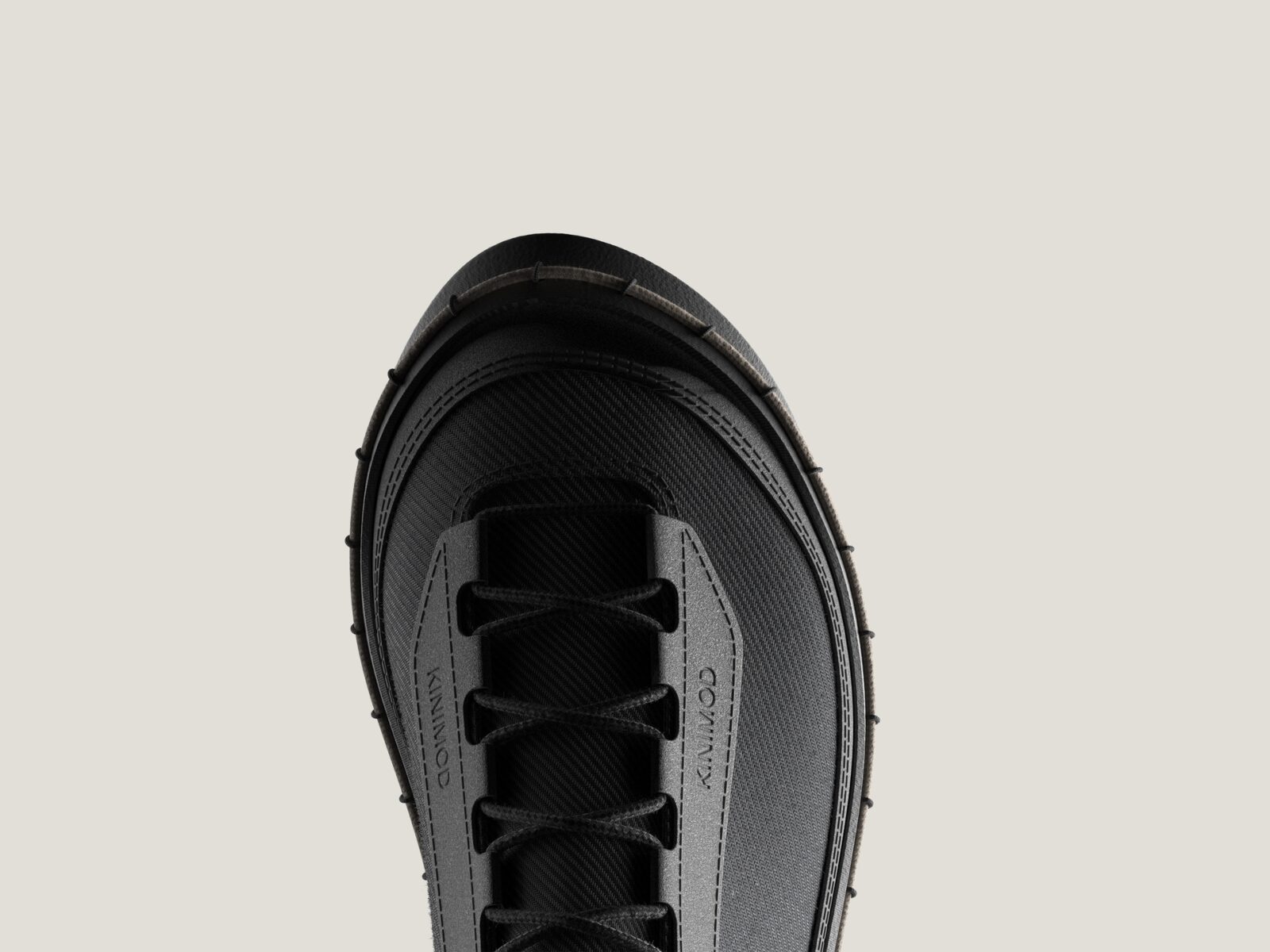
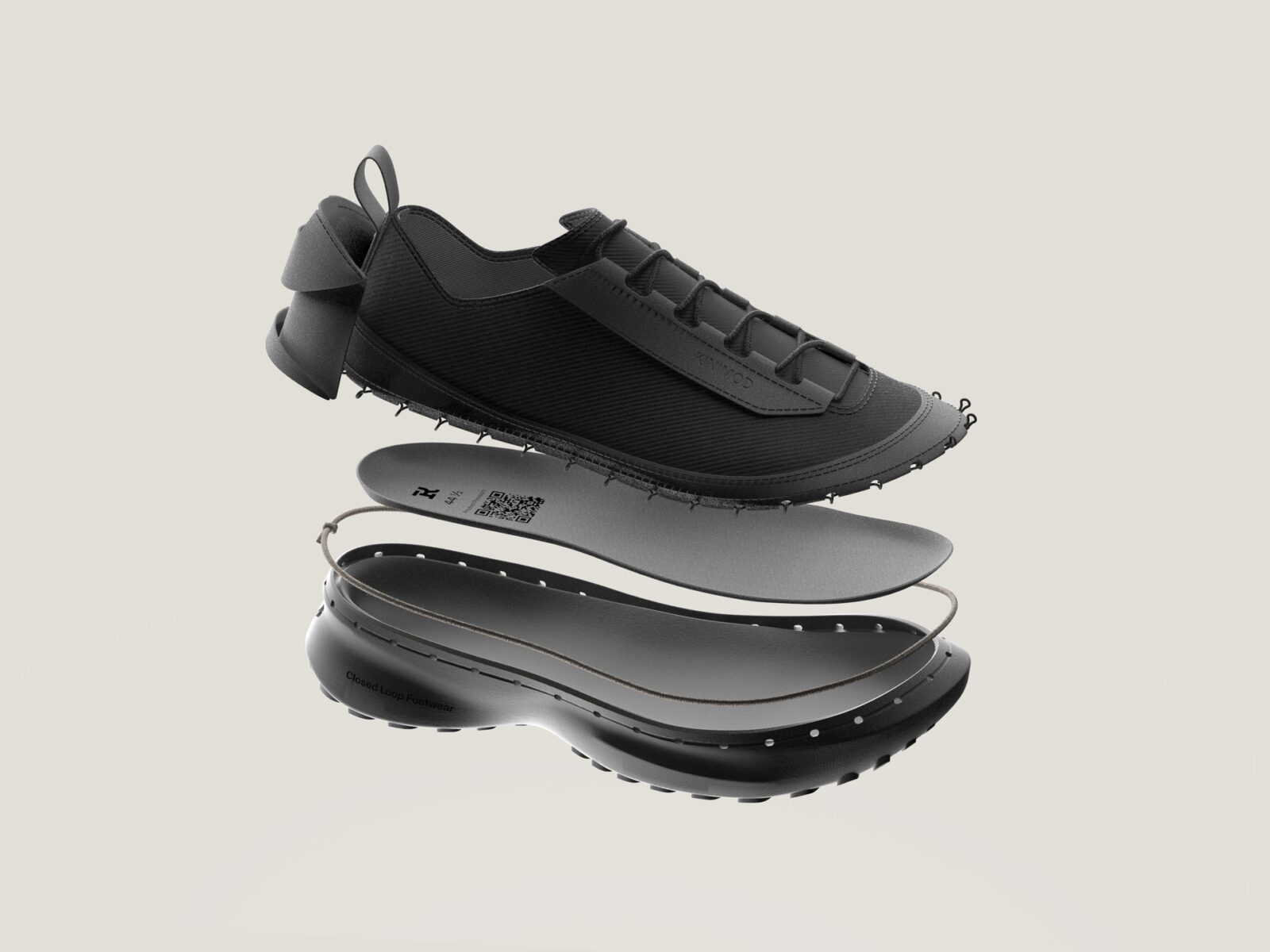
Designing for disassembly and repair requires users to engage with the product. Was the idea of user participation always part of your vision of a circular sneaker?
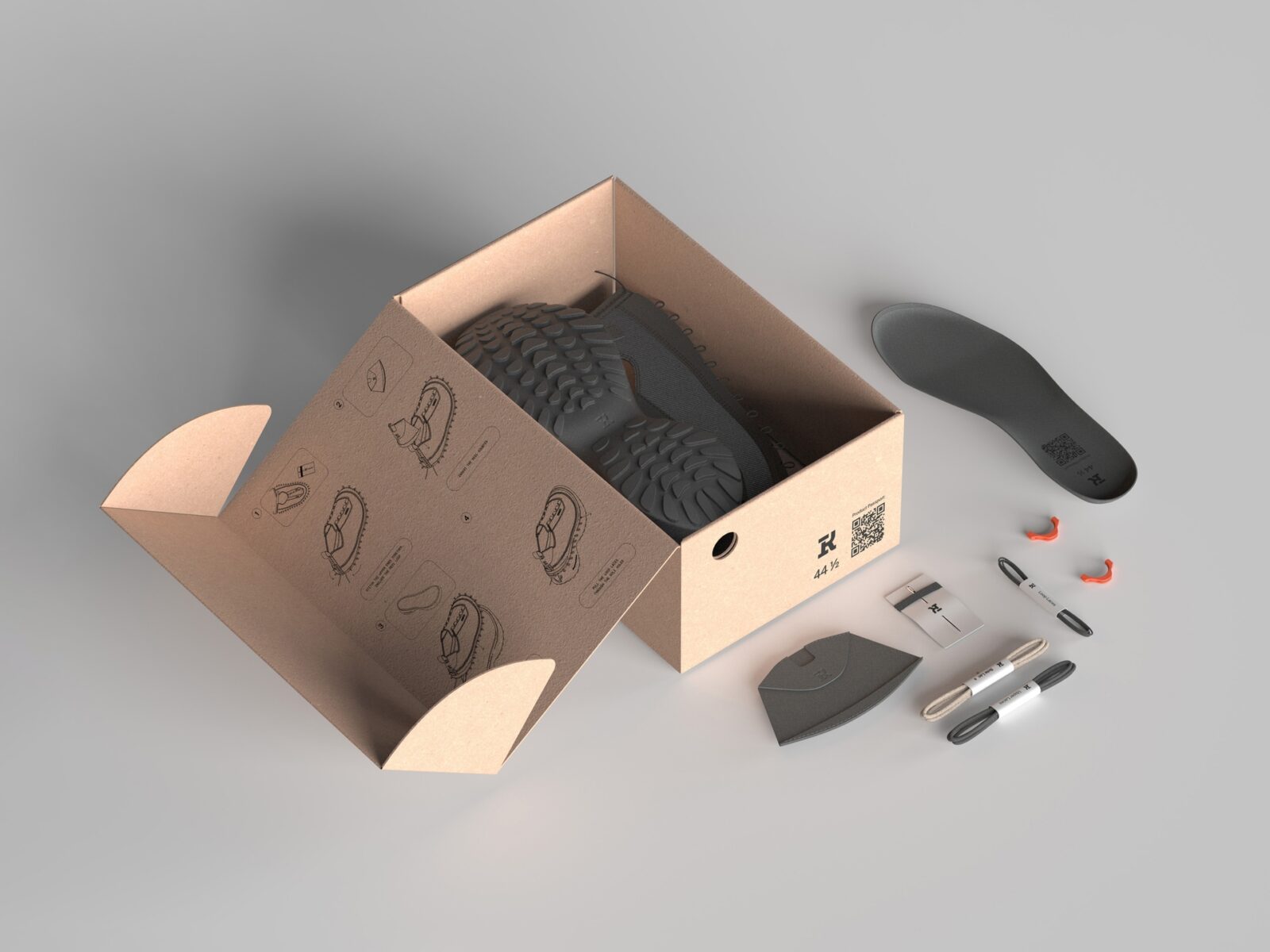
Not from the start. I had earlier concepts that didn’t include self-assembly or self-repair. In the end, I decided to include self-assembly because I believe it can create a closer relationship between the user and the product. When people are involved in assembling something themselves, they might value it more – and that can support longevity. So user participation became part of the concept during the development process.
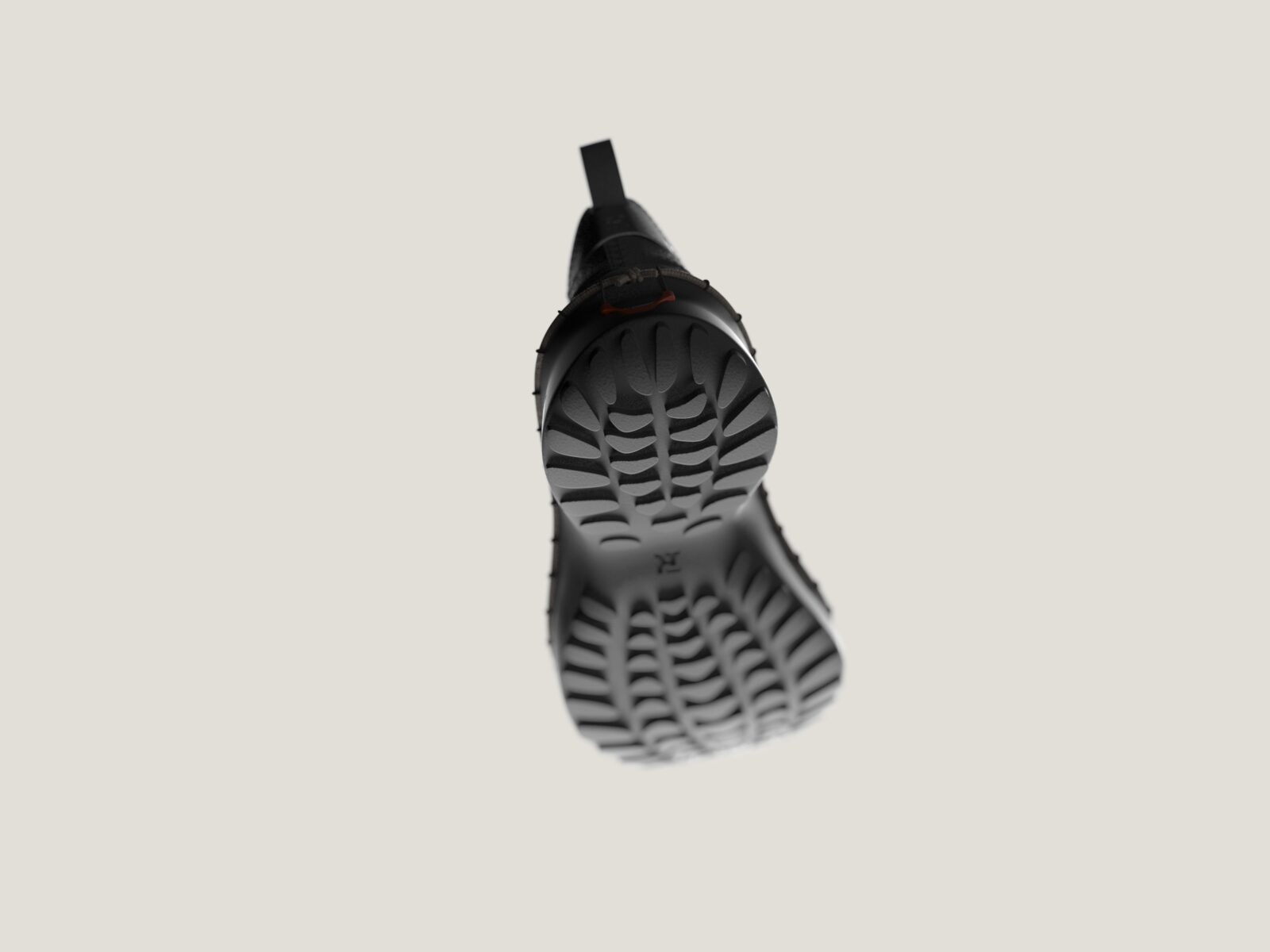
The project uses materials like banana fibre textile, hemp leather, and recyclable TPU. How did material experimentation shape the final form of the shoe?
Material research played a big role in the project. Bananatex (banana fibre textile) and Revoltech LOVR (hemp-based material) showed strong potential from a circular perspective, but I needed to understand how they actually behave. Through testing – cutting, sewing, forming – I learned what the materials can and cannot do. The current form of the shoe is very much a result of those findings. The construction adapts to the materials rather than forcing them into a conventional shoe design. At the same time, only wear testing will show whether the materials are used in the right way or if certain details still need improvement.
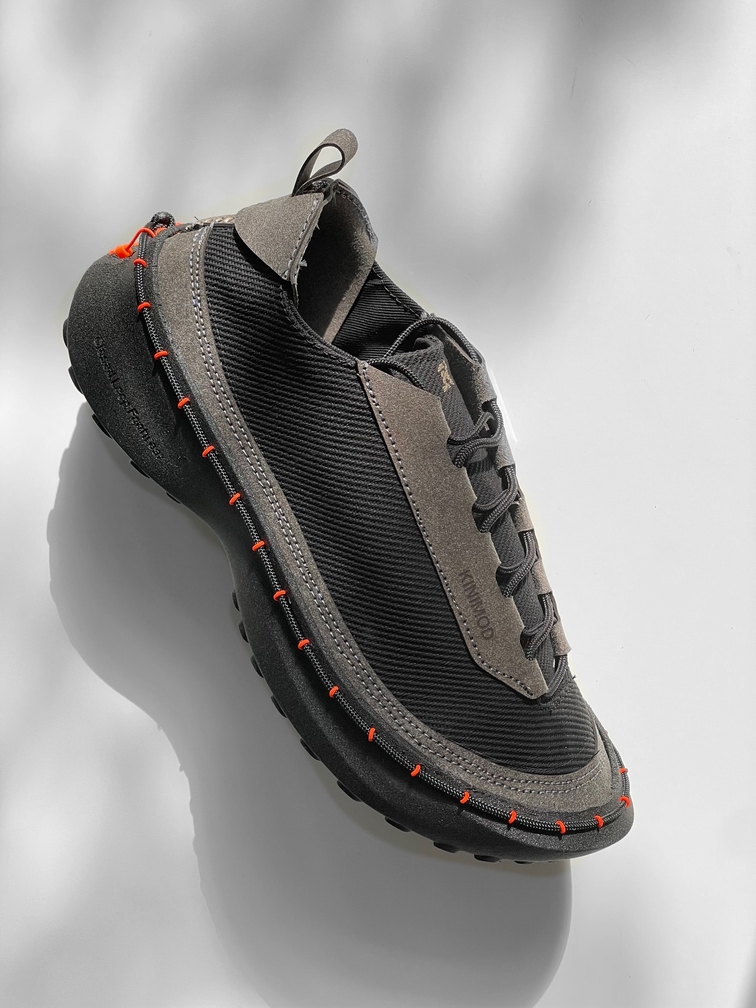
Being named Emerging Footwear Designer of the Year at the Global Footwear Awards 2025 while still at an early stage of your career is significant. How does this recognition influence your confidence and direction as a designer?
Awards like the GFA are definitely a confidence boost, especially at an early stage in my career. They show me that the topics I’m working on are relevant beyond the academic context. Since it’s the first award I’ve won as a designer, it has a special meaning for me. It also helps to give visibility to my work as an independent industrial designer, which I really appreciate.
Academic concepts can struggle to translate into reality. What aspects of Closed Loop Footwear do you believe are immediately applicable beyond the classroom?
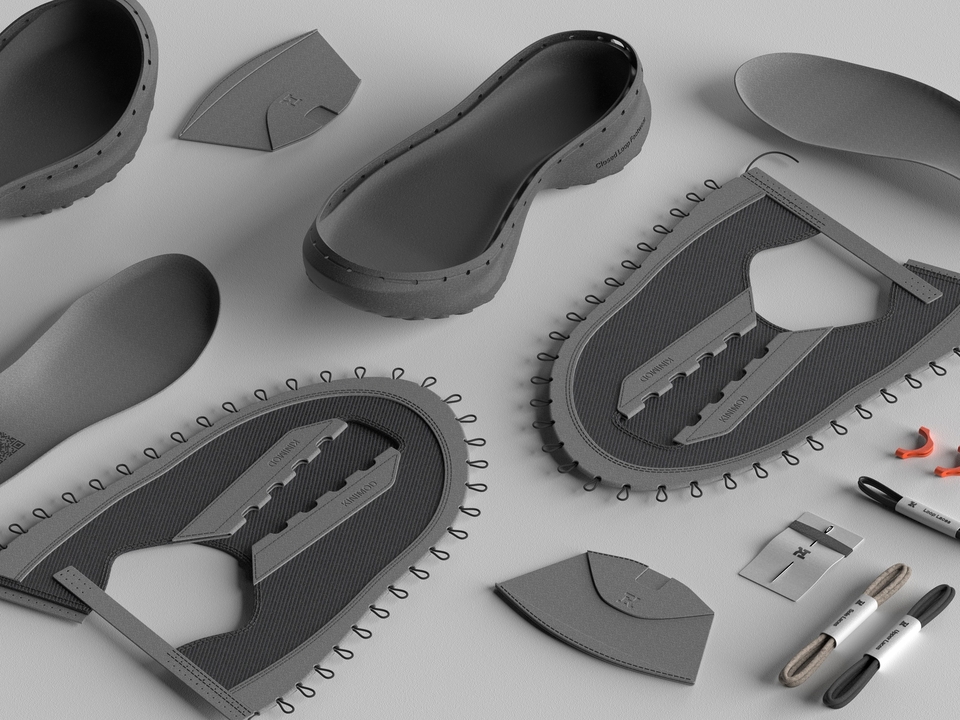
The exact construction still needs further development before it can be applied in a real production environment. However, the loop-based construction principle itself could be implemented relatively soon for certain types of footwear. For example, injection-moulded soles combined with 3D-knitted uppers could be a realistic first step. While 3D printing is not yet widely used in footwear production, I’m confident that digital and additive manufacturing will continue to grow and become more relevant in the future.
Looking forward, do you see yourself pushing circular systems within industry, or building alternative production models outside of it?
I think it should be a mix of both. Supporting the development of circular systems within the established industry is important because of its scale and impact. At the same time, alternative models can explore new ideas more freely and show what a circular future could look like. Ideally, I’d like to work somewhere between those two worlds – contributing to change within industry while also developing independent concepts that challenge existing systems.