



Frank Gehry, the legendary architect behind such unearthly landmarks as the Guggenheim Museum in Bilbao and the Walt Disney Concert Hall in Los Angeles, has passed away at the age of 96. Gehry died on December 5, 2025, at his home in Santa Monica after a brief respiratory illness. Widely regarded as one of the most imaginative and influential architects since Frank Lloyd Wright, Gehry was known for provocative designs that challenged the rigid formalism of modern architecture and blurred the line between building and sculpture. His audaciously curvilinear structures, clad in shimmering metal and composed of daring, fragmented forms, became global icons that liberated architecture from convention and delighted both critics and the general public.
Early Life and Unconventional Beginnings
Born Frank Owen Goldberg in Toronto in 1929, Gehry moved to Los Angeles as a teenager in 1947. He earned an architecture degree at USC in 1954, then worked briefly for corporate firms before launching his own practice in Los Angeles in 1962. Having experienced antisemitism when young, he even changed his last name at his first wife’s urging – a decision he later regretted but felt unable to reverse. From the start, Gehry charted an unorthodox path. He drew inspiration more from contemporary art and everyday street life than from academic tradition and developed what he jokingly called a “cheapskate aesthetic,” embracing humble off-the-shelf materials and a kind of gritty “dirty realism” that defied highbrow norms. Chain-link fences, plywood, and corrugated metal all found their way into his early projects. This rough-edged style set him apart in the 1970s – and later inspired a generation of maverick architects, including figures like Rem Koolhaas.
In 1978, Gehry made headlines (and raised eyebrows) with a project close to home: the radical makeover of his own family residence in Santa Monica. Rather than a polite remodel, Gehry enveloped the ordinary bungalow in raw, angular forms made of chain-link fencing, unpainted plywood, and corrugated steel, deliberately exposing the “ugly” materials that most architects tried to hide. The result looked intentionally unfinished, as if a construction site had been frozen in time, and it infuriated his upscale neighbours.
Yet what some mocked as a freakish eyesore in 1978 was eventually hailed as a stroke of genius. Decades later, the American Institute of Architects honoured the Gehry House with its Twenty-Five Year Award, calling it as influential in its time as Frank Lloyd Wright’s Fallingwater or Philip Johnson’s Glass House. That early experiment, essentially a deconstructed house-as-art-installation, ignited new conversations about art’s role in architecture, showing that serious design could be fun, provocative, and drawn from everyday “junk” materials.
Iconic Designs and Global Influence
By the late 1980s, Gehry’s idiosyncratic approach was earning mainstream recognition (he won the coveted Pritzker Architecture Prize in 1989). But his true global breakthrough came in the late 1990s with a series of epoch-defining projects that would cement his status as the world’s most famous living architect.
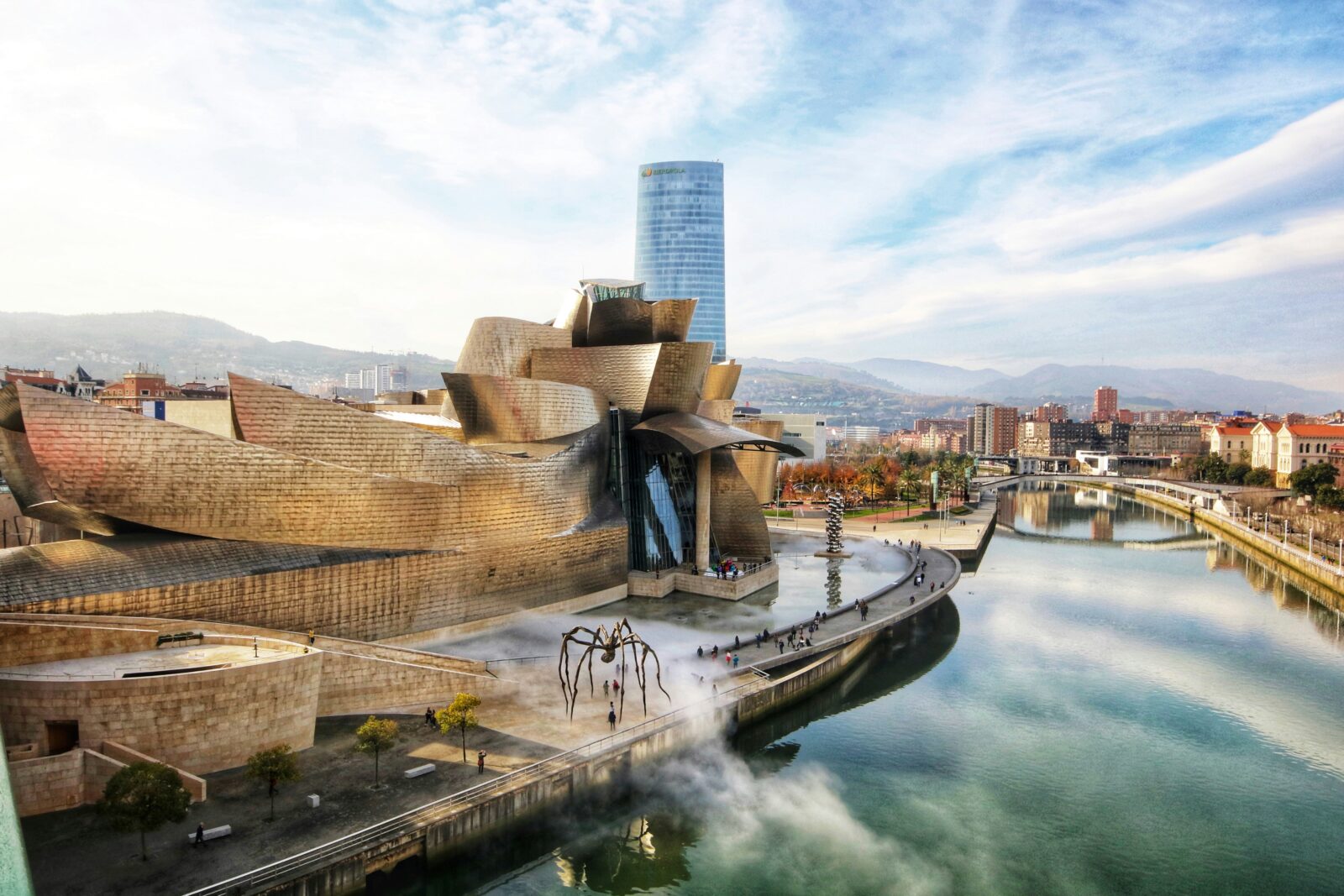
Gehry was 68 years old when the Guggenheim Bilbao opened, an age when many architects might be contemplating retirement, yet he was hitting his stride. The museum’s avant-garde design captured the imagination of critics and the public alike. In its first year, the Guggenheim attracted over a million visitors, a level of cultural tourism unheard of for a modern art museum. The building’s success revitalised Bilbao and gave rise to the so-called “Bilbao effect”, the now-common idea that a single bold work of architecture can reboot a city’s economy and global image. Practically overnight, Gehry became a starchitect, with cities around the world clamouring for their own dose of his magic.
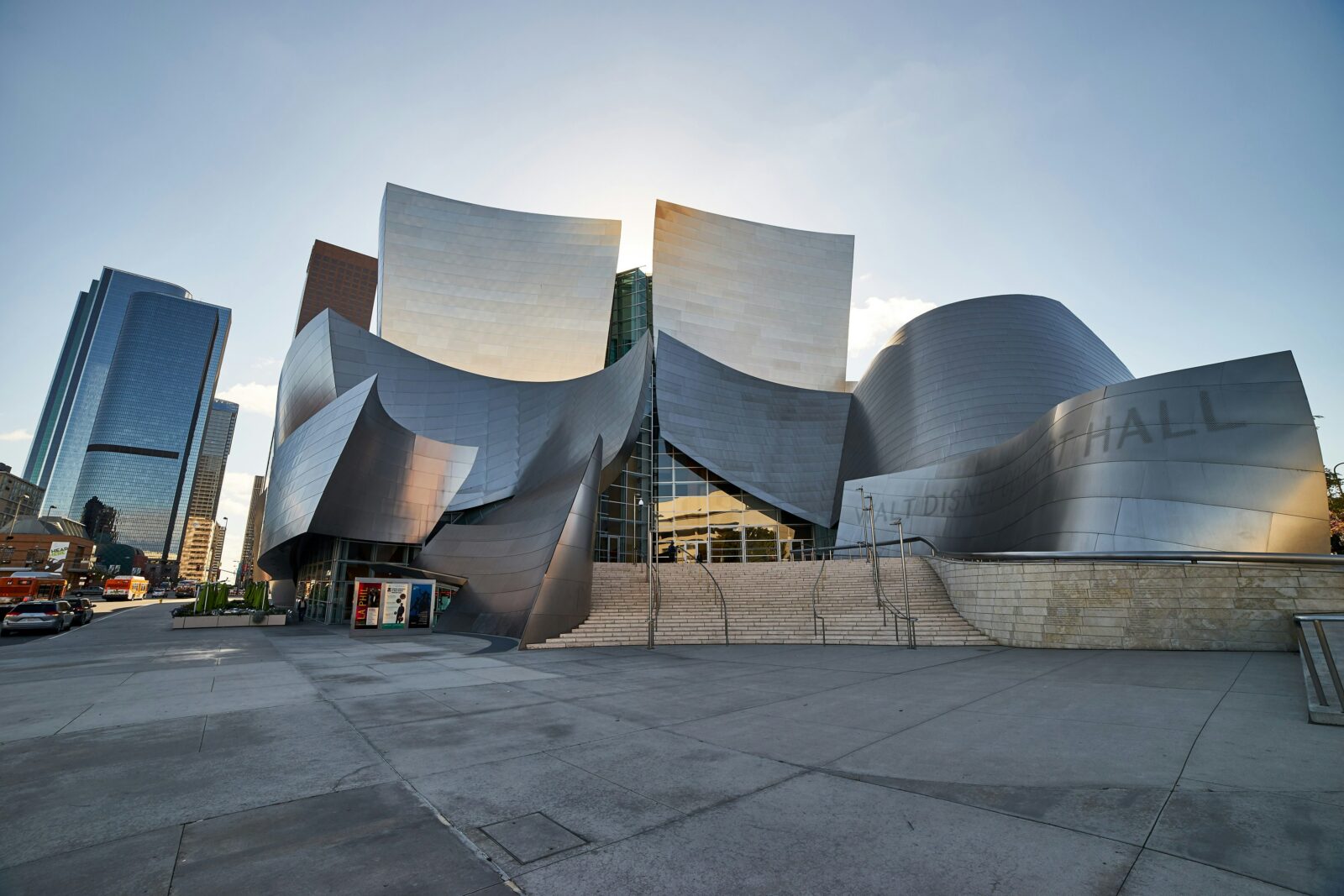
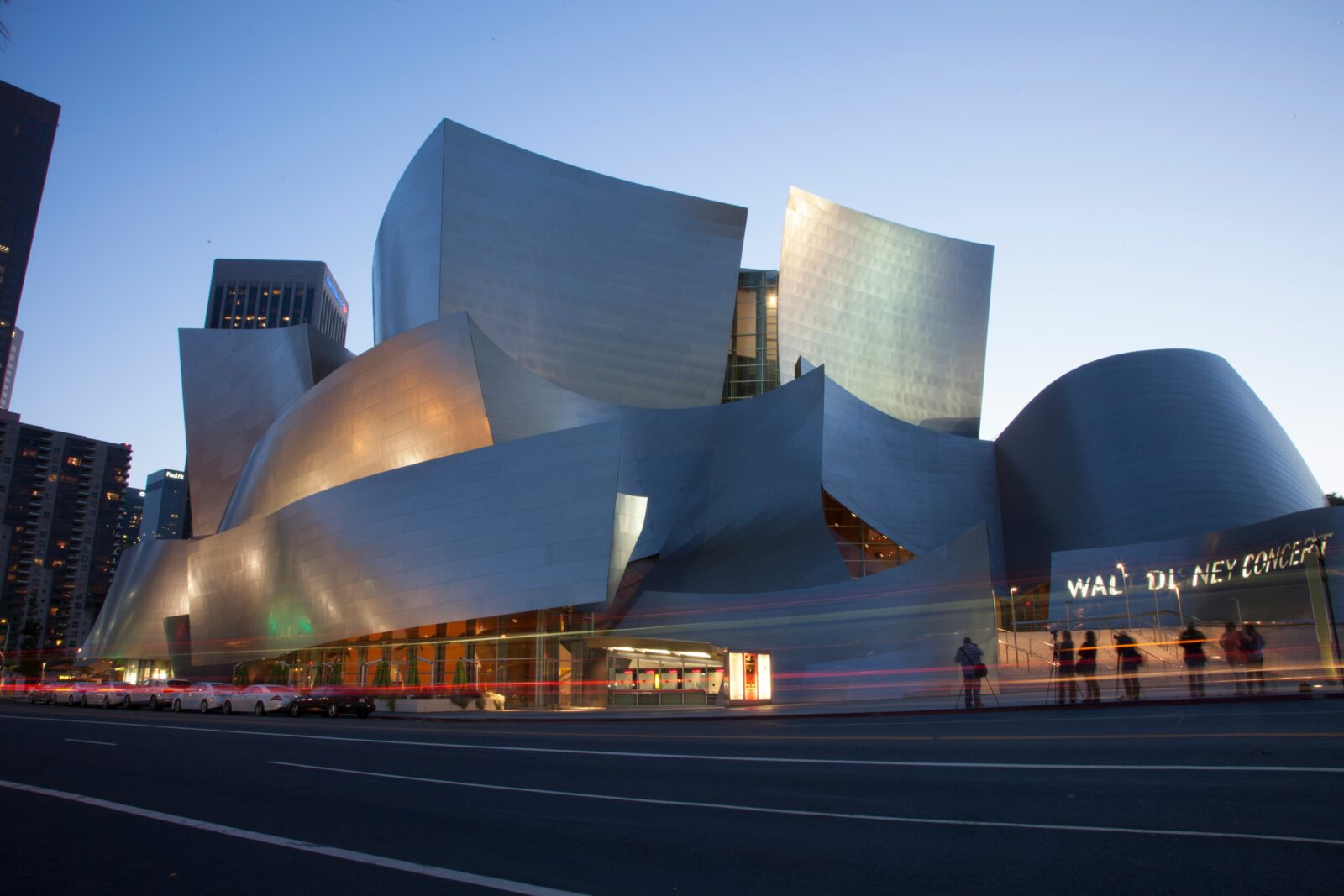
Back in Los Angeles, Gehry’s adopted hometown, an equally monumental project was growing. The Walt Disney Concert Hall, a new home for the LA Philharmonic, had been on the drawing board since the late 1980s, but it finally opened in 2003, after Bilbao’s triumph gave it new momentum. Walt Disney Concert Hall in downtown L.A. is a tour de force of Gehry’s signature style: sweeping stainless-steel “sails” billow around an auditorium renowned for its pitch-perfect acoustics. In its early days, the hall’s polished steel skin reflected so much California sunlight that it heated neighbouring buildings and allegedly blinded drivers, forcing Gehry’s team to sand down sections of the metal to reduce glare. Such hiccups did little to dampen the acclaim, however. Critics hailed Disney Hall as both an architectural and musical triumph and even more importantly, Angelenos embraced it: the once-skid-row stretch of downtown blossomed into a dynamic public space around Gehry’s gleaming, flower-like structure.
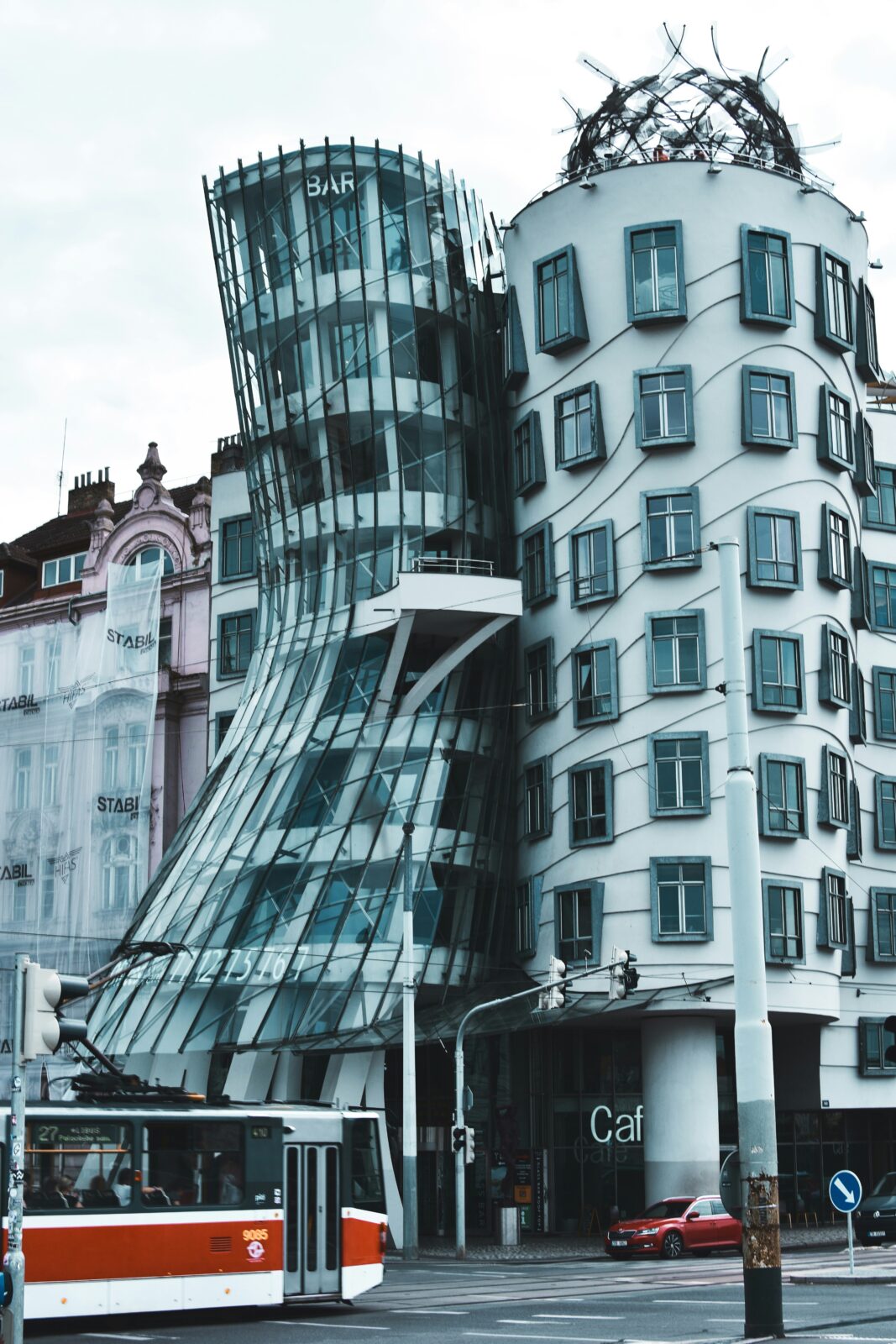
Gehry’s distinctive creations soon sprang up across the globe. In Prague, he co-designed the famous “Dancing House” (1996) with architect Vlado Milunić, a playful glass-and-concrete office building that appears to sway like Fred Astaire and Ginger Rogers mid-dance. Initially controversial for its audacious modern look amidst Prague’s Gothic and Baroque buildings, the Dancing House is now celebrated as a symbol of the city’s post-Communist cultural revival.

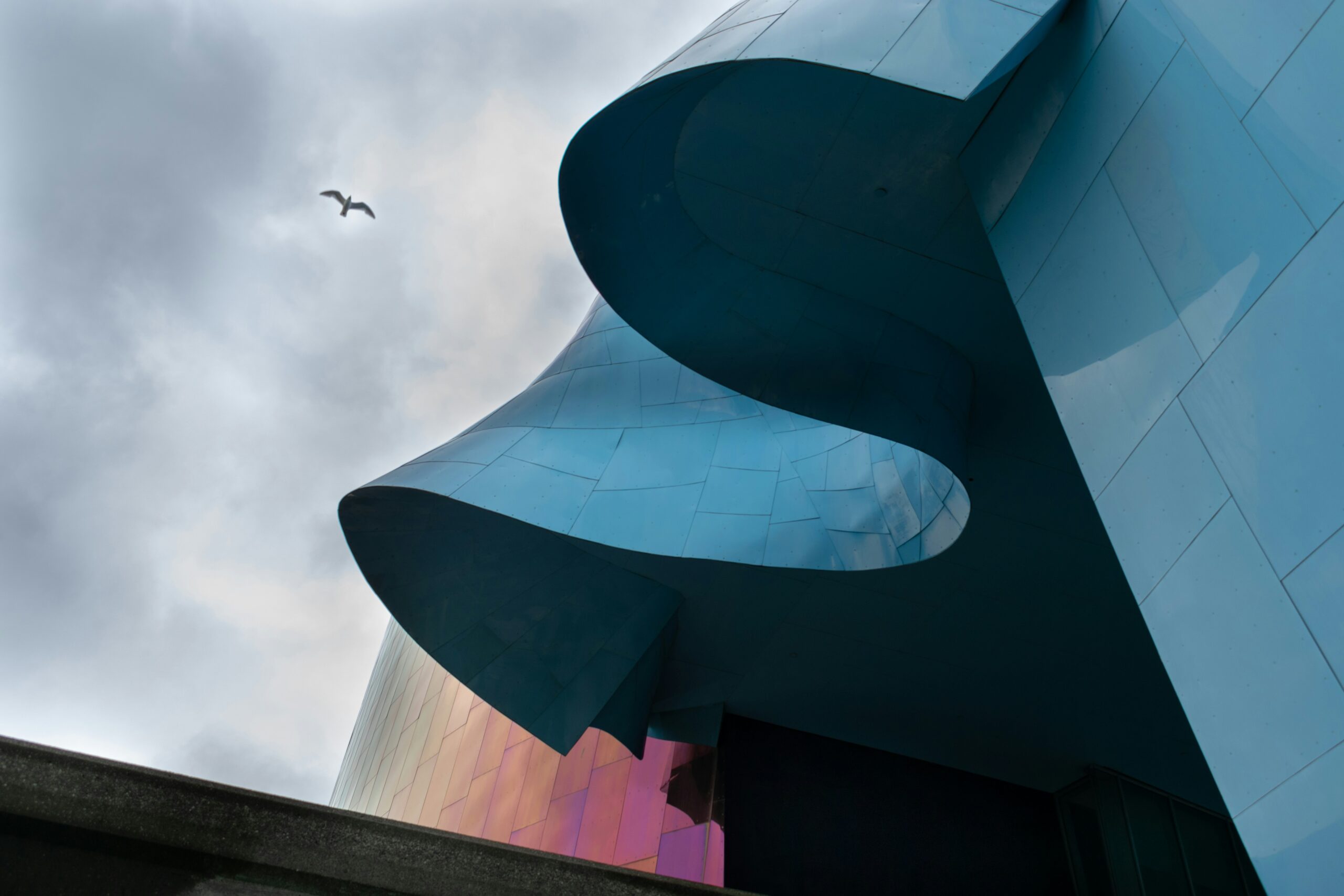
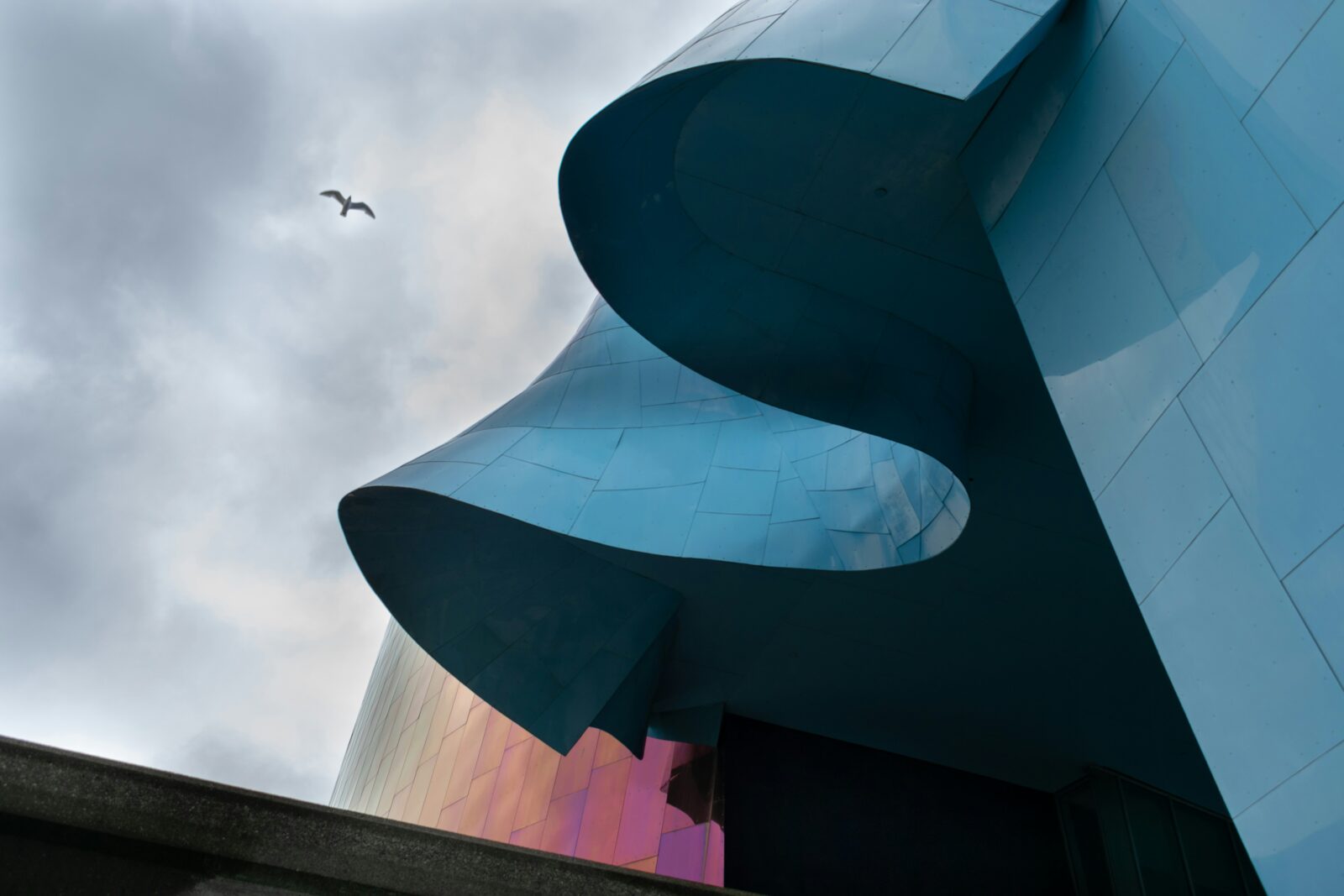
In Seattle, Gehry’s swoopy, polychromatic Experience Music Project (2000, now the MoPOP Museum) turned heads with its melted-guitar shapes – to the point that one critic derided it as “blobitecture,” a blob-like indulgence.
He built shimmering new monuments for Paris, such as the glass-panelled Fondation Louis Vuitton museum (2014), and for New York, where his 76-story residential tower at 8 Spruce Street ripples like a silvery curtain in the Lower Manhattan skyline. From a giant fish sculpture on the Barcelona waterfront to academic buildings in Cambridge, Sydney and Los Angeles, Gehry’s output was eclectic and prolific. Not every project earned universal praise, but each one was unmistakably “a Gehry”: bold, unconventional, and unforgettable.
Defying Critics and Embracing Pop Culture
Naturally, an architect as daring as Gehry attracted his share of detractors. Some critics over the years blasted his work as self-indulgent or impractical, calling it sheer “fantasy sketches” that ignored budgetary constraints or functionality. The most notorious example was his Stata Centre at MIT (2004), whose exaggerated angles and tilted towers were praised by fans but lambasted by others as absurd; the project ran massively over budget and later suffered leaks serious enough to spur an MIT lawsuit over design flaws.
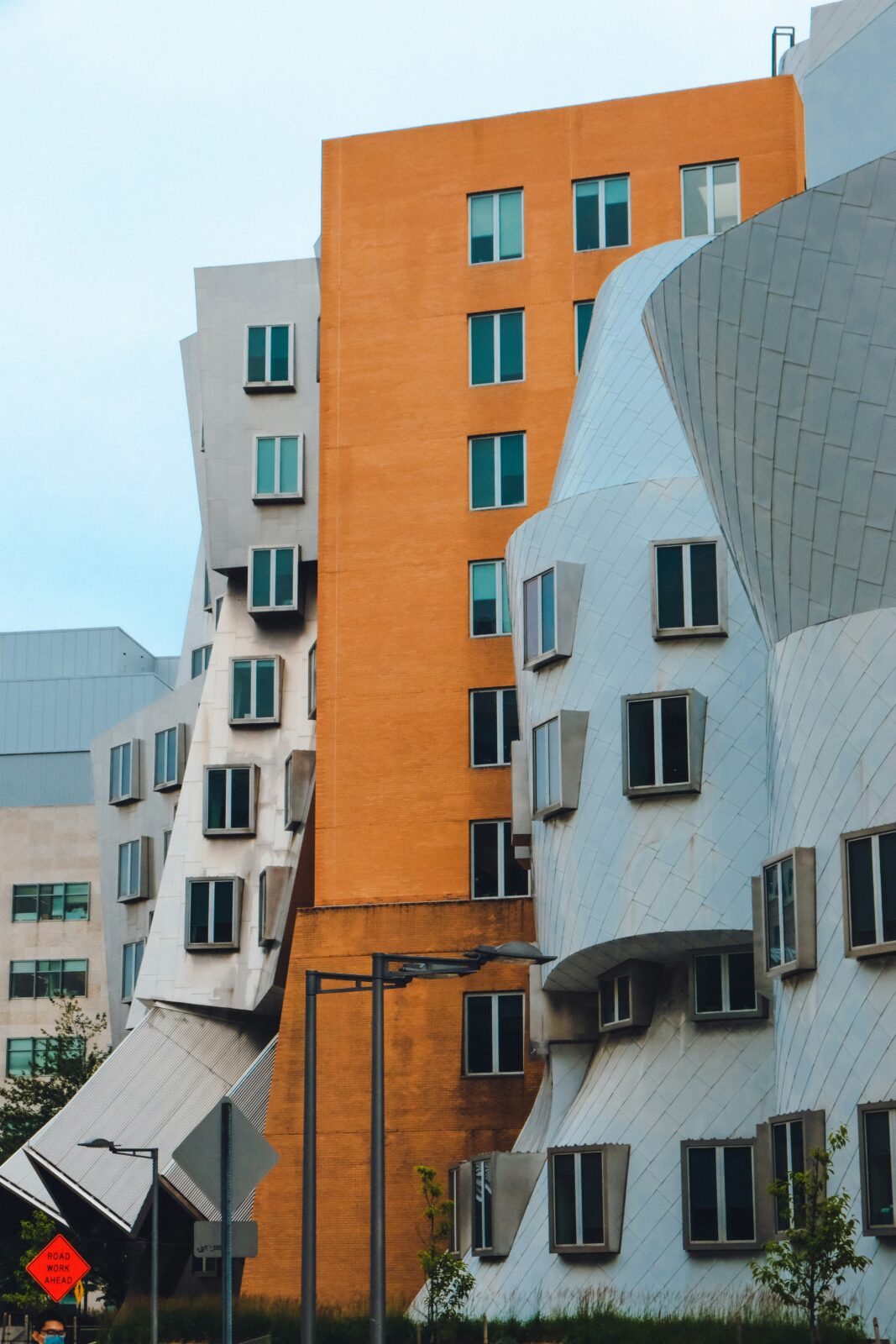
But Gehry met criticism head-on, often with wit and a shrug. He stressed that he was a practical professional at heart, even titling one talk “I’m Not Weird” in response to those who branded his work bizarre. When sceptics accused him of pushing form over function, Gehry was unapologetic. “You can learn from the past but you can’t continue to be in the past,” he claimed, explaining why he refused to play it safe or imitate historical styles. In Gehry’s view, the worst sin was not flamboyance, but boredom. He wanted architecture to stir the soul and by that metric, Gehry succeeded as few people have ever walked through one of his buildings and felt nothing.
Gehry’s irreverent streak and rising fame also made him a pop-culture figure, which was something almost unheard of for an architect. In 2005, he guest-starred as himself on The Simpsons, which affectionately spoofed his design process by showing him crumpling a piece of paper (a nod to his sketchy, model-driven style) and voila!, a concert hall design. He took the joke in stride, later quipping that he was amused to see cartoon “Frank Gehry” bringing avant-garde architecture to prime-time TV. By the 2000s, Gehry had indeed become a bona fide celebrity architect. He designed jewellery for Tiffany & Co. and a line of bentwood chairs for Knoll, appeared in a documentary by Sydney Pollack, and even crafted a stage prop hat for Lady Gaga’s performances. Through it all, he maintained a self-effacing, rumpled persona so those who met him in person often remarked on his laid-back charm and everyman appearance. But behind the genial smile was a fierce creative drive and a willingness to speak his mind. (At a 2014 press conference in Spain, when a reporter insinuated that Gehry’s celebrity buildings were just showy gimmicks, the 85-year-old architect flashed a good old-fashioned middle-finger salute in reply, making clear that he answered only to his own artistic vision.) In an era when architects were often seen as remote or academic, Frank Gehry became that rare figure who was both a serious artist and a pop icon, as comfortable being parodied on a sitcom as he was lecturing at Harvard.
A Lasting Legacy
Over a career spanning more than six decades, Frank Gehry stretched the boundaries of architecture and inspired countless others to imagine bigger and bolder. He was a pioneer in using advanced digital tools to realise his designs, famously adapting aerospace industry software to translate his free-form cardboard models into buildable plans. This integration of technology was revolutionary in the 1990s and is now standard practice in architecture, one of many ways Gehry pushed the profession forward. He also demonstrated that buildings could be both intellectually provocative and emotionally moving, not one or the other. For his countless contributions, Gehry amassed every major accolade the field had to offer, from the Pritzker Prize in 1989 to the American Institute of Architects Gold Medal, and even the Presidential Medal of Freedom in 2016. He became, in effect, architecture’s elder statesman, one of the few modern architects whose name was known to the general public and whose works were celebrated as both high culture and tourist spectacle.
Perhaps Gehry’s most significant legacy, however, is less tangible. When many saw architecture as staid or elitist, he made it exciting and accessible again. He showed the world that a building could be a daring sculpture and a functional space at the same time; the “wow factor” didn’t have to come at the expense of human comfort. In fact, observers note that beneath the swooping curves and flashy materials, Gehry’s best buildings have a remarkable sense of humanism: they are carefully attuned to human scale, light, and how people experience space on the inside. His most memorable rooms, be it the sun-dappled atrium of the Guggenheim Bilbao or the warm hardwood-lined concert hall in Disney Hall, are as thoughtfully composed and uplifting as the dramatic exteriors that enclose them. He inspired countless younger architects to dream without fear, to embrace irregularity and emotion, and to trust that the public will respond to bold ideas when executed with care.
Frank Gehry is survived by his wife, Berta Isabel Aguilera, who was a constant partner in both life and work, their two sons, Alejandro and Sam, and a daughter, Brina, from his first marriage. (Another daughter, Leslie, predeceased him in 2008.) Well into his 90s, Gehry could be found nearly every day at his Los Angeles studio, still tinkering with new designs and at the time of his passing, he was overseeing projects as ambitious as the long-awaited Guggenheim Abu Dhabi (set to open in 2026), proving that even in his final chapter, he remained focused on the future. As we bid farewell to this brilliant, impish soul, we take comfort in the fact that his creations will continue to awe and inspire for generations to come.


